Hotel Booking for Entire Stay Visa 2026: Do You Need It Every Night?
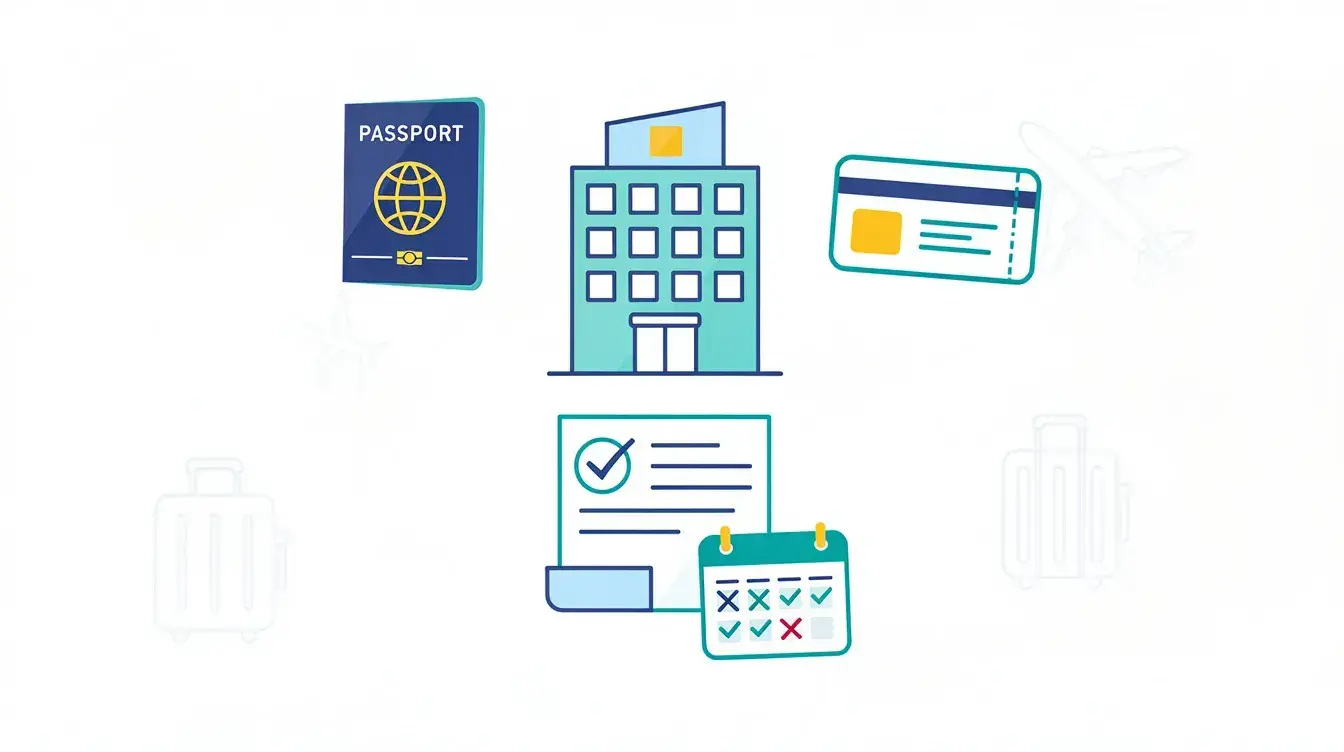
Do You Need Hotel Bookings for Every Night of Your Visa Trip?
Your visa file looks clean until an officer quickly scans your dates and asks one silent question: Where are you sleeping every single night? A single missing night can read like an unfinished plan, even when your trip is real and your budget is sensible. That is why “hotel for the entire stay” keeps coming up at appointments and in document checklists.
In this guide, we’ll help you decide when full hotel coverage is the simplest move and when it is unnecessary. You’ll learn how to account for nights with hosts, overnight transport, or flexible routing without creating gaps or contradictions. Keep your hotel nights consistent with your flights by using a dummy ticket booking that stays verifiable if dates change.
Table of Contents
- When “Entire Stay” Is a Hard Expectation vs. a Soft Expectation
- If You Don’t Have A Hotel Room for Every Night, Here’s What to Show Instead
- How Applications Get Flagged On Accommodation—and How To Fix It Before You Submit
- Build A Proof-Of-Stay Packet That Makes “Entire Stay” A Non-Issue
- Make Every Night Easy To Explain On Your Visa File
Planning your visa application effectively begins with solid early-stage visa planning, particularly when it comes to proving your travel intentions through temporary flight itineraries. Embassies often require clear evidence of your plans to enter and exit the destination country, and this is where generating a dummy ticket for visa becomes invaluable. A flight reservation with PNR for visa allows you to create professional, verifiable documents that demonstrate your itinerary without any upfront financial commitment to actual flights. These tools simplify the entire process by providing risk-free PDF PNR options that are designed specifically for visa applications. You can rest assured knowing the embassy-approved dummy ticket will hold up under scrutiny, as it includes all the necessary details like a verifiable PNR dummy ticket for easy confirmation. This approach eliminates the stress of booking and potentially canceling real tickets, saving you money and time while keeping your application strong. Many applicants find that starting with such visa application proof builds confidence and organizes their documents from the outset. Whether coordinating with hotel stays or other proofs, integrating a dummy ticket for visa early ensures consistency across your file. If you're preparing your documents now, consider how these innovative solutions can streamline your preparations and increase your chances of success. Take advantage of these resources to make your visa journey smoother and more secure today.
Many applicants wonder whether a hotel booking for entire stay visa requirement applies in 2026, especially when they plan to move between cities or stay with friends. Most embassies do not insist on showing accommodation for every night of the trip, as long as your itinerary is logical and demonstrates where you intend to stay upon arrival.
Visa officers mainly assess whether your travel plans are realistic, safe, and financially supported. A confirmed first-night booking, plus a clear outline for onward stays, is generally sufficient in most jurisdictions. Providing more structure helps reduce questions, but full coverage is rarely mandatory unless stated by your specific embassy.
Last updated: June 2026 — Based on current embassy accommodation-proof guidelines, Schengen and non-Schengen visa requirements, and updated application-review trends.
When “Entire Stay” Is a Hard Expectation vs. a Soft Expectation

A checklist might say “proof of accommodation,” but officers often read it as “does every night make sense.” The key is knowing when a full hotel chain is expected and when a well-explained mix of stays is normal for your visa type.
The Core Standard Officers Apply: “Where Will You Sleep, and Can We Verify It?”
On a Schengen short-stay (Type C) file, the officer is not hunting for luxury hotels. They are checking whether your nights are accounted for and traceable. That means dates, city, and an address that matches the rest of your plan.
For a UK Standard Visitor visa, the logic is similar, but the review often zooms out to credibility. If your hotel nights do not match the purpose of travel, like “London for meetings,” but hotels are booked in a different region, it creates a basic doubt.
On a US B1/B2 or Canada TRV application, the question is less about one specific booking format and more about whether you can clearly explain where you will stay. If your itinerary is flexible, the officer still wants a stable plan that can be verified if needed.
Trips That Usually Trigger an “Every Night Covered” Expectation
If you are applying for a Schengen Type C visa with a single-base trip, full coverage is the easiest win. A 7-night Paris stay, for example, looks clean when the booking covers all 7 nights and the dates match your entry and exit.
Short trips tied to fixed dates also push officers toward full coverage. A Japan temporary visitor tourist itinerary built around cherry blossom week, a conference, or a concert reads tighter, so a missing night stands out more than it would on a longer, flexible plan.
First-time applicants for a UK Standard Visitor visa or Canada TRV often benefit from complete hotel coverage when the trip is short. It reduces guesswork during review, especially when your itinerary is simple and your nights are easy to map.
Trips Where Full Hotel Booking Is Often Not the Point (But You Still Need Night-by-Night Logic)
On a Schengen multi-country route like Rome → Florence → Venice → Munich, full hotel coverage can still be expected, but mixed accommodation is also common. The difference is whether every night is clearly assigned to a city and supported by a document type that fits that night.
Visiting family during a US B1/B2 trip can be completely normal. The issue is “no hotel.” The issue is “no explanation.” A few host nights need to appear as deliberate, dated stays that connect to your route and timing.
Overnight transport can also replace a hotel night, but only when it is believable on the route. An overnight train between Vienna and Zurich on a Schengen Type C plan is easy to understand if the departure and arrival times make sense with your next check-in.
The “Minimum Viable Hotel Reservation” Concept (Without Looking Lazy or Vague)
For a UK Standard Visitor itinerary that includes one main city plus day trips, minimum viable coverage usually means your core base is fully covered. If you book London for the entire stay, you do not need separate hotel bookings for every day trip to Oxford or Bath, because you still sleep in London.
For a Schengen Type C trip with flexible segments, minimum viable coverage often looks like:
-
Confirmed booking for your main destination block
-
Clear coverage for your entry nights and exit nights
-
A credible plan for the remaining nights that does not create date holes
For a Canadian TRV with a long stay, booking every night across multiple cities can look overly engineered. A stronger approach is often a stable base for most nights, plus a documented plan for any travel outside that base, so nothing looks improvised or contradictory.
Quick Self-Assessment: Which Bucket Does Your Trip Fall Into?
Use your visa type and route to decide whether you need full hotel coverage or full night-by-night logic. For a Schengen Type C, the threshold for “every night covered” rises when your trip is short, single-base, and tightly dated.
Ask yourself these practical questions for your US B1/B2, UK Standard Visitor, Canada TRV, or Japan tourist file:
-
Is your trip one city or many cities?
-
Do you have any nights with a host?
-
Do you have any overnight transport nights?
-
Are any dates intentionally flexible, or are they fixed by an event?
-
Does your accommodation map cleanly to your city sequence and travel times?
If You Don’t Have A Hotel Room for Every Night, Here’s What to Show Instead
When your itinerary includes host stays, overnight transport, or flexible routing, a full hotel chain is not always the most accurate proof. What matters is that each non-hotel night is backed by the right document type for that visa file.
Staying With Friends Or Family: Replace The Hotel Night With A “Host Proof Bundle”
For a Schengen Type C application, a host stay can be perfectly acceptable, but only if it looks formal enough to be verified. Officers want dates, addresses, and accountability in one place.
Build a host bundle that reads like accommodation, not like a casual message:
-
A host letter that states your full name, the exact nights you will stay, and the full address
-
A copy of the host’s ID and proof they live at that address (residence card, utility bill, or lease extract, depending on what is reasonable to share)
-
A simple relationship line that does not over-explain, like “friend from university” or “first cousin.”
Keep the letter practical. It should match your itinerary nights exactly, including the arrival night. If you land in Madrid on Friday evening, your host dates should start Friday, not Saturday.
For a UK Standard Visitor file, add one more clarity point: confirm whether the host is providing the stay for free, or you will contribute. This helps the accommodation story align with your financial evidence.
Avoid privacy-heavy extras unless needed. Officers rarely need personal photos or long chat logs. A clean host bundle is stronger than a large, messy attachment set.
Overnight Transport Nights: Make The “Missing Hotel” Night Make Sense
A missing hotel night is most believable when it is clearly a transit night. On Schengen routes, overnight trains and night buses are common, but only when the schedule matches the geography.
Support a transit night with documents that answer three questions fast:
-
What you took (train, bus, ferry)
-
When you left and arrived
-
Where do you sleep next
If you claim an overnight train from Vienna to Zurich, the reservation should show a departure time that is actually late enough to cover the night. A “train at 18:10” often still triggers the question, “Where did you stay that night?”
For Japanese tourists, be careful with late arrivals. If you arrive in Tokyo at 23:30 and say you will travel onward immediately, it can read unrealistic unless your onward ticket timing makes that plan feasible. In that case, a first-night hotel is often the cleaner proof.
For a US B1/B2 or Canada TRV itinerary, the same logic applies. Officers may not demand a hotel for that night, but they will expect a realistic travel time and a next-day lodging plan that fits.
Road Trips And Flexible Routing: How To Document Nights Without Pretending You Know Every Stop
Road trips create the most “hotel gaps,” especially on Schengen applications where multiple countries are involved. The solution is not to invent a new hotel each night. The solution is to show a base-and-route plan that is easy to believe.
Use a structure that officers understand:
-
Confirmed base stays in key cities on fixed dates.
-
A short route plan for in-between segments that matches driving times and border crossings.
-
A realistic method for booking the flexible nights, such as “book within X days based on weather and availability,” backed by a budget and a defined region.
Do not make the route look like a highlight reel. A plan that changes cities every night without a strong purpose can look staged. For a Schengen Type C route, a calmer pace with fewer moves often reads more credible than a packed list.
If your trip crosses regions, align the flexible segment with the visa story. A France and Switzerland road trip should not suddenly include a far detour that adds long drives without explanation.
Tours, Group Travel, Cruises: Let The Organizer Carry The Accommodation Proof
For organized travel, your strongest proof is usually the organizer’s itinerary, not separate hotel documents that overlap and confuse the timeline.
For a Schengen group tour, submit:
-
The tour itinerary showed nights by city and date
-
Your name on the booking confirmation
-
Any hotel list provided by the operator, if available
For cruises, include the cruise booking that shows the cabin details and sailing dates. If you have one pre-cruise hotel night and one post-cruise hotel night, those can sit alongside the cruise proof cleanly.
Avoid double-booking on paper. If the organizer covers hotel nights in Rome from June 10 to June 13, do not also submit a personal hotel booking for Rome on those same dates unless there is a clear reason, like arriving early.
Partial Booking Strategy That Doesn’t Look Like You’re Hiding Something
Partial booking can work well when your trip is long or has one flexible block, but it must be presented as a controlled plan, not an unfinished one.
A strong partial strategy usually has three parts:
-
Full coverage for the first nights after arrival
-
Full coverage for your main destination block, like the conference city or the family-visit city
-
Clear accommodation logic for the remaining nights, supported by either host proof, transit proof, or a defined base stay
When you write your supporting note, be specific. “We will book later” is weak. “We have a confirmed base in Barcelona, and the remaining nights are split between a host stay and an overnight train segment,” reads like a planned itinerary.
An applicant departing from Delhi for a multi-city Schengen trip often benefits from booking the first and main city blocks, then documenting the flexible segment with host letters or transit proof so the file stays coherent without forcing unnecessary hotel stays.
Once you have the right evidence for each non-hotel night, the next risk is how the embassy reads your dates and catches contradictions across documents.
As you delve deeper into preparing your visa documents, the convenience of booking dummy tickets online cannot be overstated, especially when coordinating with your accommodation plans. You can easily book flight reservation online for visa risk-free PDF PNR from the comfort of your home, receiving instant delivery via email in a secure and compliant format. These services prioritize security, ensuring your data is protected while delivering documents that fully meet embassy requirements for onward travel proof. The instant nature means no waiting periods, allowing you to quickly align your verifiable PNR dummy ticket with the rest of your application. Embassy-approved dummy ticket features guarantee that your flight reservation for visa looks authentic and verifiable, boosting the overall credibility of your submission. This method is especially helpful for maintaining flexibility in your plans without financial risks, as the risk-free PDF PNR can be adjusted as needed. Travelers often praise how these tools keep everything professional and embassy-ready, reducing the chance of any documentation gaps. By opting for online dummy ticket solutions, you stay focused on other aspects of your visa booking strategy while knowing your proof of travel is solid. If your application involves multiple elements like hotels and flights, this approach keeps you engaged and prepared throughout the process. Why not explore these options to enhance your documentation and move forward with greater ease?
How Applications Get Flagged On Accommodation—and How To Fix It Before You Submit

Most refusals are not triggered by one missing paper. They happen when your accommodation story stops making sense the moment an officer checks the dates.
The Date-Math Cross-Check Officers Do In Seconds
On a Schengen visa file, reviewers often do quick date math before they read anything else. They line up entry and exit dates, then look for a hotel reservation that covers the same nights.
Treat each night as a checkpoint tied to your passport dates. If you arrive on June 10 and leave on June 17, the nights are June 10 through June 16. That is where gaps show up.
If you only book the first few nights, make sure the remaining nights are clearly explained by a host stay, overnight transport, or a single base booking in the next city.
Do not submit accommodation pages that hide key contact details. Officers want to see the property name, address, and stay dates without zooming or guessing.
If you plan to book hotel options in advance, keep the dates aligned with your itinerary so the coverage stays valid on paper.
“Too Perfect” Vs. “Too Messy”: Both Can Look Risky
A file can look staged when it changes cities every night with no reason. It can also look careless when nights are missing, overlapped, or impossible to travel between.
In Europe, the “too perfect” pattern often looks like this: a new hotel room every night across multiple countries, with no rest day, and travel times that do not fit trains or roads. It can read like a checklist, not a trip.
The “too messy” pattern is different. You show three hotels, then a blank stretch, then a hostel booking with no link to the route. You also mix in notes like “will rent a place later” with no dates.
Officers do not need perfection. They need plausibility. Your plan should show how you will pay, how you will move, and where you will sleep, without looking like you will overspend or improvise with money mid-trip.
Common Red Flags Specific To “Entire Stay” Questions
Different visa systems flag different issues, but the same types of contradictions repeat.
For a Schengen visa tourist visa application, these problems draw attention fast:
-
A mid-trip gap of two or more nights with no host or transport proof
-
Two hotels booked on the same night in different cities
-
A booking that lists a different person's name format than your application and travel insurance
-
A stay that jumps across borders without time to travel
For a Japan temporary visitor itinerary, late arrivals matter. If your flight lands near midnight and you list no accommodation that night, an officer may assume your plan is incomplete.
For a Thailand itinerary, officers may still accept flexibility, but they will question a file that shows hotels in one region while your route says another.
If you are staying at a friend's house, the dates must match your city sequence exactly. A host letter that starts one day late creates the same “missing night” signal as no document at all.
A brief example: a visa file from India that shows entry in Paris but accommodation starting in Brussels can look like the applicant does not intend to follow the stated route, especially if prior travel history is limited.
The Credibility Layer: Can Someone Verify This If They Want To?
Some applications fail because the documents look uncheckable. Officers do not always call properties, but they judge whether they can.
Use documents that look like a real confirmation. Include an address and a booking reference. If the file is a screenshot, make sure the key details are readable.
A few credibility checks that matter:
-
Does the booking show a way to contact the property or host?
-
Does the property name match what an officer could search online in seconds?
-
Do dates match your flights and internal movement?
If your booking requires a signature or stamp, follow local norms, but do not invent formalities. A fabricated stamp looks worse than a simple, consistent document.
If you plan to cancel a booking later because dates may shift, keep the submitted version consistent across the file. A document that looks edited after the fact can undermine trust.
When an itinerary comes from a tour operator or a management company, it should clearly show how to obtain confirmation and what service is included, so the officer can prove the accommodation is part of the package.
Fix Patterns: The “Gap Translator” (What Your Missing Nights Seem To Say)
A gap means different things depending on where it appears and how long it lasts.
Use these fixes before you submit:
-
One-night gap after arrival is supposed to be explained as a transit night or a first-night stay. If neither fits, add a real first-night booking.
-
Two to three nights missing in the middle reads like an unplanned segment. Replace it with a dated host bundle or a base stay in that city.
-
Repeated gaps across the travel period can make it look like you are hiding where you will be. Tighten the route to fewer cities or add one stable base.
If something goes wrong in real life, like an event date changes, adjust your accommodation dates and your itinerary together. Do not patch one document and leave the rest unchanged.
Officers also cross-check whether your stay matches your sufficient funds. A long itinerary with expensive cities and no payment proof can look unrealistic even if the bookings exist.
Build A Proof-Of-Stay Packet That Makes “Entire Stay” A Non-Issue
Once your nights are logically covered, the final step is making your file easy to scan. A clear accommodation packet reduces questions because the timeline answers itself before an officer starts hunting for gaps.
Start With A One-Page “Nights Timeline” That Ties Everything Together
Create a single page that lists every night in order. Keep it boring and clean. This page is for fast review, not storytelling.
Use a simple structure that matches how a Schengen visa or tourist visa file is checked:
-
Date (night of): June 10
-
City: Paris
-
Sleep Plan: Hotel
-
Proof Attached: Booking confirmation page 1
-
Address: Street, City, Postal Code
If a night is not a hotel, label it clearly. Do not leave it blank.
-
Sleep Plan: Host Stay
-
Sleep Plan: Overnight Train
-
Sleep Plan: Tour Accommodation
Keep the language consistent across all lines. If you write “Rome” on your itinerary, do not switch to “Roma” in your timeline.
Combine Hotels + Hosts + Transit Nights Without Confusing The Reader.
After the timeline page, group your proof in the same order as your nights. That way, the reader can follow one straight path.
A reliable packet usually has three bundles:
-
Hotel confirmations, in chronological order
-
Host documents, grouped together, with dates highlighted in the first line of each letter
-
Transport proof for overnight segments, placed on the night it covers
Avoid mixing file formats randomly. A PDF set that opens smoothly reads better than scattered screenshots.
If a host letter needs a signature, keep it neat and legible. Ask the host to sign once and keep the rest typed, including the address and dates.
For hotels, ensure each confirmation shows:
-
Your name as the guest
-
Property name and address
-
Check-in and check-out dates
-
A booking reference and a way to contact the property
This is not about perfection. It is about helping immigration officers verify your plan without guessing what each page is meant to prove.
The Two Notes That Prevent Most Follow-Up Questions
Add two short notes that explain your structure without sounding defensive. Put them right after the timeline page.
First, include an “Accommodation Logic Note.” Keep it to 3–4 lines. Example style:
-
“We are staying in one base city for most nights, with two nights at a host address and one overnight train segment. All nights are listed on the timeline and supported by matching documents.”
Second, include a “Change-Handling Note.” Keep it to 1–2 lines:
-
“If a hotel changes within the same city and dates, we will keep the route and total stay period unchanged and retain proof of accommodation for every night.”
If your file includes evidence of funds, align it with your stay style. If you plan to spend less by staying at a host address for part of the trip, that should still look realistic next to your sufficient funds evidence, not like a cost gap.
Handling Changes After Submission Without Panicking
Plans change. What matters is whether the change breaks the story your visa application tells.
Changes that are usually easy to defend:
-
Switching hotels in the same city for the same nights
-
Upgrading from a hostel to a hotel while keeping dates identical
-
Changing one property but keeping the same address area and check-in pattern
Changes that can raise questions if they are large or frequent:
-
Shifting cities mid-route
-
Adding extra countries to a Schengen visa plan
-
Extending the trip without updating funds and accommodation proof
If you must change, rebuild the timeline page first. Then replace only the pages that changed. Do not keep old confirmations mixed in “just in case.” That is how contradictions appear.
Keep one clean naming system for your documents so nothing gets lost in review. Even small rules like “Hotel-Paris-June10-13.pdf” help when you submit through an agent or portal.
Keep Flight Dates And Hotel Nights From Contradicting Each Other
Some accommodation problems are actually timing problems. A common mismatch is a hotel check-in that starts one day after your flight arrives, or a check-out that ends before your flight departs.
Match these details tightly:
-
Arrival time vs. first hotel night
-
Departure time vs. last hotel night
-
Overnight transport nights vs. the next city’s first check-in
If you are using a dummy flight ticket as part of your travel document set, keep it consistent with your night's timeline and internal transport times so the file reads like one plan, not separate pieces.
If you need a flight reservation that stays stable while you adjust hotel nights, BookForVisa.com offers instantly verifiable reservations with a PNR with PDF, unlimited date changes, transparent pricing at $15 (~₹1,300), trusted worldwide for visa use, and it accepts credit cards.
VAC-Friendly Packaging That Reduces Back-And-Forth
If you are submitting through a VAC, document order matters because pages are often separated by category. Put your one-page nights timeline as the first page of the accommodation section, so the reviewer sees the logic even if the hotel confirmations are behind it.
Use these practical tips once and keep the packet consistent:
-
Timeline first, then proofs in date order
-
One PDF for accommodation, if possible
-
Page numbers in the bottom corner if your scanner allows it
Make Every Night Easy To Explain On Your Visa File
Whether you are submitting a Schengen visa itinerary for Europe, a UK Standard Visitor plan, or a Japan tourist visa file, the standard stays the same. Your accommodation should cover every night, either with a hotel reservation or a clear alternative like a host stay or an overnight transfer. When the dates line up cleanly, officers spend less time questioning your intent.
We are in a strong position when your night's timeline matches your entry and exit, your addresses are verifiable, and your documents are simple to scan. Before you submit, do one last date check against your passport travel dates and keep the packet consistent across the full stay period.
As you finalize your visa application, incorporating final tips on embassy-approved documentation can make the difference between approval and requests for more information. One of the most reliable ways to strengthen your file is by using a dummy ticket for visa as proof of onward travel, which ties together your entire itinerary seamlessly. What is a dummy ticket and why do embassies require it reveals how these documents serve as essential visa application proof, satisfying officers that your plans are concrete and verifiable. With a verifiable PNR dummy ticket, you provide risk-free PDF PNR that demonstrates your flight reservation for visa without actual purchase commitments. This reinforces the reliability of dummy tickets as proof of onward travel, ensuring your accommodation details align perfectly with your travel schedule. Such embassy-approved dummy ticket options are trusted worldwide for their compliance and ease of use, helping you avoid common pitfalls in visa booking. By taking these steps, you create a cohesive package that showcases your thoughtful planning. For a smooth application process, always verify that your documents are consistent and ready for submission. Don't hesitate to leverage these proven tools to complete your preparations confidently and secure that approval you've been working toward.
More Resources
Why Travelers Trust BookForVisa.com
BookForVisa.com has been helping travelers since 2019 with specialized dummy ticket reservations for visa applications. We've supported over 50,000+ visa applicants worldwide, providing verifiable PNRs and instant PDF deliveries. Our 24/7 customer support ensures quick resolutions, while secure online payments and unlimited changes demonstrate our commitment to reliability. As a registered business with a dedicated team, BookForVisa.com focuses exclusively on flight reservations for visa, offering niche expertise you can count on.
About the Author
Visa Expert Team — With over 10 years of combined experience in travel documentation and visa assistance, our editorial team specializes in creating verifiable flight and hotel itineraries for visa applications. We have supported travelers across 50+ countries by aligning documentation with embassy and immigration standards.
Editorial Standards & Experience
Our content is based on real-world visa application cases, airline reservation systems (GDS), and ongoing monitoring of embassy and consular documentation requirements. Articles are reviewed and updated regularly to reflect current practices.
Trusted & Official References
- U.S. Department of State — Visa Information
- International Air Transport Association (IATA)
Important Disclaimer
While our flight and hotel reservations are created to meet common embassy requirements, acceptance is not guaranteed and may vary by country, nationality, or consulate. Applicants should always verify documentation rules with the relevant embassy or official government website prior to submission.
Related posts

Do Embassies Check If Your Hotel Booking Is Refundable?
19 Oct, 26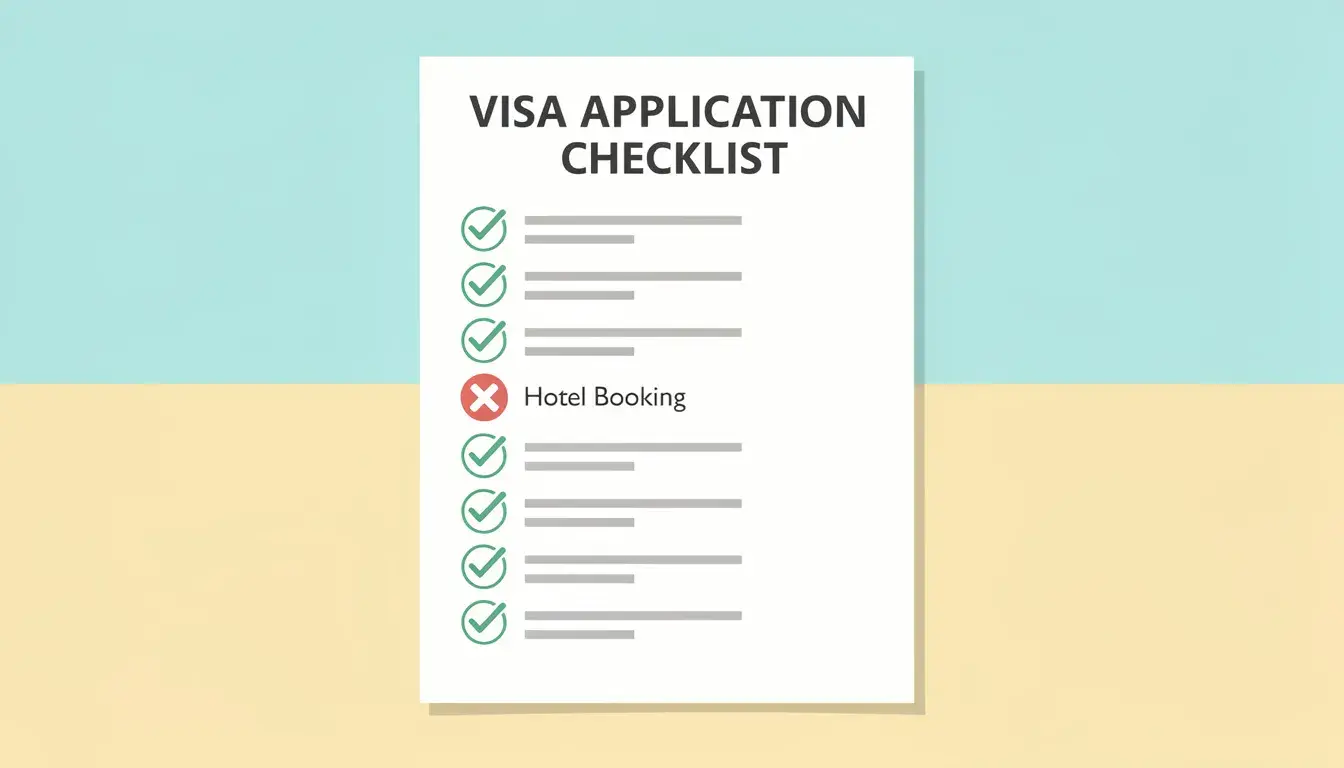
Can You Apply for a Visa Without a Hotel Booking?
19 Oct, 26
Booking for Visa With Another Guest Name
19 Oct, 26
Hotel Reservation for Visa to Bangkok
19 Oct, 26
Schengen Visa Hotel Night Gaps: Audit and Repair
13 Oct, 26
Corporate-Rate Hotel Booking for Visa Proof
26 Sep, 26
Visa Reservation When Hotel Legal Name Differs
22 Sep, 26
Accommodation Proof When Visa Sponsors Split the Stay
11 Sep, 26
Hotel Reservation for Visa to Amsterdam
03 Sep, 26