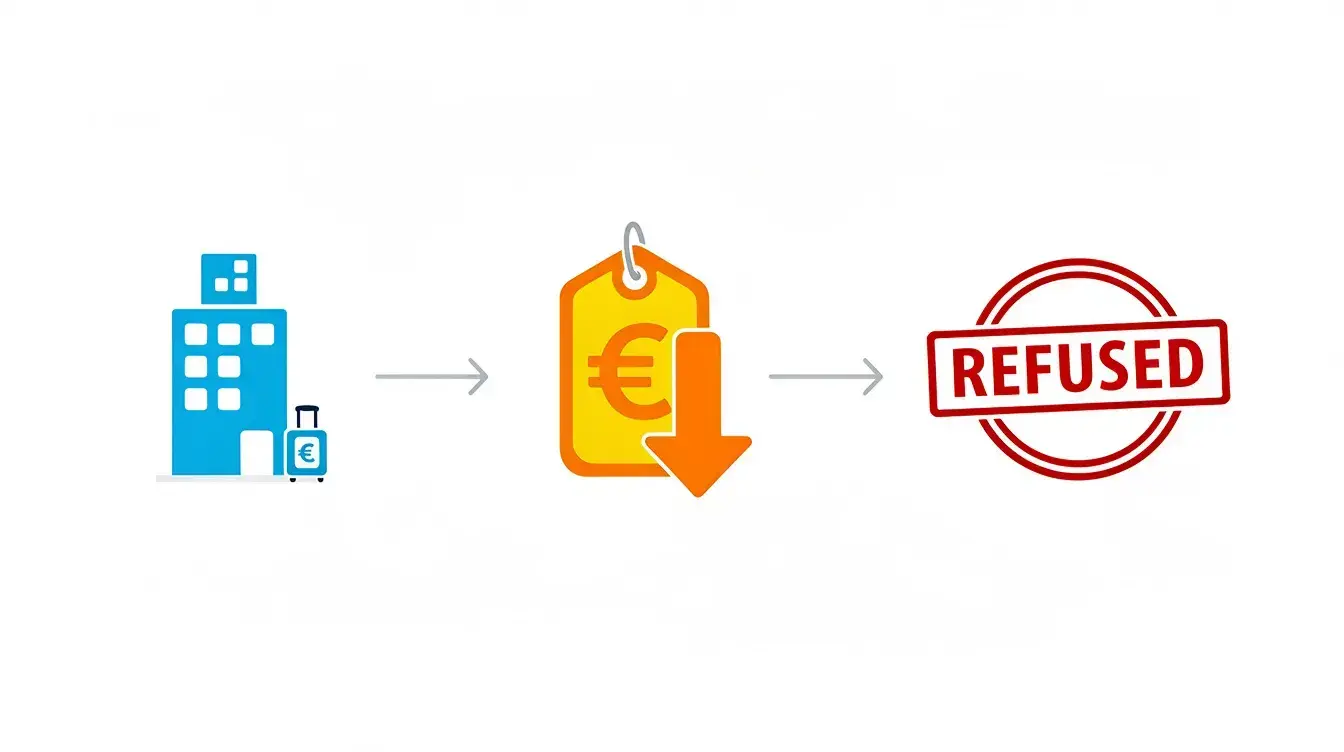
Your Japan visa file may look ready until the Osaka hotel confirmation says “pay at property,” the first night is missing, or the checkout date does not match the flight home. That kind of small mismatch can make a clean application look unfinished. The hotel proof does not need to be expensive, but it needs to look like a real stay that supports the trip you described.
This guide explains how to choose paid versus temporary hotel proof for Osaka, when a refundable booking is practical, what the confirmation must show, how to handle Osaka plus Kyoto or Tokyo nights, and how to keep hotel dates aligned with flights, insurance, leave and the Japan schedule of stay.
In This Guide
Accommodation proof works best when it is paired with clean flight evidence. If your Osaka hotel dates are still moving, use the flight reservation for visa complete guide to understand how flight reservations, hotel bookings and date windows should support one application story.
The Paid Vs Temporary Choice Is Really About Stability
Most Osaka hotel-booking problems do not start with the hotel itself. They start with a confirmation that looks like a placeholder instead of accommodation proof. A temporary booking can be strong when it shows real property details and stable dates. A paid booking can be weak when it creates a refund problem or still does not match the schedule of stay.
Think less about “paid is better” and more about “which booking makes my application easier to read?” A visa reviewer does not need a luxury hotel. They need to understand where you will sleep, when you arrive, when you leave, and whether the accommodation matches the itinerary.
When A Temporary Osaka Booking Can Work
A temporary or refundable hotel booking is often practical when the trip is still flexible but the application needs accommodation evidence. It works best when the booking:
- Shows the applicant name or lead guest name clearly.
- Lists the Osaka hotel name, full address and check-in/check-out dates.
- Uses a real booking status rather than vague pending language.
- Shows cancellation policy with a specific date or clear condition.
- Matches the flight window and schedule of stay.
This is especially useful when you apply before final ticket purchase, when processing time is uncertain, or when you may shift the trip by a day or two after the visa result.
When A Paid Osaka Booking Makes More Sense
A paid booking makes more sense when your dates are fixed and refund exposure is manageable. It can also help when the first night is critical because you land late at Kansai International Airport and need a stable check-in plan. But paid does not mean problem-free. If the visa is delayed, a non-refundable booking can become expensive fast.
Choose paid accommodation only when the booking terms fit your cash flow and travel certainty. If you are paying to make the file “look stronger” while the rest of the dates are unstable, you may be solving the wrong problem.
Practical warning: do not submit a hotel booking that says one date range while your flight reservation, insurance or schedule of stay says another. A paid mismatch is still a mismatch.
One Base Vs Multi-City Decision For Osaka Trips

The right accommodation proof depends on the shape of your Japan trip. Osaka can be a single base, a Kansai base for day trips, or one stop in a multi-city plan. Each shape needs a different proof strategy.
Osaka As Your Single Base
If you sleep in Osaka every night, the accommodation proof is simple. One hotel, one address, one date range. This is the easiest structure for a short Japan visa file because it gives the reviewer fewer moving parts.
- Use one confirmation that covers every night between arrival and departure.
- Make sure the first hotel night matches your actual arrival night.
- Keep checkout aligned with the departure date or next documented city.
- Do not add extra properties unless you genuinely sleep elsewhere.
Osaka Plus Kyoto Or Nara Day Trips
If you visit Kyoto, Nara or Kobe as day trips but sleep in Osaka, the hotel proof can still be one Osaka booking. Your schedule of stay can show day activities in other cities while the accommodation address remains Osaka each night. That is coherent and easy to read.
The mistake is creating hotel bookings in every sightseeing city even when you are not staying overnight. That can make the application look more complicated than the real trip.
Osaka Plus Kyoto, Tokyo Or Hiroshima Overnight
If you sleep in more than one city, your hotel confirmations should cover the overnight sequence. For example, four nights Osaka, two nights Kyoto and three nights Tokyo should show accommodation proof for each section. The dates should connect without unexplained gaps.
| Trip shape | Accommodation proof | Risk to avoid |
|---|---|---|
| Osaka only | One Osaka hotel covering all nights | Missing first or final night |
| Osaka base with day trips | One Osaka hotel plus day-plan logic | Booking hotels in cities you do not sleep in |
| Osaka + Kyoto overnight | Separate bookings with continuous dates | One-night gap between checkout and next check-in |
| Osaka + Tokyo | Hotels that match train/flight movement dates | Hotel dates fighting the transport plan |
| Friend stay in Osaka | Host documents requested by checklist | Using a fake hotel to hide real accommodation |
What Reviewers Quietly React To On Osaka Hotel Proof
Hotel proof is not reviewed in isolation. It sits beside the schedule of stay and flight details, so reviewers naturally notice whether the accommodation pattern feels like a real trip. For Osaka, the strongest proof usually feels boring in a good way: one clear place to sleep, realistic movement between cities, and dates that do not require a special explanation.
Arrival Night Logic
Osaka applications often involve Kansai International Airport. If your flight lands in the evening, the first hotel night should normally begin that same date unless your itinerary clearly shows a late-night transfer or overnight movement. A missing first night can make the trip look unfinished. If you land after midnight, use the local arrival date consistently in the hotel and schedule of stay.
Checkout Day Logic
Checkout date is another quiet signal. If your return flight leaves late at night, a checkout that morning can be fine if the day plan explains luggage storage, sightseeing or airport transfer. But if the schedule of stay says you are still in Osaka for another full day and the hotel proof ends early, the documents no longer tell one story.
Neighbourhood And Practicality
The exact Osaka neighbourhood usually does not decide the visa application, but it can affect plausibility. A hotel near Namba, Umeda, Shin-Osaka or Kansai Airport can all make sense depending on the itinerary. What looks odd is booking a distant property while the day plan shows early activities across the city with no transport logic. Keep the accommodation believable for the route and activities you list.
Family And Group Bookings
For families, couples or groups, one hotel confirmation may show only the lead guest. That does not automatically make it weak, but the rest of the application should clarify the group relationship and room occupancy. If the platform can generate a confirmation showing all names, use it. If not, make sure the booking shows enough guest count and room detail to support the number of travelers.
What Your Osaka Hotel Confirmation Must Show

A hotel confirmation is useful only when it answers the basic accommodation questions without extra explanation. The format does not need to be beautiful, but the fields should be clear.
The Five Fields That Should Match Your Application
- Guest name: the name should map clearly to the passport or lead applicant.
- Property identity: hotel name, Osaka address and contact details when available.
- Date range: check-in and check-out dates should match the schedule of stay.
- Occupancy: room or guest count should support solo, family or group travel.
- Booking status: confirmed, reserved or otherwise clear enough to show a real stay plan.
Some booking systems show only the lead guest. That can still be workable for couples or families if the rest of the file makes the group stay clear. If every applicant has a separate file, consider including a booking note or supporting page that shows the full party where available.
Policy Language That Helps Or Hurts
Cancellation terms are not automatically negative. A refundable booking can be sensible before a visa decision. The language becomes a problem when it makes the stay look uncertain. “Free cancellation until 10 May” is clearer than “request pending” or “property will confirm later.”
Watch for phrases that make the booking look incomplete:
- To be confirmed
- Pending host approval
- Request sent to property
- No room assigned
- Card verification failed
- Reservation may be cancelled without notice
If the confirmation uses weak wording, ask the hotel or platform for a cleaner confirmation before submission.
Official-source check: Japan visa checklists often connect accommodation with the schedule of stay. The Embassy of Japan in the United States asks for a travel itinerary with activities, locations, contact number and accommodations, and says flight dates must match the travel itinerary. The Embassy of Japan in Canada lists confirmation of hotel reservation, with host documents as an alternative for friend or family stays. The Consulate-General of Japan in Boston also asks for plans that include dates, activities, locations, reachable contact number and accommodations. Check examples from the Embassy of Japan in the United States, Embassy of Japan in Canada and Consulate-General of Japan in Boston.
A Visa-Safe Osaka Booking Workflow
The safest workflow is not complicated. Lock the trip shape first, then build accommodation proof around it. Do not start by booking random refundable hotels across Osaka, Kyoto and Tokyo. That creates paperwork before you know the story.
Step 1: Lock Your Osaka Base Nights
Start with the nights you will actually sleep in Osaka. If Osaka is your only base, the date range should run from arrival night to final checkout. If Osaka is one section of a larger Japan trip, write down the exact Osaka nights first, then add the next city.
Step 2: Match The Flight Window
Your hotel proof should not be built separately from your flight plan. If your flight lands at Kansai on June 10, your accommodation should explain the night of June 10. If your return leaves late on June 20 after checkout, the schedule of stay should show what you are doing that day.
If your flight dates are not final, review the flight reservation for visa guide before locking hotels. It explains how temporary flight evidence should support the same date window as accommodation, rather than creating a second timeline.
Step 3: Choose Booking Type Based On Risk
Use a refundable booking when the visa timeline is uncertain and the confirmation still looks complete. Use a paid booking when dates are stable and the payment terms are acceptable. Use a host-stay document when you are genuinely staying with someone in Osaka. Do not use a hotel confirmation as a disguise for a different arrangement.
Step 4: Produce One Clean Confirmation Packet
Your packet may include the hotel confirmation, schedule of stay and flight itinerary. Keep the sequence easy to follow. The reviewer should see where you arrive, where you sleep, what you do each day and how you leave Japan.
- File names should be simple and descriptive.
- Dates should be in the same format where possible.
- Do not include cancelled hotel drafts.
- Do not include alternative bookings for the same night.
- Do not submit screenshots that cut off the address or dates.
If your Osaka stay is part of a wider Schengen-plus-Japan or multi-visa itinerary, keep the Japan proof separate and clean. For Schengen-specific flight evidence, use the Schengen visa flight reservation requirements guide, because Schengen entry and main-destination logic should not be mixed into a Japan accommodation page.
Three Real Osaka Visa Scenarios And The Better Booking Choice
The paid-versus-temporary decision becomes clearer when you map it to a real situation. Use these examples as decision patterns, not universal rules.
Scenario 1: First-Time Tourist, Osaka Only, Dates Mostly Stable
A refundable hotel booking is usually practical here. The story is simple: arrive at Kansai, stay in Osaka, visit nearby attractions, return home. The confirmation should cover the full stay and show a clear cancellation policy. A paid booking is optional, not automatically superior.
- Best proof: one Osaka hotel covering all nights.
- Useful support: schedule of stay with Osaka activities and day trips.
- Main risk: first night missing because the flight arrives late.
- Best fix: align the hotel start date with the local arrival date.
Scenario 2: Osaka Base With Kyoto And Nara Day Trips
This still behaves like an Osaka accommodation file. You do not need separate hotel proof in Kyoto or Nara if you return to Osaka each night. The schedule of stay should show those cities as day activities while the accommodation column remains Osaka.
- Best proof: one Osaka hotel plus clear daily itinerary.
- Useful support: realistic transport timing for Kyoto or Nara day trips.
- Main risk: overbooking hotels in places where you do not sleep.
- Best fix: keep accommodation proof tied to actual overnight stays.
Scenario 3: Osaka, Kyoto And Tokyo Overnight Trip
This needs a continuous accommodation chain. If you stay in Osaka for three nights, Kyoto for two and Tokyo for four, each section should have proof. The dates should connect cleanly, and the movement should match the schedule of stay.
- Best proof: separate confirmations for each overnight city.
- Useful support: schedule of stay showing movement dates.
- Main risk: one-night gaps between hotel checkouts and check-ins.
- Best fix: build a date table before downloading confirmations.
Where Temporary Osaka Hotel Bookings Backfire

Temporary bookings are useful only when they look like real accommodation proof. They backfire when the document reads like an unfinished shopping cart. For Japan visa files, the accommodation line in the schedule of stay should feel concrete.
Avoid Hold-Style Confirmations When These Apply
- The property has not confirmed the room.
- The booking does not show the hotel address.
- The confirmation omits the check-in or check-out date.
- The platform warns that the reservation may disappear without card verification.
- The booking covers only part of the Osaka stay.
- You have multiple overlapping hotels for the same night.
When A Paid Booking Creates A New Problem
Paid bookings can create stress when visa processing is slow or travel dates are still flexible. If the booking is non-refundable, you may feel pressured to travel on dates that no longer fit the visa result. If the property charges the card before approval, cash flow may become an issue. A paid booking should reduce uncertainty, not trap you in the wrong timeline.
Alternative Lodging In Osaka
Apartments, guesthouses, serviced residences and friend stays can be valid accommodation plans when the evidence matches the checklist. The key is transparency. If staying with a friend, submit the host documents requested by the relevant Japan mission. If staying in an apartment, make sure the booking shows a full address, stay dates and guest details.
How To Read Your Osaka Hotel Confirmation Before Uploading
Before you upload the hotel proof, read it like someone who has never seen your trip before. The confirmation should answer who, where, when and under what booking status. If you need a long explanation to make the document understandable, the confirmation itself may be too weak.
The Name Line
The guest name does not always need to show every family member, but it should not contradict the applicant identity. If the lead guest is a sponsor, parent or travel partner, make sure the application explains why the booking belongs to the applicant’s travel group. For solo applicants, the hotel name line should map cleanly to the passport.
The Address Line
A property name without an address is often too thin for accommodation proof. Osaka has many properties with similar names, and a full address helps the schedule of stay look complete. If the booking platform hides the address, download a fuller confirmation or request one from the hotel.
The Booking Status Line
Look for words that show the stay is actually reserved. A clean confirmation can be refundable and still reserved. The risky version is a request that has not yet been confirmed by the property, especially if the visa file depends on that address.
The Payment And Cancellation Line
Payment status is less important than clarity. “Pay at property” is not automatically weak if the room is confirmed and cancellation terms are clear. “Card not verified” or “reservation may be cancelled” is different because it suggests the booking may not survive long enough to support the file.
Last-Minute Osaka Hotel Changes Without Creating A New Problem
Osaka hotel changes happen. Prices move, rooms disappear, flights shift, or you decide to add Kyoto overnight. The safe response is to change once, align every document, and stop creating new versions.
If Dates Move Before Submission
Update the hotel booking, flight reservation, schedule of stay and any insurance or leave evidence before you submit. This is the cleanest moment to fix the file because the application record is not locked yet.
If Dates Move After Submission
If the application is already submitted, check whether the visa office or application portal allows updates. If the hotel change is minor and the trip story remains the same, keep the updated proof in case asked. If the change affects the city sequence or stay length, follow the official update route.
If The Hotel Cancels Your Booking
Replace it with a comparable booking that covers the same nights and does not change the travel story. Keep the cancellation notice and new confirmation. Do not replace an Osaka hotel with a Kyoto or Tokyo hotel unless the schedule of stay also changes coherently.
Need flight evidence that matches your Osaka hotel dates?
Final Osaka Hotel Booking Checklist
- Hotel name, address and check-in/check-out dates are visible.
- Guest name or lead applicant name is clear.
- Every night in Japan has accommodation or host evidence.
- Osaka, Kyoto, Nara and Tokyo movements match the schedule of stay.
- Flight arrival and departure dates do not create unexplained hotel gaps.
- Cancellation or payment terms do not make the booking look unfinished.
- Only the final booking version is included.
- Friend or family stays use host documents instead of fake hotel proof.
A hotel booking for a visa to Osaka does not need to be the most expensive option. It needs to be the clearest option. When the booking, flight reservation and schedule of stay all describe the same trip, the accommodation proof does its job quietly.
FAQs About Hotel Booking For Visa To Osaka
Do I need a hotel booking for a Japan visa to Osaka?
Many Japan temporary visitor checklists ask for accommodation details, a schedule of stay or hotel booking confirmation. The exact requirement depends on the embassy, consulate and applicant location, so check the checklist for your jurisdiction.
Is a temporary hotel booking enough for an Osaka visa application?
A temporary or refundable booking can work when it clearly shows the applicant name, property name, address, check-in and check-out dates, and cancellation terms. It should not look like an incomplete request or pending hold.
Should my Osaka hotel dates match my flight itinerary?
Yes. The hotel dates should support the flight window and schedule of stay. If the flight arrives one day before hotel check-in or leaves after hotel checkout, explain or correct the gap before submission.
Can I use one Osaka hotel for the whole Japan itinerary?
Yes, if Osaka is genuinely your base and your sightseeing is mostly day trips. If you sleep in Kyoto, Tokyo, Nara or another city overnight, your accommodation evidence should reflect those nights.
Is a paid Osaka hotel booking better than a refundable one?
Not always. A paid booking can look stable, but it can also create refund risk if the visa is delayed or dates move. The better choice is the booking that matches your actual plan and stays consistent with the documents.
What details should an Osaka hotel confirmation show?
It should show the guest name, hotel name, Osaka address, phone or contact details when available, check-in and check-out dates, room or guest count, booking status and cancellation or payment policy.
Can I change my Osaka hotel after submitting the visa application?
You can often change accommodation after submission, but the new booking should preserve the same travel logic. If dates, city sequence or trip length change materially, follow the official update instructions for your visa office.
What if I stay with a friend in Osaka instead of a hotel?
Use the documents requested by your Japan visa checklist, which may include an invitation, host identification, proof of residence or a schedule of stay with the host address. Do not submit a fake hotel booking to cover a real friend stay.
Can one hotel confirmation cover multiple applicants?
It can if the confirmation clearly supports the group or family booking. Each applicant’s file should still make it clear who is staying, when, and how the booking relates to the travel plan.
What is the biggest Osaka hotel-booking mistake for visa files?
The biggest mistake is date mismatch: hotel nights, flight dates, schedule of stay and insurance or leave dates describing different trips. Fix the timeline before adding more documents.
Important disclaimer: This article is general travel-document guidance, not legal advice and cannot predict any visa outcome. Japan visa requirements, hotel-confirmation expectations and document-upload procedures vary by embassy, consulate, applicant residence and visa type. Always follow the latest checklist from the responsible Japan mission before submitting accommodation or flight documents.
Friendly reminder: BookForVisa provides travel-proof documents for planning and visa-application support. Requirements vary by destination, consulate, visa category and applicant situation. A flight reservation can support a file, but it does not guarantee approval, boarding or entry.