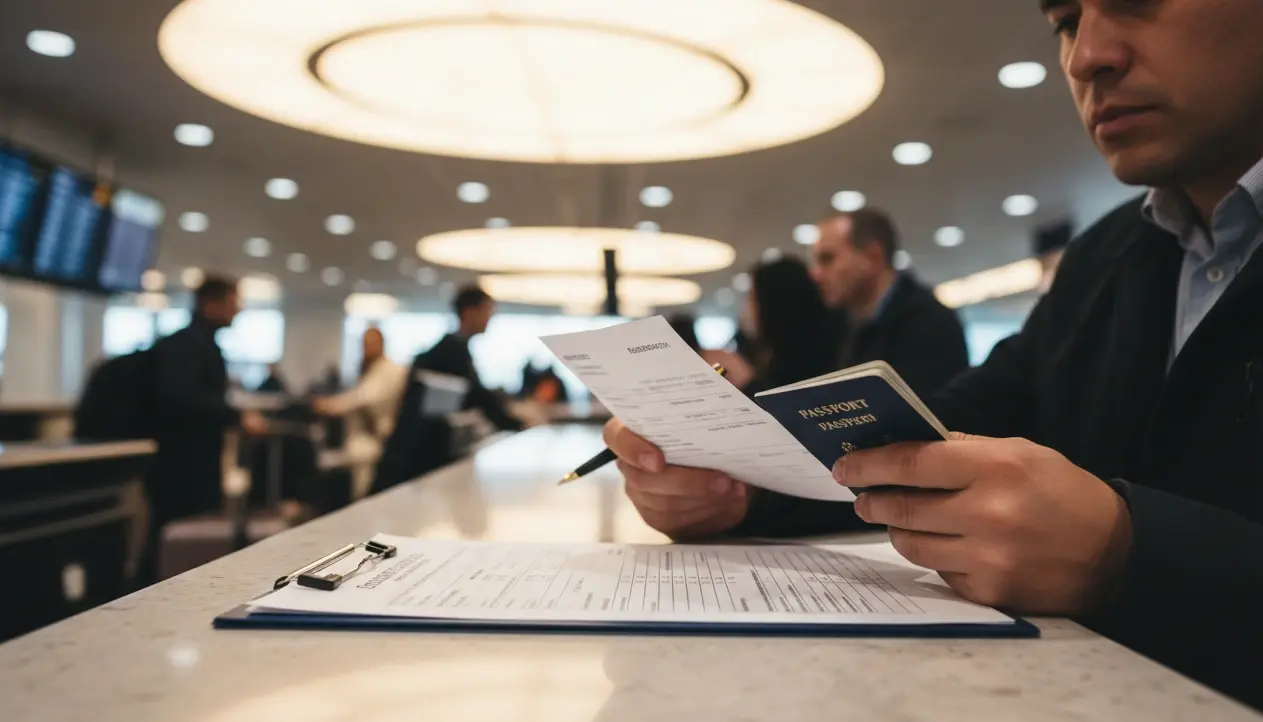
Visa Application During Crisis 2026: Keep Your File Strong

How To Keep Your Visa Application Strong When Travel Plans Change
Your visa file can start looking weak long before an embassy refuses it. A flight suspension, a sudden border measure, a delayed appointment, or a rerouted itinerary can quietly break the logic of your application. Dates stop matching. Bookings look stale. Supporting documents begin to point in different directions.
Keep every document believable, timely, and aligned, even when the travel environment changes faster than your paperwork. That is what protects confidence at the review stage for officers. In this guide, you’ll see when to update reservations, when to pause, when to explain a change, and when a crisis has altered the story enough to rebuild the file before you submit or respond. When route changes hit mid-application, a flexible dummy ticket helps keep your visa file aligned.
Table of Contents
- When A Crisis Changes The Facts, Protect The Logic Of Your Visa File First
- Don’t Let Your Flight And Stay Documents Become The Weakest Part Of The Application
- Handle Embassy Delays, Appointment Chaos, And New Documentation Requests Without Looking Reactive
- Decide Whether To Proceed, Postpone, Or Reframe The Application Before The Officer Decides For You
- Keep Your Visa File Strong When Travel Conditions Change
In the early stages of visa planning, securing appropriate supporting documents is key to a successful application. Many travelers struggle with providing proof of travel plans, which is where a flight reservation with PNR for visa becomes invaluable. This tool allows you to create temporary flight reservations for visa applications without any financial commitment or risk.
Creating a dummy ticket for visa helps demonstrate your itinerary clearly to visa officers. It serves as a verifiable document showing your intended travel dates and routes, which embassies often require as part of the visa reservation process. The beauty of these generators is their ability to produce professional PDF documents with authentic-looking PNR numbers that can be verified if needed.
This approach simplifies the entire process significantly. Instead of booking expensive refundable tickets or risking funds on actual flights, you can generate an itinerary for visa that meets all requirements. It's especially helpful when your travel dates are not yet finalized or during periods of uncertainty. By using such services, you maintain flexibility while building a strong, credible application file from the start.
Travelers who utilize these dummy ticket solutions report higher confidence in their submissions. The process is quick, user-friendly, and designed specifically to support visa applications. Whether you need a flight booking for visa or comprehensive proof of onward travel, starting with a reliable generator can make your preparation much smoother and more effective.
Global events such as political tensions, travel restrictions, or sudden policy changes can sometimes affect visa processing timelines and travel plans. 🌍 During uncertain periods, consular officers often evaluate applications carefully to ensure that the traveler’s itinerary, documentation, and purpose of visit remain consistent despite changing circumstances.
Maintaining clear and adaptable travel documentation can help applicants navigate these situations more effectively. Travel plans that remain flexible—while still presenting a logical itinerary, accommodation details, and return intentions—can support a stable visa application even when external conditions evolve during the review process.
Updated: June 2026 — Reflecting common visa processing practices, international travel advisory considerations, and consular review procedures.
When A Crisis Changes The Facts, Protect The Logic Of Your Visa File First

A crisis rarely damages a visa application in one dramatic moment. It usually weakens the file quietly, by making your dates, route, purpose, and supporting proof stop matching each other.
Start By Identifying Which Part Of Your Application Is Now “Untrue.”
Start with a hard review of the file you planned to submit, or already submitted. Do not ask whether the documents still exist. Ask whether they still describe the same trip.
A flight route may be suspended. Your hotel dates may no longer fit the revised arrival. Your employer’s leave letter may still show the old window. Your bank balance may have changed after emergency expenses. An event invitation may now point to a date that no longer matches your stay.
That is where trouble begins. Visa files become risky when older documents remain technically valid but no longer tell one clear story.
Look closely at the parts most likely to drift during a crisis:
-
flight timing and transit logic
-
accommodation dates
-
leave approval or work schedule
-
insurance coverage window
-
sponsor availability and funds
-
event, conference, or family visit dates
You are not only checking paperwork. You are checking whether an officer would still believe this exact trip is the trip you intend to take.
Separate A “Delay Problem” From A “Credibility Problem”
Not every disruption damages the application in the same way. Some problems only affect timing. Others change how believable the trip looks.
A delay problem is usually procedural. Your appointment moves. Processing slows down. A biometric slot gets pushed. In that case, the purpose, route, and overall trip plan may still make sense. You may only need to refresh the date-sensitive proof later.
A credibility problem is more serious. The original route no longer operates. Entry rules shift. A transit city becomes unrealistic. The trip dates move so much that your leave, accommodation, or event purpose starts looking patched together.
That difference matters. If you treat a credibility problem like a small delay, you may keep updating the wrong documents while the real issue remains untouched. If you treat a short delay like a full collapse, you may rebuild the whole application without reason.
We suggest asking one direct question: Did the crisis only slow the process, or did it change the truth of the trip?
Rebuild The Core Story Before You Replace Any Individual Document
Many applicants react by changing the first visible document. They rebook a flight. They move hotel dates. They buy new insurance. That can make the file even messier if the main travel story has already changed.
Start higher up. Decide the core points first:
-
Is the trip still happening?
-
Is the purpose still the same?
-
Are the new dates still realistic?
-
Is the route still believable?
-
Can you still support the plan with funds, stay proof, and return logic?
Once those answers are clear, rebuild the file around them. That order matters.
If your conference is moved by five days and the route is still normal, you may only need aligned date changes. If your original entry point no longer works and you now plan to arrive in a different city, your accommodation pattern, internal movement, and even trip length may need to change with it.
Know Which Changes Require A Fresh Submission Mindset
Some changes are too large for minor edits. You should treat them as a new presentation of the trip, even if the destination has not changed.
That usually happens when:
-
Travel dates move far beyond the approved leave period
-
The destination order changes across countries
-
The sponsor’s financial or personal situation changes
-
The event or invitation timing shifts materially
-
The new route creates a very different travel pattern
At that point, patching one page at a time becomes risky. The file may still contain traces of the old plan, and those traces are exactly what create doubt.
A clean reset does not mean starting from zero every time. It means deciding that the revised version of the trip deserves a fully aligned set of documents, not a collection of corrections.
Use A Short Explanation Letter Only When It Reduces Confusion
An explanation letter can help when a crisis creates a visible change that the officer would otherwise misread. It is useful when a route was suspended, an appointment delay forced re-dating, or a revised itinerary still supports the same purpose.
Keep it brief. Keep it factual. Keep it tied to dates and attached updates.
What works best is simple:
-
What changed
-
When it changed
-
What you updated
-
What stayed the same
Do not turn the letter into an argument. Do not add emotion, politics, or long background details. If the revised documents already speak clearly, extra explanation may only add noise.
During a crisis, old documents age faster. A bank statement that looked recent two weeks ago may no longer reflect your position. A reservation that was once verifiable may expire before review. A leave letter or invitation tied to a fixed date can become stale quickly.
That is why timing is not just an administrative issue. It affects trust.
Don’t Let Your Flight And Stay Documents Become The Weakest Part Of The Application
When a crisis disrupts travel, the booking layer often starts failing before the rest of the file does. That matters because flights and accommodation are the parts of the application most likely to be checked for timing, plausibility, and internal consistency.
A Crisis Makes “Verifiable” More Important Than “Cheap”
In a stable travel window, a basic reservation may be enough to support the file. During a crisis, that standard changes. Routes shift faster. Review timelines stretch. Staff may look more closely at whether your documents still reflect a real and usable plan.
That is why price should not be your first filter when you update reservations. The real question is whether the booking still holds up when someone checks it against current route logic, timing, and the rest of your paperwork.
A weak reservation usually shows stress in one of these ways:
-
The flight segment is no longer operating
-
The booking cannot be verified when reviewed
-
The hotel dates no longer match the arrival and departure dates
-
The reservation expired while the file was still pending
-
The booking details do not fit the revised itinerary
In a crisis, a reservation is not just proof that you planned something once. It is proof that the plan still stands in a form the officer can trust.
Recheck Whether Your Route Still Looks Like A Real Route
A route can look normal when you submit it and look strange a few days later. One canceled sector, one unstable transit point, or one forced reroute can change how the whole itinerary reads.
Start with the first entry plan. If your application shows arrival in one city but your revised stay proof begins somewhere else without a clear connection, the file starts looking improvised. The same problem appears when transit stops become unusually long, the connection path becomes indirect without reason, or the total route looks too complex for the stated purpose of travel.
We suggest checking the route logic in this order:
-
first point of arrival
-
transit practicality
-
timing between landing and check-in
-
onward movement inside the destination
-
return path that still matches the declared trip length
A business visit, family visit, or short tourism plan should still read like one intentional trip. If the route now looks like a workaround rather than a plan, your booking layer needs more than a date change.
Update Reservations In Clusters, Not One By One
One of the easiest ways to create contradictions is to fix bookings piece by piece. You move the flight first. A day later, you shift the hotel. Then you notice the insurance window no longer fits. By then, you have several versions of the same trip floating around.
That is how clean files become messy files.
A better approach is to update linked documents together. Once you confirm the new travel window, change every document that depends on it in one pass:
-
flight reservation
-
hotel stay dates
-
insurance coverage
-
leave approval if tied to exact dates
-
event or host timing if relevant
This matters because officers do not read travel proof in isolation. They read it as one chain. If one link still points to the old schedule, the entire chain becomes weaker.
Know When A Flexible Reservation Strategy Protects The File Better
A crisis often creates one practical problem above all others: your dates may still move again before review. That is where a flexible reservation strategy becomes useful, not as a shortcut, but as a way to keep the file aligned without rebuilding it every few days.
The value is simple. You can preserve the same trip purpose and overall structure while adjusting the parts that have changed. That is often better than submitting a rigid booking that becomes outdated before anyone opens the file.
For applicants who need a flight reservation that can be adjusted without remaking the whole itinerary layer, BookForVisa.com can fit that situation well. The practical appeal during a crisis is straightforward: instantly verifiable reservations, PNR with PDF, unlimited date changes, transparent pricing at $15, about ₹1,300, credit card acceptance, and use by visa applicants worldwide.
Booking your dummy ticket online has become a preferred method for visa applicants seeking convenience and reliability. When you book flight reservation online for visa risk-free PDF PNR, the process delivers instant, secure documentation tailored to embassy requirements. These services provide verifiable flight reservation for visa with real PNR details in professional PDF format, ensuring full compliance while eliminating financial risk.
The platform offers immediate delivery, encrypted transactions, and easy modifications if your plans change. This makes it ideal for maintaining an up-to-date visa reservation throughout the application process. Unlike conventional bookings that require large upfront payments, this option lets you secure proof of onward travel quickly and safely.
Applicants value the professionalism and speed these tools provide. Your itinerary for visa will look authentic and meet all necessary standards for a booking for visa. This strategic approach reduces stress and strengthens your overall file. For those navigating complex travel documentation, these online solutions offer the perfect balance of flexibility and credibility.
Avoid The “Too Perfect, Too Fragile” Itinerary
Many applicants respond to uncertainty by making the itinerary look more polished. That can backfire. A crisis usually rewards simplicity, not perfection.
An itinerary becomes fragile when it tries too hard to look ideal:
-
multiple cities packed into a short stay
-
exact connection timing with no room for change
-
premium-looking hotels that do not match the declared budget
-
a complex route for a straightforward visit
-
arrival and accommodation choices that feel overly engineered
A more believable file is often narrower and calmer. One entry point. One logical stay pattern. Dates that fit the purpose. Flight and hotel proof that match each other without strain.
The goal is not to make the trip look impressive. The goal is to make it look real under current conditions.
If You Must Rebook, Preserve Continuity Across The File
When rebooking becomes necessary, do not change more than the crisis forced you to change. Continuity matters because it shows that the trip still exists in recognizable form.
Try to preserve the backbone of the plan:
-
same destination, different route
-
same duration, adjusted start date
-
same host, revised arrival timing
-
same base city, changed flight path
That continuity helps the officer see a revised trip, not a new one invented after disruption.
The same principle applies to accommodation. If you change the arrival city, make sure the first stay proof now reflects that arrival point clearly. If the trip shortens, make sure the hotel dates shrink with it. If you move only the flight but leave the hotel pattern untouched when it no longer fits, the file starts contradicting itself.
Watch The Expiry Window On Booking Proof
A reservation that looks fine at submission may be useless at review. This is common during embassy slowdowns, appointment backlogs, or regional travel disruptions that delay processing.
Think beyond submission day. Ask whether the reservation is likely to remain current when the file is actually reviewed. That question matters for both flights and accommodation, especially when temporary holds or short booking windows are involved.
Handle Embassy Delays, Appointment Chaos, And New Documentation Requests Without Looking Reactive

A crisis not only affects routes and bookings. It also changes how your file moves through the visa system, and that is where calm process control starts to matter as much as the documents themselves.
Know Whether Your File Is Pre-Submission, Submitted, Or Under Review
Your next move depends on where the file sits today, not where you wish it were. Before you change anything, place the application in the correct stage.
If you are still before submission, you usually have room to rebuild the timing of your travel plans, refresh your travel documents, and fix mismatched dates without creating confusion. If you have already submitted but not completed biometrics, you may still be able to present corrected important documents at the right point in the process.
Once the file is under review, the standard changes. At that stage, every update should be deliberate. A revised flight reservation, new travel insurance, or corrected passport copy may be necessary, but only when the change affects the facts the officer is reviewing.
That distinction protects you from acting too late or too early.
Do Not Flood The Embassy Or Visa Center With Half-Ready Updates
When flights shift, appointments move, or a natural disaster changes the route, many applicants start sending every new file as soon as they get it. That often weakens the case instead of helping it.
A visa post does not want a trail of half-finished corrections. It wants one coherent update. If you send a new flight today, a new hotel tomorrow, and a revised insurance page two days later, the file starts carrying multiple versions of the same trip.
That creates practical problems:
-
Older and newer dates stay mixed together
-
Staff may review the wrong attachment
-
Your real plan becomes harder to follow
-
The file starts looking reactive rather than prepared
Even in emergency situations, the stronger move is usually to pause, gather the final changes, and send one clean response. The goal is not speed alone. The goal is clarity.
Build An “Update Pack” Instead Of Sending Random Attachments
Think like an officer opening your file after a delay. They should not have to guess what changed.
A good update pack is short, controlled, and complete. It usually includes:
-
a brief cover note with the reason for the revision
-
the latest itinerary
-
updated flight and stay proof
-
any new leave, host, or event support
-
refreshed date-sensitive records, if needed
Keep only the newest versions. Do not attach older drafts “for reference.” That only creates noise.
This matters even more when a document problem began outside your control. If your passport was lost or stolen, or a theft forced you to replace cards and carry less cash, the embassy will care less about the drama and more about whether the new file is complete.
If the replacement passport changes the number or issue date, every connected page should reflect it. If you include a police report, it should support the correction, not become the main story.
Also, protect your own workflow. Keep copies separate, store digital access safely on your phone, and make sure you can still contact the visa center quickly if the post asks for something time-sensitive.
Read New Document Requests For What They Imply, Not Just What They Ask
A fresh document request often tells you what the officer now doubts. Read it that way.
A request for updated bank records may signal concern about money, not simple paperwork. A request for a new flight plan may mean the original route no longer looks workable. A request for revised insurance may point to a longer review cycle or concern about the new trip dates.
That is why you should answer the concern behind the request, not just the literal wording. If they ask for a new itinerary after airline staff changed a route, send the revised path and the related booking pages that make it readable. If they ask for fresh stay proof after a crisis disrupted other locations on your plan, do not resend only one hotel page and leave the rest untouched.
The best response resolves the officer’s doubt in one step.
Keep Your Language Neutral When Explaining A Crisis
Your wording matters. Crisis language should stay factual and restrained.
Use direct phrasing such as:
-
Route suspended
-
Appointment delayed
-
Revised travel plans attached
-
Trip purpose unchanged
-
Updated proper documentation enclosed
Avoid emotional narratives, broad commentary on local laws, or speculation about what government officials, local authorities, or local police may do next. The officer is not assessing your news analysis. They are assessing whether the file still works.
The same rule applies if the disruption involved a medical emergency, medical care abroad, or a serious event such as domestic violence or sexual assault. Those facts may explain timing changes, but they should be presented only to the extent needed to support the update. Keep the focus on what changed in the application and what evidence now replaces the older record.
Prepare Itinerary & Travel Insurance For Longer Review Cycles Without Letting The File Go Stale
Crisis periods often slow everything down. Appointments thin out. Review queues stretch. Replies take longer. That means you should build extra time into your document strategy from the start.
During longer waits, the most fragile items are usually:
-
bank statements
-
reservation validity
-
insurance dates
-
leave letters
-
event or host confirmations
This is not about over-updating. It is about staying aware of what may expire before anyone looks at it.
Know When Silence Is Better Than A Premature Update To Important Documents
Not every headline requires a response. A crisis in a foreign country, a new advisory affecting other countries, or changing travel safety tips for foreign tourists may not alter your file at all.
If the event does not change your route, dates, destination access, or supporting records, a rushed update can do more harm than good. The same is true when you are still doing research, waiting for confirmation from an assistance provider, or trying to secure replacement documents after a lost passport.
Decide Whether To Proceed, Postpone, Or Reframe The Application Before The Officer Decides For You
By this stage, the real question is no longer whether a crisis exists. The question is whether your visa file still supports a trip that looks necessary, workable, and well planned in front of an officer.
Ask One Hard Question: Does The Trip Still Look Necessary, Realistic, And Well-Planned?
A crisis changes how an officer reads intent. A short tourism file that looked normal two weeks ago may now face more scrutiny if routes are unstable, entry conditions keep shifting, or hotel and flight timing no longer look practical.
Ask yourself how the application reads from the outside. Would the trip still look credible for this visa class? A family visit may remain convincing if the purpose is fixed and the route still works. A business meeting may still hold if dates, invitation timing, and return plans remain tight. A discretionary trip with a complicated multi-city plan may now carry more risk than before.
This is where honest judgment matters. A file for international travel should still look calm on paper, even if conditions in the world are not.
Travel Safety Tip: Postpone Early If The Crisis Has Broken Too Many Parts Of The Story
Postponing is sometimes the strongest visa decision you can make. It protects the file from becoming a collection of fixes that never fully align.
You should think seriously about postponement when several core elements break at once:
-
The usable route is still unstable
-
Your hotel pattern no longer fits the entry plan
-
The trip budget changed enough to affect the proof
-
Leave dates, event dates, or host availability no longer match
-
The updated version now looks improved
That is especially true when the crisis creates legal or logistical uncertainty in public places, transport corridors, or other areas you originally planned to use. A tourism file that depends on easy movement across a region can become harder to defend if access now looks narrow or uncertain.
Certain travelers wait too long because they hope one more rebooking will solve the problem. Often it does not. It only increases the gap between the original application story and the current facts.
Proceed If You Can Show Stability In The Middle Of Disruption
You do not need perfect conditions to proceed. You need a file that still reads as stable.
That usually means the purpose remains intact, the route still works, the stay plan still fits, and your supporting evidence continues to match the revised dates. If the trip still has a clear start, clear return point, and credible funding, the officer may see a controlled update rather than a damaged application.
A stronger precedential case often has these features:
-
one clear arrival point
-
a manageable stay pattern
-
realistic timing between flight and hotel
-
current health or entry proof where relevant
-
a return plan tied to work, study, family, or another commitment in your home country
If the destination now requires proof tied to yellow fever rules, vaccination timing, or other health documents, make sure those records fit the revised route. The same goes for any local entry issue that affects arrival airports, transit points, or onward movement after landing.
Proceeding makes sense when the revised file still looks deliberate, not hurried.
Reframe The Trip Instead Of Defending An Outdated Version
Some applications do not need to be canceled. They need to be narrowed.
That may mean reducing the number of cities, shortening the stay, removing weak stopovers, or shifting to one main purpose that is easier to document. A shorter business visit can be easier to defend than a wider regional itinerary. A family-visit file with one base city may now be stronger than a tourism-heavy plan spread across other areas.
Reframing also helps when route changes create extra risk. If a file originally relied on movement through multiple borders, a cleaner single-destination plan may read better than trying to preserve every original stop. The goal is not to save the old version. The goal is to submit the strongest current version.
A traveler whose departure point shifted from Chennai to another hub in India, for example, may be better off simplifying the entry city and first-night stay rather than defending a route that now looks patched together.
Protect Your Return Logic vis-à-vis Local Laws More Carefully During Crisis Periods
When outward travel looks uncertain, return logic becomes even more important. Officers want to see that the trip still has a sensible end.
Your return case should be visible in the file, not assumed. That may come from a fixed leave window, ongoing work, classes, family commitments, or a financial reason to return. In some cases, a valid driver's license, pre-booked work schedule, or obligations involving friends and family back in your home country can strengthen the overall picture, but only when they fit the visa context and do not look forced.
Return logic also benefits from restraint. Keep a low profile in the file. Do not overload it with extra advice from unrelated sources, dramatic claims about safety, or commentary on the tourism industry. The officer is not judging your opinions. The officer is judging whether this trip has a believable endpoint and whether your life outside the destination remains clearly anchored.
Before you submit or send revisions, read the file once as if you were the officer seeing it cold.
Check whether any hidden contradiction remains. Ask whether the trip now creates avoidable risk because of route instability, emergency services pressure, traffic laws affecting internal movement, or special rules for dangerous substances, drinking alcohol, or restricted items in luggage. These details do not belong in every file, but they matter when they affect how realistic the trip looks for traveling internationally.
Also, check your practical readiness. Can you seek help quickly if the embassy asks for more proof? Are your records easy to review without relying on scattered phone screenshots? Would first responders or police assistance issues matter to the route you now claim to take?
Keep Your Visa File Strong When Travel Conditions Change
A crisis does not automatically damage your visa application. What creates problems is a file that no longer reads clearly. When flights shift, appointments move, or routes become less practical, your job is to keep the application aligned. Your dates, reservations, purpose, and supporting proof should still point to the same trip.
That gives you a clear next step. Review the file as it stands today, not as it looked when you first prepared it. If the trip still looks credible, update it carefully. If the story has changed too much, pause and rebuild it cleanly. That is how you protect confidence at the review stage.
As you finalize your visa application, understanding proper travel documentation becomes crucial for success. Many embassies require clear proof of onward or return travel, making a dummy ticket an essential component. Exploring what is a dummy ticket and why do embassies require it reveals how these documents provide the necessary assurance without committing to actual flight purchases.
These embassy-approved dummy tickets function as reliable flight ticket for visa, complete with verifiable PNR information that supports your stated plans. They serve effectively as reservation for visa and help maintain consistency across your entire application file, especially during uncertain periods. The risk-free nature allows you to focus on other aspects of your submission with confidence.
Pairing your dummy ticket with matching accommodation and insurance proofs creates a cohesive story that officers can easily follow. This attention to detail often makes the difference in approval timelines. We encourage reviewing trusted options for your flight reservation for visa to ensure your documentation is both professional and compliant. Taking this step now can lead to a much smoother visa process and greater peace of mind.
More Resources
Why Travelers Trust BookForVisa.com
BookForVisa.com has been helping travelers since 2019 with specialized dummy ticket reservations for visa applications. We've supported over 50,000+ visa applicants worldwide, providing verifiable PNRs and instant PDF deliveries. Our 24/7 customer support ensures quick resolutions, while secure online payments and unlimited changes demonstrate our commitment to reliability. As a registered business with a dedicated team, BookForVisa.com focuses exclusively on flight reservations for visa, offering niche expertise you can count on.
About the Author
Visa Expert Team — With over 10 years of combined experience in travel documentation and visa assistance, our editorial team specializes in creating verifiable flight and hotel itineraries for visa applications. We have supported travelers across 50+ countries by aligning documentation with embassy and immigration standards.
Editorial Standards & Experience
Our content is based on real-world visa application cases, airline reservation systems (GDS), and ongoing monitoring of embassy and consular documentation requirements. Articles are reviewed and updated regularly to reflect current practices.
Trusted & Official References
- U.S. Department of State — Visa Information
- International Air Transport Association (IATA)
Important Disclaimer
While our flight and hotel reservations are created to meet common embassy requirements, acceptance is not guaranteed and may vary by country, nationality, or consulate. Applicants should always verify documentation rules with the relevant embassy or official government website prior to submission.
Related posts

Visa Reservation After a Legal Name Change
02 Oct, 26
Visa Reservation With a Refugee Travel Document
02 Oct, 26
Visa Reservation for an Indirect Flight Route
26 Sep, 26
Visa Reservation for a Private Driver Route in India
26 Sep, 26
Visa Reservation Through Layered Document Review
26 Sep, 26
Visa Booking With Mixed Travel Proof Types
22 Sep, 26
Visa Reservation When Sponsor Is Outside Main Destination
22 Sep, 26
Visa Reservation When Cover Letter Dates Are Flexible
22 Sep, 26
Does Timing Affect Visa Approval?
20 Sep, 26