Flight Itinerary for Visa When Staying With Family

Staying with friends or relatives can make a visa file feel warmer and more believable, but it also removes the neat hotel timeline that officers often use to understand travel dates. Instead of a hotel booking showing where you sleep each night, your host invitation and flight itinerary have to do that work together.
The flight reservation is not just a travel attachment in a private-stay application. It tells the officer when you intend to arrive, how long you plan to remain, which city you will use as the base, and whether you have a clear reason to leave. If the invitation says one thing and the itinerary suggests another, the whole file can feel vague even when every document is genuine.
This guide shows how to choose dates, route, airport, stay length and return proof when you will stay with family or friends. For the broader reservation strategy across all visa types, use the complete flight reservation for visa guide; this page stays focused on the private-stay scenario.
In This Guide
- Why private stays make flight itineraries matter more
- Official document logic behind host stays
- How to choose dates and routes for a friend or relative visit
- How to match the itinerary with the host invitation
- How stay length changes by relationship and purpose
- Mistakes that weaken private-stay itineraries
- Pre-submission self-audit
- FAQ
Why Private Stays Make Flight Itineraries Matter More
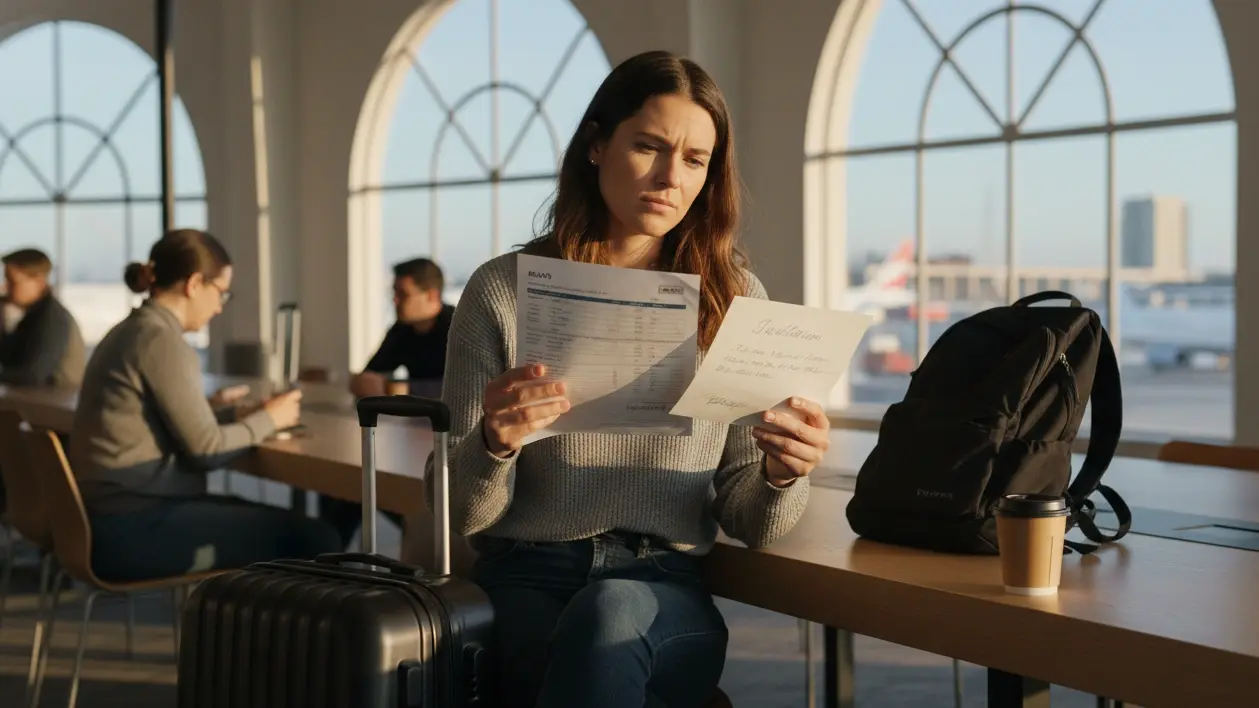
When you book hotels, the accommodation proof usually creates a visible calendar. The hotel dates show where the trip begins, how long each city stay lasts, and when the journey ends. When you stay with a friend, sibling, cousin, parent, partner or family host, that calendar is less visible unless your documents make it clear.
That is why the flight itinerary has to do more than show entry and exit. It has to support the private-stay narrative. The route should lead naturally to the host’s city or region. The arrival date should match the host’s availability. The stay length should feel proportional to the relationship and purpose. The return date should support the idea that the visit is temporary.
The hidden question behind the itinerary is simple: does this visit look real? A ten-day visit to attend a sibling’s graduation, arriving two days before the ceremony and returning a few days after, reads cleanly. A six-week stay with a distant friend, no work-leave proof, no clear return obligation and an oddly indirect route can raise more questions.
Private-stay files become stronger when the same story repeats across every document:
- the host invitation explains who invited you and when they will host you
- the flight itinerary enters near the host’s city or a logical airport
- the return date matches your leave, school, business or family obligations
- the cover letter explains timing without over-explaining
- funds and sponsorship evidence match who pays for what
The itinerary is not responsible for proving the whole relationship. It is responsible for making the travel dates and route believable inside that relationship.
This is especially important for first-time applicants. If you have limited travel history, a private stay may save money and show a real social reason for travel, but it can also make the file depend heavily on trust. The itinerary should reduce that trust gap by showing a visit that has a beginning, a practical middle and a firm end.
For repeat travelers, the standard is slightly different. A longer private visit may feel more natural if your passport history shows you usually return on time. Even then, the new itinerary should not contradict the host’s letter. Travel history can support credibility, but it does not fix unclear dates.
Official Document Logic Behind Host Stays
Official visa rules vary by country, but the same document logic appears often: applicants may need to show purpose of travel, accommodation, financial support and intention to leave. A private host can support accommodation or sponsorship, but the flight itinerary still needs to show a clear arrival and return plan.
For Schengen applications, the EU Visa Code says applicants may be asked for documents indicating journey purpose, accommodation or means to cover accommodation, sufficient means for the stay and return, and information allowing assessment of intention to leave before the visa expires. It also says Member States may require proof of sponsorship or private accommodation through a form showing host identity, address, invited applicant, length and purpose of stay. EU Visa Code, Article 14
France gives a practical Schengen example. France-Visas says travelers may be asked on arrival to show proof of accommodation covering the whole stay, and if hosted by an individual, a certificate of staying with a relative validated in the town hall may be required. It also lists return ticket or means to acquire one among arrival documents that can be requested. France-Visas arrival documents
For UK visit visas, GOV.UK explains that visitors should show they are genuine visitors and will leave at the end of the visit. If someone else provides travel, maintenance or accommodation, the applicant should provide evidence of what support is being provided, the relationship with the sponsor and the sponsor’s legal status in the UK where applicable. GOV.UK visitor supporting documents
Canada gives another clear host-letter framework. IRCC says a letter of invitation may be requested for a visitor visa and should include the visitor’s relationship to the host, trip purpose, how long the visitor plans to stay, where they will stay, how they will pay for things and when they plan to leave Canada. Canada invitation letter guidance
Private-stay rule of thumb: the host letter explains the stay; the flight itinerary proves the calendar. When those two documents disagree, the officer has to work harder to understand the visit.
How To Choose Dates And Routes For A Friend Or Relative Visit

Start with the human reality of the visit, not the cheapest flight deal. In a private-stay file, the best itinerary is the one that fits the host’s availability, your own leave dates and the reason for the trip.
Start With Host Availability
If your host says they can accommodate you from July 10 to July 22, do not submit a flight itinerary arriving July 5 unless you have a separate accommodation plan for the first five nights. If your host works weekdays and can receive you only on the weekend, a late weekday arrival may still be fine, but the file should not imply they are personally managing every moment if that is not true.
For family visits, anchor the dates to the real reason:
- arrive before the wedding, graduation, birthday, religious event or family ceremony
- leave within a reasonable period after the event
- avoid long unexplained gaps before or after the main purpose
- match the invitation dates to the itinerary dates
- include a separate plan if part of the stay is not with the host
Build Around Your Own Return Constraints
A private stay can accidentally look open-ended if the return date is weak. The officer is not only reading the host’s generosity. They are also reading whether you have a reason to go back.
Useful return anchors include:
- approved leave dates from your employer
- school or university restart date
- business obligations after the trip
- family responsibilities at home
- confirmed onward travel that fits the visa rules
If your itinerary shows a long private stay but your evidence of return is thin, the flight reservation may look like hope rather than a plan. A shorter, better-anchored itinerary often reads stronger than a long stay that depends only on the host’s promise.
Choose A Logical Arrival Airport
The arrival city matters more when accommodation is private because the host’s address becomes the accommodation anchor. If your host lives in Manchester, arriving in London can still be normal, but the route from London to Manchester should be easy to understand. If your host lives near Toronto, an arrival in Vancouver with no domestic connection or travel plan feels disconnected.
Use the airport test:
- Can the officer see how you get from airport to host?
- Does the host address match the region where you spend most nights?
- Is the connection route normal for your origin and destination?
- If the airport is far away, is there a clear reason such as direct flights or family pickup?
For Schengen private stays, do not let a cheap entry airport break the main-destination story. If your host is in France but your flight lands in Spain and the rest of the file does not explain the transfer, the itinerary may create unnecessary doubt. For Schengen-specific document and route alignment, use the Schengen visa flight reservation requirements guide.
Avoid Three Itinerary Moods
Private-stay files often fail not because the reservation is invalid, but because the itinerary sends the wrong mood.
| Itinerary Mood | What It Looks Like | Cleaner Fix |
|---|---|---|
| One-way feel | Return is missing, vague or too far away for the purpose. | Use a clear return or onward plan that matches permitted stay and home obligations. |
| Open-ended feel | Host invitation is warm but dates are loose, such as “whenever possible.” | Ask the host to state a specific hosting window and match flights to it. |
| Overbuilt feel | Many cities, multiple airports and complex transfers for a simple family visit. | Choose the route a practical traveler would use to reach the host. |
A good private-stay itinerary feels calm. It does not try to impress the officer with complexity. It simply shows a believable arrival, stay and return.
Direct Flights, Connections And Multi-City Plans
Direct flights are not required, but simple routing helps. If there is a normal one-stop route to the host’s city, that often reads better than a multi-stop route through unrelated cities. A connection through a common hub is usually easy to understand. A route that bounces across countries for no visible reason makes the private-stay story harder to read.
Multi-city plans can work when they match the visit. For example, arriving in London to stay with your sister, spending a weekend in Edinburgh with hotel proof, then returning from London can be coherent. Arriving in London, departing from Rome and claiming the whole stay is with a UK host is not coherent unless the file clearly explains the Europe segment and visa permissions.
Before locking the reservation, ask one practical question: would a stranger understand how this route gets me to the person I am visiting? If the answer is no, simplify the route or add the missing transfer logic.
How To Match The Itinerary With The Host Invitation
The host invitation and flight itinerary should sound like they belong to the same trip. If the host says “I will accommodate my sister from 3 September to 17 September,” the flight reservation should not show arrival on 28 August and departure on 5 October without explanation.
Make Dates Match Exactly When Possible
Exact matching is not always mandatory, but it removes friction. If your flight lands one day before the host period starts, explain where you stay that night. If your return is two days after the host period ends, show whether you have hotel proof, another host or a route reason.
Match these date fields before submission:
- flight arrival date
- host invitation start date
- host invitation end date
- return or onward date
- employment leave dates
- insurance dates where required
- cover letter travel window
- application form intended arrival and departure dates
Host Address Shapes The Route
The host’s address quietly shapes how the itinerary is read. A route that lands near the host supports the file without needing much explanation. A route that lands far away may still be fine, but the transfer should be realistic.
Examples:
- Host in Paris, arrival at Paris CDG: clean.
- Host in Lyon, arrival at Paris CDG with train plan to Lyon: explainable.
- Host in Lyon, arrival at Rome with no Italy plan: confusing.
- Host in Birmingham, arrival at London Heathrow with onward rail plan: usually logical.
- Host in Calgary, arrival at Toronto with no domestic connection: weak unless the itinerary explains the wider trip.
The goal is not to force the closest airport. The goal is to make the route legible in a 30-second review.
Cover Letter Timing
The cover letter should explain timing, not repeat every flight segment. In a private-stay file, it should connect the itinerary to the host relationship and purpose.
A useful sentence is specific:
- “I will visit my aunt in Lyon from 12 June to 24 June and return to work on 27 June.”
- “I will stay with my brother in Manchester for two weeks during my approved annual leave.”
- “I will attend my cousin’s wedding in Toronto and stay with the family host named in the invitation letter.”
A weak sentence is vague: “I will visit my relatives for some time and return later.” That may be emotionally true, but it does not help the officer understand the travel plan.
When Someone Else Helps With Costs
If the host pays for accommodation, meals or even flights, the itinerary still needs to look like your trip. Sponsorship evidence can support affordability, but it does not replace your reason to return or your responsibility to comply with dates.
Separate the roles clearly:
- host invitation confirms accommodation and relationship
- sponsor evidence confirms what support is provided
- flight itinerary confirms arrival, departure and route
- your employment, study or family evidence confirms return logic
This prevents the file from sounding like the host controls everything while the applicant has no independent timeline.
If The Host’s Plans Change
If the host’s availability changes before submission, update the flight reservation only after the new hosting window is stable. Changing only the flight dates while leaving the old invitation creates a contradiction.
Use a controlled update sequence:
- Confirm the new host dates in writing.
- Adjust the flight itinerary to fit the new window.
- Update the cover letter and application dates if needed.
- Update insurance or other date-bound documents.
- Remove old PDFs from the upload folder.
If the host can no longer accommodate you, do not keep using the old private-stay story. Either secure a new host with proper proof or use accommodation proof that matches the revised plan. For general reservation formatting and consistency basics, see the core flight reservation for visa guide.
When The Host Letter And Flight Dates Cannot Match Perfectly
Sometimes perfect matching is not realistic. You may arrive one day early because the only practical flight lands before the host is available. You may leave one day after the host period because the return flight is cheaper or safer. These are not automatically fatal, but the missing nights need to be accounted for.
Use a clean bridge:
- add one hotel night before the host stay
- show a train or domestic transfer after arrival
- ask the host to adjust the letter if they truly host the full period
- mention the practical timing briefly in the cover letter
- avoid leaving unexplained nights between private and hotel accommodation
The goal is not perfection for its own sake. The goal is preventing the officer from wondering where you are staying on the nights that the host letter does not cover.
How Stay Length Changes By Relationship And Purpose
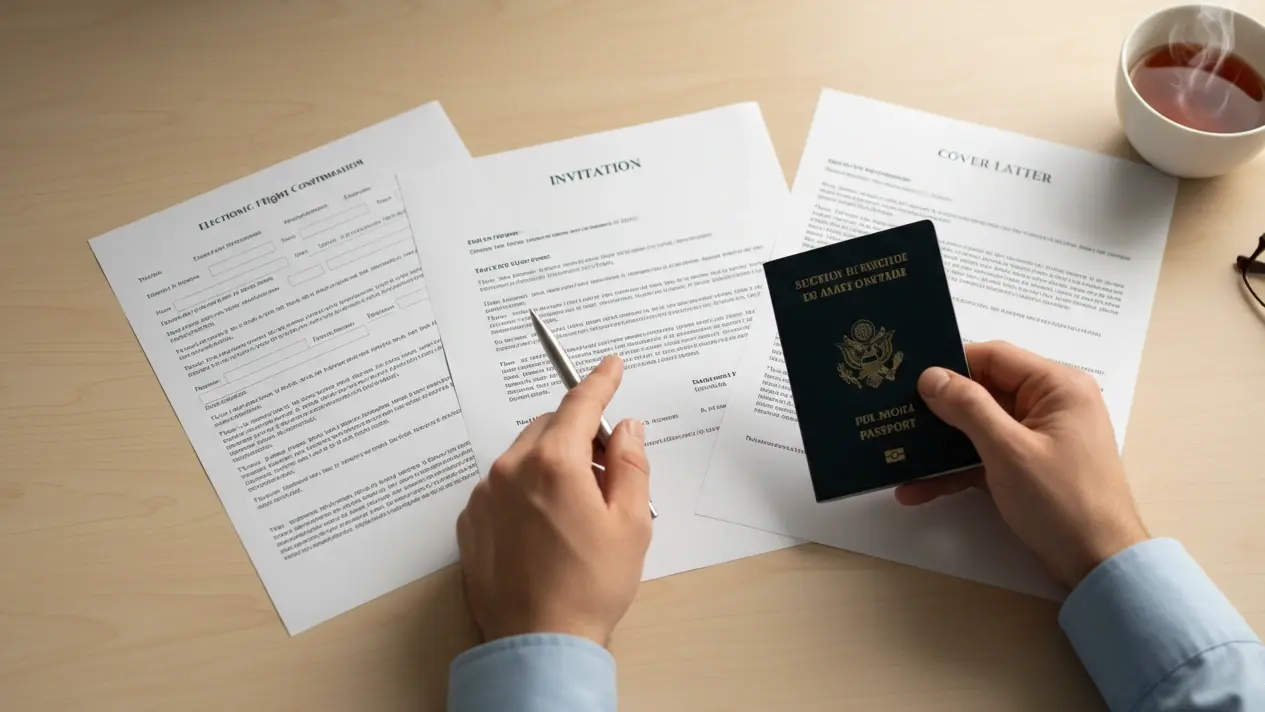
There is no universal “correct” stay length for a private visit. What feels reasonable depends on relationship, purpose, travel history, leave approval, finances and the visa category. The same three-week stay can look normal for visiting parents and too loose for a first-time visit to a casual friend.
Close Family Visits
Close family visits can support longer stays when the rest of the file agrees. Visiting parents, siblings, adult children or grandparents often has a stronger relationship explanation than visiting a casual friend. But the flight itinerary still needs to fit leave dates, funds and visa limits.
Strong patterns:
- two-week visit during approved leave
- arrival before a family ceremony and return shortly after
- longer parent visit with clear funds and return obligations
- return date before work, school or care responsibilities restart
Friends Or Distant Relatives
For friends, distant relatives or first-time hosts, shorter and more specific often reads stronger. A ten-day visit with clear tourism and host dates may look more credible than a vague two-month stay with a friend the applicant has not seen in years.
Make the reason visible:
- shared holiday dates
- specific event or gathering
- tourism plan based from the host’s city
- clear return to work or study
Mixed Host And Hotel Stays
Some trips combine private accommodation with hotels. That can be perfectly credible when the transition is clear. For example, you may stay with family in London for a week, then book hotels for a Scotland weekend, then return home.
Mixed stays need clean date boundaries:
- host dates should not overlap hotel dates unless explained
- hotel dates should cover nights away from the host
- route should match the city sequence
- cover letter should summarize the split simply
Do not let a mixed plan create missing nights. Missing accommodation nights are one of the fastest ways to make an otherwise normal private visit feel unfinished.
Who Pays For The Flight Can Change The Evidence Needed
If you pay for your own flights, your bank activity should be able to support the cost and the trip length. If the host offers to pay for flights, the host’s letter or sponsor evidence should say what support is provided. If both share costs, keep the explanation simple.
Cost support should not blur the return plan. A host may provide accommodation and food, but the applicant still needs a reason to leave at the end of the visit. That is why the return flight, leave approval and home-country ties still matter even when the host is financially strong.
A useful funding split looks like this:
- applicant pays for flights and personal spending
- host provides accommodation at their home
- host contributes meals or local transport if stated
- return date matches applicant’s work, school or family duties
This gives the officer a complete picture without making the host invitation carry every part of the application.
Mistakes That Weaken Private-Stay Itineraries
Private-stay itinerary problems are usually not dramatic. They are small inconsistencies that make the officer pause.
Dates That Work Technically But Not Socially
A flight may fit the visa dates but still feel strange. Arriving after the wedding, leaving before the graduation, staying weeks beyond the host’s invitation or arriving while the host is overseas can weaken the story.
Ask whether the date makes social sense. If not, fix the itinerary or explain the real reason with evidence.
Airport Choices That Make The Officer Work Too Hard
A distant airport is not automatically wrong, but unexplained distance creates work. If the host lives far from the arrival airport, show a normal route onward or mention the transfer in the cover letter.
A private-stay application should not require the officer to research train maps, domestic flights or geography just to understand where you sleep first.
Return Timing That Looks Like Hope
A return flight should look intentional. If the return is at the edge of permitted stay, long after the host window or outside your leave approval, it can look like you are stretching the visit.
Better return timing usually sits inside all three boundaries:
- inside the visa or permitted stay limit
- inside the host’s stated accommodation window
- inside your approved leave or home obligation timeline
Valid Reservation, Weak Story
A technically valid reservation does not rescue a contradictory file. If the host letter says you will stay in Berlin, the cover letter says Paris, and the flight arrives in Amsterdam with no explanation, the problem is not the booking reference. The problem is the story.
Review the reservation after reading the invitation, not before. The flight should confirm the file’s logic, not force the file to explain the flight.
Overconfidence In The Host Relationship
Applicants sometimes assume that family or friendship automatically makes the itinerary credible. It helps, but it does not replace dates. A strong relationship with weak timing can still create doubt. A sincere invitation with no return plan can still look incomplete.
Do not rely on emotional closeness alone. Make the travel plan observable:
- who you are visiting
- where you will stay
- when you arrive
- when you leave
- why those dates make sense
- how the trip fits your obligations at home
That is the difference between “I have someone there” and “this is a complete private visit.”
Pre-Submission Self-Audit
Before uploading the file, run the application like a reviewer would. Start with the flight itinerary and ask whether each supporting document confirms or contradicts it.
| Check | What Should Match | Fix If It Fails |
|---|---|---|
| Arrival date | Host invitation start date or first-night accommodation | Update host letter, add hotel proof or change arrival. |
| Arrival city | Host location or logical onward route | Explain transfer or choose a cleaner airport. |
| Stay length | Relationship, purpose, leave and funds | Shorten, document purpose or strengthen return evidence. |
| Return date | Visa rules, leave approval and host window | Move return or update supporting dates. |
| Funding | Applicant funds and host/sponsor role | Clarify who pays for flights, stay and daily expenses. |
| Cover letter | Same travel window and purpose | Replace vague timing with specific dates. |
A good private-stay flight itinerary is not complicated. It is consistent. It lets the officer understand the visit without guessing where you will stay, why you chose those dates, or when you plan to leave.
Final rule: make the host invitation and flight itinerary read like two parts of the same document. The invitation explains the human reason for the visit. The itinerary shows the travel calendar. When both line up, the private-stay file becomes much easier to understand.
FAQ
Do I need a flight itinerary for visa when staying with friends or relatives?
Yes. A flight itinerary is often needed because it shows your intended arrival, departure, route and stay length. When there is no hotel booking, the itinerary should match the host invitation and private accommodation evidence.
Can I apply for a visa without hotel booking if I stay with relatives?
Often yes, if the visa route accepts private accommodation proof such as an invitation letter, host form or official accommodation certificate. The flight itinerary should match the host dates and address.
What should the host invitation include?
The invitation should normally identify the host, the guest, the relationship, the visit purpose, the stay address, the hosting dates, who pays for what and when the visitor plans to leave.
Should my flight arrive in the host’s city?
It is usually cleaner when the flight arrives near the host, but a different airport can work if the transfer is logical and the itinerary still supports the host address and trip purpose.
Is a one-way itinerary safe for visiting family or friends?
A one-way itinerary can look open-ended for visitor visas unless the visa type or onward plan clearly supports it. A return or onward itinerary is usually stronger for a temporary private visit.
How long should a private family visit be?
The stay length should match the relationship, purpose, leave dates, funds and visa rules. Close family visits can justify longer stays, but the return date still needs to look clear and temporary.
What if my host dates change before submission?
Update the host invitation first, then update the flight itinerary, cover letter, insurance and application dates so the file shows one consistent travel window.
What is the biggest mistake in a private-stay flight itinerary?
The biggest mistake is submitting a valid itinerary that does not match the host invitation, arrival city, accommodation dates, leave approval or return evidence. Consistency matters more than decorative formatting.
Disclaimer: This article provides general visa-document preparation guidance, not legal advice. Requirements for host invitations, private accommodation, return tickets, funds and supporting documents vary by country, nationality, visa type and application channel. Always follow the official checklist from the relevant embassy, consulate, visa center or immigration authority before submitting your application.
Related posts

Court Hearing Abroad Visa Flights: Match the Notice and Dates
18 Oct, 26
Shorter Schengen Visa Granted: Check Days Before Rebooking
18 Oct, 26
Unaccompanied Minor Visa Flights: Consent to Airline Handover
18 Oct, 26
Overseas Job Interview Visa Flights: Visit, Not Work
18 Oct, 26
Visa Flight Reservation With a Medical Escort: Two-Person Checklist
18 Oct, 26
Humanitarian Travel Visa Flights: First Choose the Route
17 Oct, 26
Adoption Travel Visa Flights: Parent Trip vs Child Return
17 Oct, 26
Freelancer Visa Travel Dates: Apply, Revise or Wait?
17 Oct, 26
Flight Evidence for a Professional Licensing Exam Visa
17 Oct, 26