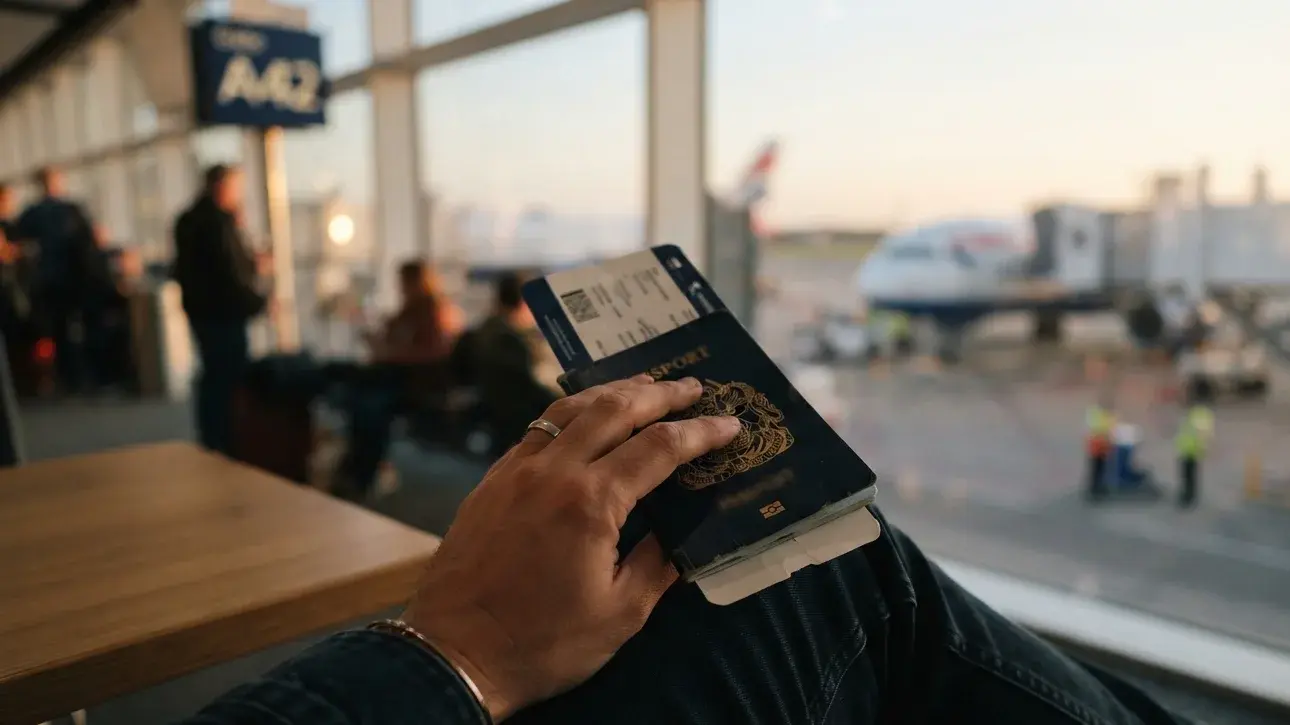
Canada Student Visa Checklist: Study Permit Documents

“Canada student visa” is the phrase many applicants use, but the main application is for a study permit. That distinction matters. The study permit authorizes study, while a temporary resident visa or electronic travel authorization is the travel document used to reach Canada when applicable. IRCC explains that approval of a study permit application also results in the appropriate visa or eTA for the applicant’s passport; the permit itself is not a visa.
This checklist follows the order in which a strong file is actually assembled: confirm eligibility and the school, secure the documents that control the application, prove that the finances make sense, complete any case-specific requirements, submit, give biometrics, respond to changes and only then finalize travel. It also preserves the original article’s useful timing scenarios without allowing a temporary flight plan to overshadow the documents IRCC explicitly asks for.
In This Guide
Core Documents for a Canada Student Visa Checklist
Start with the current IRCC study-permit document guidance. It identifies the letter of acceptance, PAL or TAL in most cases, identity evidence, funds and a recommended letter of explanation, then flags medical exams, police certificates, proof of care for minors and local visa-office requirements as conditional. Treat the personalized online-document checklist and local instructions as controlling; this article is an organization framework, not a substitute for the checklist generated for your application.
1. Letter of acceptance from a designated learning institution
Upload the valid letter of acceptance in the dedicated LOA field. The institution, program name, level, location, start date and expected end date should agree with the answers in the form and the explanation letter. Post-secondary schools may be asked to validate the LOA. If the school does not validate it within IRCC’s deadline, the application can be returned, so applicants should confirm that the institution knows how to respond.
- Check the exact legal name of the designated learning institution.
- Confirm the campus and program shown on the letter.
- Verify intake and program dates before completing travel-related fields.
- Place only the LOA in the LOA-specific upload field unless IRCC instructs otherwise.
2. Provincial or territorial attestation letter
A PAL or TAL is required in most cases, although exemptions exist. IRCC describes it as confirmation from the province or territory that space is available and says it is generally provided through the designated learning institution. Quebec applicants normally deal with the Quebec Acceptance Certificate instead. Because the exemption rules can change and depend on study level and status, use the current IRCC PAL/TAL eligibility tool and guidance.
3. Identity and travel documents
Provide the passport or travel-document material requested for the applicant and each accompanying family member. Check that names, birth dates, passport numbers and expiry dates are identical across forms, school letters, financial evidence and any booking. A passport that expires early can limit practical travel planning and may affect document validity. Where an applicant is applying from a country other than the country of citizenship, proof of lawful status may also be required.
4. Proof of funds
Financial proof is not a single bank balance. IRCC requires evidence that the applicant can cover tuition, living expenses and transportation to and from Canada for the applicant and accompanying family. For programs longer than one year, the file should also explain how later years will be funded. Bank statements, tuition receipts, loans, scholarships, GICs and sponsor evidence can play different roles; use only documents that form a traceable and credible funding story.
Build One Coherent Funding and Study-Plan Story
IRCC’s proof-of-financial-support page publishes the current living-expense amounts and states that they exclude tuition and transportation. The figures are updated, so do not preserve a number copied from an older blog post. Select the application-date row that applies, add tuition and transportation, and account for every accompanying family member.
| Evidence | Question it should answer | Common inconsistency |
|---|---|---|
| Tuition receipt or school account | What has already been paid? | Claiming full payment when only a deposit was made |
| Bank statements or GIC | Are required funds available and traceable? | Large unexplained deposits just before submission |
| Education loan | What amount is approved and accessible? | Submitting an application or pre-approval instead of a firm sanction |
| Sponsor letter and income evidence | Who pays, why, and can the sponsor sustain it? | A sponsor promise without matching income or relationship evidence |
| Scholarship | What costs and period does the award cover? | Treating a partial award as complete funding |
Explain why this program makes sense
The recommended letter of explanation should connect the applicant’s previous education or work, the chosen program, the institution and the intended outcome. It should not become a collection of slogans about Canada. Explain a real progression, address any study gap or change of field, and show that the finances match the plan. If the program start date changes, the school evidence and explanation must be updated together.
Applicants who need a broader planning model for reservation choice, timing and document alignment can use the complete flight-reservation planning framework. That guide owns the general booking workflow; this Canada checklist only addresses a reservation where it affects study-permit consistency, proof of transportation funds or post-approval travel readiness.
Forms and Case-Specific Evidence You Should Not Miss
Application forms and supporting uploads
- Complete the forms generated for the place and method of application.
- Use the same names, addresses, education history and travel dates throughout.
- Review validation pages, signatures and fee steps before submission.
- Upload each document in the field intended for it.
- Translate documents according to IRCC’s current requirements.
Your personalized checklist may request evidence beyond the general list. Local visa-office instructions can ask for academic records, employment evidence, sponsor documents or a country-specific study plan. Those requests are not optional simply because they are absent from a generic checklist.
Medical exam, police certificate and custodianship
A medical exam may be needed based on length of stay, recent residence or travel, and the type of work the student expects to do. A police certificate may be requested in some cases. A child under 17 travelling without a parent or legal guardian normally needs custodianship arrangements. Start slow external documents early, but do not obtain time-sensitive evidence so early that it expires before it can be used.
Accompanying family members
Each family member has a separate status and document path even when applications are submitted together. Match names, relationships, financial calculations and intended travel timing. Do not assume the student’s admission automatically establishes a spouse’s work authorization or a child’s status; check the current rules that apply to the family member.
Use a Biometrics-First Timeline Without Letting Dates Drift

The two practical anchors are the program start date and the deadline in the biometric instruction letter. Before submission, the applicant controls document readiness. After a BIL is issued, the deadline becomes operational. IRCC currently tells applicants to book promptly and generally gives 30 days from receipt of the BIL to give biometrics. Always follow the individual letter if its instructions differ.
Before biometrics: prepare, do not speculate
- Confirm the LOA and any PAL, TAL or CAQ requirement.
- Complete financial evidence and the explanation letter.
- Check passport validity and identity consistency.
- Identify the nearest biometric collection location.
- Keep the school informed if the intake may need to be deferred.
- Avoid buying a non-refundable ticket merely to make the file look complete.
A Bengaluru applicant, for example, can identify a biometric appointment location and plan the trip to the centre before receiving the letter, but should not invent an appointment date. The useful preparation is logistical: valid ID, the instruction letter, appointment availability and enough time to act inside the stated window.
If you cannot meet the biometric deadline
Do not ignore the letter and do not create a flight booking as a substitute. Follow the instructions in the account, retain evidence of the obstacle and contact IRCC using the appropriate channel as early as possible. A cancelled appointment, illness or service interruption should be documented. The response must address the missed biometric action, not redesign the travel narrative.
Do You Need a Flight Reservation Before Biometrics?

Usually, no paid ticket is needed merely because biometrics are approaching. The general IRCC checklist focuses on eligibility and supporting documents, while the financial rules include the cost of transportation. A flight itinerary may be useful if a personalized checklist requests one, if IRCC asks for additional evidence, or if it clarifies a specific arrival constraint. It should never compensate for a missing LOA, PAL/TAL, proof of funds or explanation.
Use a three-way decision rule
- Submit now: only when the checklist explicitly requests flight evidence or a case-specific fact makes it material.
- Prepare but wait: when the program date is stable but the decision and travel dates are not.
- Do not add it: when it creates a date conflict, implies an unaffordable commitment or adds no requested evidence.
If a reservation is genuinely needed, understand what the document should contain before choosing a format. The foundational flight-reservation guide explains passenger details, itinerary fields, booking references and the difference between a reservation and a paid ticket. This page does not repeat that definition because its dominant job is to organize the Canadian study-permit file.
What useful flight evidence must accomplish
- Use the passport name without creative abbreviation.
- Fit the school’s current start and arrival window.
- Use a plausible route and connection.
- Avoid transit requirements the traveller cannot meet.
- Remain clearly distinguishable from a fabricated or manually edited PDF.
- Stay subordinate to the official application evidence.
One-way versus return logic for students
A student may intend to travel one way because the study program lasts many months, yet still must show the ability and intention to leave when authorized stay ends. IRCC’s eligibility guidance focuses on funds for return transportation and proof that the applicant will leave when the study permit expires; it does not turn every study-permit application into a requirement to buy a dated return ticket before approval. Explain the temporary-residence logic through the full file rather than forcing an unrealistic return date.
After Biometrics: Move from Application Readiness to Travel Readiness

Biometrics completion is not approval. Continue monitoring the account, respond to document requests and keep the school informed. A reservation becomes more useful only as the program date, decision and entry documents become clearer. Its usefulness rises when uncertainty falls; it does not rise simply because more days have passed.
Approval-readiness sequence
- Confirm that biometrics show as received or completed in the application account.
- Respond to medical, passport or additional-document requests.
- Check the current LOA and any deferral or late-arrival rule from the institution.
- On approval, review the port-of-entry letter of introduction and the visa or eTA details.
- Check the passport, medical validity if applicable and earliest sensible arrival date.
- Only then compare fares, refund rules, baggage and transit requirements.
When converting a tentative plan into a real ticket, preserve the route logic but do not feel compelled to keep the same airline or flight number. The final booking must work operationally. Check connection time, through-baggage, terminal changes, transit visas and the institution’s arrival guidance. A cheaper itinerary is not cheaper if it requires a visa you cannot obtain or risks missing orientation.
Do not let an expired placeholder control the file
Temporary reservations can expire. If no one has requested an updated itinerary and the travel dates remain uncertain, repeatedly refreshing it can create version drift. If IRCC asks for a new document, respond with one current version and a concise explanation. Do not upload several contradictory options “just in case.”
Special Cases That Change the Checklist or Timing
Program deferral after submission
Obtain the school’s written deferral instructions and updated acceptance evidence. Review messages in the IRCC account and use the instructed method to submit the new document. Update any explanation that names the old intake. A flight reservation should be changed only after the governing school timeline changes, not used to create that timeline.
Quebec studies
Quebec has a separate CAQ layer and its own financial framework. Do not substitute a generic PAL/TAL assumption or a non-Quebec living-expense number. The admission, CAQ, study-permit form and financial evidence should identify the same school, program and dates.
Minor student travelling without a parent
Build the file around guardianship or custodianship evidence, school arrangements, accommodation and the responsible adults. Flight timing is secondary to proof of care. If someone accompanies the minor for only part of the journey, make that relationship and handover plan intelligible.
Accompanying spouse or children
Calculate funds for the full family and distinguish each person’s application. Coordinated travel is sensible, but different processing outcomes may require flexible bookings. Do not create one group itinerary that conceals different status requirements.
Schengen transit or a separate European application
Canadian study-permit rules do not govern a Schengen visa or airport-transit decision. Applicants whose route or separate trip creates a Schengen filing question should consult the Schengen flight-reservation requirements guide for that jurisdiction’s route, date and checklist logic. Keeping the two rule sets separate prevents a Canadian checklist from absorbing an unrelated search intent.
Late decision close to the intake date
Contact the institution before improvising. Ask about the latest arrival date, online start options or deferral. If the school permits late arrival, retain written confirmation. If the intake changes, update the governing documents first. A last-minute premium ticket cannot cure an obsolete acceptance timeline.
Final Canada Study Permit Submission Audit
Run this audit from the perspective of internal consistency rather than document volume. More uploads are not automatically better; every extra file creates another name, date, amount or claim that can conflict.
Identity and school
- Passport details match every form and supporting document.
- LOA identifies the correct DLI, campus, program and intake.
- PAL, TAL or CAQ status is correct for this application.
- Academic history supports the explanation of program choice.
Financial capacity
- Current official amounts were used for the application date.
- Tuition, living expenses and transportation are all covered.
- Accompanying family members are included.
- Large deposits and sponsor relationships are explained with evidence.
- Funding beyond the first year is addressed for a longer program.
Timing and conditional evidence
- Medical, police and custodianship requirements were checked.
- Local visa-office instructions were reviewed.
- The program date agrees across the LOA, explanation and forms.
- Biometrics are planned only after the BIL is received.
- Any flight itinerary is requested, useful, plausible and date-consistent.
The strongest file is not the one with the most polished ticket. It is the one in which admission, study purpose, finances, temporary-residence logic and personal circumstances tell the same verifiable story. Keep one master timeline, save the submitted version of every document and record every later update.
Frequently Asked Questions
What documents are required for a Canada study permit?
Most applicants need a valid letter of acceptance, a PAL or TAL unless exempt, proof of identity, proof of funds and the required application forms. A letter of explanation is recommended. Medical exams, police certificates, custodianship evidence and local visa-office documents depend on the applicant’s circumstances.
Is a Canada study permit the same as a student visa?
No. A study permit authorizes study in Canada but is not a travel visa. If IRCC approves the study permit application, it also issues the appropriate temporary resident visa or electronic travel authorization when one is required for the applicant’s passport.
Do I need a flight ticket for a Canada student visa application?
IRCC’s general study-permit document list does not make a paid flight ticket a standard required document. Applicants must show funds for transportation to and from Canada and satisfy the temporary-residence requirements. Submit a flight itinerary only when the application channel requests it or when it materially clarifies a travel plan.
Do I need a PAL or TAL for a Canada study permit?
A provincial or territorial attestation letter is required in most cases, but exemptions exist. Students studying in Quebec generally need a Quebec Acceptance Certificate. Check the current IRCC PAL or TAL rules for your level of study and circumstances before submitting.
How much money must a Canada student visa applicant show?
The amount depends on the application date, province, tuition, transportation costs and the number of accompanying family members. IRCC updates its living-expense amounts, so use the current official proof-of-financial-support table rather than copying an older figure from an article or checklist.
When should I give biometrics for a Canada study permit?
If IRCC sends a biometric instruction letter, book the appointment promptly and follow the deadline in that letter. IRCC currently states that applicants generally have 30 days from receiving the letter to give biometrics, but the letter issued in the individual case is the controlling instruction.
Should I buy a non-refundable flight before study permit approval?
Usually, buying a non-refundable ticket before a decision creates avoidable financial and date-change risk. First secure the documents that determine eligibility and timing. After approval, confirm the letter of introduction, passport, entry document, program start date and any medical validity before ticketing.
What if my program start date changes after I apply?
Get written instructions or an updated acceptance document from the school, check whether IRCC requests an update, and keep the application record consistent. Do not quietly alter only a flight itinerary. The school document, explanation and any travel plan should describe the same revised timeline.
Disclaimer: This guide provides general document-organization information, not legal advice or a promise of approval. IRCC requirements, amounts and procedures can change, and the personalized checklist or instructions issued for an application take priority. Verify current requirements on Canada.ca and with the relevant institution before submitting or purchasing travel.
Related posts

Flight Ticket for an Offshore Worker Rotation Visa
02 Oct, 26
Flight Booking for a Short Language Course Visa
02 Oct, 26
Visa Flight Itinerary After Passport Replacement
02 Oct, 26
Visa Reservation for an Archaeological Field Trip
02 Oct, 26
Flight Booking After a Visa Case Changes Consulates
02 Oct, 26
Flight Itinerary While a Consulate Holds Your Passport
02 Oct, 26
Flight Itinerary for Visa for Film Production Crews
02 Oct, 26
Flight Reservation for Visa for Trade Fair Exhibitors
02 Oct, 26
Flight Ticket for Visa: Postdoc Relocation Guide
26 Sep, 26