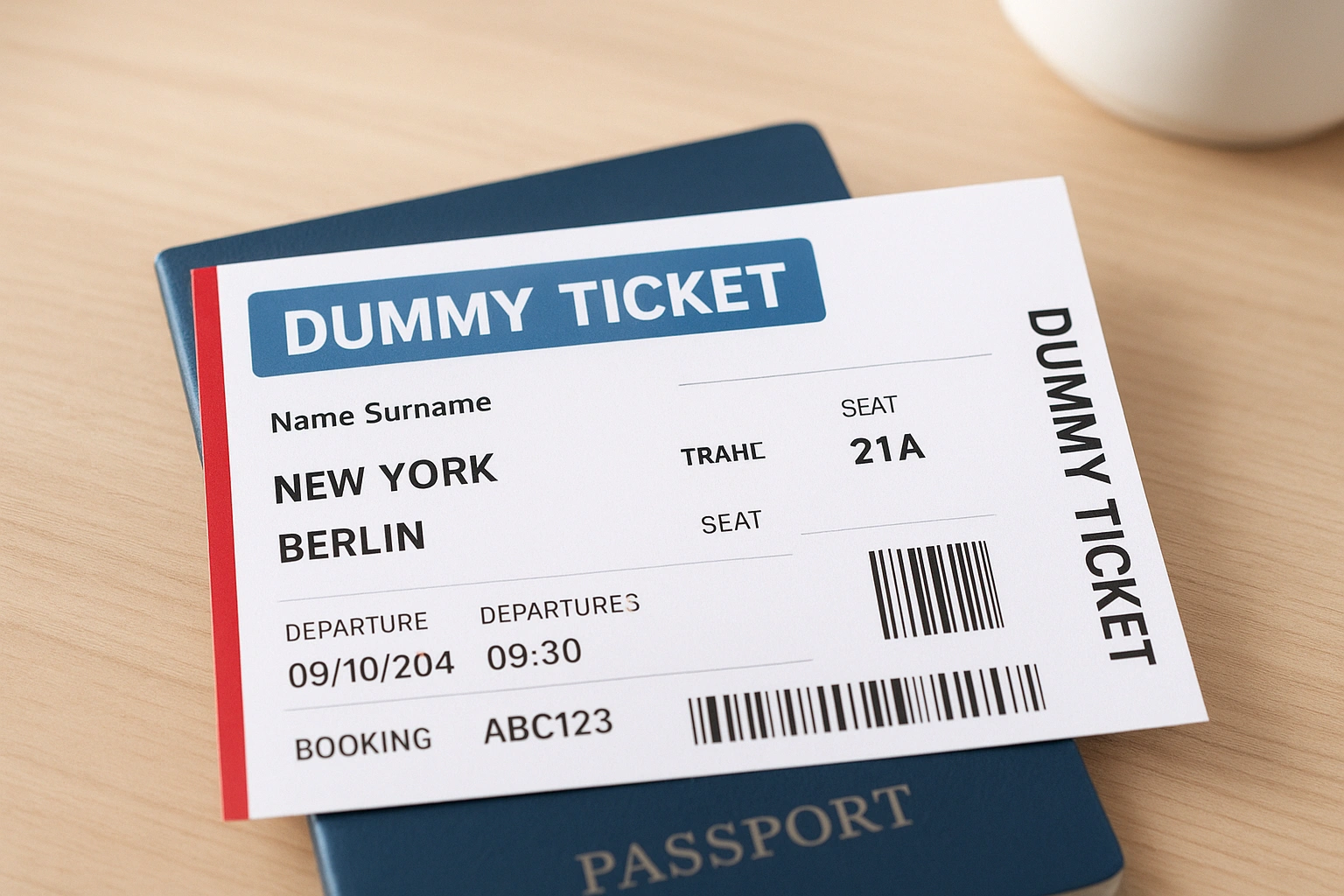
Your new passport landed in the mail just three days after you booked your visa appointment. The application form you submitted still references the old one, complete with its stamps and visa history. Now your flight reservation already sits right in the middle, and the wrong choice here reads as a mismatch to any visa officer scanning your file for consistency, not just accuracy.
We've watched applicants lose weeks over this exact detail: which passport number belongs on the itinerary, what to do when a valid visa is stuck in a book you no longer carry, and how renewal timing can quietly break a family booking with mismatched numbers. None of it is complicated once you know exactly which order to handle each piece in. If your passport situation is still moving, book a flight ticket for visa that updates as fast as your details do.
Key facts before creating a flight ticket for visa with two passports:
- Use the passport number that matches the visa form or the document requested by the visa center.
- Carry the old passport if it contains valid visas, prior stamps or travel history needed for the file.
- Update the reservation if the passport number, name spelling or travel document changes before submission.
- Do not buy the final airline ticket until passport, visa and travel details are stable.
- If the visa is still valid in an expired passport, check the destination’s official rules before travel.
In This Guide
- Official-source check
- When You're Mid-Passport-Renewal and the Embassy Wants a Flight Reservation Now
- Which Passport Number Actually Belongs on Your Flight Itinerary
- Visa Stickers, Old Passport Stamps, and What Your Flight Booking Needs to Reflect
- Name Spelling and Data Mismatches Between Old and New Passports That Wreck a Reservation
- Renewed Passport, Same Old Visa History — What Actually Carries Over
- Timing Your Flight Ticket for Visa Around Passport Renewal
- Minors, Dependents, and Family Applications — Passport Renewal Complications in Group Reservations
- Embassy-Specific Patterns: How Different Visa Offices Handle Old-vs-New Passport Itineraries
- FAQ
Official-source check: passport and visa-document rules vary by country, but official guidance confirms why consistency matters. The U.S. State Department visa FAQ says a valid U.S. visa in an expired passport can still be used with a new valid passport when conditions match. GOV.UK guidance says travelers with a valid vignette in an expired passport may need to carry both passports or use/update their eVisa. Always follow the destination checklist and visa-center instructions for your case.
Reviewed for: old-passport and new-passport consistency, passport-number mismatch risk, valid visa in expired passport wording, PNR/passenger-name alignment, group-booking passport changes and final-ticket timing.
When You're Mid-Passport-Renewal and the Embassy Wants a Flight Reservation Now

Getting a passport renewed rarely lines up neatly with a visa deadline. Somewhere in that gap, you still need a flight reservation that satisfies the consulate without locking you into details that could shift again.
Why Visa Offices Ask for a Provisional Itinerary Before Your New Passport Arrives
Most consulates set document deadlines around their own processing calendar, not yours. A Schengen visa center in Berlin doesn't wait for your passport office to catch up, and neither does a UK visa application center processing a Delhi applicant's file.
What they're checking is intent, not finality. A reservation with real dates, a valid airline record locator, and a route that matches your stated trip purpose does that job. It doesn't need to be attached to a passport number that's still sitting in a government office somewhere.
This distinction matters because applicants often delay booking anything until the new passport is in hand, assuming an unfinished passport disqualifies them from submitting a complete file. It doesn't. The itinerary and the passport update are two separate tracks that only need to converge by the time you travel, not by the time you submit.
How to Time Your Booking If Your New Passport Is "In Process"
Build backward from your travel date, not forward from your application date.
Start with your expected passport delivery window. Most passport authorities give a processing estimate, even if it's approximate. Add a buffer of at least two weeks past that estimate before setting your proposed departure date on the reservation.
For example, if you're applying for a US visitor visa from Mumbai and your renewed passport is expected in three weeks, don't set your itinerary's departure date any earlier than five to six weeks out. This protects you if the passport office runs behind, which happens more often than applicants expect.
A few practical steps make this easier to manage:
Confirm your passport tracking status the same week you finalize your itinerary dates
Avoid booking travel within the next two to three weeks unless your new passport is already confirmed as issued
Keep a copy of your passport application receipt on hand in case the consulate asks for proof that renewal is underway
None of this requires guessing. It requires sequencing the two processes so neither one blocks the other.
What to Do If the Old Passport Number Is Already on File With the Consulate
Some applicants start their visa account, book a consulate appointment, or begin an online form using their old passport number, only to have their new passport arrive before submission is complete.
This creates a small but manageable mismatch. The account or appointment record shows one number, and the passport you'll eventually travel on shows another.
Handle it in this order:
Check whether the visa portal allows editing the passport number field before final submission. Many Schengen and UK systems do, as long as you haven't paid the visa fee yet.
If the field is locked, don't panic and don't restart the entire application. Most consulates accept a short cover note explaining that the passport was renewed after the account was created, with the new passport bio page attached as a correction.
If you haven't booked your flight reservation yet, generate it against the new passport number from the start. There's no benefit to matching a reservation to an outdated number just because an early form field references it.
Take a traveler named Sarah Mitchell, applying for a Canadian visitor visa from Chennai. She registered her visa account using her old passport six weeks before it expired, expecting renewal to take a month. Her new passport arrived two weeks earlier than planned.
Rather than trying to force her flight reservation to match the account's original passport number, she submitted her application with the new passport details clearly listed, attached both passport bio pages, and included a one-line note explaining the renewal timing. The consulate processed it without any follow-up questions, because the documents told a consistent, easy-to-follow story.
That's the pattern worth remembering here. Consulates aren't trying to catch you out on a passport number. They're trying to confirm that your documents, taken together, make sense. A renewal mid-process is common enough that most visa officers have seen it dozens of times. What trips applicants up isn't the renewal itself, but leaving the passport number on the reservation stuck on a version of the passport that no longer matches the rest of the file.
Once the timing is sorted, the next question is more specific: when you do have both an old and a new passport in hand, which number actually belongs on the itinerary you submit?
Which Passport Number Actually Belongs on Your Flight Itinerary
Once your passport situation is settled, the next question is simpler than it feels. The itinerary exists to support your application, and that means it needs to line up with whichever document your visa officer will actually be looking at.
Matching The Reservation To The Passport Number Listed On Your Visa Application Form
Your visa application form is the anchor document. Whatever passport number appears there is the one your flight reservation should reflect, without exception.
This matters more than most applicants realize. The full legal name on your flight reservation must match the name printed in your new passport, not an older version, a nickname, or a shortened form used casually elsewhere. A traveler named James Whitfield applying for an Australian visitor visa needs "James Whitfield" on the reservation exactly as it appears on the passport bio page, spacing and all.
If your name or nationality changed as part of the renewal, whether through marriage, a legal correction, or a citizenship update, replace the ticket rather than trying to make an old reservation work. A mismatched name on a flight reservation is one of the fastest ways to introduce doubt into an otherwise clean application, even when every other document is in order.
There's one exception worth flagging. You can include a reference to your old passport when it explains valid visa history relevant to the current application, such as a prior visit stamp or an existing long-term visa. That's a supporting detail, not a replacement for matching your current passport number where the form requires it.
A few checks worth running before you finalize anything:
Confirm the passport number field on your application form is filled with your current passport's number, not a leftover from an earlier draft
Cross-check the name spelling on your reservation against your passport bio page character by character
If you're applying with an existing visa still valid in your old passport, note that separately rather than blending the two passport numbers into one document.
What Happens If the Reservation Shows the Old Passport Number
An outdated passport number on a flight reservation rarely causes an outright rejection on its own, but it's the kind of detail that invites a second look you don't need.
Here's where it gets specific. A valid visa in an old passport can still be used with a new passport, and the U.S. Department of State explicitly permits travelers to use a valid visa in an old passport alongside a current one. The same logic applies to a valid visa in an expired passport. None of this is unusual, and consulates are used to seeing it.
But there's a condition worth checking closely: the old passport carrying that visa still needs to meet the destination country's validity requirement, even though it's no longer your primary travel document. Some countries expect the passport holding an active visa to remain valid for a minimum period beyond your travel dates, regardless of whether you're also carrying a newer passport for general use.
Schengen visa holders face a specific version of this. If your Schengen visa is affixed to an old passport, you're required to carry both passports when you travel, the one with the visa sticker and your current one for identity and entry. Your flight reservation doesn't need to reference both, but you do need both physical documents on hand at check-in and at the border.
If you do spot an outdated passport number on an already-issued reservation, here's how to handle it:
Check whether the number is tied to a visa that's still valid and relevant, in which case it may not need changing at all
If it's simply an old number left over from before your renewal, request a corrected reservation rather than leaving it as is
Keep a copy of both passports together when traveling, since border officers will want to see the physical link between them, not just a reservation document.
When Airlines Require A Passport Number At All (And When They Don't)
Not every flight reservation needs a passport number populated in the first place, and this changes how much the old-versus-new question actually matters.
Airlines collect passport information as part of Advance Passenger Information requirements, which vary by destination country rather than by airline policy. A reservation for a route into the United States, the United Kingdom, or most Schengen countries will typically expect this field filled in accurately. A reservation for a route where the destination doesn't enforce advance passenger data as strictly may not require it at all.
This is worth checking before you assume the passport number question is high-stakes for every application. If your visa application form doesn't ask for a passport number tied to the reservation, and your route doesn't require advance passenger information, the field may be optional or even blank on a valid itinerary.
Where it does apply, existing long-term visas need to be factored in carefully. A traveler holding a multi-year visa issued against an old passport, now renewing that passport mid-validity, should confirm which document the airline expects at check-in before assuming the flight reservation itself needs updating. In many cases, the reservation can stay tied to your current passport for identification purposes, while the visa itself remains linked to the older document until it's formally transferred or until it expires naturally.
Once you're clear on what the reservation itself needs to show, the more physical question comes next: what to do about the visa sticker still sitting in a passport you no longer use day to day.
Visa Stickers, Old Passport Stamps, and What Your Flight Booking Needs to Reflect

A visa sticker doesn't move itself from one passport to another, and that simple fact creates a lot of confusion around what your flight reservation actually needs to show once you're holding two passports instead of one.
If Your Valid Visa Is Still in the Old Passport, Does Your Itinerary Need Both Passport Numbers?
The short answer is no. Your itinerary references the passport you'll be traveling and checking in with, not every passport sitting in your drawer.
Think of the reservation as a snapshot of your trip, not a record of your entire passport history. If you're flying to Toronto and your Canadian visa sits in an old passport while your new passport handles identification, the reservation only needs the details relevant to how you'll actually present yourself at the airport.
Where applicants get tripped up is assuming more documentation on the reservation equals more credibility. It doesn't. A reservation cluttered with two passport numbers, two sets of dates, or conflicting nationality fields reads as confused, not thorough. Keep it clean and let the physical passports do the rest of the explaining at check-in.
A traveler named Rachel Bennett, holding a valid five-year UK visit visa in her expired passport, only needed her current passport number on her flight reservation for a Delhi to London trip. Her old passport came along in her carry-on, ready for the visa page, but her booking itself stayed simple and tied to the passport she was actually flying on for identification.
Carrying Two Passports at the Airport: How Your Flight Reservation Should (and Shouldn't) Change
Your flight reservation is not the document that reconciles an old visa with a new passport. That job belongs to the check-in counter and the immigration desk, not a piece of paper generated weeks before departure.
This is where a lot of unnecessary anxiety creeps in. Travelers sometimes try to build a reservation that "explains" the dual-passport situation in advance, adding notes or requesting special formatting from whoever issues the ticket. None of that is necessary.
What actually matters is what you carry, not what the reservation says. At check-in, airline staff will typically ask for the passport matching your booking details for identification, then separately check the passport holding your visa if it differs. Both need to be in hand, but the reservation itself only has to be accurate for the passport it was built against.
A few things worth confirming before you fly:
Your current passport number matches exactly what's on your flight reservation
Your old passport, if it holds an active visa, is packed somewhere accessible rather than checked in
Any visa conditions tied to the old passport, such as a minimum remaining validity period, are still being met
Skipping the instinct to overcomplicate the reservation saves time and avoids introducing errors that weren't there to begin with. A simple, accurate booking tied to one passport does its job. The second passport travels with you, not inside the reservation's data fields.
Countries That Require a "Linking Letter" Between Old and New Passports at Check-In
Some destinations go a step further and expect formal proof connecting your old and new passports, especially when the visa itself wasn't transferred to the new document.
This letter isn't something your flight reservation can substitute for, and it isn't something you should expect a reservation provider to generate either. It's a separate document that comes from either the authority that issued your new passport or, in some cases, the consulate that issued your visa.
A handful of destinations that commonly expect this kind of linking documentation include:
Countries where the visa category requires proof that the applicant hasn't changed identity between issuance and travel
Destinations with immigration systems that flag mismatched passport numbers automatically and require manual clearance before boarding
Routes where the airline itself, not just the border authority, requests confirmation before allowing boarding with two passports
If your situation calls for this kind of letter, request it early. Passport authorities and consulates can take days to process these requests, and it's not something worth leaving until the week of travel. Once it's in hand, keep it together with both passports rather than trying to fold its details into your flight reservation.
None of this changes what your itinerary itself needs to look like. It stays tied to your current passport, accurate and uncomplicated. The linking letter, like the second passport, exists alongside the reservation, not inside it.
What starts to matter more from here isn't the visa sticker sitting in an old passport, but the data on the new one itself, particularly when renewal introduces even small differences in how your name or details are recorded.
Name Spelling and Data Mismatches Between Old and New Passports That Wreck a Reservation
Passport renewal rarely changes your identity, but it can change how that identity gets printed, and that gap is where a surprising number of otherwise solid applications run into trouble.
Why a Single Letter Difference Between Passports Can Get Your Itinerary Flagged
Passport authorities don't always transliterate names the same way twice. A name rendered one way on your old passport can come out slightly different on the new one, especially if your birth name isn't originally in Latin script or if formatting conventions changed between renewal cycles.
Consider a traveler named Mark Thompson-Reyes, whose old passport listed his surname as "Thompson Reyes" without a hyphen, while his renewed passport added one. On paper, it looks like a trivial difference. On a flight reservation used to support a visa application, it's enough to make a reviewing officer pause and check whether the applicant and the document are actually the same person.
This isn't about the reservation provider making an error. It's about the reservation faithfully reproducing whatever the current passport says, down to spacing, hyphenation, and diacritical marks. A few checks worth running before finalizing anything:
Compare your reservation's name field against your passport bio page letter by letter, not just a quick glance
Pay close attention to hyphens, apostrophes, and spacing, since these are the details most often dropped or added during renewal.
If your passport uses a middle name field differently than your old one did, make sure the reservation reflects the current format, not a habit carried over from before
Small as these differences seem, they're exactly the kind of detail that separates a clean application from one that generates a follow-up query.
Marriage, Legal Name Changes, and Rebooking Your Flight Reservation Correctly
A name change tied to marriage or a legal correction adds a layer that goes beyond simple spelling. Here, the question isn't just what your current passport says, but which name your visa application is built around.
Sequence this carefully. Your flight reservation should match whichever passport you're applying with, which almost always means the new legal name once your passport reflects it. A traveler named Emily Carter, who became Emily Sanders after marriage and updated her passport accordingly, should book her flight reservation under "Emily Sanders," not her previous name, even if older travel documents or loyalty accounts still reference "Carter."
The trickier scenario shows up when the visa application form itself hasn't caught up. Some government record updates lag behind passport issuance, meaning an applicant's official file might still list a maiden name weeks after the new passport is printed.
In that case, don't try to force the reservation to match an outdated government record instead of the passport. Consulates are generally looking for internal consistency across your documents as a whole, not a single frozen "correct" name pulled from history. If there's a gap between your passport name and an older record, that's better explained with a short supporting note than solved by deliberately booking a mismatched reservation.
A practical way to handle this transition:
Book the reservation under the name printed in your current passport, full stop
If any other document in your application still shows a previous name, flag that explicitly rather than letting the reservation quietly disagree with the passport
Keep a copy of your marriage certificate or legal name change document on hand in case the consulate wants to see how the two names connect.
Fixing a Reservation Already Issued Under the Wrong Passport Details
Sometimes the mismatch is discovered after the reservation already exists, and the fix depends heavily on how far along the application is.
If the visa application hasn't been submitted yet, this is the easiest version of the problem. Request a corrected reservation with the accurate name and passport details before anything goes to the consulate. There's no reason to submit a file you already know contains an error that's simple to prevent.
If the application has already been submitted with a mismatched reservation attached, the response depends on how the mismatch is likely to read. A minor formatting difference, like a missing hyphen, often doesn't require immediate action and can be addressed only if the consulate specifically asks about it. A more significant mismatch, such as an entirely different surname from a legal name change, is worth proactively correcting rather than waiting to see if it gets flagged.
Weigh the timeline before deciding how urgent the correction is:
Applications still weeks away from an interview or decision date have more room to submit a corrected reservation as a follow-up document
Applications close to a decision date may be better served by a brief clarifying note alongside the existing reservation rather than restarting the correction process.
Reservations tied to firm, non-negotiable travel dates should be corrected immediately regardless of where the application stands, since the accuracy of the travel details themselves matters as much as the name.
None of this needs to feel like damage control. A name mismatch caught early is a five-minute fix, and even one caught late is rarely more than a short explanation away from being resolved cleanly.
From here, the more interesting question isn't what your new passport says, but what it doesn't carry forward automatically from the old one, particularly when it comes to visa history and clearance status.
Renewed Passport, Same Old Visa History — What Actually Carries Over
A blank passport can feel like a fresh start, but visa offices don't read it that way, and neither should your flight reservation strategy.
How Emigration Clearance Status Resets (or Doesn't) When You Get a New Passport
Emigration clearance requirements, common for workers traveling from countries like India, the Philippines, and Nepal to specific destinations, are tied to the traveler, not the passport booklet itself. A new passport number doesn't erase your clearance history or automatically require you to start the process over.
That said, many emigration authorities still expect re-verification once a passport is renewed, even if your underlying eligibility hasn't changed. The passport number on file with the emigration authority needs to match your current travel document before clearance can be confirmed for an upcoming trip.
This creates a sequencing issue that catches travelers off guard. A worker renewing a passport ahead of a Gulf-bound flight, for example, may assume the emigration clearance from years earlier still applies automatically. In practice, the clearance system often needs the new passport number linked before departure, and that linking step can take longer than expected if requested at the last minute.
Before finalizing a flight reservation tied to this kind of travel:
Confirm whether your destination's emigration clearance system requires updating with your new passport number
Check how long that update typically takes through the relevant labor or emigration authority
Avoid setting a departure date on your reservation until the clearance update is either complete or realistically expected to finish in time.
What Happens to Passport Category Notes When Booking a Verifiable Itinerary
Passport category and endorsement details, such as an emigration check requirement, a non-requirement note, or other data tied to your professional or travel status, don't always transfer automatically from one passport to the next.
Some passport authorities carry these notations forward without any extra step. Others require the applicant to formally re-declare the relevant status during the renewal process itself. A traveler who assumes their new passport already reflects the same category as their old one may find, only when checking closely, that the field is blank or defaulted differently than expected.
This matters directly for timing a flight reservation. Booking travel dates before confirming your new passport's category status risks a mismatch between what the reservation implies about your travel purpose and what your passport's own endorsement page shows.
A short verification routine avoids this:
Review the category or endorsement page on your newly issued passport as soon as it arrives
Compare it against what your old passport showed, rather than assuming continuity
If anything looks different or missing, resolve it with the passport authority before setting firm dates on your itinerary.
Skipping this step rarely causes an immediate rejection, but it can slow down a visa review if an officer notices a category inconsistency between your passport and the purpose stated in your application.
Why Your Old Passport's Travel History Still Matters Even With a Fresh Booking
A new passport doesn't erase what happened under the old one, and visa officers know this well. Prior entries, exits, overstays, or previous refusals remain part of your travel record regardless of which passport number currently appears on your flight reservation.
This shapes how a fresh, accurate itinerary gets received. A traveler with a clean travel history and a well-timed reservation is likely to move through review smoothly. A traveler with a prior overstay or refusal, now applying again with a brand new passport, shouldn't expect the new document to reset that scrutiny, even if the reservation itself is flawless.
Understanding this helps set realistic expectations. The itinerary's job is narrow. It shows a specific, plausible trip tied to your current passport. It was never meant to offset or explain away travel history from before, and trying to make it do that job usually backfires.
If your travel history includes something that needs context, that context belongs in a cover letter or supporting statement, not in how the flight reservation is formatted or timed. Keep the reservation doing exactly what it's meant to do: reflecting an accurate, current, and verifiable trip. Let separate documentation carry the weight of explaining anything more complicated from your past.
A traveler named Daniel Osei, previously refused a visa under an older passport due to a documentation gap that has since been resolved, found this out directly. His new passport and a precisely timed flight reservation didn't erase the earlier refusal from the consulate's records. What actually moved his second application forward was a short letter addressing the previous refusal directly, submitted alongside a reservation that stayed simple and accurate rather than trying to compensate for history it wasn't designed to explain.
Once your passport's history and category status are accounted for, the next practical question becomes about sequencing everything else around the renewal calendar itself, from when to book to how firm those dates should really be.
Timing Your Flight Ticket for Visa Around Passport Renewal
Everything up to this point has been about accuracy. This part is about sequencing, and getting the order of operations right is often what separates a smooth application from a stressful one.
Booking a Reservation Before Your New Passport Number Is Confirmed
Some applicants need to move forward with a reservation before their new passport number is finalized, usually because a visa appointment or document deadline won't wait for the renewal to catch up.
Where the application form allows it, use your passport acknowledgment or tracking reference as a placeholder rather than guessing at a number that hasn't been issued yet. A traveler named Laura Bennett, applying for a UK visitor visa from Bengaluru, held off entering any passport number until her acknowledgment receipt confirmed her application was in final processing, then used that reference where the portal permitted it rather than leaving the field blank or filling it with outdated information.
The bigger risk shows up when a reservation gets built against a number that later changes. This happens more than applicants expect, particularly if a passport application gets sent back for correction or if a reapplication becomes necessary partway through.
A few habits reduce this risk significantly:
Wait for passport issuance confirmation before finalizing a reservation wherever your timeline allows it
If you must book early, keep the itinerary simple enough that updating the passport number later doesn't require touching flight dates or routing
Avoid submitting a visa application with a reservation tied to a passport number you haven't personally verified against the physical document.
Booking twice in a short window isn't ideal, but it's far less disruptive than submitting an application built on a number that turns out to be wrong.
What to Do If Your Visa Interview Date Falls Between Passport Cancellation and Reissue
There's a narrow, uncomfortable window in most renewal processes where the old passport has already been surrendered or cancelled, but the new one hasn't arrived yet. If your visa interview happens to fall inside that gap, the reservation question gets more delicate.
Some passport authorities issue a temporary document or an official receipt during this window that can substitute for identification purposes at an interview. Whether this is accepted depends heavily on the specific consulate, so it's worth confirming directly with the visa office rather than assuming it will work the same way everywhere.
If an interview can proceed using this temporary documentation, present a flight reservation that's realistic about the gap. Set travel dates far enough out that your new passport will reasonably be in hand before departure, and avoid presenting an itinerary that implies travel sooner than your passport situation can actually support.
Where possible, the better move is coordination rather than improvisation:
Check whether your interview date can be adjusted to fall after your expected passport pickup date
If rescheduling isn't an option, contact the consulate ahead of time to confirm what documentation they'll accept during the cancellation-to-reissue window.
Keep your passport application receipt and any temporary travel document together, ready to present alongside your reservation if asked.
Applicants who plan for this gap in advance rarely find it disruptive. The ones who get caught off guard are usually the ones who didn't realize their old passport would be physically taken during the renewal process itself.
Refundable Ticket Versus Reservation: Why a Real Ticket Becomes Riskier During a Passport Transition
A genuine, paid flight ticket locks in passenger details at the moment of purchase, including the passport number on file at booking. During a passport transition, that's exactly the kind of commitment that can backfire.
If your passport number changes after a real ticket is issued, whether from a delayed renewal, a corrected reissue, or a reapplication, airlines often require formal documentation to update passenger records, and some fare classes restrict changes altogether. What was meant to be a straightforward booking turns into an unplanned correction process, sometimes with a fee attached.
This is precisely the kind of situation where a verifiable reservation without a full purchase commitment tends to fit better. BookForVisa generates an itinerary with a real, checkable airline record locator, without tying you to a fare that becomes difficult to adjust if your passport details shift again before travel.
The practical comparison comes down to what's still in motion:
If your passport number, name, or travel window could still change, a reservation-only itinerary avoids locking in details prematurely
If everything is already finalized and travel dates are firm, a purchased ticket carries less risk of needing correction later.
Either way, whatever document you submit should match your current, verified passport details exactly, not a number you're hoping stays accurate.
Getting the timing right here isn't just about avoiding one rejected application. It's about not having to redo the same paperwork twice because the passport situation moved faster, or slower, than the booking did.
With the sequencing sorted for a single applicant, the next layer of complexity shows up when more than one traveler's passport is renewing on its own separate timeline, which is exactly where family and group applications tend to get complicated.
Minors, Dependents, and Family Applications — Passport Renewal Complications in Group Reservations
Family visa applications rarely move at one pace. Passports renew on different schedules for different family members, and a single shared reservation needs to hold up against all of them at once.
Booking One Reservation for a Family When Passports Are on Different Renewal Timelines
Children's passports typically carry shorter validity periods than adult passports, which means a family traveling together often has one member mid-renewal while everyone else's documents are years from expiring.
This creates an obvious trap. A parent finalizes a family flight reservation using everyone's passport details at once, only to realize the child's passport was renewed the week before and the new number was never updated on the booking. A traveler named Robert Ellison, applying for a Schengen visa for himself, his wife, and their eight-year-old daughter, nearly submitted a group itinerary before noticing his daughter's newly issued passport carried a different number than the one used when the reservation was first drafted.
The safer approach is to treat each family member's passport status as its own checkpoint before building anything shared.
Confirm every traveler's current passport number individually before generating a group reservation, rather than assuming details from an earlier trip still apply.
Start with whichever family member's passport is renewing slowest, since that timeline usually sets the earliest possible date the full reservation can be finalized accurately.
Double-check children's passports specifically, since shorter renewal cycles mean they're statistically more likely to be the outdated entry in a family booking.
Building the reservation around the slowest-moving passport, rather than the fastest, avoids having to redo the entire group document over one missed update.
Why Group PNRs Can Break When One Traveler's Passport Number Changes
A shared reservation ties multiple travelers to a single booking record, and that structure means an error affecting one passenger doesn't stay contained to just their line.
If one family member's passport number changes after the group reservation is already generated, correcting it isn't always as simple as editing a single field. Depending on how the reservation was structured, an outdated passport number for one traveler can require reissuing the entire itinerary rather than a quick patch to just that passenger's details.
This matters most for families applying together under a single visa category, where consulates expect the group's documents to arrive as a consistent set. A mismatch buried in one line of a shared reservation is often easier for a reviewing officer to spot than the same mismatch would be in a standalone individual booking, simply because the other names on the same document invite a closer side-by-side comparison.
Avoiding this comes down to sequencing, not correction:
Finalize passport renewals for every traveler in the group before generating the shared itinerary, even if that means waiting a few extra days
If one traveler's renewal is unavoidably delayed, consider whether a separate reservation for that individual, updated once their passport is confirmed, causes less disruption than repeatedly reissuing the full group document.
Review the completed group reservation line by line against each traveler's physical passport before submission, rather than trusting that the initial data entry was accurate.
Families who treat the group reservation as the last step, not an early one, tend to avoid this problem entirely.
Guardian Consent Documents and How They Interact With the Flight Itinerary
Minors traveling internationally often need a guardian consent letter, and that document typically references the child's passport number directly. A renewal that updates the child's passport without updating the consent letter creates a second point of mismatch layered on top of the reservation itself.
This is easy to miss because the consent letter and the flight reservation are usually prepared at different times, sometimes weeks apart, and rarely cross-checked against each other in the same sitting. A parent might update the reservation the moment a new passport arrives but forget that the consent letter drafted months earlier still cites the child's previous passport number.
Keeping these three elements in sync takes a specific order:
Renew the child's passport first and confirm the final number before touching either the consent letter or the reservation
Update the guardian consent document to reference the new passport number as soon as it's confirmed, rather than leaving it tied to outdated information.
Generate or update the flight reservation last, once both the passport and the consent letter agree on the same number.
A traveler named Michelle Turner, traveling with her twelve-year-old son to visit relatives in Toronto, learned this the practical way. Her son's passport renewed just before their trip, but the notarized consent letter from his father, prepared earlier in the process, still listed the old passport number. She caught the mismatch only because she cross-checked all three documents side by side before their visa appointment, and had the consent letter corrected in time rather than discovering the discrepancy at the airport.
That kind of side-by-side check, done early rather than at the last minute, is really the only reliable safeguard here. Once family and dependent bookings are handled correctly, the remaining variable isn't the traveler's documents at all, but how differently individual consulates and visa offices actually treat passport mismatches once they see them.
Embassy-Specific Patterns: How Different Visa Offices Handle Old-vs-New Passport Itineraries
Not every consulate reads a passport mismatch the same way. Knowing how much scrutiny to expect from a specific visa office changes how carefully you need to manage the old-versus-new passport question on your reservation.
Schengen Consulates and Their Sensitivity to Passport Number Mismatches
Schengen visas are physically affixed to a specific passport, which makes the passport number a more central detail than it is for many other visa types. Because the sticker itself is tied to one document, Schengen consulates tend to pay closer attention to whether an applicant's reservation, application form, and physical passport all reference the same number consistently.
This becomes particularly relevant for repeat Schengen applicants. A traveler who held a previous Schengen visa in an old passport and has since renewed it needs to be precise about which passport the new application and reservation reference. A traveler named Anna Whitfield, applying for her second Schengen visa from Mumbai after renewing her passport since her first trip to Paris, made sure her new application, her flight reservation, and her passport all matched exactly, while keeping her old passport with the original visa sticker available as supporting history rather than trying to reference it on the new form.
A few things worth confirming before applying to a Schengen consulate specifically:
Your flight reservation matches the passport number on your current application, not the one referenced in a previous Schengen visa
Any prior Schengen visa history is presented as supporting documentation, not blended into the current application's passport fields.
Your old passport, if it holds a still-valid visa relevant to your travel plans, is available to present separately if the consulate requests it.
Because Schengen visas are tied so directly to a physical document, precision here pays off more than it does with visa types that separate the visa record from the passport itself.
US Visa Applications and Why the Passport Field Rarely Gets Cross-Checked Against the Itinerary
US visa applications typically lock passport information early in the process, often through the DS-160 form, well before an interview or a flight reservation comes into play. Once that form is submitted, the passport data on file tends to stay fixed for that particular application cycle.
What this means practically is that the flight reservation, while still expected to be accurate and consistent, isn't usually the document a US consular officer is cross-referencing line by line against the passport field on the form. The interview itself, along with the physical passport presented in person, tends to carry more weight than a detailed match between the reservation and the application form's passport number.
This doesn't mean accuracy stops mattering. It means the stakes shift slightly. A minor inconsistency between an old DS-160 entry and a newly renewed passport is less likely to derail a US visa interview than the same inconsistency might be for a Schengen application, but it's still worth resolving before the interview rather than explaining it on the spot.
Applicants renewing a passport after submitting a DS-160 but before their interview should:
Bring both the old and new passports to the interview if the visa history spans both documents
Be ready to explain the renewal briefly and clearly if asked, without over-preparing for a question that may not come up
Keep the flight reservation itself simple and tied to the current passport, since it plays a smaller role in this particular verification process than the in-person interview does
Gulf and Southeast Asian Visa Portals That Auto-Validate Passport Numbers Against Airline Records
A growing number of e-visa systems across the Gulf and Southeast Asia now pull passport data directly from airline booking records as part of automated pre-clearance checks. This is a meaningful shift from consulates that rely on a human officer reviewing documents, because it removes the judgment call that a person might apply to a minor discrepancy.
Where this kind of automated system is in place, an outdated passport number on a flight reservation isn't just a presentation issue; it's a technical mismatch that can trigger an automatic flag before a human ever reviews the file. A traveler applying through one of these portals with a reservation still referencing an old passport number may find their pre-clearance rejected instantly, with no officer available to simply overlook the discrepancy the way one might in a more manual review process.
Given how differently these systems operate, it's worth checking in advance:
Confirm whether your destination's e-visa or visa-on-arrival system uses automated passport verification against airline data before finalizing your reservation
If it does, treat passport number accuracy on the reservation as non-negotiable rather than a detail that can be cleaned up later.
If the destination relies on manual review instead, minor timing gaps between passport renewal and reservation issuance are generally easier to resolve through direct communication with the visa office.
Understanding which category your destination falls into, automated or manually reviewed, changes how much margin for error you actually have. Getting it right the first time matters far more with a system that has no one available to ask a clarifying question.
Even with all of this handled carefully, mistakes still happen, and the real test isn't whether an error occurs but how quickly and cleanly it gets corrected once an application is already sitting with a visa office.
What to Do If You've Already Submitted a Visa Application With the Wrong Passport's Flight Details
Discovering a passport mismatch after submission feels worse than it usually is. Most of these situations have a straightforward fix, provided you approach the correction with a valid passport, the right supporting documents, and the right tone.
Contacting the Consulate to Amend Passport Details Versus Just Reissuing the Itinerary
The first decision is whether this needs consulate involvement at all, or whether a corrected reservation on its own solves the problem.
If the mismatch is purely on the itinerary, meaning your application form and passport already agree with each other, and only the passport number needs updating on the flight document, there's usually no need to contact the consulate directly. Simply requesting a corrected reservation and having it ready to submit or present at the interview is often enough.
The situation changes if the passport identity on your actual application form doesn't match your new passport identity. A traveler named Christopher Hale, who submitted a visa application for Canada listing outdated passport details weeks before his renewed passport arrived, needed to update the consulate record itself, not just the flight reservation attached to it.
When consulate contact is necessary, keep the request narrow and factual:
State clearly that your passport was renewed after submission and provide old passport data alongside your new expiry date for reference
Attach a passport copy of your new bio page rather than describing the change in text alone
Mention the issue date together with your new expiry date, since consulates often cross-check both fields against your visa file.
Avoid a long explanation or extensive apology. A short, clear correction request reads as routine administrative housekeeping, not a red flag.
Old passport details don't need to disappear from your file entirely. They simply need to be clearly separated from your current passport number so nothing reads as contradictory. Reissuing just the itinerary works when the passport details elsewhere in your file are already correct. Contacting the consulate becomes necessary when both the old passport and the new passport appear somewhere in your paperwork without a clear link between them.
When You Can Simply Submit a Corrected Reservation as a Supplementary Document
Many visa offices are set up to accept a corrected document as an addition to an existing file rather than requiring a full resubmission. This matters because restarting an application unnecessarily can cost weeks you don't have, particularly if an interview date is already scheduled.
Check your specific visa office's process for supplementary submissions before assuming you need to start over. Rules vary by consulate and by visa category, so what works for a straightforward tourist file might not apply the same way to a new visa application tied to prior refusals or previous travel history.
When submitting a corrected reservation this way, pair it with a short cover note rather than sending the document alone. A note along these lines does the job without overexplaining:
A single line identifying the correction, such as noting the reservation has been updated to reflect a passport renewed after the original submission
The booking reference, flight numbers, and updated travel dates for quick verification against the original file
The new passport number for quick reference
No extended justification. Visa officers process renewal corrections often enough that a brief note is sufficient
This approach keeps your file internally consistent without triggering unnecessary delay. A reviewing officer sees a corrected document and a clean file, rather than a confusing gap between what was submitted and what the passport actually shows.
A few edge cases deserve extra care. If you're holding a valid Schengen visa affixed to your old passport rather than a completed visa transfer, present both passports together rather than relying on the reservation to explain the connection.
Entry requirements for international travel differ enough between consulates that a mismatch acceptable in one application might draw extra scrutiny in another, especially if the passenger name on your reservation doesn't match your current name exactly.
Preventing This Mistake on Your Next Application: A Pre-Submission Checklist
The best fix for this problem is avoiding it in the first place, and that comes down to one habit: cross-checking every document against the current passport before anything gets submitted, not after.
Run this comparison across three places at once, side by side, rather than checking each document in isolation:
Passport number. Confirm it matches exactly across the application form, the flight reservation, and the passport's own bio page
Name spelling. Check spacing, hyphenation, and any diacritical marks letter by letter, not just at a glance
Date of birth format. Some passports and application forms use different date formats (day-month-year versus month-day-year), and a formatting mismatch can look like a data error even when the underlying date is correct.
Passport expiry date. Verify it's referenced correctly anywhere it appears in your application, particularly if an earlier draft was prepared before renewal was completed.
If you've recently booked a reservation by reusing old PDFs from a previous trip to the same country, run this check again before submitting. A visible mismatch buried in a reused document is easy to miss precisely because it looks familiar.
A name correction caught at this stage takes minutes to fix. The same error discovered after submission can take days, depending on how the consulate prefers to handle updates.
Applicants managing a passport renewal alongside a visa deadline are juggling two processes that don't naturally sync with each other. As this guide explains, the mismatch that causes the most trouble isn't usually a dramatic error. It's a small, overlooked detail, a leftover number, an old spelling, a forgotten update, that slips through simply because nothing forced a side-by-side check before submission. Building that check into your routine, every time, keeps your application the safest file you can submit.
Renewing Your Passport While You're Already Abroad and Need a New Return Flight Reservation
Passport renewal doesn't always happen at home. Long-term travelers, students on extended stays, and professionals working overseas sometimes need to renew mid-trip, and that changes what your return or onward flight reservation needs to show.
Why Renewing Abroad Changes What Your Return Reservation Needs to Show
Renewing at a foreign embassy or consulate follows a different rhythm than renewing at home. Processing times vary by mission, appointment slots can be limited, and the new passport is often issued with a different number, a new issue date, and sometimes a different validity period than what you'd expect from a domestic renewal.
If you're applying for a follow-on visa while abroad, perhaps moving from one country to another as part of a longer trip, your return or onward flight reservation needs to reflect whichever passport will actually be in your hand by the time you travel. A traveler named Julia Reynolds, studying in Berlin and renewing her passport at her home country's consulate there before applying for a follow-on Schengen visa to visit Portugal, had to time her flight reservation around the consulate's stated processing window rather than assuming renewal would move at the same pace it had back home.
This matters because visa offices reviewing an application from someone already abroad tend to expect extra clarity, not less. You're not applying from a stable home base with easy access to your usual documents. A reservation that references a passport number still pending issuance from a foreign consulate can raise more questions than the same situation would at home, simply because the reviewing officer has fewer familiar reference points to work from.
A few things worth confirming before finalizing anything in this situation:
The exact processing timeline quoted by the specific consulate or embassy handling your renewal, since this can differ significantly from domestic timelines for the same country
Whether the new passport will be mailed, held for pickup, or require a second in-person appointment, since each option affects how far out you should set your travel dates
Whether your current visa or residence permit in the country you're staying in remains valid throughout the renewal window, since passport and visa timelines don't always move together.
Aligning Return Travel Proof With a Passport Renewed Abroad
Once your new passport is confirmed, the reservation itself should follow the same principle used throughout every other scenario in this guide: match the document you'll actually be traveling on, not the one you started the trip with.
Where this gets more complicated abroad is coordinating that update across everything else tied to your stay. A student renewing a passport in Delhi while enrolled at a university, for example, may also need to update a residence registration, a local bank record, or an existing visa sticker before the new passport becomes fully usable for return or exit travel. The flight reservation is often the last piece to update, not the first.
Sequence it in this order:
Confirm your new passport number and expiry date the moment it's issued
Update any local registrations or residence documents that reference your old passport, since some countries require this before recognizing the new document for travel purposes.
Generate or update your onward flight reservation only once the passport itself is fully active and recognized locally, not the moment it's physically handed to you.
Skipping the middle step is where travelers run into trouble. A reservation built the same day a new passport arrives can be accurate on paper while still being premature if local authorities haven't finished processing the change on their end. Give yourself a short buffer between passport issuance and finalizing your onward booking, even if the passport itself looks ready to use.
What to Do If Your Return Flight Was Booked Before the Renewal Was Confirmed
Many long-term travelers book a return or onward flight well before a passport renewal becomes necessary, simply because the trip itself was planned first. If renewal timing shifts unexpectedly while that reservation already exists, you're left adjusting a booking rather than building one from scratch.
Start by checking whether the existing reservation still works structurally, even if the passport number needs updating. If the travel dates remain realistic given your new passport's expected issuance, a straightforward correction to the passport number field is often all that's needed. A traveler named Marcus Bellamy, working in Mumbai on an extended assignment, only needed to update his existing return reservation's passport field once his renewed passport arrived, since his travel dates had already been set with enough buffer to absorb the consulate's processing time.
If the renewal runs longer than expected and threatens to push past your existing return date, don't wait until the last moment to address it. Extending or rebooking early gives you more flexibility and avoids the added pressure of adjusting travel plans and passport logistics at the same time.
A short list of what to keep updated together in this scenario:
Your return or onward flight reservation, matched to your current passport number
Any visa or residence documentation in your current country of stay, confirmed as still valid through your adjusted travel dates.
A copy of your old passport, kept accessible if it contains a visa or entry stamp still relevant to your travel history, even though your new passport is now your primary document.
Travelers who treat passport renewal abroad as a logistics project, with clear sequencing between the passport, local documentation, and the flight reservation, tend to move through it without much friction. The ones who struggle are usually trying to solve all three at once, on a timeline the renewal process itself was never going to match.
Getting Your Passport Details Right Before You Book
Every passport transition comes down to the same principle. Whatever passport you're applying with is the one your flight reservation, your name, and your dates need to match, consistently and without leftover details from the old one.
Once that alignment is set, from a Schengen sticker in an old passport to a family renewing on separate timelines, the rest becomes routine. Check the passport first, then the paperwork, then the booking. That order rarely fails you. If your passport situation is still settling, a flight reservation that's easy to update as those details firm up keeps you from redoing work twice.
Final pre-submission check:
- The passport number on the reservation matches the visa form or approved update.
- The passenger name matches the current passport exactly.
- The old passport is included if it carries useful visa history or a valid visa.
- The route and dates match the cover letter, hotel proof and insurance.
- Any corrected reservation replaces the outdated version everywhere in the file.
- The final paid ticket waits until the passport and visa path are stable.
Frequently Asked Questions
Which passport number should appear on a flight ticket for visa?
Use the passport number that matches the visa application form and the passport you plan to submit or travel with. If the visa history is in the old passport, carry both passports and explain the connection clearly.
Can I apply for a visa with an old passport and travel with a new passport?
Sometimes yes, but rules depend on the country and visa type. U.S. and UK guidance both recognize situations where a valid visa in an expired passport can be used with a new passport, but the passports, identity details and visa conditions must line up.
Should my flight reservation use the old passport or new passport?
The safest choice is the passport currently used in the visa form or requested by the visa center. If the new passport has already been issued, update the reservation and application records wherever the visa office allows it.
What if my visa appointment was booked with the old passport number?
Check whether the portal allows passport-detail correction before submission or interview. If it does not, bring the old passport, new passport and any renewal evidence, then keep the flight reservation consistent with the file you submit.
Can a passport-number mismatch weaken a visa application?
Yes. A mismatch does not automatically mean refusal, but it can create avoidable questions. Visa officers and application centers look for one consistent identity story across passport, form, reservation, insurance and supporting documents.
Do airlines always require a passport number on the reservation?
Not always at the early reservation stage, but many booking systems and check-in processes eventually require passport details. If the document includes a passport number, it should match the passport being used for travel.
What should I do if the reservation was issued under the wrong passport?
Ask for the reservation to be corrected before submission when possible. If the visa file has already been submitted, follow the visa center’s amendment or supplementary-document process instead of silently presenting conflicting details.
Should I carry both old and new passports at the airport?
Carry both if a valid visa, prior stamps or relevant travel history sits in the old passport. The new passport proves current identity and validity; the old passport may prove visa history or an existing visa.
Can BookForVisa prepare a corrected flight ticket for visa?
Yes. BookForVisa can prepare a clean flight reservation for visa use with the passport details, name format, route and travel dates aligned to the file you intend to submit.
Does a flight ticket for visa guarantee approval?
No. It supports the travel-proof part of the file. Approval depends on the complete application, passport validity, eligibility, funds, purpose, ties, document consistency and the decision of the visa authority.
Need passport details aligned before your visa submission? Create a clean flight ticket for visa with BookForVisa before you buy the final airline ticket.
Create Your Flight Ticket for VisaFriendly reminder: BookForVisa provides temporary travel-proof documents for planning and application support. Requirements vary by country, visa category, airline, route and applicant situation. A flight reservation can support a file, but it does not guarantee approval, boarding or entry.