
Short answer: A flight reservation for an overseas job-interview visa should reflect the recruiter’s real meeting date, a feasible short visit and the applicant’s true exit plan—but only if the relevant visa checklist asks for proposed travel. Confirm that attending the interview is permitted under the chosen visitor route; an interview invitation is not a job offer or work authorisation. Do not present a held booking as a paid ticket.
This is about travelling abroad to meet a prospective employer, not attending a visa interview at a consulate. The distinction matters: interview attendance, employment and later relocation can require different permissions. The examples below are hypothetical and illustrate timing and document checks, not actual consular decisions.
Key facts
- UK Standard Visitor guidance expressly includes attending a meeting or interview but generally excludes work for a UK company.
- Schengen applications are governed by the actual main destination and supporting-document list.
- A written employer invitation establishes the planned meeting; it is not proof of permission to take the job.
- An itinerary or hold is not automatically a ticketed, paid fare.
- Interview date changes should be reflected in affected bookings and application facts through the permitted update route.
In This Guide
- Flight Evidence for an Overseas Job Interview: Visit, Not Employment
- Why Your Interview Date Should Drive Every Booking Decision
- Reservation, Airline Hold or Refundable Fare for an Interview Visit
- Building a Flight Itinerary That Survives a Consular Check
- Matching Hotel Dates to Your Flight Arrival and Interview Slot
- Schengen, Transit, and Multi City Routes for Interview Travelers
- Documents That Must Tell the Same Story as Your Itinerary
- Mistakes That Lead to Visa Refusal on Interview Trips
- A Realistic Timeline From Interview Invitation to Visa Decision
- Your Interview Trip File Is Ready for the Embassy
- Practical decision workflow
- Frequently asked questions
Official-source check: GOV.UK’s Standard Visitor overview includes attendance at a meeting or interview among permitted business activities while restricting ordinary work. The European Commission’s Schengen application guidance sets out main-destination filing, timing and evidence categories. Neither page says that every overseas job-interview applicant must buy a ticket before approval; use the current checklist for your passport, consulate and destination.
Reviewed for: overseas employer interview, UK visitor permitted activities, Schengen main-destination and requested flight-proof status.
Flight Evidence for an Overseas Job Interview: Visit, Not Employment
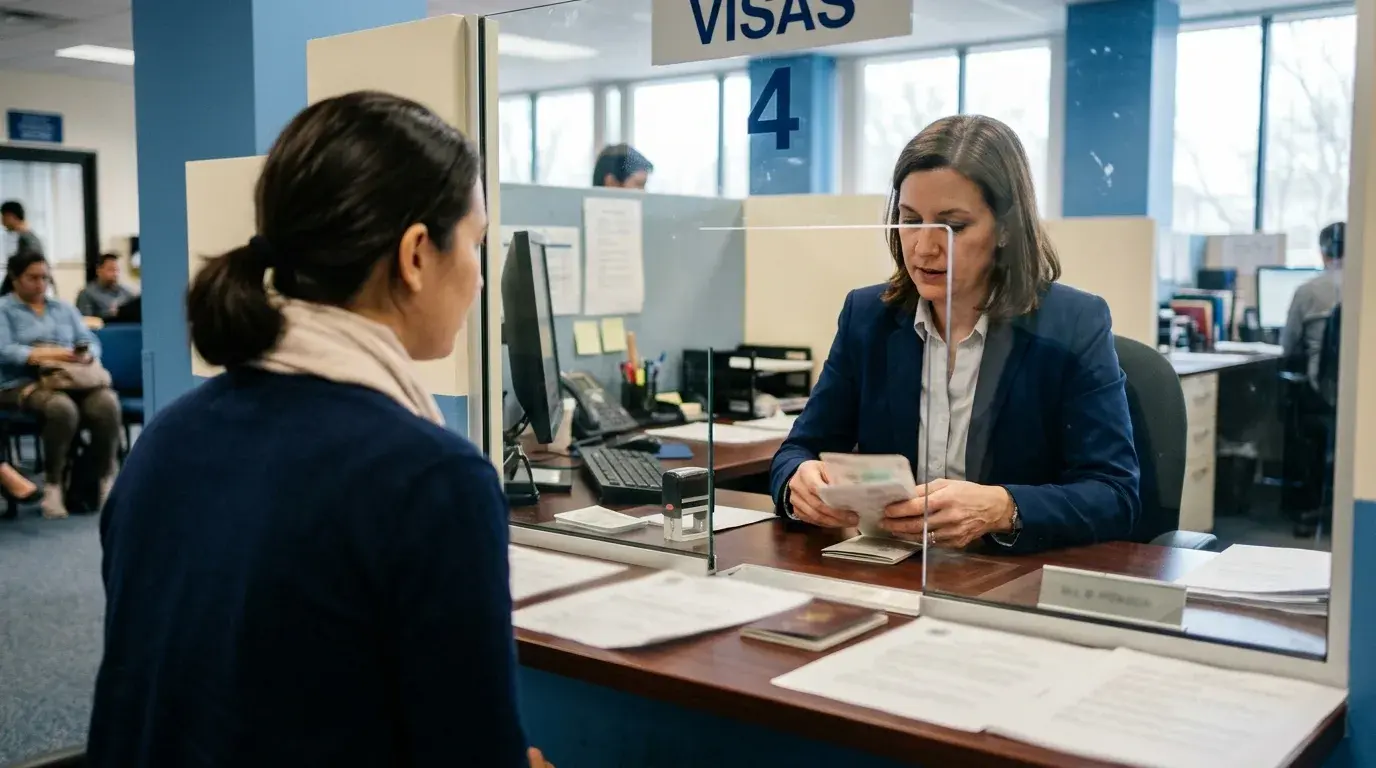
An overseas employer’s interview is a short visit for a specific purpose, not proof that the applicant already has a job or permission to work. The correct visitor or business route depends on the country, passport and planned activity. Read that route before making a flight reservation.
Why Consulates Ask for Itineraries Before an Interview Offer Exists
Do not assume every embassy requires a flight booking for a job-interview visit. The application may ask for intended dates, an itinerary, a reservation, a ticket or none of these. The invitation and permitted activity establish purpose; the flight document, if requested, only describes proposed travel.
A flight itinerary can show the proposed arrival, exit and route. It should fit the interview invitation and any hotel or host arrangement. It cannot establish that the interview is permitted under a visitor route or that employment may begin afterward.
When the authority accepts a reservation, there may be no need to buy a non-refundable ticket before the decision. Where it expressly asks for an issued ticket, however, an unpaid hold is not equivalent. The exact wording controls.
The Difference Between a Plausible Plan and a Purchased Commitment
A plausible itinerary reflects the invitation, realistic journey time and genuine plan. It should not be engineered around guessed reviewer preferences. If the employer has not fixed the interview date, describe the uncertainty honestly.
A paid ticket and a temporary reservation are different documents. Some visa routes accept proposed travel; others may specify a ticket. Check the current official checklist before choosing a more expensive form of proof.
A non-refundable fare can create financial risk if the application is delayed or refused. Read the fare rules and the authority’s travel-booking advice before paying; do not infer that all consulates recommend the same purchase sequence.
Think of it this way:
-
A flight reservation shows planned travel without upfront costs.
-
A paid ticket shows money spent, which proves very little about your intent.
-
Consular staff care about the first, not the second.
Check Purpose, Dates and Status Rather Than Guessing an Officer’s Review Time
A reviewer may compare the stated purpose, invitation, dates and travel evidence. We cannot know the order or number of minutes spent on a particular file. The applicant can control the accuracy of those facts.
-
Does the name match the passport exactly?
-
Do the flight dates sit around the interview date?
-
Does the route make sense for the city where the employer is based?
-
Is there a record they can verify?
If a booking reference is shown, it should be genuine and current. A PNR identifies a reservation record, but it does not prove payment, ticket issuance or that every consulate can verify it in the same system. Never invent a reference or describe an expired hold as active.
Copy passenger names from the passport and airline’s naming instructions. Minor formatting differences, such as a middle name omitted by the carrier’s system, are not automatically visa defects; ask the issuer to correct any material identity error.
Hypothetical example: Emily’s passport and booking format her middle name differently. She checks the airline’s passenger record and her application form before submission, then asks the issuer to correct a true mismatch. This does not imply an actual officer paused a real file.
Separate the Interview Visit From Permission to Work
Interview candidates are not classic tourists, and they are not classic business travelers either. That in-between status draws closer reading.
The applicant should state the actual short visit and any subsequent work plans separately. UK Standard Visitor guidance permits attending an interview but generally does not permit taking paid or unpaid work for a UK company. Other destinations have their own rules; an interview invitation is not a work authorisation.
Your itinerary can answer these doubts quietly. A short round trip, with a return date soon after the final interview round, signals that you plan to come back.
If the invitation covers a two-day assessment, explain a longer stay only when it is genuine and permitted, such as another scheduled meeting or personal visit. A cover letter can clarify a legitimate extra day; it should not be used to hide a different primary purpose.
Consulates also check travel proof for consistency with other documents. Your itinerary, hotel record, and employer letter should all point to the same short trip.
Do not assume funds evidence is unnecessary. Schengen short-stay and UK visitor applications assess means of support under their relevant rules. Read the current route-specific instructions and explain who will pay for flights, lodging and the visit.
Why Embassy Decisions Depend on the Whole Bundle
Officers rarely judge a flight document alone. They read it as one piece of your visa file, next to your passport, your invitation, and your forms.
A coherent application is easier to follow, but no arrangement of documents guarantees acceptance. Correct contradictions and submit the evidence actually requested rather than building a file around an imagined officer preference.
Think of the file as a short argument. The invitation states the reason for travel. The itinerary shows the movement. The hotel record shows the stay. Your letter ties them together.
The goal is an accurate, adequately evidenced trip. A flight reservation is only one possible supporting document and cannot substitute for permitted purpose, funds or required entry permission.
Read the Exact Visitor Route Before Booking
Use the government or consular page for the applicant’s nationality, application location and interview destination. Visa centres may also publish local submission instructions. A generic forum checklist is not reliable enough for this decision.
Open the official page for your visa type and note three things:
-
Whether a flight reservation or a paid ticket is requested
-
Whether hotel proof is required, or whether an invitation letter can replace it
-
Any rule about format, such as PDF size or paper copies
If the list says “itinerary” or “reservation,” use the evidence it actually describes. If it says “ticket,” determine whether an issued ticket is required rather than assuming a hold will pass. Where wording is unclear, use the authority’s official enquiry route.
Save the page as a dated PDF. If a question comes up later, you can show exactly what the embassy asked for on the day you applied.
Once you know what the officer expects to see, the next question is timing. Your interview date will decide almost every other choice you make.
Why Your Interview Date Should Drive Every Booking Decision
Most candidates start with the cheapest flight they can find. A better starting point is the one date your employer controls.
Working Backward From the Interview Date to Your Appointment Date
Start with the written employer invitation or confirmed interview window. Then check the visa appointment and processing guidance, the intended route, time zones and any return commitment. Do not reverse-engineer fixed dates from a tentative recruitment call.
Allow for the published submission window, any required appointment and passport-return method. Processing estimates are not promises, and priority services are not available for every category or location.
It is advisable to allow sufficient time for visa processing when planning travel for a job interview. Many candidates make the opposite mistake and plan flights first, then discover the earliest slot lands after the interview.
Here is a simple way to work it out:
-
Write down the interview date and the last date the employer could realistically move it.
-
Note the earliest appointment date available at your visa center.
-
Add the published processing time for your visa category.
-
Add a week for delays you cannot control.
If the numbers do not fit, ask the employer for a later slot before you build anything else. Recruiters handle this request often, especially when the role is international.
Choose a Travel Window You Can Explain
Your flight arrival should land one day before the first interview event, or the same morning if the flight is short. Arriving a week early looks like a holiday in disguise.
Your departure date should follow the final round within a day or two. If the process includes a medical or a document check, name it in your cover letter and add that time.
Reviewers read dates as behavior. A tight, logical window suggests a candidate who knows exactly why they are traveling.
Compare the actual interview date, arrival and departure with each required accommodation or host record. They need a coherent chronology, not identical dates on documents covering different things.
Handling a Moving Interview Date Without Rebuilding Your File
Employers reschedule. Panels fall through, and hiring managers travel. A moved interview should not mean starting again.
Pick a booking type that lets you update dates. Many reliable providers offer date flexibility on a temporary reservation, so you can adjust the flight dates when the employer sends a new invitation. For example, BookForVisa.com offers unlimited date changes, which helps when a panel keeps shifting.
If the employer changes the interview date, ask the issuer to update the genuine reservation and revise any application fields the authority allows you to amend. A new flight date may also change hotels, leave or transit requirements.
Send the employer a short confirmation each time the date changes. The new email becomes part of your supporting documents and explains the revision.
Applying Early Without Overcommitting
Applying early can help with timing only when the planned trip is real enough to describe. Do not submit invented employer dates to reach an earlier slot; check the official application window for the destination.
A written invitation with a date or credible window is a sound planning anchor, but the exact document requirement comes from the visa route. Use it to explain the trip without implying a job offer has been made.
An employer email can identify the interviewer, place and intended meeting time. It is not a guarantee of a visa or evidence that the traveller may begin work.
Planning Around Public Holidays and Embassy Closures
Embassies close on their own national holidays and on local ones. A closure of two or three days can push your slot back by a week.
Check the calendar for both countries. Your home country's holidays affect visa center hours. The destination's holidays affect how fast decisions are made, especially in the days before and after a long weekend.
If your interview falls near a major holiday, ask the employer whether it is flexible. Some companies run fewer panels during holiday periods, and a date shift may help both sides.
Also note that courier services slow down around public holidays. A passport that should return in two days may take five.
Build these delays into your plan. A calm schedule beats a rushed one, and it keeps your reservation dates easy to defend.
Building a Buffer for Courier and Passport Return
Many visa centers keep your passport while the visa is processed. After a decision, it travels back by courier or waits for collection.
That return trip is easy to forget. Add two to five days after the expected decision date, depending on your city and the courier's coverage.
If you live outside a major city, add more. A parcel to a smaller town can take longer than the published estimate.
Ask the visa center whether you can track the passport. Most centers send a message when it ships, and some allow pickup in person.
Then compare the result with your interview date. If the passport arrives the day before you fly, you have no room for error. A buffer of a full week is a much safer target.
Once the timeline is clear, the next decision is the type of reservation that fits it. Each option behaves differently when dates move, or visas are delayed.
Reservation, Airline Hold or Refundable Fare for an Interview Visit

Three routes dominate interview travel. Each solves the same problem in a different way, and each has a different risk profile.
When a Temporary Reservation Is Appropriate
A temporary reservation is a genuine but not necessarily ticketed booking held for a limited time. It may support an application that asks for proposed travel. Check the issuer’s actual status, expiry and reissue terms; do not present it as a fully paid flight.
A reservation may limit early airfare exposure when final dates remain uncertain, though service fees can apply. Compare that cost with the actual fare and the risk of a hold expiring before a required check.
If the document carries a PNR, verify that the details and status are accurate. A reference alone does not promise that an airline, applicant or consulate can retrieve the same view indefinitely.
No consulate universally “requires a dummy ticket.” Where a checklist accepts a reservation, submit a real reservation with its correct status. Where it demands an issued ticket, choose a compliant option instead.
The document should reflect the real intended stay and employer invitation. If a tentative second interview may change the length, say so rather than fabricating a fixed return date.
When a Short Airline Hold Is Enough
Airline hold prices and lengths vary widely; do not rely on a generic $10–$30 or three-day estimate. Read the operating airline’s current hold terms and whether the itinerary will remain available at submission and possible review.
A hold can produce a booking reference without an issued ticket. Check exactly what the carrier has created. It is useful only if the authority accepts that status and the hold remains valid for the required stage.
The weakness is the clock. If the embassy asks for a document update or your appointment slips, the hold may lapse. You would then need to rebook, sometimes at a different price.
A short hold is worth considering when dates are sufficiently firm and its real expiry fits the application. Do not create a hold solely because an appointment happens in a few days.
Refundable Fares and the Hidden Cost of Waiting for a Refund
Common methods to secure flight reservations include temporary holds, travel agency bookings, and refundable tickets.
A refundable fare may be ticketed but can tie up funds. Refund rules differ by airline and fare, and some options carry fees or change conditions. Review the contract and payment timing before purchase.
Even a low-cost airline may charge a cancellation fee that eats most of a cheap fare. Read the fare rules before you pay.
If you choose a refundable fare, treat it as a loan to the airline. Ask yourself whether you can afford the delay if the visa is slow.
A Quick Way to Choose Between the Three
Match the option to your situation, not to habit.
-
Appointment in a few days, dates firm: a short hold can work.
-
Dates still moving, appointment weeks away: a temporary reservation gives the most room.
-
Employer requires a purchased ticket in writing: a refundable fare is the safer path.
Use the current authority checklist for the exact route. If its wording is ambiguous, ask through its official channel; a generic article cannot override it.
Checking Whether a Reservation Will Be Accepted for Your Visa Category
A short interview visit and a later employment move are separate legal purposes. The UK permits attending a job interview on the Standard Visitor route but ordinarily not working for a UK company under that permission. A Schengen or other destination must be checked on its own terms.
Look at the exact name of the visa you are applying for. Then search the consulate page for the words "flight," "itinerary," or "ticket." The wording tells you what they expect.
If the official checklist is silent, use its published contact channel. Do not count on a response within a fixed number of days or treat a recruiter’s anecdote as formal immigration guidance.
A recruiter can confirm the interview agenda and practical location; the appropriate visa route and supporting evidence come from the responsible authority.
Do not assume that last year's rules still apply. Policies change when consulates see new patterns of misuse, and an old forum answer may no longer hold.
Keeping Your Paid Commitments Low Until the Visa Is Secure
Avoid unnecessary non-refundable commitments while the outcome and dates remain uncertain. Pay for the evidence the actual application requires; some costs may be unavoidable.
Pay for what the consulate asks for and nothing more. If a document is optional, skip it. If an upgrade is tempting, wait.
Set a simple rule for yourself. Anything that cannot be cancelled for free should wait until the visa is in your passport.
This also keeps your stress lower. When money is not locked in, a delay becomes an annoyance rather than a crisis.
If the employer offers to reimburse costs later, ask for the policy in writing. A short email confirming what they will cover removes doubt and protects you if plans change.
Comparing the Total Cost of Each Option
Price matters, but total cost matters more. Count what you pay now, what you might pay later, and what you could lose.
Compare total actual cost, validity, refund rules and document status. A temporary reservation has an issuer-defined fee and expiry; a hold may lapse quickly; a refundable fare may take time to refund. None is universally cheapest or most acceptable.
Add the cost of changes. If your interview moves, a flexible reservation costs little to adjust. A paid fare may carry a change fee plus any fare difference.
Add the cost of stress too. Waiting weeks for a refund can strain a tight budget, especially if you also pay visa fees and insurance.
Write the numbers in a small table for yourself. Seeing the full picture makes the right choice much clearer.
Once you pick the booking type, you need to build it carefully. The details inside the itinerary decide whether it holds up under checking.
Building a Flight Itinerary That Survives a Consular Check
A weak itinerary rarely fails because of one big error. It fails because three small details disagree. This section walks through the details officers read most closely.
Matching Names, Dates, and Airport Codes to Every Other Document
Start with your personal details. Copy your full name, date of birth, and passport number from the passport itself, not from memory or an old booking.
Check the airports and route in the actual booking. Airport-code mistakes can change the city or transfer plan. The point is factual accuracy, not an assumption that a reviewer always checks the code.
An interview on 14 November may support arrival earlier and departure later, depending on travel time and the real agenda. Explain any legitimate gap rather than forcing every flight inside the meeting dates.
A short cross-check helps before you submit:
-
Passport name matches itinerary name
-
Airport codes match the cities named in the invitation
-
Arrival date falls on or just before the first event
-
Departure date falls on or just after the last event
Travel proof must stay consistent from one page to the next. Consulates notice when a single character shifts.
Flight Numbers and Routes: Verify the Operating Journey
A real flight number helps identify a proposed service, but schedules change and a flight number alone does not prove an active reservation. Check the operating carrier, airport, date and connection feasibility.
Pick realistic routes. A direct flight from Mumbai to London on a day that has one is easy to accept. A strange route with two long layovers for a one-day interview raises doubt.
If direct flights are limited, a single connection is fine. Just keep the layover short and sensible. A layover of fourteen hours in a city unrelated to your trip invites a follow-up question.
Hypothetical example: Daniel has a long transfer on a Bengaluru–Zurich journey. He compares the route with transit requirements, baggage transfer and interview timing. The example illustrates a practical check, not an actual consular challenge.
Simple routes protect you. If a plain route exists, use it.
Choosing Between a Round Trip and an Onward Plan
A return itinerary may fit a short interview visit, but it is not universally mandatory or proof of intent to return. Follow the specific entry route and real post-interview plan.
Some countries ask for onward travel instead, especially when the entry is by land or when the stay could extend. In those cases, the embassy may want an onward ticket showing where you go after your stay.
Here is how to decide:
-
Return to your home country: use a round-trip or return flight.
-
Moving to another country after the interview: show an onward ticket to that destination.
-
Unsure: check the visa checklist and ask the embassy which proof they prefer.
If onward travel instead of a return is genuine and accepted for the route, show that plan. Additional speculative bookings can create contradictions; do not create them just to look stronger.
Keep your onward plan simple. One clear leg is easier to defend than three.
What a Verifiable Booking Reference Looks Like
A verifiable booking reference is a code that can be checked against an airline record. It is usually six characters, a mix of letters and digits.
A document may display a booking reference, names and route. Check whether the issuer says it is active, held or ticketed; a PNR by itself is not a payment receipt.
Never invent a reference or alter an issuer’s PDF. If the requested evidence cannot be verified or has expired, ask the issuer for an accurate current record rather than assuming every authority requires a PNR in precisely the same format.
A real reservation also gives you a booking number you can quote when you contact the airline or provider. Keep it handy in case the officer asks you to confirm it at the visa interview.
Many applicants also ask for a PDF copy. Having the reservation as a PDF makes it easy to attach to the visa form portal and to print for the appointment.
Explain the Real Exit Plan, Not a Token Home-Ties Flight
The exit leg should reflect where the applicant truly plans to go after the interview, subject to that destination’s entry requirements. A return home may be natural, but a third-country journey can also be genuine.
Pick a return date soon after the last interview event. A gap of one or two days is natural. A gap of two weeks needs an explanation.
If the applicant has existing employment at home and the checklist asks for ties, an approved leave letter can be relevant. Do not imply that a short return window automatically proves return intention.
If between jobs, identify any genuine commitments the relevant route asks about. Do not manufacture a lease, school registration or family obligation solely for the application.
Avoid return flights to a different country unless you truly plan to travel there. A surprise destination makes officers wonder about your real plan.
Saving and Presenting the PDF Without Edits
Your reservation arrives as a PDF or an email. Save the original and never change it.
Do not crop, annotate, or recreate the document in another program. Even harmless edits can look like tampering when the officer compares it with the booking record.
Keep the original digital record accessible in the form the application or appointment asks for. Print only the copies required by the submission channel.
Ask the issuer to correct a material error. A replacement may keep or change the reference; no universal rule says a new PNR is safer than an amended record.
Name your files clearly, such as "itinerary-name-date." Tidy files make uploads easier and signal care.
Checking Layover Times and Baggage Rules
Even a reservation that never becomes a real trip should look sensible. Check layover times against the minimum connection time at that airport.
A layover under an hour at a large hub looks unrealistic. A layover over twelve hours with no reason looks odd. Aim for two to four hours on connecting routes.
Read the basic baggage rules for the route too. You will not carry much for a two-day interview, so a cabin bag fits the story well.
If your trip involves a long-haul flight, leave a rest day before the interview. Officers may not check this, but your own preparation will improve. Arriving tired is a poor way to face a panel.
When the real ticket is bought after approval, you will already know the best route, because your reservation did the planning work.
An itinerary is only one page of your story. The hotel record must support the same dates, and that comes next.
Matching Hotel Dates to Your Flight Arrival and Interview Slot
Flights show how you travel. Hotels show where you will be. When the two disagree, consulates notice quickly.
Why Hotel Dates and Flight Dates Must Close Every Gap
Flight itineraries should match accommodation dates to avoid gaps. A gap is a night with no place to sleep on paper. An overlap is a night in two places.
A one-night difference between arrival and hotel check-in needs an explanation only if accommodation for that night is otherwise unaccounted for. The applicant may genuinely stay with a host, overnight in transit or arrive after the local date changes.
Work out your nights line by line:
-
Night of arrival: needs a hotel or a stated host
-
Interview nights: need the same hotel or a clear change
-
Night before departure: needs coverage if the flight leaves early
Hotel bookings should match flight dates for visa consistency. If you arrive late, count that night. If you leave at 6 a.m., count the night before.
Hotel dates also have to respect the invitation dates. If the employer covers only two nights, a seven-night booking raises a question about the extra five.
Hotel Booking Versus Employer-Arranged Stay
Some employers book your stay and send you the details. Others expect you to arrange it. Your file should reflect whichever is true.
If the employer pays, ask for a written confirmation. A line in the invitation letter such as "accommodation will be provided at our expense" is strong accommodation proof, and it replaces the need for your own hotel booking.
Where the application asks for accommodation evidence, show the actual hotel or host arrangement for the relevant stay. Do not claim every embassy demands a fully paid hotel booking.
Mixed cases happen too. An employer may pay for two nights while you add a third. State this plainly in your cover letter so the file explains itself.
Free Cancellation and Proof Without Full Payment
You do not need to pay in full to show a hotel stay. A hotel booking can be made without full payment upfront, and many properties offer free cancellation until a few days before arrival.
Confirmed hotel reservations are essential for visa processing, so choose a booking that produces a proper confirmation. It should show your name, the property address, the dates, and a confirmation number.
Look for these features before you book:
-
Free cancellation up to at least 48 hours before check-in
-
A confirmation email with a reference number
-
The hotel name and address spelled out in full
-
Dates that match your itinerary exactly
A booking record can explain accommodation, while payment proof matters only when requested. Check cancellation terms and keep the reservation truthful at the stage of submission.
Hotel proof also carries your name. Check that the guest name reads the same as your passport, just as you did with the flight.
Writing the Accommodation Details Into Your Cover Letter
Your cover letter is where you tie the pieces together. One short paragraph can do a lot.
Name the hotel, give the check-in and check-out dates, and refer to the interview date. Mention who is paying if that applies. Keep the language plain and factual.
For example, Michael could write: "Hotel stay in Munich from 13 to 16 November, covering my interview on 14 November." Your own version should use the real names and dates from your file.
A clear paragraph helps the reviewer see that nothing is missing. It also saves you from explaining at the counter.
Choosing a Hotel Location That Makes Sense for the Interview
Where you stay should connect to why you are traveling. A hotel near the employer's office or a major transport hub looks logical.
Choose a lodging location that fits the real trip and budget. The interview address helps with practical planning; there is no generic rule that an officer measures commute time.
Match the price level to your purpose. A mid-range business hotel suits an interview trip. A luxury suite for a two-day stay may look out of place.
Keep the room type simple. A single room for one traveler is clear and believable.
If the employer recommends a hotel, use it. A recommendation in the invitation letter makes your booking easy to verify and strengthens the whole file.
Handling a Late-Night Arrival or an Early Departure
Flights do not always match hotel check-in hours. A late arrival can land after midnight, and an early departure may leave before breakfast.
If you land at 1 a.m. on 14 November, your first night is technically the night of 13 November. Book from the 13th so the record covers the arrival.
If your flight leaves at 5 a.m. on 17 November, your last night is the 16th. Check out on the 17th, and make sure the dates do not leave a gap.
Tell the hotel about your arrival time. Many properties can hold a room and note a late check-in.
These small details stop mismatches before they appear. They also help in the real trip, where a missing room at midnight is a poor start to an interview.
Understanding Cancellation Windows Before You Reserve
Cancellation terms differ from one property to the next. Some allow free changes until midnight a day before arrival. Others lock in a rate after booking.
Read the policy on the confirmation page and copy it into your notes. Set a reminder two days before the free cancellation deadline.
If your visa decision is pending near that date, extend the booking or shift it to a flexible rate. Losing a deposit over a missed deadline is an avoidable mistake.
Choose a property that sends a clear email after each change. Keep those emails with your file, so the final record shows how the booking evolved.
If you move the interview date, update the hotel dates on the same day as the flight. Matching changes keep your documents aligned without extra effort.
Strong accommodation proof is useful for any route. Some routes carry extra rules, though, and Europe is the clearest example.
Schengen, Transit, and Multi City Routes for Interview Travelers
Not every interview is a simple point-to-point trip. Some routes cross several borders, and each border can change the paperwork.
Schengen Visa Rules for a Single Interview Round
For several Schengen states, apply through the state that is the main destination by purpose or duration; if stays are equal and no main destination can be identified, the first Schengen state entered may be competent. The European Commission’s current application guidance explains this; verify the particular itinerary and consulate.
A Schengen short-stay application may require proof of purpose, accommodation, means and travel medical insurance. Present a coherent intended stay, but do not say every date on different documents must be identical.
Choose a short stay. A job interview rarely needs more than a few days, so a narrow window supports your story. A long window creates doubt.
The European Commission provides general Schengen guidance, while consulates publish location-specific supporting-document lists. Check both the common rule and the responsible mission’s current instructions.
Keep a printed set. Many posts still ask for paper copies of the itinerary, the hotel record, and the invitation at the counter.
When a Transit Visa Enters the Picture
A transit visa matters when you change planes in a country that requires one for your nationality. Some airports allow airside transit without a visa. Others do not.
This is easy to miss. You apply for the destination, and a connection in a third country quietly adds a requirement.
Check your connection city before you finalize the route. If a visa is needed there, you may prefer a direct flight or a different hub. Your itinerary choice can save you a whole extra application.
If a transit visa is unavoidable, add the transit dates to your documents and keep them consistent with the main trip. Tell the officer about the connection in your cover letter.
This is another reason to keep flights simple. Fewer stops mean fewer rules to check.
Multi City Itineraries for Candidates Interviewing in More Than One Country
Some candidates interview with two employers in two cities, sometimes in two countries. This is a multi-city trip, and it needs a careful setup.
List each stop with its own dates, hotel, and invitation. A single document should show the order of cities, and every night should be covered.
Use a multi-city itinerary only when the trip truly involves more than one place. Do not add a second city to look busy. Extra stops invite extra questions.
When travel involves Schengen and non-Schengen countries, examine each entry and transit condition. A Schengen visa does not automatically grant entry to a separate non-Schengen destination.
Each employer should send an invitation with its own meeting dates. Officers will compare them with your route.
Keep the same travel window across the whole file. If the trip spans nine days, every document should reflect nine days.
Choosing the Right Entry Country When Several Interviews Overlap
For a multi-state Schengen trip, the main destination can be determined by purpose as well as duration. Do not use night count alone when the interview clearly anchors the trip in another state.
Where the stay is equal and no main destination is identifiable, first external entry may determine the consulate. Read the European Commission’s current guidance rather than assuming local posts can invent a different order.
Make sure your itinerary reflects the same logic. The first flight should land in the country you applied to, and your hotel record should show the nights as planned.
When the competent consulate is unclear, seek guidance through the official channel and retain the response. An email is useful evidence of what was advised, not a guarantee against future questions.
Avoid applying to several countries at once in the hope that one will say yes. Multiple applications can look like visa shopping and may hurt your chances.
Keeping Transit Dates Consistent With the Main Trip
A connection adds a few hours or a night to your route. That time must appear in your documents.
If a transit stop lasts overnight, add a hotel record for that night. If it lasts a few hours, list the airport and the times in the itinerary.
Cross-check the transit dates against the main trip dates. A mismatch of even one day can create confusion about when you actually arrive.
Keep the layover logic simple and explain it in your cover letter if needed. One sentence such as "connection in Doha for three hours" is enough.
A simple route can be easier to explain, but it cannot promise a quicker visa decision. Prioritise a real, usable itinerary over cosmetic simplicity.
Family Visit Add-Ons and Why They Need Separate Handling
Candidates often want to see relatives while they are abroad. A family visit can fit into the trip, but it should not blur the main purpose.
If the traveller plans a genuine family visit after the employer meeting, include it where the application asks for itinerary and accommodation details. The combined purpose must remain permitted under the chosen route.
Do not disguise a holiday or family visit as interview time. Explain the actual stay and follow the authority’s rules for mixed permitted purposes.
A mixed-purpose visit may still fit a visitor route in some systems; another destination could classify it differently. Check the real primary purpose and permitted activities rather than assuming an automatic category switch.
When you keep the interview as the core reason and add the visit as a small extension, the file stays honest and easy to read. The next part looks at the rest of your paperwork and how it should line up.
Documents That Must Tell the Same Story as Your Itinerary
Your flight reservation is only one page in a bundle. Officers read the whole bundle, so every page has to agree with the others.
Invitation Letters and Meeting Dates That Anchor Your Trip
Invitation letters are the strongest document in an interview file. They show a real employer, a real event, and a date range that the rest of your papers can follow.
Ask your recruiter for a letter on company letterhead. It should include your full name, the job title, the interview location, and the exact meeting dates. Better still, ask for the name of the contact person and a phone number.
Ask the employer for a realistic written invitation stating the interview date or window, location, contact and purpose. A tentative date may be all that is available; do not pressure the employer to invent certainty.
If the process has several stages, ask the employer to list them. A letter that says "first interview on 14 November, assessment on 15 November" lets you build a precise travel window.
Keep the original email thread too. If the officer wants proof that the invitation is genuine, a thread with real names and dates helps.
Your itinerary should never extend past what the letter supports. If the employer asks for two days, a ten-day trip needs a separate, honest explanation.
The Cover Letter That Explains Your Dates in Plain Language
A cover letter turns a pile of papers into a story. It is short, usually one page, and it should answer the questions an officer would ask.
Cover these points in order:
-
Who you are and where you live
-
Which employer invited you, and for what role
-
The interview date and the city
-
Your flight dates and hotel dates
-
Your plan to return, with a brief mention of your job or family ties
Write in plain sentences. Avoid long legal phrases. A cover letter that sounds natural reads as honest.
This is where your travel story takes shape. The story must be the same one you will tell at the visa interview. If your letter says two days and your answer at the counter says a week, the mismatch will be noticed.
Sign and date the letter, and keep a copy for your own records.
Travel Insurance and Supporting Documents Reviewers Expect
Schengen short-stay applicants generally need travel medical insurance meeting the applicable rules. Other destinations differ. Check the current authority page for required coverage, dates and exemptions.
Buy a policy that covers the exact dates on your itinerary. A policy that starts a day late creates the same type of gap as a hotel mismatch.
Beyond insurance, assemble the usual supporting documents:
-
Passport with enough validity and blank pages
-
Recent photographs in the required size
-
Employment proof or enrollment proof from your home country
-
Bank statements, if your embassy asks for them
-
Completed visa form with consistent personal details
Do not dismiss funds evidence as usually unnecessary. UK visitor and Schengen short-stay rules include ability-to-support requirements. The exact documents and sponsor treatment depend on the visa route.
Travel proof should also carry the same name spelling in every document. If your employer writes "Michael J. Hart" and your passport reads "Michael Hart," ask for a corrected letter.
A Final Consistency Pass Before You Submit Proof
Before you submit proof, lay everything on a table and check it page by page. A ten-minute pass can save a month.
Use this short routine:
-
Match every name to the passport.
-
Match every date to the invitation.
-
Check that the hotel record covers each night between arrival and departure.
-
Confirm that your itinerary has a valid PNR and a booking number.
-
Make sure the visa form answers the same questions the same way.
Ask a friend to read the file cold. A fresh reader often spots a date that your eyes have glossed over.
A consistency pass is good practice, but no article can identify the single best defence against every request for clarification. Confirm names, purpose, dates, status and any genuine differences.
Employment and Home Ties Letters That Support Your Return
Officers want to know why you will come back. Evidence of ties at home answers that question.
A letter from your current employer is the strongest option. It should state your position, your length of service, and the approved leave dates that match your trip.
If you are self-employed, add business registration papers and a short statement about your clients. If you are a student, include an enrollment letter and the semester calendar.
Family ties also help. A rental agreement, a property document, or a family record can show that your life is based at home.
Use the document-age and signature requirements of the relevant authority. There is no universal one-month rule for employer or home-ties letters.
Make sure the leave dates in the letter line up with the dates in your flight reservation. A mismatch here can undo the benefit of the letter.
Translating and Certifying Documents Without Delays
If a document is not in the language your consulate accepts, you will need a translation. Many posts accept English and the local language, while others ask for certified translations.
Start early. Certified translators can take several days, and rush fees add up.
Ask the consulate whether a plain translation is enough or a notarized one is required. The answer can change the cost and timing.
Keep both the original and the translation together. Attach them in the same order in your file so the officer can compare quickly.
Check names and dates in the translated version. A translator may spell a name differently from your passport. Ask for a correction before you submit, since a spelling mismatch can slow the review.
Even a tidy file can fail if you repeat one of the classic mistakes, and those deserve a closer look.
Mistakes That Lead to Visa Refusal on Interview Trips
Refusal can have many legal and factual causes, not just the paperwork patterns below. Use this section to reduce avoidable errors, not as a prediction of a decision.
Buying a Final Ticket Too Early
The first mistake is paying for the real seat before the visa is approved. It feels responsible, but it turns a small risk into a large one.
A final ticket bought early carries unnecessary financial risk. If the visa is delayed, refused, or approved after your interview date, you may lose the fare or pay heavy change fees.
Read the relevant authority’s guidance and the fare rules before buying a non-refundable ticket. Advice and requirements differ by destination and visa type.
Paying early does not necessarily improve an application and may expose the traveller to loss. If a paid ticket is expressly required, however, a temporary reservation cannot replace it.
Travel arrangements for job interviews abroad often involve submitting verifiable itineraries rather than purchased tickets. That is the normal path, and you should follow it.
If an employer offers to buy your seat, accept only after the visa is in your hands. Otherwise, the money is exposed to the same risk.
Submitting Reservations That Cannot Be Verified
A fabricated or materially altered reservation is a serious credibility problem. A document without a reference is not automatically false, because evidence formats differ; follow the actual checklist and use only an accurate issuer record.
Some authorities may verify booking details or seek clarification; there is no reliable basis to claim every officer checks a PNR against an airline database.
An inaccurate document can lead to adverse consequences under the applicable rules. Correct it through the issuer and authority’s accepted channel rather than speculating about an automatic future flag.
Use genuine, current evidence in the format the visa route accepts. If the itinerary shows a PNR, check that the name, segments and status are accurate; a PNR alone does not prove ticket issuance.
You can also reduce risk by saving the original email or PDF that contains the reservation. If the officer questions it, you can open it on the spot.
Dates That Contradict the Interview Story
The third mistake is a date that does not fit. Examples include an arrival date three weeks before the interview, or a return flight before the final round.
A real contradiction can raise questions about purpose or dates. Identify which document is outdated and correct it, or explain a legitimate difference truthfully.
Common patterns include:
-
Hotel dates that start before your flight arrival
-
A return flight booked before the last meeting
-
Invitation dates that differ from the stated trip length
-
A flight itinerary built for a different city than the employer's office
Fix these early. If your interview moves, update every document at once, not one at a time.
A strong file reads like a single, simple plan. Every page points to the same arrival, the same event, and the same departure.
Overstuffed Files and Unexplained Extras
The fourth mistake is adding too much. Candidates sometimes attach every paper they own, hoping volume will help.
Extra material creates extra questions. A spare booking for a different date, a tourist plan that does not appear in your letter, or a second hotel that you never mention can all confuse the file.
Include what the checklist requires and what supports your purpose. Leave the rest at home.
If you do add something unusual, explain it in the cover letter. A single sentence is often enough.
Review the visa requirements again after you assemble the file. If a document is not on the list and does not support your purpose, cut it.
What to Do After a Visa Refusal
A refusal is not the end. Read the refusal letter closely, because it usually names the reason.
If the reason is a document issue, fix it and reapply with a cleaner file. If the reason is about intent or ties, add stronger evidence of your job, family, or property at home.
Do not reuse the same file unchanged. A repeat application with the same gaps will likely get the same result.
Ask the employer whether the interview can move. A new date gives you time to reapply without pressure.
Using Outdated Checklists and Old Forms
Consulates update forms and rules often. A form downloaded last year may have changed fields or fees.
Always download the latest form from the official site on the day you start your application. Check the date or version number at the bottom.
If you receive a template from a recruiter or a friend, compare it with the official version before using it. A wrong form can lead to a returned file, and that costs you time.
Also check fee amounts and payment methods. A small change in the fee can lead to a rejected payment and a missed slot.
Keep a simple checklist of everything required and tick each item as you finish it. A written list beats memory when the application has many parts.
Ignoring Small Spelling and Format Details
Many delays come from tiny errors. A swapped digit in a passport number or a wrong date format can trigger a request for correction.
Use the same date format across all documents, and follow the format used on the visa form. If the form uses day, month, year, keep that order everywhere.
Check capital letters, accents, and spacing in names. Copy them exactly as they appear in the passport.
Photograph size and background are also common issues. Follow the stated dimensions and avoid filters or heavy editing.
Read each field before you click submit. A slow, careful review is faster than a correction cycle that can take days.
Trusting Advice That Does Not Fit Your Case
Online advice is easy to find and hard to verify. A tip that worked for a tourist in one country may fail for an interview candidate in another.
Check the source and the date before you rely on a tip. Prefer official pages, written embassy replies, and your employer's own guidance.
Be careful with confident claims about guaranteed approval. No document can promise a result, and honest advisors say so.
If advice sounds too clever, skip it. Plain, accurate documents tend to work better than tricks.
When two sources disagree, ask the consulate. A short, polite question gets a clear answer and often saves you from a costly mistake.
Once you understand the pitfalls, a simple timeline helps you keep control. The final section lays one out from invitation to decision.
A Realistic Timeline From Interview Invitation to Visa Decision
Time is the one thing you cannot buy back. A clear schedule lets you protect it.
Weeks Before: Invitation, Documents, and Reservation Setup
Begin the moment you receive the invitation. Reply, confirm the dates, and ask for the formal letter.
In the first week, gather your passport, photographs, and employment papers. Book your appointment date at the visa center as early as possible. Slots can fill fast, and the earliest option may be weeks away.
In the second week, create your flight reservation and your hotel booking. Use dates that match the invitation. Save the PDFs, and save the booking numbers in a note on your phone.
In the third week, write the cover letter and complete the visa form. Check every field twice. Small errors on forms are a leading cause of delay.
If timing is tight, check whether the authority actually publishes a priority or urgent route for this category and application location. A job interview is not a universal ground for expedited service.
Aim to submit your file with at least a week of buffer before the interview date, longer if the destination is known for slow processing.
Appointment Day: What to Carry and What to Say
Bring a clean, ordered set of documents. Use a folder with tabs if you can.
Carry:
-
Passport and photographs
-
Printed itinerary with the PNR
-
Hotel record with the confirmation number
-
Invitation letters and the cover letter
-
Insurance policy, if required
-
Proof of work or study at home
When the officer speaks to you, keep answers short and consistent. State the purpose, the dates, and the employer. Do not guess. If you do not know something, say so politely.
At a visa interview, the officer may ask where you will stay, who is paying, and when you return. Your documents already hold these answers, so point to them when needed.
Stay calm and polite. Officers value clear, direct communication from candidates who know their own plan.
Waiting for the Visa Outcome Without Wasting Money
After you submit, the wait begins. Use it wisely.
Check the status of the application and the actual reservation hold. Do not assume a temporary booking must stay active throughout an unknown processing period; update only when requested or when the facts change.
If the visa outcome is delayed, tell the employer early. Many recruiters can shift the interview by a week or move it online. A polite message with your appointment details usually works.
If your reservation expires before the decision arrives, refresh it with the same details. Many providers allow date updates without a new file. Keep your new document and add it to your records.
Do not pay for extras you cannot use. Avoid prepaid transfers, tours, or non-refundable add-ons until the visa decision is confirmed.
Preparing for Administrative Processing and Extra Questions
Sometimes a file goes into extra review. The consulate may ask for more documents, a second appointment, or a short written explanation.
Do not panic. This happens to many applicants, and it does not mean a refusal is coming.
Respond fast and keep your answers consistent with your original documents. If asked for an extra letter, send it on time, and keep a copy for yourself.
Tell your recruiter about the delay. A short message such as "the visa is in additional review, so a flexible date would help" shows professionalism and gives the employer time to adjust.
Keep your reservation and hotel record valid during this period. If they expire, refresh them with the same traveler details and new dates only if the interview date has moved.
Keeping Your Employer Informed Along the Way
Recruiters like clear updates. A short message after each step keeps them calm and shows that you are organized.
Send a note when you book the appointment. Send another when you submit your file. Send a third when you receive the decision.
If the interview date is firm, say so. If it might move, ask early rather than late. Most hiring teams can handle a change with a week of notice.
Share your reservation dates if they ask. Some employers want to plan the schedule around your arrival.
Good communication also builds trust. An employer who sees a careful, honest candidate may be more willing to support you if a delay occurs.
Preparing for Questions at the Border
Visa approval does not end the process. Border officers can still ask about your purpose, your stay, and your return.
Carry a small folder with the visa, the invitation letter, your hotel record, and your return flight. Keep it within easy reach, not at the bottom of a bag.
Answer in short, direct sentences. State the employer, the interview date, and the length of stay. Stay calm and polite.
If the officer asks for something you cannot show, explain plainly and offer an alternative, such as a phone number for the employer.
Most arrivals are routine. Good preparation just makes them smoother, and it gives you one less thing to think about before the interview itself.
Choosing Final Travel After the Decision
The moment you receive visa approval, you can book flight seats with confidence. Check the visa dates first. They define the window you can use.
After a grant, inspect the visa’s dates and conditions before purchasing or revising flights. A visa does not remove all fare, scheduling or entry risk.
If an employer offers to pay, agree in writing who books, pays and receives the ticket. Share only the immigration details the employer genuinely needs, through a secure channel.
Cancel any leftover hotel holds you no longer need. If the reservation was refundable, do it before the deadline.
Keep every record until you return home. Some border officers ask to see your return flight and your hotel record on arrival.
Good luck with the interview. The preparation you did makes the journey smoother.
Your Interview Trip File Is Ready for the Embassy
You now have a clear path. Fix your interview date, pick the booking type that fits your timeline, and keep your flight, hotel, and invitation on the same dates. Match every name to your passport and check each reference before you submit.
A credible file starts with the correct interview-visit permission, real employer invitation, truthful travel dates and the required evidence type. A reservation may be useful where accepted, but it cannot guarantee approval or make a prohibited work activity permissible.
The Interview-Trip Decision Sequence
| Stage | Evidence to check | Risk to avoid |
|---|---|---|
| Purpose | Written employer invitation, activity permitted by the destination visitor route. | Treating an interview invitation as work permission. |
| Application | Exact checklist: intended dates, reservation, ticket, funds, accommodation and insurance as applicable. | Using an unpaid hold when an issued ticket is required. |
| Reservation | Real names, route, booking status, expiry and change terms. | Invented PNR or a lapsed hold presented as current. |
| After decision | Visa dates, employer meeting confirmation and final fare rules. | Assuming approval removes boarding or entry checks. |
Example: A candidate invited to Berlin for 14 November confirms the Schengen short-stay purpose and responsible consulate before submitting proposed travel. If the employer moves the meeting to 21 November, the candidate checks whether the application can be updated, then revises the genuine flight and hotel records rather than silently carrying conflicting dates.
For the general distinction between a reservation and ticket, use BookForVisa’s flight-reservation guide. For dummy-ticket status terminology, see DummyFlights’ document explainer.
Need a proposed itinerary for an interview visit? First confirm that the official checklist accepts a reservation and that the recruiter’s dates are real. Then review the issuer’s current hold and change terms.
Review BookForVisa reservation optionsFrequently Asked Questions
Can I travel abroad for a job interview on a visitor visa?
Sometimes. UK Standard Visitor guidance allows attending a meeting or interview, but ordinary work is generally prohibited. Check the destination’s current rules and your nationality.
Do I need a job offer before applying for an interview visit?
A job offer is not necessarily required for a short visit to attend an interview. The employer invitation and actual visitor-route requirements are separate from any later employment application.
Is a flight reservation always required?
No. Some routes ask for proposed dates or an itinerary, others specify a ticket or do not request flight evidence. Follow the exact current checklist.
Can a temporary reservation substitute for a paid ticket?
Only where the authority accepts that booking status. A PNR or hold is not by itself proof of payment or ticket issuance.
What if the employer moves the interview?
Ask the booking issuer and the authority how to update the changed date. Revise affected hotels and other evidence, and keep the real invitation and itinerary consistent.
Which Schengen consulate handles interviews in several countries?
Apply through the main destination by purpose or length of stay. If stays are equal and no main destination is identifiable, first external entry may decide; consult the European Commission and the responsible consulate.
Does a visitor visa let me start the job if I receive an offer?
Do not assume so. A later job offer normally requires a separate assessment of work permission under the destination’s rules.
Friendly reminder: BookForVisa provides travel-proof documents for planning and visa-application support. Requirements vary by destination, consulate, visa category and applicant situation. A flight reservation can support a file, but it does not guarantee approval, boarding or entry.