
Short answer: For a short visa visit to view property abroad, build the flight plan around real viewing appointments, realistic transfers, accommodation, trip funds and an intended departure. A genuine temporary reservation may support an application where the destination mission accepts it; it is not an issued ticket and does not guarantee a visa. Buying or viewing property does not itself grant residence rights. If you intend to live abroad, check the separate immigration route.
This guide is for a time-limited property-viewing trip, not a residence or investment application. It shows how to turn appointment emails into a date-by-date flight and stay plan, choose an honest reservation status, and manage changes without overstating what any document proves.
Key facts
- A short viewing trip needs a real purpose, means, accommodation and intended exit under the applicable visa checklist.
- Viewing or owning property does not itself grant the right to live in the destination.
- A reservation, fare hold and paid e-ticket are different documents; use the form requested by the mission.
- There is no universal 24-to-72-hour hold, public PNR lookup or refundable-fare guarantee.
- Appointment changes should be reflected in current issuer records, not hand-edited PDFs.
In This Guide
- Why a Property-Viewing Visit Needs a Defined Short-Stay Plan
- Temporary Reservation, Fare Hold or Paid Ticket?
- Build a Trip File Around Actual Viewing Appointments
- After Submission: Changes, Approval and Travel
- A Property Viewing Is a Visit, Not a Residence Shortcut
- Practical decision workflow
- Frequently asked questions
Official-source check: The European Commission’s Schengen application guidance lists evidence of purpose, financial means, accommodation and intention to return for an ordinary short stay. The EU Visa Code sets the supporting-document framework; individual missions publish the current checklist and may request different travel evidence. Check the destination’s official mission and the correct route before buying or reserving.
Reviewed for: European Commission ordinary Schengen evidence and EU Visa Code supporting-document framework.
Why a Property-Viewing Visit Needs a Defined Short-Stay Plan
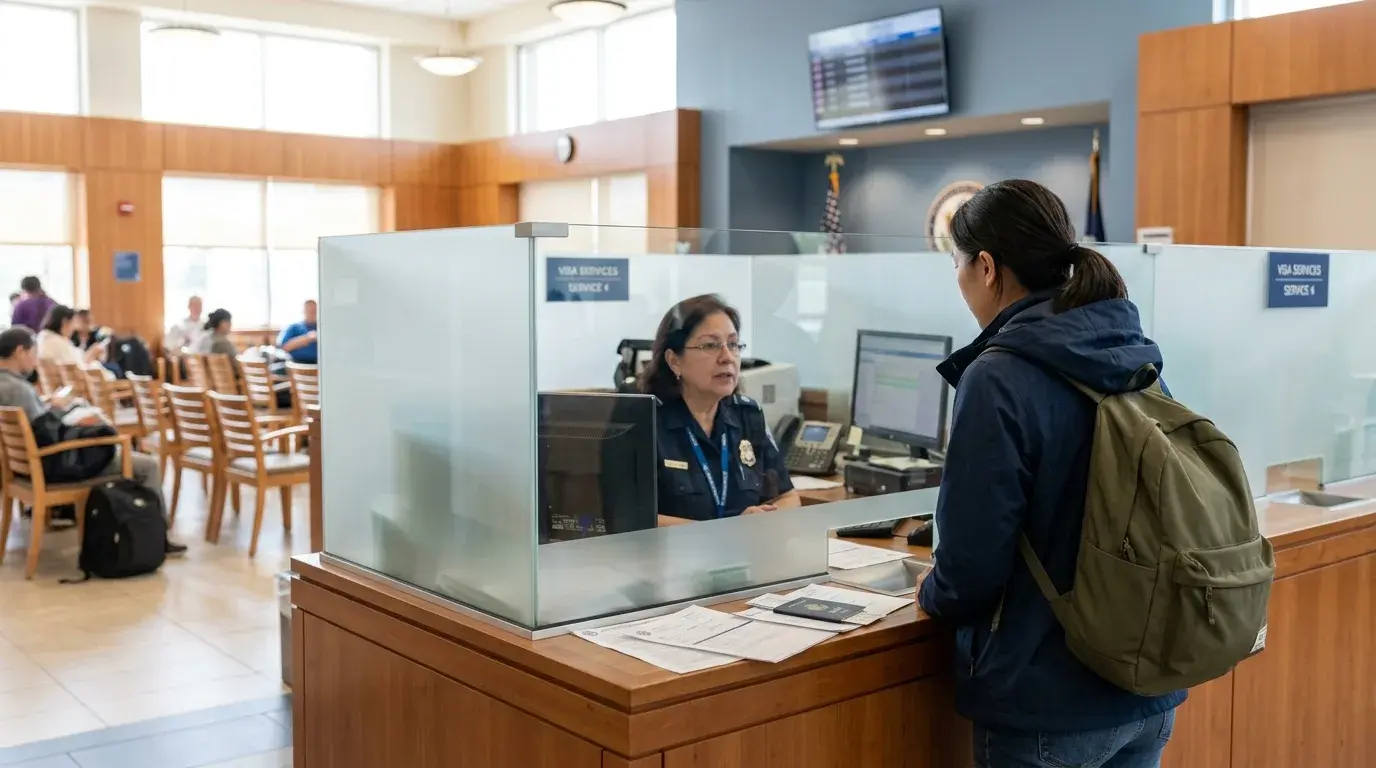
A property viewing is a purpose for a temporary visit, not evidence of residence permission. Show the real appointment window, where you will stay, how you will fund the visit and when you intend to leave. The relevant official checklist, not a generic rule about buyers, decides the supporting evidence.
What the Visa File Needs to Establish
For an ordinary Schengen short-stay application, the European Commission identifies evidence of purpose, means, accommodation and intention to return. A proposed flight route is one part of that picture; the exact travel-document wording comes from the destination mission’s current checklist.
When flight evidence is requested, give the passenger identity, real route and dates, and any reference the issuer actually provides. Flight numbers may help explain connections but are not a universal standalone requirement for every visa file.
Viewing or purchasing a property does not itself confer a right to reside abroad. If you intend to move, work or remain long-term, check the proper immigration pathway instead of presenting a short viewing visit as a residence application.
A proposed return or onward journey should match the intended stay, but no round-trip PDF by itself proves return intention. Read it alongside the appointments, accommodation, funds and other relevant ties.
Use three cross-checks before filing:
- A real arrival that gives you time to reach your first appointment.
- A departure within the intended or permitted stay.
- Nights that correspond to viewings, transfers and any genuine leisure days.
Each check makes the chronology legible. A buffer is fine when the reason is real; there is no requirement to schedule a property appointment on every day.
A reservation supports the proposed itinerary only if it accurately describes the journey and its current status. It cannot cure an incorrect visa category or guarantee an outcome.
Match Appointments to Arrival, Local Travel and Departure
Say Emma flies from Delhi to see six apartments over five days. Her agent confirms appointments from Tuesday to Saturday. A careful applicant builds the stay around those meetings, not the other way around.
Emma lands the evening before her first viewing. She keeps one spare day for a second look at her favourite unit. Her return leg departs the morning after her last appointment. Her travel dates now tell the same story as her emails with the agent.
Two weeks abroad with only three appointment emails is not automatically suspicious. Explain the remaining days truthfully—travel, other viewings, meetings or leisure—and show the accommodation and funds for them.
If Emma leaves a spare day to compare properties, a brief note can make that choice easy to understand without pretending every hour is fixed.
Useful appointment anchors may include:
-
Viewing confirmations from the agent or developer
-
A meeting with a lawyer, notary, or bank
-
A site inspection or a handover of keys
Use confirmations you actually have. Tentative viewings should be described as tentative; an agent letter is supporting context, not a substitute for the destination checklist.
In another example, Mark flies from Mumbai to inspect two new-build apartments and meet a mortgage adviser. His plan shows Monday arrival, Tuesday and Wednesday meetings and Thursday departure. The sequence is plausible if he can reach each venue and has accommodation for every night.
Check local arrival times and transit between the airport, hotel and appointments. A late arrival before an early viewing may warrant a different slot or an explanation; it is not an automatic visa defect.
Identity, Date and Route Checks
Use the passenger name format the airline or reservation issuer requires, consistent with the passport and visa form. A missing middle name is not automatically fatal; ask the issuer or authority how to correct a material mismatch.
Check these practical differences:
- Swapped day and month on either leg.
- Proposed return outside requested or issued permission.
- A city transfer omitted from the plan.
- A reference whose status the issuer cannot explain.
A different arrival city can be perfectly sensible if you show the real rail, road or onward-air connection to the viewing location. Do not imply that all such mismatches cause refusals.
Compare forms, appointment notes, flights and accommodation for material consistency. Correct discrepancies through the document owner rather than hand-editing an issuer record.
Once the route is coherent, decide what level of flight commitment the official checklist calls for.
Temporary Reservation, Fare Hold or Paid Ticket?
Sellers may change viewing slots and financing decisions can shift dates. The right evidence depends on the authority’s wording, your actual plans and the issuer’s terms—not a universal preference for a “dummy ticket.”
When a Genuine Temporary Reservation Fits
A temporary reservation or fare hold is not the same thing as an issued, paid ticket. It may show a proposed itinerary for an application if the relevant authority accepts that form of evidence. It cannot be used to board without a valid ticket.
A hold can limit exposure to a non-refundable fare, but it has its own fee, expiry and change conditions. Do not present it as risk-free or as proof of a confirmed paid seat.
Acceptance depends on the destination, visa category and mission. Read the current official checklist before choosing between an itinerary, booking confirmation and ticket.
For this property trip, the useful question is whether the document truthfully supports a short viewing visit at the application stage. Repeating “dummy tickets are accepted” does not answer a mission that specifically requests issued travel evidence.
Where guidance advises against buying a ticket before approval, respect it. Where a ticket is expressly required, obtain the correct document rather than relabeling a hold.
Ask these questions before paying:
- Could the appointments still change?
- What would a fare change or refund cost?
- Does the mission ask for an itinerary, reservation or issued ticket?
- How long will the issuer keep a hold active?
If dates are fluid and the mission accepts a reservation, a genuine temporary hold can be sensible. If the fare must be issued, compare flexible and refundable terms rather than assuming any hold will qualify.
Paid fares vary widely. Read the carrier’s written cancellation and change rules, including service fees and deadlines; “refundable” does not always mean every charge returns.
Check the Issuer’s Actual Reservation Validity
There is no universal 24-to-72-hour reservation lifetime. Holds and travel-agency reservations have issuer-specific conditions; check the written expiry and the document’s status on the day it is submitted.
If the appointment is later, do not rely on a document that will clearly be stale. Confirm with the issuer whether a fresh genuine record can be made when the route and appointment are known.
An airline may offer a fare hold on some itineraries, but availability and payment terms vary by carrier, market and fare.
A PNR or booking reference may not be publicly searchable on every airline site. Ask the issuer what it verifies and do not claim that the reference proves ticket issuance, payment or consular acceptance.
Before departure, follow the airline’s boarding and destination-entry requirements. A temporary application-stage itinerary does not replace a valid ticket when one is needed to travel.
Compare the total cost and potential loss of each option, including reservation fee, fare changes, refunds and timing. None of these choices guarantees a visa.
The source document remains evidence of the plan presented at submission, even if a temporary hold later expires. Follow the mission’s instructions if plans materially change.
How to Check the Document Without Inventing a Booking
Do not use a fabricated confirmation, altered airline PDF or invented reference. A free generator is not automatically fraudulent, but its output is unsuitable if it misstates an actual booking.
Request an issuer-provided document that states the real passenger, route, dates and current reservation or ticket status. Ask how to validate it; there is no universal airline-site lookup test.
Before filing, check:
- The issuer and current status are clear.
- The passenger matches the application.
- The real route and dates match the plan.
- The PDF is legible and has not been hand-edited.
If a reference does not resolve on a public website, ask the issuer rather than assuming fraud or telling the consulate the ticket is paid.
A travel agency should explain its fee, change terms and what its document represents. Keep the receipt and issuer contact, but never represent a temporary reservation as an issued fare.
Flight evidence works best when the appointments and accommodation tell the same truthful timeline.
Build a Trip File Around Actual Viewing Appointments

The route, accommodation, viewing confirmations and finances should support one real short visit. A polished PDF is less useful than accurate details that can be explained.
Accommodation for Every Actual Night
For ordinary Schengen short stays, accommodation evidence is part of the general framework, but the accepted form varies by destination mission. Use a genuine hotel, host or other accommodation arrangement for the relevant nights.
A hotel booking shows where you plan to stay. It does not, on its own, prove that you intend to return home.
Check the hotel’s city, arrival and checkout against the flight and viewing calendar. One night of airport transfer or a different city can be explained rather than hidden.
If plans may change, compare real cancellation policies. Do not use a fabricated “dummy hotel” confirmation; any accommodation evidence must accurately describe a valid arrangement.
Flights explain entry and exit; accommodation explains where you will be between them. Both should align with the appointment chronology.
A hotel stay need not equal the flight duration if you spend a night in transit, with a host or in another city. Account for those nights honestly.
For viewings in two cities, show the real intercity travel and each location’s accommodation. One base city can still work if daily travel is realistic.
Supporting Evidence That Explains the Viewing Purpose
The current official checklist controls mandatory documents. Viewing confirmations and property details are useful supplementary evidence when they clarify the purpose of a real trip.
Depending on the case, relevant items include:
- Actual estate-agent appointment messages and relevant property listings.
- Means to pay for the visit and accommodation for its actual nights.
- Travel insurance where the applicable pathway requires it.
- Genuine work, residence or family evidence relevant to return intention.
Identify what each document shows. It is better to correct material identity or date errors than to flood the file with unrelated pages.
A tidy chronology helps a reviewer follow the application; no filing order guarantees an easier approval.
An agent may provide a short confirmation listing appointment slots. If an appointment changes, keep the current message rather than implying an old letter remains valid.
In the cover note, distinguish viewing or comparing properties from a definite purchase or residence plan. State the real cities, dates and any meaningful leisure segment.
Resolve Inconsistencies Before Submission
Read the itinerary, form, appointment messages and accommodation as one timeline. Ask the document owner to correct material conflicts before filing.
A paid fare may remain live longer than a hold, but its refund depends on the exact fare rules, purchase channel, deadline and service charges. Do not call any ticket “fully refundable” without checking the written conditions.
An issued ticket is appropriate where required or when you choose to buy early. Where the mission accepts an itinerary, an early purchase is a financial decision, not a universal visa requirement.
Buy only through a vendor you trust, save genuine receipts and keep all explanations accurate. Consular decisions assess the whole application; presentation quality does not guarantee acceptance.
Show that you can fund the trip under the applicable checklist. A viewing visit does not automatically require proof that you can pay a purchase deposit; if you have a separate purchase or investment process, follow its own rules.
Use legible documents and identify the current version when an appointment changes. File names and page order are helpful housekeeping, not visa criteria.
A second reader can catch a changed airport, mixed date format or missing night. Do not treat a simple typo as an automatic refusal.
Once the file is solid, the weeks after submission need their own plan.
After Submission: Changes, Approval and Travel
Property appointments can move after the file is lodged. Keep the actual route current, but follow the mission’s procedure before sending unsolicited replacements.
If Viewings Move
Ask the agent for revised appointment details, then check whether the flight and accommodation need a genuine change. Do not alter the original PDF yourself.
The authority may have a specific update process for material changes. Ask the mission or application centre before assuming that a new email becomes part of the file.
After approval, travel within the visa’s dates, entries and stay limit. A visa does not itself guarantee border admission, and a changed trip may require fresh supporting evidence.
Flexibility depends on actual fare and issuer terms; unlimited free changes are not universal. Budget for a reschedule and compare it with a paid flexible fare.
Keep an honest change log and current issuer documents so the chronology remains explainable if asked.
If refused, read the refusal notice for the applicable remedy and time limit before deciding whether to appeal or reapply. Cancel bookings according to their own policies; do not assume every paid night is refundable.
When to Purchase an Issued Ticket
Some authorities advise against paying before a decision; others may require a ticket. Balance the mission’s instructions with fare availability and your real appointment certainty. There is no universal “best time.”
If you buy, compare carrier and agency terms, preserve the issued e-ticket receipt, and ensure the new itinerary remains within the visa and actual appointments.
Carry the current documents that are relevant to your trip, such as:
- Current ticket or booking record and the correct passport and visa.
- Accommodation and viewing confirmations for the real dates.
- Insurance and funds evidence as required by the route.
- Any change confirmation from the issuer or agent.
Do not present an expired hold as your current travel booking once an issued ticket has replaced it. Keep a prior record only if needed to explain an application-stage change.
Check the travel-insurance period and destination coverage against the actual stay and the pathway’s requirements.
Allow sensible room before visa expiry where possible, but do not claim a fixed buffer is required. Check allowed duration, number of entries and border rules.
If the Visa Centre or Border Authority Asks Questions
Explain the real reason for the visit and how your appointments, funds, accommodation and departure plan fit together. Do not claim every application includes an interview.
Follow the appointment provider’s document and arrival instructions rather than assuming all centres require early arrival or the same printouts.
Bring the documents actually required for your submission or travel. A person need not memorize a PNR or flight number; having accessible current records is more reliable.
If you may buy or rent later, say so honestly. A viewing trip and a later residence plan are different questions; seek the proper permission before moving.
Prepare a short factual explanation, not rehearsed claims about what an officer wants to hear.
If evidence is questioned, answer accurately and provide a current document through the permitted process. No prepared response guarantees acceptance.
With the file settled and the ticket secured, one last point remains about how you carry the whole plan.
A Property Viewing Is a Visit, Not a Residence Shortcut
Make the actual purpose, appointments, overnight stays, funding and return route consistent. Use a genuine application-stage reservation only where the official checklist accepts one; get the correct permission for any future long-term stay.
Review names, local dates, booking status and appointment messages before submission. After a decision or date change, keep the current travel evidence accurate. The goal is an honest, coherent file—not a perfect-looking PDF that overstates a booking.
Appointment-to-Flight Decision Workflow
- Choose the correct visa category for a temporary viewing trip; use a separate route for intended residence or work.
- List confirmed and tentative viewings with local dates, addresses and contact details.
- Add realistic arrival, airport transfer, intercity travel and a departure within the intended stay.
- Account for every overnight stay and show the actual trip funding required by the checklist.
- Read the mission’s exact flight-evidence wording, then compare a genuine hold with an issued fare and their actual terms.
- Check passenger identity, current booking status and local date changes across the file.
- If plans change, ask the issuer to update its own document and ask the mission how to report a material change.
| Document | What it may show | What it does not prove |
|---|---|---|
| Viewing email | Actual or tentative property appointment | Visa eligibility or purchase ability |
| Flight reservation | Proposed route and current reservation status | Issued ticket, payment or approval |
| Hotel or host record | Planned place to stay | Automatic intention to return |
| Issued e-ticket | Ticketed travel under carrier terms | Visa approval or a full refund |
For broader visa-flight evidence, see the VFS counter-versus-consulate checklist and the passport-expiry check. DummyFlights’ Schengen dummy-ticket guide explains a different booking-product question; it does not determine a property viewer’s visa category.
Need flight evidence for real viewing dates? Check the destination mission’s requirement and confirm your appointments first, then review an honest reservation option.
Review reservation optionsFrequently Asked Questions
Does viewing or buying property grant residence rights?
No. A short viewing visit and permission to reside, work or invest are different questions. Check the destination’s official route for the activity you intend.
Must a property-viewing itinerary include an issued ticket?
The answer depends on the official checklist. Some missions accept an intended itinerary or reservation; others request different evidence. Do not label a hold as paid.
How many viewing appointments should I show?
There is no universal minimum. Show genuine confirmed or tentative appointments and explain any additional travel or leisure days truthfully.
Does a round-trip flight prove that I will return?
It supports the intended route but does not prove return intention on its own. Authorities may consider purpose, funds, accommodation and other relevant circumstances.
How long does a temporary flight reservation last?
There is no universal 24-to-72-hour rule. Check the issuer’s specific written validity and the document’s current status.
Is an airline booking reference always searchable online?
No. Public lookup availability varies by issuer and carrier. Ask the issuer what the reference verifies, and distinguish a reservation from an issued ticket.
Should I show enough money for a property deposit?
For an ordinary short viewing visit, show the trip funds the applicable checklist requires. A later purchase or investment may have a separate process and evidence requirements.
What if appointments move after submission?
Get updated appointment and travel records from their owners, then follow the mission’s instructions for reporting material changes. Do not hand-edit a PDF.
Friendly reminder: BookForVisa provides travel-proof documents for planning and visa-application support. Requirements vary by destination, consulate, visa category and applicant situation. A flight reservation can support a file, but it does not guarantee approval, boarding or entry.