Short answer: A Canada Super Visa application centres on the host’s invitation and income proof, the parent or grandparent relationship, paid qualifying medical insurance, a medical exam and the applicant’s own eligibility. IRCC’s standard Super Visa document page does not list a flight booking, but your personalized checklist and local visa-office instructions control your file. Set a realistic entry window, then check every document against it before buying a fare.
For a Canada Super Visa, the central travel evidence is the host’s invitation and income proof, the applicant’s family relationship, qualifying health insurance and a medical exam—not an airline document. IRCC’s standard Super Visa document page does not list a flight booking. Your personalized checklist and the visa office serving your country may still specify additional evidence, so check both before submitting.
Start with the host’s family-size count and income proof, then set an intended entry window. Compare the invitation, insurance period, medical-result validity and passport expiry against that window. This guide separates application, insurance and border-entry stages and uses a fictional family worksheet to show where the dates can conflict.
If a different visa application or later travel step specifically needs a flight outline, consider a reservation only after checking that authority’s current requirements.
Key facts
- The host must be an eligible child or grandchild in Canada and meet the minimum income for the correctly counted family size.
- The insurance policy must meet IRCC’s coverage, payment, insurer and one-year-from-entry requirements.
- Each applicant needs their own file; dependants cannot be added to a Super Visa application.
- A Super Visa can permit visits of five years at a time, but entry remains subject to a border officer’s decision.
- The standard document page does not list a flight booking; check the personalized and local lists for any extra request.
In This Guide
- Who Can Use the Super Visa Route, and Who Needs a Different Visa?
- Which Documents Does a Super Visa File Need, and Which Are Conditional?
- How Do the Invitation Letter and the Host's Income Fit Together?
- What Must the Insurance, Medical Exam, and Biometrics Show?
- Does a Super Visa Application Need Flight Evidence?
- In What Order Do the Application, Insurance, and Entry Stages Run?
- How Does a Document-to-Date Worksheet Work for One Family?
- What Happens at the Border With an Approved Super Visa?
Official-source check: The IRCC forms-and-documents page sets out the invitation, relationship, medical and insurance proof. The current host-financial-support table controls family size and income evidence. The IRCC after-application guidance explains border checks and carrying supporting documents. Check the live IRCC pages and your personalized checklist when you file.
Reviewed for: IRCC Super Visa eligibility, family-size income, insurance, medical proof, document-date alignment and border-stage conditions.
Who Can Use the Super Visa Route, and Who Needs a Different Visa?

Two people have to qualify for this route, and the travel evidence starts with both of them. The super visa program is run by Immigration, Refugees and Citizenship Canada (IRCC), and the Canadian government's eligibility rules split into host requirements and applicant requirements. A file that satisfies one side and ignores the other stalls. For visas that do ask for a travel itinerary, our flight-reservation guide explains how to match a reservation to the receiving authority’s checklist. Do not add one to a Super Visa file merely because a provider offers it.
What the Host Must Be
The host is your child or grandchild, and you must be able to prove the biological or adopted link. The host must be a citizen, a permanent resident of Canada, or a registered Indian.
The host must also be at least 18 years old, live in Canada, meet or exceed the income threshold for their family size, and write and sign a letter of invitation.
The host's status papers and signature sit at the start of the critical path. A host who is traveling, whose status document has gone missing, or who has not yet filed taxes can hold up every other step.
What the Applicant Must Be
Super visa eligibility on your side is narrower than many families assume. Applicants must be parents or grandparents of Canadians, and the route covers grandparents of Canadian citizens as readily as those whose grandchild holds permanent residence.
The same document list applies to the grandparent super visa, and the relationship proof must name you as the parent or grandparent of the host.
You must be outside Canada when you submit. Super visa applicants must apply from outside Canada, and the visa is printed by a visa office outside the country once you follow its instructions. You must also be admissible, hold private insurance valid for a minimum of one year from the date of entry, and complete an immigration medical exam.
Dependants cannot be added. Each applicant files for their own super visa, and a spouse who qualifies applies as a separate applicant.
When the Regular Visitor Visa Fits Better
IRCC directs people planning visits of six months or less to consider a regular visitor visa. A Super Visa is designed for eligible parents and grandparents who may visit for up to five years at a time, with multiple entries during a validity of up to ten years. The actual period of admission is determined under the applicable entry rules.
The five-year period is a potential authorized stay, not a promise of entry or approval. The holder must keep valid status, passport and insurance throughout the visit.
If you fail the host or applicant rules, or the visit is short, the shorter-stay option is the one to compare. A pending sponsorship application does not block a super visa, because you can apply while you wait or withdraw the sponsorship application at any time.
Visa-Exempt Travelers
Citizens of visa-exempt countries can still hold a super visa for a five-year stay. They do not pay the super visa fee or the biometrics fee, and an approved file produces a letter to hand over on arrival rather than a visa label.
Anyone flying in may also need a separate eTA linked to the passport used, so the eTA, the letter, and the supporting papers travel together.
What Officers Weigh Beyond the Checklist
The host and applicant lists are not the whole test. Before deciding, the officer also considers whether you are a genuine visitor who will leave by choice at the end of the visit, your ties abroad, the purpose of the visit, and your family and finances.
These general conditions apply to every visitor file, and a five-year permission is a reason to document them carefully.
There is no fixed document list for ties, so the evidence is whatever shows what is waiting for you at the end of the stay: a home, a pension, financial assets, or family. The same tests explain why the host's letter and your own papers must describe one visit.
A super visa does not authorize work or study, so any page that implies a job or a course in Canada contradicts the route.
Four Clocks That Start Before You File
Four dates start running before the file is submitted. The host's tax-year documents have a fixed year, the medical results are valid for 12 months, the policy period is measured from the date of entry, and the passport has its own expiry.
Later parts line these up one by one, and the worksheet near the end shows what happens when two of them disagree.
This guide stays with super visa documents, dates, and the three stages around them. General flight reservation definitions, tourist planning, airline holds, and border onward-ticket rules belong to separate guides, and later parts only summarize them.
Which Documents Does a Super Visa File Need, and Which Are Conditional?
Sort the file into three piles before anyone starts scanning: required, conditional, and supporting. The required documents appear in every file. Conditional items appear only when your situation or the local office asks for them. Supporting items strengthen the case that you will return but have no fixed list.
The Required Core
Complete IRCC application forms and digital copies of documents are required. After you answer the portal questionnaire, you receive a personalized checklist, and you need a scanner or a camera to produce copies. Pages that are not clear and easy to read can lead to a returned file or a slower decision, so scan flat and in full.
You must provide proof of identity and relationship, and the evidence should be thorough rather than minimal. A valid passport with at least one blank page is required. Relationship proof is the host's birth certificate or baptismal certificate, or another official document that names the family link between you and the host.
Birth certificates are the cleanest form of proof, as long as the spelling of every name matches the passport. A mismatch between a certificate and a passport is a small problem to fix before filing and a larger one after.
The host must also provide documentation proving Canadian status, such as a citizenship certificate or a PR card. A host with Indian status uses a status card. The same status copy is needed for a spouse or partner who co-signs the letter. The documents together must establish the travel purpose, the intended length of stay, and the accommodation details.
The Role of Each Document
The table below sorts the usual pieces by role. It is a planning map, not a replacement for the personalized checklist the portal produces, because the portal's questions depend on your answers.
|
Document |
Role |
What triggers it |
Who supplies it |
|---|---|---|---|
|
Completed forms and uploads |
Required |
Every file |
Applicant |
|
Passport |
Required |
Every file |
Applicant |
|
Relationship proof |
Required |
Every file |
Applicant, from the host's papers |
|
Host status copy |
Required |
Every file |
Host, plus co-signer if any |
|
Host's letter with income proof |
Required |
Every file |
Host |
|
Insurance proof |
Required |
Every file |
Applicant |
|
Medical exam confirmation |
Required |
Every file |
Applicant, from the panel physician |
|
Translation and affidavit |
Conditional |
Any document not in English or French |
Applicant |
|
Representative form |
Conditional |
Someone else completes the forms |
Applicant |
|
Local office extras |
Conditional |
Your country has its own list |
Applicant |
|
Interview, police certificate, more information |
Conditional, on request |
The office asks |
Applicant |
|
Ties evidence |
Supporting |
Genuine-visitor assessment |
Applicant |
The Conditional Items
The following documents appear only in some files. The first is translation. Any document that is not in English or French needs an English or French translation submitted with the original. A Canadian certified translator seals the translation with a verifiable membership number.
A person fluent in both languages can also translate, but cannot be the applicant or a close relative, and must add a sworn affidavit.
The second is the representative form. If a representative completes the forms for you, including immigration consultants, the contact information must show the representative's email and mailing address, and the Use of a Representative form (IMM 5476) is filed. You are not required to hire anyone, and the file is treated the same way either way.
The third is the local office list. Your local office may require additional documents, and IRCC lets you pick the country you apply from to see them. Do this early, because country differences surface here and nowhere else in the checklist.
The fourth is on request. After you apply, the office may ask for an interview, more information, a medical exam, or a police certificate, and it tells you when. An incomplete file may be refused, which is the reason to front-load everything on the personalized checklist.
Quality Checks Before You Upload
Run four checks on every scan. Names: each person's name is spelled the same way on every document, or a document explains the difference. Dates: every dated item sits inside the entry window. Currency: every amount names its currency. Legibility: every page is complete, straight, and readable, including stamps and seals near the edges.
Name the files so the order is obvious, such as host letter, host status, income proof, relationship proof, insurance, and medical confirmation. A reviewer who finds each document on the first try has fewer reasons to ask for more.
Supporting Evidence of Ties
Ties to the applicant's home country, such as property ownership or employment, must be demonstrated to confirm intent to return. The entry rules give a job, a home, financial assets, and family as examples. Pension statements, a property deed, a letter from a former employer confirming retirement, and papers showing family who stay behind are natural choices.
These supporting documents are not a checklist item, so choose them for what they prove rather than for volume. Three clear pages that show a home, an income, and family beat thirty pages of old statements. Keep names, dates, and currencies consistent with the host's letter, because the two are read together.
How Do the Invitation Letter and the Host's Income Fit Together?
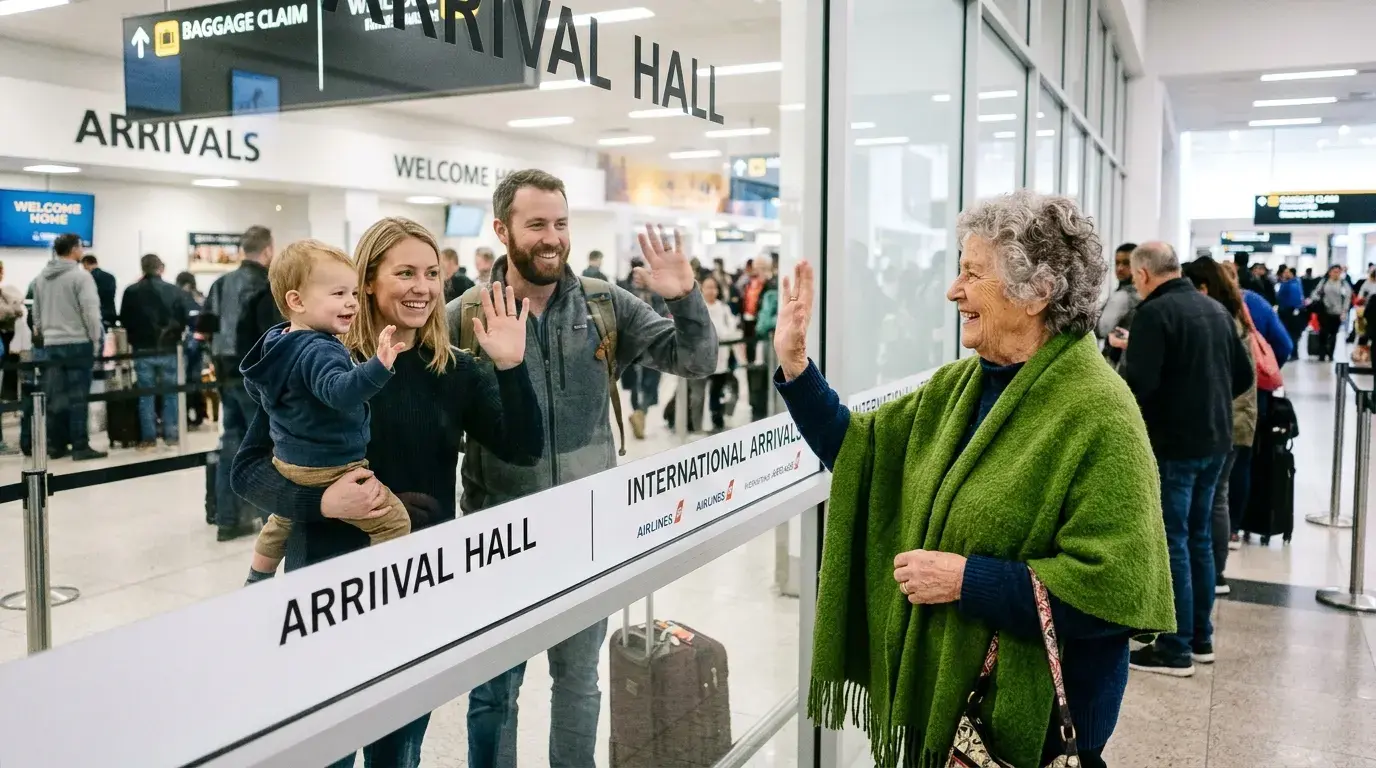
The host's letter is the one document that carries the whole visit: who is coming, how many people stand behind the budget, and what the host promises. Income proof is attached to it, so the two are prepared together and should never contradict each other.
What the Letter Must Say
A signed invitation letter from the host, whether a host child or a grandchild, is required, and it must promise financial support for the duration of the visit.
It must also include proof that the host meets the income threshold for the family size, and the list and number of people counted in the family size, with the name and date of birth of each person.
The general guidance for visitor letters adds useful detail. About you, the letter gives a full name, date of birth, address, relationship to the host, the purpose of the trip, the planned length of stay, where you will stay, how things will be paid for, and when you plan to leave.
About the host, it gives a name, date of birth, Canadian address and phone number, job title, status, and a copy of the status document.
The letter does not guarantee a visa, because officers assess you, not the letter. The host must tell the truth and plan to keep every promise in it. We would write it last, after the family-size count and income figures are settled, so that no number in the letter has to change later.
Counting the Family Correctly
The family-size count decides which row of the income table applies, so it is the first calculation to get right. It includes the number of family members the host supports, and the list is wider than the household at the host's address.
The count includes you and any other applicants the host will support, such as a spouse. It includes the host, the host's spouse or common-law partner, and the dependent children of the host and of that partner, whatever the custody or child-support arrangement.
It also includes parents or grandparents already approved under another letter that still applies, and people the host or co-signer sponsored while the undertaking remains in effect.
Two examples show how this works. A host with no spouse and no children who invites one parent has a family size of 2.
A host with a spouse and two dependants, inviting two parents, has a family size of 6. A divorced host with shared custody of two children, inviting two parents, has a family size of 5.
What the Income Table Requires
The host must meet the minimum income requirements for the size counted. The minimum necessary income thresholds are adjusted annually based on family size, and the income requirements are based on the low-income cutoff. The table on the IRCC page was last updated on July 29, 2025, and it is worth re-reading on the day you file.
|
Family size |
Income the host needs (CAD) |
|---|---|
|
1 |
$30,526 |
|
2 |
$38,002 |
|
3 |
$46,720 |
|
4 |
$56,724 |
|
5 |
$64,336 |
|
6 |
$72,560 |
|
7 |
$80,784 |
|
Each additional person |
Add $8,224 |
Older figures of $24,949 for one person and $46,362 for a family of four are out of date beside this table, which lists $30,526 and $56,724 for the same sizes. Copying a figure from an old list into the letter is an easy way to understate the requirement, so take the number from the current table, not from memory.
Proving the Income, Option by Option
The proof must come from the host, and the super visa income requirement can be met in one of two ways. Hosts prove income through tax documents, and the Notice of Assessment from the Canada Revenue Agency is the anchor in both options.
Under the first option, the host's total income, including a co-signer's, meets or exceeds the applicable minimum in either of the two tax years before the application is submitted. The Notice of Assessment is the document to include.
Under the second option, total income in the year before filing was at least 75 percent of the minimum, and your own income covers the rest. For a family of five, 75 percent of $64,336 is $48,252.
When the Notice of Assessment Is Not Available
The Notice of Assessment is preferred. If it is unavailable, any of the following income documents can stand in for the host or co-signer:
-
the T4 or T1 for the last tax year;
-
pay stubs for the most recent 12 months available;
-
an original letter from the employer stating job title, job description, and salary;
-
bank statements from the last calendar year showing investment income or regular deposits for employment or a pension;
-
pension statements, or ownership papers and leases showing the rent amount and how often it is paid.
Employment letters should be the original letter from the employer, and they should state the pay in a clear currency. Bank statements work as other financial documents when they show investment income or regular deposits, because a balance alone does not show income.
Co-Signers and Your Own Income
The host's spouse or partner can co-sign the letter and provide income proof if that person is a citizen, holds permanent residence, or holds Indian status. Other relatives, such as the host's siblings, cannot co-sign, however comfortable their finances are.
You can contribute your own income under the second option, using pay stubs, an employer letter, bank statements, or pension and rental papers. You must also show that you will continue to earn income while you are in Canada, and the document must name the currency you are paid in. A pension that stops on departure does not help.
An Outline for the Host's Letter
The letter is the host's own words, and the published guidance is only a guide, so write it in plain sentences in this order:
-
The host's full name, date of birth, Canadian address and phone number, job title, and status, with the status copy attached.
-
The invited person's full name, date of birth, address, and relationship to the host.
-
The purpose of the visit, the planned length of stay, where the visitors will live, and how costs will be paid.
-
The promise to support the visit for its full duration.
-
The family-size list, with the name and date of birth of every person counted, and the total.
-
The statement of income, pointing to the attached proof, and the co-signer's details if there is one.
-
The signature, with the co-signer's signature where one applies.
Keep it to one or two pages. The aim is to be specific and truthful, not long.
Where Income Files Go Wrong
Five patterns are easy to miss:
-
the letter counts five people, but the host used the family-size-four row;
-
the Notice of Assessment is for a year outside the two allowed;
-
a co-signer's income is used, but their status copy is missing;
-
pension statements show a currency the letter never names;
-
the letter lists every family member without birth dates.
Each one is a document-to-document disagreement, not a missing document, so each is fixable in an afternoon before filing and expensive afterward.
What Must the Insurance, Medical Exam, and Biometrics Show?
Three documents prove the applicant's side of the bargain, and each one has its own date. They are also the three most likely to look fine on their own and wrong next to each other, so this part treats them as a set.
What the Policy Must Contain
Every applicant for this route must have private health insurance, and the file must show it. The insurance must cover at least CAD $100,000 in emergency health care, and the policy must be valid for a minimum of one year. The coverage must include health care, hospitalization, and repatriation.
Private medical insurance that covers only emergencies at a lower limit does not meet the route.
The policy should name the company that issued it, which may be called the insurer or the underwriter. It must be valid for a minimum of one year from the date of entry, valid for each entry to Canada, and available for review by border officers on request.
The medical insurance coverage should be described in the policy wording itself, not only in a sales brochure.
Payment is one of the most strictly enforced points. The policy must be paid in full, or paid in installments with a deposit, and a quote is not accepted. A file that attaches a quote has not met the rule, however good the product looks.
Which Insurers Qualify
The insurer must be a Canadian insurance company, or a company outside Canada that meets three tests. It must:
-
be authorized by the Office of the Superintendent of Financial Institutions to provide accident and sickness insurance;
-
appear on that office's public list of federally regulated financial institutions; and
-
have issued or made the policy while doing insurance business in Canada.
Every policy from a foreign insurer must carry a statement that it was issued or made while the company was doing insurance business in Canada. Insurance brokers and claims administrators are not insurance companies and will not appear on the list, so match the name printed as the issuer, not the name of the seller.
Dates the Policy Has to Cover
Proof of insurance must be available on entry to Canada, and proof is needed on each entry. If the policy will expire before you leave, renew it to keep coverage during the stay.
That makes the policy a recurring document, not a one-time upload, and it is worth putting the renewal date in the family calendar the day the policy arrives.
The one-year period is measured from the date of entry. We would set the policy to begin at or just before the planned arrival and to end comfortably after the one-year mark.
We would also avoid buying months ahead of a travel date that is still moving, because a policy bought for the wrong start date has to be changed, and how an insurer handles a change depends on the insurer.
Renewal Across a Five-Year Stay
A policy valid for a minimum of one year does not cover a five-year permission by itself, and the stay can run much longer than the policy. The holder must keep insurance in force during the stay, and proof is required again on every re-entry.
Put the end date in the family calendar the day the policy arrives, and open the renewal conversation with the insurer well before it.
A gap between two policies is a gap in the one document an officer may ask to review on any entry. If the plan includes trips out of Canada and back, check that the renewal date does not fall in the middle of one.
Questions to Put to the Insurer
Ask for the policy wording before paying, and check it against the rule rather than the sales page. These questions cover what the file will be judged on:
-
Which company is named as the issuer on the policy document?
-
Is the emergency limit at least CAD $100,000, and does the wording say so?
-
Does the policy cover health care, hospitalization, and repatriation by name?
-
What are the exact start and end dates, and do they run one year from the planned entry?
-
Is the premium paid in full, or in installments with a deposit, and what proof of payment is issued?
-
Does the policy stay valid for each entry to Canada, and how does renewal work?
-
If the entry date moves, what does the insurer need to change the start date?
A policy that cannot answer these in writing is not ready to upload. Keep the answers with the policy, because the same papers may be asked for again at the border.
The Medical Exam and Its Confirmation
Every super visa applicant must complete the immigration medical examination. The exam must be done by an approved panel physician, and your own doctor cannot do it. The confirmation that the exam was completed is a critical submission requirement, and it belongs in the file before anything else is submitted.
The simplest plan is an upfront exam before filing. Contact a panel physician directly, complete the exam, and receive a document confirming it. Upload that document with the application. If the exam happens after you submit, nothing more needs to be sent, because the physician reports the results to IRCC.
The panel physician does not decide the result. IRCC does, and it writes to you if there is a problem. The super visa is named among the cases that require the exam for stays beyond six months.
What to Bring and What It Costs
Bring identification, with a passport strongly recommended, along with glasses or contact lenses if you wear them, any medical reports, and a list of current medications. If the physician does not use eMedical, four recent photographs are also needed. Ask the clinic before the appointment which applies.
Depending on age, the exam may include chest X-rays and laboratory tests, and a specialist referral can follow. Complete any referral quickly to avoid delay. You pay all exam fees at the appointment, including special tests, and the fees are not refunded if the application is refused. Vaccination is voluntary, and declining a vaccine will not sink the file.
If you cannot reach a panel physician in your region, or exceptional circumstances stop you from completing the exam, you can submit a letter of explanation, and IRCC reviews the request.
Biometrics After You Apply
Biometrics are collected after you submit, if you need them. Wait for the biometrics instruction letter, then book the appointment as soon as you can to avoid delay. The fee is $85 and is best paid at the time of application. Visa-exempt applicants pay neither the super visa fee nor the biometrics fee.
There is one date trap. A super visa cannot be issued for longer than your biometrics remain valid. If you gave biometrics for an earlier application, check how long they last before you promise the family a ten-year visa.
Where the Three Documents Collide
The medical results are valid for 12 months. If you do not come to Canada within that time, another exam may be needed. The policy runs one year from entry. The biometrics have their own validity. Put the three dates on one line and ask whether the intended entry date sits inside all of them with room to spare.
A typical collision is an exam taken early in the planning, a policy bought for a later entry date, and a trip that then slips into the following year. The exam expires, the policy start date needs changing, and the file has to be refreshed. The fix is to take the exam after the entry window is realistic, not before.
Does a Super Visa Application Need Flight Evidence?
No flight booking, itinerary, or ticket appears on the list of forms and documents for this route. That is the direct answer, and it is worth stating plainly because many families assume that a long visit from abroad must come with a fare attached. The file proves a host, a policy, and a medical result, and the flight follows those.
What the Document List Does and Does Not Contain
The list covers the host's letter and income proof, the insurance policy, the medical exam confirmation, host status, relationship proof, local office instructions, a representative form, and translations. Flight evidence is absent from it. The personalized checklist generated after the questionnaire is the final word for a given applicant, and the country-specific list decides anything extra. If you later compare provisional airline documents, the term dummy ticket describes a reservation, not proof that IRCC requires one for this application.
This matters for money. A fare bought to satisfy a requirement that does not exist is a fare that may need changing when the policy start date, the visa decision, or the host's schedule moves. Weigh that before buying anything, and read the personalized checklist first.
What Establishes the Travel Plan Instead
The documents that carry the plan are the ones that describe the visit. The host's letter says where you will stay, how things will be paid for, and when you plan to leave. The policy shows the period covered, and the medical results show a validity window.
Together they establish the travel purpose, the intended length of stay, and the accommodation details.
Extended visits make the return date soft by nature. A five-year permission does not come with a fixed departure, so the honest answer in the letter is often a range or an intended length, stated plainly. A letter that invents a precise departure date adds a figure that a later document may contradict.
Reservation, Issued Ticket, and Entry Evidence
Three things are easily confused and should stay separate in your head and in your file.
A reservation is a booking record that holds an itinerary. It is not an issued ticket, and it is not proof that a traveler will be admitted. An issued ticket is a paid, ticketed booking governed by fare rules, and it is the right document only when you are ready to commit to dates.
Entry evidence is what the officer sees at the border: the passport, the super visa or letter, the application documents, and the proof of paid insurance.
A valid visa and passport do not guarantee entry, and nothing in a reservation changes that.
If a Visible Flight Outline Helps
A flight outline can help in two situations: the local office list asks for travel details, or the family wants one dated plan that the host's letter, the policy, and the medical exam all agree on.
If you want one, our dummy ticket is a reservation, not an issued ticket, with a verifiable PNR, unlimited changes, an instant PDF download, and a price of $15.
Even then, we would hold off on a final fare until the visa is printed and the policy start date is fixed. The policy's one-year clock runs from the date of entry, so the entry date is the one date that should be settled first and moved last.
A Three-Question Test Before Paying for a Fare
Before any fare is paid, ask three questions. Has the visa been printed, or the approval letter issued? Is the policy start date fixed against the planned entry? Is the medical window still open on the travel date, with the biometrics validity intact?
Three yeses mean the date is stable enough to buy. Any no means a document that hangs from the entry date will need rework if the fare is bought now, so the cheaper course is to wait or to hold something changeable.
The test fits this route because every dated document hangs from the entry date. It does not replace the airline's own fare rules, which differ by fare and carrier.
When the Planned Date Moves
A moved arrival date touches fewer documents than most families fear. Relationship papers, status copies, and the income proof do not depend on the arrival date. The host's letter names a planned length of stay and a departure intention, so reread it for any date it fixes.
Three documents do depend on the date: the policy, which runs one year from entry, the medical results, which stay valid for 12 months, and the biometrics, which cap the visa's validity.
After any change, check those three first and nothing else. If the new date falls after the medical results lapse, a new exam may be needed. If it falls well after the policy start, ask the insurer how it handles a changed start date, because that varies by insurer.
If you hold a reservation, it is the cheapest document to change. An issued ticket is the most expensive, which is the reason to buy it last.
Adjacent Questions You May Have
Several nearby questions have their own dedicated guides, and this one only summarizes them.
How reservation rules compare across destinations is covered in the UK, US, and Canada visa flight reservation comparison, which sets out where a reservation helps a file and where a paid ticket is the wrong move.
Airline holds work differently from a reservation document and have their own limits. Onward-ticket rules at the border concern what an airline or transit desk may ask before boarding, and they vary by airline and route. General visa timing and tourist trip planning for a short stay sit outside the super visa entirely.
Each of those guides answers its own question in full. Here the only point is that none of them changes the super visa document list.
In What Order Do the Application, Insurance, and Entry Stages Run?
The super visa involves three clocks that start at different moments: the application, the insurance, and the border. Each has its own documents and its own date, and the decision to buy a fare sits after the first of them, not before. The table shows the six steps in the order we would run them.
|
Step |
Decision to make |
Documents that must exist |
Date anchor |
|---|---|---|---|
|
1. Eligibility |
Can this host invite, and what is the family size? |
Host status copy, relationship proof, family-size count |
Today |
|
2. Preparation |
Which entry window is realistic? |
Medical confirmation, policy, drafted host letter |
Planned date of entry |
|
3. Application |
Is the file complete? |
Forms, uploads, fees paid |
Submission day |
|
4. Processing |
Can we answer requests fast? |
Biometrics, extra items on request |
Instruction letters |
|
5. Approval |
Where do the passports go? |
Approval letter, passports |
After the decision |
|
6. Entry |
Are the papers in hand baggage? |
Passport, visa or letter, policy, file copies |
Arrival |
Step 1 and Step 2: Settle the Host, Then the Window
Start with the host, because the host's documents have the longest lead time. Confirm status, count the family, and collect the tax documents. In the same step, decide whether the super visa is the right route at all, or whether a stay of six months or less points to the visitor option instead.
Then fix a realistic entry window. The window drives the medical exam timing, the policy start date, and the passport check. Our order is: income and status papers, the host's letter, the medical exam, the policy, then translations. The exam and policy come late on purpose, because both are tied to dates that early guesses get wrong.
Step 3: Submit a Complete Application
IRCC runs the super visa application process through its portal. After signing in, answer the first two questions exactly as shown: choose the combined visitor and super visa option, then choose the option for visiting your children or grandchildren for more than six months. The questionnaire then produces the personalized checklist.
Upload the forms and documents, then pay at the end. The super visa fee is $100 CAD per person, and the biometrics fee is $85 where biometrics are needed. You need a valid email address, a printer for the receipt, and a credit card, Debit Mastercard, or Visa Debit.
Submit only a complete application, because an incomplete one may be refused.
The newer version of the portal is open only to certain people: adults applying alone, who have never applied before, and who are not using a representative. Anyone who cannot apply online can ask for braille, large print, or paper formats by email.
Step 4: Processing and Requests
Super visa processing is typically a few weeks, but IRCC publishes times by country and warns that they vary. The time depends on the type of application, whether it is complete, how easily information can be verified, how quickly you respond to requests, and other factors. Biometrics time is not included in the published figure.
During processing, the office may ask for an interview, more information, a medical exam, or a police certificate, and it will tell you what to do. Answer fast. A request left sitting is the most controllable delay in the whole file, and you can follow progress through the online status check.
Step 5: Approval and Visa Printing
An approval comes as a letter with instructions to submit your passport to a visa application centre to receive the visa. The visa cannot be printed in Canada. For visa-exempt applicants, the approval produces a letter to hand to a border officer on arrival. A refusal comes with an explanation.
If a legal name changes after you apply, you must submit a request to change the name, and the documents depend on whether you are inside or outside Canada. Names are worth checking against the passport before the application starts for the same reason.
Step 6: Travel Documents in Hand
The last step is physical. The passport, the visa or letter, the policy, and copies of the documents used in the application travel in hand baggage, not in a checked bag.
That is also the moment to decide on the fare, because by now the visa is printed, the policy start date is real, and the medical results are still valid.
Where Sequence Goes Wrong
Four ordering mistakes are easy to make:
-
the medical exam is done months before the entry window is realistic, so the results lapse before the trip;
-
the policy is bought for a date the host later changes, so its one-year period no longer starts at entry;
-
the host's letter is signed before the income figures are final, so a number in it has to be redone;
-
the passport is renewed after filing, which can break the match between the visa, the policy, and the travel document.
Each is avoidable by treating the entry window as the fixed point in step 2 and building every dated document around it.
How Does a Document-to-Date Worksheet Work for One Family?
A worksheet ties every field in the file to one date and one source, so a mismatch shows up on paper before it shows up in a decision. Everything below is fictional: the family, the dates, and the amounts. The last column names the publisher page that supports each row.
The Family and the Plan
Daniel Whitfield is a citizen who lives in Brampton, Ontario. His wife Claire is also a citizen, and they have one dependent child, Owen. Daniel wants to host his parents, Robert and Eleanor Whitfield, who live in Mumbai, for a long stay that starts in the spring of 2027.
Family size is five: Daniel, Claire, Owen, Robert, and Eleanor. The row for five people in the income table is $64,336. The family plans to file on Tuesday 10 November 2026, and the planning date for entry is Friday 12 March 2027. No flight is booked.
Worksheet decision: In the fictional Whitfield family, the host counts five people and checks the current income row before signing the invitation. A policy ending before one year from the planned entry must be corrected by the insurer. The applicant also checks medical-result and passport expiry dates. The flight row records “not listed on the standard checklist”; it is revisited only if the personalized or local instructions ask for it.
The Worksheet
|
Field |
Fictional entry |
Date or window |
Source |
|---|---|---|---|
|
Relationship proof |
Daniel's birth certificate naming Robert and Eleanor |
Existing document, copied 4 Nov 2026 |
IRCC, Super visa for parents and grandparents: Forms and documents |
|
Host status |
Copy of Daniel's citizenship document, plus Claire's as co-signer |
Copied 4 Nov 2026 |
IRCC, Forms and documents |
|
Family size |
Daniel, Claire, Owen, Robert, Eleanor = 5 |
Counted 4 Nov 2026 |
IRCC, Proof of financial support |
|
Income threshold |
$64,336 for a family of 5 |
Table updated 29 Jul 2025; re-read 10 Nov 2026 |
IRCC, Proof of financial support |
|
Income proof |
Daniel's Notice of Assessment for tax year 2025, total income $71,400 |
Option 1: either of the two prior tax years |
IRCC, Proof of financial support |
|
Host letter |
Signed by Daniel and Claire; promises support for the visit; lists all five people with birth dates |
Signed 6 Nov 2026 |
IRCC, Forms and documents; IRCC, Letter of invitation for visitors to Canada |
|
Medical confirmation |
Upfront exam for Robert and Eleanor with a panel physician in Mumbai |
Exam 3 Nov 2026; valid for 12 months, to 3 Nov 2027 |
IRCC, Medical exams for visitors, students and workers |
|
Policy start |
Named insurer, $100,000 emergency cover, health care, hospitalization, repatriation, deposit paid |
Bought 9 Nov 2026; starts 10 Mar 2027 |
IRCC, Forms and documents |
|
Policy end |
Must reach one year from entry |
First draft ends 9 Mar 2028; corrected to 15 Mar 2028 |
IRCC, Forms and documents |
|
Intended entry date |
Planning date only; no flight booked |
Fri 12 Mar 2027 |
IRCC, Forms and documents (policy runs one year from entry) |
|
Passport, Robert |
Must stay valid during the stay |
Expires 14 Aug 2031; a five-year stay would reach Mar 2032 |
IRCC, After you apply |
|
Passport, Eleanor |
Must stay valid during the stay |
Expires 2 Feb 2034 |
IRCC, After you apply |
|
Fees |
$100 per person for two applicants; $85 biometrics each if required |
Paid at submission, 10 Nov 2026 |
IRCC, Submit your application |
|
Flight booking |
None attached; none listed on the checklist |
Not applicable |
IRCC, Forms and documents |
|
Visa printing |
Passports go to a visa application centre after approval |
After the approval letter |
IRCC, After you apply |
|
Papers at entry |
Passports, visas, policy, file copies in hand baggage |
Arrival, from 12 Mar 2027 |
IRCC, After you apply |
Reading the Worksheet Left to Right
Read each row in three passes. First, does the entry match the document it describes, down to spelling and dates? Second, does the date sit inside the window set by the entry date? Third, does the source page actually require the thing in the first column?
The third pass is the easiest to skip, and it is where the flight row earns its place. The row is there to record that the checklist lists no flight booking, so nothing is attached and nothing waits on a fare.
Catch 1: The Policy Ends Too Soon
The first draft of the policy ran from 10 March 2027 to 9 March 2028. That looks like a year, and it starts before the planned entry. But the requirement is one year from the date of entry, and one year from 12 March 2027 is 12 March 2028. The draft ends three days short.
The fix is a request to the insurer for an end date after 12 March 2028, with room for a late arrival or a delayed departure. The family chooses 15 March 2028.
The rest of the policy is checked at the same time: the issuing company is named, emergency cover is at least $100,000, it covers health care, hospitalization, and repatriation, and the deposit is paid rather than the policy being only quoted.
Catch 2: The Passport Ends Before the Stay
Robert's passport expires on 14 August 2031. A stay that starts on 12 March 2027 and runs for five years would last until March 2032, so the passport would lapse about seven months before the stay ends. Eleanor's passport lasts well beyond that and needs no action.
Holders are told to keep the passport valid during the stay. Renewing during a long visit adds a mid-stay task, so we would renew Robert's passport before filing, which also keeps one passport number across the visa, the policy, and the travel document.
Catch 3: The Income Year
Daniel's Notice of Assessment for 2025 shows total income of $71,400, which clears the $64,336 threshold. Option 1 allows either of the two tax years before filing, so the 2025 notice is enough on its own, and the file needs no pension income to reach the figure.
Change one number to see the second option work. If Daniel's 2025 income had been $50,000, it would be above 75 percent of the threshold, which is $48,252, but $14,336 below the threshold itself.
Robert's pension could cover the gap, but only with proof that the pension continues while he is in Canada, and a document that names the currency it is paid in.
Catch 4: The Medical Window
The exam on 3 November 2026 gives results valid until 3 November 2027. Entry on 12 March 2027 sits well inside that window. If the family's plans slipped to December 2027, the exam would have lapsed, and a new one might be needed, which is the cost of taking the exam before the entry window is firm.
Catch 5: The Spelling
Eleanor's passport shows her given name as Elinor, while Daniel's birth certificate lists Eleanor. A reviewer cannot tell whether one person or two are meant. The fix is to add a document that explains the difference before uploading, or to correct the record that is wrong, and to use one spelling throughout the host's letter.
A Second Family: A Grandmother and a Co-Signer
A different file changes different rows. Dorothy Hale lives in Delhi and applies alone to visit her grandson Ethan and his common-law partner Maya, both citizens living in Toronto. Family size is three: Ethan, Maya, and Dorothy, so the threshold is $46,720.
Ethan's 2025 Notice of Assessment shows $31,000, which does not clear the threshold. Maya's shows $18,500. Together they total $49,500, so Maya co-signs the letter, and her notice and status copy join the file. The worksheet gains two rows, one for Maya's income and one for her status, and loses the second-applicant rows.
The combined 2025 figure clears the threshold by $2,780. A small margin is fine if the numbers are right, but it leaves no room for an error in the family-size count.
If Ethan and Maya had a dependent child, the count would be four, the threshold would be $56,724, and the same income would miss by $7,224. The family-size cell is the one that can silently change the verdict.
What the Worksheet Says About the Flight
Nothing in the sixteen rows needs a fare. The entry date is a planning date held in one cell, and every dated document is measured from it. When the family does book travel, after the visas are printed, they move that single cell to match and recheck the policy, the medical window, and the biometrics validity.
Using the Worksheet for Your Own File
Copy the four columns. Add one row per document on your personalized checklist, plus a row for each dated item: entry, policy end, medical expiry, passport expiry, and biometrics validity. Fill the source column with the checklist or IRCC page that requires the row, not with a habit or a rumor.
Then run the three passes. Any row that fails a pass is the next task.
What Happens at the Border With an Approved Super Visa?
The border is the third clock, and it runs on the documents you carry, not on the ones you uploaded. A valid super visa and travel document do not guarantee that you can enter Canada, so the last stage is a short interview built on the same papers as the application.
The Identity Check
At arrival, border officers verify identity and may check biometrics according to the port’s process. The important preparation is to carry the valid travel document and supporting Super Visa papers; do not assume that a particular kiosk or fingerprint procedure will apply at every crossing.
Neither route needs preparation beyond carrying the passport you applied for. That is one more reason to settle any passport renewal before the application, not after it.
What the Officer Asks to See
A border services officer asks for your passport or travel documents. Bring the documents you used in the application as well, and keep them out of your luggage. Be ready to show proof of paid insurance, because the policy must be available for review on request, and proof is needed at each entry.
The entry rules are the basic ones for any visitor. You need a valid travel document and good health, and you must show adequate insurance for a minimum of one year from entry. You must keep meeting the super visa and admissibility requirements, with no criminal or immigration-related convictions.
Convincing the Officer
Two things have to be convincing. You must satisfy the officer that you are eligible for entry, and that you will leave Canada at the end of the approved stay. Ties abroad, such as a job, a home, financial assets, or family, are examples the entry rules give.
You will not be allowed in if you give false or incomplete information. The safest conversation is the one where every answer matches a document you are already holding. If asked where you will live, who pays, and how long you plan to stay, the answers are in the host's letter. Read it again before the flight.
A short hypothetical shows the idea. Suppose the letter says the family will host Robert and Eleanor in Brampton for a stated period. The officer's questions about address and length should then draw those same facts. An answer that sounds different from the letter creates a question the file was meant to prevent.
The Stay You Receive
If you pass the identity check and meet the entry rules, the officer stamps your passport and allows a stay of five years. If you applied on or after June 22, 2023, you are eligible to stay for five years at a time.
If you entered on or after that date, five years applies even if the officer does not stamp the passport.
Earlier entrants are treated differently. Someone who entered before June 22, 2023 can stay only for the time the officer granted. Someone granted two years can stay two years, and a longer stay needs either an exit and re-entry or an extension of up to two years.
The length of a super visa holder's stay therefore depends on the date of entry as well as the date of application.
The visa itself allows multiple entries over a validity of up to ten years, and each entry brings a fresh check against the same papers.
Keeping Status in Order
It is the holder's responsibility to keep valid visitor status. Before the status expires, the holder must either depart or apply to extend the stay. A super visa does not authorize work or study, so a stay that begins to look like either is a different problem with a different permit.
Two dated documents need maintaining. The insurance must stay in force during the stay, and proof of valid insurance is required again on every re-entry. The passport must also stay valid while you are in Canada. Both belong in the family calendar with a reminder at least a few months ahead of expiry.
What the Border Does Not Ask For
IRCC’s standard Super Visa application document page does not list a flight booking. The border officer instead checks identity, eligibility, admissibility, insurance and whether the visitor will leave at the end of the authorized stay. An airline or transit point may have separate document rules for a particular route, so verify those before travel.
At the Canadian border, the test is the one above: eligible to enter, and credible about leaving at the end of the approved stay.
Keep the passport, Super Visa or approval letter, paid insurance proof and relevant copies of the application papers in hand baggage. Which supporting document an officer asks to see varies; do not treat this folder as a substitute for current entry requirements.
Need a flight outline for a separate visa application or a later travel step? Confirm that the receiving authority asks for it, then check BookForVisa’s current reservation validity and change terms before ordering. A reservation cannot replace Super Visa eligibility, insurance or host income evidence.
Review flight-reservation optionsFrequently Asked Questions
Do We Have to Book a Flight Before Applying?
No flight booking is listed among the forms and documents, so nothing on the checklist depends on a fare. Read the personalized checklist and the local office list for your country, because those decide anything extra. Our advice is to book last, after the visa is printed and the policy start date is fixed.
Can the Host's Sibling Co-Sign the Letter?
No. Only the host's spouse or common-law partner can co-sign, and only if that person is a citizen, holds permanent residence, or holds Indian status. Siblings and other relatives cannot co-sign, even when their income would close a gap in the host's own figures.
Can We Apply From Inside Canada?
No. The applicant must be outside Canada when the application is submitted, and the visa is printed by an office outside Canada. A host can prepare the letter and income papers from inside Canada, but the applicant's own submission and visa printing happen abroad.
Does the Policy Have to Be Paid Before Filing?
A quote is not accepted. The policy can be paid in full or in installments with a deposit, and it must name the insurer, cover health care, hospitalization, and repatriation, and provide at least $100,000 in emergency coverage for a minimum of one year from the date of entry.
What if We Plan a Shorter Visit?
The one-year insurance period is still measured from the date of entry. If the visit is six months or less, the shorter-stay visa may be the better route, because it does not carry the super visa's insurance, medical exam, and income requirements in the same form.
Which Income Row Applies if the Host Supports Other Sponsored People?
The family-size count includes parents or grandparents already approved under a letter that still applies, and individuals the host or co-signer sponsored while the undertaking remains in effect. Those people raise the count, and with it the row of the income table that applies.
Do Documents in Another Language Need Translating?
Yes. Any document not in English or French needs a translation, and the translator must be certified or must be a fluent, unrelated person who adds an affidavit. The translation covers all text on the original, including the letterhead, fine print, and stamps, in the same order, and carries the date.
Does an Approved Super Visa Guarantee Entry?
No. A valid super visa and passport do not guarantee entry. The officer decides at the border, based on the entry rules and the answers given. That is why the documents travel with you and why the answers should match the host's letter.
What if the Passport Expires During the Stay?
Holders must keep the passport valid during the stay. With a five-year permission, a passport that expires sooner creates a mid-stay task, so it is easier to renew before filing when the expiry falls inside the planned stay.
Can the Stay Be Extended?
Before status expires, a holder must either leave or apply to extend, and it is the holder's responsibility to do so. For people who entered before June 22, 2023, and were granted a shorter stay, an extension of two years is available if approved. Entries from that date on carry five years.
What if a Legal Name Changes After Applying?
A request to change the name must be submitted, and the documents required depend on whether the holder is inside or outside Canada. Check the passport spelling against every document before filing, so that a later change is a real change and not a correction of an old error.
Does a Visa-Exempt Traveler Still Need to Apply?
Yes, for a super visa. Visa-exempt travelers can still apply for a five-year stay, pay no super visa or biometrics fee, and receive a letter for the officer at arrival. Those who fly may also need a separate eTA linked to the passport they travel with.
Can a Super Visa Holder Work or Study?
No. A super visa does not authorize work or study. A family hoping that a parent will take a job or a course in Canada needs the matching permit, which is a separate process outside this guide.
Friendly reminder: BookForVisa provides travel-proof documents for planning and visa-application support. Requirements vary by destination, consulate, visa category and applicant situation. A flight reservation can support a file, but it does not guarantee approval, boarding or entry.