Short answer: To apply for a UK visa from Nigeria, apply online for a Standard Visitor visa up to 3 months before travel, pay £135, then give biometrics at a VFS centre in Abuja or Lagos, or a premium centre. Decisions usually take 3 weeks. A flight reservation for visa files costs $15 per person.
Nigerian citizens need a visa before visiting the UK, whether for a holiday, a family visit, a business meeting or a short course. The application is made online with UK Visas and Immigration (UKVI), and every applicant then attends a visa application centre in Nigeria to prove their identity, give biometrics and hand over documents.
This guide is written for applicants living in Nigeria. It covers eligibility and what it means to be a genuine visitor, current fees in pounds, documents by applicant type, financial evidence, a purpose-of-visit letter, the Nigerian centres in Abuja, Ikeja and Victoria Island and the premium centres in Benin, Enugu, Ibadan, Kano and Port Harcourt, the tuberculosis (TB) test for longer stays, priority services, what happens after the decision including the visa vignette and eVisa, common refusal themes from official guidance and a planning checklist. If you are applying from India instead, see our separate UK guide for Indian applicants; this one focuses on Nigerian centres, clinics and evidence.
Facts come from GOV.UK and UKVI pages, the GOV.UK list of TB clinics in Nigeria and the VFS Global UK Nigeria site unless another source is named. Fees and rules change, so confirm on those sites on the day you apply.
Key facts: UK visa from Nigeria
- Main visa: Standard Visitor visa, for tourism, family visits, permitted business activities and courses up to 6 months.
- Fee: £135 for up to 6 months; long-term visas cost £506 (2 years), £903 (5 years) and £1,128 (10 years), with up to 6 months per visit.
- When: apply online no earlier than 3 months before you travel.
- Centres: VFS Global runs centres in Abuja, Lagos (Ikeja) and Lagos (Victoria Island), plus premium centres in Benin, Enugu, Ibadan, Kano and Port Harcourt.
- Decision: usually within 3 weeks after your appointment; priority (£500, about 5 working days) or super priority (£1,000, next working day) if eligible.
- TB test: needed if you are coming for 6 months or more and have lived in Nigeria for 6 months or more; use a Home Office approved clinic.
- BookForVisa flight and hotel reservations: a flat $15 per person each, real PNR on flights, valid 48-72 hours, free date changes on the booking day only.
Building a UK visitor file from Nigeria? You must show you can pay for your return journey and will leave at the end of your visit, so show planned dates with a verifiable reservation instead of a paid fare.
Get a $15 reservation with a real PNRIn This Guide
- Which UK Visa Do Nigerians Need?
- What Does Being a Genuine Visitor Mean?
- How Much Does a UK Visitor Visa Cost From Nigeria?
- What Documents Do You Need by Applicant Type?
- How Strong Financial Evidence Looks
- Purpose of Visit Letter
- How to Apply for a UK Visa From Nigeria Step by Step
- Where Are the UK Visa Application Centres in Nigeria?
- Do Nigerians Need a TB Test for a UK Visa?
- How Long Does a UK Visa Take From Nigeria?
- What Happens After Your UK Visa Decision?
- What Are Common Mistakes in UK Visa Applications From Nigeria?
- Planning Checklist and Timeline
- What Do Real UK Visa Applications From Nigeria Look Like?
- Frequently Asked Questions
Official-source check: Permitted activities, eligibility, fees, application steps and decision times come from GOV.UK's Standard Visitor visa guide and the GOV.UK check if you need a UK visa tool. Priority and super priority details come from GOV.UK's faster decision page. TB rules and clinic details come from GOV.UK's Tuberculosis testing in Nigeria list (updated 13 May 2026). eVisa rules come from GOV.UK's eVisa page. Centre locations and hours come from the VFS Global UK Nigeria centre list. Checked 5 November 2026.
Reviewed for: Visa need for Nigerian passport holders, Standard Visitor permitted activities and eligibility, genuine-visitor tests, GBP fees and long-term visas, apply window, documents by applicant type, financial evidence, purpose-of-visit letters, VFS centres and premium centres in Nigeria, TB testing clinics and fees in Nigeria, priority services, decision times, vignette and eVisa after a grant, refusal themes from official guidance, planning checklist, and wording of any flight reservation in the file.
Which UK Visa Do Nigerians Need?
Nigerian passport holders must apply for a visa before travelling to the UK as a visitor; you can confirm this with the GOV.UK check if you need a UK visa tool. For most short trips the right route is the Standard Visitor visa, which lets you stay up to 6 months.
GOV.UK lists these permitted activities for a Standard Visitor:
- Tourism and holidays, including seeing family or friends.
- Certain business activities, such as attending a meeting, interview, conference or seminar, negotiating and signing contracts, and attending trade fairs to promote your business (you cannot sell goods).
- Permitted paid engagements for experts, such as giving lectures.
- Study or a course of up to 6 months, and recreational courses up to 30 days.
- Transit through the UK, volunteering up to 30 days with a registered charity, and private medical treatment.
You cannot do paid or unpaid work for a UK company or as a self-employed person (unless it is a permitted paid engagement), claim public funds, live in the UK through frequent or successive visits, or marry or give notice of marriage, which needs a Marriage Visitor visa. Study over 6 months, work and settlement need different visas.
What Does Being a Genuine Visitor Mean?
GOV.UK's Standard Visitor rules say you must show that you will leave the UK at the end of your visit, can support yourself and any dependants during the trip (or have funding from someone else), can pay for your return or onward journey (or have funding for that), and will not live in the UK for extended periods through frequent or successive visits or make the UK your main home.
Home Office visit caseworker guidance, published for staff on GOV.UK, explains how officers assess those rules. They look at your previous immigration and travel history, how long past visits lasted compared with what you said, your financial, family and social background, ties to your country of residence, how much time you have spent in the UK in the last 12 months, and whether your stated reasons match your personal circumstances. A pattern of travel that shows you complied with UK or other countries' immigration law can support your case; travel to places such as the USA, Canada, Australia, New Zealand, Ireland, Schengen countries or Switzerland may also help. First-time travellers are assessed on other evidence.
The same guidance lists reasons officers may doubt whether someone is a genuine visitor, including few or no family and economic ties at home while many family members live in the UK, previous deception of the Home Office by the applicant or a sponsor, and discrepancies between what the applicant and a sponsor say. There is no fixed rule such as "6 months in 12 months," but if your travel history shows you are seeking to remain for extended periods or make the UK your home, the application can be refused. Long-term visit visas can still be used for different permitted purposes over time, provided each visit stays within the rules.
How Much Does a UK Visitor Visa Cost From Nigeria?
Fees are set by UKVI in pounds and paid online when you apply. Each person applying, including children, needs their own application and fee.
| Visa | Fee | Maximum stay |
|---|---|---|
| Standard Visitor visa | £135 | 6 months |
| Standard Visitor visa for medical reasons | £234 | 11 months |
| Standard Visitor visa for academics | £234 | 12 months |
| 2-year long-term Standard Visitor visa | £506 | 6 months per visit |
| 5-year long-term Standard Visitor visa | £903 | 6 months per visit |
| 10-year long-term Standard Visitor visa | £1,128 | 6 months per visit |
Long-term visas suit frequent visitors, but GOV.UK warns that UKVI may give a shorter visa than requested if it believes you cannot meet the requirements for the full period, and the fee is not returned in that case or if the application is refused. If you are under 18 when you apply, a long-term visa is only valid until 6 months after your 18th birthday. Optional priority services, the TB test and any VFS premium services are extra. Your visa may be withdrawn if your travel history later shows you are repeatedly living in the UK for extended periods.
What Documents Do You Need by Applicant Type?
What GOV.UK requires from everyone
You need a passport valid for your whole stay. In the online form you give your travel dates, where you will stay, how much the trip will cost, your home address and how long you have lived there, your parents' names and dates of birth, your annual income and any criminal, civil or immigration offences. Depending on your situation you may also need your travel history for the past 10 years, your employer's contact details, your partner's details, the details of anyone paying for your trip and of any family in the UK. Documents not in English or Welsh need certified translations.

Employed applicants
- An employer letter on letterhead stating your role, salary, date of hire and approved leave dates.
- Recent payslips that match the salary in the letter and the credits in your bank account.
- Six months or more of salary-account statements in your name.
- Evidence of ongoing employment to return to, such as a confirmed return-to-work date.
Self-employed and business owners
- CAC registration documents and other business registration papers.
- Business and personal bank statements covering several months.
- Tax filings or other proof of ongoing trading where available.
- For business visits: letters from UK contacts confirming meetings, and a clear statement that you will not sell goods at a trade fair or work for a UK company.
Students
- A school or university letter confirming enrolment, good standing and approved absence dates.
- Sponsor or parent financial evidence if they are funding the trip.
- Accommodation details for the stay in the UK.
Retired applicants
- Pension statements or retirement letters showing regular income.
- Bank statements and any rental or investment income.
- Property documents or family responsibilities that show ties to Nigeria.
Minors (under 18)
GOV.UK says a child may visit if suitable travel and stay arrangements are in place, they have written parental or guardian consent if travelling alone, they can pay for the return journey, and they have enough money or family support without working or claiming public funds. Travelling alone needs the parent's written consent and full contact details, plus proof of suitable living arrangements in the UK (name and date of birth of the host, address, relationship and the host's written consent). If the child is under 16 (or under 18 with a disability) and will be looked after for more than 28 days by someone who is not a close relative, the parent, guardian or school must tell the local authority. Travelling with an adult who is not a parent means naming up to 2 adults on the visa application; their names appear on the visa, and each person still needs a separate application.
Family visits and sponsored trips
- Invitation letter from the UK host covering purpose, dates, address and who pays.
- Proof of the host's UK status, address and finances.
- Proof of relationship (birth or marriage certificate).
- Your own funds evidence even if the host is contributing.
Planned dates matter because the form asks for them and decision-makers check that your trip cost fits your funds. Our guide to whether a flight ticket is required for a UK visitor visa before approval explains why you should not buy a fare first, and our guide to hotel reservations for visa applications from Nigeria covers accommodation proof. Some travellers search for a dummy ticket for this; what helps is a real, checkable reservation rather than an edited document.
How Strong Financial Evidence Looks
GOV.UK does not publish a fixed naira amount for visitor funds. You must show you can support yourself for the whole stay and pay for your return journey, or that someone else can and will. Home Office visit guidance tells caseworkers that financial documents should match what you declared on the form, including income and large deposits, and that bank statements should show where the funds came from.
- Use statements in your name covering a continuous recent period, typically several months.
- Explain any large or unusual deposits with source documents.
- Make sure declared income, payslips or business records and account credits tell the same story.
- If a third party pays, show their relationship to you, their status and their ability and willingness to pay for the full stay.
- Match the trip cost (flights, hotels, daily spending) to the funds available so the numbers are credible.
Funds without ties to Nigeria are rarely enough. Employment leave with a return date, business ownership, property, family responsibilities or ongoing studies help show you will leave at the end of the visit. Sudden account top-ups just before applying, without a clear source, are a frequent weak point.
Purpose of Visit Letter
GOV.UK does not require a formal cover letter template, but a short purpose-of-visit letter helps the decision-maker see your main reason for travel in one place. Home Office guidance notes that visitors can do more than one permitted activity, yet they should be able to explain their main reason at the application stage. Keep the letter factual and consistent with the online form and uploads.
- Who you are, your job or status in Nigeria, and your passport details.
- The main purpose (holiday, family visit, meetings, short course) and a day-by-day or city-by-city outline.
- Exact travel dates and where you will stay each night.
- Who pays for the trip and how the funds are shown in the bank evidence.
- Why you will return to Nigeria (job, business, studies, family or property).
- A list of the main documents you are uploading.
Do not invent itineraries, sponsors or funds. If a UK relative is hosting you, their invitation letter should sit alongside yours so names, dates and addresses match. Our guide to hotel reservations for a UK visitor visa explains how accommodation proof fits the same story.
How to Apply for a UK Visa From Nigeria Step by Step
- Check you need a visa and that your plans are permitted Standard Visitor activities, using the GOV.UK check tool if needed.
- Start the online application on GOV.UK no earlier than 3 months before travel. You can save it and finish later.
- Enter your personal details, travel dates, cost of trip, home address, income and any offence history honestly.
- Choose the visa length (6 months, or a 2, 5 or 10-year long-term visa) and pay the fee; add priority or super priority if offered and wanted.
- Upload or prepare the supporting documents that match your applicant type, including translations where needed.
- Book your appointment at a Nigerian visa application centre as part of the application.
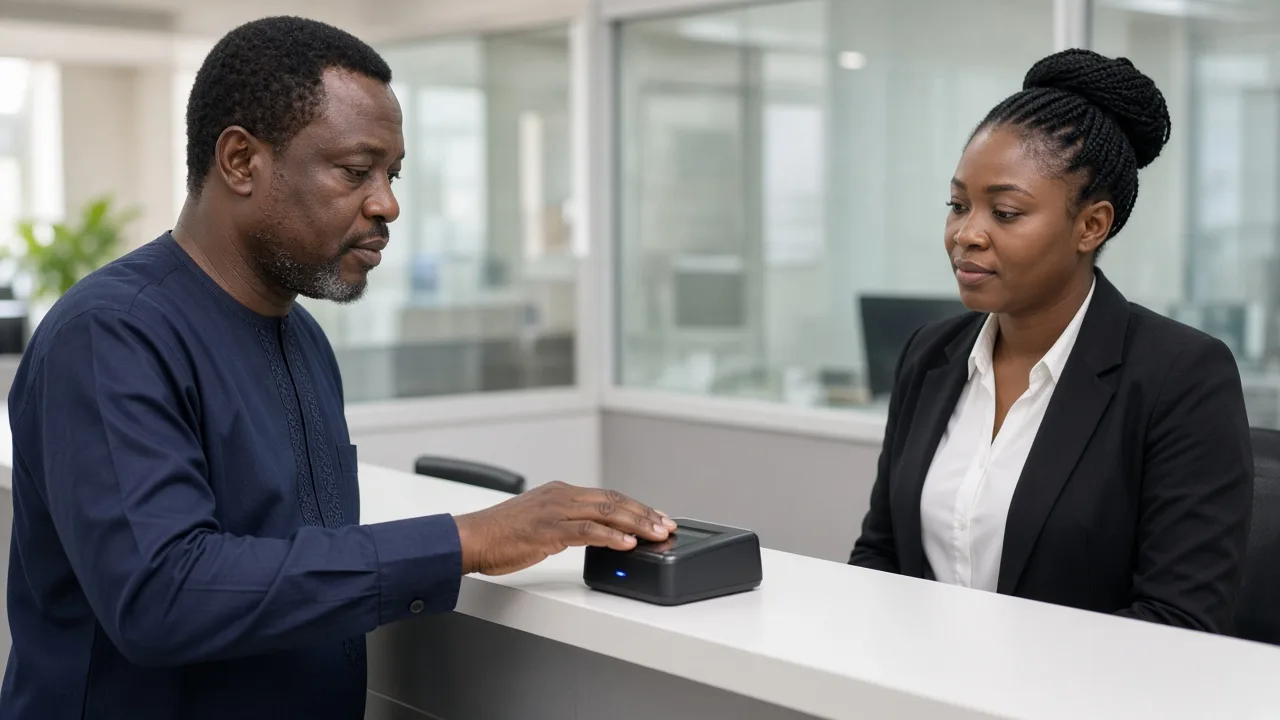
- Attend the centre to prove your identity with your passport, give fingerprints and a photo, and provide your supporting documents.
- Get your passport back the same day; the centre may keep some other documents while your application is processed.
- Wait for the email telling you a decision has been made, usually within 3 weeks, then follow the instructions to collect any documents held by the centre.
Family members each need their own application, fee and appointment, but you can apply on behalf of your partner and child if they cannot apply themselves. GOV.UK says an application from someone with the right of abode in the UK (for example a British citizen) will not be accepted; they need a certificate of entitlement instead.
Where Are the UK Visa Application Centres in Nigeria?
VFS Global runs the UK visa application centres in Nigeria. Its centre list shows three main centres and five premium application centres.
| Centre | Type | Days and hours |
|---|---|---|
| Abuja | Visa Application Centre | Monday to Friday, 08:00 to 17:00 |
| Lagos (Ikeja) | Visa Application Centre | Monday to Friday, 08:00 to 17:00 |
| Lagos (Victoria Island) | Visa Application Centre | Monday to Friday, 08:00 to 17:00 |
| Port Harcourt | Premium Application Centre | Tuesday to Friday, 08:00 to 17:00 |
| Enugu | Premium Application Centre | Tuesday to Wednesday, 08:00 to 17:00 |
| Kano | Premium Application Centre | Wednesday, 08:00 to 17:00 |
| Ibadan | Premium Application Centre | Thursday, 08:00 to 17:00 |
| Benin | Premium Application Centre | By published schedule, 08:00 to 17:00 |
Premium centres open on limited days and may involve extra VFS charges, which helps applicants in the South-East, South-South and North who would otherwise travel to Abuja or Lagos. VFS also offers a Super Flexi Service that lets you attend any centre in Nigeria within 15 days of booking. Check current charges and closure dates on the VFS site before choosing.
- Bring your passport, appointment confirmation and the supporting documents for your application.
- Make sure the name on your booking matches your passport exactly.
- If you live in Benin Republic, GOV.UK lists no centre there, so you can choose a centre in another country such as Nigeria.
Do Nigerians Need a TB Test for a UK Visa?
Nigeria is on the UK list of countries where a TB test is needed. GOV.UK says you need one if you are coming to the UK for 6 months or more and you have lived in Nigeria or Benin for 6 months or more, living there within the last 6 months. A standard 6-month visitor visa does not usually need one, but a returning resident or a fiancé, fiancée or proposed civil partner on a family visa needs a test even for shorter stays.
The test is a chest x-ray, with a sputum sample if the x-ray is not clear. The certificate is valid for 6 months from the x-ray date and must come from a Home Office approved clinic. GOV.UK's Nigeria clinic list includes:
| Clinic | City | Fee (11 years and over) |
|---|---|---|
| IOM Migration Health Assessment Centre, Asokoro | Abuja | 94 USD, paid in naira |
| IOM Migration Health Assessment Centre, off Boundary Road | Benin City | 94 USD, paid in naira |
| IOM Migration Health Assessment Centre, G.R.A. Ikeja | Lagos | 94 USD, paid in naira |
| Q-Life Family Clinic, Victoria Island | Lagos | N120,000 |
| St. Nicholas Hospital, Lagos Island | Lagos | N120,000 |
Children under 11 pay less and do not normally have an x-ray. There are no approved clinics in Benin Republic, so residents there must be tested in Nigeria. Check the GOV.UK list for other clinics, opening hours and booking details before you go.
How Long Does a UK Visa Take From Nigeria?
GOV.UK says you will usually get a decision within 3 weeks once you have applied online, proved your identity and provided your documents. Because the earliest you can apply is 3 months before travel, plan your appointment early in that window.
If you are eligible, the GOV.UK faster decision options are:
- Priority service: £500 on top of the fee, usually a decision within 5 working days.
- Super priority service: £1,000 on top of the fee, usually a decision by the end of the next working day after a weekday appointment, or 2 working days after a weekend appointment.
- Each family member applying with you pays for the faster service too.
Faster decisions do not change the evidence standard. Avoid non-flexible flights until you have the decision; a reservation with a real PNR lets you show planned dates in the meantime.
What Happens After Your UK Visa Decision?
If the visa is granted
Check the visa dates and your name carefully. A Standard Visitor can usually stay up to 6 months per visit. GOV.UK says you get your passport or travel document back on the same day as your appointment; after a grant, follow the decision email for any documents the centre held and for how your permission is shown.
GOV.UK's eVisa pages explain that an eVisa is a digital record of your identity, immigration status and conditions. You get an eVisa when you successfully apply for a visa or other permission. If you have a visa vignette (sticker) in your passport, it remains valid until it expires. You need a UKVI account to access your eVisa, add your passport details before travel and get a share code when you need to prove your status. Setting up the account does not cost anything.
At the UK border you may be asked about your plans and eligibility, so carry copies of your accommodation details, return plans and proof of funds.
If the visa is refused
The refusal letter gives the reasons. Themes that appear in GOV.UK eligibility rules and Home Office visit guidance include not showing you will leave at the end of the visit, funds that do not match the declared income or trip cost, unexplained deposits, weak ties to Nigeria, an unclear purpose, discrepancies with a sponsor's statements, or a travel pattern that looks like living in the UK through frequent visits. A new application makes sense only once you can address those reasons with genuinely new evidence.
What Are Common Mistakes in UK Visa Applications From Nigeria?
- Trying to apply more than 3 months before travel, which GOV.UK does not allow.
- Uploading statements with sudden large deposits and no explanation of the source.
- Using a sponsor without showing their UK status, finances and relationship to you.
- Choosing a long-term visa without a strong travel history.
- Booking a premium centre without checking its limited opening days.
- Ignoring the TB test for a stay of 6 months or more.
- Booking paid, non-flexible flights before the decision.
- Paying agents who promise guaranteed visas or special appointments.
- Leaving children's consent letters or host details out of a minor's file.
Planning Checklist and Timeline
Use this sequence as a working plan. Adjust the weeks if you buy priority or super priority service.
- 10 to 12 weeks before travel: confirm you need a Standard Visitor visa, check passport validity for the whole stay, and decide 6-month or long-term.
- 8 to 10 weeks before: gather bank statements, employer or CAC papers, and draft your purpose-of-visit letter. Ask any UK host for an invitation letter and status proof.
- If your stay will be 6 months or more: book a Home Office approved TB clinic in Nigeria and keep the certificate (valid 6 months from the x-ray).
- Within the 3-month window: start the GOV.UK application, pay the fee, upload documents and book Abuja, Lagos or a premium centre that fits your city.
- Appointment day: attend with your passport and supporting documents; collect your passport the same day.
- After the decision email: check the vignette or eVisa details, add your passport to your UKVI account if needed, then travel with copies of key documents.
What Do Real UK Visa Applications From Nigeria Look Like?
Example 1: banker from Lagos, two-week holiday
Tolu, 33, plans 14 days in London and Edinburgh. She applies for a 6-month Standard Visitor visa for £135, books Lagos (Ikeja), and brings six months of salary-account statements, an employer leave letter, payslips, a day plan, a hotel reservation and a flight reservation with a real PNR matching her dates. She gets her passport back the same day.
Example 2: parents from Enugu visiting their daughter
Chinedu, 61, and Ngozi, 58, want 8 weeks with their daughter, a UK resident in Manchester. They use the Enugu premium centre on its Tuesday or Wednesday opening. Their files include pension and rental income records, property papers, the daughter's invitation letter, her proof of status and address, payslips and a birth certificate proving the relationship.
Example 3: trader from Kano, frequent buying trips
Abubakar, 45, has visited the UK three times in five years for trade meetings. He applies for a 2-year long-term Standard Visitor visa for £506 at the Kano premium centre, with CAC documents, business bank statements, previous passports and letters from UK suppliers confirming meetings. He knows UKVI may give a shorter visa if it is not satisfied.
Ready to book your VFS appointment in Abuja or Lagos? Get a flight or hotel reservation with a real PNR for $15 per person, matched to the dates in your application, and it can be issued even while you are at the visa centre.
Book your visa reservationFrequently Asked Questions
How do I apply for a UK visa from Nigeria?
Apply online on GOV.UK for a Standard Visitor visa, no earlier than 3 months before travel, and pay £135. Book an appointment at a VFS centre in Abuja, Lagos (Ikeja) or Lagos (Victoria Island), or at a premium centre, then attend to prove your identity, give biometrics and hand in your supporting documents.
How much is a UK visitor visa from Nigeria?
A Standard Visitor visa for up to 6 months costs £135. Long-term visitor visas cost £506 for 2 years, £903 for 5 years and £1,128 for 10 years, each allowing up to 6 months per visit. Priority service adds £500 and super priority adds £1,000 per person, where available.
Where can I submit my UK visa application in Nigeria?
VFS Global runs visa application centres in Abuja, Lagos (Ikeja) and Lagos (Victoria Island), open Monday to Friday, 08:00 to 17:00. Premium application centres operate in Benin, Enugu, Ibadan, Kano and Port Harcourt on limited days. Check the VFS UK Nigeria site for current hours, charges and closure dates before booking.
Do Nigerians need a TB test for a UK visitor visa?
Not usually for a stay under 6 months. GOV.UK requires a TB test if you are coming for 6 months or more and have lived in Nigeria for 6 months or more recently. The test must be done at a Home Office approved clinic, such as the IOM centres in Abuja, Benin City and Lagos.
How long does a UK visa take in Nigeria?
GOV.UK says you will usually get a decision within 3 weeks after you apply online, attend your appointment and provide your documents. If eligible, priority service usually gives a decision within 5 working days, and super priority usually by the end of the next working day after a weekday appointment. Apply early within the 3-month window.
Do I need a flight ticket for a UK visa from Nigeria?
No paid ticket is needed, but you must show you can pay for your return journey and will leave after your visit. A BookForVisa reservation carries a real PNR, costs $15 per person, stays valid 48-72 hours and allows free date changes on the booking day only, so order it close to applying.
Will I get my passport back at the VFS centre?
Yes. GOV.UK says you get your passport or travel document back on the same day as your appointment. The visa application centre may keep some of your other documents while your application is processed, and you will be told what they need when you apply. You then receive an email once a decision is made.
Friendly reminder: BookForVisa prepares flight and hotel reservations to support visa applications and onward-travel proof. Requirements vary by destination, consulate, visa category and applicant situation. A reservation supports your file; it is not a paid ticket for travel and does not guarantee visa approval or entry.