
Short answer: If your hotel confirmation uses a trading name while the invoice or legal record uses another company name, do not edit the document. Confirm that the property, address, dates and guest details are the same, ask the hotel for a short letter connecting the names, and keep your flight reservation for visa consistent with the stay. A genuine explanation can support a file where permitted, but it cannot guarantee approval, boarding or entry.
Key facts:
- A hotel may trade under a brand or property name while the invoice shows its legal operating entity.
- Address, postal code, guest name, dates and booking reference connect the two names more reliably than a brand alone.
- Use a hotel-issued letter or current property record to explain a genuine legal-name difference.
- Do not alter a PDF, replace a guest name or make a payer appear to be the traveller.
- Align the hotel stay with your flight reservation, insurance, cover letter and visa-form dates.
Need flight proof that matches your hotel evidence? Keep the passenger, route and dates consistent while the property confirms its trading and legal names.
In This Guide
Official-source check: For the Schengen examples in this article, review the European Commission’s Schengen visa overview and the current checklist of the embassy or consulate handling your application. That authority decides which accommodation confirmations, hotel letters and translations it accepts.
Reviewed for: trading-name versus legal-entity checks, property address, guest-name accuracy, payer and traveller roles, hotel-issued letters, document integrity and flight-date alignment.
Hotel-name evidence check:
- Compare the property name, legal entity, address, postal code, dates and booking reference.
- Ask the property—not a third party—to issue any correction or name-connection letter.
- Keep the hotel evidence beside the reservation and explain any remaining difference in one short note.
Your confirmation says Seaview Grand Hotel. The invoice below it names Marlowe Hospitality Private Limited. To you, that is one property. To a visa officer reviewing a stack of files, it is a question mark.
Nothing is wrong with your stay. The paperwork just tells two different stories, and officers rarely guess which one is true. For the flight-document layer, review the visa flight itinerary requirements guide.
Name gaps show up in two forms. The hotel trades under one name and operates under another, or the guest name drifts away from your passport.
Both can be fixed, but only before you submit. You will learn which mismatches matter, who can correct them, and when a short explanation works better. Once your hotel names line up, add a dummy ticket for visa whose dates match the same confirmed stay.
Why the Name on Your Confirmation Differs From the Hotel You Booked

A single hotel can carry three names: the one on the signboard, the one on the booking site, and the one on the tax invoice. Your visa file only shows what the paperwork says, so you need to know which name appears where.
Trading Names, Legal Entities, and Chain Brands
Hotels often operate under a commercial name that differs from their legal name.
A Mumbai property flying a well-known chain logo may belong to a local company with a completely different title. The confirmation email shows the brand. The payment receipt shows the owner.
Independent hotels do the same. A family-run guesthouse may trade under a friendly local name while its licence and tax papers carry the owner's registered company.
Franchised and management-run hotels widen that gap. The hotel name on a booking platform is the marketing name. The entity that charges your card is often a holding company or a management firm.
Here is how it plays out. Emma Carter books a stay in Delhi. Her confirmation reads Hotel Lotus Court, but the invoice reads Sharma Hospitality LLP. She spends five minutes on the property's contact page and finds the LLP name in the footer. She saves a dated screenshot for her file.
For visa purposes, both names describe the same place, and neither is suspicious. The trouble starts only when nothing in your file explains the difference.
How Officers Actually Cross-Check Your Hotel Booking Details
Embassies require proof of accommodation for visa applications. Research the specific requirements of different embassies for proof of accommodation.
The accepted format changes from one consulate to the next, and a layout that works for one may fall short for another.
Read the embassy requirements for your destination before you choose a property. Some ask for a full confirmation, while others accept a reservation letter. A few also want proof of payment or a refundable rate. Most embassies publish their preferred format on their visa pages, though few explain their verification practices in detail.
Visa processing officers verify that accommodation is legitimate and matches travel dates. To do that, they check what they can reach: the property's website, public listings, and the dates on your itinerary.
An officer may verify hotel bookings during an application and compare them with the property’s own details. A valid hotel reservation, in an officer's eyes, is one they can trace back to a real property.
In a deeper check, a caseworker may email or call the property or use the booking reference; the exact process varies by authority.
Your booking reference is the thread they pull. A property's reservation systems can find it in seconds, regardless of which company name sits on the invoice. Some visa systems may also flag documents that disagree with each other, so consistent spelling helps.
The Address Matters More Than the Company Name
Physical address consistency is more important than the corporate name for visa acceptance.
Officers can match a street address to a website, a public listing, and a tax record. A company name is much harder to trace.
Compare the hotel address on your booking details with the address on the property's own website. Check the hotel city and postal code too. A single missing block number is enough to cause doubt.
Your stated destination on the visa form should line up as well. If the form says you land in Delhi, a confirmation that opens in another city needs an itinerary that explains the move.
If your route crosses borders, the longest stay usually decides which consulate handles you. The stay in that one country deserves your clearest documents.
Staff at a visa centre usually check that your file is complete, not that it agrees with itself. A mismatch slips through there and surfaces later at the embassy.
Spotting Mismatches in Accommodation Proof Before You Submit
A hotel booking should include guest name, address, and stay dates. Booking confirmations should display the full guest name, dates, and hotel details for visas.
Run this quick check on every page you plan to submit:
-
The hotel name on the confirmation matches the name on the hotel's own website.
-
The company name on the invoice appears on the property's contact page or booking terms.
-
The hotel address and postal code are identical on every document.
-
The arrival date and departure date cover the entire stay you declared on the visa form.
-
The booking form or confirmation shows the same reference number on every page.
Read the booking terms too. Many properties list the operating company in the fine print, which gives you a fast link between the brand and the entity.
Treat each page as accommodation evidence, not decoration. What the embassy sees is a bundle of pages, and small gaps cost document credibility fast. Accommodation proof works only when every page agrees with the others.
Company names are the easier half of this puzzle. Traveler names cause far more trouble.
Traveler Names That Refuse to Match Your Passport
The hotel's brand name is rarely what stalls a file. Your own name, spelled a little differently, often is.
Transliteration, Middle Names, and Married Names
Visa officers verify hotel bookings against passport names. That check is literal.
Use the applicant’s full passport name in the guest field and follow the destination checklist for any permitted formatting differences. A nickname, a shortened first name, or a missing middle name all count as gaps.
Names on hotel bookings should follow the passport and current destination checklist. If you are unsure of the spelling, copy it from the machine-readable lines at the bottom of your passport data page.
Transliteration errors can cause name mismatches in bookings. Jonathan Mueller can become Jonathon Muller when a form strips a letter or an umlaut. Type your name as printed, then read the confirmation email before you close the tab.
Name order and punctuation trip people up too. If a form splits your name into first and last boxes, place each part in the correct field. A swapped field prints a reversed name on the confirmation. Hyphens count as well, because Anne-Marie Dupont and Anne Marie Dupont read as different strings to a checking system.
Married names need extra care. If your passport carries your maiden name and the reservation carries your married name, keep your marriage certificate ready. You do not need to attach it, but you should be able to produce it if asked.
Some forms ask for a passport number. Enter it exactly as printed, because a single wrong digit creates a second mismatch.
Shared Reservations and the Missing Traveler Problem
Group bookings often result in name mismatches on confirmations. Typically, one person books several rooms, and the confirmation lists only that person.
Some Schengen checklists expect hotel confirmations to list all travellers’ names. On a Schengen visa file, a missing name looks like a missing traveler, and the officer may wonder where that person sleeps.
Room details matter here too. If a couple shares a double room, both names belong on the confirmation. If friends share the same room, list every guest.
The room type and room configuration should reflect who actually travels. A single hotel room for four adults raises questions that no cover story can answer.
A mismatched name can lead to visa application rejections.
So ask the property to add every traveler as a guest, even for rooms that someone else will occupy. Children need names too. Enter each child's full name exactly as it appears in their own passport.
If you book rooms on separate confirmations, each one should show the right occupants. Mention the link between them in your explanatory note, so the officer can see one party and one plan.
When a Friend or Relative Pays for the Room
Sometimes a parent, an employer, or a friend pays. The booking name is theirs, not yours. When the file explains the link, that can work. When it does not, an officer sees a stranger's name on your stay and has to guess why it is there.
Company travel desks add another twist. They often book under the company name. Ask the desk to enter your passport name in the guest field, since hotels can keep a company as the billing party while the guest stays personal.
When another person books for you, ask them to enter your full name under guest details and keep their own name as the payer. Hotel bookings must match the applicant's passport name exactly.
That rule holds even when someone else holds the card.
The hotel confirmation should identify the applicant as a guest; a payer’s name alone does not explain who will stay. The payer's name can appear beside yours, but it cannot replace it.
Hosted nights with relatives follow different rules, since no hotel is involved. Cover those nights with an invitation letter, and keep hotel nights on their own confirmation.
Inconsistent documents can lead to visa application rejection.
Officers read your papers as one story. If someone else's name appears in the middle of it, add one sentence of explanation to your cover letter and attach the payer's confirmation email.
Asking the Hotel to Amend the Name Before You Arrive
Most hotels will amend reservations if requested before check-in. That is your window, so use it early. Ask at least a week before you check in, never on arrival day.
Email the hotel directly with your passport name, booking reference, and dates. It often works better to contact hotels directly than to wait in a booking platform's chat queue. Response times vary, so request the correction early and keep the email trail.
Check the money terms first. Refundable hotel bookings with free cancellation let you rebook under a corrected name without losing funds. Read the cancellation policy before you touch anything.
A rate with upfront payment may lock you in, and a change could trigger a fee. Ask for a fresh email from the hotel confirming the corrected name, then store it beside the original.
A short amendment email works well. Keep it to four lines:
-
Subject: Name correction for booking reference and arrival date
-
The name currently shown and the name as it appears in your passport
-
A request for a reissued confirmation with the corrected name
-
A polite request for a reply confirming the change
If the property cannot or will not amend the name, you need another route. That route is written proof.
Getting the Hotel to Put the Right Names in Writing
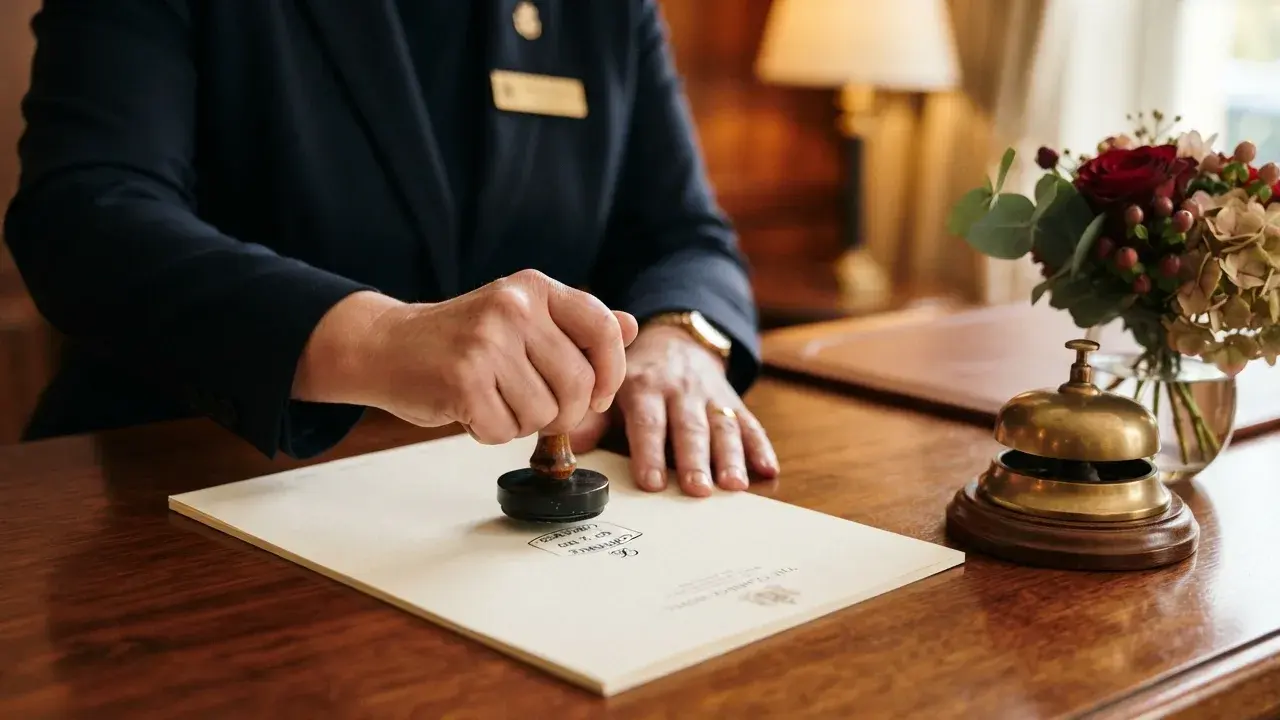
Some names cannot be changed because the legal entity is fixed or the rate is locked. In those cases, a short official statement does the job an edit would have done.
What to Ask the Front Desk For
An official confirmation letter can clarify a genuine name discrepancy in a visa file. Ask for it in the same email as your amendment request, so the property handles both at once. Send it from the address you used to book, so the hotel can match you to the reservation quickly.
Request these details in the letter:
-
Your full name exactly as in your passport
-
Arrival and departure dates
-
The hotel's trading name and its legal name
-
The full hotel address and the property's contact details
-
Your booking reference
A hotel reservation letter can support accommodation evidence for a visa application. Requirements and accepted formats vary by authority. Use those exact purposes when you ask, because front desk teams often recognize the request and know which format to send.
Allow a few days for the reply. If the hotel belongs to a chain, write to the property itself rather than the central call centre. Only the property can confirm the legal entity that runs it.
The Letterhead Letter That Bridges Trading and Legal Names
Ask for a letter on hotel letterhead confirming the connection between trading and legal names. A reservation letter should be on official hotel letterhead.
Plain paper or a chat screenshot will not do the same job.
The hotel can keep it to a few lines. A useful letter states four things:
-
The property known as Hotel Lotus Court operates under the legal entity Sharma Hospitality LLP
-
Both names refer to the same building at the stated address
-
Your guest name, stay dates, and booking reference
-
A signature, the signer's title, and the date
A stamp helps, but clarity helps more. If the hotel sends a scan, check that every name is spelled the way it appears on your invoice.
If the property has no printed letterhead, ask for a letter that carries its logo, registered address, and an email address on its own domain. Officers may call the number on the page, so make sure it matches the property's public listing.
Writing the One-Page Note That Explains the Gap
Include a cover letter explaining discrepancies in hotel names when submitting visa applications. Submit a letter explaining name discrepancies if changes aren't possible.
Keep it to one page. Open with your full name and application details. Then state the mismatch in one plain sentence, such as: "The invoice shows Sharma Hospitality LLP, the legal entity that operates Hotel Lotus Court."
Here is a short example you can adapt:
Dear Visa Officer, my name is Emma Carter. My hotel confirmation for Hotel Lotus Court shows the operating company, Sharma Hospitality LLP, on the invoice.
The attached hotel letter confirms that both names refer to the same property at the address shown. My bank statements and insurance are attached in support of my trip. Yours sincerely, Emma Carter.
Refer to the attached hotel letter by name. For broader reservation alignment, review the flight reservation for visa complete guide. Close with a short, coherent plan of your route, so the officer can place this stay inside your entire trip.
Use plain words and short sentences. Skip apologies and long stories. A calm, factual note shows you understand the gap and have nothing to hide. It also keeps your travel plans in focus instead of the paperwork quirk.
Supporting Papers That Make the Explanation Credible
An explanation works best when other documents back it up. Attach only what supports your case:
-
Bank statements that show you can fund the stay
-
Payment proof that ties your card or transfer to the reservation
-
Travel insurance dated across the same trip
-
Visa proof from earlier trips, such as old visa pages, which shows a record of returning on time
Keep the pack short. Leave out unrelated screenshots, chat threads, and duplicate copies, because every extra page is another chance for a new mismatch.
Order the pages the way the embassy lists them. Put the hotel letter directly behind the reservation, and the note on top. An embassy accepts a mismatch more readily when the explanation arrives together with the evidence.
Do not pad the pack with documents that add no proof. Each page should answer one question the officer might ask.
Without those papers, the same mismatch can invite extra scrutiny. Officers then have to guess, and guessing rarely favors the applicant.
Why Editing a Confirmation Costs More Than Explaining It
Editing a PDF feels faster than emailing a hotel. It is also the riskiest shortcut in the whole process.
Applicants reach for it when a deadline is close and a name is wrong. The pressure is real, but the safer options take less time than most people expect.
What Officers Notice When a Name Has Been Changed
Do not alter booking confirmations to change names, as this may lead to visa refusals.
Altered files leave traces. Fonts stop matching, spacing shifts, and details disagree with the hotel's own records. Even file properties can show which program last saved the document.
Officers also handle genuine confirmations every day. A name that looks freshly typed onto a familiar layout stands out beside them. Visa officers verify hotel bookings during application assessments.
One email to the property can expose an edit.
At that point, the question changes. It is no longer about a name gap. It is about document honesty, and that is a much harder question to answer.
There is a safe path. A corrected confirmation reissued by the hotel is not an alteration, because the property itself made the change. What matters is who edited the file, not whether the file changed.
Fake Hotel Booking: Forged Confirmations and Their Long Tail
A fake hotel confirmation can lead to refusal and other consequences under applicable law; use only genuine records.
The damage does not stop with one decision. One fake booking can damage future visa applications.
Past refusals stay on record, and many visa forms ask whether you have ever been refused before. A document problem then follows you onto every later form.
Fake bookings undermine financial credibility in visa applications.
Officers read your funds, your itinerary, and your reservation side by side. They should describe the same trip, the same budget, and the same stay.
Think about the timing too. A name mismatch is a five-minute conversation with the hotel today. A refusal for document problems can take months to recover from, and it may change how every later application is read.
A fake hotel booking is never a shortcut around a name mismatch. A fake confirmation swaps a small, explainable gap for a serious integrity problem.
Honest paperwork holds up under checking. A traced booking reference, a signed hotel letter, and a matching address survive every step an officer takes.
The issue here is forgery. A real reservation, issued by the property or a legitimate provider and traceable through its booking reference, sits on the other side of that line.
A Pre-Submission Routine for Any Name Mismatch
Use this order every time a name looks off:
-
Compare the confirmation with your passport, letter by letter.
-
Compare the hotel name, address, and legal entity with the property's own website.
-
Ask the hotel to amend anything that can be amended.
-
Request the letterhead letter for anything that cannot be amended.
-
Write the one-page note and attach the supporting papers.
-
Save every email and letter in a single folder.
As an example, start several weeks before your appointment: audit the documents first, allow time for the hotel’s reply, then assemble the pack with room for a follow-up. That schedule leaves room for a second email if the first goes unanswered.
If the hotel stays silent for three days, follow up by phone. If your appointment is close, rebook a flexible rate under the correct name and cancel the old one under its own terms.
That last step pays off later. On your next trip, you will have a clean record of how you handled the same question before, and you can reuse the hotel's wording.
Read the whole pack once more as the officer would, from top to bottom. Every page should name the same person, the same hotel, the same address, and the same dates.
If an officer asks about the mismatch by email or at an interview, answer in the same words as your note. Consistency between your explanation and your documents builds trust quickly.
Follow this routine, and a legal-name mismatch becomes a footnote instead of a problem.
Match the Paperwork, Then Submit With Confidence
Hotel names and legal names will differ, and traveler names will sometimes slip. Neither is a crisis when you catch it early. Match the address, match the passport, and ask the property for a letterhead letter when a name cannot change.
Never edit a confirmation to force a match. Explain the gap, attach the proof from BookForVisa.com, and submit a file you can defend line by line. The officer wants clarity, and you can give it.
Ready to submit a clean hotel-and-flight file? Keep the property identity, guest name, dates and reservation route consistent, then attach the hotel’s explanation for any genuine legal-name difference.
Frequently Asked Questions
Why is my hotel confirmation name different from the invoice name?
The property may trade under a brand or commercial name while the invoice identifies its legal operating company. Confirm that the address, dates and booking reference connect them.
Should the hotel booking show my passport name?
Use your full passport name in the guest field whenever possible. If the payer or booking holder is different, keep that role separate and explain it with genuine evidence.
How can I prove two hotel names refer to one property?
Ask the property for a letter on its own letterhead or use a current official property page that connects the trading name, legal entity and address. Keep it with the original confirmation.
Can I edit the hotel PDF to correct the legal name?
No. Ask the hotel or booking provider to reissue or amend the confirmation. An edited file can create a document-integrity problem.
Do hotel-name differences affect the flight reservation?
They should not change the passenger, route or dates. Make the flight reservation, hotel stay, insurance and cover letter describe one consistent trip.
Does a corrected hotel confirmation guarantee visa approval?
No. It can clarify a genuine mismatch, but the destination authority evaluates the complete application and retains final discretion over approval, boarding and entry.
Friendly reminder: BookForVisa provides temporary travel-proof documents for planning and application support. Requirements vary by destination, airline, route and applicant situation. A reservation can support a file, but it does not guarantee approval, boarding or entry.