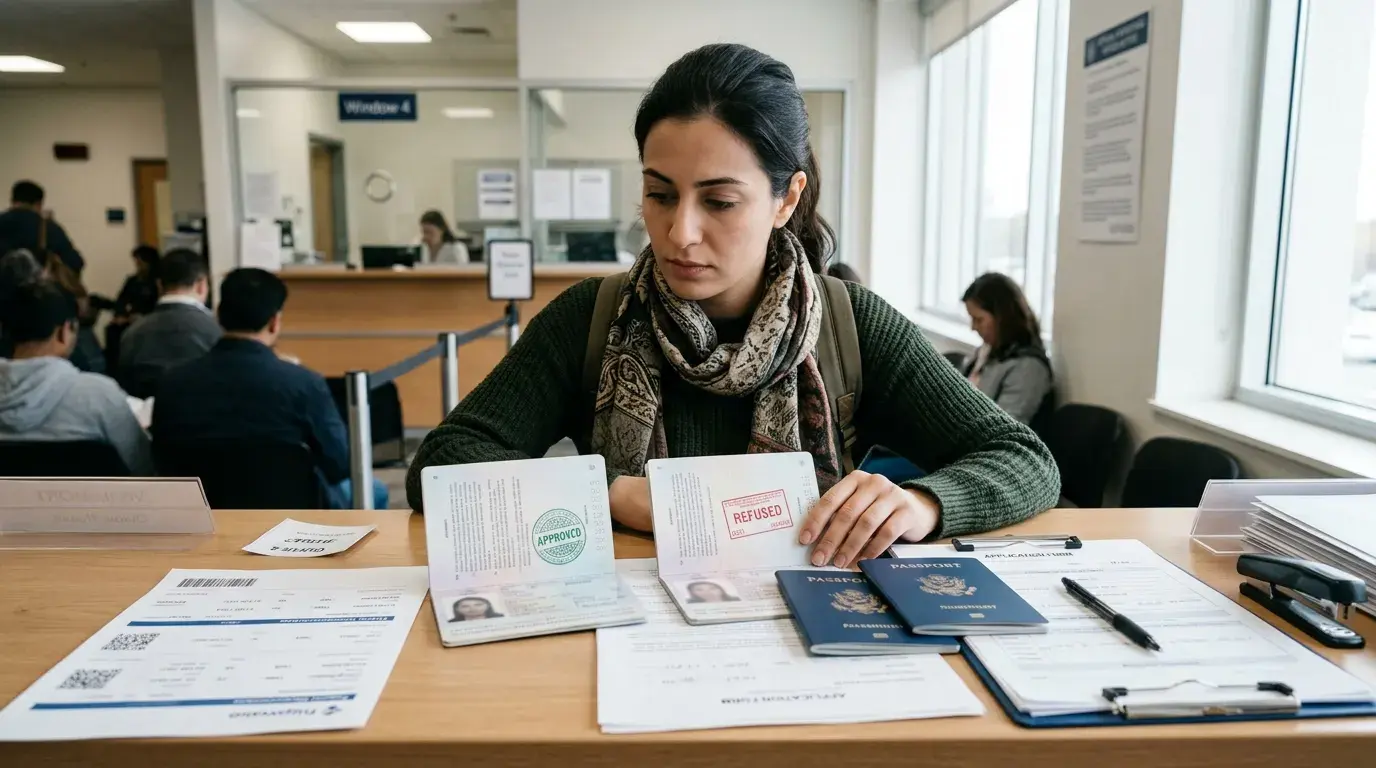
Short answer: When a visa trip is funded by several people, prepare one truthful flight reservation for visa and map every contributor to a specific expense. Keep the passenger name, route, dates, hotel stay, sponsor letters and financial evidence consistent. A booking can document intended travel, but it cannot replace proof of funds or guarantee approval, boarding or entry.
Multiple funding sources are manageable when the file explains them as one coordinated plan. The goal is not to hide who paid; it is to make each contribution traceable and keep the overall travel story easy to verify.
Key facts
- List who pays for the flight, accommodation, insurance and daily costs.
- Use a short budget summary that connects each amount to a supporting document.
- Keep applicant names, route, dates and hotel nights consistent across the file.
- Follow the destination checklist; a reservation never substitutes for required funds or sponsorship proof.
Need booking-for-visa proof while contributors finalize payment? BookForVisa can prepare a temporary, document-ready flight reservation around your intended route and dates. Confirm the destination checklist first, then keep the reservation aligned with each sponsor's evidence.
In This Guide
- Why Visa Officers Scrutinize Trips Funded By More Than One Person
- Mapping Each Funding Source To A Specific Line In Your Booking
- Building A Flight Reservation That Reflects Split Funding Without Confusing The Officer
- Choosing Hotel Bookings That Match Every Contributor's Story
- Documenting The Sponsor's Share So The Numbers Actually Add Up
- Avoiding The Financial Mismatch Trap When Funding Is Shared Across People
- Keeping Insurance, Flight Dates, And Hotel Dates In Sync Across Every Contributor
- Family-Sponsored Trips: Handling Invitation Letters And Host Details Together
- Common Mistakes That Sink Multi-Source Funded Visa Applications
- Bringing Your Multi-Source Application Together With Confidence
Official-source check: Check the destination embassy, consulate or visa centre's current funding and travel-document checklist, plus the airline's own document rules. For carrier and airport-name verification, the IATA Airline and Airport Codes search is a useful reference; the destination authority controls the visa decision.
Reviewed for: multi-source funding maps, sponsor-letter clarity, flight-and-hotel date alignment, reservation-versus-payment wording and official-source boundaries.
When your trip is paid for by more than one person, your visa file has to tell one story, not three. A visa officer reading your file doesn't see your family group chat where your sister covered the hotel, and your father sent the flight money. They see documents.
If those documents don't line up with each other, the officer is left guessing, and guessing can lead to a request for more evidence or a refusal.
This guide is built specifically for applicants whose trip funding is split across parents, siblings, employers, or personal savings. For route and document sequencing, compare the visa flight itinerary requirements before finalizing the booking. It walks through how to structure your flight reservation, your hotel booking, and your supporting financial paperwork so every contributor's share is traceable, consistent, and easy for an officer to verify in minutes.
You'll leave with a clear method for turning a multi-source budget into a single, coherent visa application, starting with a dummy ticket booking that matches every other document in your file.
Why Visa Officers Scrutinize Trips Funded By More Than One Person
Funding source map: what to show for each contributor
| Funding source | Useful supporting evidence | Alignment check |
|---|---|---|
| Applicant's savings | Bank statement and short budget line | Name and available balance match the application |
| Family sponsor | Signed sponsorship letter, relationship proof and bank evidence | Letter states the specific expense and dates covered |
| Employer or institution | Funding/assignment letter and payment confirmation where required | Trip purpose, dates and payer match the booking |
| Mixed sources | One summary table plus each contributor's evidence | Every cost is assigned once; totals add up |

A single-source trip is easy to read. One bank account, one applicant, one clean story. The moment a second or third person enters the picture, the file gets harder to follow, and officers know it.
The Officer's Job Is To Find A Coherent Picture, Not Individual Facts
Visa officers need a cohesive picture of trip funding sources, not a pile of disconnected receipts. When they see a bank statement that doesn't match the ticket price, or a hotel invoice that references a name nobody explained, they don't assume it's a filing error. They assume it's a gap in your story, and gaps get flagged.
This matters more with split funding because every extra contributor adds another point where the story can drift. If your parents are covering flights and you're covering the hotel, the officer has to mentally reconcile two different money trails against one itinerary. Make that reconciliation effortless, and you remove one of the most common reasons for delay.
Clarity Beats Volume
A thick file isn't automatically a strong file. Clarity in financial documentation helps avoid visa application refusals far more reliably than sheer page count. Officers are trained to move quickly through hundreds of files. A clean one-page summary showing who paid for what, backed by matching bookings, works better than twenty loosely connected statements.
Before you book anything, write out in plain language who is paying for which part of the trip. This isn't for the embassy yet; it's for you. It becomes the blueprint every reservation and letter needs to match.
A Simple Example of How This Plays Out
Picture a trip where Sarah is applying for a visa, her father is paying for the flight tickets, and her aunt is covering the hotel.
If Sarah submits her father's bank statement without mentioning his role, and a separate hotel booking with no reference to her aunt, the officer has to guess how these pieces connect.
If instead her file includes one short line stating who's covering what, followed by each contributor's own supporting document, the same information reads as a clear, deliberate plan rather than a coincidence of paperwork.
This is the difference clarity makes. The facts don't change between the two versions. Only how easily they can be understood does.
Revisiting the Map as Your Trip Takes Shape
Treat this mapping exercise as a living document rather than a one-time task. As flight prices shift, as a sponsor confirms a slightly different amount than first discussed, or as your travel dates firm up, update the map to match.
A map that reflects your situation two weeks before applying is far more useful than one built months earlier and never revisited.
Most visa preparation content treats trip funding as a single number: "show you have enough money." That's incomplete advice the moment more than one person is involved. The real work is making each source individually traceable while keeping the total picture unified.
That means your flight reservation, your hotel proof, your sponsorship letters, and your bank statements all need to point back to the same trip, the same dates, and the same people, without contradicting each other. The next discussion breaks down exactly how to do that, starting with how to map funding sources to the actual bookings you'll submit.
Why "Requirements Vary" Doesn't Mean You Can Skip This Step
Visa requirements vary from one destination country to another, and requirements vary even between different visa categories within the same country. A tourist visa file and a business visa file, for instance, are read with slightly different expectations, even though both still need consistent supporting documents.
This is worth repeating because a lot of applicants assume that if a friend's multi-source funded trip to one country went smoothly, the same approach will work everywhere else. It might, but it also might not.
A useful cross-destination principle is: an officer wants a small set of key details that agree with each other, not a large pile of paperwork that requires interpretation.
The Same Principle Applies Whether You're Applying For a Schengen Visa or Elsewhere
Whether you're preparing a Schengen visa application or applying somewhere with a completely different process, the logic behind multi-source funding scrutiny doesn't change much. Officers everywhere are trained to look for internal consistency first, and financial sufficiency second.
A Schengen file with three contributors and one clean, cross-referenced summary is easier to review than a file that presents the same contributors as a disorganized stack of unrelated documents.
Keep this destination-agnostic mindset as you read the rest of this guide. The specific forms and portals will differ from one embassy to another, but the underlying discipline- clear sourcing, matching dates, and named contributors- applies almost everywhere you'll submit an application.
A Quick Reality Check Before You Start Booking
If you take one idea from this discussion into the rest of the process, make it this: an officer is not trying to catch you out; they're trying to finish reading your file quickly and move on to the next one. Multi-source funding isn't a red flag by itself. An unclear, poorly matched multi-source file is what actually causes hesitation.
Approach every document from here forward with that in mind. You're not just proving you have money; you're making it easy for someone else to confirm that quickly, on your behalf, without needing to ask you a single follow-up question.
Mapping Each Funding Source To A Specific Line In Your Booking
Once you know who's paying for what, the next step is translating that into documents an officer can actually check. For the wider timing and PNR workflow, see the 2026 flight-reservation planning guide. This is where most multi-source applicants lose clarity, because they treat "funding" as one lump sum instead of a set of line items.
Treat Every Contributor As A Separate Case File
Multiple sources of funding are acceptable as long as clarity and documentation are maintained for each one. That's the key phrase: each one. Distinct sets of documents are required for each individual financial contributor, rather than one combined folder that mixes everyone's evidence together.
If your sibling is paying for your hotel and your own savings are covering flights and daily expenses, build two clearly labeled evidence sets:
-
Your own funds: bank statements, payslips, and your flight reservation with your name as the passenger
-
Your sibling's contribution: their bank statement, a short letter confirming the hotel payment, and the hotel booking confirmation itself
Keeping these separate, rather than blended, is what lets an officer verify each claim independently instead of trying to untangle a mixed narrative.
Gather Independent Proof, Not Just a Combined Statement
Gather independent proof for each financial source contributing to a trip. A single family bank account covering everything looks convenient but actually weakens your file, because it hides who is responsible for what. Independent proof, even if it's just a short paragraph plus a matching booking confirmation, tells the officer exactly where each dollar came from.
This is especially relevant for flight tickets. If a parent is buying the flight, the reservation should show the parent's name as the purchaser where the airline allows it, or at minimum a booking confirmation email that clearly ties back to that parent's payment method.
Build a Budget Breakdown Before You Book Anything
Provide clear budget breakdowns showing total expenses and contributions from all sources before you finalize a single reservation. A simple table works well:
-
Total trip cost
-
Amount covered by applicant
-
Amount covered by sponsor or family member
-
Which specific bookings (flight, hotel, insurance) correspond to each portion
This breakdown becomes your checklist. Every reservation you book should map to a line in this table. If your hotel proof shows a total that doesn't match what your sponsor's letter says they're covering, you'll catch it here before an officer does.
Why This Step Comes Before Booking
It's tempting to book flights and hotels first and sort out the paperwork later. With split funding, that order creates problems. You might book a fully refundable flight in your own name, then realize your sponsor's letter says they're covering the flight, creating a contradiction between what the ticket shows and what the letter claims.
Doing the mapping first means every reservation you make afterward already fits the story you're telling. That's the foundation the next few sections build on, starting with how to structure the flight reservation itself.
Turning Your Map Into a Short Cover Note
Once your budget breakdown exists, condense it into a short cover note you can include with your application, or at least keep on hand for a visa interview. This note doesn't need to be long. A few lines listing each contributor, the specific expense they're covering, and the supporting document attached for that expense is enough.
This single page often does more work than any individual bank statement. It gives the officer a map before they start reading, so every subsequent document confirms something they already expect rather than something they have to piece together from scratch.
Naming the Booking That Belongs to Each Source
For every flight, hotel, or insurance reservation you make, note internally which funding source it belongs to. If you're covering your own flight tickets while a parent covers the hotel, label your files accordingly, even if it's just in your own folder structure.
When it's time to submit supporting evidence, you'll be able to attach the right booking confirmation to the right financial explanation without second-guessing which document supports which claim.
This small habit prevents a common last-minute scramble where applicants realize, right before submission, that they can't remember which reservation was meant to support which contributor's claim.
Deciding Who Should Be the Named Traveler on Each Booking
Where a booking platform allows multiple traveler names on one reservation, list yourself as the primary traveler regardless of who's paying. This keeps the document centered on you, the applicant, while still allowing the payment method or contact details to reflect whichever contributor is actually funding that piece.
If a platform only allows one name overall, make sure it's yours, and keep the contributor's payment confirmation as a separate, connected piece of evidence rather than trying to fit two names into a single field.
Building this habit of mapping funding to bookings isn't only useful for a single visa application. Many applicants travel more than once, sometimes to different destination countries with different processes.
Once you've built a clear system for tracking who's funding what, you can reuse the same structure for future trips, adjusting only the specific dates, amounts, and contributors involved each time.
What to Do When a Contributor's Plans Shift Midway Through
Funding plans change. A relative who agreed to cover your hotel might later offer to cover the flight instead, or a friend's contribution might fall through entirely and get replaced by a family member.
When this happens, go back to your budget breakdown and update it immediately, then check whether any bookings already made need to be adjusted to reflect the new arrangement.
This is another reason flexible, reservation-based bookings are worth favoring early on. A temporary flight or hotel reservation can be adjusted or replaced without financial loss if the underlying funding structure shifts. A fully paid, non-refundable booking locked in around an earlier version of your funding plan is much harder to unwind.
Keeping a Simple Running Record
A basic spreadsheet or even a single page of notes works well here: one row per contributor, one column for the expense they're covering, one column for the booking reference tied to that expense, and one column for the supporting document you'll submit. Update it every time something changes.
By the time you're ready to submit, this record becomes the quiet backbone of your entire application, even though the officer never sees it directly.
Building A Flight Reservation That Reflects Split Funding Without Confusing The Officer

Your flight reservation is often the first document an officer glances at, so it needs to hold up on its own before they even reach your financial letters.
What a Flight Reservation Actually Needs to Show
A proper flight reservation includes passenger name and travel dates that match every other document in your file. This sounds basic, but it's where split-funding applications frequently go wrong.
If your parent purchased the ticket but the reservation lists a slightly different spelling of your name, or the travel dates don't match your invitation letter, that mismatch becomes the officer's focus instead of the funding structure you carefully built.
Flight reservations help demonstrate travel intent for a visa application, showing that you have a real, planned itinerary rather than a vague idea of travel. When multiple people are funding the trip, this reservation is also the anchor everyone else's paperwork needs to reference.
You Don't Always Need a Fully Paid Ticket
Some destination checklists accept a flight itinerary without full payment, and a flight reservation can show planned travel without a final ticket purchase. This is useful when funding is still being finalized between contributors, because it lets you submit a valid, checkable itinerary while the actual ticket purchase waits until the visa is approved.
Some airlines allow holds on tickets for three days or longer, and reliable dummy ticket providers like BookForVisa.com can book you with major airlines like Lufthansa or Emirates without requiring full payment upfront. This flexibility matters when your funding is split, because it gives contributors time to finalize their share without locking in a non-refundable purchase too early.
Matching the Reservation to the Visa Application Dates
Flight reservations must match visa application dates exactly, down to the day. This becomes trickier with multiple contributors because schedules often shift during planning. If your sponsor confirms funding a week later than expected, your reservation dates need to be revisited too.
A temporary flight reservation prepared for visa documentation may be valid only for a limited window, such as a few days; check the provider's stated validity while your appointment date is confirmed. Use that window deliberately: lock your reservation dates only once you're confident your appointment and funding timeline are settled, not before.
Keeping the Reservation Consistent With Who's Paying
If your flight is being funded by someone other than yourself, keep a short paper trail connecting the two. This can be as simple as:
-
A booking confirmation showing the reservation reference
-
A brief note from the paying party confirming they arranged the booking
-
Your bank statement showing you did not make a large payment matching the ticket cost, which would otherwise look inconsistent with your sponsor's claim.
This kind of small alignment prevents the officer from wondering why your own account shows a payment that supposedly came from someone else, or vice versa.
Names, Spelling, and Small Details That Matter More Than They Seem
A flight reservation with a misspelled name, a missing middle name that appears on your passport, or an incorrect date of birth might seem like a minor clerical issue, but it's one of the fastest ways to introduce doubt into an otherwise solid file.
When a parent or sponsor is the one making the booking, double-check that they've entered your name exactly as it appears on your travel document, since a small typo is far more common when someone else is filling in your details on your behalf.
Temporary Reservations Versus a Confirmed Paid Ticket
A temporary reservation, one that holds your seat without full payment, is often the smarter choice earlier in the visa process, before your appointment date and funding are both locked in. Only once your visa approval is close, or your travel dates are certain, does it make sense to move toward a confirmed paid ticket.
Booking a fully paid, non-refundable fare too early in a split-funding situation can add risk without adding proof value when the current checklist permits a reservation instead.
Reliable providers typically charge a small fee, often far less than an airline's own hold fee, to generate this kind of temporary reservation. It can provide temporary flight documents with a booking reference and passenger details, subject to the provider's terms; verify the record before submission rather than editing the PDF yourself.
When Full Payment Actually Makes Sense
There are situations where full payment on a flight, even with split funding, is the right call: when your visa has already been approved, when the airline route has very limited availability, or when a fare is about to expire and delaying it further would cost significantly more.
In those cases, confirm with every contributor exactly how much they're paying before the ticket is purchased, so the final receipt matches the budget breakdown you built earlier rather than surprising anyone after the fact.
What a Strong Flight Reservation Looks Like on Paper
A reservation an officer can approve at a glance usually includes a handful of specific elements together on one document: your full name spelled exactly as it appears on your passport, the departure and return dates, the specific airports or cities involved, and a booking reference that can be checked if needed.
If a reservation is missing any of these, request a corrected version before submitting rather than adding a handwritten note to explain the gap.
It also helps if the reservation looks like something a real airline system generated, rather than a generic template. Officers who review these files regularly develop a sense for what a standard airline confirmation looks like, and a reservation that deviates too far from that format can draw unnecessary questions, even when the underlying booking is completely legitimate.
Communicating With Airlines and Providers When Someone Else Is Booking
If a parent, sibling, or friend is arranging your flight reservation, encourage them to keep a copy of every confirmation email and reference number, rather than only forwarding a screenshot.
If a question ever comes up about the booking, having the original confirmation on hand, ideally from the airline or provider directly rather than a resized image, makes it easy to resolve quickly.
Round Trips and Multi-City Plans
If your trip involves more than one destination, or a return through a different city than where you arrived, make sure your reservation reflects that full route rather than just a one-way leg.
A return plan that only shows half the journey can look incomplete, particularly if a different contributor is funding the outbound and return segments separately. Keep the full itinerary on one reservation wherever the airline or provider allows it, so the entire trip reads as one connected plan rather than two unrelated flights.
Once the flight side of your file is airtight, the hotel booking needs the same level of attention, particularly because hotel proof is judged against a slightly different set of expectations.
Choosing Hotel Bookings That Match Every Contributor's Story
Hotel proof gets less attention than flight tickets in most advice, but it carries its own risks when more than one person is funding the trip.
The Basics an Officer Checks First
Hotel bookings should show exact check-in and check-out dates, and proof of accommodation must match your travel itinerary precisely. A hotel booking must include a verifiable booking reference the officer can look up if needed, and a complete address is necessary for proof of accommodation, not just a city name or a hotel brand.
Proof of accommodation should align with your visa application dates just as closely as your flight reservation does. If your flight lands on the 4th but your hotel booking starts on the 6th, that two-day gap will get questioned, especially if your sponsor's letter doesn't account for where you're staying during that window.
Consistency Between Flight and Hotel Documents
Hotel bookings should align with flight itineraries for consistency, meaning the same trip length, the same city sequence, and the same names wherever the booking allows multiple guests to be listed. This is one of the fastest ways an officer cross-checks a file: flight dates against hotel dates, side by side.
When your hotel is being paid for by someone different than your flight, this consistency check becomes even more important, because the officer is essentially verifying two separate financial stories against one shared itinerary. Any drift between the two invites questions.
Refundable Versus Non-Refundable Hotel Choices
80% of hotels offer non-refundable booking policies as their default, which can be a problem if your visa timeline isn't fully settled yet. Booking hotels with free cancellation protects against financial loss if your appointment shifts or your sponsor's contribution timeline changes.
This is particularly relevant in split-funding situations. If one contributor is still finalizing their share, locking in a non-refundable hotel rate too early puts that person's money at risk before the trip is even confirmed.
Favor flexible booking options until every funding piece is locked in, then switch to a firmer booking once your visa outcome and travel dates are certain.
Matching the Hotel Booking to Who's Paying
Just as with flights, keep a light paper trail between the hotel booking and whoever is funding it. If your host or sponsor is covering the hotel, a short note stating so, alongside the booking confirmation itself, removes any ambiguity.
If you're covering it yourself, make sure your bank statement reflects a payment or reservation charge that's consistent with the total shown on the booking.
Working With a Travel Agency Versus Booking Hotel Reservations Yourself
Some applicants use a travel agency to arrange both flights and hotel reservations together, which can simplify matching dates across documents since one party controls both bookings. Others prefer booking each piece separately for more control over pricing.
Either approach works for visa proof purposes, as long as whichever party arranges the hotel reservations produces a booking confirmation with a real reference number and the correct check-out dates.
If a travel agency is involved and someone else is funding the trip, make sure the invoice or confirmation the agency issues names the correct traveler, not just the paying contributor. Embassies expect the accommodation proof to clearly belong to the applicant, even when someone else arranged or paid for it.
Keeping Your Proof Current as Plans Shift
If your travel dates change after you've already booked, whether because your visa interview gets rescheduled or a contributor's availability shifts, request updated proof from the hotel rather than submitting outdated documents. An old hotel booking with the wrong dates is worse than no hotel booking at all, since it actively contradicts your current flight itinerary.
Most hotels and reservation services can reissue a booking confirmation with new dates at no extra cost, particularly if you booked a flexible rate in the first place. This is one more reason flexible bookings are worth the slightly higher price over a locked-in, non-refundable rate during the planning stage.
Choosing Accommodation That Matches the Purpose of Your Visit
The type of accommodation you book should make sense alongside the reason you've stated for traveling. A short hotel stay near a business district supports a work-related visit. A longer booking in a residential area might raise a question if your stated purpose doesn't obviously call for it.
This doesn't mean you need to over-explain your choice of neighborhood, but it's worth a quick gut check: does this hotel booking look like something someone with your stated travel purpose would realistically choose?
Handling Multiple Cities Within One Hotel Proof Package
If your trip includes more than one city, submit a separate hotel booking for each leg rather than trying to combine them into one confusing document. Each booking should show its own check-in and check-out dates that connect seamlessly to the next, with no unexplained gaps and no overlapping nights between two different cities.
This is especially important when different contributors are covering accommodation in different cities, since it keeps each person's contribution easy to isolate and verify.
Booking Through Family Contacts Instead of a Hotel
Some applicants stay with family for part of a trip and in a hotel for the rest. If that's your situation, make sure the transition between the two is obvious on paper.
Your hotel booking should cover only the nights you're actually staying there, and your invitation letter should cover the remaining nights at your host's address, with no day left unaccounted for in either document.
Once your flight and hotel documents are aligned with each other and with the right contributor, the next piece is making sure the financial letters behind them are just as precise, which is where sponsorship documentation comes in.
Documenting The Sponsor's Share So The Numbers Actually Add Up
Bookings only work as evidence if the money behind them is explained clearly. This discussion is about making sponsorship paperwork match the reservations you've already built.
Every Sponsorship Letter Needs Specifics, Not Generalities
All sponsorship letters should detail exact amounts and specific expenses covered, rather than a vague statement like "I will support my family member's trip." A strong letter states, in plain terms, what portion of the trip the sponsor is funding: the flight, the hotel, daily expenses, or a combination, along with the actual figures involved.
Vague letters create more work for the officer, and more work usually means more suspicion. A precise letter that says "I am covering hotel costs of $600 for seven nights" and is backed by a matching hotel booking removes the guesswork entirely.
Documenting the Relationship, Not Just the Money
Document the relationship with financial sponsors clearly, whether that's a parent, sibling, or another family member. A sponsorship letter carries far more weight when it's paired with evidence of the relationship itself, such as a shared last name, a family registration document, or a prior history of financial support.
This matters because officers aren't just checking whether money exists. They're checking whether the story of who is helping you, and why, makes sense. A stranger's bank statement covering your hotel raises questions a family member's statement usually doesn't.
What Officers Actually Weigh Most Heavily
Visa authorities prioritize liquid assets for trip funding verification over promises or informal arrangements. A bank statement showing available funds carries more weight than a letter alone. If a sponsor is contributing, their bank statement should show funds sufficient for the portion they're claiming to cover, not just a general sense of financial stability.
This is where the earlier budget breakdown becomes useful again. If your sponsor is covering $1,200 of a $2,000 trip, their statement should comfortably reflect that amount as available, and it should be dated close to your application, not months in advance.
Bringing It All Together Into One Sentence Per Contributor
A useful exercise before submission: write one sentence per contributor that ties their letter, their bank statement, and the specific booking they're funding together.
For example, "My father is funding the flight reservation, shown in his bank statement and referenced in his signed letter." If you can write that sentence cleanly for every person involved, your documentation is aligned. If you can't, that's a sign something needs to be adjusted before you submit.
A Sponsor's Commitment Needs to Read as Genuine, Not Just Sufficient
A sponsor's financial commitment should demonstrate sufficient means for the specific expense they're covering, not just a generally comfortable balance.
An officer isn't only asking, "Does this person have enough money?" They're asking, "Does this person clearly intend to spend it on this trip?" A letter that spells out the amount, the purpose, and the timeline reads as genuine. A letter that only proves wealth without connecting it to your trip reads as circumstantial.
For visa purposes, it helps to think of each sponsor's contribution as its own small case: a claim, backed by supporting evidence, that stands on its own even if every other document were removed from the file.
Covering All the Details Without Overloading the File
You don't need to include every possible detail a sponsor could provide, but you do need the key details that matter: how much, for what, and since when the funds have been available.
Overloading a sponsorship section with unrelated financial history, old transactions that have nothing to do with your trip, tends to dilute the strength of the actual claim rather than reinforcing it.
Keep each contributor's section focused. One letter, one relevant bank statement, and one matching booking is usually stronger than five loosely related documents.
When a Sponsor Lives in a Different Country Than You Do
If your sponsor is based abroad, their bank statement and letter may follow a different format than what your own country's officers typically see. Where possible, have the sponsor include a brief note explaining their occupation and how the funds were earned, in addition to the amount and purpose.
This extra bit of context helps bridge any unfamiliarity an officer might have with financial documents from another country, and it reinforces that the contribution is a real, explainable transfer rather than an unexplained inflow of funds.
Signatures, Dates, and Simple Formatting Details
A sponsorship letter should be signed and dated close to your application date, not months earlier. It should also, wherever possible, include the sponsor's contact information, in case an officer wants to verify the letter independently. None of this needs to be elaborate.
A short, clearly formatted letter with these basic elements in place will consistently outperform a longer, more emotional letter that skips them.
When More Than Two Sponsors Are Involved
Occasionally a trip is funded by three or more people at once, perhaps both parents plus a sibling, each covering a different slice of the cost. In these cases, resist the temptation to combine everyone into a single joint letter.
A joint letter can work if it's written carefully, with each person's specific contribution clearly separated within it, but it's often simpler to have each sponsor write their own short letter and attach their own bank statement. More contributors means more room for confusion, so extra clarity at this stage pays off.
With the sponsorship side clarified, the next risk to manage is financial exposure, particularly around non-refundable purchases made too early in a multi-source funding situation.
Avoiding The Financial Mismatch Trap When Funding Is Shared Across People
Split funding introduces a specific kind of financial risk that single-source applicants rarely face: money committed by one person can be wasted if another person's contribution falls through or the visa itself is delayed.
Why Non-Refundable Tickets Are Riskier With Shared Funding
Non-refundable tickets can lead to financial loss if visas are denied, and that loss lands on whoever paid, not necessarily you. If your uncle books a non-refundable flight and your visa gets delayed because your sponsor's paperwork wasn't ready in time, the financial hit falls on him for a decision that was really about timing on your end.
Refundable tickets are advisable specifically to mitigate this kind of shared financial risk. When more than one person's money is on the line, the cost of flexibility is almost always worth it compared to the cost of a wasted non-refundable fare.
Timing Matters as Much as Ticket Type
Booking too early can create financial risks with non-refundable fares, especially when you're still waiting on a sponsor to confirm their share. Visa delays can turn paid tickets into sunk costs quickly, and that risk multiplies when the money didn't come from a single wallet.
A practical rule for multi-source trips: don't commit to non-refundable flights or hotels until every contributor's portion is confirmed and your visa appointment is locked in. Use flexible or reservation-based options in the meantime, then convert to firm bookings once the picture is stable.
Bank Statement Timing Matters Too
Avoid last-minute large deposits in bank statements before applying for a visa, particularly if that deposit represents a sponsor's contribution arriving suddenly. A large, unexplained deposit right before submission looks inconsistent, even if the money is legitimate.
If a sponsor is transferring funds to help cover trip costs, that transfer should happen well ahead of your application, with a clear paper trail (a bank transfer note, a message, or a letter) explaining what it's for. This avoids the appearance of funds being arranged hastily just to pass a financial check.
The goal here isn't only to protect your own money; it's to protect everyone who's contributing to your trip. A refundable flight, a hotel with free cancellation, and a clean bank statement trail collectively reduce the financial risk for your parents, siblings, or friends who are helping fund your travel.
What Happens If the Visa Itself Runs Past Its Expiry Window
Occasionally a visa expiry date arrives sooner than an applicant expects, or a delay in the visa process pushes the approval close to when travel was originally planned. If a contributor has already committed to a non-refundable flight or hotel by that point, there's little room left to adjust without someone losing money.
Building in flexibility earlier avoids this squeeze entirely. If your appointment or approval timeline looks uncertain, hold off on any non-refundable commitment until you have real clarity, even if that means booking your firm travel arrangements later than you originally planned.
A Shared Rule Every Contributor Should Agree On
Before anyone spends money on this trip, it helps to agree on one simple rule as a group: nobody commits to a non-refundable purchase until the visa outcome is known, or until the appointment date is firmly set.
Whether it's a parent, a sibling, or a friend contributing, this shared understanding prevents any single person from unknowingly carrying all the financial risk if timelines shift.
Weighing the Small Fee for Flexibility Against the Bigger Risk
A refundable fare or a hotel with free cancellation almost always costs a bit more upfront than the cheapest non-refundable option. Think of that difference as a small fee for protecting everyone who's contributed to your trip, rather than an unnecessary extra expense.
Compared to the potential loss of an entire ticket or hotel stay, the added cost of flexibility is a modest price for the peace of mind it buys every contributor involved.
As your visa interview date approaches and your documentation feels more settled, it's reasonable to reassess whether flexibility is still necessary. If your appointment is confirmed and every contributor's share is locked in, converting a temporary reservation into a firmer booking at that point carries far less risk than it would have earlier in the process.
Communicating Risk Clearly to Contributors Who Aren't Familiar With the Process
Not every contributor understands how the visa process works, particularly if they haven't been through it themselves. Take a moment to explain, in plain terms, why you're recommending a refundable option instead of the cheaper non-refundable one.
A short explanation, such as "if the visa gets delayed, we can adjust this without losing the payment," goes a long way toward getting everyone on the same page before any money changes hands.
Setting a Simple Deadline for Locking In Bookings
Agree on a rough deadline with your contributors for when temporary reservations will be converted into firmer bookings, ideally tied to your visa interview date or expected approval window rather than an arbitrary date.
This keeps everyone aligned on when flexibility is no longer necessary, and prevents a reservation from being left in limbo far longer than it needs to be.
Once the financial exposure is managed, the last piece of consistency to lock down is timing, specifically making sure your travel insurance dates don't quietly contradict everything else you've built.
Keeping Insurance, Flight Dates, And Hotel Dates In Sync Across Every Contributor
Travel insurance is often an afterthought, purchased quickly at the end of the process. In a multi-source funding application, that habit can undo weeks of careful alignment elsewhere.
Insurance Dates Are Part of the Same Story
Travel insurance dates must match flight and hotel bookings exactly, not approximately. If your flight reservation covers ten days but your insurance policy only covers seven, the officer isn't going to assume it's a rounding issue. They'll wonder what changed, and whether your trip length is actually settled.
This is easy to overlook when insurance is purchased by yet another contributor, such as a parent buying a family policy that covers the whole trip. Before finalizing it, cross-check the policy's start and end dates against both your flight reservation and your hotel booking, not just one or the other.
One Consistent Plan, Read the Same Way Everywhere
A consistent travel plan reduces confusion for visa officers reviewing a stack of documents from multiple sources. Every document, flight, hotel, insurance, and sponsorship letter, should describe the same trip length, the same cities, and the same dates without needing the officer to reconcile small differences themselves.
Inconsistencies can lead to visa application rejections even when each individual document looks fine on its own. It's the combination that matters. A hotel booking that's correct in isolation but off by two days compared to your insurance policy still creates a red flag.
Building a Simple Cross-Check Before Submission
Before you submit anything, lay out a simple side-by-side check:
-
Flight departure and return dates
-
Hotel check-in and check-out dates
-
Insurance policy start and end dates
-
Dates mentioned in any invitation or sponsorship letter
If all four line up, your file reads as one coherent trip regardless of how many people funded it. If even one date is off, fix it before submission rather than hoping the officer overlooks it.
Insurance and final date-matching work best as a last check precisely because they depend on everything else being settled first: your flight reservation, your hotel booking, and your sponsorship letters. Once those are locked, confirming insurance dates takes minutes. Doing it earlier, before other pieces are finalized, usually means redoing it later anyway.
Adjusting for a Change in Trip Length
If your trip length changes after a contributor's schedule shifts, for instance, a parent can only join for part of the visit instead of the whole trip, update every document that references the total duration, not just the ones tied to that one person.
Your own travel plans, and the documents that describe them, need to reflect the final agreed trip length across the board.
This is especially relevant when multiple people are contributing different segments of a single visit. If your sibling is only funding the first five days and you're covering the rest independently, the overall itinerary should still read as one continuous, well-explained trip rather than two disconnected halves.
A Final Read-Through Before You Submit
Once every date lines up, do one last read-through of your entire file as if you were seeing it for the first time. Read it the way an officer would: start to finish, checking that the reason for your visit, your travel plans, and your funding sources all support each other without any unexplained jumps.
Even after a full read-through, it helps to do one narrower pass focused purely on dates, ignoring everything else in the file. List your flight departure date, flight return date, hotel check-in date, hotel check-out date, insurance start date, and insurance end date on a single line.
If any two of these don't fit together logically, that's the one detail worth fixing before you move forward.
What to Do If You Spot a Small Gap at This Stage
It's normal to find one small inconsistency during this final read-through, even after careful planning. If you do, resist the urge to leave it and hope it goes unnoticed.
A one-day gap between a hotel checkout and a flight departure, for example, is simple to fix by extending the hotel booking or adjusting the flight reservation, and far simpler to fix now than to explain later during a visa interview.
Keeping a Copy of Everything Together
Once your file is fully aligned, keep a single combined copy of every document, flight reservation, hotel booking, insurance policy, and sponsorship letters, in one place. This isn't just for the initial submission.
If you're called in for a visa interview, having the complete, matching set on hand lets you answer questions about funding or dates confidently, without needing to search for a document you filed separately weeks earlier.
With dates aligned across every document, the next discussion turns to a specific version of multi-source funding that comes with its own paperwork: trips where a family member is hosting or inviting you directly.
Family-Sponsored Trips: Handling Invitation Letters And Host Details Together
When a family member isn't just funding part of your trip but actually inviting you to stay with them, the paperwork shifts slightly, and it needs its own careful matching against your bookings.
The Host Address Has to Match What You're Claiming
A complete host address is necessary wherever your accommodation proof references staying with family instead of a hotel. If your invitation letter lists one address but your visa application form lists a slightly different one, that's a mismatch worth fixing before submission, not after a query comes back.
If part of your trip involves a hotel and part involves staying with a family member, both segments need clear proof: the hotel booking for the portion at a hotel, and the invitation letter plus host details for the portion spent with family.
Blending the two into a vague description of "staying with relatives and also a hotel" without specifics creates unnecessary ambiguity.
Invitation Dates Have to Match Everything Else
Invitation dates should mirror your flight reservation and any hotel dates exactly. If your family member's letter states you'll be staying with them from the 5th to the 12th, but your flight reservation shows arrival on the 3rd with no accommodation explained for those first two days, that gap needs an answer.
This is a common issue in family-sponsored trips because the invitation letter is often written separately from the flight booking, sometimes weeks apart, without anyone cross-checking the two against each other.
A Family Member's Financial Role Should Be Explicit
If the same family member hosting you is also contributing financially, their letter should state both roles clearly: that they're providing accommodation and covering a specific portion of costs, such as the flight or a return plan.
Splitting this into two vague claims (a general invitation letter and a separate, unrelated financial letter) makes the officer do extra work to connect them.
One clear letter that says, in effect, "I am hosting my family member at my address from these dates, and I am also covering their flight tickets" is stronger than two disconnected documents that only imply the same thing.
Matching the Return Plan to the Invitation's End Date
Your return plan, meaning your return flight reservation, should reflect the same end date as your invitation letter. If your host's letter says you're welcome until the 12th, but your return flight is booked for the 20th, the officer will want to know where you're staying for the extra eight days, and who's funding that portion.
It's common for a trip to involve one relative hosting you and a different relative funding the flight. In that case, keep both roles clearly separated in your paperwork. The hosting relative's letter should focus on the address and duration of the stay.
The funding relative's letter, or bank statement, should focus on the specific expense they're covering. Combining both roles into a single vague letter from one person, when in reality two different people are involved, tends to confuse rather than clarify the file.
If grandparents, aunts, uncles, or adult siblings are each contributing something different, whether it's a place to stay, a flight, or spending money, name each of them individually rather than referring to "family" as a single, undefined source of support.
Specificity here does the same work it does everywhere else in this guide: it turns something that could look questionable into something that's simply easy to verify.
Supporting Documents for the Host, Not Just the Traveler
Some destination countries expect a small set of supporting documents from the host as well as the traveler, such as proof of the host's residence or their own status in the destination country.
If this applies to your situation, gather these documents at the same time you're finalizing the invitation letter, rather than treating them as optional extras. A host's proof of residence, paired with a dated invitation letter, closes one more potential gap in a family-sponsored file.
If your host is covering meals, local transport, or other day-to-day costs in addition to housing you, it's worth mentioning this briefly in their letter, even without itemizing every expense.
A single line such as "I will also be covering my relative's daily expenses during their stay at my address" gives the officer a complete picture without requiring a receipt-by-receipt breakdown, which usually isn't expected or practical for this kind of informal, ongoing support.
Keeping Host Details Current if Your Trip Gets Postponed
If your visa appointment moves or your trip gets delayed, check back in with your host before submitting anything further. An invitation letter written months earlier, for an address or timeframe that's since changed, needs to be reissued with current details.
This is a small step, but skipping it is one of the more common reasons a family-sponsored file gets questioned even after everything was accurate at the time it was originally written.
Explaining Why You're Staying With Family Instead of a Hotel
You don't need a long justification for choosing to stay with relatives rather than book a hotel, but it can help to mention it naturally within your invitation letter or a short cover note.
A simple line noting that you'll be staying with family during your visit, alongside the address and dates, is usually all that's needed to make the choice read as ordinary rather than something requiring extra explanation.
Getting these family-specific details right closes most of the gaps unique to host-based trips. The next discussion pulls together the mistakes that most often undo multi-source funded applications, even after all this preparation.
Common Mistakes That Sink Multi-Source Funded Visa Applications
Even with careful planning, a few recurring errors show up again and again in applications where funding comes from more than one person. Knowing them in advance is the fastest way to avoid repeating them.
If you need a temporary record prepared around the final route and dates, you can prepare a visa flight reservation after checking the applicable checklist.
Treating "Enough Money Overall" as Sufficient
Why is a combined total not enough on its own? Because officers need to see where each portion came from, not just that the sum is adequate. An application with a large combined balance but no clarity on who's covering the flight, who's covering the hotel, and who's covering daily expenses still reads as unclear, regardless of the total.
What's the fix? Return to the budget breakdown from earlier in this guide and make sure every dollar has a named source and a matching document.
Booking Non-Refundable Fares Before Funding Is Confirmed
This is one of the most expensive mistakes in split-funding situations. A relative books a non-refundable ticket to "get it out of the way," only for the visa timeline to shift, leaving that money at risk for no good reason. Favor refundable tickets or reservation-based bookings until every contributor's share and your appointment date are both confirmed.
Letting Hotel and Flight Dates Drift Apart
A hotel booked for a slightly different date range than the flight is a small oversight with an outsized impact. It's one of the fastest mismatches an officer spots, precisely because it's so easy to check: two documents, two date ranges, side by side.
Vague Sponsorship Letters
A letter that says "I will support my relative during their trip" without naming an amount, an expense, or a specific booking leaves too much room for interpretation. What should a strong letter include instead? A named amount, a named expense (flight, hotel, or both), and a reference to the actual booking it corresponds to.
Large, Unexplained Deposits Right Before Applying
A sponsor transferring a large sum days before the application is submitted, without context, tends to draw more scrutiny than support. How can this be avoided? Transfer funds well ahead of time and keep a simple note or message explaining the purpose, so the transaction has context if it's ever questioned.
Forgetting That Insurance Dates Count Too
Insurance is frequently bought last and rushed, sometimes after every other document has already been finalized. If it's not checked against the flight and hotel dates, it becomes the one document that quietly breaks an otherwise consistent file. Always treat it as part of the same date-matching exercise, not a separate afterthought.
Ignoring the Relationship Behind the Funding
Money without an explained relationship reads as unusual, even when it's genuine. Whether it's a parent, a sibling, or a close family friend, a short explanation of who they are and why they're contributing strengthens every other document tied to their funding.
Assuming One Country's Approach Will Work Everywhere
An approach that worked smoothly for a friend's application to one destination doesn't automatically transfer to other countries with different expectations. What should you do instead? Check the specific requirements for the country you're applying to before assuming your documentation plan is complete, and adjust the level of detail if that country's process tends to be stricter about financial sourcing.
Booking Everything Non-Refundable to "Save Time"
Some applicants book non-refundable tickets and locked-in hotel rates simply because it feels faster than managing flexible bookings. Why is this risky with shared funding? Because it removes the safety net every contributor would otherwise have if the timeline shifts.
If even one part of your file changes, whoever paid for the non-refundable pieces could lose money for a decision that had nothing to do with them.
Booking Everything Too Early
There's a difference between being organized and booking too early. When does early booking become a liability? When it happens before funding from every contributor is actually confirmed, or before your appointment date is set.
A reservation made a day or two before your appointment, once everyone's share is settled, is far safer than one made weeks in advance on the assumption that details won't change.
Letting One Contributor's Documents Contradict Another's
What's the most overlooked mistake in multi-source applications? Two contributors describing the same expense differently. If a parent's letter says they're covering "the full trip cost" while your own bank statement shows you paying for the hotel yourself, the officer is left holding two claims that can't both be true.
Read every letter and statement together before submission, specifically looking for overlapping claims like this.
Submitting Once and Assuming It's Final
Plans change, even after submission. If a flight date shifts or a sponsor's contribution changes after you've already applied, don't assume the original documents still stand. Reach out to the relevant office where possible, or be ready to explain the change clearly during a visa interview, rather than hoping the discrepancy goes unnoticed.
Avoiding these mistakes covers the vast majority of issues that come up specifically because a trip has more than one financial contributor behind it.
A Short Checklist Before You Book Early or Submit
Before you book early on any flight or hotel, and before you submit your final application, run through this short checklist:
-
Does every contributor's letter name a specific amount and a specific expense?
-
Do your flight dates, hotel dates, and insurance dates all agree with each other?
-
Have you avoided non-refundable tickets until your funding and appointment date are both confirmed?
-
Does your bank statement avoid any large, unexplained, last-minute deposits?
-
Can you summarize your funding structure in one sentence per contributor without contradictions?
If you can answer yes to each of these, your multi-source funded application is in strong shape, regardless of how many people are involved in making the trip happen.
Keeping a Simple Version of This Checklist Handy for Later
Save your own copy of this checklist somewhere easy to find, separate from the rest of your application. If your circumstances change before your visa interview, or if you apply again in the future for a different trip, you'll already have a working framework for organizing multiple contributors instead of starting from scratch each time.
Complexity Versus Clarity
More contributors don't have to mean more complexity in how your file reads. The number of people funding your trip is far less important to an officer than whether each of their contributions is clearly explained and consistently reflected across your flight reservation, your hotel booking, and your financial paperwork.
Treat every additional contributor as one more small, well-documented piece of a single story, rather than as an added layer of difficulty, and your application will hold up regardless of how many people helped make the trip possible.
Bringing Your Multi-Source Application Together With Confidence
A trip funded by several people can look just as clean to a visa officer as one funded by a single applicant, as long as every reservation, letter, and statement tells the same story. That means matching your flight and hotel dates, naming each contributor's share clearly, and keeping your bank records free of last-minute surprises.
Work through your documents the same way an officer will: side by side, checking that dates, names, and amounts agree everywhere. Once that alignment is in place, you're not just submitting paperwork; you're submitting a trip that makes sense from every angle, and that's what makes an application easy to approve.
Ready to make a multi-source visa file easier to verify? Prepare a reservation that matches the applicant's passport, intended route and dates, then attach a clear funding map and the evidence each contributor is responsible for.
FAQ
Can several people fund one visa trip?
Yes, when the destination checklist permits it and the file clearly identifies who pays for each expense. Use one summary and attach matching evidence for each contributor.
Does the person who pays need to be the passenger on the reservation?
The passenger name should be the applicant's name exactly as shown in the passport. Explain the payer separately through the sponsor letter or payment evidence when needed.
Can a flight reservation replace proof of funds?
No. A reservation documents intended travel. Bank statements, payslips, sponsorship letters or other financial evidence address funds when the checklist requires them.
How should I show a parent or employer paying for the flight?
State the payer, the specific expense and the covered dates in a signed letter, then connect that statement to the reservation and supporting financial record.
What if one contributor changes their promised amount?
Update the funding map and any affected letters or bookings before submission. The totals, dates and named contributors should agree everywhere.
Should I buy the final ticket before the visa decision?
Only when the checklist or your circumstances require a paid ticket. Otherwise, a truthful reservation may document intended travel while you wait, but always follow the current destination rule.
Friendly reminder: BookForVisa provides travel-proof documents for planning and visa-application support. Requirements vary by destination, consulate, visa category and applicant situation. A flight reservation can support a file, but it does not guarantee approval, boarding or entry.