Short answer: For a journalist visa file, prepare a truthful flight reservation for visa that matches the press invitation, assignment or editor letter, accreditation window, host city and return plan. Show every segment and allow a practical buffer for badge pickup, setup or the first media session. A reservation can support travel-proof evidence, but it cannot guarantee approval, boarding or entry.
A press itinerary is one part of a documented assignment. The invitation explains why you are travelling, accreditation or assignment letters establish timing, and the reservation should make the journey easy to follow.
Key facts
- Passenger name and dates should match the passport and application.
- Press invitation, assignment and accreditation dates should agree.
- Arrival and return buffers should be practical and explainable.
- Every airport, connection and transit point should be visible.
- A reservation does not replace an invitation, accreditation, funding or visa document.
Need a flight reservation for a journalist visa file? BookForVisa can prepare a temporary, document-ready reservation around the approved press route and dates. Confirm the destination checklist first, then keep the invitation and booking consistent.
In This Guide
- Reading The Press Invitation Before Choosing Any Flight Route
- Building Event-Date Logic Into The Flight Reservation
- Creating Routing That Makes Sense For Journalists, Not Tourists
- Final Consistency Review Before Submitting A Journalist Flight Reservation
- Make Your Press Itinerary Easy For The Embassy To Trust
Official-source check: Confirm the destination embassy, consulate or visa centre’s current journalist, media or official-visit checklist and the airline’s transit and document rules. Use the IATA Travel Centre only for passport, visa, health and carrier-facing checks; the destination authority controls the visa decision.
Reviewed for: press-invitation alignment, assignment and accreditation dates, airport and transit clarity, multi-city coverage logic and return-route consistency.
A journalist’s flight reservation is not judged in isolation. Embassy officers compare it with your press invitation, event dates, accreditation window, and route. If the invitation says you are covering a three-day summit in Paris, but your itinerary lands a week early in another city, the file starts asking questions you do not want. For a broader route checklist, compare the plan with the visa flight itinerary requirements before finalising dates.
This guide helps you build a flight reservation that supports the assignment clearly. We will look at arrival buffers, return dates, multi-city coverage, transit choices, and revised event schedules. You will know how to make the reservation match the press purpose without overcomplicating the file or creating gaps that weaken your visa application. The goal is simple: a route that feels credible, timely, and easy to verify smoothly during consular review. Use a dummy ticket that can adjust quickly when press schedules or accreditation dates change.
Reading The Press Invitation Before Choosing Any Flight Route
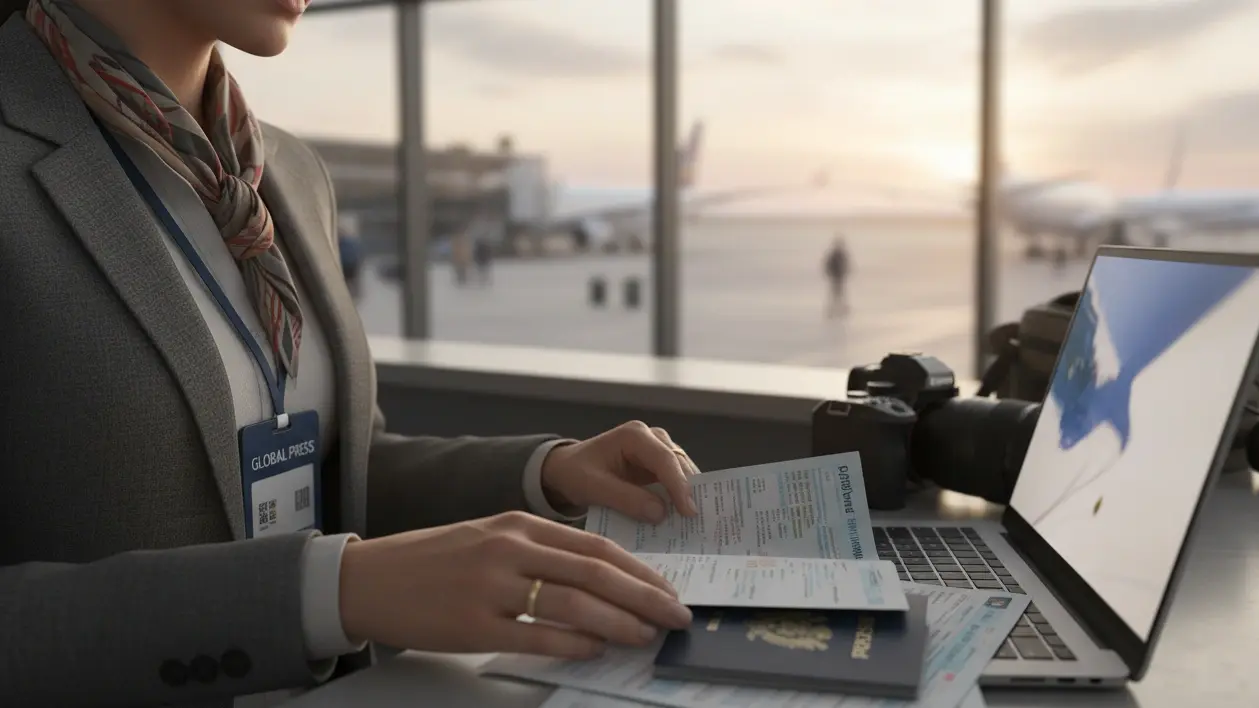
A press visa file works best when the flight reservation follows the same story as the invitation. Before you choose the arrival city, departure date, or route, read the invitation like an embassy officer would read it.
Press-trip alignment map
| Press-file signal | What the reservation should show | Check before submission |
|---|---|---|
| Press invitation | Named event, host city and expected coverage dates | Correct the route or request an updated invitation |
| Assignment or editor letter | Role, assignment window and who funds the trip | Explain any different payer or date range |
| Accreditation or badge window | Arrival before access begins and departure after duties end | Remove unexplained extra days |
| Flight reservation | Passenger name, airports, segments, transit and return | List every leg and keep the final PDF consistent |
Why A Journalist’s Flight Reservation Must Echo The Invitation Letter
Your press invitation usually sets the official purpose of travel. It tells the embassy why you need to enter the country, who invited you, where the assignment happens, and when your presence is expected.
Your flight reservation should support that exact purpose.
If a media organizer invites you to cover a climate summit in Paris from 10 to 12 June, your reservation should not show you landing in Rome on 3 June unless your file explains that route. The issue is not that Rome is impossible. The issue is that the route forces the officer to guess why it belongs in a French Schengen visa application.
The same logic applies to UK media events, UAE press launches, sports tournaments in Qatar, film festivals in Canada, or political briefings in Brussels. Your itinerary should make the assignment easier to understand, not wider or more complicated.
A strong reservation answers four questions quickly:
-
Why are you entering this country?
-
Why are you arriving on this date?
-
Why are you landing in this city?
-
Why are you leaving when you say you will leave?
When those answers match the invitation, the file feels organized.
The Four Dates Journalists Should Compare Before Booking A Reservation For Press Trips
Before preparing the flight reservation, compare the key dates printed across your press documents.
Start with the invitation issue date. If the invitation was issued recently, avoid a reservation that suggests travel planning began long before the assignment existed. That can look confusing, especially for short-notice press coverage.
Next, check the accreditation or registration validity. Some media events give access only for specific dates. If your accreditation for a Berlin trade fair is valid from 4 to 8 September, a return flight on 20 September needs a clear reporting reason.
Then review the event or assignment dates. These are your main anchors. A journalist covering a three-day summit may reasonably arrive one day before and leave one day after. A camera crew covering field interviews may need more time, but the assignment letter should support that wider window.
Finally, compare your proposed arrival and departure dates. These dates should sit close to the press purpose. They should not create a long, unexplained stay before or after coverage.
A practical rule works well: arrive shortly before the first confirmed press activity and depart soon after the final confirmed coverage obligation.
Matching The Flight Reservation To The Named City In The Press Invite
The city named in the invitation matters. If the invite says the media briefing is in Geneva, your flight reservation should usually take you to Geneva or to a logical nearby airport with a clear onward path.
For Schengen applications, this becomes even more important when your first entry city differs from the event city. A journalist invited to Amsterdam but landing first in Madrid may need extra explanation. Without that explanation, the route can look detached from the assignment.
There are valid reasons to land somewhere else:
-
The event city has limited international flights.
-
A nearby hub offers the only practical connection.
-
Your route includes a domestic or regional onward flight.
-
Your press schedule starts in one city and continues in another.
Still, the reservation should not make the embassy work too hard. If the invitation names Munich, a route into Frankfurt with onward movement to Munich can make sense. A route into Athens, followed by no visible link to Germany, creates doubt.
When The Press Invitation Covers More Than One Activity
Media invitations often include more than one date. A film festival may list a press screening, red-carpet access, interview slots, and a closing event. A government forum may include accreditation pickup, a technical briefing, main sessions, and post-event media availability.
Your flight reservation should reflect the full confirmed coverage window, not only the headline date.
If the schedule attachment shows mandatory badge collection on 5 May and press access through 9 May, your arrival on 4 May and departure on 10 May look logical. If you arrive on 1 May, the file should show why those extra days matter.
Use the earliest confirmed press activity as your arrival anchor. Use the last confirmed media obligation as your departure anchor. Avoid building the itinerary around informal plans that are not visible anywhere in the visa file.
How Freelancers Should Handle Invitation Letters That Are Too Brief
Freelance journalists often receive short invitations. Some only say, “You are invited to cover the event,” without giving enough schedule details.
In that case, keep the flight reservation tight. Match it to the clearest event dates available. Do not stretch the stay just because the invitation is vague.
If you have an assignment letter from an editor, commissioning platform, or media outlet, make sure it supports the same dates. The invitation, assignment letter, and reservation should not compete with each other.
For example, if your editor’s letter says you are covering opening weekend coverage in Lisbon, avoid a two-week reservation across Portugal unless the wider reporting plan is written into the assignment. A clean round trip often works better than a creative route when the invitation is brief.
Building Event-Date Logic Into The Flight Reservation
For journalists, travel dates must do more than look available. They need to match the rhythm of the assignment, from the first media access point to the last realistic coverage obligation.
The Arrival Buffer That Looks Professional For Press Travel
A journalist rarely arrives at the exact hour an event begins. Embassy officers understand that press travel often needs a short buffer.
The key is keeping that buffer explainable.
If you are covering a one-day press briefing in Singapore, arriving the previous day usually looks practical. You may need time for immigration, transport, badge pickup, and early access instructions.
If you are attending a major summit in Brussels, a two-day arrival buffer may also make sense. Large events often have security checks, media registration, venue orientation, and pre-event briefings.
A longer arrival gap needs stronger support. For example, arriving five days before a sports tournament in Doha can be reasonable if your assignment includes training sessions, team interviews, or pre-match media days. Without those details, the same arrival date may look too wide for the stated press purpose.
Use the press schedule as your guide. Good arrival logic usually connects to one of these needs:
-
Media badge collection
-
Venue access confirmation
-
Equipment setup
-
Pre-event interviews
-
Security clearance
-
Time zone adjustment for high-pressure coverage
-
Travel recovery before live reporting
The test is simple: can your arrival date be explained using your press documents without adding a long verbal explanation?
Choosing A Departure Date That Does Not Overstretch The Assignment
Your return date should follow the final coverage need. It should not make the embassy wonder whether the press trip has quietly turned into a personal stay.
For a journalist covering a three-day technology expo in Berlin ending on Thursday, a Friday or Saturday departure can look normal. You may need time to attend the final press session, file post-event material, or take the next practical flight home.
For a political briefing in London that ends at 4 p.m. on Monday, leaving Tuesday is usually cleaner than staying through the next weekend, unless another assignment supports those dates.
The same applies to film festivals, trade fairs, government forums, and sports finals. A short post-event stay can be credible. A long gap after the last media activity needs evidence.
When choosing the departure date, check these points:
-
Does the event calendar show any final press activity?
-
Does your accreditation remain valid through your departure?
-
Does your editor’s assignment letter mention post-event interviews or follow-up reporting?
-
Is the departure flight placed soon after the final confirmed media obligation?
-
Does the route return you to your home base or next supported assignment?
A practical return date protects the file. It shows that your travel period is tied to coverage, not vague flexibility.
Handling Events That Start Before The Visa Can Realistically Be Issued
Journalism can move faster than visa processing. Invitations may arrive late. Events may start soon. Embassies still expect the flight reservation to show dates that can realistically work.
If your appointment is on 8 July and the summit begins on 10 July, a flight on 9 July may be possible only if that embassy regularly handles urgent press visas. If processing usually takes longer, that reservation may look impractical.
Do not submit dates that have already become impossible. If the first event day has passed, update the reservation to match the remaining valid coverage period. This matters for rolling events, festivals, exhibitions, sports tournaments, and multi-day conferences.
For example, if a media forum runs from 1 to 6 October and your visa file is submitted on 3 October, the reservation should not still show travel on 30 September. It should reflect the portion of the event you can still reasonably attend.
For urgent assignments, the file should show urgency clearly. The host letter or assignment letter can explain why late travel is still necessary. Your flight reservation should then match that revised, workable window.
Matching Return Flights To Accreditation Expiry Dates
Media accreditation often has stricter dates than the event brochure. The brochure may say a festival runs for two weeks, but your press pass may only allow access from 5 to 9 May.
Your return flight should respect that access window.
If your accreditation in Cannes ends on 9 May, leaving on 10 or 11 May can look reasonable. Leaving on 22 May may raise questions unless your editor’s letter confirms additional interviews, post-festival reporting, or another approved assignment.
This is especially important for:
-
International film festivals
-
Political summits
-
Sports tournaments
-
Trade exhibitions
-
Government-hosted media visits
-
Product launches with limited press access
Embassy officers may compare your departure date with the final date printed on your accreditation confirmation. If the flight extends far beyond that date, the file needs a clear reason.
A simple habit helps: treat the accreditation expiry date as the outer boundary unless another press document extends the assignment.
When Event Dates Change After The Reservation Is Issued From Any E-ticket Booking Facility
Event dates can shift. Press briefings move. Interview slots change. Festival schedules get updated. Security-led events may confirm final timings late.
When that happens, your flight reservation should not stay frozen around the old dates.
Update the reservation before submission if the change affects:
-
The first press activity
-
The final coverage obligation
-
The host city
-
The accreditation validity
-
The sequence of cities in a multi-location assignment
If press dates move, use a provider whose current terms explain reservation validity, record verification and any permitted date changes. The booking still needs to match the revised invitation and accreditation window.
The important point is consistency. If your revised invitation says the media briefing in Abu Dhabi has moved from 14 March to 16 March, your arrival should also move if the earlier date no longer has a press purpose.
Creating Routing That Makes Sense For Journalists, Not Tourists

A journalist’s route should look like it was built around coverage, access, and timing. The flight reservation must help the embassy see a professional journey, not a loose travel plan. For a complete planning framework, use the evergreen flight-reservation guide to test each city, airport and supporting document together.
Why Unusual Routes Can Weaken A Press Visa File
Unusual routing is not automatically a problem. It becomes a problem when the route does not support the press's purpose.
If your invitation is for a media programme in Vienna, but your reservation shows entry through Barcelona, a three-day gap, and then a separate flight to Austria, the embassy may question the journey. The issue is not the ticket itself. The issue is the difference between the route and the assignment.
This matters even more for accredited journalists covering political events, court hearings, government summits, or sensitive public-interest reporting. Officers may look closely at where you enter, how you reach the host city, and whether the route respects the event schedule.
A credible reservation should make these things clear:
-
Your first arrival city has a reason.
-
Your onward connection is possible.
-
Your return point makes sense.
-
Your stay length matches the coverage window.
-
Your airline routing does not create unexplained side travel.
If the route needs a long explanation, it may be too complex for the file.
Direct, Hub, Or Multi-Leg: Choosing The Cleanest Reservation For A Press Assignment
For a single-city assignment, a direct route is usually the cleanest. If you are covering a press launch in Dubai, a simple arrival into Dubai and return from Dubai keeps the reservation easy to view.
A hub route can also work well. Many cities do not have convenient international access from every part of the world. A journalist travelling to Strasbourg may land in Paris or Frankfurt first, then continue by air or ground. That route can still look practical if the timing is tight and the connection is realistic.
A multi-leg route needs more care. It should match the order of confirmed press activity, not personal preference. For example, if your assignment starts with a summit in Brussels and ends with interviews in Geneva, your reservation can follow that sequence.
Think about costs, flight availability, transit rules, and cabin class only after the route supports the assignment. A cheaper fare is useful, but not if it makes the visa file harder to understand.
If you plan to book ticket details later, the reservation should still show a route you could genuinely use. Embassy officers do not need your final paid airfare, but the flight plan must look travelable.
Handling Multi-City Journalism Assignments Without Looking Inconsistent
Multi-city reporting is common. You may cover a sports tournament in several host cities, a film festival with press interviews in another location, or a documentary assignment that moves between field sites.
The reservation should follow the editorial order of the work.
If the programme begins in Toronto, continues with interviews in Ottawa, and ends with a media roundtable in Montreal, the flight route should not start in Vancouver without a documented reason. The file should help the officer reach the same conclusion you want: this is a structured press journey.
Use the documents in your hand to build the route:
-
Event calendar
-
Accreditation confirmation
-
Interview email
-
Assignment letter
-
Host invitation
-
Transport note from the organizer
A small routing gap can cause a large problem. If the invitation mentions Rome only, but your flight exits from Milan, include a reason in your schedule or assignment documents. The number of cities should match the number of confirmed reporting needs.
This is also where your audience matters. A foreign correspondent covering regional politics may need a wider route than a reporter attending one press conference. The route should reflect that experience without making the file look overloaded.
Return-To-Origin Versus Onward Travel For International Journalists
A return-to-origin reservation is often the easiest for an embassy to assess. It shows that you plan to complete the assignment and return to your usual base.
Onward travel can also be valid. Journalists who launched into regional coverage may move from one country to another for a second assignment. A correspondent may cover Brussels today, then Geneva next week. A documentary crew may continue to another approved filming location.
The key is support. Onward travel should not appear as an open-ended trip.
If you are not returning home, your next destination should connect to a documented assignment, newsroom request, or confirmed press event. Without that support, the embassy may see the onward route as a way to keep travelling after the stated purpose ends.
Check the terms of your visa application carefully. Some consulates want proof of exit from their country. Others may also look at whether your next stop is lawful and realistic. The benefits of onward routing only apply when the next step is clear.
Avoiding Transit Choices That Create New Visa Questions
Transit can quietly create problems. A reservation may look fine at first, but the layover can require a transit visa, airport change, or overnight stay that your file does not address.
Before choosing the route, check whether your nationality can transit through the connection country. This is required for many applicants, especially when the journey passes through the UK, the United States, Canada, or certain Schengen airports.
Watch for these route details:
-
Self-transfer between airlines
-
Overnight layover
-
Change of airport
-
Separate baggage collection
-
Long loading time between flights
-
Connection through a country with strict transit rules
A low-cost airline may sell separate segments that look cheap, but the connection may not behave like a protected itinerary. That can create extra immigration steps.
If a transit rule is unclear, contact the airline or official airport site before you rely on that reservation. Do not click through in a hurry just because the route appears in search results.
Final Consistency Review Before Submitting A Journalist Flight Reservation
Applicants applying from India may receive VFS or destination-portal upload instructions, while applicants in the United States may follow a consular checklist. Both should use the destination authority’s current rules and keep the press purpose, dates and route consistent.
A journalist’s flight reservation should survive one final review before it goes into the visa file. At this stage, we are not improving the trip idea. We are checking whether every date, city, and route detail supports the press assignment without creating avoidable questions. If the remaining issue is the reservation itself, use the visa-reservation service only after confirming the route and dates you need.
The Press File Cross-Check: Invitation, Assignment Letter, And Flight Dates
Start with the documents that explain why you need to travel. Place the press invitation, assignment letter, accreditation confirmation, event programme, and flight reservation side by side.
Then compare the core details in one pass.
The flight reservation should support the same timeline shown in the press documents. If the invitation says the media access runs from 6 to 9 June, your arrival should sit close to that period. If the editor’s letter says you will cover only the opening session, the return date should not stretch far beyond that coverage need.
Check these points before submission:
-
Country of entry: Does the first destination match the press purpose?
-
Arrival date: Does it allow a practical buffer before media access begins?
-
Departure date: Does it follow the final coverage obligation?
-
Route order: Does the journey move in the same sequence as the assignment?
-
Exit point: Does it make sense based on the final press location?
If your media account, editor note, or invitation names different cities, make sure the reservation does not force the embassy to choose which version is true.
The Journalist-Specific Red Flags That Are Easy To Miss
Small inconsistencies can look bigger in a press visa file because journalists' travel is usually time-sensitive. A reservation that lands after the first scheduled press session can weaken the purpose of travel, even if the rest of the file is strong.
Watch for these red flags:
-
Your flight arrives after badge pickup or mandatory accreditation.
-
Your return flight leaves before the interview, final match, closing briefing, or scheduled press access.
-
The route enters through a city not mentioned in any press document.
-
The stay continues till long after the event ends, with no written assignment reason.
-
The reservation exists from a different country without onward coverage proof.
-
The e-ticket booking facility shows a connection that would require extra entry permission.
-
The service confirmation has a PNR, but the dates do not match the latest event schedule.
Do not rely on verbal explanations. Visa officers review what is in front of them. If the route or timing looks unclear, adjust the reservation or strengthen the press documents before you submit.
Also, avoid attaching unrelated travel proof that distracts from the flight route. Old records from indian railways, PRS counters, concessional passes, railways, or a special concession mentioned in a railway budget do not explain an international press itinerary unless they directly support domestic movement tied to the assignment.
How Photojournalists, Camera Crews, And Documentary Teams Should Think About Timing
Photojournalists and video teams often need more time than a writer attending a single press conference. That is normal, but the flight reservation must still reflect documented work.
If you need early arrival for equipment checks, venue access, production setup, or security clearance, the assignment letter should say so. If your team needs extra days after the event for approved interviews, that should appear in the schedule or host communication.
A documentary crew may need a wider window because filming rarely follows one fixed session. Still, the travel dates should connect to confirmed access, named locations, and production needs. A broad reservation with no filming plan can look too open.
Keep the timing practical:
-
Arrive early enough to handle equipment and access.
-
Avoid unexplained gaps before filming begins.
-
Leave after the last confirmed shoot, interview, or media session.
-
Match each city in the route to a real coverage need.
-
Keep accommodation dates, if submitted separately, from contradicting the flight timeline.
A hotel booking should not carry the logic that the flight reservation fails to show. The reservation itself must make the journey readable.
What To Do If The Embassy Requests A Revised Reservation
A request for updated travel details does not always mean there is a problem. It may mean the embassy wants a cleaner view of the journey after event dates, accreditation, or processing timelines have changed.
Respond with a revised reservation that matches the latest confirmed press details. Do not simply move one flight date and leave the rest unchanged. Review the full route again.
Before sending the revised file, check:
-
Has the event programme changed?
-
Did the host revise the accreditation window?
-
Did interview times move?
-
Is the new arrival still realistic?
-
Does the return date remain tied to the final press activity?
-
Are transit stops still travelable for your nationality?
-
Does the reservation number remain verifiable during review?
If journalists launched a revised coverage plan after the first submission, the updated assignment letter should support the new route. The embassy should learn from the revised file that the change is organized, not improvised.
The Final 10-Minute Submission Test For Journalist Applicants
Before you upload or hand over the reservation, read it like a stranger who has never met you. The document should explain the journey quickly.
Ask these final questions:
-
Does the arrival city match the invited press location or a logical gateway?
-
Does the arrival date support badge pickup, setup, or the first media session?
-
Does the return flight follow the last confirmed coverage duty?
-
Does every extra city have a press reason?
-
Does the route avoid unnecessary transit complications?
-
Can the reservation remain consistent if the press timeline changes?
-
Have you removed anything that pulls attention away from the flight plan?
Make Your Press Itinerary Easy For The Embassy To Trust
Your flight reservation should help people reviewing your visa file understand the assignment quickly. The press invitation, accreditation dates, event schedule, and route should all point to the same purpose. When the timing feels reasonable and the cities follow the coverage plan, your file looks more controlled.
Before submission, check what was promised in the invitation against every flight detail. Arrive when the press work starts, leave when the coverage ends, and keep the route simple enough to explain without extra confusion.
Ready to make the press route easier to verify? Prepare a temporary flight reservation that follows the invitation, assignment dates and complete routing, then check every field before upload.
FAQ
What should a journalist flight reservation match?
It should match the press invitation, assignment or editor letter, accreditation window, host city, coverage dates and return plan.
Should a press itinerary show every flight segment?
Yes. List each flight, airport and connection so the route and any transit or airport change are clear.
How early should a journalist arrive before an event?
Allow enough time for immigration or airport procedures, transfer, badge pickup and setup. There is no universal number; the buffer should fit the assignment.
Do journalists need a paid ticket before a visa decision?
Only when the destination checklist explicitly requires a paid ticket. Otherwise, a truthful reservation may document intended travel without committing to a non-refundable fare.
What if the press invitation dates change after the reservation?
Update the reservation and supporting letters before submission when the change affects the event, accreditation, host city or return plan.
Can a journalist flight reservation guarantee visa approval?
No. It supports travel-proof evidence only. Approval, boarding, entry and any required visa or transit authorisation remain separate decisions.
Friendly reminder: BookForVisa provides travel-proof documents for planning and visa-application support. Requirements vary by destination, consulate, visa category and applicant situation. A flight reservation can support a file, but it does not guarantee approval, boarding or entry.