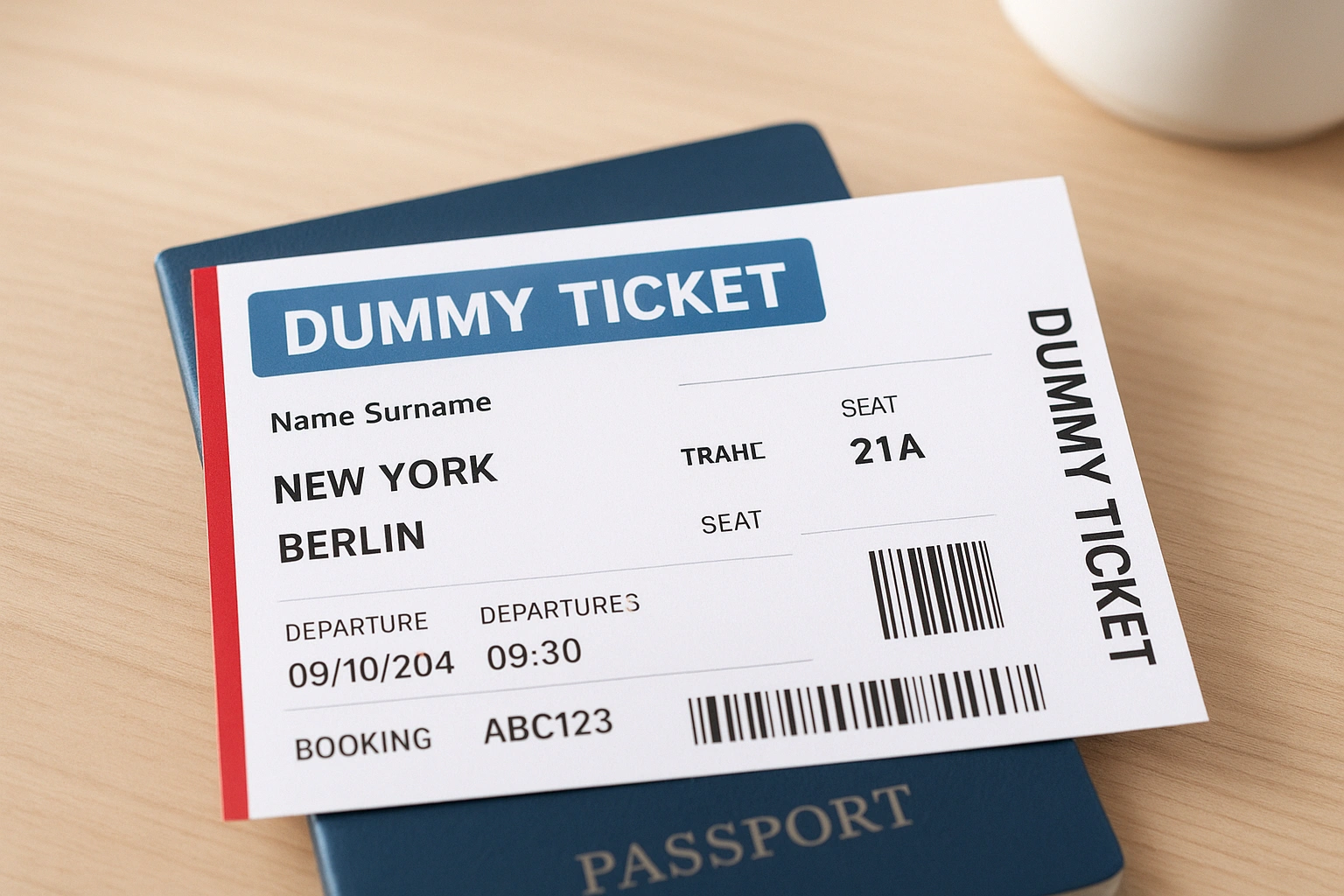
Your employer approves leave for one set of dates. Then the visa appointment lands later, the business event changes, or the flight route shifts by a few days. Suddenly the employer letter in your file says one thing and the reservation you plan to submit says another.
This mismatch shows up most often in sponsored trips, business visits, secondments, conference travel and applications that blend employer-approved days with personal travel days. Embassies do not read the letter and the reservation as two isolated forms. They read them as one timeline. A timeline with unexplained gaps invites questions you can usually prevent before submission.
The issue is not whether every date must be identical. The real issue is whether the file tells one coherent story. Sometimes the employer letter is outdated. Sometimes the reservation was created too early. Sometimes both are technically correct because the employer covers only the business segment while the full trip includes personal days. The job is to identify which situation you are in, then make the paperwork easy to understand.
- The visa application form should be the main travel-date anchor.
- The employer letter should match approved leave or clearly cover only the work segment.
- The reservation should not show travel outside the visa window without explanation.
- Business-plus-personal trips need clean segment logic, not hidden extra days.
- Insurance and accommodation should cover the full stay shown by the reservation.
- If a date changed, correct one document deliberately instead of editing everything randomly.
Why Employer Letters and Reservations Fall Out of Sync

Employer letters and reservations often disagree because they are created on different clocks. HR signs off on leave when the employee first requests travel. Visa appointments may be confirmed later. Flight availability changes again after that. By the time the applicant prepares the final file, the original dates may no longer describe the real trip.
The timeline gap between HR sign-off and visa filing
HR usually signs off weeks before the visa appointment is confirmed. That gap is normal, but it becomes risky when the letter remains frozen while the trip keeps moving. An employee may receive approval for travel starting April 10, then only get a biometrics appointment three weeks later, and finally find that realistic departure has shifted to April 18. Nobody lied. The documents were created at different stages.
The officer, however, does not see your internal scheduling history unless your file explains it. The officer sees one employer letter, one application form, one reservation and one proposed travel window. If those dates point in different directions, the file feels less settled.
For Schengen applications, date discipline becomes especially important because the intended entry and exit dates on the application form shape the stay window being requested. A reservation outside that window, or an employer letter that points to a different window, can make the file look careless even when the trip itself is legitimate.
When one trip covers both business days and personal days
Not every mismatch is an error. Some trips combine a business segment with personal days before or after the official work purpose. In that case, the employer letter may correctly mention only the conference, meeting or training dates, while the reservation correctly covers the full trip.
For example, an employee attends a five-day conference in Berlin and stays four additional days for private tourism. The employer letter may only approve or describe the five business days. The reservation may show nine total days. That is not automatically a contradiction. It becomes a problem only if the file fails to separate the business segment from the personal extension.
The wrong fix is asking HR to approve dates that do not reflect the actual employer-backed purpose. The better fix is to keep the employer letter honest, then use the cover letter, accommodation proof and insurance to show which dates are business days and which dates are personal days.
Letters issued before the itinerary exists
Some employer letters are issued before a real itinerary exists. The company provides a letter early because the applicant needs it to start the visa process. The dates are based on the intended plan, not a confirmed reservation. That letter is not necessarily wrong when issued, but it can become outdated by the time the booking is created.
An employer letter should still contain the basics: company letterhead, employee name, job title, role, salary or employment status where relevant, approved leave dates, reason for travel if business-related, and a return-to-work statement. If those dates were estimates, treat the letter as a draft signal, not a final anchor.
Once the route is settled, bring the letter current if the dates moved materially. A placeholder date left untouched becomes a liability when every other document points to a different trip window.
How Visa Officers Read Both Documents
Visa officers do not review the employer letter in isolation and then forget it when they open the reservation. They read the file as one case. Every date either supports the case or asks the officer to pause.
What a mismatch signals and what it does not
A date mismatch does not automatically prove a problem. What matters is whether the mismatch fits the rest of the application. A stable employee with a clear business purpose, strong finances and a reservation that still fits the stated trip may survive a small explainable gap. A weak file with thin evidence and shifting trip purpose may make the same gap look more serious.
Two applicants can have the same three-day difference between employer letter and reservation. In one file, the difference is caused by a rescheduled appointment and is supported by the cover letter. In another file, the employer letter describes a short business trip while the reservation shows a long stay with no explanation. The date gap is similar. The meaning is not.
The strongest files make the officer’s job fast. If the gap can be understood in a few seconds, it is usually a discrepancy. If the officer needs to ask what happened, it is closer to a contradiction.
The difference between a discrepancy and a contradiction
A discrepancy is a gap that resolves itself once the full file is read. The employer letter says leave starts Monday. The reservation shows Wednesday departure. The cover letter explains the visa appointment moved and the travel plan was adjusted. The gap is visible, but it is not mysterious.
A contradiction is a gap that does not resolve itself. The employer letter says six business days. The reservation shows a nineteen-day stay. The application form does not mention personal travel. Insurance and accommodation only cover part of the stay. Now the officer has to decide whether the file is incomplete, careless or deliberately unclear.
- If a stranger can understand the date difference in five seconds, it is probably a manageable discrepancy.
- If a stranger needs a follow-up question, it should be fixed or explained before submission.
- If the trip purpose changes between documents, treat it as a contradiction, not a small gap.
- If the reservation falls outside the requested visa dates, correct it before filing.
Which visa categories scrutinize the pairing most closely
Sponsor-driven and employer-linked categories give this document pair more weight. Business visas, employer-sponsored visits, conference travel, secondments, intra-company visits, training visits and some student or research files can all depend heavily on employer or sponsor evidence. In those categories, the letter and reservation are not two random attachments. They support the same claim: this applicant is traveling for this purpose, for these dates, with this backing.
Tourist files may rely less on employer letters, but dates still matter. Even when the employer letter is only supporting evidence for ties to home, it should not contradict the travel window. A letter approving leave for one week beside a reservation showing one month still asks for explanation.
Fix the Mismatch Without Creating a New One

Once you identify the type of mismatch, the next question is practical: which document should change? A reservation for visa with different employer-letter dates is usually resolved by fixing one outdated document, not by changing every file until the paper looks artificially identical.
The anchor document rule
Every application needs one date anchor. In most cases, that anchor is the travel window declared on the visa application form. The employer letter, reservation, accommodation, insurance and cover letter should sit inside that window or clearly explain any extension.
If your reservation was created after the appointment was confirmed and accurately reflects the real trip, the employer letter may need an update. If the employer letter reflects fixed company-approved leave or an event that cannot move, the reservation should be adjusted instead. The goal is not to protect the first document created. The goal is to make the final file truthful and consistent.
For short-stay Schengen files, the entry date, exit date and duration should match the travel plan being requested. For UK visitor files, the file should support a genuine visit, ability to leave at the end of the trip and enough funds for the stay. Different destinations apply different details, but the principle is the same: the dates should not fight each other.
When to ask HR to reissue the letter
Ask HR for a revised letter when the original dates are more than slightly wrong, when the trip is employer-backed, or when the original letter used intended dates that changed after appointment scheduling. A reissued letter is often easier than trying to explain a stale document.
Keep the request narrow. HR does not need a long immigration essay. They need the original issue date, employee details, corrected leave dates, purpose of travel, return-to-work line and, if relevant, the appointment deadline. A clear request prevents HR from creating a second vague version that makes the file even messier.
- Keep company name and letterhead unchanged.
- Carry over job title, salary and employment details exactly.
- Update only the start and end dates that changed.
- Confirm return to work after the trip.
- Use one final version in the visa file, not multiple competing versions.
When to adjust the reservation instead
Sometimes the employer letter is the fixed point. This happens when leave is already logged in HR systems, the business event has fixed dates, the invitation letter matches the employer letter, or the company will not reissue documents before the appointment. In those cases, adjust the reservation so it fits the approved window.
This is where flexibility matters. Appointment dates can move, flight availability can change, and business schedules can shift after the first booking draft. A flexible reservation lets you update the travel proof without buying a non-refundable ticket before the visa decision is clear.
When adjusting the reservation, change only the dates that need correction. Do not change city, route, passenger details or trip purpose unless those details also changed. A clean single correction is easier to trust than a file where every document appears rewritten at the last minute.
When HR cannot reissue the letter in time
If the appointment is tomorrow and HR cannot issue a new signed letter, do not simply submit mismatched documents in silence. Ask for a short dated email or note confirming the corrected dates. Attach it with the original letter and explain the update briefly in the cover letter.
This does not make a weak file perfect, but it shows the officer that the mismatch is known and documented. Officers are used to normal scheduling changes. What causes more concern is an unexplained contradiction that forces them to guess which version is real.
Support the correction with the rest of the file. Updated accommodation, full-stay insurance, invitation dates, event registration and the reservation should all point to the same revised travel window. If only one document changes and everything else still shows the old plan, the correction remains incomplete.
Build a Buffer for the Next Application
Fixing today’s mismatch solves today’s file. Better habits stop the next mismatch from forming in the first place.
Use a proportionate buffer around approved leave
Booking exactly on the employer-letter dates may look precise, but it leaves no room for appointment movement, processing delay, flight availability or weekend timing. A small buffer can help if it remains believable. For example, if approved leave runs from the 10th to the 20th, a reservation from the 9th to the 21st may still feel consistent for many files.
The buffer should match the trip. A two-day buffer around a short business visit is easier to understand than a nine-day buffer around a five-day meeting. If the buffer becomes larger than the business purpose, explain the personal extension or adjust the dates.
Keep business and personal segments visibly separate
Trips that blend business and personal time need clean segmentation. The business portion should match employer and invitation evidence. The personal portion should be supported by accommodation, insurance, funds and a simple explanation in the cover letter.
- Show which dates are employer-backed business days.
- Show which dates are private extension days.
- Keep accommodation and insurance valid for the full stay.
- Do not ask HR to approve personal days as business travel.
- Do not hide personal days by stretching the employer letter beyond reality.
Use reservation flexibility as a planning tool
Applicants often treat the first booking as final. In reality, the best reservation is the one that can be corrected before submission when appointment dates, leave dates or travel plans shift. That is not sloppy. It is realistic planning.
A flexible reservation is useful because visa timelines are not fully controlled by the applicant. HR approval, appointment availability, document collection and embassy processing can all move at different speeds. The reservation should be current on the day you submit, not merely accurate on the day you first imagined the trip.
Get Every Date to Tell One Story
Your employer letter and reservation do not need to be identical in every scenario. They need to be compatible. A business trip with personal days can be acceptable. A rescheduled appointment can be acceptable. A small buffer can be acceptable. What hurts the file is a date pattern that looks unexplained, impossible or contradictory.
Before submitting, read the file like an officer would. Start with the application form. Then check the employer letter, reservation, insurance, accommodation, invitation, cover letter and bank or sponsor evidence. If every document supports the same trip, the file feels prepared. If the documents make the officer reconstruct the timeline, fix the gap before filing.
Final pre-submission checklist
- The application form shows the intended entry and exit dates.
- The employer letter matches approved leave or clearly covers only the work segment.
- The reservation matches the final travel window.
- Insurance covers every day shown by the reservation.
- Accommodation matches the full stay or explains split locations.
- The cover letter explains personal extension days, appointment shifts or business-plus-tourism plans.
- Only one final version of each corrected document is submitted.
If something changes after submission, follow the relevant embassy or consulate process rather than assuming the old file will quietly adapt. A corrected, consistent travel story is always stronger than a silent mismatch.
Create a clean BookForVisa reservation after your employer letter, appointment date and final route are aligned, so your file reads as one clear travel plan.
Create Your Reservation for VisaFAQ
Is it a problem if my employer letter and reservation for visa have different dates?
It can be a problem if the gap is unexplained. A small, logical difference may be acceptable when the cover letter, insurance, accommodation and application form explain the full trip. A contradiction should be corrected before submission.
Which document should match the visa application dates?
The application form should be the anchor. Your employer letter, reservation for visa, accommodation proof and insurance should sit inside the travel window you declare on the form.
Should I ask HR to reissue my employer letter?
Ask for a reissued letter when the dates are materially wrong, when the visa category depends heavily on employer sponsorship, or when the letter was only an early estimate. Keep the request narrow and provide exact corrected dates.
When should I adjust the reservation instead?
Adjust the reservation when the employer-approved leave dates are fixed or when the business event cannot move. The reservation should support the employer letter rather than contradict it.
Can business days and personal days be different from employer leave dates?
Yes, if the file explains the split. The employer letter may cover the work segment, while the reservation covers the full trip. Your cover letter and insurance should make the personal extension clear.
What if HR cannot issue a new letter before my appointment?
Ask for a short dated email or note confirming the corrected dates, then attach it with the original letter. A disclosed correction is usually cleaner than leaving two documents to disagree silently.
How many buffer days are safe around employer-approved leave?
There is no universal number. A small two-to-four-day buffer can be reasonable for many trips, but the buffer should remain proportionate to the trip length and purpose.
Does a reservation for visa need a PNR?
A PNR or booking reference can help when the reservation is meant to look organized and checkable, but the bigger issue is consistency: passenger name, dates, route, purpose and supporting documents should match.
Can BookForVisa update my reservation if dates change?
BookForVisa can help create a fresh reservation that reflects the latest route and dates you provide. You should update the file before submission when employer leave dates, appointment dates or travel plans change.
Does a corrected reservation guarantee visa approval?
No. A corrected reservation improves document consistency, but approval depends on eligibility, purpose, funds, ties, travel history, supporting evidence and the decision of the embassy or consulate.
Friendly reminder: BookForVisa provides temporary travel-proof documents for planning and application support. Requirements vary by country, visa category, airline, route and applicant situation. A flight reservation can support a file, but it does not guarantee approval, boarding or entry.