
Airline staff often ask for Thailand entry proof before you ever reach Chiang Mai. Thai immigration can ask again, plus your first address, onward plan, and funds. If your documents don’t match your stay length or look hard to verify on the spot, a simple arrival can turn into a long conversation at the counter or booth.
In this guide, we’ll build the exact Chiang Mai-ready document pack for your entry route. We’ll map what gets checked at check-in, on arrival, and during Chiang Mai extensions. You’ll see how to align onward travel with your allowed stay, choose the right accommodation proof for Nimman or the Old City, and avoid avoidable mismatches. For the Chiang Mai check-in, keep a verifiable dummy ticket that matches your Thailand exit date.
Key facts:
- Chiang Mai uses Thailand’s national immigration rules; there is no separate “Chiang Mai visa” on paper.
- Your passport, nationality, stay length and entry route decide whether visa exemption, visa on arrival, tourist visa, e-Visa or another path applies.
- Airline staff may ask for onward or return proof before Thailand immigration sees your documents.
- TDAC requires travel and accommodation details, so your first address and arrival information must be accurate before entry.
- For longer stays or extensions, keep address proof, funds, passport details and updated travel proof consistent.
Need travel proof that fits your Chiang Mai plan? BookForVisa can help you prepare flight and hotel reservation documents that match your Thailand dates, first address and onward route.
Create Your Visa ReservationIn This Guide
Official-source check: Current Thailand guidance supports the article’s focus on passport validity, visa route, onward proof, accommodation details, funds and TDAC timing. The Thailand Digital Arrival Card guidance says all non-Thai nationals entering Thailand must submit TDAC before entry, usually within 3 days of arrival, and provide passport, travel, accommodation, purpose and health-declaration information. Thailand’s official public information site reminds visitors to keep evidence of sufficient funds ready for entry screening. Royal Thai Embassy visa pages list passport, travel booking, accommodation and financial evidence for tourist-visa contexts, while Thailand’s Ministry of Foreign Affairs explains that visa officers may request additional documents as needed. Sources: Thailand Digital Arrival Card guide, Thailand proof-of-funds reminder, Royal Thai Embassy visa requirements and Thailand MFA visa issuance guidance.
Reviewed for: Chiang Mai entry-route logic, visa-exemption/VOA/tourist-visa wording, TDAC timing, first-address and accommodation proof, onward/return proof alignment, airline check-in practicality, longer-stay caution, cross-platform terminology separation and official-source support.
Your Chiang Mai Plan Determines Your Visa Route

Chiang Mai is part of Thailand’s national immigration system, so the visa decision is not “for Chiang Mai” on paper. In real life, your Chiang Mai plan changes what you should prepare and what questions you are most likely to hear at check-in and on arrival.
Length Of Stay + Passport + Entry Style
Start with three inputs. Don’t overthink it. Just be precise.
1) How long do you actually want to be in Chiang Mai?
-
Short visit: a quick trip with a fixed exit date
-
Slow stay: several weeks with some flexibility
-
Multi-month: a long base in Chiang Mai, where you may extend or switch status
2) What does your passport allow for Thailand right now?
Thailand uses different entry pathways by nationality. Your passport determines whether you can enter visa-exempt, qualify for a visa on arrival, or need to arrange a tourist visa or e-Visa before you fly.
3) How are you entering Thailand before Chiang Mai?
-
Fly into CNX (Chiang Mai International) directly
-
Connect via Bangkok, then take a domestic flight
-
Enter by land (from a neighboring country) and travel onward to Chiang Mai
Those three inputs decide your best route.
Here’s the practical rule we use: the more flexible your stay and the more complex your entry pattern, the more your documents need to be clean, consistent, and instantly reviewable. That is what keeps an officer from digging.
If you are unsure between two routes, choose the one that makes your story simplest:
-
One entry
-
One clear first address in Chiang Mai
-
One onward plan that matches the permission you are requesting
That “simple story” approach matters more than clever planning. It is what gets you through check-in and immigration without a long conversation.
If You’re Eligible For Thailand Tourist Visa Exemption: What You Still Need To Prove
Visa exemption feels effortless until you hit the first gatekeeper.
The first gatekeeper is often the airline. They may ask for proof that you can enter and that you will leave on time. Thai immigration can ask similar questions again after you land.
So even on a visa exemption, you should assume you may need to show three things quickly:
-
Onward or return travel that fits inside your permitted stay
-
A first address in Chiang Mai, you can state confidently
-
Funds proof that looks normal and readable
This is where Chiang Mai changes the game. Many people arrive with a “we’ll figure it out” plan. Chiang Mai is popular for longer stays, so one-way arrivals and vague exits are common. That also makes them suspicious-looking when you cannot back them up.
If you want a flexible trip, make your flexibility structured.
A strong visa-exempt pack looks like this:
-
A flight out of Thailand within the allowed window
-
A first Chiang Mai accommodation confirmation with a real address
-
A bank statement or balance proof, you can open offline
-
A clear explanation of your plan in one or two sentences
Keep those sentences boring. Boring is good.
For example:
-
“We’re landing in Chiang Mai, staying in Nimman for five nights, then moving to the Old City. We fly out to Singapore on the 18th.”
That is specific, consistent, and easy to verify.
What creates friction is when your words and your documents disagree. If you say “two weeks” but your onward is in six weeks, you invite follow-up questions. If you say you have an address, but you cannot name it, you invite more questions.
If you expect to extend your stay later, do not argue your extension plan at the airport. Enter cleanly first. Extension planning belongs in your private checklist, not your first conversation with an immigration officer.
If Visa On Arrival Applies To You: Build A Pack That Matches The Form
Visa on arrival is not the place for improvisation.
The form, the officer, and the check-in agent tend to look for the same basics. They want to see that you will leave, that you can support yourself, and that you have a real place to stay at the start.
Build your pack around what can be checked quickly:
-
A passport with enough validity for entry
-
A photo that fits the requirements for the application
-
Onward flight out of Thailand
-
Proof of funds
-
Accommodation details for your first night
Now make it Chiang Mai-specific. Do not bring a Bangkok hotel address “just to have one” if you are flying into CNX and going straight to Chiang Mai. That mismatch can trigger extra questions. Your first address should match your first landing plan.
If you are connecting through Bangkok and then flying domestically to Chiang Mai, your first address should still be in Chiang Mai if you are not staying overnight in Bangkok.
Use a simple consistency check before you travel:
-
Your arrival city matches your first accommodation city
-
Your first accommodation dates match your arrival date
-
Your onward date matches your allowed stay
-
Your name matches your passport across every confirmation
When people run into trouble with a visa on arrival, it is usually not because they are missing a document. It is because the document pack is messy.
Messy looks like this:
-
One-way flight plus “we’ll book later.”
-
A hotel screenshot with no address or name
-
A bank app screen with no name shown
-
A booking PDF that cannot be opened offline
Fix those problems before travel. You want your evidence to be boring and easy to read.
If You Need A Tourist Visa Before You Fly: Decide Early (And Commit To Consistency)
If your passport requires a tourist visa or you want a longer, more predictable stay, decide early. Tourist visa applications reward clean planning.
This is where people accidentally create contradictions. They mix flexible ideas with fixed documents and end up with a file that looks stitched together.
The standard expectation is simple: your flight dates, accommodation dates, and stated travel plan should line up. If they do not, the application becomes harder to approve.
Here is how we keep it consistent without locking you into a rigid holiday:
Step 1: Pick one “anchor week” in Chiang Mai.
Choose the week that will be easiest to document. This becomes your stable center.
Step 2: Build the travel plan around that anchor.
If you will also visit Bangkok or the islands, keep that part short and logical. Avoid chaotic routing that looks copied from a generic itinerary.
Step 3: Match your documents to your stated intent.
If you apply for a tourist visa, your file should look like tourism:
-
entry and exit aligned to your itinerary
-
accommodation that covers the core trip
-
funds that match your trip length and style
A clean Chiang Mai itinerary reads like a real plan:
-
Arrive, settle in, explore day trips, then leave
-
Not “Chiang Mai, Bangkok, Phuket, Krabi, Chiang Rai, Pai, Laos, back to Chiang Mai” in ten days
If you truly want a multi-stop trip, that is fine. Just make it realistic and paced.
Also consider where you are likely to be checked. With a tourist visa, you can still be asked for onward proof and address details at check-in and on arrival. A pre-approved visa is not a free pass from questions. It simply reduces uncertainty about entry permission.
Longer Stays In Chiang Mai: DTV And Other Options Change The Document Burden
If Chiang Mai is more than a visit for you, the document strategy changes.
Longer-stay options are not “tourist visa plus extra paperwork.” They can be a different category with different proof expectations. That means you should not treat them like a casual upgrade.
Long stays usually demand stronger evidence in three areas:
-
Purpose: why you are staying long-term
-
Money: how you support yourself over time
-
Stability: why your plan is credible and trackable
This is where people get stuck if they try to blend long-stay behavior into short-stay entry patterns. Frequent entries, back-to-back extensions, and vague plans can look like you are living in Thailand without the right framework.
If you are considering a long-stay route, make one decision early:
-
Are you entering Thailand for a short tourist stay, then deciding later?
-
Or are you entering with a long-stay plan from day one?
Both paths can work. The mistake is mixing the narrative.
If you enter as a tourist, keep your entry documents tourist-clean. If you pursue a long-stay category, build a separate application pack that fits that category’s expectations.
Here is a practical planning move for long-stay-minded Chiang Mai travelers:
-
Arrive with a credible short-stay pack for entry
-
Keep your long-stay evidence organized separately in your cloud folder
-
Do not introduce the long-stay story unless asked, or unless it is required for your entry route
That keeps your arrival conversation simple and avoids unforced errors.
If you arrive one-way, plan to stay months, and cannot show a clear exit plan or stable funds, you should expect more questions. If you arrive with a clean onward date, a real first address in Chiang Mai, and readable financial proof, the same officer has far less reason to keep digging.
If you are flying Delhi to Bangkok to Chiang Mai on one ticket, keep your onward proof and first Chiang Mai address ready at check-in, not buried in email.
The Chiang Mai “Carry vs Cloud” Document Pack (What Gets Asked, Where, And Why)

Your Chiang Mai entry goes smoother when you can show the right proof in under 30 seconds. Here, we focus on building a document pack that survives low Wi-Fi, a dead phone battery, and fast questions at check-in and immigration.
The “Carry Folder”: What You Must Be Able To Show Even Without Internet
Think of the carry folder as your “counter-proof kit.” It is what you can show when you are standing at an airline desk, a transit gate, or an immigration booth.
Keep it small. Keep it clean. Keep it readable.
Here is what belongs in it for a Chiang Mai trip:
-
Passport bio page copy (paper and a phone PDF)
-
Your entry basis evidence (visa decision printout if you applied in advance, or any confirmation you received)
-
Onward or return flight proof that matches your permitted stay
-
First accommodation proof in Chiang Mai with a visible address
-
Funds proof that shows your name and a current balance
-
TDAC confirmation, once submitted, is saved offline
Now make it usable.
Use a two-layer approach:
-
Layer 1: Paper (2–4 pages max)
You want enough to hand over if asked. You do not want a thick packet that looks like you expect trouble. -
Layer 2: Offline phone copies
One folder in your phone’s Files app. No hunting through email.
A practical carry-folder order that works at counters:
-
Passport copy
-
Visa or entry confirmation (if applicable)
-
Onward proof
-
Chiang Mai accommodation proof
-
Funds proof
-
TDAC confirmation
The goal is speed. Officers and airline agents react differently when you can produce a clean PDF instantly.
Avoid fragile formats:
-
A single screenshot with tiny text
-
A booking page that only loads online
-
A document that requires logging into an app you rarely use
If you are flying into CNX directly, assume the airline desk is your first real test. If you are connecting via Bangkok, assume your documents may be checked twice. Once at your origin, and again at a transfer point, a staff member wants to confirm you meet Thailand entry rules.
The “Cloud Folder”: What’s Fine Digitally (If Organized Properly)
Cloud storage is great when you use it as a backup, not as your primary plan.
Here, we focus on two cloud goals:
-
You can retrieve documents on any device
-
You can share a clean file fast if asked
Build one cloud folder called: “Thailand Chiang Mai Entry Pack.”
Inside it, keep five files only. Fewer files mean fewer mistakes.
A strong set looks like this:
-
01 Passport Copy
-
02 Entry Approval or Appointment Evidence (only if it applies to your route)
-
03 Onward Flight Proof
-
04 Chiang Mai Accommodation Proof
-
05 Funds Proof
Then create one more file:
-
All Proofs Combined (Single PDF)
That combined PDF is your “one send” option. It is useful when:
-
An airline agent asks you to email documents to a desk address
-
You need to show multiple proofs quickly without flipping between screens
-
Your phone gallery is chaotic, and you do not want to scroll under pressure
Keep cloud access realistic:
-
Enable offline access for the combined PDF
-
Save a second backup in a different place (email draft or a second cloud)
-
If you travel with a laptop, mirror the same folder locally
Do not rely on logging in while standing at the counter. Some airports block certain services. Some Wi-Fi networks time out. Some phones struggle with multi-factor logins when roaming.
Passport Details That Quietly Cause Problems
Passport issues are rarely dramatic. They are usually small and annoying.
Here, we focus on the passport details that trigger extra questions on Thailand-bound trips.
Check these before you travel:
-
Validity buffer: that comfortably covers your trip
-
Condition: no water damage, peeling laminate, or torn cover
-
Blank pages: enough space for stamps if needed
-
Signature consistency: your signature should match how you sign forms
-
Name formatting: confirm your full name appears consistently across bookings
Small problems become big when you combine them with a flexible Chiang Mai plan.
For example:
-
A slightly damaged passport plus a one-way flight invites closer scrutiny.
-
A passport with stains on the bio page,e plus unclear accommodation, can push you into longer questioning.
If your passport has visible wear, make your other documents extra crisp. Clean onward proof. Clear address. Clear funds proof. You want the overall file to look trustworthy and easy to assess.
Proof Of Onward/Return Travel: A Common Tripwire
Onward proof is the document that most often decides whether your check-in stays smooth.
Airline staff are not debating your travel philosophy. They are checking whether you can legally enter and whether they might be forced to fly you back.
Here, we focus on making onward proof “counter-ready.”
Your onward proof should pass four fast checks:
-
Timing: the exit date falls within your permitted stay
-
Identity: your name matches your passport exactly
-
Status: it looks confirmed, not pending or waitlisted
-
Clarity: the route and date are readable on one screen or one page
Common Chiang Mai-specific mistakes:
-
You show an onward flight from Bangkok, but you are flying into CNX and staying in Chiang Mai with no plan to reach Bangkok.
-
Your onward date matches your dream stay, not your allowed stay.
-
Your onward proof is a deep link to an app screen that will not load without a login.
If your plan is “Chiang Mai for a while, then maybe Laos,” make that “maybe” concrete in your proof. The officer does not need your entire future. They need one credible exit that fits the rules you are entering under.
A simple onward strategy that stays flexible:
-
Choose an onward route that is plausible from Chiang Mai
-
Keep it within your permitted stay window
-
Keep the document format easy to verify
Also, align your onward proof with your first accommodation. If your accommodation shows one week in Chiang Mai, but your onward is three months later, you create a mismatch that invites the next question.
Proof Of Funds: Make It Legible, Verifiable, And Calm
Fund proof is less about showing off money and more about removing doubt.
Here, we focus on presenting funds in a way that looks normal and easy to understand.
Use funds proof that shows:
-
Your name
-
The account identifier (even partially masked is fine)
-
A current balance
-
A date
The fastest safe option is often a recent bank statement PDF. A screenshot can work too, but it must be readable and complete.
Avoid these funds-proof traps:
-
A cropped screenshot that hides your name
-
A balanced view with no date
-
A crypto wallet page is your only proof
-
A credit card limit screen presented as “funds.”
If your money is split across multiple accounts, choose one primary account for presentation. Then keep secondary evidence in your cloud folder.
If you are traveling as a couple or group, do not assume “we are together” answers everything. If funds are in one person’s account, be ready to show that account clearly and keep the story consistent with who is traveling.
Stay calm with fund questions. Over-explaining creates more questions.
Accommodation Proof For Chiang Mai Without Locking Yourself Into One Hotel
Chiang Mai accommodation proof is really an address problem.
Thailand's entry and arrival processes often require a first address. Chiang Mai is full of neighborhoods where people move around. Old City for temples. Nimman for cafés. A quieter area for longer stays.
Here, we focus on proving a credible first address without pretending you will stay in one place forever.
Your goal is simple:
-
Provide a first Chiang Mai address that matches your arrival plan
-
Show dates that make sense with your arrival and onward timeline
A strong approach is:
-
Book and document your first few nights in Chiang Mai
-
Keep later stays flexible, but do not make the first address vague
If you are staying in a rental or a longer-term apartment:
-
Keep a booking confirmation or lease summary that shows the address
-
Make sure the address is written in a way you can repeat verbally
If you are staying with a friend:
-
Keep a short host note with the address and host contact
-
Keep it simple. One paragraph is enough.
The most common problem is not the accommodation itself. It is the mismatch between:
-
What you say at the counter
-
What you put into online forms
-
What your proof shows
Keep one “source of truth” for your first address and reuse it everywhere.
The TDAC Timing Trap (Don’t Discover It At The Airport)
TDAC is a timing and preparation issue, not a complexity issue.
Here, we focus on completing TDAC when you still have time to fix mistakes.
Do this before you start the form:
-
Confirm your passport details exactly as printed
-
Confirm your arrival flight details
-
Confirm your first Chiang Mai address format
-
Prepare a reachable email address and phone number for confirmations
Then follow a simple TDAC workflow:
-
Submit TDAC within the official pre-arrival window
-
Save the confirmation as a PDF
-
Take one screenshot as a backup
-
Store both in your carry folder and cloud folder
If your accommodation changes after submission, do not panic. Keep your updated booking proof ready and be consistent in what you say on arrival. The most important thing is that your first-night story stays coherent.
A good rule is: TDAC uses your best-known first address at the time you submit. Your carry folder holds your updated proof if plans shift.
Next, we’ll shift from “entry pack” to “application pack” and cover the documents and upload details that matter when you apply before you fly.
Applying Before You Fly: Tourist Visa / e-Visa Documents That Don’t Get Rejected For “Small” Reasons
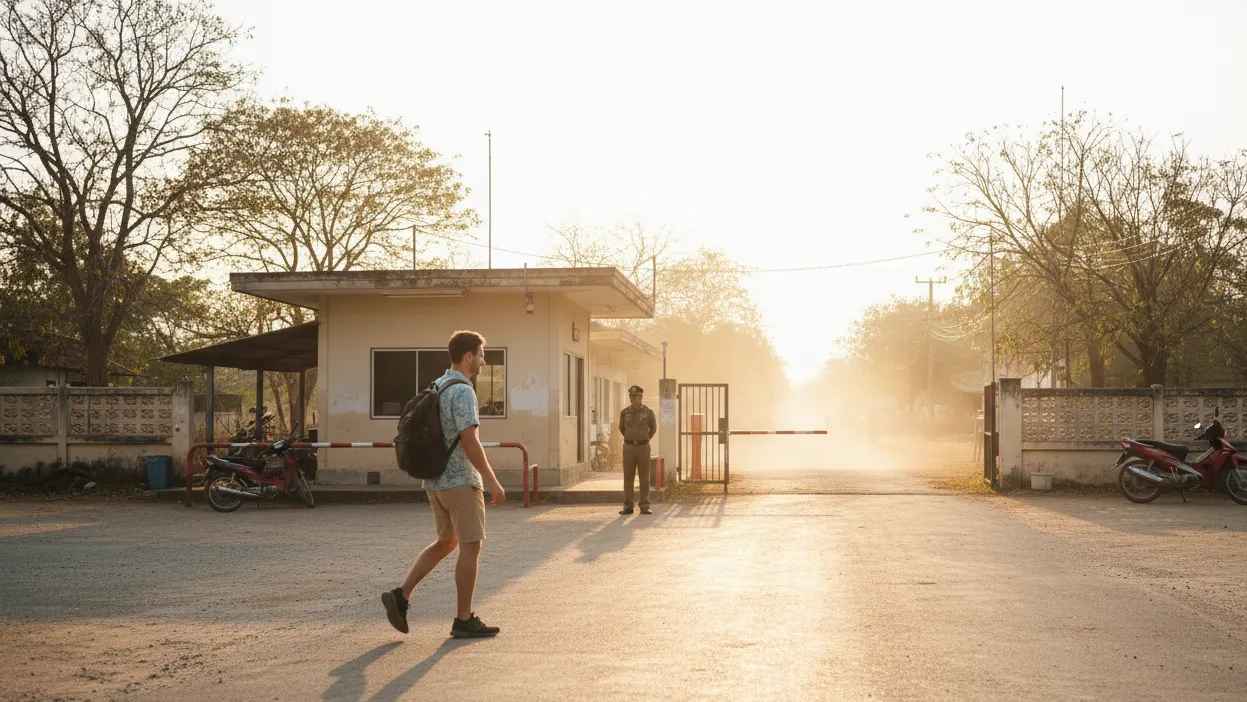
When you apply before you fly, Thailand is not judging your travel dreams. They are judging whether your file is readable, consistent, and easy to verify without chasing you for fixes.
What Thai Consulates Commonly Ask For (And Why It’s Stricter Than Arrival)
A pre-flight application is closer to an audit than an airport conversation. You are not answering questions live. Your documents must speak for you.
Most tourist visa or e-Visa files get slowed down for the same reason: the core proofs do not align. That alignment matters more than any single fancy document.
Focus on these pillars.
Identity And Passport
-
A clear passport bio page scan
-
A passport validity buffer that comfortably covers your trip
-
A photo that matches the requirements and looks current
Travel In And Out Of Thailand
-
An entry flight that matches the dates you claim in the form
-
An exit plan that fits your requested stay and does not contradict your itinerary
-
Passenger name formatting that matches your passport exactly
Proof Of Stay
-
Accommodation confirmations that cover your core nights
-
A first address that is complete and repeatable
-
Dates that match your flight arrival and your itinerary sequence
Money
-
Bank statements or financial evidence that is readable and consistent
-
A balance that matches the length and style of your trip
Supporting Evidence
-
Work or study proof, if requested by the route you choose
-
Any extra items asked by the specific consulate or the e-Visa checklist
The strictness is predictable. At the airport, an officer can ask one follow-up question and move on. In an application, inconsistencies look like a risk because nobody can clarify them in real time.
So we aim for a file that answers silent questions:
-
Who are you?
-
When are you arriving and leaving?
-
Where will you stay first, and is it real?
-
Can you support the trip?
-
Does the story stay the same across every page?
Upload Rules That Matter More Than People Think (File Types, Clarity, Cropping)
A strong file can still fail if it uploads badly.
Here, we focus on making your documents “reviewer-friendly.” That means clean scans, correct orientation, and no missing corners.
Use A Simple Scanning Standard
-
Scan in good light
-
Keep the page flat
-
Capture the full page edges
-
Avoid shadows from hands or a phone case
Make Every Document Legible At 100 Percent Zoom
A reviewer should not need to pinch and zoom to read your name, dates, or totals.
Before you upload, do this quick test:
-
Open the file on your phone
-
Zoom to 100 percent
-
Read the smallest line without effort
If you struggle, the reviewer will struggle.
Prevent The Three Classic Upload Mistakes
-
Wrong orientation: sideways pages make your file look careless
-
Over-cropping: missing header lines and bank logos look suspicious
-
Mixed quality: one sharp page and one blurry page feel inconsistent
Use A “One Folder, One Pass” Upload Routine
-
Create one folder for “Thailand Application Uploads.”
-
Put only the final versions inside it
-
Upload from that folder only
-
Do not upload from random downloads, chats, or email chains
This routine stops last-minute mix-ups, like uploading an older hotel confirmation that does not match your final dates.
If The Portal Forces Separate Upload Slots
Match your files to the slots exactly. Do not combine unrelated documents unless the portal explicitly allows it.
A clean naming system prevents mistakes:
-
Passport-BioPage.pdf
-
Photo.jpg
-
Flight-EntryExit.pdf
-
ChiangMai-Accommodation.pdf
-
BankStatement.pdf
Bank Statements And Financial Proof: Consistency Checks You Can Preempt
Money proof is where small inconsistencies create big delays.
Reviewers tend to check for patterns, not just numbers. They want the financial story to look normal.
Here are the consistency checks you can preempt.
Check 1: Name Match
-
The name on your bank statement should match your passport name
-
If your bank uses initials or a shortened name, include a second bank document that shows your full name clearly
Check 2: Date Coverage
-
Provide statements that cover a reasonable recent period
-
Do not submit one isolated page if it looks cherry-picked
Check 3: Balance Logic
-
The balance should make sense for the trip length
-
If you claim a two-week trip but show a balance that looks like you cannot cover basics, expect questions.
-
If you claim a short trip but show unusually large, unexplained movements, expect questions.
Check 4: Transaction Pattern
You do not need a perfect account. You need a normal-looking one.
Avoid these avoidable triggers:
-
A sudden large deposit the day before you download the statement
-
A statement that shows negative balances or repeated overdrafts with no explanation
-
Cropped pages that hide totals or account identifiers
If you have a large deposit that is legitimate, you can reduce confusion by adding one supporting document in your cloud folder, like a salary credit note or a sale receipt. Keep it factual. Keep it short.
Check 5: Single Owner Clarity
If someone else is funding the trip, do not assume a casual explanation works in a document-only process. If the route requires sponsor evidence, keep the sponsor proof structured and consistent.
A practical checklist before you upload funds proof:
-
Name visible
-
Date visible
-
Account identifier visible
-
Currency clear
-
Balance is easy to find
-
No cropped headers or footers
Your Chiang Mai Itinerary Should Look Real
When a file feels “assembled,” it triggers scrutiny. The fastest way to make it feel assembled is a generic itinerary that could belong to anyone.
Here, we focus on writing an itinerary that matches the Chiang Mai travel reality and matches your documents.
Keep The Routing Plausible
Chiang Mai plans often include:
-
Old City walking days
-
Nimman café and coworking areas
-
Day trips to Doi Suthep, nearby parks, or craft villages
-
A calm pace with repeat stays
A believable itinerary does not try to pack everything into a rush.
Anchor Your Itinerary To Your Proofs
Your itinerary should match:
-
Your entry date
-
Your first accommodation dates
-
Your exit date
-
Your city sequence
If your accommodation shows Chiang Mai first, your itinerary should not start in Bangkok unless you also show a Bangkok stay.
Use Specific But Low-Risk Details
Specificity helps. Over-detailing hurts.
Good specificity:
-
Neighborhood-level plan: Old City, Nimman, riverside
-
Clear first address and first nights
-
Simple day-trip intent without exact tour reservations
Risky specificity:
-
A minute-by-minute schedule
-
Ten cities in ten days
-
Claims of activities that require separate permits, you do not mention elsewhere.
A Simple Itinerary Format That Works
-
Day 1: Arrive, check in, settle
-
Days 2 to 5: Chiang Mai base, local exploration
-
Days 6 to 7: Nearby day trips
-
Final days: Return to base area, depart Thailand
Then align the dates with your proofs. That is the key step most applicants skip.
Your “Ties” Evidence: Enough To Reassure, Not So Much It Becomes Messy
Ties of evidence can help, but only if they are consistent and easy to understand.
Here, we focus on the “just enough” approach. You want to reassure a reviewer that you have reasons to return, without creating contradictions across documents.
Strong Tie Proof Usually Fits Into One Of These Buckets
-
Employment confirmation or leave decision
-
Proof of enrollment if you study
-
Business registration or ongoing contracts if self-employed
-
Family or residence ties, if relevant to your profile
What Makes Tie Proof Backfire
-
Dates that contradict your itinerary
-
Job titles or employers that do not match your bank statement pattern
-
Letters that feel templated or overly dramatic
-
Too many documents that introduce too many details to check
Keep the evidence clean:
-
One letter
-
One supporting item, if needed
-
Consistent dates and identity
If your employment situation is flexible, keep your wording conservative. Avoid vague claims that sound like you can travel indefinitely without obligations.
A reviewer does not need your life story. They need confidence that your file is stable.
Applying from Mumbai or Delhi with the e-Visa Jurisdiction Rules
If you apply while physically in one place and your documents imply you live somewhere else, you can trigger avoidable delays.
So keep your application location logic clean:
-
Apply from where you are legally present.
-
Use address and contact details that match that reality.
-
Keep a simple proof of local presence ready in your cloud folder, like a recent utility bill, rental agreement, or stamped entry proof if you are applying while abroad.
If you are applying from Mumbai or Delhi but your supporting documents show a different residence address, do not panic. Just make sure your file does not look like two different people live two different lives.
The simplest way to stay consistent is to align three items:
-
The address you enter in the application
-
The address on your supporting proof
-
The location implied by your bank and employment documents
Paperwork After Arrival in Chiang Mai: Extensions, Local Address Proof, And Staying “Clean”
Chiang Mai is where short trips often turn into longer stays. That is great for you, but it changes the paperwork you should be ready for once you are inside Thailand.
The Chiang Mai Reality: Many People Don’t Just Visit, They Extend
Chiang Mai attracts people who like slow travel. The city makes it easy to settle into routines.
That also means local immigration offices see a steady stream of visitors who want more time.
Here, we focus on the practical shift that happens after arrival: your documents stop being “entry proof” and become “stay proof.”
This matters because extension conversations are different from arrival conversations.
On arrival, the question is usually:
-
Can you enter, and do you have a credible plan to leave?
At extension time, the questions often become:
-
Where are you staying right now?
-
What is your current status and timeline?
-
Do your documents match the dates you are requesting?
So if you arrive with a loose plan, that can still work. But you need to tighten it quickly once you decide to extend.
A common Chiang Mai pattern looks like this:
-
You book a few nights in Nimman
-
You move to the Old City
-
You take a quick trip to Pai or another nearby area
-
You return to Chiang Mai and want more time
That movement is normal. The paperwork risk appears when you cannot show a stable address story, or you lose track of dates.
A clean approach is to treat Chiang Mai like a base and keep one “primary address” at any given time. You can still move around. You just keep your current address proof updated and easy to show.
Extension Planning: What You’ll Wish You Had Printed Before You Arrived
Extensions are easier when you prepare for them before you need them.
Here, we focus on building an “extension-ready kit” you can set up early, even if you are not sure you will use it.
Build This Kit During Your First Week In Chiang Mai
-
2 passport photo copies that meet local standards
-
2 printed copies of your passport bio page
-
2 printed copies of your latest entry stamp page
-
A printed copy of your current accommodation proof with a visible address
-
A printed copy of your onward plan, if you have it
-
A simple timeline note you keep for yourself: entry date, permitted stay end date, planned extension date
We keep it print-light on purpose. The goal is to handle common requests without needing a shop run at the worst time.
Know Your Dates Like A Pro
The biggest extension mistakes in Chiang Mai are date mistakes.
People remember their arrival date but forget:
-
The permitted stay end date.
-
The day they moved to the accommodations.
-
The exact date of a domestic side trip, and when they last updated their address details.
Create one note in your phone called “Chiang Mai Status.” Update it every time something changes.
Keep it short:
-
Entry date
-
Current permitted-until date
-
Current address
-
Next travel date
-
Next action date
That note reduces stress when you are asked questions quickly.
Do Not Wait Until The Last Day
The last few days before your permitted stay ends are when things get messy:
-
crowds
-
missing photocopies
-
printers closed
-
Accommodation proof not updated
-
bank apps locked out because of roaming changes
Plan your extension attempt with buffer days. That buffer is your insurance against small disruptions.
Chiang Mai Immigration Office Services You Might Use (Even If You Didn’t Plan To)
Chiang Mai paperwork is not only about extensions.
Here, we focus on services that can become relevant when you stay longer, or when your travel pattern changes.
1) Stay Extensions
This is the most common reason people show up. It is where your dates, address proof, and status details need to be consistent.
2) Status-Related Questions
Sometimes your entry route and your actual stay behavior diverge. That can raise questions about what you are doing in Thailand.
So keep your documents aligned with your declared purpose. If you entered as a tourist, keep your paperwork tourist-clean. Avoid mixing in documents that imply a different status unless required.
3) Reporting And Local Compliance
Longer stays can bring extra obligations depending on your circumstances. Even when the process is straightforward, it is stressful if you learn about it late.
The practical move is to create a “long-stay folder” in your cloud drive while you are still calm:
-
entry stamp
-
latest extension stamp
-
current accommodation proof
-
current contact details
-
photos
-
Any receipts or confirmations from immigration visits
This folder becomes your single source of truth. It prevents you from relying on memory when dates blur together.
Address Proof In Chiang Mai: Hotels, Rentals, Friends, And The “Tell Me Your Address” Moment
Chiang Mai is easy to live in, which means address questions happen often.
Here, we focus on what “address proof” looks like in Chiang Mai and how to keep it consistent across your documents.
The critical moment is when someone asks:
-
“Where are you staying now?”
This happens:
-
at check-in for certain services
-
at immigration visits
-
sometimes during routine verification
The Rule We Use
Your address proof must match what you say out loud, and it must be current.
So choose one address as your current base. Use it consistently.
If You Are Staying In Hotels
Use a confirmation that shows:
-
your name
-
the full address
-
your check-in and check-out dates
Avoid confirmations that only show a property name with no address.
If you move every few days, keep only the current booking in your carry folder. Keep the rest in cloud storage.
If You Are Staying In A Rental
Use a document that shows:
-
the address
-
your name or your booking reference
-
the dates
If your rental platform confirmation does not show a full address, you can supplement it with:
-
a short host message screenshot that includes the address
-
a PDF invoice that includes location details
Make sure the information is readable and not buried in chat threads.
If You Are Staying With A Friend
Keep a short host note that includes:
-
the address
-
the host’s name
-
a contact number
Keep it calm and factual. Do not turn it into a letter about your character.
The Chiang Mai Neighborhood Detail
Chiang Mai addresses can be confusing because neighborhoods are commonly used in conversation.
So do not rely on “Nimman” or “Old City” as an address answer. Use the actual address format shown on your proof.
If you cannot pronounce the street name, that is fine. You can show the proof. The important part is that it is consistent.
A Quick Address Consistency Checklist
-
The address on your proof matches your current stay dates
-
The address matches what you enter in any form
-
Your phone note “Chiang Mai Status” contains the same address
-
You can pull the proof in under 20 seconds
When “I’m Just Traveling” Starts Sounding Like “I’m Living Here”
Chiang Mai stays can look like residency from the outside, even when you are following the rules.
Here, we focus on how to stay “clean” by avoiding unforced errors.
Long stays often trigger extra attention when they include:
-
repeated extensions
-
multiple entries with short gaps
-
long periods in one neighborhood
-
vague plans to leave “sometime later.”
You do not need to act nervous. You need to stay consistent.
Keep Your Story Simple
If asked why you are in Chiang Mai, you can keep it practical:
-
You like the city
-
You are traveling slowly
-
You are exploring Northern Thailand
-
You plan to leave on a specific date
Then let your documents back that up.
Avoid Over-Explaining Work
If you work remotely, be careful with how you talk about it. People often create problems by oversharing.
Stay within safe, truthful basics:
-
You are visiting as a tourist
-
Your trip is self-funded
-
You are leaving within your permitted timeline
If you hold a longer-stay visa or a category designed for extended stays, then your documents should reflect that category. Your words should match your status.
Do Not Create Contradictions
The fastest way to create trouble is to say one thing and show another.
Common contradictions we see in Chiang Mai:
-
You claim a short stay, but your accommodation proof covers months
-
You claim you will leave soon, but you cannot show any onward plan
-
You claim you are moving around, but you cannot provide a current address
So keep one simple discipline:
-
Update your current address proof when you move
-
Update your “Chiang Mai Status” note
-
Keep your onward logic aligned with your permitted dates
That is what “staying clean” looks like in practice.
If you want an extension, you do not need to sound like you are negotiating. You need to sound like someone who knows their dates, has a current address, and understands the process.
Airline Check-In And Transit To CNX: The Document Checks That Happen Before Thailand Sees You

Most Chiang Mai entry problems begin before you land. Airlines and transit staff act as gatekeepers, and they care about rules, not intentions.
Why Airlines Can Be Stricter Than Immigration (And What They’re Actually Checking)
Airlines do not want to fly you back. That is the core reason check-in staff can feel stricter than immigration.
Here, we focus on what airline staff typically verify for Thailand-bound passengers heading to Chiang Mai.
They usually check five things, even if they do it informally:
-
Passport validity and condition
-
Your permission to enter Thailand (visa, e-Visa decision, visa exemption eligibility, or visa on arrival eligibility, depending on nationality)
-
Onward or return travel that fits your entry permission window
-
A credible first address (often indirectly, through TDAC or a quick question)
-
Basic ability to support the trip (especially when the rest looks unclear)
The check is not always a formal checklist. It can be one question that decides whether they ask ten more.
For example:
-
If you hand over a clean onward flight PDF that matches your stay, the conversation often ends.
-
If you say, “We’ll book later,” the conversation usually expands.
Airline staff also look for contradictions that signal risk:
-
One-way flight plus vague stay length
-
Travel history that suggests frequent long stays
-
A visa that does not match the stated purpose
-
A first address that you cannot state confidently
If you are flying into CNX via Bangkok on a separate ticket, airlines can become more cautious. They may treat it like you are piecing the trip together and ask more questions to confirm you meet Thailand's entry rules.
A practical move is to keep a single “Thailand Entry Proof” PDF ready, even if you have separate bookings. That PDF should include:
-
Your visa decision, if applicable
-
Your onward or return flight proof
-
Your first Chiang Mai accommodation proof
-
Your TDAC confirmation will be once you submit it
If You’re Connecting Through Another Country Before Chiang Mai
Connections create two extra risks: transit rules and re-checks.
Here, we focus on protecting your Chiang Mai trip when you transit through another country before Thailand.
Risk 1: Transit Requirements Get Mixed Up With Thailand Requirements
A transit country might require:
-
a transit visa for your nationality
-
a minimum passport validity
-
proof of onward travel to your final destination
None of that changes Thailand’s rules, but it can block you before you ever reach Thailand.
So keep two mental lanes:
-
Lane A: Transit country requirements
-
Lane B: Thailand entry requirements
If a staff member asks for proof, clarify which lane they mean by showing the relevant document first.
Risk 2: Gate Agents Re-Check At The Connection
This happens more than people expect, especially if:
-
Your first flight is on one airline, and the second is on another
-
You change terminals
-
You are holding a boarding pass that was not issued all the way through
-
You have a one-way itinerary
At a connection point, the gate agent often has limited time. They want a fast yes or no.
So you need a fast “yes” document set.
We recommend a two-minute transit-proof routine:
-
Open your “Thailand Entry Proof” PDF while you are walking to the gate
-
Keep your onward proof on the first or second page
-
Keep your visa decision or eligibility evidence immediately after
-
Keep your Chiang Mai first address proof ready if asked
If you wait until you are at the gate, you risk:
-
weak Wi-Fi
-
a dead battery
-
apps forcing logins
-
Your files are not loading offline.
If your connection is tight, avoid searching for files in front of a queue. That is when mistakes happen.
Onward Proof That Matches Your Allowed Stay (Not Your Dream Plan)
Onward travel is the most common check-in trigger for Chiang Mai trips.
Here, we focus on making your onward plan fit the rule you are actually entering under.
There are two timelines that matter:
-
Your permitted stay timeline
-
Your personal travel desire timeline
Airline staff care about the first timeline. Immigration staff also care about the first timeline.
So your onward proof must align with your permission, even if you plan to extend later.
A Clean Onward Proof For Chiang Mai Should Answer These Questions Fast:
-
When are you leaving Thailand?
-
From where?
-
Is it inside your allowed stay?
-
Does the name match the passport?
Now make it Chiang Mai-logical.
A Chiang Mai-friendly onward proof often looks like one of these:
-
Chiang Mai to a nearby international hub
-
Chiang Mai to Bangkok, then onward internationally
-
Chiang Mai to a neighboring country, if that fits your route
What tends to look messy is an outcome that forces a complicated explanation.
For example:
-
You fly into CNX and claim you will stay in Chiang Mai, but your onward flight is out of Phuket. That can work, but it invites the “how will you get there?” question.
-
You show an onward out of Bangkok on a date that is far beyond your allowed stay. That is where airline staff will pause.
Use A Quick Alignment Check Before You Leave Home
-
The onward date is within your allowed stay window
-
Onward departure city is plausible from Chiang Mai
-
Your accommodation dates do not conflict with the onward date
-
The document is readable and confirmed
If you want maximum flexibility, keep your onward proof flexible in a structured way. Do not keep it vague.
Structured flexibility means:
-
a clear exit date
-
a clear route
-
a document you can show instantly
Vague flexibility means:
-
“We will decide later.”
-
No document
-
A promise that you will buy something after check-in
That second approach often fails at airline desks.
If you need a verifiable flight reservation for your application or check-in, BookForVisa.com provides instantly verifiable reservations with a PNR + PDF, unlimited date changes, transparent pricing ($15 ~ ₹1,300), and card payments, trusted worldwide for visa use.
Departing From Delhi With A Bangkok Connection To Chiang Mai
If you depart from Delhi and connect through Bangkok before Chiang Mai, you can face two separate checks.
The first check is at your origin airport. The second can happen at the connection point if your boarding passes are not issued through, or if a gate agent wants to confirm Thailand entry compliance.
Here, we focus on a practical setup that prevents delays.
Keep These Items One Tap Away
-
Your onward proof within your allowed stay window
-
Your first Chiang Mai accommodation proof with the full address
-
Your TDAC confirmation is saved offline once completed
-
Your visa decision evidence, if your route requires it
Avoid These Common Delhi-to-Transit Mistakes
-
Onward proof only in email, not saved offline
-
Accommodation proof is missing the address line
-
A phone that is low on battery before boarding
-
Separate airline apps requiring logins mid-connection
A simple extra move helps: keep one printed page that contains your onward proof and your first Chiang Mai accommodation address. It reduces friction if your phone is slow or if staff prefer paper.
The Counter Script That Keeps Things Smooth
The best check-in interactions are short.
Here, we focus on what to say when an agent asks questions that can spiral.
Use short, concrete answers. Offer the document immediately.
If Asked: “How Long Are You Staying?”
-
“We’re staying X days. Here is our onward flight on date Y.”
If Asked: “Where Are You Staying?”
-
“We’re staying at this address in Chiang Mai. Here is the confirmation.”
If Asked: “Do You Have A Visa?”
-
If you applied: “Yes. Here is the decision.”
-
If you are eligible for a visa exemption: “We enter visa-exempt. Here is the onward flight within the permitted period.”
Do not add extra information that creates new questions.
Avoid lines like:
-
“We might extend.”
-
“We may go to Laos, or maybe Cambodia, not sure.”
-
“We’ll book a place later.”
Those lines invite follow-ups. Your goal is to pass the check, not to narrate your trip.
If an agent seems unsure, do not argue. Switch to proof.
-
Show the onward document.
-
Show the visa decision if applicable.
-
Show your first address proof.
-
Show TDAC confirmation if requested.
If you can show those quickly, the conversation usually ends.
Visa Requirements for Chiang Mai: When Paperwork Gets Complicated
Most Chiang Mai arrivals are simple. The complicated ones usually share a pattern: your documents still exist, but they do not answer the questions an airline desk or immigration officer is actually asking.
One-Way Arrivals: The Fastest Way To Invite Questions
One-way flights into Chiang Mai are not automatically a problem. They are a signal.
Here, we focus on how to keep a one-way arrival from turning into a longer interview.
When you arrive one-way, staff tend to test two things:
-
Do you understand your permitted stay rules?
-
Do you have a credible plan to leave Thailand within that permission?
So your goal is to make your “leave plan” easy to verify.
What Usually Works Smoothly With One-Way Arrivals
-
A clear onward flight out of Thailand within your allowed stay
-
A first Chiang Mai accommodation address you can state without hesitation
-
Funds proof that looks readable and normal
What Often Triggers Follow-Up Questions
-
“We’ll buy the ticket later,” with no proof
-
An onward plan that leaves Thailand after your allowed stay window
-
An onward plan that is plausible only if you travel to another city first, but you cannot explain how
If your onward flight departs from Bangkok, keep one sentence ready:
-
“We’ll take a domestic flight from Chiang Mai to Bangkok the day before. Here is the booked domestic leg.”
If you do not have that domestic leg, choose an onward flight that departs from Chiang Mai or a route that is clearly reachable.
Also, watch the timing. A one-way arrival with an onward date that is far away looks like a long stay, even if you plan to extend later. Airlines often care about the permitted stay, not your extension plan.
If you want to stay flexible, make the proof flexible but structured:
-
an onward flight inside the permitted window
-
accommodation proof for the first segment of the trip
-
a clean story that matches both
“Too Many Trips To Thailand”: How To Look Legit Without Writing A Novel
Frequent Thailand trips are common. Chiang Mai also attracts repeat visitors.
The issue is not frequency. The issue is a pattern.
Here, we focus on the patterns that increase scrutiny and how to keep your file calm.
Patterns That Invite Extra Questions
-
Back-to-back entries with short gaps
-
Multiple long stays with vague exit reasoning
-
Repeated extensions that make your travel look like residency
-
One-way arrivals on several trips
When staff see a pattern, they look for a simple explanation backed by documents.
You do not need a long story. You need consistency:
-
A clear purpose for this trip
-
A clear timeline
-
A clear place to stay first
-
A clear exit plan within your permission
A Practical “Repeat Visit” Proof Set
-
Onward flight within your allowed stay
-
First Chiang Mai accommodation proof with address
-
Funds proof
-
If you applied for a visa in advance, keep the decision evidence ready
Then keep your explanation short:
-
“We’re visiting Chiang Mai for two weeks. We’re staying here first and leaving on this date.”
Avoid explaining past trips unless asked.
If asked about your travel history, answer factually. Do not become defensive. You can say:
-
“We’ve visited Thailand several times. This trip is X days, and we depart on date Y.”
If you have a job or study schedule that makes repeat trips plausible, keep one supporting proof in your cloud folder. Do not lead with it. Use it only if you need it.
Remote Work Ambiguity: What People Say That Creates Problems
Chiang Mai has a reputation for long stays. It also has a reputation for a remote work culture.
That reputation can create awkward questions, even when you are traveling legally.
Here, we focus on how wording can accidentally create problems.
Some travelers overshare and frame their trip like a relocation. That shifts the conversation.
Phrases That Can Trigger Unnecessary Follow-Ups
-
“We’re moving to Chiang Mai.”
-
“We’re here to work.”
-
“We’ll stay as long as possible.”
-
“We’ll just keep extending.”
Even if your intent is casual, those phrases sound like a long-term plan that may not match your entry basis.
A safer approach is to keep the focus on travel facts:
-
Trip length
-
First address
-
Exit date
-
Self-funded travel
If you hold a visa designed for longer stays, your documentation should match that category. If you entered as a tourist, keep your answers consistent with tourism and short-term travel.
A Practical Rule
Say less, show more.
If asked about your plan, offer the proof:
-
onward flight
-
accommodation confirmation
-
Any visa decision evidence that applies
That is usually enough.
Document Mismatches That Get You Stuck In Secondary
Secondary screening often starts with a mismatch, not a missing document.
Here, we focus on the mismatches that come up specifically on Thailand and Chiang Mai trips.
Mismatch 1: Date Conflicts
-
Your flight arrival date does not match your first accommodation check-in
-
Your accommodation covers fewer nights than your stated stay
-
Your onward flight is after your allowed stay window
Fix this by running a simple date alignment check:
-
Arrival date = accommodation check-in date
-
Accommodation nights cover your first segment
-
The onward date is within your allowed stay
Mismatch 2: Name Formatting
Small differences can cause big delays:
-
missing middle name
-
swapped surname order
-
different spelling across documents
Before travel, compare:
-
passport
-
flight confirmation
-
accommodation confirmation
-
TDAC submission details
Choose one name format and stick to it.
Mismatch 3: Unverifiable Or Low-Quality PDFs
If a PDF looks edited or blurry, it creates doubt.
Avoid:
-
screenshots converted into PDFs with tiny text
-
cropped documents that hide headers
-
confirmations with missing provider details or missing dates
Your file should be boring and legible.
Mismatch 4: Address Confusion
Chiang Mai neighborhoods are easy to say, but forms and officers often want an address.
If you put “Nimman” in a form and show proof with a different address, it can look inconsistent even if both are true.
Use the full address from your accommodation proof as your source of truth.
Land Border Entry Then Chiang Mai: Why Your Questions Can Be Different
Land entry changes the tone of the check.
Here, we focus on why land border entry can lead to different questions, even if you are doing nothing wrong.
Land borders are often associated with:
-
repeated entries
-
longer stays
-
flexible plans
-
last-minute routing
So officers may focus more on:
-
Your onward plan
-
funds proof
-
How long do you intend to stay
-
where you will stay first
If you enter by land and then go to Chiang Mai, keep your proof set tight:
-
onward travel out of Thailand within your permitted stay
-
current accommodation address in Chiang Mai, not just a city name
-
funds proof
Also, keep your routing explanation simple:
-
“We entered Thailand today, and we’re traveling to Chiang Mai. We stay at this address first and leave Thailand on this date.”
If you are entering by land after visiting a neighboring country, keep proof of that exit and entry sequence organized in your cloud folder. It helps if someone asks about your recent movements.
If You Need A “Plan B” On The Spot
Sometimes you get a question you did not expect. Plan B is not a new story. Plan B is better document access.
Here, we focus on what to do in the moment without creating contradictions.
What To Do
-
Stay calm and slow down your answers
-
Ask what specific proof they want to see
-
Show one document at a time
-
If your phone is struggling, switch to paper copies
-
If your documents are in the cloud, use your offline combined PDF first
What Not To Do
-
Do not invent new dates
-
Do not claim a different address than the one on your proof shows
-
Do not argue the rule
-
Do not open ten apps and scroll randomly
If you are missing something, keep your response factual:
-
“We don’t have that document offline. We can access it by email or show this alternative proof.”
Alternative proofs that can save a situation:
-
a second copy of your onward flight confirmation
-
a bank statement PDF instead of a banking app screen
-
a printed accommodation confirmation with the address
If an officer is uncertain, your calm organization matters. A neat folder and quick access often de-escalate the situation.
The 72-Hour Chiang Mai Document Workflow (Build, Verify, Back Up, Travel)
This 72-hour workflow keeps your Thailand visa application file and your travel-day folder aligned. It also keeps you ready for Thailand visa requirements set by the Thai government and the Royal Thai government for foreign nationals, not Thai nationals.
T-72 Hours: Lock The “Truth Set” (Dates, Names, Exit Plan)
Seventy-two hours before departure, lock the facts that must match across every page.
Here, we focus on the truth set that prevents a last-minute scramble at check-in.
Your truth set has five items:
-
Your full name exactly as your passport shows it
-
Your Thailand arrival date
-
Your first Chiang Mai address and check-in date
-
Your Thailand exit date
-
Your visa type
Step 1: Confirm Your Document Base
Start with the basics that every gatekeeper expects.
-
A valid passport in good condition
-
Clear scans of the bio page and any prior Thai stamps you may need to reference
Step 2: Pick The Correct Entry Route And Freeze It
Choose your route and keep it consistent across your file, your bookings, and your answers.
-
visa exempt entry if you qualify
-
Thailand visa on arrival if your nationality uses that path
-
Thai e visa if you apply online
-
Thailand tourist visa if you apply in advance through a consular route
This is where different Thailand visas matter. Your proof set changes when you switch routes.
Step 3: Lock Your Exit Logic
Your onward plan must match what you are permitted to do.
-
If you enter Thailand visa-free, set an exit date that fits that permission.
-
If you are applying for a single-entry visa, keep your timeline simple and your proof direct.
-
If you are applying for a multiple-entry visa, keep your first entry plan clean and easy to verify.
For visa applicants, the best rule is simple. Your exit proof should match your permitted stay, not your ideal stay.
Step 4: Set Your Visa Details If You Are Applying Before Travel
Write down your exact category and treat it like a label you never change mid-process.
-
single-entry tourist visa
-
Multiple-entry tourist visa
-
non-immigrant visa
-
non-immigrant O visa
-
smart visa
-
retirement visa
-
destination Thailand visa
Now write down your visa validity and the exact dates that matter. Also, note the moment your visa expires, so you do not drift into assumptions.
If your long-stay category uses financial thresholds, note monthly income requirements early so your supporting evidence stays coherent.
T-48 Hours: Build Two Packs (Carry Vs Cloud) And Test Them
Forty-eight hours before travel, your goal is speed. You want the same story in the same order on every device.
Here, we focus on turning your truth set into required documents that open instantly.
Step 1: Build Your Phone Offline Folder
Create one offline folder named “Thailand Chiang Mai Entry.” Put onlythe final files inside it:
-
Passport copy PDF
-
Visa decision PDF if you have a valid Thai visa
-
Onward flight proof PDF
-
Chiang Mai accommodation proof PDF with address
-
Funds proof PDF showing sufficient funds
-
A placeholder for the Thailand digital arrival card confirmation
Step 2: Build Your Cloud Folder With Matching Names
Create the same structure in the cloud. Keep the naming consistent so you never open the wrong file under pressure.
Step 3: Create A Single Combined PDF
Make one file that can be shown or shared fast at an airline desk:
-
Passport
-
Visa decision, if applicable
-
Onward proof
-
Chiang Mai address proof
-
Funds proof
Step 4: Test Everything In Airplane Mode
Turn on airplane mode and open every file.
-
Confirm the smallest text is readable.
-
Confirm dates and names are visible.
-
Confirm the accommodation shows a full address line.
If a file fails, replace it now. Do not keep “maybe” versions.
Step 5: Prepare Application Paperwork If You Are Still In The Upload Phase
If you are still inside the application process, keep these items ready in a separate folder:
-
A clean visa application form copy in your records
-
Your latest visa application status screenshot or PDF
-
Any receipt showing you paid or still need to pay the visa fee
-
Notes on the visa fee amount you paid in Thai baht, if your portal displays it that way
If you used a visa application centre, save their submission receipt and the reference that shows your visa status.
Step 6: Keep Proof Of Insurance Only If Your Visa Category Needs It
Some routes ask for coverage. Some do not. Keep it accurate.
-
health insurance documents, if required by your visa type
-
medical insurance proof if your category explicitly asks for it
T-24 Hours: Do The High-Risk Items Early
The last 24 hours create the most avoidable mistakes.
Here, we focus on tasks that can block boarding or create delays at immigration.
High-Risk Task 1: Complete The Thailand Digital Arrival Card
Do it early in the allowed window, not on the ride to the airport.
-
Save the confirmation as a PDF.
-
Save one screenshot as a backup.
-
Place both in your offline folder and cloud folder.
High-Risk Task 2: Re-Verify Your Exit Proof
Open your onward proof and confirm:
-
The name matches your passport.
-
The date fits your permission window.
-
The status looks confirmed and readable.
If you are transiting, confirm whether you need a Thailand transit visa based on your connection rules, and keep that proof separate from your Thailand entry proof so staff do not mix them up.
High-Risk Task 3: Confirm Consular Logic If You Applied Before Travel
If you applied through a Thai embassy, Thailand embassy, or royal Thai embassy channel, keep one item ready that proves you completed the application and received the outcome:
-
Approval notice
-
Appointment confirmation if applicable
-
Any reference number that a staff member can recognize quickly
High-Risk Task 4: Make Your Cash Plan Realistic
Some staff may ask about money in a practical way. Keep a small note that shows you can access funds. If asked, you can show bank proof and also confirm you can pay normal travel costs without stress.
Day Of Travel: The Counter Script That Keeps Things Smooth
Travel day is about calm answers and fast proof.
Here, we focus on handling the airline desk, the transit gate, and arrival without adding confusion.
Before You Reach The Desk
Open your combined PDF and keep it on the next page. Keep your printed copies reachable.
At Check-In
Use short answers. Offer the document immediately.
-
“We arrive on this date and leave on this date. Here is the onward flight.”
-
“We stay at this Chiang Mai address first. Here is the confirmation.”
If staff ask about a Thai visa, show proof first, then speak.
At Transit And Gate Re-Checks
If you transit through a busy international airport, assume you may be asked again. Re-checks are common when boarding passes are not issued through.
If you route through Don Mueang International Airport for a connection, keep your key proofs open before you join the line.
At Arrival
You may meet Thai immigration officials at designated immigration checkpoints. Your goal is to make their job easy.
Show one item at a time at the immigration counter:
-
Passport
-
Visa decision, if applicable
-
Arrival card confirmation if requested
-
Onward proof if requested
-
First, address proof if requested
If you cannot show proof fast, you increase the risk of being denied entry even if you have a valid visa.
If you are asked to step aside, stay calm. Thai authorities are looking for clarity, not a debate.
Mistake Checklist: The Chiang Mai Edition
Run this checklist the night before travel. It catches the issues that create delays.
Timing Mistakes
-
Arrival card left until boarding
-
Onward flight not aligned with permitted stay
-
Accommodation proof not updated to match your first night
Document Format Mistakes
-
Proof only in email, not offline
-
PDFs cropped so names or dates are missing
-
Screenshots that are not readable at normal zoom
Consistency Mistakes
-
Two different exit dates across files
-
Two different Chiang Mai addresses across forms and proof
-
Name formatting differences between passports and confirmations
Status Mistakes
-
You cannot explain your visa type clearly.
-
Your valid passport is close to expiry for your trip timing.
-
You lost track of visa validity and assumed the date instead of checking it.
Entry Path Mistakes
-
You confuse a single-entry permission with a multiple-entry tourist visa plan.
-
You arrive at land border crossings without your core proof set ready.
-
You do not know which immigration bureau channel or officer might check your documents next.
Arrive In Chiang Mai With A Document Pack That Holds Up
Chiang Mai entry goes smoothly when your documents tell one clear story. We keep your route, dates, first address, and onward plan aligned, and we make every file easy to show at check-in and at Thai immigration.
Now you can choose the right Thailand entry path, finish your Thailand Digital Arrival Card on time, and carry proof that stays readable offline. If you want a final confidence check, we can re-run your carry folder against your exact flight and stay dates.
Keep the Chiang Mai packet consistent before you fly. If your route, hotel, TDAC details or exit date changed, create one updated reservation set that matches the documents airline staff and immigration may compare.
Start Your Booking for VisaFAQ
What visa documents do I need for Chiang Mai?
You generally need a valid passport, the correct Thailand entry permission for your nationality and purpose, onward or return proof, accommodation details, funds evidence when asked, and TDAC information before arrival.
Is there a separate Chiang Mai visa?
No. Chiang Mai follows Thailand’s national immigration rules. Your documents should still fit your Chiang Mai plan, especially first address, stay length and onward route.
Do I need onward or return proof for Chiang Mai?
You may be asked for it by airline staff or immigration, depending on your route, nationality and entry category. Keep the exit plan consistent with your permitted stay.
Does TDAC apply if I fly into Chiang Mai?
Yes, foreign travelers entering Thailand need to submit the Thailand Digital Arrival Card before entry. The system asks for travel and accommodation information.
What address should I use if I stay in Chiang Mai first?
Use the first real accommodation address: hotel, rental, friend’s address or other stay location. It should match the booking or host proof you can show if asked.
Can I enter through Bangkok and continue to Chiang Mai?
Yes, but your documents should make the domestic connection clear. Your first Thailand arrival, onward domestic leg and Chiang Mai stay should read as one route.
What if my Chiang Mai hotel is not final yet?
Use a realistic first-night or first-block booking that matches your arrival date. Avoid leaving the first address vague if TDAC, airline staff or immigration may ask.
Do longer Chiang Mai stays need stronger documents?
Usually yes. Longer or flexible stays can require clearer funds, address proof, onward planning and visa-route logic because the trip starts to look less like a simple visit.
Can I extend my stay after arriving in Chiang Mai?
Some Thailand entry categories may allow extensions, but rules depend on your visa type and current immigration policy. Plan with current official guidance and keep your documents organized.
Does a reservation guarantee Thailand entry?
No. A reservation supports the travel-proof layer, but entry depends on your passport, visa status, nationality, funds, purpose, documents and immigration assessment.
Friendly reminder: BookForVisa provides travel-proof documents for planning and visa-application support. Requirements vary by destination, consulate, visa category and applicant situation. A flight reservation can support a file, but it does not guarantee approval, boarding or entry.