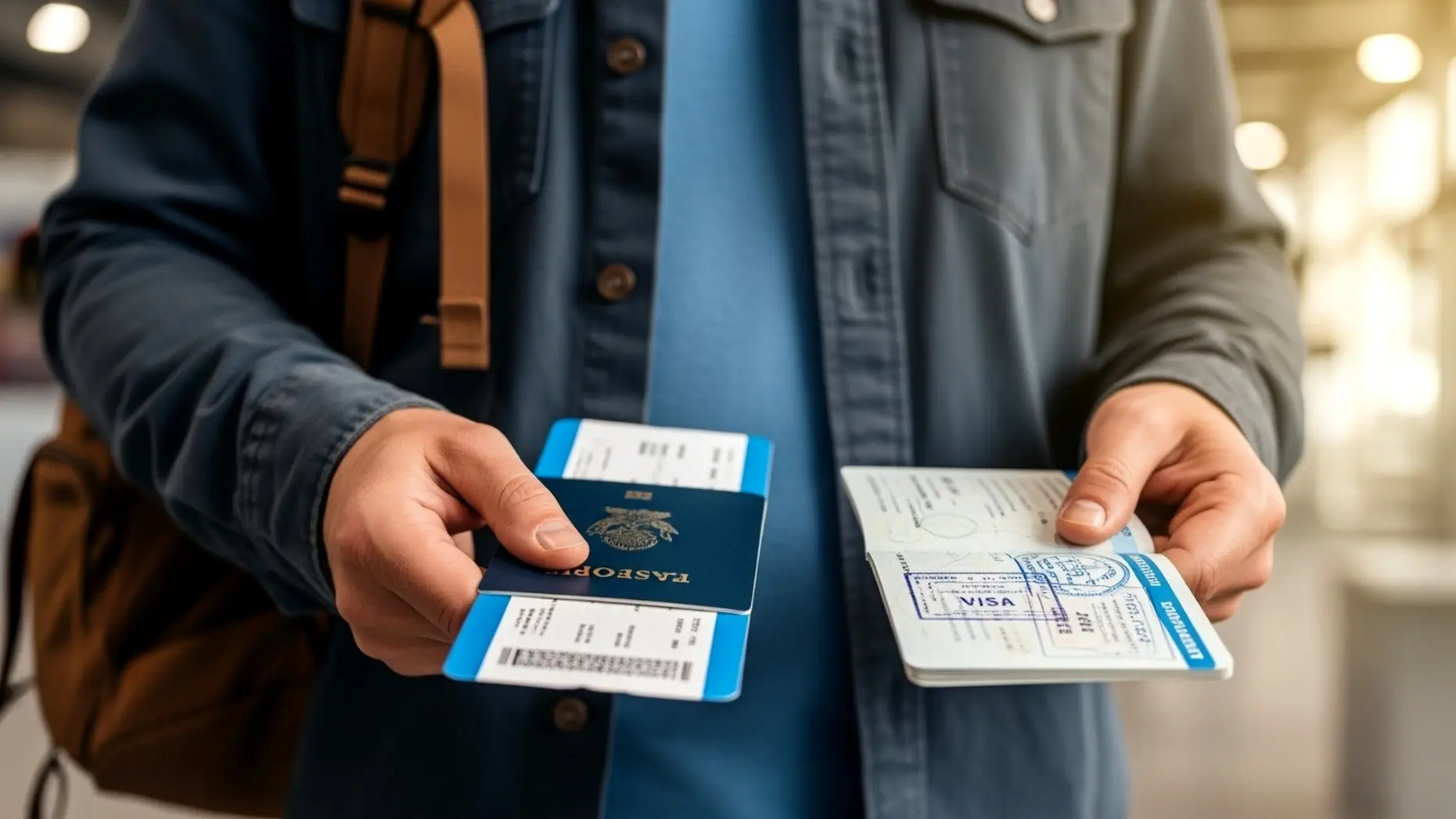
Short answer: A Hungary business visa from India is a Schengen C visa built on two letters: the Hungarian host's signed, stamped invitation and your employer's cover letter. The itinerary must repeat their dates. A flight reservation for visa files with a real PNR, valid 48-72 hours, costs $15 per person.
For Indian citizens, the Hungary business visa file rests on two sets of paper that must agree: the invitation letter from the Hungarian host and the letter from your own employer. The flight itinerary then has to carry the same dates as both.
This guide covers the Hungary business visit visa company documents and flight itinerary for a short Schengen visa trip of up to 90 days, and it leaves out work permits and residence permits. It maps required and conditional evidence, walks the route from decision to travel, and ends with a fictional worksheet tying every document to a date.
The itinerary supports the letters; it never replaces them. Build the flight reservation for your Hungary visa file only once the trip dates are settled in both letters.
Key facts for a Hungary business visa from India
- Indian nationals need a C (Schengen) visa: up to 90 days in any 180-day period across the Schengen area.
- Files go through VFS Global to the Embassy in New Delhi or the Consulate General in Mumbai, by home state.
- Lodge no earlier than six months and, per the India checklist, no later than 15 calendar days before travel.
- Decision within 15 calendar days, up to 45 in individual cases; the adult Schengen fee is EUR 90 plus the centre's service fee.
- BookForVisa flight and hotel reservations: a flat $15 per person, real PNR on flights, valid 48-72 hours, free date changes on the booking day only, and they can be issued while you are at the embassy or visa centre.
Invitation and cover letter dates agreed? Show the same arrival and return in your itinerary with a verifiable reservation instead of a paid fare before the decision.
Get a $15 business trip flight reservationIn This Guide
- Who Does This Guide Cover, and What Does It Leave Out?
- Which Documents Are Required, Conditional, or Only Supporting?
- What Must the Hungarian Host Company Send You?
- What Does Your Own Company Need to Prepare?
- How Should the Flight Itinerary Line Up With Both Letters?
- In What Order Do You Decide, Prepare, and Book?
- What Does a Completed Worksheet Look Like for One Fictional Trip?
- Where Do Business Files Usually Break, and What Fixes Them?
- What Should You Check Before You Submit, and What Else Do Applicants Ask?
- Which Official Pages Does This Guide Draw On?
- What Is the Right Order for Hungary Business Paperwork?
- Frequently Asked Questions
Official-source check: The C visa rules, admissibility, passport and photo rules, the business invitation standard and the 15 and 45-day decision periods come from the Consulate General of Hungary in Mumbai. The EUR 90 adult fee and the normal 15-day processing time come from the European Commission page on applying for a Schengen visa.
Reviewed for: host invitation and employer letter wording, conditional documents for employees and owners, funds and tax records, consular district rules, the six-month and 15-day lodging limits, the 15 and 45-day decision periods, fee figures, and date agreement between both letters, hotel, insurance and itinerary.
Who Does This Guide Cover, and What Does It Leave Out?

The route here is narrow on purpose. You are an Indian national travelling from India to Hungary for a business trip: a supplier audit, a contract review, a round of business meetings, or a stand at one of the trade fairs.
You will meet people, negotiate, and go home. Anyone who will visit Hungary on those terms is the reader this guide is written for, and that is the whole job description of the visa it discusses.
The Applicant and the Visa Type
Nationals of India can enter Hungary for a short stay only with a valid C (Schengen) visa, so the visa type is fixed before you start. Applicants must hold a valid Indian passport, and the passport has to meet the rules covered later in the guide. The Hungary Business Visa allows stays up to 90 days.
That 90-day figure is a ceiling across the Schengen area, counted as 90 days in any 180-day period, not a promise of 90 days in Hungary alone.
A seven-day supplier visit uses a small slice of it. The visa category on your application form should say business, and the purpose you describe should match the invitation word for word where it can.
Hungary sits in central Europe, and a C visa also opens travel beyond Hungary within the 90-day limit, which our 90/180-day check for visa flight dates helps you count. This guide still treats Hungary as the destination, because the Hungarian mission that receives your file reads the host's invitation and your itinerary against the purpose you stated.
Where the File Goes
Applicants in India do not walk into the embassy with a folder. For C visa cases, the Embassy of Hungary in New Delhi directs you to VFS Global for the appointment, and the Consulate General in Mumbai covers residents of several states, Maharashtra, Kerala, and Gujarat among them. Which mission decides your file depends on your state of residence.
The checklist also allows documents to be handed in at the VFS application centre or at the consulate. Visa applications can be submitted at the Hungarian consulate, and the visa application centre acts as the intake point for it. The decision, any request for more papers, and any interview belong to the consulate, not to the centre.
What This Guide Does Not Cover
Working in Hungary is a different legal route, and it starts with a different authority. A short-term entitlement does not by itself allow work in Hungary.
The employer applies for a work permit first, and a visa-required national applies for the short-stay visa only after a positive permit decision. If your trip means doing work for the Hungarian company, the work-permit route applies, and this guide does not.
Stays beyond 90 days also sit outside it. The embassy publishes separate document lists for residence permits, among them intra-corporate transfer, guest investor, and white card categories, and those decisions go to the National Directorate-General for Aliens Policing.
Their checklists ask for items such as a work contract, proof of financial assets, or accommodation documents. None of those papers belong in a business visit file.
If your plan is actually a longer posting with a Hungarian employer, the travel evidence for that route has its own answer, set out in our guide to flight itinerary rules for Type D visas. Nothing here should be read across to that route.
How a Business File Differs From Other Short-Stay Files
A Hungary tourist visa proves its purpose differently. A tourist can show a travel agency certificate or a prepaid accommodation reservation, and a family visit leans on a personal invitation. A business file leans on a company. The consulate wants a business entity in Hungary to put its name, signature, and stamp on the reason you are coming.
That changes what you collect. Two organisations produce evidence for one trip, and neither can fix the other's mistakes. The Hungarian partner cannot write your employer's cover letter, and your employer cannot correct the host's invitation. Your job is to make their documents agree before the file reaches the counter.
Several adjacent tasks deserve their own detail and get only a short summary here. The wording of the invitation, the financial evidence a business applicant carries, and the date logic of the itinerary each have a dedicated place later in the guide. General visa timing, tourist itineraries, airline holds, and border onward-ticket rules are left out entirely.
What the Consulate Is Trying to Settle
The mission is not grading your company. It is deciding whether the purpose and conditions of your planned stay are proven. A C visa can be issued for a single, double, or multiple entries, and the entries and dates you request should follow from the trip you can document.
Hungarian authorities may also look at the intention behind a Schengen entry and at the actual purpose of the stay. A file where the host's letter, your employer's letter, and your itinerary tell one story makes that question easy. A Hungary business visa valid for dates that no document supports invites exactly the question you want to avoid.
One Test Before Reading Further
Write one sentence: who is travelling, to which Hungarian company, for what purpose, on which dates. If that sentence changes depending on which document you are reading, the file is not ready for any other discussion in this guide. Every later step is a way of keeping that sentence identical across the paper.
Which Documents Are Required, Conditional, or Only Supporting?
Hungary visa requirements for a business visit come from the consulate's checklist for Indian applicants, and that checklist mixes three kinds of paper. Some documents are asked of everyone.
Some depend on who you are and who pays. Others are not listed at all but make your story easier to read. Sorting them early saves a second trip to the centre.
Which Papers Does Every Business Applicant Carry?
Start with the basics that make an application admissible. You need a completed and signed visa application form, and the form can be downloaded from the consulate's pages. The biometric data step applies where relevant, and the visa fee is paid at lodging.
Your identity documents begin with the passport, which needs two blank pages, an issue date within the previous 10 years, and validity beyond the trip.
The consulate's written rule is three months after the intended departure. Plan on a valid passport with at least 6 months' validity, because that clears both that rule and the longer minimum many checklists quote.
The photograph is a recent colour passport-size picture, 3.5 cm by 4.5 cm, on a white background and not older than six months. The consulate's checklist names one photograph. Applicants need two passport-size photos on some lists, so carry a spare and let the centre take what it needs.
Then comes the pair that defines this route. An invitation letter from a Hungarian company is necessary, and a covering letter from the Indian employer is necessary too. Both are examined in detail later, one in the host's discussion and one in the employer's.
Which Papers Depend on Your Situation?
Conditional documents switch on when a fact about you is true. The test is simple: ask what the consulate would otherwise have no way of knowing.
- You are an employee. Salary slips for the last three months, an employment contract, and an employer statement showing approved leave for the days of travel.
- You own or run the business. A company registration certificate, including the GST number for an Indian company, replaces the employee set.
- A company pays for the trip. A formal statement from the paying company, plus that company's own funds evidence, takes the place of your personal funds evidence.
- You are visiting more than one Schengen state. Lodging evidence is needed for each state, and city-to-city moves belong in the itinerary.
- You hold earlier visas or passports. Copies of pages showing old Schengen visas, plus old passports, are requested, and leaving them out may affect the decision.
- Your biometrics are old. Applicants with an earlier Schengen visa need biometrics taken less than 59 months before submission, or they must appear again in person.
- You are attending a conference. A confirmation of participation and proof of the registration fee can be asked for alongside the host invitation.
Which Papers Help Without Being Listed?
Supporting documents sit outside the published lists, and the consulate may in any case ask for additional documents. They earn a place only if they add facts the required papers lack.
A meeting agenda with dates, earlier correspondence with the host, a signed supply or services agreement, and a trade fair registration all show why the trip is happening now.
Keep them few. A supporting page that contradicts a required page does more damage than its absence. If a document does not tie to a date, a name, or a purpose already in the invitation, leave it in the folder rather than the file.
How the Evidence Sorts at a Glance
Why Do Three Hungarian Pages List Different Documents?
The Mumbai consulate's short-stay page names only the invitation as the business purpose document. The New Delhi embassy's page adds the cover letter, accommodation, funds, and employment records.
The consulate's business checklist runs to thirteen numbered items, from the form to old passports. These are not three rival rule sets. They are one set seen at different levels of detail.
Work from the longest list. The numbered checklist is the document checklist the centre uses at the counter, and the two web pages explain what each item is for.
Where a web page mentions something the checklist omits, such as the employer's statement on holidays, include it. Where the checklist names more required documents than a page, the checklist wins, because the centre checks completeness against it.
Read the live lists in the week you lodge, not the week you start. A checklist is dated by its own year in the title, and a newer one can replace the version you printed in the autumn.
Why the Consulate's List Is Not the End of It
The published list is non-exhaustive, and the consul may request more. The checklist also records that originals are shown at the personal interview if one is called. In practice, document preparation means keeping the originals, the copies, and the dates in one order so a request for more can be met the same day.
Missing or inadequate papers carry a stated risk. If the centre tells you a mandatory document is absent, and you submit anyway, the file can be refused without further checks or an interview. That is a decision to make knowingly, not by default.
Read the checklist for your own consular district, too. Missions differ on the form of some evidence, including the language of the invitation and the kind of business-relations proof, so a friend's list from another country is a guide to the shape of the file, not a substitute for yours.
What Must the Hungarian Host Company Send You?

No other document in the file comes from outside your control, and none is harder to fix once it is wrong. The host's paper is the consulate's main proof that a real Hungarian business wants you there for a stated purpose. Ask for it early, ask for a draft before the signed original, and read every date.
What Does a Valid Invitation Letter Look Like?
A business invitation letter from a Hungarian company is required, and an official invitation letter must be issued by the host company in Hungary. It comes from the inviting partner, not from you, and not from an agent drafting on the partner's behalf without the partner's signature. The consulate's wording is specific: signed and stamped by an authorised person of the business entity.
Print it on the company's letterhead, with the legal name, address, and contact details visible. A letter with a signature but no stamp, or a stamp but no clear signatory name, fails the stated test of a signed and stamped letter. The signatory should hold a role that plausibly speaks for the company.
The letter must tell the consulate who is coming and why. It confirms your identity, the purpose of the trip, the dates, and the place of stay. The invitation letter should include details of the visit's purpose and timeline, so a one-line "we invite Mr Whitmore for business" does not do the work.
Which Details Should the Letter Carry?
Treat the letter as a fact sheet the consulate can check against the rest of your file. The strongest versions give reviewers little to guess.
- Your full name, as printed in the passport. A shortened name or a different spelling creates avoidable doubt about identity.
- Your employer's name and your role. It lets the reader connect the letter to the covering letter from your side.
- The purpose, in specific words. "Audit of the tooling line and review of the 2027 supply contract" says far more than "business discussions".
- The meeting dates and the arrival and departure dates. Ask the host to state the intended stay as a range, so the itinerary can sit inside it.
- The place of stay. The city, and the hotel if the host has arranged one.
- Who pays for what. If the host covers hotel or local transport, the letter says so, and that statement is what later explains your funds evidence.
Keep the language simple and the facts identical to your own documents. The letter is read next to your employer's letter, line by line.
How Do You Prove the Two Companies Actually Deal With Each Other?
Documentation must confirm the nature of the business relationship between companies. The checklist asks for evidence of the actual business relations in Hungary, in the form of a reference letter from the Hungarian or Indian company. Either side can write it, which is useful if the host is slow.
A good reference letter says what the companies do together, since when, and in what form: supply, distribution, joint development, or a first trial order.
It can point to a contract number or a recent purchase order without attaching the whole file. Some Hungarian missions name a chamber of commerce certificate as an alternative form of proof, so ask the centre what it accepts for your district.
A first-time relationship is not a weakness if it is described honestly. A letter that explains an introductory meeting, a sample order, or an invitation from a trade event is stronger than one claiming a long history it cannot show. Overstated ties are easier for a reviewer to spot than a plainly new one.
Does the Host's Accommodation Count as Accommodation Proof?
Not by itself. Proof of prearranged accommodation has to be presented even when the Hungarian partner arranged or covered it. The centre accepts a reservation if you paid a deposit or if changing plans would cost a fee, and the consulate may ask for proof of payment for Hungarian accommodation as a condition of issuing the visa.
That means accommodation proof comes as a document, not as a sentence in the invitation. Ask the host to forward the hotel confirmation with the guest name, the dates, and the booking reference.
Hotel reservations that show no guest name, or dates that differ from the invitation, are a quiet mismatch that is far cheaper to fix before you book an appointment.
If you are staying with the host's colleague or in a company flat, ask for the private accommodation papers as well, because the line "staying with a contact" needs its own paper.
What If the Trip Is a Trade Fair or Conference?
A trade fair adds a third party, the organiser. The consulate's list for conferences and seminars names a host invitation, a confirmation of participation, or a certificate from the delegating organisation, plus proof that a registration fee was paid.
A Hungarian partner who exhibits at the fair can issue the invitation and attach the organiser's confirmation for the same dates.
Match the dates carefully. A fair that runs from Tuesday to Thursday does not justify a 12-day stay unless the letter explains the extra meetings. Extra days can be perfectly legitimate, but each one needs a reason that appears in writing.
Adjacent Task: The Invitation, Field by Field
The invitation has enough detail for a dedicated guide on wording each field, handling language and signature questions, and fixing a letter that comes back wrong. That guide is the place for template lines and the field-level checks.
This guide stops at what the letter must contain and how it must agree with the rest of the file.
What Does Your Own Company Need to Prepare?
A Hungary business visit visa requires documentation from both the home employer and the inviting partner, and the home side carries more pages than most applicants expect. Your employer writes one letter, supplies several records, and often stands behind the money. Treat the Indian half of the file as a small project with an owner and a deadline.
What Goes Into the Cover Letter From Your Employer?
A cover letter from the Indian employer is necessary, and it does a job the host's letter cannot: it ties you to a real employer in India and states that you are going back to it. The consulate's list asks that both letters confirm your identity, the purpose of the trip, and the dates and place of stay.
Ask for it on letterhead, signed by someone senior enough to speak for the business. It should name you with your designation and length of service, name the Hungarian host, state the purpose in the same words as the invitation, and give the dates. A short line on who bears the costs belongs in it as well.
An employer confirming that leave is approved for the exact dates closes the loop on your return. Without that line, the reviewer sees a trip but no proof you are expected back at your desk.
Which Records Back the Letter for an Employee?
For employees, the consulate asks for pay slips for the last three months, an employment contract, and an employer statement approving the leave. The checklist calls for salary slips for the last three months, which is the same record under a different name, so one set serves both lists.
The contract shows you hold a role the letter describes. Check that the job title in the letter, the title on the contract, and the title on the salary slips match. A recent promotion not yet reflected in the contract is easy to explain in one line, and better explained than left for the reviewer to puzzle over.
If your employer pays you through a different legal entity than the one that wrote the letter, say so in the letter. Two company names with no explanation look like two different jobs.
What Changes If You Own the Business?
Business owners and self-employed applicants substitute company documents for personal employment papers. The consulate lists a company registration certificate, including the GST number for an Indian company. The registration should show the company name exactly as it appears on your letterhead and on the host's reference letter.
You write your own cover letter in that case, so state your ownership role, the nature of the business, and the purpose of the trip with the same discipline an employer would use. Keep the figures in the letter consistent with the company's own records.
How Much Financial Proof Does a Business Trip Need?
The consulate wants financial proof of sufficient means for the stay and for the return to India, and its checklist spells out the records. Financial documentation often includes recent bank statements from the sponsoring company, and personal statements are asked for as well.
Recent bank statements must demonstrate financial stability, and the checklist asks for original statements covering the last three months, one set for you and one set for the company.
The tax layer sits beside them. The checklist asks for the Indian company's GST declarations for the last two years and income tax returns for the last three years, for both the company and you. The embassy's own list asks for acknowledgments of those returns for the last three assessment years.
The embassy's list asks for a bank statement stamped and signed by the bank, so a plain printout is a risk worth avoiding. Gather the financial documents once, in the order the checklist lists them, and keep one clean copy of each.
Who Sponsors the Trip, and Does It Need Its Own Letter?
When the Indian employer pays, it is the sponsor and submits the evidence of funds. A sponsorship letter then states what the company covers: the airfare, the hotel, local travel, and daily expenses. When the Hungarian host pays, the invitation says so, and your own funds shrink in importance while still appearing in the file.
Do not mix the two stories. If the invitation says the host covers the hotel and the employer letter says your company pays for everything, the reviewer has to guess which is true. One of them needs to be corrected before submission.
Where Do You Prove You Live in the Consular District?
The checklist also asks for proof of six months of residence in the consulate's jurisdiction, such as a rental agreement issued six months earlier, bank statements, salary slips, and electricity bills. The same pages that prove your finances can prove your address, which is a reason to keep their dates and address lines consistent.
If you recently moved cities, check which mission covers your new state before you book the appointment. The New Delhi embassy and the Mumbai consulate serve different groups of states.
Keeping the Company Papers Organised
Company documents should be organised for better review and credibility of the application. In practice, that means one folder, one order, and one page of cover notes: a contents list, the trip sentence from the scope discussion, and the dates.
A reviewer who finds the invitation, the cover letter, and the funds evidence in the same order as the checklist hunts less and guesses less.
Adjacent Task: The Money Evidence in Full
Bank statements, tax records, and sponsor papers have enough variation, by employer size and by who pays, to fill a dedicated guide on financial evidence for a business visit. This guide covers the role of those papers and how they connect to the dates and parties in the letters.
How Should the Flight Itinerary Line Up With Both Letters?
The itinerary is the one document in the file you build yourself, which makes it the easiest to get right and the easiest to get quietly wrong. Flight itineraries must align with the dates mentioned in the employer letter and the host's invitation. Everything else about it is detail in service of that single rule.
Does a Hungary Business Visa File Need Flight Evidence at All?
The checklist for Indian business applicants does ask for it, as part of a travel itinerary showing travel dates, including a return flight reservation or ticket. The embassy's wording is looser: proof of planned transport and an itinerary, without naming flight bookings. The consulate's published page for short stays does not list flights as a required document.
So the honest answer is that the flight is part of the itinerary line, not a standalone gate. A confirmed flight booking is advisable but not mandatory. What the consulate needs is a believable route in and out on the right dates, and a reservation can provide that.
The checklist accepts a return flight reservation in place of a ticket. The reasoning is practical: the visa decision comes first, and dates can move while the file is being assessed. Nothing in the official papers makes a paid ticket a condition of lodging.
What Is the Difference Between a Reservation and a Ticket in This File?
Keep three kinds of evidence apart. A reservation is a booking record with a reference. An issued ticket exists after payment and ticketing. Entry evidence belongs to the day you travel, and it is the only proof that the trip happened. A business file asks for the first or second, never the third.
Some agents call this kind of document a dummy ticket; for a Hungarian business file, what matters is a verifiable reservation whose dates match both letters. A BookForVisa reservation costs a flat $15 per person, carries a real PNR, stays valid for 48-72 hours, allows free date changes on the booking day only, and can be issued even while you are at the embassy or visa centre. It is for visa applications and immigration onward proof only, not a paid fare. Use it to show planned dates and route, not to claim payment.
Airline holds, general definitions, and border onward-ticket rules are covered elsewhere and are outside this guide.
Which Dates Must the Itinerary Match?
Five documents carry dates, and the itinerary has to sit inside all of them. The table shows which date lives where and what it must do.
If any row disagrees with another, change the weaker document, not the stronger one. The invitation is the hardest to change, so build the itinerary around it and ask your employer to align the leave dates.
How Detailed Should the Business Itinerary Be?
The visa application should include a detailed travel itinerary outlining business activities. Day-by-day does not mean hour-by-hour. A short table works: date, city, activity, and who you meet. Use the host's agenda wherever one exists, and copy its dates and city names exactly.
A typical short trip has an arrival day, two or three working days, and a departure day. If the host's agenda shows only one meeting, a ten-day stay will look thin however polished the flights are.
The reverse also fails: an agenda packed with meetings beside a hotel confirmation for only two nights is a mismatch the consulate will see.
Name the cities in the order you will visit them. If the first meeting is outside the city where you land, show how you travel there, whether by rail, road, or a domestic hop. That small line keeps the plan believable.
What If the Trip Also Touches Other Countries?
Hungary has to be the destination the file supports. If Hungary is your main destination, meaning the place where you spend the most nights or the main purpose of the trip, the Hungarian mission handles the file. If no single destination stands out, for example when days are split evenly, the Schengen zone should be entered through Hungary.
When your visit takes you to other Schengen countries, the transfers belong in the application, with dates and modes of travel. Lodging evidence for each stop is requested too. A short side trip to a neighbouring country for a client meeting is fine if it is documented, and unexplained if it appears only in the flight booking.
The countries you pass through also count against the same 90-day allowance, so the intended visit and the side trip must fit inside it together.
Hotel Bookings and the Nights They Cover
Hotel bookings are the date check that applicants most often skip, because the host usually arranges them. Count the nights on the confirmation and compare the figure with the nights between the itinerary's arrival and departure. They should be equal unless the invitation explains why you will stay with someone else for part of the trip.
If the host pays for the hotel, ask for the confirmation to carry your name and the exact dates. A booking in the host's name with a note that you are the guest is weaker than one issued for you.
Adjacent Task: The Date Logic in Detail
Aligning dates across five documents has enough edge cases, such as shifted meetings, extended stays, and split trips, to fill a dedicated guide on matching the itinerary to company letters. This guide gives the rule and the table, and the repairs section below covers the most common breaks. If your employer's leave dates and the host's dates disagree, our note on a reservation when employer dates differ walks through the fix.
In What Order Do You Decide, Prepare, and Book?
Trips get approved by a manager long before a consulate sees them, and that gap is where files go wrong. The order below runs from the decision to go to the day you travel. Each stage ends with something in your hand, so you always know whether you may move on.
Who Handles Which Stage?
Several people touch the file, and each stage has one owner. Knowing who it is prevents a familiar stall, where everyone assumes someone else is chasing the document.
- You own the trip sentence, the form, the photograph, the appointment, and the final check.
- The Hungarian host owns the invitation, the reference letter if it writes one, and the hotel confirmation if it books the room.
- Your employer owns the cover letter, the leave statement, the salary records, and the sponsor letter when it pays.
- Your bank produces the stamped statements, which can take days.
- The insurer issues the policy once the dates are firm.
- The application centre accepts the file and collects biometrics, while the consulate decides.
Stage 1: Fix the Trip Before Anyone Writes a Letter
Agree the purpose, the host, and the dates with your manager and the Hungarian contact in one message. Write down the first meeting day, the last meeting day, and the days you want either side of them. Those four dates feed every later document.
The Hungary business visa is a short-stay visa, so the purpose you agree on must be a visit, not a task. If the work description drifts toward delivering a service, stop and ask whether the work-permit route is the real one.
Stages 2 and 3: Collect the Letters While Dates Can Still Move
Ask the host for the invitation and the reference letter, and ask your employer for the cover letter in the same week. Send both writers the trip sentence and the dates so neither invents their own. Request drafts first. A typo in a name costs minutes in draft and weeks after stamping.
While the letters are in progress, assemble the records that do not depend on them: three months of salary slips, original bank statements, tax returns, and the registration certificate if you own the business. These are slow to obtain from banks, which is a reason to start them now.
Stage 4: Build the Travel Paper From the Confirmed Dates
Only now build the itinerary, the accommodation confirmation, and the insurance. Travel insurance must cover at least EUR 30,000 in medical expenses, and the checklist asks for travel medical insurance valid across all Schengen countries and covering accident, illness, medical emergency, and evacuation.
Choose a policy whose minimum coverage clears the figure on the checklist and whose dates cover the whole trip, including the travel days at either end. Insurance bought before the dates are firm may need replacing, so wait for the signed invitation.
Stage 5: Book the Visa Appointment Inside the Window
You can apply for the visa up to 6 months in advance. The checklist adds a lower limit: no later than 15 calendar days before the intended travel start.
Between those two, the practical limit is the first available slot at your centre, and the visa appointment comes through VFS Global for both the New Delhi and Mumbai districts.
Choose a date when every original will be in hand, because rebooking costs time you may not have. Some applicants look for end-to-end support from an agent; that can help with logistics, but the invitation, the employer letter, and the statements still have to come from the companies themselves.
Stage 6: Lodge the File and Pay the Fee
At lodging, your biometrics are collected where applicable, the file is checked for completeness, and the visa fee is paid. The Schengen visa fee for adults is EUR 90 (EUR 45 for children aged 6 to 12), according to the European Commission, and the visa centre adds its own service fee. In India the amount is collected in rupees at the rate the centre sets.
Visa fees and exchange rates change, so verify the current rupee figure on the VFS page before applying. The consular fee is not paid back if the application is refused, and a new application after a refusal means paying again.
Stage 7: Wait for the Decision Without Moving the Plan
The Mumbai consulate states that the decision must not exceed 15 calendar days, which matches the 15-day normal processing time the European Commission gives for Schengen visas. Plan on calendar days, not working days, and count from the lodging date.
Some Hungary visa applications can take up to 45 calendar days, for example, when the consulate asks for extra papers or calls you in.
So Hungary visa processing time is a range, not a date. During assessment, the consulate does not answer status enquiries, which makes it wise to keep the flight as a reservation until the decision arrives.
Book the hotel on terms that still meet the checklist, meaning a deposit paid or a release charge that would apply. Visa approval is the consulate's decision alone, and nothing in the file can promise it.
Stage 8: Check the Sticker, Then Decide About the Ticket
When the passport comes back, read the validity dates and the number of entries. A visa valid for fewer days than your itinerary needs is a problem to raise before you fly, not at the gate. Compare the validity against the invitation and the itinerary line by line.
Only then decide whether to convert the reservation into a paid ticket. A confirmed flight booking is advisable but not mandatory for the application, so the payment decision belongs after the visa, with the dates now confirmed. If the dates have moved since lodging, ask the consulate what it expects before you fly.
What Does a Completed Worksheet Look Like for One Fictional Trip?
Everything in this part is invented for illustration: the person, both companies, the dates, and the document dates. No real application, reference number, or passport detail is used.
The point is the pattern: a worksheet in which every field is a date or fact that another document must repeat, and a source column showing where the rule comes from.
The Example Trip in One Sentence
Daniel Whitmore, a quality engineer at Harbourline Auto Components Pvt Ltd in Mumbai, travels to Danube Precision Kft. in Győr for a supplier audit and a review of the 2027 supply contract. Meetings run Wednesday 17 to Friday 19 March 2027. He arrives Tuesday 16 March and leaves Saturday 20 March, a stay of four nights.
Because he lives in Maharashtra, his file belongs to the Mumbai consulate's district. He is an employee, so the conditional set for employees applies. His employer pays the airfare, and the Hungarian host pays the hotel, as the invitation states.
The Document-to-Date Worksheet
Read each row left to right: the field, the fictional entry, the date or fact it must match elsewhere, and the publisher whose page sets the rule.
The Itinerary Behind the Worksheet
The itinerary row in the worksheet points to a short day-by-day table. Daniel keeps it to one page and copies city names and dates from the host's agenda.
Every date sits inside the invitation's range, and every night between 16 and 20 March has a hotel night against it. The table names no extra city, so no side trip needs explaining.
How the Dates Hold Together
Find the spine first: 16 March in, 20 March out. It appears in the invitation, the cover letter, the hotel confirmation, the insurance policy, the application form, and the two flights. Six documents, one pair of dates, with the leave statement wrapped around them. When all six agree, the reviewer does no arithmetic.
The leave statement is deliberately wider, 15 to 21 March, because leave covers days around travel. A leave window containing the trip is consistent. A leave window shorter than the trip would not be.
The insurance is the tightest document, starting on arrival and ending on departure. A policy that began on 17 March, the first meeting day, would leave the arrival night uncovered, which is the kind of gap the entire-stay rule exists to prevent.
What the Money Rows Show
The bank statements run to 11 January, the day before lodging, so they are as recent as a bank can supply them. Pay slips for October to December are the last three full months at the time of lodging. Both match the worksheet's assumption that Daniel lodges on 12 January.
The host pays the hotel, so the invitation says so, and the worksheet's accommodation row uses the host's confirmation with Daniel's name on it. The employer pays the flight, so the cover letter says so. No two documents claim the same cost.
What the Decision Window Leaves
Lodging on 12 January leaves 63 days before travel. The 15-calendar-day period ends on 27 January. The 45-day extension, which applies in individual cases, ends on 26 February. Even the longer window closes 18 days before the trip, so the reservation can stay a reservation until the visa is in the passport.
What the Worksheet Does Not Prove
A tidy worksheet shows the file agrees with itself. It does not show that the consulate will decide in the applicant's favour, because that decision stays with the consulate. It also cannot replace the checklist for your own district, since another mission may word a row differently.
Use it as a template for your own dates. Replace each fictional entry with a real date from a real document, and delete any row that your situation does not trigger. A row you cannot fill from a document in your hands is a task, not a blank.
Where Do Business Files Usually Break, and What Fixes Them?
Most weak files do not lack a document. They hold two documents that disagree. The repairs below follow the same rule throughout: change the paper that is cheapest to correct, never the one that is hardest, and never explain away a conflict that a corrected page would remove.
The Itinerary and the Invitation Give Different Dates
This is the break that the alignment rule exists for. Say the invitation covers 16 to 20 March and the flight returns on 22 March because the fare was cheaper. The consulate now sees two stay lengths and has to pick one.
Fix it in the itinerary. Move the return to the invitation's last day, or ask the host to correct the letter with the longer range and a stated reason. A cover letter that says "the extra days are for personal reasons" gives the reviewer a purpose outside the business visit, which is the opposite of what you want.
The Host's Letter Fails the Stated Test
A letter that arrives unsigned, unstamped, or without a letterhead does not meet the wording of the checklist. Ask for a corrected original and a scan, and give the host the checklist wording so the fix is right the first time.
If the letter names the wrong spelling of your name, the fix is the same. A reviewer comparing the letter with the passport has no way of knowing it is a typo.
The Employer's Letter and the Pay Records Disagree
Your letter says Senior Engineer, your slips say Engineer, and your contract says Assistant Manager. Each could be explained, but three titles in one file make the reviewer ask which is true. Choose the title on the most recent payroll document, use it in the cover letter, and add one sentence about any recent change.
A company name that differs between the letter, the bank statement, and the GST record needs the same treatment. If the entity that pays you is not the entity that wrote the letter, name both and state the relationship.
The Money Documents Are Thin or Stale
Bank statements are the item most exposed to timing. The checklist wants the last three months, in original and stamped. A statement that ends six weeks before lodging does not count as recent, however healthy the balance. Request fresh statements as close to the appointment as the bank allows.
If the company is the sponsor, its statements matter more than yours, and the sponsor's letter should say so. If you are relying on the host's payment of the hotel, your own funds still go in the file, because the consulate asks for means for the return to India as well.
The Purpose Has Drifted Toward Work
Trips change shape. A supplier audit becomes a supplier audit plus a week of line training, and the invitation now describes something nearer employment than a visit. That drift is where the short-stay visit meets the work-permit route, and the work permit comes first for visa-required nationals.
If the plan changes, stop and rewrite the trip sentence before any letter is correctd. Letters that contradict the first version of your application are harder to defend than one clean version.
Other Documents That Cause Trouble
Not every break needs a story. Several are mechanical, and each has a quick check.
- Passport shorter than the trip needs. The written rule is three months beyond the departure; a passport at the edge of that is not worth the risk when renewal is possible.
- Photograph older than six months. Retake it; do not argue.
- Insurance below the minimum or shorter than the trip. A policy at EUR 30,000 that starts a day late is not a policy that covers the whole trip.
- Accommodation without a deposit or release charge. The checklist accepts a reservation if you paid a deposit or must pay a release charge.
- Earlier visas missing. Copies of old visas and passports are requested, and omitting them may affect the decision.
- Stale biometrics. If the earlier Schengen visa's fingerprints were taken 59 months or more before lodging, you may need to appear in Mumbai again, which lengthens the process.
Files Built From the Wrong Template
A Schengen business visa checklist from another country, or a list written for other visas such as a student or family category, does not fit a Hungarian business file.
Student enrolment letters, family booklets, and tourist tour vouchers belong to different purposes, and including them signals that the file was assembled from a generic list rather than for this trip.
The same applies to documents that have no connection to business purposes, such as long personal statements about the country's attractions. Keep the file in the shape the checklist describes.
When the Consulate Asks for More
A request for further papers is not a refusal. The consulate may ask for more papers, or call you for an interview, and the checklist notes that originals must be shown at the interview. Answer with exactly what was asked, in the same order, and keep copies.
If an application is refused, the visa fee is not paid back. The refusal form states the grounds and the appeal route; Hungarian mission pages give eight calendar days from receipt of the decision to appeal in writing, and a fresh application after a refusal means paying the fee again. Both are reasons to repair the file before lodging instead of after.
What Should You Check Before You Submit, and What Else Do Applicants Ask?
Do this check on paper, at a table, with every original in front of you and the checklist for your own district beside it. It takes less than an hour, and it replaces a second appointment. Work through the list once for presence, then a second time for dates.
The Final Document Check
Presence first. Each item should be in the folder, in the order the checklist lists it.
- The signed application form, with the same trip dates you will see on the invitation.
- An Indian passport with two empty pages, issued within the last 10 years, and with the validity discussed earlier.
- One recent colour photograph on a plain background, plus a spare.
- The invitation, signed and stamped, on letterhead.
- The business relations letter from the Hungarian or Indian company.
- Your employer's cover letter and, for employees, the leave statement, contract, and last three salary slips.
- For owners, the registration certificate with the GST number.
- Original stamped bank statements for the last three months, yours and the company's, plus tax records.
- Proof of six months' residence in the district.
- Hotel confirmation with your name, the dates, and a deposit or release charge.
- The itinerary with its return flight reservation or ticket.
- Insurance at EUR 30,000 or more, covering the full dates.
- Copies of old visas and passports.
- The fee, or the means to pay it at the centre.
Dates second. Put a finger on each date in turn and say it aloud against the invitation: arrival, first meeting, last meeting, departure, hotel check-in, hotel check-out, policy start, policy end. Any mismatch goes back to the page that holds it.
What Goes Into the Bag on Appointment Day
Bring the originals in the checklist's order, a second set of photocopies, the appointment confirmation, and the means to pay the fee. Carry the trip sentence on a single sheet in case a staff member asks a quick question at the counter.
If the centre tells you a mandatory paper is missing, you may submit anyway, but the declaration you sign says the file can then be refused without further checks. Weigh that before you decide, and rebook if the missing item can be fetched within days.
One Last Read for the Story
Read the invitation, the cover letter, and the itinerary in that order, without the other pages. The three should describe one traveller, one purpose, one host, and one set of dates. If a stranger would ask a question after reading them, answer it in the document, not in your head.
Then hand the folder to a colleague who has never seen the trip and ask them to find the host's name, the hotel, and the date you fly home. Ten seconds each is the standard.
Does a Business Applicant Need a Confirmed Ticket to Lodge?
No. A confirmed flight booking is advisable but not mandatory, and the checklist asks for an itinerary showing a return flight reservation or ticket. A reservation that carries the right dates and route answers the question the checklist asks. The payment decision can wait until the visa is in the passport.
Where Is the File Actually Lodged?
Visa applications can be submitted at the Hungarian consulate, and applicants in India book the appointment through the VFS Global centre for their district. The Mumbai consulate and the New Delhi embassy divide the states between them. Check which one your state belongs to before booking.
How Long Can the Trip Last?
A Hungary Business Visa allows stays up to 90 days, and the Schengen limit is 90 days in any 180-day period. A trip like the fictional one, four nights, uses a small part of it. A longer stay needs more explanation in every letter, and a stay beyond 90 days needs a different route.
Can You Do Paid Work for the Host While There?
Not on this file. A short-term entitlement does not by itself allow work, and the work-permit route runs through the employer first.
Meetings, negotiations, audits as a visitor, and trade fair attendance are the kind of purpose a business visit file describes. If the plan includes delivering paid work, step back to the scope discussion at the start of this guide.
What If the Host Is Slow to Send the Letter?
Send the host a one-paragraph brief with your name as printed in the passport, your employer, the purpose, and the dates, and ask them to put it on letterhead.
For the business relations proof, either company can write the reference letter, so an Indian employer can supply that part while the host's invitation is pending. Do not book the appointment until the invitation is in hand.
What Happens If the Consulate Wants to See You?
The consulate may call applicants for an interview, and the checklist says originals are shown there. Take the originals, a copy set, and the trip sentence. Answer from the documents: the host, the purpose, the dates, and who pays. Because the file was built to tell one story, the answers are short.
Does Any of This Promise a Visa?
No. The decision rests with the consulate alone, and the checklist is explicit that the centre makes no promises about outcomes.
A visa also does not promise entry, and officers at the border may ask for papers, so keep the folder with you when you fly. What a clean file does is remove avoidable reasons for a request for more, a delay, or a refusal.
Which Official Pages Does This Guide Draw On?
The guide draws on Hungarian and EU official pages and checklists, read on 3 November 2026. Fees, forms and checklist wording change, so read the live pages for your district before you lodge.
- Consulate General of Hungary, Mumbai: Short term stay, for the C visa rules, admissibility, passport and photo rules, the business-purpose document and the 15 and 45-day decision periods.
- European Commission, Migration and Home Affairs: Applying for a Schengen visa, for the EUR 90 adult fee, the EUR 45 child fee and the 15-day normal processing time.
- Embassy of Hungary, New Delhi: short-stay and general consular information pages and the residence permit lists for intra-corporate transfer, guest investor and white card, named for comparison.
- Hungarian Visa Application Centre, India (VFS Global): the Business Checklist, for the numbered document list, the 15-day lodging limit, insurance of at least EUR 30,000 and the hotel booking terms.
- National Directorate-General for Aliens Policing: information for employers on the short-term employment of third-country nationals, for the work-permit boundary.
What Is the Right Order for Hungary Business Paperwork?
For an Indian business traveller heading to Hungary on a Schengen C visa, the order is simple. Fix the trip sentence, get the host's signed invitation and your employer's cover letter, build the itinerary and hotel from those dates, and lodge once every date agrees. The flight line supports the letters; it does not lead them.
Keep the itinerary as a reservation until the consulate decides, then pay for the ticket against the dates on the visa. If you want a reservation for the file, order it after the invitation is in hand and close to the appointment, because it stays valid for 48-72 hours.
Both letters signed and the hotel nights counted? Match your itinerary to them with a flight reservation that carries a real PNR, for a flat $15 per person, valid 48-72 hours.
Create your $15 flight reservationFrequently Asked Questions
What documents does a Hungary business visa from India need?
The core set is the signed form, a passport issued within 10 years with two blank pages, a recent photo, the Hungarian host's signed and stamped invitation, a business relations letter, your employer's cover letter, hotel proof, insurance of at least EUR 30,000, an itinerary with a return flight reservation or ticket, three months of statements and tax records.
Does a Hungary business visa need a confirmed flight ticket?
No. The India business checklist asks for an itinerary with a return flight reservation or ticket, so a reservation with the right dates answers it. A BookForVisa reservation carries a real PNR, costs $15 per person and stays valid for 48-72 hours, so order it close to the appointment and pay for the fare after the visa.
How long does a Hungary business visa take?
The Mumbai consulate says the decision must not exceed 15 calendar days, and in individual cases it can run to 45 calendar days. Lodge no later than 15 days before travel under the India checklist, and ideally much earlier, because a request for more documents can use most of the longer window.
Which Hungarian mission handles my business visa in India?
It depends on your state. The Consulate General in Mumbai covers Maharashtra, Gujarat, Goa, Kerala, Karnataka, Tamil Nadu, Andhra Pradesh and the listed union territories, and the Embassy in New Delhi covers the northern and eastern states. Both take appointments through the VFS Global centre for your district.
Can I work for the Hungarian host on a business visa?
No. A business visit covers meetings, negotiations, audits as a visitor and trade fairs. Delivering paid work for the host is a different route, where the employer obtains a work permit first and the visa-required national applies for the visa only after a positive permit decision. Rewrite the trip plan if it has drifted toward work.
What hotel booking does the Hungary business checklist accept?
A reservation with your name and the exact nights, on terms that show a deposit was paid or that a charge would apply if the room were released. Proof is needed even when the Hungarian partner arranges or pays for the stay, and the consulate may ask for proof of payment before issuing the visa.
Friendly reminder: BookForVisa prepares flight and hotel reservations to support visa applications and onward-travel proof. Requirements vary by destination, consulate, visa category and applicant situation. A reservation supports your file; it is not a paid ticket for travel and does not guarantee visa approval or entry.