This page has a specific job. It preserves the old “dummy ticket” search memory of this URL, but it does not try to make BookForVisa compete with DummyFlights for the pure dummy-ticket keyword kingdom. The user problem here is different: how do you show flight proof for a visa without wasting money on a non-refundable ticket, confusing free template or expensive refundable fare?
The answer is not to chase the cheapest document. The answer is to submit travel proof that is financially sensible and document-safe. A clean flight reservation gives the visa file a travel window while keeping your final ticket purchase flexible until the visa outcome and travel dates are clearer.
For the full BFV pillar explanation, read the complete flight reservation for visa guide. This article owns the cost-control angle: how to avoid wasting money while still submitting a clean travel itinerary.
In This Guide
What a Visa Flight Reservation Really Means
A flight reservation for visa is a temporary booking or itinerary that shows where you plan to travel, when you plan to enter, and when you plan to leave. It may include passenger name, airline details, route, travel dates and a booking reference where available. Its purpose is to support travel intent, not to replace the full application.
The term “dummy ticket” is common among travelers, but it can be misunderstood. In a serious visa file, the safer framing is temporary flight reservation. That wording helps separate a legitimate reservation from a fabricated ticket or edited PDF. BookForVisa should own that more precise entity.
How it differs from a final paid ticket
A final ticket is usually paid and may include ticketing details. A temporary reservation shows intended travel without requiring the applicant to commit the full fare too early. This matters when visa decisions, appointment dates or processing times are uncertain.
Why it can save money
Money is wasted when applicants buy tickets before dates are certain, then lose value through cancellation rules, rebooking fees or refund delays. A flight reservation lets the file show planned travel first. The final ticket purchase can happen later, when the visa path is clearer.
What it cannot fix
A flight reservation cannot fix weak funds, vague purpose, missing accommodation or inconsistent dates. If the hotel proof, insurance or application form disagrees with the flight reservation, the document becomes weaker. The reservation works only as part of one coherent file.
Why this page uses “flight reservation” as the main term
People may arrive here after searching older wording, but BookForVisa should guide them toward the document concept that visa checklists and travelers can understand more precisely. “Flight reservation for visa” describes the useful artifact: a temporary itinerary that supports entry, exit and travel-date logic. That keeps the page helpful for old search demand while strengthening BookForVisa’s own authority category.
This also reduces internal and cross-site confusion. If another brand or page is built to own pure dummy-ticket searches, this BookForVisa article can still preserve its aged authority by answering the money-saving intent through the reservation-for-visa lens.
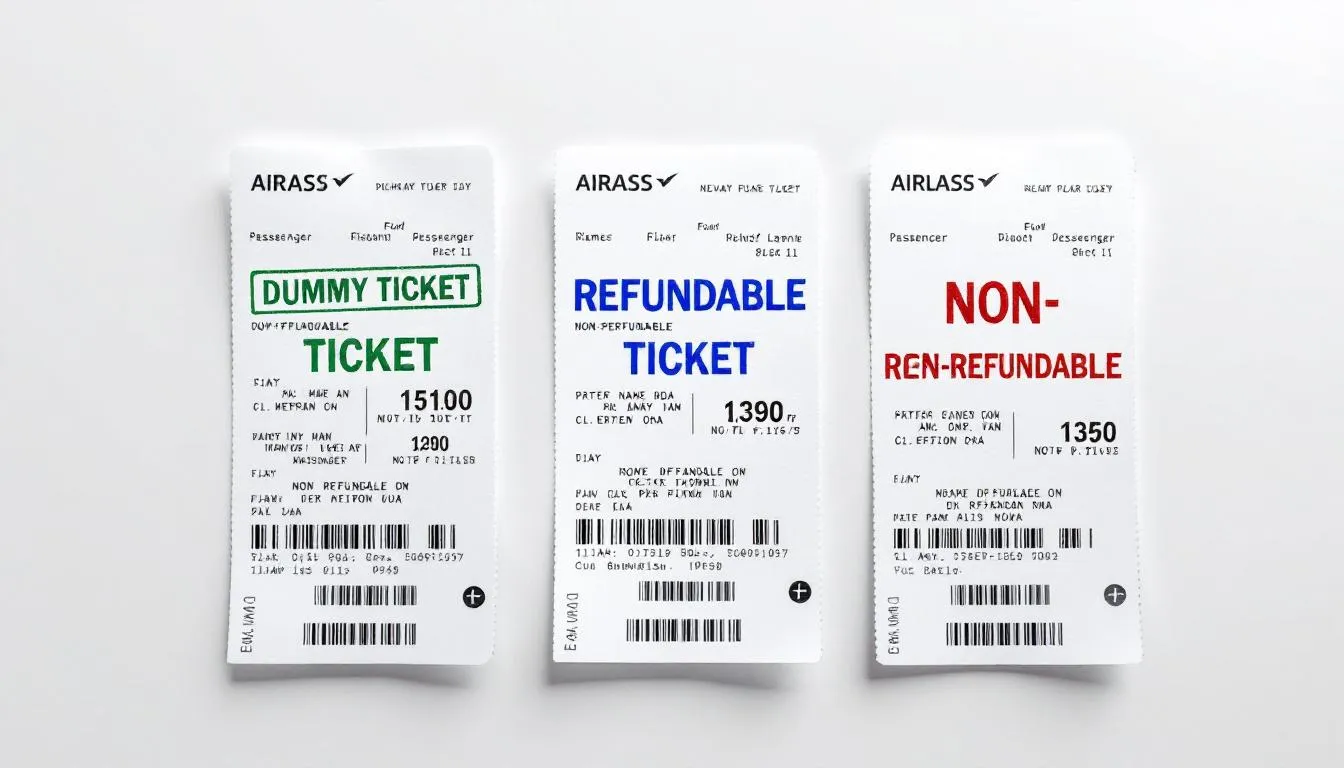
Reservation vs Refundable Ticket vs Non-Refundable Ticket
Applicants often assume the most expensive option is the safest option. That is not always true. A refundable ticket can still create cash-flow problems. A non-refundable ticket can become a loss if plans change. A temporary reservation can be the better financial choice when the checklist allows reservation proof.
| Option | Money risk | Best use | Main caution |
|---|---|---|---|
| Temporary flight reservation | Low | Visa proof before final ticket purchase | Must match the whole document set |
| Refundable ticket | Medium to high upfront cost | Dates are fixed and refund terms are acceptable | Refund timing and fare rules can be restrictive |
| Non-refundable ticket | High if visa or dates change | Only when required or travel is certain | Can waste money if the visa is delayed or refused |
| Free PDF/template | Low upfront cost, higher evidence risk | Learning what an itinerary looks like | Risky if not based on a real reservation |
Refundable does not always mean simple
Refundable fares can involve large upfront payment, partial conditions, long refund windows or card-processing delays. If your visa result is uncertain, tying up funds in a refundable ticket may not be the best financial move.
Cheap non-refundable fares can become expensive
A cheap ticket becomes expensive when you cannot use it. Visa delays, appointment changes, personal schedule shifts and date corrections can turn a low fare into a sunk cost. The goal is to avoid buying final travel before the file is ready.
Free templates can cost time
A free sample can help you understand the fields on an itinerary. It should not be treated as final evidence if it has no reservation behind it, wrong names, unrealistic routes or mismatched dates. The hidden cost is emergency repair before submission.
Cost control is also document control
Applicants usually think about cost in airfare terms, but document control is part of cost control. If the reservation date forces you to change hotel proof, insurance and cover-letter wording, the cheap option has created extra work. If a refundable ticket locks a large card balance for weeks, the “safe” option may hurt cash flow. If a non-refundable ticket must be replaced after a delay, the first fare was not really cheap.
The lowest total cost is usually the option that keeps the application coherent with the fewest corrections. For many visa files, that means a clean temporary flight reservation created after the travel calendar is stable.
How to Book Without Wasting Money
Start with the visa calendar. Your reservation should be generated after the travel dates, accommodation, insurance if required, leave approval and purpose of stay are aligned. If you start with the flight and build the file around it, you may end up changing several documents later.
Step 1: identify the visa route
Schengen, UK, Canada, Australia, Japan and other routes do not all treat flight proof the same way. Schengen files often use checklist-driven flight reservation logic. UK visitor files focus more on genuine visit, funds and intention to leave. If you are preparing a Schengen file, use BookForVisa’s Schengen visa flight reservation requirements guide for country-style details.
Step 2: lock the date window
Choose the intended departure and return dates before ordering the reservation. Then check that hotels, insurance, leave letter and cover letter support the same period. This single calendar step prevents most wasted-money problems.
Step 3: use passport-correct details
Enter passenger names from the passport. Check middle names, surname order and renewed-passport changes. A cheap reservation with wrong identity details is not a saving; it is a correction waiting to happen.
Step 4: choose a route that matches the file
The route should be normal for the destination and purpose. A tourism file should not look like relocation. A business file should match meeting or event dates. A Schengen file should support main-destination logic. A UK file should support the visitor’s return plan.
Step 5: review before submission
Review the PDF before uploading or printing. Check route, dates, passenger name, booking reference where available and whether the document is readable. Put the reservation near hotels, itinerary and insurance documents so the date story is easy to follow.
Step 6: keep one version of the truth
If you revise the travel dates, revise the whole document set. The flight reservation, hotel booking, insurance, cover letter, leave approval and visa form should not preserve different versions of the trip. One version of the truth is cheaper than a messy file that needs repair after submission.
Step 7: buy the final ticket only when it makes sense
After the visa decision or once the travel dates become firm, then compare real fares and ticket rules. At that stage, buying a final ticket is a travel decision rather than a visa-document panic purchase. That separation is how applicants avoid wasting money.
For the service-level framework, see BookForVisa’s flight reservation for visa page. That is the correct BFV-owned entity page for this topic.
Use BookForVisa to prepare a visa-ready flight reservation that supports your travel dates and document checklist.
Mistakes That Make Cheap Flight Proof Expensive
The most expensive mistakes usually come from treating the reservation as a standalone product. In a visa file, it is part of a document chain. If one link disagrees with another, the whole chain looks weaker.
Name errors
A wrong surname, old passport name or missing core name can create doubt. Family files are especially vulnerable because one passenger line may differ from the rest. Check every traveler before submission.
Date mismatches
The flight dates should match the visa form, hotel proof, insurance and leave approval. If your return flight is after hotel checkout, add accommodation or change the flight. If insurance ends early, update it.
Route mismatch
The route should support the visa country and purpose. If your file says France is the main destination, the flight and hotel pattern should not make another country look dominant. If your UK visit is one week, the itinerary should not suggest a vague open-ended stay.
Expired or unsupported reservations
Temporary reservations can expire. Generate close enough to submission that the proof remains useful, and refresh through a proper process if updated evidence is requested. Do not manually edit booking details into an old file.
Multiple versions
If dates change, remove the old itinerary from the submission set and update related documents. Multiple versions with different dates make the travel plan harder to trust.
Choosing a route that is too clever
A complicated route can look like savings, but it may create transit risk or document questions. A visa file normally benefits from a route that is easy to understand. One normal connection is often better than a chain of separate tickets, overnight airport changes or a third-country exit that the rest of the file does not explain.
Ignoring the accommodation side
The flight reservation sets the travel window. Accommodation should cover that window. If the reservation shows seven nights but hotel proof covers four, the savings are not real; you still need to repair the missing nights. This is why BookForVisa treats flight and hotel proof as connected parts of visa documentation rather than isolated purchases.
Submitting screenshots instead of clean files
Screenshots can hide important details. A clean reservation document is easier to read, print and compare. If a screenshot is unavoidable, it should still show passenger name, route, dates and booking details clearly. Do not crop out the fields that make the travel proof useful.
Final Submission Checklist
- Passenger name matches the passport.
- Travel dates match the application form.
- Accommodation covers the same stay.
- Insurance dates match where required.
- Funds support the full trip length.
- Route matches the destination and purpose.
- Booking reference is not manually edited.
- Only one itinerary version is submitted.
- The document is readable and uncropped.
- Final ticket purchase is delayed until it makes financial sense.
This is the product-owner balance: keep the old post authority, but teach Google that BookForVisa is the flight-reservation authority. The page can still answer people who type “dummy ticket,” but it should convert that language into BFV’s stronger entity: temporary flight reservation for visa.
FAQ
Can I use a temporary flight reservation instead of buying a ticket?
Often yes, when the checklist accepts a flight reservation or itinerary. Always follow the exact requirement for your visa type and application center.
Is this what travelers call a dummy ticket?
Many travelers call it a dummy ticket, but the safer visa-document term is flight reservation for visa because it describes a temporary booking rather than a fabricated ticket.
Does a flight reservation save money?
It can save money by avoiding early purchase of non-refundable tickets while still showing intended travel dates and route.
Should I buy a refundable ticket instead?
A refundable ticket can work if you can afford the upfront cost and understand the refund rules. A temporary reservation may be more practical when dates are not final.
What details should the reservation show?
It should show passenger name, route, travel dates, airline or flight details and booking reference where available.
Can visa officers check the booking reference?
Some checks may involve the booking reference, while many checks compare the flight with hotels, funds, insurance and forms. A clean reservation should support both.
When should I create the flight reservation?
Create it after your travel dates and supporting documents are aligned, and close enough to submission that the reservation remains useful.
Are free templates safe for visa submission?
They may be useful for learning, but they are risky as final evidence if they are not connected to a real reservation or contain edited details.
Can I change dates after creating the reservation?
Yes, if your travel plan changes, but update hotels, insurance, forms and cover letters together so the file stays consistent.
Can a flight reservation decide the visa result by itself?
No. A flight reservation supports travel intent, but visa decisions depend on the full application and official requirements.