Short answer: To apply for a Japan visa from India, submit a short-term stay application at a VFS Global Japan Visa Application Centre in your consular district, with your passport, form, photo, flight itinerary and proof of funds. Indians pay INR 500 plus an INR 800 VFS charge. A flight reservation for visa files costs $15 per person.
Indian passport holders need a visa to visit Japan for tourism, a family visit or a business trip. For stays of up to 90 days without paid work, the right category is the short-term stay visa. Japan does not take these applications online from India: you hand in a paper file at a VFS Global Japan Visa Application Centre, the Embassy or a Consulate-General decides it, and single-entry tourism visas are now issued in electronic form through the JAPAN eVISA system.
This guide walks through every step for applicants living in India: which visa you need, the new INR 500 fee for Indian nationals from 1 July 2026, consular districts and the 20 VFS centres, the eVISA, the Ministry of Foreign Affairs (MOFA) document checklists for tourism, family visits and business, financial evidence, invitation letters and the itinerary in Japan, multiple-entry visas for Indians, processing times, what happens after the decision and a planning checklist. Our existing Japan posts cover flight reservations and student routes, so this guide links to them instead of repeating that material.
Facts come from the Embassy of Japan in India, MOFA (mofa.go.jp) and the official VFS Global Japan India site unless another source is named. Fees and rules change, so confirm on those sites on the day you apply.
Key facts: Japan visa from India
- Main visa: short-term stay visa, up to 90 days, for tourism, visiting relatives or friends, or business without paid work.
- Fee: INR 500 for Indian nationals, single or multiple entry (from 1 July 2026), plus an INR 800 VFS service charge per application.
- Where: in person at a VFS Global Japan Visa Application Centre in your consular district; Mumbai, Pune, Ahmedabad and Goa need a prior appointment from 19 October 2026.
- eVISA: single-entry tourism visas for residents of India are issued electronically; you show the visa issuance notice on your phone at the airport.
- Timing: apply within 3 months of travel and allow at least 7 to 10 working days; MOFA says about 5 working days when there is no problem.
- Flight: the MOFA tourism checklist asks for a flight itinerary with flight number and dates, but says paid tickets are not required at application.
- BookForVisa flight and hotel reservations: a flat $15 per person each, real PNR on flights, valid 48-72 hours, free date changes on the booking day only.
Building a Japan tourist visa file? The MOFA checklist asks for a flight itinerary with flight numbers and dates, so show your planned trip with a verifiable reservation instead of a paid fare.
Get a $15 reservation with a real PNRIn This Guide
- Which Japan Visa Do Indians Need?
- Who Is Eligible for a Japan Visa?
- How Much Does a Japan Visa Cost From India?
- Where Do You Apply for a Japan Visa in India?
- What Is the JAPAN eVISA for Indian Applicants?
- What Documents Do You Need for a Japan Tourist Visa?
- Documents for Family Visits and Business Trips
- Itinerary in Japan and the Invitation Letter
- How Strong Financial Evidence Looks
- Can Indians Get a Multiple-Entry Japan Visa?
- How to Apply for a Japan Visa Step by Step
- How Long Does a Japan Visa Take From India?
- What Happens After Your Japan Visa Decision?
- What Are Common Mistakes in Japan Visa Applications From India?
- Planning Checklist and Timeline
- What Do Real Japan Visa Applications From India Look Like?
- Frequently Asked Questions
Official-source check: Fees, submission rules, fraud warnings and the eVISA start date come from the Embassy of Japan in India visa page and its JAPAN eVISA notice. Visa categories, issuance requirements, validity and processing time come from the MOFA visa pages. Document lists come from the MOFA Checklist for Single-Entry Short-Term Stay Visa (April 2025) and MOFA's Application Procedures for Multiple Visa for Nationals of India. Centres, consular districts, service charges, photo rules and timing come from the VFS Global Japan India site. Checked 5 November 2026.
Reviewed for: Visa need for Indian passport holders, short-term stay scope, INR fees and VFS charges, payment methods, consular districts and VFS centres, appointment rules, the JAPAN eVISA, MOFA checklists for tourism, family and business, financial evidence, invitation letters and itinerary in Japan, multiple-entry categories for Indians, photo rules, processing times, visa validity, issuance requirements and landing permission, fraud warnings, planning checklist, and wording of any flight reservation in the file.
Which Japan Visa Do Indians Need?
Indian citizens need a visa before travelling to Japan. For trips of up to 90 days for tourism, business meetings or visiting relatives or friends, MOFA calls this a short-term stay visa. It does not allow activities that generate revenue or remuneration in Japan. The VFS Global Japan India site lists the main short-term options for applicants in India:
- Tourism visa: a holiday or recreation, stay up to 90 days.
- Tourism visa for Indian university students and graduates: single entry, stay up to 30 days.
- Visiting relatives, friends or acquaintances: stay up to 90 days.
- Short-term business visa: conferences, negotiations or exploratory business visits, up to 90 days.
- Multiple-entry visas for Indian nationals who meet MOFA criteria, covered later in this guide.
- Medical stay and J-Find visas, which have their own rules.
If you want to work in Japan or stay longer than 90 days, MOFA says you should, in principle, first obtain a Certificate of Eligibility (COE) from the Immigration Services Agency of Japan, then apply for the visa. Our guide to the Japan student visa COE and flight booking order covers that route.
MOFA also stresses that a visa is one requirement for entering Japan and does not guarantee entry. The immigration officer at the port of entry grants "landing permission" when you meet the entry requirements, and your status of residence is shown on that permission.
Who Is Eligible for a Japan Visa?
MOFA states that a Japanese visa is issued when the applicant meets all of the following requirements and issuance is considered appropriate:
- You hold a valid passport and can re-enter your country of nationality or residence.
- All submitted documents are authentic, complete and satisfactory.
- Your planned activities in Japan, your civil status or position, and your period of stay fit the status of residence and period of stay set by the Immigration Control and Refugee Recognition Act.
- You do not fall under any item of Article 5, Paragraph 1 of that Act, which lists grounds for denial of landing.
In practice, that means your file must show a clear purpose, a believable plan for the days you spend in Japan, enough money to pay for the trip (or a guarantor in Japan who covers it), and documents that agree with each other. MOFA says additional documents may be requested case by case.
You apply in India only if you live here. The Embassy says applications are accepted only at the Embassy or Consulate-General closest to the applicant's residence, and VFS asks you to apply at the centre that serves your consular district.
How Much Does a Japan Visa Cost From India?
The Embassy of Japan in India revised its visa fee from 1 July 2026. Indian nationals now pay INR 500 for a single or multiple visa, and the transit visa has been abolished. VFS adds its own service charge.
| Item | Amount | Notes |
|---|---|---|
| Visa fee, Indian nationals | INR 500 | Single or multiple entry, from 1 July 2026 |
| Visa fee, other nationals living in India | INR 8,650 single; INR 17,350 multiple or double | From 1 July 2026 |
| VFS service charge | INR 800 per application | Inclusive of taxes; also charged to fee-exempt applicants |
| Courier return (optional) | INR 550 per application | Inclusive of taxes |
VFS says all charges are paid in INR by cash or card in New Delhi. At the Gurugram, Chandigarh and Lucknow drop-off offices, the visa fee, service charge and any courier charge are paid by separate demand drafts in favour of "VFS Global Services Pvt. Ltd.", one set per applicant. The Embassy warns that the visa fee and the service charge are all you have to pay. It never asks for payment by phone or email to verify documents or speed up a visa; if anyone does, do not respond, report it to the police and inform the Embassy.
Where Do You Apply for a Japan Visa in India?
Consular districts
VFS lists which mission covers each state. Apply at a centre in your own district:
| Mission | States and territories |
|---|---|
| Embassy of Japan, New Delhi | Andaman and Nicobar Islands, Arunachal Pradesh, Assam, Chandigarh, Delhi, Haryana, Himachal Pradesh, Jammu and Kashmir, Lakshadweep, Manipur, Meghalaya, Mizoram, Nagaland, Punjab, Rajasthan, Sikkim, Tripura, Uttaranchal (Uttarakhand), Uttar Pradesh |
| Consulate-General, Mumbai | Maharashtra, Goa, Gujarat, Madhya Pradesh, Chhattisgarh, Daman, Diu, Dadra and Nagar Haveli |
| Consulate-General, Kolkata | West Bengal, Bihar, Jharkhand, Odisha |
| Consulate-General, Chennai | Tamil Nadu, Andhra Pradesh, Telangana, Kerala, Puducherry |
| Consulate-General, Bengaluru | Karnataka |
VFS Japan Visa Application Centres
VFS is the official partner of the Embassy of Japan in India and Bhutan. Its centre list includes Ahmedabad, Bengaluru, Bhubaneswar, Chandigarh, Chennai, Cochin, Goa, Gurugram, Guwahati, Hyderabad, Kolkata, Lucknow, Mumbai, Mysuru, New Delhi, Puducherry and Pune, plus Thimphu in Bhutan. Jaipur and Jalandhar were shown as temporarily closed when we checked. Hours vary: many centres accept files from 09:00 to 13:00 on weekdays, while Mumbai and Pune run 08:00 to 17:00 and Kolkata 09:00 to 17:00.
- The Embassy says no prior appointment is needed for submission through VFS in general.
- Exception: from 19 October 2026, on instructions from the Consulate-General in Mumbai, applications at Mumbai, Pune, Ahmedabad and Goa must be submitted by prior appointment, and walk-ins are not accepted there.
- In New Delhi, Gurugram, Chandigarh and Lucknow, VFS says tokens for submission are issued only until 13:00.
- Check VFS for holiday closures before you travel to a centre.
What Is the JAPAN eVISA for Indian Applicants?
The JAPAN eVISA system started in India on 1 April 2024. The Embassy describes it this way:
- Visa type: single-entry short-term visa for tourism, stay up to 90 days.
- Eligibility: Indian and foreign nationals who reside in India.
- You still submit your application at a VFS Global Japan Visa Application Centre as before.
- Instead of a visa sticker in your passport, the visa is issued in electronic form.
- At the airport you must show the "visa issuance notice" on a mobile device with internet access. A PDF, photo, screenshot or printed copy is not accepted.
MOFA separately runs a fully online tourism application for residents of certain countries, such as Australia, Canada, the UK and the USA. India is not on that list, so residents of India use the VFS route above and receive an eVISA where it applies. Business, family-visit and multiple-entry visas follow the normal process.

What Documents Do You Need for a Japan Tourist Visa?
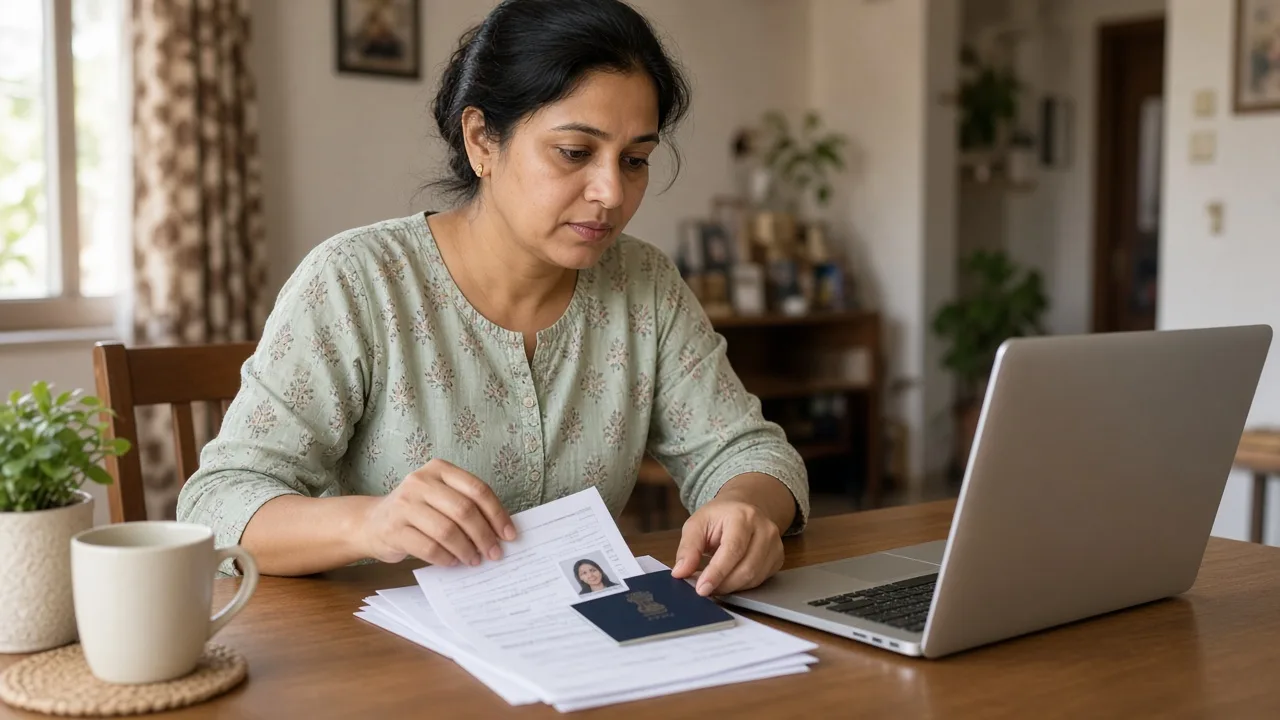
MOFA publishes a Checklist for Single-Entry Short-Term Stay Visa for most nationalities, including Indians. For tourism, you provide:
- A valid passport.
- One visa application form.
- One photo.
- A flight itinerary with the flight or ship number and dates of arrival in and departure from Japan.
- One document proving you can pay your travel expenses in Japan: an income certificate or tax return issued by a public agency, or a bank statement or balance certificate.
- An itinerary in Japan, using MOFA's format or equivalent.
MOFA adds several conditions that matter for Indian files:
- Documents must have been issued within the last three months and be valid at the time of submission.
- Submitted documents, except the passport, are not returned.
- Additional documents may be requested case by case.
- Reservations and payments for flights, accommodation and transport are not required when you apply.
That last point is why a reservation fits the flight line: you need flight numbers and dates in the itinerary, not a paid fare. Our guide to flight reservations for a visa to Tokyo explains what immigration looks for, and our step-by-step guide to booking a flight reservation for a Japan visa from India covers the format. Some travellers search for a dummy ticket for this; what helps is a real, checkable reservation rather than an edited document.
Photo and paper rules from VFS
- Passport size, 45 mm x 35 mm, colour, plain white background.
- Taken within the last 6 months, looking straight ahead, face filling 70 to 80 percent of the frame.
- Printed on good-quality paper.
- All photocopies on A4 paper only.
Documents for Family Visits and Business Trips
Visiting relatives or friends
Besides the passport, form, photo and flight itinerary, MOFA asks for:
- If you pay your own way: an income certificate or tax return from a public agency, or a bank statement or balance certificate.
- Proof of the relationship: for relatives, a birth certificate, marriage certificate or family register certificate (copies accepted); for friends or acquaintances, photos, emails, call history or letters.
- An invitation letter from the person in Japan.
- A document explaining the reason for the invitation, such as a graduation or wedding invitation, or a medical certificate.
- A list of visa applicants if more than one person applies, and an itinerary in Japan.
If the person in Japan covers your costs, they also provide a letter of guarantee, proof of their funds (the latest certificate of income or taxation, or a tax return, and a balance certificate; withholding tax slips are not accepted), and a certificate of residence (Juminhyo) showing all family members. A foreign guarantor adds copies of both sides of their residence card, their Juminhyo with full details, and their passport.
Short-term business
Business applicants provide a document showing they travel for business, such as a travel order or letter from the employer, plus a certificate of employment. The inviting organisation in Japan provides an invitation letter, or documents explaining the activities such as a transaction agreement or conference materials, a list of applicants if there are several, and an itinerary in Japan. If the Japanese side pays, it adds a letter of guarantee and a certified copy of its corporation register or an overview of the company. MOFA says the inviting organisation should be a corporate body, organisation or government, with limited exceptions for university professors.
Students and young travellers
VFS lists a separate tourism visa for Indian university students and graduates, giving a single entry for up to 30 days. The Embassy links this to its 2017 relaxation of requirements for young Indian visitors. VFS asks applicants to arrange documents in the order of its checklist and attach a copy of the checklist to the form.
Itinerary in Japan and the Invitation Letter
What the itinerary must show
MOFA asks every tourist for an itinerary in Japan. It must include:
- Your planned dates of arrival in and departure from Japan, and flight information if known.
- Accommodation for each night: the full address of a friend or relative you stay with, or the hotel name, address and phone number.
- What you plan to do each day. If the same plan continues on consecutive days, you may write "same as above".
Keep the itinerary consistent with your flight reservation and hotel details, and with the funds you show. A short cover note explaining who you are, why you are going and who pays can help, but MOFA does not require one for tourism.
Invitation letters for family visits and business
MOFA's rules for invitation letters are specific:
- Address it to the Japanese Ambassador or Consul-General, for example "To: Ambassador/Consul General of Japan in India".
- Give details of the activities planned in Japan. Vague descriptions such as "tourism" or "visiting friends/relatives" are not acceptable.
- Include the inviting person's name, address and phone number.
- Write the applicant's full name in the Latin alphabet, and attach a List of Visa Applicants if more than one person applies.
- Documents prepared in Japan may be copies, but originals may be requested.
MOFA notes that a company or personal seal is no longer required on letters of guarantee or invitation. Blank forms are on the MOFA visa page.
How Strong Financial Evidence Looks
MOFA does not publish a fixed rupee amount for Japan tourist funds. Its tourism checklist asks for one document proving you can pay: an income certificate or tax return issued by a public agency, or a bank statement or balance certificate. For multiple-entry visas, MOFA accepts an income tax return and, if needed, a certificate of deposit balance, stock dividend, pension, retirement allowance, inheritance, lease agreement, real estate register or deed of property.
- Use documents issued within the last three months, as MOFA requires.
- Make sure the balance and income are plausible for the trip length and the hotels in your itinerary.
- If a relative in Japan pays, use their guarantee documents rather than your own thin statements.
- Explain unusual recent deposits in a short note with source papers.
- Keep names and dates identical across passport, form, bank papers and itinerary.
A coherent file matters. The Embassy says it does not answer enquiries about documentation or reasons for refusal, so get it right the first time.
Can Indians Get a Multiple-Entry Japan Visa?
Yes. MOFA's Application Procedures for Multiple Visa for Nationals of India allow a multiple-entry temporary visitor visa with a period of stay of 90 days and visa validity of 5 years, for tourism, business and visiting relatives, if you fit one of these categories:
- Two or more trips to Japan as a temporary visitor in the last three years.
- One trip to Japan in the last three years, plus financial capacity to pay travel expenses.
- One trip to Japan and trips to other G7 countries as a temporary visitor in the last three years.
- Sufficient financial capacity.
- Spouse or children of someone in category 4.
Documents are the application form with photo, an ICAO-compliant machine-readable or e-passport, and evidence for your category: old passports with Japanese visas and entry stamps, income tax returns or balance certificates, or proof of kinship. A separate MOFA scheme covers business travellers and cultural or intellectual figures, with stays of 15, 30 or 90 days and validity of 1, 3, 5 or 10 years. MOFA warns that it may issue a single-entry visa after examination, and that multiple visas can be applied for only at the mission closest to your residence. On VFS these appear as Multiple 1 to Multiple 7.
How to Apply for a Japan Visa Step by Step
VFS describes a seven-step process for Japan. Combined with the Embassy and MOFA rules, it looks like this:
- Identify the visa type: tourism, student tourism, visiting relatives, business or multiple entry.
- Download the visa application form from VFS or MOFA, fill it in and attach one photo.
- Gather the MOFA checklist documents in VFS order, with A4 photocopies, plus your flight itinerary and itinerary in Japan.
- Check your consular district and centre. Book an appointment if you apply at Mumbai, Pune, Ahmedabad or Goa; elsewhere, walk in during submission hours.
- Apply within 3 months of travel, leaving at least 7 to 10 working days before departure.
- Visit the centre, submit your passport and documents, and pay INR 500 plus the INR 800 VFS service charge, or demand drafts where required.
- Track your application on the VFS site.
- Collect your passport from the centre or receive it by courier, and check your visa or eVISA notice.
Do not apply through unofficial websites. The Embassy warns about fraudulent websites, social media and emails that try to extract payments from visa applicants.
How Long Does a Japan Visa Take From India?
MOFA says processing takes 5 working days from the day after receipt, provided there is no particular problem with the application. Its main visa page puts it at approximately one week. If there is a problem, the mission sends the file to MOFA in Tokyo, and issuance may take more than a month.
The Embassy adds that, because of rising volumes, processing times for Japanese visas can vary significantly and cannot be expedited or prioritised around your travel dates. VFS asks for a minimum gap of seven to ten working days between applying and your proposed travel date, and says you can typically apply within 90 days before entry. The Embassy also says applications are accepted from 3 months before travel.
- Apply early in the 3-month window, especially before holidays.
- Do not book non-flexible flights or hotels until the visa is issued.
- Answer any request for more documents quickly.
- Track status through VFS; the Embassy does not take status enquiries.
What Happens After Your Japan Visa Decision?
If the visa is issued
Check the visa type, entries and dates. MOFA says a single-entry visa is valid for three months: you must apply for landing at a Japanese port of entry before it expires, and it becomes invalid once used or expired. Visa validity cannot be extended. Multiple-entry visas are valid for one to five years for business travellers and similar categories, and the multiple visa for Indians described above runs for 5 years.
If you received an eVISA, keep the visa issuance notice ready on your phone with internet access; screenshots and printouts are not accepted. At arrival, the immigration officer decides on landing permission. The Embassy links to Visit Japan Web, reminds visitors not to bring meat products, vegetables or fruits into Japan, and suggests overseas travel insurance; MOFA highly recommends international travel medical insurance.
If the visa is not issued
The Embassy does not take enquiries about the reason for refusal. Review your file against the MOFA issuance requirements: incomplete or unsatisfactory documents, a purpose or stay that does not fit a short-term stay, unclear funds, or an itinerary that conflicts with other papers. Strengthen the evidence before applying again rather than reapplying with the same file.
What Are Common Mistakes in Japan Visa Applications From India?
- Applying at a centre outside your consular district.
- Walking in at Mumbai, Pune, Ahmedabad or Goa after 19 October 2026 without an appointment.
- Submitting income or bank documents older than three months.
- Leaving flight numbers out of the itinerary, or giving dates that differ from the itinerary in Japan.
- Invitation letters that only say "tourism" or "visit relatives" without detailed activities.
- Photos that are the wrong size, not on a white background or older than 6 months.
- Paying anyone who claims they can speed up the visa; only the visa fee and service charge are due.
- Trying to show a PDF or screenshot of the eVISA at the airport.
- Booking paid, non-flexible flights before the visa is issued.
Planning Checklist and Timeline
- 10 to 12 weeks before travel: check passport validity, decide the visa type, and confirm your consular district and VFS centre.
- 8 to 10 weeks before: collect income certificates, ITRs or bank papers issued within three months, and ask any host or company in Japan for invitation and guarantee documents.
- 6 to 8 weeks before: draft the itinerary in Japan, get a flight reservation with flight numbers and dates, and add hotel details for each night.
- Within the 3-month window, at least 7 to 10 working days before travel: submit at VFS (with an appointment where required) and pay INR 500 plus INR 800.
- While waiting: track the application on VFS and answer any request quickly.
- After issue: check the visa or eVISA details, set up your phone to show the eVISA notice, buy travel insurance and book your final travel.
What Do Real Japan Visa Applications From India Look Like?
Example 1: couple from Bengaluru, cherry blossom holiday
Rahul, 30, and Meera, 28, plan 10 days in Tokyo, Kyoto and Osaka. They apply at the Bengaluru centre, each with a form, photo, passport, a flight reservation with flight numbers, a day-by-day itinerary in Japan with hotel addresses, and recent ITRs and bank balance certificates. Each pays INR 500 plus INR 800. They receive eVISAs and keep the notices on their phones.
Example 2: parents from Pune visiting their son in Yokohama
Suresh, 62, and Lata, 58, visit their son, who works in Japan. They book an appointment at the Pune centre, as required from 19 October 2026. Their son sends an invitation letter addressed to the Consul-General with detailed plans, a letter of guarantee, his income certificate, balance certificate and Juminhyo, plus copies of his residence card and passport. They add birth certificates proving the relationship.
Example 3: frequent business traveller from Gurugram
Ankit, 40, works for a listed company and has visited Japan for business three times in three years. He applies for a multiple-entry business visa with his employment certificate, old passports with Japanese visas and entry stamps, and a company letter. He pays by demand draft at the Gurugram office and knows MOFA may still issue a single-entry visa.
Ready to visit the VFS Japan centre? Get a flight or hotel reservation with a real PNR for $15 per person, matched to the dates in your itinerary in Japan, and it can be issued even while you are at the visa centre.
Book your visa reservationFrequently Asked Questions
How do I apply for a Japan visa from India?
Fill in the visa application form, attach one photo, and gather the MOFA checklist documents: passport, flight itinerary with flight numbers, proof of funds and an itinerary in Japan. Submit them at the VFS Japan Visa Application Centre for your consular district, with an appointment in Mumbai, Pune, Ahmedabad or Goa, and pay the fees.
How much is the Japan visa fee for Indians?
From 1 July 2026, Indian nationals pay INR 500 for a single or multiple-entry Japan visa. VFS adds a service charge of INR 800 per application, inclusive of taxes, and optional courier return costs INR 550. Fees are paid in INR by cash or card in New Delhi, or by demand drafts at some drop-off offices.
What is the JAPAN eVISA for Indian applicants?
Since 1 April 2024, single-entry tourism visas for stays up to 90 days are issued electronically to Indian and foreign nationals living in India. You still apply at a VFS centre. At the airport you must show the visa issuance notice on a phone with internet; PDFs, screenshots and printouts are not accepted.
How long does a Japan visa take from India?
MOFA says about 5 working days from the day after receipt if there is no problem, and more than a month if the file is referred to Tokyo. The Embassy says times vary and cannot be expedited. VFS asks for at least 7 to 10 working days between applying and travelling, within 3 months of the trip.
Do I need a flight ticket for a Japan visa from India?
The MOFA checklist asks for a flight itinerary with flight numbers and dates, but says paid tickets are not required when you apply. A BookForVisa reservation carries a real PNR, costs $15 per person, stays valid 48-72 hours and allows free date changes on the booking day only, so order it close to submission.
Can Indians get a 5-year multiple-entry Japan visa?
Yes, if you meet one of MOFA's categories, such as two Japan trips in three years, one Japan trip plus G7 travel, or sufficient financial capacity. The visa allows stays of up to 90 days and is valid for 5 years. Business travellers have a separate scheme, and MOFA may still issue a single-entry visa.
What photo size is needed for a Japan visa in India?
VFS asks for one colour photo, 45 mm by 35 mm, with a plain white background, taken within the last 6 months. You should look straight ahead with your face clearly visible, filling 70 to 80 percent of the photo, printed on good-quality paper. Attach it to the visa application form.
Friendly reminder: BookForVisa prepares flight and hotel reservations to support visa applications and onward-travel proof. Requirements vary by destination, consulate, visa category and applicant situation. A reservation supports your file; it is not a paid ticket for travel and does not guarantee visa approval or entry.