Short answer: To apply for a Japan visa from the Philippines, prepare the Embassy checklist for your purpose, then submit at a Japan Visa Application Centre run by VFS in Paranaque, Makati, Quezon City, Cebu or Davao. The temporary visitor visa is free for Filipinos; only a centre handling fee applies. A flight reservation for visa files costs $15 per person.
Philippine passport holders need a visa to visit Japan, even for a short holiday. The good news is that the Embassy of Japan in the Philippines states that the temporary visitor visa for stays of up to 90 days remains gratis for Philippine nationals. The work is in the paperwork: the Embassy publishes a separate requirement list for each purpose, and most applications must go through a Japan Visa Application Centre (JVAC) rather than directly to the Embassy.
This guide is written for Filipinos applying from the Philippines. It explains which temporary visitor category fits your trip, the five VFS centres that opened as the Embassy's Visa Center from April 2025, the tourism checklist line by line including PSA certificates, bank certificates, BIR Form 2316 and employment certificates, rules on photos, document age and translations, guarantors and invitations, the registered travel agencies and eVISA for package tours, multiple-entry options, processing times and what happens after a decision. If you are applying from India, our separate Japan visa guide for Indian applicants covers different fees, centres and documents.
Facts come from the Embassy of Japan in the Philippines (ph.emb-japan.go.jp) and the Ministry of Foreign Affairs of Japan (mofa.go.jp) unless another source is named. Requirements change, so confirm on those sites on the day you apply.
Key facts: Japan visa from the Philippines
- Visa: temporary visitor visa for stays within 90 days, for tourism, business, conferences and visiting relatives or friends; no paid work.
- Fee: the temporary visitor visa is gratis for Philippine nationals; applications through a JVAC also pay the centre's handling fee.
- Where: VFS Japan Visa Application Centres in Paranaque, Makati, Quezon City, Cebu and Davao, with appointments booked on the VFS site.
- Timing: at least 1 week (5 working days) from acceptance by the Embassy, and tourist visas may take several weeks in busy periods.
- Single-entry tourist visas are valid for travel within 3 months of issue, so do not apply more than 3 months before travel.
- Documents must be issued within 3 months of application; PSA birth and marriage certificates within 1 year.
- BookForVisa flight and hotel reservations: a flat $15 per person each, real PNR on flights, valid 48-72 hours, free date changes on the booking day only.
Filling in your Itinerary in Japan? The Embassy asks for entry and departure dates with flight information if possible and hotel details, though booking is not necessary. A verifiable reservation keeps those details consistent without paying for fares before the visa.
Get a $15 reservation with a real PNRIn This Guide
- Which Japan Visa Do Filipinos Need?
- Where Do You Apply for a Japan Visa in the Philippines?
- How Much Does a Japan Visa Cost for Filipinos?
- What Documents Do You Need for a Japan Tourist Visa?
- If a Guarantor Pays: Philippines or Japan
- Visiting Relatives or Friends in Japan
- Photo, Passport and Document Format Rules
- How to Fill In the Itinerary in Japan
- Package Tours, Registered Agencies and eVISA
- Multiple-Entry Visas for Filipino Travellers
- How Long Does a Japan Visa Take From the Philippines?
- What Happens After Your Japan Visa Decision?
- What Are Common Mistakes in Japan Visa Applications From the Philippines?
- Planning Checklist and Timeline
- What Do Real Japan Visa Applications From the Philippines Look Like?
- Frequently Asked Questions
Official-source check: Visa types, the Visa Center locations, the free visitor visa and the 3-month validity note come from the Embassy's Visa/Consular Services page. Application procedure, processing time, fees and re-application rules come from the Embassy's General Information page. Document rules come from the Important Note on the Document Submission and the Tourism requirements list (April 2025), plus the Embassy's lists for visiting relatives, friends and multiple-entry visas. Package tour agencies come from the Embassy's List of Registered Travel Agencies, and eVISA rules from MOFA's FAQ about JAPAN eVISA. Checked 5 November 2026.
Reviewed for: Visa need for Philippine passport holders, temporary visitor categories and limits, free visa fee and JVAC handling fee, Visa Center locations and appointments, direct application cases, tourism checklist, PSA and civil registrar certificates, bank, tax and employment certificates, guarantor and invitation documents, photo, A4, translation and document age rules, Itinerary in Japan, registered agencies and package tour eVISA, multiple-entry options, processing times, decisions and re-application, planning checklist, and wording of any flight reservation in the file.
Which Japan Visa Do Filipinos Need?
For trips of up to 90 days, Filipinos apply for a temporary visitor visa. The Embassy lists separate requirement sheets for each purpose:
| Temporary visitor purpose | Who it is for |
|---|---|
| Tourism | Sightseeing trips you arrange yourself |
| Packaged tour by registered travel agency | Tours sold by an agency on the Embassy's registered list |
| Business, conference, cultural exchange | Meetings, conferences and similar short visits without paid work |
| Visiting relatives (within the third degree) | Relatives residing in Japan within the third degree |
| Visiting friends or distant relatives | Friends, or relatives beyond the third degree |
| Visiting US military personnel | Visits to US military personnel in Japan |
| Spouse or child of a Japanese national in the Philippines | Family of Japanese nationals living in the Philippines |
| Transit | Passing through Japan |
The Embassy's General Information page says the temporary visitor visa is for stays of not more than 90 days for activities such as sightseeing, commercial purposes, conferences and visits to relatives or acquaintances. Activities that earn compensation, such as employment or entertainment, and training with a training allowance or on-the-job training are not allowed. For longer stays or paid activities, you need a Certificate of Eligibility (COE) from an immigration office in Japan first, and then a visa in the student, worker or dependent category.
The Embassy also asks applicants to apply according to the purpose of travel, and, as a rule, to apply together when two or more people travel on the same schedule for the same purpose.
Where Do You Apply for a Japan Visa in the Philippines?
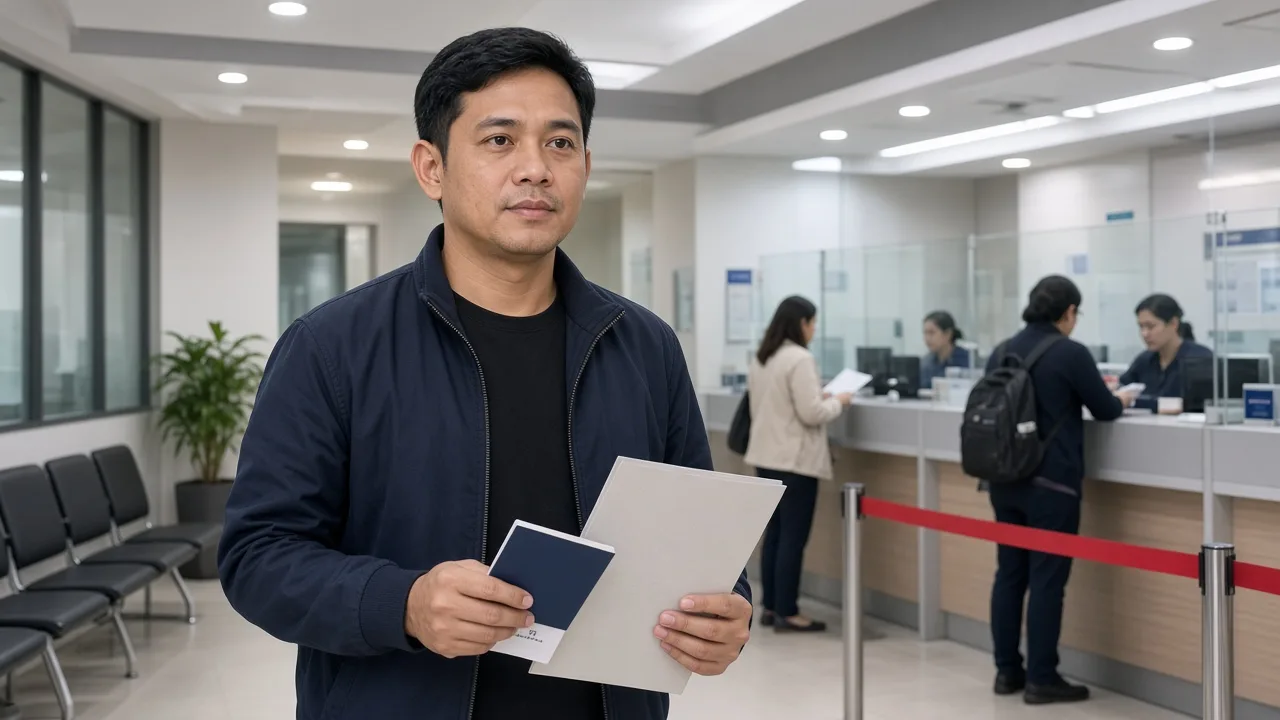
From 7 April 2025, the Embassy's "Visa Center" is operated by VFS Services Philippines Private, Inc. The Embassy introduced it because of an unprecedented surge in applications after the COVID-19 pandemic. The Embassy's visa page lists five centres:
| Centre | Address |
|---|---|
| Paranaque | Units 305-307, Level 3, Parqal Abaca Building 5, A. Luz Drive corner Imao St, Aseana City, Barangay Tambo, Paranaque, Metro Manila |
| Makati | Ground Floor, Makati Circuit Corporate Tower Two, AP Reyes Street, Brgy. Carmona, Theater Drive, Circuit, Makati City |
| Quezon City | Space GT03014S, Level 3, Gateway Tower Mall, Araneta City, Barangay Socorro, Quezon City |
| Cebu | Unit 9, 7th floor, Faustina Center, Bonifacio District, Cabahug St., Kasambagan, Cebu City |
| Davao | FES-09, Second Floor, Felcris Centrale, Quimpo Boulevard, Barangay 40-D, Davao |
Reservations for applications are made on the VFS appointment page, and the VFS help desk is info.Japanphp@vfshelpline.com. VFS also posts centre notices; for example, it announced that the Davao centre resumed operations on 10 June 2026 after a temporary closure following an offshore earthquake, so check the VFS news page before you go.
Who can apply directly at the Embassy or Consulates
The Embassy's General Information page lists cases that may be filed directly at the Embassy in Manila or the Consular Offices in Cebu or Davao, including diplomatic or official visas, invitees of the Japanese government, local governments or national and municipal educational institutions for exchange programmes, Japanese Government Scholarship awardees, commercial visits by employees of certain Japanese joint ventures or subsidiaries, humanitarian cases such as serious illness of a relative in Japan, and applicants with custody of a Japanese national's biological child who will raise the child in Japan. Ordinary tourists apply through a JVAC.
How Much Does a Japan Visa Cost for Filipinos?
The Embassy states that the temporary visitor visa for Philippine nationals is gratis, and its visa page repeats that this remains the case after its notice on amended visa fees. Diplomatic and official visas are also free. For other visa types, the Embassy points to its consular fees list.
Because the JVAC is a private enterprise, applications filed through it pay a handling fee in addition to any visa fee. The Embassy asks applicants to check the current rate directly with the JVAC, so look at the VFS Japan Philippines site before your appointment, as VFS posted a fee update effective 1 July 2026. Keep your receipt and its 8-digit application number.
What Documents Do You Need for a Japan Tourist Visa?
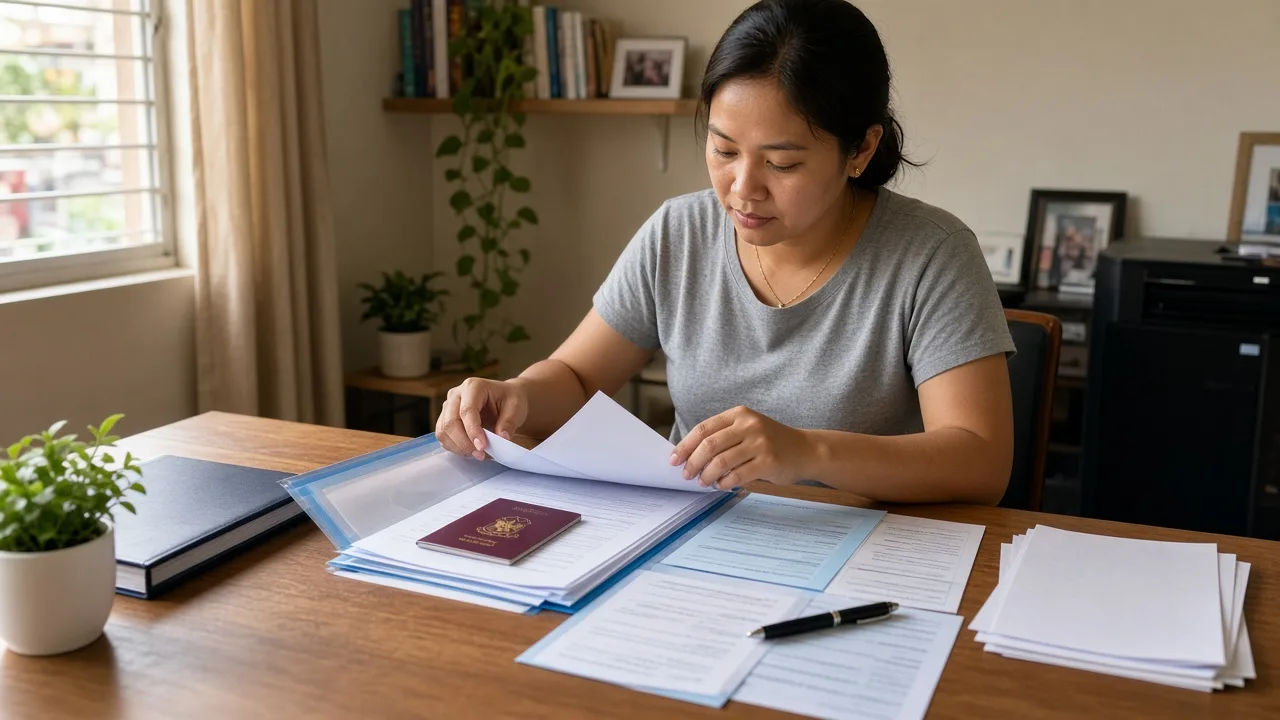
The Embassy's Tourism requirements list (April 2025) sets out the documents in order. Forms marked as downloadable are on the Embassy website.
- Passport, signed by the holder.
- Photocopy of the passport identification page.
- Visa Application Form, with a 4.5 x 3.5 cm facial photo attached.
- PSA-issued birth certificate, plus PSA marriage certificate for married applicants, issued within 1 year. These are not needed if your passport already has a used Japan visa.
- Itinerary in Japan.
If you pay part or all of your own travel costs, add:
- Your bank certificate showing the balance within the last six months. If the certificate does not show the Average Daily Balance (ADB) for the last six months, submit a bank statement proving transactions over those six months.
- Your tax payment certificate: BIR Form 2316 signed by both employer and employee. Business owners also submit proof of actual tax payment with the BIR form (a copy is acceptable).
- Your employment certificate showing period of employment, salary and position. Business owners submit the DTI Certificate of Business Name Registration and the Mayor's Permit from City Hall.
If you cannot submit the tax and employment certificates for a reason other than being a retiree, full-time housewife or unemployed, add a letter explaining why. Students submit a copy of their school ID or certificate of enrolment.
Problems with PSA certificates
- If the PSA certificate is unreadable, submit the birth or marriage certificate issued by the Local Civil Registrar.
- If your birth certificate shows "LATE REGISTRATION", submit a baptismal certificate and school record (Form 137).
- If PSA has no record of your birth or marriage, submit the certificate from the Local Civil Registrar and a Negative Certificate from PSA.
If a Guarantor Pays: Philippines or Japan
Many Filipino travellers have a parent, child or relative paying for the trip. The tourism list covers a guarantor in the Philippines:
- Guarantee Letter (Embassy form).
- Proof of relationship between applicant and guarantor, such as birth certificates or photos.
- The guarantor's bank certificate, a photocopy of the guarantor's tax payment certificate, and the guarantor's employment certificate, following the same rules as for applicants.
For visiting relatives or friends in Japan, the inviter and guarantor in Japan provide documents instead. The Embassy's lists include an Invitation Letter, documents related to the reason for the invitation, the Itinerary in Japan, the Residence Certificate (Jumin-hyo) of the inviter and guarantor listing all household members, and, if they are not Japanese, a photocopy of the Residence Card (both sides). A guarantor in Japan shows capability to pay with one or more of the latest Income Certificate (Shotoku-shomeisho), Tax Certificate (Nozei-shomeisho, showing total income) or bank certificate.
The Important Note on the Document Submission adds that Withholding Slips (Gensen-choshuhyo) and Final Tax Returns (Kakutei-shinkokusho) are not acceptable; if the inviter cannot submit the listed documents, they can submit another document such as a certificate of bank deposit or notice of pension payment. The guarantor and inviter do not need to be the same person, but you then need proof of your relationship with the guarantor and an explanation of why that person is your guarantor.
Visiting Relatives or Friends in Japan
Relatives within the third degree
The Embassy's list for visiting relatives asks you to submit all the birth or marriage certificates needed to prove a third-degree relationship between you and the inviter, PSA-issued within 1 year, plus an Authorization Letter so the Embassy can verify PSA certificates. If you pay costs yourself, add your bank certificate and a photocopy of your Income Tax Return (BIR Form). If the inviter or the inviter's spouse is Japanese, add their Koseki-tohon.
Friends or distant relatives
For friends or relatives beyond the third degree, the Embassy asks for proof of relationship. For friends, this can be photos, e-mails, receipts of remittances or parcels, or a photocopy of the friend's passport showing stamps of your country. For distant relatives, submit birth or marriage certificates or a Koseki-tohon. If your passport has a used Japanese visa, some PSA documents are not needed.
Writing the invitation
The Embassy says the invitation letter must describe concrete activities and the background of the invitation in detail; vague descriptions such as "Sightseeing", "Visiting Relatives" or "Friend" are not acceptable. Support the reason with documents, such as an invitation showing the date of a graduation ceremony or wedding, or a medical certificate. If the stay exceeds 30 days, an explanation letter is necessary. Never submit a copy of a My Number Card or a Japanese medical insurance card.
Photo, Passport and Document Format Rules
The Embassy's document note sets strict format rules that catch many first-time applicants:
- Original documents: everything issued in the Philippines must be original unless the Embassy says otherwise. Photocopies of documents issued in Japan are accepted, though originals may be requested.
- Age of documents: all documents must be issued within 3 months of the application date, except birth and marriage certificates, which may be up to 1 year old.
- A4 size: documents of other sizes must be copied to A4 and submitted with the original; legal-size documents are acceptable. Never staple documents, and remove issuance receipts.
- Translation: documents in a language other than English or Japanese need an English or Japanese translation with the translation date and the translator's name and signature.
- Submitted documents are not returned. To keep an original, submit it with a photocopy and a request for return.
- Passport: must not be broken, damaged or soiled, and must have two blank visa pages.
- Form: fill in every item in English, using "N/A" where an item does not apply, and use the date you submit to the JVAC as the date of application.
- Photo: 4.5 x 3.5 cm, taken within 6 months, clear with a white background, glued in the space on the form, with your full name and date of birth on the back. Non-standard or digitally modified photos are not accepted.
The note also says that employment certificates must show your position, period of employment, monthly or annual income and the certifier's name and contact details, and that business registration proof must be a photocopy of the DTI or SEC certificate.
How to Fill In the Itinerary in Japan
The Itinerary in Japan is an Embassy form, and the document note explains exactly what goes in it:
- Scheduled dates of entry to and departure from Japan, including flight information if possible. Booking is not necessary.
- Details of accommodation: hotel name, address and phone number. Booking is not necessary.
- A daily plan. If similar activities continue for several days, combine them in one row using a date range.
Because the Embassy says bookings are not necessary, do not buy fares before your visa is issued. What matters is that the flight details, hotel details and day plan are realistic and agree with the application form and your leave dates. Our guide to flight reservations for Tokyo and what immigration accepts explains the difference between itinerary details and paid tickets, and our explainer on the difference between an itinerary, a booking and a reservation helps you decide what to show.
Some travellers search for a dummy ticket for this form. A real, checkable reservation is safer than an edited document: the Embassy warns that a visa is not issued if a submitted document is found to be fake or tampered with. A BookForVisa reservation has a real PNR, costs $15 per person and is for visa applications and onward proof only.
Package Tours, Registered Agencies and eVISA
If you buy a packaged tour, the Embassy has a separate category for tours arranged by a registered travel agency. Its List of Registered Travel Agencies for Package Tour (updated 1 August 2025) includes Reli Tours & Travel, Amkor Travel and Tours, Attic Tours Phils., Golden Eagle Travel & Tours, Friendship Tours and Resorts, H.I.S. (Philippines) Travel, JTB Asia Pacific Phil, Luxury Vacation Holidays and Tours, Rajah Travel and Universal Holidays (UHI). Check the list itself for branch addresses and phone numbers.
The Embassy says electronic visa (eVISA) issuance started on 15 December 2025 under this package-tour category, and that eVISA applications have to be submitted through the Visa Center. MOFA's FAQ about JAPAN eVISA explains that an eVISA is recorded electronically, with no sticker in your passport. When checking in at the departure airport or seaport, you show the "visa issuance notice" on a device such as a smartphone or tablet. Only ordinary passport holders travelling on international flights or scheduled passenger ferries are eligible, and you may still be asked to attend an interview or submit more documents.
Use the Embassy and VFS pages for the current eVISA process in the Philippines, since the Embassy's instructions for the Visa Center apply here.
Multiple-Entry Visas for Filipino Travellers
Frequent visitors can request a multiple-entry temporary visitor visa with the Embassy's Request for Multiple-Entry Visa form. There are three Embassy lists:
Multiple-entry visa for a frequent traveller
Each stay must be within 30 days, and you must meet one of these conditions:
- You travelled to Japan as a temporary visitor in the last 3 years and have financial capacity; the used visa must be in your passport, and old passports with used Japan visas may be submitted.
- You travelled to Japan as a temporary visitor in the last 3 years and to G7 countries several times in the last 3 years, shown by used visas and landing permissions.
- You have sufficient financial capacity.
- You are the spouse or child of an applicant with sufficient financial capacity.
Philippine nationals with considerable financial capacity
This visa is for applicants with considerably high income who plan several visits for tourism, business or visiting relatives, and each stay must be within 90 days. If you tick "those with sufficient financial capacity", the Embassy decides which of the two multiple-entry types applies. Documents include your bank certificate for the last six months, BIR tax payment certificate, employment certificate and, for a spouse or child, proof of relationship and a copy of the main applicant's visa or documents.
Business purpose and cultural or intellectual figures
A separate Embassy list covers multiple-entry visas for business and for cultural or intellectual figures.
How Long Does a Japan Visa Take From the Philippines?
The Embassy's General Information page says that for applications filed through a JVAC, at least 1 week (five working days) from the date of acceptance by the Embassy is needed to process the application and return passports to the JVAC. For tourist visas, the Embassy warns that the high number of applications means processing may take several weeks, and it recommends applying well ahead of your travel date.
Applications through a JVAC are accepted on weekdays from 8:40 AM, and the JVAC receives a receipt with an 8-digit application number. If your passport has not come back after more than a week, you may contact the Embassy with the 8-digit acceptance number; without it, status cannot be checked by name and date of birth. The JAPAN VISA INFORMATION HOTLINE is (+63-2) 8540-0006, available 24 hours in English.
The Embassy says it cannot accommodate requests for early release of passports based on departure dates, inquiries on status or reasons for denial. Additional documents or a personal appearance may be requested, or the application may need to be checked with MOFA or immigration in Japan, so examination may not be completed by your departure date.
What Happens After Your Japan Visa Decision?
If the visa is issued, your passport comes back with the visa. If it is denied, only the passport is returned, and the Embassy says the reason for denial will not be disclosed even if asked. After a denial, you may only re-apply for the same purpose after 6 months.
Submitting all the listed documents does not guarantee a visa. If the Embassy asks for more documents through the JVAC, send them promptly: the document note says the application is terminated if you do not submit within 1 month of the request, while the General Information page refers to three months, so follow the deadline given in the request itself.
Before you fly, the Embassy recommends using Visit Japan Web to pre-register for immigration and customs procedures. Remember that a single-entry tourist visa is valid for travel within 3 months of issue.
What Are Common Mistakes in Japan Visa Applications From the Philippines?
- Applying more than 3 months before travel, so the single-entry visa expires before the trip.
- Using a PSA certificate older than 1 year, or other documents older than 3 months.
- Bank certificates without the six-month Average Daily Balance and no supporting statement.
- BIR Form 2316 missing the employer's or employee's signature.
- Photos that are the wrong size, older than 6 months, digitally modified or without your name and date of birth on the back.
- Stapling documents, leaving issuance receipts attached, or submitting non-A4 papers without A4 copies.
- Vague invitation letters that only say "Sightseeing" or "Visiting Relatives".
- Itinerary dates that do not match the form or your approved leave.
- Choosing the tourism list when you are actually visiting relatives or friends, which needs different documents.
- Submitting anything fake or altered, which means no visa is issued.
Planning Checklist and Timeline
- About 3 months before travel: choose the right purpose, check your passport has two blank pages and is undamaged, and request PSA certificates if you do not have a used Japan visa.
- 8 to 10 weeks before: get your bank certificate with ADB, BIR Form 2316 and employment certificate, or your guarantor's documents and the invitation from Japan.
- Same weeks: take a 4.5 x 3.5 cm photo, complete the application form in English and draft your Itinerary in Japan with flight and hotel details.
- Book a JVAC appointment on the VFS site for Paranaque, Makati, Quezon City, Cebu or Davao, and check the current handling fee.
- At the centre: submit unstapled A4 documents, pay the handling fee and keep the 8-digit number.
- After about a week: wait for the JVAC to release your passport; if more documents are requested, send them before the deadline.
Allow several weeks for tourist visas, as the Embassy notes that the increasing number of applications can make processing take longer than the standard week. Also check the Embassy holiday list, since the Embassy may close on Japanese and Philippine holidays or temporarily after natural disasters.
What Do Real Japan Visa Applications From the Philippines Look Like?
Example 1: employed couple from Quezon City
Mark, 32, and Joanna, 30, plan 7 days in Tokyo and Osaka. Neither has a used Japan visa, so both get PSA birth certificates and their PSA marriage certificate, each issued within the year. Each submits a bank certificate showing ADB for six months, a signed BIR Form 2316 and an employment certificate with position, salary and length of service. They apply together at the Quezon City JVAC with one Itinerary in Japan covering both.
Example 2: student from Cebu with a guarantor
Bea, 20, a university student, travels with her mother, who pays. Bea submits her certificate of enrolment, and her mother fills in the Guarantee Letter and adds her bank certificate, tax payment certificate copy, employment certificate and Bea's birth certificate as proof of relationship. They apply at the Cebu centre.
Example 3: grandmother from Davao visiting family in Nagoya
Lourdes, 61, visits her daughter, who lives in Japan with a residence card. Her daughter sends an invitation letter explaining the visit for her grandchild's birth, a Jumin-hyo listing the whole household, a copy of her residence card and her income certificate as guarantor. Lourdes adds PSA certificates proving the relationship and an Authorization Letter, and applies at the Davao JVAC under visiting relatives.
Ready for your JVAC appointment? Get a flight or hotel reservation with a real PNR for $15 per person, matched to your Itinerary in Japan, and it can be issued even while you are at the visa centre.
Book your visa reservationFrequently Asked Questions
How do I apply for a Japan visa from the Philippines?
Choose the Embassy requirement list for your purpose, gather the documents, and book an appointment on the VFS site. Submit them at a Japan Visa Application Centre in Paranaque, Makati, Quezon City, Cebu or Davao and pay the handling fee. The Embassy examines the file and the centre returns your passport with or without the visa.
How much is the Japan visa fee for Filipinos?
The Embassy of Japan in the Philippines says the temporary visitor visa for stays within 90 days is gratis for Philippine nationals. Applications filed through a Japan Visa Application Centre also pay the centre's handling fee, because the centre is a private company. Check the current handling fee on the VFS Japan Philippines site.
What documents do I need for a Japan tourist visa from the Philippines?
You need your signed passport, a passport copy, the application form with a 4.5 x 3.5 cm photo, PSA birth and marriage certificates issued within 1 year unless you hold a used Japan visa, and the Itinerary in Japan. If you pay yourself, add a bank certificate, BIR Form 2316 and employment certificate.
How long does a Japan visa take in the Philippines?
The Embassy says processing needs at least 1 week, or five working days, from acceptance by the Embassy for applications filed through a visa centre. Tourist visas may take several weeks because of high demand. The Embassy cannot release passports early for departure dates, so apply well ahead but not over 3 months.
Do I need a flight booking for a Japan visa from the Philippines?
No booking is necessary. The Embassy asks for entry and departure dates with flight information if possible, and hotel details, in the Itinerary in Japan. A BookForVisa reservation carries a real PNR, costs $15 per person, stays valid 48-72 hours and allows free date changes on the booking day only.
Can Filipinos get a multiple-entry Japan visa?
Yes. The frequent traveller visa allows stays within 30 days for applicants with a Japan trip as a temporary visitor in the last 3 years, Japan plus G7 travel, or sufficient financial capacity. Philippine nationals with considerable financial capacity can request a multiple-entry visa allowing stays within 90 days each visit.
What if my Japan visa is denied?
Only your passport is returned and the Embassy does not disclose the reason for denial, even if asked. You may re-apply for the same purpose only after 6 months. Use that time to fix weak points, such as missing certificates, outdated documents, unclear invitations or bank certificates without the six-month Average Daily Balance.
Friendly reminder: BookForVisa prepares flight and hotel reservations to support visa applications and onward-travel proof. Requirements vary by destination, consulate, visa category and applicant situation. A reservation supports your file; it is not a paid ticket for travel and does not guarantee visa approval or entry.