Do Embassies Check Previous Visa Refusals?

A previous refusal is not automatically fatal, but it changes the editing standard for the next application. Every date, explanation and supporting document should be checked against the refusal notice and the questions asked by the new authority.
This guide separates three tasks that applicants often mix together: discovering what must be disclosed, diagnosing the prior decision, and rebuilding only the evidence that addresses it. It uses Canada, Schengen and United States sources as jurisdiction-specific examples rather than claiming that one country’s procedure governs every application.
At the window, the officer flips to your page and asks, “Have you been refused before?” The officer pauses because your file already carries a reference number from the last attempt. This moment is where approvals and refusals separate.
How Previous Visa Refusals May Be Recorded or Disclosed
The honest answer is jurisdiction-specific. Some forms expressly require worldwide refusal history. Canada’s official IMM 5257 visitor-visa form, for example, asks whether an applicant has been refused a visa or permit, denied entry or ordered to leave Canada or any other country or territory. Answer the exact question on the current form; do not invent a universal disclosure period.
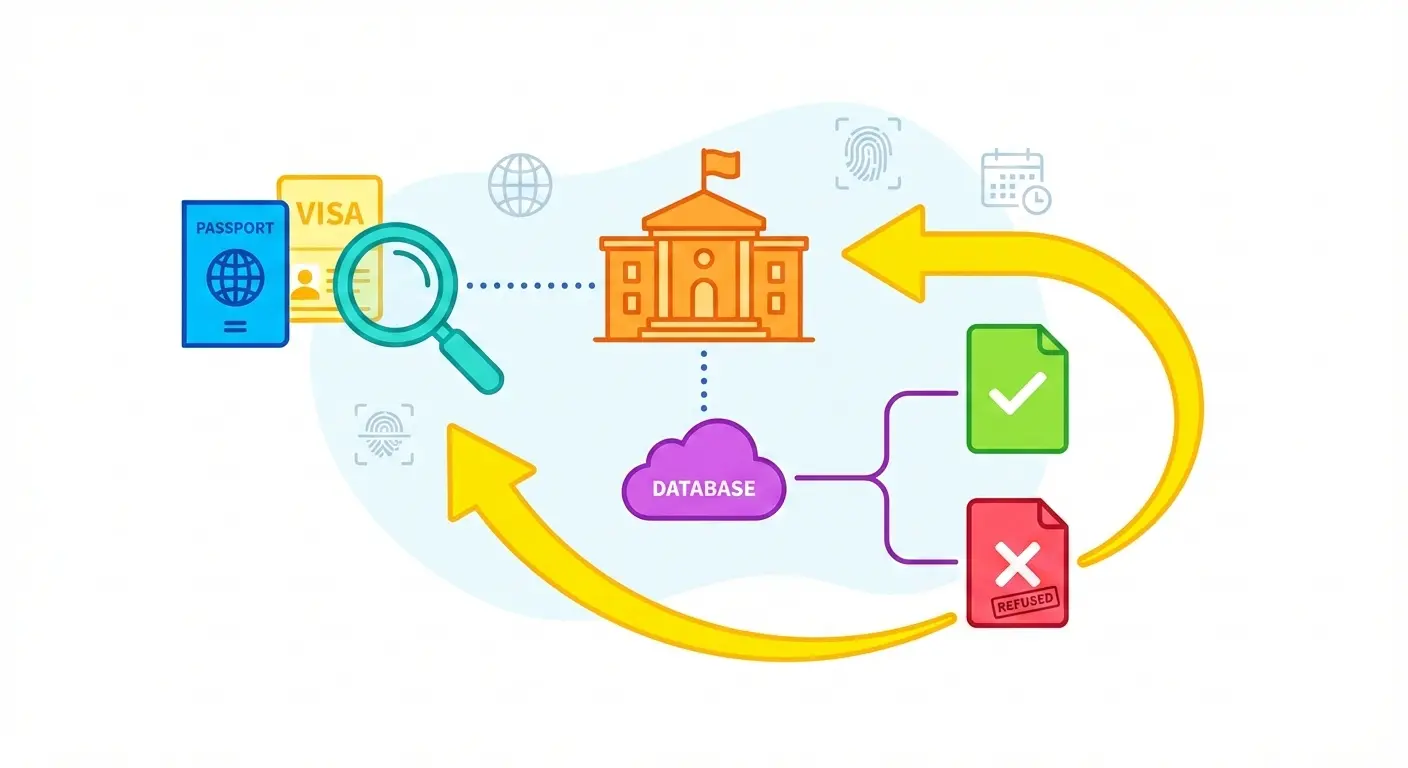
A prior refusal can show up in your next file sooner than you expect. For a UK Standard Visitor visa, a Schengen short-stay (Type C), or a US B1/B2 application, the key is understanding what gets matched to you and what gets inferred from your pattern.
The Three Ways Refusal History Of Visa Applicants Surfaces (Even If You Don’t Mention It)
For a Schengen Type C application, a UK Visitor file, or a Canada TRV, your refusal history usually surfaces through three channels:
- Identity Matching: Your passport details, photo, and biometrics (when collected) help officers connect your current application to prior outcomes across the same system.
- Internal Case Records: If you previously applied for an Australia Visitor visa (subclass 600) or a UK Visitor visa, the case notes and refusal codes can sit in that country’s internal system and reappear the moment you reapply.
- Pattern Checks Triggered By Your File: If your US DS-160 history, your UK application answers, or your Schengen form details suddenly change, the officer has a reason to look harder, even before an interview.
The practical takeaway for any embassy or consulate is simple: assume your file is not “new” just because you used a new passport or a new destination.
“Same Country Vs Different Country” Checks: What Changes In Practice
Shared-system example: The European Commission explains that Schengen visa-application data and decisions are processed in the Visa Information System and that VIS data is generally kept for five years from the relevant decision or visa event. This supports Schengen-specific visibility; it does not prove that every country worldwide shares every refusal record.
When you reapply to the same country, the check is usually straightforward. For a second UK Standard Visitor application or a second Canada TRV, officers can compare your old answers to your new ones quickly, especially around employment dates, funds, and travel purpose.
When you apply to a different country, visibility can vary. A Japan Temporary Visitor application may not automatically display your full UK refusal notes the same way the UK would. But the embassy still asks direct refusal questions on forms and at counters for a reason: your disclosure and consistency become part of the credibility assessment.
If you treat “different country” as a loophole, the risk is not only what they can see. The risk is what your own answers reveal when compared across your documents.
Why “No Record Found” Doesn’t Mean “Safe To Omit”
Many forms of refusal to disclose a direct credibility test. On a US B1/B2 application, a UK Visitor form, or a Schengen Type C form, a false “No” can create a larger problem than the refusal itself if the officer later finds a link to the prior application.
Even when a record does not immediately surface, officers still detect omission through ordinary file logic:
- Your travel history shows an unexplained gap where a refusal likely occurred
- Your new application avoids direct questions or changes key facts without explanation
- Your supporting documents contain dates that do not align with your stated timeline
For most embassies, the refusal is a past event. Misrepresentation is a current event. That is why omission is the wrong gamble.
The Refusal Letter Is Not The Whole Story, But It’s Your Starting Point
A refusal letter for a UK Visitor visa, a Schengen Type C, or a Canada TRV often gives broad reasons, not the full narrative. It may say “purpose not credible” or “insufficient ties,” but it rarely tells you which detail tipped the balance.
We get better results when you treat the refusal letter as a checklist and rebuild the missing proof around it:
- If the UK refusal mentions “intention to leave,” tighten your job timeline, leave approvals, and family responsibilities with clear dates.
- If the Schengen refusal points to “justification of purpose,” make the trip logic coherent and consistent with your finances, and leave a window.
- If the Canada TRV refusal mentions “financial situation,” show stable, explainable funds rather than sudden account spikes.
For a fresh application, the strongest move is not more paperwork. It is the right paperwork that answers the exact refusal reason.
Micro-Detail Triggers in Visa Application That Make Officers Dig
Officers often dig deeper when your new file looks engineered rather than lived-in. For a US B1/B2 interview, a UK Visitor decision, or a Schengen Type C review, these micro-details commonly trigger scrutiny:
- Timeline shifts: employment start dates, salary history, or sponsor details changing between applications.
- Profile swings: a sudden move from “self-funded” to “sponsored” without clean documentation.
- Trip logic jumps: a different destination, a different purpose, and a different duration, with no real-life explanation.
- Identity variations: spelling changes, different formats of names, or inconsistent passport numbers across old and new forms.
If you previously gave biometrics during a VAC appointment, identity matching becomes even easier for the same system. For example, an applicant in Delhi who completed biometrics for a past application in US embassy should assume that later files in that same country’s process will connect quickly.
Assess the Refusal Ground Before Reapplying
Not all refusals carry the same weight. Visa officers reviewing a UK Nonimmigrant Visa reapplication, a Schengen Type C file, or a US B1/B2 profile react less to the word “refused” and more to the pattern behind it.
Refusal Reasons That Usually Signal “Fix The File, Then Reapply”
Some refusals are basically the embassy telling you, “Your story might be true, but your file did not prove it.” These are fixable when you match evidence to the exact weakness.
Common examples of these visa decisions in Asian countries across Schengen Type C, UK Visitor, and Canada TRV include:
- Purpose of Visit Not Credible Enough: You said tourism, but the plan looks forced. Tighten your trip logic and align it with your leave window and spending ability.
- Finances Not Aligned With The Trip: Not “low funds” only. Often, it is unclear source of funds, sudden deposits, or spending patterns that do not support the trip cost.
- Weak Home Ties As Presented: Officers do not need you to be rich. They need a clear reason for your return. Stable employment, family obligations, and ongoing responsibilities must show as dated, verifiable facts.
- Document Gaps Or Unverifiable Claims: Missing pay slips, unclear bank statements, or employment letters that do not match salary credits can sink a file fast.
If your refusal letter points to one of these, the fix is not “more documents.” The fix is tighter, cleaner proof tied to the refusal language.
Refusal Reasons That Can Become Serious If You Handle Them Wrong
Some refusal labels become dangerous when you respond with improvisation. These are the cases where a second attempt can look worse if you “rewrite your life” to fit the visa.
High-risk categories include:
- Credibility or “Not Satisfied” Findings: A UK Visitor refusal often uses phrasing that signals doubt about your intentions or truthfulness. A rushed reapply with new claims and weak proof makes that doubt permanent.
- Inconsistencies Across Applications: On a US DS-160, a Schengen form, or a UK application, officers compare employment dates, prior travel, funding source, and family details. Even small mismatches look like manipulation.
- Questionable Document Quality: This is not only about fake documents. It can be about letters with generic wording, wrong dates, mismatched signatures, or bank statements that do not connect to your declared income.
If your refusal involved credibility language, you must treat your next file as if it will be cross-checked line by line. That means fewer claims, stronger proof, and zero “creative” explanations.
Timing Mistakes That Make A Second Refusal More Likely
Timing is one of the easiest ways to turn a fixable refusal into a repeated refusal. Officers notice when you submit again without a real change.
These patterns regularly hurt applicants in UK Visitor, Schengen Type C, and Canada TRV reapplications:
- Reapplying With The Same Core Evidence: New cover letter, same bank story, same employer letter style, same gaps. The outcome often repeats.
- Reapplying Immediately Without A Material Shift: If you were refused for finances, two weeks rarely change your financial credibility. If you were refused for ties, one month rarely changes your life structure.
- Stacking Applications Too Fast Across Destinations: A quick sequence like UK refusal, then Schengen, then Canada can look like you are chasing any approval, not planning a real trip.
A refusal does not require a long waiting period by default. It requires a real improvement that you can show clearly.
The Hidden Red Flags: What Officers Infer From Your Pattern, Not Your Words
Officers rarely rely on a single detail. They read the shape of your profile.
In practice, these are the silent inferences that trigger stricter scrutiny:
- “Engineered Itinerary” Signals: A flight plan that looks designed to satisfy a checklist instead of matching your real travel behavior. Odd routings, implausible connection times, or trips that do not fit your work leave can raise questions.
- Over-Correction After Refusal: Sudden jump from “solo tourist” to “invited by a distant relative,” or from “self-funded” to “fully sponsored,” without a believable trigger.
- Financial Behavior That Looks Like Preparation For Review: Large last-minute deposits, multiple transfers that cannot be explained, or a new account used only for statements.
- A Narrative That Keeps Changing: The destination changes, the reason changes, and the duration changes, but your evidence stays vague.
This is where your flight reservation details matter. Not as a “ticket,” but as a credibility signal. A simple, verifiable, plausible route usually helps you. A perfect-looking route that conflicts with your work schedule or budget can make an officer slow down and look for the weak point.
A Practical “Fixability Score” To Decide Your Next Move
Before you reapply for a UK Visitor visa, a Schengen Type C, a US B1/B2, or a Canada TRV, score your situation honestly. You do not need a spreadsheet. You need a clear answer to one question: Can you show a material change that addresses the refusal reason?
Use this quick scoring method:
- 2 Points: You can add new, verifiable proof that directly resolves the refusal reason.
- Example: updated bank statements showing stable income over time, not a last-minute deposit
- Example: updated employment proof showing continuity, approved leave dates, and role clarity
- 1 Point: You can improve clarity, but not the underlying reality.
- Example: better explanation of the funds source, but the total funds are still borderline for the trip
- 0 Points: You are only changing wording, formatting, or presentation.
- Example: rewriting the same purpose statement without stronger evidence
Now apply the result:
- 4 to 6 total points across your main refusal factors: Reapply can make sense, because your file has changed in substance.
- 2 to 3 points: Pause, strengthen one or two key areas, then apply.
- 0 to 1 point: A reapply is usually a repeat refusal, and it can add a pattern problem on top of the original issue.
Disclose a Previous Visa Refusal Accurately
Accuracy can matter more than the refusal itself. The U.S. Department of State’s DS-160 guidance requires complete and accurate answers and warns that false or misleading statements can carry serious consequences. That warning is specific to U.S. law, but it illustrates why applicants should never guess, conceal or casually reinterpret a form question.

Once a refusal exists, the next application becomes a consistency test. You are not trying to “win an argument.” You are showing a consular officer a clean record, a believable purpose, and proof that you understood what went wrong.
What To Disclose, Where, And Why The Form Wording Matters
Refusal disclosure is usually asked in plain language, but the wording changes the safest answer. On a visa application form, “Have you ever been refused a visa?” is not the same as “Have you ever been refused entry?” and it is not the same as “Have you ever violated immigration law.”
Treat each question literally.
If your history includes a prior visa refusal, you disclose it where asked, even if it was years ago, even if it involved an old passport. This is especially important for a us visa, where previous applications are routinely cross-referenced.
Also, match the refusal to the right visa category. A non-immigrant visa refusal should not be described as a deportation or a ban. Overstating it can create new confusion during the visa application process.
When the form asks for details, keep it factual:
- Country or post
- Month and year
- Outcome, such as refused or denied
- A short reason that mirrors the refusal language
Avoid guessing what the officer “meant.” You are documenting what happened, not rewriting it.
The “Two-Layer Explanation” That Works Best
A strong disclosure has two layers. It reads calm. It stays brief. It matches your file.
Layer One: The Fact.
You state the previous rejection without drama. One or two lines are enough. Your goal is to show you are aware of the record and you are not hiding it.
Layer Two: The Change.
You then connect the refusal reason to additional evidence. This is where many visa applicants fail. They say “things are better now,” but they do not show why the new visa should be granted.
A useful change statement looks like this:
- What changed in your current job, income stability, or leave approval
- What changed in your ability to fund the trip from your own merits
- What changed in documentation quality, such as clearer bank narratives or verified employment proof
Keep the change measurable. Officers respond to dates, amounts, and documents. They do not respond to confidence alone.
If you are applying to the U.S. Embassy, this two-layer structure helps in a visa interview because it prevents rambling. It also reduces the chance that the officer sends you into administrative processing due to unclear answers.
What Not To Say (Even If It Feels True)
Some lines make your file harder to approve. They sound emotional, defensive, or unrealistic. They also invite follow-up questions that you cannot control.
Avoid these moves:
- Claiming the earlier visa denial was “unfair” or “a mistake.”
- Saying you were denied because “the officer did not understand.”
- Suggesting you can guarantee entry once the visa is issued.
- Stating that you will definitely obtain a visa this time because you changed destinations.
Also, avoid the “same documents, better wording” approach. If you resubmit the same documents with a longer cover letter, officers see it as a repeat attempt, not a new application.
Do not overexplain family members unless it relates to the purpose. If you say you will visit family members, be ready to prove the relationship and the visit logic. If you say immediate family is staying home, your ties narrative must match your home country responsibilities.
A Simple Refusal Explanation Template You Can Adapt
Use this template when you write your explanation letter or prepare for a visa interview. Keep it short. Keep it specific. Keep it aligned with the refusal.
Template:
On [month/year], our application for a [specific category] visa to [country] was refused. The refusal noted concerns about [one clear reason]. Since then, we have addressed this by providing [two or three items of additional documentation] that show [the change]. Our travel plan is consistent with our current job leave dates and budget, and we will return to our home country due to [one concrete obligation]. We are applying again with the same purpose, supported by clearer evidence.
This template works because it stays within the file. It does not argue. It shows you are eligible based on facts, not persuasion.
If you are preparing for a u.s visa appointment, practice saying the same points out loud in two or three sentences. The officer may interrupt. That is normal. Stay consistent.
Consistency Audit: The One Checklist That Prevents Silent Self-Sabotage
Most refusals get worse when your file contradicts itself. Before you submit a new visa, run a consistency check across your forms and documents.
Focus on these areas:
- Identity Details: name spelling, passport numbers, and date of birth across previous refusals and future applications
- Employment Timeline: start date, title, salary, and leave approval tied to your current job
- Funding Story: who pays, why it is reasonable, and how the money was built over time
- Trip Logic: route, duration, and purpose that fit your real schedule and spending ability
- Family and Ties: immediate family, dependents, and responsibilities that are consistent across other countries' applications
Then check for common mistakes that trigger suspicion:
- A flight reservation date that conflicts with your stated validity period or leave dates
- A sponsor letter that does not match the bank activity
- A purpose statement that changes across previous applications without a real reason
- Missing clarity on application fee payment history or past outcomes when asked
When your disclosure is factual, your explanation is short, and your file is internally consistent, you are ready to move from “what we say” to “what we prove” in the reapplication plan that follows.
For a previous Schengen refusal, separate the disclosure issue from the current flight-document requirement. The Schengen flight-reservation requirements guide covers competent-consulate checklists and route/date alignment. The present page focuses instead on identifying the prior refusal ground, disclosing it where required and showing what changed in the new application.
Reapply Only After Addressing the Refusal Ground
A second attempt only works when your file reads like a real upgrade, not a reprint. We rebuild the application so an officer can quickly see what changed, why it matters, and why your travel plan is credible now.
Decide Your Strategy: Reapply Same Country, Different Country, Or Pause
Start by choosing the path that looks rational to an officer reviewing risk.
Reapply To The Same Country When:
- The refusal reason was specific and fixable, like an unclear funding source or a weak trip purpose on a Schengen Type C.
- You can show dated improvements, such as three new salary credits, a stable bank pattern, and approved leave for the same travel window.
- Your story stays consistent. You are not switching from “tourism” to “business” without a real trigger.
Pause When:
- The refusal language leaned on credibility, like “not satisfied” on a UK Standard Visitor, or weak ties on a Canada TRV with no new proof.
- Your finances only look stronger because of a recent lump sum.
- Your employment situation is changing, and you cannot document stability yet.
Apply Elsewhere Only When It Is Still Your Genuine Plan:
A sudden pivot after a refusal can look like visa shopping. If you change destinations, your purpose must still make sense with your timeline, budget, and travel history. A short, explainable reason is better than a dramatic rewrite.
This page owns refusal disclosure and the evidence needed to address a prior decision. If the corrected application also requires new travel evidence, use the complete flight-reservation planning framework to choose timing and commitment level. A revised itinerary should support the new facts; it should never be used to distract from an unresolved financial, purpose, ties or admissibility concern.
Build A “Refusal-Targeted” Document Pack (Not A Bigger Pack)
Build your pack around the refusal reasons, not around a generic checklist. Officers want clarity, not volume.
Use a tight “reason to proof” mapping. For each refusal point, attach the minimum documents that directly answer it:
- Funds Not Credible: bank statements showing stable inflows, salary slips, tax records where applicable, and a one-page funds explanation that links income to account activity
- Purpose Not Clear: a dated itinerary outline that matches your leave dates, plus supporting anchors like event registration, a family visit invitation, or booked activities that fit your profile
- Ties Doubts: proof of ongoing obligations in your home country, such as employment confirmation, approved leave, dependent responsibilities, or property tenancy commitments
- Document Gaps: corrected items with clean dates and consistent identifiers, especially where your old file had mismatched names or timelines
Avoid “new questions.” If a document forces an officer to wonder who issued it, why it is formatted oddly, or why it contradicts your form, leave it out.
Your Flight Reservation Strategy After A Refusal (Make It Verifiable, Not “Perfect”)
Applicants sometimes overcorrect after refusal by buying an expensive ticket or treating a PNR as proof that the whole case improved. The flight-reservation fundamentals guide explains what a reservation, itinerary and issued ticket actually establish. On a reapplication, that document should remain proportionate to the checklist and must match the revised dates, purpose and accommodation.
After a refusal, your flight plan becomes part of your credibility signal. Not because you must pre-purchase flights, but because the routing and dates must look plausible.
Focus on three things.
1) Match Dates To Your Real-Life Calendar
If your employer's letter shows leave from June 10 to June 18, your reservation should not show travel from June 9 to June 25. For a Schengen Type C or UK Visitor file, date conflicts trigger quick doubt.
2) Keep Routing Logical For Your Departure Point
Choose routes that align with common travel patterns from your origin and your budget. Avoid strange detours and ultra-tight connections that look engineered. If you are applying for a Japan Temporary Visitor or a Schengen visa, a simple outbound and return routing is easier for an officer to accept.
3) Prioritize Verifiability Over Perfection
A reservation that can be verified cleanly reduces back-and-forth and lowers suspicion. Officers do not reward “too perfect.” They reward “easy to check.”
Also, remember the risk of changing flights repeatedly mid-process. If you submit a plan, keep it stable until a decision unless the embassy requests a change.
The Interview/Appointment Mindset: How To Answer Without Re-Arguing The Past
If you face a US B1/B2 visa interview or get questioned at a counter for a UK Visitor or Schengen submission, your goal is control and consistency.
Use this approach:
- Acknowledge The Refusal In One Sentence: date, country, short reason
- State The Improvement In One Sentence: what changed, backed by a document
- Stop And Let The Officer Lead: short answers reduce contradictions
Prepare for targeted questions, especially after refusals:
- Why this trip now, and why this duration
- Who pays, and why the funds are steady
- What pulls you back to your home country after the trip
- Why your previous refusal should not be repeated on its own merits
Do not debate the old decision. Focus on what is different and provable.
After You Submit: How To Reduce Avoidable Risks
Your behavior after submission can either support your file or create new doubts.
Keep these controls in place:
- Keep Your Story Stable: do not change employer, sponsor, or trip purpose while the application is under review unless you must, and if you must, be ready to document it.
- Avoid Sudden Financial Spikes: Large last-minute deposits after submission can hurt if they appear on updated statements requested later.
- Do Not Introduce Conflicting Travel Proof: if you submit one travel window, do not create new evidence that implies a different window.
- Stay Ready For Follow-Up: if the embassy asks for additional documents, respond with the exact item requested, not a full new pack.
Previous Visa Refusals: FAQ
Do visa officers check previous visa refusals?
They may. Visibility depends on the authority’s own records, shared systems and the questions in the new application. Many forms directly ask about prior refusals, sometimes involving any country, so answer the current form accurately.
Must I disclose a refusal from another country?
Disclose it when the form asks about that country, all countries or the relevant type of refusal, denial of entry or removal. Do not rely on assumptions about whether records are shared. If the wording is unclear, obtain qualified advice.
How long does a Schengen refusal remain visible in VIS?
The European Commission states that VIS data is generally kept for five years, beginning from the relevant visa expiry, negative decision or modification decision. Access is limited to authorized staff performing lawful tasks.
Will one refusal automatically cause another refusal?
No. A prior refusal is not automatically decisive in every later application. The effect depends on the original ground, the new visa rules, accurate disclosure and whether the new evidence materially addresses the problem.
Should I attach the previous refusal letter?
Attach it when the checklist requests it or when it is the clearest way to support a required explanation. Otherwise, disclose the decision in the required field and provide a concise explanation and targeted evidence where appropriate.
How should I explain a previous visa refusal?
State the country, visa category, approximate date and refusal ground as accurately as possible. Then identify the material change in the new application and point to the supporting evidence. Avoid blaming the officer or rewriting the official reason.
Can I apply to a different country after a refusal?
You can apply when you genuinely meet the new country’s rules and disclose history as required. Changing countries does not erase the earlier decision and should not be used to avoid the competent authority or an unresolved refusal ground.
Does a new flight reservation fix a previous refusal?
Only when the prior problem was specifically related to the itinerary and the new reservation corrects it. A flight reservation cannot resolve inadequate funds, weak purpose evidence, inadmissibility, misrepresentation or other unrelated grounds.
Submit a Consistent New Application
Whether you are reapplying for a UK Standard Visitor, a Schengen Type C, or preparing for a US B1/B2 interview at a consulate window, your refusal history is part of your file. We move faster when you disclose it plainly, keep every date consistent across forms and documents, and show real upgrades that match the refusal reason.
You can reapply with confidence when your flight plan fits your leave window, your finances look stable, and your story stays the same from first page to last. If you are unsure, we recommend writing a one-page refusal summary and checking your next application for contradictions before you submit.
Disclaimer: Disclosure duties, refusal records, appeal rights and inadmissibility rules vary by country and visa category. Follow the current official form and decision notice. Seek advice from a qualified immigration lawyer or authorized representative for alleged fraud, misrepresentation, criminality, removal, bans or appeal deadlines.
Related posts

Visa Reservation After a Legal Name Change
02 Oct, 26
Visa Reservation With a Refugee Travel Document
02 Oct, 26
Visa Reservation for an Indirect Flight Route
26 Sep, 26
Visa Reservation for a Private Driver Route in India
26 Sep, 26
Visa Reservation Through Layered Document Review
26 Sep, 26
Visa Booking With Mixed Travel Proof Types
22 Sep, 26
Visa Reservation When Sponsor Is Outside Main Destination
22 Sep, 26
Visa Reservation When Cover Letter Dates Are Flexible
22 Sep, 26
Does Timing Affect Visa Approval?
20 Sep, 26