
You book a flight reservation while sitting in a third country, then the embassy looks at one detail you missed: why your departure city, legal stay and appointment timeline do not line up. That is when “normal” itineraries start to fail. When your passport country and your application location differ, officers often sanity-check your route harder, and they may verify it at inconvenient times.
We’ll help you choose a reservation approach that stays credible from where you actually are. You’ll align dates with biometrics, processing buffers and permitted stay. You’ll avoid backtracking routes that raise eyebrows, and you’ll keep your third-country itinerary consistent with documents you can update if processing dates shift.
If you need the basics before handling the third-country complication, start with the flight reservation for visa guide first. For wider timing, validity, hotel and insurance alignment, use the flight reservation for visa 2026 complete guide as the deeper support page.
If you are using the phrase casually, check what a dummy ticket means so the terminology stays clear. BookForVisa should own the reservation-for-visa layer here; DummyFlights should carry dummy-ticket intent when that is the actual document the reader wants.
Key facts:
- Applying from a third country adds a jurisdiction question before the travel-proof question.
- Your reservation should match where you are legally present, not only where flights are cheapest.
- Departure and return logic should not assume re-entry, local-stay extension or instant passport return.
- Processing buffers matter more when the embassy may hold your passport or ask for additional proof.
- The safest file uses one coherent version across forms, travel reservation, hotel proof, insurance and cover note.
Need a visa booking that fits your third-country application? BookForVisa can help prepare a flight and hotel reservation set aligned with your appointment country, departure city, travel dates and supporting documents.
Create Your Visa ReservationIn This Guide
- Embassy jurisdiction and third-country status
- Build an itinerary from where you actually are
- Choose the right flight reservation type
- Match flights with the rest of the application
- Third-country red flags consulates notice
- Time the reservation through appointment and processing
- Fix the flight story when plans change
- Submit with a flight plan that still makes sense
- FAQ
Official-source check: Third-country filing rules vary by destination and post. The Schengen Visa Code says a uniform visa application is normally examined by the consulate where the applicant legally resides, while a legally present non-resident may be examined when they justify applying there. U.S. Department of State guidance updated 15 July 2026 says nonimmigrant visa applicants should schedule interviews in their country of nationality or residence, and applicants outside that pattern may face harder qualification and longer appointment waits. IRCC says a visitor legally admitted to the country they are in can apply at the nearest VAC or online, but should explain why they are not applying from their normal residence country. Sources: Schengen Visa Code Article 6, U.S. NIV country-of-residence guidance and IRCC applying from another country guidance.
Reviewed for: third-country jurisdiction logic, lawful-presence timing, appointment and passport-return buffers, departure-city realism, Schengen/U.S./Canada wording, reservation validity, route-date consistency and official-source support.
Start With Embassy Jurisdiction — Your Third-Country Status Changes What “Normal” Looks Like

Applying from a third country changes how your itinerary is read. The same flight reservation that looks routine at home can look illogical abroad, simply because the embassy is judging it through a different lens.
Confirm You’re Allowed To Apply From That Country (Before You Touch Any Flights)
Before you lock any dates, we need to confirm one thing: does that embassy accept applications from non-residents at all, and under what conditions? This is not paperwork trivia. It directly shapes what kind of flight plan looks credible.
Some embassies accept third-country applicants only if you can show a lawful stay beyond a minimum window. Others accept them but treat them as higher scrutiny files. Others reject them outright unless you are a legal resident.
Here is what “allowed” usually means in practice:
-
You can submit there as a visitor, but the embassy may require proof that you are legally present for the duration of processing.
-
You can submit there only as a resident, meaning a local residence permit, long-term visa, or a recognized status.
-
You can submit there, but only for certain visa categories, while other categories are restricted to your home country.
That difference decides how the officer reads your departure city and timeline. If you are on a short tourist visa, a flight reservation that departs after your permitted stay can look like a planning error. If you are a resident, the same dates can look normal.
We also need to think about the quiet filter that embassies apply: predictability. If your current status is close to expiring, or tied to an employer, or awaiting renewal, your itinerary must avoid assuming outcomes you do not control.
A fast way to pressure-test your situation is to ask these three questions:
-
Will you still be legally in this country on the day your application is reviewed, not just on the day you submit it?
-
If the embassy asks for additional documents two weeks later, can you still respond locally?
-
If the embassy holds your passport longer than expected, can you remain in-country without violating your status?
If any answer is shaky, do not “solve” it by pushing travel dates far out. That often creates a new mismatch between your stay validity and your intended departure. Instead, we design the reservation around what the embassy can realistically evaluate.
Use A “Proof-Of-Presence” Checklist That Supports Your Itinerary
When you apply from a third country, your flight reservation is not evaluated in isolation. It is evaluated next to your proof-of-presence signals. These are the simple facts that show you truly live or stay where you claim, and that your itinerary starts from a place that makes sense.
You do not need a big narrative. You need clean alignment.
Strong proof-of-presence signals often include:
-
An entry stamp or entry record that matches your current location and timeline
-
Current visa or permit showing your permitted stay period
-
Local address proof that is consistent with where you say you are staying
-
Local contactability, such as a working phone number or reachable address for courier return, if used
-
A stable reason for being there, like a work assignment, study term, family visit, or long stay plan
The goal is simple: if your reservation shows you leaving from City A, the rest of your file should not suggest you are actually based in City B.
Now we match the itinerary to the dates that matter:
-
Your intended departure should sit inside a realistic window after biometrics or an interview.
-
Your return or onward flight should not assume you can re-enter a country, as this is not guaranteed.
-
Your third-country legal stay should cover the processing uncertainty, not just the appointment day.
One common pitfall is when your lawful stay ends before your intended departure, but the reservation still shows a later flight. Officers notice that quickly because it looks like you did not understand your own permission to stay.
Another pitfall is the opposite. You choose a departure date that is too soon after biometrics, creating a timeline that looks rushed. That can trigger questions like: “Are you expecting an instant decision?” or “Is this travel urgent for a reason not disclosed?”
We can avoid both by using a clean timeline method:
-
Put biometrics or an interview first.
-
Add a sensible buffer for processing variation.
-
Place the intended departure after that buffer.
-
Keep the return realistic for your personal situation and legal permissions.
If your local stay validity is tight, we may choose dates that keep the file coherent even under delays. That is better than a “perfect” itinerary that breaks the moment the embassy takes longer than expected.
The Embassy’s Processing Style Should Influence Your Booking Strategy
Not every embassy treats flight reservations the same way. Some posts verify aggressively. Some rarely verify but care deeply about plausibility. Some are slow, which makes date stability more important than price or route detail.
When you apply from a third country, processing style matters more because the officer already has extra variables to reconcile.
We can sort embassy behavior into a few practical patterns:
1) Verification-Heavy Posts
These posts are more likely to check PNR retrievability or confirm the reservation still exists later. For these, you want a reservation that stays stable and verifiable over time. A fragile reservation that disappears can create unnecessary stress.
2) Plausibility-Heavy Posts
These posts may not verify often, but they judge the logic of your itinerary hard. For these, route realism and departure city choice become the main success factors. A weird backtracking route can hurt you even if the PNR is technically valid.
3) Slow And Queue-Driven Posts
When processing is slow, the risk is not verification alone. The risk is that your dates become outdated and force you into changes. Here, we design dates so they can survive delays, and we avoid “tight” schedules that look unrealistic if the decision comes later.
You can usually spot which pattern you are dealing with by looking at how the post communicates timelines and procedures. If the consulate publicly warns that they may keep passports longer, your itinerary should not depend on a quick return trip. If appointment slots are scarce and pushed far out, your reservation should not look like you are leaving next week.
This is also where many third-country applicants accidentally create a contradiction. They choose dates based on personal urgency, but the embassy’s public processing reality suggests those dates are unlikely.
We keep things clean by aligning your reservation to what the embassy can reasonably deliver.
If the file involves multiple dates, countries or transport legs, compare it against the visa flight itinerary requirements guide before you freeze the route. Third-country cases need that extra route-date discipline because the application location itself becomes part of the story.
Decide What Your “Return” Should Look Like From A Third Country
Return planning is where third-country cases often get messy. At home, a return flight to your home city looks normal. Abroad, a return flight can raise questions if it assumes re-entry you do not control, or if it implies you are “based” somewhere your documents do not support.
We can choose among three return patterns, and each has a different logic.
Return To The Third Country
This works well when you have a longer lawful stay there, and you are genuinely based there for now. It signals a coherent loop: depart from where you are living or staying, travel, then return to that same base.
It can be especially credible when:
-
Your local permit covers months beyond the trip
-
Your work or study schedule supports your continued presence
-
Your address and local ties are consistent in the file
Return To Your Passport Country
This can work, but we must keep it logical. It is strongest when it matches your real next step. If you are in a third country temporarily, returning home after the trip may look natural.
It can become questionable when:
-
The return requires multiple backtracking legs without a clear reason
-
Your timeline suggests you would need to re-enter the third country immediately
-
Your lawful stay abroad is short, and the return implies you will still be there later
Onward Travel Without Returning To Either
This can be acceptable for certain travel patterns, but it needs extra caution. Onward routes can look like you are trying to avoid showing where you will end up. That is not always the case, but we do not want your itinerary to invite that assumption.
The safest approach is usually the simplest: a return that matches your current base and your lawful permissions.
Here are the common return traps we avoid:
-
Assuming re-entry to the third country when your visa there is single-entry, expiring, or uncertain
-
Building a return that contradicts your stated reason for being in the third country, like returning to a place you supposedly left for good
-
Using a return that conflicts with your job or study calendar, which can make the trip look invented
A good return choice also reduces the need for explanations. When your return makes sense, the officer spends less time wondering if your itinerary was designed just to satisfy a checklist.
Build An Itinerary That Makes Sense From Where You’ll Actually Be

When you apply from a third country, the embassy is not just looking at where you want to go. They are quietly testing whether your route makes sense from the place you are standing right now.
Pick The Most Defensible Departure City (Not The Cheapest One)
Your departure city becomes a credibility anchor in third-country applications. If your application location, your current address, and your flight origin point are in three different directions, an officer has a reason to pause.
A defensible departure city usually matches at least two of these three signals:
-
Where you are physically staying during the application period
-
Where your lawful stay is documented (entry record, permit, visa)
-
Where your appointment and document return logistics actually happen
Price does not help you if the route forces an officer to ask, “Why would you do this?”
If you are applying at a Schengen consulate in Bangkok and your file shows a departure from Kuala Lumpur, the officer may assume you are not actually based where you say you are. You might have a good reason, but the itinerary is not the place to create new questions.
We also want your departure airport to align with how consulates think about control. Many posts see thousands of itineraries. They know which airports are normal departure points for residents, long-stay visitors, and short-term entrants. If your choice looks like a loophole, it attracts attention.
Use this practical filter before you choose an origin:
-
Can you explain, in one sentence, why you would depart from this city while applying in this country?
-
Does your local stay permission comfortably cover the time between submission and your intended departure?
-
Would a neutral observer believe you can realistically reach that airport on the date shown?
If your current city is smaller, you can still build a defensible plan without stretching logic. Often, the best move is to anchor the origin to the nearest major international airport in the same country, not a different country’s hub that happens to be cheaper.
Keep your departure city consistent with the rest of the file. If your contact address is in one city but your flight origin is in another, make sure there is a clear practical link between them, like a normal domestic connection to the main airport.
Use A Simple Route Logic: Direct If Possible, One Stop If Needed, No Circus Routes
Third-country itineraries are judged for realism. Overbuilt routing looks like it was engineered to satisfy a checklist, not like a normal traveler’s plan.
A simple routing strategy works because it is easy for a consular officer to accept at a glance:
-
Direct flight when available
-
One stop when direct is not practical
-
Two stops only when geography forces it, and even then, keep it boring
Avoid “circus routes” that bounce through multiple hubs without a clear need. If you apply from Dubai and your itinerary goes Dubai → one hub → destination, that is readable. If it goes Dubai → Hub A → Hub B → destination with a tight connection and an overnight layover, it feels constructed.
Transit rules matter more than people realize in third-country files. Officers may notice if your transit point creates a new permission problem, like a required airside transit visa for your nationality or a transit that regularly triggers extra screening. Even if transit is technically possible, the route can look like a risky choice for someone trying to travel smoothly after visa issuance.
Here is a quick transit sanity check that fits third-country applications:
-
Choose hubs with stable international connections and predictable transfer patterns
-
Avoid transfers that look like self-connects or require collecting baggage mid-journey
-
Avoid unusual overnight layovers unless they are common for that route
-
Keep connection times reasonable, not ultra-tight and not strangely long without reason
Also, watch for mixed logic in the route. A common third-country mismatch is when the outbound flight is simple, but the return is complicated, or the outbound uses a major hub, and the return uses a different, less logical hub. Symmetry is not mandatory, but your routing should feel like something a real traveler would book from your current location.
If your destination country is known for strict entry checks, your transit choices can matter even more. A clean route reduces the number of moving parts that could create questions during evaluation.
Align Your Itinerary With The Reason You’re In The Third Country
Your reason for being in the third country shapes what looks normal on paper. Officers may not ask you to explain it in detail, but they often evaluate whether your itinerary fits that context.
If you are in the third country for a work assignment, the embassy expects your itinerary to respect real-world constraints. A flight that departs mid-week with an abrupt return can look odd if your file also suggests you are actively employed and anchored there for a defined period. A cleaner option is often a departure window that fits a typical leave pattern for that location.
If you are there for study, your itinerary should not collide with obvious academic timing. A departure date that lands in the middle of an exam window or a required attendance period can look careless, even if you privately plan to manage it. Your itinerary should look like a plan that a responsible student would make from that country.
If you are there on a long tourism stay or visiting family, the embassy will still expect route discipline. The biggest mistake in these cases is creating a flight plan that assumes you can remain in-country indefinitely. Your itinerary should sit inside what your lawful stay allows, not what you hope will be allowed.
Use your reason for being there to choose the right “base” behavior:
-
If your base is stable, your itinerary can look stable
-
If your base is temporary, your itinerary should look conservative
-
If your base is uncertain, keep your itinerary simple and avoid extra legs
A practical way to do this is to anchor your trip to a clear window that exists for you in that third country. That window might be a work break, a semester gap, a scheduled event, or a period before your local permission changes.
When your itinerary matches the reason you are there, it reduces the chance that an officer thinks your application location is a convenience choice rather than a legitimate jurisdiction.
Keep The Timeline Clean: Appointment Date → Processing Buffer → Intended Departure.
Timing is where third-country applicants often lose credibility without realizing it. Your reservation dates are read as a prediction of how your case will move, and officers compare that prediction to the way their post actually works.
We build your timeline in one direction, with no back-and-forth:
-
Appointment Date
-
Processing Buffer
-
Intended Departure
Start from your actual appointment date, not your ideal travel date. Officers know when appointment availability is tight at some posts. If you submit a file that suggests travel before your biometrics or shortly after, it can look like your plan ignores the post’s reality.
Next, choose a processing buffer that fits the consulate’s published expectations for that visa category. We do not guess. We design around the official window plus realistic variability, especially when the embassy may hold passports during processing.
Then place the intended departure after that buffer. This does two things:
-
It makes your plan look like it belongs to someone applying through that post
-
It reduces the chance that you need immediate changes if timelines shift
Avoid the “too soon” trap. A departure date that is too close to biometrics can look like you expect instant issuance. That is risky in third-country cases because the officer already has extra factors to verify, like your lawful presence and local ties.
Avoid the “too far out” trap as well. If your travel date is extremely distant from the application date, the itinerary can start to look like a placeholder with no real intent, especially if the post is known to process faster. The goal is a date that looks like a real plan based on the post’s actual cadence.
We also want your timeline to match your third-country permission. If your lawful stay ends soon, you have two clean choices:
-
Set a timeline that still fits inside your lawful stay and the consulate’s likely pace
-
Or avoid building an itinerary that depends on you remaining in-country longer than your documents show
This is not about being overly cautious. It is about keeping the file logically consistent when an officer reads it quickly.
Applying Abroad For A Tourist Visa While Your Natural Departure Would Be From Home
This is a classic third-country tension. You are physically applying in one place, but your “real” travel life is anchored elsewhere, so your instinct is to show departure from home.
They may assume you will not be in the application country when the visa is issued, or that you are trying to route around jurisdiction.
A clean approach depends on your real plan for the next few weeks.
If you truly expect to remain in the third country through decision and travel, your itinerary should usually depart from that third-country base. That makes the file easy to read. It signals that your presence, your appointment, and your intended departure all match.
If you truly plan to return home before traveling, the file should not look like two unrelated plans stitched together. A common mistake is submitting an itinerary that starts from home while your supporting documents show you living in a third country during the same period. That creates a silent question: “When did you move back?”
Use a realism check:
-
Will you be back home with enough time to receive your passport and still travel as shown?
-
Does your plan require the consulate to return your passport across borders or through complicated logistics?
-
Does your lawful stay and your appointment location support a clear, believable sequence of movements?
Example: you apply in Singapore, but you are certain you will depart from Delhi for the actual trip because your long-term base is there. In that case, we want your itinerary and timeline to reflect a believable sequence, not a jump cut. Your dates should show enough space for returning home, receiving your passport, and then departing, without compressing everything into an unrealistic week.
The best third-country itineraries feel like a single coherent plan. They do not force the officer to imagine how you physically got from one place to another while your passport was potentially being processed.
Choose The Right Kind Of Flight Reservation For Third-Country Scrutiny
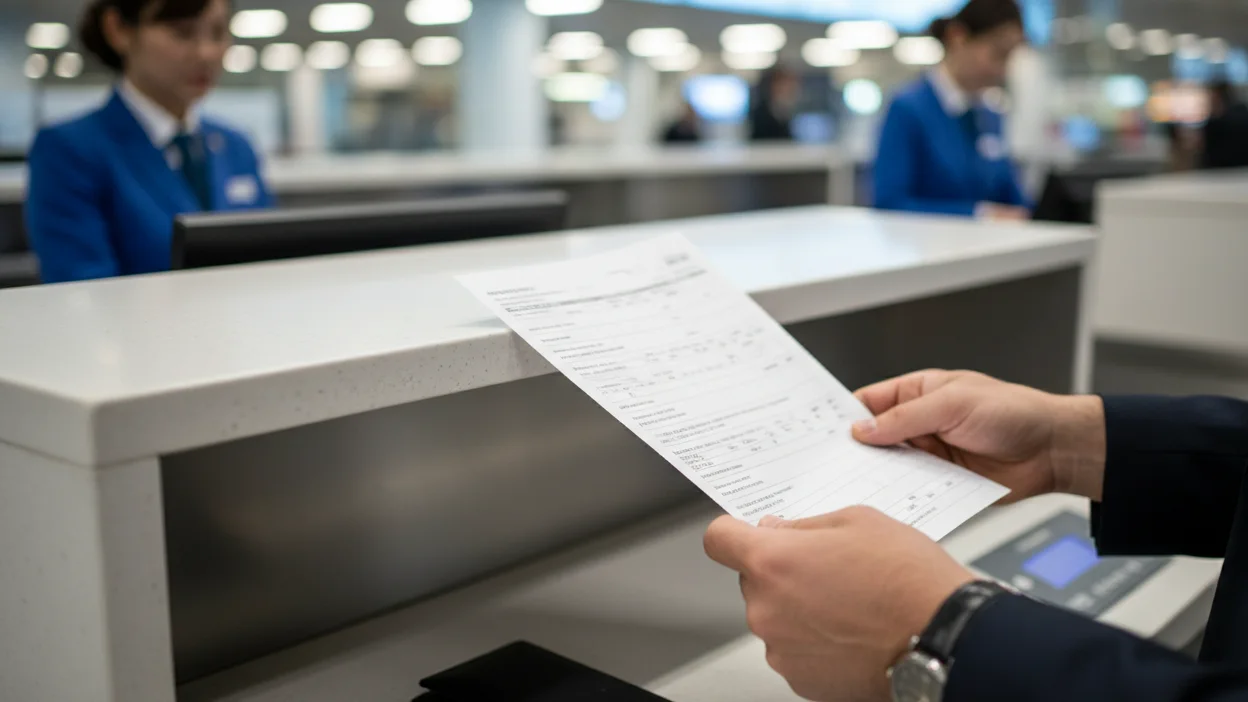
Once your route and dates make sense from your current location, the next decision is the format of the flight reservation you submit. In third-country applications, the “best” option is the one that stays coherent if an officer checks it days or weeks later.
What Matters Most For Schengen Visa Applicants In A Third-Country File
Verifiability means an officer can confirm the reservation exists without needing your inbox, your phone, or a special login. The simplest test is whether the booking can be retrieved using the reference code and passenger surname on a standard airline “Manage Booking” page.
If verification is likely, watch for practical friction points that can break a check:
-
The booking can only be viewed inside a travel agency portal
-
The airline retrieval page requires a one-time password sent to a phone number you cannot access
-
The reference code shown is not the one the airline website recognizes
-
The reservation is visible today, but disappears after a short hold window
Stability means the reservation remains intact during the real timing of visa work. Third-country cases often move more slowly in unpredictable ways because of jurisdiction checks, passport handling, and local procedural steps. A reservation that is likely to lapse before a file is reviewed creates avoidable uncertainty.
Stability is not only about time. It is also about consistency. A stable reservation keeps the same core trip logic:
-
Same departure city that matches where you are applying
-
Same general routing logic that matches your profile
-
Same passenger identity details across documents
Editability means you can adjust dates if processing shifts, without creating a brand-new travel story. Third-country applicants need this more often because appointment availability and document return timing can change. Editability is strongest when date changes are possible while the route logic stays the same.
A clean way to balance these three traits is to decide what you want to protect:
-
If you want to protect against spot checks, prioritize verifiability
-
If you want to protect against delays, prioritize stability
-
If you want to protect against date movement, prioritize editability
You rarely need to maximize all three. You do need to avoid a reservation that is strong in one trait and weak in the exact trait your situation requires.
A Decision Matrix For Nonimmigrant Visas: Hold, Reservation, Or Ticket Based On Risk, Not Preference
The right choice depends on how likely verification is, how long processing may take, and how much your travel window might move.
Think in three formats: hold, reservation, and ticket. Each can be appropriate when used for the right scenario.
A Hold Can Fit When Your Timeline Is Tight, And You Need Short-Term Proof
A hold can work when your appointment is close, and you plan to submit quickly. It can also fit when you are waiting on one final variable, like confirmed leave dates, but you still need a coherent itinerary in your file.
A hold is most practical when:
-
Your submission happens soon after the hold is created
-
The hold window comfortably covers the period when your application is first reviewed
-
The booking remains retrievable in a normal airline lookup flow during that window
If you use a hold, treat the hold’s expiry like a real constraint. Do not design a third-country file where the reservation is likely to vanish before anyone looks at it.
A Reservation Can Fit When You Need Balance Across Checks, Delays, And Adjustments
A reservation can be a good middle ground when you want a verifiable record without locking yourself into a fully ticketed purchase. This can be especially useful in third-country situations where appointment changes or passport return timing can shift.
A reservation approach fits well when:
-
You need the itinerary to remain checkable beyond a short hold window
-
You want the option to adjust dates without changing the trip logic
-
You want a clean PDF that matches the application timeline and route choices
A Ticket Can Fit When Your Plans Are Firm And The Timing Is Predictable
A fully ticketed itinerary can be appropriate when your travel dates are stable, your processing expectation is clear, and you are comfortable committing. It can also fit when your visa category and consulate process are predictable enough that you are not likely to need changes.
A ticketed approach tends to make sense when:
-
Your intended departure date is firmly decided
-
Your return plan is firm and aligns with your lawful stay
-
Your risk of needing a date shift is low
A simple way to choose without overthinking is to match the format to your reality:
-
If you may need date movement, choose a format that supports controlled changes
-
If a check is likely, choose a format that supports simple retrieval
-
If timing is uncertain, choose a format that stays present and coherent longer than a short hold
Whatever you choose, keep your focus on the embassy’s perspective. They want a readable plan from your current location, not an itinerary that forces them to guess what is real.
The Hidden Weak Spot: Reservations That Look Real But Collapse Under Checking
These issues are not always obvious on a PDF, but they matter if an officer tries to verify quickly.
Weak Spot One: The Booking Reference That Does Not Work On The Airline Website
Not all reference codes behave the same. Some documents show a vendor record locator that is not recognized by the airline’s public lookup page. If an officer checks and cannot retrieve it, they do not get context. They only see “not found.”
Before you submit, do a real retrieval test:
-
Use the airline’s public “Manage Booking” flow
-
Enter the reference code and passenger surname exactly as shown
-
Confirm the itinerary appears with the same dates, routing, and passenger name
If the airline requires additional data for retrieval, such as email or ticket number, make sure your document includes what is needed, or choose a format that is retrievable without extra steps.
Weak Spot Two: The Status Looks Uncommitted Even If The Layout Looks Official
Officers often scan to determine whether the booking is confirmed or merely requested. Some reservation documents include indicators that can look tentative, such as unclear status wording or missing confirmation details.
You want the document to communicate a stable plan. Watch for signals that create ambiguity:
-
Missing flight numbers or missing departure times
-
Incomplete passenger details that do not match your application form
-
A route that changes between pages of the document
-
A “created on” date that conflicts with your timeline story
Weak Spot Three: The Reservation Disappears After A Short Window
This is especially relevant in third-country applications because review timing is not always immediate. If a reservation is likely to lapse before a file is reviewed, it creates a timing mismatch you cannot control.
A practical solution is to choose a reservation format that remains present long enough to cover:
-
Submission day
-
Early file review period
-
Any common follow-up window when the consulate may re-check details
Weak Spot Four: The Document Cannot Be Cross-Checked With Any Carrier System
Even if the PDF looks polished, it should still connect to something verifiable. In third-country cases, this matters because officers may already be doing extra checks on your local eligibility and timeline. A reservation that cannot be cross-checked adds one more point of doubt.
The goal is not to make verification complicated. The goal is to make verification boring.
Name, Passport, And Passenger Details: Where Tiny Errors Become Big Problems
Focus on the details that cause third-country applications to unravel when everything else looks fine. The reason is simple: when you apply outside your passport country, officers often rely more heavily on identity consistency across documents.
Name Matching Needs To Be Exact Enough To Survive A Quick Scan
Small differences can create avoidable questions, especially when the reservation is checked against your application form.
Use these practical rules:
-
Match the order of names to your passport’s machine-readable line as closely as possible
-
Keep spacing and middle names consistent across the file
-
Avoid switching between initials and full names across documents
If your passport has a long name, keep it consistent. Do not shorten it on the reservation if your visa form uses the full version.
Date Of Birth Consistency Matters When It Is Displayed
Some flight reservation documents display the date of birth. If yours does, it must match the visa application exactly. A single-digit error is easy to miss and hard to explain later.
Passport Number Is High-Stakes If It Appears
Many reservations do not show a passport number. If yours does, it must be correct. A wrong passport number can look like the reservation was created with placeholder data, even if that was not your intent.
Before you submit, cross-check:
-
Passport number format and digits
-
The passport expiry date is shown
-
The nationality field is shown
Contact Details Can Quietly Affect Retrievability
Some airlines send verification steps to email or phone. If your reservation relies on that, make sure the contact information is stable and accessible during your third-country stay. If you will change SIM cards or lose access to a number, do not build your reservation around a retrieval method that depends on it.
Keep Passenger Count And Cabin Details Coherent
If your visa file suggests solo travel, a reservation for multiple passengers can raise questions. If your budget evidence suggests economy travel, a premium cabin booking can look inconsistent. This is not about choosing the cheapest option. It is about keeping the file internally believable.
Make Your Flights Match The Rest Of Your Application Without Over-Explaining

A third-country flight reservation is not just a travel plan. It is a consistency check across your whole file, especially when your visa application center is different from your passport country.
Date Consistency: Your Reservation Must Agree With Your Leave, Funds, And Purpose
In third-country applications, date inconsistencies look less like a mistake and more like a patchwork file.
Start with your leave window. If your file includes employment or study context, your flight dates should sit inside a believable period for time off. Officers rarely need proof of vacation approval, but they notice when your plan clashes with the life your documents describe.
Use this alignment approach:
-
If you show active employment, keep dates aligned with a normal leave pattern
-
If you show active study, avoid dates that collide with obvious term obligations
-
If you are in a third country temporarily, keep dates aligned with the legal stay you hold there
Next, match dates to fund behavior. Officers often compare your flight dates to your financial timeline. They do not need to see a purchase. They want to see that your travel plan fits your financial reality.
Watch for these friction points:
-
A very long trip with modest funds is shown.
-
A short trip that still requires expensive routing from a third country, without funds to support it.
-
Travel dates that do not match how your financial activity suggests you live, like sudden travel during a period you claim you are between jobs, but your account shows no cushion.
Now match dates to purpose. If your purpose is tourism, the trip length should look like tourism from your current base. If your purpose includes a conference or meeting, the dates should not be wildly detached from the event timing.
A good habit is to run a simple internal check before submission:
-
Do your intended departure and return dates agree with the trip length you implicitly claim in the application form?
-
Do the dates agree with your stated reason for being in the third country right now?
-
Do the dates require the consulate to finish processing faster than they normally do?
If your dates are credible on their own, you do not need to write explanations. The file reads cleanly without commentary.
Your Entry/Exit Pattern Should Look Like A Normal Person’s Plan
Officers often react to patterns. They see what a normal itinerary looks like for someone applying from a third country, and they notice when yours feels engineered.
A normal plan has a clean entry and a clean exit. It does not try to be clever.
Common patterns that read as normal:
-
Depart from your third-country base, arrive in the destination, and return to the same base.
-
Depart from your third-country base, arrive in the destination, and return to your passport country if that is clearly your next step.
-
Depart from your third-country base, arrive in the destination, then exit to a nearby region only if that onward step is supported elsewhere in the file.
Patterns that raise questions in third-country files are usually not “wrong.” They are just hard to understand quickly.
Avoid patterns that create silent questions like:
-
“Why are they entering and leaving through different continents?”
-
“Why do they exit to a place they have no documented link to?”
-
“Why does the plan suggest they will be in two places at the same time?”
If you use an open-jaw route, keep it readable. Open-jaw flights can make sense for tourism in a region, but they become risky when your current base is a third country and your lawful stay there is a constraint.
Open-jaw can work best when:
-
The route still reflects a coherent loop from your current base
-
The two cities in the destination region make practical sense for travel
-
The return step does not assume you can re-enter a place you might not be able to
We also want your entry and exit patterns to match your local reality. If you are applying from a country where passport return logistics are slow, an itinerary that implies you will fly out immediately after biometrics can look unrealistic.
Keep the trip shape calm. The more “normal” it looks, the less you need to justify it.
Handle The “Why Are You Applying Here?” Question Through Structure, Not Storytelling
Officers may wonder why you are applying in their jurisdiction instead of at home. Many applicants try to solve this with a long explanation. That often adds risk.
A better approach is to let the file answer the question through structure.
You do that by making these elements line up:
-
Your proof of lawful stay in the third country
-
Your local contact and address consistency
-
Your flight origin matches where you are actually staying
-
Your timeline that fits realistic processing and passport return
If those pieces fit, the “why here” question often disappears.
When the structure is messy, the officer starts reading the itinerary as a clue. That is when unnecessary routing choices can hurt. For example, applying in one country but showing a departure from a different country can look like you are not actually eligible in either place.
We can reduce that risk with a clean design:
-
Keep the departure city in the same country as your application when feasible
-
Keep your intended departure date after a realistic processing buffer
-
Keep your return logic consistent with your lawful stay and life situation
If you need to use a short clarification note, keep it tactical. Make it about logistics, not emotion.
A strong clarification note, when truly needed, does three things:
-
State your lawful status in the third country in one line
-
State why you are applying there in one line, like residence, work assignment, or long stay
-
Confirms you will be reachable in that country through processing
It does not argue. It does not over-explain. It does not introduce new travel plans.
In many cases, you do not need a note at all. You need a file that does not force one.
Short-Term Third-Country Stay With Tight Re-Entry Timing
The danger is not the short stay itself. The danger is when your flight reservation implies timing that conflicts with processing realities and passport control.
Common pressure points:
-
Your lawful stay in the third country ends soon
-
Your appointment is near the end of that stay
-
Your passport might be held during processing
-
Your work or family obligations require you to be elsewhere quickly
An example is an applicant in the UAE on a short stay who needs to return to Delhi soon after biometrics because of a fixed commitment. That is a real-life constraint, but the itinerary must respect what the consulate can actually do.
We design this scenario around two rules:
First, do not make your itinerary depend on an instant passport return.
If the post is known to keep passports, your reservation should not show travel that requires your passport within days of biometrics.
Second, keep movements sequential and believable.
If your file suggests you are in the third country for the appointment, your itinerary should not suggest you are simultaneously back home starting your trip.
Here are practical ways to keep the file coherent:
-
Place the intended departure far enough after biometrics to match realistic processing variation
-
Avoid adding a “home-country departure” that occurs before the consulate can return your passport
-
If your true plan is to return home before travel, allow enough time for return logistics and passport possession
If your timeline is tight because your lawful stay is tight, do not try to fix it by creating an overly complex route. That is the fastest way to trigger questions.
Instead, keep the route simple and adjust what you can control:
-
Your intended departure date
-
Your return pattern
-
The reservation format that allows controlled date movement if needed
Also consider how you will receive documents. If the embassy returns passports through courier within the third country, your address and availability should support that. If you plan to leave the third country before a decision, that is a different strategy, and your itinerary should not pretend otherwise.
When you get this right, the officer does not need to guess how you will physically manage the steps. The reservation supports the operational reality of your case.
Third-Country Red Flags Consulates Notice In Flight Reservations
In third-country applications, officers often evaluate your flight reservation like an interview you never get to attend. They look for signals that your plan is realistic from where you are, and they notice patterns that suggest the itinerary was engineered.
The “Unnecessary Backtracking” Problem
Unnecessary backtracking. This happens when your itinerary forces you to travel in circles without a practical reason.
It usually looks like one of these patterns:
-
You apply in Country A, but the itinerary starts in your home country, with no clear path for how you get there while your passport is in process.
-
You apply in Country A, but the itinerary shows you leaving from Country B, then returning to Country A, then leaving again.
-
You are physically based in one city, but your itinerary sends you to a different city for departure without a logical connection.
Officers read this as a planning mismatch. They ask silent questions:
-
Why would you add extra border crossings before your main trip?
-
Why would you risk delays or transit complications while a visa decision is pending?
-
Why does the itinerary suggest you are not actually where you claim to be?
Backtracking can be defensible. It just needs to be rare and clearly logical.
Common defensible reasons include:
-
You genuinely need to depart from a specific airport because it is where your employer or program requires you to start travel.
-
You must return home first because your third-country stay ends, and you cannot legally remain there.
-
You are collecting a dependent or family member from a specific location, and the combined route is coherent.
Even when backtracking is defensible, keep it clean. Use a route that a normal traveler would choose. Avoid extra internal legs that look like “route padding.”
A practical guardrail is to keep your itinerary from implying two separate trips. Your reservation should read like one continuous plan, not a stitched set of movements.
Over-Optimized Pricing Patterns That Look Like Fabrication
Officers see patterns that suggest the route was selected because it was cheap on paper, not because it is plausible.
In third-country files, “too optimized” often looks like:
-
Strange hubs that are not common for your departure city
-
Connection times that are unrealistically tight for international transfers
-
Long overnight transfers that look like a fare hack
-
Mixed carriers that imply multiple separate tickets when your reservation is presented as one journey
This matters because officers evaluate the practicality of your plan. If your itinerary looks like it depends on perfect conditions, it reads as less believable.
A better approach is to choose the type of routing that matches how real travelers behave from your current base:
-
Use major hubs that are common for that region
-
Keep connection times comfortable
-
Avoid multi-stop “deal routes” unless geography genuinely forces them
Your itinerary does not need to be the cheapest possible. It needs to look like a plan you would actually take after a visa is issued.
Also, watch for timing patterns that look engineered. If your itinerary lands at 2:10 a.m. in a city where most travelers arrive during the day, it might still be possible, but it can look unusual. One unusual detail is fine. Several unusual details in one itinerary can start to look artificial.
A good habit is to read your route like an officer would. If you need to explain why it is shaped that way, it is often better to simplify it.
Reservations That Conflict With Your Third-Country Legal Stay
Officers may compare your itinerary to your lawful stay in the country where you are applying. If the dates do not fit, the itinerary can look careless or unrealistic.
This conflict usually appears in three ways:
-
Your intended departure is after your permitted stay ends.
-
Your return assumes you will re-enter the third country after it expires.
-
Your itinerary implies you will remain in the third country for passport pickup, even though your permission ends earlier.
This is why date logic matters more in third-country files. The officer knows you cannot “plan” your way around legal stay limits.
If your lawful stay is short, we want the itinerary to avoid assumptions you cannot guarantee. Practical strategies include:
-
Keep the intended departure within a window that fits both processing reality and your lawful stay
-
If you plan to exit the third country before a decision, avoid an itinerary that depends on local passport return timing
-
Use a return pattern that does not require re-entry to the third country unless your status clearly allows it
A subtle version of this problem is when your itinerary assumes you can stay in the third country for months, but your entry stamp suggests only a short permitted stay. Even if you expect an extension, the embassy cannot assume you will get it.
We also want to avoid creating a mismatch between your stated local address and your likely location during processing. If the consulate expects to contact you locally, but your itinerary suggests you will be elsewhere, the officer may question whether you are applying in the correct jurisdiction.
Keep the file realistic. The itinerary should fit inside the legal boundaries your documents already show.
The “Too Many Changes” Signal Even If Each Change Was Innocent
In third-country applications, frequent itinerary changes can look like trial-and-error. Officers may interpret that as uncertainty or fabrication, even if your reasons were practical.
This risk is higher in third-country cases because your timeline already has more moving parts:
-
Appointment availability can shift
-
Passport return timing can vary
-
Local stay validity can change
-
You might need to relocate within the third country
If you change flights repeatedly, the officer might wonder which plan is real.
A safer approach is to control changes and keep them invisible where possible. That means you pick a trip logic that can survive minor shifts, then you only adjust when the change improves coherence.
Use a change discipline that fits third-country processing:
-
Do not change route logic unless a real constraint forces it
-
Keep your departure city stable if it is tied to your application location
-
If you must change, change dates in a way that still fits your lawful stay and the consulate’s processing reality
Also, watch how changes ripple across your file. If you shift flight dates, make sure you do not create mismatches with:
-
Your travel dates entered in the application form
-
Your stated trip duration
-
Your supporting employment or study timeline
-
Any event dates you referenced
If you already submitted and then a change becomes necessary, keep it clean. Avoid creating multiple competing itineraries in your documentation trail. One coherent update beats a stack of versions.
When A Consulate Might Actually Verify And What They Tend To Check
Officers may verify more often when they already have jurisdiction-related reasons to double-check your case.
Verification may be more likely when:
-
You are applying outside your passport country for a short-term stay
-
Your itinerary has unusual routing or timing
-
Your departure city does not match your application location
-
Your dates are close to the appointment and look rushed
-
Your file has inconsistencies in address, employer, or timeline
When verification happens, officers tend to check a few practical points. They usually do not conduct a deep investigation. They do quick tests that confirm whether the itinerary behaves like a real booking.
Typical verification touchpoints include:
-
PNR retrieval through the airline’s booking management page
-
Passenger name match against your application and passport
-
Flight numbers and dates to see if the itinerary is coherent
-
Route logic to see if your plan looks plausible from your current location
Sometimes the check is indirect. The officer may not “verify” the booking in a technical sense, but they may validate plausibility by checking if the routing is normal for that region or if the flight schedule looks realistic.
To design for verification without overengineering, keep your reservation simple and readable:
-
Use a route that a normal traveler would choose from your current base
-
Keep the departure city consistent with your lawful presence and application location
-
Keep passenger details consistent and clean
-
Avoid unrealistic connection patterns
If your itinerary passes a quick retrieval check and a quick plausibility scan, it usually avoids unnecessary scrutiny.
Timing Your Reservation So It Stays Valid Through Appointment And Processing
Third-country applications punish bad timing more than bad routing. If your reservation is created too early, it can go stale before anyone reviews it. If it is created too late, it can look rushed and misaligned with how embassies actually process files.
The “Submission Window” Rule: Create It Close Enough To Be Fresh, Far Enough To Be Safe
You want the reservation to look recent and intentional, but also stable enough to exist when an officer checks it.
Start by mapping your timeline into three moments:
-
Document Assembly Date: when your file becomes final enough to submit
-
Submission or Biometrics Date: when the embassy receives your application, or you give biometrics
-
Likely Review Window: when an officer is most likely to open and assess your file
Your reservation should be created close to the moment your application becomes real. If the booking date is far removed from your file timeline, it can feel like a placeholder that was generated without a clear plan.
At the same time, you do not want to create it so late that the file looks like you were scrambling the night before. That rushed pattern can show up in other ways, like mismatched details, last-minute routing weirdness, or inconsistent dates across forms.
A practical submission-window approach is to aim for a reservation that is:
-
Recent enough that it looks connected to your application
-
Stable enough that it remains verifiable through the likely review window
-
Flexible enough that you can adjust dates if processing shifts
The “safe” part is especially important in third-country cases because the review window can be unpredictable. Some embassies review quickly after biometrics. Others wait until the file reaches a specific stage. Some do a second look later when passports are being issued.
To choose timing without guessing, use these cues:
-
If the consulate is known to review files later, you need a reservation that stays present longer.
-
If appointments are far out and file preparation happens early, you want a reservation created closer to submission, not months before.
-
If passport retention is common, your reservation should not imply travel during a period when your passport may be unavailable.
When you time it right, the booking date supports the story your file already tells. It does not create a question like “why did they lock this itinerary so early?”
Build A Plan For Delays Before They Happen
The mistake is not facing delays. The mistake is building a reservation that collapses when delays happen.
Third-country delays often come from practical friction, not suspicion:
-
The post has limited appointments and backlogs
-
The embassy needs extra jurisdiction confirmation
-
Passport return logistics move more slowly than expected
-
A holiday period or staffing change stretches timelines
-
You have to extend or adjust your lawful stay in the third country
Your reservation strategy should assume that at least one timing variable may change.
A strong delay plan has two parts: a stable base itinerary and a controlled update method.
Build A Stable Base Itinerary
A stable base itinerary is one that remains credible even if the timeline slides. That usually means:
-
Your departure date is not unrealistically close to biometrics
-
Your routing is simple and does not rely on rare connections
-
Your departure city matches where you are applying and staying
-
Your return plan does not assume re-entry to a country where you might not be able to re-enter
Choose A Controlled Update Method
If you need to adjust later, you want the update to look like a normal travel adjustment, not like a rewritten plan.
Before you submit, decide:
-
What date range would still make sense for your trip purpose?
-
How much delay can your lawful stay tolerate in the third country?
-
What is the earliest realistic departure date that does not look rushed?
This way, if the appointment moves or processing extends, you already know how to keep your itinerary coherent without inventing new routes.
If your lawful stay is short and you cannot extend it easily, plan around that constraint. Do not build an itinerary that assumes you can stay indefinitely to wait for a decision. Instead, keep your reservation aligned with what you can legally do, and keep your travel window realistic.
How To Update Dates Without Making It Look Like A New Person Wrote Your File
Keep the travel logic constant. Changes are not automatically suspicious. Random changes are.
When you update, think in layers. Some layers can change safely. Others should remain stable unless absolutely necessary.
What Can Usually Change Safely
-
Travel dates are shifting by a reasonable margin
-
Flight times within the same day or nearby days
-
Minor carrier changes on the same route logic, if required
What Often Creates Questions If It Changes
-
Departure city, especially if it is tied to your application location
-
Routing logic, like switching from a simple one-stop to a complex multi-stop
-
Return pattern, like switching from returning to your base to exiting somewhere unrelated
The safest updates preserve the “shape” of your trip. If you applied from a third country, keep the origin tied to that base unless a documented constraint forces a change.
A practical update method is to change one primary variable at a time:
-
If the issue is a processing delay, update dates first
-
If the issue is a lawful stay ending, update the travel window and return pattern in a coherent way
-
If the issue is relocation within the third country, keep the origin in the same country, and keep routing simple
We also want to control document sprawl. Multiple conflicting itinerary versions in one file can create confusion.
If you have already submitted and a change becomes necessary, keep your approach clean:
-
Provide one updated reservation that matches the rest of the file
-
Avoid attaching multiple older versions unless requested
-
Keep the new version consistent with the travel dates you state in any forms or cover notes
Another detail that matters is the booking “created on” date. If you update, the creation date changes, which is normal. But if your file timeline suggests everything was prepared weeks earlier, a brand-new itinerary can look like an afterthought.
That is why timing the original reservation close to submission helps. It makes later updates feel like normal adjustments to a plan that already existed.
If you prefer a reservation designed for visa submissions, BookForVisa can help prepare a PDF reservation set with clear passenger, route and date details, plus date changes when your application timing moves. Keep the document aligned with your actual appointment country, lawful-stay window and intended departure plan.
When Your Appointment Country And Departure Airport Don’t Naturally Match
Your appointment is in one country, but your most “natural” departure airport is elsewhere. If you handle it poorly, your reservation reads like a jurisdiction workaround.
This mismatch can happen for normal reasons:
-
You are temporarily in the appointment country, but your long-term base is elsewhere
-
Your lawful stay in the appointment country is short, so you plan to leave soon after submission
-
You expect to relocate for work or family reasons before travel
Officers do not need your life story. They need a timeline that works.
We design this situation by choosing one of two clean sequences. The wrong move is to combine both and create a confusing hybrid.
Sequence One: You Stay In The Appointment Country Through Decision And Depart From There
This is often the simplest. Your application country, your address, and your departure city align. Your flight reservation becomes easy to accept.
For this sequence, focus on:
-
A departure date that fits realistic processing and passport return
-
A return plan that matches your lawful stay and future base
-
A simple route from that departure city
Sequence Two: You Intend To Leave The Appointment Country Before Travel And Depart Later From Another Base
This can still work, but the timeline must show the steps clearly. Officers will wonder how you will receive your passport and when you move.
For this sequence, protect these points:
-
Do not set a departure date that requires your passport before it could realistically be returned
-
Allow enough time between the decision, passport possession, relocation, and departure
-
Keep the route logic normal from the later departure airport
If you choose this sequence, your reservation should look like a plan that begins after you have physically relocated. It should not imply that you are teleporting between countries while your passport is in process.
If you add a home-country departure while applying abroad, make the timeline believable. Give the file space to breathe. Tight timelines create suspicion because they look like they ignore embassy reality.
When Plans Change Mid-Process — Fix Your Flight Story Without Triggering Doubt
Changes happen fast when you apply from a foreign country, especially when your timeline depends on a visa appointment and the shifting processing time at the embassy or consulate. We keep your flight reservation coherent even if the visa process moves more slowly than expected, or your plans change overnight.
If Your Third-Country Stay Extends, Shortens, Or Becomes Uncertain
The officer wants a plan that fits your lawful stay and can still work if the calendar moves.
If your stay extends, keep your itinerary stable. Extend the travel window only if it improves alignment with your appointment timeline. Do not redesign routes just because you have more time.
If your stay is shortened, update your flight dates so they do not assume you can remain in-country beyond what is legally applicable for your status. Officers often check whether your travel plan still matches your permission to stay.
If your stay becomes uncertain, treat uncertainty like a constraint, not a blank check. Build a plan that still makes sense if you must leave earlier than planned. Keep the departure city tied to where you can realistically be.
Also, keep your proof points consistent. If you are a citizen of one place but filing elsewhere, your itinerary should not contradict the legal basis for your presence. For many nationals, the simplest way to avoid questions is a route that matches the reality of your entry record and local permission.
If you are between renewals, do not assume approvals. Do not anchor your plan on a future outcome controlled by government processes. Keep your timeline readable with what you can show today.
If you must leave the third country before a decision, avoid an itinerary that implies you will still be there to depart. Keep your plan sequential and believable from your hometown base, if that is where you will be next.
If The Consulate Requests Clarification On Travel Plans
Most clarification requests are practical. They want one clean itinerary, not a story.
Start by checking what type of application they are processing. A Schengen visa application may trigger a request to confirm travel dates and routing logic. Nonimmigrant visas may trigger a request tied to timing or consistency. National visas can trigger a request because the category implies longer stays and stricter checks.
If you get a question from the visa section, respond with one updated flight reservation that matches your file. Keep the route logic consistent. Keep passenger details identical across documents.
If the request mentions the visa interview, treat it like a timing checkpoint. Make sure your intended travel does not look like it depends on an instant decision right after your scheduled time.
If you are dealing with the us visa process, keep your response aligned with how the us embassy typically asks for clarity. Do not submit multiple versions unless they ask for them. Provide the requested documents only, and keep the rest ready.
If you applied under family reunion visas or a D visa category, officers may care more about timeline realism than about the cheapest routing. Keep the plan simple and consistent with your stated purpose.
For Schengen visa applicants, clarity often means a clean travel window and a route that matches where you are applying from. Avoid extra border crossings that create fresh questions.
If You Decide To Depart From A Different City Than Planned
A departure city shift is sometimes necessary, but it must still look operational.
First, identify why the departure changed. Keep it factual. Common triggers include a relocation, a change in lawful stay, or appointment logistics tied to your preferred location.
Now anchor the change to how your application is being handled. Many visa application centres run on strict capacity rules, which affect how quickly you can submit, give biometrics, or receive updates. If your application centre changes because you could not get available appointment slots, keep your flight plan consistent with the new reality.
This is where applicants get tripped up by logistics. You might need to use a different application centre closest to where you can legally stay. That can be normal, but your flight origin should then match where you will actually be.
If your case goes through VFS Global, keep in mind that the address and appointment location you used may be reviewed alongside your itinerary. If the centre was fully booked in one city and you switched to another, your itinerary should not pretend that nothing changed.
If you need to mention locations, keep it precise. For example, if your biometrics happened in New Delhi because it had the earliest slot among other major indian cities, your flight plan should clearly reflect where you will be after that appointment, without adding extra detours. Keep that as a single logistical fact, then move on.
Also, watch for added costs. Some changes create an additional fee at the application centre. Track fees so you do not accidentally create a financial mismatch between what you show and what your itinerary implies.
One more guardrail: avoid changing the departure city and the route logic at the same time unless you have no choice. One controlled change is easier to defend than multiple changes that look like experimentation.
If You Need To Shift Dates Substantially
Large shifts are sometimes unavoidable, especially when consular timelines move.
Before you change anything, identify the trigger. It is usually one of these:
-
The visa appointment moved
-
The post’s processing time stretched
-
Passport availability shifted
-
Your lawful stay changed
-
Other reasons outside your control affected timing
When the trigger is a delay, protect the trip logic. Keep the origin consistent with where you are applying from, or where you will actually be based when you travel.
Use a simple update workflow with three steps:
-
Update the intended departure and return dates first
-
Recheck the trip length against your stated purpose
-
Confirm the updated dates do not conflict with your lawful stay or appointment calendar
If you are shifting by three months, make sure the new window still looks plausible for your purpose and does not create a strange gap between submission and travel. That gap can look like a placeholder if it is not supported by your broader timeline.
Keep your changes consistent with your status. If your file says you are temporarily in another country, do not set dates that imply you will remain there indefinitely without support.
If your plan changed because you moved back to your country of residence, your updated itinerary should start from that base and match the reality of where you can be reached.
A Final Pre-Submission “Stress Test” Checklist For Third-Country Applicants
Focus on a last pass that catches the mistakes consular officers notice quickly.
Use this checklist before you submit or resubmit:
-
Does the itinerary still make sense from the place you are physically staying now?
-
Does the departure city match your application location or the base you can prove?
-
Do the dates align with your appointment and realistic review timing?
-
Do passenger details match across your forms and flight reservation?
-
Can the itinerary be verified in a straightforward way if checked later?
-
Does the return plan fit your lawful stay, not an assumed extension?
-
Are your application centre details consistent with where you claim to be?
-
Do your costs and timeline still look reasonable based on what you presented?
Keep your file clean. Avoid multiple competing itinerary versions. Avoid sending extra material unless asked.
Submit With A Flight Plan That Still Makes Sense Later
When you apply from a foreign country, the embassy or consulate is judging whether your itinerary fits real logistics. Your departure city should match where you can prove you are staying. Your dates should respect your visa appointment timeline and realistic processing time. Your routing should look like something you would actually fly from that base, not something built to impress.
Now you can lock a reservation that stays coherent if the visa process shifts. Keep one clean version, keep your details consistent, and update only when a change improves clarity. If you want an extra check, we can quickly stress-test your route and dates against your current location and appointment window.
Keep your third-country visa booking coherent before you submit. If your appointment country, legal-stay window, departure city or processing buffer changed, create one updated reservation set that matches the version of the trip you are actually presenting.
Start Your Booking for VisaFAQ
Can I use a booking for visa when applying from a third country?
Yes, but the booking should match where you are legally present, where you attend the appointment, and where you can realistically depart after processing. Some authorities prefer or require applications from your country of residence, so always check the post rules first.
What is the biggest risk in a third-country visa booking?
The biggest risk is a timeline that does not match your legal stay. If your reservation assumes you can stay in the application country longer than your permit allows, the file can look unrealistic.
Should my flight depart from the third country or my home country?
Use the departure point that matches your real plan and documents. If you are legally based in the third country, departure from there may be logical. If you will return home before travel, a home-country departure may be cleaner.
Do Schengen applicants have to apply where they legally reside?
Schengen Visa Code rules generally point to the consulate where the applicant legally resides. A legally present non-resident may be examined if they justify lodging the application there.
Can U.S. visa applicants apply outside their residence country?
Recent U.S. guidance says nonimmigrant visa applicants should schedule interviews in their country of nationality or residence, with limited designated-post and exception logic. Applying elsewhere may make qualification and appointment timing harder.
Can Canada visitor visa applicants apply while visiting another country?
IRCC says a person legally admitted to the country they are in can apply at the nearest VAC or online, but must clearly state why they are not applying from their normal country of residence.
How close to the appointment should I create the reservation?
Create it close enough to remain fresh through submission, but not so late that a delay or appointment movement makes the travel date look impossible. The safest timing depends on the post and processing window.
What if the embassy keeps my passport longer than expected?
Your itinerary should include enough buffer for passport return and processing. Avoid a departure date that assumes you will receive the passport immediately after biometrics or interview.
Can I update my reservation after plans change?
Yes, but update the whole document set together. Flight dates, hotel proof, insurance, application forms and cover notes should all reflect the same new version.
Does a reservation guarantee visa approval?
No. A reservation supports the travel-proof layer, but approval depends on the full visa category, eligibility, documents, ties, funds, purpose, legal presence and consular assessment.
Friendly reminder: BookForVisa provides travel-proof documents for planning and visa-application support. Requirements vary by destination, consulate, visa category and applicant situation. A flight reservation can support a file, but it does not guarantee approval, boarding or entry.