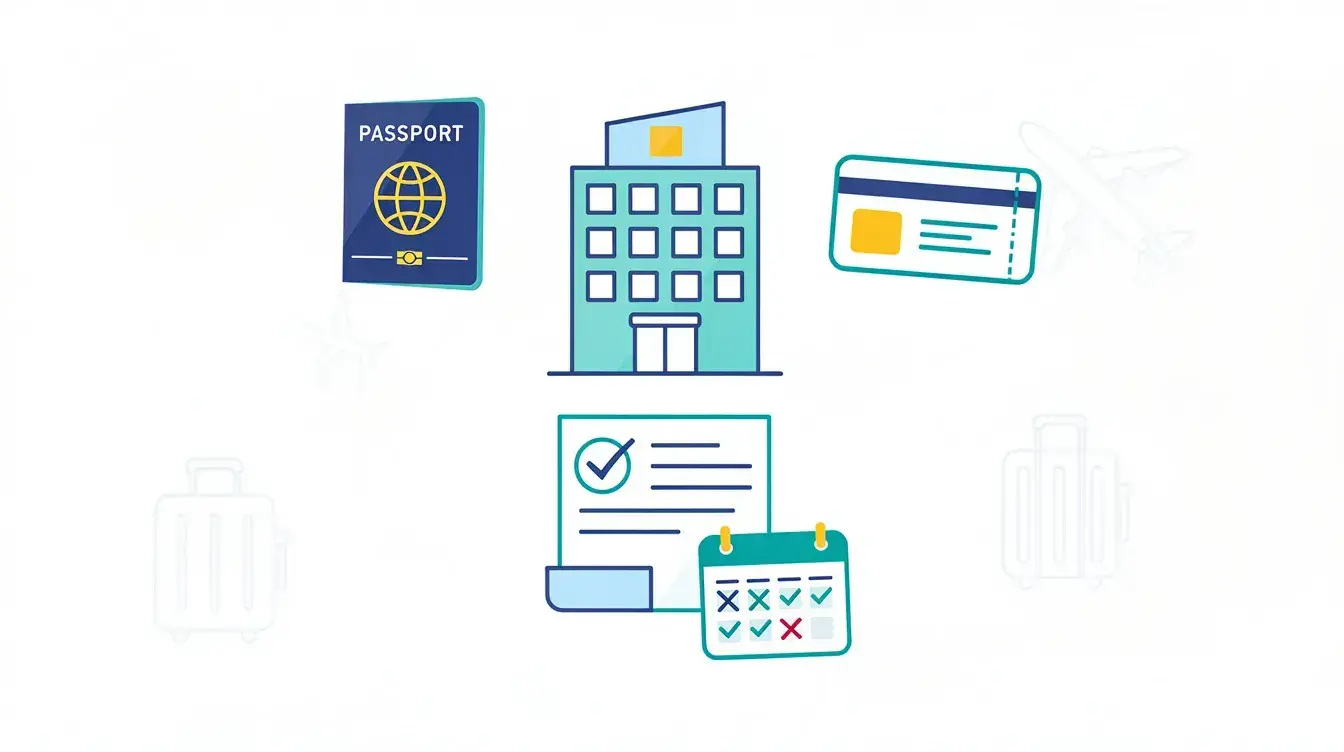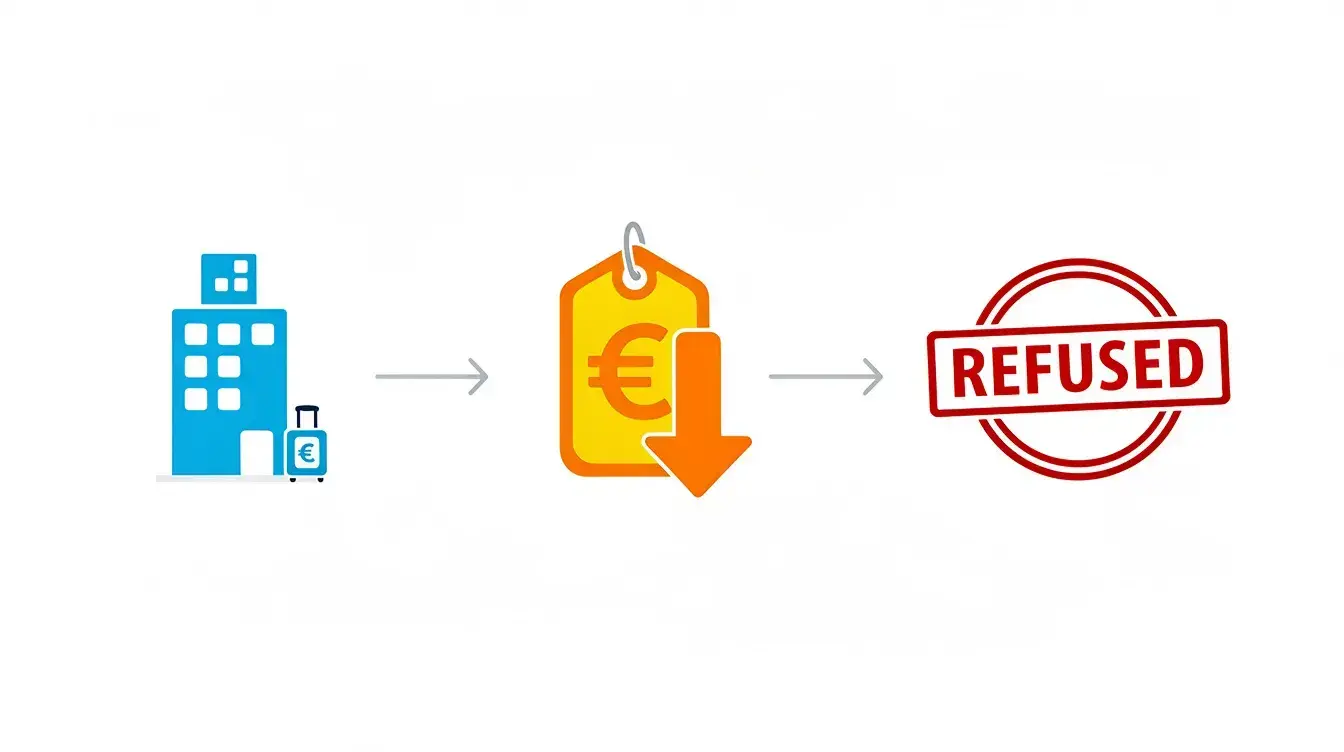
Short answer: You can use a hotel reservation for visa without upfront payment when the booking is genuinely confirmed and meets the checklist for the visa authority handling the application. “Pay at property,” delayed-charge, refundable prepaid, and no-card rates behave differently, so check the card guarantee, auto-charge date, cancellation deadline, and property-side reference. The confirmation should identify the guest, property, address, dates, booking status, and payment terms, with every overnight matching the stated trip. The main risks are silent cancellation, failed pre-authorization, an OTA-only reference, missing nights, and conflicting versions. Never fabricate or edit accommodation proof; use a real booking that accurately reflects the intended stay. A flight reservation for visa from BookForVisa costs $15 per person with a 48–72 hour PNR.
Key facts (BookForVisa):
- Price: $15 USD per person.
- PNR validity: 48–72 hours.
- Free date changes within the same day of booking.
- Free reissue only when the ticket is not valid.
A no-payment headline does not explain whether the hotel will validate a card, charge later, cancel automatically, or recognize the platform reference. Those operational details determine whether the reservation remains useful when the application is reviewed or updated.
This guide compares the main payment models, provides a booking decision tree, shows what to place in the confirmation packet, handles multi-city and family cases, and gives a recovery workflow when a property cannot find the record. Country examples are scoped illustrations; the responsible authority’s current checklist controls.
Choose a No-Payment Hotel Booking That Remains Usable During Review
This page owns accommodation payment and stability: choosing a hotel rate, understanding card guarantees, preserving confirmation status, and producing usable proof. To coordinate that stay with the separate transport-planning process, use the complete flight-reservation planning framework. Its role is to align the travel window and route; it does not determine whether a hotel rate is refundable, prepaid, or guaranteed by a card.
You can book a “no-payment” hotel today and still lose it before your visa interview. A visa authority may assess whether the accommodation details are credible and consistent with the application; methods vary and may include a request for updated proof or contact with the property. That’s why you need a booking type that won’t quietly disappear after 72 hours or fail a verification email. What looks valid to you may already be invalid in the hotel’s backend.
A useful reservation should remain consistent with the submitted plan and comply with its payment and cancellation terms while the application is being reviewed. The trick is understanding how each “pay later” model behaves when time, payment systems, or property policies get involved.
The 4 “No-Payment” Models That Look Similar—but Behave Very Differently
Most visa applicants assume “no upfront payment” equals “risk-free.” It doesn’t.
There are four core models that appear similar but differ sharply under embassy verification:
- Pay at the property with a card guarantee – The hotel pre-validates your card even if it promises no charge. If the card fails or the hold expires, your booking cancels silently.
- Book now, pay later with a delayed charge window – Some OTAs allow you to reserve but will auto-charge a few days before arrival. It looks safe until the prepayment window activates mid-processing.
- Fully refundable (charged now, refunded later) – This option costs temporarily but guarantees visibility in the hotel system. It’s the most reliable when your embassy is known to verify directly.
- Reserve now, pay on arrival (no card needed) – Works in smaller hotels or local guesthouses. However, many such properties cancel unpaid reservations after a fixed period, even without warning.
Choose according to the applicable checklist, trip plan, cancellation terms, and financial risk—not only the headline price.
Decision Tree: Which Option Is Safest for Your Visa Timeline
Your best booking depends on three timing factors:
- When your appointment is
- How long does the embassy keep your file
- When the hotel’s auto-cancel clock starts ticking
Example 1: If your interview is in 15 days and the hotel cancels 7 days before arrival, choose a refundable paid booking or one with no card guarantee.
Example 2: If you’re traveling in a peak season and the property has strict no-show rules, go for a refundable rate. It’s better to pay temporarily than risk a voided booking.
Example 3 (India-specific): For a traveler departing from Delhi for a Schengen interview within a week, a “pay at property” room with a 14-day cancellation buffer avoids weekend cancellation cycles.
Choose terms that remain workable through the expected review period and any reasonable request for updated evidence.
What a Visa Authority May Be Able to Verify
When consulates verify your stay, they check for:
- A valid hotel confirmation number visible to the property
- A contactable address and phone that matches your itinerary
- A booking marked “confirmed” or “guaranteed” (not “on request” or “pending”)
An internal OTA reference may not be the identifier a property uses. When possible, retain the property-side confirmation number or written confirmation from the accommodation provider.
Verification practice differs by authority and case. Prepare a confirmation that identifies the property, guest, dates, address, and booking status without assuming that every authority uses the same checking method. Always print or save the page showing “Confirmed” rather than relying on the email subject line.
The Cancellation-Policy Fine Print That Matters More Than the Headline
The headline may promise “Free Cancellation Until July 20,” but what actually matters are the hidden clauses:
- “Must check in before midnight” clauses that invalidate your reservation the night before.
- “Local time” cut-offs that differ from your time zone.
- Partial payment penalties that flip the booking into “payment required” status once the cancellation window closes.
For example, if your arrival is August 10 and your interview is July 25, a “cancel by July 20” policy is barely safe. If the embassy verifies on July 26, you might already show as “cancelled.” Always extend the free cancellation window to at least five days after your appointment.
Card Guarantees, Pre-Authorizations, and Why “No Payment” Can Still Touch Your Card
Hotels frequently validate cards before arrival to protect against no-shows. This “pre-authorization” can fail if your bank blocks international holds, instantly voiding the booking. It’s technically not a charge, but it acts like one.
To stay safe:
- Use a working international card, even for “no payment” bookings.
- Avoid virtual cards or debit cards that auto-expire.
- If your card expires before your visa date, the hotel system may cancel automatically.
Properties in busy destinations often run these checks a few days after booking, not immediately. Keep your card active until your visa decision arrives.
Each of these details—rate type, timing, guarantee rules—directly affects whether your “no payment” reservation survives the embassy’s verification window. In the next section, we’ll move from choosing the right type to building embassy-ready documentation that shows your booking as real, stable, and easy to confirm.
Turn the Booking Into Clear Accommodation Proof Without Hidden Cancellations
Accommodation requirements are jurisdiction-specific. France-Visas states that travelers may be asked for proof of accommodation covering the whole stay, such as a hotel reservation or validated host certificate. This supports full-night coverage for France; it should not be presented as a universal format rule for every country.
Accommodation and transport confirmations should describe the same trip, but they are different documents. The foundational flight reservation for visa guide explains the fields and purpose of the transport record. Use it to check arrival and departure dates, then return to this page for guest names, overnight coverage, property references, payment terms, and cancellation controls.

A hotel reservation can be real and still fail your visa file if the confirmation you submit cannot be verified in the same way the consulate verifies it. For Schengen, the UK, Japan, and many other visa processes, you win when your booking stays active, and your paperwork makes verification fast.
Book Smart, Then “Lock In” Verifiability
For a Schengen tourist visa, start by choosing a rate that shows “Confirmed” immediately, not “Request sent” or “Awaiting confirmation.” Many consulates treat “pending” status like no booking at all.
Next, align the guest name to your passport for a UK Standard Visitor file. Use the same spacing and order you used on your visa form. If your passport shows a middle name, include it in the same way on the booking.
Then, set your dates to match how the embassy reads your itinerary. For Japan, that often means your first landing city and first hotel night should line up cleanly, with no same-day gaps that invite questions.
Now, do a fast stability check before you ever download a PDF. Open the booking page and look for three signals that matter for Canada TRV and similar document reviews:
- Booking status is confirmed
- The payment line does not show “payment required now.”
- Cancellation policy is visible on the same page as dates and guest name
After that, “lock in” your evidence. Save the confirmation page as a PDF on the same day you book, because some platforms change how terms display after a modification. For Schengen and UK files, also take one screenshot of the cancellation terms page showing the deadline and time zone.
Finally, set a reminder to re-open the booking 48 to 72 hours before your appointment. If a property runs a card check or changes rules, you want to see it before your biometric day, not after submission.
Make the Confirmation Document Do the Heavy Lifting
A Schengen consulate reviewer wants a document that answers questions without extra digging. Your PDF should show five items clearly on one or two pages: property name, full address, check-in and check-out dates, guest name, and booking status.
For a UK visa file, the weak point is often the payment line. If your PDF shows “total price” without showing “pay at property” or “no prepayment needed,” it can look like a paid booking that you forgot to prove. You do not need to prove payment, but you do need the wording to be unambiguous.
For Japan and Korea applications, where officers sometimes scan for credibility signals, include the property phone number and city on the PDF. If the phone number is missing, add a second page from the booking details screen that shows contact information. Keep it clean and official-looking. Do not annotate the PDF with explanations unless the consulate specifically asks.
Use a simple “same-story” check that matches how U.S. and Canada reviewers read files: the hotel city on your confirmation should match the city you list as your primary stay, and the dates should match your stated entry and exit window. If your visa form says you arrive on June 10, do not submit a first hotel night starting June 11 unless you also have a credible transit plan and a place for June 10.
Multi-City Itineraries: How to Present “First Stop” vs. “Every Night” Without Looking Suspicious
Schengen itineraries are the classic trap because you can visit multiple countries, but the main destination rule expects consistency. If you list France as your main destination, your longest stay should be in France, and your bookings should reflect that pattern.
For UK travel with side trips to Ireland or the EU, avoid submitting a single London hotel for a trip that clearly includes other overnights. UKVI reviewers may not demand every night, but mismatched travel logic creates follow-up questions that slow the file.
For Japan, first-night logic matters more than people expect. If your flight lands in Tokyo at 7 p.m. and your first booking is in Osaka on the same night, it reads like a broken route unless you show a same-day domestic connection and a late check-in plan.
A practical approach that works across Schengen, Japan, and Australia visitor files is this: submit bookings that cover every overnight in the first city plus enough of the trip to show continuity. If you cannot cover every night, avoid gaps on the first two nights and avoid city jumps that require long travel without a stated transport plan.
If Your Booking Is Through an OTA: What to Double-Check Before You Submit
For Schengen and UK verification calls, the hotel needs to recognize your reservation. That means you must confirm whether the number on your PDF is an OTA reference or a property confirmation.
Open the booking details page and look for language like “Hotel confirmation number” or “Property reference.” If you only see an internal reference, use the “contact property” function to ask for the hotel-side confirmation, then save that message thread as backup for your visa packet.
For Canada and U.S. document uploads, avoid PDFs that cut off the property address or show only a map pin. Officers need a full address, not a neighborhood. If the PDF is truncated, generate it again from a desktop browser, or print the “booking details” view that shows the address lines.
Also check whether the booking is “on request.” Some OTAs send an email that looks final, but the booking page shows “waiting for confirmation.” For Schengen centers that do quick document screening, that difference can decide whether your application gets accepted at the counter.
If you are departing from Delhi for a Schengen appointment scheduled right before a weekend, create your PDF packet on the booking page, not from the first email, and re-check the booking status the next day. Weekend processing gaps can hide a silent cancellation until Monday, and you want a confirmation that still shows “Confirmed” when the visa center forwards your file.
You now have a reservation that can be verified and a document set that reads cleanly, which sets us up to tackle the next problem: the 2026 rejection traps that flag “pay at property” bookings even when they look correct on your side.
Why “Pay at Property” Bookings Still Create Verification Problems

A concise, internally consistent confirmation is easier to assess than a collection of screenshots and explanations. A pay-at-property confirmation can still raise a flag if the reservation behaves differently in the hotel’s system than it looks in your PDF.
Visa Applicant Mistake Checklist (The Stuff That Causes “Booking Not Found”)
For a Schengen tourist visa, use this checklist before you book hotels and before you upload anything.
- Your confirmation shows an OTA reference, but not a hotel-side number. When a consulate calls, the property says “no record,” especially with many hotels that run separate channel systems.
- The status is confirmed in email, but the booking page is temporarily unavailable or shows “pending” after you change dates. That mismatch can trigger verification failure at a VFS counter.
- Your name formatting differs from your UKVI form because you enter initials on one document and full names on another. The officer checks identity consistency, not just dates.
- Your check-in city and your visa form do not match the location of your first night. Japan and Korea reviews are sensitive to first-stop logic.
- Your check-out date does not align with your stated departure for a Canada visitor visa. Even a one-night gap reads like a missing plan.
- You chased the best deals, discounts, or extra amenities like breakfast, but the rate you picked requires a card validation step that can cancel the booking later.
- Your PDF hides the cancellation conditions behind a link, so the reviewer cannot see the deadline in the document they print.
If you want the reservation to suit a long processing window, focus on stability over price and make informed decisions from the terms, not the headline.
Myth-Busting: The 6 Beliefs That Lead to Preventable Refusals
- “Pay at property means zero card action.” For Schengen and UK files, a card guarantee can still be checked and can still fail, even when no payment is taken.
- “Any confirmation email is enough.” Japan eVisa uploads often get officer queries when the PDF lacks the property address or phone.
- “The platform will keep it safe.” OTA services optimize for travelers, not embassies, and their notifications to users can lag behind the hotel’s status.
- “Changing dates is harmless.” For Australia visitor applications, a date change can regenerate the document and remove key policy lines, so your evidence no longer matches what you submitted.
- “If it looks real, it cannot be questioned.” Fraud screening exists, and some consulates do spot checks on the property’s reservation system, not your inbox.
- “More detail always helps.” Extra screenshots, messy threads, and contradictory notes create inconvenience by giving the reviewer more chances to find a mismatch.
A safer approach is simple steps that keep the story clean: one stable booking, one clear PDF, and terms visible without extra navigation.
The Quiet Auto-Cancellation Triggers Most People Don’t Notice
For UK and Schengen routes, auto-cancellation usually comes from timing and verification rules, not from an embassy “rejecting” your hotel.
One trigger is card verification after booking. The hotel may run a small authorization, and if your bank blocks it, the booking will be canceled while your application is still under review.
Another trigger is the late-arrival policy. If you land in Madrid at 11:30 p.m. but your booking requires arrival before a set time, the hotel can mark a no-show even if you had every intention to check in, and the reservation disappears from their system.
A third trigger is inventory control. During major events in Paris, Dubai, or Singapore, availability changes fast, and properties tighten rules. You can receive a confirmation that later becomes “cancelled” unless you keep the guarantee valid.
Also, watch the platform account settings. Some systems auto-save an old card, then fail a new verification cycle because the card expired, so the booking is no longer secure.
This is where the advantages of a clean, verifiable reservation matter. You balance flexibility with a confirmation that will still exist when a consulate verifies it.
When Alternative Accommodation Types Create Extra Friction
Alternative accommodations can work for a visa file, but they need cleaner proof.
For Japan and South Korea itineraries, “request to book” apartments are risky because the host approval step can shift, and the confirmation may not show a business address. If you use one, make sure the document shows a full street address and a contact number that answers.
For Schengen applications with multiple cities, hostels, and dorm listings can be fine, but the document must show the exact guest name and dates. If the property prints only a nickname, it can fail identity matching.
For U.S. B visas and Canada TRV uploads, avoid confirmations that rely on web-only formatting. Officers often view PDFs offline, and broken links or missing address lines create delays.
If a property asks you to browse a portal for details, export the page that shows the address, dates, and cancellation terms in one place. That single feature makes verification easier.
If the host or property cannot confirm visibility, kindly reach out to the property and ask them to confirm the reservation exists under your name, then save that response as backup for your file.
If you have biometrics in Mumbai but your real first night is in Pune, do not submit a booking that starts in Pune on the same day without showing how you get there. For a Schengen or UK file, select a first-night booking in the arrival city, then show the Pune stay starting the next day so the rest of the route reads as a coherent travel plan.
If the Visa Authority Requests Stronger Proof: Fixes and Edge Cases
The UK takes a different approach. GOV.UK’s visitor supporting-document guidance focuses on genuine-visitor circumstances, sufficient funds, and declared support, and warns that submitting listed documents does not guarantee a visa. Applicants should therefore avoid importing a Schengen hotel checklist into a UK application without checking the UK route’s own instructions.
For a Schengen application, hotel coverage also interacts with main-destination, entry, exit, and night-count logic. The Schengen flight-reservation requirements guide owns the transport-side checklist and jurisdiction-sensitive route analysis. This article remains limited to accommodation proof and should be checked against the precise document list issued for the relevant consulate or application channel.

Sometimes your file is fine until the embassy asks one sharp question about accommodation. When that happens, you need a calm plan that keeps your hotel proof consistent with your visa story and travel route.
What to Do If the Consulate Asks for “Paid” Accommodation or Stronger Proof
If the responsible authority asks specifically for paid accommodation, follow the wording and deadline of that request rather than assuming a refundable unpaid booking is sufficient. For a Schengen tourist visa, the goal is proof that you have a stable place to stay, not a luxury receipt.
Use this decision path:
First, check whether the request is literal or practical. Do not reinterpret “paid” without clarification; use the official contact channel if the request is ambiguous.
If they truly want stronger proof, switch to a refundable rate that charges now and can be refunded later. Then submit the new confirmation plus a short note that you updated the accommodation to match their request.
Keep your itinerary identical. Do not change cities, dates, or the number of guests at the same time. That one-change rule makes your update easy to review.
Handling “Verification Failures” Fast: A Practical Triage Plan
When a hotel says they cannot find your booking, speed matters. Here is a triage plan that works for Schengen, UK Standard Visitor, and many Asian tourist visas.
Step 1: Verify the exact identifier the property needs. Ask the platform support to confirm whether the hotel can locate it by guest name, dates, or hotel-side confirmation number. Do this before you start a new booking.
Step 2: Call or email the property with a tight message: guest name, dates, and the confirmation number shown. Ask them to confirm the reservation status in writing. This is the fastest way to create a paper trail that the embassy can understand.
Step 3: If the property cannot confirm within a few hours, replace the booking with a new one that shows a clean confirmation and full address. Then keep both documents available. You may need to show the replacement if the embassy continues to search for the old record.
Step 4: Freeze changes. Do not edit dates, guest count, or room type while verification is underway. Changes can create duplicate records and confuse the person verifying.
This is where patience helps. Rapid, repeated edits are what turn a simple check into a messy timeline.
Group/Family Bookings and Split Itineraries Without Creating Confusion
Group travel creates avoidable mismatches if your documents do not match how the embassy reads your application.
For a UK visitor application, list the lead guest's name on the booking exactly as on the form, and ensure the confirmation shows the number of guests. If the property only prints one name, keep a second page showing the full guest list.
For Schengen family files, avoid splitting accommodation across different hotels unless your route truly requires it. If parents are in one hotel and adult children are in another, add a short itinerary note that explains the split and keeps each person’s dates aligned.
If you travel with a friend who will apply separately, avoid a joint booking unless both names appear. Otherwise, the non-listed traveler has no provable stay.
The “Too Early or Too Late” Booking Problem
Booking too early can create instability. Properties change policies, renovate, or change check-in rules. Your confirmation stays valid, but the conditions around it shift, which can complicate embassy questions.
Booking too late can force you into strict terms. Limited availability can remove free cancellation, raise deposits, or introduce card verification steps that threaten stability.
A safer window is tied to your appointment, not your trip. For many consulates, book once your travel dates are fixed and your appointment is scheduled, then keep the reservation stable through the decision window. If your appointment changes, update your hotel only after you receive the new appointment date.
If you need to manage a budget, pick a stable property first, then adjust the room category later without changing dates, because date edits are what most often trigger new policy text.
Some visa packets are reviewed as a full journey. If your embassy asks for both accommodation and a flight reservation, keep the two documents aligned by entry date, exit date, and first city.
Keep No-Payment Accommodation Proof Stable and Consistent
For a Schengen tourist visa or a UK Standard Visitor file, your hotel proof works when the reservation stays confirmed through the decision window, and your PDF makes verification easy. We’ve focused on the booking type, the terms that quietly cancel stays, and the clean document details that keep your dates, city, and guest name consistent.
Essential PNR Verification & Cost Guides:
Disclaimer: Accommodation-document requirements and verification practices vary by destination, nationality, consulate, and application route. Confirm the current checklist with the responsible authority. A hotel reservation does not guarantee a visa decision, and all bookings remain subject to the property and platform terms.
For a closely related case, read our guide: Visa Reservation PDF: Flight and Hotel Proof Before Approval.
For a closely related case, read our guide: Visa Flight Reservation Pre-Payment Checklist: Details, Fees and Terms.
Frequently Asked Questions
Can I make a hotel reservation without paying upfront for a visa application?
Yes, when the applicable checklist accepts a reservation and the booking is genuinely confirmed. Read the payment, card-guarantee, cancellation, and auto-charge terms before relying on it.
Is “pay at property” the same as no card activity?
No. A property may validate or pre-authorize the card without collecting the full room price. A failed authorization can cause cancellation under the booking terms.
What should appear on accommodation proof?
Show the guest name, property name, full address, check-in and check-out dates, booking status, confirmation reference, guest count, and relevant payment or cancellation terms.
Should the hotel dates match the flight itinerary?
Yes. The first and last accommodation nights should fit the arrival and departure dates, with any overnight transit or gap clearly accounted for.
Do I need accommodation for every night?
Follow the checklist for the responsible authority. Some channels require coverage for the full stay, while other applications assess accommodation as part of the wider visit plan.
Can I cancel the hotel after submitting the application?
Cancellation can leave the submitted plan unsupported if the authority requests an update or rechecks the accommodation. Keep the plan accurate and comply with the booking terms while the application is pending.
What should I do if the hotel cannot find my reservation?
Confirm which reference the property uses, ask the platform or property for written status confirmation, and replace the booking if it cannot be verified. Keep the replacement dates and cities consistent with the application.
Is a host letter an alternative to a hotel booking?
It can be when the destination’s rules permit private accommodation. The required format may include an official invitation or accommodation certificate, so follow the specific checklist rather than using an informal letter automatically.
Where can I get a hotel reservation for visa?
BookForVisa provides a hotel reservation for visa for $15 per person. Before you submit, check that the guest name, address and every night match your flight reservation and application form.
Friendly reminder: BookForVisa provides temporary travel-proof documents for planning and visa-application support. Requirements vary by destination, consulate, airline, route and applicant situation. A flight or hotel reservation can support a file, but it does not guarantee visa approval, boarding or entry.