
A flight reservation is one of those documents that looks simple until it conflicts with the rest of the visa file. The route may be fine, but the hotel dates may not match. The booking may show the right city, but the passenger name may differ from the passport. The reservation may be generated too early and expire before the appointment. These small mistakes are what make applicants waste money and time.
This guide gives Indian travelers a practical process for making a flight reservation for visa applications without buying the final ticket too early. It compares the main booking methods, explains how to verify details, and shows how to keep the reservation aligned with the rest of the file.
The important shift is this: a visa flight reservation is not only about producing a document. It is about creating a travel timeline that can sit beside your application form, accommodation proof, insurance dates, invitation letter, leave approval and bank evidence without creating questions. If your file says you will visit France for ten days, your flight reservation should not quietly suggest a different country, a longer stay or a return date that your leave letter does not support.
For Indian applicants, this matters even more because many popular visa routes require planning before the final approval is known. Schengen tourist visas, UK visitor visas, Canada visitor applications, Australia tourist files and several business-visit applications may all ask for some version of flight proof, travel itinerary or evidence of intended return. A reservation lets you show the plan while keeping your money flexible until the visa outcome is clearer.
For the broader framework, start with BookForVisa’s complete flight reservation for visa guide. This article owns the “how to make it” workflow: step-by-step preparation, method selection and submission hygiene.
In This Guide
Flight Reservations for Visa Applications: What Indian Travelers Must Know
A flight reservation for visa is a temporary itinerary or booking document that shows your intended travel route and dates. It is normally used before buying the final ticket, especially when the visa result is not yet known. It helps demonstrate travel intent, but it does not replace the rest of your evidence.
Think of it as a travel-plan document, not as a magic approval document. The reviewer uses it to understand your proposed movement: where you plan to enter, how long you plan to stay, whether your exit makes sense and whether the dates fit the supporting documents. If the reservation is clear, it reduces friction. If it contradicts the rest of the file, it can make an otherwise normal application look rushed.
So, what exactly is a flight reservation?
A proper reservation should show the passenger name, route, travel dates, airline or flight details and booking reference where available. It should be based on your real passport details and intended travel window. It should not be a fake itinerary or a PDF manually edited to look like a booking.
The wording can vary. Some applicants call it a flight itinerary. Some agents call it a temporary booking. Some checklists refer to proof of intended means of transport. In practice, the purpose is similar: the document should show a believable travel route that matches the visa application. The safest version is readable, consistent and easy to compare against your other documents.
Why visa offices ask for flight reservations
Flight proof helps reviewers understand when you intend to enter, how long you plan to stay and how you intend to leave. For Schengen, it can support main-destination, accommodation, insurance and return-intent logic. For the UK, it can support the genuine visitor story and ability to leave at the end of the visit.
It also helps officers spot basic contradictions quickly. If your form says you will stay from 10 June to 20 June, but the flight reservation shows return on 25 June, the file needs correction. If your invitation letter says the event ends on 12 August, but your return flight leaves on 10 August, the route may not support the stated purpose. These are simple issues, but they are common when applicants create flight proof after filling everything else.
Real ticket vs flight reservation
A real ticket is usually paid and may include a ticket number. A flight reservation shows planned travel without requiring final ticket purchase. Many applicants prefer a reservation because buying final flights too early can create refund or rebooking problems if the visa is delayed or refused.
A confirmed paid ticket is not automatically stronger if it creates financial risk or locks you into dates that may change. A reservation is usually more practical when your appointment date is fixed but the decision date is uncertain. A paid ticket can make sense when the official checklist specifically requires it, when the fare is truly flexible, or when the applicant has a fixed event and can manage the refund or change rules.
How Indians commonly use flight reservations
Indian applicants often use reservations for Schengen tourist visas, UK visitor visas, Canada visitor files, Australia tourist files and short-term business or event travel. The reservation must be adapted to the visa type. A Schengen file needs clear entry and exit dates. A UK visitor file needs a return plan that matches purpose, funds and ties to India.
For a Schengen tourist file from India, the reservation should normally support the country where you spend the longest time or the country that matches your main purpose. For a UK visitor file, the reservation should make the return plan believable without suggesting an open-ended stay. For business travel, the dates should match the meeting, conference or invitation evidence. For family visits, arrival and departure should make sense beside the invitation and host address.
Indian travelers also need to consider route practicality. A Delhi, Mumbai, Bengaluru, Chennai, Hyderabad, Kochi or Kolkata departure can have many possible transit hubs. But more options do not mean a more convincing itinerary. A simple route with one logical connection often reads better than a complicated multi-stop route that looks built only to create a document.
Do Not Burn Your Wallet Before Takeoff
Buying a full ticket before the visa result can feel responsible, but it is not always financially sensible. Visa processing can stretch. Appointments can move. Travel dates can change. A non-refundable ticket may become a painful sunk cost.
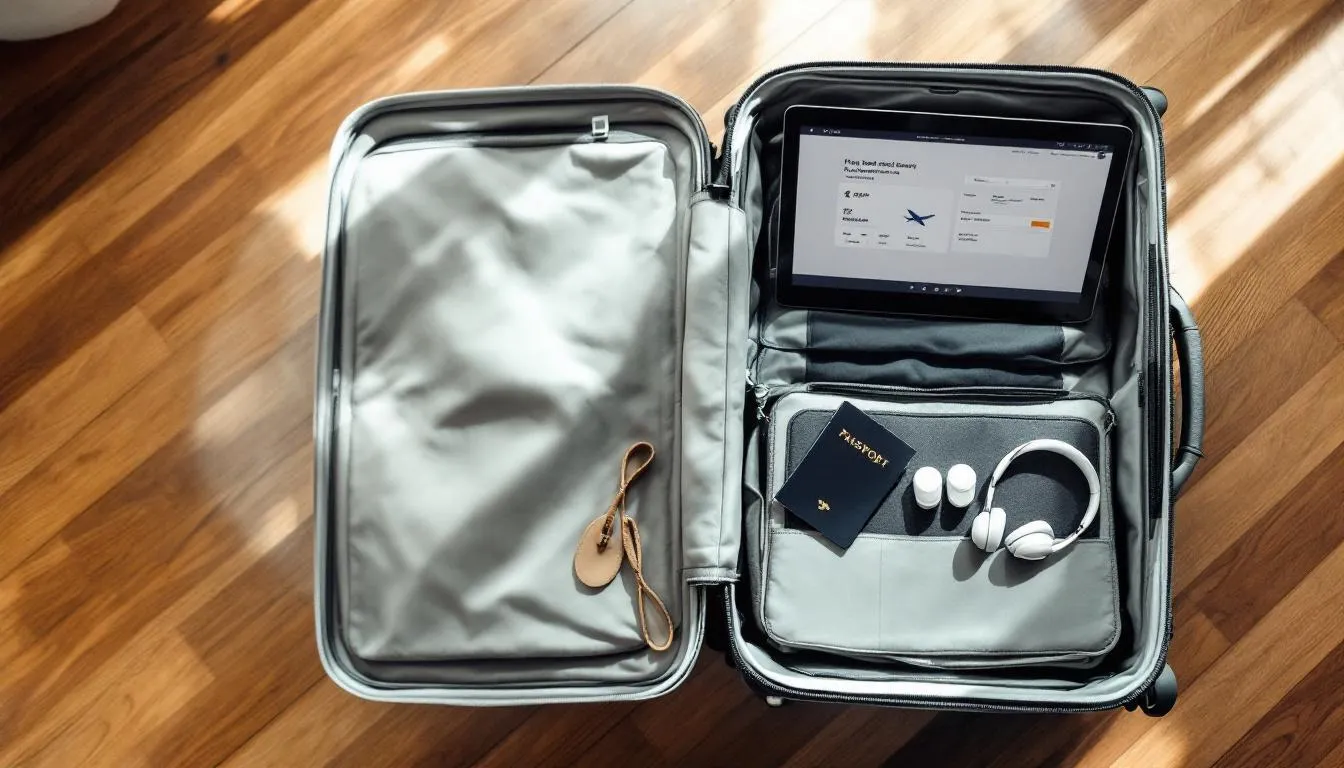
Visa delay can turn a paid ticket into a loss
If the visa decision arrives after the planned departure date, a paid ticket may need rebooking or cancellation. Even refundable fares can have conditions and slow refund timelines. A temporary reservation lets you show travel intent without locking in final travel before the visa process is clearer.
This is especially painful during peak application periods. Applicants sometimes book early because the fare looks attractive, then the appointment moves or the visa decision comes late. By the time the passport returns, the original flight has already passed or the airline change fee is higher than expected. A reservation-first approach avoids turning the visa timeline into an airfare gamble.
The hidden trap of refunds and cancellations
Refundable does not always mean easy. Some fares refund only part of the amount, some refunds take time, and some tickets are refundable only under specific rules. Applicants should read fare terms before using a paid ticket as visa proof.
There are also cash-flow issues. Even when a fare is refundable, the money may remain blocked while the airline or travel agency processes the refund. That can affect the same bank balance you plan to show for the visa application. If the bank statement suddenly shows a large airline purchase and then a refund process, it may not help the file unless the rest of the financial story remains clear.
Why buying early does not automatically help
A paid ticket with wrong dates, weak funds or mismatched hotels is still a weak document. Visa files are not strengthened by payment status alone. They are strengthened by coherence. Your flight dates should match the form, hotel proof, insurance and return obligations.
Officers are not usually impressed by unnecessary financial commitment. They are looking for a travel plan that makes sense. If you buy a ticket too early and then your hotel booking changes, your invitation changes or your employer approves different leave dates, the ticket can become the document that creates the contradiction. The smarter move is to build the file calendar first, then create matching flight proof.
A useful mental model is “reservation first, final ticket later.” Use a reservation when you are still proving the plan. Buy the ticket when the visa, timing and fare conditions make the actual journey realistic. That approach protects your money while keeping the application file tidy.
Different Ways to Get a Flight Reservation in India
There are several ways to create travel proof. The best method depends on your timeline, budget, route complexity and ability to manage changes.

Option 1: booking directly with airlines
Some airlines or fare types allow holds or flexible booking options, but availability varies. Direct airline booking can be useful if you understand the rules and timing. The limitation is that holds may expire quickly and may not cover the full visa-review timeline.
This route works best when your appointment is very close, your itinerary is simple and you can monitor the booking yourself. The drawback is that many airline holds are short. Some are priced differently by route or fare class. Some disappear if payment is not completed. If your appointment is still far away, a short hold may expire before the document is reviewed.
Option 2: using a travel agency or local agent
Local agents may help with route selection and document formatting. The risk is quality variation. Ask whether the reservation is temporary, what details will appear, how corrections work and whether the route matches your visa purpose.
A good agent should ask for passport-correct details and should understand why the route matters. A weak agent may simply generate whatever is fastest. That can lead to strange airports, mismatched dates, missing passenger details or unclear booking references. Before paying, ask how spelling corrections work and whether you can receive an updated copy if the appointment date changes.
Option 3: using an online reservation provider
An online provider can be fast and practical when your appointment is close. The service should create a readable reservation from passport-correct details and realistic route logic. Avoid providers that rely on fake templates or overstate what the document can do.
The advantage is speed and convenience. You can prepare the document from home, especially when you already know the travel dates and destination. The risk is choosing a provider that treats every application the same. A Schengen itinerary, a UK visitor plan and a business visa file should not all be handled with identical route logic. The reservation should match the purpose.
Before using any service, check what information they request. A serious reservation process should collect your full name, travel cities, dates and sometimes visa context. If a tool creates a document without enough information to match your file, the output may look generic or disconnected from your actual application.
| Method | Best for | Main risk |
|---|---|---|
| Airline hold | Short timing and simple routes | Hold may expire quickly |
| Travel agent | Applicants who want manual help | Quality depends on the agent |
| Online reservation service | Fast document preparation | Choose carefully; avoid fake templates |
| Refundable ticket | Fixed dates and available cash | Refund terms and cash-flow pressure |
How to verify your reservation details
Check the passenger name, route, dates and booking reference where available. Compare the reservation with your visa form, hotel proof, insurance and leave letter. If anything differs, correct it before submission instead of explaining avoidable errors later.
Do the check in two passes. First, verify the document itself: name, dates, cities, airline details, booking reference and spelling. Second, compare it to the file calendar: form dates, hotel dates, invitation dates, leave approval, insurance and return obligations. A reservation that passes the first check but fails the second check still needs correction.
If a booking reference is included, keep the surname spelling exactly as submitted. Some systems compress names or remove spaces, which can be normal. What you should avoid is a completely different surname, missing traveler, wrong route or dates that no longer match the application.
How to Make Flight Reservation for Visa Application
The workflow is simple, but the order matters. Build the file calendar first, then create the reservation.
Step 1: check the official requirement
Read the checklist for the country and visa type. Schengen, UK and other visa routes do not use identical wording. Some ask for flight reservation, some ask for travel itinerary, and some focus on genuine travel purpose and return ability.
Do not assume one country’s checklist applies to another. A France or Germany Schengen tourist checklist may ask for transport and accommodation proof in a specific way. A UK visitor application is often more focused on purpose, funds and intention to leave. Canada, Australia and other visitor routes may treat the itinerary as supporting evidence rather than the central decision point. Match the reservation to the actual visa route.
Step 2: choose the reservation method
Choose between airline hold, travel agent, online provider or refundable ticket based on your timing and risk. If you need a practical online workflow, BookForVisa’s flight reservation for visa page explains the service route.
If your appointment is tomorrow, speed and accuracy matter most. If your appointment is two weeks away, validity and refresh options matter more. If your travel dates are tied to a wedding, business meeting or university reporting date, date consistency matters more than finding the cheapest route. The best method is the one that protects the file from contradictions.
Step 3: gather travel details
- Passport-correct full name.
- Departure city and destination.
- Entry and exit dates.
- Visa type and application country.
- Hotel or host dates.
- Any event, invitation or leave dates.
Use the passport as the master document for names. If your passport contains multiple given names, long surnames or spacing differences, keep the booking name as close as the reservation system allows. Avoid switching name formats between the visa form, flight reservation and cover letter.
Step 4: get the reservation and check it
Review the document before submitting it. Make sure the travel dates and route match the rest of the file. If a booking reference appears, it should belong to the reservation and not be manually edited.
Look at the route like a reviewer would. Does it make sense for your destination? Does the arrival date support the first hotel night? Does the return date match your declared exit? Is the trip length believable for your work leave, funds and purpose? If you cannot explain the route in one sentence, simplify it before submission.
Step 5: print or upload it correctly
Use a readable PDF or printout. Do not crop out key details. Keep the flight reservation near the itinerary, accommodation and insurance documents so the reviewer can compare the dates easily.
For online submissions, upload the cleanest version only. For physical submissions, print clearly and avoid stapling pages in a way that hides booking references or route details. If you later correct the reservation, remove the older version from the package so the file does not contain two competing itineraries.
If your file is Schengen-specific, use the Schengen visa flight reservation requirements guide to align transport proof with Schengen country logic.
Use BookForVisa to prepare a clean flight reservation that matches your travel dates and application documents.
Common Mistakes Indians Make and How to Avoid Them
Most reservation problems are preventable. They happen when applicants rush the document or treat it separately from hotels, funds and forms.
Using a fake or unverifiable itinerary
Do not submit a fabricated PDF or manually edited flight proof. A reservation should represent intended travel honestly. If the document cannot be explained, replace it.
The temptation usually comes from urgency. An applicant has an appointment tomorrow, finds a free template and edits the names and dates. That shortcut can create bigger problems than a missing document. A fake-looking itinerary may contain impossible flight numbers, old airline branding, inconsistent airport codes or a booking reference that does not belong to the route.
Submitting expired or canceled reservations
Temporary reservations can expire. Generate close enough to the appointment or submission date that the document remains useful, and refresh properly if the travel calendar changes.
Expiration is not always visible on the PDF. That is why the timing strategy matters. If you create the document too early, it may look current in your folder but no longer support the application if checked later. If your processing timeline changes, refresh the reservation and then update the matching documents only if the travel dates also change.
Mismatch between flight dates and hotel bookings
If the reservation shows eight days but hotels cover five, the file has a gap. Fix the accommodation or adjust the flight dates. Do not leave the reviewer to guess.
Some gaps are explainable, such as an overnight flight arriving the next morning or a stay with relatives for part of the trip. But the evidence should explain the gap. If you stay with a host, the invitation should cover those dates. If you travel overnight, the itinerary should make that obvious. Silent gaps create unnecessary doubt.
Missing or unaligned travel insurance
For Schengen, insurance is a major checklist item. Germany’s India checklist, for example, includes travel medical insurance valid for the Schengen trip. Insurance dates should match the travel period shown by the reservation.
The safest approach is to compare the first date and last date across the reservation, hotel proof and insurance. If insurance begins one day after arrival or ends before departure, fix it before uploading. This is a small admin detail, but it is exactly the kind of inconsistency that can slow a file.
Ignoring country-specific instructions
Each visa route has its own evidence logic. A German Schengen checklist is not the same as a UK visitor file. Follow the exact official instructions and use the reservation to support that file, not a generic travel story.
Country-specific rules also affect route choice. If you are applying through the country of main stay, the itinerary should support that choice. If your first entry is different from your main stay, the supporting itinerary should explain the movement. If the destination requires accommodation proof, the flight reservation should not create unexplained nights outside the accommodation plan.
How to fix mistakes quickly
If the reservation is wrong, correct the source document. Do not hand-edit the PDF. If dates change, update hotels, insurance, forms and cover letters together. One clean updated file is better than multiple conflicting versions.
If the error is discovered before submission, fix it fully and submit the corrected file. If it is discovered after submission, follow the visa center or embassy update process instead of sending random duplicate documents. If the error is minor formatting, such as spacing in a long name, keep the rest of the file consistent. If the error changes dates, travelers or route, treat it as a real correction.
Final pre-submission checklist
- Name matches passport.
- Travel dates match the visa form.
- Hotels or host proof cover the same stay.
- Insurance matches where required.
- Route matches destination and purpose.
- Funds support the trip length.
- Reservation is readable and uncropped.
- Only one final version is submitted.
A strong flight reservation is not about looking expensive. It is about making the file easier to read. When the route, dates and documents all agree, you reduce confusion and avoid wasting money on premature tickets or rushed corrections.
The best version is boring in a good way. The officer should be able to understand your trip quickly: who is traveling, where you will enter, when you will leave, where you will stay and why the timeline fits your purpose. That is the practical goal of making a flight reservation for a visa application.
FAQ
How do I make a flight reservation for a visa application?
Check the official checklist, lock your travel dates, prepare passport-correct details, choose a reservation method, generate the itinerary and verify that it matches hotels, insurance, funds and forms.
Do I need to buy a full ticket for a visa?
Not always. Many visa routes accept a reservation or itinerary, but requirements vary by country and visa type. Follow the exact checklist for your application.
What should a flight reservation show?
It should show passenger name, route, travel dates, airline or flight details and booking reference where available.
Can I use a flight reservation for Schengen visa?
Many Schengen checklists include flight reservation or proof of intended transport. The reservation should match accommodation, insurance and main-destination logic.
Can I use a flight reservation for UK visitor visa?
A flight reservation can support travel dates, but UK visitor decisions focus on genuine visit, funds, purpose and intention to leave at the end of the visit.
When should I create the reservation?
Create it after your travel dates and supporting documents are aligned, and close enough to submission that the reservation remains useful.
Can visa officers verify the booking reference?
Some checks may involve the booking reference, while many compare the reservation with the full application. A clean, consistent reservation is stronger than a static template.
What if my reservation expires?
If updated proof is required, refresh the reservation through a proper process and keep the same document calendar unless your travel plan genuinely changed.
Should hotel and insurance dates match the reservation?
Yes. Date consistency across flights, hotels, insurance and forms is one of the most important checks.
Is a flight reservation the same as a fake ticket?
No. A flight reservation is a temporary booking or itinerary used to show intended travel. A fake ticket is a fabricated or edited document that does not represent a real reservation.