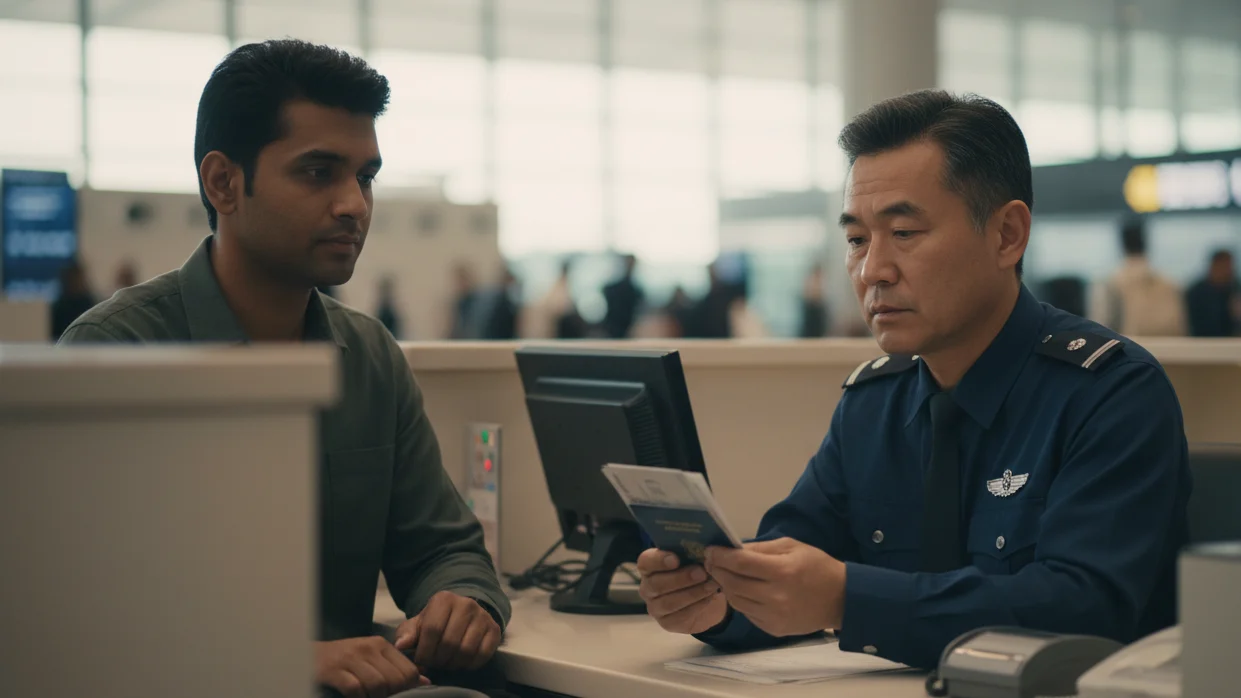
Can You Submit Visa Application Without Return Flight Reservation?

Can You Submit Visa Application Without Return Flight Reservation?

Visa Application Without a Return Ticket: Risks, Rules & Safer Alternatives

The checklist says “return flight reservation,” but your appointment is next week, and fares are climbing by the hour. You want to file now, keep dates flexible, and still look credible when someone checks your itinerary. That tension is where most refusals start, not because you lacked funds, but because your exit plan looked vague.

We will help you decide when a one-way submission is reasonable, when it triggers extra scrutiny, and what to use instead so your file still shows a clean exit timeline. You will see how to match flight dates to your stated stay, how to avoid routes that look engineered, and how to explain flexibility without sounding evasive. Need a verifiable exit date without locking a return flight? Use a dummy ticket for a clean visa-ready itinerary.
 

submit visa application without return flight reservation is a question many travelers ask in 2026 as embassies tighten documentation requirements. While some visa categories allow flexible travel plans, others expect clear proof of entry and exit to verify the length and intention of your stay. Understanding these distinctions helps prevent delays or additional document requests.

Visa officers primarily assess whether your travel timeline is logical and aligned with your stated purpose. Even if a return flight is not mandatory, providing a structured itinerary—supported by consistent dates, accommodation details, and onward travel logic—can significantly reduce scrutiny and support a smoother approval process.

Last updated: February 2026 — Reflecting global consular trends, exit-proof requirements, and documentation practices for short- and long-stay visas.

When embarking on your visa application, securing the right flight reservation for visa early can make all the difference in presenting a credible and organized plan to consular officers. Many applicants face uncertainty with exact return dates due to processing variables and flexible schedules, making it challenging to commit to full bookings. This is where specialized tools shine in early-stage visa planning by allowing you to generate temporary flight itineraries that perfectly match your intended stay without any financial commitment or risk. A reliable dummy airline ticket generator with PNR for visa creates authentic-looking reservations complete with verifiable PNR codes, dates, and routing that embassies accept as valid proof of exit. These options eliminate the pressure of fluctuating fares while ensuring your document is ready for submission. By simplifying this aspect of preparation, you can dedicate more time to strengthening financial proofs, employment letters, and personal ties. The risk-free nature means you maintain full flexibility to adjust plans post-approval, avoiding costly changes or cancellations. Whether applying for Schengen, UK, Japan, or other visas, such tools provide peace of mind and professional documentation that aligns with requirements for reservation for visa and onward travel proof. Start leveraging these solutions today to streamline your process and boost your application's strength. Discover more in our guide on the dummy airline ticket generator with PNR for visa.


What “Return Flight” Really Means On Visa Checklists (And Why It’s Often Misread)

What “Return Flight” Really Means On Visa Checklists (And Why It’s Often Misread)

A return reservation looks like a simple checkbox, but it often decides whether your file feels “planned” or “unclear.” On Schengen, Japan, and UK visitor checklists, that line can invite follow-up at the appointment desk or interview if your exit plan looks loose, so we decode what the embassy is asking you to prove first.

“Return” Vs “Onward” Vs “Proof Of Exit”: Three Different Requests

On a Schengen short-stay checklist, “return ticket” usually acts as shorthand for one idea: you will exit the Schengen Area before your allowed stay ends. That is a different request than “onward travel,” which can mean you leave the first country but continue elsewhere.

On a Japan temporary visitor application, the wording may emphasize “schedule” or “itinerary” rather than a literal paid return. The practical signal is still the same: dates that match your stated leave window and a route that makes sense.

On a UK Standard Visitor file, “return” often functions as an intent test. Officers look for a believable, clear endpoint to the trip, not a perfect circle route. If your plan is one-way, the burden shifts to how clearly you explain your exit.

So when you ask, “Can you submit without a return reservation?” we reframe it into a better question: what form of exit proof fits the exact wording on your visa channel and category.

Reservation, Itinerary, Ticketed Booking, Confirmed Ticket: The Verification Ladder

At a Schengen consulate or a US visa window, staff do not treat all flight documents equally. A PDF can look polished and still fail if the underlying record cannot be checked.

Think in levels, because different visa processes are verified at different levels:

  • Itinerary summary: a route plan with dates and flight numbers. Useful for some eVisa portals, but weak for in-person consular reviews.

  • Reservation with PNR: a booking reference that can be retrieved in an airline system or global distribution view. Commonly accepted for Schengen applications when the checklist says “reservation.”

  • Ticketed booking: a paid, issued ticket number. This is the strongest proof for high-scrutiny cases like certain US B1/B2 interviews, where the officer expects you to describe your travel clearly.

  • Confirmed, checkable status: the key detail is not “paid,” it is “verifiable.” If an officer or intake agent cannot pull it up, it becomes a credibility problem.

Verification also depends on the submission path. A third-party intake counter might only look for a PDF, while a consular officer may spot inconsistencies between your claimed dates and the airline-style formatting.

On a French Schengen short-stay, intake may accept an outbound-only printout. The officer still asks, “How do you leave?” If your file cannot answer with dates, “return” turns into an intent test.

If you are applying for a Canadian temporary resident visa with flexible travel dates, the safest approach is to assume your document could be checked later and keep the record stable through processing.

When A One-Way Looks Normal (And When It Doesn’t)

A one-way can be normal when your visa type is built for longer horizons. For a German national D visa for study, a return flight is often illogical because you are relocating for months. The “return” concept shifts into “planned arrival” plus documents that justify a long stay.

A one-way can also be normal for a family visit route where you will exit from a different city. For example, entering France and leaving from Italy on a Schengen short-stay can look more credible than forcing a round trip back to the same airport.

But on a short tourism file, a one-way can look like unfinished planning. A Japanese tourist itinerary that shows seven days in Tokyo but no exit date often reads as “open-ended.” That is when officers start thinking about overstaying risk, even if your intent is clean.

What makes the difference is not the direction of the ticket. It is whether your overall file shows an end date that aligns with your leave approval, funds, and the permitted stay.

The “Open Return” Trap: Why Saying “I’ll Decide Later” Can Backfire

Consular logic is simple. If your return is open, they ask what anchors your decision to leave. On a Schengen C visa, the phrase “decide later” can sound like “no constraint,” which is the opposite of what a short-stay application must show.

The fix is not to write a long explanation. The fix is to turn flexibility into a bounded plan. Your travel can be flexible and still structured.

Here are practical ways applicants make “no return yet” readable in a cover note for a UK visitor visa:

  • State a date window that fits your leave approval, like “travel dates between 10 May and 22 May.”

  • Tie the exit decision to a real trigger, like a conference end date or a family event.

  • Show budget readiness, like proof you can purchase the return once the visa is issued.

For a US B1/B2 interview, you do not want to argue about tickets. You want to state your intended duration, your exit plan, and why you are not purchasing final tickets before approval, then stop.

The same principle applies to Australian visitor applications, where you upload documents online. A one-way with no explanation looks unfinished. A one-way with an onward or planned exit detail looks intentional.

Quick Self-Test Before You Decide Anything

Before you submit a file without a return reservation, run a test that mirrors how a visa officer reads your timeline.

Ask these questions against your specific visa type:

  • What exact phrase appears on the checklist for your category, like “return ticket,” “flight reservation,” or “itinerary” for a Schengen tourist application?

  • Does your purpose naturally create a one-way pattern, like a Spanish student visa arrival, or does it look unusual, like a three-day tourism plan with no exit?

  • Do your other documents anchor an end date, like employer leave dates for a UK visit or semester start dates for a university visa?

  • Can your flight proof be checked later without expiring, especially for slower processing routes like some Canadian TRV timelines?

  • Does your route look believable for your entry and exit points, like entering Tokyo and exiting Osaka, or does it look engineered with strange layovers?

If any answer feels weak, do not force a round trip just to satisfy the word “return.” Instead, choose the exit proof that matches the embassy’s intent, because the next step is identifying the scenarios where a no-return submission can still look completely credible.


Situations Where You Can Apply Without A Return Reservation (And Still Look Credible)

Situations Where You Can Apply Without A Return Reservation (And Still Look Credible)

Not every visa file needs a round trip to look complete. In several common cases, forcing a return reservation can actually make your travel story look less realistic than a clean one-way plus a sensible exit plan.

Long-Stay Visas Where A Return Is Often Unnecessary

For long-stay categories, the idea of a “return” is often irrelevant. The visa itself signals you are relocating for a defined purpose and timeframe. Officers focus on whether your arrival timing matches the documents that anchor your stay.

You will usually see this with:

  • Study visas (Germany national visa, France long-stay student, many EU D visas)

  • Work visas (job contract or assignment-based stays)

  • Family reunion or spouse visas (residency-track)

  • Exchange programs and long fellowships (fixed start dates, longer validity)

In these cases, what makes your flight plan credible is not a return segment. It is a consistent arrival plan.

We often see strong files use a one-way flight reservation that aligns tightly with:

  • Program start date or contract start date

  • Housing move-in window

  • Insurance coverage starts

  • First reporting date if your employer issued a joining instruction

If your university requires arrival by a specific week, your inbound flight should sit inside that window. If your employer expects you on-site by a certain date, your inbound flight should not be weeks earlier without a reason.

A return reservation can even create confusion in a long-stay file. It may raise questions like, “Why are you booking a return inside a visa meant for long residence?” That is not a refusal reason by itself, but it can invite unnecessary explanation.

For long-stay categories, a simple approach usually works best:

  • One-way flight reservation that matches the start timeline

  • A clear statement of the intended entry date range

  • Supporting documents that already define why you will be there long-term

You still want your travel plan to look intentional. You just do not need it to look like a short holiday loop.

Tourist/Visitor Visas: Where One-Way Can Work: But Only With Tight Supporting Logic

Short-stay tourist and visitor visas are where one-way plans become sensitive. Not impossible, but sensitive.

A one-way can still work on a Schengen short-stay (Type C), a UK Standard Visitor, a Japan temporary visitor, or a Canada TRV, but only if the rest of your file makes your exit feel obvious.

What helps is when your situation naturally explains why you cannot commit to the exact return flight yet.

Examples that can be credible if documented well:

  • You are visiting family, and your return depends on an event date that may shift slightly

  • Your employer approved a leave window, and you will book the final return after visa issuance

  • You are doing a structured multi-city trip and plan to exit from a different city than you entered

  • You are combining tourism with a fixed appointment or conference, then leaving shortly after

What does not work is a one-way tourist plan that stays vague on purpose. For a short-stay category, officers read vagueness as risk.

So the question becomes: can you make the exit timeline clear without a return booking?

For short-stay visas, your logic needs to be tight in three places:

  1. Dates
    Your intended stay should have a clear end date or a narrow end window. If your hotel bookings and travel insurance stop on day 12, but your narrative suggests “about a month,” that mismatch creates doubt.

  2. Money
    If you say you are not booking a return because prices fluctuate, show that you can afford it. Not through a speech, but through stable funds and consistent transaction patterns that support travel.

  3. Ties
    A one-way is easiest to accept when your ties already create a natural return trigger. Employment obligations, dependents, ongoing studies, and documented commitments help because they form a believable reason you will leave.

On a UK visitor file, for example, the officer often cares more about your overall credibility than your flight document type. But if your one-way makes the “end of trip” unclear, you invite deeper questioning on intent.

Multi-Country Itineraries: Why A Round-Trip Can Look Less Believable Than A Route

Multi-country travel is one of the strongest reasons a classic “return ticket” can be the wrong shape for your plan.

Schengen applications are the obvious example. Many legitimate trips enter one Schengen country and exit another. A forced round trip back to the entry city can look like you booked it only to satisfy a checkbox.

A cleaner approach is a route that matches how real people travel:

  • Enter Paris

  • Travel onward by air or rail within Schengen

  • Exit from Rome or Amsterdam

In this structure, your flight plan reads as a timeline, not a trick.

For Japan, a route can also increase credibility. If your itinerary includes Tokyo and Kansai, a plan that arrives in Tokyo and departs from Osaka can look like deliberate planning. It also reduces the “why are you backtracking?” question.

For the US, the logic is slightly different. Multi-city travel is common, but officers often test whether you can explain your itinerary clearly at an interview. A route that you can explain in two sentences is safer than a complex loop that sounds rehearsed.

If you go the multi-country route approach, keep it realistic:

  • Avoid extreme zigzags that add cost without purpose

  • Avoid layovers that are implausible for your budget

  • Keep the timing aligned with your stated stay length

  • Make sure your entry and exit points match your accommodations and activities

A route works when every segment looks like a natural next step.

Overland/Sea Exits And Non-Flight Returns

Some applicants do not plan to exit by air. That can be legitimate, but it must be presented carefully.

This comes up in scenarios like:

  • Schengen travelers moving between nearby countries by rail, then exiting from a different city

  • Regional travel where a ferry or train is part of the route

  • Travelers who will leave by land border after a short visit

The problem is not that overland exits are suspicious. The problem is that they are easy to describe loosely.

If you claim a non-flight exit, you need your timeline to stay anchored. Officers dislike “maybe we will take a train somewhere” because it sounds uncommitted.

What tends to work better is when your documents still show a defined endpoint:

  • Your stay has an end date supported by leave approval or a return-to-work obligation

  • Your accommodation plan ends on the date you claim you will depart

  • Your travel insurance coverage ends close to your intended departure

  • Your route description is simple and believable

For Schengen, this matters because the permitted stay is limited and clearly measurable. If you cannot show how you leave within that permitted stay, the file can look like an overstay risk.

For the UK or Canada, the logic is still similar. They want to see that your visit ends and your life continues at home.

If you cannot support a non-flight exit cleanly, it is often safer to provide a flight-based proof of exit even if you later choose a different transport, as long as you stay consistent with your stated travel window.

When The Appointment Center Asks For “Return” Even If The Embassy Doesn’t

Sometimes the friction is not the embassy’s rule. It is the intake counter’s checklist habits.

An applicant departing from Delhi, India, might face an appointment desk that insists on seeing a “return ticket" to prevent illegal immigration, even when the official embassy checklist only asks for a “flight itinerary” or “proof of onward travel.” The intake agent is trying to standardize submissions, not interpret your travel logic.

In that moment, the goal is not to debate definitions. The goal is to provide a document that satisfies the intake expectation while still matching the embassy’s intent.

A practical way to handle this is:

  • Provide a flight document that clearly shows an exit date within your stated stay.

  • Keep the routing consistent with your itinerary and accommodations.

  • Add a short cover note that uses the embassy’s language, like “itinerary” or “proof of onward travel,” and points to the exit segment.

Do not flood the counter with explanations. Keep it procedural. The more your exit looks clean and date-matched, the less likely anyone will treat your file as incomplete.


The Real Risk Of Submitting Without Return: The Red Flags Officers Attach To One-Way Plans

The Real Risk Of Submitting Without Return: The Red Flags Officers Attach To One-Way Plans

A one-way reservation does not fail because it is one-way. It fails when it forces the officer to guess how your trip ends, and guessing is exactly what visa processing tries to avoid.

The Overstay Question: What Officers Quietly Infer From One-Way Tickets

On a Schengen short-stay file, the permitted stay is measurable and strict. When you submit an outbound flight without a clear exit, the officer is pushed toward one question: what stops you from staying past your allowed days?

On a UK Standard Visitor application, the officer often thinks in patterns. A one-way can fit a genuine visit, but it also matches profiles that try to extend informally. If your file does not show a clear endpoint, the officer may treat the one-way as a signal of intent, not a travel preference.

On a Japan temporary visitor file, the itinerary is often treated like a credibility map. A one-way can be acceptable, but if your day-by-day plan has tight hotel nights and activities, while the exit is missing, it creates a gap that looks deliberate.

We also see a quiet difference between “one-way because of route” and “one-way because of uncertainty.” Route-based one-way plans can look normal. Uncertainty-based one-way plans need strong structure, or they read as open-ended.

Officers do not need to accuse you of overstaying. They only need to feel unsure. That uncertainty is enough to trigger extra document requests or a refusal on credibility grounds.

“Unclear Itinerary” Refusals: How They Happen Even When You’re Genuine

Many refusals do not mention flights directly. They mention unclear purpose, unclear itinerary, or doubts about intentions. A missing return often contributes indirectly by weakening the timeline.

Here is how the “unclear itinerary” chain usually forms on a Schengen tourist application:

  • You state a 12-day trip in your cover letter.

  • Your outbound flight is dated correctly.

  • Your accommodation nights add up to 9 or 10 nights, not 12.

  • Your insurance covers 14 days, which is fine, but your exit is missing.

  • The officer cannot see how the last days are structured or where you exit.

Nothing here is fraud. It is just incomplete storytelling. Officers have limited time, so they fill gaps with caution.

For the UK, a similar chain happens in a different way:

  • You state you will visit a friend for two weeks.

  • Your friend’s invitation letter is clear.

  • Your employment letter shows your leave window, but the dates are broad.

  • Your flight plan is outbound-only, and your exit date is not anchored.

The officer’s next thought becomes, “Why is the end date not clear if the visit is fixed?”

For Japan, it can look like this:

  • You submit a neat itinerary for Tokyo and Kyoto.

  • You list hotel nights and internal transport.

  • You have no return or onward flight.

  • Your itinerary ends abruptly on day 7 without a departure plan.

That abrupt ending is what hurts, not the one-way itself.

A practical fix is to make sure your itinerary ends as a real trip ends. It should not stop mid-sentence.

Funds And Timing: One-Way + Low Cushion = Instant Doubt

When you do not book a return yet, you are asking the officer to believe two things at the same time:

  • You will leave on time.

  • You can afford to leave on time.

If your bank statement shows tight balances or heavy short-term borrowing, a one-way can look like you postponed the return because you cannot pay for it. That inference can happen even if the real reason is flexibility.

This risk spikes in visitor categories because the officer already needs to be satisfied that you can support yourself and return to your normal life.

Watch for timing cues that make this worse:

  • Your account balance rises sharply right before the appointment.

  • Large cash deposits appear without explanation.

  • Your salary pattern does not match the stated travel budget.

  • Your outbound flight is soon, but your funds look barely sufficient.

On a Schengen file, the officer also considers that you must cover the whole stay and exit. If your return is not shown, your funds need to carry more explanatory weight because the officer is imagining extra uncertainty.

On a UK file, a one-way plus weak funds can amplify “risk of working illegally” concerns. The UK often evaluates whether the trip is realistic and funded, not only whether you have a ticket.

We can keep this practical. If you are submitting without a return, your financial story must be calm and consistent. It should look like travel is affordable for you, not like a last-minute scramble.

Consistency Checks: How One-Way Plans Collide With Your Other Documents

A one-way becomes risky when it creates contradictions with other documents. Officers do not need to prove anything. They only need to see a mismatch that suggests poor planning or hidden intent.

Here are the collision points that show up most often:

  • Employer Leave Vs Exit Timing
    You have leave approved from 1 June to 15 June, but your flight plan has no exit. The officer cannot see how you return to work on time.

  • Accommodation Nights Vs Stated Duration
    You state 14 days in France and Italy, but your hotel nights cover 9 days. Without an exit flight, the missing days look like unplanned time.

  • Insurance Window Vs Narrative
    Your policy covers 30 days, but your letter says 10 days. That is not automatically bad, but combined with no return, it can look like you are keeping options open beyond what you stated.

  • Internal Transport Vs Flight Logic
    Your itinerary includes a train from Paris to Amsterdam on day 6, but your only flight is into Paris. If your trip is structured, your exit should also reflect the structure.

  • Visa Validity Request Vs Travel Dates
    On some applications, you request a wider validity window. If you also submit a one-way, the officer may feel you are asking for flexibility without control.

These are not academic points. This is how officers decide whether your file is coherent in two minutes.

A good one-way plan reads like a calendar. Every document points to the same end.

The Risk Score You Should Use (Practical Rubric)

We cannot measure every embassy’s internal approach, but you can score your own file for how a one-way approach will be perceived.

Use a 1 to 10 risk score. Higher is riskier.

Score 1 to 3: Low Risk One-Way

  • Long-stay visa category (study, work, family reunion).

  • Strong anchor documents with start dates.

  • Clear reason return is not applicable.

  • Stable finances and clear ties.

Recommended flight approach

  • One-way arrival reservation aligned to your start date.

  • An optional note that the return is not applicable for long stays.

Score 4 to 6: Medium Risk One-Way

  • Short-stay tourist or visitor visa.

  • Some travel history or strong ties, but not both.

  • Trip duration is clear, but the exit plan is flexible.

Recommended flight approach

  • Provide a clean exit plan, even if not a round trip.

  • Choose a format that shows an end date and is easy to verify.

  • Make sure accommodation, insurance, and leave align with that end date.

Score 7 to 10: High Risk One-Way

  • Short-stay visitor or tourist category.

  • Limited travel history, weaker ties, or messy finances.

  • Broad date ranges or vague purpose.

  • Prior refusals or incomplete prior travel records.

Recommended flight approach

  • Avoid a pure outbound-only file.

  • Use a stronger exit proof that reduces interpretation.

  • Keep your route simple, realistic, and consistent across documents.

Here is a quick way to assign points without overthinking:

  • Short-stay tourist or visitor category: +3

  • No prior international travel history: +2

  • Employment or study ties are weak or informal: +2

  • Funds look tight or recently injected: +2

  • Travel dates are vague or changeable: +1

If you land at 7 or above, the main goal is to remove ambiguity fast. Your next step is choosing the substitute that matches your embassy’s wording and reduces verification risk without forcing you into an expensive, inflexible return.


What To Use Instead Of A Return Reservation (And How To Pick The Safest Substitute)

If you are not ready to lock a return flight, you still need to give the embassy one clear thing: a believable exit plan that matches your stated stay. The right substitute depends on what your checklist wording implies and how strictly your file will be read.

The Onward Ticket Strategy (Exit Proof Without Committing To A Return)

An onward flight works when the embassy’s real ask is “proof you will leave,” not “proof you will fly back home.” This is common on Schengen short-stay files, and it can also work for Japan and the UK when your narrative supports it.

Treat an onward flight like an exit deadline in document form. It should do three jobs at once:

  • Show you exit the country or region within the permitted stay

  • Match your stated trip length and itinerary dates

  • Looks like a route a real traveler would take next

For Schengen, “onward” should usually mean exit from the Schengen Area, not just a hop to another Schengen city. A Paris to Rome flight does not solve the “leave Schengen” question. A Rome to Istanbul flight often does, because it shows a clear exit.

For the UK, onward travel can help if you are transiting through London or doing a multi-stop trip. It works best when you can explain it simply, like “UK visit, then onward to attend a wedding in another country.”

For Japan, an onward segment can reduce doubt if your itinerary ends cleanly with a departure date, especially if your travel plan includes multiple cities and you are not looping back to the arrival airport.

Make the onward strategy look intentional:

  • Keep the destination plausible for your route and budget

  • Keep the departure date close to the end of your stated stay

  • Avoid sudden detours that are unrelated to your trip's purpose

  • Use the same name format as your passport, including middle names if you use them on the application

If your onward flight is too early, it shrinks your trip and clashes with your hotel nights or leave window. If it is too late, it raises the “will you overstay” question again.

Open-Jaw And Multi-City Bookings That Look Like Real Planning

Open-jaw and multi-city plans can look more credible than a forced return, because they mirror how people actually travel.

These formats work well when:

  • You will enter one city and exit another

  • You are visiting multiple countries, and the logical exit point is different

  • Your itinerary has a natural “finish line” outside the entry city

For Schengen, this is often the cleanest way to avoid a round trip that looks artificial. A route like “arrive Paris, depart Rome” aligns with the common Schengen pattern of moving across countries.

For Japan, arriving in Tokyo and departing from Osaka can match a Tokyo-Kyoto-Osaka itinerary. It also avoids backtracking that has no purpose.

For the US, multi-city is normal, but you still want a simple story. A complicated loop with multiple connections can invite questions at an interview. Keep it explainable in one breath.

A multi-city plan becomes strong when the dates are consistent across everything you submit:

  • Entry flight date matches the start of your itinerary

  • Exit flight date matches the end of your itinerary

  • Hotel nights or internal transport dates align with the cities shown

  • Insurance coverage includes the travel window you stated

If you cannot keep those dates aligned, a multi-city plan can create more problems than it solves, because it introduces more moving parts.

Refundable Return Bookings: Strong Signal, High Cost: When It’s Worth It

Refundable return bookings work when you need maximum credibility and minimal interpretation. They can be useful in higher-scrutiny situations where your profile benefits from a “closed loop” timeline that is easy to understand.

This approach can be worth considering when:

  • You have a short-stay tourist file with limited travel history

  • The intake channel is rigid and frequently asks for a “return ticket,” specifically

  • You have had a prior refusal where the refusal language mentioned an unclear itinerary or doubts about intention

  • Your trip dates are fixed, and you are comfortable paying more upfront

Refundable does not mean risk-free. The risk shifts from embassy skepticism to your own execution.

Common pitfalls we see:

  • You book a fare that looks refundable, but only offers partial refunds or airline credits

  • You cancel too early and later get asked for verification

  • You cancel in a way that changes your travel narrative if the embassy requests updated proof

If you choose a refundable return, manage it like a document that may be checked later. Keep the booking stable through your submission and early processing period, and only make changes when necessary.

Airline Holds And Time-Limited Reservations: Useful, But Easy To Mismanage

Some airlines and booking flows allow holds that reserve a seat and price for a limited time. This can be helpful when your appointment is soon, and you want a flight document that looks structured without fully committing.

The catch is timing. Visa processing does not respect the expiration.

Holds become risky when:

  • Your appointment date is after the hold expires

  • The embassy requests additional documents later, and the record is gone

  • Your file sits in processing longer than expected

If you rely on a hold, plan around real processing behavior:

  • Use a reservation method that stays valid long enough for your submission window

  • Keep a copy of the confirmation details and the conditions

  • Avoid changing names, dates, or routes unless you can update everything consistently

For Schengen, some applications are checked quickly at intake, but verification can still happen later. For Canada and Australia online submissions, processing can stretch, and a short hold can disappear long before anyone checks.

A hold is a tool, not a guarantee. Treat it as a short bridge, not a long-term proof.

What Makes Any Substitute Fail (The Officer’s Perspective)

Officers and intake staff are not evaluating creativity. They are evaluating clarity, plausibility, and consistency. Most substitutes fail for predictable reasons.

Here are the failure modes to avoid, regardless of visa type:

  • Not Verifiable When Checked
    If the booking cannot be retrieved, the officer may treat the file as unreliable. This matters more in cases where the checklist wording leans toward “confirmed” or where interviews are common.

  • Routes That Look Engineered
    A route with odd backtracking, unrealistic connections, or sudden detours can look like it exists only to satisfy paperwork. A clean route reads like travel. A strange route reads like a workaround.

  • Dates That Clash With Your Own Documents
    If your leave letter ends on the 20th but your exit flight is on the 27th, the conflict becomes the story. If your itinerary says 10 days but your exit implies 25, the officer is left to guess what is true.

  • Too Much Complexity For The Visa Channel
    The more segments you add, the more chances you create for mismatches. If you are applying for a UK visitor visa and your plan needs a long explanation, simplify it.

  • Name Formatting Errors
    Small errors can break verification. Use the exact passport spelling. Keep spacing consistent. Avoid swapping given name and surname formats across documents.

Right after you confirm these verification requirements, it helps to use a reservation option that stays checkable while you wait for a decision.

BookForVisa.com can be used when you need an instantly verifiable reservation with a PNR and PDF, plus unlimited date changes and transparent pricing at $15 (about ₹1,300). It is trusted worldwide for visa use and accepts credit cards.

Pick your substitute based on the friction point you are trying to solve:

  • If your problem is “I do not know the exact return date,” use a clear onward exit date inside your approved window.

  • If your problem is “I will exit from a different city,” use an open-jaw or multi-city ticket that matches your itinerary.

  • If your problem is “My file needs maximum clarity,” consider a refundable return that is easy for anyone to understand.

  • If your problem is “I need a document today for an appointment,” use a method that stays valid through submission and early processing.

Your next step is explaining that choice in a way that sounds calm and credible, especially when you are not buying a final return yet.

The convenience of modern digital solutions has transformed how travelers handle their visa documentation needs. When you book dummy ticket online for visa risk-free PDF PNR through specialized platforms, you gain immediate access to high-quality, secure flight booking for visa documents that meet embassy standards worldwide. These services prioritize user security with encrypted processing and deliver instant PDF files featuring verifiable PNR details that can be cross-checked easily. Compliance is built-in, with itineraries crafted to demonstrate clear exit plans matching your stated travel duration and purpose. This approach is ideal for mid-preparation stages when you need reliable proof without locking in expensive tickets. Instant delivery ensures you never miss appointment deadlines, while the risk-free aspect allows modifications if your itinerary evolves during processing. Users appreciate the transparency and support, knowing the documents are designed specifically for visa reservation scenarios. Whether you require dummy ticket for visa or a full itinerary for visa, online booking reduces hassle and financial exposure significantly. The process is straightforward, empowering you to focus on other critical application elements. Explore these options to experience a smoother, more confident visa application journey from start to finish. Learn more by reading our complete guide on how to book dummy ticket online for visa risk-free PDF PNR.


How To Explain “No Return Yet” Without Sounding Risky (Cover Letter + Application Wording That Works)

When you submit without a return reservation, your wording becomes part of the evidence. A calm, structured explanation can make a one-way look intentional, while a sloppy sentence can make it look evasive.

Don’t Argue With The Checklist: Translate Your Proof Into Their Language

Your job is not to convince the embassy to change its checklist. Your job is to show that you met the checklist’s intent using documents that the officer can understand in seconds.

That starts with matching vocabulary.

If the checklist says “return flight reservation,” you can still provide an onward or multi-city exit proof, but your cover note should explicitly connect it to the same idea the checklist is aiming for.

Use the checklist’s framing, then point to your document:

  • “Attached is my flight itinerary showing entry and exit within the planned stay dates.”

  • “Attached is proof of onward travel confirming my departure on [date] within the permitted stay.”

For Schengen, this matters because consulates often process quickly and rely on consistent terminology. If you submit an onward exit but your note calls it “a placeholder,” you create doubt. Call it what it functions as: an exit plan.

For the UK, the portal may not require a return upload, but your explanation still supports credibility. If your ticket is one-way, your note should still show you understand the visit has an end date.

For Japan, where itineraries and schedules are often evaluated for realism, your wording should be clean and practical. Do not sound defensive. Sounds organized.

Avoid these approaches:

  • Debating semantics like “Return is not mandatory.”

  • Blaming the system or the embassy.

  • Writing a long justification that feels like a negotiation.

Translate. Point. Move on.

Micro-Phrases That De-Risk Your Narrative

Most applicants get into trouble by writing one sentence that sounds like they do not plan to leave. You want short lines that show control.

Here are micro-phrases you can adapt. Keep them short and match them to your case.

For Schengen Short-Stay Tourism With A Multi-City Exit

  • “My itinerary is entry via Paris on [date] and exit via Rome on [date], within my planned [X]-day stay.”

  • “My departure flight confirms exit from the Schengen Area on [date].”

For UK Standard Visitor With Flexible Return Date Inside A Fixed Leave Window

  • “My employer leave is approved from [date] to [date]; I will finalize the return flight within this window after visa issuance.”

  • “My visit is limited to [X] days; onward travel is scheduled for [date].”

For Japan Temporary Visitor Where The Itinerary Is Structured

  • “My itinerary ends on [date], and my departure is scheduled for the same date as shown in the attached flight itinerary.”

  • “I have reserved the outbound and departure segments to match my planned stay dates.”

For Canada TRV Or Australia Visitor, Where Processing Can Be Longer

  • “I am reserving flights to avoid changes during processing; the attached itinerary reflects my intended entry and exit dates.”

  • “My travel dates are planned within [date range], and the attached itinerary confirms an exit date within that period.”

What these lines have in common is simple. They give the officer a clear endpoint.

Avoid soft language that suggests you are not sure you will leave:

  • “I might stay longer if possible.”

  • “I will see how it goes.”

  • “I do not know the return date yet.”

If you need flexibility, keep it bounded and document-backed.

How To Describe Flexibility With Structure (Instead Of Vagueness)

Flexibility is not the problem. Unstructured flexibility is the problem.

If you are not booking a final return, you still want to show three anchors:

  1. A defined duration or end window

  2. A reason the return is not finalized yet

  3. A proof of exit or a firm intent to book within that window

Here is a structure that works across Schengen, the UK, Japan, and many visitor visas:

  • One sentence on purpose and duration

  • One sentence on why the return is not ticketed yet

  • One sentence that points to the exit proof or planned booking action

Example pattern for a Schengen tourist file with open-jaw routing:

  • “I plan to travel for 12 days from [date] to [date].”

  • “I will depart from a different city due to the itinerary route.”

  • “The attached itinerary confirms exit on [date] within the planned stay.”

Example pattern for a UK visitor file with flexible return booking:

  • “My visit is planned for 10 to 14 days within my approved leave window.”

  • “I am finalizing the exact return flight after visa issuance due to fare changes.”

  • “The attached onward reservation confirms my departure on [date].”

If you are asked to provide a travel date range in an online form, do not create a wide range just because you can. A wide range plus no return is exactly what triggers doubt. Keep the range as narrow as your real plan allows.

A practical way to set a window is to tie it to a real constraint:

  • A leave approval end date

  • An event end date

  • A program start date

  • A fixed appointment date

Then align the flight plan to that constraint.

Common Wording Mistakes That Create Suspicion

Officers read thousands of applications. Certain phrases reliably signal risk, even when the applicant is honest.

Here are wording mistakes that cause avoidable scrutiny:

  • Over-explaining the reason you did not buy a return
    If you write a long paragraph about airline policies, it can sound like you are trying to justify uncertainty. Keep it to one clean line.

  • Using casual phrases that sound open-ended
    “We will decide later” sounds like you have no boundaries. Replace it with a time window and a trigger.

  • Contradicting your own documents
    If your cover letter says “two weeks,” but your itinerary suggests a month, the officer will believe the documents, not your sentence.

  • Sounding like you are optimizing the system
    Phrases like “to satisfy the requirement” can be misread as gaming. Use neutral language like “as requested” or “as per checklist.”

  • Leaving the end date implicit
    A one-way plan with no clear end date is the fastest way to invite questions. Your end date should appear at least once in your narrative.

We also see avoidable issues in name formatting and flight details. If your passport shows a middle name and your flight document drops it, fix it. If your application form uses one spelling and your itinerary uses another, unify it. Small inconsistencies can make officers skeptical about the entire plan.

If you are departing from Delhi and your plan is genuinely route-based, keep your explanation route-based too.

For example, you may enter Europe through Paris and exit from Rome because your itinerary is built around moving across cities. You may not want to buy a return to Delhi from the entry city because it adds cost and does not match your travel logic.

The safest way to present this is:

  • State the planned travel dates clearly

  • State entry city and exit city clearly

  • Attach an itinerary that shows the exit date within your planned stay

  • Keep your note to three sentences

Avoid making it sound like “we will figure it out later.” Make it sound like “we are exiting from a different point as planned.”


What Happens At Submission: Intake Counters, Online Portals, And Interviews (Where “Return Flight” Gets Enforced)

Your flight proof gets judged in two places. First, by the process that accepts your file, and then by the person who decides it. Those two filters behave differently, and “return flight” can be enforced differently depending on where you apply it.

Intake Staff Vs Visa Officer: Two Different Filters

Intake staff are document gatekeepers. Their job is to collect what the checklist seems to require and prevent incomplete files from moving forward. They usually do not evaluate your intent deeply. They also rarely have time to interpret unusual routes.

Visa officers are different. They are trained to assess credibility and risk. They look for consistency across your forms, your travel plan, and your supporting documents.

This matters because a one-way plan can pass one filter and fail the other.

Common intake behaviors we see on short-stay categories like Schengen and some Japan submission channels:

  • They look for a flight document with dates and names.

  • They check that the document is present and matches your passport name.

  • They may not question whether the document shows an exit, especially if the checklist wording is ambiguous.

Common officer behaviors:

  • They check whether your stated stay end date is anchored by an exit.

  • They compare your flight dates with your accommodation dates, leave letter, and insurance period.

  • They question route logic if it looks engineered or inconsistent with your purpose.

So when you prepare your file, you want your flight proof to do two jobs:

  • Satisfy the intake person who must accept your documents.

  • Satisfy the officer who will read your story and decide if it is believable.

You can often satisfy both with the same document, but only if it clearly shows an exit timeline that matches your stated stay.

When The Portal Forces A Return Flight Upload (Even If It’s Not Logical)

Online portals sometimes force a “return flight” upload field even when the official policy is broader, like “itinerary” or “proof of travel arrangements.” This is common across many eVisa systems and third-party application interfaces.

When you face a forced field, you have three practical options that keep your file coherent.

Option 1: Upload A Document That Shows Exit Even If It Is Not A Classic Return
If your travel is open-jaw or multi-city, upload the itinerary that includes the exit segment. The portal label may say “return,” but your document should clearly show departure from the destination region within your intended stay.

Example for Schengen:
A multi-city itinerary that shows entry into Paris and exit from Rome to a non-Schengen destination is usually easier to accept than an outbound-only document.

Option 2: Add A Short Note Inside Your Cover Letter Referencing The Upload Field
Keep it factual and short. You are not asking for permission. You are pointing to the exit proof.

Use language like:

  • “The uploaded flight itinerary includes my planned entry and exit dates within the stated travel period.”

  • “The attached itinerary confirms my departure on [date] within my intended stay.”

For Japan, a short note can be helpful if the portal expects a “return,” but you are submitting a different exit structure. You want the reviewer to understand what the document represents without hunting.

Option 3: Avoid Uploading An Unrelated Return Just To Fill The Slot
A random return that contradicts your route creates a bigger problem than a clean onward exit. If your itinerary shows travel through multiple cities but your “return” upload shows a direct loop back from the entry city, you create two competing stories.

Portals are rigid, but officers are not robots. They notice mismatches.

If you cannot avoid the field, make sure your uploaded itinerary still matches:

  • Your stated trip duration

  • Your accommodation nights

  • Your leave approval dates

  • Your insurance coverage window

The portal label is less important than the coherence of the file the officer reads.

If You’re Asked Directly In An Interview: The Best Way To Answer

Interviews can happen in different ways. A US B1/B2 conversation at a window is an interview. Some UK visits involve targeted questions. Even some Japanese applications can trigger follow-up questions, depending on your profile and history.

If you are asked, “Where is your return ticket?” the safest answer is short and structured.

Use a three-part response:

  1. Confirm Your Intended Trip Length
    State a clear number of days or a clear end date.
    Example: “We are staying for 12 days and departing on 22 May.”

  2. Explain Why The Final Return Is Not Ticketed Yet
    One sentence. Keep it practical.
    Example: “We are finalizing the exact return flight after visa issuance to avoid changes.”

  3. Point To Your Exit Proof
    This is where you anchor credibility.
    Example: “We have an itinerary that shows our planned departure on 22 May.”

If your exit is onward rather than back home, say that plainly:

  • “We are excited to [destination] on [date], then returning home after that.”

Do not add extra layers unless asked. Interviews reward clarity, not detail.

Also, watch your vocabulary. Words like “placeholder” can sound like “not real.” You can keep it neutral:

  • “reservation”

  • “itinerary”

  • “flight booking”

  • “onward travel”

If the officer asks why you have not bought a ticket yet, do not mention strategies or tactics. Focus on practical risk management and timing.

The “Additional Documents Requested” Email: How To Respond If They Ask For A Confirmed Return

Sometimes you submit with an onward or a one-way and later receive a request for a “confirmed return” or “confirmed flight booking.” This can happen on Schengen files during deeper review, and it can also happen through online systems where a case officer asks for clarification.

Your response should be calm and procedural.

Start by identifying what they actually asked for. There are two common meanings:

  • They want a document that shows you will exit within the permitted stay.

  • They specifically want a round-trip or a ticketed return.

If the request wording is ambiguous, respond with the strongest exit proof you can provide, and make it match your stated dates.

Practical steps that reduce friction:

  • Provide an itinerary that clearly shows entry and exit dates.

  • Keep the exit date inside your stated travel period.

  • Keep the routing consistent with your itinerary story.

  • Keep your explanation to two or three sentences.

If they explicitly demand a confirmed return, avoid resisting. Provide what they ask for if you can, while keeping your overall story consistent.

Do not panic, change your itinerary. Sudden route changes can create a bigger credibility issue than the missing return did.

Also, check the small details before you upload anything:

  • Passport name formatting

  • Date formats

  • Flight numbers and airports

  • Whether your document looks like it belongs to the airline or the booking system, you claim

An additional document request is often an opportunity. It means your case is still being considered. Your job is to reduce uncertainty quickly.

When A Document Center Flags One-Way As “Incomplete”

This can happen when a submission counter uses a strict checklist script. An applicant submitting at a document center in Mumbai might be told, “Return ticket is missing,” even when the embassy’s published requirements allow an itinerary or reservation.

In that situation, keep your response procedural and calm.

You can say:

  • “The flight itinerary includes my departure date within the stated travel period.”

  • “This document shows my entry and exit plan as requested.”

Then show the exit date on the itinerary. Make it easy for the staff member to tick the box and move on.

Avoid debating policy at the counter. The goal is acceptance of your file. The officer will still decide based on the full content later.

Once your file is submitted, the next challenge is stability. You want your flight proof to stay checkable and consistent during processing so you do not get caught by expiry, changes, or verification gaps.


After You Apply: Keeping Your Flight Proof Clean During Processing (And Avoiding Last-Minute Problems)

Once you submit, your flight proof turns into a moving part that must stay stable while your file is being reviewed. The goal is simple: keep your timeline clear even if processing or prices shift.

How Long Your Flight Proof Should Stay Valid (Based On Processing Reality)

A flight ticket can be checked after submission, not only at the appointment desk. That is why short-lived holds can create problems when your file is still under review.

On a Schengen visa application, intake may only confirm that the document exists, but the consulate can verify it later. If your exit ticket disappears quickly, the officer may not be able to confirm your departure plan when they review the case.

For online systems like Canada or Australia, timelines can stretch. If you choose a cheap flight with a hold that expires in a day, you may be forced to rebuild your itinerary mid-process, and that can create inconsistencies across your documents.

Even when decisions are faster, you still want stability. For a tourist visa, a document that remains verifiable is safer than one that changes every time fares move.

Use a simple standard: keep flight proof consistent through the period when a reviewer could reasonably check it, and avoid last-minute changes made only to chase a deal.

If Your Dates Change Mid-Process: How To Update Without Creating Suspicion

Date changes are normal. The risk comes from changing dates without structure or changing too many things at once.

When you need flexibility, treat it like a controlled adjustment. Keep your trip length and purpose the same, and keep your exit plan inside the window you originally stated.

If your employer shifts leave dates or an event moves, update your flight plan with a good reason that is easy to understand. Then align every document that references dates.

Keep updates small:

  • Move dates within the same leave window.

  • Keep the same entry city and exit logic if possible.

  • Avoid changing both the route and dates together unless you must.

Also, watch the fare rules. A non-refundable booking can create pressure to “force” dates that no longer fit your file. If you already have a refundable ticket, you can update cleanly without rewriting your story.

If you do update, make sure you arrange one coherent set of dates across your form, cover note, and itinerary. A scattered update is what creates suspicion, not the date change itself.

What To Do If The Embassy Verifies And Can’t Find Your Booking

If an embassy or visa center cannot find your booking, respond as if it is a verification gap, not an argument.

Start with the common causes:

  • Name formatting mismatch versus your passport.

  • Incorrect PNR or locator copied into an email.

  • A record that expired or was replaced after a change.

  • An itinerary PDF that does not match what is in the system.

Then fix it fast and keep your story the same.

A clean response plan looks like this:

  • Confirm the passenger name, route, and dates match your submitted file.

  • Prepare a new verifiable itinerary that keeps the same travel window.

  • Reply with a short note and attach the updated proof.

If you used a dummy ticket for embassy use, make sure the underlying record is checkable. Reliable dummy ticket providers book you with major airlines like Lufthansa or Emirates, which can help a reviewer confirm details without confusion.

Avoid using this moment to redesign your trip. Officers may be fine with an update, but they do not like a new story. If your file originally showed an exit on a specific date, keep that endpoint consistent unless you have a documented change.

If you are preparing for a usa visa interview and your itinerary was questioned, the same rule applies. Answer with clear dates, then show proof that can be retrieved.

Preventive Habit: Keep A Single “Source Of Truth” PDF

Most post-submission issues come from version chaos. You print one itinerary, then you modify dates, then you forget which PDF you uploaded.

Set up one source of truth:

  • The flight proof you submitted was saved as a single PDF.

  • The exact date range you typed into your application form.

  • Any message where you stated your intended duration.

  • Any later update is saved separately with the date in the file name.

This is especially important for short-stay applications, because different documents reference the same dates. When an officer checks the travel window, they expect the itinerary, insurance, and leave approval to align without manual interpretation.

A clean source of truth also helps if you need to respond quickly to a document request or if the booking is verified weeks later.

Post-Decision: Booking The Real Return Without Breaking Your Own Story

After approval, book your actual ticket in a way that still matches what you told the embassy. That protects you at the border.

On arrival, an immigration officer may ask how long you will stay and how you will leave. In most countries, a simple answer plus consistent documents is all you need. But if your booked travel is wildly different from what you submitted, you can invite extra questions.

This matters even more if you receive multiple entries. Your first trip sets a pattern. If you said your visit is 10 days and you later show a plan that looks open-ended, you may face longer questioning.

You also want to think about the travel moment itself. If you check in and your documents show dates that contradict your declared trip window, airline staff can ask questions before you board the plane.

If your plan is route-based, keep it route-based after approval. If you applied with entry in one city and exit from another, booking a real ticket that follows the same logic keeps your story consistent.

Also, be careful with major changes right before travel. A last-minute cancellation and rebooking can create different dates that do not match what you declared. If you must change, keep a record of the reason and keep your timeline aligned with your permitted stay.

A separate but practical point: some travelers worry about being denied entry for not having a return ticket, especially when they are entering Thailand on a short trip. If you choose to travel with a one-way ticket, carry clear proof of onward departure that matches your stated stay and your home country ties.

A Final “Safety Checklist” Before You Hit Submit

Use this checklist to validate your flight proof before submission, and again if you update anything during processing.

  • Does your flight document show a departure date within your stated stay?

  • Does your itinerary include an exit date that aligns with leave approval and planned duration?

  • Do your accommodation nights match the same window, without missing days that look unplanned?

  • Does your insurance cover the stated period without implying a longer, hidden stay?

  • Is your name spelled exactly as in your passport, including middle names if used?

  • Is your route plausible for your budget, without “too-perfect” or odd detours?

  • If you used a flexible ticket, are the date changes reflected everywhere you mentioned dates?

  • If your booking involves a change fee, does the new date still fit your stated travel window?

  • If you used an actual ticket number, is it consistent with the itinerary you submitted?

  • If you are relying on a cheap option, does it still look credible and verifiable when checked?

When your flight proof stays consistent from submission through review, you can focus on travel planning instead of chasing fixes at the last minute in the first place.

As your visa application nears completion, prioritizing embassy-approved documentation ensures a polished and convincing submission. Taking time to understand what is a dummy ticket and why do embassies require it reveals how these tools effectively serve as proof of onward travel, addressing key concerns around your exit intentions. High-quality dummy tickets act as trusted flight ticket for visa evidence, providing verifiable itineraries that demonstrate your planned departure within the authorized period without premature financial commitments. They are particularly valuable for reinforcing your overall travel story alongside other supporting documents. Final tips include verifying name spellings match your passport exactly, ensuring dates align across all materials, and selecting providers known for accuracy and airline-verifiable PNRs. This reliability helps satisfy requirements for flight itinerary for visa or booking for visa across various consulates. By using such proven solutions, you project preparedness and reduce any ambiguity that could invite additional scrutiny. For a smooth application experience, integrate these resources strategically. Take proactive steps now to secure your documentation and move forward with greater assurance toward approval and your travel goals. For deeper insights, read our detailed explanation on what is a dummy ticket and why do embassies require it.


Your Clean Exit Plan Is What Gets Approved

On Schengen, Japan temporary visitor, and UK Standard Visitor files, the return flight line is really a test of clarity. When your itinerary shows an exit date that matches your stated stay, your documents read like a real trip, not a guess. That is how you avoid “unclear itinerary” problems, extra questions at the counter, and awkward moments if someone checks your booking later.

You can submit without a return reservation when your exit plan is verifiable, your dates align across the file, and your wording stays calm and specific. If you are still unsure, use the same filter we used here: Will an officer instantly see when and how you leave?

More Resources

Related Guides

About the Author

Visa Expert Team — With over 10 years of combined experience in travel documentation and visa assistance, our editorial team specializes in creating verifiable flight and hotel itineraries for visa applications. We have supported travelers across 50+ countries by aligning documentation with embassy and immigration standards.

Editorial Standards & Experience

Our content is based on real-world visa application cases, airline reservation systems (GDS), and ongoing monitoring of embassy and consular documentation requirements. Articles are reviewed and updated regularly to reflect current practices.

Trusted & Official References

Important Disclaimer

While our flight and hotel reservations are created to meet common embassy requirements, acceptance is not guaranteed and may vary by country, nationality, or consulate. Applicants should always verify documentation rules with the relevant embassy or official government website prior to submission.