
Short answer: A flight reservation for visa in a retirement-visa application should match your proposed entry stage, route, one-way or return logic, financial timeline and long-stay plan. Without an employer letter, use pension, savings, insurance, accommodation and other retirement-appropriate evidence to explain why the dates make sense. A reservation can support the file, but it cannot guarantee approval, residence status, entry or boarding.
Key facts
- Retirement applicants need a travel timeline that fits the visa category, not an employee-style leave narrative.
- Choose one-way, return or onward structure according to the destination’s current retirement-visa rules and application stage.
- Match dates with pension or savings evidence, insurance, accommodation and any required post-arrival steps.
- Keep the route practical and the reservation current; a polished PDF cannot repair an unsupported timeline.
Need a flight reservation that fits your retirement-visa timeline? BookForVisa can help you prepare temporary travel proof around your route, dates and application stage.
Create your flight reservationIn This Guide
- Why A Retirement Visa Flight Reservation Gets Read Differently From A Standard Tourist Itinerary
- How To Choose Flight Dates And Route Details When Your Retirement Move Timeline Is Still Flexible
- How To Replace Employer-Based Credibility With Retirement-Appropriate Supporting Logic
- The Mistakes That Make A Retirement Visa Flight Reservation Look Staged — Even When The Applicant Is Genuine
- Make Your Retirement Visa Travel Proof Feel Coherent
Official-source check: For passport, visa, health and carrier-facing travel checks around the proposed route, consult the current IATA Travel Centre. The destination embassy, consulate or immigration authority still controls the retirement-visa checklist and final entry requirements.
Reviewed for: retirement-visa timing, one-way versus return logic, pension and savings alignment, route practicality, insurance and accommodation consistency, and safe travel-proof claims.
Retirement visa files often hit a strange snag at the travel proof stage. Your finances may be solid, your long stay plan may be genuine, yet your flight reservation gets judged through the same lens used for salaried applicants with employer letters and approved leave. That is where otherwise strong cases start to look thin.
We need to make your itinerary match a retirement profile, not an employee profile. In this guide, you will sort out whether your dates, route, and trip structure actually support your application, and how to present travel proof that still looks credible when no employer document exists. For retirement visa files without employer letters, a dummy ticket helps keep your travel proof aligned.
Why A Retirement Visa Flight Reservation Gets Read Differently From A Standard Tourist Itinerary

A retirement visa file tells a very different story from a short holiday application. Your flight reservation is not being read as a simple travel plan. It is being read as part of a bigger life transition, and that changes what officers look for.
The Officer Is Not Looking For A Boss’s Letter — But They Are Looking For A Believable Reason This Trip Exists Now
When you apply for a retirement visa, nobody expects a leave approval letter from an employer. That part is obvious. The real question is whether your travel timing makes sense for someone entering this stage of life.
A reservation dated too aggressively can make your file look rushed. A reservation dated too vaguely can make it look speculative. You want the itinerary to show that your move has a real timeline behind it, even if your final relocation steps are still unfolding.
That is why officers often read the booking alongside the rest of your file. They want to see whether the trip exists for a practical reason right now. Maybe your pension income is already active. Maybe your savings are already in place. Maybe you have already arranged the financial threshold required for the retirement visa. Your flight reservation should sit naturally inside that timeline. For a broader explanation of how route and date evidence fit a visa file, review the visa flight itinerary requirements that apply to your destination.
The strongest retirement visa reservations feel calm and intentional. They do not try too hard to look urgent, and they do not look like a placeholder picked at random just to satisfy an application checklist.
“Retired,” “Early Retired,” And “Financially Independent” Do Not Look Identical On Paper
A standard retired applicant with a pension history usually has a simpler credibility path. The officer can see a familiar life pattern. Employment ended. Retirement income began. The long-stay plan follows naturally.
An early retiree often needs tighter flight logic. If your age is well below the usual retirement range, your reservation may attract more attention because the officer may look harder at how your lifestyle is funded and why the move is happening now.
The same applies if you describe yourself as financially independent. That can be perfectly valid, but the itinerary needs to feel anchored to the evidence you provide. A vague one-way route with an uncertain entry date may create avoidable doubt if the rest of the file already looks unconventional.
Some applicants are semi-retired. Some still manage investments, receive rental income, or do occasional consulting. In those cases, your reservation should still reflect retirement-led travel, not business travel. Even small details matter. A route that looks like a frequent commuter pattern can send the wrong signal in a retirement file.
So we do not treat all non-employed applicants the same. Your exact retirement profile affects how carefully the flight plan should be structured.
Why A Weak One-Way Booking Can Raise More Questions In Retirement Visa Files Than People Expect
Many retirement visa applicants assume a one-way reservation is always the most logical choice. Sometimes it is. But sometimes it makes the file look like you are moving before the visa outcome is secure, or before your wider plan is fully supported on paper.
A one-way itinerary works best when the visa category, country process, and entry logic clearly support it. If the destination country expects a long-stay entry that naturally leads into local residence steps, a one-way structure can look sensible.
But if the wider file is still thin, a one-way reservation can make the application feel premature. That is especially true when:
-
Your financial evidence is recent
-
Your retirement status was only recently established
-
Your timeline for relocating is still loose
-
Other documents suggest you may still be tied to your home country for a while longer
In those cases, officers may not reject the file because the reservation is one-way. They may simply start questioning whether the overall plan is settled enough yet.
That is why the reservation structure is not just a booking choice. It is a signal. In retirement cases, it should match the legal and practical stages of your move.
The Real Test Is Consistency With Pension, Savings, Passive Income, Or Support-Based Evidence
A flight reservation can look clean on its own and still feel wrong once the officer compares it with the rest of the file. This happens often in retirement visa cases because financial proof carries more weight when employer documents are absent.
If your bank statements show pension deposits starting recently, but your flight dates suggest a move that was supposedly planned long before that, the timeline can feel uneven.
If your file relies on savings, but the reservation points to an immediate departure while funds were only consolidated days before the application, that can weaken the story.
The same issue appears in support-based cases. If a spouse, partner, or family member helps fund the move, the reservation should still look proportionate to how that support is documented. An ambitious itinerary paired with thin support evidence can make a genuine case look improvised.
How To Choose Flight Dates And Route Details When Your Retirement Move Timeline Is Still Flexible

Retirement moves rarely happen on one fixed date. You may be waiting on visa processing, pension paperwork, asset transfers, or a final decision on when to leave, so your flight reservation has to look planned without looking locked too early.
Pick A Travel Window That Matches Processing Reality, Not Your Ideal Retirement Fantasy
A retirement visa application often starts with a hopeful target date. That date may reflect weather, lease timing, family plans, or the moment you want your new life to begin. But your reservation should follow processing reality, not just personal preference.
If the destination consulate is known for longer reviews, a near-term departure date can make your file look badly timed. Officers do notice when an applicant appears ready to fly before the visa timeline supports that plan. That does not make your case look eager. It makes it look poorly judged.
You want a window that signals preparation. In practice, that means choosing a departure period that leaves room for:
-
Standard processing time
-
Possible document requests
-
Appointment delays
-
Public holidays at the consulate
-
Time to act after approval
Very late dates can create a different problem. If your reservation sits too far in the future, the itinerary may look disconnected from the application in front of the officer. A retirement visa file works best when the timing feels active and current, not theoretical.
A good date window says, “We are ready, but we understand how visa timing works.”
That is especially important if your retirement move involves multiple steps before departure, such as selling property, closing local accounts, or waiting for a pension income pattern to appear clearly in your statements. Your flight date should leave space for those realities instead of pretending everything is already complete.
Return, Onward, Or One-Way — Choose The Structure Your Retirement Visa Category Can Actually Support
This is where many applicants choose based on emotion instead of visa logic. A retirement move feels permanent, so a one-way booking seems natural. Sometimes it is the right choice. Sometimes it creates a question that your file did not need.
A one-way structure fits best when the retirement visa category clearly supports entry for long stay, residence formalities, or settlement steps after arrival. In that situation, the reservation can reinforce the idea that you are entering under a long-term legal pathway.
But some retirement plans benefit from a more cautious structure. If the visa process is still at an early stage, or if the country’s entry practice makes onward planning look more balanced, a return or onward setup can help your reservation feel more measured.
We usually tell applicants to test the booking against one practical question: Does this look like the travel pattern expected for this exact visa stage?
If the answer is unclear, a one-way itinerary may be too strong a signal too early.
A few examples make this easier:
-
If your visa is already designed around long-stay entry, one-way can fit naturally.
-
If your file still depends on several approvals or later in-country steps, a softer itinerary structure may look more realistic.
-
If your application is being reviewed by a cautious consulate, showing flexibility can sometimes work better than showing finality.
The goal is not to underestimate your retirement plan. The goal is to match the reservation to the stage you are actually in.
A Realistic Route Matters More For Retirees Than Many Applicants Realize
Route choice is often treated like a minor detail. In retirement visa cases, it is not minor at all. The route helps officers decide whether your travel plan looks like a real relocation entry or a loosely assembled booking.
A clean route usually works best. Direct flight if available. One reasonable connection, if needed. Airports that make sense geographically. Transit choices that fit the destination and your point of departure.
Complicated routing can create friction. That includes:
-
Stopovers in countries unrelated to the destination path
-
Unusually long layovers for no clear reason
-
Backtracking through regions that do not make practical sense
-
Airport combinations that look chosen for availability rather than logic
For older applicants, route realism carries even more weight. A retirement move should not look physically chaotic unless there is a clear reason for it. If your itinerary includes a difficult overnight connection, a remote transfer airport, or an exhausting sequence of flights, the officer may wonder whether this is really the plan you intend to follow.
That does not mean every retiree needs the simplest premium route. It means the path should look like something a real person in your position would actually choose.
If you have medical, mobility, or comfort considerations, even more reason to keep the routing sensible. The reservation should reflect practical travel judgment, not a random availability pattern.
Your Reservation Should Look Flexible — But Not So Loose That It Looks Invented
Flexibility matters in retirement visa cases because your move date may still shift. But flexibility should not make the reservation look detached from real travel behavior.
A believable, flexible reservation still shows decisions. It shows a real departure city, a plausible arrival point, and a date range that matches your visa stage. It does not feel like a draft with every meaningful choice avoided.
Loose planning often shows up in small ways:
-
Departure airports that do not match where you actually live
-
Arrival cities that do not match your retirement destination
-
Dates that sit nowhere near your likely visa outcome
-
Route patterns that ignore how retirees usually simplify long-haul travel
Your booking should look adjustable, not imaginary.
That is why we want the reservation to reflect your likely plan, even if the exact departure day may change later. A retirement visa file becomes much stronger when the officer can see that your travel proof belongs to a clear life transition, not just to a checklist.
How To Replace Employer-Based Credibility With Retirement-Appropriate Supporting Logic
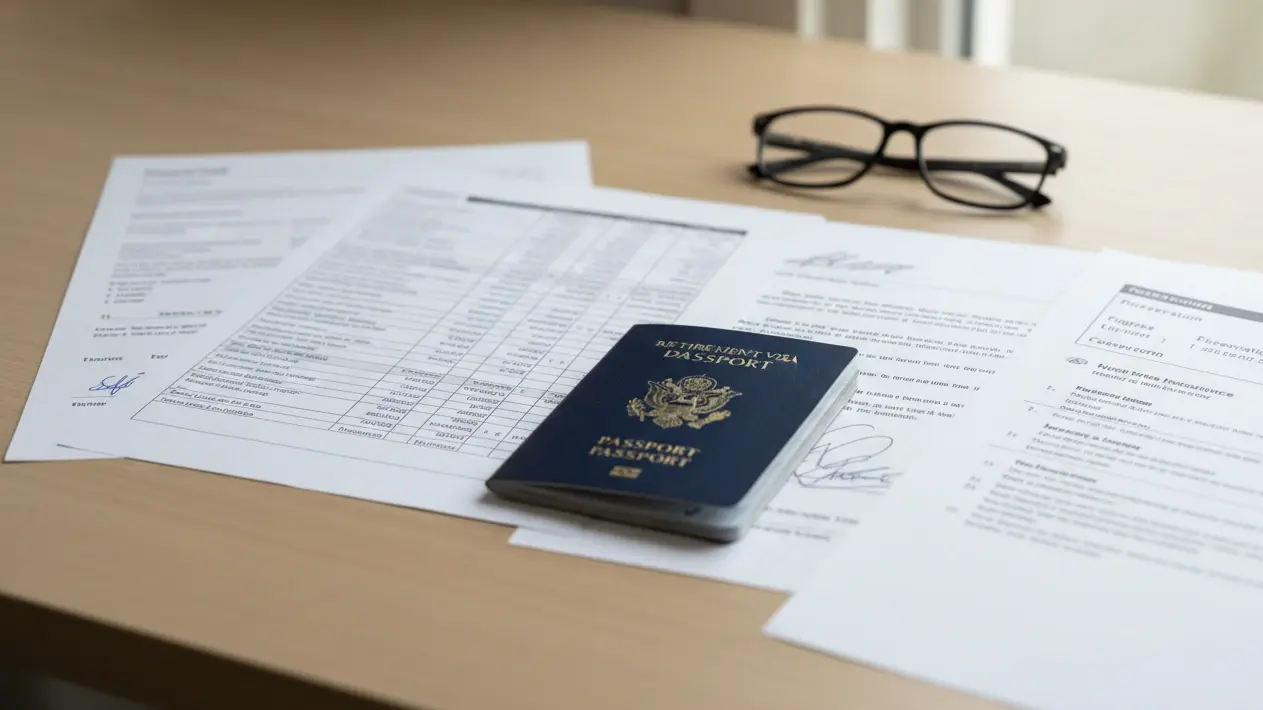
A retirement file does not fail because you lack an employer letter. It fails when the rest of the application does not clearly replace that missing anchor with something stronger and more relevant to your long-stay plan.
Let The Application Say “Retired” Clearly So The Flight Reservation Does Not Have To Do All The Work
Your flight reservation should support your case, not explain your whole life. If your status is retired, semi-retired, or moving under a passive income visa, the file should say that plainly before an officer studies the itinerary line by line.
That matters because the retirement visa application process is judged differently from a tourist visa or a temporary resident visa. An officer is not looking for payroll continuity. They are looking for a stable profile that fits the host country and its visa requirements. That usually means your current status, your source of support, and your timing all need to appear consistent from the start.
For many countries, the cleanest support comes from documents that match retirement logic, such as:
-
Proof of income tied to a monthly pension
-
Statements showing foreign income, investment income, or a bank deposit
-
Evidence of qualifying income or significant savings
-
Health insurance coverage that begins when you move
If you plan to retire abroad, your reservation should sit inside that framework. A clean itinerary helps, but it should not be the only clue that you are entering a new country for your retirement years, rather than taking a short break.
If The Checklist Still Asks About Occupation, Answer It Without Forcing An “Employee-Style” Narrative
Some forms still ask for current work, employer, or profession, even when the route leads to a residence permit or permanent residency later. That is where applicants often create avoidable confusion. They try to sound employed because the form feels built for standard workers.
We should not do that. If you are retired, say so in a way that matches the rest of the file. If you are not fully retired but living from a fixed deposit, rental proceeds, or enough money held in reserve, the wording should still reflect financial stability rather than active employment.
This becomes especially important in routes like Spain's non-lucrative visa, a pensioner visa in Latin America, or any non-immigrant retirement category where financial solvency matters more than job title. A form entry that hints at ongoing work can clash with a flight reservation that looks like a permanent move.
You also need to respect how the retirement visa varies by country. Some countries require a minimum age requirement, some focus on minimum age, and others care more about sufficient financial resources than age restrictions. If your route is through the Spanish consulate, Costa Rica, or another system that may offer retirement visas under different labels, the occupation field should still match the logic of that exact program. When the application specifically needs a flight reservation for visa, keep that document aligned with the same category and dates.
Make Sure The Reservation Agrees With Every Other Date-Sensitive Document In The File
This is where retired applicants can quietly lose credibility. The reservation may look perfect on its own, but the dates can collide with the rest of the file.
We want the travel plan to line up with:
-
Your valid passport expiry
-
Health insurance or travel insurance start date
-
Proof of income timing
-
Any required criminal record certificate
-
Medical examination or medical records validity
-
Supporting civil documents, such as a birth certificate, if dependants are involved
A retirement move often depends on slower-moving evidence than an employed case. Your monthly income may arrive on a fixed date. Your fixed deposit may have been opened recently.
Your foreign retirees' profile may rely on a bank statement cycle that has just begun to show the right balance. If the reservation suggests departure before that paper trail looks settled, the officer may doubt the whole sequence.
This matters even more when you hope to become a permanent resident, apply for permanent status later, or move toward permanent residence after entry. The reservation should not look like a rushed leap into a dream country before the paperwork supports it.
It should look like the first step in a lawful move shaped by the country's requirements, local authorities, and sometimes the immigration office, immigration bureau, immigration department, or another immigration office that will review you after arrival.
When A Short Letter Of Explanation Can Save A Retirement Visa Application
Not every file needs a letter, but some absolutely do. If your travel proof looks reasonable yet your life profile is unusual, a short explanation can replace the missing employer narrative with something officers can actually use.
This is especially useful if you:
-
Retired earlier than the retirement systems in your home country would suggest
-
Plan to move using foreign income rather than a formal pension
-
Rely on a non-lucrative visa route, a pensioner visa, or another category tied to sufficient financial resources
-
Are you moving to a dream destination where the cost of living, affordable healthcare, or the country's healthcare influenced your timeline
-
Are comparing different countries because many countries offer retirement visas with different tax benefits or attractive tax benefits
The letter should stay factual. Explain how you meet visa requirements, why your reservation date fits your documents, and how your support structure works. Mention health insurance, financial stability, and the practical reason the trip exists now.
If needed, note that you reviewed government websites or took advice from an immigration lawyer because the country's requirements differ by dream destination.
The Mistakes That Make A Retirement Visa Flight Reservation Look Staged — Even When The Applicant Is Genuine
| Retirement-file anchor | What it should explain | Reservation check |
|---|---|---|
| Visa category and stage | Why the proposed entry date fits the application now | Departure window leaves room for processing and document requests |
| Income, pension or savings evidence | How the move is funded without an employer leave letter | Dates do not imply an unsupported rush before the financial record is settled |
| Long-stay arrival plan | Where the applicant will arrive and begin the retirement move | Route and one-way, return or onward structure fit the category and current checklist |
At this stage, the problem is usually not intent. You may be fully prepared for living abroad, but a few avoidable details can make a real retirement move look improvised on paper.
Expired Holds, Unverifiable References, And Weak PDFs Can Make A Clean Case Look Risky
A retirement visa file needs travel proof that still looks alive when the officer opens it. If the reservation has expired, shows incomplete carrier details, or comes with a PDF that looks stripped down, your file can lose trust very quickly.
That matters more in retirement cases because the reservation often carries part of the timing story. The officer may already be checking how your monthly pension, insurance start date, and relocation plans fit together. If the flight proof looks stale, the rest of the file starts to feel less settled, too.
You should check three things before uploading:
-
The booking reference is present and readable
-
The route and dates still match your current application set
-
The document looks like real airline-linked reservation proof, not a vague screenshot
A dummy flight ticket, legal for embassy use, still needs to look stable and verifiable. Clean formatting helps, but substance matters more. A polished PDF with missing reservation logic will not rescue the file.
This is also where reliability matters more than novelty. A low-cost solution can still work well if the reservation remains coherent and current when the embassy reviews it. The standard is not luxury. It is credibility.
Do Not Use “Short Tourist Trip” Logic For A Retirement Relocation File
Retirement applicants often make this mistake without noticing it. They build the flight reservation like a holiday booking, then expect the officer to read it as the first step toward a residence permit.
That mismatch shows up in the shape of the itinerary. A quick return after a few days, a casual weekend departure, or a route that looks designed for a tourist visa can clash with a file built around long-stay retirement plans.
Your reservation should not look like you are flying in for sightseeing before heading home to resume normal life. It should look like a measured entry into your next stage. That does not mean the trip must look final in every detail. It means the booking should reflect retirement migration logic rather than vacation logic.
This is especially important if your destination is known for a lower cost of living, rich history, or access to better medical care. Those can be perfectly valid reasons for your move during your golden years. But the flight proof still needs to show structure. If the route looks casual while the rest of the file talks about long-term settlement, the officer may wonder which version of the story is real.
A retirement reservation usually works better when it signals:
-
Deliberate timing
-
Practical route planning
-
Enough space for arrival formalities
-
A travel pattern suited to a long stay rather than a short visit
That is the difference between a booking that supports permanent resident status later and one that looks like temporary leisure travel.
Changing One Date Can Quietly Break The Whole Travel-Proof Story
Retirement visa files often move slowly. During that time, applicants update statements, refresh insurance, replace expiring certificates, or shift the intended move date. The flight reservation is often the document left behind.
That creates problems because one unchanged date can throw the whole file off balance. A reservation can start looking staged when it no longer aligns with:
-
Your insurance validity
-
Your latest financial statements
-
Your visa appointment timing
-
Your expected arrival window
-
Any local registration steps after landing
This is not just about the main departure date. A changed connection, arrival airport, or travel month can alter how realistic the move looks. If your file says you want a calm start in a new place, but the booking suddenly shows a route that seems rushed or seasonal for no clear reason, the officer may doubt the planning behind it.
We recommend a full consistency pass right before submission. Do not assume a reservation is still “good enough” because the PDF still opens. Read it against the latest version of the whole file.
That final review matters even more if your retirement move is tied to practical issues such as property timing, pension activation, or understanding the local economy before you settle. Small date drifts can make a thoughtful plan look random.
What To Check Before You Upload: A Retirement-Applicant Review Pass
Before you submit, look at the reservation the way an officer would. Not as a travel purchase, but as evidence that your move is real, measured, and legally timed.
Use a short review pass:
-
Does the direction of travel fit the retirement visa stage you are actually in?
-
Does the departure window still match your current documents?
-
Does the route look like something a real retiree would actually fly?
-
Does the arrival point make sense for where you plan to settle?
-
Does the document look current, complete, and easy to verify?
-
Does anything about it still look like a tourist pattern rather than a retirement move?
If the answer is yes to those checks, your flight proof is doing its job. If you need a temporary reservation, confirm the provider’s current validity, update and verification terms before relying on it.
Make Your Retirement Visa Travel Proof Feel Coherent
For a retirement visa, your flight reservation needs to do one job well. It should match your real timeline, your financial profile, and your current life stage without leaning on employer documents that do not apply to you. When those pieces line up, your travel proof looks calm, credible, and ready for review.
That is the standard to work toward before you submit. We want your dates, route, and trip structure to support the retirement story your application already tells, so you can move forward with more confidence and fewer avoidable questions from the embassy.
Ready to make your retirement travel proof coherent? Use the category, dates and route your documents actually support, then keep the reservation aligned through submission.
Prepare your reservationFrequently Asked Questions
What should a retirement-visa flight reservation show?
It should show the applicant’s name, route, dates and a one-way, return or onward structure that fits the destination’s retirement-visa stage and current checklist. The surrounding file should explain the long-stay plan.
Do retirement-visa applicants need an employer letter?
Not necessarily. Requirements vary, but retirement files commonly rely on pension, savings, passive-income, insurance, accommodation and other evidence that fits the applicant’s status. Follow the destination’s official checklist.
Is a one-way flight reservation better for a retirement visa?
Not automatically. A one-way structure may fit a long-stay category, while a return or onward plan may be more appropriate at an earlier application stage. Use the structure the destination’s rules and your documents support.
How far in advance should I set the flight dates?
Choose a window that leaves room for appointment timing, normal processing, document requests and practical departure preparation. Avoid a date so soon that approval would be unrealistic or so distant that it looks disconnected from the application.
Can a temporary flight reservation replace retirement-visa evidence?
No. It can support the travel timeline when permitted, but it does not replace financial evidence, insurance, accommodation, a visa, proof of status or any other required document.
Does a flight reservation guarantee retirement-visa approval?
No. Approval depends on the complete application, the applicant’s circumstances and the destination authority’s current rules. A consistent reservation is supporting evidence, not a guarantee.
Friendly reminder: BookForVisa provides temporary travel-proof documents for planning and application support. Requirements vary by destination, airline, route and applicant situation. A flight reservation can support a file, but it does not guarantee approval, boarding or entry.