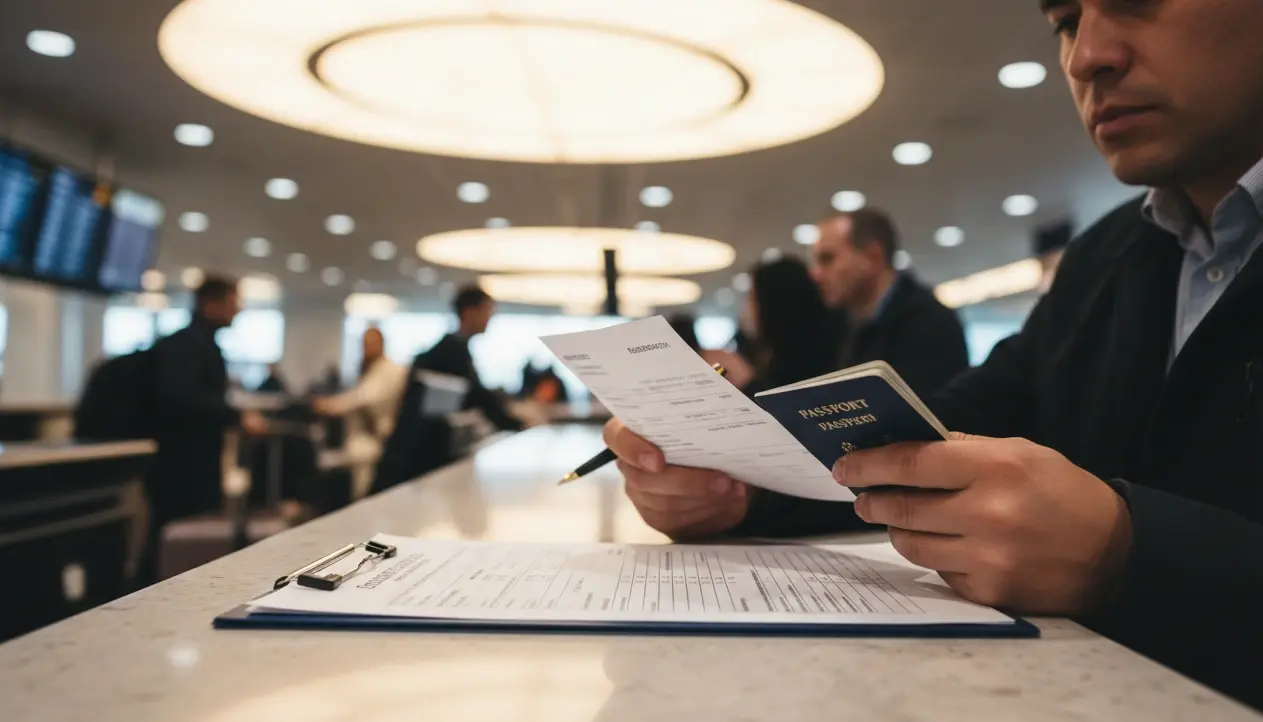
Short answer: A flight reservation for visa should make your entry date, exit date, route, accommodation and stated purpose read as one believable trip before an embassy reviews the file. Match the passenger name and PNR details, allow practical timing around the visa appointment and keep the reservation current if processing changes. It supports travel planning and application evidence, but it cannot guarantee approval, boarding or entry.
Key facts
- Officers often read flight, hotel, insurance and purpose documents together for one coherent timeline.
- Arrival and departure dates should fit the visa category, leave or event dates and accommodation window.
- A booking reference should be truthful, readable and checked through the relevant issuing system where possible.
- Update stale or mismatched travel proof before submission rather than explaining avoidable contradictions later.
Need a flight reservation that keeps your visa story consistent? BookForVisa can help you prepare temporary travel proof around the dates, route and supporting documents your application actually uses.
Create your flight reservationIn This Guide
- Why Visa Officers Read Your Itinerary Like A Story, Not A Form
- The Travel Logic Test: How Entry And Exit Dates Reveal Your Real Intentions
- When A Reservation Expires Before The Embassy Finishes Reviewing Your File
- Matching Your Flight Reservation To Hotel Nights And Insurance Coverage
- Round Trip Versus One Way: What Each Says About Your Return Intent
- Route Red Flags: Arrival Cities, Layovers, And Onward Journeys That Do Not Add Up
- Passenger Details And Passport Spelling: Small Errors That Break Big Applications
- What Happens After Submission: How Officers Verify Booking References And PNR Codes
- Building A Reservation Strategy Around Your Visa Appointment Timing
- Getting Every Detail To Tell The Same Story
Official-source check: For passport, visa, health and carrier-facing checks connected to your route, consult the current IATA Travel Centre. The destination embassy, consulate or visa centre controls the final checklist and any verification request.
Reviewed for: embassy travel-logic review, date and route consistency, hotel and insurance alignment, PNR verification, passenger-name accuracy and safe reservation-timing claims.
Visa officers rarely start by scrutinizing your bank statement or employer letter. They start with a simpler question: does this trip make sense? A departure city that does not match your passport history, or exit dates that outlast your leave approval, raises doubt before a single document gets a second look.
That is the part most applicants miss. Your flight reservation, hotel booking, and travel insurance are not separate boxes to tick. They are pieces of one story, and officers read them together. This guide breaks down exactly where that story tends to fall apart, and how to keep every date, route, and detail aligned. Start with a dummy ticket that actually holds up under review.
Why Visa Officers Read Your Itinerary Like A Story, Not A Form

Most applicants treat a visa file as a stack of separate items to collect. Visa officers treat it as a single account of a trip, and they read it for coherence before they read it for completeness. Understanding this shift changes how you should prepare every document.
The Checklist Mindset Versus The Narrative Mindset
A checklist mindset asks whether a flight itinerary, hotel booking, and bank statement are present. A narrative mindset asks whether those three items describe the same trip, taken by the same person, for the same believable reason.
Visa officers evaluate reservations for both technical and logical aspects. They check the PNR code, but they also check whether your entry date lines up with the purpose you stated on your visa form. A reservation can be technically flawless and still fail the story test if the dates or route feel disconnected from your stated plans.
This is why two applicants with nearly identical paperwork can get different outcomes. One applicant's documents reinforce each other. The other applicant's documents sit next to each other without actually agreeing.
What Travel Logic Actually Means To A Consular Officer
Travel logic is the internal consistency of your trip. It covers whether your departure date allows enough time to reach your destination for the reason you gave, whether your return date matches your leave approval, and whether your route makes geographic sense.
A visa file generally needs evidence of intended travel rather than proof that a non-refundable fare was purchased. That single distinction shapes almost everything in this guide. Officers are not trying to confirm you spent money. They are trying to confirm your trip is real, planned, and consistent with who you say you are.
A flight itinerary shows planned travel dates and route. It does this whether or not the ticket has been paid for in full, which is exactly why reservations exist as a category separate from final tickets. The document's job is to demonstrate intent, not financial commitment.
Visa applicants sometimes assume that a fully paid ticket looks more serious to an officer. In practice, most embassies advise against buying non-refundable tickets before approval, because a rejected application then leaves the applicant with a wasted, non-refundable airline ticket. Officers know this, and a paid ticket does not earn extra credibility over a well-matched reservation.
Small Inconsistencies That Trigger A Second Look
Officers are trained to notice mismatches, and a document review often starts by scanning for these before reading anything in depth. Some of the most common triggers include:
-
A flight reservation with a departure city that never appears in the applicant's passport stamps.
-
Hotel booking dates that begin two days after the stated flight arrival.
-
A visa application form listing travel purpose as "business" while the itinerary shows a leisure-heavy route through multiple tourist cities.
-
A return flight to a city different from the one the applicant departed from, with no explanation for the change.
None of these mistakes are necessarily disqualifying on their own. But each one adds friction, and friction slows down or damages an otherwise straightforward visa decision. Visa officers reviewing dozens of files a day tend to move inconsistent applications into a closer-review pile rather than an approval pile.
This is also why visa documents should be assembled in a specific order of logic rather than a specific order of collection. Start with your travel dates, confirm your accommodation matches those dates, then build your flight reservation around both. Working backward from a random flight itinerary and hoping the rest of your paperwork catches up is how most inconsistencies happen in the first place.
Visa applicants who understand this shift stop treating their reservation as an isolated formality. They treat it as the anchor document that every other piece of evidence needs to align with, which is exactly the mindset the rest of this guide builds on.
How A Typical Officer Review Actually Unfolds
It helps to picture the actual sequence an officer follows, rather than imagining a single moment of approval or denial. Officer reviews usually begin with a quick scan of the full file, followed by a closer read of the travel itinerary against the visa form.
During this scan, the officer is building a mental timeline of your trip before reading a single supporting letter. A travel itinerary that answers the obvious questions on its own, where you land, where you stay, and when you leave- moves through this stage faster than one that raises questions the officer then has to chase down elsewhere in the file.
This is also the stage where an inconsistent flight reservation document does the most damage. If the reservation looks rushed, mismatched, or generic, the officer's attention shifts from "is this trip well planned" to "is this trip real," and that second question is far harder to answer with paperwork alone.
Applicants who understand this sequence tend to prepare their travel itinerary as the first document, not the last, precisely because so much of the officer's early judgment forms around it. Everything else in your file gets read through the lens that first impression creates.
Why The Same File Can Get Different Outcomes At Different Consulates
Applicants sometimes compare notes with friends who applied at a different consulate, or even the same consulate on a different day, and find that seemingly similar files produced different outcomes. Part of this comes down to individual officer discretion, but part of it comes down to details the applicant never noticed as inconsistent in the first place.
A file that looks complete to the applicant may still contain a subtle mismatch, such as a hotel booking address in a suburb far from the stated business meeting location, or a return flight routed through a country never mentioned elsewhere in the application. These details rarely feel significant while assembling documents, but they stand out clearly to someone reading the file cold.
This is precisely why a second, deliberate pass through your own documents, specifically looking for anything that would confuse a stranger reading them for the first time, is worth the extra time. You already know your trip makes sense. The job is making sure your paperwork makes that same sense obvious to someone who has never spoken to you.
The Travel Logic Test: How Entry And Exit Dates Reveal Your Real Intentions
| File element | Question it should answer | Consistency check |
|---|---|---|
| Flight reservation | When and how will you enter and leave? | Passenger name, route, dates and booking reference are readable and current |
| Accommodation | Where will you stay during the stated trip? | Hotel nights or host dates cover the arrival-to-departure window |
| Insurance and supporting dates | Does the trip have practical coverage? | Policy and leave or event dates do not contradict the itinerary |
Dates carry more weight in a visa file than almost any other detail. An officer can forgive a slightly informal cover letter, but a date mismatch between your flight reservation and your stated travel intent is much harder to explain away.
Why Entry And Exit Dates Are The First Thing Officers Check
Entry and exit dates tell an officer two things at once: how long you plan to stay, and whether that length matches your visa category. A tourist visa applicant requesting entry for six weeks with no clear reason will draw more questions than one requesting ten days with a matching hotel booking.
Visa officers cross-check your flight dates against your visa form, your hotel booking, and, where relevant, your leave letter from an employer. If your form states a fifteen-day trip but your flight reservation shows a twenty-two-day gap between arrival and departure, that seven-day discrepancy becomes the center of the officer's attention.
This is not about being perfectly precise to the hour. It is about the overall shape of the trip making sense. A one- or two-day buffer around a conference or event is normal. A gap that suggests undisclosed plans is not.
Matching Travel Dates To The Purpose Of Your Trip
Travel logic includes matching entry and exit points to the purpose of the trip. A business visa applicant flying into a city with no relevant industry presence, then flying out from a completely different country three weeks later, creates a route that does not support the stated purpose.
Officers check if travel dates align with supporting documents like accommodation and leave approval. If your employer's leave letter grants twelve working days off, but your flight reservation shows an eighteen-day trip, the officer now has to decide whether to trust your documents or question them.
Consider two travel dates checkpoints most applicants overlook:
-
Your visa appointment date should leave enough runway before your requested entry date for standard visa processing, without being so far in advance that your reservation risks expiring.
-
Your exit date should leave a reasonable buffer before your visa's expiration date, since most visa categories expect the applicant to leave before, not exactly on, the final valid day.
What A Consistent Date Pattern Looks Like In Practice
A strong application shows the same date logic repeated across every document. If your flight reservation shows arrival on the 4th and departure on the 18th, your hotel booking should cover roughly that same window, and your travel insurance should list matching start and end dates.
Consistent dates across travel documents improve credibility for visa applications. This is not a minor formatting preference. It is one of the clearest signals an officer uses to separate a well-prepared applicant from a rushed one.
Here is a simple internal audit worth running before submission:
-
Do your flight reservation dates match your hotel booking dates within a day or two on each end?
-
Does your travel insurance policy period cover your entire trip, including buffer days for delays?
-
Does your stated visa category match the length and pattern of the trip described in your documents?
-
If you are visiting for a specific event, does your entry date give you enough time to arrive and settle before it starts?
Applicants who run this check before their visa appointment catch far more problems than officers ever will, simply because they know their own plans better than any reviewer does. A reservation that fails this internal test deserves correction before submission. For a broader explanation of route, date and document alignment, review the visa flight itinerary requirements guide. The next discussion focuses on a detail many applicants forget entirely: how long a reservation actually lasts before it becomes a liability rather than an asset.
Why Departure Dates Deserve Their Own Buffer
Applicants often focus heavily on arrival dates while giving less thought to departure dates, even though officers weigh both equally. Your departure date confirms that you plan to leave before your authorized stay ends, which is exactly the assurance a tourist visa is built around.
A departure date set right at the edge of your visa validity, with no room for delay, can itself look risky to an officer, since it suggests little tolerance for the normal disruptions that come with international travel. Building in a small buffer between your planned departure and your visa's final valid day shows an applicant who has actually thought through the logistics of the trip.
This buffer does not need to be large. A few days is usually enough to demonstrate that your departure date was chosen deliberately rather than as an afterthought once other travel dates were locked in.
When Return Dates And Purpose Do Not Line Up
Return dates should also make sense in light of your stated purpose. A conference that runs for three days should not be paired with a return date six weeks later without some explanation, just as a family visit stated as short-term should not stretch across an unusually long window.
Officers do not expect every trip to be minimal or rushed. They do expect the length of the trip to roughly match the reason given for it, and a return date that drifts far from that expectation becomes one more detail the officer has to reconcile before reaching a visa decision.
How Expected Stay Length Varies By Visa Category
Not every visa category treats trip length the same way, and applicants sometimes carry expectations from one visa type over to another where they no longer apply. A short-term tourist visa generally expects a trip measured in days or a few weeks, while a family visit visa may reasonably support a longer stay if the relationship and purpose are well documented.
The practical takeaway is to check what a typical, well-justified stay looks like for your specific visa category before finalizing your entry and exit dates, rather than assuming a generic length applies universally. A trip that looks reasonable for a visit to family may look unusually long for a first-time tourist visa applicant with no prior travel history to that country.
Matching your stay length to your visa category is a small planning step that quietly prevents one of the more common travel logic mismatches officers encounter across different types of applications. Underneath all of this, embassies use flight reservations to confirm travel intent and the ability to depart within the window your visa allows, which is exactly why the length and shape of that window matters so much.
When A Reservation Expires Before The Embassy Finishes Reviewing Your File

Timing mistakes are among the most preventable errors in a visa application, yet they remain common because most applicants assume a reservation stays valid indefinitely once it is issued. It does not, and that gap causes real problems.
Why Reservations Have A Shelf Life
Reservations typically hold seats for a limited period, often 48 to 72 hours, though some providers extend this window for visa purposes specifically. This limited window exists because airline systems need to release unconfirmed inventory back into general sale if it is not paid for.
At its core, a visa reservation is a temporary airline booking without full payment, which is exactly what makes it useful for this stage of the process. It is preferred as it reduces financial risk during the visa application process, since you are not committing full fare to a trip that has not yet been approved.
Travel reservations can expire before the embassy completes its review of the application. Visa processing times vary widely by country, consulate workload, and season, and a reservation booked the same week you submit your file may no longer be retrievable by the time an officer opens your case weeks later.
This creates a real risk. If an officer tries to verify your flight reservation through the airline's system or a public verification tool and finds nothing active, your file suddenly looks unreliable, even if the mismatch is purely a timing issue rather than dishonesty.
How Expired Reservations Damage An Otherwise Strong Application
Expired reservations can lead to immediate application rejection in some jurisdictions, particularly where consulates run automated or manual checks against airline databases as a standard part of document review. In other cases, the officer simply flags the file for additional verification, which slows down your visa decision.
Either outcome is avoidable. The fix is not to guess how long your specific visa processing will take. It is to understand your reservation's actual validity window and time your booking accordingly, rather than booking too early out of habit or anxiety.
A few patterns worth watching for:
-
Booking a reservation weeks before your appointment "to be safe," only to have it lapse before your file is even opened.
-
Assuming a paid ticket avoids this problem entirely, when in fact even a paid ticket can become irrelevant if your travel dates need to shift.
-
Failing to check whether your specific consulate verifies reservations directly with airlines as part of its process.
Choosing A Reservation Provider Based On Validity, Not Just Price
Not every reservation is built the same way. A genuine flight reservation includes a verifiable PNR code that can be checked against the airline's own system, not just a static PDF that looks convincing but cannot be confirmed independently.
Embassies require flight reservations to avoid financial risk for applicants, which is the entire reason temporary reservations exist as a category. A flight reservation shows intended travel dates and route clearly, without asking you to pay full fare for a trip that has not been approved yet.
If you use a temporary reservation, confirm the provider’s current validity, verification and update terms before relying on it.
Clear update terms matter when a consulate reschedules an appointment or processing takes longer than expected. If dates move, update the reservation or replace it so the submitted file does not contain stale travel proof.
The lesson here is straightforward. Time your reservation to your actual appointment and expected processing window, choose a provider that offers a verifiable booking reference, and keep the flexibility to adjust dates if your timeline moves. Getting the reservation itself right, however, is only half the job, since it still needs to line up with every other document in your file.
The Hidden Downside Of Buying A Paid Flight Ticket Too Early
Some applicants decide to buy a paid flight ticket or even a non refundable ticket before their visa appointment, believing it signals seriousness. In practice, this often creates more risk than it removes, since a rejected application leaves that actual ticket unused and, in most cases, unrefundable.
A final airline ticket bought weeks in advance also locks in specific dates that cannot easily shift if your visa appointment moves or your processing takes longer than expected. A reservation, by contrast, can usually be adjusted or reissued without the same financial exposure.
This is not a suggestion to avoid air travel planning altogether. It is a reminder that the timing of when you convert a reservation into a paid flight ticket should happen after your visa decision, not before it, unless your specific circumstances genuinely require otherwise.
Weighing Cost Against Risk Before You Book Anything Final
A simple way to frame this decision is to ask what you actually lose in each outcome. If you hold a reservation and your visa is denied, you lose nothing beyond the reservation's small fee. If you hold a non-refundable ticket and your visa is denied, you may lose the full fare.
That asymmetry is exactly why most embassies advise against early ticket purchases, and why a reservation remains the more sensible choice for the vast majority of applicants until an approval is actually in hand.
Coordinating Reservation Timing With Appointment Scheduling Delays
Appointment scheduling itself can shift the calculation around reservation timing. In busy visa seasons, some applicants wait weeks between requesting an appointment and actually attending it, which makes booking a reservation immediately after scheduling a risky move if the appointment date is still far off.
A more reliable approach is to treat your confirmed appointment date, not your initial scheduling request, as the trigger point for booking your reservation. This keeps the reservation's validity window aligned with the moment an officer will actually be looking at it, rather than aligned with an earlier planning stage that has little bearing on the review itself.
If your appointment gets pushed back after you have already booked, update your reservation dates immediately rather than waiting until closer to your new appointment, since an outdated reservation sitting in your file can create confusion even before an officer reaches the verification stage.
Matching Your Flight Reservation To Hotel Nights And Insurance Coverage
A flight reservation does not exist in isolation. Officers place it next to your hotel booking and your travel insurance policy, and any gap between the three documents becomes an immediate question mark on an otherwise solid application.
Why Hotel Nights Need To Mirror Your Flight Dates
Flight reservations must match other documents like hotel bookings, and this comparison is often one of the first cross-checks an officer performs. If your flight shows a fourteen-night trip but your hotel booking only covers ten nights, the officer has to ask where you planned to stay for the remaining four.
This does not mean every night needs a matching hotel reservation if you have alternative accommodation plans, such as staying with family. It does mean that any gap should have a clear, documented explanation rather than being left for the officer to guess about.
Common hotel and flight mismatches include:
-
A flight arriving late at night with a hotel check-in date listed as the following day, leaving an unexplained gap.
-
Hotel nights that extend well beyond the flight's departure date, suggesting either an error or an undisclosed extension of stay.
-
Hotel bookings split across cities that do not appear anywhere in the stated flight itinerary or onward travel plans.
Travel Insurance As The Third Point Of Confirmation
Many applicants treat travel insurance as a formality required only for certain visa categories, particularly Schengen applications. In reality, it functions as a third confirmation point that either reinforces or undermines your flight and hotel dates.
Your travel insurance policy period should cover your entire trip from arrival to departure, with no gaps at either end. If your flight reservation shows an arrival on the 2nd but your insurance coverage does not begin until the 5th, that three-day gap is unprotected and inconsistent, and an alert officer will notice it.
Coverage should also match the minimum requirements of your destination. Schengen tourist visa applications, for example, typically require a minimum insurance coverage amount that applies for the full duration of the trip, not just a partial window.
Building One Coherent Travel Plan Instead Of Three Separate Documents
The most efficient way to avoid mismatches is to stop preparing your flight reservation, hotel booking, and insurance policy as three separate tasks completed at different times. Instead, fix your travel dates first, then build every other document around that single confirmed window.
A practical sequence looks like this:
-
Confirm your intended entry and exit dates based on your visa appointment timing and purpose of travel.
-
Book your flight reservation to match those exact dates, allowing a small buffer only if genuinely needed.
-
Match your hotel booking to the same window, city for city, with no unexplained gaps.
-
Purchase travel insurance that covers the full trip length with no lapses at either end.
This sequence takes slightly more upfront planning than booking each item independently, but it eliminates the vast majority of the inconsistencies officers flag during review. Required documents stop being separate hurdles and start functioning as one unified account of a real, plausible trip.
Once your dates, hotel, and insurance are aligned, the next variable to get right is the shape of the trip itself, specifically whether you are traveling on a round trip or something else entirely, and what that choice signals to the person reviewing your file.
Turning These Checks Into Your Own Embassy Checklist
Most consulates publish a general list of required documents, but that published list rarely tells you how those documents need to relate to each other. Building your own embassy checklist, focused specifically on cross-document consistency, closes that gap.
A useful personal checklist includes:
-
Flight reservation dates copied exactly, then compared line by line against hotel booking dates.
-
Travel insurance start and end dates checked against the same flight window, with no gaps at either edge.
-
Total trip length compared against the purpose and duration stated on your visa form.
-
Any unaccompanied nights, meaning nights without a matching hotel booking, explained in your cover letter if they exist.
Running this kind of checklist takes only a few extra minutes once your documents are assembled, yet it catches the exact category of mismatch that generic, publicly available checklists never mention because they focus on what documents to submit rather than how those documents should agree with each other.
Handling Mixed Accommodation Across A Longer Trip
Longer trips sometimes involve a mix of hotel stays and time with friends or family, which can make matching flight dates to hotel nights feel more complicated than a single continuous hotel booking would. This is manageable as long as the full picture is documented clearly rather than left partially explained.
If part of your trip involves staying with someone rather than a hotel, a short invitation letter from that host, including their address and the specific dates you will be staying, fills the same role a hotel booking would for that portion of the trip. The goal is the same either way: no unexplained nights anywhere in your travel plans.
Applicants who mix accommodation types without documenting the non-hotel portion often create exactly the kind of gap officers notice immediately, even though the underlying arrangement itself is completely ordinary and easy to explain with one extra letter.
Why Seasonal Booking Pressure Can Widen These Gaps
During peak travel seasons, hotel availability in popular destinations can shift quickly, which sometimes pushes applicants toward booking a hotel for slightly different dates than originally planned simply because their first choice sold out. When this happens, it is easy to forget to update the flight reservation or travel insurance to match the new hotel dates.
Treat any change to one document as an automatic trigger to review the other two. A hotel date shifted by even one night should prompt an immediate check of your flight reservation and insurance coverage, since these small, last-minute adjustments are exactly where mismatches quietly slip into an otherwise carefully built file.
Round Trip Versus One Way: What Each Says About Your Return Intent
Few details influence a tourist visa outcome as heavily as whether your reservation shows a clear return. This discussion breaks down why that single structural choice carries so much weight with visa officers.
Why Tourist Visas Almost Always Expect A Round Trip
A round-trip itinerary is often required for tourist visas because it directly demonstrates that you plan to leave the destination country within your authorized stay period. This is the core concern behind almost every tourist visa review: will this applicant actually depart when they are supposed to.
One-way tickets often result in visa denials for tourist visas, not because one-way travel is inherently suspicious, but because it removes the clearest available evidence of planned departure. Without a return flight, the officer has to rely entirely on other, weaker signals to judge your intent to leave.
A round-trip flight reservation solves this cleanly. It shows both directions of travel within a single document, tied to the same passenger, on dates that should align with your stated visa category and purpose.
When One-Way Travel Is Actually Appropriate
Not every trip fits a strict round-trip model, and some visa categories genuinely expect different patterns. Applicants relocating for long-term study, certain long-term work visas, or multi-country trips with a different final exit point may reasonably need a one-way or open-jaw structure.
In these cases, the visa category itself should explain the travel pattern. A long-term study visa applicant showing a one-way flight makes sense, since the visa itself authorizes an extended stay rather than a short visit. The mismatch only becomes a problem when the visa type and the ticket structure contradict each other.
If your situation genuinely requires one-way or multi-city travel, supporting documents should proactively explain why, rather than leaving the officer to assume the worst interpretation.
How Reservation Structure Should Match Your Visa Form
Your visa form asks you to state a purpose and, often, an expected duration of stay. Your flight reservation should structurally reflect that same answer. A short-term tourist visa form paired with a one-way ticket sends conflicting signals that slow down or damage your visa decision.
A few structural checks worth running:
-
Does your reservation clearly show both an outbound and a return flight under the same booking reference?
-
Do the outbound and return dates fall within the stay period you declared on your visa form?
-
If your trip includes travel to multiple countries, does the reservation reflect a logical final return to your home country rather than an unexplained open end?
Frequent travelers sometimes assume that a strong travel history alone compensates for a missing return flight, and it can help, but it rarely replaces the direct clarity a round-trip reservation provides. Officers still prefer a document that answers the question outright rather than one that requires them to infer an answer from unrelated evidence.
Getting the round-trip versus one-way decision right protects the rest of your file from unnecessary scrutiny. But even a well-structured round trip can raise questions if the actual route between your departure and arrival cities does not make sense, which is exactly where many applications run into trouble next.
Clearing Up The Confusion Between A Reservation And A Flight Ticket
Part of the round trip versus one way confusion comes from applicants using the terms flight ticket, flight reservation, and final airline ticket interchangeably, when embassies treat them quite differently. A flight ticket, in the strict sense, implies a completed, paid booking, while a flight reservation for visa purposes is intentionally unpaid and structured only to demonstrate a planned route.
This distinction matters because some applicants assume they need a genuine flight ticket to prove a round trip, when in fact a properly structured reservation demonstrates the same round-trip logic without requiring payment. The reservation still needs to show both directions clearly, under the same passenger and booking reference, but it does not need to be a purchased flight ticket to serve its purpose.
Understanding this difference helps you avoid overspending on travel documentation before it is actually necessary, while still giving the embassy exactly the structural clarity it is looking for.
Keeping Round-Trip Structure Consistent Across Group Applications
Families or small groups traveling together on the same visa category should keep their round-trip structure identical across every member's reservation, rather than allowing small variations to creep in between individual bookings. Different return dates for members of the same travel group, without an explained reason, can prompt an officer to question whether the group is actually traveling together as described.
This is easiest to manage by booking the entire group under a single reservation or a clearly linked set of reservations, so that outbound and return dates match exactly across every passenger. Where a booking reference system does not support true group linking, at minimum ensure each individual reservation shows identical dates and matching flight numbers.
Consistency here reinforces the same travel logic principle covered throughout this guide: officers are comparing documents against each other, not just checking that each one individually looks acceptable.
Reading Your Own Reservation The Way An Officer Would
Before moving on from the round trip decision, take a moment to read your finished reservation the way an officer would, without the context you already carry in your head. Cover the rest of your application and look only at the reservation itself.
Ask whether the outbound and return flights are obviously connected under one booking, whether the dates match a plausible visa category, and whether anything about the structure would prompt a follow-up question if you knew nothing else about the trip. If the answer to any of these feels uncertain, that uncertainty is worth resolving before submission rather than during your consulate appointment.
Route Red Flags: Arrival Cities, Layovers, And Onward Journeys That Do Not Add Up
Dates and structure matter, but the actual geography of your trip matters just as much. Visa officers pay close attention to whether your route reflects a realistic, purposeful journey rather than a random collection of cities.
Why Your Arrival City Needs To Match Your Trip's Purpose
Your arrival city should have a clear, logical connection to the reason you are traveling. A business visa applicant flying into a city with no relevant business activity, then traveling on to an unrelated location, invites questions about the actual purpose of the trip.
Arrival cities that do not match your stated itinerary in your cover letter or invitation letter are one of the more common route red flags. If a business partner's letter mentions meetings in one city, but your flight reservation shows arrival in a completely different city with no explanation, that gap needs addressing before submission.
How Layovers And Multi-Country Routes Get Misread
Modern flight bookings frequently involve layovers, and layovers alone are not a problem. Airline systems route passengers through hub cities constantly, and officers understand this. The issue arises when a layover city starts looking like an undisclosed additional destination.
This becomes particularly relevant for Schengen visa applications, where travel across multiple countries within the same visa is common and expected, but still needs to follow a coherent pattern. Schengen visa applications generally expect you to apply through the country that represents either your main destination or your longest stay.
If your onward journey includes stops in several Schengen countries, your itinerary should make the primary destination obvious, since inconsistent handling of this detail is a frequent cause of unnecessary delays in Schengen tourist visa processing.
Onward Travel That Contradicts Your Stated Plans
Onward travel deserves specific attention because it is one of the easiest details to overlook while focused on getting the initial flight reservation right. If your visa form states you plan to visit one country, but your onward journey shows a booked continuation to a third country never mentioned anywhere else in your file, that unexplained addition creates doubt.
A short list of route consistency checks:
-
Does your arrival city logically connect to your stated purpose of travel, whether that is tourism, business, or a specific event?
-
Are any layovers reasonably short and clearly transit-only, rather than extended stops that resemble a hidden second destination?
-
If your trip includes onward travel to another country, is that onward leg mentioned consistently across your cover letter, itinerary, and visa form?
-
Does your final return flight bring you back to your actual home country rather than an unrelated third location?
Airline reservations that pass this kind of route review tend to share one trait: they tell a story an officer can follow without needing extra explanation. A route that requires a paragraph of justification to make sense is a route worth reconsidering before you submit.
Once your route holds up to scrutiny, the remaining risk shifts to something far more mundane but equally damaging: whether the personal details on your reservation actually match your passport and application exactly.
Writing A Short Route Explanation When Your Trip Is Genuinely Complex
Some trips legitimately involve multiple countries, unusual layovers, or a route shaped by cost rather than geography. In these cases, do not leave the officer to reconstruct your logic from the flight reservation alone.
A short paragraph in your cover letter explaining the route, for example noting that a layover city was simply the most affordable connection rather than a planned stop, removes ambiguity before it becomes a question. This is especially useful for multiple-country itineraries tied to a single Schengen visa application, where the primary destination needs to be obvious at a glance.
Keeping this explanation brief matters. A few sentences that directly address the route are far more effective than a lengthy justification that reads as overcompensation. The goal is clarity, not persuasion.
Checking Whether Connection Times Are Physically Realistic
Beyond whether a layover city makes geographic sense, it is worth checking whether the connection time itself is realistic. An itinerary showing a forty-minute layover between an international arrival and a connecting international departure at a large airport can look implausible to anyone familiar with typical immigration and transfer times.
This kind of detail rarely gets flagged as dishonest, but it can suggest that a reservation was assembled without much attention to detail, which subtly undercuts the overall impression of a carefully planned trip. Reviewing your connection times with a quick search for typical minimum connection windows at each airport takes only a few minutes and removes this small but avoidable red flag.
A route with generous, realistic connection times reads as the itinerary of someone who has actually thought through their journey, which reinforces every other consistency check covered in this guide.
Comparing Your Route Against Your Own Travel History
If you have traveled internationally before, your route also gets compared, at least loosely, against your existing travel history and passport stamps. A first-time route into a region you have never mentioned visiting or having ties to is not automatically suspicious, but it benefits from a clear reason stated somewhere in your application.
Frequent travelers with an established pattern of visiting similar destinations for similar reasons generally receive less scrutiny on route alone, simply because their history already supports the plausibility of the new trip. Applicants without that history are not at a disadvantage, but they do benefit from making the purpose of an unusual route explicit rather than assuming it speaks for itself.
Passenger Details And Passport Spelling: Small Errors That Break Big Applications
Some of the most frustrating visa delays have nothing to do with travel dates or routes at all. They come from small clerical mismatches between a flight reservation and a passport, the kind of error that feels minor until it stalls an entire application.
Why Passenger Name Accuracy Is Non-Negotiable
Passenger names must match the passport exactly, including the order of given names and surnames as printed on the document. This sounds obvious, yet it is one of the most common errors in reservations booked quickly or through informal channels.
A middle name dropped, a surname abbreviated, or a hyphenated name split incorrectly can all cause a reservation to fail verification against passport details on file. Officers comparing a flight reservation to a passport copy are not being pedantic when they flag this. Airline systems and government databases both rely on exact string matching, and a discrepancy anywhere in that chain creates friction.
Passport Spelling Issues That Slip Through Unnoticed
Passport spelling becomes especially tricky with names that have multiple valid transliterations, accented characters, or naming conventions that differ from Western formatting standards. A name correctly spelled on a passport in one format can easily be entered differently on a reservation if the booking process does not carefully copy each character.
To avoid this, always enter passenger details directly from a scanned or photographed passport page rather than from memory or a previous document. This single habit eliminates the majority of avoidable spelling mismatches before they ever reach an officer's desk.
Booking Reference And Confirmation Details Worth Double-Checking
Beyond the passenger's name, a handful of other details deserve a final check before submission:
-
The flight number listed on the reservation matches what appears on any confirmation email or booking summary.
-
The booking reference or PNR code is clearly visible and formatted correctly, without typos introduced during copying.
-
The departure city and arrival city spellings match standard airport naming conventions used elsewhere in your application.
-
The booking confirmation document includes a passenger name field that mirrors your passport precisely, character for character.
A confirmed booking with a clean, verifiable PNR code protects you from an entirely avoidable category of delay. It is worth spending an extra five minutes reviewing these details line by line rather than assuming a booking platform entered everything correctly by default.
Small as these details are, they represent the final layer of scrutiny before an officer moves from checking your documents to actually verifying them against external systems, which is exactly the process covered next.
Reviewing Your Full Document Set Before Your Consulate Appointment
Passenger details are easiest to fix before submission and hardest to fix after, since most consulates will not accept corrected documents once your file has already been logged for your consulate appointment. Treat the final review of your passenger details, passport details, and booking confirmation as a single pass completed together, not as separate tasks handled on different days.
A practical way to do this is to lay your passport photo page, your flight reservation, your hotel booking, and your travel insurance side by side, either physically or as open files on a screen. Read the passenger name field on each one in sequence, checking for any variation at all, including spacing, capitalization, or dropped middle names.
Visa applicants who build this final comparison into their pre-appointment routine catch the overwhelming majority of clerical errors before an officer ever sees them, which keeps the focus of your consulate appointment on your actual travel plans rather than on correcting avoidable mistakes.
Handling Recent Name Changes Or Title Mismatches
Applicants who have recently changed their name, whether through marriage or another legal process, face an added layer of risk if their passport reflects the new name but an older booking habit or saved profile still uses the previous one. Always book using the exact name currently printed in your passport, regardless of what name appears on your email, loyalty program, or previous travel documents.
Titles such as Mr, Mrs, or Dr occasionally get added inconsistently across different documents as well. While titles rarely cause a hard rejection on their own, dropping or adding one inconsistently between your flight reservation and other travel details adds one more small inconsistency to a file that benefits from having none.
Taking a moment to confirm your name appears identically, in the same order and format, across your flight reservation, hotel booking, and travel insurance closes off this entire category of error before it can affect your application.
What Happens After Submission: How Officers Verify Booking References And PNR Codes
Once your file is submitted, the review process shifts from reading documents to actively checking them. Understanding this stage helps explain why a verifiable flight reservation matters so much more than a document that simply looks convincing.
How Consular Staff Confirm A Flight Reservation Is Real
Many consulates and major embassies now cross-check a flight reservation's booking reference directly against airline systems or public verification tools provided by the airline itself. This step confirms that the PNR code is active, that it belongs to the named passenger, and that the flight details match what was submitted.
A real airline reservation, even an unpaid one, will typically return a match through these tools. A fabricated or expired document will not, and that failure immediately damages the credibility of the entire application, even if every other document was accurate.
This is why a destination checklist may request a flight reservation instead of a paid ticket before a decision. The requirement was never about proving payment. It was about creating a verifiable, checkable record of intended travel that does not force applicants to take on unnecessary financial risk before a visa decision is made.
Why Some Providers Fail This Verification Step, And Others Do Not
Not all reservation providers issue bookings that survive this kind of check. Some generate static documents that look correct visually but were never actually entered into an airline's live system, meaning any verification attempt returns nothing.
Applicants who choose a reservation provider without confirming this kind of verifiability are taking on a hidden risk if the consulate or visa centre later asks for a check.
What A Failed Verification Actually Looks Like In Practice
A failed verification does not always result in an outright rejection. Sometimes it triggers a request for additional documentation, a delay while the officer seeks clarification, or a follow-up question at your consulate appointment about the specific booking.
In other cases, particularly where fraud concerns are higher, it can contribute directly to a visa refusal, especially when combined with other inconsistencies elsewhere in the file. The financial risk of buying a real airline ticket before approval is exactly what a verifiable reservation is meant to prevent, but only if that reservation can actually withstand scrutiny.
A short list of what to confirm before you submit any reservation as part of your visa documents:
-
The reservation includes a booking reference that can be independently checked, not just printed on a PDF.
-
The provider explicitly states that its reservations are entered into live airline systems rather than generated as static templates.
-
You have tested the verification process yourself, where possible, before your appointment.
This stage of the process is largely invisible to applicants, since it happens after submission and outside your direct view. But the reservation you choose long before this point determines entirely how smoothly it goes, which brings the discussion to one final, often underplanned factor: timing your reservation around your actual visa appointment.
Why Verification Confidence Supports Your Overall Visa Approval Odds
It is worth stepping back and connecting this verification stage to the bigger picture. A flight reservation for visa exists to answer one narrow question convincingly: will this person actually travel and return as described? When that reservation passes verification cleanly, it removes one entire category of doubt from your visa approval decision.
This does not guarantee approval on its own, since visa approval depends on many factors beyond your reservation. But a reservation that fails or cannot be verified actively works against you, adding friction to a decision that might otherwise have gone smoothly based on the rest of your file.
Applicants sometimes underestimate how much weight this single, unglamorous document carries. It rarely gets discussed the way cover letters or financial documents do, yet it is often the first thing checked against an external system rather than taken at face value.
Keeping A Copy Of Your Verification For Your Own Records
Once you have booked and, where possible, tested your reservation's verifiability, keep a copy of the confirmation alongside a note of how and when you checked it. This is not something embassies typically ask for directly, but it gives you a clear record to reference if a follow-up question arises during your consulate appointment.
This small habit costs almost nothing and provides real peace of mind, particularly for visa applicants managing multiple documents across a tight preparation timeline.
What To Do If You Suspect Your Reservation Will Not Verify
If you already booked a reservation through a source you are now unsure about, the safest move is to replace it before your appointment rather than hope it passes review. Reissuing a reservation through a provider with a clearly verifiable booking reference is a small cost compared to the delay or damage a failed verification can cause.
Check whether your existing reservation includes a booking reference that returns a match on the airline's own manage-my-booking tool. If it does not, or if the provider cannot confirm the reservation was entered into a live system, treat that as a signal worth acting on well before your consulate appointment, not something to discover for the first time during an officer's review.
How Minor Discrepancies Get Handled Differently From Major Ones
It is worth noting that not every small discrepancy found during verification leads to the same outcome. A minor formatting difference, such as a middle initial included on one document but not another, is usually resolved with a quick clarifying question rather than treated as a serious concern.
A larger discrepancy, such as a booking reference that returns no result at all, or passenger details that do not match the passport in any recognizable way, tends to receive far more serious scrutiny and can influence the overall visa decision directly. Knowing this difference helps you prioritize your final review toward the details most likely to matter if something does not line up perfectly.
Building A Reservation Strategy Around Your Visa Appointment Timing
Every principle covered so far, from date consistency to route logic to passenger accuracy, depends on one underlying decision: when you actually book your reservation relative to your visa appointment and processing timeline.
Working Backward From Your Visa Appointment Date
Start planning your reservation timing from your confirmed visa appointment date, not from an arbitrary point weeks in advance. Your flight reservation should be booked close enough to your appointment that it remains valid and verifiable throughout your expected visa processing window.
If your consulate typically processes applications within two to three weeks, booking a reservation more than a month before your appointment increases the risk that it becomes outdated before an officer ever reviews it. Booking too close to your appointment, on the other hand, leaves no room for last-minute adjustments if your appointment gets rescheduled.
A reasonable approach is to book your reservation within a few days of your visa appointment, using a provider that offers flexible date changes in case your appointment shifts or your processing takes longer than expected.
Adjusting Travel Dates If Your Application Timeline Changes
Visa processing timelines are rarely perfectly predictable, even with historical averages for a given consulate. Appointments get rescheduled, additional document requests extend the timeline, and interview slots sometimes shift by weeks without much notice.
This is exactly why clear update terms matter as a practical planning issue rather than a marketing detail. If your visa appointment moves, or your entry date needs to shift because of a delayed decision, updating your existing reservation keeps your travel logic intact. Rebooking an entirely new reservation from scratch each time risks introducing the very inconsistencies this guide has spent so much time helping you avoid.
A Final Pre-Submission Timing Checklist
Before finalizing your visa documents, run through this sequence one last time:
-
Confirm your visa appointment date and estimated processing time for your specific consulate.
-
Book your flight reservation close enough to that timeline that it remains valid and verifiable through your expected decision date.
-
Cross-check your reservation's entry and exit dates against your hotel booking and travel insurance one final time.
-
Confirm passenger name, passport spelling, and booking reference details exactly match your passport.
-
Choose a provider that allows date changes if your appointment or processing timeline shifts unexpectedly.
Every visa applicant's situation carries its own specific timeline, but the underlying logic stays the same across almost every consulate and visa category. Officers are not looking for perfection. They are looking for a trip that tells one consistent, believable story from the first document to the last, and a reservation built with that same story in mind gives your application its best possible foundation.
Why This Same Story Repeats Across Different Embassies
One reassuring takeaway from all of this is that the underlying logic rarely changes much from one consulate to another. Whether you are applying for a Schengen visa, a tourist visa elsewhere, or a business visa through a different embassy checklist entirely, the same story keeps repeating: officers want a trip that is internally consistent, verifiable, and matched to its stated purpose.
This means the effort you put into aligning your travel dates, route, and passenger details is not specific to one country's requirements. It transfers directly to future applications, future trips, and future visa categories, since the habit of building one coherent travel plan rather than several disconnected documents holds up regardless of destination.
Frequent travelers who internalize this approach tend to spend far less time troubleshooting visa issues over time, simply because they stop treating each application as a brand new puzzle and start recognizing the same travel logic test underneath each one.
Treating Flexibility As Part Of Your Overall Strategy, Not An Afterthought
Many applicants plan their reservation timing around a best-case scenario, assuming their appointment will happen exactly as scheduled and their processing will finish within an average timeframe. Building a small amount of flexibility into that plan from the start avoids a scramble later if either assumption turns out to be wrong.
This means choosing a reservation provider that supports date changes before you need them, rather than discovering after an appointment reschedule that your existing reservation cannot be adjusted without a full rebooking. It also means keeping a mental note of your reservation's original validity window, so you know exactly when it needs a refresh if your timeline shifts.
None of this requires constant attention once it is set up correctly. A short check a few days before your appointment, confirming your reservation dates still match your current expected timeline, is usually enough to keep everything aligned through to your visa decision.
Getting Every Detail To Tell The Same Story
Visa officers are not grading your paperwork in isolation. They are checking whether your flight reservation, hotel booking, and travel details all describe the same trip, taken for the same believable reason.
Get your dates, route, and passenger information aligned before your appointment, and keep your reservation flexible enough to adjust if your timeline shifts. Small mismatches rarely feel urgent while you are assembling documents, yet they are exactly what turns a routine review into a delayed one.
A reservation built around that logic gives your application one less thing to worry about, so you can focus on the parts of your trip that actually deserve your attention.
Ready to make every document tell the same story? Align your reservation with your purpose, accommodation, insurance and appointment timing before you submit.
Prepare your reservationFrequently Asked Questions
What does an embassy check on a flight reservation?
An officer may compare the passenger name, route, dates, booking reference and travel purpose with the rest of the application. The question is whether the complete trip is coherent, not simply whether a PDF exists.
Should hotel and flight dates match exactly?
They should cover the same practical trip window. A small arrival or departure buffer can be reasonable, but unexplained gaps between flights, accommodation and insurance can create avoidable questions.
How close to the visa appointment should I obtain a reservation?
Use a timing window that keeps the reservation current through submission and expected review, while leaving room for appointment changes or document requests. The correct timing depends on the destination and provider terms.
Can an embassy verify a PNR after submission?
Some authorities or visa centres may request or perform verification through the issuing system or airline-facing tools. Keep the record truthful and retain the details of what you submitted.
What should I do if my reservation expires before review?
Do not claim that an expired record is still active. Check the exact request, preserve what was submitted and, if a current record is needed, provide a consistent replacement with the same passenger, route and travel logic.
Does a flight reservation guarantee visa approval?
No. It is supporting travel evidence. Approval depends on the complete application, the applicant’s circumstances and the destination authority’s current rules.
Friendly reminder: BookForVisa provides temporary travel-proof documents for planning and application support. Requirements vary by destination, airline, route and applicant situation. A flight reservation can support a file, but it does not guarantee approval, boarding or entry.