
Flight itinerary route logic for visa means your route, first entry, main destination, transit points, hotel dates, insurance period and return or onward plan all tell the same travel story. The cheapest route is not always the strongest visa route. A strong flight itinerary for visa should look like a real traveler’s plan: easy to explain, consistent with the application form, and aligned with the purpose, duration and destination of the trip.
A flight itinerary can look professional and still weaken a visa file if the route logic is poor. The PDF may have clean formatting, passenger details and airline-style segments, but if the first arrival airport does not match the trip, the transit point creates a new visa issue, or the return route feels random, the file becomes harder to trust.
Route logic is the part many applicants underestimate. They search for the cheapest path, copy it into the application and assume the document is enough. A visa officer or document reviewer is not reading the itinerary like a bargain hunter. They are asking whether this route fits the applicant’s stated purpose, stay length, destination and documents.
BookForVisa’s standard is to prepare flight itinerary for visa documents that support the whole travel story, not just fill a checklist slot. The route should make sense beside the application form, accommodation, travel insurance, invitation, conference letter, leave approval and cover letter.
Key facts before choosing flight itinerary route logic:
- The first arrival airport silently frames how the visa file is read.
- For Schengen files, main destination and first entry can affect which country should process the application.
- Transit points should reduce questions, not create extra visa or airport-transfer risk.
- Hotel, insurance, invitation and itinerary dates must support the same travel timeline.
- A realistic route is usually stronger than the cheapest route if the cheapest route looks artificial or hard to explain.
Need a route that makes sense for your visa file? BookForVisa can prepare a clean flight itinerary for visa support with route, date and passenger details aligned before submission.
Create Your Flight Itinerary for VisaIn This Guide
Official-source check: The EU Visa Code requires Schengen applicants to provide documents showing purpose of journey, accommodation or means for accommodation, means for stay and return or transit, and information that helps assess intention to leave before the visa expires. France-Visas explains that for multi-country Schengen travel, the competent Member State is normally the main destination by duration, and if no main destination can be determined, first entry becomes important. VFS Global also reminds applicants that visa decisions are made by the relevant government authority, not by service providers. Route logic supports the file; it does not replace official checklist rules.
Stop Treating the Cheapest Search Result Like Strong Visa Proof

The cheapest flight route is often built for price, not for visa clarity. It may include odd transit points, unrealistic layovers, airport changes, first entry through the wrong country, or return routing that does not match the stated trip. Cheap is not the same as credible.
A visa file does not need a luxury route. It needs a route that makes sense. If the applicant is attending a conference in Berlin, the itinerary should not make the reviewer wonder why the trip begins in Madrid, stays one night in Paris and exits from Rome with no explanation.
Why first arrival silently frames the whole story
The first arrival airport tells the reviewer where the trip begins. For simple single-country trips, that is usually straightforward. For Schengen or multi-country travel, it can affect the logic of the entire file because main destination and first entry may matter.
If France is the main destination by duration but the flight first enters Germany, the file may still be valid if the route is explained. If the application is submitted to France but every travel document points toward Italy, the route logic starts working against the application.
The “too many stops for no reason” pattern
Multiple stops are not automatically weak. Many real travelers use connections. The problem is when the itinerary looks assembled from whatever the fare engine produced, with no relationship to the travel purpose. A two-stop route for a short visitor trip can look fragile if a simpler route would make more sense.
The more complicated the route, the more the rest of the file must explain it. If the applicant has a strong reason for the routing, show it. If there is no reason, simplify the route.
When a famous transit hub hurts credibility
Some transit hubs are normal for certain regions. Others may create extra questions depending on nationality, transit rules, airport layout or route direction. A hub is not good merely because it is famous. It has to fit the traveler’s origin, destination and visa situation.
Return path should look like the trip is finishing
A strong return or onward route makes the end of the trip easy to understand. If the applicant is visiting London for a conference, then returning to the country of residence, that path is simple. If the return path detours through several unrelated countries, the file may need context.
Small mismatches that make the PDF feel assembled
The route can lose credibility through tiny mismatches. The itinerary says Paris but the hotel says Lyon. The insurance begins one day late. The return city appears nowhere in the cover letter. The invitation is for Berlin, but the route enters through Vienna and stays there longer. None of these details is automatically fatal, but each one creates friction.
A good pre-submission review catches those details before they reach the application. Read the itinerary as a chain: origin, transit, first entry, main destination, internal movement, return or onward path. Then check each link against the rest of the visa file.
Route logic is not the same as airline logic
An airline booking engine is designed to find available seats and prices. A visa file is designed to prove a temporary, coherent trip. Those goals overlap, but they are not identical. The best visa route is often the route that balances availability, affordability and credibility.
Citation-ready baseline: A realistic flight itinerary for visa should make the intended trip easier to understand. Route, first entry, stay length, transit and return or onward path should support the same travel story as the application form and supporting documents.
What “Realistic Route Logic” Should Mean for a Visa Applicant
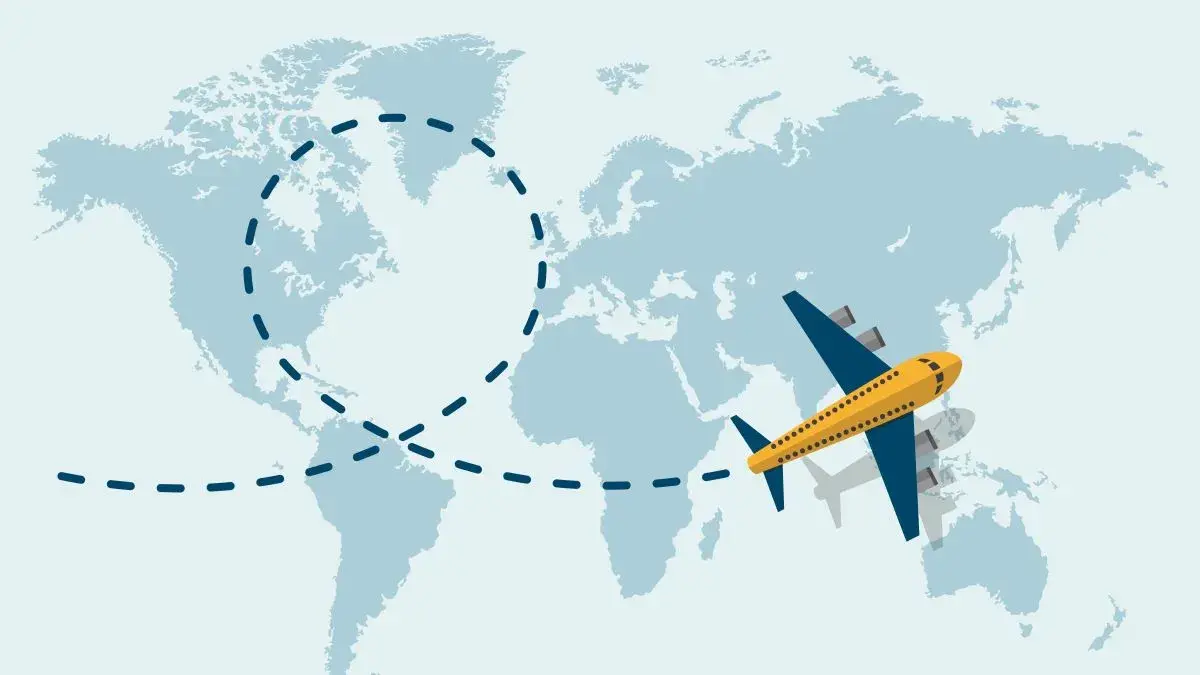
Realistic route logic means the itinerary reflects how a normal traveler would move for that purpose, destination and budget. It does not mean every route must be nonstop. It means every major route choice can survive a basic question: why would this applicant travel this way?
Nonstop is not always the strongest option
A nonstop flight is clean, but it is not always available, affordable or practical. A one-stop itinerary through a common hub can be more realistic than a rare nonstop that does not match the applicant’s origin, budget or schedule. The key is whether the connection makes sense.
Network realism
Network realism means the route follows normal airline geography. A traveler from India to France may connect through a Middle East or European hub. A traveler from West Africa to Canada may connect through Europe or the Gulf. A strange backtracking route needs a reason.
The route should also respect the applicant profile. A senior traveler, family with children, first-time applicant or short-stay business traveler may look stronger with fewer connections and a calmer arrival plan.
Routes that depend on perfect timing
Very tight connections can make the itinerary look fragile. If one segment shifts, the whole route collapses. For visa purposes, a realistic buffer can be stronger than a theoretically faster route. This matters especially when the applicant must arrive before a fixed conference, appointment, cruise, tour or university deadline.
Detours that invite questions
Some detours are harmless. Others look like hidden travel plans. If the applicant says the purpose is a five-day business meeting in Munich but the itinerary adds a long unexplained stay in another country, the route creates a new story the file has not prepared to answer.
Seasonality and schedule availability
Some routes are normal in one season and difficult in another. A route that looks natural during a busy summer schedule may be less available in winter. A regional destination may require a connection that would not be needed for a capital city. This is why route logic should be realistic for the actual travel period, not copied from a generic example.
If the chosen route depends on a rare seasonal connection, make sure the itinerary still looks stable. Visa files work best when the travel plan is easy to understand without the reviewer needing to research airline networks.
Traveler profile matters
A backpacker, business traveler, family, elderly applicant, student and first-time traveler may all have different route logic. A backpacker may naturally use a multi-city route. A business traveler usually benefits from cleaner timing. A family with children may look stronger with fewer connections. A student may need arrival close to orientation or housing availability.
| Route choice | Usually stronger when | Usually weaker when |
|---|---|---|
| Nonstop | Available, affordable and aligned with destination. | Looks forced or does not match actual city plan. |
| One-stop | Uses a normal hub and enough connection time. | Creates transit or airport-transfer problems. |
| Open-jaw | Trip starts and ends in different cities for a clear reason. | Main destination and exit logic are unclear. |
| Multi-city | Hotel dates, purpose and sequence explain the route. | The route looks like unrelated stops stitched together. |
Pick Transit Points That Reduce Questions Instead of Creating New Ones

Transit should make the trip easier, not harder. A good transit point fits the airline network, keeps the route efficient, avoids unnecessary visa issues and does not contradict the applicant’s travel purpose.
Some transit countries create extra paperwork anxiety
Transit rules depend on nationality, airport, terminal, ticketing, route and whether the traveler enters the country. If a route creates a transit visa question, solve it before submission. Do not leave that issue for the airline counter or the visa officer to wonder about.
Same-airport connections are usually cleaner
A same-airport connection is usually easier to understand than an airport-to-airport transfer inside a transit country. If the itinerary requires changing airports, collecting baggage or passing immigration, the route may need more care. For visa purposes, simple is often stronger.
Overnight layovers
An overnight layover can be reasonable when the schedule requires it or when it reduces route risk. It becomes weaker when it creates a hidden mini-trip, extra accommodation question or transit-entry issue. If an overnight layover exists, make sure it does not conflict with visa rules or the main travel story.
Transit should match the traveler’s region
A route from South Asia through the Gulf or Europe may be normal for many European destinations. A route that backtracks across continents for no obvious reason may look less natural. The transit point should feel like part of the route network, not a random fare trick.
Airport-to-airport transfers
Some cities have multiple airports. A route that lands at one airport and departs from another can be valid, but it creates extra practical questions: baggage, time, ground transfer and possible immigration clearance. If the file does not need that complexity, avoid it.
One cleaner stop versus two cheaper stops
Two cheaper stops may save money, but they can create a fragile route. One cleaner stop may be easier to explain, easier to travel and easier for the visa file to absorb. If the savings are small and the route becomes harder to defend, choose clarity.
Make the Calendar Defend the Reservation Instead of Undermining It
The route is only half the story. The calendar is the other half. A flight itinerary for visa should show dates that feel intentional: enough time before the event, enough time for the stated stay, and a departure or onward date that fits the visa purpose.
Appointment-to-travel gap
The gap between visa appointment and travel date should feel realistic. If the travel date is too close to the appointment, processing time may become a concern. If it is extremely far away, the route may feel premature unless the trip is fixed by an event, study date, conference or invitation.
Buffers real travelers would leave
Arriving one day before a conference can feel realistic. Arriving ten minutes before an event does not. Leaving the morning after a family event may be reasonable. Leaving weeks later without explanation can raise questions. Buffers should match the traveler profile and purpose.
Length of stay
The stay length should make the route feel natural. A five-day conference trip, two-week family visit, seven-day holiday or semester-start arrival each has a different rhythm. If the route suggests a different rhythm from the visa purpose, fix the dates or explain the reason.
Revise dates without making the file unstable
If dates change, update the connected documents too. A new itinerary date may require new hotel dates, insurance dates, cover-letter wording or invitation details. One updated document surrounded by old documents makes the whole file look less controlled.
Seasonal schedule logic
Route timing should respect the season. School holidays, conference weeks, religious holidays, winter weather and peak tourism periods can affect route availability and prices. A realistic itinerary does not need to explain every market factor, but it should not choose a route that looks impossible for the stated travel window.
Travel-date buffers
Buffer days should look human. Arriving one day before a meeting, two days before a wedding, or several days before university orientation can be reasonable. Arriving too late for the event or leaving before the stated purpose is complete makes the route fight the file.
Match the Flight Pattern to the Real Reason You Are Traveling
A tourism itinerary should look like a traveler optimizing experience. A business itinerary should look like a traveler optimizing meetings. A family-visit itinerary should show a practical path to the host. A student or long-stay itinerary should show settled arrival logic.
Tourism routes
Tourism routes can include multiple cities, but the sequence should feel natural. Hotel nights, transport gaps and exit route should support the same plan. If the itinerary jumps around without enough nights to justify the movement, it can look synthetic.
Business and conference routes
Business and conference travel usually benefits from cleaner route discipline. The itinerary should center the meeting city, event date or host location. Extra cities should not distract from the core business purpose unless clearly explained.
Family visits
Family-visit routes should reflect the host location and emotional purpose. If the applicant arrives far away from the host and takes a complex internal route, the file should explain why. Otherwise, the itinerary may feel less natural than the invitation.
Student and long-stay arrivals
Student and long-stay applicants need entry logic that looks settled. The route should support orientation, housing, enrollment, work start, residence formalities or other arrival steps. A random tourist-style route can weaken a long-stay file.
Open-jaw and return-from-another-city plans
Open-jaw travel can be strong when the story is clean: arrive in one city, travel through the itinerary, exit from another city. It becomes weak when there is no hotel, transport or purpose logic between the two ends.
Multi-city plans need one clean story
A multi-city itinerary should not feel like separate trips glued together. It needs a route sequence, accommodation trail and purpose trail. If the applicant visits Paris, Zurich and Milan, the file should show why those cities appear, how long the applicant stays, and why the visa application is submitted to the chosen country.
For Schengen files, this matters because main destination is not just a travel preference. It can affect processing responsibility. A multi-city route that ignores stay duration or purpose can create the wrong consulate signal.
Family visits versus tourism add-ons
If the main purpose is visiting family, the route should center the host. Tourism add-ons can exist, but they should not make the host look secondary unless the application is clearly built as a mixed-purpose trip. The same logic applies to business trips with personal days: the business purpose should remain obvious.
Build an Itinerary You Can Repair After Delays or Reschedules
Visa timelines move. Appointments shift. Airlines adjust schedules. Conferences change. A strong route plan has a backbone that can be updated without rebuilding the whole file from scratch.
Backbone versus editable details
The backbone is the core route and purpose: origin, main destination, trip window and exit logic. Editable details include exact flight time, connection option or one-day schedule movement. If the backbone changes, review the whole file. If only a minor detail changes, update carefully and keep the story stable.
Changing everything at once
Changing every route detail at the last minute can make the itinerary feel less trustworthy. If the appointment moved by one week, you may only need a date revision. If the destination changed, that is a bigger application-level change and may affect the supporting documents.
Route change versus date change
Sometimes a route change is smarter than a date change. If the date is fixed by a conference, keep the date and choose a cleaner route. If the route is fixed by a family or business reason, adjust the date only if the supporting documents can follow.
Keep every travel-plan location aligned
Your travel plan appears in many places: application form, itinerary, insurance, hotel, invitation, cover letter and sometimes employer or school proof. When one changes, review all of them. The route should not be updated in isolation.
When a verifiable PDF helps
A cleaner, more verifiable PDF can help when the file is date-sensitive, route-sensitive or appointment-sensitive. It is especially useful when the applicant needs a fresh itinerary after a schedule change but does not want to rebuild the entire travel story from scratch.
Still, the PDF should not become the center of the application. It supports the route logic. It does not replace accommodation, insurance, invitation, financial proof or purpose-of-travel documents.
Keep old versions out of the final file
Old versions create confusion. If you update the route, remove the old itinerary from the final packet. Do not upload one version and print another unless you clearly understand which version the application relies on.
Run a Final Consular Stress Test Before the PDF Leaves Your Laptop
Before uploading or printing the itinerary, test it as if you are the reviewer. Do not ask whether the PDF looks nice. Ask whether the route makes sense for this traveler, this destination, this purpose and this visa type.
Go/no-go route checklist: would a real traveler choose this route, does first entry make sense, is transit clean, do hotel and insurance dates match, does the return or onward route prove the trip ends, and can the applicant explain the route in one sentence?
Would a real traveler choose this route?
This is the simplest hard question. If the honest answer is no, the itinerary needs work. A route that exists in a search engine is not automatically a route that belongs in a visa file.
What if one segment shifts?
If one flight shifts by a few hours, does the itinerary still work? If the answer is no, the route may be too fragile. A strong visa route does not need to be bulletproof, but it should not collapse under ordinary schedule movement.
Read the itinerary beside the whole file
Never review the flight itinerary alone. Open the hotel proof, insurance, invitation, cover letter and application form beside it. The route should become stronger in context, not weaker.
Remove over-ambitious details
If a route looks unusually ambitious for the traveler profile, simplify it or explain it. A first-time traveler with a short visa file may not benefit from a complex multi-country route unless the trip purpose truly supports it.
Final route clarity checklist
- First entry matches the application logic.
- Main destination is clear by duration, purpose or both.
- Transit does not create avoidable visa or transfer questions.
- Hotel dates match arrival and movement through the route.
- Insurance covers the travel period shown.
- Return or onward route supports temporary-stay logic.
- Cover letter explains any unusual city, gap or open-jaw pattern.
If the itinerary passes this checklist, the route is doing its job: supporting the file quietly and confidently.
BookForVisa Standard for Visa Route Logic
BookForVisa prepares flight itinerary documents for visa application support with route logic, date alignment, passenger detail accuracy and readable PDF formatting. For route-sensitive files, the goal is not simply to create a reservation. The goal is to create a route that supports the whole visa story.
The best time to prepare the itinerary is after the destination, main purpose, accommodation, insurance, appointment timing and route sequence are stable. That lets the itinerary work with the application rather than forcing the application to work around the itinerary.
Create a route that makes your visa file easier to understand. Prepare your flight itinerary after the main destination, first entry, transit and return logic are clear.
Create Your Flight Itinerary for VisaFrequently Asked Questions
What is flight itinerary route logic for visa?
It is the way your route, first entry, main destination, transit, travel dates, accommodation and return or onward plan support one clear visa travel story.
Does first entry matter for Schengen visa route logic?
Yes, especially when no single main destination can be determined. France-Visas explains that the competent Schengen country is normally the main destination by duration, and if no main destination is clear, first entry becomes important.
Is the cheapest flight route best for visa applications?
Not always. The cheapest route can be weak if it creates odd transit, unclear first entry, unrealistic timing or a route that does not match the purpose of travel.
What makes a flight itinerary route look realistic?
A realistic route matches the destination, trip purpose, hotel dates, insurance, invitation, stay length and return or onward plan. It should be easy to explain in one sentence.
Can transit points affect a visa file?
Yes. Transit points can create additional visa, airport-transfer or route-credibility questions depending on nationality, airport and itinerary structure.
Should my hotel dates match my flight itinerary?
Yes. Hotel or accommodation dates should normally match the arrival and departure logic shown in the flight itinerary, unless the cover letter clearly explains a different arrangement.
Can I use an open-jaw route for visa applications?
Yes, when the route tells one clean story. An open-jaw route works best when the trip begins in one city, moves logically through the itinerary and exits from another city with matching documents.
Can BookForVisa prepare a route-logic flight itinerary?
Yes. BookForVisa can prepare a flight itinerary for visa application support with route, date and passenger details aligned to your destination, transit and return or onward logic.
Friendly reminder: BookForVisa provides travel-proof documents for planning and visa application support. Requirements vary by country, consulate, visa type, route and applicant situation. A flight reservation can support a file, but it does not promise approval, boarding or entry.