
Short answer: For an emergency family visit, a flight reservation for emergency travel should look urgent but still feasible. Match the departure date to the visa process, connect arrival with the hospital, funeral or caregiving evidence, choose a defined temporary stay and show a return route that fits your leave and home ties. A reservation can support a visa file, but it cannot guarantee approval, boarding or entry.
When an embassy sees an emergency family travel request, your flight reservation has to do more than show movement. It must make the timing look urgent, possible, and temporary. A departure that is too soon can look unrealistic. A return date that is too vague can make a short visit feel open-ended.
Here, we'll focus on the practical choices that protect your credibility: selecting travel dates that match visa processing, aligning arrival with hospital, funeral, or caregiving documents, and showing a return plan without weakening the emergency. For emergency visa files, keep your dummy ticket flexible enough to match processing delays.
Key facts:
- Urgency should be supported by current hospital, funeral or caregiving evidence.
- Departure should allow a realistic appointment, biometrics and processing window.
- Arrival should make sense for the emergency location and local transfer.
- A defined return date should fit the purpose, leave approval and home ties.
- A reservation supports evidence but does not replace visa, transit or entry requirements.
Need a temporary emergency-travel reservation for a visa file? BookForVisa can help keep the passenger name, dates and route consistent while you confirm the destination’s urgent-visa process.
Official-source check: Confirm the destination embassy, consulate or visa centre’s current emergency-visa process and evidence rules, and check the airline’s document requirements. Use the IATA Travel Centre for passport, visa, health and carrier-facing transit checks; the destination authority controls the visa decision.
Reviewed for: emergency evidence, visa timing, arrival logistics, stay length, return signals, family-document consistency and route clarity.
Reading The Emergency Like A Visa Officer, Not Like A Panicked Applicant

Emergency family travel creates pressure, but your visa file still has to look controlled. Your flight reservation should help the officer understand why you need to travel soon, where you are going, and when you plan to return.
| Timeline point | Evidence to match | Check before submission |
|---|---|---|
| Departure | Appointment, biometrics and processing window | Use the earliest practical date, not merely the earliest flight |
| Arrival | Hospital, funeral or caregiving location | Allow realistic airport-to-city transfer time |
| Stay | Medical, funeral or family-support purpose | Choose a defined period that does not look open-ended |
| Return | Leave approval, home ties and end of need | Place the return after the documented emergency period |
How Urgent Family Travel Changes The Way Your Flight Reservation Is Judged
For a normal tourist visa, the flight reservation usually supports a planned holiday or family visit. For emergency family travel, it carries more weight because it becomes part of your urgency story.
A Schengen visitor visa file for a parent in the hospital, a UK Standard Visitor application for a funeral, or a Canada TRV request for urgent caregiving all need the same thing: a travel plan that feels immediate but still believable.
The officer is not only checking whether you have a flight route. They are checking whether your dates match the emergency.
If your mother is in intensive care in Paris, a reservation to arrive in France within a realistic processing window can support your file. If the funeral is in Toronto on a fixed date, your arrival should make sense around that date. If your brother’s surgery is scheduled in Sydney, your flight should not place you there long after the medical event without explanation.
Your reservation also helps answer a quiet but important question: Is this a short emergency visit, or does the applicant look like they may not return?
That is why the return segment matters. Even when the family situation feels uncertain, your itinerary should still show a temporary plan that matches the visa type.
Why “As Soon As Possible” Is Not Always The Strongest Date Strategy
When a family emergency happens, it is natural to want the earliest possible flight. But the earliest flight is not always the strongest visa choice.
A flight leaving tomorrow may look urgent, but it can also look careless if your visa appointment, biometrics, or embassy review cannot happen that fast. For example, if you submit a Schengen application on Monday and attach a reservation for Tuesday morning, the officer may question whether the itinerary was chosen with the visa process in mind.
A better approach is to choose the earliest practical travel date.
That means your departure should respect:
-
The likely visa processing window
-
Appointment or biometric timing
-
Weekend and public holiday delays
-
The date of the hospital visit, funeral, surgery, or caregiving need
-
Transit requirements on the chosen route
-
The distance between your arrival airport and the emergency location
For a US B-2 emergency visit, a near departure date may make sense only if you have an urgent appointment path or a realistic interview timeline. For a UK family emergency visit, the travel date should still leave room for document review. For a Schengen medical emergency trip, the itinerary should align with both the consulate timeline and the event date.
Urgency should look planned, not frantic.
The Return Date Problem During Family Emergencies
The return date is often the hardest part of an emergency travel reservation. You may not know how long a hospital stay will last. Funeral arrangements may shift. A relative’s condition may change overnight.
Still, a visa file needs a planned endpoint.
For most short-stay visitor applications, a round-trip reservation helps show that you are requesting temporary entry. It does not mean your family situation is simple. It means your application has a clear travel frame.
Choose the return date based on the purpose of the trip:
-
Funeral or bereavement visit: Often, 7 to 21 days can look reasonable
-
Hospital support visit: A few weeks may fit if the medical letter supports it
-
Scheduled surgery: Dates should cover the procedure and immediate recovery
-
Urgent caregiving: The stay should match the support role you describe
Avoid making the stay so long that it starts to look like relocation. A six-month return date for a short emergency visit can raise questions unless your visa category, evidence, and personal ties strongly support it.
You can acknowledge uncertainty in your cover letter without weakening your plan. A simple line works: your proposed dates are based on the current medical or family documents, and any changes will remain within the visa conditions.
Matching The Flight Reservation To The Medical Emergency Document Timeline
Your flight reservation should sit neatly inside the rest of your emergency evidence.
If a hospital letter says surgery is scheduled for May 12, arriving on May 20 needs a reason. If a funeral notice shows burial on June 4, arriving on June 6 may confuse the officer unless you explain a memorial, estate matter, or family support role after the service.
Check the reservation against every date in your file:
-
Hospital admission date
-
Doctor’s letter or treatment schedule
-
Death certificate or funeral notice
-
Family invitation letter
-
Employer leave approval
-
School permission letter
-
Proof of relationship
-
Cover letter travel dates
Also, check the geography. If the emergency is in Manchester, but your flight lands in London, your onward plan should make sense. If your relative is hospitalized in Milan, but your reservation enters through Madrid, the route should be easy to understand.
For the broader document workflow, see BookForVisa’s 2026 flight-reservation guide and apply its timing and consistency checks to the emergency file.
Building A Flight Reservation That Feels Urgent Without Looking Manufactured
A strong emergency flight reservation should look like a travel plan you could actually use once the visa is granted. The dates, route, and passenger details should support your family emergency without making the file feel rushed or patched together.
Choosing Departure Dates That Show Pressure But Not Panic
Your departure date should reflect real urgency, but it should also respect the embassy’s review process.
For emergency family travel, the best date is usually not the first flight available online. It is the first date that makes sense after your visa appointment, biometrics, document submission, or urgent review request.
For example, if you are applying for a Schengen visa to visit a hospitalized parent in Germany, a flight reservation dated two days after submission may be believable if you have requested urgent handling and your documents are complete. If the consulate usually takes longer and you have no emergency appointment confirmation, that same date may look unrealistic.
Use the emergency document to guide the date.
If the hospital letter says your father’s surgery is on April 18, your reservation should place you in the destination country before that date, not a week later. If the funeral is scheduled for May 3 in Canada, your arrival should allow time for the service, local travel, and family obligations.
A practical departure date should consider:
-
The earliest realistic visa decision date
-
The event date shown in the hospital, funeral, or family letter
-
The time needed to reach the final city after landing
-
Weekend or public holiday delays
-
Transit rules on the selected route
-
Whether your employer or school leave starts on that date
Avoid choosing a date only because it looks dramatic. Embassy officers can tell the difference between urgent planning and impossible planning.
Showing A Return Plan When The Family Situation Is Uncertain
Family emergencies rarely come with a fixed ending. A patient’s recovery may take longer than expected. Funeral arrangements may change. Family members may ask you to stay for support.
Still, your flight reservation should show a planned return.
For visitor visas, the return flight helps show that your trip has boundaries. It does not mean you are ignoring the seriousness of the emergency. It shows that you understand the visa conditions and have planned a temporary visit.
Choose the return date around the reason for travel.
For a funeral visit, your return date may fall after the burial, prayer gathering, memorial, or immediate family support period. For a hospital visit, your return can follow the surgery date, the doctor’s expected recovery window, or your approved leave period. For urgent caregiving, the stay length should match the role you describe in your cover letter.
Be careful with very long stays.
If you request a short-stay visa but attach a reservation showing a five-month visit, the officer may question whether the emergency is being used to justify a much broader stay. A shorter, well-supported visit often looks stronger than a long, uncertain one.
You can still leave room for reality. In your cover letter, you can state that your proposed return date is based on the current medical or family schedule and that any change will remain within the visa rules.
Avoiding Routes That Make The Emergency Plan Look Unrealistic
An emergency flight reservation should take you toward the family situation in the most sensible way available.
A complicated route can weaken an otherwise strong file. If your relative is in a hospital in Rome, but your reservation lands in Amsterdam with a long unexplained gap before Italy, the officer may wonder whether the itinerary truly matches the emergency.
The same issue can appear in the UK, US, Canada, Schengen, and Australia visitor files. The route should support the stated reason for travel.
Watch for details that create doubt:
-
Too many stopovers for an urgent trip
-
Overnight layovers without a clear reason
-
Transit through countries that may require another visa
-
Departure from a city far from your residence
-
Arrival at an airport far from the hospital, funeral home, or family address
-
Return to a different home-country airport without explanation
-
A route that adds unnecessary days before reaching the relative
Cheapest is not always best for an emergency visa file. The route should look practical, direct enough, and consistent with the urgency you are claiming.
If a less direct route is unavoidable, make sure the rest of your file explains it. For example, limited flights from your city, no direct route, or a required connection may be reasonable. Silence is what creates suspicion.
Using Passenger Details And Document Consistency To Avoid Suspicion
Emergency applications often move fast, so that small mistakes can create large problems.
Your flight reservation should match your passport and visa forms exactly. The spelling of your name, date of birth, passport details, and travel dates should not force the officer to guess.
Check every visible detail before submission:
-
Full name matches the passport
-
The passport number is correct if shown
-
Departure and return dates match the cover letter
-
Arrival country matches the visa being requested
-
Arrival city supports the emergency location
-
Return date matches employer, school, or family obligations
-
The reservation reference or PNR is visible
-
PDF is clean and readable
-
No cropped screenshots or edited-looking sections appear
Also, check the sequence of your documents. If your employer leave approval starts on June 10, but your flight leaves on June 6, the mismatch needs an explanation. If your cover letter says you will visit your uncle in Melbourne, but the reservation lands in Perth, the file feels harder to trust.
Applicants applying from India may receive VFS or destination-portal instructions, while applicants in the United States may follow a consular checklist. For either applicant, the destination authority’s current emergency process controls, and the family evidence should match the submitted timeline.
Connecting The Flight Reservation To The Rest Of The Emergency Visa File
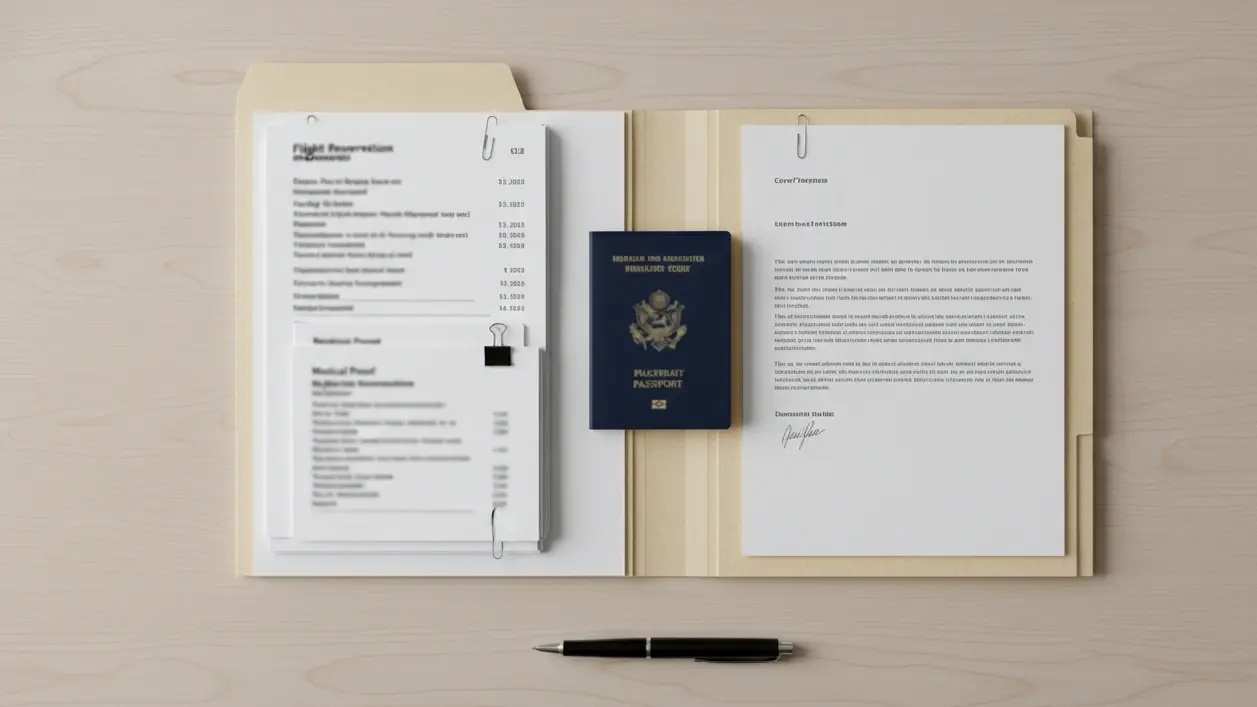
Your flight reservation should not sit in the file like a separate attachment. In emergency travel, it should connect directly with the cover letter, proof of crisis, return tickets, and the embassy’s timing expectations.
Writing The Cover Letter Around The Itinerary Instead Of Repeating The Emergency
A strong cover letter does not retell every emotional detail. It explains how your travel arrangements match the emergency and visa request.
For Schengen, UK, US, Canada, or Australia visitor visas, the officer needs to see why you must fly now, why these dates make sense, and why you will return. Keep the wording calm. Mention the loved one, the relationship, the current situation, and the planned journey.
For example, you can write that your proposed departure date is based on the doctor’s note, your appointment timeline, and your approved leave. If the case involves bereavement or medical emergencies, include only the facts that support urgent travel.
Use the flight reservation as the timeline anchor:
-
Who needs your presence
-
Whether they are immediate family members
-
What document confirms the situation
-
When you plan to depart
-
How long do you plan to stay
-
Why is your return date reasonable
Avoid dramatic claims. “My father is under treatment, and the attached hospital letter confirms his admission date” is stronger than emotional wording without evidence.
When The Emergency Proof Is Strong But The Flight Dates Are Flexible
Some critical situations are real but uncertain. A hospital may change the surgery date. Funeral arrangements may depend on permits. A family illness may worsen or stabilize before the visa is issued.
Your flight reservation can still look credible if the flexibility is controlled.
For a Canada TRV, UK Standard Visitor visa, or Schengen short-stay application, choose a travel window that fits the known evidence. If the hospital expects a procedure next week, your arrival should support that timeline. If you need to attend a funeral, keep the death certificate ready and align the reservation with the service or family gathering date.
Do not attach several conflicting flight bookings. That can make the file look messy. If dates may change, explain the reason in one sentence and keep the reservation clean.
You may also need to stay flexible with available options. Family emergency flights can be affected by limited options, blackout dates, and last-minute availability, especially from India or smaller departure cities. If you are checking special fares or emergency fares, remember that fare types qualify differently with certain airlines, and the discount amount may vary.
For visa files, the best option is not always the cheapest ticket. It is the booking that supports the emergency date, return plan, and embassy review process without creating last-minute stress.
How To Keep The Reservation Credible If Embassy Processing Is Delayed
Emergency visa files can slow down even when the situation is urgent. Biometrics, missing additional information, holidays, or security checks may push the decision beyond your planned departure.
If that happens, do not leave an expired reservation in the file if the embassy asks for updated documents. A stale itinerary can make urgent travel look poorly managed.
Update the reservation so the new dates still match the emergency travel policies, medical letter, funeral notice, or family invitation. Keep the same destination logic. If the original plan was to land near the hospital in Munich, the revised reservation should not suddenly shift to another country without explanation.
If you are exploring emergency travel programs, contact the airline directly or use the customer service line to understand whether assistance is available. Many airlines handle special requests differently, and phone bookings may require prior notice. A booking platform may show tickets quickly, but direct confirmation can help you understand fare types, standard fare rules, and whether discounted rates are actually secure.
When NGO, family or appointment timing may shift, BookForVisa’s flight-reservation service can help keep the passenger name, route and dates aligned before final airfare is purchased. Confirm current service terms and the destination checklist before relying on any reservation.
The key is to ensure availability while keeping the visa file consistent. Do not submit a new reservation that creates fresh doubts about where you will fly, when you will return, or why the trip is still urgent.
Coordinating The Flight Reservation With Employment, School, Or Family Ties
A return flight becomes stronger when the rest of the file explains why you must come back.
For employees, the leave letter should match the travel dates. If your reservation returns on July 20, your employer letter should not say you are expected back on July 10 unless you explain remote work or unpaid leave.
For students, the return date should respect exams, enrollment, or campus reporting. For business owners, attach proof that your company continues operating while you travel. For parents, documents showing spouse or children remaining at home can support a temporary intent.
These ties are not meant to weaken the emergency. They show the embassy that you are prepared, responsible, and aware of the visa limits during challenging times.
If you are comparing a temporary reservation with a paid fare, this visa itinerary requirements guide helps keep the route and supporting proof aligned.
Mistakes That Make Emergency Travel Plans Look Less Credible Than They AreAn emergency visa file can be genuine and still look weak if the flight reservation sends the wrong signal. The risk is rarely the reservation itself. It is usually the timing, stay length, route, or explanation around it.
Submitting A Flight Reservation That Looks Faster Than The Visa Process
A flight reservation should not suggest that you ignored the embassy’s own process.
If your appointment is on Tuesday, but the reservation shows departure on Wednesday morning, the officer may question whether the plan is realistic. This becomes more sensitive when biometrics, document review, courier return, or interview scheduling still need time.
Emergency cases can move faster, but they still need a believable window. Urgent travel does not mean choosing dates that the visa system cannot support.
Before you submit, check whether your departure date respects:
-
The appointment or submission date
-
Expected emergency processing time
-
Passport return method
-
Public holidays in either country
-
Weekend closures
-
Any request for extra documents
This matters even more when you are comparing last-minute flights. A seat may be available, but the visa may not be. The reservation should show readiness, not wishful thinking.
Letting Emotion Create A Stay Length That Looks Like Relocation
Family emergencies can make time feel impossible to measure. You may want to stay until a loved one recovers, until family matters settle, or until everyone feels stable again.
That emotion is understandable. But a visitor visa file still needs a defined stay.
A very long return date can create concern, especially when the purpose is described as a short emergency visit. If your documents show a funeral, but your flight reservation shows a five-month stay, the officer may wonder whether the trip has another purpose.
Choose a stay length that fits the documented need.
For a funeral, the reservation can cover the service, family rituals, and immediate support. For medical support, the return date can follow the treatment date, expected discharge, or your approved leave. For urgent caregiving, the stay should match the role described in your family letter.
You do not need to make the emergency look small. You need to visit the temporary.
Using A One-Way Reservation When A Temporary Visit Needs A Return Signal
A one-way reservation may create questions when you are applying for a temporary family emergency visit. Some visa categories may not require a return segment, but many short-stay files become stronger when the return plan is visible.
A round-trip reservation helps show that you are not leaving the return question open. It supports your cover letter, leave approval, financial plan, and home ties.
For emergency travel, the return flight also gives structure to a difficult situation. It shows that you plan to fly for a specific purpose and return within the visa conditions.
This does not mean you must buy a costly ticket before approval. It means the flight reservation should reflect a complete travel plan.
Some travelers try to save money by leaving the return date undecided. That can create more risk than benefit in a temporary visa file. A clear return segment often prevents extra questions and helps avoid last-minute stress if the embassy asks why your travel plan has no endpoint.
Overloading The File With Dramatic Explanations Instead Of Clean Evidence
A visa officer does not need pages of emotional detail to understand that the situation is serious. They need proof they can review quickly.
Too much dramatic wording can make the file harder to assess. It may also distract from the documents that matter most.
Keep the explanation factual and tied to the flight reservation. Instead of saying you must travel immediately because the whole family is suffering, state who needs you, what document confirms the emergency, and why your travel dates match that need.
Useful wording stays specific:
-
“The hospital letter confirms admission on the stated date.”
-
“The proposed arrival date allows attendance before the scheduled procedure.”
-
“The return date matches the approved leave period.”
-
“The attached family letter explains why support is needed during this period.”
These tips are not about sounding cold. They are about making the emergency easy to verify.
If you booked through a website, make sure the PDF looks clean, the reservation reference is visible, and the dates match your written explanation. The officer should not need to solve contradictions to understand your plan.
Forgetting That Emergency Credibility Depends On The Whole Timeline
The flight reservation is only one part of the emergency timeline. It must fit with the appointment date, emergency proof, employer letter, financial documents, cover letter, and return ties.
Small gaps can create doubt.
If your doctor’s note shows a procedure next month, but the flight leaves tomorrow, explain the need for early arrival. If your leave approval ends before the return flight, correct the mismatch before submission. If your arrival airport is far from the emergency location, show how you will reach the final city.
Do one final timeline check before filing:
-
Does the departure date follow a realistic visa decision window?
-
Does the arrival date match the family emergency?
-
Does the stay length fit the documented purpose?
-
Does the return date support temporary travel?
-
Does every document use the same names, dates, and destination logic?
-
Would the plan make sense to someone reviewing it under time pressure?
Make Your Emergency Flight Plan Feel Urgent And Credible
Your emergency family travel request should feel calm, specific, and easy to verify. The flight reservation must support the timing of the hospital visit, funeral, caregiving need, or family crisis without making the trip look rushed, open-ended, or unclear.
Before you submit, check the full timeline one last time. Your departure date, return date, emergency proof, cover letter, and home ties should all point to the same temporary travel plan. That is how we help the visa officer understand both the urgency and the credibility of your journey.
Ready to prepare a credible emergency travel plan? Check the emergency evidence, visa timing, stay length and return date together before submitting.
FAQ
What should an emergency family-travel reservation show?
It should show a feasible route, dates that fit the visa process, the emergency location and a defined return plan.
How soon should I schedule the flight for an emergency visa?
Use the earliest practical date after allowing for the appointment, biometrics, document review and any stated urgent process.
What evidence should match the reservation?
Match current hospital, funeral, caregiving, family-relationship, leave and accommodation documents to the same travel window.
Should an emergency visit have a return flight?
A defined return segment often helps show temporary travel, provided it fits the documented need and visa conditions.
Can I change the reservation if the emergency dates change?
Update the reservation and supporting documents together, and follow the destination authority’s instructions for changes after submission.
Does an emergency flight reservation guarantee visa approval?
No. It can support a coherent urgent travel plan, but approval, boarding and entry depend on the responsible authorities and complete evidence.
Friendly reminder: BookForVisa provides travel-proof documents for planning and visa-application support. Requirements vary by destination, consulate, visa category and applicant situation. A flight reservation can support a file, but it does not guarantee approval, boarding or entry.