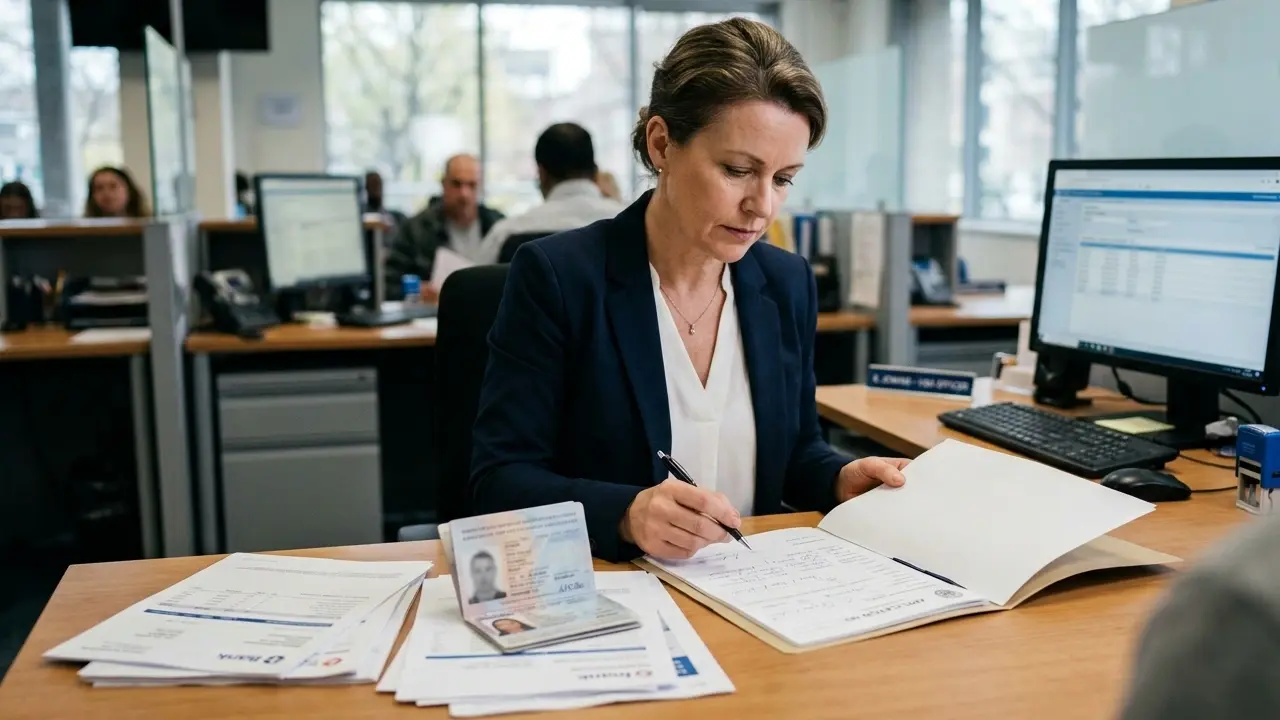
A flight reservation for visa for a UK Student visa should be timed around your CAS, funds evidence, biometrics appointment and realistic arrival window. The strongest file does not rely on buying airfare early; it uses a clean reservation that matches the course start date, passport name, UK arrival logic and document timeline without creating date conflicts.
Your CAS finally lands, you spot a biometrics slot, and suddenly one question takes over: do your funds, dates, and flight reservation still line up cleanly for the UK Student Visa you are about to submit? A single mismatch can force edits, re-uploads, or a last-minute rebook when prices jump.
We will map the exact sequence that keeps you safe. You will know when to lock your CAS details, when your bank evidence is actually ready, and when to schedule biometrics so nothing expires. We will also show when to hold a flight reservation versus waiting, how to buffer for delays, and what to do if your course start or appointment date shifts after you apply. If your UK Student Visa dates shift after biometrics, keep your travel proof flexible and aligned with your CAS start date instead of locking non-refundable airfare too early.
Key facts before planning a UK Student visa flight reservation:
- GOV.UK says applicants outside the UK can apply up to 6 months before the course starts.
- Student visa decisions outside the UK usually take around 3 weeks, but timing can vary by case.
- Funds normally need to be held for 28 consecutive days, with the latest financial evidence dated within 31 days of application.
- Your arrival date should respect the visa start date and the permitted pre-course arrival window.
- A flight reservation should support the CAS, funds, biometrics and course-start timeline instead of forcing the file around a paid ticket.
In This Guide
Official-source check: GOV.UK explains that Student visa applicants outside the UK can apply up to 6 months before the course starts, usually receive a decision within about 3 weeks, and may arrive before the course starts only within the allowed pre-course window. UK financial evidence rules also require the most recent financial evidence to be recent and, where the 28-day rule applies, to cover the full holding period. Sources: GOV.UK Student visa, GOV.UK financial evidence, and Appendix Finance.
Reviewed for: UK Student visa CAS timing, 28-day funds evidence logic, biometrics sequencing, arrival-window rules, passport-return risk, flight reservation wording, name-date consistency and post-submission change handling.
Build Your “One Calendar” Plan Backward From Your Real Deadline

A UK Student Visa timeline feels simple until one date slips and everything else collides. We will build one calendar that keeps your CAS, funds, biometrics, and flight planning consistent.
Start With the Date That Actually Rules Everything: Course Start + When You Want to Arrive.
Your real deadline is not “apply soon.” It is the moment you must be in the UK and ready to start your course. Start by writing two dates: your course start date and your preferred arrival date. The gap between them is where your plan either stays calm or turns chaotic.
Pick an arrival date that fits real life:
-
Enough time to settle and handle a late passport return
-
Not so early that your travel story looks disconnected from study timing
For example, if your course starts on 23 September and you want to arrive on 10 September, your calendar must protect that 13-day window. That window is where late biometrics, slow passport return, or a CAS correction can still be absorbed without forcing you to land the night before induction.
Then set one rule. Every step you schedule must protect those two dates. If a step threatens them, you adjust the step, not the dates.
Decide Your “Arrival Buffer” Like a Grown-Up (And Why It Prevents Cascading Rework)
Most timeline problems come from pretending you can land right before class and still absorb delays. You need a buffer that matches how processing works.
Choose it by answering three questions:
-
How quickly can you respond if you are asked for extra documents after submission?
-
How risky is it for you to miss the first lectures if your passport return is late?
-
How much time do you need to settle in housing and essentials without rushing?
Split your buffer into two blocks:
-
A “visa buffer” that covers processing variability and passport return timing
-
A “life buffer” that prevents expensive, last-minute choices
Put both blocks on your calendar as protected space. Do not fill them with tasks. That space is what stops one delay from forcing you to redo everything.
Create Three Immovable Anchors: CAS Issuance, Funds Readiness, Biometrics Attendance
Now set anchors you treat like fixed points. If one anchor moves, you replan the tasks around it.
Anchor 1 is CAS issuance and correctness. You should not submit until the CAS details you will enter are stable.
Anchor 2 is funds readiness. “Funds ready” means your evidence is valid on the day you apply, not just that money exists.
Anchor 3 is biometric attendance. This is the date you physically complete the step that advances your application. Treat the appointment slot as valuable.
Place these anchors first. Name the anchors in your calendar, like “CAS Locked,” “Funds Valid,” and “Biometrics Done.” Add reminders 7 days and 2 days before each one, so you react fast.
Then attach tasks to each anchor:
-
Tasks that must happen before CAS is issued
-
Tasks that must happen before funds are ready
-
Tasks that must happen before the biometrics day
The Two Timelines You Must Run in Parallel: Visa Processing Time vs. Personal Constraints
Planning fails when you only respect one timeline. You must run two timelines at once and make them agree.
Timeline one is process time. It includes submission, biometrics, and the period during which your passport may be unavailable. Timeline two is personal constraints: notice periods, housing checkout, exams, work handovers, and fixed family commitments.
Here is how we combine them:
-
Mark your non-negotiable dates first.
-
Place visa steps backward from your arrival date.
-
Where they conflict, change your plan early, not at the last minute.
If a personal date cannot move, use it to set your earliest safe submission window. If a visa step cannot be moved, use it to choose a more realistic arrival date.
A Simple Backward-Planning Template: What You Schedule First, Second, And Last
Backward planning works because every task gets a reason. Use this sequence to build your calendar fast.
First, schedule the “must-attend” date:
-
Biometrics attendance day
Second, schedule the “must-be-true” dates:
-
The day your funds evidence becomes valid for use.
-
The day your CAS details are confirmed accurate.
Third, schedule the “must-happen-before” tasks:
-
Bank statement and letter request dates
-
Document checks that rely on your passport and CAS details
-
A flight planning checkpoint, where you decide whether to hold dates or wait
Last, schedule the soft tasks:
-
Packing, accommodation planning, and travel booking decisions that can move
This order prevents a common mistake: locking travel dates before the steps that determine whether you can travel on those dates.
Where People Lose Weeks: Assuming Steps Happen Instantly (They Don’t)
The biggest time leak is optimism. People assume a bank letter arrives tomorrow, a correction is instant, a biometrics slot will appear on demand, and a passport returns on the earliest estimate. One delay then forces re-uploads, new evidence, and rushed travel changes.
Build realism into your calendar:
-
Buffer time between “request” and “received.”
-
Buffer time between “submit” and “biometrics.”
-
Buffer time between “biometrics” and “travel”
Also, keep one change rule. If an anchor moves, update every dependent task the same day. Waiting creates mismatches.
A Quick Consistency Check You Can Run Every Time a Date Changes
Each time a date changes, run this check before you adjust anything. It prevents contradictions.
Ask:
-
Does the plan still match your course start and arrival buffer?
-
Do your CAS details still align with what you will submit?
-
Are your funds evidence dates still valid for your target submission date?
-
Can you still attend biometrics without creating a passport availability problem?
-
Does your flight plan, if you are holding one, still support your study timeline?
If any answer is “not sure,” pause and fix that point first. With your calendar controlled, we can move to the next pressure point: getting your CAS into a state where you do not need corrections after you have already planned everything else.
CAS Without Chaos: What To Lock In Before You Press Submit

Your UK Student Visa timeline can look perfect on paper and still fall apart if your CAS details shift after you submit. Here, we focus on locking the parts that must stay stable so you do not end up chasing corrections mid-process.
What “CAS-Ready” Really Means In Practice (Not Just “I Received It”)
A CAS is not “ready” the moment it arrives in your inbox. It is ready when you can copy every required detail into your visa application with confidence and never touch it again.
CAS-ready usually means all of this is true at the same time:
-
You have the final CAS reference, and it matches the course you will actually attend.
-
Your course start date and end date are confirmed and unlikely to move.
-
Any required tuition deposit has been processed and reflected correctly.
-
Your personal details match your passport exactly.
-
Your course information and study location details are consistent with what you will enter in the application.
Treat CAS-ready as a status you earn, not a document you receive.
If your school issues a CAS but then asks you to “wait, we might update something,” you do not have a stable foundation yet. You can still prepare everything around it, but you should avoid submitting until the CAS details are settled.
The Details That Must Match Your Passport And Application Exactly (And How To Sanity-Check Them)
Most CAS-related trouble is not dramatic. It is small mismatches that create avoidable friction.
Run a strict match check between your passport and CAS:
-
Full name order and spelling
-
Date of birth
-
Passport number
-
Nationality
-
Passport expiry date, if shown
Then run a second match check between your CAS and what you plan to enter in the application:
-
Course title
-
Course start date and end date
-
Study location or campus details, if relevant
-
Sponsor institution name and identifiers, if shown
-
Fee details and payment information, if included
Use a simple method that catches errors fast.
Open your passport bio page and CAS side-by-side. Read each field out loud and tick it off. Do not rely on skim-reading. Skim-reading is how “Mohammad” becomes “Muhammad” in one place, and you only notice after submission.
If a field is formatted differently but clearly equivalent, keep consistency in the visa form. For example, if your passport includes a middle name and your CAS does too, your application should reflect that same structure.
Course Dates, Tuition Payments, And Deposit References: The Mismatch Traps
UK Student Visa timelines are sensitive to course dates because those dates influence your travel planning, your arrival buffer, and the credibility of your overall story.
The most common traps sit in three places.
Course dates
-
A course end date that changes after a deferral or course switch
-
A pre-sessional add-on that shifts the start date earlier than you planned
Tuition payment records
-
A deposit was paid, but it has not been reflected yet.
-
A payment was applied to the wrong student ID.
-
A scholarship confirmation that is delayed
Deposit references
-
A deposit receipt number that does not match what the school recorded
-
A deposit paid under a different payer name and not linked correctly
Here is the practical rule.
If your CAS includes fee or payment information, you should treat it as a locked data point. If that data point is wrong, fix it before you submit. Otherwise, you risk being asked to explain inconsistencies later, or you risk having to re-plan your funds evidence timing.
A quick check that saves headaches is to ask yourself one question:
If someone looked at my CAS and my financial evidence together, would the timeline and amounts look clean without extra explanation?
If the answer is “maybe,” do the cleanup now.
When You Should Ask For A CAS Correction Vs. When You Should Wait And Proceed
Not every concern needs a correction request. But some issues are not negotiable.
Ask for a correction when the error affects identity or core eligibility:
-
Name spelling that differs from your passport
-
Wrong passport number
-
Wrong date of birth
-
Wrong nationality
-
The course start date does not match what you are actually attending.
-
Major course details that would change what you enter in the application
Proceed without correction when the “difference” is only a formatting style and does not change meaning, and your application can stay consistent.
If you are unsure, use this decision test:
-
Will this detail appear in the visa application form exactly as written on the CAS?
-
If it appears, would a mismatch look like a data error rather than a harmless formatting difference?
If the mismatch looks like an error, do not gamble.
Also, protect your timeline. Correction requests can take time. That time should be planned for, not absorbed by sacrificing your biometrics or travel buffer.
How To Handle “CAS Arrives Late” Without Wrecking Your Flight And Biometrics Plan
Late CAS is a common reality. The mistake is to freeze and do nothing until it arrives.
Here, we focus on building forward momentum without creating rework.
Do these tasks while you wait:
-
Prepare your application answers that do not depend on CAS specifics.
-
Collect and verify identity documents and translations, if needed.
-
Draft a funds evidence plan that you can execute the moment dates are confirmed.
-
Shortlist biometrics appointment windows that fit your schedule and processing buffer
Then, when the CAS arrives, run a fast “CAS lock” routine before you book anything hard to undo.
A simple routine looks like this:
-
Confirm the course dates match your plan.
-
Confirm your passport data matches.
-
Confirm that any fees and payment details are correct
-
Save the CAS as a locked PDF copy in a dated folder.
-
Record the exact course start date and CAS reference in your calendar.
Only after that should you move to booking biometrics, because biometrics timing is where your plan becomes real.
If you must secure a biometrics slot quickly due to limited availability, you still keep control by choosing an appointment date that allows for a correction buffer. Do not schedule it so tight that one CAS correction forces a cancellation.
Document Naming + Version Control: Stop Losing Time To Re-Uploads And Confusion
UK Student Visa applications can involve multiple uploads and repeated checks. The fastest way to lose time is to upload the wrong version of a document or to mix old and new files after a CAS update.
We recommend building a tiny version control system that is boring and effective.
Use a folder structure like this:
-
01 Passport And ID
-
02 CAS
-
03 Funds Evidence
-
04 Education Documents
-
05 Supporting Documents
Inside the CAS folder, keep only two items:
-
CAS_Current_YYYY-MM-DD.pdf
-
CAS_Previous_Archive folder
If you receive a corrected CAS, move the older one into the archive folder immediately. Do not keep multiple CAS versions in the same place. That is how the wrong reference ends up being used in a form field or uploaded by mistake.
Also, to create a single “Application Values” note file. It can be a simple document where you paste:
-
CAS reference
-
Course start date
-
Course end date
-
Sponsor institution name as shown
-
Any other values you will type into the form
This prevents a subtle but costly mistake. People copy values from an email one day, then from a PDF the next day, and the format changes. A single master note keeps your entries consistent.
Before you submit, do one final cross-check:
-
The CAS you will reference is the CAS in your “CAS_Current” file.
-
The values in your “Application Values” note match those in the same file.
-
No old CAS value remains in any draft or saved form entry.
Once CAS is locked, your next pressure point is making sure your funds evidence is valid on the exact day you submit, not one week before or one week after.
Funds Timing: Make Your Money Work On The First Attempt

For a UK Student Visa, the financial requirement is often where strong applications get slowed down. Not because the money is missing, but because the evidence is dated wrong, structured poorly, or becomes invalid on the day you submit. Here, we focus on making your money work cleanly the first time, without forcing rework later.
Build A Funds Strategy That Fits Your Reality: Savings, Sponsor Support, Scholarship, Or Mixed
Start by picking the simplest funding setup you can keep stable for the required holding period. Complexity creates timing risk.
Most applicants fall into one of these buckets:
-
Your Own Savings In Your Account
Best when you control the funds and can keep the balance steady without dipping. -
Parent Or Partner Funds
Useful when your own funds are tied up, but the family account can hold the full amount consistently. You will need clear permission and a clean relationship link. -
Student Loan
Strong when the loan letter is explicit about the amount, the borrower, and when the money becomes available. -
Official Sponsorship Or Scholarship
Best when it is clearly confirmed and consistent with what your CAS says about funding and fees. -
Mixed Funding
Works, but only if each component is easy to prove and each document stays valid in the same timeline window.
Now, calculate the target amount using two inputs:
-
Tuition fees you still need to pay, based on your CAS fee section and any payments already recorded
-
Living costs based on your study location (London vs outside London), up to the capped number of months
Do not cut it close. Build a buffer so you do not get trapped by exchange-rate movement or a small bank charge that lowers your balance.
Also, choose one “primary proof account.” Make it the account that will stay calm for weeks. A calm statement reads like stability. A chaotic statement reads like improvisation.
The “Holding Period” Problem: How To Avoid A Statement That Looks Perfect But Fails Timing
This is the rule that catches people off guard.
UKVI expects you to show the required funds were held for 28 consecutive days, and your financial evidence must be recent relative to the date you apply. That means your statement can be accurate and still be unusable if the dates do not line up.
Think in three dates:
-
Your Planned Online Submission Date
-
The Statement End Date (the last transaction date or closing balance date on your evidence)
-
The Start Of The 28-Day Window (the day your uninterrupted holding period begins)
Here is a safe planning method that reduces risk:
-
Pick the earliest online submission date you can realistically hit, based on CAS readiness and document preparation.
-
Choose the statement end date you will rely on. Make sure it is close enough to submission that it still counts as recent.
-
Count back 28 days from that end date. From that start date onward, your balance must never drop below the required level.
Now block those 28 days in your calendar as a no-touch zone.
No-touch zone rules that keep you safe:
-
Do not use that account for daily spending.
-
Do not allow automatic payments that can unexpectedly dip the balance.
-
Do not move money out and “put it back later.”
-
Keep a buffer above the minimum so small charges do not create a drop.
An example that shows why people fail:
You hold the required balance for 20 days, then you pay a fee that drops it for one day, then you top it up again. Many applicants assume the clock keeps running. It does not. That one-day dip usually resets your holding period.
The cleanest fix is to separate accounts:
-
One account holds the required funds and stays quiet.
-
Another account handles your normal transactions.
Large Deposits, Sudden Transfers, And Unexplained Credits: How To Pre-Empt Questions
Large deposits are not automatically a problem, but timing makes them risky.
If a large credit arrives during your 28-day window, it creates two headaches:
-
It can restart the story of how you built the balance.
-
It can look like a last-minute assembly of funds.
A safer approach is to complete major movements before your no-touch zone begins.
If you must receive a large deposit during the window, do two things:
-
Keep the balance comfortably above the requirement even after normal activity.
-
Keep supporting proof ready that matches the deposit source and date.
Good supporting proof is boring and consistent:
-
Salary credits that match your employment pattern
-
A documented sale where the amount and timeline align
-
A family transfer where the sender is clear and the reason is simple.
Avoid “funds choreography” in the final month. Multiple transfers between your own accounts can look engineered. Even if everything is legitimate, it can slow you down if you are asked to clarify.
If you are using parent funds, do not force the money into your account right before applying just to make it “look like yours.” A clean parent-held balance with proper permission is often easier to defend than a last-minute transfer that creates fresh timing questions.
Choosing Which Account(s) To Use So Your Bank Letter/Statement Is Clean And Consistent.
Account choice is a strategy, not an admin.
Pick an account that meets three practical tests:
-
Accessibility Test: You can withdraw or use the money immediately. No lock-ins, no notice periods.
-
Stability Test: The balance can sit above the requirement without daily movement.
-
Clarity Test: The account holder's name is clear and matches the evidence you will submit.
Also, avoid fund types that do not behave like cash. Keep your proof focused on standard bank funds that are easy to understand and verify.
If you use more than one account, your evidence should still feel unified. That means:
-
Each account meets the holding period expectation.
-
The combined total stays above the requirement at all times.
-
The ownership story is simple and provable.
If you are using a loan letter, treat it like a contract, not a friendly note. The letter must make it obvious:
-
Who the borrower is
-
The total approved amount
-
When the funds become available to you
-
That the money is intended to support your study
If you are using official sponsorship, make sure the coverage is explicit. “Supported” is vague. “Covers tuition and living costs for the full course duration” is clear.
Currency Conversion Clarity: How To Present It Without Inviting Doubt
If your funds are not in GBP, do not assume today’s conversion rate will be the rate that matters on your application date.
Here is how to protect yourself:
-
Hold more than the minimum required amount in your local currency.
-
Keep an extra buffer if your currency fluctuates.
-
On the day you submit, record the conversion rate you used for your own consistency.
Do not over-explain in your documents. Clarity beats commentary. Your goal is to make the numbers easy to verify, not to write an essay about exchange rates.
Also watch for hidden balance drops:
-
Bank fees
-
Annual charges
-
Currency conversion spreads if your account moves between currencies.
A small fee can push a borderline balance under the threshold for a day. That single day can ruin an otherwise perfect 28-day run.
If Your Funds Become “Ready” After Your CAS: How To Reorder Steps Safely
It is common for your CAS to arrive before your funds window finishes. That is not a problem if you sequence correctly.
Use this order:
-
Lock CAS details first, so you do not change course dates mid-plan.
-
Keep building your funds holding period until the 28 days are complete.
-
Prepare every other document so the submission can happen as soon as the funds are valid.
-
Choose a biometrics date that fits after your planned submission, not before it.
Do not let a fresh biometrics slot force a premature application. Submitting with evidence that is not valid on the submission date can create delays that are harder to recover from than waiting a few days to apply correctly.
If your course start is close and your funds will be ready late, adjust your travel plan early. A stable financial timeline is more valuable than forcing a tight arrival date.
Mistake Checklist: Funds-Related Timeline Errors That Force Re-Application Or Delays
Use this as a final scan before you submit:
-
Your balance dropped below the required amount at any point during the 28-day holding period.
-
Your statement end date is too old relative to the day you apply.
-
You used an account with heavy daily activity that makes dips likely.
-
You relied on a deposit that landed inside the 28-day window without a clear supporting paper trail.
-
Your loan letter is vague about availability timing, or does not clearly identify you as the borrower.
-
Your sponsor evidence does not clearly state what costs are covered and for how long.
-
Your foreign-currency balance sits too close to the requirement without a buffer for conversion shifts.
-
You planned around a bank letter you cannot obtain quickly, and you have no fallback statement option.
-
You assumed you would not need to show evidence, then you could not produce it promptly when asked.
Once your funds timeline is truly locked, you can make smarter flight reservation choices because you will know your real submission window and how much flexibility you still need.
Flight Reservation Timing: When To Hold Dates, When To Buy, And What To Show
Flight planning becomes stressful for UK Student Visa applicants for one reason. You are choosing dates while your CAS, funds timeline, and biometrics slot can still move. Here, we focus on keeping your flight reservation aligned with your student story and your real application timeline.
The Core Rule: Your Flight Plan Must Support Your Story-Not Fight It
Your flight plan should look like the natural next step after a visa decision, not like a rushed gamble.
For a UK Student Visa, the “story” is simple. You are traveling to start a course on a specific date at a specific place. Your travel timing should reflect that.
A flight reservation fights your story when it creates questions like these:
-
Why are you arriving so early that it looks disconnected from the course start?
-
Why are you arriving so late that it looks like you might miss classes?
-
Why is the routing strange for a student with a fixed campus and start date?
-
Why do the passenger details not match the passport you are using for the application?
We keep the flight plan boring on purpose. Boring reads as believable.
Choosing Your “Intended Travel Date” Before You’re Emotionally Ready (And How To Do It Safely)
You do not need certainty. You need a controlled range.
Pick one “intended travel date” that sits inside a wider travel window you can live with. This prevents panic changes when your biometrics or passport return shifts by a week.
Use this method:
-
Target Date: The day you would love to fly if everything runs smoothly
-
Earliest Acceptable Date: The earliest day you could arrive without creating an awkward gap before your course
-
Latest Safe Date: The latest day you could arrive without risking a messy start
Now tie that window to your course start date and your personal setup needs.
Ask two questions:
-
Do you need days for settling in housing and basics before classes begin?
-
Can you handle a late decision without landing exhausted the night before you must appear on campus?
If you cannot answer those yet, you can still pick a target date by using your calendar anchors:
-
If your biometrics are not booked, your target date should be conservative and later.
-
If biometrics is booked and your funds window is complete, you can set a more confident target.
This is also where time zones matter. A flight that departs late at night can land “the next day” in the UK. If your course start and travel plan are tight, that date shift can make your timeline look sloppy.
A Decision Tree: Hold Reservation Vs. Book Refundable Vs. Wait (Based On CAS/Funds/Biometrics Status)
The right move depends on what is already locked.
Here is a clean way to choose without overthinking.
If your CAS is not fully locked yet:
-
Wait, if your dates might change.
-
Hold a reservation only if you need a placeholder for planning, and you are willing to update it once the CAS is stable.
If your CAS is locked but your funds window is still running:
-
Hold a reservation inside your travel window.
-
Keep it flexible because you still cannot submit safely until the funds evidence is valid.
If your CAS is locked, your funds are valid, and you can submit now:
-
Hold a reservation if you are still hunting for a biometrics slot, and your appointment date is uncertain.
-
Consider a refundable purchase only when you can live with the refund timeline, and you are comfortable taking that step before a final decision.
If your biometrics are completed and your passport return timing is the main unknown:
-
Hold a reservation that can move.
-
Avoid locking a flight that forces you to travel before you even have your passport back.
One practical rule keeps you out of trouble. The earlier you are in the process, the more your flight plan should behave like a flexible placeholder, not a fixed commitment.
If you are departing from Delhi during a peak travel week, this matters even more because prices can jump fast, and you may feel pressure to lock something prematurely.
How Close Your Flight Date Should Be To Your Course Start (And Why “Too Early” Can Raise Questions)
Your flight date should look like the natural lead-in to study.
Arriving a sensible period before your course starts is normal. Arriving very early can look unnecessary, especially if you do not have a clear reason tied to settling, accommodation, or required onboarding steps.
This is where we keep your plan consistent with your own documents.
If your course starts on a fixed date, a flight that lands weeks earlier can create a “why” gap. You might have a real reason, but you do not want your overall file to look like it was built without a coherent timeline.
Use these checks to choose the right distance from the course start:
-
Does your accommodation plan realistically begin around your arrival date?
-
Does your budget support an early arrival without looking mismatched to your funds story?
-
Are you relying on a tight visa timeline where an early flight becomes a risky bet?
Also, keep in mind that your entry timing should match the permission you actually receive. We do not guess that window. We build your flight plan so it can shift once your visa outcome and travel permission are clear.
Round-Trip Vs. One-Way: What Signals Each Choice Can Send For A Student Timeline
For student travel, one-way is common. It matches the idea of moving for a course.
Round-trip can still be reasonable, but it needs to make sense with your study timeline. A return flight that falls too soon can look like you are not committed to your course dates. A return flight that is extremely far out can look like a random placeholder.
If you are using a flight reservation as supporting evidence, choose the option that best matches your real plan:
One-way makes sense when:
-
You plan to stay for the full course period.
-
Your return timing depends on academic outcomes, internships, or plans.
-
You do not want to lock any return assumptions into your file.
Round-trip can make sense when:
-
You have a clear, realistic reason to return during a known break.
-
You prefer to show a complete travel loop for personal planning.
-
The dates do not contradict your course duration.
Keep the signal clean. Do not build a return date that conflicts with the course end date shown in your CAS.
What Can Go Wrong With Flight Reservations: Unverifiable PNRs, Weird Routing, Date Contradictions
Most flight reservation issues are self-inflicted. They happen when the itinerary looks stitched together instead of planned.
Watch for six common failure points.
Passenger Identity Mismatch
-
Name order differs from the passport in a way that looks like a different person. The passport number is added incorrectly, if included anywhere.
-
Title or gender markers conflict with your passport details
Routing That Looks Like a Puzzle
-
Unnecessary extra stops with no price or availability reason
-
Backtracking through airports that make no sense for your departure point
-
Layovers that are unrealistically short for international connections
Date And Time Contradictions
-
Arrival date looks wrong because of time zone shifts.
-
You “arrive” after your course start date.
-
You arrive on a date that conflicts with the rest of your plan.
Airport And City Confusion
-
Flying into an airport far from your study city with no credible onward plan
-
Picking a random UK airport because it was the first option you saw
Reservation Verification Problems
-
A PNR that cannot be verified when checked
-
A PDF that looks altered or inconsistent across pages
-
An itinerary that does not resemble normal airline formatting
Version Control Problems
-
You submit one itinerary, then later share a different one with different dates.
-
You keep multiple PDFs and lose track of which one matches your application date.
Here is a fast “sanity check” you can run before you attach any reservation to your process:
-
Does the itinerary match your CAS course start timeline?
-
Does the arrival date fit your settlement buffer?
-
Do the passenger details match your passport exactly?
-
Is the routing direct or logically efficient?
-
Would a third party be able to verify the reservation details without confusion?
We also keep your itinerary aligned with your funds story. If your funds evidence shows careful stability, but your travel plan looks impulsive and erratic, the overall impression becomes uneven.
How To Keep Flexibility If Your Biometrics Or Passport Return Shifts Your Travel Window
Your flight plan should change only when a real milestone changes.
Use milestone-based planning:
-
Before Submission: Keep travel dates flexible. Avoid locking anything that assumes a decision date.
-
After Submission but Before Biometrics: Do not tighten travel dates unless you have an appointment date that you will actually attend.
-
After Biometrics: You can narrow the window, but still avoid commitments that depend on the earliest possible passport return.
If you must update a held reservation, keep the changes minimal. Do not change everything at once. A date adjustment inside the same travel window is normal. A new route, new airports, and new dates all at once look like a different plan.
If you need a verifiable flight reservation while preserving flexibility, BookForVisa.com offers instantly verifiable reservations, a PNR with PDF, unlimited date changes, transparent pricing at $15 (~₹1,300), is trusted worldwide for visa use, and accepts credit cards.
The next step is making sure your biometrics booking and upload plan does not force last-minute flight changes you could have avoided.
Biometrics Without A Two-Week Slip: Booking, Uploads, And Day-Of Proof
Biometrics is the step that turns your UK Student Visa plan from “almost ready” into a real countdown. If you book it carelessly, you can lose time, invalidate documents, or trap yourself into a flight date you cannot safely keep.
The Timeline Reality: Biometrics Is Not “One Appointment”-It’s A Chain Of Dependencies
Biometrics looks like a single calendar event, but it is built on several things that must already be true.
Before you lock a slot, make sure these UK Student Visa dependencies are stable:
-
Your CAS details are locked, including course dates and your personal information.
-
Your funds evidence is valid for your planned online submission date.
-
Your supporting documents are in their final form, not “we will fix it later.”
-
Your passport is valid and will be the same passport you use for travel.
Then remember the order. For most applicants, you submit online first, then you attend biometrics. That means the date you choose affects how long you will be waiting with your travel plans in limbo.
A common slip happens when you book the earliest available slot first, and only later notice you cannot upload in time, or your financial evidence is not timed correctly for the day you apply.
Booking Strategy: How To Choose An Appointment Date That Protects Your Funds And Flight Timeline
Here, we focus on choosing a biometrics date that protects three things at once: your document validity, your processing buffer, and your intended travel window.
Use this appointment date filter:
-
Pick a biometrics date that is late enough to finish uploads calmly.
-
Pick a biometrics date that is early enough to protect your arrival buffer.
-
Pick a biometrics date that does not force you to gamble on a fixed flight.
A practical way to do this is to schedule around two personal deadlines:
-
Your “documents locked” day
-
Your “latest safe arrival” day
Then choose biometrics so it sits after documents are locked, but early enough that your processing and passport return still fit your travel window.
If you are deciding between two slots, the tie-breaker is simple:
-
Choose the slot that reduces the chance you must change your flight reservation twice.
Also, protect yourself from “slot panic.” Some locations have limited appointment availability, and it is tempting to grab anything. If you do that, set a rule immediately:
-
If you cannot finalize uploads within 48 hours, you reschedule early instead of showing up with a messy file.
Early rescheduling is less disruptive than trying to patch documents the night before.
Upload Vs. Scan At Appointment: Picking The Method That Reduces Failure Points
Your biometrics center may allow uploads in advance, scanning at the appointment, or a mix. The best choice is the one that gives you control and reduces surprises.
Uploads in advance are usually better when:
-
You want a clean, complete UK Student Visa file that matches your CAS and financial timeline.
-
You have documents that must be clear and readable, like bank letters, loan letters, or sponsor documents.
-
You want to avoid paying for scanning services or waiting in the waiting area.
Scanning at the appointment can be fine when:
-
Your document set is simple and already in order.
-
You have high-quality originals and clear copies.
-
Your local center is reliable, and you have enough time during the day.
If you are unsure, default to uploading in advance. It gives you a final review moment before the appointment.
Either way, build one “upload pack” folder so you do not mix versions:
-
Passport bio page
-
CAS document
-
Financial evidence documents that you are relying on
-
Any required academic or course-specific documents
-
Any translations, if applicable
-
Any additional required certificates, if applicable
Keep this pack consistent with your UK Student Visa story. Do not add unrelated extras that create noise.
What To Bring On The Day (And What People Forget That Triggers Rescheduling)
Biometrics appointments fail for predictable reasons. Most are preventable.
Bring these items every time:
-
Your passport is used in the application.
-
Appointment confirmation
-
Proof of payment, if your center requires it
-
Any center-specific checklist items you were told to bring
Now, the easy-to-miss problems that cause rescheduling:
-
You arrive without the exact passport used in your application.
-
Your appointment confirmation is missing or cannot be verified on-site.
-
Your documents are on a phone with a poor battery and no offline access.
-
You rely on last-minute printing, and the print is unreadable.
Also, plan your timing like an adult. Many centers are strict. Arrive early enough to handle security checks and queues without stress.
If you wear glasses, follow the center’s photo rules. If you have changed your appearance significantly since your passport photo, be prepared for extra checks. It is not a problem, but it can slow you down.
Handling Reschedules Like A Pro: What To Update (And What Not To Change)
Reschedules happen. The mistake is changing your application story at the same time.
If you must reschedule biometrics, keep these parts stable:
-
Your CAS details and course dates
-
Your intended travel window
-
Your flight reservation logic, if you are holding one
Then update only what the new date forces you to update.
Use this reschedule checklist:
-
Confirm your financial evidence is still valid relative to your online submission date.
-
Confirm your upload pack still matches your application answers.
-
Confirm your held flight reservation, if you have one, still fits your new realistic timeline.
-
Confirm your passport availability plan still works.
What not to do:
-
Do not change routes, airports, and travel dates all at once because you feel behind.
-
Do not “fix” anxiety by buying a non-refundable ticket before you have clarity on passport return timing.
-
Do not swap to a different bank account evidence set unless you truly have to, because it can create a fresh timing problem.
Treat rescheduling as a single change event, not a full timeline rewrite.
If Your Passport Is Held Longer Than Expected: How To Prevent Travel Chaos
This is the moment where good planning saves you money.
In many locations, your passport may be kept for processing after biometrics, or you may have options that affect whether you keep it. Regardless of the exact setup, you should plan as if you might not have your passport for a period of time.
That affects two practical things:
-
Flight booking commitments
-
Any travel that requires your passport in hand
Here is how to stay calm:
-
Keep your flight plan flexible until you are confident about the passport return timing.
-
If you are holding a flight reservation, keep it within the window; you can still meet even if the passport return takes longer than hoped.
-
Avoid itinerary changes that create contradictions with your course start timeline.
If you must travel domestically while your passport is unavailable, plan alternative ID needs early so you are not forced into last-minute changes that distract you from the visa process.
A “Biometrics Day” Micro-Checklist You Can Run In 10 Minutes
Run this quick checklist before you leave for your appointment. It prevents the small errors that cost days.
-
Your passport is in your bag, and it is the same passport used in your application.
-
Your appointment confirmation is saved offline and easy to show.
-
Your upload pack is finalized, with correct versions and clear file names.
-
Your CAS and financial documents match the same timeline you used in the application.
-
You know your center location and arrival time, with a buffer for queues.
-
You have a plan for what happens after biometrics, including how you will track updates and what you will do if you are asked for additional documents.
Biometrics is also where your travel plan becomes more real, so the next step is preparing for the uncommon situations that can break an otherwise solid timeline.
UK Student Visa Checklist: Exceptions International Students Should Look Out For
Most UK Student Visa timelines break for one of two reasons. A key detail changes after you planned everything, or a “small” mismatch forces you to slow down and prove consistency. Here, we focus on the situations that quietly cost weeks, and how you keep control when they show up.
If Your CAS Date Changes After You’ve Planned Everything: Your Safest Reset Sequence
A CAS date change is not just an admin update. It can ripple into your funds timing, your biometrics plan, and the flight dates you can credibly hold.
Use a reset sequence that prevents contradictions.
Freeze your travel actions first.
-
Do not buy flights.
-
If you are holding a reservation, do not keep changing it daily.
Confirm what changed and what did not.
-
Did only the start date move, or did the course change too?
-
Did fees change, deposits change, or study location change?
Recalculate your “latest safe arrival” and “earliest sensible arrival.l”
-
If the start date is moved later, arriving too early can look disconnected.
-
If the start date moves earlier, your buffer may evaporate.
Re-check your funds timeline against the submission date. You can now realistically hit
-
A CAS shift often forces you to move your submission date.
-
That can make your bank evidence too old or too early.
Rebook biometrics only after the new sequence is stable
-
A fresh biometrics date locks your pace.
-
Book it when your new CAS details are steady, not while you are still guessing.
Update your flight plan last.
-
Choose a new target date inside a window you can still meet.
-
Keep routing simple and consistent with your study location.
This order matters because it keeps your file coherent. UK Student Visa decisions move faster when your dates look deliberate, not reactive.
Previous Refusals, Gaps In Travel History, Or Complicated Profiles: When To Add Buffer Time
If your profile is straightforward, you can run a tight timeline. If it is complicated, tight timelines become expensive.
Complication triggers that deserve extra buffer:
-
A previous UK refusal or a refusal from another country
-
Long gaps in education or work that you need to explain clearly
-
Recent passport changes that affect identity continuity
-
Mixed funding that requires more than one evidence document
Buffer time is not just “wait longer.” It is time you use to reduce ambiguity.
Use that buffer to do three things:
-
Build a clean document set with zero rushed substitutions.
-
Create consistent answers across forms, CAS details, and evidence.
-
Keep your flight plan flexible until the process is clearly moving.
If you are in this category, avoid flight plans that look like you are trying to force the timeline. A cautious travel window reads as maturity, not hesitation.
Dual Passports, Name Variations, And Passport Renewals Mid-Process: Avoiding Mismatches
Identity mismatches create the most annoying delays because they are hard to fix after submission.
If you hold dual passports, choose one passport for the entire process and stick to it:
-
Use it for the visa application.
-
Use it for biometrics.
-
Use it for the flight reservation passenger details.
-
Use it for travel
Do not mix passports between steps. It creates avoidable confusion.
If your name appears differently across documents, lock your “official name format” early. Then apply it everywhere you control:
-
Application form entries
-
Flight reservation passenger name
-
Supporting letters that you request or draft
If you are renewing your passport, follow one rule:
Do not apply with a passport that you plan to replace in the next few weeks.
If renewal is unavoidable mid-process, stop and realign before you move. Your priority is consistency. A new passport number can force updates, and those updates can collide with flight plans and appointment timing.
Sponsors And Mixed Funding: What Creates Doubt, And How To Document It Cleanly
Mixed funding can be strong. It can also look messy if it reads like patchwork.
What creates doubt is not “where the money comes from.” It is when the story changes mid-file.
Common triggers:
-
Tuition is “paid” in one place, “unpaid” in another.
-
A sponsor covers living costs, but your bank statements show you are relying on personal savings.
-
A loan letter is vague about when funds become available.
-
A sponsor relationship is unclear or undocumented.
Keep sponsor and mixed funding clean with a three-part proof pack:
-
A clear sponsor letter that states what they cover and for how long
-
Evidence that the sponsor actually has the funds, held steadily
-
A simple relationship link document where relevant
Then keep your travel plan aligned with that funding story. If your evidence is carefully structured, your flight plan should also look structured. Avoid sudden route changes or unrealistic early arrivals that make your intent look uncertain.
Dependants Or Staggered Travel: How To Keep One Story Without Forcing Identical Timelines
If you have dependants, or if you and your dependants will travel at different times, your timeline needs extra coordination.
The goal is not identical flights. The goal is one consistent narrative.
Keep these items aligned:
-
Your main course start date and location
-
Your primary arrival window for you as the student
-
A practical reason for staggered travel that does not contradict your study plan
Staggered travel can make sense when:
-
You need to arrive first to secure housing and settle.
-
Dependants have school schedules or notice periods.
-
You want to reduce travel risk while the visa process completes
Where people get into trouble is when flights suggest a different plan than the application story. For example, dependants arriving weeks before the student, or the student arriving far later than the course start.
If you are holding flight reservations for multiple people, keep them simple and consistent. Avoid complex multi-city routes that look like leisure travel when the context is study relocation.
Priority/Expedited Services: When They Help Vs. When They Create New Constraints
Expedited processing can reduce waiting time, but it also tightens your margin for error.
It helps when:
-
Your CAS is locked and unlikely to change.
-
Your funds evidence is already timed correctly.
-
You can upload clean documents quickly.
-
You have a realistic travel window, and you will not force fixed flights before clarity.
It creates new constraints when:
-
Your documents are still being corrected or gathered.
-
You are using evidence that is close to expiry windows.
-
Your biometrics slot forces you into rushed uploads.
-
You feel pressure to buy flights immediately, “because it is priority”
Priority service is not a substitute for a stable file. It is a speed multiplier. If your timeline is messy, it accelerates the mess.
Myth-Busting: “Buying A Ticket Early Makes My Application Stronger” And Other Timeline Myths
Myth 1: Buying flights early proves commitment
A UK Student Visa is decided on eligibility and consistency. A premature ticket can simply become a costly change when dates shift.
Myth 2: The earliest biometrics slot is always the best
The best slot is the one you can attend with a complete, consistent upload pack that matches your CAS and funds timing.
Myth 3: If your CAS arrives, you should submit the same day
You should submit when the CAS details are stable, and your funds evidence is valid for that submission date.
Myth 4: If you change one date, nothing else needs updating
A date change can affect your funds evidence window, your travel window, and how your flight plan looks relative to the course start.
Myth 5: Complex routing looks more “real.”
For a student traveling to a fixed campus, simple routing looks more natural. Complexity invites questions.
Mistake Checklist: The Most Common “Looks Minor, Costs Weeks” Errors
Use this list as a stress test when your timeline feels tight.
-
You submit with CAS details that you know might be corrected soon.
-
You book biometrics before your funds evidence is truly ready for the submission date.
-
You change your intended travel date repeatedly and end up with inconsistent saved PDFs.
-
Your flight reservation passenger name does not match your passport formatting exactly.
-
Your flight plan arrives too early or too late relative to the course start, without a clear reason.
-
You switch funding sources after submission and create a new story mid-process
-
You renew your passport after submission and do not realign all dependent details.
-
You upload documents in mixed versions because the file naming is unclear.
-
You pick an expedited option, then rush uploads and create avoidable document issues.
-
You keep making “small fixes” without re-checking the whole timeline for contradictions.
Once you have a plan for these uncommon situations, you are ready for the final phase: what to track after you submit, how to handle change requests, and how to adjust flights without creating a conflicting story.
After You Submit: Tracking, Changes, And Your Contingency Plan
After you hit submit, the UK Student Visa process becomes quieter, but the timeline is still active. Here, we keep your plan stable while staying ready for the few moments when you need to move fast.
Your Post-Submission Timeline Map: What You Can Control Vs. What You Must Wait Out
Once your online application is filed, treat your case like a controlled project. You have deadlines, dependencies, and a single goal: travel on your intended date without last-minute chaos.
What you can control is simple:
-
Your file order and your document checklist
-
How quickly you respond if you need to submit extra items
-
Whether your flight plan stays consistent with your course timeline
-
Whether your current passport stays the anchor for every step
What you must wait out is also simple:
-
Processing and updates from the UK government
-
When your passport is returned
-
Any security or verification steps you cannot speed up
Lock a “submitted pack” folder today. Put in the student visa application form confirmation, your cas number details, and every PDF you uploaded. Then stop editing those files.
If you are studying under the academic technology approval scheme, also keep your atas certificate in that same pack so you do not scramble later.
When To Change Travel Dates (And When To Freeze Them), Based On Where You Are In The Process
Travel changes after submission can be harmless or costly. The difference is whether you change dates because of facts or because of anxiety.
Use milestone logic.
If you have not attended the visa appointment yet, keep your flight plan flexible. You are still before the moment your timeline becomes fixed.
If you have attended biometrics at the visa application centre, you can narrow your travel window slightly, but do not lock a flight that assumes a best-case passport return.
If you already have your valid passport back and your outcome is confirmed, then you can book with confidence.
We also keep airline choices realistic. Reliable flight reservation services book you with major airlines like Lufthansa or Emirates, but we still plan for delays to happen.
A simple rule helps:
-
Freeze your route and airports early.
-
Adjust only the date inside your travel window when you need to.
That prevents a messy pattern where every change creates a new story.
If You Get Asked For Extra Documents: How To Respond Without Triggering Contradictions
A request for more paperwork is not a disaster. It is a test of how clean your file is.
First, identify what the request is really about. For a UK study visa, follow-up requests often target identity, funding, or course conditions.
Then provide evidence with the smallest complete set. Do not attach unrelated extras “just in case.”
Here are examples of what might be requested, depending on your situation:
-
A birth certificate or adoption certificate, if family relationships matter to the file
-
A letter confirming sponsorship details from an official sponsor or scholarship provider
-
Proof of financial support from a financial sponsor, including the exact amount covered
-
An accurate translation of a key document is not in English
-
A secure English language test result is required to confirm your English language proficiency.
-
A TB certificate if your residence history triggers tuberculosis rules
-
A legal guardian letter with written consent if you are under 18, including legal guardian consent and care arrangements
-
Evidence of sole responsibility if one parent is the primary caregiver, plus living and care arrangements documents where relevant
Keep your acceptance documents clean, too. If your offer letter was conditional, make sure you can show the unconditional offer stage and the confirmation of acceptance that ties to your course provider, including your acceptance for studies, including details.
One more point matters for international students. If you add new documents, you must not change the story that your original submission already told.
Passport Return Planning: How To Avoid Booking Pressure And Last-Minute Overpaying
Passport timing is where people overspend. They watch prices rise, and they buy certainty before they have it.
We avoid that with a three-layer plan.
Layer one is a travel window, not a single day. It should still make sense relative to your course start.
Layer two is a shortlist of flight options that work if your passport returns early, mid-window, or late. Keep routing simple.
Layer three is a trigger date. On that date, you decide based on reality.
Also, decide how you will handle money while you wait. We do not gamble with maintenance funds. We keep enough money available so you can pay for changes without dipping below insufficient funds if your evidence could be checked again.
If you plan to buy a ticket, set a ceiling price ahead of time. That stops panic buying.
What To Do If You Must Defer Intake: CAS Implications, Funds Implications, And Flight Implications
Deferral is manageable when you treat it as a controlled reset.
Start with the CAS. If your course dates move, your cas reference number and reference number details may also be replaced or reissued. Use only the latest data you receive from the course provider.
Then rebuild your financial timing. Your living expenses plan might change with the new start date, and the documents required for your funding story must still look stable.
If you have a full scholarship from an international scholarship agency, keep a fresh confirmation that matches the new intake. If you are self-funded, align your statement timing with the new date you need to submit.
Finally, adjust flights. If you are holding a reservation, update the date only. Keep the same route logic so your travel plan still reads like study abroad preparation.
The “48-Hour Final Check” Before You Travel: Consistency Checks Across CAS, Dates, And Proof
Two days before you fly, you do not invent new plans. You verify the right documents and remove small risks.
Run these checks:
Identity And Passport
-
You have your original document set where required.
-
Your current passport is the one on your application.
-
Your flight passenger name matches your passport formatting.
Course And CAS
-
Your CAS number and course dates match what you will present.
-
Your arrival timing still fits your course start plan.
Finance
-
You can show sufficient funds proof if asked, without scrambling.
-
Your living expenses plan is realistic for your first weeks.
Health And Language
-
If you needed a TB test, you have it ready and accessible.
-
Your English language evidence is saved offline.
Travel Practicalities
-
You have backups for document access.
-
You have a plan if a low-cost airline changes schedules or charges a cancellation fee.
Also, remember one practical UK step after arrival. Your biometric residence permit collection process may apply, so keep your timeline flexible for early admin tasks.
UK Visa For Indian Students: Acceptance for Studies (CAS) & Other Queries, Answered
Can we book flights right after we apply?
We can plan routes, but we book only when the timeline supports it, and we have clarity on passport timing.
What if we are asked for more documents after submission?
We provide evidence that matches what we already submitted, using only the documents you need for that request.
What if our funds setup involves a sponsor?
We keep the sponsor story consistent and make sure the support shows enough money for the period covered.
What if we are outside the UK and a TB requirement applies?
Rules vary depending on where you have lived, so we keep the TB test proof ready before we travel.
What if our English proof is questioned?
We rely on the correct format and keep the result accessible, not buried in email threads.
What if the CAS changes after submission?
We pause travel actions and align the new details before we adjust anything else.
What if a parent controls the funds for a younger applicant?
We keep the relationship proof clear, including written consent and any legal guardian requirements.
What if we are worried about a visa refusal?
We slow down, check the right documents, and get further advice before making any irreversible travel commitments.
Your UK Student Visa Timeline, Made Simple And Calm
When your CAS, funds, biometrics, and flight reservation timing follow one clear calendar, your UK Student Visa process feels controlled instead of stressful. You avoid mismatched dates, stale bank evidence, and last-minute flight changes that do not fit your course start.
Keep your file stable, keep your travel window flexible until the right milestone, and respond fast if the visa team asks for more documents. If you want a final check, reread your calendar and make sure your intended travel date still supports your course timeline before you lock anything in.
Create a UK Student Visa Flight Reservation
Prepare a clean flight reservation for visa with route, date and passenger details aligned before your CAS, funds evidence and biometrics timeline become fixed.
Create Your Flight ReservationFrequently Asked Questions
Do I need to buy a flight ticket before applying for a UK Student visa?
Usually, you should avoid buying non-refundable airfare before the visa decision is clear. A flight reservation can show intended travel dates while keeping the final purchase flexible.
When should I create a flight reservation for a UK Student visa?
Create it after your CAS details, funds evidence window and biometrics plan are stable enough that the travel dates will not immediately need changing.
How early can I apply for a UK Student visa from outside the UK?
GOV.UK says applicants outside the UK can apply up to 6 months before the course starts. Your travel plan should be built backward from that course start and intended arrival date.
How long does a UK Student visa decision usually take?
GOV.UK says Student visa decisions from outside the UK usually take around 3 weeks, though individual cases, document requests and local processing conditions can change the practical timeline.
What should a UK Student visa flight reservation match?
It should match your passport name, CAS course dates, intended arrival window, accommodation plan and any timeline you explain in your application or supporting documents.
Can I arrive in the UK before my course starts?
Yes, but only within the permitted arrival window and not before the start date shown on your visa. GOV.UK lists different arrival windows depending on course length.
What happens if my biometrics appointment is delayed?
Keep your travel proof flexible. If biometrics moves, review the flight reservation date, passport availability and arrival buffer before locking final airfare.
Can I use a one-way reservation for a UK Student visa?
A one-way plan can make sense for long-term study, but it still needs a credible arrival date, route and supporting timeline. Avoid routes that look unrelated to the course start.
Should my funds evidence and flight reservation use the same dates?
They do not need identical dates, but they must support the same story. Your funds evidence should be valid for the application date, and the flight reservation should support the study timeline.
Does a flight reservation guarantee UK Student visa approval?
No. A flight reservation supports the travel-proof part of the file, but approval depends on eligibility, CAS, funds, identity, English-language evidence and the full application record.
Friendly reminder: BookForVisa provides temporary travel-proof documents for planning and application support. Requirements vary by country, visa category, airline, route and applicant situation. A flight reservation can support a file, but it does not guarantee approval, boarding or entry.