A visa file can look perfectly normal on your screen and still raise doubts the moment conflict changes flight paths, transit hubs, or border assumptions. During tense periods, embassies do not read your itinerary as a routine attachment. They read it as a judgment call.
That shifts the real question for you. Not whether travel is technically possible, but whether your plan still looks responsible, realistic, and credible enough to assess. We need to think about route logic, timing, transit exposure, and backup options the way a visa officer would. Once you see the file through that lens, you can decide whether to apply now, reroute, simplify the trip, or wait until the plan becomes easier to defend under pressure and official scrutiny. When routes change fast, use a verified dummy ticket booking that still looks visa-file-ready.
Key facts:
- Conflict can turn a normal-looking route into a higher-risk itinerary if transit hubs, borders or airline paths become unstable.
- A strong visa file explains one realistic travel story instead of stacking defensive documents or outdated reservations.
- Travel advisories, route changes, insurance coverage and refund logic should be checked before submission.
- Essential purpose, narrow geography and clear return timing usually read stronger than an ambitious multi-country plan.
- If the route no longer makes sense, rerouting or waiting can be safer than forcing a fragile itinerary into the file.
Need a cleaner reservation during uncertain travel conditions? BookForVisa can help you prepare a flight reservation that keeps your route, dates and traveler details aligned before you submit.
Create Your Visa ReservationIn This Guide
Official-source check: For conflict-era travel planning, official guidance supports a risk-aware approach rather than blind reliance on an old itinerary. The U.S. State Department publishes travel advisories and warns that high-risk areas may involve limited consular assistance. GOV.UK tells travelers to check country-specific safety, security and entry guidance. Canada’s travel advisories explain that security conditions can change and list risk levels from normal precautions to avoid all travel. For Schengen files, the Visa Code requires supporting documents for journey purpose, accommodation, means and intention to leave, and examination includes document reliability and applicant statements. Sources: U.S. travel advisories, U.S. high-risk areas guidance, GOV.UK foreign travel advice, Canada travel advisories and Schengen Visa Code.
Reviewed for: conflict-era route-risk wording, travel-advisory alignment, transit-hub and spillover logic, reservation timing, insurance/return-plan consistency, reroute-versus-wait guidance, cross-platform dummy-ticket separation and official-source support.
What Changes Inside An Embassy File When Conflict Starts Affecting Civilian Travel
A travel plan can look neat, complete, and fully bookable, yet still feel wrong inside a visa file once conflict starts changing the travel map. It can also stretch the timeline, so plan around conflict-related visa processing delays as well as the route itself. That is the shift many applicants miss. The embassy is no longer looking at your itinerary as a routine movement from one airport to another.
Why Officers Stop Looking At The Itinerary Of Visa Applicants As A Routine Formality
In a stable period, a flight reservation often works as a simple supporting document. It shows intended entry, intended exit, and rough trip structure. During conflict, that same reservation starts carrying more meaning.
Now the officer is asking harder questions. Does this route show good judgment? Does the applicant understand what is happening around the trip? Does the plan look like something a careful traveler would still choose today?
That changes how your file is read.
Your itinerary stops being a background document. It becomes a live test of awareness. A route through a tense transit zone, a narrow connection near a disrupted corridor, or a return plan built on fragile assumptions can all affect the file even if the booking itself is genuine.
This matters because embassies do not review travel documents in a vacuum. They read them as part of a wider decision. When global conflict affects civilian movement, a reservation helps answer questions about:
-
Risk awareness
-
Trip realism
-
Traveler intent
-
Likelihood of disruption
-
Whether the plan still makes sense right now
That is why a clean PDF is not enough on its own. A reservation can be perfectly formatted and still create doubt if the route suggests you are relying on conditions that no longer feel stable.
We also need to remember how officers work under pressure. When world events change fast, consular teams often become more cautious even before formal rules visibly change. They may not need to see a travel ban to start reading files more carefully. A conflict does not have to sit directly on your destination for your itinerary to start attracting extra attention.
Once that happens, the officer is not only checking whether you plan to travel. They are judging whether your plan deserves confidence.
The Difference Between A Destination Risk And A Route Risk
Many applicants focus almost entirely on the destination country. They check whether the embassy is open, whether visas are still being issued, and whether flights still exist. That is useful, but it is only half the picture.
Embassies also look at route risk.
Destination risk is about where you are going. Route risk is about how you get there and how you return. A destination may still look stable enough for travel, while the path to reach it has become far less predictable.
That can happen in several ways:
-
A major transit hub becomes overloaded after airlines reroute around closed airspace
-
A connecting airport sits near a tense regional flashpoint
-
Airlines start changing schedules frequently
-
Border pressure in one area causes spillover delays elsewhere
-
Political retaliation affects overflight paths, transit permissions, or carrier choices
From the embassy’s view, these are not minor operational details. They shape whether your travel plan still looks responsible.
A common mistake is assuming that if the destination remains open, the route must also remain acceptable. That is not how a cautious officer reads the file. A plan can fail the common-sense test even when the endpoint still looks perfectly valid.
This is especially important for applicants using multi-leg journeys. Every added connection creates another point of failure. During normal travel periods, that may be tolerable. During conflict, it can make the file look more exposed than it needs to be.
So when we assess a travel plan under stress, we need to separate the two questions:
-
Is the destination itself still reasonable?
-
Is the route still credible enough to support a visa application?
If the answer to the second question is weak, the application can start feeling unstable before the officer even reaches the rest of your supporting documents.
How Purpose, Timing, And Geography Get Read Together
Embassies do not read travel purpose, trip dates, and route choice as separate boxes. They read them together.
That means a flight reservation only makes sense when it fits the reason for travel and the geography around it. A short tourist trip during a tense regional moment may be judged more critically than a family emergency, a medical visit, or an important work trip. The same route can look acceptable for one purpose and poorly judged for another.
Timing matters just as much.
A route that may seem tolerable for a longer, necessary trip can look harder to justify for a brief discretionary visit. If your plan requires multiple transits, long detours, or movement close to a volatile area, the officer will ask whether that structure matches the value and urgency of the trip.
This is where many files weaken. The applicant often provides a decent reservation, but the itinerary does not match the trip story closely enough. For example:
-
A high-friction route for a two-day leisure trip
-
A complex regional circuit for a single meeting
-
Tight travel dates during a period when schedules are often changing
-
Return timing that leaves no margin for disruption
None of these issues automatically destroys a file. But together, they can create a picture of a traveler who is moving as if conditions are normal when they clearly are not.
Geography also changes the tone of a case. Two itineraries may end in the same destination, yet the one moving through more sensitive corridors can feel less defensible. That is why officers look beyond the final airport code. They want to see whether the full travel path reflects the reality of the moment.
When purpose, timing, and geography support each other, the file feels coherent. When they pull in different directions, the officer starts looking for weakness.
Why “Technically Possible” Is Not The Same As “Visa-Worthy”
One of the most dangerous assumptions in conflict-era visa planning is this: if a route is still online and still bookable, it should be fine for the application.
Not necessarily.
A route can be technically possible and still look too fragile, too exposed, or too poorly judged to support decision with confidence. Airlines may still sell seats. Online travel platforms may still display connections. But embassies are not rating your plan on bookability alone.
They are asking whether the trip still looks sensible under current conditions.
That difference is small on the screen and huge inside a visa file.
A technically possible route may still look weak if it depends on:
-
unstable transit timings
-
overloaded hubs
-
indirect movement without a clear reason
-
narrow recovery options if a disruption happens
-
assumptions that belong to last month’s travel landscape, not today’s
That is why applicants sometimes feel confused after a refusal or a request for more clarity. They assume the file was strong because every booking existed. The officer may have reached the opposite conclusion because existence and credibility are not the same standard.
We should think of it this way. A visa-worthy itinerary does not just show that movement can happen. It shows that the movement still makes sense for a prudent traveler who expects scrutiny.
That does not mean your plan needs to be perfect. It means it should be defensible. If an officer can look at the reservation and instantly understand why this route, why now, and why it still feels workable, the file starts from a stronger position.
When Non-Essential Travel Faces Quietly Higher Scrutiny For Visa Processing
Embassies do not always announce a tougher internal posture toward discretionary travel. Often, the shift is subtle. The visa category stays open. Appointments continue. Processing appears normal from the outside. Yet files linked to non-essential travel may start facing a colder reading.
This happens because conflict changes the embassy’s tolerance for weak judgment.
If your trip is mainly tourism, casual visiting, or optional short-term travel, the officer may ask whether the plan reflects appropriate caution. That does not mean leisure travel becomes impossible. It means the file needs to work harder to look measured and realistic.
A non-essential trip often gets judged on tone as much as structure. Does the itinerary look careful? Is the route unnecessarily adventurous? Is the timing awkward, given the surrounding instability? Does the return plan show enough realism?
When the purpose is optional, there is less room for a route that looks exposed for no strong reason.
That makes restraint valuable. A shorter trip can look better than a busy one. A direct or cleaner routing can look stronger than a cheaper but more fragile alternative. A modest schedule can read better than a tightly packed itinerary that assumes everything will run smoothly despite obvious volatility.
This is where many applicants need to shift their mindset. They do not need to prove fearlessness. They need to show proportion. The stronger file is often the one that quietly signals, “We understand the situation, and we planned accordingly.”
Why A Clean Flight Itinerary Can Still Look Weak When The Route No Longer Makes Sense
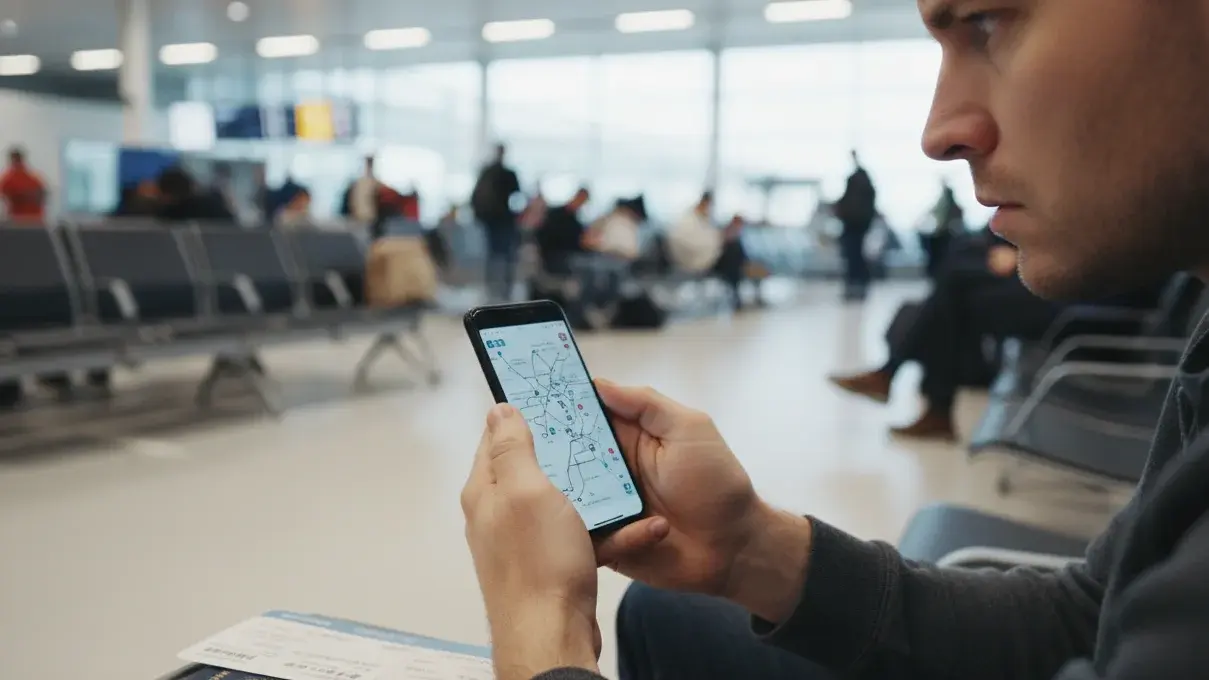
A reservation can be real, neatly formatted, and fully verifiable, yet still weaken your visa file if the route itself stops looking sensible. Once conflict affects civilian travel, the embassy starts reading the path behind the booking, not just the booking itself.
The Embassy Is Not Just Checking Dates. It Is Checking Route Logic
Many applicants assume the main job of a flight reservation is to show entry and exit dates. That is only the visible layer. The officer is also checking whether the route reflects normal travel judgment for the trip you claim to be taking.
That means your flight path has to answer basic questions without needing extra defense. Why this route? Why this transit point? Why this level of complexity for this purpose?
A weak route often has one of these problems:
-
It adds unnecessary stops
-
It relies on connections through sensitive corridors
-
It uses a strange geographic loop
-
It looks much harder than the trip's purpose justifies
-
It creates avoidable exposure when cleaner options exist
A short tourist visit to a stable destination should not arrive looking like a complicated relocation plan. A two-day business trip should not depend on a route that looks vulnerable to delay, rerouting, or missed onward movement. Even if every segment exists, the overall path still needs to look like something a careful traveler would actually choose under present conditions.
Embassies notice when the reservation structure and the trip story do not match. If your cover letter says the visit is straightforward, but the itinerary looks operationally messy, the route starts raising more questions than it answers.
The problem is not that a non-direct flight is automatically bad. The problem is when the route choice appears disconnected from common sense. A one-stop journey can look perfectly sound. A three-leg path through tense or overloaded transit points for no clear reason can make the file feel fragile before the officer reaches your other documents.
Transit Hubs Near Volatile Regions Create More Questions Than Applicants Expect
Applicants often focus on whether a transit airport is still open. Embassies look beyond that. They consider whether that hub now sits too close to regional instability, airspace strain, diplomatic tension, or operational spillover.
This matters because a hub does not have to be inside a conflict zone to become a concern.
A transit point near a volatile region may trigger questions such as:
-
Are schedules there changing too often?
-
Are carriers rerouting unpredictably?
-
Could overflight restrictions affect onward movement?
-
Is the airport now handling unusual pressure from diverted traffic?
-
Does the route expose the traveler to avoidable uncertainty?
These are not abstract concerns. They shape how resilient your plan looks on paper.
A visa officer does not need to prove that your connection will fail. They only need to decide whether the route looks less dependable than a reasonable alternative. That is why an itinerary can become weaker even while flights continue operating. The embassy is measuring judgment, not gambling on airline performance.
This is especially relevant when applicants choose transit hubs based on price alone. A cheaper path through a stressed corridor may still exist online, but it can make the whole application look less measured. In a stable travel period, that tradeoff may pass quietly. During conflict, it becomes much more visible.
Separate Tickets, Self-Transfers, And Overnight Layovers Can Make The Plan Look Brittle
A route can also weaken because of how it is built, not just where it goes.
Separate tickets, self-transfers, and long overnight gaps often look manageable when everything runs on schedule. During conflict or regional disruption, they can make the itinerary look too easy to break. That is where a clean-looking reservation can still fail the credibility test.
Self-transfer structures are especially risky in a visa file because they add hidden assumptions. The embassy may see a connection. What they may also see is a plan that depends on perfect timing, baggage recheck, terminal changes, separate check-in rules, and no serious delay on the first leg.
That is a brittle design.
The same applies to overnight layovers that seem harmless on paper but introduce extra exposure during volatile periods. A long stop in a transit city can raise practical concerns:
-
What happens if the incoming flight shifts?
-
What if the second carrier changes the schedule?
-
What if the transfer point becomes congested or restricted?
-
Does the applicant now need extra entry permissions or transit flexibility?
None of this means you can never use a separate-ticket structure. It means the embassy may read it as less robust when global conditions already make travel less predictable.
A route looks stronger when it has fewer moving parts. That does not mean luxury. It means defensibility. If your flight plan can unravel because one leg moves by a few hours, the reservation may look too delicate for the current environment.
This is one reason officers often respond better to straightforward airline logic than to clever booking logic. A file should not depend on the reviewer giving your itinerary the benefit of the doubt.
Why A Long Detour May Look Less Safe Even If It Looks More Affordable
Price pressure leads many travelers toward longer routes. That is understandable. But in a conflict-affected travel environment, a long detour can make the itinerary look less safe, less rational, and less aligned with the trip purpose.
Embassies do not ignore cost, but they do notice when a route adds several layers of travel strain for no convincing reason. A long detour can signal that you built the plan around availability or savings without adjusting for the current risk picture.
That may show up in several ways:
-
excessive total journey time
-
backtracking across regions
-
extra transits through operationally tense hubs
-
arrival fatigue that does not fit the purpose of the visit
-
a return path with little room for disruption recovery
A detour is not weak just because it is long. It becomes weak when the added distance creates more uncertainty than the trip justifies. A family visit or conference trip usually reads better when the movement is clean and proportionate. The embassy wants to see that you chose a path that still makes sense if conditions tighten further or operations shift again.
Long detours can also undermine the realism of tight schedules. If your itinerary already involves many hours of travel and the purpose is short, the file may begin to look overly optimistic. Officers notice when the travel burden and the value of the trip stop matching.
This does not mean you need the most expensive flight. It means you should avoid making a reservation that looks cheap at the cost of logic. A route that is slightly less efficient may still work well. A route that turns a simple visit into a fragile travel chain can quietly hurt the case.
How To Make A Flight Reservation Look Rational Without Writing An Essay Around It
The strongest reservation usually does not need a heavy explanation. It looks rational on its face.
That comes from design, not decoration.
A good flight reservation in this context usually does four things:
-
It gets you to the destination without unnecessary route drama
-
It uses transit points that still look operationally sensible
-
It matches the trip purpose and length
-
It leaves the file feeling controlled rather than improvised
We should think about readability. When an officer scans your itinerary, the structure should feel easy to trust. That often means choosing the route with the fewest questions, not the route with the most technical availability.
A rational reservation usually has these qualities:
-
Direct where possible
-
Limited stops were not
-
Transit cities that still look stable
-
Connection timings that are believable
-
Return logic that does not depend on perfect conditions
You do not need to explain every airline decision in your cover letter. In fact, too much explanation can make a normal route look defensive. It is better to choose a flight plan that already reads well.
A few quiet improvements often do more than extra wording:
-
Remove an unnecessary stop
-
Replace a sensitive transit hub
-
Avoid self-transfer structures
-
Widen unrealistic connection timings
-
Shorten a route that looks needlessly indirect
The embassy should be able to see the trip and think, this route still makes sense. That is the standard worth aiming for.
How Embassies Test Whether You Understand The Risk You Are Asking Them To Endorse

Once a route passes the basic logic test, the file moves into a different kind of review. The embassy starts looking for signs that you understand the risk around the trip and are not asking for decision on autopilot.
A Visa Officer Wants To See Judgment, Not Bravery
During unstable periods, embassies do not reward travelers for acting unfazed. A file rarely becomes stronger because the applicant appears bold, adventurous, or determined to travel no matter what.
What reads well instead is judgment.
That means your itinerary should suggest that you noticed the changed conditions and made choices accordingly. A traveler who keeps the route tight, avoids obvious pressure points, and aligns the plan with the actual purpose of travel usually looks more credible than one who tries to power through complexity with confidence alone.
This matters because visa officers are not just deciding whether you can travel. They are also deciding whether your plan deserves official confidence. If the application feels careless, the officer may start wondering what else in the file rests on weak assumptions.
The tone of the itinerary matters here. So does the tone of the overall case.
A file can start looking immature when it sends messages like these:
-
The route seems ambitious for the moment
-
The timing assumes everything will run perfectly
-
The return depends on fragile operations
-
The applicant appears to treat a volatile period as routine
That is why a stripped-back plan often works better than a flashy one. The embassy does not need to see how willing you are to cope with disruption. It needs to see that you tried to reduce the chance of disruption shaping the entire trip.
Good judgment also shows restraint. If one segment of the journey now carries more uncertainty than before, a careful traveler adjusts. That adjustment can be small, but it shows that you are thinking like someone who wants the trip to stay manageable from departure to return.
Why Contingency Planning Matters More During Conflict Than Perfect Certainty
A common mistake in visa planning is trying to make the itinerary look airtight when the world around it clearly is not. During conflict or regional instability, an embassy knows that perfect certainty may not exist.
What it wants to see is that your plan can still hold together if conditions shift.
That is where contingency planning matters.
This does not mean your application should look vague or open-ended. A vague file can create new problems. The goal is different. You want the itinerary to look structured, while still showing that the trip is not built on one narrow path with no room to absorb disruption.
The strongest cases usually reflect contingency in quiet ways:
-
a return date that leaves reasonable breathing room
-
a route that can be adjusted without collapsing the trip
-
trip length that matches current uncertainty
-
travel timing that does not sit on the thinnest operational margin
Embassies notice when a plan has no recovery space. A reservation that arrives the night before a critical meeting and returns immediately after can look too tight if routes are already under pressure. The same applies to conference visits, interviews, or family events with no allowance for delay. If one operational change would break the purpose of the trip, the officer may question whether the plan is ready for the decision.
Contingency also affects how the application feels as a whole. A measured file says, we know what could change, and the trip still works. A brittle file says, " This only works if nothing goes wrong.
That distinction matters more in unstable periods than many applicants realize.
Travel Insurance, Refund Logic, And Return Options Quietly Support Credibility
Embassies are not always looking for dramatic proof of readiness. Often, they are reading small signals that show whether the trip has been planned like a real journey rather than a paper exercise.
Travel insurance, refund logic, and sensible return options help create those signals.
The point is not to overload the file with side material. The point is that these elements help show that your travel plan is built with consequences in mind. They suggest that you have thought about disruption, cancellation, health issues, or forced changes in movement without turning the trip into a guess.
Return planning is especially important.
A departure flight often gets most of the attention from applicants, but embassies also want to know how you expect to leave if the situation remains unstable or changes mid-trip. A return that looks unrealistic, too tight, or dependent on a weak corridor can quietly damage the case even if the outbound leg looks acceptable.
A more credible return structure usually has these qualities:
-
It leaves enough time for the actual purpose of travel
-
It does not depend on an already strained transit point
-
It fits normal movement patterns for that route
-
It does not assume frictionless rebooking or same-day fixes
Refund logic also matters in a subtle way. A traveler who chooses arrangements that can absorb date movement or unexpected changes looks more prepared than one whose entire trip appears locked into a narrow operational window.
You do not need to overstate this in your application. In fact, too much emphasis can make the file feel defensive. But when the itinerary, timing, and supporting travel choices all reflect practical planning, the embassy often reads the file with more confidence.
Why Essential Purpose Has To Be Reflected In The Itinerary, Not Just Claimed In The Letter
During conflict, a claimed reason for travel only carries weight when the itinerary behaves as if that reason is true.
This is where many files start drifting. The cover letter says the trip is urgent, important, or fixed in time, but the flight structure suggests something else. The embassy notices the mismatch quickly.
A real business trip usually has a route that supports efficiency. A family emergency trip usually has a timing that reflects urgency. A medical visit usually avoids unnecessary movement. A study-related trip usually lines up with actual reporting dates, not with random routing convenience.
If the purpose is essential, the reservation should show that.
Officers often test this without saying so. They compare the nature of the trip against the way you plan to travel. If the file claims necessity but the itinerary looks cheap, overly indirect, or casually assembled, the purpose can start losing force.
Examples of poor alignment include:
-
A short, urgent trip built around long, avoidable detours
-
An academic arrival using dates that leave no realistic time buffer
-
A family visit routed in a way that adds stress without saving meaningful time
-
A business trip that arrives too late or returns too early to support the stated agenda
The issue is not whether your purpose is genuine in your mind. The issue is whether the reservation makes the purpose believable to someone reviewing the file under caution.
If the purpose matters, the itinerary has to act as it matters.
What “Risk-Aware Travel” Looks Like On Paper
A risk-aware itinerary does not look dramatic. It looks disciplined.
That is the key point.
Embassies are not looking for a travel plan that talks constantly about conflict. They are looking for one that has quietly adapted to it. When officers scan the reservation, they should see the shape of a traveler who has adjusted the trip to current realities without making the file look anxious or unstable.
On paper, risk-aware travel often means:
-
fewer connection points
-
cleaner regional movement
-
enough time between meaningful trip obligations
-
a return plan that still looks workable if conditions tighten slightly
-
dates that reflect caution, not wishful thinking
It also means avoiding visible contradictions. If your paperwork says the trip is limited and controlled, the flights should support that. If your trip purpose is time-sensitive, the route should show respect for that fact. If the travel environment is tense, the itinerary should not look like it was designed for a perfectly calm week.
Risk-aware travel also has a visual quality. The file feels deliberate. The reader can see that choices were made, not just pulled from search results. That impression matters because consular review is often fast at first glance. A coherent itinerary creates early trust. A poorly adapted one creates early friction.
We should think about how the application reads in a few seconds. Does it look like a traveler who understands the current map? Or does it look like someone is submitting an old travel idea into a new risk environment?
When Regional Spillover Matters More Than The Conflict You Think The Embassy Cares About
A lot of visa applicants watch the headline conflict and miss the wider map around it. Embassies rarely make that mistake. They often care just as much about regional spillover as the conflict you are focused on.
Your Destination Can Look Safe While Your Transit Path Still Looks Problematic
A destination does not need to be in open conflict for your flight plan to start looking weak. The route can still pass through a region that has become harder to trust.
That matters because embassies review the whole movement chain. They look at the departure point, the transit path, the final arrival, and the return structure as one connected plan. If one part of that chain sits near airspace closures, carrier reroutes, military escalation, sanctions pressure, or border friction, the file can start looking less stable even if the destination itself remains calm.
This is where applicants often misread risk.
You may check that your destination city is operating normally. Hotels are open. The airport is open. Tourist sites or business venues are functioning. On the surface, the trip looks unaffected. But the embassy may be looking at a different issue altogether: whether the way you plan to reach that city now depends on a travel system under strain.
A transit path can look problematic when it involves:
-
air corridors that have recently been rerouted
-
airports absorbing diverted traffic from nearby disruptions
-
carriers changing schedules more often than usual
-
border-adjacent transit points with unpredictable passenger flow
-
return segments that depend on the same fragile zone remaining stable
What weakens the file is not just danger in a dramatic sense. It is operational uncertainty. Embassies often ask themselves a practical question: if conditions worsen slightly, does this itinerary still hold together?
If the answer looks shaky, the destination’s calm image may not rescue the route.
Multi-Country Trips Become Harder To Defend When The Map Starts Shifting
A multi-country trip can look ambitious in a good way when travel conditions are stable. During a tense regional period, that same itinerary can start feeling overbuilt.
Embassies know that every extra border crossing, air segment, or transit dependency increases uncertainty. So a travel plan that might have looked organized a few months earlier can start reading as overextended when the regional map is shifting.
This is especially true when the trip tries to cover too much geography in too little time.
A multi-country itinerary becomes harder to defend when it includes:
-
several flights across one region in quick succession
-
entry and exit through different transport corridors
-
overlapping pressure points in neighboring countries
-
short stays that leave little room for delay
-
a return plan that depends on perfect timing across multiple systems
The issue here is not only travel disruption. It is also credibility. Embassies want to see that your itinerary matches current conditions. If your plan still looks built for a calm travel season while the region is clearly under strain, the file may start to feel outdated in judgment, even if the bookings are current.
This also affects the purpose.
A two-country work trip with clear, fixed meetings may still look defensible if the route is clean and the timing makes sense. A broad leisure circuit across several jurisdictions can look much harder to justify when neighboring systems are under pressure. The problem is not tourism itself. The problem is scale. A larger travel footprint usually gives the embassy more places to question your assumptions.
That is why a narrower itinerary often reads better under regional uncertainty. Fewer countries mean fewer friction points. Fewer legs mean fewer ways for the entire plan to depend on changing conditions.
Why Border Tension, Sanctions, Or Diplomatic Retaliation Can Reshape A “Normal” Itinerary
Many applicants think conflict risk begins and ends with physical fighting. Embassies do not think that narrowly. They also watch what happens around the conflict politically.
A route that looks normal on a booking screen can become much less comfortable inside a visa file if the surrounding region is dealing with border tension, sanctions, retaliatory measures, or diplomatic strain between states.
These factors affect itineraries in less obvious ways:
-
Carriers may lose access to preferred airspace
-
Transit permissions can tighten
-
Visa-free or transit-friendly assumptions may stop feeling reliable.
-
Certain hubs may become less attractive because of sudden policy friction
-
Rebooking options may narrow if a carrier pulls back or trims service
Embassies know that modern travel is political as well as logistical. That is why a “normal” itinerary can age badly when diplomacy shifts around it.
This can also change how a country reads your choice of route. Even if your destination and airline still operate normally, the fact that your trip relies on a corridor tied to sanctions or state tension may make the flight look exposed in ways that are not visible from the ticket alone.
You do not need to write a geopolitical analysis in your application. But you do need to choose a route that does not ignore the political conditions shaping civilian movement.
That is the real standard. Your itinerary should look like it belongs to the current map, not last month’s map.
The Hidden Problem With Itineraries Built On Yesterday’s Travel Conditions
One of the most common weaknesses in conflict-era visa files is not a fake reservation or an obviously bad route. It is a route that made sense recently, but no longer carries the same logic now.
That makes the itinerary stale, even if it is freshly issued.
A reservation can become stale in several ways:
-
The route relies on a hub that has become operationally stretched
-
Transit timing now looks too tight because schedules are changing more often
-
The region around the corridor has become diplomatically more tense
-
The return assumption depends on conditions that have already started shifting
-
The travel pattern reflects an old level of stability that the embassy no longer assumes
This is why timing matters beyond the date printed on the booking. Officers are not only checking whether the document is recent. They are checking whether the travel thinking behind it is recent.
A fresh PDF does not help much if the logic inside it already feels old.
This problem often appears when applicants build an itinerary early, then keep the same structure while the regional picture changes. They update the reservation date or reissue the booking, but they do not rethink the route itself. On paper, the file looks current. In practice, it still reflects older assumptions.
That disconnect can cause quite a lot of damage. The embassy may not say the itinerary is stale, but the file can still feel poorly adapted. It can suggest that the applicant is moving forward with documentation rather than judgment.
The better approach is to review the route as if you were building it again from scratch today. Would you still pick the same transit point? The same number of legs? The same return timing? If the honest answer is no, the embassy may see that too.
How To Narrow The Geography Of A Trip So The File Feels Safer
A narrower trip often looks stronger because it gives the embassy fewer reasons to doubt the plan. When regional spillover is affecting travel systems, reducing geographic spread can make the entire application feel calmer.
This does not always mean canceling the trip. It often means simplifying it.
A safer-feeling file usually comes from one or more of these moves:
-
dropping an extra country that adds no real value to the purpose
-
entering and exiting through simpler corridors
-
replacing a wide circuit with a focused single-destination plan
-
cutting a marginal stop that depends on a fragile transit chain
-
extending the stay in one place rather than moving repeatedly
The goal is not to make the trip look minimal for its own sake. The goal is to make it look proportionate to the moment.
Embassies tend to respond better when the itinerary shows discipline. A plan that once included three cities and two border transitions may read much better after being reduced to one core destination with a clear arrival and a clear exit. The same purpose can remain intact, but the operational burden drops sharply.
This also helps with document coherence. Once the geography narrows, your reservation, dates, purpose, and return structure often align more naturally. That makes the file easier to trust at first glance.
We should also think about emotional optics. A tightened itinerary tells the embassy that you noticed the wider pressure around the region and chose a more stable version of the trip. That is often far more persuasive than adding more explanation to defend a sprawling plan.
The Quiet Red Flags That Make A Conflict-Era Travel Plan Look Manufactured, Stale, Or Overconfident
Some visa files do not fail because of one dramatic flaw. They weaken because the travel plan starts giving off the wrong signals in small, cumulative ways. During conflict or regional instability, embassies tend to notice those signals faster and trust them less.
When Reservation Timing Starts Looking Wrong
Timing can damage a flight reservation even when the route itself looks acceptable.
Embassies often read the booking date against the wider travel environment. If a major disruption, airspace shift, or diplomatic escalation has already changed how people are moving, the officer may look closely at when you locked in your itinerary and whether that timing still makes sense.
A reservation can start looking wrong in several ways:
-
It was created long before conditions changed and was never meaningfully updated
-
It was issued immediately after a major disruption without any visible route rethink
-
It appears rushed right before submission, as if it were added to complete a file rather than support a real plan
-
It reflects travel assumptions that no longer match current airline behavior
None of these points proves bad intent on its own. But together, they can make the itinerary feel less like a live plan and more like a document assembled to satisfy a checklist.
The problem is not simply that the reservation is old or new. The problem is whether its timing fits the reality around it. A booking made months earlier can still work if the route still looks sound. A newly issued reservation can still look weak if it seems copied forward from a travel pattern that has already become less credible.
This is where officers start reading for adaptation. If the global situation changed, did your itinerary change with it? Or did the file keep the same route logic and only refresh the document date?
That question matters because embassies know applicants often focus on freshness in a narrow way. They assume a recent PDF solves the problem. It does not, if the timing still feels out of sync with what careful travelers are doing now.
Date Mismatches Become More Damaging During Unstable Periods
A normal visa file can sometimes survive a small inconsistency. A conflict-era file often gets less forgiveness.
When routes are already under closer review, date mismatches stop looking minor. They start looking like proof that the trip was not planned as one coherent journey. That can hurt trust quickly.
The most common mismatches show up between:
-
The flight reservation and the visa application form
-
The reservation and the invitation letter
-
The travel dates and the stated business meeting or event schedule
-
The departure date and approved leave dates
-
The return date and the claimed duration of stay
In a stable travel period, an officer might see one mismatch as sloppiness. In an unstable period, the same mismatch can make the entire plan feel less grounded. If the route itself already depends on changing conditions, the embassy may not want to spend extra trust on paperwork that does not line up.
This is especially true when the mismatch affects the purpose of travel. If you say you are attending a fixed event, but the flight arrives too late for the start or departs before the stated agenda ends, the reservation starts undercutting the story. If you claim a short, controlled trip, but the dates stretch wider than necessary, that can also create doubt.
The damage is not only technical. It affects the tone of the file. A precise itinerary tells the embassy that the trip was thought through. A file with drifting dates suggests that the reservation was built around convenience first and explanation later.
During conflict, that matters more because officers are already asking whether your assumptions are current, realistic, and internally consistent. Once the dates stop supporting each other, the flight plan can begin to look thinner than it first appeared.
Why A “Perfect” Itinerary Can Look Less Believable Than A Sensible One
A polished itinerary is not always a strong one.
In periods of instability, an itinerary that looks too perfect can feel less believable than one that looks practical and human. Embassies know that real travel during conflict-affected conditions usually carries a bit of friction. Flights shift. Buffers matter. Sensible travelers build around uncertainty.
That is why an over-clean itinerary can sometimes raise questions.
A reservation may look too perfect when:
-
Every segment fits with almost no breathing room
-
The trip assumes flawless connections through pressured systems
-
The departure and return timing look mathematically neat rather than practically chosen
-
The route appears optimized for presentation instead of real movement
The issue is not elegance. The issue is realism.
If your itinerary looks like it was designed to appear ideal on paper, the officer may start wondering whether it was built from how travel should work in theory rather than how it is likely to work right now. A traveler moving during unstable conditions usually allows for a bit more caution. That can mean a wider buffer before an event, a calmer return structure, or a less compressed trip shape overall.
An itinerary often reads better when it feels sensible instead of flawless.
That may include:
-
An arrival that gives you time before the real purpose begins
-
A return that does not leave the moment your obligation ends
-
A route that values stability over visual neatness
-
Timing that reflects caution rather than maximum efficiency
This matters because embassies not only review the reservation for transport. They review it as a reflection of judgment. A practical plan tends to support credibility. A frictionless-looking plan built for a volatile environment can do the opposite.
How Mass-Pattern Reservations Can Hurt Trust
Another quiet red flag is when a reservation looks like it belongs to a pattern rather than to you.
Embassies review many applications. Over time, they develop an instinct for travel structures that feel personalized and those that feel generic. During conflict, that sensitivity can increase because officers are already looking for signs that applicants have adapted to the moment.
A mass-pattern reservation often has one or more of these traits:
-
A route that looks widely recycled rather than purpose-built
-
Dates that feel mechanically placed
-
Trip lengths that do not match the stated reason for travel
-
Repeated booking structures that seem detached from actual airline logic
-
Itineraries that look interchangeable across very different applicant profiles
This does not mean there is only one correct route for a given destination. It means the file should feel connected to your actual purpose, timing, and travel circumstances.
A reservation begins to lose trust when it looks like it could be dropped into dozens of unrelated visa files without changing much. That kind of pattern can make the embassy wonder whether the itinerary was selected because it truly fits the trip or because it happened to resemble a commonly used structure.
During unstable periods, that matters even more. Officers want to see evidence that your route has been chosen with current conditions in mind. A reservation that looks generic can suggest the opposite. It can imply that the applicant used a familiar pattern without seriously re-evaluating whether that pattern still works in the present travel environment.
You do not need a rare or unusual itinerary to avoid this problem. You need one that feels tailored. The route should match your dates. The timing should match your purpose. The overall shape should look like it belongs to your trip, not to a template.
The Problem With Acting As If Nothing Has Changed
One of the clearest ways a travel plan loses credibility is by pretending the wider environment has not changed.
Embassies do not expect panic. They do expect awareness.
If the route crosses stressed regions, if flight patterns have shifted, or if nearby systems are under pressure, your itinerary should show some sign that those realities were taken into account. When it does not, the file can start to look overconfident.
That overconfidence can appear in subtle ways:
-
The route still uses pressured transit points with no visible reason
-
The trip remains as wide and complex as it would have been in a calm season
-
The connection timings assume old operational certainty
-
The return plan suggests no concern for disruption at all
-
The reservation reads like a static document in a fluid situation
This is not only about safety. It is about whether the application feels credible under present conditions.
A traveler who acts as if nothing has changed may end up presenting a file that feels strangely detached from reality. Even if the documents are formally correct, the overall impression can be weak. The embassy may start seeing the itinerary as careless, stale, or built for appearance rather than resilience.
That is why awareness has to show up in the structure of the reservation itself. Not through dramatic language. Not through heavy explanation. Through choices. A calmer route. A narrower trip. Better timing. Fewer assumptions.
What A Strong Visa File Looks Like When Conflict Has Made Travel Less Predictable
Once conflict starts reshaping normal travel patterns, a strong visa file is no longer just complete. It has to feel thought through from the first page to the last. The embassy should be able to see that your travel plan still works under pressure, not just under ideal conditions.
Build Around One Clear Travel Story, Not A Stack Of Defensive Documents
When travel becomes less predictable, many applicants react by adding more paperwork. That instinct is understandable, but it often leads to a weaker file. A bigger file is not always a better file.
What helps more is a clear travel story.
Your reservation, trip purpose, travel dates, return plan, and supporting documents should all point in the same direction. The officer should not have to reconcile competing signals. They should not have to guess what the core logic of the trip really is.
A strong file usually feels coherent in three ways:
-
The reason for the travel is easy to understand
-
The route supports that reason
-
The timing looks realistic for the current travel environment
That coherence matters more than volume. If the route is careful, the purpose is credible, and the dates line up, the file starts creating trust early. If you add too many defensive documents around a weak itinerary, the file can start feeling strained instead.
This is especially true during conflict-related uncertainty. Embassies already know that routes can change, airlines can reroute, and transit pressure can rise without much warning. What they want from you is not endless explanation. They want to see that the plan still holds together as a real journey.
A strong travel story often sounds simple on paper:
-
You are going for one clear reason
-
You are using a route that fits that reason
-
You are staying for a period that makes sense
-
You have a return structure that still looks workable
If the file can express that without friction, it usually reads better than a document-heavy application trying to defend too many weak choices at once.
What To Keep, What To Replace, And What To Leave Out
Once you look at your itinerary honestly, the next step is editing it with discipline. Not everything in your original plan deserves to stay.
A strong file usually comes from selective correction, not from full reinvention.
What to keep
Keep the parts of the plan that still look stable and well-matched to the purpose of travel. That may include:
-
a clean arrival city
-
a sensible trip duration
-
a return date that still fits your reason for travel
-
a carrier or routing that continues to look credible
If a part of the trip still works under current conditions, keep it. Constantly changing everything can create new inconsistencies.
What to replace
Replace the parts that now invite doubt. That usually means:
-
a transit point under visible pressure
-
a routing that has become too indirect
-
a connection structure with a poor recovery margin
-
a return path that now looks too fragile
The key is to replace the weakest link first. You do not need a perfect itinerary. You need one that removes the most visible points of unnecessary risk.
What to leave out
Some things are better removed entirely rather than explained.
That can include:
-
extra countries that add complexity without strengthening the purpose
-
side trips that make the travel story harder to defend
-
overcomplicated transit chains built around convenience rather than stability
-
flight segments that force you to explain too much
A strong visa file usually benefits from subtraction. If one leg of the trip creates more questions than value, cutting it often strengthens the application more than defending it with extra wording.
We should think like a reviewer here. Every unnecessary element creates one more chance for doubt. A tighter file gives the embassy less to resist.
How To Use A Cover Letter To Address Instability Without Sounding Alarmist
A cover letter can help during conflict-related uncertainty, but only if it stays controlled. The goal is not to dramatize the situation. The goal is to show that you are aware of it and have planned responsibly.
That tone matters.
A weak cover letter sounds anxious, overexplains basic choices, or tries to convince the embassy that nothing is wrong. A stronger one stays factual. It acknowledges that travel conditions can shift, then quietly shows that the itinerary was chosen with care.
A useful cover letter usually does four things:
-
states the purpose of travel clearly
-
confirms the intended dates
-
reflects awareness of current travel conditions
-
shows that the route and timing were selected accordingly
You do not need long paragraphs on geopolitics. You do not need speculative claims about safety. You do not need defensive language about why you chose one airline over another unless the route would otherwise look unusual.
What works better is a calm sentence or two that reinforces planning discipline. For example, the letter can note that the itinerary has been kept focused, that the route has been chosen to reduce unnecessary transit exposure, or that the travel dates include reasonable flexibility around the stated purpose.
The embassy is usually not looking for commentary. It is looking for confidence supported by structure.
That means your cover letter should sound like the rest of the file. Clear. Proportionate. Controlled. If the itinerary already reads well, the letter only needs to reinforce that logic. It should never try to rescue a route that still looks weak on its face.
Why A Narrower, More Defensible Itinerary Often Beats A Bigger Travel Plan
A large itinerary can feel impressive when you are building it. Inside a visa file during unstable travel conditions, it often feels heavier than helpful.
Embassies tend to respond better to a plan that does one thing well than to a plan that tries to do many things at once.
A narrower itinerary is often stronger because it improves several parts of the file at the same time:
-
It reduces route complexity
-
It lowers transit dependency
-
It makes the purpose easier to believe
-
It aligns the dates more naturally
-
It gives the return plan more stability
This is not about making the trip look small. It is about making it look proportionate.
If your original plan covered several cities, multiple flights, or a broad regional circuit, ask whether each part still earns its place. During conflict-related disruption, every added movement needs a reason. If a stop does not strengthen the purpose, it may weaken the file.
A narrower itinerary can also make your supporting documents work harder for you. Your invitation, leave dates, event timing, and return structure all become easier to align when the trip has a clearer center. That reduces the chances of internal mismatch and helps the application feel more deliberate.
This is often where applicants make the biggest improvement. They stop trying to preserve the full original travel idea and start building the version that still deserves decision under current conditions.
The Best Reservation Is The One That Can Survive Scrutiny And Sudden Change
The strongest reservation is not just one that looks good when printed. It is one that still makes sense if the embassy reads it carefully and if travel conditions shift slightly after submission.
That is the real test.
A reservation worth using in a conflict-era visa file usually has these qualities:
-
It is easy to verify
-
It follows a route that still looks rational
-
It matches the purpose and length of the trip
-
It avoids unnecessary operational stress
-
It can absorb modest disruption without collapsing the whole plan
That last point matters a lot. Sudden change does not always mean total route failure. Sometimes it means a schedule adjustment, a transit issue, or a shift in corridor pressure. A strong reservation still looks credible even with that possibility in mind.
This is also where the quality of the reservation itself matters. If you need a visa, use a flight reservation for a file that has to read cleanly under scrutiny. BookForVisa.com can be a practical option when that kind of support is relevant.
The broader point stays the same no matter where you obtain the reservation. The booking should help the file feel stable. It should not force the embassy to overlook visible weaknesses in route design, timing, or return logic.
When To Apply, When To Reroute, When To Wait, And When To Drop The Plan Entirely
This is where the file becomes a decision, not just a document set. You need to judge whether your current flight plan still supports the decision, or whether the map has shifted enough to make a different move smarter.
The “File Now” Scenario: When The Route Still Looks Responsible
You should file now when the route still looks steady enough for normal visa processing, and the purpose remains easy to defend. That does not mean the region is calm. It means your plan still reads as controlled in spite of recent developments.
A workable file usually survives the same pressures that disrupt visa services. If a consulate is still handling routine consular appointments, keeping consular services open beyond emergency services, and issuing normal instructions for a visa appointment, that often tells you the application channel is still functioning in a usable way. It does not guarantee the decision, but it does suggest the trip can still be assessed on its merits.
This matters most for applicants with a fixed visa timeline. A business event, academic reporting date, family visit, or time-sensitive employment start can lose value if you keep waiting after the route itself has already become defensible. In those cases, delay can weaken the trip more than the conflict does.
The right time to file usually comes when these points line up:
-
The destination still has clear entry requirements
-
The route avoids the most obvious pressure points
-
The return plan looks realistic
-
Your passport and dates align across the file
-
The travel logic still makes sense if the situation evolves modestly
You should also check the consular side, not just the flight side. Some applicants focus only on routes and ignore whether the post is quietly slowing down routine work. If a consulate has started warning of appointment cancellations, reduced capacity, or changed pickup rules for passport return logistics, that can affect whether filing now is still the best move.
For tourist visas, this judgment has to be even tighter. Leisure travel can still be approvable, but the route needs to look proportionate to the purpose. If the file looks lean, coherent, and current, you do not need to overwork it with more tips from travel forums or random speculation about what embassies might do next.
The “Reroute First” Scenario: When The Purpose Is Solid, But The Path Is Weak
This is the most common repairable case. Your reason for travel may still be strong, but the current path makes the application look weaker than it should.
That often happens during armed conflict or civil unrest when the destination remains usable, but the transit chain no longer reads cleanly. The problem is not the trip. The problem is the flight logic.
A reroute-first case often shows up in one of these forms:
-
The current itinerary crosses the Middle East through a corridor that now looks too exposed.
-
Your return depends on a hub dealing with flight suspensions.
-
The route goes through multiple countries without adding real value.
-
The connection pattern looks too fragile for a short trip.
-
The route may still work technically, but it no longer looks convincing to an immigration authority reviewing a visa file.
At that point, do not rush to cancel the whole trip. Fix the path before you fix anything else.
A smarter route can improve the file faster. Replacing one stressed transit point, cutting one unnecessary leg, or moving away from a corridor under short-notice operational changes can make the application look more disciplined. A traveler headed to Europe, for example, may strengthen the file by switching from a strained transit pattern to a calmer link through Abu Dhabi or another more readable corridor, if that route now looks cleaner on paper.
This is also the stage where you should think about the officer’s workload. During regional disruption, visa processing teams may already be coping with questions from foreign nationals, rescheduled travelers, and applicants worried about changing airspace. If your route creates extra doubt, the officer may not work hard to rescue you. A cleaner replacement often does more than a long explanation.
If your trip involves employment, client work, or an employer-backed visit, the reroute decision becomes even more practical. Employers care about arrival certainty, not clever booking structures. A better path can protect both the trip purpose and the supporting documents tied to it.
The “Wait” Scenario For Middle East: When Uncertainty Is Temporary But Too High Right Now
Sometimes the most sensible answer is to pause, but for a specific reason. You are not waiting because the trip has become impossible. You are waiting because the current moment is too unstable for the file to look mature.
This often happens when the conflict itself is not the only issue. The real problem may be rolling airline adjustments, contradictory public notices, and a mismatch between what booking engines show and what local authorities, a department advisory, or the relevant consulate are signaling.
Waiting makes sense when the route is still moving under changing conditions, such as:
-
Fresh appointment cancellations at the post handling your visa interview
-
Visible changes to route availability with no stable replacement pattern yet
-
Repeated warnings to avoid non-essential travel through connected corridors
-
Unclear guidance on passport return logistics or document submission windows
-
Sudden compliance changes that could affect how the file is judged
You should not wait blindly. You should wait for something specific to settle.
That might be:
-
a clearer operating pattern on your intended route
-
a more stable window for your visa appointment
-
restored predictability in return options
-
fewer last-minute carrier changes
-
stronger alignment between airline schedules and consular services
This matters especially for those applying for discretionary travel, because the embassy may see less reason to stretch its tolerance for route uncertainty. A short leisure trip does not benefit from being filed during the noisiest part of the disruption cycle if a brief pause could make the itinerary much easier to defend.
A wait-first call can also protect applicants whose file may drift into administrative processing if the case already has other review burdens. You do not want a weak route to become the extra factor that turns a routine case into a slower one.
The “Do Not Force It” Scenario: When The Application Has Become Hard To Defend
There comes a point where the trip stops being a strong candidate for repair. The route is too strained, the timing no longer matches the purpose, or the broader regional picture makes the application look harder to justify than it is worth.
That is when you should stop trying to force the file.
This usually happens when several issues combine at once:
-
The route depends on repeated short-notice changes
-
The destination may still be open, but nearby other areas are absorbing the disruption
-
Your travel purpose is optional, yet the transport burden is growing
-
The return path looks thin even after rerouting
-
The post may be prioritizing emergency services or a family member evacuation pattern over normal travel cases
Embassies do not only assess whether the destination is open. They assess whether your application deserves priority under the conditions in front of them. If the trip is discretionary and the routing now looks like a workaround instead of a real plan, the best move may be to step back.
This is also true for long stays. The more time your trip asks the embassy to underwrite, the more important route credibility becomes. A file for long stays built on a shaky transit chain can look far less convincing than a shorter, cleaner application submitted later.
You should also think about public-facing signals. If the post handling your case has said that services may remain limited until further notice, or that routine work may be delayed because of ongoing developments, pushing ahead with a weak itinerary may only expose you to a poor result and a damaged visa timeline.
What To Rebuild Before You Reapply Or Respond To Questions
If you pause, reroute later, or get asked for clarification, rebuild the application from the travel logic outward. Do not just swap one ticket and keep the same weak assumptions.
Start with the reason for travel. Then rebuild the route around that reason. If the trip is based on employment, make sure the dates match the employer letter, your employer’s expectations, and any onboarding or reporting timeline. If the trip concerns a family member, make sure the flight structure reflects that urgency without adding avoidable complexity. If the case involves the UK, a Schengen state, or another destination with active scrutiny, make sure the return plan is as clean as the outbound one.
A rebuild usually works best in this order:
-
Fix the route first
-
Tighten the dates
-
Recheck the visa interview timing
-
Verify your passport validity and submission window
-
Remove side details that no longer support the trip
You also need to think about who is reading the file. Consular employees and immigration reviewers want clarity, not volume. They do not want to decode a route stitched together across India, the UK, and other regions just because that was what search results showed in March. They want a plan that still feels credible as the situation evolves.
That is why compliance matters more than creativity. The rebuilt file should respect current entry requirements, present a route that an immigration reviewer can accept without mental gymnastics, and show that you noticed how the route changed after recent developments.
If the post has adjusted visa services, slowed routine consular appointments, or redirected staff to emergency services, your application should not pretend those signals do not exist.
Choose The Travel Plan An Embassy Can Still Trust
When conflict changes routes, transit hubs, and return options, your visa file stops being a routine set of dates and bookings. It becomes a judgment test. The strongest flight plan is the one that still looks rational, controlled, and easy to defend when an embassy reviews it under pressure.
That gives you a clear next step. Check whether your current route still matches your purpose, timing, and risk level. If it does, apply with confidence. If it does not, reroute, simplify, or wait until the file looks stronger on paper and in real travel conditions.
Do not submit an itinerary that looks outdated under current conditions. If your route, transit hub or dates changed, create one clean reservation that matches the travel plan you can still defend.
Start Your Booking for VisaFAQ
How do embassies assess visa travel plans during global conflict?
They may look more closely at route logic, transit exposure, purpose, timing, return plans, funds, insurance and whether the itinerary still looks realistic under current conditions.
Can conflict make a normal flight itinerary look risky?
Yes. A route that looked normal before can become harder to defend if it passes through unstable hubs, affected borders, cancelled airspace or areas with active travel warnings.
Should I change my flight reservation if conflict affects my route?
If the route has become unstable or unrealistic, a cleaner replacement reservation may be safer than submitting an outdated itinerary. Make sure the new route matches the form, cover letter and dates.
Do travel advisories affect visa applications?
They can influence how your travel plan is read, especially if the advisory affects your destination, transit area or return route. Always check official guidance before finalizing documents.
Is it better to wait before applying during conflict?
Waiting may be better when the route is unstable, flights are frequently changing, insurance is unclear or your purpose is non-essential. Apply when the plan is coherent and defensible.
How should I explain travel during a conflict period?
Keep the explanation calm and practical. Mention the fixed purpose, safer route choice, travel dates, backup plan and return logic without sounding alarmist or overconfident.
Can a visa be refused because of global conflict?
A decision depends on the full application and the rules of the destination country. Conflict-related uncertainty can weaken a file if the trip appears unsafe, unclear or hard to complete.
What documents help during uncertain travel conditions?
A current itinerary, matching accommodation proof, suitable insurance, clear funds, purpose evidence and a short cover-letter note can help the file read as organized and risk-aware.
Should I submit backup routes with my visa application?
Usually no. One clear primary itinerary is easier to assess. Backup options can create confusion unless the consulate specifically asks for them or the cover letter needs a very short contingency note.
What is the safest travel-plan strategy during global conflict?
Use one narrow, realistic route; avoid unstable transit points; keep dates consistent; check official advisories; and update the reservation only when the change improves clarity.
Friendly reminder: BookForVisa provides travel-proof documents for planning and visa-application support. Requirements vary by destination, consulate, visa category and applicant situation. A flight reservation can support a file, but it does not guarantee approval, boarding or entry.