A first international trip often starts with a simple question: should you buy the SWISS ticket now, hold the fare, use a temporary reservation, or wait until the visa decision is clearer? That question matters because a flight document can either make your application easier to read or create extra doubt. SWISS is a strong airline choice for many Europe-bound travelers, especially through Zurich, but the strongest visa file is still built around consistency rather than airline prestige.
This guide focuses on the SWISS-specific part of that decision. You will learn how SWISS routings usually work, what a booking confirmation should show, when a paid ticket makes sense, when a reservation is safer, how fare conditions and agency bookings affect refunds, and how to keep the flight evidence aligned with your visa timeline.
In This Guide
For the complete planning framework beyond one airline, use the flight reservation for visa complete guide. It explains when a reservation, paid ticket, refundable ticket or supporting itinerary is the better fit, so this SWISS article can stay focused on airline-specific choices.
SWISS Air Flight Ticket Basics For Visa And First-Time Travel
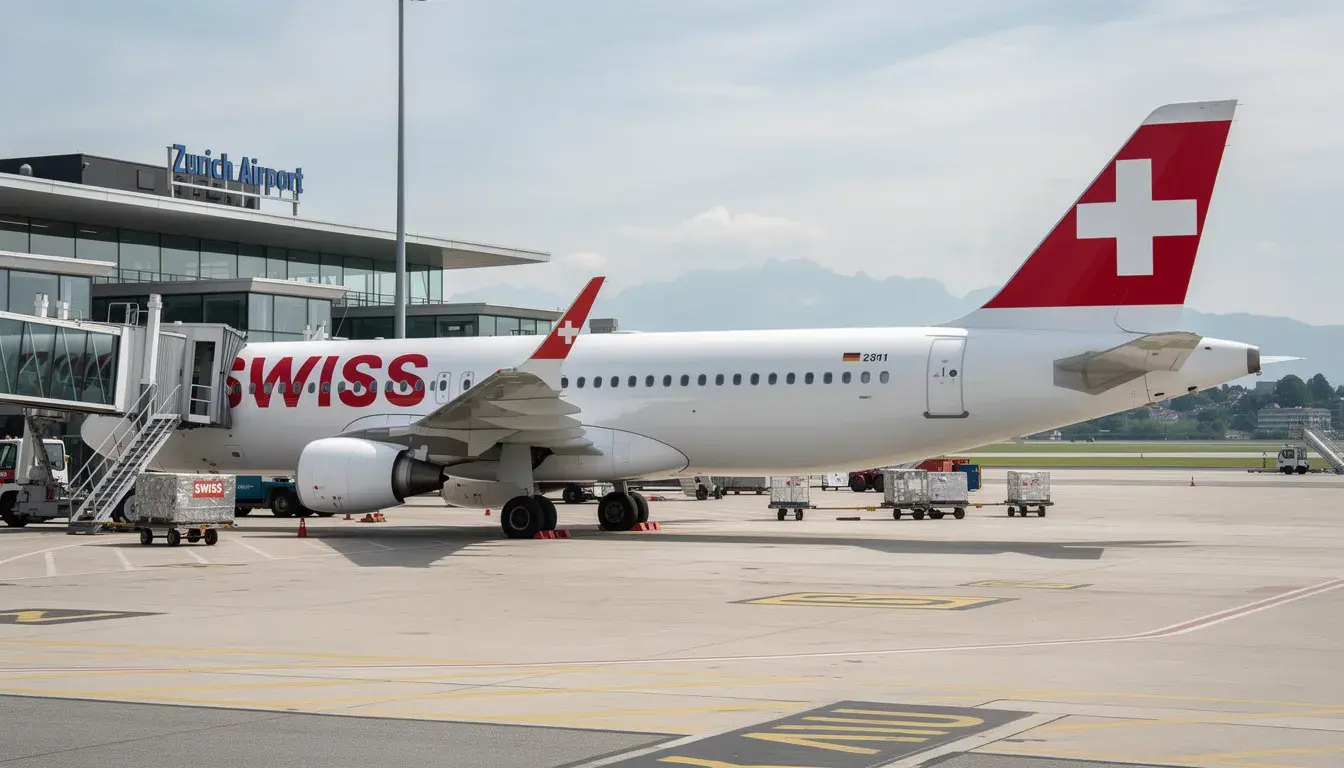
Many travelers still search for “Swiss Air,” but the airline brand used on tickets is SWISS, operated by Swiss International Air Lines. That distinction is small for casual conversation, but your visa and travel documents should follow the exact name shown in the booking confirmation. The same principle applies to passenger names: do not make the flight document slightly different from the passport just because a booking form displays names in a compressed format.
A SWISS flight ticket is a paid, ticketed record. A SWISS reservation or itinerary may show selected flights and a booking reference, but it may not always mean the fare is fully paid or the ticket number has been issued. For visa planning, this difference matters because a document that appears ticketed can imply a stronger financial commitment than a temporary reservation.
Think of the flight document as one part of a document chain. The ticket or reservation should support the travel story shown in the visa form, cover letter, hotel booking, invitation, insurance and leave approval. If one part says you enter Europe on May 10 and another says your hotel begins May 12 with no explanation, the problem is not SWISS. The problem is the date gap.
The strongest SWISS document usually does four things well:
- Shows the same passenger identity used in the passport and visa form.
- Shows entry and exit dates that match the application travel window.
- Uses a realistic route through Zurich, Geneva or another logical connection.
- Does not overstate ticket status, refundability or airline control.
If you are still learning the basic difference between a reservation, itinerary and ticket, read the focused flight reservation for visa guide. It gives the general vocabulary first, while this article applies that vocabulary to SWISS booking choices.
Why SWISS Fits India-To-Europe Travel Through Zurich
SWISS often works well for travelers flying from India to Europe because Zurich is a clean hub for onward movement. The typical pattern is simple: depart from a major Indian city, connect through Zurich, then continue to a Schengen city, the UK, Ireland, North America or another destination served through the SWISS and Lufthansa Group network.
That hub logic is useful for visa documents. A route that can be explained in one sentence is usually easier to understand than a route that jumps through multiple unrelated cities. “Mumbai to Zurich to Paris, returning through Zurich” reads as a normal airline network pattern. “Mumbai to one Gulf hub, then Europe, then back through another unrelated hub with a self-transfer” may be perfectly possible, but it creates more details to explain.
Your India To Europe Bridge
For many Indian travelers, the SWISS route shape falls into three practical groups:
- India to Zurich, then onward to a Schengen destination such as Paris, Rome, Vienna, Amsterdam or Madrid.
- India to Zurich, then onward to the UK, Ireland or another non-Schengen destination.
- India to Zurich, then onward to North America or Canada when the visa route and transit rules make sense.
The advantage is control. You understand the main transit point before you travel, you can plan connection time around one airport, and you reduce the chance of submitting an itinerary that looks improvised. For first-time travelers, that calm route logic is worth more than a slightly cheaper but confusing connection chain.
Cabin Choice And Document Logic
Economy, Premium Economy, Business and First can all be legitimate travel choices. For visa-document planning, the cabin is less important than whether the cost and timing match your profile. A short tourism file with modest savings and a premium long-haul fare can look out of rhythm with the rest of the evidence. A business traveler with employer sponsorship may naturally show a higher fare class.
Cabin choice should not become a story problem. If your bank statements, purpose of travel and travel history support the booking, it sits quietly in the file. If it looks financially stretched or unnecessarily complex, it can distract from the main point: where you are going, when you return and why the trip makes sense.
SWISS Ticket, Reservation Or Fare Hold: Which One Fits Your Visa Timeline?
The source article focused heavily on booking confidence, and that idea is worth keeping. The part to refine is this: not every traveler needs the same kind of flight document at the same stage. A paid ticket, a temporary reservation and a fare hold solve different problems.
| Option | What it shows | Best fit | Main caution |
|---|---|---|---|
| Paid SWISS ticket | Ticketed booking, often with ticket number and fare conditions | Dates are fixed, budget supports the purchase, and refund/change rules are understood | Changing plans may cost money depending on fare rules |
| Temporary flight reservation | Planned route and dates, often with a booking reference while active | Visa file needs travel-plan evidence but the applicant does not want to commit full fare early | It must stay consistent and should not be presented as a paid ticket if it is not |
| Fare hold or price hold | Selected itinerary or fare protected for a limited period when available | Traveler is close to purchase but needs a short decision window | Availability, timing and exact conditions vary; it is not the same as ticket issuance |
| Agency-issued booking | Document from an online travel agency or local agent | Traveler wants agent support, local payment options or bundled planning | Changes and refunds may need to go through the agency |
A paid SWISS ticket makes sense when your visa decision has already been issued, your leave dates are settled, or your case genuinely requires a purchased ticket. Before that point, a reservation can be the cleaner planning tool because it reduces the chance of paying change fees if the appointment moves or the decision arrives later than expected.
Important timing rule: never submit two competing versions of your flight plan. If you refresh the route or dates, update the other documents that mention those dates too. A fresh SWISS itinerary with old hotel dates is still a weak file.
If your SWISS routing is for a Schengen trip, especially through Zurich or Geneva, pair this page with the Schengen visa flight reservation requirements guide. That page covers main-destination logic, entry and exit timing, and how flight evidence is normally compared with hotel and insurance dates.
Turning A SWISS Search Into A Clean Booking
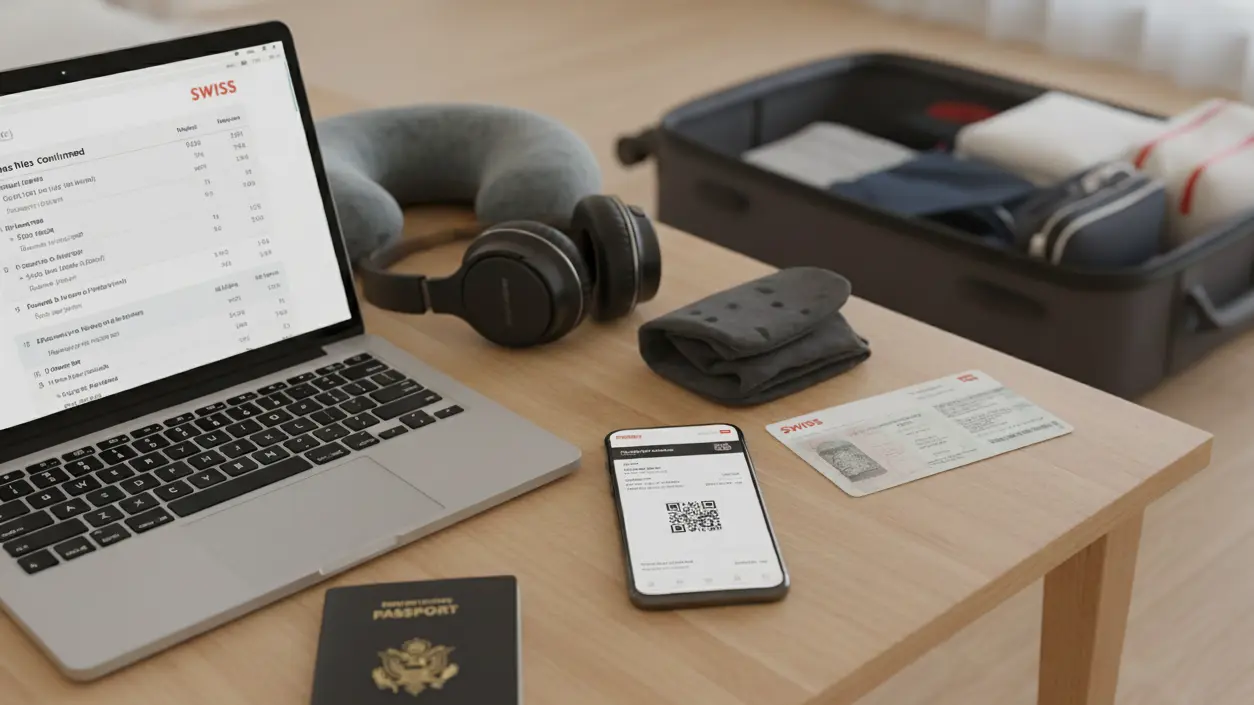
A clean SWISS booking starts before payment. The search screen should already match the travel window you intend to use in your visa documents. If you are still unsure whether the trip is June 8–18 or June 15–25, do not create five different screenshots and drafts. Choose one application window first, then build the flight evidence around it.
Start With The Travel Window
Before opening the SWISS website, app or travel portal, write down the dates that are already fixed by your life:
- Approved leave dates or expected time away from work.
- School, event, conference or family-invitation timing.
- Appointment date and likely processing time.
- Latest sensible return date based on your obligations at home.
Those dates are more important than flight times. A late-night departure or morning arrival can change during airline scheduling, but the application travel window should not drift across documents. Treat the window as the foundation and the exact flight as the moving part.
Make Zurich Work In Your Favour
Zurich is often the heart of a SWISS route. For a first-time traveler, that can be a strength because a single main hub is easy to understand. But it still needs sensible connection time. A connection that is too tight can look careless; an unusually long layover can raise practical questions if the rest of the itinerary claims a simple holiday.
When choosing the flight, look for a connection that leaves room for real travel conditions. You do not need to over-explain a normal Zurich transit. You may need to explain a route that enters one country, jumps to another immediately, then exits from a third with no supporting hotel plan.
Passenger Names And Identity Matching
Name matching is where many files quietly become messy. Airline systems sometimes remove spaces, rearrange titles or compress middle names. Small formatting differences can be normal, but the identity must clearly map to the passport and visa form.
- Use the passport name line as the source of truth.
- Do not switch between nickname, shortened name and passport name across documents.
- If the booking drops a middle name, make sure every other document stays consistent.
- If a passport was renewed, use the current passport identity in the application and booking.
The goal is not perfect cosmetic formatting. The goal is that a reviewer can immediately see the same person across the passport, form, flight document, hotel booking and invitation.
Payment From India And Agency Choices
The original article correctly noticed that payment can be a practical pain point. International cards, currency conversion, bank fraud checks, failed OTP screens and travel-portal policies can all affect the final booking. This is one reason some travelers use local agents or online travel agencies for SWISS tickets.
That choice is fine when the document stays clear. The risk is pretending an agency booking is fully controlled by the airline. If an online travel agency issued the ticket or reservation, changes, cancellations and refund handling may need to pass through that agency. For visa planning, write and submit the document in a way that reflects who actually controls the booking.
Fare Rules, Refunds And The Fine Print People Skip
Flight evidence is not only about the route. It is also about what happens if the visa timeline changes. A fare that looks cheap today may become expensive if you need to move the departure by two weeks. A fare that looks flexible may still have conditions, fees, agency handling rules or refund timing that affect your cash flow.
Official-source check: SWISS refund guidance says refunds depend on fare conditions and that bookings made through third-party agencies may need to be handled through the agency. SWISS also provides separate guidance for disrupted travel and refund handling. For U.S.-covered bookings, the U.S. Department of Transportation says airlines must generally offer either a 24-hour hold or a full refund for tickets purchased at least seven days before departure, but this does not automatically apply to every agency purchase. Check the current details on SWISS rebooking/refund guidance, SWISS refund FAQs and the U.S. DOT refund page.
Refundable Does Not Mean Effortless
A refundable or flexible fare may reduce risk, but it does not remove the need to read conditions. Refunds may return to the original payment method. If a ticket was bought through a travel agency, the airline may direct you back to the agency. If a fare includes partial restrictions, taxes and fees may be treated differently from base fare.
For visa planning, the practical question is: can your budget tolerate the waiting time and rule complexity if dates move? If not, a temporary reservation may be more sensible until the visa result and travel window become firmer.
Fare Hold Is A Short Window, Not A Long-Term Visa Strategy

A fare hold can be useful when you are nearly ready to pay but need a short pause. It can protect the chosen fare or itinerary conditions when the option is available. But it is not the same as an active paid ticket, and it should not be treated as a long-term answer for a visa process that may take weeks.
Use a hold when the decision is close: you have checked passport details, your route is selected, your payment method is ready and you only need brief confirmation from family, employer or travel partner. If the visa appointment is still far away or your dates are unstable, a hold may expire before it helps.
What Happens When Plans Change
When a SWISS booking needs to change, first identify the booking channel. If you booked directly, SWISS tools and support may be the route. If you booked through a third party, that seller may need to handle changes. If you are only holding a fare, the hold may lapse unless you complete the ticketing step in time.
Do not solve a changed visa timeline by editing a PDF or uploading a second conflicting itinerary. Instead, rebuild the document chain:
- Confirm the new travel window.
- Update the flight document to match that window.
- Update hotels, invitation dates, leave letters and insurance where relevant.
- Keep one final version for submission.
How To Make A SWISS Flight Ticket Fit A Visa File
The visa officer or document reviewer is not judging SWISS as a brand. They are reading your trip as a timeline. Your flight evidence should answer simple questions without forcing the reviewer to untangle contradictions.
The Five-Point Consistency Check
- Name: the passenger identity matches the passport and visa form.
- Dates: entry and exit dates match the application travel window.
- Route: Zurich or another connection point makes sense for the destination.
- Purpose: arrival and return timing support the reason for travel.
- Support: hotels, invitation, insurance and leave dates do not fight the flight plan.
If all five are aligned, the SWISS ticket or reservation becomes a quiet support document. If two or three are misaligned, the airline name will not rescue the file. A beautiful itinerary with mismatched dates is still a contradiction.
When A Paid SWISS Ticket Is The Stronger Choice
A paid ticket is stronger when the trip is already committed, the fare rules are understood and the documents around it are stable. This often applies after a visa decision, after employer approval, or when the checklist specifically asks for a ticket rather than a reservation.
It can also make sense for business travel where the employer is funding the trip and dates are tied to fixed meetings. In that case, the paid ticket matches the story. The problem appears when a casual tourism file claims flexible dates but submits a costly, difficult-to-change ticket before the visa timeline is clear.
When A Reservation Is The Cleaner Choice
A reservation is cleaner when the visa checklist allows travel-plan evidence and your dates might still shift. It lets the application show intended entry and exit without forcing you into refund or change problems too early. The reservation still needs to be real, current while it matters and consistent with the rest of the file.
This is especially useful when the appointment date, processing time or leave approval is not fully under your control. It also helps when you are comparing airline options and plan to buy the final SWISS ticket only after the decision.
Need a clean flight reservation for your visa file?
Smarter Ways To Lock Your SWISS Plan Without Overcommitting
The safest path is usually staged. First, decide the visa travel window. Second, prepare the flight evidence that fits that window. Third, keep the route simple and realistic. Fourth, buy the final ticket when the visa result, leave dates and accommodation are stable enough.
Use Travel Portals Carefully
Indian travel portals and online agencies can help with local payment options, comparison shopping and bundled support. They can also add one more layer between you and the airline. If you choose that route, keep the booking documents clean and understand who controls post-booking changes.
Use Agents When The Timeline Is Messy
A competent travel agent can help when you need to coordinate flights, hotels, insurance and visa-document timing together. The value is not magic access. The value is fewer contradictions. If the agent gives you a flight document, check every name, date, route and status before using it.
Keep The Final Route Easy To Explain
Your route should have a sentence behind it: “I fly from Delhi to Zurich, connect to Rome, spend most nights in Italy and return through Zurich.” That sentence should match the actual itinerary. If the route needs a longer explanation, the supporting documents should make the reason obvious.
Final Checklist Before You Submit A SWISS Flight Document
- The CMS title, article title, visa form and cover letter all support the same travel idea.
- The booking name maps clearly to the passport name.
- The route uses Zurich, Geneva or another hub in a normal, explainable way.
- The return date does not conflict with hotel checkout, leave approval or event timing.
- The document does not claim a ticket number or paid status unless that is true.
- Refund and change rules are understood before payment.
- Agency bookings are not described as direct airline bookings.
- Only one final version is used for submission.
A SWISS Air flight ticket can be a strong piece of travel evidence when it is used at the right stage. The real advantage is not just the airline. It is a route and document set that read like one coherent plan from departure to return.
FAQs About SWISS Air Flight Tickets For Visa Planning
Is SWISS Air the same as Swiss International Air Lines?
Yes. Travelers often say SWISS Air or Swiss Air casually, but the airline brand is SWISS, operated by Swiss International Air Lines. Use the airline name exactly as it appears on your booking confirmation or itinerary.
Can I use a SWISS flight ticket for a visa application?
You can use a SWISS ticket or reservation when the visa checklist asks for proof of intended travel, but the document should match your passport name, route, travel dates and supporting documents. Do not submit edited or conflicting versions.
Do I need a paid SWISS ticket before a visa decision?
Usually the safer planning question is whether the checklist asks for a paid ticket or a reservation. Many applicants use a reservation until the visa decision, then purchase the final ticket when dates are firm.
What should a SWISS booking confirmation show?
It should show the passenger name, airline, route, travel dates, flight numbers or segments, booking reference when available, and enough fare or status detail to understand whether it is a ticketed booking or a temporary reservation.
Can I verify a SWISS PNR or booking reference?
If the booking is active and issued through a retrievable channel, the passenger surname plus booking reference may open the booking through SWISS or the selling agency. If it was booked through a third party, that agency may control changes or refunds.
Are SWISS tickets refundable?
Refundability depends on fare conditions, ticket status and where the ticket was bought. SWISS states that refunds are handled according to fare conditions, and bookings made through third-party agencies may need to be handled through that agency.
Does the U.S. 24-hour rule apply to SWISS bookings?
For flights to or from the United States, U.S. DOT rules require airlines to offer either a 24-hour hold or a full refund option for tickets bought at least seven days before departure. The rule does not automatically cover every agency booking.
Is a fare hold the same as a ticket?
No. A fare hold can reserve price or itinerary conditions for a limited time, but it is not the same as a fully ticketed booking unless payment and ticket issuance are completed.
What is risky about using online travel agencies for SWISS visa proof?
The main risk is control. If an agency issues the booking, it may also control changes, cancellation and refund handling, so your visa document should not imply you can manage everything directly with SWISS when you cannot.
When should I switch from a reservation to a paid SWISS ticket?
Switch when your visa decision, leave dates, accommodation and route are stable enough that the fare rules and refund risk make sense for your budget. If dates are still moving, keep the document strategy flexible and consistent.
Important disclaimer: This article is general travel-document guidance, not legal advice and cannot predict any visa outcome. Airline rules, fare conditions, booking channels and visa checklists can change. Always review the latest official airline terms and the exact checklist for your destination before submitting documents or purchasing a ticket.
Friendly reminder: BookForVisa provides travel-proof documents for planning and visa-application support. Requirements vary by destination, consulate, visa category and applicant situation. A flight reservation can support a file, but it does not guarantee approval, boarding or entry.