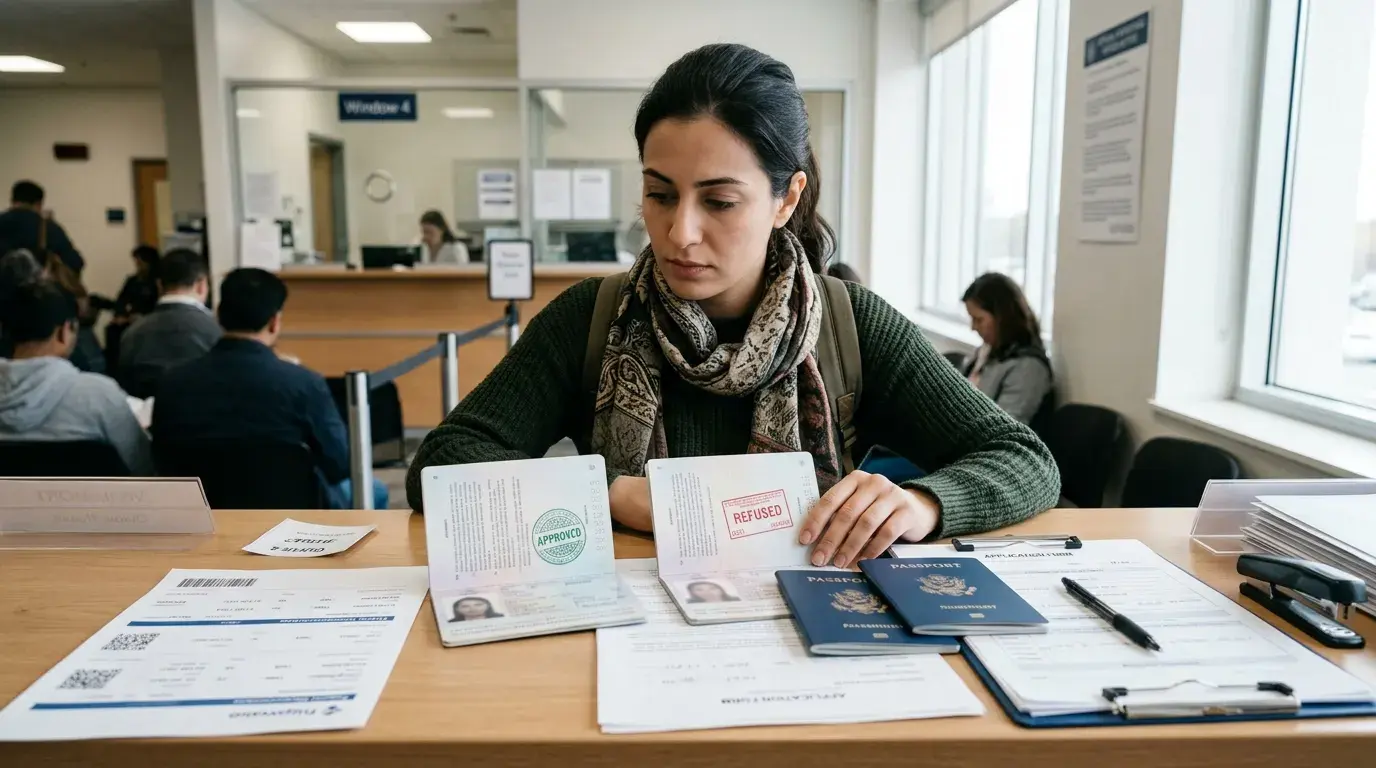
Two travelers can walk into the same embassy window with similar bank statements, leave letters, flight reservations, and trip dates, then receive opposite decisions. That feels unfair, but visa officers do not approve document sets. They judge whether your whole story feels credible, affordable, temporary, and consistent with your personal situation, not just neatly arranged paperwork.
The difference often sits in details applicants overlook: how money entered the account, whether the flight itinerary for visa matches income, why the trip length makes sense, and what proves you will return. We’ll unpack those decision points so you can stop copying approved files and start fixing the weak signals in your own application. Match your dates and profile with a believable flight reservation for visa.
Key facts:
- Similar documents do not create identical visa risk because applicants have different profiles, histories and obligations.
- Bank balance matters less when the source, stability and proportion of funds are unclear.
- The same itinerary can look reasonable for one traveler and stretched for another.
- Copying an approved file can create mismatches if your income, sponsor, destination or travel history differs.
- A refusal should be rebuilt around the actual refusal concern, not around random extra documents.
Need travel proof that fits your own file? Build your flight or hotel reservation around your real dates, route, purpose and return evidence instead of copying another applicant’s setup.
Create Your Visa ReservationIn This Guide
- Why similar documents do not mean similar visa risk
- How personal profile changes document meaning
- Why the same bank balance can lead to opposite decisions
- Why similar travel plans can feel different
- Why consistency matters more than copying
- Why country, embassy and timing can change results
- How to audit your file before submission or reapplication
- What to do after a different outcome
- Final file-building rule
- FAQ
Official-source check: Official guidance supports the point that visa outcomes depend on the full applicant context, not on isolated documents. GOV.UK visitor guidance says decision makers assess personal circumstances, purpose, travel history, funds, ties, sponsor support and whether the information is credible and corresponds to the applicant’s background. The U.S. State Department says consular officers consider each application individually, including circumstances, travel plans, financial resources and ties outside the United States. The Schengen Visa Code allows refusal where there are reasonable doubts about document authenticity, statement reliability or intention to leave before visa expiry. Sources: GOV.UK visitor caseworker guidance, U.S. State Department visa denials guidance and Schengen Visa Code.
Reviewed for: similar-document comparison logic, credibility and personal-circumstance wording, funds-source and trip-cost proportion, travel-history context, prior-refusal handling, reservation consistency, sponsor-risk clarity and official-source support.
Why “Similar Documents” Do Not Mean Similar Visa Risk
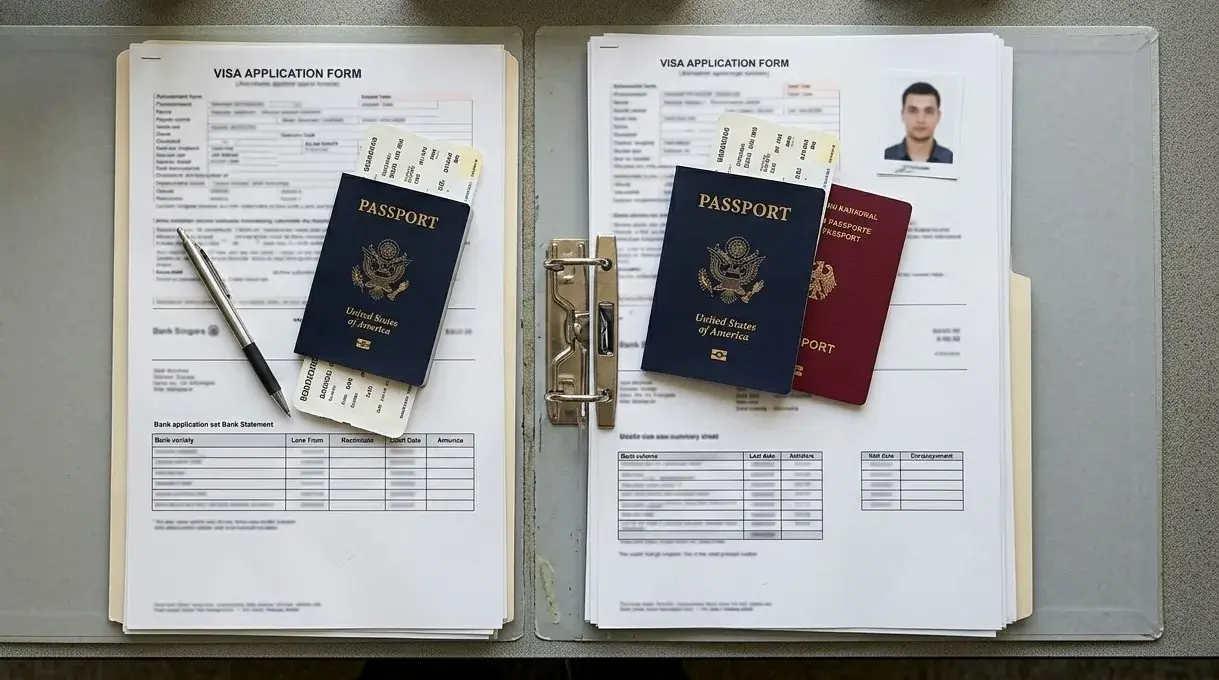
Two travelers can submit nearly identical flight reservations, bank statements, employment letters, and travel dates, yet the embassy may read their applications very differently.
That is because visa approval is not based on document similarity alone. It is based on how well those documents support your personal travel story, your return intent, and your risk level.
How Two Applicants Can Submit Matching Paperwork But Tell Different Stories
Imagine Daniel and Mark both apply for a Schengen tourist visa.
Both show a 10-day flight reservation from Delhi to Paris. Both include travel insurance, hotel details, bank statements, leave approval, and a day-by-day itinerary. On paper, the files look similar.
But Daniel has worked at the same company for five years. His salary arrives on the same date every month. His leave approval matches the exact travel dates. His bank balance grew slowly over time. His past passport shows he traveled to Turkey and returned before his visa expired.
Mark has a similar bank balance, but most of it arrived two weeks before the appointment. His job letter is from a company he joined recently. His itinerary includes Paris, Amsterdam, Rome, and Zurich in 10 days, but his budget is tight. His leave letter gives only seven approved days, while his return flight reservation shows he plans to stay longer.
The documents are similar. The story is not.
That is the part many applicants miss. A visa officer is not only checking whether each file is present. They are checking whether the documents work together.
Your flight reservation is not just a travel date. It shows how long you plan to stay, whether your route is reasonable, and whether your return date fits your work or family responsibilities.
Your bank statement is not just a number. It shows whether the trip fits your income and whether the money looks naturally available.
Your employment letter is not just proof of work. It helps show whether you have a stable reason to return.
When those pieces support each other, your application feels stronger. When they only sit beside each other without a clear connection, the file can feel weak even if nothing is technically missing.
That is why copying a friend’s approved document list can be risky. You can copy the format, but you cannot copy their income pattern, job history, travel record, family situation, or previous visa compliance.
Why Embassies Care More About Applicant Logic Than Document Quantity
A thick visa file can still fail if the logic is weak.
Applicants often respond to visa anxiety by adding more papers. Extra bank accounts. Extra property papers. Extra letters. Extra screenshots. Extra travel plans. But more documents do not automatically make your application more convincing.
The officer wants clear answers to practical questions:
-
Why are you traveling now?
-
Why this country or route?
-
Can you afford this trip without financial pressure?
-
Do your dates match your real-life commitments?
-
What makes your return likely?
If your documents do not answer those questions, adding more pages may only create more confusion.
For example, a traveler applying for a UK visitor visa may include a London flight reservation, a 15-day itinerary, and a bank statement showing enough funds. But if the applicant earns a modest monthly salary and the trip cost equals several months of income, the officer may question whether the plan is realistic.
Another applicant may show the same London flight dates and a similar balance, but their salary, savings pattern, previous travel, and approved leave make the trip feel normal. The file may be lighter, but the logic is stronger.
Embassies value evidence that fits. They do not reward document stacking.
A useful visa file should feel easy to read. Each document should have a job.
Your flight reservation should support your stated arrival and departure dates. Your leave letter should cover those same dates. Your funds should support the length and cost of the trip. Your itinerary should match the country, season, and available time. Your return evidence should connect to your actual life, not just a generic statement.
Weak files often look busy, but do not address the central concern. They say, “Here are many papers,” instead of, “Here is why this trip makes sense for me.”
That difference matters.
The Difference Between A Document Match And A Profile Match
A document match means you and another applicant submitted similar paperwork.
A profile match means your background, travel behavior, finances, and purpose support the same type of trip in a similar way.
Visa applicants often confuse the two.
For example, Emily and Rachel may both apply for a Canada visitor visa with a 12-day flight reservation, employment proof, and a similar bank balance. Emily has traveled to three countries in the past five years and returned on time each trip. Rachel has never traveled internationally and recently deposited a large amount into her account.
Their document list may match, but their profile does not.
A first-time traveler can absolutely receive approval. But the file needs to be built with that profile in mind. A first international trip may need cleaner travel logic, conservative dates, and stronger evidence of work, study, business, or family obligations.
The same applies to route choice.
A 21-day Europe itinerary across five countries may look normal for someone with a high income, a strong travel history, and flexible annual leave. The same itinerary may look ambitious for a new employee with limited savings and no prior international travel.
The flight reservation may be valid in both files. The question is whether the trip fits the traveler.
This is why you should not ask only, “What documents did my friend submit?”
A better question is, “Why did those documents make sense for my friend’s situation, and do they make the same sense for mine?”
Profile fit affects how every document is read.
If you are self-employed, your business income may need clearer support than a salaried employee’s payslips. If you are sponsored, the relationship and reason for sponsorship must feel logical. If you are applying after a previous refusal, your new file must address the earlier concern instead of simply replacing the flight reservation or updating the bank statement.
The embassy is not comparing your checklist against someone else’s checklist. It is comparing your declared trip against your personal circumstances.
That is where many refusal risks begin.
Why Officers May Doubt Intent Even When Every File Is Present
A complete file can still leave the officer unsure about your intent.
Intent is not a single document. It is the overall impression created by your purpose, dates, funds, travel history, ties, and consistency.
You may include a return flight reservation, but the officer may still wonder whether you genuinely plan to return if your employment is unstable, your trip is unusually long, or your funds appear suddenly.
You may include a business invitation, but the officer may still question the purpose if the meeting dates are vague, the company relationship is unclear, or the flight dates extend far beyond the event.
You may include a tourist itinerary, but the officer may doubt it if the plan feels copied, rushed, or disconnected from your budget.
This does not mean the officer assumes bad intent. It means the file has not removed enough doubt.
Visa decisions often turn on small signals. A return date after your approved leave period can weaken your return story. A bank balance that jumps right before the appointment can raise source-of-funds questions. A flight route that enters one country while the itinerary focuses on another can create confusion. A cover note that says “tourism” without explaining why these dates, this route, and this budget can leave too much open.
Your goal is not to overwhelm the officer. Your goal is to make the decision easier.
A strong file connects the dots quickly:
-
The trip has a clear purpose.
-
The flight dates match your leave or availability.
-
The length of stay fits your budget.
-
The funds look natural and explainable.
-
The return date connects to work, study, business, family, or other obligations.
-
The itinerary feels realistic for your profile.
When those signals line up, similar documents become much more persuasive.
When they do not, even a complete application may feel uncertain. That uncertainty becomes more important once the officer looks at the person behind the papers: your work pattern, income stability, travel record, family ties, and the real-life commitments that shape your return intent.
How Your Personal Profile Changes The Meaning Of The Same Visa Documents
A visa file does not stand alone. The same flight reservation, bank balance, and leave letter can look strong or weak depending on who is submitting them.
Your profile gives meaning to the documents. It tells the officer whether your trip looks natural for your work, income, family situation, education, and travel behavior.
Why Employment Stability Can Make Or Break Identical Financial Evidence
A stable job can make your visa file easier to trust.
If your salary arrives regularly, your leave is approved, and your return date matches your work schedule, the officer can see a clear reason for you to come back. Your flight reservation then supports that story because the travel dates fit your professional obligations.
Now compare that with a traveler who recently changed jobs, has no confirmed leave, and shows the same bank balance. The money may be enough, but the employment story is less settled. The officer may wonder whether the applicant has a strong reason to return after the trip.
That is why employment evidence matters so much in tourist and visitor visa applications.
A strong employment profile usually answers three questions:
-
Do you have ongoing work in your home country?
-
Can your employer confirm your approved travel dates?
-
Does your return flight fit your approved leave period?
If your employment is new, temporary, remote, freelance, or commission-based, you may need clearer support. A simple job letter may not be enough. You may need salary records, contracts, business registration, tax documents, client invoices, or a short explanation of how your work continues after travel.
This is especially important when your flight reservation shows a longer stay. A 7-day trip from Delhi to Rome may look reasonable for a salaried employee with approved annual leave. A 28-day trip with no clear work approval may raise more questions, even if the bank balance looks similar.
Visa officers have wide discretionary power during evaluation. They are not only ticking boxes. They are judging whether your employment, income, and travel dates make sense together.
If the application includes an interview, prepare thoroughly. Practice responses to likely questions about your job, leave, salary, role, and return date. Be honest and clear during the visa interview. A good interview performance can significantly impact approval because it helps confirm what your documents already suggest.
Why Family, Property, And Local Commitments Affect The Same Travel Plan Differently
Family ties can change how an officer reads the same travel plan.
A traveler with a spouse, children, dependent parents, or immediate family in the home country may have stronger visible reasons to return. Having immediate family at home can deter visa overstays because the applicant has personal responsibilities waiting after the trip.
But family documents should not be thrown into the file without purpose.
If you include marriage certificates, birth certificates, dependent records, or family registration documents, they should support your return story. They should make the officer understand who depends on you, who remains at home, and why your trip is temporary.
Property can also help, but only when it is relevant.
A land deed, apartment ownership paper, rental contract, or business premises document may support your local commitments. But property alone does not prove return intent. A property document becomes stronger when it connects to your daily life, family responsibilities, or ongoing income.
For example, a traveler applying for a French visitor visa may show a return flight from Paris to Delhi after 9 days. If that traveler also has a spouse and children staying in India, a stable job, and school records for the children, the short trip feels temporary and grounded.
Another traveler may show the same Paris return flight, but no job stability, no family obligations, and unclear funding. The flight reservation is still valid, but the profile may feel less anchored.
Local commitments can include:
-
Immediate family living in your home country
-
A spouse or children who are not traveling
-
Dependent parents or caregiving responsibilities
-
Active property use, not just ownership
-
A running business with staff, clients, or contracts
-
Ongoing education or professional training
Providing proof of ongoing education can also support intent to return. If you are a student, your enrollment letter, semester schedule, exam dates, and approved academic leave can explain why your trip has a fixed endpoint.
The key is not to show that you own things or know people. The key is to show that your life continues at home after the flight lands.
Why Age, Life Stage, And Travel Purpose Influence The Same Itinerary
Visa officers read travel plans through the applicant’s life stage.
A 10-day flight reservation to Spain may look different for a full-time employee, a university student, a retiree, a self-employed business owner, or a recent graduate. The route is the same, but the reason behind the trip is not judged in the same way.
For a student, the officer may focus on enrollment, academic calendar, funding, and whether the return date comes before classes resume. For a young professional, work stability and approved leave may carry more weight. For a business owner, the officer may look for proof that the business is active and requires the applicant to return.
For a retiree, family ties, pension income, previous travel, and medical insurance may matter more than employment documents.
Travel purpose must also fit your profile.
A short holiday during annual leave is usually easier to understand than a long, expensive trip during a busy work period. A conference visit should match event dates. A family visit should clearly show the relationship and the length of stay. A tourism itinerary should feel realistic for your income and available time.
If someone else is paying for the trip, the officer will look closely at the sponsor's credibility. Sponsor credibility is scrutinized when funding comes from another person because the officer needs to understand why that sponsor is paying, whether they can afford it, and whether the applicant still has personal reasons to return.
A sponsored applicant should not rely only on the sponsor’s bank balance. The file should also show:
-
The relationship with the sponsor
-
The reason the sponsor is covering costs
-
The sponsor’s stable income or savings
-
The applicant’s own ties to the home country
-
A travel plan that still looks reasonable
This matters because sponsorship can explain funding, but it does not replace your personal credibility.
Your age and life stage also affect the interview. Visible anxiety or evasive body language can create concern if your answers do not match your documents. That does not mean you must sound rehearsed. It means you should know your own travel dates, route, sponsor details, employment situation, and reason for return.
A clear applicant is easier to trust.
Why Previous Travel History Can Strengthen Or Weaken Similar Applications
Travel history is one of the clearest ways to show past compliance.
If you have visited other countries and returned on time, your record can support your current application. Prior travel history without violations often favors applicants in borderline cases because it shows that you respected previous visa rules.
A strong travel record does not guarantee approval. A blank passport does not mean refusal. But travel history can influence how the officer reads uncertainty.
For example, two applicants may apply for a Canada visitor visa with similar flight reservations and funds. One has visited the UK, Turkey, and the UAE without overstaying. The other has never traveled outside the home country. Both may be genuine travelers, but the first applicant has a record of returning after trips.
Some industry estimates suggest applicants with solid travel records are much more likely to receive approval, sometimes described as up to 3x stronger in borderline cases. Exact outcomes vary by country, visa type, and personal profile, but the principle is clear: a clean travel history helps reduce doubt.
Countries such as Germany and Canada can view blank passports with more caution, especially when the proposed trip is expensive, long, or poorly explained. That does not mean first-time travelers should avoid applying. It means the rest of the file must work harder.
For first-time travelers, the safest approach is usually a simple and realistic plan:
-
Choose travel dates that match work or study leave
-
Keep the trip length proportionate to your income
-
Avoid an overloaded multi-country route
-
Make the return flight date easy to justify
-
Provide strong home ties and clear funding evidence
Previous refusals also sit inside your travel profile. If you were refused before, the next application should directly address the old weakness. A new flight reservation alone will not solve a concern about funds, return intent, or inconsistent information.
Background checks are routinely performed by consulates, so your travel record, identity details, previous applications, and declared history should be accurate. Errors in personal information can cause visa denials. Minor mistakes can also lead to refusal if they create doubt about identity, travel history, or honesty.
Your profile is the lens through which the officer reads every flight date, bank entry, and return plan, and the next major lens is how your money supports the trip you claim to be taking.
Why Financial Documents With The Same Balance Can Lead To Opposite Decisions
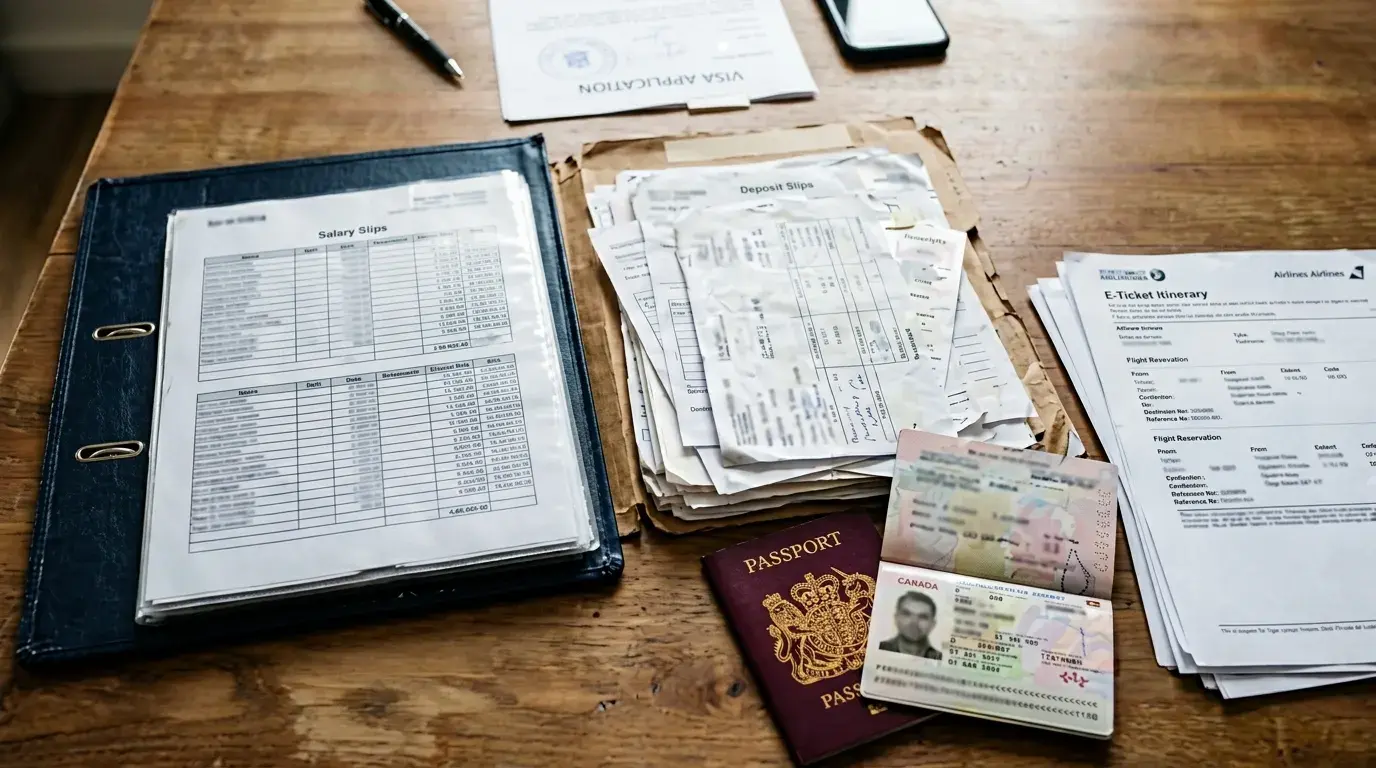
A visa officer does not read your bank balance as a standalone number. They read it beside your salary, trip length, flight route, savings history, and the cost of returning home on the date you declared.
Two applicants can both show $5,000, but one file may look stable while the other looks borrowed, rushed, or difficult to explain.
Why A Bank Balance Alone Does Not Prove You Can Afford The Trip
A strong balance helps, but it does not automatically prove affordability.
Visa officers usually want to see whether the money belongs to you, whether it was built up naturally, and whether it can realistically cover the full trip without creating financial pressure after you return.
For example, Sarah and Michael both apply for an Italian tourist visa from Delhi. Both show a flight reservation from Delhi to Rome, and both have $4,500 in their bank accounts.
Sarah earns a steady monthly salary. Her deposits arrive from the same employer. Her balance grew gradually over six months. Her 9-day Italy trip fits her income, leave approval, and travel style.
Michael has the same balance, but most of the money arrived through two large transfers shortly before the visa appointment. His salary is much lower than the trip cost. His flight reservation shows a 21-day stay, but his bank statement does not show a long-term savings pattern.
The number is the same. The financial story is not.
That is why a visa officer may trust one file and question the other.
Your bank statement should answer more than “Do you have money today?” It should help answer:
-
Where did the money come from?
-
Is the income regular or occasional?
-
Does the balance match your normal lifestyle?
-
Can you pay for flights, food, transport, insurance, and daily costs?
-
Will you still have enough money after returning?
The return flight matters here, too.
If your reservation shows a short, affordable trip, your balance may look reasonable. If your reservation shows a long stay across expensive cities, the same balance may look weak.
For Schengen, the UK, Canada, Australia, and many other countries, visitor visa officers often assess whether your financial capacity matches the declared trip. They may not use one fixed formula for everyone. They look at the full picture.
A bank balance is evidence. It becomes persuasive only when the source, pattern, and trip cost make sense together.
How Spending Patterns Can Make Similar Bank Statements Look Strong Or Suspicious
Visa officers notice patterns.
They may look at regular salary credits, rent payments, business income, card spending, cash withdrawals, loan payments, and sudden deposits. They are not only checking whether the final balance looks high enough.
A stable statement usually has a rhythm. Salary arrives. Expenses go out. Savings remain. The account looks like it belongs to someone actively living and earning in the home country.
A risky statement often looks staged. It may show a low balance for months, then a sudden large deposit before the appointment. The money may leave the account soon after. There may be unexplained cash deposits or transfers from people not mentioned anywhere in the application.
That does not mean large deposits are always a problem.
A bonus, property payment, freelance invoice, business settlement, tax refund, or family transfer can be legitimate. The issue is whether the deposit is explained clearly.
If your statement has unusual activity, do not leave the officer to guess.
You can support the explanation with relevant documents, such as:
-
Salary slips showing regular income
-
Bonus letters or commission records
-
Freelance contracts or invoices
-
Business registration and tax records
-
Sale agreements for large one-time receipts
-
Sponsor documents if another person funded the trip
-
A short note explaining a major transfer
Keep the explanation tight. Do not bury the officer under unrelated pages.
The goal is not to defend every grocery payment or small withdrawal. The goal is to make the important financial movements easy to understand.
Also, check whether your spending pattern fits your declared travel plan.
If your account shows heavy loan payments, unpaid obligations, or almost no remaining balance after estimated trip costs, the officer may question whether the trip is financially sensible. A valid flight reservation does not fix that concern. It only shows your planned dates and route.
Your financial documents should make those dates believable.
A 6-day flight reservation to Madrid may fit a modest but stable income. A 30-day reservation across Madrid, Paris, and Milan may require stronger savings, clearer leave approval, and a better explanation of how you can afford the time away.
The account should support the journey, not fight against it. For broader planning, use the flight reservation for visa 2026 guide before you copy a route or cost pattern from someone else’s approved example.
Why Trip Cost Must Make Sense For Your Income Level
Visa officers often ask a simple question without saying it directly: “Would this person normally spend this much on this trip?”
That question matters because an expensive trip can look unusual when it does not match your income, savings, or travel history.
You may have enough money in the account, but the trip still needs to look proportionate.
For example, a traveler earning $800 per month may show $6,000 in savings and apply for a 28-day Canada visit with long domestic connections, high daily expenses, and a flexible return date. Another traveler earning the same amount may apply for a 7-day trip with a clear return flight, modest plans, and savings built over time.
The second file may feel more realistic, even if the balance is lower.
Trip cost includes more than the flight reservation.
The officer may mentally connect several cost points:
-
International flight route
-
Length of stay
-
Local transport
-
Food and daily spending
-
Travel insurance is required
-
Internal flights or train segments
-
Event or conference costs
-
Emergency funds
-
Money left after returning home
Many countries require travel insurance for visa approval, especially for Schengen applications. That cost should fit naturally inside your budget. It should not look like the trip consumes nearly every available rupee, dollar, or euro you have.
The flight route can also affect perceived cost.
A direct Delhi to Paris return flight for 8 days may look easier to understand than a multi-city route that enters Amsterdam, exits Rome, and includes several internal movements. Both may be valid travel plans. But the second one demands stronger financial support.
Keep the trip aligned with your profile.
If this is your first international trip, a shorter and cleaner itinerary may be more credible than a complicated route. If your income is moderate, avoid building a travel plan that looks designed to impress rather than match your real situation.
A visa file becomes stronger when the officer can say, “This trip looks affordable for this applicant.”
That is very different from, “This applicant has managed to show a balance.”
When Sponsorship Helps And When It Makes A Similar File Riskier
Sponsorship can strengthen a visa application when it is logical, documented, and easy to verify.
It can also create more questions when the relationship is unclear, the sponsor’s finances are weak, or the applicant has no personal reason to return home.
A sponsor does not simply replace your own financial profile. The officer still evaluates you as the traveler.
For example, Olivia is a university student applying for a short France tourist visa during semester break. Her father sponsors the trip. The file includes his bank statements, employment proof, relationship documents, her enrollment letter, exam schedule, and a return flight reservation before classes resume.
That sponsorship makes sense.
Now compare that with another applicant whose distant friend sponsors a 25-day trip to Canada. The applicant has limited personal funds, no strong employment proof, and no clear reason why the friend is covering the full cost. The flight reservation may show a return date, but the overall file may feel less secure.
Sponsor credibility is carefully reviewed when someone else is funding the trip.
The officer may consider:
-
Who is paying for the trip?
-
Why is that person paying?
-
Can the sponsor genuinely afford the cost?
-
Is the relationship documented?
-
Does the applicant still have strong home ties?
-
Does the flight plan fit the sponsor’s stated support?
A sponsor’s bank balance should also show stability. A sponsor with sudden deposits, unclear income, or high financial obligations may not add much strength.
If you are sponsored, keep the travel plan disciplined. A short, clear trip with matching flight dates is easier to support than a long route with vague daily plans.
Do not assume sponsorship solves a weak file.
If your personal profile does not show return intent, the officer may still doubt the application. A sponsor can explain how the trip will be paid for. The sponsor cannot prove that you will return unless your own documents support that point.
Your own evidence still matters.
That may include employment, education, family responsibilities, business ownership, property use, or other commitments. If you are a student, proof of ongoing education can be especially useful. If you work, your leave approval should match the return flight date. If you own a business, your documents should show active operations that continue after your trip.
When sponsorship and personal ties work together, the file can become much stronger. When sponsorship is used to cover an unrealistic trip, it can draw more attention to the weaknesses in the application.
Financial evidence is not only about having enough money. It must support the exact route, dates, and pace shown in your flight reservation, which is why the travel plan itself becomes the next major credibility test.
Why Travel Plans That Look Alike Can Feel Very Different To A Visa Officer
A flight reservation does more than show entry and exit dates. It also tells the officer whether your route, timing, and pace fit the person applying for the visa.
The same Delhi to Paris return reservation can feel sensible in one file and questionable in another. The difference often comes from how the travel plan fits your income, work leave, travel history, and purpose.
Why A Realistic Itinerary Matters More Than A Pretty Itinerary
A polished itinerary is not always a strong itinerary.
Visa officers are not impressed by a long list of famous cities if the route does not fit your available time, budget, or travel background. They want to see a plan that feels possible for you.
For example, a first-time Schengen applicant may submit a 10-day flight reservation from Delhi to Paris and attach an itinerary covering Paris, Brussels, Amsterdam, Zurich, Milan, and Rome. It may look exciting, but it can also look rushed.
The officer may ask practical questions before approving the file.
How will you cover six cities in 10 days?
Why are you entering France if most of your stated trip seems to happen elsewhere?
Does your budget support multiple internal transfers?
Does your leave approval allow this pace?
A simpler plan often works better. A 9-day France-focused trip with a return flight from Paris may feel more believable than a crowded multi-country route that tries to show too much.
The best itinerary is not the most ambitious one. It is the one that matches your real situation.
Your route should make sense from the first airport to the return flight. If you apply through the French embassy, your flight reservation, mainstay, and day-by-day plan should clearly support France as the main destination. If you apply through Germany, your travel pattern should not quietly make Germany a minor stop.
A realistic itinerary usually has these features:
-
The entry country matches the main purpose of travel
-
The return date fits your leave, semester break, or business schedule
-
The number of cities fits the trip length
-
The route avoids unnecessary backtracking
-
The trip cost matches your financial evidence
-
The plan can be explained in plain language during an interview
A pretty itinerary can create pressure if you cannot explain it. A realistic itinerary reduces doubt because every date and route choice feels intentional.
Why Trip Duration Can Trigger Refusal Even When Documents Are Complete
Trip length is one of the strongest signals inside a flight reservation.
A complete file can still raise concern if the stay looks too long for your profile. The officer may not question the reservation itself. They may question whether the proposed absence fits your life at home.
A 7-day visit to Spain during approved annual leave may feel natural for a salaried employee. A 42-day visit with the same job letter may feel harder to justify unless the employer clearly approves that time away.
The return flight date should not conflict with the rest of the application.
If your employer grants leave from June 3 to June 12, but your return flight shows June 20, the officer may wonder which document reflects your real plan. If your university resumes classes on September 5, but your return flight lands after that date, the officer may question whether education is truly a strong home tie.
Longer trips are not automatically weak. They just need a stronger context.
A retired traveler may justify a longer trip more easily than someone on probation at a new job. A business owner may travel longer if operations continue through managers or staff. A student may travel during a confirmed summer break. A remote worker may need clear evidence that the trip does not violate visa rules or employment expectations.
The problem begins when the flight dates look larger than the explanation.
For visitor visas, officers often check whether your proposed stay is proportionate to:
-
Your approved leave
-
Your monthly income
-
Your savings pattern
-
Your family responsibilities
-
Your previous travel behavior
-
Your stated purpose
-
Your return obligations
A short trip can also look risky if the dates are poorly chosen. For example, a 5-day return flight may still create doubt if the appointment, event, or invitation dates do not match the route.
The safest approach is to choose dates you can defend without hesitation. If the officer asks why you are staying 14 days instead of 7, your answer should connect to your itinerary, leave approval, budget, and return plan.
When the trip duration fits naturally, the flight reservation supports your case. When it stretches beyond your profile, the same reservation can make the file harder to approve.
Why Destination Choice Can Affect Similar Applicant Profiles
Two travelers with similar documents may face different levels of scrutiny because the destination changes the context.
A first international trip to a nearby regional destination may not be read the same way as a first international trip to Canada, the UK, the United States, Australia, or the Schengen Area. The documents may look similar, but the officer reads them against the country’s visa rules, overstay concerns, and applicant risk patterns.
Destination choice matters because every embassy looks for slightly different pressure points.
A Schengen officer may focus closely on the main destination, travel insurance, route logic, and whether your entry country matches the itinerary. A Canadian visitor visa officer may look heavily at purpose, funds, home ties, and previous travel behavior. A UK visitor visa officer may pay close attention to affordability and whether the trip cost makes sense for your income.
That does not mean one country is “easy” and another is “impossible.” It means your flight plan should match the expectations of the country you are applying to.
For example, two applicants may both show a 12-day return flight from Delhi. One applies for a short UAE visit after previous regional travel. The other applies for a first-time 12-day Canada trip with limited travel history. The flight reservation may be valid in both cases, but the second applicant may need a tighter explanation of funds, purpose, and return intent.
The route also matters.
If your stated purpose is a conference in Berlin, but your flight reservation enters through Madrid and exits from Rome, the officer may question why Germany is central to the application. There may be a valid reason, but you should make it clear before the officer has to guess.
Destination choice should match your profile in a believable way.
Ask yourself:
-
Why this country for this trip?
-
Why these exact dates?
-
Why this entry airport?
-
Why this return route?
-
Does the country match your travel history and budget?
-
Can you explain the plan without sounding coached or vague?
A strong destination choice feels natural. A weak one feels copied from someone else’s approval story.
The officer is not only looking at whether you can travel. They are looking at why this destination, at this time, under these circumstances, makes sense for you.
Why Reservation Details Can Help Or Hurt The Overall Story
Flight reservation details can quietly strengthen or weaken the whole visa application. If an applicant is comparing temporary-ticket language, this separate DummyFlights guide explains dummy ticket for visa use cases; here, the BookForVisa focus is whether the reservation fits the full applicant profile.
The officer may notice dates, airports, layovers, route direction, return timing, and whether the reservation matches the rest of your file. Small mismatches can make the application feel less careful, even when the traveler is genuine.
For example, your cover letter may say you will travel from July 10 to July 18, but your flight reservation shows July 9 to July 20. Your leave letter may approve seven days, but your return flight lands after 11 days. Your itinerary may focus on Rome, but your flight route enters and exits through Paris without explanation.
None of these details automatically proves bad intent. But they create questions the officer should not have to solve.
A strong flight reservation should line up with:
-
Your visa application form
-
Your cover letter
-
Your leave approval
-
Your invitation or event dates, if any
-
Your travel insurance dates, where required
-
Your day-by-day route
-
Your return obligations at home
Airport choice also matters.
If you live in Mumbai, a flight from Delhi may be reasonable if you explain the domestic connection or plan to start the trip there. If you apply from one city but choose a departure airport far away without context, the officer may wonder whether the itinerary was prepared without enough attention.
Return timing matters even more.
A late-night return landing one day after the approved leave ends may cause practical confusion. A return flight that misses an exam date, work deadline, court date, business commitment, or family obligation can weaken the return story.
Verification also matters. A reservation that can be checked clearly gives the officer fewer reasons to doubt the travel dates. For flight evidence, BookForVisa.com offers you a verifiable PNR reservation with PDF and flexible date changes while keeping your visa file aligned with your actual plan.
The key is alignment. Your flight reservation should not look like an isolated attachment. It should act like a timestamp for the whole application.
Before submission, compare the reservation against every date in your file. Do not only check spelling and passport details. Check whether the travel dates support the story your documents are telling.
A well-matched reservation makes the application easier to read. A mismatched reservation can draw attention to gaps that would otherwise stay minor, especially when the officer starts checking consistency across the rest of your file.
Why Document Consistency Matters More Than Copying Someone Else’s Approved File
A copied visa file can look complete but still feel careless when the details do not line up. Officers notice the small conflicts because those conflicts affect trust.
Your flight reservation, application form, leave letter, insurance dates, invitation details, and supporting documents should tell the same story without forcing the officer to connect broken pieces.
How Small Date Mismatches Can Create Bigger Doubts Than Missing Extras
Date mistakes are not small when they change the meaning of your trip.
A return flight reservation may show July 18, while your leave letter approves travel only until July 15. Your cover letter may mention a 10-day visit to France, while the visa form says 14 days. Your travel insurance may start one day after your flight arrives. Your conference invitation may end on May 9, but your return flight shows May 22 with no explanation.
Each mismatch creates a question.
The officer may wonder which document reflects your real plan. That doubt can matter more than an extra property paper, a salary slip, or a tax record.
Visa files should not make the officer choose between conflicting dates.
Before submission, check every date in a single sequence:
-
Visa application form travel dates
-
Flight reservation departure and return dates
-
Approved leave period
-
Travel insurance validity
-
Invitation or event dates
-
Cover letter date references
-
Passport validity and expected return date
-
Any internal travel dates are listed
This review is especially important for Schengen applications because the main destination, entry date, exit date, and insurance coverage are often read together. A one-day gap can create unnecessary friction.
For example, if your flight reservation shows arrival in Paris on August 4 and departure on August 13, your insurance should cover at least that full period. Your leave approval should also support those dates, with enough time for departure and return. If your employer approves leave from August 5 to August 12 only, the officer may see a practical problem.
The same issue can happen with the UK, Canada, Australia, or visitor visas, where your return timing is used to assess your temporary stay. If the return flight does not match your work, study, or family obligations, the document stops supporting the application cleanly.
Do not rely on the officer to assume it was just a typo.
Fix the mismatch before submission. If there is a valid reason, explain it briefly. For example, you may depart on a Saturday before official leave starts on Monday because weekends are not working days. That can make sense, but the file should make it easy to understand.
Why Names, Addresses, And Job Details Must Match Across Every Visa Document
Identity details carry more weight than applicants realize.
A spelling difference in your name, an outdated address, or an inconsistent job title can make a genuine file look rushed. One minor difference may not destroy a strong application, but several small conflicts can make the officer slow down and look harder.
Your name should appear consistently across the application form, passport, employment letter, bank documents, invitation, insurance, and flight reservation.
If your passport says “Jonathan Miller,” avoid using “Jon Miller” on supporting documents unless that is officially accepted or clearly connected. If your middle name appears on the passport, check whether other documents omit it in a way that could confuse identity matching.
Address consistency also matters.
If your bank statement shows one city, your employment letter shows another, and your application form lists a third address, the officer may wonder where you actually live. There may be a simple reason. You may work in Mumbai, live in Delhi, and use a family address for banking. But unexplained differences can look careless.
Job details should also match.
If your visa form says “Marketing Manager,” your employment letter says “Sales Executive,” and your salary slips show a different company name, the officer may question whether the employment evidence is current. That matters because employment often supports return intent.
Check these details carefully:
-
Full name and passport number
-
Date of birth
-
Current residential address
-
Employer name and address
-
Job title and employment start date
-
Salary amount and payment pattern
-
Travel dates and approved leave dates
-
Sponsor name and relationship, if applicable
-
Flight reservation passenger details
Errors in personal information can cause visa denial, especially when they affect identity, employment, or travel history. Minor mistakes can also create problems when they appear across several documents.
Conflicting addresses or omitted names can also flag an application for closer scrutiny. Consulates routinely perform background checks, so your declared details should match the documents you submit.
A good consistency check is simple. Read the file as if the officer knows nothing about you. If two documents seem to describe two different versions of your life, fix the documents or explain the difference clearly.
Why Reused Templates Can Make A Genuine Application Look Artificial
A template can help with structure, but it can weaken your file when it sounds copied.
Visa officers read many applications. They can spot generic cover letters that do not match the traveler’s actual route, income, purpose, or return plan. A copied letter may mention “tourism and leisure” without explaining why your flight reservation shows those exact dates or why the destination fits your profile.
That kind of writing does not support the documents. It floats above them.
A useful cover note should not sound dramatic. It should be specific.
For example, instead of saying:
“I wish to visit Europe for tourism and will return to my country after my trip.”
A stronger version connects to the file:
“We plan to travel from Delhi to Paris from September 6 to September 14. These dates match approved annual leave from our employer, and the return flight is scheduled before work resumes on September 16.”
That sentence does more than sound polished. It connects the flight reservation, leave approval, and return obligation.
Reused employer letters can create similar issues.
A vague employment letter that only says you are employed may not help much if the officer needs to understand your role, salary, approved leave, and expected return. A stronger letter includes the details that support your specific trip.
A copied itinerary can also create problems. If your plan lists cities you cannot afford, airports that do not match your reservation, or activities that do not fit the season or destination, the application can feel artificial.
Keep your wording plain and tied to your evidence.
Good personalized details include:
-
Your exact travel dates
-
Your departure and return cities
-
Your approved leave period
-
Your reason for choosing the destination
-
Your event or meeting dates, if relevant
-
Your return obligation after the trip
-
Your funding source, when needed
Avoid adding emotional claims that cannot be verified. “We love travel” is weaker than “Our return flight is booked before the approved leave period ends.”
A genuine application should sound like it belongs to one traveler with one clear plan. It should not sound like a document pack assembled from unrelated examples.
Why Translation, Formatting, And Missing Context Can Change The Decision
A document can be genuine and still fail to help if the officer cannot read it quickly.
Translation, formatting, and context affect how easily your evidence can be understood. If key documents are unclear, incomplete, cropped, untranslated, or badly scanned, the officer may not give them the value you expect.
This matters when local documents support flight-related timing.
For example, your employer may issue a leave approval in a local language. If the officer cannot easily read the approved dates, the return flight date loses support. Your university may provide an enrollment letter, but if the academic calendar is not translated or the exam date is missing, your return timing may feel less anchored.
Formatting can also weaken evidence.
A bank statement with missing pages can raise questions about the full balance history. A flight reservation PDF with cropped passenger details can create identity confusion. A passport scan with unreadable stamps can make travel history harder to verify. An insurance document with unclear validity dates can create doubt about coverage.
Make every important document easy to review.
Use clear scans. Keep full pages visible. Avoid shadows, cut edges, and screenshots where official PDFs are available. Label supporting files logically if the submission portal allows it.
Missing context can be just as damaging as poor formatting.
A self-employed applicant may submit business bank statements without explaining the business activity. A sponsored applicant may submit the sponsor’s balance without showing the relationship. A student may submit a flight reservation during term time without proving academic leave.
The documents may be real, but the officer still needs context to understand why they matter.
Use brief explanations that remove confusion. Do not over-explain obvious details. Focus on gaps that directly affect the visa decision.
For flight-focused applications, the most important context usually surrounds dates, funding, purpose, and return obligations. The reservation should match the wider file, but the wider file should also make the reservation meaningful.
Once your documents speak consistently, the next challenge is understanding how the same file may be read differently depending on the embassy, country, timing, and current visa environment.
Why Country, Embassy, And Timing Can Change The Result For Similar Applications
A visa decision is shaped by more than your personal file. The same flight reservation and supporting documents can be read differently depending on where you apply, when you apply, and what the embassy is currently watching most closely.
This is why one traveler may copy another traveler’s route and still face a different outcome. The destination’s rules, local consulate practice, appointment timing, and previous application history all change how the file is interpreted.
Why The Same File May Be Treated Differently By Different Embassies
A flight reservation does not carry the same weight in every visa system.
Some embassies use it mainly to confirm your intended arrival and departure dates. Others read it closely against your itinerary, travel insurance, main destination, leave approval, and financial capacity. The document may be similar, but the embassy’s focus may not be.
For example, a Schengen application often depends heavily on route logic. If your flight reservation shows entry into France, but your itinerary spends most nights in Germany, the officer may question whether you applied through the correct country. The issue is not the flight reservation itself. The issue is whether your route supports the embassy you selected.
A UK visitor visa officer may look more closely at affordability and whether the proposed trip cost is reasonable for your income. A Canadian visitor visa officer may focus strongly on purpose, home ties, travel history, and whether the visit looks temporary. An Australian visitor visa file may receive close attention to the genuine temporary stay, funding, and personal circumstances.
That means you should not prepare one universal file and expect it to perform the same everywhere.
Your flight plan should reflect the destination’s logic.
For Schengen, check whether your entry country, mainstay, and travel insurance dates support the application. For the UK, make sure the flight dates and trip cost fit your income and leave. For Canada, keep the reason for travel and return evidence especially clear. For business or conference trips, make sure the arrival and return flights match the actual event dates.
Even two consulates representing the same country may read local applicant profiles differently. One location may see more first-time travelers. Another may handle more business visitors, students, or reapplicants. Officers also work with local document patterns, regional risk signals, and past case history.
This is why advice from a friend in another country may not fully apply to you.
Your friend may have applied from Dubai with a long travel history and stable Gulf employment. You may be applying from Delhi as a first-time traveler with a shorter employment record. Even if the flight reservation, bank balance, and destination are similar, the embassy sees two different contexts.
A stronger approach is to ask:
-
Which embassy or consulate will evaluate this application?
-
Does my flight route match that embassy’s rules?
-
Does my travel plan fit the visa category?
-
Are my dates easy to verify against my documents?
-
Would this destination expect stronger proof for my profile?
A visa file should be built for the specific embassy receiving it, not copied from the last person who got approved.
Why Seasonal Pressure Can Make Weak Explanations More Risky
Timing changes how much pressure your file carries.
Peak travel seasons can make weak explanations stand out faster. Holiday periods, summer tourism, student intake months, religious travel seasons, trade fairs, and major sporting events often create heavier embassy workloads. During these windows, your documents need to be especially clean because officers may have less patience for unclear dates or incomplete travel details.
A rushed flight reservation can create avoidable problems.
You may pick travel dates before checking appointment availability. You may choose a return date that falls after your approved leave. You may forget that processing time could extend beyond the planned departure. You may apply too close to travel and leave no room to correct a mismatch.
That creates a timing problem, not a document problem.
For example, a traveler planning a Christmas trip to Germany may submit a flight reservation for December 20, but the visa appointment is only available on December 12. Even if the rest of the file is genuine, the short gap can make the plan look rushed. The officer may question whether the traveler planned responsibly or whether the trip dates are realistic.
The same applies to summer Schengen applications. A traveler may book a flight reservation for July 5 but apply in late June during a busy season. If the file also has unclear leave dates or missing insurance coverage, the pressure increases.
Seasonal timing also affects the story behind your trip.
A 3-week Europe trip during school exams looks harder to explain than the same trip during a confirmed semester break. A business visit after the event has ended will not make sense, even if the flight reservation is valid. A tourist trip during your company’s busiest work period may need stronger leave approval and return evidence.
Before choosing flight dates, check the timing around:
-
Embassy appointment availability
-
Expected processing period
-
Public holidays in your country and the destination country
-
Employer leave approval
-
School or university calendar
-
Conference, wedding, or event dates
-
Insurance validity
-
Passport validity
-
Previous visa refusal waiting time, if relevant
A well-timed application feels controlled. A rushed application can make even good documents look weaker.
This matters because incomplete applications can lead to automatic rejection in some systems. Missing travel details, wrong dates, or unsupported purpose can also lead to refusal where the officer has discretion. The cleaner your timing, the fewer questions your flight reservation creates.
Why Recent Policy Changes Or Local Risk Trends Can Affect Similar Cases
Visa approval stories age quickly.
A friend’s approval from last year may not reflect what an embassy is checking now. Countries adjust scrutiny based on overstay patterns, document fraud trends, migration pressure, appointment backlogs, and changes in visa rules. That can affect how similar files are treated.
A flight reservation that looked acceptable in one season may need tighter support later if the embassy begins checking route consistency more closely. A destination may start asking more questions about first-time travelers. A consulate may become stricter about financial source explanations. A visa category may update its document checklist or insurance expectations.
This is why relying only on old screenshots, social media posts, or friend advice can be risky.
The basic documents may look the same, but the decision environment may have changed.
For example, an applicant may hear that several travelers received Schengen visas with simple round-trip flight reservations and short bank statements. But if the current consulate is seeing more route mismatches or unclear main-destination cases, the officer may review the itinerary more carefully. Your file then needs stronger alignment between the flight route, the city plan, and the embassy selected.
Local risk trends can also affect how profiles are read.
If many applicants from a region have submitted incomplete travel details, officers may pay closer attention to dates, addresses, employment proof, and return flights. If a consulate has seen repeated issues with sudden bank deposits, the financial history may receive stricter review. If previous applicants overstayed after visitor visas, return intent may carry more weight.
This does not mean genuine applicants should feel discouraged. It means your file must be current, specific, and clean.
Before submitting, check the latest official requirements from the embassy or visa center. Do not assume the same documents from a previous approval still satisfy the current checklist. Also, check whether the country requires travel insurance, proof of funds for each day, confirmed invitation details, or additional forms.
Your flight reservation should be prepared after you understand the current expectation, not before.
If requirements changed, adjust the dates, route, insurance period, and supporting documents before submission. Do not force an old plan into a new ruleset.
A visa file is strongest when it reflects the rules and risk concerns at the time of application.
Why A Previous Refusal Can Change How New Documents Are Read
A previous refusal changes the starting point.
When you reapply, the officer does not read your file as if nothing happened. They may review the old refusal reason, your previous documents, your new explanation, and whether anything important has changed.
This is where many applicants make a costly mistake.
They replace the flight reservation, update the bank statement, add a new cover letter, and resubmit quickly. But if the earlier refusal was about weak funds, unclear purpose, doubtful return intent, or inconsistent information, a fresh reservation will not solve the core issue.
The new file must answer the old concern directly.
If your previous refusal mentioned insufficient financial evidence, show a stronger financial pattern, a clearer income source, and a trip cost that fits your profile. If the refusal questioned your purpose, tighten the route, shorten the stay if needed, and connect the flight dates to a clear reason for travel. If the officer doubted return intent, strengthen employment, education, family, or business evidence before reapplying.
Do not make the second application look like a quick reaction.
A rushed reapplication can suggest that you changed the paperwork but not the circumstances. That may make the officer more skeptical, especially if the new flight dates are close to the refused plan and the supporting evidence has not improved.
A careful reapplication should show a visible difference.
That difference may include:
-
A more realistic flight duration
-
Better alignment with leave or academic dates
-
Clearer source of funds
-
Stronger proof of employment or business activity
-
More relevant home ties
-
A corrected address, name, or form error
-
A direct explanation of what changed since the refusal
Be accurate about previous refusals. Consulates routinely perform background checks, and an omitted refusal history can create serious credibility problems. If the form asks about past refusals, answer clearly.
A previous refusal does not block future approval. But it raises the standard for clarity.
The officer needs to see that the weak point has been fixed, not hidden under more documents. Once the timing, embassy context, and refusal history are understood, the next step is to audit the full file before submission so your flight dates, finances, profile, and return evidence work together without avoidable gaps.
How To Audit Your Visa File Before Submission Or Reapplication
Before you submit or reapply, treat your visa file like one connected case, not a folder of separate documents. Your flight reservation should sit inside a believable chain of purpose, dates, money, and return intent.
A good audit helps you catch the weak signals that similar approved applicants may not have had in their files.
Ask Whether Your Documents Prove A Complete Travel Story, Not Just A Checklist
Start with the full story your file tells.
Not the checklist. Not the number of uploaded documents. The story.
A visa officer should be able to understand four things quickly:
-
Who you are
-
Why are you traveling
-
How will you pay for the trip
-
Why will you return on the date shown in your flight reservation
If any of those points feel unclear, the file needs work.
For example, you may have a valid flight reservation from Delhi to Madrid, a bank statement, and an employment letter. But if the file does not explain why Spain, why those dates, and why the return flight fits your work schedule, the application may still feel incomplete.
A complete travel story connects the documents in a practical order.
Your application form says the travel dates. Your flight reservation supports those dates. Your leave approval confirms you are allowed to be away. Your funds show you can afford the trip. Your work, study, business, or family evidence explains why you will return.
That is the chain you want.
Do not audit your file by asking, “Do we have enough documents?”
Ask sharper questions:
-
Does the officer know why this trip is happening now?
-
Does the return flight date match a real obligation at home?
-
Does the route match the country where we are applying?
-
Does the trip length fit the purpose?
-
Does every important document support the same plan?
This matters even more for reapplications.
If your previous refusal mentioned unclear purpose, weak ties, or doubts about return intent, a new document list will not help unless the story is clearer. The officer needs to see a better explanation, not just a refreshed flight date.
Your cover note, if used, should not repeat obvious information. It should connect the important dots. Mention the flight dates, purpose, funding source, and return reason in plain language. Keep it factual. Keep it tied to the evidence.
A strong file feels easy to follow. A weak file makes the officer search for meaning.
Check Whether Your Financial Evidence Explains Source, Stability, And Proportion
Next, audit the money trail.
Do not stop at the final balance. A high balance can still raise questions if the source is unclear or the trip looks too expensive for your profile.
Your financial evidence should answer three points clearly.
Source: Where did the money come from?
Stability: Has the money been available over time?
Proportion: Does the trip cost make sense for your income?
Look at your bank statement the way an officer may read it.
If your salary comes every month, the account feels easier to understand. If large deposits appear shortly before the appointment, explain them if they affect the balance used for the trip. If a sponsor is paying, show the relationship, the sponsor’s income, and why the support makes sense.
Do not assume the officer will understand local banking habits, family transfers, freelance payments, or business cash flow without context.
For flight-focused applications, also check whether the cost of the route matches your finances.
A simple 8-day Delhi to Paris return trip may fit one's budget. A 21-day multi-city Europe route with several internal flights may require stronger evidence. A Canadian visitor visa with a long stay may need more financial support than a short regional trip.
Your audit should include a rough travel cost check:
-
International flight route
-
Daily expenses for the destination
-
Local transport
-
Travel insurance, where required
-
Event or conference expenses, if relevant
-
Internal flights, if listed
-
Emergency funds
-
Remaining balance after return
You do not need to include a full personal budget unless the visa category or situation calls for it. But your own review should confirm that the trip is affordable.
If the trip consumes nearly all visible savings, the file can look financially stretched. If the return flight is far away but the account barely supports daily costs, the officer may question whether the stay is realistic.
For sponsored trips, do not let the sponsor’s documents replace your own return evidence. Sponsorship explains who pays. It does not automatically explain why you will return.
A clean financial audit makes your flight dates easier to believe because the officer can see that the route, stay length, and cost match your actual capacity.
Compare Your Travel Plan Against Your Real-Life Obligations
Your flight reservation should respect your real calendar.
This is where many similar-looking applications separate. Two travelers may both show a 12-day return flight. One has leave approval for 12 days. The other has classes, probation, work deadlines, or business obligations that conflict with the same dates.
The document looks similar. The timing does not.
Review your travel plan against your real-life commitments before submission.
If you work, compare the departure and return dates with your approved leave. Check whether your return flight lands before your expected return to work. If the landing date is close, make sure the timing is practical.
If you study, check the academic calendar. Your return flight should not clash with exams, registration, classes, or required attendance. Proof of ongoing education becomes stronger when the return date clearly fits the semester schedule.
If you run a business, check whether your absence makes sense. A long stay may require proof that the business continues while you travel. Staff records, client contracts, tax filings, or active business statements can support that.
If you have family responsibilities, make sure they are reflected where relevant. Immediate family at home can support return intent, but only when the file makes the connection clear.
Your travel plan should be tested against these points:
-
Approved work leave
-
School or university dates
-
Business responsibilities
-
Family obligations
-
Medical or legal commitments
-
Event dates at the destination
-
Return flight timing
-
Previous travel behavior
Be careful with trips that look too ambitious for the available time.
If your flight reservation shows 9 days in Schengen but your itinerary covers five countries, the plan may feel rushed. If your application says tourism but the dates sit in the middle of a critical work period, the purpose may feel less convincing. If your return flight lands after your leave ends, the officer may question your return intent.
Adjust the plan before the appointment if needed.
Sometimes the strongest fix is not adding more documents. It is choosing a shorter stay, a cleaner route, or a return date that fits your actual obligations.
The best travel plan is one you can explain naturally because it is built around your real life.
Review Your Application Like A Visa Officer Who Has Five Minutes
A visa officer may not read your file the way you built it.
You may see weeks of preparation. The officer sees a decision file that must become clear quickly. Your audit should test whether the application makes sense in a fast review.
Open your file and read it in this order:
-
Application form
-
Passport and travel history
-
Flight reservation
-
Purpose evidence
-
Employment, education, or business proof
-
Financial documents
-
Home ties
-
Travel insurance, where required
-
Cover note or explanation
Now ask what questions appear in the first five minutes.
Does the flight reservation match the form? Does the destination match the purpose? Does the return date match leave approval? Does the bank balance match the trip cost? Does the applicant have a clear reason to return?
If the answer is not obvious, fix the file.
Do not hide weak points inside extra pages. Make important evidence easy to find. A strong employment letter is more useful than ten unrelated certificates. A clear source-of-funds explanation is better than a thick bank file with unexplained deposits.
Check for technical issues too.
Errors in passport number, date of birth, address, employer name, or travel dates can cause serious problems. Minor mistakes can lead to denial when they create confusion around identity, employment, or travel intent. Conflicting addresses or omitted names can also invite closer scrutiny.
Use a final pre-submission check:
-
All names match the passport
-
Passport number is correct
-
Flight dates match the form
-
Return date matches leave or obligations
-
Insurance covers the full travel period, if required
-
Financial documents are complete and readable
-
Sponsor details are consistent, if applicable
-
Previous refusals are declared accurately
-
Purpose evidence matches the route
-
No document contradicts another document
If an interview is part of the process, your answers should match the same file. Practice likely questions about your travel dates, route, employment, funds, sponsor, and return plan. Be honest and clear. Do not memorize robotic answers. Know your own application well enough to explain it calmly.
Visible anxiety or evasive answers can weaken an otherwise decent file when the officer needs clarification. A good interview can support approval because it confirms that the documents reflect a real, temporary travel plan.
The final audit should leave your file with fewer loose ends, fewer date conflicts, and fewer unanswered questions, which becomes especially important when you are comparing your refusal with someone else’s approval.
What To Do If Someone With Similar Documents Was Approved And You Were Refused
A refusal hurts more when another traveler shows you a similar flight reservation, bank statement, leave letter, and itinerary, then says their visa was approved.
That comparison can help only when you look deeper than the visible paperwork. The real difference usually sits in profile strength, travel logic, timing, past history, and how clearly the file answered the consular officer’s concerns.
Stop Comparing Documents And Compare The Full Applicant Situation
When someone says, “We submitted the same papers,” they usually mean the same document types.
That does not mean the same case.
Two applicants may both include a return flight reservation, employment proof, bank statements, travel insurance, hotel bookings, and a cover note. One may still receive approval while the other is denied because the officer reads the full applicant situation, not just all the documents.
Your friend’s approved flight reservation may have worked because their travel dates matched approved leave, their salary was stable, and their past trips showed clean returns. Your file may have had the same route, but a weaker employment history, sudden deposits, or a return date that did not match your obligations at home.
That difference matters in the visa application process.
For example, David and Anna may both apply for a travel visa with a 10-day Delhi to Paris return flight. David has worked at the same company for seven years, has immediate family at home, and has traveled before without violations. Anna recently changed jobs, has a limited savings history, and plans a longer stay than her leave letter supports.
The flight reservation may look similar. The approval risk is not.
Instead of comparing document names, compare the full picture:
-
Job stability and income pattern
-
Length of stay shown on the flight reservation
-
Previous travel abroad and return history
-
Family, education, or business obligations at home
-
Funding source and sponsor credibility
-
Route logic for the destination country
-
Previous refusals or immigration history
-
Timing of the appointment and planned departure
A citizen of one country may face different expectations from an applicant in another country, even when the destination and route look similar. Visa rules and refusal patterns vary based on nationality, residence, travel history, and local consulate practice.
This is why approval stories can be useful but incomplete.
Your goal is not to recreate someone else’s file. Your goal is to understand what their profile proved that yours did not prove clearly enough.
Identify The Real Concern Behind The Refusal Wording
Refusal letters often sound broad.
You may see wording about unclear purpose, insufficient funds, weak home ties, missing evidence, or doubts about the temporary stay. Those phrases can feel frustrating, but they usually point toward a practical weakness.
Read the refusal like a diagnostic note.
If the refusal mentioned purpose, review your flight route, event dates, cover note, and itinerary. Ask whether the reason for travel was specific enough. A return flight can support dates, but it cannot explain the purpose by itself.
If the refusal mentioned funds, check whether your income, savings pattern, and trip cost made sense together. A sudden transfer may raise suspicion if the source is not explained.
If the refusal mentioned return intent, review whether your employment, education, family, business, or property ownership showed strong ties to your home country.
If the refusal mentioned incomplete information, check the forms, passport details, flight dates, address history, and uploaded files. Missing required documents can turn a genuine application into a weak one.
Some common reasons behind refusal wording include:
-
The trip cost looked high for the income shown
-
The return flight did not match the approved leave
-
The source of funds was unclear
-
The route did not match the stated purpose
-
The applicant had limited home ties
-
The sponsor relationship was weak
-
The travel history did not support the planned trip
-
The file contained conflicting dates or addresses
Do not change everything at once.
If the main reason was financial weakness, a new cover letter alone will not fix it. If the issue was unclear purpose, adding more bank pages may not help. If the concern was return intent, changing the flight date by one or two days may not answer the officer’s doubt.
You need to connect the refusal wording to the evidence that should have answered it.
Also, be aware that some files enter administrative processing. That does not always mean refusal. It may mean extra checks, verification, or review. During that stage, stay reachable and respond only with accurate information if the embassy asks you to contact them or submit more evidence.
A good refusal review is calm and precise. It identifies the weak point before you decide whether to reapply, adjust the trip, or wait.
Rebuild The File Around The Visa Refusal Reason Instead Of Adding Random Documents
After a visa rejection, many applicants react by adding more pages.
That can make the file heavier without making it stronger.
A reapplication should show that the weak area has changed. It should not look like the same file with extra attachments placed at the end.
If the refusal was about finances, rebuild the money story. Show regular income, explain important deposits, reduce the trip length if needed, and choose flight dates that fit your budget. A shorter Paris trip may be easier to support than a long multi-city route if your savings are moderate.
If the refusal was about purpose, rebuild the travel story. Make the flight route cleaner. Align the entry city with the main destination. Remove confusing side trips. Connect the return date to a real obligation at home.
If the refusal was about return intent, rebuild your home evidence. Use employment, ongoing education, family responsibilities, business activity, or other commitments that show why you will come back after the trip.
If the refusal was about inconsistent information, rebuild accuracy first. Correct travel dates, passport details, addresses, sponsor names, insurance validity, and any mismatch between the form and flight reservation.
Before resubmitting, double-check every document against the refusal reason.
A useful reapplication explanation may be short and factual:
“The previous file did not clearly explain the source of funds. The updated application includes salary records, a bonus confirmation, and a shorter travel plan from Delhi to Paris from May 8 to May 15, matching approved leave.”
That type of wording helps because it answers the concern directly.
Do not overcorrect in a way that creates new doubts.
If your first application had a 14-day stay and your second suddenly shows a 45-day stay, the officer may question why the plan expanded after refusal. If your earlier bank statement had unexplained deposits and the new file has even larger unexplained transfers, the same concern remains.
Eligibility is not improved by volume alone. It improves when the weak point becomes clearer, stronger, and easier to verify.
A better second file feels more controlled than the refused file. The route is cleaner. The dates are easier to defend. The funding is better explained. The return reason is stronger. The application process becomes less about adding paperwork and more about removing doubt.
After Visa Denial: Decide Whether To Reapply, Adjust The Trip, Or Wait
Not every refusal should lead to an immediate reapplication.
Sometimes you should reapply quickly. Sometimes you should adjust the trip. Sometimes waiting gives you the best chance to return with a stronger file.
Reapply soon when the weakness is clear and fixable.
For example, you may have uploaded the wrong employment letter, missed insurance coverage, entered incorrect flight dates, or failed to include sponsor relationship proof. If the issue is technical and you can correct it properly, a new application may make sense.
Adjust the trip when the original plan looked too ambitious.
If your flight reservation showed a long stay, multiple countries, expensive routing, or dates that stretched beyond approved leave, reshape the plan. Choose a shorter stay. Use a cleaner return flight. Match the route to the embassy rules. Make the purpose easier to understand.
Wait when your circumstances need time to strengthen.
Waiting may be smarter if:
-
Your bank history needs more stable savings
-
Your job is too new
-
Your business records are thin
-
Your student evidence is incomplete
-
Your sponsor’s finances are unclear
-
Your previous refusal is recent, and nothing material has changed
-
Your planned trip is too ambitious for a blank passport
Waiting is not losing. It can protect you from repeated refusals.
Use that time to build a cleaner case. Let salary deposits appear naturally. Keep funds traceable. Strengthen employment or study evidence. Explore a shorter route that fits your profile. Prepare flight dates that match your real leave period.
Also, prepare for the interview if the embassy requires one. Know your destination, travel dates, return flight, funding source, sponsor details, and reason for coming home. Be clear, calm, and honest.
A strong reapplication is not built around another traveler’s approval. It is built around the specific weakness that caused your refusal and the evidence that now answers it.
Build A Visa Application File That Matches Your Real Travel Story
Visa approval is not about matching another traveler’s document list. It is about making your own flight dates, funds, profile, travel purpose, and return plans feel clear, consistent, and believable to the embassy reviewing your case.
Before you apply or reapply, check whether every document supports the same temporary trip. If your reservation dates, financial evidence, work or study ties, and personal details all point in the same direction, you give the officer fewer reasons to doubt your application.
Stop copying someone else’s approved file. Create travel proof that matches your own income, dates, route, sponsor story and return plan.
Start Your Booking for VisaFAQ
Why can two travelers with similar documents get different visa decisions?
Because visa officers assess the full applicant context, not just the checklist. Income source, travel history, ties, purpose, sponsor relationship, previous refusals, trip cost and document consistency can make similar files look very different.
Does having the same bank balance mean the same visa strength?
No. A similar balance can be read differently if one applicant has stable salary history and another has unexplained recent deposits, weak income proof or trip costs that are too high for their profile.
Can copying an approved visa file hurt my application?
Yes. Copying another applicant’s file can create mismatches if your job, leave approval, sponsor, destination, travel history or stay length is different. A copied structure should never replace your own real travel story.
Why does travel history affect similar visa applications?
Travel history can show whether an applicant previously complied with immigration rules and returned on time. A first-time traveler may still qualify, but the file usually needs stronger evidence from employment, funds, purpose and home ties.
Can the same flight reservation help one applicant and weaken another?
Yes. The same route or stay length may look normal for one traveler and unrealistic for another. The reservation should fit income, leave approval, destination purpose, accommodation and return evidence.
Why do sponsors make similar documents look different?
A sponsor can help when the relationship, reason for support and financial capacity are clear. It can create risk when the sponsor relationship is vague, the support is not documented, or the trip depends on money the applicant cannot explain.
Does one visa approval guarantee another similar applicant will be approved?
No. One approval does not guarantee another result. Different officers, timing, country rules, local risk patterns and applicant circumstances can all affect how a file is assessed.
What should I do if my friend was approved and I was refused?
Read your refusal reason first. Then rebuild the file around the actual concern, such as weak ties, unclear funds, inconsistent dates, sponsor doubt, unrealistic itinerary or missing purpose evidence.
Should I add more documents after a refusal?
Only add documents that answer the refusal reason. Random extra documents can make the file harder to review. Stronger evidence should explain the specific doubt, not just make the application thicker.
Can a better visa file guarantee approval?
No. A better file does not guarantee approval, boarding or entry. It can only make your purpose, funds, ties, route and return plan clearer for the officer reviewing the application.
Friendly reminder: BookForVisa provides travel-proof documents for planning and visa-application support. Requirements vary by destination, consulate, visa category and applicant situation. A flight reservation can support a file, but it does not guarantee approval, boarding or entry.