
Your flight reservation does not sit alone in a visa file. It sits beside your bank statement, salary pattern, recent deposits, trip length, and return logic. That is where trouble starts. A clean itinerary can still raise doubts if the money story behind it looks rushed, inflated, or disconnected from the route you plan to fly. Embassies do not need to spot one exact airline charge to question whether the booking makes sense.
What matters is whether your reservation fits the financial picture you submit. We need to look at timing, account movement, sponsorship, and travel cost as one story, not separate documents. Once you see how officers read that story, you can fix weak spots before they turn a routine application into a credibility problem. Use a dummy ticket that matches your dates and funding story before submitting bank statements.
Key facts:
- A flight booking is read as part of the wider financial and travel-purpose story, not as a standalone PDF.
- Bank statements matter most when trip cost, stay length, sponsor support or recent deposits need explanation.
- A missing airline debit is not automatically a problem if the checklist accepts reservations instead of paid tickets.
- Sudden large deposits, thin balances and expensive routes can make an otherwise clean itinerary look risky.
- The safest file makes the route, budget, sponsor letter, leave proof and return plan easy to understand together.
Need a reservation that matches your financial story? Create a verifiable itinerary with dates, route and timing that fit the bank statement and documents you will submit.
Create Your Visa Reservation
In This Guide
Official-source check: Official guidance supports the idea that officers read travel proof and financial proof together. GOV.UK visitor guidance says applicants should show they are genuine visitors, will leave at the end of the visit, and have sufficient funds; its supporting-document guide points to bank statements, origin of funds and sponsor evidence. IRCC lists itinerary items such as flight details and accommodation, and says bank account statements help officers understand whether the applicant has enough money for the stay. Schengen Visa Code Article 14 requires documents for journey purpose, accommodation, sufficient means for the stay and return, and intention to leave. The U.S. State Department says additional visitor-visa evidence may include trip purpose, intent to depart and ability to pay trip costs. Sources: GOV.UK visitor supporting documents, GOV.UK visit caseworker guidance, IRCC visitor visa documents, Schengen Visa Code and U.S. visitor visa guidance.
Reviewed for: bank-statement comparison logic, financial-means wording, sponsor-payment clarity, reservation-cost realism, date-funding consistency, recent-deposit risk, non-refundable ticket caution, Schengen/UK/Canada/U.S. source alignment and document-risk safety.
What Officers Usually Compare When They See Your Flight Booking And Your Bank Statement
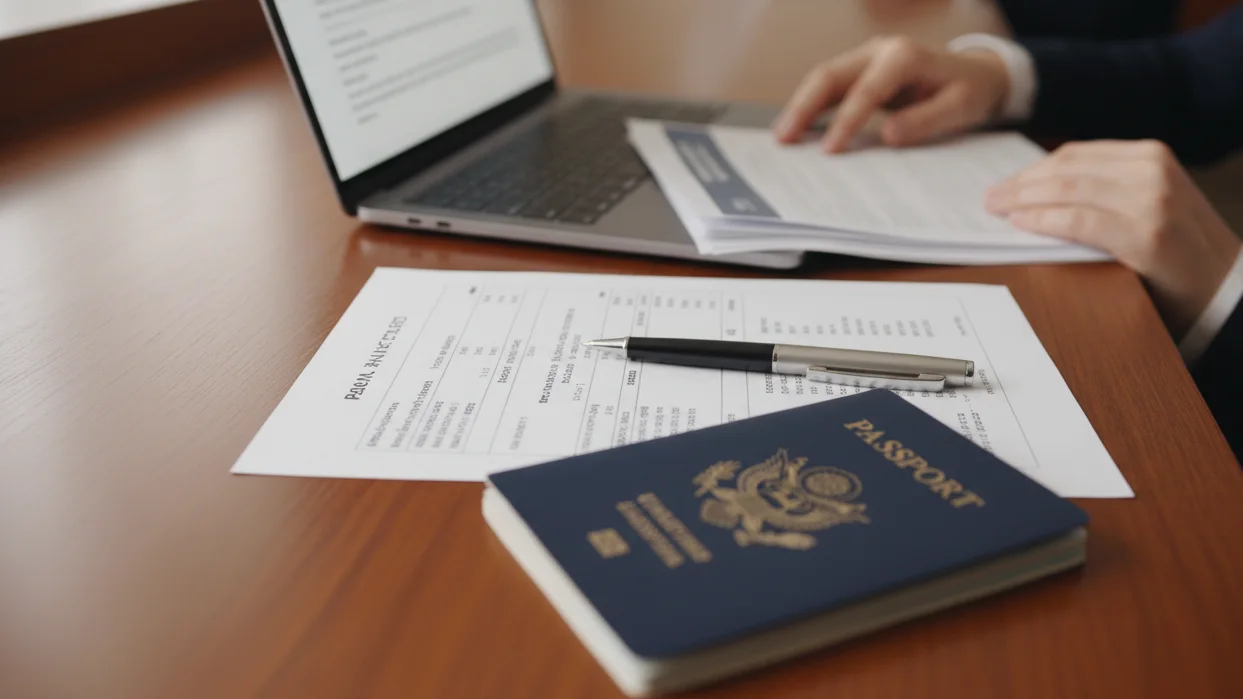
A flight reservation starts doing real work only when it sits next to your financial documents. That is the point where an embassy stops seeing a travel plan on paper and starts judging whether the trip looks financially and factually believable.
They Are Not Looking For One Exact Debit, They Are Looking For A Coherent Travel Story
A common mistake is assuming the officer will scan your bank statement, search for one airline charge, and decide the case from that alone. A visa review is usually broader than that. The real question is whether your booking fits the overall picture your file presents.
A missing airline debit does not automatically create a problem. Many applicants submit a flight reservation that has not been fully paid for. Some use a held booking. Some book through an agency. Some travel with sponsor support. Some have a corporate travel desk involved. In all of those situations, the bank statement may not show one neat transaction that matches the flight PDF.
What officers often notice instead is whether the trip looks like a plan you can realistically carry out. They ask silent questions while reading:
-
Does this applicant appear able to afford this route?
-
Does the trip length match their income pattern and account history?
-
Does the departure window fit the rest of the file?
-
Does the return timing support the stated purpose of travel?
-
Does the booking look like part of a real plan, or just a document inserted to complete the checklist?
That is why applicants sometimes worry about the wrong detail. The issue is not always, “Can the officer find my airline payment?” The more important issue is, “Does everything in my file point to the same trip?”
If your statement shows steady salary credits, reasonable disposable funds, and normal spending habits, a reservation can make sense even without a visible airline payment. If your statement shows unstable balances, sudden deposits, or very limited free funds, the same reservation can start to look performative rather than practical.
This matters even more for leisure travel. A tourist trip depends heavily on credibility. If the route, duration, and cost of the flight feel out of proportion to the money trail behind it, the booking stops being supporting evidence and starts becoming a trigger for closer reading.
The Reservation Becomes A Credibility Marker The Moment It Meets Your Financial Evidence
A flight booking tells the embassy more than your intended dates. It also hints at how you plan, how much you are willing to spend, and whether your stated purpose matches your financial reality.
Take a simple economy round-trip for a short visit. If your account history is stable and your balance supports the trip, the reservation often blends into the file as a normal part of your travel plan. It does not demand much attention. It looks proportionate.
Now compare that with a more expensive itinerary. Maybe it is a long-haul route with peak-season travel dates, multiple sectors, or a fare class that feels costly for the applicant profile. That does not mean refusal. It does mean the officer may read the bank statement more carefully to see whether the trip still makes sense.
This is where credibility starts to form. A reservation can quietly answer or raise several questions at once:
-
Trip Scale: Is the route modest, or unusually ambitious for the stated purpose?
-
Travel Timing: Does the booking date fit a planned application, or does it look rushed?
-
Budget Logic: Do the visible funds support not just the flight, but the broader travel plan?
-
Return Expectation: Does the return date line up with work, studies, family obligations, or event timing?
The booking is not judged in isolation. It becomes a signal. A short family-visit route with balanced finances sends one signal. A long, complex leisure route paired with a thin account sends another.
Officers often read patterns, not just documents. A clean PDF, correct passenger name, and readable itinerary do help. But those features only establish that the reservation is presentable. They do not establish that the trip is credible.
That is why applicants with identical-looking reservations can get very different outcomes. One file may present the flight as a sensible part of a well-supported plan. Another may present the same type of route against a weaker financial background, making the officer wonder whether the booking exists only to satisfy the document list.
Once a flight reservation reaches that stage, it stops being administrative paperwork. It becomes part of the credibility test.
What Can Be Cross-Read Across The File Even If The Embassy Never Calls The Airline
Many applicants imagine verification as a direct check against the airline or PNR. That can happen in some cases, but it is not the only way an application gets tested. Cross-reading often happens inside the file itself.
Your flight booking can be compared against several other documents without any external contact at all. That is where many inconsistencies become visible.
Officers can read your reservation against:
-
Bank Statement Balance: Does the account strength fit the cost and timing of the route?
-
Income Pattern: Do salary credits, business turnover, or regular inflows support the proposed trip?
-
Recent Deposits: Was money added suddenly right before the application?
-
Leave Approval or Employment Letter: Do your leave dates match your departure and return?
-
Purpose of Travel: Does the route fit tourism, business, family visit, conference attendance, or another declared reason?
-
Sponsorship Documents: If someone else is paying, does that explain why your own account does not show direct flight spending?
-
Previous Travel History: Does the current trip shape fit your prior travel profile, or does it feel unusually inflated?
-
Cover Letter Details: Are the dates, cities, and travel logic consistent with the booking?
This kind of reading is powerful because it does not depend on one dramatic red flag. A file can weaken through small contradictions. Your form may say a seven-day trip, but your reservation reflects a ten-day route. Your employer's letter may confirm leave until a certain date, but your return flight lands later. Your sponsor letter may say they are covering costs, but nothing else in the file explains the relationship clearly. None of those problems requires the embassy to call an airline.
Even the order in which your documents make sense can matter. If the reservation suggests urgency, but the bank statement shows no financial readiness for travel, the trip can look reactive or assembled at the last minute. If the reservation shows a calm, proportionate plan and the money trail supports it, the officer gets fewer reasons to dig further.
This is why document consistency often matters more than document quantity. One solid route that fits the file is more persuasive than a polished itinerary sitting beside financial evidence that tells a different story.
Why The Same Booking Can Look Fine In One File And Weak In Another
A flight booking does not carry the same weight in every case. The exact same itinerary can read as sensible in one application and questionable in another because the surrounding documents change its meaning.
Think about a salaried applicant with a predictable monthly income, stable balances, and approved leave dates. A standard round-trip reservation for a short trip usually fits naturally. Even if the statement does not show a direct airline charge, the financial picture supports the idea that the trip is manageable.
Now look at a self-employed applicant whose inflows are genuine but irregular. The route may still be reasonable, but the officer may need stronger confidence from the rest of the file. If account activity swings heavily, the reservation gets read against a more complex financial background. The booking itself has not changed. The context has.
A sponsored traveler creates another variation. A student or dependent family member may have limited personal funds, yet the trip can still look perfectly credible if the sponsor relationship, sponsor capacity, and payment logic are clear. In that file, the absence of a flight debit from the applicant’s own account is not strange. It is expected.
The weakness appears when the file gives no clear framework for that difference. A reservation can start to look thin when:
-
The applicant claims self-funding but shows little capacity
-
The account shows recent balance inflation with no stable income trail
-
The route looks expensive for the declared purpose
-
The return date conflicts with work or study obligations
-
The funding source is unclear or split across people without explanation
This is why copying another applicant’s “successful” booking approach can fail. Embassies do not assess a reservation as a standalone object. They assess what the reservation means inside your specific file.
That also explains why officers sometimes seem stricter with some applicants than others. They are often not being stricter about the booking itself. They are reacting to how much weight the booking must carry in a file that already has stronger or weaker supporting evidence.
A Flight Plan Can Raise Questions Even Before Anyone Checks The PNR

A flight reservation can invite scrutiny long before anyone tries to verify the booking itself. In many visa files, the first problem is not whether the PNR exists, but whether the route already looks hard to believe when placed next to your bank statement.
Expensive Routes And Thin Balances Create An Immediate Logic Problem
A flight can look too expensive for the financial profile attached to it. That does not require a luxury cabin or a dramatic itinerary. Even a standard economy route can start looking questionable if your statement shows very little breathing room.
Visa officers do not read costs in isolation. They read costs against available funds, normal account behavior, and trip purpose. A round trip that looks ordinary for one applicant can look financially stretched for another.
The tension usually starts in one of these situations:
-
Your closing balance is low compared with the likely total cost of the trip
-
Your account has enough money on paper, but only after a recent deposit
-
Your monthly income supports daily living, but not international leisure travel at the scale shown by the route
-
Your booking includes costly sectors, peak travel dates, or multiple flight legs without a clear reason
This becomes more visible in short-stay visa cases. If your application is for tourism, a family visit, or a brief business trip, the embassy expects the route to look proportionate. A six-day visit paired with a costly multi-sector itinerary can make the trip look overstated. The officer may start asking whether you chose the route because it suits your travel purpose or because it created a presentable PDF.
Even when the flight itself is not paid for yet, the route still signals the spending level. Officers understand that a reservation is not always a completed purchase. What they still notice is the kind of journey you are asking them to believe.
A file looks stronger when the route matches the applicant’s real financial range. That usually means:
-
practical departure city
-
reasonable timing
-
normal cabin class
-
no unnecessary stopovers
-
trip length that fits the visible budget
If your bank statement already looks tight, a costly-looking itinerary gives the embassy two reasons to pause at once. It raises questions about both affordability and judgment.
Sudden Money Injections Can Make A Clean Flight Reservation Look Staged
A polished flight reservation can lose value very quickly when your bank statement shows a last-minute cash pattern. Officers often pay close attention to recent deposits because those deposits affect how believable the travel plan looks.
The issue is not that money entered your account. The issue is how it entered, when it entered, and whether the rest of your file explains it.
A clean reservation can start looking staged when:
-
A large lump sum appears shortly before the visa application
-
The statement was weak for months and became strong only right before submission
-
The deposited amount seems designed to meet a rough visa threshold
-
The file does not explain the source of funds clearly
-
The trip dates were also arranged at the last minute
That combination matters because the embassy may read the booking and the deposit as part of the same effort. The question becomes whether the applicant truly prepared for the trip or temporarily assembled documents to look prepared.
This is especially risky when the booking itself looks carefully formatted and financially ambitious. A neat itinerary plus a sudden balance boost can create the impression of planning for the file rather than planning for the trip.
The problem gets sharper when the deposits do not match your normal account behavior. If you usually receive a salary, business income, or family support in a predictable way, an unusual credit near the application date stands out. It does not automatically damage the case, but it changes how the file is read.
Embassies also notice whether the recent deposit makes the route newly possible. If your statement could not support the trip until a large amount appeared days before submission, the officer may question how settled your finances really are.
That is why timing matters as much as amount. A legitimate transfer, gift, reimbursement, or maturity payment may still be fine if it fits the rest of the file. But if the route already looks costly and the balance improvement arrives abruptly, the reservation can start to feel like the visible edge of a broader credibility problem.
The Itinerary Can Look Financially Unrealistic Even If The Account Balance Is Technically Enough
Some applicants focus too heavily on the closing balance. That number matters, but it is not the only financial signal in the statement. A flight plan can still look unrealistic even when the final figure appears sufficient.
Officers do not only ask, “Is there enough money here?” They also ask, “Does this account behave like an account that can support this trip naturally?”
That difference is important.
You may show a balance that appears acceptable at the end of the statement, yet still present a weak financial picture if the rest of the account suggests strain. A few examples make this clearer:
-
Your balance drops close to zero several times during the month
-
Regular expenses leave very little disposable income
-
loan repayments or card dues consume much of your monthly inflow
-
Business receipts enter the account, but personal access to funds looks unstable
-
The visible savings do not match the scale of the route you want to fly
In that setting, the flight reservation becomes a financial signal, not just a travel one. The officer starts asking whether the trip reflects your real spending capacity or an aspirational plan that may not be grounded in your actual finances.
Trip structure makes this worse when the itinerary looks heavier than the purpose requires. A short tourist stay with a long intercontinental route, multiple airport changes, or unnecessary transit cities can feel too elaborate for the account behind it. The problem is not only cost. It is costly, combined with inconvenience, complexity, and weak justification.
Even applicants with decent balances can run into this. A statement may show money, but the account pattern may still look fragile. Officers read how funds move, not just where they end.
A financially realistic route usually has these features:
-
The departure and return points make practical sense
-
The duration fits the applicant’s income level and obligations
-
The route avoids expensive complexity without a clear purpose
-
The trip cost appears manageable after normal monthly spending
-
The statement shows enough stability that the journey does not look forced
When the itinerary fails that test, the reservation begins to look like a document chosen for appearance instead of one shaped by the applicant’s actual circumstances.
When A Reasonable Booking Still Looks Wrong Because The Applicant Chose The Wrong Travel Shape
Some flight reservations are not too expensive or poorly timed. They look wrong for a different reason. The route itself does not fit the visa purpose, the traveler profile, or the rest of the application.
This is where applicants often get caught by design choices that seem minor on a booking page but feel significant to an officer reviewing intent.
A few travel shapes attract questions quickly.
One-way reservations in the wrong context
A one-way booking may make sense for relocation, long-term study, or certain work visa situations. For short-stay tourism or family visit applications, it often creates unnecessary tension. The officer may start asking why the file does not show a clear return plan.
Open-jaw routes with no practical reason
Arriving in one city and departing from another can be perfectly normal when the trip purpose supports it. But if the itinerary shows one entry point and a distant exit point without a convincing travel explanation, the route may look artificially assembled.
Layered connections for a simple trip
A short visit with two or three transit points can appear inefficient and expensive. If the file offers no reason for that route shape, the officer may wonder whether the booking reflects real planning or availability of a convenient reservation format.
Return dates that clash with the applicant’s real obligations
A reservation may look affordable and technically valid, yet still feel wrong if the return date conflicts with work schedules, school calendars, event timing, or declared leave. This kind of mismatch often weakens the trip before any verification takes place.
Multi-country air patterns for a single-destination purpose
If your visa purpose is tied to one main country, but the flight structure suggests a broader regional plan with no clear explanation, the route may look unfocused. That does not always lead to refusal, but it can make your stated purpose feel less precise.
What makes these problems tricky is that the booking may still look reasonable at first glance. The cities are real. The dates are valid. The sectors are bookable. Yet the shape of the journey can still feel off.
That matters because a visa officer often forms an impression before any deeper check happens. If the route feels mismatched, the booking begins the review from a weaker position. It forces the rest of the file to work harder.
A stronger flight plan is not always the cheapest one. It is the one that fits your visa type, your money trail, your purpose, and your real-world obligations without creating avoidable questions. Once that route is in place, the next issue becomes just as important: whether the dates on the booking, the statement period, and the appointment timeline all make sense together.
Dates Tell A Bigger Story Than Most Applicants Realize

Dates often decide how stable your visa file feels. A flight reservation can look perfectly acceptable on its own, yet still weaken the application when its timing does not sit well with your bank statement, payroll cycle, or appointment schedule.
The Booking Date, Statement Period, And Appointment Date Need To Make Sense Together
A visa officer does not read your documents in separate compartments. The reservation date, the bank statement period, and the biometric or submission date often get read as one timeline.
That timeline matters because it shows whether your trip plan was developed in a normal way or appeared suddenly without financial preparation behind it.
A common mismatch looks like this:
-
Your bank statement ends on the 30th
-
Your flight reservation was issued on the 4th
-
Your visa appointment is on the 6th
Nothing there is automatically wrong. But the officer now sees a fresh booking against older financial evidence. If the statement already looked tight, the file can start to feel incomplete because the most recent trip decision falls outside the financial period you disclosed.
The same issue appears in the opposite direction. Some applicants make a reservation very early, then apply much later. By the time the file reaches the embassy, the route may still show the same cities, but the timing no longer feels current. An old reservation can make the planning look stale, especially if the intended travel date is now close.
The strongest timing pattern is usually a simple one. Your reservation should feel close enough to the application to look current, but not so rushed that it appears reactive. Your financial evidence should cover the period in which the trip became a real plan, not just the months before it existed on paper.
Officers also notice whether your reservation timing matches the way real people usually prepare for that kind of trip. A short business visit arranged within a narrow timeframe can look normal. A leisure application built around brand-new booking and aging statements can attract more questions.
A cleaner file usually avoids these date tensions:
-
a new reservation paired with statements that do not show the recent financial picture
-
An old reservation submitted after the trip window has materially shifted
-
An appointment was booked so close to travel that the entire file feels compressed
-
a flight plan that appears before the applicant had visible funds to support it
-
multiple dates across the form, booking, and supporting documents that feel assembled rather than planned
What matters is not perfect spacing. What matters is believable sequencing. Your trip idea, your visible finances, and your application timing should look like parts of one plan.
A Reservation That Expires, Changes, Or Gets Reissued Can Quietly Weaken The File
Flight reservations are time-sensitive documents. That makes date consistency harder than many applicants expect.
A route that looked fine when first generated can become a weaker piece of evidence if it expires, gets reissued, or changes shape before the embassy reviews the file. The problem is often not dramatic. It is quiet. A detail shifts, the applicant forgets to update another document, and the file starts telling two slightly different stories.
This happens in several ways.
A held reservation may lapse before submission. The applicant replaces it with a new one, but the updated dates do not match the cover letter.
A travel agent reissues the booking because the first one timed out. The new PDF shows the same route, but the booking date is now much later. That later date can make the travel plan look rushed compared with the rest of the file.
A departure moves by a few days. The visa form still shows the old date. The leave letter reflects another version. The applicant assumes the difference is minor. For the officer, it becomes a sign that the trip plan is unstable.
Date changes become even more noticeable when the rest of the application depends on timing. A conference date, holiday period, family event, or approved leave window can all make a small booking adjustment look more significant.
There is also a credibility issue with repeated versions. If the file contains traces of more than one itinerary, the officer may stop treating the reservation as a settled travel plan. It starts to look provisional in the wrong way.
That does not mean a changed reservation always harms the case. Travel dates do move. Reservations do get refreshed. The real risk appears when the updated booking no longer aligns with the other documents that were supposed to support it.
Before you submit, check whether the live timing of the reservation still matches:
-
your intended arrival and departure dates
-
Your leave approval or work schedule
-
any invitation, event, or host timeline
-
The dates named in your cover letter
-
The travel period entered in the application form
-
any insurance or supporting travel document tied to the same trip
What weakens a file is often not one expired reservation. It is a chain reaction. One booking changes, but the rest of the file remains frozen in the earlier version.
That kind of drift can make a real trip look poorly managed. Timing errors also accumulate faster than most applicants realize because embassy review is rarely based on what your file looked like when you first assembled it. It is based on what all the documents say together at the moment they are actually read.
Salary Cycle Timing Often Explains More Than Applicants Think
For salaried applicants, the bank statement is not just proof of funds. It is also proof of rhythm.
A salary account usually shows predictable movement. Income arrives on schedule. Expenses follow a familiar pattern. That rhythm helps an officer judge whether the trip timing makes sense.
The flight reservation can look stronger or weaker depending on where it lands inside that salary cycle.
If your statement ends just before salary credit, your visible balance may look lower than your true monthly position. If your reservation is dated right in that low-balance window, the file may look weaker than it really is. The route itself may be fine, but the timing makes the finances appear thinner.
The reverse can also happen. A file can look artificially strong if a fresh salary has just landed, but the rest of the account history shows that funds usually get depleted quickly. In that case, the officer may still question whether the trip is comfortably affordable.
This is why payroll timing matters more than many applicants expect. The embassy is not only looking for a positive closing balance. It is often trying to understand the applicant’s normal cash flow at the moment the trip is being proposed.
A reservation becomes easier to believe when the salary pattern supports it in a natural way. That usually means:
-
Recent salary credits appear consistently across statements
-
The trip is planned after a routine income pattern is already visible
-
The balance does not depend on one unusually timed credit
-
The return date matches a realistic leave from work
-
The account still looks healthy after ordinary living expenses
A salary cycle can also affect how urgency is perceived. If you book a flight a few days before payday and apply immediately, the file may look financially compressed even if your next salary is guaranteed. The embassy only sees what is documented, not what is expected.
That creates an important practical rule. Try to avoid filing at a point where your statement makes your finances look temporarily weaker than they really are, especially if the flight route itself is not minimal.
Salary timing matters even more when the booking is for a short leisure trip. In that context, the officer expects the travel plan to be easy to support from normal monthly finances. If the account looks stretched at the exact moment the booking appears, the route can feel less credible than it would a week later with a more complete statement cycle.
Who Paid For The Trip Matters More Than Many Applicants Assume
A flight reservation not only shows where you plan to go. It also raises a practical question that embassies often test quietly: who is actually carrying the cost behind that trip, and does the file explain that clearly enough?
Self-Funded Trips Are Simpler Only When The Account Activity Supports The Booking
A self-funded trip sounds straightforward. You book the flight, you show your bank statement, and the file appears clean. In practice, it only stays simple when your account activity supports that version of events without strain.
The embassy does not need to see a perfect airline debit to accept that you are paying for your own travel. But your statement still needs to look like the kind of account that could support the route you reserved.
That usually means more than just having a positive balance. It means your money flow should make self-funding believable.
A self-funded booking reads more naturally when:
-
Your income arrives in a stable pattern
-
Your available funds are not built around a sudden transfer
-
The route matches your financial range
-
The trip length fits your normal cash flow
-
The rest of the application shows you control the funds you claim to use
The weakness starts when the reservation and the statement point in different directions. You may claim to be funding the trip yourself, yet your account shows only modest balances, a thin monthly surplus, or heavy obligations that leave little room for travel spending.
That disconnect matters because self-funding is a strong claim. It tells the embassy you have both the means and the control to carry out the trip as described. If your bank statement does not support both of those things, the flight reservation starts to look detached from your real position.
Some applicants also create confusion by assuming the booking method explains the gap automatically. A held reservation, a later-payment structure, or an agency-issued itinerary can all be valid. But if you are presenting yourself as the sole payer, your statement still needs to make that role believable without forcing the officer to guess.
A clean self-funded file usually avoids these mixed signals:
-
a costly route paired with very low post-expense balances
-
a reservation issued before the applicant had visible financial strength
-
Multiple unexplained deposits near the travel planning period
-
account activity that suggests the trip would strain normal monthly finances
-
supporting documents that quietly imply someone else may be helping
When your file says you are paying, the officer expects the statement to behave like a statement from someone who truly is.
Sponsor-Paid Travel Needs A Payment Story, Not Just A Sponsorship Letter
A sponsorship letter can explain why your own account does not show direct flight spending. But the letter alone is rarely enough if the rest of the file does not support that arrangement clearly.
The embassy needs a payment story that feels complete.
That story usually has four parts:
-
Who the sponsor is
-
Why is that person paying for the trip
-
Whether they have the financial capacity to do it
-
Whether the relationship makes the support credible
A reservation can look perfectly acceptable under sponsorship even when your own statement is limited. That is normal in many family-visit, dependent, student, or younger traveler cases. The problem appears when the file uses sponsorship to explain the funding, but does not properly anchor it.
For example, a parent-sponsored leisure trip may be entirely realistic. But if the file includes only a short sponsor note and nothing else that ties the sponsor to the applicant and the travel plan, the officer may not read the reservation as securely funded. The route may still feel financially unplaced.
A stronger sponsor-paid flight file usually shows:
-
a clear sponsor identity
-
relationship proof where needed
-
sponsor financial evidence that matches the cost level of the route
-
a reason the sponsor would naturally cover the trip
-
travel dates and purpose that align with the sponsorship claim
The booking matters here because it becomes the visible cost signal. Even when the applicant is not paying personally, the officer still compares the scale of the route with the capacity of the person who is said to be paying.
This is where vague sponsorship creates trouble. A file that says “my relative is supporting my travel” without making that support concrete leaves too much unresolved. The embassy may start to question whether the sponsor is truly carrying the trip or whether the sponsorship line was added only because the applicant’s own account was not strong enough.
A sponsor-paid route becomes easier to accept when the booking, the sponsor profile, and the travel purpose all reinforce one another. A family visit funded by a close relative can look coherent. A short academic or event-based trip funded by parents can also look coherent. What weakens the case is not sponsorship itself. It is sponsorship that does not clearly explain the flight plan in front of the officer.
Employer-Booked Or Reimbursed Flights Can Look Odd Unless The Business Purpose Is Tight
Employer-funded travel creates a different kind of file. The applicant may have a healthy bank statement or a modest one, but the key issue becomes whether the business purpose fully explains why the flight appears disconnected from personal finances.
This matters because company-paid travel often leaves a different paper trail. The ticket may be issued through a travel desk. A corporate card may be used. Reimbursement may come after the trip. The applicant’s own statement may show none of it.
That can be perfectly normal. But the route only looks normal if the business reason is precise enough.
An employer-booked flight usually looks stronger when the file shows:
-
a clear business event, meeting, training, or conference
-
dates that match the purpose closely
-
Employer confirmation of travel responsibility
-
leave or work authorization that fits the route
-
a return pattern that matches the limited scope of the visit
The risk starts when the booking looks more personal than professional. A route may be called business travel, yet the timing suggests leisure. The return may be delayed without explanation. The city sequence may extend beyond the stated event. In those cases, the officer may stop reading the flight as employer-driven and begin looking for personal funding logic that the file does not provide.
Reimbursement cases create another problem. If you paid first and expect the company to reimburse later, the statement may show a charge that looks large relative to your normal finances. That is not fatal, but it can make the route look financially awkward unless the employer's evidence is strong. The embassy needs to understand whether the trip is truly business-funded or merely labeled that way.
Mixed-purpose travel is especially sensitive. If the company covers the main work segment, but you add personal days before or after, the payment structure needs to stay readable. A flight plan that blends work and leisure without showing which part the employer supports can make the whole booking look under-explained.
Employer-funded travel works best when the booking feels tightly tied to the business reason. Once that link weakens, the officer starts looking back at the personal bank statement for answers it may not be designed to provide.
Third-Party Payments, Shared Cards, And Mixed Funding Sources Are Where Confusion Starts
Some of the most avoidable problems come from trips that are genuinely fundable but poorly explained because too many people, accounts, or payment methods are involved.
A third-party payment is not suspicious by default. Families share costs. Couples use one card. Parents help with bookings. Friends may place a hold. A travel coordinator may issue the itinerary. All of that happens in real travel planning.
The trouble begins when the flight reservation clearly exists, but the file gives no stable explanation for who initiated it, who is paying, and who controls the travel plan.
These are common confusion points:
-
Your parents’ card was used, but you presented the trip as self-funded
-
One spouse pays for both tickets, but each applicant files separately, with no note on shared payment
-
A friend helped place the booking, but there is no reason that person appears anywhere in the file
-
A travel arranger issued the reservation, but the applicant’s own money trail still looks too weak for the route
-
The outbound sector seems employer-linked, while the return looks personal, but no document explains the split
The officer does not need every transaction detail. What they need is enough clarity that the booking does not feel financially ownerless.
Control matters here as much as payment. A route looks more credible when the file shows that the applicant understands and owns the trip, even if someone else helped fund or arrange it. If the booking appears to float between different people without a clear structure, the embassy may question whether the applicant is presenting a stable travel plan at all.
Shared-card situations need special care. A couple may sensibly use one credit card for both tickets, but if one partner’s statement carries the visible payment and the other partner’s file shows no explanation, the second file can look oddly detached from the reservation. The same issue appears with parent-funded travel when the parent is not clearly positioned as a sponsor.
Mixed funding also becomes harder when the route itself has more than one purpose. If one part of the trip is paid by the family, another by the employer, and daily travel is self-funded, the file needs to show those roles cleanly. Otherwise, the bank statement and the booking stop reinforcing each other and start creating ambiguity.
That ambiguity matters because payment logic is not just about money. It also speaks to intent, planning, and accountability. Once a route involves real money from more than one source, the next question is not only who paid, but whether the type of reservation you chose makes that whole arrangement look stable or overly complicated.
Some Reservations Attract More Scrutiny Even When They Are Technically “Real”
A reservation can be genuine, verifiable, and still work against you. Embassies do not reward a booking just because it exists. They look at what that booking says about your judgment, travel purpose, and financial behavior.
Paying Too Early Can Sometimes Hurt More Than It Helps
Many applicants assume a fully paid flight always looks stronger than a reservation. It can look strong, but only when the rest of the file supports that decision.
A paid ticket sends a message. It tells the embassy you were confident enough to commit money before the visa outcome. In some files, it looks organized and normal. In others, it looks financially careless or strategically unnecessary.
The risk appears when the purchase seems too heavy for the applicant’s profile. If your bank statement shows limited flexibility, a fully paid international flight can raise a quiet question: why did you lock in this cost before visa approval when your finances already look tight?
That question matters because embassies not only assess whether you can travel. They also assess whether your planning looks sensible. An early paid booking can make the file feel overcommitted if:
-
The trip is discretionary rather than urgent
-
The ticket price appears large compared with your account balance
-
The fare is non-refundable or costly to change
-
The route still looks tentative in the rest of the application
-
The payment leaves your account visibly thinner afterward
This is especially relevant for short-stay tourism and family-visit applications. In those cases, officers often expect proportionate planning. A heavily committed booking can feel misaligned if the applicant is still waiting for permission to travel.
A paid ticket also does not solve other weaknesses. If the purpose of travel is vague, the return logic is weak, or the financial story remains uneven, the purchase itself does not cure those issues. It simply proves that money was spent.
There is another problem applicants overlook. A paid booking can accidentally shift the tone of the file from careful planning to emotional commitment. If the embassy senses that the applicant has already tied up money in a trip that is not yet approved, the choice can look imprudent rather than reassuring.
That does not mean paying early is wrong. It may be completely reasonable when travel dates are fixed, fares are stable, or business timing is strict. But a paid ticket only helps when it feels proportionate to the applicant’s means and the purpose behind the trip.
A reservation often gives you more flexibility. A paid ticket gives you more financial exposure. The stronger option depends on whether the booking supports your visa case without creating a second question about judgment.
A Perfect-Looking PDF Cannot Rescue A Route That Makes Little Practical Sense
Some flight documents look excellent on paper. The formatting is clean. The route is easy to read. The dates line up neatly. The booking reference is visible. Yet the itinerary still weakens the file because the route itself feels unnatural for the trip being proposed.
Embassies notice route logic quickly. A polished PDF does not hide an itinerary that feels inefficient, inflated, or disconnected from the stated purpose.
The issue usually appears in the structure of the journey.
A route may look questionable when:
-
The transit pattern is unnecessarily long for a simple, short visit
-
The traveler changes airports or countries without an obvious reason
-
The entry and exit points do not match the destination story
-
The return sector looks oddly arranged compared with the visit purpose
-
The itinerary includes premium or high-cost choices that do not fit the applicant profile
Officers do not need to be route experts to sense when something is off. If a five-day tourist visit includes awkward stops, strange layovers, or a path that makes the trip harder than it needs to be, the booking stops looking like a travel plan and starts looking like a constructed document.
This can happen even with real flights and real carriers. A technically valid route can still look implausible in context.
For example, if you say you are visiting one city for a short family event, but your booking enters through one country, leaves through another, and adds complex transits, the embassy may wonder why the travel shape is so far from the stated purpose. If your purpose is simple, the route usually needs to feel simple too.
The same problem appears when applicants choose a route only because it was easy to generate or easy to obtain in a reservation form. The embassy does not know why you picked it, but it does see whether the route fits the rest of your file.
A practical route usually has a few qualities:
-
It gets you to the relevant destination without unnecessary complexity
-
It reflects the type of traveler you appear to be on paper
-
It matches the trip length and reason for travel
-
It does not create side questions that the rest of the file never answers
A visually clean reservation helps readability. It does not replace logic. If the flight path feels wrong for your trip, the document’s professional appearance will not stop the officer from noticing that mismatch.
Repeated Date Changes Can Create A Quiet Pattern Of Instability
One date change rarely causes trouble on its own. Travel planning changes. Appointment slots shift. Work calendars move. That happens.
The problem begins when the file starts showing a pattern of movement rather than a settled travel plan.
Repeated changes can make the reservation look unstable in a way that affects how the embassy reads the entire application. The officer may stop focusing on whether the booking is valid and start focusing on whether the applicant actually knows when and how they intend to travel.
This instability can build in small ways:
-
One reservation version shows an early departure
-
A later PDF shows the same route one week later
-
The visa form still uses the first dates
-
The leave letter reflects another window
-
The cover letter uses general wording that no longer fits any version exactly
None of those details looks dramatic alone. Together, they suggest that the trip is not fixed enough to inspire confidence.
Date movement becomes more noticeable when timing is central to the case. That includes:
-
event-based travel
-
short annual leave windows
-
school break trips
-
business meetings with fixed dates
-
family-visit travel tied to a ceremony or important occasion
In those cases, repeated changes do more than create inconsistency. They make the purpose itself look less settled.
Frequent rebooking also creates a practical credibility issue. If your route has been edited several times, the officer may wonder whether you are reacting to documents rather than planning the trip in a normal sequence. The booking starts to feel shaped by the visa file instead of the journey you actually expect to take.
That impression can become stronger when the changes affect more than just days. If the departure city, transit structure, or return point also shifts, the reservation no longer looks like one trip being adjusted. It looks like several versions of a trip are competing for space in the same application.
A stable file does not require perfect immobility. It requires one usable version of the plan that all the documents support at the moment of submission.
That means checking for consistency across:
-
reservation date
-
travel window
-
leave approval
-
invitation or event timing
-
insurance dates, if included
-
application form entries
-
any cover letter explanation
The quieter the route behaves, the easier it is for the embassy to treat it as part of a credible plan. The more often it changes, the more the officer starts reading instability into the file.
When A Verifiable Reservation Is More Useful Than An Overcommitted Purchase
Not every visa file benefits from a paid ticket. In many cases, what helps more is a reservation that is readable, credible, and easy to align with the rest of the application.
That is where a verifiable reservation can be more useful than an early purchase that places too much pressure on your finances or your dates.
A reservation serves the file well when it does four things cleanly:
-
shows the intended route without unnecessary complexity
-
matches the dates used across the application
-
fits the traveler’s financial profile
-
can be checked or read without confusion
That combination matters because the embassy is often testing consistency, not just commitment. A route that is verifiable and proportionate usually does more work than a fully paid ticket that looks financially aggressive or poorly timed.
This is also where applicants need flexibility. If your appointment moves, your leave dates change, or your trip window shifts slightly, a reservation can often be updated without forcing the entire file into an expensive correction cycle.
A useful reservation is not one that looks dramatic. It is one that reduces friction between documents.
That is why some applicants prefer a service that keeps the reservation practical rather than overcommitted. If you need an instantly verifiable flight reservation with a PNR and PDF, unlimited date changes, transparent pricing at $15, and payment by credit card, BookForVisa.com is one option that can fit a visa-use case without pushing you into a full early purchase.
The key advantage is not promotion. It is control.
A verifiable reservation can be especially helpful when:
-
Your travel dates are still tied to visa timing
-
You want the route to stay aligned with your leave or event window
-
Your bank statement supports the trip, but not an unnecessary early outflow
-
Your file benefits more from clarity than from financial commitment
-
You need a route that can stay consistent across the rest of the documents
Embassies often read the booking as part of your planning judgment. A reservation that fits your case and stays aligned with your paperwork can look more disciplined than a paid ticket chosen mainly to appear stronger.
Embassies Are Most Likely To Compare More Closely When The File Already Needs Extra Confidence
Not every visa file gets read with the same level of comfort. A flight reservation and bank statement usually draw closer comparison when the rest of the application gives the embassy fewer easy reasons to trust the trip at first glance.
First-Time Travelers And Thin Travel Histories Get Read More Holistically
A first-time traveler can absolutely get approved with a solid file. The issue is not that a lack of travel history is negative on its own. The issue is that it removes one of the easiest credibility shortcuts an officer might otherwise rely on.
When you have prior visas, past exits and returns, or a pattern of compliant travel, the current reservation sits inside a broader track record. When you do not have that history, the embassy often has to build confidence from the present file alone.
That changes how your flight booking gets read.
For a first-time traveler, the reservation can carry more interpretive weight because it helps the officer judge how realistic the trip looks in practice. The route, trip length, departure timing, and return date all start doing more work.
The same applies to a traveler with only limited prior movement, such as one short regional trip or one older visa with little relevance to the current destination. In those cases, the file may still feel thin enough that the officer cross-checks the reservation more carefully against the bank statement and purpose of travel.
A first-time or thin-history file looks stronger when the booking shows restraint and clarity:
-
direct or practical routing
-
trip length that matches visible finances
-
dates that fit employment or study obligations
-
a return pattern that feels normal for the visa type
-
no unnecessary route complexity that makes the journey look inflated
The risk grows when the first major international trip looks financially ambitious or structurally overbuilt. A reservation with extra sectors, costly timings, or an oddly shaped route can make the officer question whether the applicant is presenting a real plan or trying to manufacture a stronger-looking file.
This is especially true when the statement does not offer much comfort on its own. If the account is stable but modest, the route needs to feel proportionate. If the account is irregular, the route needs to feel even more grounded.
A first-time traveler usually benefits from making the flight reservation easy to believe without explanation. The booking should not force the embassy to stretch for logic. It should feel like the route a genuine traveler with that exact profile would choose.
That is what holistic reading often means in practice. The embassy is not only comparing documents. It is asking whether all the documents together create the kind of person who would realistically take this trip and return as planned.
Short-Notice Travel Often Makes Financial And Intent Checks Harsher
A short-notice trip changes the mood of a visa file. Even if the purpose is real, compressed timing can make the reservation and bank statement attract more scrutiny because the embassy sees less planning runway.
The closer your intended departure is to the application date, the more every document has to look settled and credible right away. There is less room for the officer to interpret gaps kindly.
That pressure usually falls on three areas at once:
-
financial readiness
-
trip purpose
-
document timing
A flight reservation booked close to the application date does not look suspicious by default. Some travel is genuinely urgent. Business meetings move quickly. Family matters arise suddenly. Conference schedules can tighten. But short-notice travel makes the officer ask a sharper question: was this trip prepared responsibly, or was the file assembled in a hurry?
That question becomes more pointed when the bank statement also looks recently strengthened. A late booking paired with a sudden balance improvement can make the file feel reactive. The trip may still be real, but the overall picture looks less settled.
Intent checks also become harsher when the travel window is narrow. If you claim a short tourism or family visit trip, yet the reservation appears only days before the application, and the return date is very close, the officer may wonder whether the travel plan was truly formed in advance or built around the visa process itself.
Short-notice travel often feels stronger when the purpose naturally supports urgency:
-
a defined business event
-
a family situation with clear timing
-
an invitation with fixed dates
-
a meeting or conference that explains the compressed planning window
Leisure travel has a harder time with this. A rushed tourist route can look less convincing because tourism usually implies choice and planning flexibility. If the booking appears suddenly and the finances behind it also look newly arranged, the route may start carrying more doubt than support.
Short-notice applications also suffer when the reservation creates avoidable tension with the applicant’s real-life calendar. If your leave approval, work duties, school obligations, or sponsor arrangements all seem to have been put together at the last minute, the file can feel administratively fragile.
What makes short-notice cases difficult is not speed alone. It is the way speed magnifies every inconsistency. The shorter the timeline, the less tolerance there is for a booking that does not sit neatly with the money trail and the stated reason for travel.
Self-Employed, Cash-Heavy, Or Irregular-Income Applicants Face A Different Comparison Problem
Some applicants do have the money to travel, but do not show it in the kind of clean monthly pattern that embassies find easy to read. That is where the comparison between flight booking and bank statement becomes more nuanced.
A salaried account often tells a simple story. A self-employed or cash-heavy account rarely does.
That does not mean self-employed applicants are weaker. It means the reservation may face a different kind of test. The officer may be less focused on whether one payment line matches the flight and more focused on whether the statement really reflects the applicant’s usable financial position.
This issue appears in several profiles:
-
business owners who move funds between accounts
-
Freelancers with uneven payment dates
-
consultants paid in project bursts
-
traders with turnover that looks large but unstable
-
applicants who earn partly in cash and deposit irregularly
In these files, the flight booking can become a pressure point because it is one of the clearest visible cost signals in the application. If the statement looks noisy, the route needs to look grounded.
A different comparison problem appears here. The embassy may not doubt that income exists. There may be doubt whether the personal bank statement, as submitted, proves enough control and stability to support the exact trip being proposed.
That is why certain route choices become riskier for irregular-income applicants:
-
long or expensive itineraries
-
multi-city bookings without a strong business or family reason
-
travel windows that suggest the applicant can step away freely when the account behavior says otherwise
-
flight timing that follows large recent deposits too closely
-
routes that imply comfort and flexibility, while the bank record looks volatile
Cash-heavy applicants face an additional challenge. A business may be genuine and profitable, but if much of the activity happens outside the visible banking pattern, the statement may underrepresent the applicant’s true capacity. The embassy can only judge what the file makes legible.
In that setting, the reservation should reduce uncertainty, not add to it. A practical route, controlled trip length, and believable travel timing help the officer accept that the trip fits a real financial life even if the account is less tidy than a salary profile.
The problem comes when the applicant tries to compensate for irregular finances with an overbuilt reservation. That usually backfires. A complex or costly route does not make the file look stronger. It makes the statement work harder to justify something that already looks difficult to map.
For self-employed and irregular-income cases, credibility often depends on whether the booking respects what the statement can realistically support on paper, not just in the applicant’s real-world income picture.
Before You Submit, Review The File Like A Skeptical Visa Officer Would
Before you upload anything, read the file the way a consular officer would. Your goal is not to prove that each document exists. Your goal is to show that your flight itinerary, money trail, and travel intent all move on the same timeline.
Run A Four-Point Consistency Check Before Uploading Anything
A strong file feels easy to follow. The dates line up. The funding story is clear. The route fits the reason for travel. That matters even more for tourist visas, short-term visas, and a standard visit visa, where most embassies expect the paperwork to read like one settled plan.
Start with a quick self-check.
-
Does your route fit the purpose of travel?
-
Do your flight details match the dates in your form, cover letter, and supporting documents?
-
Does your bank balance support the trip without looking stretched?
-
Do your hotel bookings, hotel reservations, and travel insurance sit on the same timeline as the flights?
This is where officers notice small breaks in logic. A clean booking can still weaken the file if the reservation dates clash with leave approval, invitation letters, or onward travel plans. A route with internal flights also needs to stay realistic. If the main international booking looks modest but the rest of the plan quietly adds expensive sectors, the full trip can start to look heavier than the financial evidence suggests.
Your file also needs one consistent funding picture. If you rely on multiple accounts, review them together before submission. A healthy current balance in one account does not automatically solve a weak pattern in another if the application never explains how those funds are actually available for travel.
For salaried applicants, salary slips can reinforce timing and financial stability. For self-employed applicants, tax returns can help the embassy understand how the trip fits real income patterns. In certain visa categories, that added clarity matters because the booking is read against the broader financial structure, not just one closing number.
Do not overcomplicate this review. You do not need a formal decision tree. You need a file that reads cleanly from purpose to route to money.
If The Flight Debit Is Missing, Decide Whether It Needs Explaining Or Can Be Left Alone
A missing debit is not automatically a problem. Embassies verify credibility in context, not by forcing every applicant to show one exact airline charge. Still, you should decide whether the absence of a payment line creates a gap that needs a practical fix.
In many cases, it does not.
A missing debit often looks normal when:
-
The booking is a dummy flight ticket or a dummy ticket used for embassy submission
-
The route was arranged through a reservation service and provided as verifiable proof
-
The trip is employer-funded or sponsor-funded
-
The account otherwise shows enough financial stability for the trip
-
The rest of the file supports the route clearly
The issue becomes more sensitive when the booking looks expensive, the statement looks thin, or the route appears newly assembled. If your file already sits on tight margins, a missing debit can attract extra scrutiny because the officer may wonder whether the travel plan exists only on paper.
This is also where over-optimization can hurt. Some applicants try to explain every line, every gap, and every booking step. That usually makes the file feel defensive. A short note is enough if the payment logic truly needs context.
You may want to explain the gap when:
-
The payment came from a spouse, parent, or employer
-
The route changed after the original reservation
-
The trip includes mixed business and personal travel
-
The booking format does not show the payment structure clearly
-
The file is a Schengen application or Schengen file, where document alignment is being checked carefully
The best explanation is direct. It should show why the debit is absent without turning the cover letter into an argument. Embassy guidelines and official guidelines rarely require a long financial essay. They reward consistency.
Use Supporting Documents To Clarify The Financial Story, Not To Flood The File
Supporting documents should solve specific questions created by the booking. They should not exist just because you feel safer attaching more pages.
That matters because a flight document does not stand alone. The route may also be read against hotel bookings, hotel reservations, travel insurance, salary slips, tax returns, and invitation letters. If those papers support the same routing and dates, the file feels deliberate. If they drift apart, the officer starts reading friction into the case.
Use each supporting document for a clear reason.
-
Use invitation letters when the travel purpose depends on a host, business contact, or family visit.
-
Use salary slips when the reservation needs a stronger monthly income context.
-
Use tax returns when self-employment or irregular income makes the statement harder to read.
-
Use travel insurance when the travel window needs extra date alignment.
-
Use hotel reservations only when they reinforce the same routing and stay period shown by the flight plan.
This is especially important for a Schengen application involving Schengen countries, where officers often read the full trip structure closely. If the flight arrives in one country, the stay documents point to another, and the return leaves from a third point with no clear logic, the file becomes harder to trust even if every document is technically valid.
A good supporting set should answer these questions fast:
-
Why this route?
-
Why these dates?
-
Who is paying?
-
How does the trip fit work with work, family, or event timing?
-
Does the booking reflect real travel intent?
Do not add documents that repeat the same point in five different ways. A tight file is often stronger than a heavy one. Helping travelers means telling them that restraint is part of strategy.
Know When To Replace The Reservation Instead Of Trying To Defend A Weak One
Sometimes the right move is not more explanation. It is a new booking that fits the file better.
That is true whether you are using a reservation service, a dummy ticket, or a fully paid booking. If the route has become awkward, your best option is often replacement, not defense.
You should consider replacing the reservation when:
-
The dates no longer match the rest of the file
-
The route became too expensive for the available finances
-
The trip shape changed after the original booking
-
The return no longer fits leave, event timing, or sponsorship logic
-
The flight details no longer match your stated purpose
-
The booking now looks more complex than the trip needs
A weaker booking is not saved just because it can be verified instantly. Verifiable proof helps, but it does not cure a route that no longer fits the case. The same goes for a non-refundable ticket. Paying early does not turn a poor route into a better one if it still creates financial or timing tension.
That is where calm judgment matters. A simple, credible route usually works harder for you than a dramatic one. Even a low-cost airline sector can be perfectly fine if the journey fits the purpose and the rest of the flight supports it. A route becomes risky when it looks chosen for appearance instead of practicality.
If you used a reservation provider, focus on features that help the file stay stable. Instant pdf delivery is useful only if the document is accurate. A dedicated support team is useful only if the dates, name, and route can be corrected before submission. The real value is not speed alone. It is whether the reservation remains consistent with the rest of the application.
A stronger replacement often means:
-
fewer unnecessary stops
-
clearer return logic
-
a more realistic cost level
-
cleaner alignment with work, event, or family dates
-
less pressure on the bank statement to justify the route
This matters even more when embassies verify a file holistically. The officer is not rewarding document volume. They are judging whether the booking belongs naturally inside the application you submitted.
If your route still forces too many explanations, change it. A stable flight plan should not compete with your finances, your schedule, or your reason for travel. Once that alignment is in place, the conclusion becomes much simpler for any applicant submitting to most embassies.
Make Your Flight Booking And Bank Statement Tell The Same Story
Your flight reservation does not need to prove everything on its own. What matters is whether your route, dates, funding, and bank activity support the same believable trip when an embassy reviews the file. If the booking looks practical and the money trail makes sense, you remove a major source of doubt before the application is even assessed in depth.
That gives you a clear next step. Review your reservation, bank statement, and supporting documents together before you submit, and fix anything that breaks the logic of the trip.
Make the booking and bank statement support the same story. Use a reservation that fits your route, stay length, sponsor explanation and available funds before you upload the file.
Start Your Booking for VisaFAQ
Do embassies compare flight bookings with bank statements?
They may compare them indirectly by checking whether the trip cost, route, stay length, sponsor support and available funds make sense together. They do not always need one exact airline debit.
Is it a problem if my bank statement does not show a flight payment?
Not always. Many visa files use reservations instead of paid tickets. It becomes a problem when the checklist requires payment proof or the funding story is unclear.
Can a flight reservation look weak even with enough bank balance?
Yes. A high balance can still look weak if the money arrived suddenly, the account history is thin, or the route and stay length look expensive for the applicant’s situation.
Should my sponsor pay for the flight booking?
Only if the sponsor story is clear. The file should explain what support is provided, who pays, and whether the sponsor has enough funds for the promised support.
Do visa officers check the PNR and the bank statement together?
They may check a PNR if needed, but the bigger issue is usually consistency. The reservation, bank statement, leave proof, accommodation and cover letter should all support one trip.
What if my employer booked the flight?
Employer-booked travel can make sense for business trips if the invitation, employer letter and reimbursement/payment story are clear. Without that context, it can look disconnected.
Are sudden deposits before a visa application risky?
They can be. Sudden deposits are easier to understand when the origin is documented, such as salary, sale proceeds, sponsor transfer or business income.
Should I buy a paid ticket to prove funds?
Usually not unless the checklist specifically requires it. A paid ticket can create financial risk if the visa is delayed or refused, and official guidance often focuses on funds and eligibility, not forcing early purchase.
When should I replace a weak reservation?
Replace it when the route, cost, dates or stay length no longer fits your financial evidence. Keep the update clean and make sure related documents change together.
Does a consistent booking and bank statement guarantee approval?
No. It only reduces avoidable inconsistency. Approval still depends on the full visa category, eligibility, documents, purpose, funds, ties and the officer’s assessment.
Friendly reminder: BookForVisa provides travel-proof documents for planning and visa-application support. Requirements vary by destination, consulate, visa category and applicant situation. A flight reservation can support a file, but it does not guarantee approval, boarding or entry.