Do Embassies Prefer Round-Trip Over One-Way Booking?

Round-Trip vs One-Way Flight Reservation: Which Looks Stronger for a Visa Application?
A one-way booking can make an otherwise solid visa file feel unfinished. A round-trip can do the opposite, but only when the dates, purpose, and return logic actually fit your case. That is why embassies do not simply reward whichever option looks safer at first glance.
What matters is whether your reservation supports the story your application is telling. Here, we will sort out when a round-trip usually works better, when a one-way can still make sense, and how to choose the booking structure that makes your travel plan look clear, temporary, and believable to the officer reviewing it. If your visa file needs a credible return plan, use a dummy ticket booking that matches your dates.
Table of Contents:
- Why A Round-Trip Booking Usually Feels Safer To An Embassy — And Why That Is Only Half The Story
- When A One-Way Booking Can Be Completely Reasonable — Without Making Your File Look Weak
- Why Some Round-Trip Reservations Still Fail To Impress Embassies
- How To Choose The Safest Booking Structure For Your Visa Case Instead Of Guessing
- Choose The Booking That Matches Your Visa Story
When starting your visa application, securing the right flight reservation for visa early on sets a strong foundation for success. Many applicants worry about demonstrating their travel intentions without locking in costly bookings before approval. This is where innovative solutions for creating temporary flight documents prove invaluable. Using a dummy airline ticket generator with PNR for visa lets you produce authentic-looking reservations quickly and affordably. These tools generate verifiable PNR dummy tickets that serve as reliable proof of your planned itinerary without any financial commitment or risk. Perfect for visa application proof, they help establish your temporary travel plans clearly to embassy officers. Whether you need a full flight booking for visa or a detailed itinerary for visa requirements, these services simplify the process significantly while maintaining full compliance with standard documentation expectations. By incorporating such professional dummy ticket for visa solutions from the beginning, applicants gain confidence and save valuable time during preparations. The ability to test different travel dates and routes ensures your final submission tells a consistent story. This approach has helped countless travelers build stronger applications with risk-free PDF PNR options that look genuine and professional. Start exploring these helpful resources today to make your visa journey smoother and more successful.
Why A Round-Trip Booking Usually Feels Safer To An Embassy — And Why That Is Only Half The Story
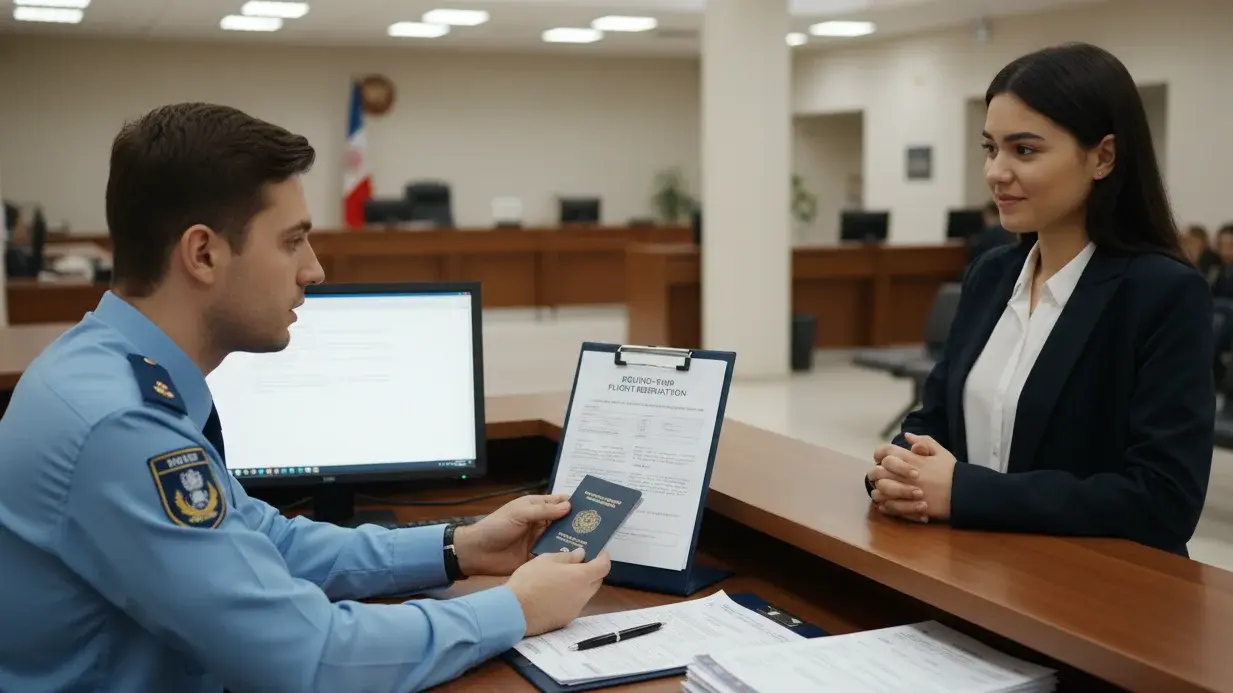
A round-trip booking usually creates less friction inside a visa file. It gives the embassy a cleaner travel story to read from the start.
When reviewing visa applications, consular officers often examine travel reservations to understand a traveler’s intended entry and departure from the destination country. 🌍 In many cases, a round-trip reservation can help demonstrate a clear travel timeline, including both arrival and return plans, which may make the itinerary easier to evaluate during the application review.
However, a one-way booking does not automatically lead to a visa refusal. Immigration authorities generally focus on whether the applicant’s travel plan appears logical, consistent with the stated purpose of visit, and supported by other documents such as accommodation details and return intentions. Providing a coherent itinerary that outlines entry and exit plans can help reduce uncertainty during the visa assessment process.
Updated: March 2026 — Reflecting common visa documentation practices used by consulates, immigration authorities, and international travel application guidelines.
What A Return Flight Quietly Tells A Visa Officer About Your Exit Plan
For a short-stay visa, the officer is not just checking whether you can enter. They are also checking whether your trip has a visible endpoint.
A return flight helps because it answers that question fast. It shows when you plan to leave, how long you expect to stay, and whether your itinerary looks temporary rather than open-ended.
That matters most in cases like tourism, family visits, short business travel, conferences, and brief training programs. In those categories, the trip is supposed to end soon. A return sector makes that easier to believe.
It also reduces guesswork. A one-way booking often forces the officer to ask a silent follow-up question: When exactly is this person leaving? A round-trip removes that gap before it becomes a concern.
Embassies review many files quickly. A reservation that shows both entry and exit helps your case feel organized, time-bound, and easier to approve on its face.
Why Round-Trip Bookings Work Best When The Rest Of The File Already Looks Time-Bound
A return flight is strongest when the rest of your documents already point to a defined trip window. That is where the booking starts to look natural instead of being inserted.
If your employer's letter approves leave from June 10 to June 20, your flights should sit inside that frame. If your conference runs for four days, your return should reflect a realistic arrival and departure around that schedule. If you are visiting family for Eid, Christmas, or a school break, the return date should match that reason.
This is why round-trip often works well for temporary travel. It fits the logic of a visa file that already has fixed dates.
The embassy is not rewarding the format alone. It is rewarding consistency. A return flight only helps when it supports the same timeline as your cover letter, invitation, leave proof, and trip purpose are already showing.
That is also why a believable duration matters. A seven-day city break, a ten-day family visit, or a five-day trade event can all make sense. The trip length should feel chosen for the purpose, not copied from a generic template.
Why A Round-Trip Booking Can Still Raise Doubts If The Return Date Looks Artificial
A round-trip is not automatically persuasive. It can still hurt if the return date looks forced.
This happens when the trip is too short for the route, too long for the reason, or disconnected from the rest of the file. A three-day long-haul tourist trip can look thin. A one-month stay for a two-day meeting can look inflated. A return before the end of the event mentioned in your documents can make the file look careless.
The problem is not that you included a return. The problem is that the return does not behave like a real travel decision.
Officers notice when dates seem selected only to fill a requirement. If your cover letter says you plan to spend two weeks with your sister, but the flight shows six days, the issue is not “round-trip versus one-way.” The issue is credibility.
Even small mismatches matter here. If your hotel, local transport, invitation letter, or leave approval points to one travel window and your flight shows another, the return flight becomes a visible contradiction instead of a strength.
When A One-Way Booking Triggers More Questions Even If The Applicant Is Genuine
A genuine traveler can still create an avoidable problem by using a one-way booking for a short, temporary trip.
For a visitor visa, a one-way ticket often looks incomplete because it leaves the exit plan undefined. That does not mean the embassy assumes bad intent. It means the file now contains more uncertainty than it needed to.
An officer may start asking practical questions that a round-trip would have answered on its own:
-
Are you still undecided about your return?
-
Are you planning to extend the stay informally?
-
Are you waiting to see what happens after arrival?
-
Does the rest of the itinerary even exist yet?
For short-stay travel, those questions are not helpful. They make the file feel less settled.
That is why one-way usually creates more friction in tourist, visit, and short business cases. Not because it is forbidden, but because it gives the officer less structure to rely on when judging temporary intent.
The safest reading is simple. A round-trip booking often works better because it naturally supports a temporary travel story. But it only works when the dates, duration, and purpose all line up cleanly.
That is also why one-way is not always the weaker choice, especially once the visa type itself stops looking temporary and starts looking like a move rather than a visit.
When A One-Way Booking Can Be Completely Reasonable — Without Making Your File Look Weak

Not every visa file benefits from a return flight. In some cases, a one-way reservation is the cleaner choice because it reflects the real structure of the move instead of forcing a false end date.
Long-Stay Visas Often Do Not Need The Same Return Logic As Tourist Files
A short tourist trip and a long-stay move are not judged the same way. That difference matters when you choose your flight reservation.
For tourism, family visits, and short business travel, the embassy usually expects a clear entry and exit plan. For study visas, work visas, family reunification cases, and other long-duration categories, the focus shifts. The officer is often looking more closely at your legal basis for entry, your start date, and your post-arrival setup.
That changes the role of the ticket.
If your visa category is built around relocation, a one-way booking often looks more natural than a round-trip. It matches the logic of someone entering to begin studies, join an employer, or move to a spouse.
A return date can actually create noise in these files. It may raise unnecessary questions about whether you really intend to take up the long-stay purpose described in the application.
One-Way Makes More Sense When The Return Depends On A Future Milestone, Not A Fixed Date
Some trips do not have a sensible return date at the time of application. That is not a weakness by itself.
A student may know the course start date but not yet know when the first academic break will be used for travel home. A worker may have a contract start date, but no reason to schedule a return before arrival. A spouse joining a family abroad may have a lawful entry basis but no immediate plan to leave within a short window.
In these cases, the return depends on a later milestone, such as:
-
Semester schedules
-
Residence permit issuance
-
Employment probation completion
-
Family housing arrangements
-
Future leave approval from a new employer
If that is your situation, forcing a round-trip can make the file look less honest. You are better served by a reservation that matches the timing you actually know.
Embassies do not need invented precision. They need a travel structure that fits the visa purpose on paper.
How To Keep A One-Way Reservation From Looking Open-Ended In The Wrong Way
A one-way booking should still look planned. The absence of a return sector means the rest of your file must do more work.
The key is not to leave the entry looking loose. You want the officer to see that the stay has shape, even if it does not yet have an end date on the ticket.
That shape usually comes from documents such as:
-
An admission letter with a clear program start
-
An employment contract with joining instructions
-
A family reunification approval or sponsor documentation
-
Temporary or long-term accommodation proof
-
A university reporting date or an employer onboarding date
These documents help the one-way ticket look intentional rather than incomplete.
You should also watch the arrival timing closely. If your class starts on September 15, landing six weeks early without a strong explanation may look poorly planned. If your contract begins on May 1, arriving the night before may also look impractical. Even in a one-way case, the flight date should still look thought through.
The Most Common Mistake: Using A One-Way Booking For A Temporary Trip Just Because It Is Easier
A one-way booking becomes risky when it is chosen for convenience instead of fit.
This happens when someone is applying for a short tourist or visit visa and leaves the return open simply because it feels flexible. That flexibility may help the traveler, but it rarely helps the file.
For a temporary visa, the embassy usually wants to see that the trip has a defined end. If you leave that part unsettled, the officer may start wondering whether the stay is still being decided, whether the travel plan is fully formed, or whether the return is being postponed for reasons not stated in the application.
That is where a one-way booking can lose ground quickly. It does not look wrong because it is one-way. It looks weak because the visa purpose itself still depends on a clear return.
If your trip is short and temporary, convenience is not the best guide. Fit is.
When A Round-Trip Is Still Safer Even If You Personally Haven’t Decided Your Return Yet
Sometimes your personal plans are flexible, but your visa category is not.
You may not know the exact day you want to come back from a holiday, a family visit, or a short business trip. That does not automatically make one-way the better option. If the visa type still expects a temporary stay, a round-trip often remains the safer structure because it gives the embassy a complete travel frame to assess.
Your personal indecision and the embassy’s need for a coherent file are two different things.
In these cases, the stronger move is usually to use a return that fits the temporary purpose and can be adjusted later if needed. That keeps the travel story defined without pretending the case is more open-ended than it really is.
And even when you pick round-trip for the right reason, the booking can still fall short if the dates and route make the trip look artificial rather than believable.
By the time you reach the document assembly stage, the advantages of booking your dummy ticket online become crystal clear. Reputable platforms now offer a seamless way to obtain your flight reservation for visa through secure online processes that deliver instant results. You can book dummy ticket online for visa risk-free PDF PNR and receive a professionally formatted document within minutes, complete with authentic booking references that satisfy strict embassy standards. This approach prioritizes both convenience and security, using protected systems to ensure your personal information stays safe while providing verifiable dummy ticket for visa that look genuine. The instant delivery feature means you can immediately review how your itinerary for visa integrates with the rest of your supporting documents. Compliance with current requirements for visa booking is built into every reservation, giving you embassy-approved dummy tickets without the hassle of traditional bookings. Travelers appreciate how these services eliminate uncertainty around flight ticket for visa submissions, allowing more time to prepare for interviews or additional paperwork. If you're looking for a reliable and stress-free solution, these online options provide exactly the flexibility and professionalism needed to move your application forward effectively.
Why Some Round-Trip Reservations Still Fail To Impress Embassies
A round-trip booking can look neat on paper and still leave the wrong impression. What matters here is not whether you showed a return, but whether the whole reservation behaves like a real trip under embassy review.
A Return Flight Does Not Help If The Stay Length Feels Wrong For The Story
A return ticket only helps when the stay length fits the reason for travel. If your tourist visa file shows four days for long-haul international flights, the officer may wonder whether the plan is realistic at all.
The problem becomes sharper when your intended travel dates do not match the effort, cost, or purpose of the trip. A brief city break can work. A rushed cross-border plan with several stops and no breathing room usually does not.
Consular officers often compare the travel window against the visa duration requested, the route, and the activity described in your visa application. If the timing feels compressed, a clean-looking flight itinerary will not rescue it.
That is why round-trip tickets are not persuasive by themselves. A return trip should look like the natural close of a temporary visit, not a date chosen only to make the file appear complete. The same goes for a return journey on the same route when your cover letter suggests you planned to spend meaningful time exploring more than one city.
A quick rule helps here. Ask whether someone reading only your plane tickets would believe the trip makes practical sense. If the answer is no, the problem is not the format. The problem is the story the booking tells.
Date Misalignment Across Documents Is More Damaging Than Choosing One-Way
Many weak files fail because the dates do not line up across the paperwork. That hurts more than using one-way flights in the wrong case because the contradiction is easier to spot.
Your travel dates should match across the application form, supporting documents, travel insurance, and any related bookings. If your departure date in the reservation is June 8, but your leave approval begins June 10, the file now has friction. If your exit date falls after the period stated in your travel itinerary, the officer has a reason to pause.
This becomes even more visible in Schengen visa applications, where the timing of movement, duration of stay, and insurance window are often cross-checked closely. A return sector that falls outside the stated trip range can make the reservation look disconnected from the rest of the file.
You also need the booking to sit properly beside any hotel bookings or hotel reservations already included. If your accommodation timeline shows check-in from July 3 to July 8, but the flight details show arrival on July 1 and departure on July 11, the dates do not match. Even a strong dummy ticket can lose force when nearby documents pull the trip in different directions.
For first-time applicants, this is one of the easiest places to slip. The reservation may look polished, but embassies expect the whole file to move as one set of travel documents. If the dates match only inside the ticket itself, that is not enough.
Why “Too Perfect” Reservations Can Sometimes Feel Manufactured
A reservation can also look suspicious when it is polished in the wrong way. Officers see enough visa submissions to notice when a trip feels arranged for the visa appointment rather than for the journey.
That can happen with a fully paid ticket booked unusually far ahead, an exact weekend turnaround during peak season, or a route that looks unnaturally tidy for the destination and purpose. It can also happen when the booking reference, flight number, and booking codes all look proper, but the timing still feels sterile.
The issue is not that the document looks professional. Genuine reservations should look professional. The issue is when the structure feels too optimized for appearance and not grounded in how people actually travel.
A confirmed ticket that lands late at night and departs early the next morning may technically exist, but it does not always look like a sensible tourist or family visit plan. A non-refundable ticket can create extra financial risk before visa approval, but even an actual ticket does not become persuasive if the trip design looks artificial.
Embassy rules are rarely limited to whether a reservation exists. They focus on whether the booking works inside the entire process. A real ticket can still raise doubts. Temporary reservations can still look credible when the logic is sound.
Open-Jaw, Multi-City, And Flexible Return Plans Need Extra Discipline
Not every return follows a simple out-and-back pattern. Some travelers arrive in one city and leave from another. Others add regional movement before the final onward travel home.
That can work, but only when the route solves a real travel need. A short trip with entry through one city, exit from a third country, and several internal transfers can make proof of onward travel harder to trust if the time on the ground does not support the movement.
The risk increases when the file mixes a transit visa-style route with a broader tourist plan and does not explain why the flights break that way. If the booking jumps between one city and another without a clear reason, the officer may treat the reservation as a placeholder rather than embassy-approved documentation.
One Quiet Signal Embassies Notice: Whether The Booking Looks Like A Decision Or A Placeholder
Embassies often respond better to reservations that look chosen, not improvised. That means sensible travel dates, believable onward ticket logic, and flight tickets that fit the rest of the file without strain.
A reliable travel agency can help structure temporary flight itineraries or other temporary reservations that look orderly and widely accepted for visa process needs, while still letting you save money and avoid committing to a real ticket too early.
BookForVisa.com offers genuine reservations with instant delivery, a booking reference, and a PDF, which can be useful when visa submissions require clear flight details before your file is finalized.
How To Choose The Safest Booking Structure For Your Visa Case Instead Of Guessing
At this point, the better question is no longer whether round-trip or one-way sounds safer. The better question is which booking structure fits your visa category, route, and timing without forcing the wrong travel story.
For Tourism And Family Visits, Start With The Question: Can I Clearly Show When I Leave?
For a short leisure trip or family visit, a visible return usually gives your file the cleanest shape. These cases are built around temporary presence, so your booking should show a clear arrival and a clear exit.
That does not mean you need the cheapest or most rigid option. It means your departure and return should make sense for the reason you gave. A seven-day city break, a two-week holiday, or a visit tied to a wedding or family event can all work when the dates look believable.
A useful check is simple. Can you explain your exit date in one sentence without sounding uncertain?
If the answer is yes, a round-trip structure is usually the safer fit.
For Business, Conferences, And Short Professional Travel, Tie The Return To The Event Logic
Short professional travel is judged through timing discipline. Your return should follow the event, meeting, trade fair, or training window closely enough to look purpose-driven.
If your conference ends on Thursday, flying home on Friday or Saturday can look natural. Staying two extra weeks with no clear reason often does not. On the other side, leaving before the final session can make the trip look poorly matched to the invitation.
This matters at the visa interview, too. If you are asked why you chose those dates, you should be able to answer with the event schedule, not guesswork.
Airlines offer many routing options, but more choices do not always mean a better flight. The strongest professional booking is usually the one that mirrors the business reason with the least unnecessary complexity.
For Study, Work, Relocation, And Family Reunification, Ask Whether A Fixed Return Would Actually Look False
Long-stay cases need a different lens. If you are entering on a student visa to begin studies, join an employer, or relocate to family, a fixed return can sometimes look less truthful than a one-way reservation.
The key question is whether your stay is genuinely open-ended at the point of entry. If you do not know when you will travel back because the stay depends on term breaks, contract conditions, or residence paperwork, forcing a return date can weaken the file rather than strengthen it.
That issue becomes sharper when the visa expires long after arrival, and the permission itself is designed for residence or extended stay. In those cases, the embassy is often more interested in a lawful entry basis and post-arrival structure than in a quick return sector.
A booking should reflect the life event behind the visa, not a habit borrowed from short tourist travel.
The Three-Part Booking Test: Exit Logic, Date Logic, And File Logic
Before you submit, test the reservation against three points.
-
Exit Logic: Does the booking show a believable way out if the trip is temporary?
-
Date Logic: Do the dates fit the real purpose, duration, and pace of the trip?
-
File Logic: Do the flight dates line up with the rest of the application without friction?
You do not need a perfect itinerary. You need one that survives basic scrutiny.
If one of those three parts feels weak, the booking structure probably needs adjustment. This catches many problems early, especially when a reservation looks fine on its own but starts to fall apart next to leave letters, invitation dates, or insurance coverage.
When To Change Your Booking Structure Before Submission
Do not keep the original structure just because you booked it first. Change it when the file has moved.
You should review the booking again if:
-
Your leave dates changed
-
The invitation or event timing shifted
-
Your entry purpose moved from short stay to long stay
-
The route became too busy over the number of days
-
Your return date no longer matches the supporting paperwork
This is also important if your first plan was based on convenience rather than logic. A one-way used for a holiday, or a round-trip used for a relocation case, can both be corrected before submission. That is far better than hoping the officer will read past the mismatch.
Final Decision Matrix:
A practical matrix can keep the choice clear:
-
Tourism: usually round-trip
-
Family visit with fixed dates: usually round-trip
-
Conference or short business travel: round-trip tied to event timing
-
Long-term study: often one-way
-
Work relocation: often one-way
-
Family reunification: often one-way
-
Short trip with flexible personal plans: still often a round-trip if the visa type is temporary
The point is not to force every case into one answer. The point is to avoid choosing a booking shape that clashes with the purpose written elsewhere in the file.
As you near the completion of your visa file, taking a moment to verify that all elements—including your travel proof—fully support your intended purpose is essential for a confident submission. Dummy tickets continue to prove invaluable here, offering a dependable way to establish your exit strategy while adhering to what embassies expect in terms of documentation. Learning what is a dummy ticket and why do embassies require it reveals how these tools provide the perfect balance of authenticity and flexibility, acting as verifiable evidence of your flight reservation for visa without any real financial obligation, yet appear authentic enough to satisfy consular officers. They reinforce your application with clear onward travel proof, helping to demonstrate that your stay is temporary and well-planned, which is key for successful visa approval. This final check ensures consistency across your itinerary for visa, dates, and supporting letters, minimizing any potential red flags during review. By choosing embassy-approved dummy ticket options, you add an extra layer of professionalism and reliability to your visa application proof, ultimately increasing your chances of a positive decision. Take action now by securing the right documentation that aligns perfectly with your needs—it's the smart step toward a stress-free visa experience and smooth travels ahead.
Choose The Booking That Matches Your Visa Story
Embassies do not reward round-trip bookings just because they look safer. They respond to a flight reservation that fits your visa purpose, your travel window, and the rest of your file. For a short visit, that often means a clear return. For study, work, or relocation, a one-way can be the cleaner choice.
What helps most is not the label on the booking, but the logic behind it. If your dates, route, and exit plan all support the same story, you give the officer less to question and more to trust. Before you submit, read your reservation beside the rest of your documents one more time.
More Resources
Related Guides
About the Author
Visa Expert Team — With over 10 years of combined experience in travel documentation and visa assistance, our editorial team specializes in creating verifiable flight and hotel itineraries for visa applications. We have supported travelers across 50+ countries by aligning documentation with embassy and immigration standards.
Editorial Standards & Experience
Our content is based on real-world visa application cases, airline reservation systems (GDS), and ongoing monitoring of embassy and consular documentation requirements. Articles are reviewed and updated regularly to reflect current practices.
Trusted & Official References
- U.S. Department of State — Visa Information
- International Air Transport Association (IATA)
- UAE Government Portal — Visa & Emirates ID
Important Disclaimer
While our flight and hotel reservations are created to meet common embassy requirements, acceptance is not guaranteed and may vary by country, nationality, or consulate. Applicants should always verify documentation rules with the relevant embassy or official government website prior to submission.
Related posts

Does Over-Planning Your Itinerary Raise Suspicion?
12 Mar, 26
Is Multi-Entry Visa More Strict About Reservations?
12 Mar, 26
Can Fake Hotel Booking Cause Visa Ban?
12 Mar, 26
Can Visa Be Rejected Due to Suspicious Travel Route?
12 Mar, 26
Is It Mandatory to Show Hotel for the Entire Stay?
11 Mar, 26
Can Travel Agencies Submit Flight Reservation on Your Behalf?
11 Mar, 26
What Travel Booking Mistakes Raise Red Flags at Embassies?
10 Mar, 26
Can You Submit a Visa Without Confirmed Internal Transportation?
10 Mar, 26
Can You Change Travel Dates After Visa Approval?
10 Mar, 26