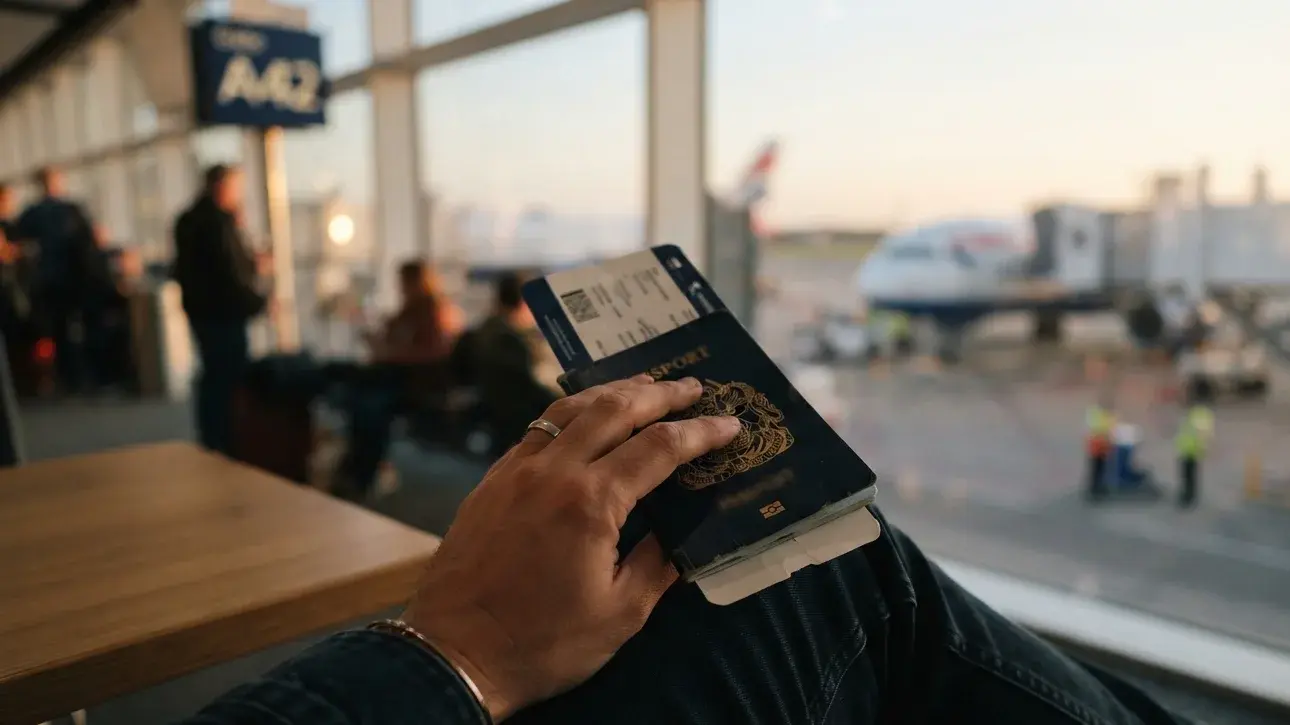
USA Student Visa Documents: Flight Itinerary & Requirements

Your F-1 interview is next week, your I-20 start date is fixed, and the consular officer asks when you plan to land. That answer needs to match what you submitted, what your school allows, and what your itinerary shows. The fastest way to invite extra questions is a flight plan that looks too rigid, too early, too tourist-like, or inconsistent with your DS-160 and I-20 details.
This guide helps you choose the right itinerary proof for your timing, then align it with your Form I-20, DS-160, SEVIS fee payment, school reporting instructions, funding evidence and interview explanation. For the wider reservation-quality framework, use the 2026 flight reservation for visa complete guide; this page narrows the logic to U.S. student visa documents.
The aim is not to make the flight itinerary look more important than it is. The aim is to prevent it from contradicting the documents that actually drive the student-visa file.
If you are comparing U.S. student-visa flight proof against European short-stay document logic, keep the separation clear: this page is for F-1/M-1 alignment, while the Schengen visa flight reservation requirements guide covers Schengen-specific reservation expectations.
In This Guide
What the U.S. Visa Process Expects From a Flight Itinerary
A flight itinerary for an F-1 or M-1 case works best as a cross-check. If it clarifies your planned arrival near the school and fits the I-20 timeline, it can help. If it clashes with your DS-160, school reporting window or interview answers, it creates avoidable doubt.
Required Vs Helpful
You are not generally expected to buy a ticket just to apply for a U.S. student visa. A student visa file is built around eligibility, school acceptance, SEVIS, funding, intent and interview credibility. A flight itinerary becomes helpful only when it answers a practical timing question without locking you into a risky purchase.
Use an itinerary when it solves a specific need:
- Your interview is close to your program start date and you need a believable arrival plan.
- You entered intended travel details on the DS-160 and want your printed proof to match.
- Your school gave a reporting, orientation or housing check-in window.
- You want a simple document that shows the arrival city near campus.
For basic reservation fields and formatting, the flight reservation for visa guide explains what a clean reservation should show. For student visas, the extra layer is I-20 and DS-160 consistency.
The Consistency Rule
Student visa files are date-driven. The itinerary should match the story your other documents tell. If the I-20 says the school is in Boston, the DS-160 lists a Boston-area arrival plan, but the itinerary lands first in Los Angeles with no reason, the route can distract from the student purpose.
Make these items agree:
- I-20 program start date and school reporting instructions.
- DS-160 travel details, if already entered.
- Campus city, arrival airport and first-week plan.
- Funding story, especially whether the itinerary looks financially reasonable.
- Interview answer about when you expect to travel.
Entry Window Reality
Arrival timing matters because an F or M student’s first entry is tied to the program start date and school readiness. A plan that arrives far too early can look disconnected from the study purpose. A plan that arrives after required check-in or orientation can look poorly prepared.
A safer answer is usually specific but flexible: plan to arrive shortly before the program begins, leave enough time for housing and school check-in, and finalize the ticket after visa issuance. That sounds more credible than claiming a non-refundable flight date when the visa decision is still pending.
One-Way Vs Round-Trip For Students
One-way travel often looks normal for students because the return date may depend on program length, academic calendar, internships, school breaks or later decisions. A round trip can work for a short fixed program, but do not invent a return date just to make the itinerary look complete.
If asked why there is no return ticket, keep the answer practical: the end date depends on the academic program and you will book return travel according to school requirements and visa status rules.
What Reviewers Notice First
Officers tend to probe plans that feel implausible, not plans that are merely incomplete. They may notice route logic, campus logic, timing logic and money logic. A simple route to a campus-area airport is easier to explain than a multi-stop route that looks like tourism before school.
Before you print or upload anything, ask one question: can you explain the route and timing in one sentence, and does every document point to the same school, same start window and same arrival region?
Official Student Visa Document Framework
The U.S. Department of State says the first step is acceptance at a SEVP-approved school. After acceptance, the school registers the student in SEVIS, the student pays the SEVIS I-901 fee, and the school issues Form I-20. The student must present Form I-20 at the visa interview. U.S. Department of State student visa guidance
The same State Department page lists required documents before interview, including passport, DS-160 confirmation page, fee receipt if required, photo if the upload fails, and Form I-20 for F-1 or M-1 status. It also says additional documentation may be required, such as academic preparation, intent to depart after study, and how the applicant will pay education, living and travel costs.
The DS-160 FAQ says students and exchange visitors are asked for the SEVIS ID printed on the I-20 or DS-2019 and the address of the school or program. It also notes that applicants should have a travel itinerary available while completing the DS-160 if travel arrangements have already been made. State Department DS-160 FAQ
ICE/SEVP travel guidance for continuing students emphasizes checking with the Designated School Official, keeping SEVIS accurate, and carrying a properly endorsed Form I-20 for re-entry. For new applicants, that reinforces the same principle: school records and travel documents should agree. ICE SEVIS travel guidance
Choosing The Right Itinerary Proof

For a U.S. F-1 or M-1 application, the best itinerary proof is the one that stays consistent through interview timing changes, I-20 updates and school date shifts. The goal is enough credibility without forcing a premature purchase.
Which Option Fits Your Situation?
Start with your calendar, not your preference. If the interview is more than 30 days away from your program start date, use a flexible itinerary that can be refreshed. If the interview is close to the start date, choose a current itinerary that leaves realistic room for visa outcome timing.
If your DS-160 is already submitted, do not create a route that conflicts with the city pair or timing you entered. If your budget cannot absorb a refundable ticket charge, choose a lower-risk reservation format instead of pretending you have already bought final travel.
The Three Itinerary Types
| Itinerary Type | Best For | Main Watch-Out |
|---|---|---|
| Reservation-style itinerary | Flexible pre-approval planning | May need refreshing if stale. |
| Refundable booking | Stable and urgent travel plan | Refund rules and timing vary. |
| Airline hold where available | Short-term readiness close to travel | Hold windows can be short. |
A flexible proof that stays consistent beats a rigid document that collapses under one schedule change.
What Verifiable Should Mean
Verifiable does not mean complex. It means the itinerary has enough structure to look like a real travel plan: passenger name matching the passport, clear city pair, plausible routing, reasonable connection times and arrival timing that fits the student timeline.
Avoid routes with tourism-style detours, first arrival in a city far from campus without a reason, cropped screenshots, unreadable tiny text, or multiple different itineraries presented together. If you carry a backup, keep the route identical and vary only the date window.
Timing Strategy
Generate or update the itinerary after the interview is scheduled and after the I-20 details are stable. If the program start date changes or you defer, update the itinerary only after the new I-20 is issued. If the DS-160 is submitted, keep the route consistent or prepare a simple explanation for why timing changed.
Students departing from Delhi, Mumbai, Bengaluru or Hyderabad may see many routing options to the same U.S. region. Choose a route that supports a student arrival story: fewer connections, sensible layovers and an arrival airport that matches the campus area.
Build An Itinerary That Survives I-20 And DS-160 Cross-Checks

Step 1: Anchor The Timeline To The I-20
Treat Form I-20 as the calendar that matters most. It comes from the SEVP-approved school and frames your program start, school identity and SEVIS record. Write down the program start date, reporting instructions, campus location, SEVIS ID and SEVIS fee status before choosing a flight date.
If you are entering a language training program, vocational program or time-sensitive orientation, assume the arrival window needs more discipline. Your flight plan should not arrive after the school expects you to report.
Step 2: Lock Story Coordinates
Story coordinates are the city pair, arrival airport and first-week plan. Choose one arrival metro area tied to the campus. Then choose an airport that makes sense for that area, even if another airport is cheaper.
- Arrival and transfer to housing.
- Housing check-in or temporary stay.
- School check-in, orientation or reporting.
- Setup days before classes begin.
This keeps the travel itinerary aligned with a normal student entry flow.
Step 3: Choose A Credible Date Range
False precision causes problems. Many applicants pick one exact date, then lose it to wait times, administrative processing, DS-160 corrections or I-20 updates. Pick one primary arrival date you can still meet if the decision comes late, and keep a small buffer that does not change the route story.
Quick checks:
- Does the date fit the school reporting window?
- Does it fit the program start date?
- Does it still work if visa issuance takes longer than expected?
- Does your passport validity support travel?
- Does the arrival airport match the campus region?
Step 4: Run A Five-Minute Consistency Audit
Put the student visa documents beside the itinerary and audit them in order:
- Passport name and itinerary name match exactly.
- DS-160 confirmation and itinerary city pair do not conflict.
- I-20 school location makes sense with the arrival airport.
- SEVIS ID and school details match what you entered on the DS-160.
- Financial documents plausibly support tuition, living and travel costs.
- Arrival date fits program start and school reporting instructions.
- Route has reasonable connections and no unnecessary tourism detours.
Fix mismatches before interview day. Otherwise, the officer may ask for additional explanation or updated documents, and the itinerary becomes the distraction instead of the support.
Step 5: Prepare A Two-Sentence Explanation
Expect direct questions at the visa interview. Answer simply:
“I plan to arrive shortly before the program begins so I can complete school check-in and settle near campus. I will finalize the ticket after the visa decision and follow any updated instructions from the school.”
If asked why you did not buy a ticket, say it is practical to avoid locking travel before approval. Keep the answer calm and short.
USA F-1 And M-1 Exceptional Cases

Late Visa Approval
Late decisions happen, sometimes because of interview wait times, administrative processing or extra screening. If your original flight date is no longer realistic, move the arrival date forward while keeping the same campus-area destination and simple route.
If asked, explain that the visa timeline moved, so your travel plan moved. Do not keep an outdated itinerary that you can no longer follow.
Deferrals And I-20 Updates
Deferrals create document drift fast. The school reissues the I-20, the start date changes, and an itinerary saved two weeks ago becomes inconsistent. Use one rule: the newest I-20 leads.
Check the updated program start date, campus location, program level and reporting instructions. If the school changes or you transfer before travel, lock the final campus first, then rebuild the itinerary around that location.
Dependents And Family Travel
F-2 plans can confuse the interview if dates and routes look like a family vacation rather than a dependent arrival. If dependents travel with you, align their arrival and keep the route straightforward. If they travel later, use a separate timeline and explain why, such as housing setup or school reporting.
Do not mix visa categories. A spouse, child or exchange visitor in the family may need a different document logic and a different timing explanation.
One-Way Scrutiny
A one-way itinerary can be normal for an F-1 or M-1 student, but a consular officer may still ask about return intent. Do not force a fake round-trip date. Explain that return timing depends on program completion, school requirements and maintaining status.
Use academic plans, funding logic and ties after study to answer return-intent questions. The flight itinerary should not carry the whole argument.
Student-Specific Red Flags
- Arrival timing ignores the I-20 start date or school reporting window.
- Landing city does not match the campus area.
- Route looks like a tourism circuit before school.
- DS-160 city details conflict with the itinerary.
- Itinerary is based on an old I-20 after deferral.
- Financial documents cannot support travel, living and tuition costs.
- Multiple itinerary versions are carried to the interview.
Walk Into The Interview With A Clean Flight Plan
For a U.S. F-1 or M-1 case, your flight itinerary works best when it quietly supports your I-20 timeline and the story you tell the consular officer. Keep the arrival city consistent, pick dates that still make sense if processing runs long, and avoid routes that look like a tour instead of a student move.
The itinerary should not overpromise. If your plans are flexible, say they are flexible. If you will buy after approval, say that. A student file can be credible without a paid ticket when the school acceptance, SEVIS record, funding, DS-160 and interview answers are coherent.
Final USA Student Visa Document And Itinerary Checklist
- Passport: valid for travel and matching the itinerary name.
- DS-160: confirmation page saved and travel details checked.
- I-20: current version from the SEVP-approved school.
- SEVIS: SEVIS ID and I-901 fee status aligned with the I-20.
- School location: arrival airport matches the campus region.
- Program date: arrival timing fits start date and reporting instructions.
- Funding: financial documents support tuition, living and travel costs.
- Route: simple student-arrival route, not a tourism circuit.
- Version control: one current itinerary, no competing copies.
- Interview answer: two-sentence explanation ready.
Once these checks pass, print or save one current itinerary version and use the same story in the interview. If the school or visa timing changes, update the itinerary after the official school document changes, not before.
FAQ
Do I need a flight ticket for a U.S. student visa interview?
Usually no. A paid flight ticket is not normally the core required document for an F-1 or M-1 visa interview. A flight itinerary can help if it matches your I-20, DS-160 and school timing.
Should an F-1 student use a one-way or round-trip itinerary?
A one-way itinerary can be normal for F-1 students because return timing may depend on program length and school requirements. A round trip is useful only when the end date is genuinely fixed.
What should my U.S. student visa flight itinerary match?
It should match your passport name, I-20 school location, program start timing, DS-160 travel details if entered, funding story and interview explanation.
Can I submit a flight reservation instead of buying a ticket?
Yes, a reservation-style itinerary can be safer before approval if it is clear, current and consistent. Do not submit fake or manually edited documents.
What happens if my I-20 start date changes?
Use the newest I-20 as the lead document. Update the itinerary after the new I-20 is issued so the travel date and campus location remain consistent.
Does the DS-160 require a travel itinerary?
The DS-160 FAQ says you should have a travel itinerary available if you have already made travel arrangements. Students are also asked for SEVIS and school information from the I-20 or DS-2019.
How early should I plan to arrive for an F-1 visa?
Plan an arrival that fits the I-20 program start date and school reporting instructions. Avoid arriving unrealistically early or after required check-in unless the school guidance supports it.
What if my visa approval is late and my itinerary expires?
Refresh the itinerary with the same campus-area route and updated date. Keep one current version and avoid carrying multiple conflicting itineraries to the interview.
Disclaimer: This article provides general visa-document preparation guidance, not legal advice. U.S. student visa requirements, interview procedures, document requests, appointment rules, SEVIS processes and travel timing can vary by embassy, applicant profile, school and date. Always follow the official instructions from the U.S. Embassy or Consulate handling your application and your Designated School Official.
Related posts

Flight Ticket for an Offshore Worker Rotation Visa
02 Oct, 26
Flight Booking for a Short Language Course Visa
02 Oct, 26
Visa Flight Itinerary After Passport Replacement
02 Oct, 26
Visa Reservation for an Archaeological Field Trip
02 Oct, 26
Flight Booking After a Visa Case Changes Consulates
02 Oct, 26
Flight Itinerary While a Consulate Holds Your Passport
02 Oct, 26
Flight Itinerary for Visa for Film Production Crews
02 Oct, 26
Flight Reservation for Visa for Trade Fair Exhibitors
02 Oct, 26
Flight Ticket for Visa: Postdoc Relocation Guide
26 Sep, 26