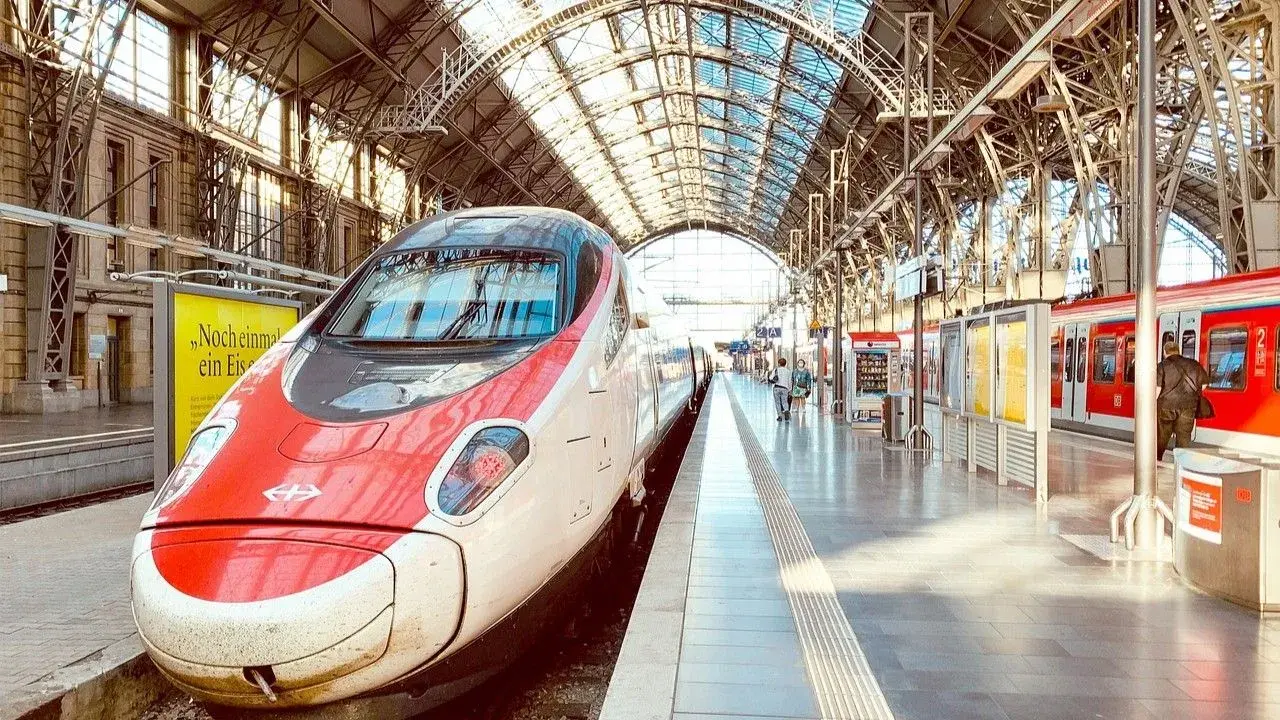
Short answer: A Schengen flight itinerary for visa should show how each internal move fits your city order, dates, accommodation and final exit. Use truthful train, bus or flight evidence for the segment that matches your real plan, show material transfers, and keep the same passenger name and travel window across the application. Transport proof can support a file, but it cannot guarantee approval, boarding or entry.
Your Schengen route can look perfectly sensible until the internal transport plan starts falling apart. The flights between smaller cities are missing, the rail timing is cleaner, or the cheapest bus makes more sense than forcing an air segment that does not fit the trip. That is where visa files often lose clarity.
We are focusing on the decision that actually matters: when to show trains, when buses are the stronger proof, and when a dummy flight still helps tie the itinerary together. You will see how to match each leg to your dates, your city sequence, and the kind of route an officer can understand quickly. When your internal movement looks realistic, the whole application feels more deliberate and easier to trust at once. If an internal air leg is the cleanest fit, a dummy ticket booking can keep your Schengen route coherent.
Key facts:
- Every internal leg should connect two cities in the submitted itinerary.
- Choose train, bus or flight proof that reflects the transport you actually plan to use.
- City order, dates, accommodation and border crossings should agree.
- Show material transfers and allow realistic time between bookings.
- Transport evidence supports the file but does not replace visa or entry requirements.
Need temporary flight proof for a Schengen visa file? BookForVisa can help keep your passenger details, dates and route consistent while you confirm the destination checklist.
Official-source check: Confirm the responsible Schengen consulate or visa centre’s current itinerary and internal-transport evidence requirements, plus each carrier’s document rules. Use the IATA Travel Centre for passport, visa, health and carrier-facing transit checks; the consulate handling your application controls the visa decision.
Reviewed for: Schengen city order, train and bus evidence, internal-flight proof, border crossings, accommodation timing and final-exit consistency.
When Schengen Itinerary Stops Looking Credible Because The Internal Route Does Not Add Up

A Schengen file often looks solid until the city-to-city movement starts raising questions. Your entry flight may be fine, your hotel dates may line up, and your cover letter may read well, but the internal route can still make the plan feel thin or rushed.
| Transport proof | Best use | Consistency check |
|---|---|---|
| Train reservation | Connected cities with a practical rail leg | Match departure station, arrival city and travel date |
| Bus reservation | Regional or cross-border surface travel | Show border timing and accommodation after arrival |
| Internal flight | Long distance or time-sensitive city changes | Match passenger name, airports, PNR and route logic |
| Ground transfer note | Airport-to-city or station-to-hotel movement | Allow realistic time and avoid unexplained gaps |
The Red Flag Is Usually “No Flight.” It Is An Unexplained Gap Between Cities
Most applicants worry too much about the flight into Schengen and the flight out. Officers often notice something else first: the missing link between stops. If you plan Paris, Brussels, and Amsterdam, but only show your arrival and departure flights, the file still leaves a practical question open. How are you moving between those cities, and does that movement fit the dates you submitted?
That gap becomes more visible when your hotel bookings are tight. If one stay ends on 14 June and the next begins on 14 June in another country, your file needs a believable bridge. A clear train, bus, or internal air segment does that. A vague plan does not.
The risk is higher in multi-country applications. A simple one-country stay can survive with lighter internal proof. A three-country route with short stays usually cannot.
Why Trains Often Look More Believable Than Short-Haul Flights Inside Mainland Europe
For many Schengen routes, rail is the most natural proof you can show. It matches how people actually travel between nearby capitals and major regional cities. Think of routes such as Paris to Brussels, Amsterdam to Cologne, or Milan to Zurich. A train reservation on those legs often looks cleaner than forcing a short flight into the file.
Rail also helps because it explains timing better. City-center departure and arrival are easy to understand. You avoid the extra layer of airport transfer time, check-in windows, and baggage handling. That matters when your hotel check-out and check-in dates sit close together.
A train leg can also make your route look calmer. If your application already includes several cities, rail can reduce the impression that you are trying to cover too much ground too quickly. In a visa review, a route that feels realistic often carries more weight than a route that looks aggressively optimized.
Where Buses Become The Smarter Proof Even If They Feel Less “Premium”
Applicants sometimes avoid bus reservations because they assume rail or air travel looks stronger on paper. That is not always true. On some Schengen routes, especially those involving smaller cities or less direct rail corridors, a coach reservation fits the geography better than a complicated train chain.
This comes up often in parts of Central, Eastern, and Southern Europe. You may find that the route exists, but the rail option involves awkward changes, poor timing, or a next-day arrival that clashes with your hotel booking. In those cases, a direct or simpler bus reservation can make the file look more grounded.
What matters is not whether the mode looks premium. What matters is whether the mode makes sense for the exact leg. A bus from one secondary city to another can look completely credible if the route is common and the timing works.
The Specific Situations Where A Dummy Internal Flight Still Makes Sense
There are cases where an internal dummy flight is the cleanest answer. Long jumps across the Schengen area are the obvious example. Barcelona to Vienna, Lisbon to Munich, or a mainland-to-island segment may not be worth presenting as an overland journey if that makes the itinerary look exhausting or implausible.
A dummy internal flight also helps when schedules are not yet released for the route you want, but your visa appointment and travel window are already fixed. In that situation, the goal is not to force a train or bus into the file just because overland travel sounds simpler. The goal is to show a route that an officer can accept as workable.
Use that logic carefully. A dummy flight works best when it solves a real route problem. It looks much weaker when it appears inserted only because flights feel more formal than land transport.
How Mixed-Mode Trips Fail When The Timing Looks Physically Impossible
A file can include valid-looking reservations and still feel wrong because the timeline does not hold together. This happens when applicants look at dates but not at real movement. A night bus arriving before dawn, a train that reaches the next city after hotel check-in has technically passed, or a flight that ignores airport transfer time can all create friction.
Check each leg against these points:
-
Departure city and actual departure point
-
Arrival time and hotel access
-
Border crossing date if the trip runs overnight
-
The connection time of one leg depends on the other
If the route requires too many generous assumptions, it starts to look fragile. Officers do not need to prove it is impossible. They only need to feel that it is not well planned.
The Hidden Risk Of Copying A Backpacker-Style Route Into A Formal Visa File
A backpacker route can be exciting in real life and still be a poor choice for a visa file. Rapid city changes, overnight jumps, and loosely connected land segments may suit flexible travel, but they often weaken a Schengen application because they look under-structured.
You do not need to present every ambitious idea in your real plan. We usually get a stronger result when the submitted route is tighter, cleaner, and easier to verify. That may mean fewer stops, clearer internal legs, and less dependence on heroic timing.
For broader visa-file planning, see BookForVisa’s 2026 flight-reservation guide and apply the same route and date checks to each internal segment.
Choosing Between Train Proof, Bus Proof, And A Dummy Flight Without Guessing What Looks Best
Once you know a city-to-city leg needs support, the next step is choosing the right kind of proof for that exact movement. This is where many Schengen files get weaker than they need to be, because the applicant chooses the document first and checks the route later.
Start With Geography, Not With The Document You Already Know How To Get
The best internal transport proof usually comes from the map, not from habit. Before you pick a rail, coach, or dummy flight, look at the actual city pair. How far apart are they? Is the route common? Does it cross a mountain corridor, require an island connection, or link two capitals with frequent daytime service?
That simple check changes the whole decision.
A route like Paris to Brussels usually points toward rail. A route like Dubrovnik to Split may point toward bus or ferry-linked land planning depending on the wider trip. A route like Lisbon to Prague often makes more sense as an air segment because the overland version looks long and fragmented on paper.
We recommend checking four things first:
-
Distance between the cities
-
How many transfers does the route usually need
-
Whether the arrival time matches your next stay
-
Whether the mode looks normal for that exact corridor
Once that picture is clear, the proof type tends to choose itself.
Use Train Proof When The Route Is Direct, Frequent, And Easy To Believe On Your Travel Dates
Train proof works best when the route is obvious to anyone familiar with European travel. Fast rail corridors between major cities are ideal because they look natural and they explain movement cleanly.
Good train-proof territory usually includes:
-
Capital-to-capital routes with regular daytime service
-
Cross-border pairs that are strongly linked by rail
-
Journeys where station-to-station timing fits neatly with hotel dates
-
Trips where flying would add unnecessary complexity
The strength of a train reservation is not just that it exists. It is what makes the itinerary feel settled. If your Schengen route shows Amsterdam on Monday, Cologne on Wednesday, and Munich after that, rail can make the movement read as orderly and realistic.
Train proof is especially useful when you want your file to look measured rather than rushed. It can also reduce questions about why you chose an airport transfer for a short regional move that many travelers would make by rail.
Use Bus Proof When The Land Route Is Believable, But Rail Timing Is Messy
Bus proof becomes the better option when the route itself makes sense over land, but rail creates too much friction. That often happens with secondary cities, awkward border links, or destinations where the train network is technically present but not practical for your date and timing.
This matters in Schengen applications because a bad train option can create avoidable confusion. You may find a rail route, but it may involve:
-
Two or three changes
-
A very late arrival
-
A long layover in a city you are not staying in
-
A next-morning arrival that clashes with your planned hotel check-in
In those cases, a bus reservation can look more honest and more usable.
It also helps with regional pacing. If your trip moves through smaller stops in Croatia, Slovenia, Hungary, or the Balkans bordering Schengen travel patterns, coach travel can reflect the route more accurately than forcing a rail segment simply because it sounds more formal. Officers are not scoring transport elegance. They are looking for a route that holds together.
Use A Dummy Flight For Schengen Countries When Land Travel Makes The Itinerary Look Strained Or Rushed
Some internal Schengen moves are simply cleaner by air. This is especially true when the land version makes the file look exhausting, risky, or too tightly timed for comfort.
A dummy flight usually earns its place when:
-
The cities are far apart, and overland travel would consume most of a day
-
The route cuts across Europe in a way that breaks the trip’s rhythm
-
The next hotel or event date leaves little room for delays
-
The land alternative exists, but only through multiple transfers or overnight movement
For example, if your route jumps from southern Spain to Central Europe, rail or bus proof may technically be possible, but it can make the application feel stretched. In that situation, an internal dummy flight often presents the cleaner story.
The key is restraint. A dummy flight is strongest when it solves a real travel problem, not when it replaces routes that are clearly more believable by train.
Would An Officer Understand Your Movement In 20 Seconds?
A useful check is to review each internal leg as if someone is scanning your file.
Can they immediately see:
-
Where do you leave from
-
When you leave
-
How you travel
-
When you arrive
-
Which city stay comes next
If one leg needs a long explanation, the proof choice may be wrong.
A strong internal leg reads almost like a straight line. Vienna to Salzburg by train. Prague to Budapest by bus. Barcelona to Vienna by air. The more mental unpacking a route requires, the less convincing it tends to feel in a Schengen file.
When One Strong Internal Leg Is Enough For the Schengen Area, And When Every Move Needs Support
Not every application needs proof for every city change. A short two-stop trip often does not need the same level of internal documentation as a fast-moving four-country plan.
You usually need more support when:
-
The trip covers several countries in a short window
-
The city sequence is not obvious
-
The distances are long
-
The route includes weaker transport corridors
-
The internal movement affects the main country of stay calculation
In a simpler itinerary, one well-chosen internal leg may be enough to show that the route is thought through. In a denser itinerary, each major move should be easy to follow.
When an internal air leg genuinely makes the most sense, BookForVisa’s flight-reservation service can help keep the passenger name, airports and dates aligned before final airfare is purchased. Confirm current service terms and the destination checklist before relying on any reservation.
Applicants applying from India may receive VFS or destination-portal instructions, while applicants in the United States may follow a consular checklist. For both, the responsible Schengen consulate’s current rules control and the internal transport proof should support one consistent route.
Building An Internal Schengen Transport File That Looks Planned, Consistent, And Easy To Trust
Once you have chosen the right transport mode, the real work is presentation. A Schengen visa file becomes stronger when every internal leg fits your route, your stay dates, and the way movement actually works within the Schengen area.
Match Every Transport Leg To A Stay, Not Just To A City Name
A city pair on its own is not enough. If your internal movement says Paris to Strasbourg on 12 July, the next page should make it easy to see where you sleep that night. That is where hotel reservations stop being separate paperwork and start supporting your transport proof.
This matters across Schengen countries because officers do not review your internal route in isolation. They read it against your Schengen visa application, your travel documents, and the sequence of your stays. If the train, bus, or dummy flight lands you in France on a date when your accommodation starts in Germany, the flight begins to feel careless.
Your file should answer four points for each internal leg:
-
Departure city
-
Arrival city
-
Travel date
-
Overnight location
That format helps whether you are moving between EU countries, heading into Switzerland, or crossing between other countries that sit near the Schengen zone. It also helps when your main destination sits near land borders, sea borders, or busy border crossing points, where timing can be easier to question.
Fix The Weak Points First: Overnight Trains, Late Arrivals, And Border-Day Confusion
Some routes look fine until you read the clock. Overnight trains can create date mismatches. Late buses can push arrival past midnight. Early flights can make your hotel stay look one night too short. Those are the first places to clean up.
This is even more important because free movement does not mean zero scrutiny. Under the Schengen Borders Code, member states can temporarily reintroduce border control at internal borders in exceptional situations. That can happen for public order, public security, internal security, or a serious threat linked to irregular migration or cross-border crime. In most cases, your file will never be tested at that level, but a realistic timeline still matters because border checks can return on specific routes.
For third-country nationals and non-EU nationals, clarity matters more than speed. If your route includes a late-night coach into Germany, a morning rail connection in France, or a cross-border arrival near land and sea borders, your dates should still read cleanly on paper. A sloppy overnight leg can make the whole plan look improvised.
What To Do When Schedules Are Not Released Yet, But The Trip Window Is Fixed
This is common with internal rail and coach planning. You know your visa appointment date. You know your leave dates from your home country. You know the trip order. But the exact timetable is not yet open for sale.
When that happens, do not force a fake precision that the route itself cannot support. Build the file around the leg that matters most and present a transport plan that remains believable under the current rules.
A practical order helps:
-
Lock the arrival country and exit country
-
Line up each internal city with the correct stay date
-
Support the longer or more sensitive leg first
-
Keep the route consistent with your return ticket and overall trip length
That makes the application easier to follow for border police or visa staff reviewing whether you have sufficient funds, sufficient means, and a coherent plan. It also helps show that you understand the legal basis of your travel, especially if your itinerary moves across several European countries.
How To Present A Mixed Itinerary To Border Controls Without Making It Look Patched Together
A mixed file can work very well. The problem is usually not the mixture. It is the lack of a clear order.
If one leg is by train, the next by bus, and the last by air, present them in one simple route sheet before the attachments. Put the dates in sequence. Put each arrival under the correct stay. Keep the wording short. Do not make the officer search through pages to understand your movement across Schengen borders.
This is especially useful if your route passes through a Schengen state where border controls have been discussed publicly or where a new system for entry and movement is under rollout. Even though the Schengen Information System and external borders management sit outside your internal city-to-city proof, your application still benefits when movement inside the Schengen area looks structured and easy to trust.
Why Internal Transport Proof Should Support The Trip Purpose, Not Fight It
Your internal route should match why you are going. A museum-focused holiday across France and Germany can support reasonable rail legs. A business visit with fixed meeting times may justify a quicker internal flight. A scenic route near Switzerland may look better with rail than with a rushed bus and flight combination.
Purpose matters because officers review security, public policy, and sufficient planning together. They want to see that your route supports the trip, not just that the bookings exist. That applies whether the applicant is a subject of a straightforward leisure file or someone whose nationality leads to a closer risk assessment.
Keep the purpose visible in the route. If your stops are cultural capitals, let the movement reflect that. If your plan is conference-driven, let the timing show discipline.
The File Gets Stronger When Every Internal Leg Answers An Unspoken Question
A strong file quietly answers what the reviewer may ask.
-
Why this city next?
-
Why this date?
-
Why this mode?
-
Why does the timing work?
-
Why will you not be refused entry for a file that looks scattered?
The answer should be visible without extra explanation. Your passport and valid passport details, your travel documents, your hotel reservations, and your internal transport proof should all point in the same direction. That is how you protect the credibility of the application.
More paperwork does not always help. If one internal leg is already clear, do not attach three alternate versions of it. If one dummy flight supports a long jump, do not add a second air option and a train screenshot for the same day. That can create doubt where none existed.
Most cases improve when the route is lean, specific, and easy to read. One good file works better than a thick file built around every possible backup. That becomes even more important when internal borders are under temporary attention, and the line between normal travel and a perceived threat is judged quickly.
Use this flight-reservation guidance when an internal flight is part of a larger Schengen itinerary.
The Mistakes That Make Internal Transport Proof Look Artificial — Especially In Multi-Country Schengen PlansA Schengen route can fail on presentation even when each booking looks fine on its own. The problem usually appears when the full transport story feels too engineered, too fast, or disconnected from how people actually move between the places on the itinerary.
Using Flights For Every Internal Move Even When Europe’s Rail Map Says Otherwise
An all-flight itinerary across nearby Schengen stops often looks forced. If your route jumps between close, rail-friendly cities by air every time, the internal plan can start to feel assembled for paperwork rather than travel.
That matters because internal transport proof should reflect real travel behavior inside the Schengen zone. A short rail corridor between major cities usually reads more naturally than a chain of airport hops. When every internal leg is a flight, the file may look like it was built without any regard for station-to-station travel time, airport transfers, or the rhythm of movement within the Schengen area.
A better standard is simple. If a route is commonly done by train, do not make it look airborne just because a flight reservation feels more formal.
Submitting Transport Proof That Ignores Actual Transfer Friction
One of the fastest ways to make a route look artificial is to treat every arrival point as equal. They are not. A train station in the center of a city and an airport far outside it create very different timelines.
This becomes obvious when the application shows:
-
A flight landing late in the evening with a hotel across the city
-
A bus arrival that leaves no time to reach the next check-in point
-
A rail leg followed by another booking that assumes instant movement
These gaps may look small, but they affect credibility. Even in a system built around free movement, transport logic still matters. Some member states can apply internal border controls in exceptional situations, and routes that already look tight on paper do not improve under extra scrutiny. A realistic file leaves room for actual movement, not just theoretical arrival times.
Leaving “Free Days” That Accidentally Look Like Undocumented Travel
A blank day between confirmed stays can create more concern than applicants expect. If one hotel ends on the 14th and the next starts on the 16th, the reviewer may wonder where you are on the 15th and how you plan to get there.
That question becomes sharper in multi-country plans involving several Schengen countries. A free day near land crossings, ferry links, or secondary cities can look like missing transport proof rather than harmless flexibility. You do not need to over-document every hour, but you do need to make the route readable.
The safest approach is to check every calendar gap against your internal movement. If a day exists mainly for transit, let the file show that. If it is a rest day, make sure the city stays around it, makes sense. Space should look intentional, not accidental.
Presenting A Route That Is Technically Possible But Narratively Messy
A route can be real and still be poor visa material. That happens when the movement is possible in theory but hard to follow in sequence. Too many short hops, too many mode changes, and too many narrow connections make the file feel unstable.
The problem is not only logistics. It is narrative. The person reading your application wants to understand where you go next without reconstructing the trip from scattered pages. If your internal route takes more effort to decode than it should, the plan starts to feel less convincing.
This is where many applicants forget the audience. You are not building the perfect backpacking puzzle. You are building a file that a visa officer can trust quickly. Even EU citizens moving around Europe do not need to prove city-to-city intent in the same way. For a visa application, clarity matters more.
Treating Internal Schengen Proof As Optional Because There Are No Hard Border Checks
Many applicants assume internal movement does not need support because they are traveling after entry, not at the external border. That is a weak assumption for a visa file.
Your internal transport proof helps show that the route is coherent, funded, and planned with enough discipline to fit the trip. It supports the broader picture of lawful movement across countries that participate in the Schengen system. That is separate from what the European Commission or the European Parliament may debate at the policy level about mobility, migration, or security. In practical application review, a clear internal route still strengthens the case.
The point is not that every internal leg will be inspected at a checkpoint. The point is that your file should not rely on missing pieces.
Forgetting That Some Routes Are Seasonal, Infrequent, Or Date-Sensitive
A route can look normal in June and weak in November. That is especially true when internal movement depends on seasonal flights, reduced bus frequencies, island links, or rail services that do not run every day.
Applicants often make the mistake of choosing the route first and checking frequency later. Then the proof looks out of step with the travel dates. Even if the city pair is plausible, the timing may not be.
Before you present any internal leg, test it against season, day of week, and practical release patterns. This matters more in less obvious corridors and shoulder-season travel. A believable route is not just geographically correct. It also fits the calendar you submitted.
The strongest internal transport proof usually comes from one question: what would make this exact route look normal, clear, and easy to trust? Sometimes that answer is rail. Sometimes it is a coach. Sometimes it is a dummy flight for a long or awkward jump.
What weakens a Schengen application is not the use of one mode over another. It is the feeling that the transport choices were made without regard to distance, timing, or the structure of the trip itself.
Make Your Internal Schengen Route Easy To Trust
Your Schengen visa file looks stronger when each internal leg matches the geography, the dates, and the pace of the trip you are presenting. Trains, buses, and dummy flights can all work well when the choice fits the route instead of forcing a transport mode that makes the plan look rushed or unclear.
What matters now is simple. Review your city sequence, check every transfer against your stay dates, and keep only the proof that makes the route easiest to follow. When your movement inside the Schengen area reads as planned and realistic, the whole application feels more credible from the first page onward.
Ready to document your Schengen route? Recheck every city, internal leg, accommodation date and final exit before submitting.
FAQ
Do I need proof of internal transport for a Schengen visa?
Follow the responsible consulate’s checklist. When your route relies on trains, buses or internal flights, clear evidence can help explain the city order and dates.
Can I use train or bus proof instead of an internal flight?
Yes, when it reflects your genuine route and the dates, cities and accommodation remain consistent.
Should internal transport cover every Schengen city?
Cover each material move that explains how you reach the next documented city; do not add unused or speculative bookings.
Can I use a dummy flight for an internal Schengen leg?
Only when a temporary reservation is permitted and it truthfully reflects the segment you intend to use. Check the destination checklist first.
What if an internal booking changes after submission?
Follow the consulate’s process and update the reservation and related documents together so the itinerary remains accurate.
Does transport proof guarantee a Schengen visa?
No. It can support a coherent itinerary, but the visa decision depends on the consulate and complete evidence.
Friendly reminder: BookForVisa provides travel-proof documents for planning and visa-application support. Requirements vary by destination, consulate, visa category and applicant situation. A flight reservation can support a file, but it does not guarantee approval, boarding or entry.