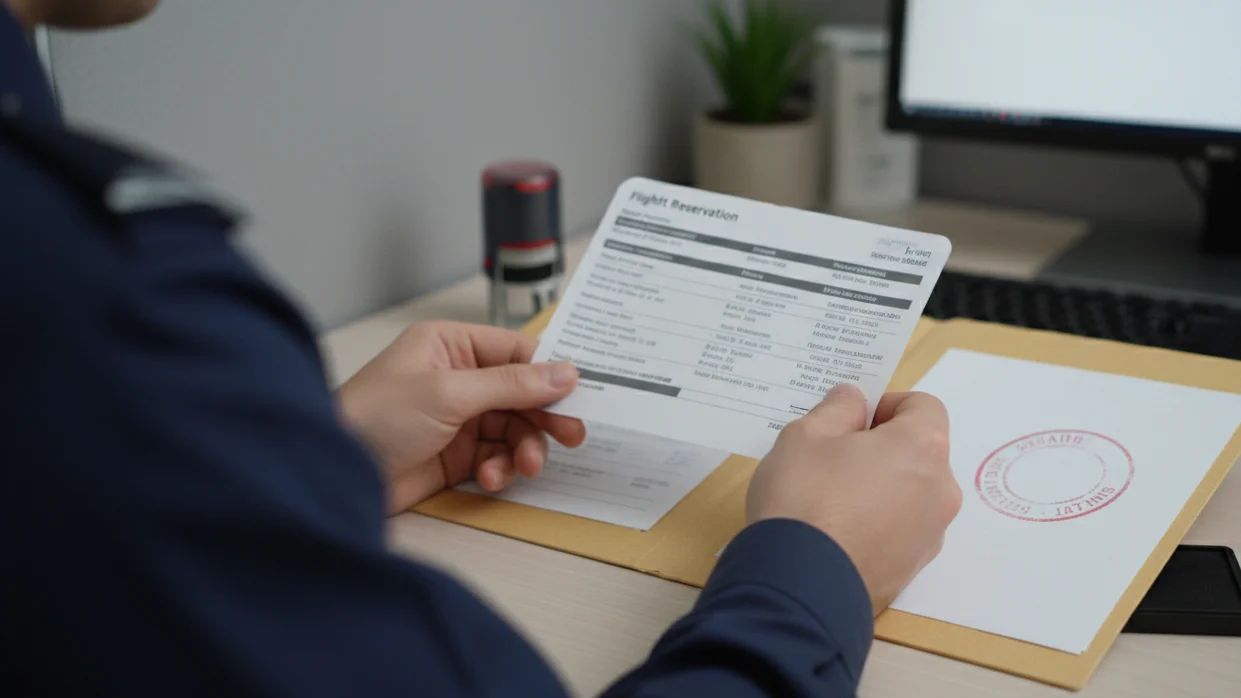
Is It Mandatory To Show Paid Flight For Long-Term Visa?

Is It Mandatory To Show Paid Flight For Long-Term Visa?

Long-Term Visa Flight Requirement Explained: Paid Ticket or Reservation?

Your university start date is set. Your visa decision is not. The checklist says “flight ticket,” and suddenly you’re wondering if the safest move is paying for a one-way now. Long-term visas make this tricky because officers want a credible travel plan, but they also notice when dates look forced or too certain for an unknown processing timeline.

In this guide, we help you decide when a paid ticket adds real strength, when it adds needless refund risk, and what to submit instead to stay credible. We’ll show how to match your itinerary to start dates, insurance, and housing timelines, how to avoid route patterns that trigger extra scrutiny, and what to do if you already bought a ticket and the date no longer fits. Choose a dummy ticket booking that stays verifiable while your long-term visa dates are still moving.
 

paid flight for long term visa is a common source of confusion for travelers in 2026 as different embassies apply varying documentation rules. Many long-term visas do not require a fully paid airline ticket, but instead look for a structured travel plan that demonstrates your intended entry into the country without obligating you to commit financially before approval.

Visa officers primarily verify whether your proposed travel timeline is logical, consistent with your purpose of stay, and supported by credible documentation. A provisional reservation or travel plan is often sufficient, provided it aligns with your long-term stay documentation and avoids mismatches in dates or identity details that could delay processing.

Last updated: February 2026 — Based on updated long-term visa guidelines, embassy verification practices, and applicant documentation trends.

When embarking on your long-term visa journey, effective early-stage visa planning is crucial to avoid unnecessary financial commitments while meeting all documentation requirements. Many applicants face uncertainty around processing times, making it essential to secure a flight reservation for visa that demonstrates serious travel intent without locking in non-refundable costs. This is where innovative tools come into play, allowing you to generate temporary flight itineraries that align perfectly with your application timeline. A standout solution in this space is using a dummy airline ticket generator with PNR for visa. These generators provide verifiable dummy ticket for visa documents complete with authentic Passenger Name Records (PNR), serving as reliable itinerary for visa submissions accepted by many embassies. By opting for such tools, you eliminate the risk of purchasing actual tickets that may need cancellation if your visa decision is delayed, saving both money and stress during the application phase. This approach not only simplifies the visa reservation process but also lets you focus on strengthening other aspects of your file, such as financial proofs and supporting letters. Whether you're applying for a student visa, work permit, or family reunion, having flexible flight booking for visa options ensures your application remains credible and professional. Start exploring these resources today to build a robust, risk-free plan that boosts your chances of approval.


When A Paid Flight For Long-Term Visa Becomes Important (And When It Doesn’t)

A long-term visa file often has one fixed anchor and one moving piece. Your start date is fixed by a school, employer, or family timeline, but your approval date is controlled by the embassy.

The “Mandatory” Myth: What Officers Are Really Trying To Confirm

For a German national visa (work or study), the case officer is usually checking whether your travel plan fits your legal entry window and the purpose stated in your documents, not whether you already spent money on airfare.

For a UK Student visa, the question behind “flight details” is often simple: do your dates look like a real move tied to your course start, or a rushed plan that will fall apart if processing takes longer?

For a Canadian study permit, officers typically read travel proof as a credibility signal. They want to see planning that matches your program timeline and your funds, not a ticket that forces a date you cannot control.

Situations Where A Confirmed Ticket Strengthens Applications

For a Japan long-stay category that has a clear reporting requirement, a paid ticket can help when your entry timing is genuinely locked, and you can explain why that date is realistic.

For an Australian Student visa (subclass 500), a paid ticket can be useful when your orientation schedule is confirmed, your accommodation start date is set, and the flight date sits neatly inside that plan.

For a French long-stay visa tied to a specific contract start, paying can support your narrative if it shows you are ready to arrive on time and you have the flexibility to change dates if the visa decision shifts.

Paying early works best when these three items are all true for your visa type, such as a Netherlands work permit or a Spain study visa:

  • Your departure window is closed and stable.

  • Your ticket is changeable or refundable in a way you understand.

  • Your flight date matches your official start date logic.

Situations Where Paying Early For Flight Or Hotel Booking Adds Unnecessary Risk

For a U.S. F-1 visa, buying a fixed, non-changeable flight weeks before the interview can backfire financially because the interview outcome and administrative processing timelines are not yours to schedule.

For a Portugal D visa, embassies often accept a reservation because processing times can stretch. Paying early can create a date mismatch that you then have to explain, change, or absorb as a cost.

For a Swedish residence permit route where decisions can vary by case volume, a paid ticket can look like false certainty if it sits too close to your intended move date and your file does not show how you will adjust.

In long-term cases, the bigger risk is not rejection. It is looking inconsistent. A paid ticket dated before your employer's start date for a UAE work visa, or far after your university start date for an Ireland study visa, can raise the same doubt: does your plan actually align with what you submitted?

The Three Long-Term Visa Types That Behave Differently

For a study visa like the UK Student route, your documents often provide a clear start date, but your arrival can be a range. Officers expect some flexibility as long as the plan stays credible.

For a work visa, such as a German national visa or a Polish work permit, your contract start date matters, but relocation timing can shift due to housing, HR onboarding, and local registration steps that happen after arrival.

For family reunion visas, such as Finland or Denmark, the travel date is frequently dependent on approval timing and family logistics. A paid ticket can be unnecessary if it forces a date that is not yet knowable.

These categories differ in how much “date certainty” is reasonable. That is why the same paid ticket that looks organized for a Japan intake can look premature for a family reunification case in Norway.

A Quick Decision Map You Can Use In 60 Seconds

For a study visa like Canada or Australia, paying can make sense when your departure is close, and your entry is tied to a confirmed campus schedule. If your travel is still a guess, a reservation usually reads cleaner.

For a work visa like Germany or the Netherlands, pay only when your employer's start date is near, your relocation timeline is confirmed, and your ticket can move without a major penalty.

For family reunion routes like Spain or Sweden, treat “flight proof” as planning evidence, not a commitment test, unless the consulate explicitly instructs otherwise in your appointment checklist.

A practical way to decide on any long-term visa category:

  • If your travel date is within the next 30 to 45 days and your start date is fixed, a paid ticket can help if it is truly adjustable

  • If your travel date is beyond 45 days or processing is unpredictable for your consulate, a verifiable reservation is often the safer play.

  • If you cannot explain why that exact date makes sense for your visa type, do not lock it with payment yet.

For a September intake on a UK Student visa, you can present a travel plan that matches the CAS start date without gambling on a single flight day. Embassies accept dummy tickets as well if you use a realistic arrival window that fits typical pre-term steps like settling housing and completing registration.

Keep the itinerary logic simple and defensible:

  • Arrive 7 to 14 days before classes if you need time for housing and campus setup.

  • Match your insurance start date to the earliest plausible arrival.

  • Avoid a flight date that lands after mandatory orientation if your university has fixed reporting.


How Embassies Evaluate Your Flight Proof In Long-Stay Files

How Embassies Evaluate Your Flight Proof In Long-Stay Files

A long-stay application gets read like a timeline, not a travel brochure. Your flight proof is one of the easiest places for an officer to spot mismatches, overcommitment, or a plan that does not fit your own documents.

The Consistency Test: Do Your Dates Match The Rest Of Your Documents?

Officers usually start by checking whether your flight date makes sense against the documents that control your legal and practical start.

For a UK Student visa, the flight should sit inside a believable pre-arrival window before classes, registration, or orientation. A flight after your stated start date forces an obvious question: how do you attend on time?

For a German national visa (work or study), the flight date should not collide with the start date on your contract or admission letter. If you fly too early, the file can look premature. If you fly too late, the plan can look unmanaged.

These are the common long-stay date mismatches that trigger follow-up:

  • Flight date earlier than your insurance start date

  • Arrival date that conflicts with housing check-in or move-in windows

  • Travel date that ignores a required reporting date or onboarding

  • A return flight that implies you will leave before the stated long-term purpose begins

Keep your timeline tight. If your start date is fixed, your flight should look like it was chosen because of that start date, not despite it.

The Route Logic Test: Does Your Itinerary Look Like A Real Person’s Plan?

Route logic is where long-stay flight proof often fails quietly. Officers do not need airline expertise to notice when an itinerary does not match your declared destination.

If your admission letter says you will study in Lyon, landing in a different country, and then showing an unaddressed gap looks messy. If your work contract is in Dubai, a plan that lands far from your place of work with no onward plan creates friction.

Long-stay routes read best when they show three things:

  • The arrival city is plausible for where you will live, study, or start work

  • The connection time is realistic for immigration and baggage

  • The travel path matches how people actually relocate for that visa type

One-way versus return also matters here. For a relocation visa, a one-way ticket often looks normal. A return flight can still be fine, but it must not contradict your stated purpose. A “cheap return” that suggests you will exit before your program or contract starts can create avoidable confusion.

The Flexibility Signal: What A Fully Paid Ticket Accidentally Communicates

A paid ticket can send signals you did not intend, especially in long-stay categories where decision timing is uncertain.

If your ticket is fixed and dated very close to your appointment or interview, it can look like you assumed approval on a schedule you do not control. That can create pressure in the file, even if you never say it.

This is the practical difference officers feel when reading your flight proof:

  • A flexible plan says: You are ready to travel after approval

  • A rigid paid plan can imply: You must travel on this exact date

For a U.S. F-1 interview case, that rigidity can be risky because administrative processing is unpredictable. For a Portugal D visa, rigid dates can look like you are forcing a move before the process finishes. The issue is not that payment is “bad.” The issue is when the payment makes your timing look unrealistic.

The Verifiability Check: What Gets Looked At (Even When They Don’t Tell You)

Even when the checklist only says “flight booking,” officers often evaluate whether the document looks internally consistent and traceable.

These small details matter more in long-stay files because your application is already document-heavy. When one page looks off, it stands out.

Check for these verifiability cues before you submit:

  • Your full name matches the passport spelling and order, including middle names

  • Passport number and date of birth, if shown, are correct and consistent

  • Booking reference formatting looks natural and is not edited

  • The flight segments align with real-world routing and timing

If you submit multiple versions, keep them consistent. A changed date in one place but not another can look like a patchwork file. Officers tend to trust a clean, stable document set more than a stack of revisions that do not match.

The “Too Perfect” Pattern In Long-Term Files

Long-stay applications sometimes get flagged for looking constructed rather than planned. The “too perfect” pattern is not about luxury. It is about sameness and improbability.

Officers see thousands of files. They notice when an itinerary looks like a template instead of a personal plan.

The common “too perfect” triggers include:

  • Exact, repeated flight numbers and times that appear across many applicants

  • Impossibly tight connections that ignore immigration reality

  • Routing that adds unnecessary countries without a reason tied to your residence or destination

  • Dates that look optimized for the appointment rather than the start of your program or job

A long-stay flight plan should look boring in a good way. It should look like the simplest route that gets you to the city where your new life starts.

What you do need is a clear explanation of the logic behind your travel plan. Keep it short and factual:

  • Show an itinerary that departs from your actual departure city

  • Make sure your arrival city matches your stated destination for study, work, or reunion

  • If your file includes address or employment evidence in a different city, keep the plan consistent with that reality

The goal is simple. Your appointment location should look like an administrative detail, while your flight proof looks like a realistic relocation plan.

Navigating the complexities of visa documentation often leads applicants to seek convenient solutions for their flight needs. The ability to book dummy ticket online for visa offers tremendous advantages, particularly when embassy requirements demand proof of travel plans but processing timelines remain unpredictable. Online services have revolutionized how travelers prepare their applications by providing immediate access to professional-grade documents. One highly recommended method is to book dummy ticket online for visa risk-free PDF PNR through trusted platforms. These services ensure security through encrypted transactions, deliver instant PDF downloads with verifiable details, and create documents that comply fully with embassy standards for reservation for visa. Users appreciate the peace of mind knowing their flight reservation for visa will pass scrutiny without any actual flight commitment. Beyond convenience, this process emphasizes quality and compliance, producing embassy-approved dummy tickets that function effectively as visa booking proof or flight ticket for visa evidence. The instant nature means you can integrate them seamlessly into your application package, maintaining consistency across all your supporting materials. For anyone preparing long-term visa files, leveraging such online booking options represents a smart strategy that combines efficiency, safety, and reliability to support a successful outcome.


Safer Alternatives To Paying Early (Without Looking Unprepared)

Safer Alternatives To Paying Early (Without Looking Unprepared)

Long-stay visas reward planning that can survive delays. You can show a solid travel plan without locking yourself into full payment before you control the decision timeline.

The “Flight Window” Method: Show A Range Without Losing Credibility

A flight itinerary for a long-term move should look date-aware, not date-obsessed. When you cannot responsibly pick one exact departure day, build a narrow window that matches your start obligations.

Use a window that ties to something in your visa documentation:

  • A university reporting period for a Schengen visa, long-stay route, or a national study visa

  • An employer onboarding week for a work permit

  • A family reunification timeline that begins after visa approval

Keep the range tight. Ten to twenty-one days often reads more realistic than a vague month-long plan. Pair it with a simple planned itinerary line like: “Intended departure within X to Y, after approval, to meet the start date.”

This keeps travel intent clear while acknowledging embassy processing reality.

The Reservation-Plus Strategy: What To Submit Alongside A Flight Reservation

A flight reservation works best when it looks like one piece of a coherent pack, not the only proof you prepared. In long-stay cases, officers often compare the reservation against other documents for internal logic.

Build a small supporting stack that matches your visa requirements:

  • A start-date document from the destination country institution or employer

  • Travel insurance dates that begin before or on your earliest plausible arrival

  • A short note that explains why you are using a temporary flight reservation until approval

  • Any other documents that lock your schedule, like a lease start or orientation schedule

Avoid burying the file under extras that create conflicts. If you attach a hotel booking or hotel reservation for a long-stay relocation, make sure it does not contradict your stated housing plan. A mismatched flight hotel bundle can look like it was assembled from unrelated parts.

Your goal is a clean, consistent travel itinerary that supports your purpose, not a thick packet that invites comparison errors.

Refundability Rules: If You Pay, Pay In A Way That Doesn’t Trap You

Sometimes you will choose a confirmed ticket because your timeline is firm. If you do, treat refund terms as part of your visa application strategy, not a last-minute detail.

Check these points before you commit to fully paid tickets:

  • What counts as a refundable ticket in practice, not in marketing language

  • Whether changes require a fare jump to full price, even when the fee is low

  • How cancellation works on non-refundable flights, including taxes and service charges

  • Whether you can change the passenger name record if you spot an error

A real ticket can be flexible, but only if the rules match your risk tolerance. If the only safe outcome requires losing money, you are taking on financial risk for a document that may not add decision value.

The “One-Way With Logic” Option For Long-Term Visas

A one-way ticket can be the most honest flight proof for long-stay categories. It matches the reality of relocation and avoids inventing exit dates you cannot justify.

This works best when your paperwork already explains your long-stay reason:

  • A work contract that starts soon after arrival

  • A study admission letter with a clear start date

  • A residence pathway that assumes you will remain until the permit is issued

If you worry about onward travel questions, anchor your answer in lawful status. You can state that you will comply with conditions and finalize return plans after you receive the residence document. That is cleaner than guessing a return date that conflicts with your purpose.

If your appointment is close and you need verifiable flight reservations that embassies accept for visa purposes, BookForVisa.com is an online service provider that can issue a verifiable dummy ticket with a valid PNR and a PDF.

Mini Checklist: What Your Flight Proof Must Not Do

Before you submit, run a simple quality check that matches how visa officers read long-stay files:

  • Do not pick a specific flight that lands before you can legally or practically start.

  • Do not rely on screenshots that cannot be verified directly through airline websites or an official airline website workflow.

  • Do not mix routes that look illogical for major airlines or low-cost carriers in the same trip without a reason.

  • Do not create contradictions between your flight reservation and travel insurance dates.

  • Do not present a travel agency printout that looks altered or inconsistent with an official airline format.

  • Do not assume embassies worldwide will treat proof the same, even if embassies advise similar checklists.

  • Do not pay full price for a document that could become non-refundable the moment your dates shift.

  • Do not introduce extra noise that increases visa rejection risk, especially on a Schengen visa application or a U.S. visa file.

If you already made the purchase and the dates are now awkward, the next step is not panic booking from airline websites, but presenting what you have in a way that stays consistent with the rest of your file.


If You Already Bought A Ticket: How To Present It Without Creating Problems

A paid ticket can still work in a long-term visa file, but it needs to fit the story your documents already tell. The goal is simple: make your ticket look like a sensible plan, not a deadline you are trying to impose on the embassy.

First, Audit Your Ticket Like An Officer Would

Start by reading your ticket as if you were reviewing a German national visa or a UK Student file with twenty attachments. Officers scan for mismatches fast.

Check these items first:

  • Name format: Passport spelling, order, and spacing must match exactly

  • Route logic: Arrival city should match where you will study, work, or register

  • Date logic: Arrival must make sense against your course start, contract start, or reporting date

  • Document alignment: If you submitted travel insurance dates, they must not start after your flight

  • Consistency across pages: If you have multiple PDFs or versions, dates and passenger details must match

For a French long-stay visa linked to an employment contract, a ticket dated before your contract start can look premature unless you can explain the gap. For a Canadian study permit, a ticket after your classes begin can look unmanaged unless you show how the institution handles late arrivals.

How To Explain A Paid Ticket Without Sounding Like You’re Forcing The Outcome

Keep your explanation short and administrative. One clean sentence is usually enough, especially for long-stay categories where processing time is variable.

Use language that shows flexibility and respect for the process:

  • “This booking reflects our intended travel plan, and travel will occur after approval within the stated window.”

  • “The ticket is changeable, and the date will be adjusted if the decision timeline shifts.”

Avoid lines that sound like pressure. Do not imply you must travel on that date. For a U.S. F-1 case, officers are used to seeing plans change around interview outcomes and administrative processing. For a Portugal D visa, officers expect you to plan, but they also know timelines move.

If your airline confirmation includes change rules, attach that page. If it does not, add a short proof such as a fare rules summary or the airline’s change policy page for your fare class. Keep it factual.

What To Do If Your Ticket Date Is Now Too Early

This happens when the embassy timeline stretches or your appointment moves. Treat it as a scheduling issue, not a credibility crisis.

First, decide whether you can adjust the date without creating new contradictions. For a UK Student visa, your adjusted flight should still land before your first mandatory academic requirement. For a German work visa, the adjusted date should still support your contract start and any onboarding commitments.

Then do two things:

  • Update the flight date and submit the latest confirmation only

  • Ensure any other time-based documents match, such as the insurance start date or the initial housing check-in

If you cannot change the date immediately, you can still submit the ticket, but add a one-sentence note that the travel date will be revised after visa issuance. This works best when your ticket is clearly changeable, and your start-date document supports the timing.

What To Do If Your Ticket Is Non-Refundable

A non-refundable ticket is not automatically a problem for a long-term visa. The risk is financial, and the visa risk comes from how you present it.

Your job is to prevent two officer reactions:

  • “This applicant is locked into a date they cannot justify.”

  • “This date looks disconnected from the purpose of stay.”

If your date is reasonable, keep it simple. Submit the ticket as travel proof and do not over-explain.

If your date is no longer reasonable, choose one clear path:

  • Rebook to a realistic window that matches your start documents

  • Hold the ticket as proof of intent and submit a short note that travel will be rebooked after approval if needed

For an Australian Student visa, a ticket that lands close to orientation looks coherent even if it is non-refundable. For a family reunion route like Sweden, a fixed non-refundable date can look premature if it assumes a decision time you do not control. In that case, we recommend pairing it with a clear “after approval” timing statement.

Handling One-Way/Return Confusion In Long-Term Visas

Long-term visa files are sensitive to mixed signals. A return flight can accidentally suggest you plan to leave early. A one-way can raise a question if the officer expects you to show you understand compliance.

Use the visa type to anchor the interpretation:

  • For relocation visas like Germany national work or a long-stay residence route, a one-way ticket often fits the purpose.

  • For study visas like the UK Student route, a one-way ticket can still fit, but your documents should clearly show enrollment and lawful stay intent.

  • If you bought a return for price reasons, make sure the return date does not conflict with your program or contract period.

If you submit a return ticket, pick a return date that does not create an obvious contradiction. A return that lands before your course even ends forces unnecessary questions. If your destination country expects you to remain under a residence permit, a return date may indicate that you misunderstood the category.

A Last-Minute Visa Slot Opens, But Your Paid Flight Is Two Weeks After Your Course Start

Imagine an applicant flying out of Mumbai for a UK Student visa gets an earlier appointment, but their paid flight lands two weeks after the course start date on the CAS. The ticket is paid, but the timeline now looks wrong.

Fix the problem by aligning the file to the academic reality:

  • Ask the institution for a short written confirmation on the acceptability of late arrival, if available

  • Move the flight forward into a realistic pre-class or early-class window, if change rules allow

  • Update travel insurance dates if they were tied to the original flight

  • Remove older flight versions from the submission set to avoid a mismatch

If changes are not possible before the appointment, submit the ticket with a short line stating you will rebook immediately upon visa approval to meet the institutional reporting requirement, and ensure the rest of the file supports that plan.


Make Your Long-Stay Flight Proof Match Your Real Timeline

For long-stay routes like a UK Student file, a German national visa, a Portugal D visa, or a U.S. F-1 interview case, the strongest flight proof is the one that matches your start date logic and still works if the embassy timeline shifts. A paid ticket is not a universal upgrade. It only helps when the date is truly defensible, and your file stays consistent.

You can move forward confidently by choosing the option that protects your money and keeps your plan believable on paper. If you submit a reservation instead of paying, keep it verifiable and aligned with your supporting documents, then stick to one clean timeline from start to finish.

As you finalize your visa preparation, it's important to select documentation that not only meets but exceeds expectations for proof of onward travel. Embassy-approved dummy tickets have become a trusted standard for many successful applications, offering a practical way to fulfill requirements without premature financial exposure. Taking the time to understand these tools can significantly enhance your confidence throughout the process. To gain deeper insights, read our comprehensive guide on what is a dummy ticket and why do embassies require it. This resource explains how such documents serve as legitimate flight reservation for visa evidence, detailing their role in demonstrating commitment while allowing flexibility for changing circumstances. Reliable dummy tickets with proper PNR verification provide the necessary assurance that your plans align with your intended long-stay purpose. In addition to choosing quality providers, always cross-check that your chosen itinerary for visa matches other elements like insurance coverage and accommodation plans. By prioritizing verifiable and professional options, you minimize potential issues during review. Don't leave this critical component to chance—explore these solutions now to ensure your visa application presents the strongest possible case for approval and enjoy a smoother path to your new destination.

More Resources

Related Guides

About the Author

Visa Expert Team — With over 10 years of combined experience in travel documentation and visa assistance, our editorial team specializes in creating verifiable flight and hotel itineraries for visa applications. We have supported travelers across 50+ countries by aligning documentation with embassy and immigration standards.

Editorial Standards & Experience

Our content is based on real-world visa application cases, airline reservation systems (GDS), and ongoing monitoring of embassy and consular documentation requirements. Articles are reviewed and updated regularly to reflect current practices.

Trusted & Official References

Important Disclaimer

While our flight and hotel reservations are created to meet common embassy requirements, acceptance is not guaranteed and may vary by country, nationality, or consulate. Applicants should always verify documentation rules with the relevant embassy or official government website prior to submission.