Short answer: To apply for a Canada visa from India, most travellers submit a visitor visa application online in the IRCC Portal, upload the documents on their checklist, pay CAD 100 plus CAD 85 for biometrics, then give fingerprints and a photo at a VFS centre. A flight reservation for visa files costs $15 per person.
Indian citizens need a visitor visa, also called a temporary resident visa (TRV), to travel to Canada for tourism, a family visit or business. Indian passport holders are not among the nationalities that can use an electronic travel authorization (eTA) for air travel, so the full visa process applies: an online application, fees, biometrics at a Visa Application Centre (VAC) and, if approved, a visa counterfoil placed in your passport.
This guide walks through each step for applicants in India: eligibility, fees in Canadian dollars, how the IRCC Portal works, documents by applicant type under the New Delhi IMM 5881 checklist, financial evidence, invitation letters, biometrics at VFS Global centres, processing times, what happens after the decision, border checks and a planning checklist. Our existing Canada posts cover the flight format, hotel proof and the super visa in depth, so this guide links to them instead of repeating that material.
Facts come from Immigration, Refugees and Citizenship Canada (IRCC) on canada.ca, the New Delhi visa office checklist (IMM 5881) and the VFS Global Canada India site unless another source is named. Fees and rules change, so confirm on those sites on the day you apply.
Key facts: Canada visa from India
- Main visa: visitor visa (temporary resident visa) for tourism, family visits or business.
- Fees: CAD 100 processing per person (CAD 500 maximum for a family of 5 or more) plus CAD 85 biometrics per person (CAD 170 maximum for an eligible family applying together).
- Stay: most visitors can stay up to 6 months; the border officer decides the date.
- Validity: up to 10 years, or until your passport or biometrics expire, whichever comes first; single or multiple entry at the officer's discretion.
- How: online in the IRCC Portal, then biometrics at one of 10 VFS-run VACs in India after you get a biometric instruction letter.
- Local extras: the New Delhi visa office checklist (IMM 5881) asks Indian tourists for a detailed itinerary with proof of air ticket and hotel booking.
- BookForVisa flight and hotel reservations: a flat $15 per person each, real PNR on flights, valid 48-72 hours, free date changes on the booking day only.
Building a Canada visitor visa file? The New Delhi checklist asks tourists for proof of air ticket and hotel booking in the itinerary, so show your planned dates with a verifiable reservation instead of a paid fare.
Get a $15 reservation with a real PNRIn This Guide
- Which Canada Visa Do Indians Need?
- Who Is Eligible for a Canada Visitor Visa?
- How Much Does a Canada Visa Cost From India?
- What Documents Do You Need by Applicant Type?
- How Strong Financial Evidence Looks
- Purpose of Visit Letter and Invitation Letters
- How to Apply in the IRCC Portal Step by Step
- Where Do You Give Biometrics for Canada in India?
- How Long Does a Canada Visa Take From India?
- What Happens After Your Canada Visa Decision?
- What Are Common Mistakes in Canada Visa Applications From India?
- Planning Checklist and Timeline
- What Do Real Canada Visa Applications From India Look Like?
- Frequently Asked Questions
Official-source check: Visa types, fees, the IRCC Portal options and required documents come from the IRCC Apply for a visitor visa page (India selected). Eligibility and basic requirements come from IRCC's Who can apply page. Invitation-letter content comes from IRCC's letter of invitation page. After-apply and arrival steps come from IRCC's After you apply and Prepare for your arrival pages. India-specific documents come from the New Delhi visa office Additional Document Checklist, IMM 5881 (05-2026). Centre locations and VFS steps come from the VFS Global Canada India site. Biometrics fees come from IRCC's biometrics facts page. Processing times come from the IRCC processing times tool. Checked 5 November 2026.
Reviewed for: Visa need for Indian passport holders, visitor visa validity and stay, IRCC eligibility tests, IRCC fees and family maximums, IRCC Portal options, the IMM 5881 New Delhi checklist by applicant type, financial evidence, invitation letters, biometrics and VFS centres in India, VFS optional services, processing times, passport request and counterfoil, port of entry checks, incomplete and refused applications, planning checklist, and wording of any flight reservation in the file.
Which Canada Visa Do Indians Need?
If you hold an Indian passport and want to visit Canada as a tourist, see family or friends, or attend business meetings, you need a visitor visa. IRCC describes it as an official document placed in your passport that shows you meet the requirements to travel to Canada. It does not guarantee entry: the border services officer decides at the port of entry.
IRCC lists these purposes in its India application guidance, and each one changes what the New Delhi visa office expects in your file:
- Tourist: holidays, sightseeing and short trips.
- Family visit: seeing relatives or friends, usually with an invitation letter.
- Business: meetings, trade shows and conferences, without entering the Canadian labour market.
- Transit: passing through Canada on the way to another country.
- Other: compassionate reasons, seafarers joining a vessel, or visiting a spouse who has sponsored you for permanent residence.
You do not choose single-entry or multiple-entry yourself. IRCC's Help Centre states that officers review your application and issue the type that fits your situation. A multiple-entry visa can be valid for up to 10 years, or until your passport or biometrics expire, whichever comes first. A single-entry visa is used in limited situations, such as a one-time event or short-term study under 6 months that does not need a study permit.
Studying for more than 6 months or working needs a study permit or work permit instead. Parents and grandparents of Canadian citizens or permanent residents can apply for a super visa; IRCC says super visa holders who entered after 22 June 2023 can stay up to 5 years per entry. Our Canada super visa documents and date checks guide covers that route.
Who Is Eligible for a Canada Visitor Visa?
IRCC's Who can apply page sets the basic tests. You must:
- Have a valid travel document, such as a passport.
- Be in good health.
- Have no criminal or immigration-related convictions.
- Convince an immigration officer that you have ties, such as a job, home, financial assets or family, that will take you back to your home country.
- Convince an immigration officer that you will leave Canada at the end of your visit.
- Have enough money for your stay. The amount depends on how long you stay and whether you stay in a hotel or with friends or relatives.
You may also need a medical exam and a letter of invitation from someone who lives in Canada. Some people are inadmissible and cannot enter Canada, including for criminal activity, human rights violations, organized crime, or for security, health or financial reasons. IRCC publishes separate guidance on inadmissibility.
Minor children (under 18) travelling alone, with one parent, or with someone other than their parents need authorization letters and supporting identity documents. IRCC and the New Delhi checklist both spell out those rules, which are covered again in the documents section below.
How Much Does a Canada Visa Cost From India?
IRCC charges the fees at the end of the online application, payable by a valid credit or debit card. In most cases your total includes the processing fee and the biometrics fee for you and everyone on your application.
| Fee | Amount | Who pays |
|---|---|---|
| Visitor visa processing fee | CAD 100 per person; CAD 500 for a family of 5 or more | All applicants |
| Biometrics fee | CAD 85 per person; up to CAD 170 for an eligible family applying together | Applicants who need to give biometrics |
| VFS optional services | Charged in INR at the VAC (for example courier, SMS, Premium Lounge) | Only if you choose them |
Some applicants are exempt from some or all fees. VFS states that booking a biometrics appointment is free of cost, and it announced new service charges from 1 November 2026, so check its India site for the current amounts. Its optional services include two-way courier (INR 1,802), SMS (INR 179) and Premium Lounge (INR 4,767) at the time of checking; none of these change the IRCC decision time.
What Documents Do You Need by Applicant Type?
Documents IRCC asks every applicant for
All applicants need a digital copy of a valid passport. IRCC says it should be valid for at least 6 months from the date you plan to travel, so renew it before you apply if needed. A minor travelling to Canada needs a letter authorizing the trip. When you apply online, the IRCC Portal produces a personalized document checklist; upload everything on it.
Extra documents from the New Delhi visa office (IMM 5881)
Applicants in India must also follow the New Delhi visa office Additional Document Checklist (IMM 5881). You upload these under Additional documents in the IRCC Portal, or under Letter of Explanation in the new portal. The checklist states that documents in a language other than English or French need a certified translation, that photocopies are enough unless originals are requested, and that false statements or fraudulent documents lead to refusal and a possible 5-year ban from Canada.
For every applicant it lists:
- A valid passport and a copy of the biodata page, plus any old or expired passports.
- The Family Information Form (IMM 5707), fully completed, dated and signed.
- Schedule 1 (IMM 5257 SCH1) if you answered yes to any background question.
- For minors: authorization letters from parents or guardians and their ID copies, available for presentation at the Canadian port of entry.
Employed applicants
IMM 5881 asks for a signed original letter on company letterhead granting leave of absence. It must include your name and position, current salary, date of hire, and your employer's name, address and telephone number. Add two years of income tax returns, six months of bank statements or a bank book, and pay slips if you have them.
Self-employed and business owners
Provide business registration papers, income tax returns for the past two years, bank statements covering six months for personal and business accounts where relevant, and any other proof of ongoing business activity. For a business visitor trip, also include the Canadian invitation letter and your employer or company letter confirming the purpose, duration and who pays expenses.
Students
If you are travelling outside school holidays, IMM 5881 asks for an original letter from your school confirming that you are enrolled and in good standing and that the school has approved your absence. Add parental employment letters on letterhead for each parent (position, salary, date of hire) when the checklist asks for them, and bank documents showing financial history over several months for short-term study under 6 months.
Retired applicants
Provide a retirement certificate indicating the amount of your pension, two years of income tax returns where available, six months of bank statements, and any property or investment papers that show ongoing ties to India.
Tourists (holiday itinerary)
- A detailed itinerary, including proof of air ticket and hotel booking.
- Proof of funds: income tax returns for the past two years and bank statements or a bank book covering the past six months, plus pay slips, pension or business papers if relevant.
- If someone else pays: their signed letter, ID copy and bank certificate, dated within three months of your application, and how they are related to you.
- Previous passports as proof of past travel.
A reservation with a real PNR covers the "proof of air ticket" line without buying a fare before the decision. Our flight reservation for Canada visa from India guide shows the format the visa office sees, and our guide to hotel reservation as proof of accommodation for Canada covers the hotel side. Some travellers search for a dummy ticket for this; what helps is a real, checkable reservation rather than an edited document.
Family visits
The checklist asks for the same proof of funds plus details of your inviter in Canada: an invitation letter with the purpose and length of the visit, a list of people in their household, a copy of their status or citizenship document, proof of their income (such as Notices of Assessment, pay stubs or bank statements) and proof of your relationship, such as a birth or marriage certificate.
Business visitors
Business visitors need an invitation letter from the Canadian company that names the inviter, gives business contact details, describes the activities and trip length, and says who pays expenses, plus an employer letter confirming your role and trip purpose. For trade shows or conferences, include the organizer's registration confirmation. Holders of an official passport need a note from the Indian Ministry of External Affairs. Bank documents should show financial history over several months, with income tax returns and pay stubs.
How Strong Financial Evidence Looks
IRCC does not publish a fixed rupee or dollar amount for visitor funds. Its eligibility page says the amount depends on how long you stay and whether you stay in a hotel or with friends or relatives. The New Delhi checklist makes the evidence concrete for India: two years of income tax returns and six months of bank statements or a bank book, plus employment or pension papers that match the story on your form.
- Statements should be in your name (or clearly linked to a joint account you use) and cover a continuous six-month period.
- Large recent deposits need a short written explanation and source documents, such as a sale deed, gift deed or maturity advice.
- Declared salary, ITRs and credits in the account should tell the same story.
- If a third party pays, IMM 5881 requires their letter, photo ID and bank certificate dated within three months, plus how they are related to you.
- Hotel or host arrangements should match the length of stay you ask for, so the officer can see that the trip cost fits the funds.
Funds alone do not decide the case. IRCC also needs to see ties that will take you back to India, such as employment leave with a return date, property, family responsibilities or ongoing studies. Thin accounts with unexplained deposits, or a trip cost that exceeds what the statements can support, are common weak points.
Purpose of Visit Letter and Invitation Letters
A short purpose-of-visit letter, often called a cover letter, is not a named IRCC form, but it helps the officer read your file in one place. Keep it factual and consistent with the forms and uploads: who you are, why you are going, exact dates, where you will stay, who pays, and what ties bring you back to India. Do not invent itineraries or funds you cannot back up with documents.
When someone in Canada invites you, IRCC may ask for a letter of invitation. IRCC is clear that an invitation does not guarantee a visa; the officer still assesses whether you meet the Immigration and Refugee Protection Act requirements. The person writing the letter is not legally responsible for you after you enter, but they must tell the truth and plan to keep the promises in the letter.
IRCC says the invitation should include, about the visitor: complete name, date of birth, address and telephone number, relationship to the host, purpose of the trip, how long they plan to stay, where they will stay and how they will pay, and when they plan to leave Canada. About the host: complete name, date of birth, Canadian address and telephone number, job title, whether they are a citizen or permanent resident, a photocopy of proof of status (such as a birth certificate, citizenship card, PR card or IMM 1000), and details of their family such as names and dates of birth of a spouse and dependants.
Send the letter to the applicant so they can upload it with the application. For a family visit under IMM 5881, also attach the host's income evidence and proof of relationship. Bring a copy of the invitation to the border if IRCC or the host gave you one; a border services officer may ask to see it.
How to Apply in the IRCC Portal Step by Step
IRCC wants most visitor visa applications lodged online. Its apply page walks through the following sequence once you select India and a purpose such as tourist.
- Confirm the purpose and route: tourist, family, business or transit visitor visa, or another permit if you will study or work.
- Create an account and choose a portal. IRCC offers the IRCC Portal and, if you are 18 or older, applying alone, applying for the first time and not using a representative, the IRCC Portal new version.
- Answer the guided questions and select India as the place you are applying from, so the portal shows the New Delhi visa office requirements.
- Complete the application forms, including the Family Information Form (IMM 5707), and answer the background questions honestly.
- Upload your passport biodata page, the personalized checklist items and the IMM 5881 extras under Additional documents or Letter of Explanation.
- Pay CAD 100 plus CAD 85 biometrics per person by credit or debit card, then submit. Incomplete applications may be refused.
- Wait for the biometric instruction letter (BIL), then book a VAC appointment as soon as possible to avoid delays.
- Give fingerprints and a photo at the VAC, then track status in your account.
- If IRCC asks for an interview, more documents, a medical exam or a police certificate, follow the instructions in your account.
- If approved, IRCC sends a passport request letter; submit your passport through the VAC so the visa counterfoil can be placed in it, then collect it with the decision.
VFS sets out a matching nine-step sequence on its Canada India site, from identifying the visa type to collecting your passport. Use the same name and date of birth as in your passport when booking any VAC appointment. IRCC allows paper applications only in specific situations. If you use a representative, use the Use of a Representative form (IMM 5476); if someone else needs access to your file, use the Authority to Release Personal Information form (IMM 5475).
Where Do You Give Biometrics for Canada in India?
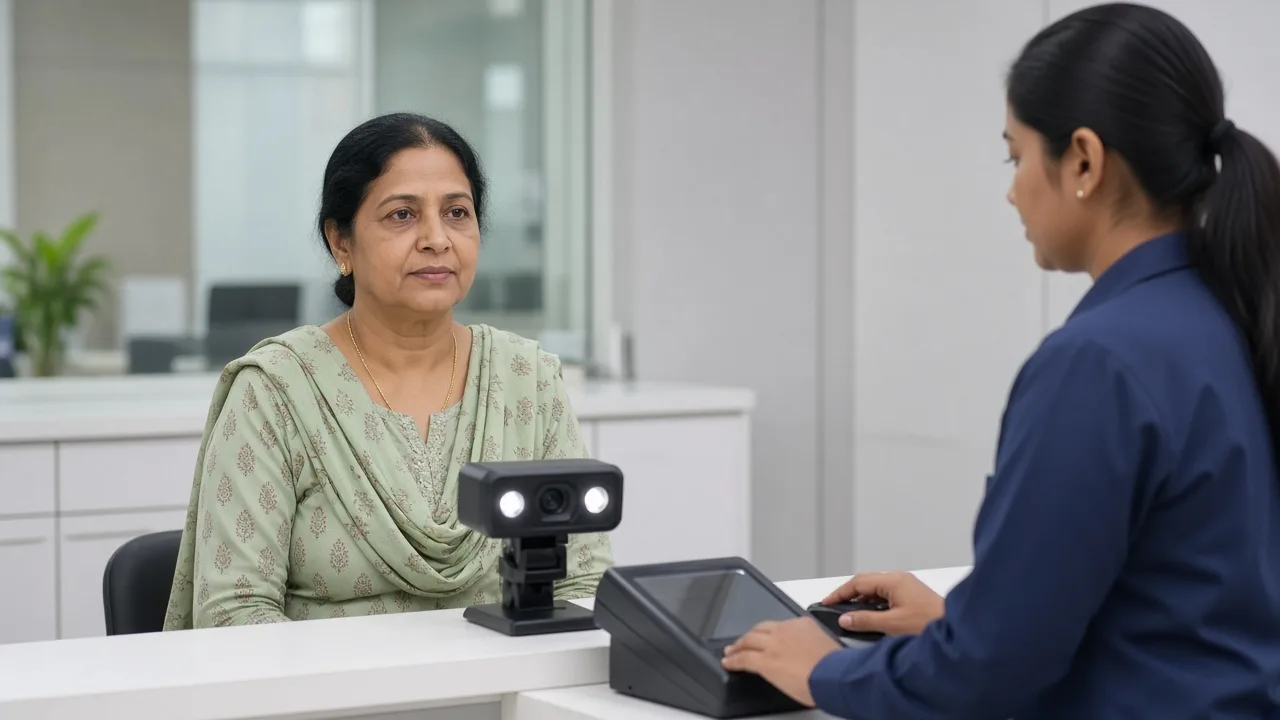
Biometrics are your fingerprints and a photo. IRCC requires them for most temporary residence applications, and says a family applying at the same time pays a maximum of CAD 170. There is no biometrics fee for a transit visa. You do not book before applying: pay the biometrics fee with your application, wait for the instruction letter, then book.
VFS Global is the exclusive service provider for the Government of Canada in India and runs 10 Canada Visa Application Centres, including Ahmedabad (Shree Balaji Agora Mall, Motera, open Monday to Friday, 09:00 to 17:00) and Mumbai, where VFS warns that parking is limited during construction. Find the full list, addresses and hours on the VFS site before booking.
- Bring your biometric instruction letter, your passport and the appointment confirmation.
- Book quickly after the letter arrives; IRCC warns that delays here slow processing.
- VFS offers optional services such as Premium Lounge, courier and SMS updates, but they do not change processing time.
- Beware of job offer and appointment scams: VFS says it does not charge for biometrics appointments.
How Long Does a Canada Visa Take From India?
IRCC does not give a fixed time for every applicant. Its processing times tool shows the current estimate for a visitor visa applied for from India, based on recent applications. On its After you apply page, IRCC says it processes most applications in a few weeks or less, and that times depend on the visa office and on whether you must attend an interview, send more information, get a medical exam or get a police certificate.
- Book biometrics quickly after the instruction letter.
- Upload every item on the personalized checklist and the IMM 5881 list; IRCC says incomplete applications may be refused.
- Apply well before travel and avoid non-flexible bookings until you have the decision.
- Check status online through the method that matches how you applied, and respond quickly to any request for more documents or a passport.
While you wait, a reservation with a real PNR lets you show planned dates without paying for a fare. Order it close to submission, because it stays valid for 48-72 hours.
What Happens After Your Canada Visa Decision?
If the visa is approved
IRCC sends a passport request. Submit your passport through the VAC, where VFS can courier it back or let you collect it. The visitor visa is an official counterfoil placed in your passport. Check whether it allows single or multiple entry and when it expires. A visa can be valid up to 10 years, or until your passport or biometrics expire, whichever comes first, but each stay is set at the border.
At the Canadian border
A valid visa and travel document do not guarantee entry. IRCC's Prepare for your arrival page explains that officers check your identity against the biometrics collected with your application. At major airports, fingerprints are checked at a primary inspection kiosk; at a land border they may be checked in secondary inspection. The officer must be convinced that you are eligible for entry and will leave at the end of your authorized stay. Giving false or incomplete information can lead to refusal of entry.
Most visitors can stay up to 6 months. The officer may stamp your passport or give you a visitor record with a leave-by date. If you do not get a stamp, IRCC says you can stay until the earliest of 6 months from entry, your passport expiry or your biometrics expiry. Carry copies of your invitation letter, proof of funds and accommodation, and any minor-child authorization letters.
Extending your stay
If you want to stay longer than authorized, apply for a visitor record from inside Canada at least 30 days before your authorized stay ends. A visitor record is not a visa. IRCC lists a fee from CAD 100 for that application.
If the application is incomplete or refused
IRCC says it checks whether you have all the documents you need, and that an incomplete application may be refused. If the visa is refused, IRCC gives the reasons in writing. Common gaps include thin proof of funds, weak ties to India, an unclear purpose, missing IMM 5881 items, or documents that conflict with the forms. Reapplying with better evidence only makes sense if your situation or documents have genuinely changed.
What Are Common Mistakes in Canada Visa Applications From India?
- Skipping the IMM 5881 extras because the portal checklist looks shorter.
- Uploading bank statements under six months, or without explaining large recent deposits.
- Leaving the Family Information Form (IMM 5707) unsigned or incomplete.
- Missing the six-month passport validity IRCC advises, then renewing mid-process.
- Delaying the biometrics appointment after the instruction letter.
- Booking paid, non-flexible flights before the decision.
- Using a different name spelling on the VFS booking than in the passport.
- Relying on an invitation letter alone, which IRCC says does not guarantee a visa.
- Paying unofficial agents who promise appointments or guaranteed visas.
Planning Checklist and Timeline
Use this sequence as a working plan. Adjust the weeks to match the current IRCC processing-time estimate for India.
- 8 to 12 weeks before travel: confirm you need a visitor visa, renew your passport if it has under 6 months' validity from your planned travel date, and decide tourist, family or business purpose.
- 6 to 10 weeks before: gather ITRs, six months of bank statements, employer or school letters, and draft your purpose-of-visit letter. Ask any Canadian host for the invitation letter and status proof.
- Application week: create the IRCC Portal account, complete IMM 5707, upload IMM 5881 documents, add a flight and hotel reservation that match your dates, pay the fees and submit.
- Within days of the biometric instruction letter: book the nearest VAC and attend with your passport and letter.
- While IRCC decides: watch your account for requests for more documents, a medical exam, a police certificate or an interview.
- After approval: submit your passport for the counterfoil, check the visa dates, then travel with copies of key documents and any invitation letter.
What Do Real Canada Visa Applications From India Look Like?
Example 1: IT couple from Bengaluru, two-week holiday
Arjun, 31, and Divya, 29, plan 14 days in Toronto, Niagara Falls and Vancouver. Each submits a tourist visitor visa application and pays CAD 100 plus CAD 85, and they upload ITRs for two years, six months of bank statements, employer leave letters, a day plan, a hotel reservation and a flight reservation with a real PNR. After the biometric instruction letter, they book the nearest VAC the same week.
Example 2: retired parents from Ahmedabad visiting their son
Ramesh, 66, and Hema, 62, want three months with their son, a permanent resident in Calgary. They apply for visitor visas for a family visit, attaching pension certificates, their own bank statements, the son's invitation letter with the IRCC-listed host details, his PR card copy, Notices of Assessment, household list and a birth certificate showing the relationship. They compare this with the super visa, which has its own requirements.
Example 3: engineer from Pune at a Toronto trade show
Neha, 35, is attending a trade show for her employer. She applies as a business visitor with the organizer's registration confirmation, an employer letter stating her role, purpose and who covers expenses, and a short itinerary. She will not work for a Canadian employer, which a visitor visa does not allow.
Ready to submit in the IRCC Portal? Get a flight or hotel reservation with a real PNR for $15 per person, matched to the dates in your application, and it can be issued even while you are at the visa centre.
Book your visa reservationFrequently Asked Questions
How do I apply for a Canada visa from India?
Apply online for a visitor visa in the IRCC Portal and select India as where you are applying from. Fill in the forms, upload your passport, the Family Information Form and the New Delhi IMM 5881 documents, and pay the fees. After the biometric instruction letter arrives, give fingerprints and a photo at a VFS centre.
How much is the Canada visitor visa fee for Indians?
IRCC charges CAD 100 per person for a visitor visa, with a CAD 500 maximum for a family of 5 or more. Biometrics cost CAD 85 per person, or up to CAD 170 for an eligible family applying together. Optional VFS services such as courier or Premium Lounge are charged in rupees at the centre.
What documents does the New Delhi visa office ask tourists for?
The IMM 5881 checklist asks tourists for a detailed itinerary with proof of air ticket and hotel booking, two years of income tax returns, six months of bank statements, an employer leave letter or retirement certificate, previous passports, and a sponsor letter with bank certificate if someone else pays for the trip. Translations must be certified.
Do Indians need biometrics for a Canada visa?
Yes, most applicants do. You pay the CAD 85 biometrics fee with the application, receive a biometric instruction letter, then book an appointment at one of the 10 VFS-run Canada Visa Application Centres in India. VFS says booking the appointment is free. Book quickly, because late biometrics can slow processing of your application.
How long does a Canada visitor visa take from India?
There is no fixed time for every applicant. Check the IRCC processing times tool for the current estimate for visitor visas applied for from India. Submitting every document on the personalized checklist and the IMM 5881 list, and giving biometrics promptly, helps avoid delays. Avoid non-flexible bookings until you have the decision.
Do I need a flight ticket for a Canada visa from India?
The New Delhi checklist asks tourists for an itinerary with proof of air ticket, but you do not need to buy a fare before approval. A BookForVisa reservation carries a real PNR, costs $15 per person, stays valid 48-72 hours and allows free date changes on the booking day only, so order it close to submission.
How long can I stay in Canada on a visitor visa?
Most visitors can stay up to 6 months from the day they enter. The border services officer may set a different date, which appears in your passport or on a visitor record. The visa itself can be valid up to 10 years, or until your passport or biometrics expire, whichever comes first.
Friendly reminder: BookForVisa prepares flight and hotel reservations to support visa applications and onward-travel proof. Requirements vary by destination, consulate, visa category and applicant situation. A reservation supports your file; it is not a paid ticket for travel and does not guarantee visa approval or entry.