Short answer: A flight itinerary for visa can include a cross-border drive when the entry airport, road segment, overnight stays and eventual exit form a feasible, truthful route. Show the actual border crossing and car-rental permission, and use the flight or other exit evidence the receiving authority requests. Do not invent a return flight when the trip really ends by road or at a different airport.
A visa officer reads your itinerary the way a border guard reads a road sign. Everything must point in the same direction. Add a rental car that crosses a land border, and the story gets harder to tell. Your flight lands in one city, your wheels carry you into another country, and your departure may leave from a third airport. Small gaps cause big questions.
This guide helps you decide where the flights should start and end, how the car leg appears on paper, and which dates anchor the whole plan. Each choice affects how an embassy judges your trip. Get these three right, and your paperwork reads as one clear route. Cover your flight legs with a flight reservation that matches your road route.
Key facts
- A flight into one country and out of another can be coherent when the road route connects them.
- Check rental-company permission and insurance for every planned border crossing.
- A day-by-day timeline should explain where each night is spent, including host or transit nights.
- The relevant visa authority decides which entry, exit and supporting documents it needs.
- A reservation with a PNR is not automatically a paid ticket or a visa guarantee.
In This Guide
- Why A Border Crossing By Car Changes How Embassies Read Your Flights
- Building A Day-By-Day Itinerary That Covers Every Kilometer And Every Night
- Picking A Flight Structure That Holds Up When The Road Takes Over
- Catching Mismatches Between Your Forms, Flights, And Road Before A Reviewer Does
- A Clean Itinerary Makes The Road Part Easy To Believe
Official-source check: The European Commission’s Schengen visa guidance explains how to identify the main destination and the supporting documents for the intended stay and departure. It does not impose a single round-trip-flight format for a route that includes road travel. Check the specific consulate’s checklist and the rental company’s cross-border conditions before committing to the route.
Reviewed for: open-jaw flights, genuine land exits, car-rental permission, lodging dates, and unsupported ticketing claims.
Why A Border Crossing By Car Changes How Embassies Read Your Flights
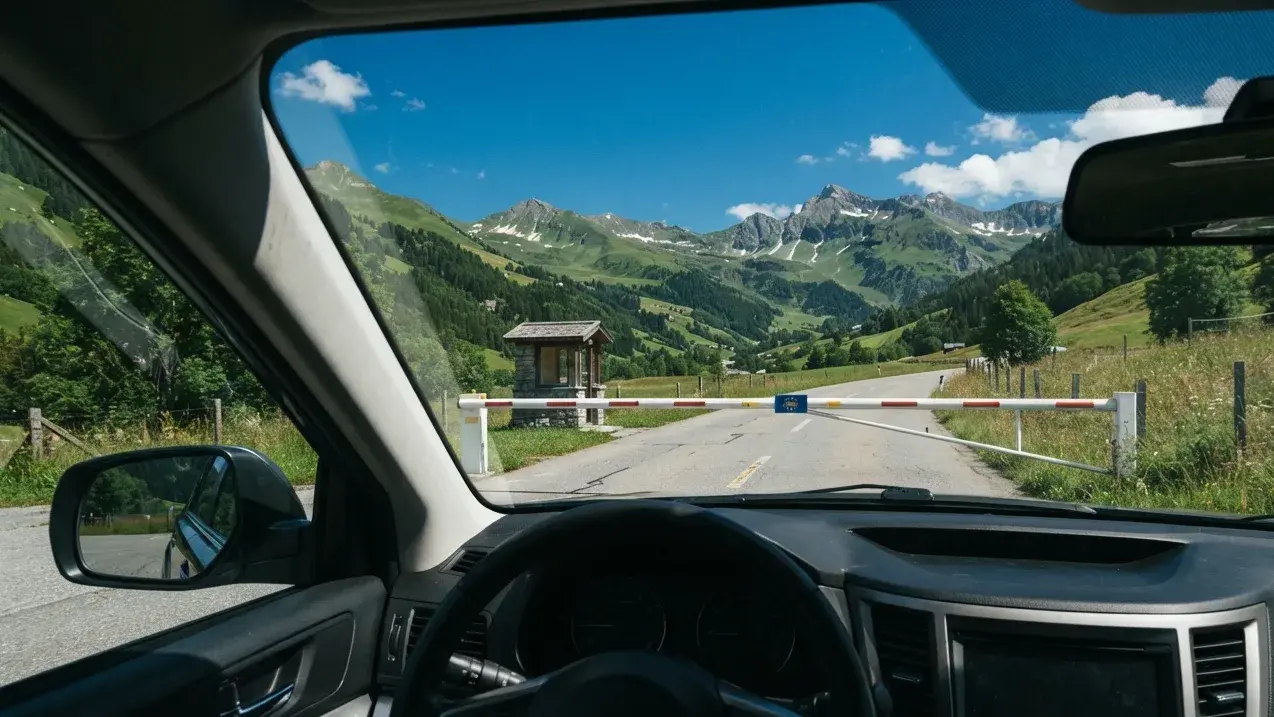
A flight itinerary supports the visa application process. It carries even more weight when a car takes you across a border, because reviewers need one believable story that explains how you enter, move, and leave.
Route Logic: Where Your Flight Legs Should Start And End When A Car Fills The Middle
Think of the car as a bridge between two flights. You land in one city, drive across a border, and fly out from another. Embassies want to see that bridge, not a gap in your journey.
A flight itinerary is essential for visa applications. It should include arrival and departure dates. Those two anchors frame everything the car does in between, from the first kilometer to the last.
For a Delhi-to-Munich flight followed by a drive through Austria to Slovenia, the inbound airport is clear. If the traveler flies home from Ljubljana, show that actual outbound flight; if the traveler leaves another way, document the real exit instead.
Do not apply a blanket Thailand round-trip-ticket rule to every visa category or nationality. Check the current Thai authority’s exact checklist. If the plan genuinely leaves by road, ask what exit evidence is accepted before presenting an unrelated return flight.
Show the real direction of travel. If you enter by air and leave by land, say so and provide the evidence the receiving authority accepts. If the drive ends at another airport, show the onward flight from there.
If you plan two border crossings, treat each one as a separate leg with its own date. A route that passes through a third country needs a line too, even if you only drive through it. Transit countries can have their own entry rules for visitors.
Watch your visa type as well. A single-entry visa and a plan that leaves and re-enters a country by road do not mix. If your drive loops back through the same country, confirm that your visa allows a second entry before you submit.
What A Cover Letter Must Say About The Road Portion
A short route explanation can help when the flights alone do not show the cross-border drive. It is not universally mandatory; follow the application instructions and keep it factual.
State the genuine purpose consistently in the form and supporting documents. If a cover letter is requested or useful, use one plain sentence to explain the trip rather than adding an unsupported claim.
Keep the letter to one page and cover these points in order:
Arrival city, country, and date
Each overnight stop and the country it sits in
The border crossing you expect to use and the day you expect to cross
Departure city, country, and date
The type of vehicle: rental, personal, or borrowed
Avoid vague phrases such as "drive around the region." Name the cities and the crossing. Specific details signal a real plan, and vague ones signal a plan that does not exist yet.
Where relevant, show the car-rental plan and ask the company whether the agreement permits the intended border crossings. Insurance and vehicle requirements vary by country; the visa checklist controls which documents to attach.
Most travelers can find car rentals that permit cross-border driving, but each company sets its own rules. Confirm the policy in writing before you quote it in your letter. Passengers listed on the rental agreement should also match the names on your flight reservation.
How One Missing Leg Triggers Extra Document Requests
Immigration may request additional documents if something is unclear. A missing leg is the most common cause. If your pages show a flight into Munich and a flight out of Ljubljana with nothing between them, the reviewer has to fill that gap alone.
Gaps cost time. Inconsistencies can delay visa processing or lead to rejection. A clarifying paragraph and one rental confirmation remove that risk at almost no cost.
Extra requests also hit applicants who bring a car but no explanation for it. Reviewers see a rental confirmation in one corner and two flights in another. Without a line that links them, the pieces look unrelated. One sentence tying the car to the flights closes that gap before it opens.
Embassies require a coherent travel itinerary for visa applications. Coherent means every leg connects to the next one without a question mark. A reviewer working through a stack of files rewards pages that are easy to follow.
Reviewers usually run three silent checks:
How does this person enter the country?
How do they move between countries?
How do they leave?
If your pages answer all three, the file moves faster. Try a quick test. Hand your itinerary to a friend who knows nothing about your trip, and ask them to trace your path with a finger.
Any hesitation shows where to add detail. Once the story holds together, you can turn it into a schedule that leaves no day unexplained.
Building A Day-By-Day Itinerary That Covers Every Kilometer And Every Night
A road crossing takes real time. Estimate the route using the actual distance, border procedures, stops and rental terms rather than a fixed number of hours.
Mapping Each Day From Landing To Final Exit
Each day of travel should include detailed entries for all locations and activities. For a cross-border drive, that means more than city names. Write the pickup time, the driving legs, the border stop, and the overnight address.
Build the schedule as a simple table with five columns: day, date, location, activity, and transport. Keep each row short. A reviewer should scan the whole thing in two minutes.
Compare two possible routes before you commit. A scenic road may add two hours, and the faster routes sometimes use toll roads that certain rental companies restrict.
Choose a daily driving limit and stick to it. Five or six hours behind the wheel is a sensible ceiling for most visitors, and it keeps every day believable.
Be honest about travel time. Munich to Ljubljana takes roughly four to five hours without stops. Add fuel, meals, and a border queue, and the duration stretches. A schedule that promises the impossible invites questions.
Time zones deserve a line too. A flight from Delhi to central Europe shifts your clock back several hours, and you land tired. Leave ample time on day one instead of stacking a long drive on top of an overnight flight.
Picking up a rental car the same day your plane lands is possible, but it is a risky promise on paper. Avoid tight same-day airport transfers in your itinerary. Give yourself an easy first night near the airport and start driving the next morning.
Rental desks keep business hours, too. Many close in the early evening, and some shut on Sundays and public holidays. If your flight lands late, book a night nearby and collect the car in the morning.
Land borders in parts of Europe and the Middle East can have limited hours or long queues at peak times. Plan to arrive early at the crossing and build in an extra hour. Customs checks on a rental car take longer when the paperwork is not in the glovebox.
Add sightseeing stops only if they fit. A packed schedule looks careless, but so does an empty one. Two or three realistic activities per day look right.
Matching Hotel Nights To The Road You Plan To Drive
Accommodation should reflect where the traveler actually stays, subject to the checklist. A host stay or night in transit can explain why a particular date has no hotel booking.
Border-to-flight map: Record the inbound airport, car pickup, each country crossed, actual overnight stops, car drop-off and final departure point. Then check rental permission, country entry rules and whether the exit document matches the authority’s request. A one-way road exit may be genuine; do not replace it with a fictitious flight.
Ensure hotel dates align with your flight itinerary dates. The first night should follow your arrival, and the last night should end on or just before departure. A one-night gap is enough to raise a question.
Include hotel bookings and exit plans in the itinerary. The exit plan matters most on the final night. Show where you sleep and how you reach the departure point the next day.
Share the schedule with everyone in your party. If one traveler books a different hotel, the whole file loses its match.
Border towns need extra care. If you expect to cross in the afternoon, book the first night on the side where the crossing makes sense. Let your stays follow the road, not fight it.
Before you finalize, check three things:
Check-in and check-out dates match your day table
Each hotel sits on or near your driving route
The last stay is close to the airport or border exit
Note the parking arrangements for each overnight stop. A hotel in an old town center may have no parking, and a rental car with nowhere to sleep raises a question. A line such as "parking on site" answers it.
Free cancellation helps if the route changes. Keep the confirmation emails in the same folder as your rental papers.
Documents To Attach For The Rental Car And Its Insurance
Include supporting documents for each mode of transportation in the itinerary. The flight gets a reservation. The car gets a rental confirmation. A ferry or train leg gets its own booking.
For the car, attach these items:
Rental confirmation with pickup and drop-off locations
Written permission for cross-border driving, if the company offers it
Proof of travel insurance and vehicle cover
A valid driving licence, plus an international permit where required
Some rental companies add a cross-border fee or exclude certain countries from coverage. Contact the rental office before you submit your application. A short email reply is proof that your plan is workable.
Leave room for luggage in your choice of vehicle. A compact car with four people and heavy baggage is a poor fit for a long drive. Check the vehicle class and the trunk space before you reserve.
Keep digital and paper copies of every document. Border officers sometimes ask for the rental paperwork on the spot, and a phone with no signal does not help.
Insurance deserves a line of its own. Confirm that coverage extends to every country on your route. Safety rules and mandatory equipment differ from one border to the next, so ask the rental desk what the car must carry by law. With the road side documented, the flights need a structure that suits it.
Picking A Flight Structure That Holds Up When The Road Takes Over

Flights bookend your trip, so their shape matters. A structure that suits a simple holiday can create questions when a land border sits in the middle.
Open-Jaw Or Return To Origin: Which Shape Fits A Land Crossing
An open-jaw itinerary lands you in one city and flies you home from another. It pairs naturally with a one-way drive. A return-to-origin itinerary suits a loop, where you collect and drop the car in the same place.
Use a flight pattern that matches the actual trip. A conventional round trip is not the only possible format; an open-jaw route or genuine land departure may be appropriate where accepted by the authority.
Show a clear exit plan in the form the authority requests. If the drive ends in another country, an outbound flight from that country can be coherent, but a traveler may also genuinely leave by rail, road or sea.
Pick airports that sit close to the road you actually drive. An airport three hours off your route forces an unexplained detour, and reviewers notice that kind of gap.
Direct service flights between your start and end points keep the story short. A connection is fine, but each stop adds a line to explain. Show the return journey from the last city on its own page so nobody hunts for it.
Why Locked-In Fares Add Risk Before The Visa Decision
Some official checklists advise against buying non-refundable travel before approval, while others ask for specific ticket evidence. Read the exact instructions and fare conditions before deciding. For the broader reservation-versus-purchase decision, read this flight-reservation planning guide and then use the relevant checklist.
Fare rules vary widely. Even a low-cost airline may charge a cancellation fee, and refund terms differ by fare class. Prices also move as departure nears, so locking in a full fare in advance can cost more than waiting.
A genuine flight reservation may support a visa file where accepted, but it is not automatically a paid ticket. Verify its current status through the issuer-supported channel; a PNR alone does not prove carrier ticketing or consular acceptance. If you are comparing document types, what a dummy ticket means explains a planning reservation without treating it as paid airfare.
Think about family groups too. If three people travel together, the reservation should list all three names on one record. Separate records create separate chances for a mismatch.
Keep the difference between a reservation and a ticket in mind. A reservation holds the route. A ticket commits money. At the visa stage, the reservation does the job.
Avoid any package deal that bundles flights with lodging. Mismatched dates inside a bundle are hard to unwind, and you may have to customize the pieces one by one.
Timing The Flight Reservation Against Your Appointment And Your Rental Pickup
Work backward from three anchors: your appointment, your submission, and your rental pickup. Fix your travel dates only after you know how long the drive really takes. Then book the reservation to match.
A flight itinerary should match visa application dates. Use a professional format for the flight itinerary. That means a clean PDF with every passenger name, flight number, airport, and time. Skip cropped phone screenshots.
Keep your dates a little wider than the drive if your visa timeline is uncertain. A reservation that can move is easier to manage than one that must be rebuilt from scratch.
A reservation may expire before processing ends. Check its actual validity and amendment terms with the issuer; do not rely on a fixed BookForVisa price, unlimited changes or a promise that the record will stay live throughout review.
If the embassy asks for the reservation again, send the same file. Resending a different version with changed details looks like a new story.
You do not need a seat assignment or a boarding pass at this stage. You need a reservation that shows the route, the dates, and the exit. Anything beyond that adds cost without adding proof.
Allow a margin between your flight departure and your rental pickup. If the airline reschedules your arrival, the car desk may not wait. A spare day protects both bookings and keeps your pages consistent. Next comes the part most applicants skip: checking every page against every other page.
Catching Mismatches Between Your Forms, Flights, And Road Before A Reviewer Does
Most delays come from small contradictions, not big mistakes. Reviewers compare your pages line by line, so your paperwork must agree with itself.
The Cross-Check That Takes Ten Minutes
Compare documents that describe the same travel dates and places. Genuine differences, such as an overnight drive or host stay, should be explained rather than forced into false exact matches.
The form, flight itinerary and travel plan should describe the same intended journey. Confirm names against the passport and issuer record, and explain material route or date differences.
Do the check in two passes. First, read for facts. Second, read for logic: does day three really follow day two by road? A date can be correct and still be impossible.
Use this short checklist:
Names: identical across the form, flights, lodging, and rental
Dates: the same arrival and departure on every page
Entry and exit points: the same ones on the form and on the pages
Purpose of visit: the same wording everywhere
Mismatched dates can raise red flags during reviews. Inconsistencies can lead to visa application delays. The fix is cheap. Ten minutes of checking beats weeks of waiting.
A consistent itinerary supports the visa application process. A reviewer who finds no friction has no reason to pause your file. Complete this check one last time on the day you submit, because a late edit often breaks an earlier match.
Buffer Rules For Airport Hand-Offs And Border Queues
A friendly reminder: queues do not follow your schedule. Build a buffer around every hand-off between road and air.
Use these rules as a starting point:
Reach the airport at least three hours before an international flight when you must return a rental car first
Allow time for the drop-off inspection, the fuel check, and the shuttle ride
Never plan a border crossing on the day of an international departure
Treat the return to the airport as its own mini-schedule. List the drive, the car drop-off, the shuttle, and check-in. Write the times down and compare them with the flight departure time. If the gap is under three hours, move something earlier.
Delays are normal. A closed lane, a traffic jam, or a slow inspection can eat an hour. If your itinerary leaves no slack, one delay breaks the whole chain.
Check when a crossing is usually busy, such as weekends and school holidays, and avoid those windows when you can. Early morning is often calmer than late afternoon.
Reviewers know this too. An itinerary with sensible gaps looks like the work of someone who has done the math. One with zero margin looks like a guess.
What To Do If Your Route Shifts After You Apply
Plans change. When yours does, update every page before you tell anyone. A new border means a new hotel, a new rental clause, and possibly a new exit flight.
Prepare a short folder with the old and new version of each page. Name the files clearly so you never send the wrong one.
Keep a one-page change log with the old detail, the new detail, and the date you changed it. If the embassy asks a question, you can answer in one email.
Embassy rules differ across the world, so read the embassy's own rules on updates. Some state that a revised itinerary can be accepted by email, while others expect you to wait for a request. Follow the instruction that is applicable to your file, and do not guess.
If the flights change, the hotel and rental dates often need to move too. Start with the item that is hardest to alter and work outward from it. That order saves repeated edits.
Once every page agrees with every other page, you can stop worrying about the paperwork and focus on the drive itself.
A Clean Itinerary Makes The Road Part Easy To Believe
A cross-border drive does not weaken a visa file. Gaps do. When your flights, hotel nights, and rental papers tell the same story, a reviewer sees a traveler with a real plan and a clear way out of the country.
Start with the exit flight, add the road legs around it, and run the ten-minute cross-check before you submit. A dummy ticket booking that mirrors your route keeps your dates flexible while your application moves.
Need a flight reservation that fits a real cross-border road trip? Review BookForVisa’s current route and change options before ordering.
Review flight-reservation optionsFrequently Asked Questions
Must the return flight depart from the arrival country?
Not universally. An open-jaw flight or genuine land exit can fit a road trip, subject to the visa checklist and entry rules.
Does a rental-car booking prove permission to cross borders?
No. Confirm the company’s written cross-border policy, insurance and any extra fees or restrictions.
Do I need a hotel booking for every night?
Show accommodation as the relevant checklist requires, but a host stay or overnight travel may explain a night without a hotel.
Can a reservation stand in for a paid ticket?
Only where the receiving authority accepts that form of evidence. Label the record accurately and check its status.
Which Schengen country should receive the application?
Follow the current main-destination rule, with first entry relevant if destinations are equally important. Check the specific itinerary with the authority.
What if the road route changes after filing?
Update affected flight, hotel, rental and insurance details and follow the authority’s process for material changes.
Friendly reminder: BookForVisa provides travel-proof documents for planning and visa-application support. Requirements vary by destination, consulate, visa category and applicant situation. A flight reservation can support a file, but it does not guarantee approval, boarding or entry.