
A flight itinerary for visa for sports event travel should make the match calendar, arrival date, hotel nights and return plan read as one believable trip. The strongest file lands early enough for the first fixture, covers every overnight stay, connects each event city logically, and leaves soon after the final confirmed event instead of building an open-ended travel story.
For sports event travel, visa officers notice timing mistakes fast. A flight that lands too close to kickoff, a hotel stay that starts one night late, or a return date that drifts far beyond the final match can make an otherwise tidy application look improvised. When your trip revolves around fixtures, venues, cities and short travel windows, every reservation has to support the same story.
BookForVisa helps you line up your arrival, event dates, hotel nights and departure so the itinerary reads cleanly from start to finish. The goal is not to make the trip look packed or perfect. The goal is to make it credible, proportionate, easy to verify and consistent with the sports event you say you are attending.
Key facts before building a sports event flight itinerary:
- Anchor the flight itinerary for visa around confirmed match dates, not hopeful tournament outcomes.
- Arrive with enough buffer for airport delays, venue transfers, check-in and rest before the first event.
- Make hotel nights match the local landing date, match-city stays and departure timing.
- Use a return date that supports temporary travel intent without stretching the trip beyond the event purpose.
- Check every date after time-zone changes, overnight flights and intercity transfers.
Need a sports-event travel plan without buying final airfare too early? Create a flight itinerary for visa with route, date and passenger details aligned before you submit your file.
Create Your Flight Itinerary for VisaIn This Guide
Official-source check: The EU Visa Code lists purpose-of-journey documents, accommodation evidence, means for return or transit, and information showing intention to leave before visa expiry. Its supporting-document annex specifically references sports events through invitations, tickets, enrolments or programmes where possible. GOV.UK visitor guidance similarly expects evidence that a visitor will leave at the end of the visit and can pay for return or onward travel. Sources: EU Visa Code, GOV.UK supporting documents, and GOV.UK permitted visitor activities.
Build The Flight Itinerary Around The Match Calendar, Not The Cheapest Route
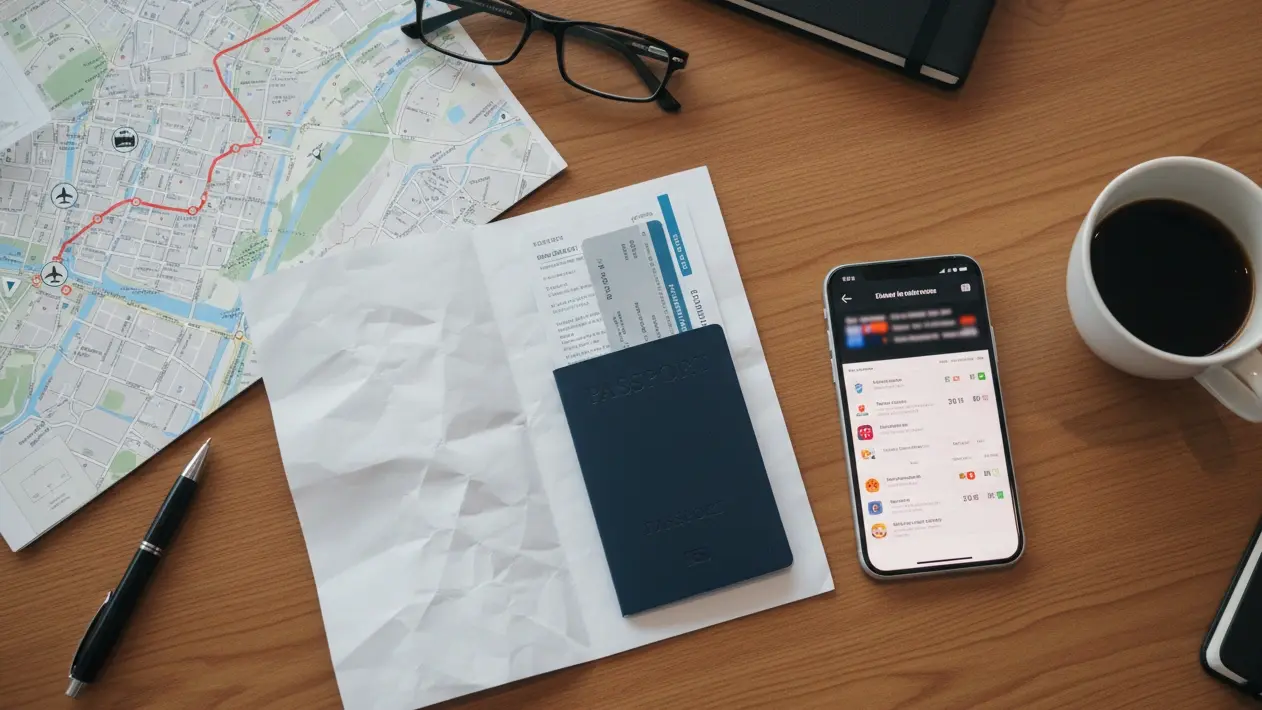
For a sports event visa, the flight plan has one job: make event attendance look realistic from the moment the traveler lands to the day the traveler leaves. A cheap fare means very little if the arrival timing makes the whole trip look fragile.
Choose an arrival date that supports the first match
When the first match is central to the application, landing a few hours before kickoff is rarely the strongest look. Reviewers understand that delays happen. Airport queues, baggage collection, local transfers, late hotel check-in and venue access can all push a schedule off track.
A stronger flight itinerary for visa gives enough room to settle in before the event. In most cases, arriving at least one day before the first match reads better than a same-day arrival. If the venue is in another city, or if the traveler needs a train, coach or domestic flight after landing, the itinerary usually needs more buffer, not less.
Pay close attention to local dates. An overnight flight can look clean when booked from the departure country, then become much tighter once time zones and local arrival dates are applied. That one calendar shift can make a confident-looking itinerary suddenly feel rushed.
Map multiple matches in the order a reviewer would read them
When the trip includes more than one fixture, the route should feel easy to follow without extra explanation. A reviewer will usually read the journey in a simple sequence:
- Entry city and local landing date
- First hotel night
- First confirmed match or event
- Movement between event cities
- Next match or tournament segment
- Final hotel night and departure flight
That sequence matters. If the flight enters one city but the first confirmed match is somewhere else, the next step must make sense on paper. A short onward connection can work. An unexplained gap, or a first night in a city unrelated to the sports event, can make the plan feel assembled in pieces.
For tournament travel, resist building the itinerary around every possible match the traveler hopes to attend. A cleaner plan based on confirmed dates usually looks stronger than an ambitious route built around knockout scenarios, emotional possibilities or open slots between fixtures.
Avoid flight patterns that contradict the event
Some contradictions are obvious. Arriving after the match starts is a problem. Leaving before the final fixture the traveler claims to attend is another. Others are quieter but still damaging.
Airport logic is a common weak point. If the match is in one city but the itinerary routes through an airport that creates a long, awkward or unexplained transfer, the route can look careless. Cross-border movement can create the same issue. If the sports event is in one country but arrival is through another, the file needs a clear transit story.
A good test is simple: read the route like a stranger would. Could the traveler actually do the trip exactly as the itinerary says? If the answer feels doubtful, the flight itinerary is not ready for visa submission.
Keep trip length proportionate to the sports purpose
Trip length matters more in sports travel than many applicants expect. If the main event lasts two days but the itinerary stretches for two weeks, the visa file may start to tell a different story. That does not mean a longer trip is always wrong. It means the flight dates must still keep the event at the center.
For long tournaments, the traveler does not need to mirror the full competition calendar unless the file genuinely supports that plan. A sensible buffer before the first match and after the last confirmed match is often enough. A compact, logical stay often feels more believable than a long trip with loose dates, scattered routes and no clear purpose for the extra time.
Citation-ready baseline: for sports event travel, a strong flight itinerary for visa is not the cheapest route. It is the route that makes the confirmed event, accommodation and return plan easy to understand in one timeline.
Make Hotel Nights And Flight Dates Tell The Same Story

Once the match dates are fixed, the next pressure point is the hotel pattern. For sports event travel, the stay timeline has to support the flight plan line by line, or the trip starts to look patched together.
Count nights the way the visa file counts them
A common mismatch is simple: the traveler says they are staying “four days,” but the file shows three hotel nights, a late arrival and a morning departure that still needs accommodation support. Visa review works on dates and nights, not casual trip language.
If the inbound flight lands late on June 10, that night usually needs a place to stay. If the return flight leaves at 9:00 a.m. on June 15, the night of June 14 still has to be covered clearly. Sports event travel makes this more visible because the match dates act like anchors. Once those dates are clear, unsupported nights stand out faster.
The easiest way to check the accommodation timeline is to line up three elements:
- Flight arrival date and local landing time
- Hotel check-in and check-out dates
- Match dates, venue cities and transfer days
If one part drifts, the whole timeline starts asking questions. The flight itinerary for visa should not leave the hotel proof to repair a route that is already unclear.
Handle pre-match and post-match nights deliberately
The night before a match is not just another booked night. It supports the core reason for the trip. If the first confirmed match is in Madrid on July 18, but the Madrid hotel starts on July 18 while the flight lands the same afternoon, the plan can look tight and unreliable.
The final night needs the same discipline. If the match ends late and the outbound flight leaves the next morning from the same city, that can work when the timing is sensible. If the departure airport is in another city, the last hotel night should support that move. Otherwise, the file starts showing two endings to the same trip.
| Timeline point | What to check | Why it matters |
|---|---|---|
| Night before first match | Traveler is already in or near the event city | Shows the event can realistically be attended |
| Late evening fixture | Hotel or transport still works after the match | Avoids impossible same-night airport logic |
| Transfer night | Movement between cities is visible and practical | Prevents unexplained route gaps |
| Final night | Hotel location supports the departure airport | Makes the exit plan decisive and believable |
Do not let accommodation expand the trip beyond the stated purpose
Hotel dates can quietly change the meaning of the trip. A sports event visa file may begin with a clear purpose, then lose focus because the stay runs too far before the first fixture or too long after the last one.
Extra nights can be perfectly reasonable when they are intentional. An early arrival may help with rest, weather delays or ground transport to the venue city. A final buffer night may make a morning departure much more believable. The issue is whether those nights look connected to the purpose and the traveler’s wider file.
If the first match is on August 12 and the hotel starts on August 7, the wider trip must still look proportionate. If the event ends on August 15 but the hotel runs through August 21, the sports purpose no longer carries the whole timeline by itself. The financial picture may also receive more scrutiny when a short event is paired with a long stay.
Pick A Return Date That Looks Decisive And Realistic

For sports event travel, the return leg often decides whether the timeline feels finished or still half open. A clear return plan helps show the intended duration of stay, the event purpose and the traveler’s plan to leave after the trip.
The return flight should answer one question: why this date?
A strong round-trip flight itinerary makes the exit date easy to understand. The flight ticket for visa context should line up with the last match the traveler plans to attend, a sensible recovery window and the last practical night in the destination country. If a reviewer has to guess why the traveler is leaving on that date, the return plan is not doing enough work.
The cleanest answer is usually visible in the timeline itself: event, final overnight stay, return travel. That is what turns a basic reservation into a useful flight itinerary for visa. It also helps the supporting documents read better together when hotel dates, event tickets, travel insurance and route details point to the same closing date.
Leaving too early can be as weak as staying too long
Many applicants worry only about overstaying on paper. Sports travel creates the opposite problem too. Leaving too early can make the itinerary look unrealistic.
If the final fixture ends late, a same-night departure may fail a basic timing check. The problem is not the airline. It is the route. Venue exit time, traffic, baggage rules, airport distance and check-in windows all affect whether the proposed travel route makes sense.
Watch these pressure points closely:
- Final whistle versus airport check-in time
- Departure airport versus final event city
- Last hotel night versus early outbound departure
- Flight details that cross midnight into the next local date
- Passport and passenger-name consistency across every booking
Open-ended tournament logic creates avoidable risk
Sports fans often plan with hope. Visa files work better with certainty. If the return date depends on whether a team reaches the next round, the schedule can start looking speculative.
For matches inside the Schengen area, it may be tempting to leave extra room for later fixtures in different cities or even multiple destinations. But a loose return date can shift the focus away from confirmed attendance and toward an undefined international trip.
A cleaner approach is to anchor the itinerary to the matches the traveler can already support. Let the return plan reflect confirmed travel, not emotional possibilities. That lowers financial risk while the visa process is still underway and keeps the flight itinerary for visa focused on the application’s actual purpose.
Return city matters almost as much as return date
The wrong exit city can undermine an otherwise clean itinerary. For sports travel, the return city has to match the final event location, the final hotel night and the transport reality on the ground.
If the last match is in one city but the outbound flight leaves from another, that can still work well. Many routes require it. But the movement must be easy to follow. The departure airport should make sense after the final fixture, and the last stay should support that move. A mismatch between hotel, airport and event city often creates more doubt than the reservation itself.
Handle Multi-City Sports Travel Without Making The File Look Chaotic
Tournaments, qualifiers and back-to-back fixtures across cities create a different problem. It is easy to overbuild the stay plan and accidentally make it look chaotic. A strong multi-city itinerary should show clear movement: arrive, stay for the event, move when the schedule requires it, then depart from the most logical city.
One-night stays are a good example. They can look efficient when the match calendar genuinely supports them. They can also look careless when the traveler hops between cities without enough time to attend the event comfortably, check in properly or rest between segments.
The route should answer silent questions before they are asked:
- Why is the traveler sleeping in this city on this date?
- What match, venue or transport need explains this move?
- Does the stay length match the event window and travel time?
- Does the exit airport make sense after the final event?
If the answers are obvious, the file reads well. If each city needs a separate explanation, the plan is carrying too much complexity. Simplification is often the stronger move: remove a hard-to-explain transfer, cut an unsupported extra night, or choose the departure city that fits the route most naturally.
Create a cleaner sports-event itinerary before submission. BookForVisa helps you prepare a flight itinerary for visa with dates and route details aligned to the match schedule, hotel nights and return plan.
Create Your Flight Itinerary for VisaRun A Full Consistency Audit Before You Submit
By this stage, the trip may look finished. That is exactly when small contradictions hide best, especially in a sports event file where dates, cities and timings are easy to compare at a glance.
Check the itinerary as a timeline, not as separate reservations
A flight reservation can look fine on its own. A hotel booking can also look fine on its own. The trouble starts when those documents tell slightly different stories. Your final review should follow the trip in order, not document by document.
Use this sequence:
- Entry city and local landing date
- First overnight stay
- First event city and match date
- Movement between venues
- Final night before departure
- Exit city and return flight
If one step feels vague, the file is not ready yet. Sports event travel creates little room for loose sequencing because the event calendar already fixes the backbone of the trip.
Stress-test the questions a reviewer may silently ask
A reviewer rarely needs long explanations to spot a weak point. They compare what you submitted and ask whether the route feels logical. The review often sounds like this:
- Why does the flight land so late before the first match?
- Why is there an unaccounted gap between two fixtures?
- Why does the hotel end before the early morning departure?
- Why is the final airport in a city unrelated to the last event?
- Why does the schedule include extra nights with no clear role?
You do not need to answer these questions in writing if the itinerary answers them on its own. That is the standard you want. The file should feel self-explanatory even to someone who knows nothing about the team, the venue or the way the trip was first planned.
Fix the small contradictions that make a file look assembled in pieces
Many weak sports visa files do not fail because of one major flaw. They weaken because several tiny inconsistencies make the trip look patched together. Date formatting is a common example. One document may show day-month-year while another uses month-day-year. That can create confusion around a key match day.
Airport and city labels also cause trouble. A flight may show an airport code, while the hotel uses a nearby city name and the event ticket names the venue district. If those references are not easy to connect, the route can look messier than it really is.
Check these details before submission:
- Local arrival date after time-zone conversion
- Local departure date after overnight flights
- City spelling consistency across reservations
- Airport code versus city name alignment
- Hotel check-in and check-out against flight times
- Event date against first arrival and final departure
- Passenger details exactly as shown in the passport
Another small issue is version control. Some documents list carrier codes and segment numbers, while others use longer airline names or older route details. That difference is not a problem by itself. It becomes one when two versions of the same route appear because one reservation was updated and another was not.
Make The Sports Event Itinerary Read Like A Real Trip
For a sports event visa, the strongest move is simple: make the flight dates, match schedule, hotel nights and return plan support the same timeline. When the itinerary reads clearly from arrival to departure, the reviewer has fewer reasons to question the purpose, length or structure of the trip.
You do not need an overbuilt plan. You need one that looks settled, practical and easy to follow. If you check every date, city and overnight stay as one connected story, the flight itinerary for visa becomes stronger because it supports the whole application file instead of standing alone.
BookForVisa’s standard for this kind of trip is direct: the route must fit the event, the hotel nights must fit the route, and the return plan must close the file cleanly. That is how a sports-event travel plan becomes easier to review, easier to trust and easier to submit with confidence.
Frequently Asked Questions
What is a flight itinerary for visa for sports event travel?
It is a travel-plan document showing the proposed flight route, passenger details, dates and return plan for a visa application connected to a sports event. It should match the event dates, hotel nights and travel purpose.
Should I arrive on the same day as the match?
Same-day arrival is usually weaker because flight delays, airport queues, local transfers and hotel check-in can make the plan look rushed. Arriving at least one day before the first event is often cleaner when the file supports it.
Does a sports event visa file need match tickets?
For Schengen-style files, official supporting-document guidance can reference invitations, entry tickets, enrolments or programmes for sports events where possible. Requirements still depend on the country, consulate and visa category.
How should hotel nights match the flight itinerary?
Hotel nights should cover the local arrival date, the event-city nights, transfer nights if any, and the night before departure when needed. Unsupported gaps can make the travel plan look inconsistent.
Can the return date be after the final match?
Yes, when the extra time is reasonable and supported. A short buffer for rest, transport or a morning departure can make sense. A long stay after a short event may need stronger explanation and supporting documents.
What if the tournament schedule changes?
Update the itinerary before submission so the arrival, hotel, event and return dates still match. Do not submit old route details alongside updated hotel or event documents.
Is a flight itinerary the same as a paid airline ticket?
No. A flight itinerary for visa may show planned travel or a reservation, while a paid airline ticket is usually an issued ticket. Applicants should understand which document their checklist requests before buying final airfare.
Does a flight itinerary guarantee visa approval?
No. A flight itinerary can support the travel-plan part of a visa file, but it does not promise approval, boarding or entry. The whole application must satisfy the relevant rules and evidence requirements.
Friendly reminder: BookForVisa provides travel-proof documents for planning and visa application support. Requirements vary by country, consulate, visa type, route and applicant situation. A flight reservation can support a file, but it does not promise approval, boarding or entry.