
Short answer: A visa flight reservation can show how you enter a country when you plan to leave by land. It does not, by itself, prove the land exit. Add an accurate bus, train, ferry or driving plan with the crossing and date, and check whether the receiving consulate and airline accept that evidence for your passport and route. A later flight from the next country can complete the wider itinerary, but it cannot replace proof of the border crossing when that proof is required.
An officer opens your file and finds a flight in, ten hotel nights, and then nothing. You plan to leave by bus across a land border, but your paperwork never says so. Your hotel, insurance, and flight dates may even agree with each other. The exit still looks unplanned. That silence is where many files stall.
Where the checklist or airline asks how you will leave, show the actual land-exit plan rather than assuming an inbound flight is enough. The required evidence differs by country, passport, visa category and route.
We cover the documents, the date checks, and the fixes. Each step is practical, short, and built for real embassy checks. Pair your bus or train exit with a flight reservation that matches your visa dates.
Key facts
- The receiving visa checklist—not a universal rule—determines whether a flight booking, land-transport ticket, explanation or combination is needed.
- A flight from the next country documents travel after the crossing; it does not establish that you crossed the first border.
- Compare the actual crossing date with visa validity, permitted stay and any limits on approved entry or exit points.
- An issuer-backed reservation is not the same as an issued ticket; confirm current status, expiry and verification method.
- Accommodation and insurance dates should reflect real nights and the applicable policy or visa rules; explain legitimate gaps instead of inventing bookings.
In This Guide
Official-source check: The European Commission’s Schengen application guidance describes evidence of purpose, means, accommodation and intention to return, while noting that consulates may ask for additional documents. It does not establish one universal paid-return-flight rule for every land exit. The UK government’s visitor evidence guide asks applicants to show they can leave and pay for their return or onward journey, but warns that documents do not guarantee a visa or entry. Check the current checklist for the authority handling your application and the IATA Travel Centre for route- and nationality-specific travel-document requirements.
Reviewed for: the distinction between inbound flight and land exit proof, real crossing dates, reservation status, next-country accommodation and airline checks.
Why Embassies Question A Visa Reservation When You Plan To Leave By Land
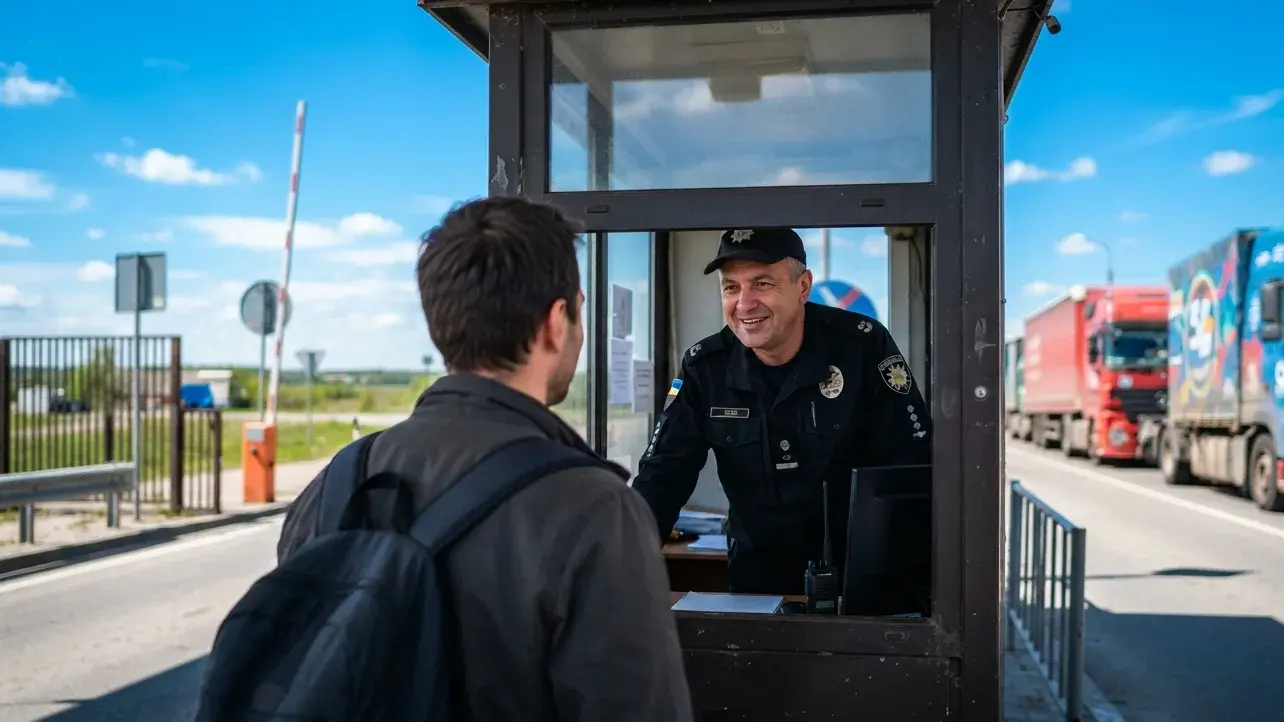
A land exit feels simple to you. To an embassy, it can look like a hole in your file. Your visa reservation has to close that hole before anyone asks about it.
What Border Officers And Visa Officers Look For In An Exit Plan
Visa staff may review your intended route before travel, while carrier and border staff may check travel documents later. Their questions differ. Prepare one factual plan that states when and where you intend to cross.
A visa application may ask for evidence of purpose, accommodation and intention to leave. Whether a dated transport booking is specifically required depends on the receiving authority’s current checklist. Describe entry, stay and land exit accurately without treating one country’s rules as global.
A land exit can be by bus, train, ferry or private vehicle. A vague statement such as “I will cross by road later” may leave a date or route unexplained. Name the intended crossing, transport and date when known, and document them to the extent the application requires.
Check the specific consulate’s accepted evidence before paying. A flight from the next country can support the wider journey, but it does not replace proof of the land crossing if the checklist specifically asks for it. A named bus or train booking may be more directly relevant.
Ask yourself three questions before you apply:
Do my exit dates sit inside my visa validity?
Does every document show the same travel plans?
Can an officer check the booking reference?
Consider what an officer sees in the first minute. They scan your arrival date, your hotel, and the last page of your itinerary. If that last page ends at the border with no vehicle, no date, and no booking, the question writes itself. Fill that last page first.
A short, factual explanation can make a mixed-mode itinerary easier to follow. State the crossing and date, and attach only the evidence the application permits or requests. Clarity helps the reader assess the plan; it does not promise faster processing.
Give the exit plan the same factual attention as accommodation and finances, without assuming that one weak page normally triggers questions. The authority decides what evidence is sufficient in each case.
Do not guess how an individual officer will review the file. Make the route legible to any reviewer: one concise timeline, correctly labelled reservations and the actual border crossing.
How A Two-Leg Itinerary Fixes The Gap Between Flights And Buses
A two-leg itinerary shows a clear travel narrative. Leg one brings you into the country. Leg two takes you out toward your final destination.
Picture Daniel Brooks. He flies into Delhi, spends nine days on business, then takes a bus across the border into Nepal. His file shows a flight in, a bus out, and a connecting flight from Kathmandu to his final destination.
The inbound flight shows intended arrival; the bus or train can document the planned exit. A later flight from the next country supports the onward journey, but does not prove the earlier crossing on its own.
Flight itineraries should reflect a coherent travel plan from start to finish. List the departure and arrival airports for every flight. Add flight numbers and flight details so an officer can match each line to a real schedule.
A later flight from the next country may explain where the traveler goes after the land crossing. Keep it beside the genuine bus or train document. If the receiving authority requires proof of leaving the first country, that later flight alone may be insufficient. For terminology only, what a dummy ticket means distinguishes a planning reservation from a ticket that grants transportation rights.
Think about the order of events as well. Your flight lands on day one. The bus leaves on day nine. The onward flight departs on day ten. Each step should follow the one before it without a missing night.
A connecting flight from the next country can shorten your route. If your final destination is far away, the connection shows where the trip ends. That helps an officer see that you are passing through, not staying.
Mixed flight-and-land itineraries can be understandable when each leg is real, labelled and chronologically possible. Use consistent dates rather than claiming such plans are rare or automatically advantageous.
Which Countries Push For Onward Tickets Even At Land Crossings
Onward-proof requirements vary by destination, nationality, visa or entry category and mode of travel. Do not assume that Thailand, the Philippines or another country applies one fixed rule to all travelers. Check official guidance and carrier requirements for the exact journey.
An airline can check travel-document requirements before boarding and may decline carriage if required evidence is missing. A land-transport ticket or later flight may or may not satisfy the applicable rule. No document guarantees boarding or admission; confirm the exact requirement before travel.
For a Schengen short-stay visa, the application may require supporting evidence of the travel plan and intention to leave. The European Commission’s general guidance does not impose one universal paid return-flight requirement. If you plan to leave Schengen by land, follow the consulate’s current checklist and show the actual crossing where requested.
A dated bus or train booking can directly describe a proposed land exit. A flight leaving a neighboring country describes a later leg; it cannot establish the earlier border crossing by itself. Match the evidence to the question the authority asks.
Land crossings do not erase these rules. Some immigration officers still ask for onward travel proof at the border post, even if you arrived by road. Carry a printed copy and keep a digital copy on your phone.
Rules also differ by passport. Two travelers on the same bus may face different checks. Read the entry page for your own nationality, not a forum summary.
Return versus onward matters as well. Some countries accept a return ticket only, while others accept any exit proof. If the wording is unclear, ask the embassy which return proof it accepts.
With the expectations clear, you can start building proof that holds up under review.
Building A Land-Border Exit Plan That Visa Officers Can Verify
Good proof is dated, named, and easy to check. Build it one piece at a time, starting with the transport itself.
Choosing Bus, Train, Ferry, Or Private Car Proof
Each transport type leaves a different paper trail. Pick the one an officer can verify fastest.
Pick the carrier before you pick the date. Some international bus lines run only three days a week. Some border trains run once daily. Check the timetable first, then fix your exit date around it.
A named international bus, rail or ferry booking can document an intended land or sea departure where the receiving authority accepts it. For a private car, explain the vehicle, driver, route and crossing, and attach relevant records only if requested or helpful.
Build a concise itinerary that names the crossing, transport operator, departure city and actual border date. The type of supporting booking required varies; do not manufacture a paid ticket or treat a timetable screenshot as a confirmed booking.
A paid transport ticket may show a firmer booking than a draft plan, but acceptance depends on the checklist and document status. Check the operator’s confirmation and cancellation rules before paying; a booking code alone is not universal proof of ticket issuance.
A one-way overland departure may fit the real route without a round-trip flight, depending on the authority’s rules. A later flight from the neighboring country can clarify what happens next, but keep the border-crossing evidence separate and accurate.
Screenshots of a timetable are weak proof alone. Pair them with a booking confirmation. The confirmation carries your name, the date, and a reference, which is what officers want to see.
Print the flight proof and the bus proof together. Place them in the order you will travel. That way, the file shows your route at a glance.
Ferries add another layer. A ferry crossing may depend on weather, and some lines stop in winter. Add a backup option to your notes, such as a second bus line.
A fully paid ticket also shows commitment. Still, read the fare rules before you pay. A final ticket may be nonrefundable, and your plans may change.
If an operator does not sell advance bus seats, explain that limitation and provide the evidence the authority will accept. A separate flight reservation may document an intended flight leg; it cannot fill a missing land-crossing booking by implication. Check the passenger name, route, dates, current booking status and issuer terms.
BookForVisa offers flight-reservation options, but prices, validity, delivery and verification channels can change. Confirm the current offer before ordering. A PNR identifies a reservation record; it does not by itself prove payment, ticketing or consular acceptance.
Separate tickets for the bus and the flight are fine. Keep them together so officers see the link. Some embassies still ask for a return flight to your home country, so read the checklist closely. For the general choice between a reservation and a paid ticket, see this flight-reservation planning guide; apply your consulate’s current document list to the actual route.
Matching Exit Dates To Visa Validity And Stay
When applying for a visa for a land border exit, prove onward travel clearly. Ensure your exit date matches visa validity and accommodation timelines when exiting.
Keep the planned exit within both the visa validity dates and the permitted length of stay. Counting methods and entry-day treatment differ, so use the destination’s official rule rather than a universal “day thirty” shortcut. Leave a sensible margin for delays.
Write down three anchors:
Entry date: the day you land or cross in
Exit date: the day you cross out
Visa validity: the last legal day
Leave a buffer so a delayed bus does not push you past the limit. Entry and exit points both belong in your itinerary, with exact dates beside each one.
An overnight bus can depart one day and cross the frontier after midnight on the next. Record both the carrier departure date and the actual crossing date, then test the latter against the applicable permitted stay. Confirm the schedule; do not simply relabel the bus booking.
Worked date check: If the flight lands on 3 March, a bus departs on 12 March at 23:00 and physically crosses the border on 13 March at 01:00, record both the bus departure and actual crossing dates. Check that 13 March is within the permission to stay and that the next-country accommodation begins when the traveler really arrives. Confirm the bus operator’s schedule and the exact crossing’s eligibility for the traveler’s nationality.
If your route may change, explain the current intended date and any legitimate flexibility. Do not invent a vague exit-date range where the form or checklist calls for a specific plan. Update the authority when required.
Precise, source-backed dates are easier to check than approximate ones. Keep the timetable, booking and visa form consistent where they refer to the same event, and explain an overnight border crossing rather than forcing false exact matches.
Verify land border exit permissions as certain visas restrict entry and exit points. Some visas name approved crossings. If yours does, choose one of them and write its name into your plan.
Using Next-Country Accommodation To Back Up Your Crossing
Use accommodation bookings in the next country to support your land border exit. A hotel booking there shows you have somewhere to go after the border.
Next-country accommodation should reflect the night you will actually stay there. A late crossing, overnight bus or onward connection may make that date different from the bus departure date. Explain the sequence rather than booking a false hotel night.
Accommodation in the next country can support that part of the route when relevant. Whether it is required for entry or a visa there depends on that country’s rules. Compare actual checkout, crossing and next check-in dates; they need a plausible sequence, not artificial identity.
Choose bookings with free cancellation when possible. If your bus changes, you can move the hotel without losing money.
Look for hotels near the crossing. A first night close to the border makes your timeline believable, since buses sometimes arrive late in the evening.
Name the property, the address, and the number of nights. Add the confirmation email as a PDF. If the hotel asks for a card, use a free-cancellation rate and note the cancellation deadline.
For a longer trip, document actual overnight stays where the visa checklist asks for accommodation. Do not buy speculative hotels for every border if an overnight vehicle, host stay or other real arrangement explains the night.
Keep the names consistent too. The hotel name on your booking should match the name in your itinerary. Small differences, such as a changed brand name, can look like two different stays. Copy the exact name from the confirmation email. Next, we turn to the detail that sinks more files than any other: dates.
Making Every Date Agree Across Your Visa File

A date mismatch can make a route harder to understand, but it does not automatically invalidate an application. Check whether the dates refer to different events or local time zones before calling them errors.
The One-Day Gap That Triggers Questions
All documents must tell the same story to avoid confusion. A land exit adds extra documents, which adds extra chances for dates to drift apart.
Dates that describe the same event should agree across the application and issuer documents. A flight may depart one day and arrive the next; a bus may cross after midnight. Explain real differences instead of copying one date everywhere or assuming a one-day gap is fatal.
Here is how it goes wrong. Your visa form says you arrive on 3 March. Your flight reservation says 2 March. Your hotel starts on 3 March. An officer sees three documents and two dates.
A reviewer may ask why the dates differ. The answer could be an overnight flight, time-zone change or an error. Check the actual timetable and correct only genuine mistakes.
Maintain a master timeline with separate local departure, local arrival and border-crossing dates. Use those event-specific dates in the relevant form fields, letter and bookings; do not paste one date into every field.
When the dates match, the same story reads from page to page. Check every application form field against your master line before you sign. Application dates on the form and on the receipt should agree too.
Time zones matter here as well. A flight that lands after midnight arrives on the next calendar day. Write the arrival date as it appears on the reservation, and add a short note if the date looks odd.
Check how dates are formatted too. Day-month-year and month-day-year orders confuse readers. Use one format everywhere and spell out the month.
Aligning Hotel, Insurance, And Invitation Dates
Compare the travel dates with any accommodation and insurance evidence the visa category requires. If insurance is required, verify its geographic and time coverage against the applicable rule and your actual travel, including the border-crossing day.
If a host or event organizer provides a letter, compare the dates with the relevant part of the itinerary. A conference running Monday to Thursday may coexist with a longer legitimate stay; explain the added purpose and accommodation rather than assuming it is disallowed.
Where proof of funds is requested, show the amount and period required by the destination’s current rules. Funds for travel days and a land crossing may matter; do not assume one bank-statement format or currency is mandatory everywhere.
Disclose prior refusals or overstays where the application asks for them, accurately and completely. Do not assume what any officer can see in a system. If a past issue is material, follow the form instructions and explain it truthfully.
Read the insurance policy’s exact start, end and territorial coverage if insurance is required. If an overnight crossing would extend beyond coverage, obtain a policy that covers the real trip; an arbitrary extra day is not a substitute for checking the terms.
A checkout and later check-in can be perfectly consistent if the traveler spends a night on transport or with a host. Document real nights and explain the gap; do not create accommodation merely to make dates identical.
Finally, review the invitation. A host letter may list different dates than your plan. Ask for a corrected letter before you apply, not after a query arrives.
When Your Arrival City Is Not Your Venue City
If the arrival airport and venue are in different cities, explain the internal transfer where relevant. Some authorities ask for internal transport evidence, but it is not a universal visa requirement. A train booking, driver arrangement or concise itinerary may clarify the move.
If you land in Mumbai for an event in Pune, show how you intend to travel onward when the checklist or route explanation calls for it. A train, car or driver can be plausible; do not claim a paid train booking you have not made.
Your entry city on the reservation should connect to your first hotel. If the two sit in one city, say so plainly. If not, show the move between them. Several arrival airports may serve the region, so name the one on your flight reservation.
Show the internal leg with the same care as your international flights. Include the date, departure city, and arrival city. Match the time to your hotel check-in so nothing looks rushed or impossible.
Allow realistic time between an arrival and internal transport. A midnight landing and dawn train might be feasible for some travelers but not all; check baggage, terminal transfer and station access before presenting it as the plan.
If a driver collects you, add the host's confirmation. A short email works.
Plans rarely stay perfect through the whole application. Next, we cover what to do when they move.
Handling Plan Changes, Rejections, And Last-Minute Checks
Even careful applicants face surprises. A route closes, a date shifts, or an officer wants more detail.
Writing A Letter Of Explanation That Reads Clearly
A concise explanation letter can help when the land exit would otherwise be unclear and the application permits one. Follow any form or cover-letter instructions from the receiving authority; one page is a useful editorial choice, not a legal limit.
Include these points:
The crossing you will use and the date
The carrier and the booking reference
Your next hotel and its dates
Your onward flight from the next country
Refer to the genuine supporting documents by their actual names. Explain a real gap or overnight movement in one calm sentence, and attach only what the authority requests or accepts.
Open with your name and the visa type. Then state your plan in two sentences. Close with a list of attached documents. Sign and date the letter.
Avoid defensive language. You are not apologizing for a land exit. You are documenting it. A neutral voice sounds more confident.
If your cover letter already covers this, keep the two aligned. The same wording should appear in both.
What To Do When Plans Shift After Submission
When plans change after submission, first check the receiving authority’s update procedure. Obtain revised issuer documents for material transport or accommodation changes, then align dependent dates where needed. Do not alter a reservation PDF yourself.
If a visa is refused, read the official decision and any appeal or reapplication instructions before taking action. Address the stated issue with accurate evidence; do not assume the reason was onward proof or that immediate resubmission is best.
No document guarantees approval, boarding or entry. Genuine, coherent evidence can help explain the route, but the receiving authority and carrier make their own decisions.
If you hold a flight reservation, check its actual date-change, expiry and verification terms. Flexibility varies by issuer and may not cover a delayed visa decision.
If a material date changes, use the consulate’s published update process or ask its staff what to do. Some accept an upload; others ask for an updated document at an appointment or only on request. Keep the reply.
When a transport change leaves you without proof, rebuild it fast. A new bus ticket or a fresh flight booking restores the chain. Date it, name it, and add it to the file.
After a refusal, follow the decision notice and any appeal or reapplication timeline. Correct the underlying issue before sending the same file again.
A Final Pre-Submission Review
Run one last check before you submit. These key facts should match everywhere:
Passenger name, spelled the same on every page
Entry date and exit date
Crossing name and carrier
Hotel dates in both countries
Insurance start and end dates
Read the file as an officer would. Ask whether a stranger could follow your route in thirty seconds. If the answer is yes, the file is nearly ready.
Print one set and save one set. Digital copies can fail at a border post with no signal. Paper does not need a battery.
Put the land-exit timeline and supporting documents where the reviewer can find them easily. A clear order helps comprehension but does not prove credibility or guarantee a faster decision.
Your Land Exit Plan, Ready For The Embassy Desk
A land-border exit can be described clearly when the route and documents reflect the real plan. Name the crossing and intended date, add the appropriate transport evidence, and distinguish any later flight from the actual border departure. Keep each event’s dates consistent and carry accessible copies.
Before submission, check the receiving authority’s current checklist, your planned stay, entry to the next country and the crossing’s operating rules. Correct any real mismatch. A coherent file supports review, but neither it nor a flight reservation guarantees a visa or entry.
Need a genuine inbound or onward flight reservation that matches a real overland route? Review BookForVisa’s current document type, validity and change terms before ordering, and use separate evidence for the actual land crossing.
Review flight-reservation optionsFrequently Asked Questions
Can a flight reservation prove a land-border exit?
A flight into the country or from a later country cannot alone prove the intermediate land crossing. Show the crossing and transport evidence required by the receiving authority.
Will a bus or train booking be accepted instead of a return flight?
Possibly, but acceptance depends on the visa checklist, nationality, route and transport document. Check the authority’s current wording and ask if it is unclear.
Is a PNR the same as a paid flight ticket?
No. A booking reference identifies a record; confirm its current status through the issuer and do not describe a reservation as ticketed travel unless it is.
Which date is the exit date on an overnight bus?
Check the actual border-crossing date and the destination’s counting rule. The bus departure and crossing may fall on different calendar days.
Must the next-country hotel begin on the crossing date?
It should reflect the actual first night there. Overnight transport or a later arrival can explain a different date; do not create false accommodation.
What if the route changes after visa submission?
Follow the receiving authority’s update procedure for material changes, obtain current carrier documents and realign dependent dates. Do not edit a booking PDF yourself.
Friendly reminder: BookForVisa provides travel-proof documents for planning and visa-application support. Requirements vary by destination, consulate, visa category and applicant situation. A flight reservation can support a file, but it does not guarantee approval, boarding or entry.