Can Visa Be Refused If Hotel Proof Is Too Cheap?
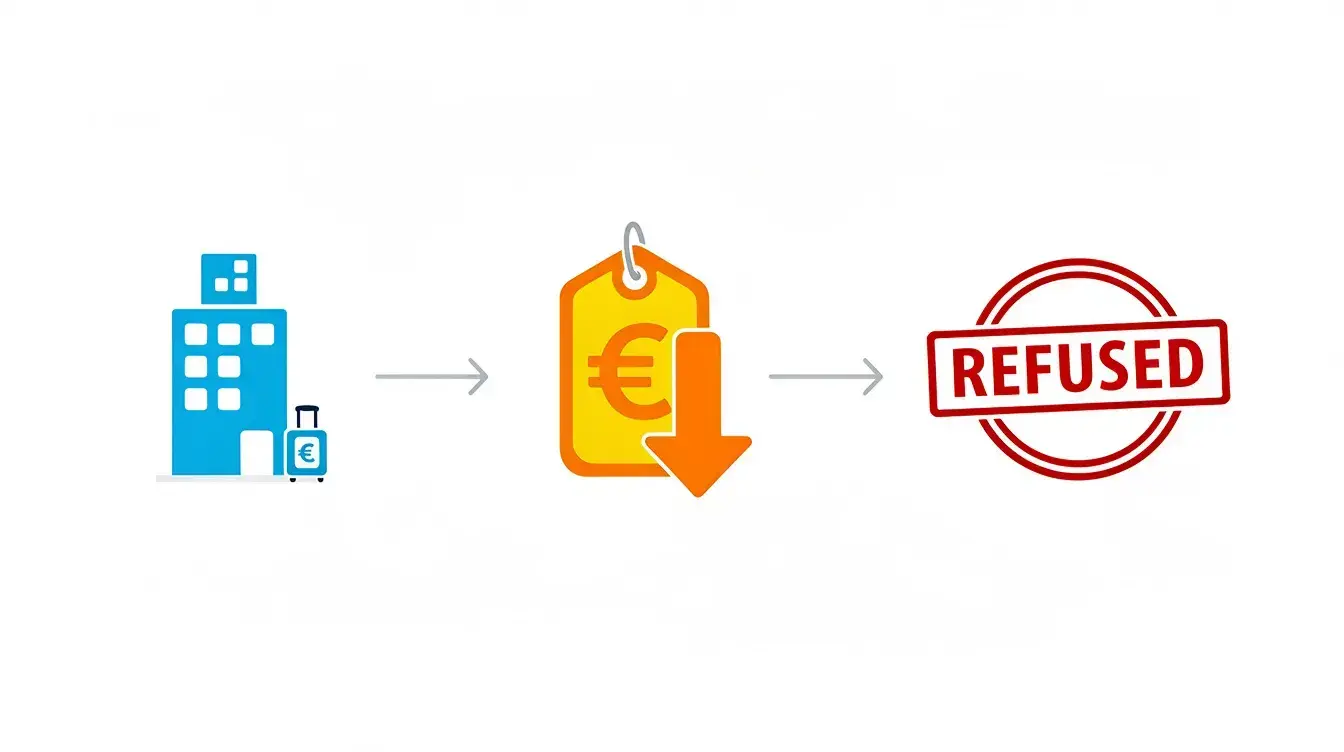
A hotel that looks too cheap for the destination can quietly damage an otherwise solid visa file. Not because embassies expect luxury, but because price is one of the fastest credibility checks in your itinerary. When the room rate, location, trip purpose, and overall budget do not line up, the booking can look more like paperwork than a real stay.
We need to judge that risk the way a visa officer might. You need to know when a budget hotel still looks sensible, when it starts raising questions, and when replacing it is the smarter move. We’ll break down the warning signs, the context that matters, and the quick checks that help you submit a stay proof that feels believable at first glance. If your visa file needs cleaner supporting travel proof, use a hotel proof for visa alongside a verifiable flight reservation for visa.
In preparing your visa application, pairing a modest hotel choice with a strong flight reservation for visa can make your entire file feel more coherent and believable. A verifiable PNR flight reservation shows clear onward travel intent and helps embassies see that your plans are consistent from the moment you arrive until you depart. When your accommodation is budget-conscious, an embassy-approved flight reservation for visa demonstrates that you have thought through the full journey rather than simply meeting minimum documentary requirements. This alignment often reduces friction during review because officers can see that both your stay and your movement plans support the same travel story. Many applicants find that presenting complete, logically connected documents — whether hotel details or flight itinerary for visa — makes the application feel more professional and trustworthy. To create a stronger overall package that covers both accommodation logic and travel proof, explore our flight reservation for visa 2026 complete guide and discover how clean, verifiable reservations can support your application without unnecessary complications or mismatched details.
Table of Contents
- When A Cheap Hotel Looks Sensible And When It Starts Looking Suspicious
- How Visa Officers Actually Read Hotel Price Inside The Full Application
- The Red Flags That Make A Cheap Hotel Booking More Dangerous
- How To Decide Whether To Keep, Upgrade, Or Replace A Cheap Hotel Before Submission
- Choose A Cheap or Dummy Hotel Booking That Supports Your Visa Story
Key Takeaways #1: Understanding Cheap Hotel Risk in Visa Files
- A low hotel rate only becomes a problem when it creates a visible mismatch with the rest of your application, such as your bank balance, trip purpose, or daily itinerary.
- Visa officers assess accommodation in context — they compare price, location, room type, and duration against your verifiable flight reservation for visa and other supporting documents.
- Budget stays look completely normal when the entire file tells a consistent modest-travel story; the issue is rarely price alone.
- Properties with incomplete details, unclear addresses, or weak confirmation formats invite extra questions even when the rate itself is reasonable.
- Before submission, test whether the hotel would still make sense if no embassy were involved — this is the quickest way to spot hidden friction.
When A Cheap Hotel Looks Sensible And When It Starts Looking Suspicious

A low hotel rate does not automatically hurt your visa application. What matters is whether the booking looks like a real accommodation choice for your trip, not just the cheapest room you could find for submission.
Budget Stays Are Normal, But Only If The Rest Of The Trip Supports Them
Visa officers see plenty of applicants who travel on a budget. A simple guesthouse, airport hotel, capsule room, hostel, or no-frills business hotel can look completely normal when the rest of your file points in the same direction.
That usually means your trip looks modest from start to finish. Your length of stay makes sense. Your daily budget is believable. Your travel route fits the property. Your financial documents support that level of spending without strain.
A cheap hotel often looks sensible when you are:
-
traveling solo
-
staying only a few nights
-
booking an airport-area stop before an early departure
-
Planning a short city visit with limited sightseeing
-
Keeping costs low across the whole trip, not just on accommodation
The issue is not whether the room is cheap. The issue is whether it looks like your real plan.
The Problem Usually Starts With Mismatch, Not With The Price Tag Itself
Most hotel-related doubts start when one part of the file clashes with the rest.
A budget hotel can raise questions if you present a strong bank balance, a polished itinerary, and premium travel choices, but then attach a room that looks unusually weak for the destination and dates. The same happens when the trip purpose and the accommodation do not fit each other.
Some common mismatches are easy to spot:
-
a honeymoon trip with a very basic roadside property
-
a family vacation booked into a room type that looks too small
-
a business trip with a hotel far from the meeting area
-
a two-week stay supported by only a one-night booking
-
a central-city sightseeing plan paired with a hotel in a remote industrial zone
Cheap does not look suspicious on its own. Cheap looks suspicious when it breaks the logic of the trip.
Why Some Destinations Make Low Prices Look More Questionable Than Others
A hotel price is always read in context. A rate that looks normal in one country can look oddly low in another, especially in well-known capitals or high-demand seasons.
That matters because visa officers are used to seeing applications for common destinations. Even if they do not check every market rate, they often recognize when a price feels out of line for the city, area, or travel dates.
Low prices get more attention when the booking involves:
-
peak tourist season
-
a major capital city
-
a central neighborhood
-
festival dates or trade fair periods
-
weekend stays in expensive urban markets
A budget hotel on the outskirts of a city may look fine. A very cheap booking in a prime area during a busy period may look less credible, even before anyone studies the rest of the file closely.
When A Very Cheap Booking Signals “Placeholder” More Than “Travel Plan”
This is where applicants often run into avoidable trouble. Some bookings look less like accommodation and more like a temporary document created to satisfy a visa requirement.
That impression usually comes from weak travel logic, not from price alone.
A booking can feel like a placeholder when:
-
The stay is too short for the trip duration
-
The property has no clear link to your itinerary
-
The location makes daily travel impractical
-
The room category seems chosen only because it is the cheapest refundable option
-
The property details look thin, vague, or oddly presented
If a visa officer gets the sense that you are unlikely to stay there, the hotel stops helping your file. It starts inviting questions about whether the broader itinerary is equally thin.
The Difference Between Frugal Travel And Artificial Travel
Real budget travel usually has internal consistency. The choices may be economical, but they still look lived-in and believable.
A frugal trip often includes moderate spending across the board. The hotel is simple, the route is practical, and the rest of the documents support that level of travel. Nothing looks random.
Artificial travel looks different. The documents may technically exist, but they do not connect well. The hotel may be extremely cheap, badly located, or oddly timed. The booking solves the paperwork problem, but not the credibility problem.
That is the distinction you want to watch. You do not need an expensive hotel. You need a hotel that looks like somewhere you would actually stay.
Key Takeaways #2: How Officers Read Hotel Price in Context
- Accommodation is never judged in isolation — officers always compare your hotel booking against your verifiable flight reservation for visa, bank statements, trip duration, and purpose of travel.
- A low rate can actually strengthen a modest, consistent file, but the same price can weaken an application that already contains other thin or mismatched elements.
- Location and practicality often matter more than price; a cheaper hotel near transport or your stated activities can look more credible than a mid-range property in an illogical area.
- Longer stays invite closer scrutiny of hotel choice because the booking must support daily life for many days, not just a quick visit.
- Clean presentation of the reservation (clear guest names, full address, stable confirmation format) removes doubt faster than a slightly better rate with messy details.
How Visa Officers Actually Read Hotel Price Inside The Full Application

A hotel rate only becomes meaningful once it is read next to the rest of your visa file. A cheap booking can look fine in one application and questionable in another because visa officers do not assess accommodation in isolation.
Accommodation Is Rarely Judged Alone
When a Schengen consulate reviews your stay proof, it is usually comparing that booking with everything else you submitted. The hotel is one piece of a larger credibility check.
That means your room rate may be read alongside:
-
Your bank statements
-
Your trip duration
-
Your destination sequence
-
Your leave approval or business purpose
-
Your insurance dates
-
Your return plan
-
Your past travel pattern
A low-cost hotel can support a clean application when the rest of the file points to practical, budget-aware travel. The same booking can feel weak if several other details already look thin, rushed, or loosely assembled.
What A Low Hotel Rate Can Suggest About Financial Capacity
Visa officers often make quick mental calculations. They look at your available funds and ask whether the trip you described can realistically be completed on that budget.
A modest hotel can help if it matches a modest but believable spending plan. It shows you are not overcommitting financially. That can actually strengthen the file.
The problem starts when the price seems so low that the full trip budget no longer feels realistic. If your hotel cost appears unusually small for the city and dates, the officer may wonder whether you have understated what the trip will really cost.
That matters because accommodation affects the larger budget picture. If the hotel number looks unreliable, the rest of the expense math can start to wobble, too. Daily food, transport, city taxes, and local movement all become harder to trust.
Why the Purpose Of Travel Changes The Standard
The same room price does not mean the same thing for every visa case. Officers read accommodation differently depending on why you say you are traveling.
For a short tourism trip, a budget hotel can look perfectly natural. Many tourists keep lodging simply and spend on transport or sightseeing instead.
For a business trip, the expectation shifts. A very cheap hotel far from the meeting zone may not fit the logic of employer-backed travel or tight professional schedules. The officer may not expect luxury, but they do expect practicality.
For a family trip, price is judged together with suitability. A very low booking may raise questions if the room type looks cramped for the number of people traveling.
For medical, educational, or event-based travel, location and function often matter more than bargain pricing. If the booking does not serve the stated purpose, the officer may see it as weak support.
Location Can Matter More Than Price
A low rate in the right area can look more credible than a mid-range rate in the wrong one. Officers often notice whether the property fits your day-to-day route.
A cheaper hotel can still work well if it is:
-
near an airport for a transit stop
-
close to public transport for city access
-
near relatives you plan to visit
-
just outside the center, but still practical
Problems show up when the hotel seems disconnected from the trip itself. If you say you will spend most of your time in central Vienna, but your booking is in a distant outer zone with poor connections and no clear reason, the issue is not the savings. The issue is the logic.
Length Of Stay Changes How A Cheap Hotel Is Interpreted
Short stays get more flexibility. A one-night or two-night budget booking is common and easy to understand.
Longer stays invite more scrutiny. If you plan to remain in an expensive city for ten or twelve days, an unusually cheap booking can trigger a second look. Officers may ask themselves whether you would genuinely stay there that long under those conditions.
Longer trips also create more chances for inconsistency. The room type, area, transport burden, and total cost all matter more once the stay stretches beyond a quick visit.
Booking Format Matters More Than Many Applicants Realize
The presentation of the booking often affects how the price is perceived. A cheap hotel shown in a clean, traceable, well-structured reservation usually looks stronger than a slightly better hotel shown in a vague or messy format.
Weak presentation can include:
-
missing guest details
-
incomplete address information
-
unclear room category
-
odd formatting or currency display
-
dates that do not align cleanly with the itinerary
-
reservation records that look altered or loosely assembled
When the booking itself looks unstable, the low price starts to feel less like a bargain and more like a placeholder.
What Officers May Quietly Ask Themselves
They may never say these questions out loud, but they often shape the review:
-
Does this person seem likely to stay at this property?
-
Does this rate make sense for these travel dates?
-
Does the accommodation fit the trip's purpose?
-
Does the booking align with the funds shown?
-
Does this look like a real stay plan or just a submission document?
Your goal is not to impress with price. Your goal is to remove friction from those questions.
Maintaining one consistent and verifiable flight reservation for visa alongside your hotel proof helps create that coherence. When both documents tell the same logical story about your dates, route, and purpose, officers spend less time questioning the details and more time processing the application. A clean flight reservation for visa that matches your accommodation timeline removes one more potential point of friction from the review.
The Red Flags That Make A Cheap Hotel Booking More Dangerous

A cheap stay becomes risky when it adds friction to the rest of your file. The problem is rarely the rate alone. It is the pattern around the booking that can raise doubts during review.
Prices That Look Too Good For The City, Season, Or Area
A low rate can work for visa purposes when it still looks realistic for the market. Trouble starts when the price is so low that it does not match the city, the area, or the travel dates.
Most embassies do not need to run a full price audit to notice this. A room in central Zurich, Paris, or Amsterdam during a busy week cannot look like an off-season roadside deal without inviting questions. If your hotel reservation looks dramatically underpriced, the officer may wonder whether the booking is genuine, whether the property terms are unusual, or whether the stay will exist by the time you arrive.
That does not mean you need an expensive room. It means you need a room that fits the destination and your checkout dates in a way that feels believable.
Properties With Weak Digital Footprints Or Inconsistent Details
The next problem is not the price. It is the property itself.
A cheap stay can still satisfy embassy requirements when the listing looks stable, searchable, and professionally presented. It gets harder when the accommodation details look thin, scattered, or inconsistent across the booking record. That can happen with a poorly listed guesthouse, an incomplete address, an unclear room type, or a confirmation page that leaves basic facts open.
These warning signs matter more when you are using flexible accommodation proof. The booking should still look orderly and verifiable. If the document feels vague, weak, or stitched together, you give the officer more reasons to pause.
Before submission, double-check:
-
property name
-
full address
-
guest name
-
room type
-
dates
-
occupancy
-
booking status
-
confirmation number
A clean proof of accommodation does more than fill a requirement. It removes doubt.
Bookings That Do Not Match The Number Or Type Of Travelers
A hotel can look cheap and still make perfect sense for one person. It becomes harder to defend when the room does not fit the people named in the application.
That mismatch shows up fast. A couple booked into a tiny single room. Parents traveling with a child, but no practical bedding plan. Older travellers booked into a property that looks difficult to access or far from the stated purpose of the trip.
This is where a simple hotel choice starts affecting visa approval more broadly. The officer may not think the booking is impossible. They may simply think it is not the booking you would actually use. Once that happens, the document stops strengthening the file.
The same logic applies when you say you will stay near family or friends, but the hotel sits in a distant area with no obvious reason. The booking should look like a real accommodation decision, not a placeholder chosen in advance just to complete paperwork.
Itinerary Compression That Makes The Hotel Choice Look Fake
A weak itinerary can make even a valid booking look artificial.
If your route jumps across multiple cities in very little time, the stay proof has to work harder. One cheap room attached to an overloaded plan can suggest that the trip was assembled step by step for paperwork, not for real movement on the ground. That risk grows when your travel insurance dates, city sequence, and local transport logic do not sit neatly together.
Common trouble points include:
-
One night, covering a much longer visit
-
daily movement that leaves almost no time to reach the property
-
booking a remote hotel while claiming dense city sightseeing
-
pairing one stay document with a route that clearly needs more than one stop
This is where many travellers run into avoidable trouble. They focus on getting a reservation accepted, but forget that the booking also has to fit the rhythm of the trip.
Cheap Accommodation Combined With Premium Trip Elements
A hotel does not need to match every other expense exactly, but the file should still look coherent.
A budget room can look odd when it sits beside premium travel choices. If your flight looks costly, your spending profile shows strong money, and your visa category suggests formal or business travel, an ultra-cheap property may feel out of place. The issue is not that you chose to save. The issue is that the savings appear in only one part of the plan.
The same can happen when a flexible flight reservation for visa shows a polished international route, but the accommodation attached to it looks like the weakest possible booking. That contrast can lead an officer to test the rest of the file more closely.
Refundable-Only Strategy Can Backfire If It Looks Mechanically Chosen
Flexible reservations are useful. A hotel with free cancellation can be smart. But if every document looks selected only for reversibility, the application can start to feel mechanical.
That pattern appears when applicants use flexible bookings across the board, plan to cancel everything immediately, and submit documents that look chosen only because they were easy to pay, easy to cancel, or easy to replace. A visa file does not need to be prepaid to work, and you do not need guaranteed stays before a decision. You do need documents that follow visa rules and still look tied to a real trip.
A travel agency can be helpful here if the goal is cleaner verification rather than just convenience. What matters is that the reservation reflects embassy requirements, not just flexibility.
Take an applicant leaving from Mumbai for a conference in Frankfurt. The passport, employer letter, and event registration all support a focused business visit. Then the accommodation proof points to a very cheap property far outside the venue area, with weak confirmation language and no clear transit logic.
That is where a file can move toward visa refusal or even visa rejection, not because the room is inexpensive, but because the choice does not fit the trip. If the hotel choice looks disconnected, the officer may question whether the broader plan is reliable enough for future visa applications as well.
Key Takeaways #3: Deciding What to Do Before Submission
- Always start with a credibility check rather than an automatic upgrade: ask whether the hotel would still make sense if no embassy were reviewing your file.
- Four factors matter most: price realism for the city and season, location logic that supports your daily plans, room suitability for the number of travelers, and clean booking presentation.
- Upgrading is the smarter move when the current booking creates visible friction or when your file already has other soft spots that cannot carry another question mark.
- Keep a modest hotel when the entire file tells a consistent modest-travel story and the booking format is complete and professional.
- Never rely on a long cover letter to defend a weak hotel choice — small, logical corrections made before submission are far more effective.
How To Decide Whether To Keep, Upgrade, Or Replace A Cheap Hotel Before Submission
Once you spot a possible weakness in your stay proof, the next question is practical. Do you keep the booking, improve it, or replace it before the file goes in?
Start With A Credibility Check, Not A Panic Upgrade
A cheap hotel does not need to be fixed just because it looks inexpensive. Your first move should be to test whether it still reads like a real stay for your destination, dates, and visa category.
That means stepping back from the room rate and looking at the booking the way a reviewer would. A fast credibility check is often more useful than endless research on average nightly prices.
Ask yourself three blunt questions:
-
Would this property make sense for the trip I described?
-
Would I still choose it if no embassy were involved?
-
Would the booking look normal next to my bank balance, route, and travel purpose?
If the answer is yes, you may not need to change anything. If the answer feels shaky, the booking needs work.
Ask Whether The Hotel Fits The Visa Application Story You Are Telling
A hotel booking has to match the version of the trip that appears everywhere else in your file. That is the real test.
If you say you are taking a short city break, the stay should look practical for sightseeing and local movement. If you say you are attending a trade fair, the property should not sit in a place that makes morning access look unrealistic. If you say you are visiting a contact at a university, hospital, or company, the hotel should not seem randomly chosen with no geographic logic.
This is where many applicants misjudge risk. They focus on price and forget narrative fit.
A booking usually works when it supports the travel story on four levels:
-
purpose
-
place
-
timing
-
traveler profile
A solo traveler on a quick trip can often keep a modest room without issue. A family with luggage, children, and a full sightseeing plan may need a more suitable property even if the price looks attractive.
Check The Four Things That Matter Most Before Submission
Before you upload anything, review the booking against the four points that matter most in a visa file.
1. Price Realism
The room rate should look believable for the city, season, and area. It does not need to be expensive. It needs to look possible.
2. Location Logic
The property should make sense for what you plan to do each day. A cheaper room outside the center can work well if transport links are clear and the route remains practical.
3. Occupancy And Room Suitability
The booking should fit the number of guests and the nature of the trip. A room that looks too small, too bare, or badly matched to the travelers can weaken the file.
4. Booking Quality
Your reservation should show clean accommodation details, correct dates, guest names, and a stable confirmation format. If the document looks messy, doubts build quickly even when the property itself is fine.
This blog explains one useful rule here: a believable hotel reservation is stronger than a cheaper one that needs extra explanation.
When Upgrading The Booking Is The Smarter Move
Sometimes the safest move is not to defend the cheap booking. It is to replace it with something more coherent.
An upgrade makes sense when the current hotel creates visible friction in the file. That usually happens when:
-
The property looks far too cheap for the destination
-
The location conflicts with the trip purpose
-
The room type does not fit the travelers
-
The confirmation format looks weak or incomplete
-
Your file already has other soft spots and cannot carry another question mark
You do not need to move from budget to luxury. A small upgrade is often enough. A cleaner property in a more suitable area can strengthen the application more than a long cover letter ever will.
This matters most when you are worried the file could be rejected over an avoidable inconsistency. In that case, a modest change in accommodation can remove a problem before it reaches the desk.
When A Cheap Hotel Is Perfectly Fine To Keep
Not every low-cost booking needs fixing. Some are exactly right for the trip.
You can often keep the hotel when:
-
The destination normally has lower room rates
-
The stay is short and practical
-
The property is near the airport or transit point
-
The rest of your file shows modest but believable spending
-
The booking format is clean and complete
-
The room fits the number of travelers
A cheap hotel can also work well for off-season travel, quick stopovers, or outer-district stays where saving money is sensible rather than suspicious.
The right question is not, “Is this too cheap?” The better question is, “Does this still look like my real plan?”
Should You Explain A Cheap Hotel Reservation In A Cover Letter?
Usually, no. A hotel should explain itself through logic, not through defensive writing.
But there are situations where a short note helps. You may want to explain the booking if the low rate has a clear reason that is not obvious from the document itself. That could include staying near relatives, choosing an airport hotel before an early departure, booking in an outer district for transport reasons, or traveling during an off-season period with lower rates.
Keep the explanation brief. One or two lines are enough. The goal is not to argue. The goal is to remove a visible mismatch.
If you find yourself writing a long defense of the hotel, that is usually a sign that the booking should be changed instead.
Final Pre-Submission Self-Test
Before submission, stop and read the hotel proof with fresh eyes. Then ask one final question: if an officer reviewed this booking in under two minutes, would it still feel natural beside my finances, route, and purpose of travel?
If yes, keep it and move on.
If no, fix the part that causes friction. Replace the property. Adjust the dates. Improve the room choice. Double-check the confirmation. Do not forget that small corrections made before filing are far easier than trying to recover after a weak application has already been reviewed.
Choose A Cheap or Dummy Hotel Booking That Supports Your Visa Story
A cheap hotel does not automatically damage a visa application. What matters is whether the booking looks believable for your destination, dates, trip purpose, and budget. When your accommodation fits the rest of your file, it reads like a real travel plan. When it feels disconnected, it can create avoidable doubt.
That is the standard we should use before submission. You do not need an expensive stay to strengthen your case. You need one that makes sense on paper and would still look natural if an embassy reviewed it quickly. If your current booking fails that test, replace it before you file.
For travelers preparing Schengen or other high-scrutiny visa applications, understanding clear Schengen visa flight reservation requirements alongside hotel logic becomes especially valuable. When global processing standards emphasize consistency, a well-chosen hotel booking supported by a clean verifiable flight reservation for visa helps demonstrate that your plans are realistic and complete. Check our detailed breakdown of Schengen visa flight reservation requirements to ensure every element of your file — from accommodation to onward travel proof — meets current expectations and supports a smooth decision process.
More Resources
Why Travelers Trust BookForVisa.com
BookForVisa.com has been helping travelers since 2019 with specialized dummy ticket reservations for visa applications. We've supported over 50,000+ visa applicants worldwide, providing verifiable PNRs and instant PDF deliveries. Our 24/7 customer support ensures quick resolutions, while secure online payments and unlimited changes demonstrate our commitment to reliability. As a registered business with a dedicated team, BookForVisa.com focuses exclusively on flight reservations for visa, offering niche expertise you can count on.
About the Author
Visa Expert Team — With over 10 years of combined experience in travel documentation and visa assistance, our editorial team specializes in creating verifiable flight and hotel itineraries for visa applications. We have supported travelers across 50+ countries by aligning documentation with embassy and immigration standards.
Editorial Standards & Experience
Our content is based on real-world visa application cases, airline reservation systems (GDS), and ongoing monitoring of embassy and consular documentation requirements. Articles are reviewed and updated regularly to reflect current practices.
Trusted & Official References
- U.S. Department of State — Visa Information
- International Air Transport Association (IATA)
Important Disclaimer
While our flight and hotel reservations are created to meet common embassy requirements, acceptance is not guaranteed and may vary by country, nationality, or consulate. Applicants should always verify documentation rules with the relevant embassy or official government website prior to submission.