Return Date vs Leave Approval: What Visa Officers Actually Check
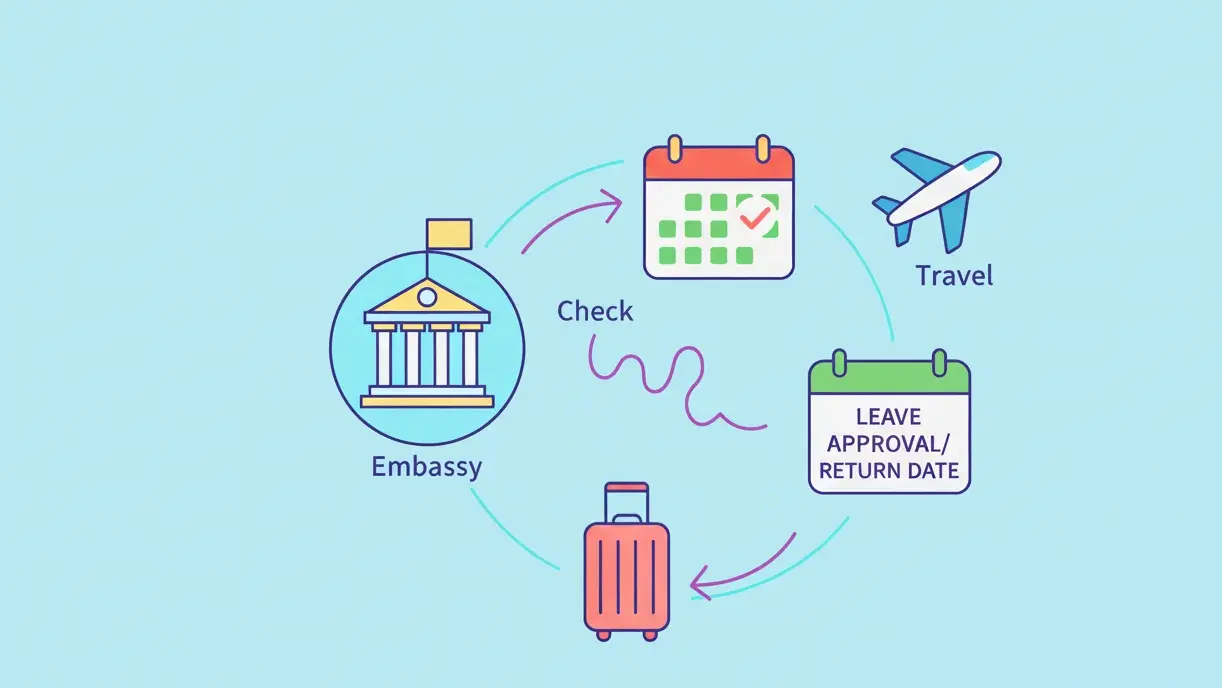
Do Embassies Check If Your Return Date Matches Leave Approval?
Your leave approval says you are back at work on Monday, but your return flight lands on Tuesday. That one-day gap can look small to you and surprisingly important to a visa officer. We are not talking about travel perfection here. We are talking about whether your documents support the same story, especially when your job, trip length, and return plans are all being weighed together.
Before you submit anything, we need to judge the mismatch the way an embassy may judge it. Sometimes the dates are close enough to be harmless. Sometimes they suggest weak planning, weak employer proof, or a trip that stretches beyond approved leave. The difference matters because the safest file is the one that looks consistent without needing extra explanation. If your return date changed, update your return flight for visa so it still matches your approved leave.
Your return flight is not a standalone detail — it is one line inside a larger flight reservation for visa that an officer reads as a single, dated story. When the return date drifts away from your leave approval, the whole reservation starts to look assembled from mismatched plans rather than managed as one trip. That is why it helps to understand how a compliant booking should be built before you worry about any single date. Our flight reservation for visa 2026 complete guide walks through exactly how routing, dates, and proof should line up across your file, so your outbound leg, return leg, and employer leave all describe the same window. Reading it gives you a clear template for a clean, verifiable submission — the kind where an officer confirms your travel dates once and moves on without a second look. Whether you are filing for tourism, business, or a family visit, treat the guide as your baseline for a well-matched document set, then return here to focus on the return date itself. Line the booking up with your leave early, and you remove one of the most common reasons a timeline starts to look inconsistent.
Key Takeaways #1
- Officers read your return date beside your leave approval, trip purpose, and expected work-rejoin date — never in isolation.
- The real test is a believable timeline: travel starts within approved leave and you return in time to resume work as stated.
- A small overnight or weekend gap is usually harmless; a return that lands after leave ends is the one that changes the risk fast.
- Before filing, run the four dates that decide whether your return looks credible — see the pre-submission timeline audit further down.
Table of Contents
- What A Visa Officer Is Really Comparing When They Look At Your Return Date
- When A Date Difference Looks Normal, And When It Starts Looking Like A Story Problem
- How Leave Approval, Flight Reservation, And The Rest Of The File Need To Tell The Same Timeline
- Why The Same Mismatch Gets Judged Differently For Tourists, Business Travelers, And Family Visitors
- What To Fix Before You Apply: The Return Flight, The Leave Letter, Or The Explanation
- Cases That Create Extra Scrutiny Even When The Dates Almost Match
- A Pre-Submission Timeline Audit For Applicants Who Want Zero Questions About Their Return Date
- Frequently Asked Questions About Return Dates And Leave Approval
- Make Your Return Date Support Your Leave Story
What A Visa Officer Is Really Comparing When They Look At Your Return Date

A return flight date does not sit alone in a visa file. It gets read beside your leave approval, your trip purpose, and the rest of your timeline.
Your Return Date Is Not Reviewed In Isolation
When an embassy reviews your application, the return date on your flight reservation is usually checked against the dates your employer approved. That comparison matters because both documents speak to the same question: when are you expected back in your normal life?
If your leave letter says you are approved to be away from 5 June to 14 June, and your return flight lands on 14 June, the story is clean. If the flight lands on 16 June, the file now invites a second look. The issue is not only the extra two days. The issue is that your documents are no longer pulling in the same direction.
That is why we should not think about the return date as a travel detail only. In a tourist visa, it also becomes an employment and credibility detail. A business visa can affect whether the trip still looks tied to its stated purpose. In a family-visit application, it can shape how firmly your home-country commitments appear on paper.
Visa officers often review applications quickly. They are looking for internal consistency. If your leave approval, flight reservation, and intended stay all align, the timeline reads smoothly. If one document pushes past the others, it creates friction. Even a small conflict can slow down a file because the officer now has to ask whether the mismatch is normal, careless, or meaningful.
That is why we always look at the travel window as a set, not as separate papers:
-
Leave Start And End Date
-
Outbound Flight Date
-
Return Flight Date
-
Expected Date Back At Work
-
Purpose-Based Travel Period
If these dates support one another, your file feels controlled. If they compete with one another, the officer has a reason to doubt something you did not intend to put in doubt.
The Real Test Is Whether The Timeline Looks Believable
Embassies do not usually expect every date to look machine-made. They do expect the timeline to make sense. That is the real standard.
A believable timeline looks like one a real employee would actually follow. You take approved leave, travel within that window, and return in time to resume work as stated. The dates do not need to look dramatic or overly polished. They need to look practical.
That is where many applicants misread the problem. They focus on whether the return date is close enough. The officer is often thinking about whether the overall sequence feels honest and workable.
For example, these details usually support believability:
-
You return on the last approved leave day
-
You return one day before work resumes
-
Your flight timing explains a late-night departure or early-morning landing
-
Your stated trip length matches your hotel, event, or meeting timeline
But believability weakens when the file starts showing strain. That happens when:
-
The return flight extends beyond approved leave without explanation
-
The trip length looks longer than the purpose requires
-
The employer letter suggests tight work obligations, but the flight dates look casual or loose
-
The file seems built from different versions of the same trip
A believable file also respects real-life work patterns. If your leave approval is short and specific, but your return reservation suggests extra leisure time after the approved period, the embassy may wonder why your employer signed off on one timeline while you booked another. That mismatch can look more serious than the calendar gap itself.
We should also remember that return dates are not just about coming home. They are about whether your file shows that you intend to step back into your routine on schedule. That is why the return date carries more weight than many applicants expect.
What Officers May Infer From A Date Mismatch
The first is that your planning was loose. If your leave approval ends on Friday but your return flight arrives on Sunday, the officer may think you changed your trip without updating the employer proof. That does not always destroy the case, but it can make the file look less disciplined.
The second inference is that your employment document may not reflect the real plan. This matters because leave approval is often used to support your connection to your job. If the flight dates move beyond that approved period, the officer may question how current or reliable that employer letter really is.
The third inference is more serious. In some files, a late return can suggest that your stated obligation to come back to work is weaker than the application claims. That concern grows when the job itself is central to the case, especially for applicants relying on salaried employment as a strong home tie.
A mismatch can also raise doubts about document sequence. Officers know applicants sometimes change flights after securing a leave letter. That is not unusual. But if the change creates a visible conflict and you submit it anyway, the file starts to look assembled rather than managed.
Here is how a mismatch may be read at a glance:
-
Minor And Explainable: timing issue, overnight arrival, weekend buffer
-
Untidy But Repairable: old flight date, older leave letter, inconsistent cover note
-
Potentially Damaging: return after leave ends, impossible to rejoin work, unclear employer authorization
The point is not to panic over every difference. The point is to understand that officers are trained to read what the mismatch suggests, not just what it says.
Why Leave Approval Matters More For Some Applicants Than Others
The same return-date gap does not carry the same weight in every application. Much depends on how important leave approval is in proving your home-country commitments.
For a salaried employee with a standard office role, approved leave often plays a major part in the file. It shows that your employer knows you are traveling, has allowed the absence, and expects you back. In that situation, the return flight and leave letter should usually sit very close together.
For an applicant attending a short business meeting abroad, the timing may be reviewed even more tightly. If the meeting ends on Thursday but the return flight is booked for Monday, the officer may look for a solid reason for the gap. Business travel is often judged by necessity and efficiency. The return date should reflect that logic.
For freelancers, consultants, self-employed applicants, or business owners, there may not be a traditional leave letter at all. But that does not mean the return date stops mattering. It still needs to fit the trip purpose and the rest of the file. The difference is that the officer may rely less on employer approval and more on commercial, financial, or routine-based evidence.
Applicants on probation, fixed-term contracts, or role-sensitive schedules may face another layer of scrutiny. In those cases, a leave approval is not just a travel paper. It is evidence that the employment arrangement is real and active. A return date that slips past that approval can create a sharper problem.
So when we assess risk, we should ask one simple question: how much of your credibility depends on this leave letter? The more your file leans on it, the more carefully your return date should support it.
The Hidden Question Behind The Comparison: Do You Seem Anchored To Your Routine?
Underneath the date comparison, the embassy is often testing something broader. Do you look like someone who has a clear routine to return to?
A strong visa file does not only say, “here is my flight back.” It also says, “Here is the life waiting for me when I get back.” Leave approval helps show that structure. It places your trip inside a temporary window. Your return flight is supposed to fit inside that same frame.
When the return date matches that frame, your routine looks intact. Your absence looks temporary. Your job still looks active. Your travel looks bound.
When the return date drifts outside it, the officer may start asking silent questions. Is the leave letter outdated? Is the employer relationship less firm than it appears? Is the trip more flexible than the application admits? Those questions do not always lead to refusal, but they do make the file harder to trust.
When A Date Difference Looks Normal, And When It Starts Looking Like A Story Problem
Not every mismatch between your leave approval and return flight deserves the same reaction. Some date differences are routine travel mechanics. Others make your file look like it was built from clashing plans.
A One-Day Gap Is Not Automatically A Red Flag
A one-day difference can be completely ordinary. Flights cross midnight. Long-haul routes land the next calendar day. Weekend timing can also shift how the return appears on paper.
If your leave approval ends on 14 July and your return flight departs late on 14 July but lands on 15 July, that does not automatically create a problem. The officer may still see that you used the last approved day for travel and reached home right after. The key is whether the sequence feels normal.
The same goes for routes with layovers. A reservation may show a final arrival date one day later, even though your actual journey started within the approved leave period. That is still a coherent travel pattern.
What helps here is simple logic:
-
Your travel starts within the approved leave window
-
The overnight timing is easy to understand
-
Your work rejoin date still looks realistic
-
No other document suggests you planned to stay longer for leisure
What hurts is when the file leaves the officer guessing. If the return date is one day late, but your employer's letter is very rigid, your office hours are fixed, and no part of the file explains the travel timing, a small gap can still attract attention. The gap is minor, but the lack of context makes it look sharper than it really is.
So we should not judge one-day differences by calendar math alone. We should judge them by whether they look like normal travel movement or an uncorrected inconsistency.
Small Buffer Days Can Actually Look Practical
Many applicants assume the safest file is one where the return flight lands at the last possible minute of approved leave. That is not always true. In some cases, a small buffer actually looks more sensible.
A return flight one day before work resumes often reads well. It shows that you planned a margin for delays, jet lag, or transit disruption. That can feel more realistic than landing on the exact morning you are supposed to be back at your desk.
For example, if your leave ends on Sunday and work resumes Monday, a Saturday return can look organized. A Friday return can also work if the trip length still matches your stated plan. What matters is that the buffer feels reasonable rather than suspiciously open-ended.
Small buffer days often look practical when:
-
You are returning from a long-haul route
-
Your office rejoin date is the next business day
-
Weekend timing makes the sequence look natural
-
The travel purpose does not depend on squeezing every last day abroad
The risk changes when the buffer starts looking like extra personal travel that your leave letter does not account for. A modest cushion before rejoining work is one thing. An extra two or three days abroad after the stated trip purpose ends is something else.
We also need to separate the arrival buffer from the stay extension. A buffer means you returned with enough time before work resumes. A stay extension means you remained abroad beyond what the leave approval supports. Officers tend to view those very differently.
That is why a shorter margin before rejoining work can sometimes strengthen the file. It shows discipline. It also keeps the return date from becoming a point of debate.
When The Return Date Exceeds Approved Leave, The Risk Changes Fast
This is where the tone of the file changes. Once your return date moves beyond the approved leave period, the embassy has a stronger reason to question the timeline.
A return after leave ends can suggest several things at once:
-
Your employer's letter is outdated
-
Your employer approved fewer days than you actually plan to use
-
Your job obligations may not be as fixed as claimed
-
You changed your travel dates and never resubmitted the supporting documents
This kind of mismatch is harder to dismiss as normal travel friction. It can directly affect how credible your employment proof looks.
Let’s say your leave approval ends on 22 August, but your return flight lands on 24 August. That is not just a travel detail anymore. It creates a clear question: Were those two extra days authorized or not? If the file does not answer that cleanly, the officer may start doubting the strength of your work tie.
The problem becomes sharper when the leave letter uses firm language. Phrases like “approved until,” “expected to resume duties on,” or “must report back on” narrow the room for interpretation. A flight after that point can make the file look careless or inconsistent.
This type of mismatch often deserves active correction rather than silent submission. If the return date sits outside the leave window, we should usually treat that as a document issue, not a harmless variation.
There are only a few cases where the damage may be limited:
-
The return departs on the last leave day and lands the next day due to route timing
-
The employer letter uses broader wording that still comfortably covers the travel sequence
-
A weekend or public holiday makes the work rejoin date still believable
But once the file starts showing unauthorized extra time abroad, the officer may stop reading it as a travel schedule and start reading it as a weak employment story.
Longer Trips Are Judged Differently From Short Trips
A mismatch does not look the same in every trip. Officers often read it in proportion to the overall travel length.
On a short trip, even a small conflict stands out more. If you are traveling for five days and your documents disagree by two days, that is a large share of the trip. It can make the file feel unstable because the core timeline is so short and easy to verify.
On a longer trip, a small date variation may feel less dramatic. A one-day arrival shift at the end of a four-week trip may look like normal travel mechanics rather than a serious contradiction. The longer the itinerary, the easier it is for overnight routing, connection timing, and scheduling buffers to look natural.
But longer trips create a different risk. Because the leave period is already extended, the embassy may read the final return date more carefully. If the trip is long and the return still exceeds approved leave, that extra time can look deliberate rather than accidental.
Here is the practical way to read it:
-
Short Trip + Small Mismatch: looks more visible
-
Long Trip + Small Travel-Timing Difference: may look more forgivable
-
Any Trip + Return Beyond Leave: still needs close attention
-
Long Trip + Loose Purpose + Late Return: can raise stronger doubts about control
Trip length also affects how much slack the officer expects. A three-day business visit should look tight. A two-week holiday has more room for weekend movement. A month-long family visit may allow some softer travel timing, but not a return that sits outside what your employment paper supports.
So when you assess your own file, do not ask only whether the mismatch is small. Ask whether it is small relative to the trip you are claiming.
Why The Problem Is Often Not The Date Itself, But What The Date Suggests
Embassies do not react to dates as a spreadsheet does. They react to what the dates imply about your planning, your employment proof, and your return intentions.
A one-day shift can be harmless if it suggests ordinary travel timing.
The same one-day shift can be damaging if it suggests that you changed the flight after getting your leave letter and never repaired the rest of the file.
That is why two applications with the same mismatch may not be judged the same way. The deciding factor is often the message the mismatch sends.
A return date can suggest:
-
Careful travel planning
-
A sensible buffer before rejoining work
-
A stale employer letter
-
A trip that quietly became longer than approved
-
A file built from mixed document versions
How Leave Approval, Flight Reservation, And The Rest Of The File Need To Tell The Same Timeline

A visa file starts looking strong when every date-based document supports the same trip window. Problems usually appear when each paper is reasonable on its own, but the full set does not line up once read together.
Your Leave Letter And Flight Reservation Should Point To The Same Travel Window
Your leave letter does not need to copy your flight reservation line by line. It does need to support the same overall travel period.
If your approved leave runs from 3 September to 15 September, your outbound and return flights should fit naturally inside that window. That does not mean the wording has to mirror the ticket exactly. It means the officer should be able to read both papers and reach one clear conclusion about when you are away and when you are back.
The cleanest files usually follow one of these patterns:
-
Leave starts before or on the day of departure
-
Return travel finishes on or before the last approved leave day
-
Work resumes after the return sequence makes practical sense
-
The length of the trip matches the purpose you stated elsewhere
Trouble starts when one document quietly expands or shrinks the trip. A leave letter may approve ten days, while the flight booking shows twelve. Or the leave may begin on Monday, while the outbound flight is booked for Saturday. That does not just create a date mismatch. It creates a trip-window mismatch.
That difference matters because embassies do not read leave approval as a loose background paper. They often read it as the employment side of your travel plan. Your flight reservation is the movement. Your leave letter is the permission. If the movement does not fit the permission, the file loses shape.
We should also watch for timing that looks technically possible but practically awkward. For example:
-
Leave begins the same day as a morning departure, even though airport check-in would require you to be away from work earlier.
-
Return lands very late on the final leave day, but the file suggests you are expected back at work first thing the next morning.
-
The booked trip uses every last hour of leave, but the rest of the file presents you as someone with rigid work commitments.
A strong file does not force the officer to make generous assumptions. It lets the travel window speak for itself.
The Cover Letter Can Quietly Solve Small Timing Doubts
A cover letter should not rescue a broken timeline. It can, however, smooth out small points that might otherwise make the officer pause.
This matters most when the dates are broadly aligned, but one part of the sequence could be misunderstood. A short note can clarify why the return lands the next day, why the journey starts late in the evening, or why you are back just before work resumes.
The useful cover letter sentence is usually brief and factual. It does not sound defensive. It does not argue. It simply makes the sequence easier to read.
Good examples of what a cover letter can do:
-
Clarify that the final flight departs on the last leave day and lands the next morning due to transit timing
-
Explain that you will resume work on the next business day after a weekend return
-
Note that the approved leave window covers the full travel period shown in the reservation
What a cover letter should not do:
-
Try to justify a return that clearly exceeds approved leave
-
Introduce new dates that do not appear elsewhere
-
Turn a small timing issue into a long explanation that draws more attention than the mismatch itself
-
Sounds like it is arguing with the documents in the file
The best cover letter use here is almost invisible. The officer reads the sentence, the dates make sense, and the application moves on.
That is why we should think of the cover letter as a bridge for small timing questions, not a substitute for correct documents. If the leave letter and flight reservation genuinely conflict, the cover letter should not carry that weight alone.
Employer Wording Matters Almost As Much As Employer Dates
Applicants often focus only on whether the leave dates match the flight. The wording inside the leave approval can matter nearly as much.
A narrowly worded letter gives the embassy less room to read the travel window generously. A broader but still professional letter can make ordinary travel timing look more natural.
For example, these phrases create different impressions:
-
“Approved annual leave from 10 May to 20 May.”
-
“Authorized to be away from duties until 20 May.”
-
“Expected to resume work on 21 May.”
-
“Granted leave for overseas travel during the stated period.”
These are not identical in how they frame your return. Some focus on the leave window. Some focus on your reporting date. Some make the permission sound administrative and clear. Others sound vague or incomplete.
Wording becomes especially important when the travel timing sits close to the edge of the leave period. If your flight lands late on the final approved day, a letter that clearly expects you back the following day can still read cleanly. If the letter sounds strict and narrow, the same flight may look tighter.
We should also pay attention to wording that creates unintended problems. Weak employer letters often use language that raises questions rather than closing them. Examples include:
-
“May be allowed leave.”
-
“Plans to travel.”
-
“Tentative leave.”
-
“Requested time off.”
That kind of language can make the approval look less final. Once that happens, even a decent flight timeline may lose some of its value because the employer paper itself feels uncertain.
A good leave letter does not need to be complicated. It needs to sound current, definite, and consistent with the trip you are actually submitting.
Other Documents Can Accidentally Expose A Timeline Conflict
Many applicants fix the leave letter and flight reservation, then overlook the documents around them. That is where quite a few contradictions often appear.
A visa officer may compare your main dates with information buried in:
-
A conference registration
-
A business invitation
-
A travel day-by-day itinerary
-
A covering email from an event organizer
-
A booked activity or tour confirmation
-
A family invitation letter mentioning expected arrival or departure dates
None of these documents may seem central on their own. But once one of them pushes the trip in a different direction, the officer has a reason to wonder which version is real.
Imagine your leave letter supports a return on 18 October, and your flight reservation also returns on 18 October. That looks fine until your conference badge confirmation says the event continues through 19 October. Now your file contains two incompatible endings to the trip.
Or take a family-visit case where the invitation letter says you plan to stay “until the end of the month,” while the flight reservation shows a much earlier return tied to employer leave. Even if the earlier return is the correct one, the stray phrase weakens the timeline discipline of the application.
This kind of problem often comes from harmless drafting habits. Someone reuses an old event email. A host writes an approximate date range. An itinerary was built before the final flight was reserved. The pieces are understandable. But the officer does not see your drafting process. The officer sees an inconsistency.
That is why we should treat every date-carrying paper as part of one timeline, not as a side document that can say roughly the same thing.
Why Officers Notice Applications Built From Mixed Trip Versions
Mixed-version applications are common enough that officers notice the pattern quickly. The file feels like it was updated in parts, not managed as one plan.
This usually happens after a booking change. The return flight moves. The leave letter stays old. The cover letter still mentions the earlier dates. Or the invitation was issued for one travel window, while the final reservation reflects another.
These mismatches leave traces. The application may show:
-
One outbound date in the flight reservation
-
A different trip duration in the cover letter
-
A leave period that fits only the earlier plan
-
Event or family documents tied to an outdated return
The risk here is not just confusion. Mixed versions make the file look less controlled. That can affect how the embassy reads the rest of your paperwork. If the timeline was assembled carelessly, the officer may wonder what else in the file was not checked closely.
One reason this happens is that applicants treat each document as a separate task. They update the flight because it feels most visible. Then they assume the old leave letter is close enough. Or they ask HR for a new leave letter, but forget that the business invitation still reflects the original dates.
A cleaner approach is to think in versions. Ask yourself: Which trip version am I actually submitting? Then make every document answer that same question in the same way.
If one paper still belongs to the earlier plan, it can drag the whole file backward.
If Your Employer Gave Flexible Leave Wording, Use That Flexibility Carefully
Some employers issue broad leave letters. They approve overseas travel without tightly listing every day, or they focus mainly on the rejoin date. That can help when your travel timing is ordinary but not perfectly neat.
Flexible wording can reduce friction in cases like:
-
Overnight return arrivals
-
Weekend rejoin schedules
-
Routes with long connections
-
Slight movement within a clearly approved travel period
But flexibility should not be used as cover for a timeline that plainly extends beyond what your employment story supports. If the employer letter is broad, yet the return flight sits several days later than the trip described elsewhere, the officer may still see the gap as real.
We should also be careful not to overread silence. If a leave letter is not very detailed, that does not automatically mean the embassy will ignore the return date. A flexible document helps only when the overall file still looks controlled.
The safest use of flexible wording is to let it support normal travel timing, not to stretch the story after the fact.
Key Takeaways #2
- Trip purpose changes the reading: tourism is judged on neatness, business on necessity and efficiency, and family visits on internal consistency despite softer emotional logic.
- Multi-country routes, probation, notice periods, and unpaid leave make the same near-match sharper, not softer — tighten the return story in those cases.
- A strong purpose never buys a free pass on dates. Ask whether your purpose and your paperwork describe the same trip, not just whether the purpose is compelling.
- Keep the booking itself clean and adjustable — compare visa-ready reservation options on the BookForVisa homepage.
The same discipline you bring to your leave letter should shape your booking, because officers read the two together and expect them to agree. A return date that lands even a day outside approved leave can undo an otherwise strong file, so it pays to know what a dependable flight reservation for visa actually contains: a genuine PNR, readable flight numbers, sensible routing, and dates that sit cleanly inside your employer's window. When the booking and the leave letter point to one identical trip, the reviewer confirms your timeline in seconds. When they drift apart — leave ending on Friday, a return landing Sunday — the whole application starts inviting questions it did not need to raise. Reviewing how a verifiable booking should be built helps you catch these gaps before an officer does, and it keeps a last-minute date change from quietly breaking the rest of the file. If your return needs to move, use a reservation you can adjust rather than a locked ticket bought too early. Align your booking with your approved leave now, and you hand the embassy a file that reads as coherent, current, and easy to trust.
Why The Same Mismatch Gets Judged Differently For Tourists, Business Travelers, And Family Visitors
Your return date does not carry the same meaning in every visa file. The trip purpose changes how an embassy reads the same mismatch, because a holiday, a client visit, and a family stay do not create the same expectations around timing.
Tourist Files Are Often Judged On Neatness And Plausibility
Tourist applications usually benefit from the cleanest data logic. That is because leisure travel is expected to look optional, organized, and easy to understand.
If you are applying for a short tourism visa, the officer often expects a simple structure. You take leave, travel for the stated period, and come back within that approved window. A return date that stretches beyond leave approval can look unnecessary in a tourist case because there is no built-in reason for the trip to spill over.
That does not mean tourism files must look rigid. Normal travel movement still applies. Weekend returns, overnight landings, and one-day buffers can all make sense. But the broader shape of the trip should feel tidy.
A tourism file usually looks stronger when:
-
The trip length matches the places you plan to visit
-
The return flight fits comfortably within approved leave
-
The itinerary does not look overbuilt for the time available
-
The final return feels like the natural end of a holiday, not an extra extension
Tourist cases often run into trouble when the dates suggest that the applicant is squeezing in more travel than the job situation realistically allows. If the leave letter is narrow but the flight plan looks expansive, the embassy may see that as poor planning rather than harmless enthusiasm.
Neatness matters more in tourism because there is less built-in justification for awkward timing. A business traveler may have a meeting dictating the schedule. A tourist usually does not. That makes the file easier to read, but also easier to question when the dates do not align.
Business Travel Can Justify Tighter Or More Complex Timing
Business files are different because the trip often follows external demands. A meeting date, trade fair, site visit, training session, or negotiation window can create travel timing that looks sharper or more compressed than a holiday.
In these cases, the embassy may accept a return schedule that is less relaxed, as long as it still makes business sense. You may fly in late, attend meetings immediately, and return soon after the final engagement. That kind of timing can strengthen the file because it shows the trip is tied to a real purpose rather than open-ended travel.
A business-related return date can look reasonable even when it is tight if:
-
The event or meeting dates clearly support it
-
The leave period is consistent with the work trip
-
The return follows the business purpose closely
-
The employer documentation and the flight booking feel coordinated
At the same time, business travel can invite more scrutiny when the return date becomes too loose. If the meeting ends on Tuesday but your return flight is on Saturday, the officer may want a clear reason for the extra days. That gap may be acceptable, but it needs to fit the rest of the file.
Business applicants also face a different type of risk. Because the employer is often central to the application, any mismatch between approved leave and return flight can weaken the credibility of the business narrative itself. If your employer is presenting the trip as a defined work obligation, the booking should reflect that same discipline.
A business visa file does not need perfect symmetry. It does need timing that matches the commercial purpose. The stronger the employer-backed reason for travel, the less room there is for a return date that looks casually chosen.
Visiting Family Or Friends Can Create Flexible Emotional Logic, But Not Documentary Chaos
Family visits often look more flexible on paper because personal trips do not always follow a tight schedule. That can make applicants feel that a small date difference will be overlooked more easily.
Sometimes that is true. A family visit may naturally include softer travel timing. You may want an extra day before a long return. You may time your trip around a birthday, school break, or family gathering. The embassy can understand that personal travel is not always as tightly structured as a business meeting.
But flexibility in the reason for travel does not mean flexibility in the file’s internal consistency. If your employment proof says one thing and your flight reservation says another, the emotional nature of the trip will not repair that gap.
Family-visit applications tend to work best when:
-
The duration matches the reason for the visit
-
The return flight still respects the leave period
-
The host’s letter does not suggest a longer stay than your job allows
-
The trip reads like a temporary visit, not an open-ended arrangement
This category also creates a common document trap. A host may write warmly and loosely. They may mention hoping you stay longer or refer to a broad visit window that does not match your actual return booking. That kind of wording may feel harmless in personal correspondence, but in a visa file, it can blur the timeline.
The officer is not judging your family bond. The officer is judging whether the return plan is believable against your stated work obligations. If the visit looks emotionally compelling but administratively loose, the file can start pulling in two directions at once.
Conferences, Workshops, And Official Invitations Can Support Post-Event Travel Buffers
Trips built around conferences, workshops, or formal invitations often sit between tourism and business travel. They have a fixed core purpose, but the travel around that purpose can include some practical buffer.
That makes the return-date question more nuanced. An applicant attending a two-day conference may reasonably arrive before the first session and leave the day after the event ends. A same-night departure is not the only believable pattern.
A short post-event buffer can make sense when:
-
The final session ends late in the day
-
Flight availability makes a same-day return unrealistic
-
The route home involves a long connection
-
The applicant is returning over the weekend before work resumes
What matters is that the buffer still feels connected to the event, not detached from it. Once the gap grows beyond what the event or the route explains, the embassy may stop treating it as conference travel and start reading it as extra leisure time.
Official invitations can help here because they anchor the purpose and timing of the trip. But they also create a benchmark. If the event ends on 11 November and your return is booked for 15 November, the invitation may make the late return stand out more, not less.
This is where a lot depends on the surrounding documents. If your leave approval covers the full period, your employer supports the schedule, and the travel sequence is practical, the file can still look coherent. If the event document is tight but your return date drifts without support, the invitation becomes a tool that exposes the mismatch rather than softens it.
Multi-Country Trips Make The Return-Date Question Sharper, Not Softer
Some applicants assume a more complex itinerary gives them more room to hide timing differences. In practice, a multi-country trip often makes the final return date more important.
That is because each added segment creates another point where the overall trip duration must still make sense against approved leave. If you are visiting three countries in one leave period, the embassy may pay closer attention to whether the final flight home still fits the job timeline you submitted.
A multi-country plan can work well when:
-
The route is realistic for the number of days available
-
Travel between countries does not push the final return beyond approved leave
-
The trip still feels like one controlled journey rather than an expanding plan
-
The last flight home aligns with the original leave logic
It can become harder to defend when complexity starts replacing clarity. A leave letter may support a ten-day absence, but the itinerary keeps growing through added stops and later return options. That makes the trip look less disciplined, especially if the final homebound flight is now the one part that no longer fits neatly.
The embassy does not usually care that your route is ambitious. The embassy cares whether your return home still looks realistically connected to your work commitments. A complex route can be acceptable, but it gives you fewer chances to be careless with the final date.
If The Purpose Is Strong, The Dates Still Need Discipline
A strong purpose helps a visa file. It can explain why the trip exists, why the timing matters, and why the return date follows a certain pattern. But it does not give the dates a free pass.
Applicants often assume that a convincing reason for travel will outweigh a small date conflict. Sometimes that works for minor timing issues. But once the mismatch touches leave approval directly, the purpose alone is rarely enough.
A clear business invitation, a real family event, or a formal conference registration can support the trip. It cannot substitute for a return date that still fits the employment story you chose to present.
That is why the safest question is not, “Is my purpose strong enough?” It is, “Does my purpose and my paperwork describe the same trip?”
What To Fix Before You Apply: The Return Flight, The Leave Letter, Or The Explanation
Once you spot a mismatch, the real job is not defending it. The real job is fixing the right part of the file so the return date and leave approval stop competing with each other.
Start By Identifying Which Document Is Actually Wrong
Not every mismatch means the same document needs attention. Sometimes the flight reservation is outdated. Sometimes the leave letter reflects an earlier trip plan. Sometimes the dates are both technically correct, but the file still reads awkwardly because one small clarification is missing.
We should start with a simple question: which document no longer reflects the trip you are actually submitting?
That question matters because many applicants fix the most visible document, not the incorrect one. They changed the return flight because it is easy to see, even though the real issue is that the employer approved the wrong travel window. Or they ask HR for a revised leave letter when the trip itself could have been adjusted more cleanly.
A quick file check helps separate those cases:
-
Does the return flight still match your final intended travel dates?
-
Does the leave letter still cover that same return plan?
-
Does your cover letter mention the current dates or an older version?
-
Does your work rejoin timeline still look realistic once the final arrival is taken into account?
Once you know which item is out of step, the fix becomes more targeted.
There are usually three possibilities:
-
The Flight Is Wrong: your booking still shows the older return date.
-
The Leave Letter Is Wrong: employer approval no longer covers the final plan.
-
The File Needs Context, Not Replacement: the dates are close enough, but the sequence could be misunderstood without one short note.
That distinction keeps you from over-editing the application. A clean visa file is not the one with the most changes. It is the one where every date now belongs to the same version of the trip.
When It Is Smarter To Change The Flight Reservation
In many cases, the flight is the easiest and safest thing to fix.
If your employer has already approved a clear leave window and that document is current, formal, and usable, it often makes more sense to bring the return flight inside that window than to reopen the employment side of the file. This is especially true when the mismatch came from your own travel adjustments rather than from a change at work.
Changing the flight reservation is usually the smarter move when:
-
The leave letter is recent and correctly issued
-
The return flight now falls outside approved leave
-
The trip purpose does not require the later return
-
A small shift in travel timing solves the problem cleanly
-
You want the file to look controlled without extra explanation
This matters most in short tourism and standard business files. If your leave ends on Friday and your return flight is on Sunday, moving the booking back into the approved period often creates a cleaner result than trying to stretch the leave letter after the fact.
A revised reservation can also help when the return timing looks too tight in relation to work. For example, if your flight lands very late and the file suggests you are expected back at work almost immediately, a slightly earlier return can make the whole timeline more believable.
We should also be practical here. The goal is not to create a perfect-looking booking. The goal is to make the return plan match the work permission you are relying on in the visa application.
That is why changing the flight is often best when the employer's proof is already strong. A stable leave letter is a valuable document. If the travel dates can be aligned without disturbing that part of the file, the overall application usually benefits.
When It Is Smarter To Request Revised Leave Approval
Sometimes the flight is not the problem. The leave letter is.
This happens when your travel dates are now final, sensible, and supported by the rest of the trip, but the employer approval still reflects an older version. In that situation, forcing the flight back into an outdated leave window can make the trip less practical than it needs to be. The cleaner fix is often to update the employer document so it matches the plan you are actually filing.
Requesting revised leave approval is usually the better option when:
-
Your final return date is now fixed for a valid reason
-
The employer is aware of the updated travel timing
-
The flight schedule works better than the older leave dates
-
The return still fits your work reality, but the paper has not caught up
-
Other documents already support the new travel window
This can happen after a meeting date changes, a conference schedule shifts, or a routing adjustment makes the original return less practical. In those cases, the smartest move is not pretending the old leave letter is close enough. It is asking for a corrected one that removes the conflict completely.
A revised leave letter is especially important when the current mismatch is obvious. If the document says leave ends on 10 December and the return flight lands on 13 December, that is not the kind of issue we should try to soften with wording alone. The employer's paper should be brought into line.
When you request revised approval, aim for clarity rather than creativity. You do not need a dramatic explanation. You need the employer document to show the approved absence in a way that comfortably contains the final travel window and supports the work return story the embassy will read.
If your job is a central home tie, this step is often worth doing properly rather than hoping the officer will read around the mismatch.
When A Short Explanation Is Enough
Not every date issue requires a new flight or a fresh employer letter. Some situations only need a brief line that prevents the officer from reading ordinary travel timing as a contradiction.
A short explanation is usually enough when:
-
The return departs on the last leave day and lands the next day
-
Weekend timing makes the work rejoin date obvious
-
A layover causes the calendar date to shift
-
The leave wording already supports the travel period, but the sequence could look tighter than it really is
These are not repair jobs in the same way as a late return outside approved leave. These are reading issues. The file is broadly sound, but one sentence can help the officer understand the travel pattern faster.
Useful explanations tend to share the same qualities:
-
Short
-
Factual
-
Consistent with the documents
-
Limited to the timing point that needs clarification
A strong explanation does not sound like a defense. It sounds like a guide to the timeline. For example, you may note that the final return departs on the last approved leave day and arrives the next morning due to transit timing. That is enough. Anything longer starts drawing more attention than the date difference deserves.
We should be careful not to overuse explanations. If the return date clearly sits outside the approved leave period, a note is not a substitute for correction. A short explanation works only when the underlying documents already support the same basic trip.
What Not To Do When You Notice A Mismatch Late
Late-stage fixes often create more damage than the original problem. That usually happens when applicants rush to make the dates look better without checking whether the whole file still makes sense.
Here are the most common mistakes:
-
Submitting Conflicting Versions Together
A revised return flight with an old cover letter or old leave dates can make the file look patched together. -
Writing A Long Defensive Explanation
A small issue can start looking bigger when the explanation sounds anxious or argumentative. -
Changing Only The Visible Document
Fixing the booking but ignoring the employer letter, invitation, or day-by-day itinerary leaves the mismatch alive in another part of the file. -
Forcing An Unnatural Return
Moving the flight just to match the leave letter can create a route or timing pattern that looks less believable than the original plan. -
Assuming The Officer Will Ignore It
Clear date conflicts rarely improve through silence alone.
The better approach is to slow down and check the full timeline before making any change. Ask whether the fix removes the contradiction or simply moves it to another page.
Late discovery does not have to become a major problem. It becomes a major problem when the response is rushed, partial, or inconsistent.
If the cleanest solution is to adjust your return reservation to match approved leave, it helps to use a service that lets you update the dates without turning the file into a moving target. BookForVisa.com can be useful here because it offers instantly verifiable reservations, a PNR with a PDF, unlimited date changes, transparent pricing at $15, worldwide visa trust, and credit card payment support.
That kind of flexibility matters most when the employment side of your file is already correct, and the return booking is the piece that needs to be brought back into line.
Cases That Create Extra Scrutiny Even When The Dates Almost Match
Some files look aligned at first glance, then become harder to read once the officer notices how the return actually works in real time. These are the cases where the dates are close, but the travel mechanics or job context make the timeline more sensitive than it first appears.
Overnight Flights Can Make A Clean File Look Messy
An overnight flight can create a mismatch that exists more on paper than in reality.
You may depart on the final approved leave day, spend the night in transit, and arrive home the next calendar day. From your point of view, the trip ended within the leave window because the return journey began on time. From the embassy’s point of view, the visible arrival date may still appear one day late unless the rest of the file makes the sequence obvious.
This matters because visa officers often scan dates quickly. They may notice the landing date before they study the routing in detail. If the employer letter ends on 12 March and the booking shows arrival on 13 March, the file can look inconsistent even if the last leg home was a normal overnight return.
The risk is higher when:
-
The itinerary has multiple segments
-
The final arrival date is the only date the eye catches easily
-
The leave letter is strict and narrow
-
The work rejoin date is immediate
A same-night departure and next-day arrival can still look acceptable. But it needs to feel like travel timing, not extra stay time. That distinction gets lost when the booking is cluttered, the route is complex, or the employer document gives no room for interpretation.
If your flight leaves at 11:45 p.m. on the last leave day and lands the next morning, the timeline is often defensible. If the booking suggests you stayed abroad through the following day and only then began the trip home, the same calendar difference looks more serious.
We should read overnight returns the way an officer may read them: not by intention, but by what the document's surface shows first.
Time Zones Can Distort How The Return Date Appears On Paper
Time zones create a different type of confusion because the return date can look inconsistent even when the itinerary is perfectly normal.
A long-haul flight may depart on one date locally, connect through another city, and land home on a date that feels later than expected when compared with the leave letter. That does not mean the trip exceeded approved leave. It means the calendar has shifted across jurisdictions and booking systems.
This becomes important when the visa file uses simple date language, but the flight reservation reflects global routing logic. Your employer may approve leave until 20 April. Your return flight may leave late on 20 April local time, but the final arrival could show 21 April due to transit duration and time-zone differences. That is not unusual. It is also not something we should assume will explain itself.
The risk increases when:
-
The flight crosses several time zones
-
The layover is long enough to make the trip look extended
-
The file includes a cover letter or itinerary that mentions only one simplified return date
-
The arrival date conflicts with a stated work-resumption date
Time-zone issues often hurt applicants who think in local travel terms while the documents speak in airline time. The employer sees approved leave through Friday. The applicant thinks, “I leave Friday night.” The booking shows arrival on Saturday. The embassy sees the Saturday date and compares it literally against the leave letter.
That does not mean the file is weak. It means the travel sequence must stay readable.
We should also be careful with route changes. If an updated reservation now lands a day later because of a different connection path, the time-zone effect may magnify a change that already made the timeline tighter. In those cases, the final arrival date becomes more than a technicality. It becomes part of how the officer measures whether your work return still looks realistic.
Unpaid Leave, Probation, And Notice Periods Invite A Different Kind Of Scrutiny
Some employment situations make even small date gaps feel heavier.
If you are on unpaid leave, the embassy may already be reading your work with more caution. The leave exists, but it may not signal the same job stability as standard paid annual leave. That means the return date has to work harder to support the idea that you remain anchored to your role.
Probation creates a different concern. A probationary employee is often expected to show stronger discipline around work timing, not less. If your leave approval is narrow and your return flight lands after it ends, the officer may question whether the arrangement is genuinely approved or simply tolerated informally. That can weaken both the leave document and the employment story behind it.
Notice periods raise another issue. If you are serving notice, the embassy may already see your job tie as transitional. A return date that slips beyond approved leave can make that transition feel even less stable. The officer may wonder whether the role you claim to be returning to is as fixed as the file suggests.
These situations are more sensitive because the employment relationship itself can look less settled. That changes how a near-match is judged.
A one-day difference may draw sharper attention when:
-
The leave is unpaid
-
The role is new
-
The employer's wording sounds conditional
-
The applicant is close to resignation or contract end
-
The job is already a softer home tie than usual
If your file falls into one of these categories, the goal should be a tighter return story, not a looser one. Small timing differences that might pass quietly in a stable salaried case can start carrying more weight here.
Remote Work Does Not Automatically Remove The Need For Date Consistency
Remote work often gives applicants a false sense of freedom in the visa file.
You may feel that because your job is flexible, the exact return date matters less. But if you are using employment documents to support your application, the embassy still expects those documents and your travel timeline to make sense together.
A remote worker can still face questions such as:
-
When are you expected to resume your regular work pattern?
-
Is this trip temporary or open-ended?
-
Does the employer know the travel schedule?
-
Does the file show a structured return, or just a vague intention to come back?
Remote arrangements do not erase those questions. In some cases, they make them more important. If your job does not require daily physical presence, the embassy may look more closely at the rest of the file to see whether your return plan is still bound and credible.
That is why a return flight that exceeds approved leave can still be a problem even in a remote-work case. The issue is not office attendance alone. The issue is whether the documents tell a disciplined story about when the travel ends and the normal routine resumes.
Remote workers should be especially careful when their employer's letter uses broad language. Flexibility can help explain normal travel timing. It can also make the file look vague if the dates drift too far without a clear structure.
So while remote work changes the practical meaning of being “back,” it does not remove the embassy’s interest in whether your return reservation and employment evidence still belong to the same timeline.
Seasonal Workers, Teachers, And Shift-Based Employees Need Role-Specific Logic
Not every job follows a standard Monday-to-Friday office model. That changes how your return date should be presented.
Seasonal workers may have work periods that rise and fall around demand. Teachers may travel during term breaks or institutional holidays. Shift-based employees may not return to work on the next calendar day, even when leave has ended. These applicants need the file to reflect their real schedule, not a generic one.
For example, a teacher whose leave aligns with a school break may return near the end of that break without needing to prove an immediate office rejoin. A shift worker may land on Tuesday but not be rostered until Thursday. A seasonal employee may have approved leave that looks unusual in length but still matches the structure of the job.
These cases work best when the role logic is visible. The problem is not that the return date is different from a standard office pattern. The problem is that the file gives no clue why the timing makes sense for that profession.
Useful support in these situations may include:
-
Employer wording that reflects the actual work cycle
-
Rejoin dates that match the roster or calendar
-
Travel timing that fits the profession’s real schedule
-
A return flight that still looks tied to approved absence, not detached from it
Role-specific logic helps explain why a date pattern that seems odd in one job is perfectly normal in another. But the logic must come from the file itself. The officer should not need to guess how your work schedule functions.
A Pre-Submission Timeline Audit For Applicants Who Want Zero Questions About Their Return Date
A strong return-date review is less about finding one typo and more about making your whole file read as one clean plan. During the visa process, small timing gaps become bigger when the papers around them stop supporting the same return story.
Read Your File As If You Are Trying To Catch Yourself
Before you submit, read the file the way a consular officer would. Do not read it as the person who built it.
That means you should not think, “I know what I meant.” You should think, “What does the paperwork show on its face?” Whether you are using temporary flight itineraries, a flight itinerary, or actual tickets, the test stays the same.
Start with the lines that get scanned first:
-
passenger details
-
passenger name format
-
passport number
-
departure airport
-
entry city
-
exit date
-
return trip
-
flight numbers
Then look at the booking itself. Does the booking reference number match the booking code shown on the document? Is the e-ticket number shown where expected, if your airline document includes one? Are the flight details easy to follow without zooming in or second-guessing what changed?
This matters because a date problem is rarely read alone. It gets read beside the structure of the booking. If the document looks crowded, unclear, or out of sync with the rest of the file, your return timing becomes harder to trust.
The goal is to make the logic obvious. A real traveler, and just as importantly, the officer, should be able to tell when you leave, when you return, and how that fits your work calendar. If the route looks like one of the real trips people actually take, the return date has a much better chance of being read calmly.
Check The Four Dates That Matter Most
A useful audit does not begin with every date in the file. It begins with the four that decide whether your return looks credible at all.
Those four dates are:
-
When the trip starts
-
When the trip ends
-
When approved leave ends
-
When you are expected back at work
Everything else is secondary until these four work together.
Your approval window should comfortably contain the travel you are showing. If it does not, the file already has a structural problem. In a short tourist case, that conflict can become a key factor very quickly because the trip is supposed to look neat and bounded. In a business file, the same conflict may be judged against meeting dates and employer wording. In every visa type, the question is the same: do these four dates still support one believable timeline?
This is especially important in a Schengen visa or application, where the travel window is often short, precise, and easy to compare with employer leave. In some long-stay visas, officers may also focus on different evidence, but a return that overruns approved leave can still weaken the employment side of the file.
A classic example is a return flight that lands one day after the leave ends because the applicant changed the route but never updated the employer's paperwork. That file does not fail because one day exists. It weakens because the four anchor dates no longer speak with one voice.
Make Sure Every Date-Carrying Document Belongs To The Same Trip Version
Once the four core dates look sound, check whether the rest of the file belongs to the same trip version.
This is where many applications drift. The return flight gets updated. The cover letter does not. The leave approval is current, but the supporting papers still reflect the earlier plan.
Review every document that can quietly carry dates or trip timing:
-
hotel bookings
-
travel insurance
-
a family member's invitation
-
event or meeting letters
-
day-by-day itineraries
-
onward ticket proof
-
onward travel notes
-
bank statements if they reference trip timing or recent travel spending
If you have an entry plan for a multi-stop trip, that plan should still support the same final return date. If you are showing open-jaw travel, the route has to remain internally consistent from the first arrival to the last flight home. A file that enters through one city, exits through another, and mentions a third return date in the cover letter will invite unnecessary questions.
Past evidence can create conflict, too. If you are relying on travel history from old passports to show that you returned on time, make sure the entry and exit stamps are readable and that any exit stamps you submit do not create confusion about your usual travel pattern.
The safest audit question here is simple: would a skeptical reader see one trip or three partial versions of it? If the answer is not obvious, you still have work to do.
Decide Whether Your File Needs Silence Or Explanation
Not every timing quirk needs a written note. In fact, many files become weaker because applicants talk too much.
If the dates line up cleanly, silence is often your friend. Let the documents do the work. A short overnight connection, a weekend return before Monday duties, or a clear arrival sequence often needs no extra sentence at all.
Explanation becomes useful only when the dates are sound, but easy to misread. That usually happens with:
-
overnight arrivals
-
long-haul connections
-
routes crossing time zones
-
a late landing followed by a reasonable work rejoin
When you do explain, keep it narrow. Explain the movement, not your emotions. Do not turn one timing note into a defense of the entire visa application process.
First-time applicants often make this mistake. They try to narrate their whole travel story when only one sentence was needed. That extra text can pull attention toward a date issue that the officer might otherwise have read as normal.
Your personal circumstances matter only if they directly clarify the timing. If they do not, keep them out. The more disciplined your explanation, the easier it is for the officer to accept it and move on.
Know The Threshold For Reissuing Documents Instead Of Submitting As-Is
At some point, a note is no longer enough. You need a cleaner document.
The threshold is usually crossed when the return date visibly conflicts with the leave approval, the work rejoin story, or another timing document in the file. That is when you stop polishing and start replacing.
You should strongly consider reissuing when:
-
The return lands after the approved leave ends
-
The employer letter reflects an older trip version
-
The booking shows a later arrival than the rest of the file can support
-
The event or invitation dates no longer match the flight home
-
The work return becomes unrealistic once the final arrival is read properly
This is also where practical booking choices matter. Many applicants prefer to make realistic reservations because they can adjust dates before filing, rather than expose themselves to unnecessary financial risk by locking in the wrong return too early. Whether the provider offers instant delivery or accepts credit cards is not the issue at that point. The real issue is whether the revised booking now supports embassy-approved documentation.
That same logic applies whether you are holding a dummy flight ticket, a dummy air ticket, or another dummy ticket for visa use. The document should help the file read clearly. It should not force the officer to resolve a mismatch that you could have fixed before submission.
A Practical Self-Audit Checklist
Before you submit, run a strict checklist and answer every point with the document open in front of you.
-
Does the return trip finish inside the leave period you are relying on?
-
If the final arrival is one day later, is that caused by route timing rather than extra stay?
-
Do the flight details shown in the booking still match the dates named elsewhere in the file?
-
Does your leave letter still support the same approval window as the final booking?
-
If you are showing onward travel, does it still fit the same end date and route logic?
-
If you included hotel bookings or travel insurance, do they reinforce the same trip length?
-
If your route starts in one departure airport and ends through another path home, is the sequence still easy to follow?
-
If the booking includes a booking reference number, is it readable and consistent across the document?
-
Does the entry plan make sense for the visa type you chose?
-
If your case is tied to a family member abroad, does that invitation avoid suggesting a longer stay than your leave allows?
-
If you looked at more resources before filing, have you checked that none of that advice pushed you into a return date that no longer fits your own paperwork?
A good checklist should feel stricter than your first instinct. That is how you catch the problems that usually slip through.
Frequently Asked Questions About Return Dates And Leave Approval
Do embassies check if your return date matches your leave approval?
Yes. Officers routinely compare the return date on your flight reservation with the dates your employer approved, because both answer the same question: when are you expected back in your normal life. When they align, the timeline reads cleanly; when they do not, the file invites a closer look.
Is a one-day gap between leave approval and the return flight a problem?
Usually not on its own. Flights cross midnight and long-haul routes land the next calendar day, so a one-day shift often reflects normal travel timing. It only becomes an issue when nothing in the file explains it and the leave letter is strict.
What happens if my return flight lands after my approved leave ends?
That is where the risk rises. A return beyond approved leave can suggest an outdated employer letter, unauthorized extra days, or a weaker work tie. This type of mismatch usually deserves active correction rather than silent submission.
Should my flight reservation for visa fall inside my approved leave window?
Ideally, yes. Your outbound and return legs should sit naturally inside the approved period so the officer reaches one clear conclusion about when you travel and when you return. A flight reservation for visa that overruns leave without explanation weakens the employment side of your file.
Can a cover letter fix a mismatch between my return date and leave letter?
Only a small one. A brief, factual note can clarify an overnight arrival or a weekend rejoin, but it cannot justify a return that clearly exceeds approved leave. If the documents genuinely conflict, correct the document rather than explaining around it.
Should I change the flight or the leave letter when the dates do not match?
It depends on which one no longer reflects your real plan. Change the flight when your leave letter is current and correct; request revised leave when your travel dates are final and the employer letter is simply out of date. Fix the wrong document, not just the most visible one.
Does an overnight or time-zone return count as exceeding my leave?
Not in reality, but it can look that way on paper. A flight that departs on your last leave day and lands the next morning is normal travel timing. Make sure the sequence stays readable so the officer sees travel mechanics, not extra stay time.
Is the return date judged differently for tourist, business, and family visas?
Yes. Tourism files are judged mainly on neatness and plausibility, business files on necessity and efficiency, and family visits on internal consistency despite more flexible emotional logic. The same gap can read as harmless in one category and awkward in another.
Do freelancers or self-employed applicants need leave approval for the return date?
Not necessarily a formal leave letter, but the return date still matters. Without employer approval, the officer relies more on commercial, financial, or routine-based evidence, so the return should still fit the trip purpose and the rest of the file.
Does remote work remove the need for return-date consistency?
No. If you use employment documents to support the application, the embassy still expects your travel timeline and those documents to agree. A return that overruns approved leave can still weaken the file even when your job does not require daily office presence.
How important is the return date for a Schengen visa?
Very. Schengen travel windows are usually short and precise, which makes the return date easy to compare against employer leave. A return that overruns approved leave stands out quickly, so align your booking to your leave before filing.
What should I check before submitting to avoid return-date questions?
Check the four anchor dates — trip start, trip end, leave end, and expected work-rejoin — and confirm every dated document belongs to the same trip version. Then decide whether the file needs silence or one short clarifying note.
Key Takeaways #3
- Fix the right document: change the flight when leave is current, request revised leave when travel dates are final, or add one short note when the dates are only easy to misread.
- Never patch one document and leave old dates alive in the cover letter, invitation, or itinerary — mixed trip versions read as uncontrolled.
- A short, factual explanation clarifies overnight or time-zone timing; it never rescues a return that truly overruns approved leave.
- If Europe is on your route, align your booking with the documented Schengen visa flight reservation requirements before filing.
Make Your Return Date Support Your Leave Story
When an embassy compares your return flight with your leave approval, it is checking whether your visa file tells one clear story. A small date difference may be fine if the travel timing makes sense. A late return outside approved leave is harder to defend. What matters most is that your flight reservation, employer letter, and work rejoin timeline all point in the same direction.
Before you submit, read the file like a reviewer, not like the traveler who planned it. If the return date fits your approved leave and the timeline looks natural on paper, you can move ahead with much more confidence.
Because Schengen files compress everything into a short, tightly checked travel window, they deserve a final look before you submit. Schengen consulates compare your leave approval, your return date, and your booking against a precise set of expectations, and even a one-day overrun can stand out when the whole trip is only a week or two. If Europe is on your route, the way your flight reservation for visa is structured — routing, entry point, and a return that sits inside approved leave — can carry more weight than in many other categories. Our breakdown of the Schengen visa flight reservation requirements lays out what those offices actually want to see in a booking, including how fresh the itinerary should be and how it should reconcile with your employer letter and accommodation dates. If your return date just changed, this is the moment to confirm the reservation still matches, rather than discovering a gap after a query or refusal. Read the requirements alongside your own documents, align the booking to your leave, and you will submit a file that clearly belongs to one real, well-planned trip.
More Resources
Why Travelers Trust BookForVisa.com
BookForVisa.com has been helping travelers since 2019 with specialized dummy ticket reservations for visa applications. We've supported over 50,000+ visa applicants worldwide, providing verifiable PNRs and instant PDF deliveries. Our 24/7 customer support ensures quick resolutions, while secure online payments and unlimited changes demonstrate our commitment to reliability. As a registered business with a dedicated team, BookForVisa.com focuses exclusively on flight reservations for visa, offering niche expertise you can count on.
About the Author
Visa Expert Team — With over 10 years of combined experience in travel documentation and visa assistance, our editorial team specializes in creating verifiable flight and hotel itineraries for visa applications. We have supported travelers across 50+ countries by aligning documentation with embassy and immigration standards.
Editorial Standards & Experience
Our content is based on real-world visa application cases, airline reservation systems (GDS), and ongoing monitoring of embassy and consular documentation requirements. Articles are reviewed and updated regularly to reflect current practices.
Trusted & Official References
- U.S. Department of State — Visa Information
- International Air Transport Association (IATA)
Important Disclaimer
While our flight and hotel reservations are created to meet common embassy requirements, acceptance is not guaranteed and may vary by country, nationality, or consulate. Applicants should always verify documentation rules with the relevant embassy or official government website prior to submission.
Related posts

How to Assemble a Visa Travel-Proof PDF Pack
14 Oct, 26
Child Visa Itinerary After a Custody Schedule Change
14 Oct, 26
Visa Travel-Proof Audit: Eight Mistakes to Check
14 Oct, 26
Flight Booking for Visa While a U.S. Reentry Permit Is Pending
14 Oct, 26
Expired Flight Hold Before Visa Appointment: Refresh or Keep?
14 Oct, 26
Travel and Visa Reservations During a UK Citizenship Application
14 Oct, 26
Flight Reservation Shows Cancelled Before a Visa Appointment
14 Oct, 26
Family Flight Reservation for Visa: Mixed Surnames
14 Oct, 26
Flexible Visa Cover Letter: Wording for Date Changes
14 Oct, 26