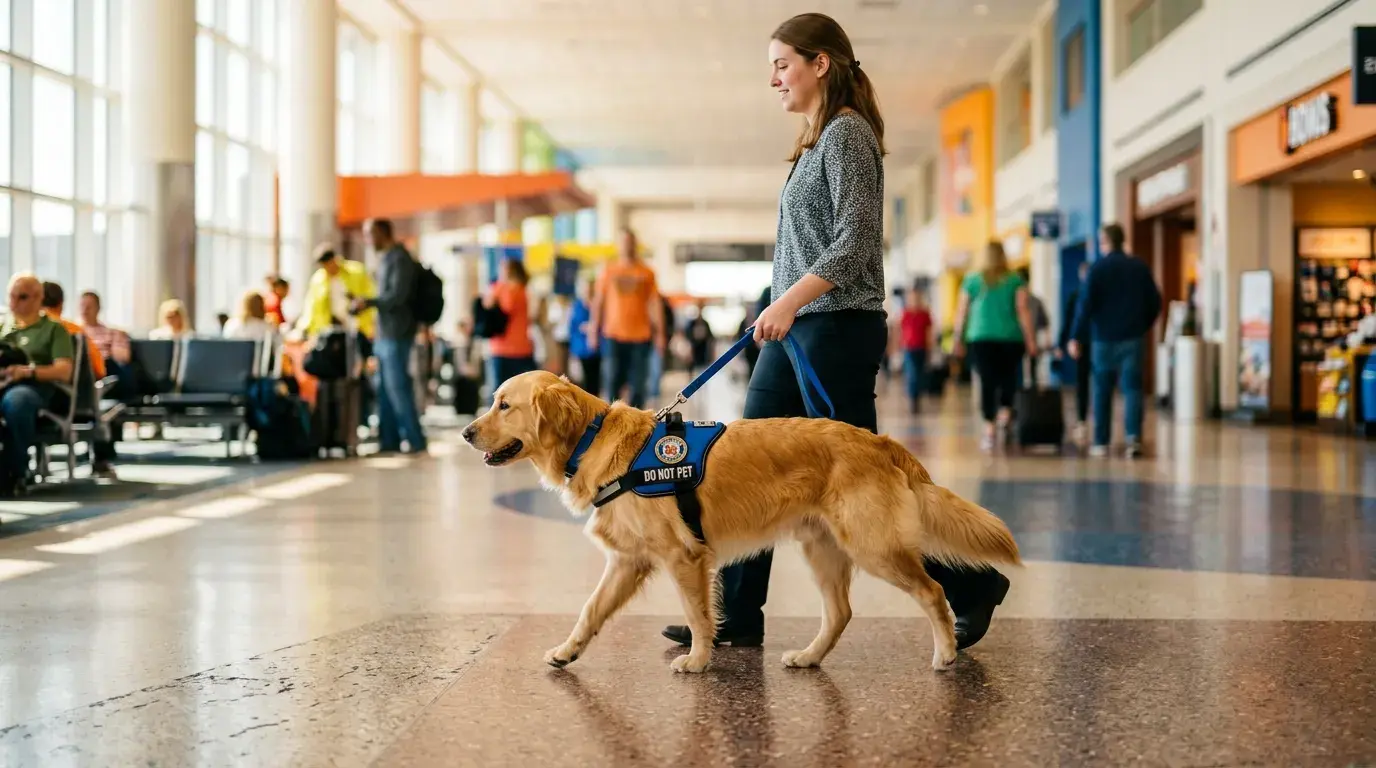
Short answer: A reservation for visa and permission to travel with a service dog are separate. Match the intended flight dates to the visa checklist, then confirm the operating airline’s service-animal process and the destination’s dog-entry rules. Do not assume a visa, PNR or dog certificate guarantees boarding or entry.
- Visa evidence concerns the traveler and the intended route; animal access and import papers are checked separately.
- U.S. DOT rules recognize trained service dogs, not emotional-support or companion animals, for covered air travel.
- Country-specific animal-health deadlines can change your feasible flight date. Verify them before buying a fixed fare.
- Ask every operating carrier and the destination authority what applies to your exact itinerary.
A visa application and a service dog’s airline and destination-entry requirements follow different rules. An officer may ask about the route, while the airline and animal-health authority may need dog-specific information. Build one truthful travel timeline that gives both processes enough time.
This guide shows you how to keep both processes separate, match your itinerary to your animal's paperwork window, and avoid denied boarding. We also cover what to carry on embassy day and airport day. Test your travel dates first with a dummy ticket before the paperwork clock starts.
Before fixing a departure date, list the visa deadline, each airline’s service-dog form deadline, and the destination’s animal-entry deadline. A country may require an import permit or a veterinary certificate issued within a specific window. The U.S. CDC also applies separate dog-entry rules based on a dog’s recent travel and vaccination history.
Why Your Visa Appointment and Your Service Animal Follow Two Different Rulebooks
Many handlers treat the visa and the animal as one project. They are two projects with different offices, different deadlines, and different paperwork. Sorting this out first saves you weeks of back and forth.
Embassies Process Humans, Not Animals
Visa officers assess the traveler under the relevant visa rules; animal-health and airline requirements are separate. A service dog does not receive a human visa. Check the exact visa checklist, the consular post’s access arrangements and the destination’s animal-entry rules rather than assuming one approval covers the others.
The practical work often has three tracks: your visa application, the airline’s service-animal process and any destination animal-import procedure. Some destinations require a permit or endorsed certificate, while others do not.
Keep these tracks distinct but coordinate their dates:
-
Visa side: your identity, finances, purpose of travel, interview slot, and flight itinerary
-
Animal side: the destination's animal import office, your vet, and the airline's approval process
-
Shared point: your travel dates, which must work for both tracks
Answer every visa-form question truthfully. Do not invent an animal-disclosure requirement, but do not omit relevant information if the form or post asks about accessibility or travel arrangements. Ask the specific post about bringing the dog to an interview.
Airline regulations for service animals operate independently of visa processes. A visa approval will not unlock a seat for your dog. Airlines have their own service animal regulations that differ from country visa guidelines. A yes from one office tells you nothing about the other.
Countries also disagree about who counts as a service animal. Countries differ in their legal recognition of service animals. A dog that is fully protected under the ADA at home may be treated as an ordinary pet somewhere else. The law you know does not travel with you.
That is why you should never assume. Read the destination's own rules before you pick a single date.
What Changes When Your Dog Walks Into the Consulate
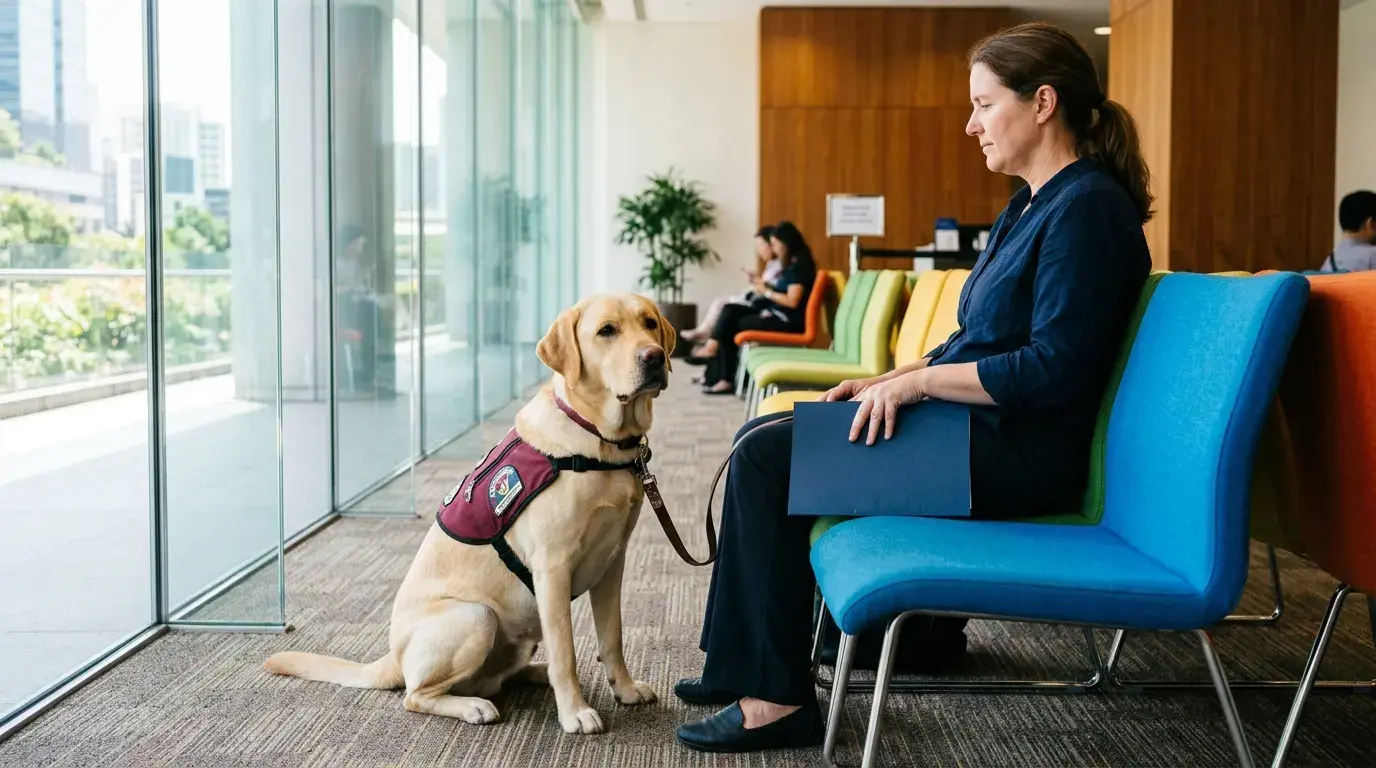
Access arrangements at consular posts vary. Contact the post or its appointment provider before the interview, explain that you use a trained service dog and ask about entry, security screening and any accommodation process. Do not assume every location has the same policy.
A harness or lead may help staff identify and handle the dog safely, but there is no universal rule that a vest, tag or certificate must be displayed at every diplomatic post. Follow the post’s published instructions and keep the dog under control.
Contact the post early enough to receive a reply. Ask where to enter, what security screening applies and whether an alternative arrangement is available if dogs cannot enter a particular area. Keep the written response with your appointment confirmation.
Provide only documentation the post actually requests under its accommodation policy. A doctor’s letter is not a universal entry requirement, and there is no reliable “one letter is enough for most posts” rule.
Then think about your dog's behavior. Waiting rooms can be loud and crowded. Practice a calm sit-and-stay on a short lead so your dog stays relaxed while you wait. A settled dog makes the screening faster for everyone.
Questions Handlers Ask Before They Book Anything
Handlers often ask the same few questions. Here are straight answers.
Must I notify the post before the interview? Ask the specific post about its service-animal access procedure. An accommodation request may require advance coordination even when the visa form has no dog-related field.
Can traveling with a dog affect my visa? Visa decisions depend on the applicable legal criteria and the facts of your application. A service dog is not itself a visa, and no one can promise an outcome; answer all relevant questions accurately.
Does my visa admit my dog? No. Check the destination’s animal-entry rules and the operating carrier’s acceptance process separately.
Keep these answers in mind when you plan your calendar. The visa decision date and your animal's paperwork dates may not line up, and you should expect to adjust one to fit the other.
Where Your Flight Reservation Fits Between Both Tracks
The itinerary is the one document both tracks touch. The embassy may ask to see it, and the airline will hold your dog's approval against the same dates.
Notify each operating airline when your route is firm enough to identify its flights. The airline’s paperwork deadline is tied to departure, not your visa-interview date; ask how a date or route change affects an earlier approval.
This also means your reservation must be realistic. Dates that ignore your dog's paperwork timing create problems later, and that is where the next discussion picks up.
Building a Flight Reservation Around Your Service Dog's Paperwork Window
Your itinerary needs to work for a person and a dog at the same time. The dates, the cabin, and the airline all matter more than they would on a solo trip.
Choosing Dates That Respect Health Certificate Timing
Start with the destination’s official animal-entry page. Certificate issuance windows differ by country, origin and document type; there is no universal ten-day rule for India or elsewhere. Build the veterinarian appointment around the specific rule that applies to this dog and journey.
Work backward from your planned departure. Book the vet visit so the certificate lands inside the allowed period. If the visa is delayed, you may need to move the trip, and the certificate may need to be redone.
Then check the airline. Confirm the airline's service-animal policy well before departure for any necessary approvals. Some carriers need forms filled in weeks ahead. Others accept requests only after you hold a ticket.
Careful planning of your document deadlines is crucial. Work in this order:
-
Airline policy check, as soon as you know your route
-
Vet appointment, timed to the destination's certificate window
-
Airline form submission, based on that carrier's deadline
-
Final itinerary, once approvals are in place
For covered U.S. flights, a carrier may ask for its U.S. DOT service-animal form up to 48 hours before departure when the reservation was made earlier. Other routes and carriers can differ. Confirm the operating carrier’s current deadline; submit early when possible, but do not call 48 hours a worldwide rule.
Seat Space, Dog Limits and What Airlines Will Approve
Ask the airline how the dog can be accommodated safely on each aircraft. A service dog generally must remain under control and may not obstruct an aisle or exit; seating and space solutions depend on the aircraft and applicable law. Discuss a large dog before paying for a nonrefundable trip.
For flights covered by U.S. DOT rules, carriers may limit a passenger to two service dogs. That is not a worldwide limit. Check each operating airline and jurisdiction if you travel with more than one dog.
Under U.S. DOT air-travel rules, a service animal is a dog individually trained to perform tasks for a person with a disability; emotional-support and companion animals are not service animals under that definition. Other jurisdictions may classify animals differently, so ask each carrier and destination which rules apply.
Carriers may refuse a dog in defined circumstances, including a direct safety threat, significant disruption, inability to accommodate it safely in the cabin or applicable health-entry restrictions. A form alone does not override those conditions.
For a U.S.-covered flight, ask whether the airline requires:
- The U.S. DOT Service Animal Air Transportation Form, which addresses health, training and behavior.
- The DOT relief-attestation form for a flight scheduled to last eight hours or longer, if required.
- Documents separately required by a destination, transit jurisdiction or government animal-import authority.
Keep digital and printed copies of each. Staff at the airport will ask for them again.
Read the airline forms carefully and keep your own copies. U.S. DOT rules do not create a general requirement for a purchased “service dog certificate” or a medical letter from the handler’s doctor. If a carrier requests extra documentation, ask which applicable rule requires it.
Choosing a Route Your Service Dog Can Handle
Choose a route that allows a practical rest and relief plan for your dog. Airport layout, aircraft type, connection length and the dog’s training matter more than a universal “best” departure time. Discuss health or stress concerns with your veterinarian or trainer.
Allow enough connection time for transfer, security and access to a relief area. Two to three hours can be a planning example, not a guarantee; check the airport, terminals and any border or animal-clearance step before selecting the itinerary.
Check each aircraft too. Seat layouts differ, and a seat with more floor space can make a big difference for a larger dog. Ask the airline which rows suit service dogs best, and book those seats as early as possible.
Finally, consider the destination airport. Some airports have long walks, limited relief areas, or strict arrival procedures for animals. Look up the arrival process before you choose your landing point.
Keeping the Itinerary Flexible While International Travel Approvals Arrive
Approvals rarely arrive on schedule. A vet may be fully booked, or an airline may ask for a corrected form. Your reservation should be able to move with those delays.
A flexible, genuine flight reservation can help you present a coherent intended route while visa and animal-entry dates are being confirmed. Check the provider’s current price, change terms, validity and verification method before purchase; avoid relying on an unverified fixed-price or unlimited-change promise.
Use a reservation only for a trip you genuinely intend to take. If the visa, airline approval or veterinary certificate changes, update the affected records so the visa file and final ticket tell the same story. A temporary reservation is not a paid flight or an animal-import authorization.
Choose routes with fewer stops. Every connection adds another airport, another security check, and another chance for a policy mismatch between carriers. A direct flight is easier on your dog and easier to document.
With the flight side shaped, the harder constraint comes from the country that will receive your dog.
Destination Import Rules That Decide When You Can Actually Fly
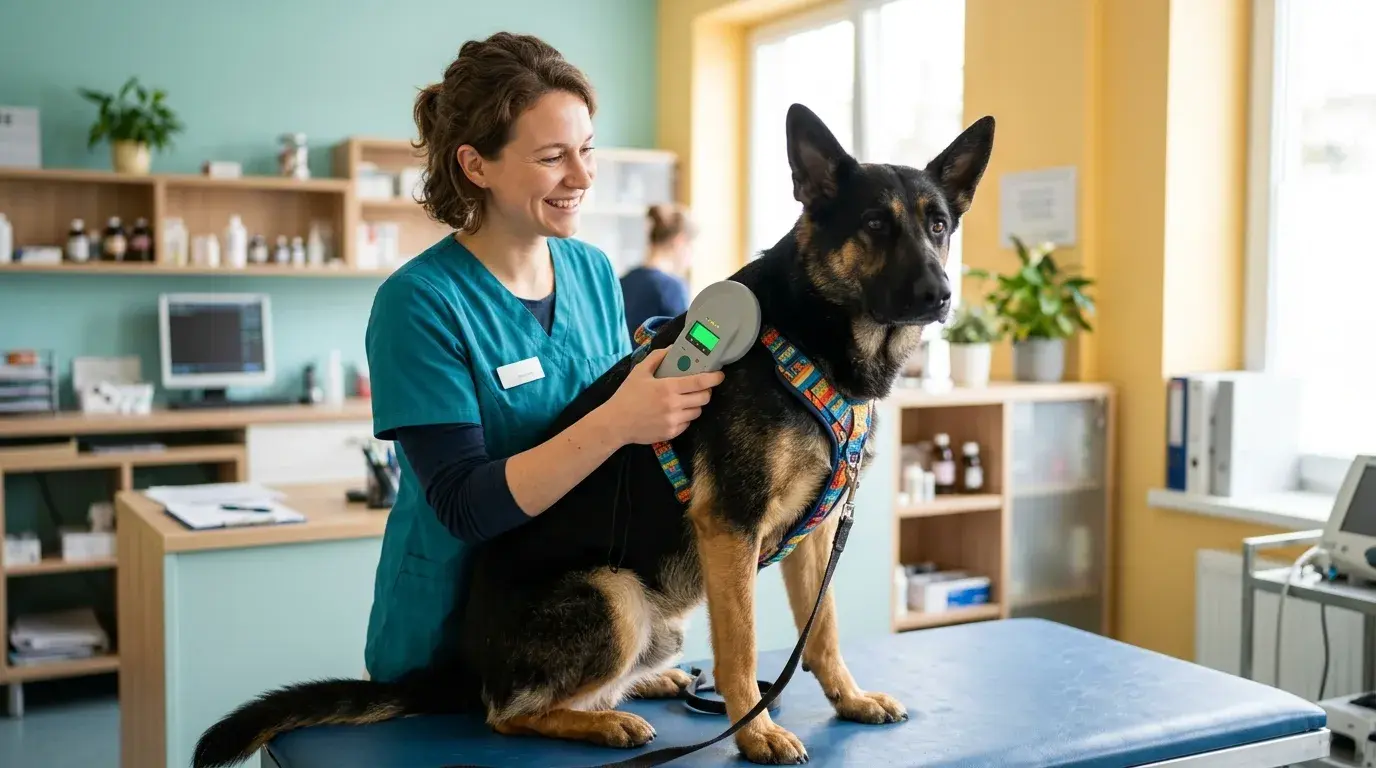
Your dog's entry rules set your calendar, not the visa interview. Work backward from the destination's requirements, then choose your flights.
Who Writes the Entry Rules for Your Dog
The destination’s animal-health or import authority sets entry requirements. Airline cabin acceptance is a different decision. Consult the official destination instructions and any transit-country rules before choosing the final route.
Rules can change and may depend on the dog’s origin, vaccination history and purpose of entry. Start with the destination government and ask for written clarification if its published service-dog category is unclear.
A service-animal designation does not automatically waive animal-health or biosecurity requirements. Exceptions, if any, are jurisdiction-specific and should be confirmed from the authority’s current guidance.
When you read the rules, look for:
-
The list of animals entering the country and any category for service dogs
-
Required forms and who must sign them
-
Mandatory vaccines and timing
-
Arrival points where animals can be processed
-
Fees for inspection or quarantine
If a page is unclear, contact the authority directly and keep the reply. That email can save you at the airport.
Official pet travel requirements pages often describe pets in general. Look for a separate service animal section. If you cannot find one, ask in writing how the country classifies your dog.
Health Certificates, Microchips and Rabies Shots
Many destinations require a veterinary certificate, vaccination evidence or other animal-health records, but the precise document and issuing authority differ. USDA APHIS explains that destination countries set the rules and may require official endorsement for dogs departing the United States.
Do not use the draft’s blanket ten-day India certificate rule. Check India’s current AQCS category and paperwork directly if India is the destination; otherwise use the relevant country’s official rule. Ask your veterinarian when the particular certificate must be issued and endorsed.
Microchip specifications vary. Some destinations require an ISO-readable chip and may require it before rabies vaccination; others have different identification rules. Record the exact number and have the veterinarian scan it before submitting documents. There is no universal 15-digit requirement.
Rabies rules depend on destination, origin and recent travel history. For example, U.S. CDC dog-entry rules distinguish low-risk from high-risk countries and apply to service dogs too. Check the relevant authority rather than assuming every international journey requires the same vaccine proof.
Keep the signed record with your other papers. Some countries expect the microchip before the rabies vaccine, so check the order. Ask your vet to write the vaccine date, batch number, and expiry clearly, because border officers read these details closely.
Parasite-treatment requirements and timing are destination-specific; there is no universal six-month rule. Ask the veterinarian to record the product, dose and date if the destination requires treatment.
Carry your complete file. Carrying up-to-date health and vaccination records prevents complications with local animal control regulations. Your vaccination records should be clean, signed, and easy to read.
Mistakes That Delay Entry at the Border
Most delays come from small errors. These are the ones we see most often:
-
A certificate issued too early, so it expires before landing
-
A microchip number that does not match the paperwork
-
A rabies record without a clear vaccine date
-
A permit that was never requested because the handler assumed service dogs were exempt
-
Arriving at an airport that is not approved for animal processing
Check your folder against the destination's list twice. Then ask a second person to read it too. A fresh pair of eyes often catches a wrong digit or a missing stamp.
If a requirement is unclear, request written guidance from the responsible authority and keep it. A written reply can clarify your plan, though it is not a substitute for meeting the applicable rule.
Import Permits and Long Lead Times
Some paperwork cannot be rushed. Import permits may be required weeks in advance before travel to certain countries. If a permit is needed, it should be your first task, not your last.
Start early and build a schedule from the actual permit, vaccination, test and certificate windows. The following is a planning example, not a set of legal deadlines:
- As soon as the route is known: check destination and transit rules, airline policy and any permit.
- Before booking a nonrefundable fare: confirm vaccination, test and microchip sequence with a veterinarian.
- Well before departure: submit airline forms within the carrier’s deadline.
- Inside the destination’s stated window: obtain and, if needed, endorse the health certificate.
If visa processing moves your trip, revisit every time-sensitive animal document. A permit may have its own validity or entry date, and a health certificate may expire. Do not assume either can simply wait.
Keep every confirmation in one place. When an official asks which rule you followed, you want a document you can point to.
To understand how the pieces fit, refer back to the official page for each requirement and note the date you checked it. Rules change, and a dated note shows that you tried to comply in good faith.
Once the dates are fixed, you can turn all this paperwork into a packing plan.
Your Document Folder and Airport Plan for Embassy Day, Check-In Day and Arrival Day
You may need to show different records to a consular post, an airline and an animal-entry authority. Organize by the stop where each document is used, and follow the exact checklist for your journey.
Papers to Carry for Each Stop
Prepare separate folders for your visa appointment, carrier and arrival inspection. Put only documents actually required for this route in each one, with backups available offline.
Visa-appointment folder
- Appointment confirmation and the visa documents on that post’s checklist.
- A truthful intended itinerary if requested.
- The post’s written service-dog access instructions, if you requested an accommodation.
Airline folder
- The carrier’s required service-animal form or confirmation.
- A relief-attestation form if required for a long U.S.-covered flight.
- Destination or transit animal-entry papers the carrier must inspect.
Arrival folder
- The required government entry form, permit or receipt for this destination.
- The applicable veterinary certificate, vaccination and identification records.
- Any inspection appointment or facility reservation required for the dog’s risk category.
Make two copies of each and store a digital set. If one folder gets wet or lost, you still have a backup.
Keep the documentation consistent. Names, dates, and microchip numbers must match across every form. A single mismatch can stall an officer for an hour.
Comfort Gear and Relief Breaks Before the Gate
A comfortable journey starts at home. Practice the routine you will use on the day. Walk your dog the same way, feed on the same schedule, and rehearse a calm approach to the security line.
Pack a small kit:
-
A sturdy lead and a well-fitted harness
-
A collapsible bowl and a small amount of food
-
Two or three familiar toys
-
Light blankets for the floor space
-
Waste bags and cleaning wipes
Plan relief breaks carefully. Most airports have relief areas, but they may sit outside security. Let your dog relieve itself before check-in and again as close to the gate as you can. Time food and water so your dog is comfortable but not overfull.
Inside the cabin, your dog should settle at your feet and stay within your seat space. Keep the lead short and avoid blocking the aisle. If your dog is calm, flight attendants rarely have reason to intervene.
Expect delays. Sit with your dog in a quieter area while you wait, and walk briefly if the wait is long. A relaxed animal makes a smoother trip for you and for those around you.
Training Your Dog for a Long Travel Day
Your dog is a working partner, and a long travel day tests its focus. Start practice trips weeks before departure. Visit busy places, ride elevators, and sit near loud crowds, so nothing at the airport feels new.
Practice these skills at home:
-
Settling quietly under a seat or at your feet for long periods
-
Walking calmly through narrow spaces and automatic doors
-
Staying steady while strangers pass close by
-
Accepting a quick hand check during security screening
-
Relieving on command in unfamiliar places
A dog that has done this work will handle the real day better. If your dog shows signs of stress, speak with your trainer before you travel. Early help is far better than a problem at the gate.
Rest matters too. Give your dog a light walk and a calm evening before departure, and avoid large changes to its routine. A well-rested dog behaves better and recovers faster after landing.
Last Minute Issues That Lead to Denied Boarding
Before departure, verify the airline’s service-dog confirmation, any government entry receipt or permit, and every time-sensitive veterinary document. Boarding may still depend on safety, behavior and entry rules; a visa or reservation alone does not settle those checks.
Check these before you leave home:
Boarding problems can arise from missing or inconsistent documents, safety concerns or failure to meet a destination entry rule. Verify the airline’s response and government paperwork before travel rather than assuming one approval covers all checks.
Arrive early. Give yourself extra time at check-in, since agents may need to verify papers manually. Ask for a supervisor politely if something is missed, and keep your confirmation emails ready.
Be prepared for an accident. Dogs can get stressed, and a small mess does not have to become a crisis. Carry spare cleaning supplies and calmly inform the crew if something happens.
Finally, keep your behavior calm too. Staff respond better to a prepared and patient handler. A steady approach often turns a problem into a quick fix.
Your Next Steps for a Calm Visa and Flight Plan
Keep the visa, airline and dog-entry requirements as separate tracks linked by one truthful travel calendar. Confirm the current rules before purchase and re-check them whenever the itinerary changes.
Carry organized folders, rehearse the airport routine, and give yourself extra time. With the right preparation, you reach the airport with a clear plan and a smooth journey ahead for you and your dog.
- U.S. Department of Transportation: service animals on aircraft — definition, forms, notice and refusal grounds for covered flights.
- U.S. CDC: dog import form and dog-entry FAQs — requirements also apply to service dogs.
- USDA APHIS: destination-country requirements — health certificates, permits and written clarification.
- India AQCS: import procedures — check the current category and documents if India is your destination.
These pages describe particular jurisdictions, not a worldwide rule. Check the operating airline and destination authority again before travel.
For a different kind of onward-proof question, see DummyFlights; for a related BookForVisa planning example, see flight itineraries with wheelchair assistance. The two accessibility situations have different airline and border requirements.
Align the visa itinerary with the dog’s travel window
If your visa checklist accepts a reservation, review BookForVisa’s current flight-reservation options for a truthful route and date plan. Separately confirm the service dog with every operating carrier and the destination’s animal-entry authority. A reservation does not guarantee a visa, boarding or animal entry.
Service animal and visa reservations: FAQ
Does a visa reservation include approval for a service dog?
No. The reservation describes a proposed flight; the operating airline and destination animal-entry authority apply separate rules.
Must I disclose my service dog on every visa application?
Answer the actual form and post instructions truthfully. There is no universal dog-disclosure field, but ask the post about interview access if you plan to bring the dog.
Is a service dog certificate or doctor’s letter required for U.S.-covered flights?
U.S. DOT rules permit specified DOT service-animal forms and applicable government animal-entry documents; they do not create a general purchased-certificate or handler-medical-letter requirement.
When is the U.S. DOT form due?
A U.S.-covered carrier may ask for the form up to 48 hours before departure when the booking was made earlier. Check the airline’s current instructions and the rule for a late booking.
Can my emotional-support animal travel as a service dog?
Not under the U.S. DOT definition unless it is a dog individually trained to perform disability-related tasks. Other jurisdictions and pet policies may differ.
Does my service dog need the same import paperwork everywhere?
No. The destination sets its own requirements. Check the official rules for your dog’s origin, recent travel, microchip, vaccination, permit and certificate.
What if my visa date or route changes?
Update the truthful itinerary, tell each operating airline and re-check permit and veterinary-document validity before buying the final ticket.
This guide is general visa-document and animal-travel information, not legal or veterinary advice. Follow the current visa checklist, operating airline, veterinarian and destination authority for your exact journey.