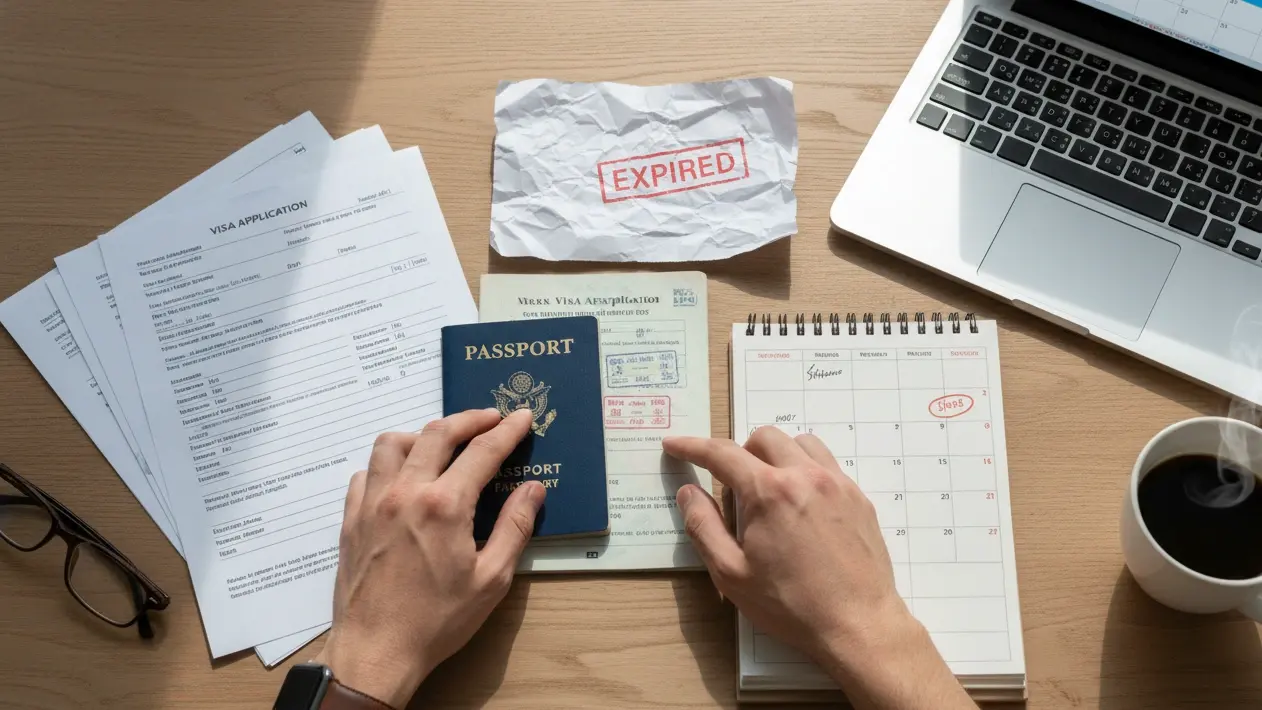
Short answer: A visa travel-proof PDF pack is a practical way to organize genuine itinerary pages only when the receiving authority or upload portal permits a combined file. Begin with its current checklist and file categories. Then place a short trip summary, requested flight evidence, accommodation and necessary transfer proof in a readable order, with one current version for submission. No embassy universally prefers “one PDF,” and a polished file cannot replace a required document or guarantee approval.
Changed appointments and flight schedules can leave applicants with several versions of the same trip. This guide is about assembling and updating travel evidence that your visa authority actually requests—not assuming that a combined PDF improves approval odds.
First check the current visa checklist and upload portal. If a combined itinerary PDF is permitted, this guide shows how to order genuine flight, stay and movement pages, how to make local dates legible, and how to revise the file when the trip changes. If the portal requires separate categories, keep the same coherent route but upload each source document in its assigned place. Do not create a flight page merely to fill a visual gap.
Key facts
- Check the destination’s actual checklist, portal upload categories, file format and size limit before combining documents.
- Schengen guidance describes purpose, accommodation, financial means and return-intention evidence; the relevant consulate can ask for additional documents.
- For an ordinary UK visit, official guidance lists flight and hotel bookings among less useful evidence; transit is an exception for flight bookings.
- Japan’s short-stay document lists vary by nationality, purpose and application location; use the applicable mission’s forms and instructions.
- Keep issuer documents unaltered. A tidy cover page cannot turn an expired hold into a current ticket.
In This Guide
- When a Combined Visa Travel-Proof PDF Is Useful—and When It Is Not
- What the Travel-Proof Pack Must Explain
- Present Flight Evidence Honestly and Readably
- How To Make Accommodation, City Sequence, And Daily Movement Tell The Same Story
- File Naming, Page Numbers and Legibility
- Resolve Mismatched Travel Logic Before Export
- Revise the Pack After Dates, Routes or Appointments Change
- Export the Version the Visa Portal Actually Accepts
Official-source check: The European Commission’s Schengen guidance identifies purpose, accommodation, funds and return-intention evidence while directing applicants to the relevant consulate. UK visitor guidance lists ordinary flight and hotel bookings among less useful evidence, with flight evidence relevant in transit cases. Japan’s Ministry of Foreign Affairs provides short-stay document lists for specified nationalities and purposes. These sources do not announce a universal one-PDF preference; follow the checklist and upload rules that apply to you.
Reviewed for: portal-specific file rules, conditional PDF assembly, authentic flight and stay evidence, local-date sequencing, and revision control.
When a Combined Visa Travel-Proof PDF Is Useful—and When It Is Not

A combined PDF can reduce your own version-control errors if the portal allows one. It is not an official Schengen, UK or Japan requirement by itself. A readable file cannot substitute for the evidence named in the receiving authority’s checklist.
How Scattered Screenshots Obscure an Otherwise Coherent Trip
Imagine eight files named “booking final,” “hotel latest,” and “flight corrected.” The difficulty is identifying which pages describe the current trip. If separate uploads are required, use clear filenames and the proper categories; if a combined file is allowed, give its pages a consistent order.
We see this often with short-stay Europe files. The flight screenshot sits in one upload. The hotel confirmation is buried in another. The city tax page appears as a separate image. A final attachment shows a revised outbound date, but the old stay dates are still attached elsewhere. Each piece may be valid on its own. Together, they look unstable.
In a UK visitor example, a London arrival and Manchester stay may appear in separate documents. A missing check-in date can make the first night unclear. But UK visitor guidance also says ordinary flight and hotel bookings are less useful evidence in many visit applications. Do not manufacture a full booking packet when the relevant checklist does not request it.
Japan short-stay document requirements differ by nationality, purpose and mission. If your applicable checklist asks for a schedule of stay or flight information, show the Osaka arrival, Kyoto stay and Tokyo departure on accurate, readable pages. Do not assume every Japanese mission asks for the same combined PDF.
Messy attachments send three signals you do not want:
-
You updated parts of the trip without controlling the full file
-
You may not have reviewed the sequence yourself
-
The officer may find contradictions if they keep digging
That is why scattered proof can raise doubt before the officer has even checked the details that matter.
Make the Route Understandable Without Claiming a Universal Embassy Preference
The practical aim is to make the proposed journey understandable. A combined file can connect route, stay and timing when permitted; separate portal categories can do the same when each document is named clearly and the dates agree. Neither format is an embassy preference that applies everywhere.
Take a Schengen tourist route such as Karachi to Paris, four nights in Paris, three in Amsterdam, then return from Amsterdam to Karachi. If that sequence appears in one file, in the right order, the officer can follow it without effort. Entry, stay, internal movement, and exit all line up. The trip feels real.
If the Karachi–Paris flight, Paris and Amsterdam stays, and Amsterdam return are uploaded separately, they can still describe one valid trip. Check that all pages are current, uncropped and assigned to the correct categories. A merged PDF is optional only where the portal permits it.
For a Canadian visitor visa or an Australian visitor stream application, the same principle applies. The officer wants to know whether your movement makes sense and whether the booking set reflects one intended journey. A single PDF helps because it reduces interpretation.
This matters most when your route has more than one stop. For example:
-
Dubai to Rome, then Rome to Florence by train, then Milan to Dubai
-
Delhi to Tokyo, then Tokyo to Sapporo, then Tokyo to Delhi
-
Lagos to Madrid, then Madrid to Lisbon, then Lisbon to Lagos
These are normal travel patterns. But they only stay normal when the officer can see the sequence quickly.
A reader should be able to locate the traveler, proposed dates, route and relevant source documents without decoding filenames. That is an information-design goal, not evidence that officers use one fixed sequence or that a neat file receives a better decision.
Page Order as a Reader Aid, Not an Approval Signal
Page order can help a reader follow an itinerary. It does not change the legal or evidential weight of the underlying documents. Use the receiving portal’s category order first and a trip-order summary only where it is allowed.
For a clean Schengen pack, the page order usually needs to be done this way:
-
Show who the traveler is
-
Show when the trip starts and ends
-
Show where the traveler lands and exits
-
Show where the traveler stays through the trip window
-
Show any movement needed to connect the route logically
That order feels calm. It reflects control.
If you reverse that order, the same documents can feel weak. Starting with a page three hotel in Barcelona before showing your inbound flight to Spain creates confusion. Opening with a later outbound sector before showing entry can make the trip look patched together. Leading with internal train tickets before the main international routing can make the pack feel cluttered.
If a UK applicant has a genuine reason to provide trip details, a Birmingham stay and arrival at a different airport should make sense together. But an ordinary UK visitor should not start by assembling flights and hotels by default: the official guidance lists those bookings among less useful evidence. The relevant purpose, funds and intention to leave matter more than a decorative PDF order.
For Japan, page order is especially useful when your route includes more than one city. If you arrive in Tokyo, continue to Kyoto, then fly home from Tokyo, the PDF should guide that movement clearly. When page order mirrors the trip order, the plan feels intentional.
Good ordering also helps when there is a long-haul route with a connection. Karachi to Istanbul to Rome, for example, looks normal when it appears as part of a structured sequence. It can look chaotic when the Istanbul sector appears in one file, and the onward Rome segment sits in another with different formatting and no clear tie to the same plan.
There is no reliable basis for claiming that an officer loses trust because of a particular page order. The narrower and useful point is that a current, labelled sequence makes applicant-side errors easier to catch.
Use One Current Submission Version When Travel Dates Move
If an appointment or flight date changes, several pages may need updating together. Use one current submission version, whether it is a combined PDF or a set of category-specific files. Retain earlier submitted materials in your records and follow the authority’s revision procedure.
Think about a Schengen applicant who booked for July, then got a later appointment and shifted the trip to August. If the old Paris arrival screenshot stays in one upload while the new Amsterdam return appears in another, the application can carry two timelines at once. That is exactly the kind of avoidable inconsistency that slows trust.
Do not assume that a reupload request allows a new combined PDF. Respond through the stated channel and file category, supplying only the updated evidence requested.
It also helps when embassies or visa centers request a reupload. Instead of sending a second batch of loose documents, you send one updated file. That reduces the risk of old and new versions being reviewed together.
All in one also protects you from small but damaging mistakes:
-
An old outbound date is still sitting in your upload folder
-
A previous city sequence was mixed into the final submission
-
Duplicate hotel pages from two different plan versions
-
Screenshots that no longer match the revised trip window
A combined PDF may be a version-control aid when permitted. Where separate files are required, a simple index of current filenames and dates serves the same purpose.
That matters even more for routes that changed because of airline schedule shifts. If your original entry was via Vienna and the revised entry is via Munich, the officer should only see one settled version of that plan. The file must look current, controlled, and deliberate.
What We Mean By A Travel Proof Pack, And What It Deliberately Does Not Cover
Here, a travel-proof pack means an applicant-side organization method for genuinely requested travel documents. It is not a universal document type or a substitute for the official checklist.
It is not a general visa checklist.
It is not a lesson on what a reservation is.
It is not a broad article about bank statements, cover letters, sponsorship, or interview coaching.
We are focusing on one narrower problem that decides how your travel evidence feels when it lands on a review desk. Does it look like one coherent trip, or does it look like fragments assembled under pressure?
A French Schengen file, Japanese short-stay application and UK visit application can ask for different evidence and different file formats. The common task is to keep any submitted dates and route accurate. Use a combined PDF only if the relevant authority accepts it.
What the Travel-Proof Pack Must Explain
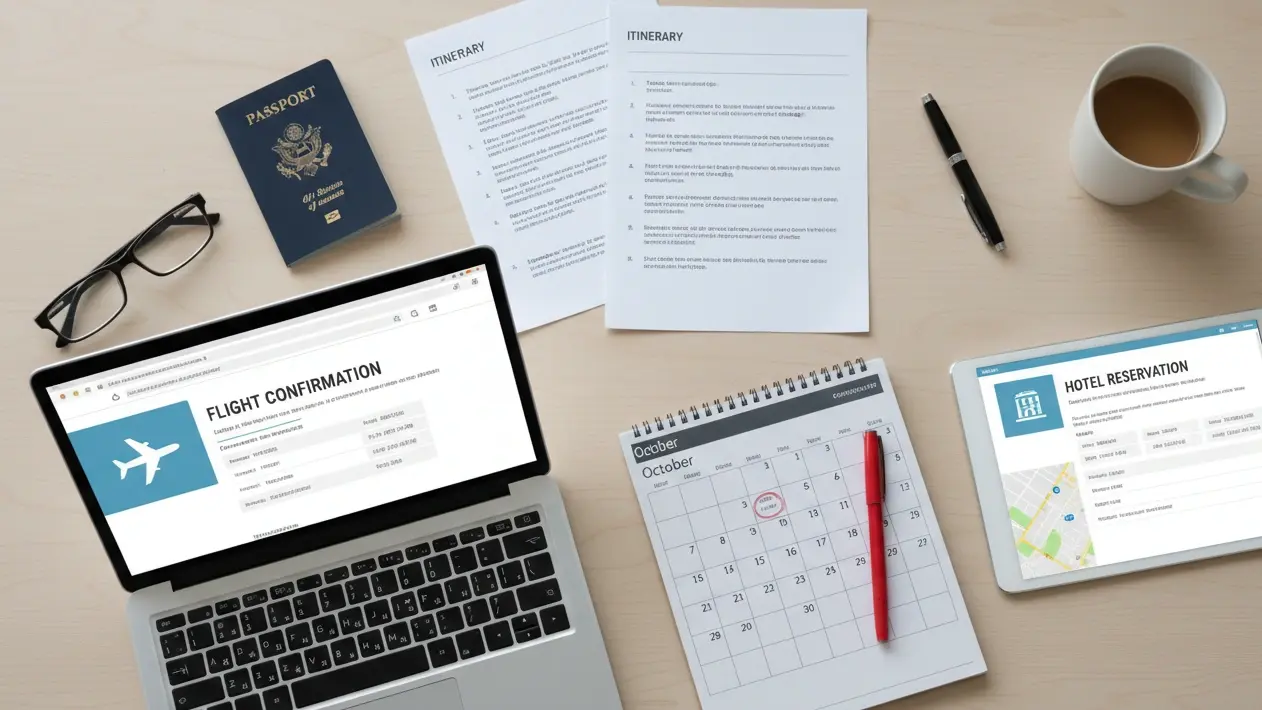
Clear formatting does not rescue missing required evidence. Begin with the exact checklist and portal instructions, then test whether the requested pages describe the same proposed journey.
Your Dates Have To Make Sense Before Your Documents Can Look Convincing
The first thing an officer checks is not style. It is timing.
For a France or Italy Schengen tourist file, your arrival date, hotel check-in date, and departure date must line up in a way that feels normal for the trip you claim to be taking. If you land in Paris on 14 September but your first hotel is on 15 September, the officer immediately sees a gap. That does not look like a formatting issue. It looks like an unexplained night.
A one-day gap between an arrival and hotel check-in is worth explaining, but it may reflect an overnight flight, host stay or ground transfer. Compare local dates before changing a genuine plan.
Japan is another good example. If you present a seven-day Tokyo and Kyoto plan, but your booking dates actually cover five nights, the officer has to decide whether you miscounted, changed plans late, or failed to review your own file. None of those outcomes helps you.
Date logic has to work on three levels:
-
Trip duration
-
Arrival and first-night coverage
-
Departure and final-night coverage
You also need to check how your visa appointment timing fits the travel window. A Schengen file submitted close to travel dates is already under more pressure. If the pack shows a trip starting almost immediately after a delayed appointment, every date needs to look deliberate and stable. Small mismatches feel larger in that setting.
Your Route, Stay, And Movement Need To Describe One Trip, Not Three Overlapping Ideas
Officers do not review flights in isolation. They review travel intent through sequence.
A strong Schengen file shows one understandable route. If you arrive in Madrid, spend four nights there, move to Barcelona, then depart from Barcelona, the sequence works. But if you land in Madrid, your hotel starts in Seville, and your return leaves from Lisbon without any visible travel logic connecting those points, the trip begins to split into competing versions. For the broader reservation-versus-ticket choice, use the BookForVisa flight-reservation planning guide before assembling any requested document.
That is where many files lose credibility. Not because any single page is weak, but because the pages describe different trips.
This shows up often in multi-country Europe applications. A traveler may present an inbound flight to Amsterdam, two hotel confirmations in Brussels, and an outbound flight from Paris. That route can be completely reasonable. But it only works if the pack gives the officer a clear sense of how the traveler moves through those cities and why the order makes sense. Without that, the file feels like three separate travel ideas assembled into one submission.
For a UK Standard Visitor application, the official guidance does not encourage routine flight and hotel bookings as evidence. If travel details are relevant to an actual request or a transit case, a London arrival, Manchester stay and Heathrow return should be described truthfully, including the first night and movement between cities. Do not make bookings solely to fill a template.
Japan's short-stay files can attract the same scrutiny when travelers mix Tokyo, Osaka, and Kyoto pages without showing a believable progression. Officers do not need every train segment explained in full. They do need enough continuity to see one stable itinerary.
A useful test is simple. Read your route as if the officer knows nothing except what is on the page. If the file suggests three overlapping travel stories, it needs work.
A Strong Cover Page Should Orient The Officer, Not Repeat Your Whole Application
Your cover page has one job. It should help the officer understand the trip before they start reading individual bookings.
If the portal allows a summary page, include the applicant name, proposed travel window, entry and exit, city sequence, and a short page list. Keep the underlying reservation and lodging confirmations intact.
You do not need to turn the cover page into a second cover letter. In fact, that often makes the file weaker.
A good cover page for a Japan visitor application might say that the applicant plans to travel from 10 October to 17 October, arriving in Tokyo, continuing to Kyoto, and returning from Tokyo, with flight reservation and accommodation proof attached in sequence. That gives the officer orientation immediately.
A good UK visitor cover page might identify the travel window, arrival airport, city stays, and departure airport, then note that the file includes reservation pages in travel order. Again, this is not about decoration. It is about reducing search effort.
What a strong cover page should avoid:
-
Long explanations are already covered elsewhere
-
Personal background that belongs in the application form or letter
-
Repeated claims about intent with no documented purpose
-
Dense paragraphs that bury the trip window
The best cover pages are quiet and useful. They tell the officer where they are, what they are looking at, and how to move through the file. That matters because a confused start can make even a well-built itinerary feel harder to trust.
Order the PDF Around the Actual Checklist and Trip Sequence
There is no published universal order in which every visa officer reads a file. Arrange a permitted PDF so a new reader can follow the intended trip, but prioritize the checklist and required upload categories.
For a Schengen application, the officer’s likely internal sequence is usually something like this: who is traveling, when is the trip, where does it start, where does it end, where will the traveler stay, and does the route match the purpose. Your PDF should answer those questions in that order.
That means your file structure should feel natural to the review process.
A smart order often looks like this:
Choose the delivery format first: If the portal names separate flight, lodging and insurance slots, upload each item in its assigned category. If it requests one itinerary file or allows an additional-document bundle, a combined PDF can help you present the same genuine pages in trip order. Never hide a required original behind a summary or exceed the portal’s size limit.
Version-control example: July Paris arrival moves to August after a later appointment. Obtain revised issuer records, update affected stays and any insurance dates, create a new clearly named pack, and verify every page. Keep the earlier submitted version in your records; replace an uploaded file only through the authority’s permitted procedure or request.
-
Cover page with trip window and route summary
-
Inbound and outbound flight evidence
-
Accommodation in travel sequence
-
Any supporting movement needed to connect the cities logically
That order works because it mirrors how the officer forms trust.
A reverse chronological sequence can make an optional combined file harder to follow. In a category-based portal, however, flight and hotel documents may be stored separately by design. The key is that each file remains complete and the itinerary does not contradict itself.
The order also matters when your trip purpose is time-sensitive. A business traveler attending a fair in Germany, a family visitor going to the UK for a wedding week, or a traveler entering Japan during a specific seasonal window all need the trip timing to become clear quickly. The file should answer the officer’s next question before the officer has to go looking for the answer.
What To Leave Out When Extra Pages Make Your Plan Look Weaker, Not Stronger
A common mistake in visa packs is not missing proof. It is overloading the file with pages that create more noise than confidence.
For Schengen applications, we often see applicants attach multiple versions of the same hotel booking, separate screenshots of the same flight sectors, booking app interface pages, and partial images where key dates repeat with slight differences. That can make the file look less settled than it really is.
The same issue appears in UK files when applicants include old travel versions along with the current one, thinking that more evidence will look stronger. It usually does the opposite. If one page shows an arrival on 2 August and another shows 4 August, the officer now has a contradiction to resolve.
Japan submissions benefit from restraint for the same reason. A concise file that shows the current, coherent trip in the right order is stronger than a longer file that contains every screenshot generated during the planning process.
Pages that usually weaken the pack include:
-
Old date versions
-
Duplicate reservation pages
-
Payment screens that do not help explain timing or the stay sequence
-
Mobile screenshots are cropped so tightly that the city or date context is lost
-
Loose screenshots with no visible place in the trip order
This is not about reducing evidence. It is about protecting the file from self-created confusion.
Present Flight Evidence Honestly and Readably

Flight evidence is useful only when the authority requests it or when it directly explains a material trip fact. For ordinary UK visitor applications, official guidance calls flight bookings less useful except in transit cases. Do not suggest they are the first decisive evidence in all Schengen, UK and Japan files.
Why The First Flight Page Should Establish Intent, Not Just Show A Route
Your first flight page should do more than prove that a booking exists. It should tell the officer what kind of trip you are presenting.
For a France Schengen application, that usually means the first flight page should show a clear entry into the Schengen area and a clear exit from it. If you are flying Karachi to Paris and returning from Amsterdam to Karachi, the page should help the officer understand that structure immediately. It should not feel like a random screenshot of one sector with the rest of the trip scattered somewhere else.
A readable flight page, when requested, should let the reader identify the traveler, local dates, entry or exit and current booking status. Whether it is needed and how it is reviewed depend on the application.
For a UK Standard Visitor case, do not assume a Heathrow round trip is required. Official visitor guidance treats ordinary flight bookings as less useful, except for transit. If an authority specifically requests travel details, or a transit application calls for an onward booking, make the route and proposed visit window clear without buying unnecessary non-refundable travel.
Japan short-stay files benefit from the same approach. If the trip is Tokyo in, Tokyo out, the first flight page should make that shape easy to read. If it is Tokyo in and Osaka out, the route should still feel intentional, with the city sequence elsewhere in the PDF ready to support it.
A strong first flight page usually does four things at once:
-
Name the traveler clearly
-
Shows the main inbound and outbound logic
-
Places the travel within a believable date window
-
Supports the trip purpose already stated in the application
Once that opening page does its job, the rest of the travel pack feels easier to trust.
Check the Reservation’s Real Status After Schedule Changes
Airline schedules can change. Compare the issuer’s current record with the trip you actually propose; do not use old flight and new hotel pages merely because both look professional.
A believable reservation looks like something a real traveler would choose for the trip being claimed. For a short Schengen holiday, that means the routing should match the logic of the visit. Karachi to Rome via a normal connection can look perfectly practical. Karachi to Rome with two long, unnecessary layovers and a final arrival that makes the first hotel night awkward may raise questions, even if the page itself looks polished.
Believability comes from details that fit together.
For example, in a German tourist file, an evening arrival into Frankfurt followed by a same-night Frankfurt stay feels coherent. A late arrival into Frankfurt with the first visible stay starting the next day in Munich needs stronger surrounding support. The flight is not the problem. The surrounding timing is.
For a UK trip, a route into Gatwick and out of Manchester can be completely fine if the visit includes London first and northern cities later. But if the return city appears disconnected from the rest of the plan, the reservation starts to feel chosen for availability rather than for a genuine travel pattern.
Japan is similar. A Tokyo arrival with a Kyoto segment and Tokyo departure feels common. A Tokyo arrival and Osaka departure can also work well. But the more your flight path departs from a simple round pattern, the more the rest of the file has to carry that logic cleanly.
In a year of shifting schedules, officers are also likely to notice whether your timing feels stable or improvised. Useful signs of stability include:
-
Reasonable connection windows
-
Airports that match the trip geography
-
Travel days that line up with your stated visit length
-
No unexplained airport changes within the same city system
What weakens realism is not complexity alone. It is complexity without purpose.
A multi-city Europe trip can look strong. An open-jaw Japan route can look strong. But each one needs to read like a traveler planned it, not like pages were gathered from different drafts.
When A Round-Trip Layout Helps, And When A Multi-City Layout Needs Extra Explanation
A round-trip layout is usually the easiest format for an officer to absorb. That is why it works especially well in straightforward tourist cases.
For a Spain Schengen application with one main destination and one return city, a round-trip style flight display helps because it reduces ambiguity. Entry and exit sit together. The officer sees the trip window immediately. The rest of the file only needs to support that structure.
This format is often helpful for:
-
Single-country Schengen leisure trips
-
Short UK visitor stays
-
Japan city-break itineraries with one main arrival and departure base
But not every genuine trip is a round-trip. Many applicants enter through one city and leave from another. That is normal. What matters is whether the multi-city layout is explained by the rest of the file.
A classic Schengen example is arriving in Paris and departing from Amsterdam. That route can strengthen a file if the accommodation sequence shows Paris first and Amsterdam last. The flight layout now feels purposeful because the land plan underneath it supports it.
The problem comes when the multi-city flight pattern is visible, but the reason for it is not. If you enter through Milan and leave from Vienna, but the hotel sequence only clearly supports Milan and Venice, the exit point can feel detached from the trip.
For a UK application, entering through London and leaving through Edinburgh can look perfectly reasonable for a longer visit. But the pack should make that regional movement visible. Otherwise, the return airport looks like an unexplained deviation.
Japan files often need this clarity with Tokyo and Osaka. If you arrive in Tokyo and leave from Kansai, that can be efficient and believable. But the city sequence in the rest of the PDF needs to make it obvious that the trip moved westward in a natural way.
A short note can help when a multi-city route is sensible but not instantly obvious. We do not mean a full explanation. We mean one line that removes friction. Something as simple as noting that the trip begins in Paris and ends in Amsterdam after overland travel is often enough when the rest of the pack supports it.
Readable and Verifiable Is Better Than Decorative
The useful question is whether the issuer document is complete, legible and current. A booking reference identifies a record but does not alone prove payment, issued ticketing or the reservation’s present status.
A page can look very polished and still be hard to use. This happens when the layout hides the key details in small text, splits the passenger name from the route, or crops out the reservation reference. It can also happen when the page looks like a screenshot collage instead of a stable PDF export.
Easy verification starts with visibility.
The officer should be able to identify, without guessing:
-
Passenger name
-
Travel dates
-
Origin and destination
-
Booking reference or PNR, where applicable
-
Whether the reservation reflects one connected trip
Where a Schengen consulate requests flight evidence, the dates should agree with accommodation and the declared trip. For a UK visitor, do not add a flight booking as a routine “reference point” when the official guidance calls it less useful; a transit case or a specific request is different. Japan requirements depend on the applicable mission checklist.
A clear, unaltered issuer PDF is more useful than a cropped screenshot when the receiving portal accepts that document. Appearance cannot substitute for authenticity or checklist relevance.
That means you should avoid:
-
Overly cropped mobile images
-
Pages where the dateline is cut off
-
Images pasted into a document with blurred text
-
Duplicate flight pages from different versions of the trip
Verification is also about internal consistency. A clearly visible PNR helps. A visible passenger name helps. But if the dates on the page do not fit the trip window elsewhere in the file, the document is still weak. Easy verification only works when the reservation supports the same travel story that the rest of the pack is telling.
BookForVisa may provide a flight-reservation document for a checklist that calls for one. Before ordering, check its current price, validity, verification method and change terms. Do not rely on an old fixed price or an unlimited-changes promise, and never label a temporary reservation as paid airfare. For terminology only, what a dummy ticket means explains how a temporary planning reservation differs from a paid e-ticket.
That kind of mention only works when it stays brief and tied to the document task in front of you. Once it turns into a sales block, it stops helping the reader make better filing decisions.
The real standard remains the same no matter where your reservation comes from. It has to look believable, match the trip logic, and sit inside the PDF in a way that helps the officer follow the journey without slowing down.
How To Make Accommodation, City Sequence, And Daily Movement Tell The Same Story
This part of the pack is where a believable trip either tightens or starts to drift. Your flight pages may look solid, but if your stay pattern does not support how you enter, move, and leave, an embassy officer can spot the disconnect quickly.
Why Proof Of Stay Fails When It Confirms Nights But Not Travel Logic
A hotel page can look perfectly fine and still weaken your visa file. That usually happens when it proves a room exists, but does not prove the trip works.
For a Schengen tourist application, your accommodation should support the route already visible in the flight section. If you arrive in Rome on 12 June, your first stay should make sense for 12 June. If the first hotel begins on 13 June in Florence, the officer is left with an empty first night and an unexplained city jump. The booking confirms nights, but not the journey.
If a UK applicant provides travel details for a relevant reason, a late Heathrow arrival followed by a Manchester stay raises a simple calendar question: where is the traveler that night? Explain the genuine plan if asked. Do not treat this as a requirement to submit hotel bookings in every ordinary visitor case.
Japan short-stay applications often benefit from a tight sequence for the same reason. If the trip is Tokyo, then Kyoto, then Tokyo again, the accommodation pages should mirror that rhythm. If the file opens with a Kyoto stay before the Tokyo arrival has been grounded with a first-night plan, the trip starts to feel assembled out of order.
Accommodation proof fails when it creates these kinds of gaps:
-
A landing day with no visible place to stay
-
A city sequence that does not match the route
-
A last night that does not support the departure city
-
A stay pattern that makes the trip look logistically awkward
The officer is not only asking whether rooms are booked. They are asking whether the stays make the trip credible from arrival to exit.
Explain the First Night After Arrival
An arrival-night gap is a practical timeline question, not a formal “first-night rule” that applies everywhere. Identify where you actually stay, transit or travel overnight, and make any requested evidence consistent with that explanation.
This matters across visa types, but it is especially important in Schengen files with evening arrivals. If you land in Paris at 21:40 and your first visible booking begins the next afternoon in Brussels, the trip immediately feels incomplete. Even if you plan to take an early train, the officer still sees a missing night.
A late Heathrow or Gatwick arrival followed by travel to another city can be feasible. Check the actual onward transport and first-night plan. The UK visitor evidence guidance does not create a rule that the first stay must be near the airport or that a hotel booking must be uploaded.
For a late Narita arrival followed by Kyoto, check the feasible transfer and the actual first overnight location. A Tokyo hotel is not automatically required if the traveler genuinely continues or stays with a host; the itinerary should explain the real plan.
There is no universal first-night hotel rule. The practical test is whether the actual overnight location and transfer are clear when the relevant checklist asks for that information. Show a hotel, host address or overnight transport only if it reflects the real trip.
That is why the first stay should answer these questions fast:
-
Does the stay start on the arrival date, or in a way that clearly matches the arrival time?
-
Is the first-night city compatible with the landing airport?
-
Does the onward movement from that first night feel natural for the trip type?
A leisure Schengen trip with a late Madrid arrival and a Madrid first night feels stable. A UK family visit with a daytime London landing and same-day train movement to Birmingham can also feel stable, but only if the timing supports it. A Japan file with a daytime arrival in Tokyo and a same-evening Shinkansen move to Kyoto may be workable, but it needs a very clean sequence, or it can look rushed on paper.
First-night logic often decides whether the rest of the accommodation chain gets read with confidence or suspicion.
How To Present Multi-City Stays Without Making The Trip Feel Unstable
Multi-city travel is normal. Officers know that. What they do not like is a stay pattern that feels restless, thin, or difficult to follow.
A strong Schengen file often uses accommodation to show sensible movement. Paris for three nights, Amsterdam for three nights, then departure. Rome, Florence, and Venice, over eight days, can also work well. The key is that each city earns its place in the route, and the number of nights feels realistic.
Problems begin when the city pattern becomes too jumpy. One night in Milan, one in Venice, one in Florence, one in Rome, then a return from Zurich may not be impossible, but on paper, it can look like a trip built from placeholders rather than real travel intent.
The UK has its own version of this. London, Bath, and Edinburgh, over ten days, can feel natural if the progression is steady. London for one night, Liverpool for one night, London again, then Glasgow, then return from London, can feel much less settled unless the trip's purpose is clearly explained.
Japan is another country where city rhythm matters. Tokyo, Kyoto, and Osaka can look strong because the movement is familiar and easy to understand. But if the file shows Tokyo, Nagoya, Kyoto, back to Tokyo, then Osaka, all in a short trip, the officer may wonder whether the itinerary was reviewed as a whole.
When presenting multi-city stays, you want the pattern to show:
-
A clear travel direction
-
Reasonable night distribution
-
No unexplained gaps between check-out and next check-in
-
An ending city that supports the departure flight
It also helps to keep the accommodation pages in strict travel order. Do not group all stays by booking source or by file format. Group them by how the traveler moves through the trip. That lets the officer follow geography, not document type.
A good multi-city stay pattern should feel like movement. A weak one feels like hopping.
What To Do When Internal Travel Is Part Of The Plan But Not The Core Proof
Internal travel often supports accommodation logic, but it should not overwhelm the pack. The embassy needs enough to understand the sequence, not a travel scrapbook.
For a Schengen application, overland movement between major cities may be obvious enough that you only need to make the stay order clear. Paris to Amsterdam or Rome to Florence usually does not require pages of extra transport proof unless the city shift would otherwise feel abrupt.
But there are times when internal movement needs visible support. If you land in Barcelona and the next stay is in Valencia the same day, a simple transport page or brief note can close the gap. If you depart from Milan but your final stay is in Lake Como, the pack may benefit from a clear indication of how that departure day works.
In a UK application, internal rail movement can matter when the stay cities and airports are not immediately connected in the officer’s mind. A Manchester stay following a London arrival may not need much explanation over a longer trip. A same-day transfer to York after a late arrival may need more clarity.
Japan often sits in the middle. Domestic movement is common and believable, but not every train segment belongs in the core pack. What matters is whether the movement is necessary to make the accommodation sequence and the departure city feel coherent.
A good rule is simple. Include internal travel only when it solves a visible logic gap. That may mean:
-
A rail booking that explains a same-day city transfer
-
A domestic flight that connects the arrival city to the stay plan
-
A short note where the movement is obvious, but the departure city needs context
Do not overload the file with every transfer if the city order already makes sense. Extra transport pages can distract from the main question, which is whether the traveler has a credible place to be at each stage of the trip.
Why Destination Rhythm Matters More Than Perfect-Looking Bookings
Instead of guessing what an officer thinks about the “rhythm” of a trip, check whether the city sequence is physically possible, the dates reflect the actual plan, and every document the authority requested can be read on its own.
A Schengen holiday with three nights in Paris and four in Amsterdam feels like a traveler intends to be in those places. A six-country sweep across nine days can feel more fragile even when every booking page looks tidy. The problem is not the quality of the PDFs. It is the pace they describe.
The same applies to UK visitor files. A family visit based mainly in one city with a few planned day trips usually reads as stable. A short visit with too many overnight changes can feel less rooted, especially if the application purpose suggests one base.
Japan files benefit strongly from the destination rhythm. Tokyo, Kyoto, and Osaka, over a balanced stay window, feel grounded. The same cities arranged in a hurry, with one-night stops and repeated backtracking, can read as an itinerary that looked better in planning than it does in review.
This is where many applicants focus too much on whether each booking appears official and not enough on what the full stay chain implies. Rhythm is built through:
-
How long do you stay in each place
-
How often do you move
-
Whether arrival and departure cities make practical sense
-
Whether the trip pace fits the stated purpose
File Naming, Page Numbers and Legibility
At this stage, your route and stay logic may already be solid. What often separates a calm, credible Schengen, UK, or Japan visitor file from a messy one is not the bookings themselves, but the way the PDF handles small presentation details.
Why File Naming, Page Numbering, And Section Labels Matter More Than Applicants Think
A visa officer may never mention your file name, but it still affects how your application feels inside a real workflow. Files get downloaded, printed, forwarded, reopened, and compared. If your travel proof arrives as scan new final latest 2.pdf, you are already creating friction before the first page is read.
For a Schengen application submitted through a visa center, document handling often involves more than one stage. A clear file name helps keep your travel pack attached to the right version of your case. For a UK visitor submission, where supporting documents may be uploaded separately and later reviewed together, a controlled file name can reduce the risk of travel proof being mixed up with older drafts. Japan short-stay files benefit from the same discipline because a concise, orderly presentation generally strengthens the whole pack.
A useful file name should make three things obvious:
-
Who the file belongs to
-
What the file contains
-
Which trip window does it refer to
Something like Travel-Proof-Pack-Ali-Khan-12-to-19-June-2026.pdf works because it identifies the file instantly. It also becomes easier to replace later if your dates shift.
Page numbering matters for the same reason. If an officer prints page 4 or references page 7 internally, your PDF should support that workflow. A Schengen pack with numbered pages feels controlled. A UK pack with no page count and no section breaks can feel like a pile of merged exports. In a Japan file, where brevity and clean navigation can help the file read faster, page numbers quietly add confidence.
Section labels matter too. Not dramatic labels. Simple ones.
Examples that work well:
-
Flight Reservation
-
Accommodation In Paris
-
Accommodation In Amsterdam
-
Rail Segment Paris To Amsterdam
Examples that usually weaken the document:
-
Random labels copied from booking platforms
-
Vague dividers like Documents or Other Details
-
No labels at all, forcing the officer to identify each page from scratch
These are small moves, but they make the file feel like one controlled submission rather than a collection of downloads.
How To Use Visual Hierarchy Without Making The PDF Look Designed For Marketing
Good visual hierarchy helps the officer find answers quickly. Bad visual hierarchy makes the PDF look dressed up to compensate for weak logic.
The goal is not design. It is navigability.
For a France or Spain Schengen file, that usually means a clean first page, simple section breaks, and consistent typography. If your Paris flight page appears under a clear heading and your Amsterdam stay begins under its own label, the officer moves through the trip more smoothly. The formatting is doing work without drawing attention to itself.
If a UK application genuinely requires a multi-city itinerary, simple labels can distinguish London, Manchester and departure details. But do not build a stylized flight-and-hotel packet merely because the route has several cities; the official supporting-document guidance describes routine bookings as less useful.
Japan's short-stay files often benefit from restraint even more. Clean spacing, plain labels, and consistent page structure make the file look deliberate. Over-designed pages can feel unnecessary in a context where clarity usually carries more weight than presentation flourishes.
A practical visual hierarchy usually includes:
-
One consistent font style
-
Simple heading sizes
-
Enough white space between sections
-
Uniform alignment across pages
-
No decorative elements that compete with the booking details
What to avoid:
-
Oversized colored titles
-
Heavy highlighting on every page
-
Decorative icons
-
Background graphics
-
Banner-style section covers
Those choices can distract from the actual evidence. They can also make screenshots and export booking pages, which feel less authentic once placed inside the final PDF.
A good rule is simple. If the officer notices your formatting before noticing your travel sequence, the layout is doing too much. In a visa setting, the best visual structure disappears into usefulness.
When A Short Note Under A Page Clarifies The Trip, And When It Only Creates Noise
Short notes can help, but only when they remove a real point of friction. Otherwise, they clutter the page and make the file feel defensive.
For example, a Schengen applicant arriving in Paris and departing from Amsterdam after traveling overland may benefit from one brief note under the outbound page stating that the trip ends in Amsterdam after a Paris to Amsterdam rail segment shown later in the file. That is useful. It closes a natural question without forcing the officer to guess.
A UK visitor pack can benefit from the same approach when the airport and city do not match at first glance. If you arrive at Heathrow but stay in Reading, a brief note may help if the timing is tight and the transfer is central to understanding the first day. But if the trip already makes sense from the reservation sequence, the note is unnecessary.
Japan files often need careful judgment here. A note can help where Tokyo arrival and Kyoto onward movement occur close together. But if every page carries an explanation, the file starts to read like it is arguing for itself.
A note is worth adding when it does one of these jobs:
-
Explains a city change that is logical but not obvious
-
Clarifies why the departure city differs from the arrival city
-
Connects a late arrival to a first-night stay pattern
-
Identifies one internal transfer that makes the sequence easier to follow
A note becomes noise when it does any of these:
-
Repeats information already visible on the page
-
Explains every booking as if the officer cannot read it
-
Uses long sentences that belong in a cover letter instead
-
Sounds defensive or over-justifying
The tone matters too. Notes should be factual and short. No emotional language. No persuasion. No extra claims about intention. A quiet line under the right page can make a Schengen or UK route feel much easier to follow. A paragraph under every page usually has the opposite effect.
Why Print-Readability Still Matters Even In Digital Submission Workflows
Many applicants assume that because a file is uploaded digitally, screen readability is enough. In practice, visa documents often move through mixed review conditions. A page may be opened on a monitor, printed in grayscale, forwarded as a PDF, or viewed on a smaller internal display. If your travel proof only works on your own screen, it is not ready.
For Schengen applications, especially where document handling passes through a visa center and consular review, print-readability still matters. Dates must remain easy to spot. City names must be readable without zooming. Passenger names and booking references should not disappear into tiny mobile text.
If a portal asks for a travel document, inspect the exported PDF at normal zoom and make sure names, dates and issuer details remain legible. This applies to a relevant UK transit booking as well as other visa categories, but routine UK visitor flight and hotel bookings should not be uploaded by default.
Japan files often reward compactness, but compact is not the same as cramped. If a Tokyo hotel confirmation becomes faint or illegible once merged into the final PDF, it stops helping the officer, no matter how accurate it is.
To keep print-readability strong, check for these issues:
-
Tiny font after merging pages
-
Low-contrast screenshots
-
Blur from copy-pasting images into a document
-
Cropping that cuts off dates, city names, or reservation references
-
Dark mobile mode screenshots that print poorly
A useful test is simple. Open the PDF at normal zoom and scan it. Then imagine it printed in black and white. If the booking dates or city names become hard to read, the page needs a cleaner export or a better placement.
Readable travel proof feels more trustworthy because it respects the reality of how visa files are handled. A page the officer struggles to decipher creates avoidable doubt, even if the underlying reservation is perfectly fine.
One Current Submission Version, With an Audit Trail
Many applicants create their own problem by preparing a strong travel pack and then weakening it with version drift. That is when more than one trip version survives inside the application set.
Version drift occurs when old and new dates coexist in a proposed submission. Keep a clearly identified current set, but retain prior submissions and issuer records as an audit trail. Never erase history or imply a booking stayed valid after expiry.
Each of those errors creates a contradiction that did not need to exist.
Keep one current version in the material you are permitted to upload. Archive—not destroy—older drafts and already submitted evidence, because an authority may need to understand what changed later.
That rule matters because visa travel evidence is interconnected. Change one part, and other parts may shift with it:
-
New flight date
-
New first-night requirement
-
New total duration
-
New departure-city timing
-
New internal movement logic
If you do not control versions tightly, the file starts to tell two stories. That can happen even when each page is genuine and readable.
A good one-version workflow often looks like this:
-
Update the changed reservation
-
Review every affected page in the pack
-
Rename the PDF clearly with the final trip window
-
Remove or archive older versions outside the submission set
-
Upload only the settled file
This is especially important in Schengen and UK files, where appointment movement can push applicants into quick revisions. It also matters for Japan, where a short-stay itinerary can unravel fast if one revised date shifts the rest of the sequence by even a day.
Resolve Mismatched Travel Logic Before Export
By this point, your travel proof pack may look complete on paper. The bigger risk now is whether the full trip still behaves like one believable plan when a Schengen, UK, or Japan visa officer reads it quickly under real review pressure.
Coherence and Completeness Are Both Important
The key risk is not a new global standard in any particular year. A complete set of documents may still disagree on dates, city order or reservation status. Check both completeness under the actual checklist and internal consistency before you export.
That shift matters because embassies now see more changed travel dates, revised routes, delayed appointments, and partial re-uploads than before. Officers know plans can move. What draws attention is not movement itself. It is an inconsistency that suggests the traveler updated one part of the plan and forgot the rest.
For a Schengen tourist application, an officer may see a valid inbound flight, a valid hotel chain, and a valid outbound reservation. But if the entry city, first stay, and last-night coverage do not match cleanly, the file no longer feels stable. It feels assembled from multiple drafts.
A London arrival, Manchester stay and Heathrow departure can describe a genuine journey. Where the receiving UK authority actually seeks travel details, compare any stated dates with the purpose of visit. For an ordinary visitor, the official guidance does not ask applicants to bolster a case with hotel and flight bookings just to make that timeline look complete.
Japan's short-stay files often reveal this issue very quickly. Tokyo and Kyoto can form a strong, believable route. But if the Tokyo arrival sits beside a Kyoto first-night booking and a return from Tokyo that no longer matches the final accommodation date, the file stops looking orderly even if every page looks genuine.
Coherence matters because officers read travel proof as a single statement. They are not awarding separate points for flights, hotels, and internal movement. They are testing whether all of its points lead to one intended trip.
That is why the modern red flag often sounds like this inside the review process: these pages may all be real, but they do not belong to the same version of the journey.
The Date Mismatches That Quietly Damage Credibility
Date errors rarely look dramatic. They look small. That is why they are dangerous.
In a Schengen file, a one-day gap between flight arrival and hotel check-in can immediately create uncertainty. So, it can be a final hotel night that ends before the return flight date. These are not huge contradictions, but they force the officer to solve a problem you should have solved before uploading the file.
Common date mismatches that weaken a travel pack include:
-
Arrival on one date, first accommodation starting the next date
-
Departure after the final visible stay ends
-
The trip duration in the application form does not match the travel proof
-
Internal movement is dated in a way that breaks the stay sequence
-
Old reservation pages with earlier dates are still left inside the PDF
For a France or Italy Schengen application, these mismatches can be especially noticeable when the route is simple. A Paris-only or Rome-only trip should be easy to read. If even that simple file contains a check-in mismatch or a final-night gap, the officer may start questioning how carefully the whole application was prepared.
Suppose a UK applicant says a family event runs from 4 to 9 August while a separate travel plan starts on 6 August. The discrepancy is worth correcting in the application’s truthful account of dates and purpose. It does not mean the applicant must attach a flight or hotel PDF when the official guidance lists those as less useful evidence.
Japanese applications can suffer from the same issue when travelers move between Tokyo, Kyoto, and Osaka. A Tokyo return flight on 18 October does not work cleanly if the final visible stay ends on 16 October in Osaka and there is no clear bridge back to Tokyo. Again, the problem may be only one missing date connection, but that is enough to shake confidence.
Small date mismatches often do more damage than missing details because they suggest the file contains internal contradictions. A missing page can sometimes be clarified. A conflicting timeline makes the whole pack feel less trustworthy.
Why “Flexible Travel Plans” Can Read As Under-Prepared Travel Plans
Flexibility is normal in travel planning. Embassies understand that. What they do not want is a file that reads like the traveler has not committed to one working version of the trip.
This happens when applicants try to preserve too many options inside the pack. For example, a Schengen applicant may include one inbound reservation for Madrid, another possible inbound route via Barcelona, and a hotel chain that only fits one of those versions. The applicant may think this shows planning flexibility. The officer is more likely to see an unsettled itinerary.
The same risk appears in UK visitor files when applicants keep alternative return dates alive in case appointments shift. If the PDF contains evidence for leaving on 14 September and separate pages implying a 17 September departure, the officer is not seeing useful flexibility. They are seeing an application that has not been finalized.
Japan files can become vulnerable here, too. A traveler may hold one Tokyo arrival, two possible regional stay patterns, and a return from Osaka that only fits one of them. None of those pages is weak on its own. The weakness comes from presenting alternatives as if they belong to one confirmed trip.
Under-prepared travel plans often have these signals:
-
More than one plausible trip window inside the same PDF
-
Alternative city sequences that are never resolved
-
Notes suggesting the plan may change after submission
-
Pages that look current beside pages that clearly belong to an older version
For a visa officer, flexibility only works when it is invisible. You may have changed plans three times before submission. That is fine. But the final file should show one stable itinerary only.
When dates change, finalize one honest current plan. If material changes occur after filing, use the authority’s published update channel or respond to its request; do not assume officers ignore all changes or penalize every revision.
The City Jumps, Overnight Gaps, And Routing Oddities Officers Notice Immediately
Some mismatches stand out faster than date issues because they feel physically awkward. Officers spot them almost instantly.
A classic Schengen example is arriving in one city and appearing to sleep first in another without any visible bridge between the two. Landing in Vienna at 19:30 and showing your first hotel in Salzburg on the same date may be possible, but the pack has to make that movement believable. If not, the route looks thinner than it is.
Another common issue is the unexplained departure from the city. A traveler may arrive in Amsterdam, stay in Amsterdam and Brussels, then fly out of Zurich. That can be a genuine route. But if the pack never shows how the traveler reaches Zurich or why the last part of the trip shifts there, the officer sees a route shape that does not match the accommodation logic.
The UK has similar problem points. Arriving at Heathrow, staying in Birmingham, and departing from Edinburgh can all work together. But if the stay pattern only shows Birmingham and London, the Edinburgh exit starts to look detached from the rest of the visit.
Japan files often reveal routing oddities through backtracking. Tokyo arrival, Kyoto stay, then a return from Tokyo is common. Tokyo arrival, Osaka stay, Kyoto stay, then a sudden Narita departure with no final Tokyo presence can feel incomplete unless the last movement is explained cleanly.
Officers also notice overnight gaps very quickly. These are moments when the traveler seems to disappear between pages:
-
A hotel check-out with no same-day next stay
-
A long transfer day with no visible overnight plan
-
A departure city reached only in theory, not in the file
-
A first night or last night that the booking sequence does not cover
Odd routing does not automatically harm a file. Europe multi-city trips, UK regional visits, and Japan intercity plans can all be strong. What causes suspicion is when the geography stops matching the paperwork.
The officer is silently asking one practical question: if this traveler actually followed these pages, where would they be sleeping and moving on each day of the trip? If your PDF cannot answer that cleanly, the route starts to wobble.
How To Audit Your Own PDF Like An Embassy Reviewer Before Submission
The most useful final check is not a technical one. It is a reading test.
Open the PDF and pretend you are the visa officer. Do not rely on what you remember about the plan. Only use what is visible on the pages. Then ask whether the trip makes sense without an outside explanation.
For a Schengen application, read the file in order and test whether you can answer these points immediately:
-
Where does the trip start inside the Schengen area
-
Where does the traveler stay first
-
How does the trip move from one city to the next
-
Where does the final night happen
-
How does the traveler exit
For a UK visitor pack, test whether the file visits feel grounded in a clear place and timeframe. Does the route support the purpose? Do the city changes look normal for the length of stay? Is the departure city supported by the final accommodation pattern?
For a Japan file, pay close attention to first-night logic, intercity rhythm, and the final return setup. Tokyo, Kyoto, and Osaka can read beautifully when the sequence is clean. They can also unravel fast if one overnight or transfer step is missing.
A strong self-audit usually involves four passes.
-
First pass: read for pure sequence
Do the pages describe one trip from arrival to departure?
-
Second pass: read for dates only
Check every arrival, check-in, check-out, transfer, and return date without looking at anything else.
-
Third pass: read for geography
Does the city pattern make physical sense?
-
Fourth pass: read for version control
Is every page from the same final plan?
Revise the Pack After Dates, Routes or Appointments Change
A strong update process matters because the pack sits inside a real travel visa file, not in isolation. When dates move, your flight tickets, hotel reservations, travel insurance, and travel itinerary all need to keep the same timeline so the officer sees one stable international trip, not a patchwork of edits.
Why Most Applicants Should Build The Pack For Updates From Day One
Build an editable working copy so an appointment, schedule or route change can be reflected in every dependent page. This is applicant-side file management, not a prediction about processing backlogs or a reason to submit unsolicited new documents.
That is why the pack should be built for updates from the start.
For a France or Italy Schengen case, a later biometric slot can push the whole planned itinerary forward by a week or two. For a UK visitor file, your document upload date may change after the application is lodged. For Japan, the route may stay the same, but your Tokyo arrival and Kyoto stay may move together.
When that happens, your pack should let you revise the core travel reservations without rebuilding every page by hand.
A revision-friendly file usually keeps these parts easy to update:
-
The opening trip window
-
The flight booking pages
-
The first and last accommodation pages
-
Any detailed itinerary or intercity movement pages
-
The supporting block for travel health insurance or medical insurance, if the dates need to match the new trip
This matters because immigration authorities are not only reading a route. They are also reviewing how well your international travel documents align after an update. If the reservation dates change but the travel documents and other documents still reflect the older plan, the file starts to look careless.
A smart structure also protects the documents needed for review in many countries where officers compare your bookings against the rest of your visa process. That means your valid passport details, identification documents, and important documents should remain aligned with the new dates and destination order. If your passport's valid period still works, but the cover page, flight booking, and stay pattern have drifted apart, the problem is not identity. It is version control.
We also recommend treating the pack like a compact international travel documents checklist. That does not mean stuffing in all the documents you own. It means building a controlled file where the essential document required for timing is easy to replace, and every other essential document stays tied to the same travel logic.
What To Update First When Your Appointment Moves, but Your International Trip Purpose Does Not
When your appointment changes, update the file in the order that controls meaning.
For a Schengen tourist pack, the new travel window comes first. Then update the flight booking, because that change affects the outer limits of the trip. After that, bring the first-night and final-night stays into line, then revise any mid-trip pages that depend on those dates.
That order matters because one later departure can affect far more than your flight tickets. It can change your first hotel check-in, your onward travel between cities, your return city timing, and the way your proof of onward travel reads inside the pack.
A clean update sequence usually looks like this:
-
Revised cover page with new trip dates
-
New inbound and outbound flight booking pages
-
Updated first-night and final-night hotel reservations
-
Any connected travel reservations between cities
-
Matching dates for travel insurance, travel health insurance, or health documents, if they are included
-
Final read-through against the rest of the file
For a UK visitor case, this order helps when the visit purpose stays the same, but the dates move. If you are still visiting family in London and Manchester, the trip logic remains intact. What changes is the calendar. That means your planned itinerary, the accommodation sequence, and any event tickets tied to the visit need to sit inside one revised window.
For Japan, the same logic applies when Tokyo, Kyoto, and Osaka still form the route, but the arrival and departure dates shift because of appointment movement or flight changes. Update the outer frame first. Then make sure the transfer points inside the trip still work.
This is also where supporting items can become relevant. If your file includes an insurance provider page, health documents, or a policy window for travel health insurance, those dates may need revision, too. If your pack includes proof connected to a specific event, those event tickets need to match the revised travel dates or be removed.
What you should not do is update only the most visible page and hope the rest still works. That is how incorrect documentation enters an otherwise strong file.
How To Replace One Page Without Breaking The Logic Of Your International Travel
A single page swap can change the meaning of the whole pack. That is why every edit needs a dependency check.
Take a Schengen example. You replace the inbound Paris reservation after your appointment moves. That one update may also affect the Paris hotel check-in, the rail date to Amsterdam, the final Amsterdam stay, the return sector, and the total trip length shown on the cover page. The new page is not a simple insert. It changes the same timeline across the file.
The same thing happens in the UK and Japan files. A new Heathrow arrival can change the first London night and the timing of the move north. A later Tokyo arrival can alter Kyoto nights and the last return to Tokyo before departure.
Before replacing one page, ask four questions:
-
What does this page control inside the travel itinerary?
-
Which pages depend on it directly?
-
Does the revised page still fit the same planned itinerary?
-
Would a stranger reading the file still see one international trip?
A genuine temporary reservation can show a proposed itinerary where accepted, but it is not “widely accepted” in every visa category and does not become an issued ticket because it has a PNR. Check the issuer-supported status and receiving authority’s instructions.
For example, if you revise a return sector but keep the old accommodation chain, the pack can start to suggest a final-night gap. If you update a hotel but not the related rail page, the transfer points may no longer make sense. If you replace a flight page but leave an older insurance period in place, the supporting dates stop matching.
That is where small oversight turns into visible inconsistency.
To replace one page safely, trace its effect across:
-
Arrival logic
-
First-night coverage
-
Departure logic
-
Proof of onward or onward travel
-
Any matching insurance or support documents
This protects you from creating a file that looks current on page two and outdated on page five.
When To Issue A New PDF Version Instead Of Editing The Old One
Some changes are minor corrections. Others create a new trip version and should be treated that way.
A small layout fix, a clearer export, or the removal of a blurry screenshot can stay inside the existing file. But if the date window changes, the city order changes, or the departure airport changes, you usually need a new PDF version.
For a Schengen application, moving from Paris in and Amsterdam out to Brussels in and Paris out is not a small correction. It changes the route structure. For a UK file, shifting the visit from August to September after a new appointment slot creates a new pack version. For Japan, cutting one city and extending another changes the travel itinerary enough to justify a fresh file.
This also matters for cost control. When applicants patch old files too many times, they often end up mixing a fully paid ticket idea from one draft with temporary reservations from another, or they leave behind a non-refundable ticket screenshot that no longer belongs in the final pack. That creates unnecessary financial risk and confusion.
A new version is usually the better choice when you change:
-
The trip dates
-
The entry or exit city
-
The first-night or final-night logic
-
The hotel reservations chain
-
The travel insurance window
-
The supporting route between cities
Once you issue a new version, remove the old one from the upload set. Do not leave two live packs in your folder and trust that the right one will be submitted.
For a material change, create a new current file or file set and remove obsolete drafts from the upload selection where the portal allows it. Keep the old submitted version in your records and explain the change if the authority asks.
How To Handle Embassy Follow-Ups Without Sending A Second Chaotic Document Bundle
If an authority asks for refreshed travel evidence, follow its exact request, deadline and upload categories. Do not automatically resend a whole merged pack if it asks for one document or disallows combined files.
The same discipline applies to Schengen, UK and Japan examples, but the document lists and follow-up channels differ. Use only the revised files the particular authority requests and label material route or date changes truthfully.
Your revised file should preserve the same reading order:
-
Opening the summary page
-
Updated flight booking
-
Updated accommodation sequence
-
Any movement pages needed to connect the route
-
Matching support pages, such as travel insurance, if they were part of the original set
This makes life easier for the officer because they can compare the old and new travel reservations without reconstructing the file. It also helps show that your documents needed for the update are controlled and intentional.
A follow-up pack may also need a quick cross-check against your broader international travel documents checklist. If the revised trip dates affect your travel insurance, emergency contact details, or any health documents required for that trip, those pages should be refreshed, too. If you plan to travel internationally to a foreign country where entry rules have changed, you may also need to make sure your travel documents still reflect those updated entry rules.
This does not mean overloading the response with all the documents again. It means sending the necessary documents that now support the revised route, and leaving out unrelated clutter such as foreign currency notes, a driver's license copy that has no role in the pack, or a credit card company statement unless it was already relevant elsewhere in the application.
A useful follow-up check is simple. Ask whether the revised pack still supports:
-
A valid passport or a passport with a valid period for the trip
-
A coherent travel itinerary
-
Consistent flight tickets and hotel reservations
-
Any required medical insurance or travel health insurance
-
Clear proof of onward travel where the route needs it
-
One believable set of international travel documents for the same dates
That kind of discipline matters at the international border, too, because the habits that create a cleaner embassy pack also create cleaner travel documents for the actual trip. Even where a country allows flexible booking behavior, you do not want a file that looks unsettled.
A stable pack reduces confusion, limits exposure to trip cancellation issues, and helps avoid problems tied to incorrect documentation, medical emergencies, or missing emergency contact details later on.
Export the Version the Visa Portal Actually Accepts
A useful travel-proof pack shows one accurate proposed journey and can be revised without mixing old and new pages. Start with the destination’s checklist: some applications want separate uploads, and UK visitor guidance discourages ordinary flight and hotel bookings as evidence. When a combined PDF is accepted, put a concise itinerary first, keep authentic issuer pages readable, and export the current version within the portal’s limits.
That is the standard to leave with now. Before you submit, read the PDF once like an embassy officer would and make sure every page still belongs to the same journey.
If your specific checklist requests a flight reservation, compare BookForVisa’s current validity, verification and change terms, then assemble the genuine issuer document with the rest of your application evidence as the portal instructs.
Review flight-reservation optionsFrequently Asked Questions
Do embassies prefer one PDF for all travel proof?
There is no universal rule. Some portals require separate upload categories; others allow one itinerary or additional-document file. Follow the receiving authority’s instructions.
Should a UK visitor add flight and hotel bookings to a PDF pack?
Not automatically. UK visitor guidance lists ordinary flight and hotel bookings as less useful evidence, with an exception for transit flight bookings. Use the current checklist for the specific case.
What belongs on a travel-proof cover page?
If a cover page is permitted, keep it short: applicant name, proposed dates, entry and exit, city sequence and a page list. It should orient the reader, not replace original evidence.
Can I merge reservation PDFs and edit the dates myself?
You may combine authentic pages if the portal accepts a merged file, but do not alter issuer dates, names or status. Ask the issuer to reissue a changed booking.
What happens when an appointment moves after submission?
Check the authority’s update policy or specific request. Revise affected documents at their sources, retain an audit trail and submit changes only through the permitted channel.
Does a professional-looking PDF prove a current ticket?
No. The issuer’s current record and any e-ticket number establish booking and ticket status. Page design does not create transport rights or visa acceptance.
Friendly reminder: BookForVisa provides travel-proof documents for planning and visa-application support. Requirements vary by destination, consulate, visa category and applicant situation. A flight reservation can support a file, but it does not guarantee approval, boarding or entry.