Family Travel Proof for Visa: One Booking or Separate Bookings?
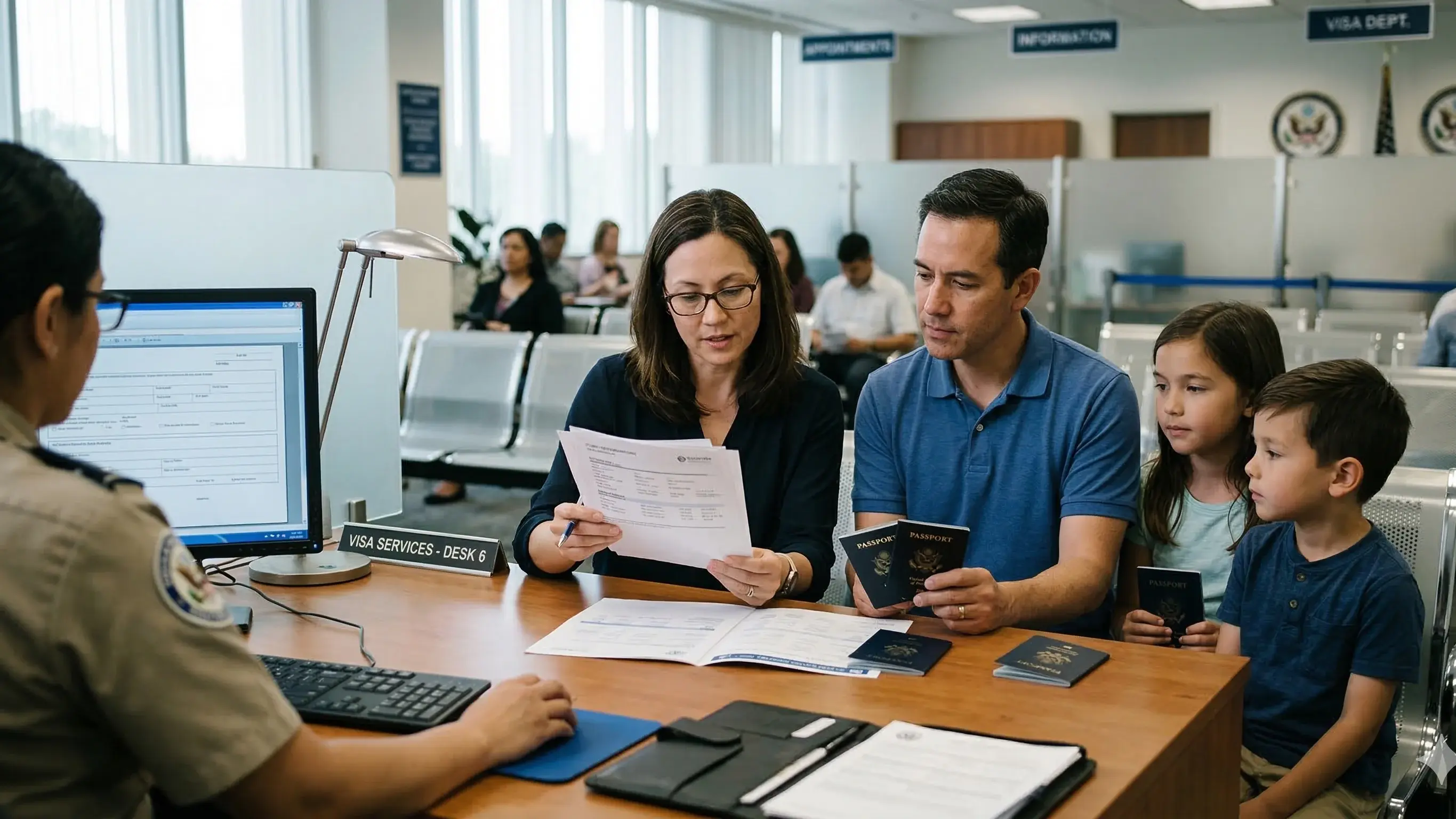
Travel Proof for Families: One Booking vs Separate Bookings (2026)
A family visa file can start to look weak for reasons unrelated to finances or intent. One shared flight reservation may look neat, but it is not always the strongest choice. Separate bookings can better match real travel plans, yet they can also raise avoidable questions if the dates, routes, or passenger mix do not align.
We need to choose the format that makes your family’s trip look logical, coordinated, and easy to trust. In this guide, we’ll sort out when one booking helps, when separate bookings make more sense, and how to keep either option from weakening the overall visa story. That decision matters most when children, staggered departures, or different return dates are involved on the same application file. For families on one itinerary, a flight booking for visa keeps shared travel proof clean and easy to present.
Whether you choose one booking or several, the deeper question is whether each document works as a proper flight reservation for visa in its own right. Before you decide on structure, it helps to see how a compliant booking is built — routing, dates, passenger details, and proof an officer can confirm at a glance. Our flight reservation for visa 2026 complete guide walks through exactly what a strong booking should contain, from a verifiable PNR flight reservation to clean formatting and clear onward travel proof, so you can hold every family member’s itinerary to the same standard. Reading it first gives you a baseline for the choices in this guide: does each reservation read like real travel, do the dates align across the whole family, and would the file survive a close read? Once you know what a dependable booking looks like end to end, deciding between one shared PNR and several linked ones becomes far clearer. Skim the guide, then return here and apply that same lens to your family’s travel proof with much more confidence about what actually keeps a file coherent.
Key Takeaways #1
- Match the booking format to the real trip, not to whatever looks neatest — one shared PNR helps only when the family genuinely moves as one unit.
- A single reservation reduces friction for identical trips (same departure, route, and return); it becomes a liability when it hides real differences.
- Separate bookings are safe and often stronger when the split is genuine and explained — staggered departures, a later-joining parent, a student flying after exams.
- Before you submit, run the family-timeline double-check — see the pre-submission review further down.
Table of Contents
- When A Single Family Reservation Looks Cleaner Than Multiple Separate PNRs
- When Separate Family Reservations Are More Honest, Safer, And Easier To Defend
- How Visa Officers Read The Gaps Between Family Reservations, Dates, And Travel Logic
- Choosing The Right Family Booking Structure Before You Submit Anything
- Frequently Asked Questions About Family Travel Proof
- Choose The Booking Structure That Matches The Family Trip
When A Single Family Reservation Looks Cleaner Than Multiple Separate PNRs

For many family applications, the strongest travel proof is the version that looks easiest to understand at first glance. When your trip is genuinely shared, one reservation often makes the file feel more organized before anyone reads a single explanation.
Why One Shared Itinerary Often Tells A Stronger Family Story
A single-family reservation usually signals one simple thing: you are traveling as one unit.
That matters because visa files are read for logic as much as for documents. When the same booking shows both parents and children on the same outbound and return flights, the trip immediately looks coordinated. The route, dates, and travel purpose all support each other.
This format works especially well when your plan is straightforward:
-
spouses traveling together
-
parents flying with minor children
-
one holiday in one destination
-
one entry and one return for the whole family
A shared booking also helps your file feel calmer. There are fewer moving parts. Fewer references. Fewer chances for one person’s travel dates to drift away from everyone else’s.
That does not make one booking automatically better in every case. It makes it cleaner when the real trip is already aligned.
How A Shared Booking Reduces Avoidable Scrutiny In Family Files
Separate PNRs can be perfectly valid, but they often create questions that would not exist with one shared reservation.
A reviewer may start comparing details across files and notice small gaps that force a closer look. One parent may appear on a different route. A child may seem to travel without a clearly linked adult. Return dates may not match the rest of the family’s timeline. None of these issues is fatal on its own, but they do invite extra attention.
One booking reduces that friction.
It keeps the core travel facts in one place:
-
same departure date
-
same arrival city
-
same return plan
-
same passenger group
-
same booking reference
That helps when the rest of the application also points to one shared trip. Your leave dates, school schedule, trip duration, and cover letter all become easier to read against a single travel record.
In family cases, clarity is a practical advantage. A file that explains itself usually performs better than one that needs the reader to assemble the story from separate pieces.
The Family Situations Where One Booking Is Usually The Safer Choice
One reservation is often the safer option when the family’s movement is genuinely identical.
That usually includes:
-
A husband and wife are taking the same short tourist trip
-
Parents traveling with school-age children during one fixed holiday window
-
First-time applicants who want the cleanest possible presentation
-
Families staying together for the full trip with no split return
In these cases, separate bookings can make the plan look more complicated than it really is. If everyone is leaving together, arriving together, and returning together, splitting the proof can weaken a simple story instead of improving it.
A shared booking is also useful when your application depends on showing family cohesion. That is often true where the purpose of travel is leisure, a family visit, or a short seasonal break. The more unified the plan actually is, the more natural it looks when the reservation is unified too.
When One Booking Helps Children’s Applications Look Less Fragmented
Children’s applications are often read in connection with the adults responsible for them. Because of that, one shared booking can make a child’s travel plan look more complete.
If a minor appears on the same reservation as both parents, the travel arrangement feels settled. The file shows who the child is traveling with, when the family leaves, and when the family returns. That reduces the chance of the child’s reservation looking detached from the adults’ documentation.
This becomes even more useful when you are submitting:
-
parental consent documents
-
birth certificates
-
school letters
-
family relationship proof
A single itinerary supports the same family structure that those documents are already trying to show.
It also helps avoid awkward visual gaps. If the child has a separate booking reference, even for the same flight, the application can start piecing together. That is not the impression you want when the underlying trip is simple and fully supervised.
What Can Still Go Wrong Even With One Family Booking
A shared reservation only helps when it is accurate.
Problems still arise if one family member’s name is misspelled, if the wrong passenger is missing from the booking copy, or if the dates do not match the rest of the file. A neat reservation will not rescue a weak timeline.
Watch for issues like these before submission:
-
One parent’s approved leave ends before the booked return
-
A child’s school schedule conflicts with the travel dates
-
The cover letter says one travel window, but the booking shows another
-
One family member is mentioned in the application, but is missing from the reservation
These mistakes matter because a shared booking concentrates the family story in one place. If that one place is wrong, the inconsistency becomes easier to notice.
When Separate Family Reservations Are More Honest, Safer, And Easier To Defend

A neat family file does not always mean one shared reservation. In many applications, separate bookings are the better choice because they reflect how the trip will actually happen.
Separate Bookings Make Sense When The Family Is Not Truly Traveling As One Unit
A split reservation becomes the right option when the family is not moving on one exact schedule.
That can happen for practical reasons. One parent may need to leave later because of work. A child may travel after exams end. An elderly parent may prefer a shorter route on a different day. An adult son or daughter may meet the rest of the family at the destination instead of departing from the same airport.
In these cases, forcing everyone onto one booking can make the file look cleaner on paper but weaker in logic.
A visa travel proof works best when it matches the real plan. If your family is traveling in stages, your reservations should show that clearly. A split structure can be easier to defend because every traveler’s route, timing, and purpose looks intentional instead of artificially grouped.
This matters most when the family members are still connected by the same overall trip, but not by the same outbound and return flights.
The Difference Between A Planned Split And A Suspicious Split
Separate reservations are not a problem by themselves. What creates risk is a split that looks random.
A planned split has a visible reason. That reason should be easy to understand from the rest of the file. If one spouse joins three days later, something else in the application should support that timing. It may be a work schedule, a leave approval, a school calendar, or a return obligation that explains why the travel could not be identical.
A suspicious split usually has one or more of these traits:
-
No clear reason for the different travel dates
-
Different arrival cities without explanation
-
One family member returning much earlier or much later than everyone else
-
A “family holiday” cover letter that does not match the bookings
-
Split reservations that look assembled without a real trip pattern
The key question is simple. Would an officer understand the split without guessing?
If the answer is no, the issue is not that you used separate PNRs. The issue is that the reservations do not connect into one believable travel story.
Family Cases Where Separate PNRs May Actually Look More Credible
Some family applications become stronger when each traveler’s reservation reflects a real constraint.
That often includes situations like these:
-
One spouse joins after a business commitment ends
-
A university-age child flies from a different city after the term finishes
-
Grandparents travel on a more comfortable route with extra transit time
-
Adult siblings are part of the same broader trip, but not the same exact itinerary
-
One parent returns earlier to resume work while the rest of the family stays for the planned duration
In these cases, one shared booking may look too tidy. If the supporting documents clearly show different obligations, a single reservation can start to feel out of sync with the rest of the file.
Separate PNRs can also help when different family members need different flight timings for legitimate reasons. A morning departure for parents and an evening departure for older children may be easier to explain than one forced itinerary that ignores actual schedules.
What matters is coordination, not uniformity. You do not need identical reservations. You need reservations that make sense together.
How Mixed-Origin Departures Change The Booking Decision
Families do not always begin the trip in the same place. That alone can make one reservation unrealistic.
One spouse may be working abroad. A student child may already be in another country. A family member may join after visiting relatives elsewhere. In all of these cases, the cleaner option is often separate travel proof with a clear meeting point.
Mixed-origin travel should still show structure. Your file should make it easy to see:
-
Where each traveler starts
-
Where the family reunites
-
How long do they stay together
-
Who returns on which date
-
How the split still supports one shared purpose
That last point matters. Separate departures should not make the family plan look disconnected. If one person flies into Paris and another into Rome, the file needs to explain why. If both are meeting in Madrid on the same week for a family vacation, the logic is much easier to follow.
The more complex the departure pattern, the more important it becomes to keep dates aligned with the rest of the evidence. Leave approvals, invitation letters, school calendars, and internal trip timing should all support the route choices shown in the reservations.
Underneath the one-booking-versus-many debate sits a simpler truth: each itinerary has to behave like a genuine flight reservation for visa, no matter how the family is grouped. Officers rarely care about the booking format itself; they care whether every reservation shows a real PNR, clear flight numbers, sensible routing, and dates that reconcile with the rest of the file. Our deep dive on the flight reservation for visa explains exactly what embassies look for in that kind of proof, and why a clean, verifiable booking for each traveler outperforms a tidy-looking single PNR that quietly hides real differences in the trip. It also clarifies how much detail a reviewer needs to trust a document quickly, so you focus on coherence rather than cosmetic neatness. If you have ever wondered whether your family’s proof reads as one real trip or as paperwork assembled for submission, that resource draws the line clearly. Read it before you finalize the file, and you will present travel proof — shared or split — that stands on its own and supports the family story rather than complicating it.
Key Takeaways #2
- What hurts a file is rarely the split itself — it is the unexplained gap. Every different date or route needs a visible reason elsewhere in the file.
- For minors, timing gaps raise consent and guardianship questions, so a child should always link clearly to an accompanying adult on the reservation.
- Judge each booking by whether an officer could understand it without guessing; if it needs a paragraph to defend, tighten it first.
- For clean, verifiable reservations for every family member, compare options on the BookForVisa homepage.
How Visa Officers Read The Gaps Between Family Reservations, Dates, And Travel Logic
Once a family file moves beyond the surface, the booking format matters less than the gaps inside it. What officers often notice first is not whether you used one reservation or several, but whether the dates and traveler roles still make sense together.
It Is Rarely The Split Itself That Hurts The File — It Is The Unexplained Gap
A split itinerary can work well. The problem starts when the file leaves too much for the reviewer to figure out alone.
Visa officers compare travel documents against the rest of the application. They look at who is flying, when they depart, where they arrive, and how those details fit the destination country, the trip purpose, and the family relationship. If one parent is flying later, that can be fine. If the reason is missing, the file starts to feel incomplete.
That is where proper documentation matters.
If children are involved, the gap becomes even more sensitive. A child traveling with only one parent, a legal guardian, or on a different date may trigger closer attention from immigration authorities. In many countries, this is tied to consent, child safety, and exit control rules, not just visa requirements.
The question you want the file to answer is simple: can you prove that each traveler’s movement still belongs to the same trip?
Red Flags Created By Poorly Aligned Separate Travel Insurance & Bookings
Separate reservations tend to attract attention when they create contradictions across the family timeline.
Some problems are obvious. Others look small until they are read beside the rest of the file. These are the patterns that usually create unnecessary stress:
-
One parent lands after the hotel stay has already started, with no reason given
-
The children return later, but no legal guardian is shown for that period
-
A cover letter says “family holiday,” while the bookings show different entry dates into the foreign country
-
The reservation route suggests international travel, but attached leave or school records support different dates
-
One traveler has a valid passport expiring too soon for the booked return window
-
The child’s parent listed in the supporting papers is not the adult appearing on the flight record
Officers may also notice smaller practical gaps. A different last name does not automatically create a problem, but it may require additional documents to show the relationship clearly. The same last name does not automatically solve anything, even if the dates do not line up.
For minors, the risk goes beyond timing. Many countries require special documentation when kids travel abroad with only one parent, with grandparents, or as unaccompanied minors. That can include a signed form, a consent form, or a notarized consent form, depending on the route and the travel destination.
If the reservation pattern suggests domestic travel but the file is really built around international flights, the mismatch can also make the itinerary feel loosely assembled rather than carefully planned.
How To Carry Documents So That Separate Family Reservations Read Like One Coherent Plan
The goal is not to force identical dates. The goal is to make each booking connect cleanly to the others.
You can do that by making sure every traveler’s itinerary answers five practical questions:
-
Where this person starts
-
Where this person joins the rest of the family
-
How long do they stay together
-
When they leave
-
Why does any split exist?
That explanation should be visible across the file, not hidden in one place.
For example, if one parent joins later, the rest of the paperwork should support that timing. A work letter on official letterhead, school dates for children, or a booking note that identifies the meeting city can all help the file read as one coordinated trip.
For minors, keep the support clean and specific. If one adult is missing from a travel segment, you may need permission from the other parent. In some cases, sole custody records may matter more than a simple form. If a grandparent is accompanying the child, the application may need a signed form from the child's parent, along with identification details for the accompanying adult.
It also helps to carry documents that support the same travel logic later, not just at the visa stage. Border checks in the world do not all focus on the same points. Some look more closely at identification, health certificates, travel insurance, and emergency contact information, especially where family travel arrangements are not straightforward.
Keep digital copies of key papers. That includes the passport, consent papers, emergency contact numbers, and any supportive letter that explains the split. During travel abroad, quick access to those records can be helpful in emergency situations, trip cancellations, lost luggage, or medical emergencies.
When One Shared Booking Can Actually Create More Questions Than Separate
A single reservation can look strong at first, but it can become the weaker option when it hides real differences in the trip.
That usually happens when the shared booking says the whole family departs and returns together, but the rest of the file says otherwise. One parent may still be under a work commitment. A child may have exams. An elderly relative may not be fit for the same routine. In that case, the neat booking starts to look less like proper preparation and more like a document that was chosen for appearance.
That matters because officers do not read bookings in isolation. They compare them to the passport, school schedules, custody papers, health records, and even the practical realities of travel internationally with children.
A family file looks stronger when the route reflects real life. That may include separate departures, different return dates, or an adult joining later. If those differences are genuine, hiding them inside one booking can create more doubt than showing them clearly.
Choosing The Right Family Booking Structure Before You Submit Anything
The right family reservation structure usually becomes clear once you stop asking what looks neat and start asking what matches the trip. At this stage, your goal is not to impress with simplicity. It is to submit flight proof that holds together when the rest of the file is read beside it.
Should Your Family Appear As One Moving Unit Or Several Connected Travelers?
Start with the trip itself, not the reservation format.
If every family member is leaving from the same city, taking the same route, arriving together, and returning together, your file usually benefits from one shared booking. That setup reflects one movement pattern. It is easier to read, easier to compare with the cover letter, and easier to connect to the rest of the visa paperwork.
If the family is not moving like that, pause before you force a single booking.
Ask these questions:
-
Are all travelers departing on the same date?
-
Are they flying from the same airport?
-
Are they entering the same country on the same route?
-
Are they staying for the same duration?
-
Are they returning together?
-
Does the rest of the file describe one shared trip or several linked travel plans?
If most answers are yes, one booking is usually the stronger fit.
If several answers are no, separate bookings may reflect the plan more honestly. That is especially true if one family member is already abroad, one adult has a work constraint, or one traveler has a different route for age, comfort, or timing reasons.
The key is internal logic. A family file should present the trip in the same shape that it will actually happen.
If Most Answers Point To “Same Trip,” Keep The Booking Unified
A unified booking works best when the trip has one rhythm.
That means one outward journey, one family stay, and one return plan. In that situation, splitting the flight proof does not add clarity. It adds extra booking references, extra comparisons, and extra chances for a date or passenger detail to drift out of line.
Keep the reservation together when the family shares:
-
The same departure day
-
The same arrival city
-
The same main travel purpose
-
The same return window
-
The same adult supervision structure for minors
This is often the safer option for parents traveling with younger children. It also works well when the trip is short and fixed, such as a school break or a time-limited family visit.
Do not add separate PNRs just because they seem more flexible. If the trip is one unit, your proof should look like one unit. That makes the application easier to process and less likely to invite unnecessary questions about why a simple family journey was documented in fragments.
If The Family Plan For International Travel Is Split, Structure It Carefully
When the family is not flying in one block, your job is to show that the split is planned, limited, and easy to follow.
That means each reservation should still connect to the same travel story. The file should make it obvious where the family meets, how long they travel together, and why the route differs for one or more members.
Keep the split controlled.
A good structure usually does three things at once:
-
It shows the real departure pattern
-
It preserves the shared destination logic
-
It avoids loose gaps that make one traveler look detached from the rest
For example, if one parent arrives later, the return timing should still make sense beside the family’s main stay. If older children leave from another city, their booking should still fit the same trip window rather than look like a separate holiday.
Avoid building the flight-proof in a way that feels patched together. If the family is taking international flights but one reservation chain suddenly looks like a disconnected sequence of domestic flights, the route may appear less coherent than it really is.
Accuracy matters more than forced neatness. A split file can still look strong when the structure is deliberate.
What To Double-Check Before Sending Travel Proof For Family Vacation
Before submission, double-check every booking against the rest of the application.
Look for points where family travel proof often fails in practice:
-
Every traveler’s name matches the passport exactly
-
Each child is linked to the correct accompanying adult
-
Outbound and return dates align with leave, school, or visit timing
-
The arrival city matches the trip narrative in the cover letter
-
Split departures still lead to one shared stay or a clearly explained plan
-
No traveler appears to arrive too late or leave too early without a reason
-
Each reservation copy is clean, readable, and complete
This review matters because family files are often judged by how well the pieces fit together. A single wrong date can make the whole plan look unsettled. A missing passenger can make the booking look incomplete. A strong reservation structure is only useful if the details stay consistent from start to finish.
Frequently Asked Questions About Family Travel Proof
Is one booking or separate bookings better for a family visa?
Neither is universally better — it depends on the real trip. One shared reservation is cleaner when the whole family departs, travels, and returns together. Separate bookings are stronger when the split is genuine and explained, such as a later-joining parent or a student flying after exams.
Do families need to be on the same flight reservation for a visa?
No. Officers do not require one shared PNR. They require a coherent travel story, so several linked reservations are fine as long as the dates, routes, and roles reconcile and each booking clearly belongs to the same trip.
Can separate family bookings hurt a visa application?
Only when they create an unexplained gap. A planned split with visible reasons reads as normal; a random split — different arrival cities, mismatched returns, no supporting reason — makes the family plan look assembled rather than real.
What makes a split family itinerary look suspicious to a visa officer?
Different travel dates or arrival cities with no reason, one member returning far earlier or later than the rest, a "family holiday" cover letter that contradicts the bookings, or a child not clearly linked to an accompanying adult.
Should a child be on the same flight reservation for visa as a parent?
When the family truly travels together, yes — it makes the child's plan look settled and links the minor to a supervising adult. If the child must travel separately, keep the booking clearly connected to the accompanying adult and support it with consent and relationship documents.
Do family members' flight dates need to match for a visa?
They do not have to be identical, but they must reconcile. Every different date should have a visible reason in the file — a work letter, school calendar, or return obligation — so the split reads as planned rather than accidental.
Is one shared booking always the safer choice for families?
No. A single PNR is safer for genuinely identical trips, but it becomes a liability when it hides real differences — a parent under a work commitment, a child with exams, or an elderly relative on a different route. Then it can look chosen for appearance rather than accuracy.
What documents help when family members travel on separate bookings?
Anything that explains the split: leave approvals, work letters on letterhead, school calendars, invitation letters, and a booking note identifying the meeting city. For minors, add consent forms, relationship proof, and guardian identification as needed.
Do children traveling with one parent need extra documents?
Often, yes. Many countries require consent documentation when a minor travels with one parent, a grandparent, or as an unaccompanied minor. That can include a signed or notarized consent form plus relationship proof, depending on the route and destination.
Can mixed-origin departures work on a family visa file?
Yes, when the file shows structure: where each traveler starts, where the family reunites, how long they stay together, and who returns when. A parent working abroad or a student already overseas is normal — the plan just needs one clear meeting point and aligned dates.
What should I check before submitting family travel proof?
Confirm every name matches the passport, each child links to the correct adult, outbound and return dates align with leave and school timing, the arrival city matches the cover letter, and any split still leads to one shared stay or a clearly explained plan.
Does a shared family booking need to match the cover letter?
Yes, closely. The cover letter and the reservation must describe the same trip window and travel purpose. A shared booking concentrates the family story in one place, so if it contradicts the cover letter, the inconsistency is easy to spot.
Key Takeaways #3
- Start from the trip, not the format: if departure, route, stay, and return are identical, keep it unified; if not, structure the split deliberately.
- Cross-check every booking against passports, leave, school dates, and the cover letter — one wrong date can make the whole family plan look unsettled.
- Keep a split coherent: show where each traveler starts, where the family reunites, how long they stay together, and who returns when.
- If Europe is on the route, confirm every booking against the documented Schengen visa flight reservation requirements before filing.
Choose The Booking Structure That Matches The Family Trip
The strongest family travel proof is the one that matches how the trip will actually happen. If everyone is flying together, one shared reservation usually keeps the file cleaner. If the family is joining later, leaving from different cities, or returning on different dates, separate bookings can work just as well when the timing and roles still line up.
What matters most is that your reservation structure makes the trip easy to follow. When your dates, routes, and family movement tell one clear story, you can submit the file with far more confidence. Before you send anything, check it once more as a full family timeline, not as separate documents.
If your family trip runs through Europe, give every booking one final check against the standard Schengen consulates actually apply, because family files are read tightly. The entry point, routing, dates, and onward travel proof all have to reconcile cleanly across each traveler, and a split that looks unexplained stands out faster when the trip window is short. Our breakdown of the Schengen visa flight reservation requirements lays out what those offices expect from a booking, including how fresh the itinerary should be and how each family member’s flight reservation for visa should sit beside the others as one coherent plan. If parents, children, or a later-joining adult are on different reservations, this is the moment to confirm the whole set still meets that standard — matching names, aligned dates, one clear meeting point — rather than discovering a gap after a query or refusal. Reading the requirements alongside your own itineraries turns guesswork into a simple checklist. Whether you are filing for tourism or a family visit, aligning every booking to these documented expectations removes doubt and steadies the whole file. Review them together before you submit.
More Resources
Why Travelers Trust BookForVisa.com
BookForVisa.com has been helping travelers since 2019 with specialized dummy ticket reservations for visa applications. We've supported over 50,000+ visa applicants worldwide, providing verifiable PNRs and instant PDF deliveries. Our 24/7 customer support ensures quick resolutions, while secure online payments and unlimited changes demonstrate our commitment to reliability. As a registered business with a dedicated team, BookForVisa.com focuses exclusively on flight reservations for visa, offering niche expertise you can count on.
About the Author
Visa Expert Team — With over 10 years of combined experience in travel documentation and visa assistance, our editorial team specializes in creating verifiable flight and hotel itineraries for visa applications. We have supported travelers across 50+ countries by aligning documentation with embassy and immigration standards.
Editorial Standards & Experience
Our content is based on real-world visa application cases, airline reservation systems (GDS), and ongoing monitoring of embassy and consular documentation requirements. Articles are reviewed and updated regularly to reflect current practices.
Trusted & Official References
- U.S. Department of State — Visa Information
- International Air Transport Association (IATA)
Important Disclaimer
While our flight and hotel reservations are created to meet common embassy requirements, acceptance is not guaranteed and may vary by country, nationality, or consulate. Applicants should always verify documentation rules with the relevant embassy or official government website prior to submission.
Related posts

How to Assemble a Visa Travel-Proof PDF Pack
14 Oct, 26
Child Visa Itinerary After a Custody Schedule Change
14 Oct, 26
Visa Travel-Proof Audit: Eight Mistakes to Check
14 Oct, 26
Flight Booking for Visa While a U.S. Reentry Permit Is Pending
14 Oct, 26
Expired Flight Hold Before Visa Appointment: Refresh or Keep?
14 Oct, 26
Travel and Visa Reservations During a UK Citizenship Application
14 Oct, 26
Flight Reservation Shows Cancelled Before a Visa Appointment
14 Oct, 26
Family Flight Reservation for Visa: Mixed Surnames
14 Oct, 26
Flexible Visa Cover Letter: Wording for Date Changes
14 Oct, 26