Short answer: To apply for an Australia visa from India, most travellers lodge a Visitor visa (subclass 600) online in ImmiAccount, upload their documents, pay from AUD 250 and give biometrics at a VFS-run centre if Home Affairs asks. There is no interview by default. A flight reservation for visa files costs $15 per person.
Indian citizens need a visa before travelling to Australia, whether for a holiday, a family visit, a business meeting or study. Unlike the US or UK process, there is no consular interview by default and no paper file: the Australian visitor visa is lodged online, the Department of Home Affairs decides it from your uploaded documents, and the visa is linked digitally to your passport with no label.
This guide explains which Australian visa Indians usually need, the three Visitor visa (subclass 600) streams that apply from India, fees in Australian dollars, how to create an ImmiAccount and lodge, the new biometrics requirement that started in India on 26 October 2026, the 16 Australian Biometric Collection Centres, the documents decision-makers look for, processing times, and what happens after the decision. Our existing Australia posts cover the flight question and the student file in depth, so this guide links to them rather than repeating that material.
Facts come from the Department of Home Affairs immigration website (immi.homeaffairs.gov.au) and the Australian High Commission in New Delhi unless another source is named. Fees and rules change, so confirm on those sites on the day you apply.
Key facts: Australia visa from India
- Main visa: Visitor visa (subclass 600), in the Tourist, Business Visitor or Sponsored Family stream.
- Fee: from AUD 250 per applicant for the Tourist stream applied for outside Australia, and AUD 250 for the Business Visitor and Sponsored Family streams.
- Stay: usually 3 months; Home Affairs may grant 6 or 12 months in some cases. You cannot work.
- How: online through ImmiAccount; Visitor visa applications from India have been online-only since 30 September 2021.
- Biometrics: from 26 October 2026, applicants in India may be asked for fingerprints and a facial image at one of 16 VFS-run centres, or through the Australian Immi App if eligible.
- Visa label: none; the visa is linked to your passport and shown in your grant letter and VEVO.
- BookForVisa flight and hotel reservations: a flat $15 per person each, real PNR on flights, valid 48-72 hours, free date changes on the booking day only.
Preparing an Australia visitor visa file? Home Affairs says not to arrange travel until your visa is granted, so show your planned dates with a verifiable reservation instead of a paid fare.
Get a $15 reservation with a real PNRIn This Guide
- Which Australia Visa Do Indians Need?
- What Are the Visitor Visa Streams for Indian Applicants?
- How Long Can You Stay on an Australian Visitor Visa?
- How Do You Apply for an Australia Visa Online From India?
- What Documents Do You Need for an Australia Visitor Visa From India?
- How Much Does an Australia Visa Cost for Indians?
- How Do Biometrics Work for Australian Visas in India?
- Where Are the Australian Biometric Collection Centres in India?
- Do You Need a Medical Exam or Police Certificate?
- How Long Does an Australia Visa Take From India?
- What Happens After Your Australia Visa Decision?
- What Are Common Mistakes in Australia Visa Applications From India?
- What Do Real Australia Visa Applications From India Look Like?
- Frequently Asked Questions
Official-source check: Visitor visa streams, fees, stay periods, documents and steps come from the Home Affairs Visitor visa (subclass 600) pages, including the Tourist stream (apply outside Australia); biometrics rules from the Home Affairs Biometrics page and the Australian High Commission's notice of 26 October 2026; the online-lodgement rule from the High Commission's Visas and Citizenship page. Centre locations, service fees and centre rules come from the VFS Global Australia India site, including its centre list. Student and Work and Holiday figures come from their Home Affairs visa pages. Checked 4 November 2026.
Reviewed for: Visa options for Indian passport holders, Visitor visa streams, AUD fees, stay periods and entries, ImmiAccount lodgement, documents, biometrics and Australian Biometric Collection Centres, VFS service fees, health and character checks, processing times, the grant letter and VEVO, refusals, and wording of any flight reservation in the file.
Which Australia Visa Do Indians Need?
Choose by the purpose of your trip. For holidays, family visits and short business trips, Indian passport holders usually apply for the Visitor visa (subclass 600). The Electronic Travel Authority (subclass 601) and eVisitor (subclass 651) are only for passports on their eligibility lists, which Home Affairs asks you to check through its Explore visa options tool. Study, working holidays and work each need a different visa. The table summarises the options Indians use most.
| Visa | Who it is for | Cost on Home Affairs | Main points |
|---|---|---|---|
| Visitor (600) Tourist stream, outside Australia | Holidays, visiting family or friends, cruises | From AUD 250 | Usually 3 months; up to 12 months possible; no work |
| Visitor (600) Business Visitor stream | Meetings, conferences, contract negotiations | AUD 250 | Up to 3 months; no work or selling to the public |
| Visitor (600) Sponsored Family stream | Visitors sponsored by an Australian citizen or permanent resident family member | AUD 250 | Sponsor may be asked to pay a security bond; usually single entry |
| Visitor (600) Tourist stream, in Australia | People already in Australia who want to stay longer | From AUD 630 | Must be in Australia to apply |
| Student (500) | Courses at an Australian education provider | From AUD 2,500 | Confirmation of Enrolment and OSHC needed |
| Work and Holiday (462) | Indian passport holders selected in the pre-application ballot | AUD 840 (first visa) | Ballot selection needed before applying |
The rest of this guide deals with the Visitor visa, because it is the visa most Indian travellers need. If you are going to study, our guide on Australia student visa requirements, the CoE and funds covers that route, and the Home Affairs Student visa (subclass 500) page notes new rules from 2 October 2026 on who can apply in Australia and whether family members can be included.
What Are the Visitor Visa Streams for Indian Applicants?
Tourist stream (apply outside Australia)
This stream lets you visit Australia as a tourist, go on a cruise or visit family and friends. You can also study or train for up to 3 months, although Home Affairs says a student visa might be more appropriate if study is your main reason. You must be outside Australia when you apply and when the decision is made. The cost is from AUD 250 per applicant.
Business Visitor stream
Business visitors can make general business or employment enquiries, investigate, negotiate, enter into or review a business contract, take part in an official government visit, and attend a conference, trade fair or seminar, provided the organisers do not pay you to take part. You can do tourist activities too. You cannot work for, or provide services to, a business or organisation in Australia, or sell goods or services directly to the public. The stay is up to 3 months and the fee is AUD 250. APEC Business Travel Card holders with "AUS" printed on the back may not need a separate visa.
Sponsored Family stream
This stream is for visitors sponsored, usually by a family member, who is an Australian citizen or permanent resident. Home Affairs may ask the sponsor to pay a security bond. The standard stay is 3 months, with up to 12 months in limited cases, and the visa is generally granted with a single entry and a 6-month validity period to enter. It carries condition 8503, No Further Stay, so you cannot apply for another visa while in Australia, except where the condition is waived. Home Affairs itself suggests checking whether the Tourist stream suits you better, because it does not need a sponsor.
Frequent traveller stream: not for Indians
The Frequent traveller stream, which can be granted for up to 10 years, is listed only for citizens of China, Brunei, Cambodia, the Philippines, Laos, Indonesia, Malaysia, Singapore, Thailand, Vietnam and Timor-Leste. Indian passport holders apply in the Tourist or Business Visitor stream instead and can ask for a longer visa where their circumstances support it.
How Long Can You Stay on an Australian Visitor Visa?
The stay period is decided case by case and printed on your visa grant letter. Home Affairs generally grants 3 months and may grant up to 12 months in certain circumstances, taking into account how long you want to stay and why. You might not be granted the length of stay you ask for. The visa may allow a single entry or multiple entries; if it is multiple entry, you can leave and return while it is valid.
Parents of Australian citizens and permanent residents
If you are the parent or step-parent of an Australian citizen or permanent resident and meet the criteria, Home Affairs may grant a visa valid for more than 12 months. Even then, you cannot stay more than 12 months in total in any 18-month period, and you must have made adequate health insurance arrangements. Parents who want to stay longer than 12 months on each visit may be eligible for the Sponsored Parent (Temporary) visa instead.
Cruises and extensions
A round-trip cruise counts as time in Australia and does not reset your stay. You cannot extend a Visitor visa; to stay longer you must apply for a new visa in Australia, and only if your current visa does not carry a No Further Stay condition. Staying beyond your visa period breaches your conditions and affects future applications.
How Do You Apply for an Australia Visa Online From India?
According to the Australian High Commission in New Delhi, Visitor visa (subclass 600) applications from India have been online-only since 30 September 2021. You lodge in ImmiAccount, the Home Affairs online account, and pay there. The Home Affairs step-by-step guide sets out five stages.
- Before you apply: check that your passport is valid. If you plan to get a new passport, do it before you apply, because the visa is linked to the passport you use. You can complete health examinations before applying or wait until you are asked.
- Gather your documents: identity pages of your passport, a national identity card if you have one, proof of any change of name, and your genuine visitor and financial evidence. Include English translations of any documents not in English.
- Apply online: log in to or create an ImmiAccount, fill in the form, attach documents, submit family applications together and pay the visa application charge. Home Affairs will not process the application until the fee is paid.
- After you apply: you get an acknowledgement. Provide biometrics or health examinations if asked, attach any extra documents in ImmiAccount, and tell Home Affairs about any mistake or change in your situation.
- Visa outcome: you receive a written decision with your visa grant number, start date and conditions, or written reasons for a refusal and whether you can seek review.
Each family member, including children listed on a parent's passport, needs a separate application, but you can tell Home Affairs that you are travelling as a group. Applying early helps, because you must be outside Australia when the visa is decided and Home Affairs says not to arrange travel until it tells you in writing that the visa is granted.
Getting help with the form
Only a registered migration agent, a legal practitioner or an exempt person may give you immigration assistance. Anyone can be appointed to receive documents for you. Use Form 956 to appoint a migration agent, legal practitioner or exempt person, and Form 956A to appoint an authorised recipient, and upload the form to ImmiAccount. The VFS centres in India also sell optional online lodgement assistance (INR 455 for a 30-minute appointment) and fee payment assistance (INR 113), according to the VFS centre pages; these services do not affect the decision.
What Documents Do You Need for an Australia Visitor Visa From India?
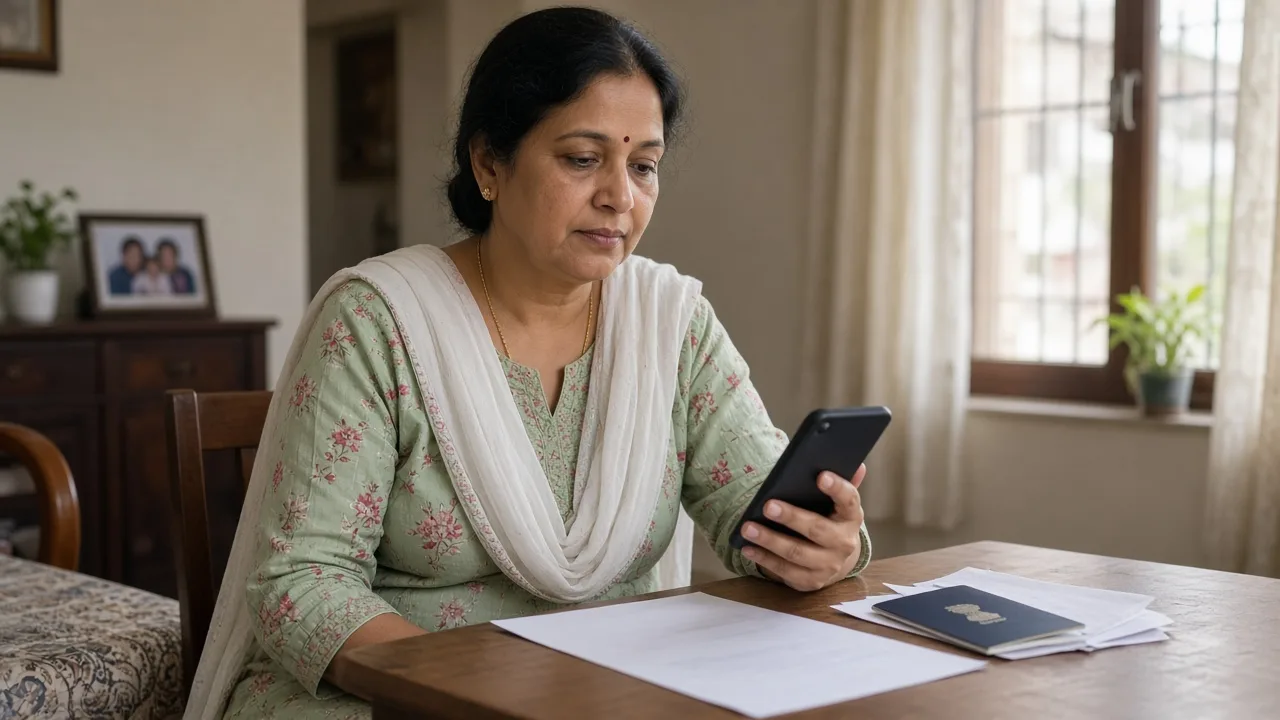
Home Affairs asks you to include as much information as possible to support your application, because it may decide without asking for more. Scan or photograph every document in colour, keep scans clear and legible, and save multi-page documents as one file.
Identity documents
- Pages of your current passport showing your photo, personal details and issue and expiry dates.
- A national identity card, if you have one.
- Proof of any change of name, such as a marriage certificate or official name-change documents.
Genuine visitor and financial documents
Home Affairs lists examples of evidence that you have enough money for your stay and to leave Australia:
- Itemised personal bank statements for a 3-month period.
- Pay slips.
- Audited accounts, tax records or term deposits.
- Credit card statements.
It also lists evidence that you have reasons to return home, such as a letter from your employer stating you plan to return to your job, proof that you study in India, proof that you have immediate family members in India, proof that you own a house or other major assets, and proof that you can return home. A letter from your relative or friend in Australia inviting you can state your relationship, the purpose and length of the visit and whether you will stay with them; if they are paying for your stay, provide proof of their funds.
Your travel plans
Describe your plans while in Australia: dates, cities and where you will stay. A flight itinerary for visa applications with a real PNR shows your planned arrival and departure without paying full airfare before the decision. A BookForVisa flight or hotel reservation is a flat $15 per person, valid 48-72 hours, with free date changes on the booking day only, so time it close to lodging. Some travellers search for a dummy ticket for this; what helps is a real, checkable reservation rather than an edited file or a template. Our post on whether a flight itinerary is required for an Australia tourist visa covers this question in detail.
Children under 18
Provide a birth certificate showing both parents' names, or another listed identity document. Anyone with a legal right to decide where the child lives who is not travelling must complete Form 1229, consent to grant an Australian visa to a child under 18, or a statutory declaration, with a copy of an ID showing their signature and photo. If the child is not staying with a relative or legal guardian, add Form 1257, undertaking declaration, signed by the person they will stay with.
Character, translations and longer stays
Provide any military service record or discharge papers if applicable; Home Affairs may ask for a police certificate. Documents not in English need translations. Translators in Australia must be NAATI-accredited, but translators outside Australia do not, as long as each translation shows the translator's full name, address, phone number and language qualifications and experience in English. You do not need certified copies unless asked. If you are requesting a longer visa, say so in the application and explain why, for example with proof that your child is an Australian citizen or permanent resident.
How Much Does an Australia Visa Cost for Indians?
Home Affairs charges visa fees in Australian dollars and calls them the visa application charge. The amounts below are from the Visitor visa pages checked on 4 November 2026; use the Home Affairs Visa Pricing Estimator for your exact total.
| Item | Amount | Paid to |
|---|---|---|
| Visitor visa (600) Tourist stream, outside Australia | From AUD 250 per applicant | Home Affairs, in ImmiAccount |
| Visitor visa (600) Business Visitor stream | AUD 250 | Home Affairs |
| Visitor visa (600) Sponsored Family stream | AUD 250, plus a security bond if the sponsor is asked | Home Affairs |
| Student visa (500) | From AUD 2,500 | Home Affairs |
| Work and Holiday visa (462), first | AUD 840 | Home Affairs |
| Biometric collection service fee | INR 1,425 per applicant, taxes included | VFS Global, when booking |
| Walk-in service, optional | INR 4,000 in addition to service fees | VFS Global |
| Online lodgement assistance, optional | INR 455 for 30 minutes; INR 224 per extra 15 minutes | VFS Global |
| Online fee payment assistance, optional | INR 113 | VFS Global |
Home Affairs also notes that you might have to pay other costs for health checks, police certificates and biometrics. The Visa Pricing Estimator does not include those. VFS lists payment online by debit or credit card when booking, or at the centre in rupees by card or QR code, and says American Express and Diners cards are not accepted. Rupee amounts for the visa application charge depend on your card's exchange rate on the day you pay.
How Do Biometrics Work for Australian Visas in India?
From 26 October 2026, applicants for an Australian visa in India may be required to provide biometrics, meaning fingerprints and a facial image, the Australian High Commission announced. Australia is expanding biometric collection to nearly 60 countries, including India. The requirement applies only to new applications lodged from 26 October 2026; applications already submitted are not affected.
How the request works
You do not book biometrics before applying. Home Affairs tells you if you need to provide them and how: at an Australian Biometric Collection Centre (ABCC) in person, or digitally through the Australian Immi App. The High Commission says eligible applicants who have previously given biometrics at an ABCC and hold a valid passport may be able to use the app at no cost. Visa processing times are not expected to be affected, provided applicants complete any biometric requirement promptly.
At the centre
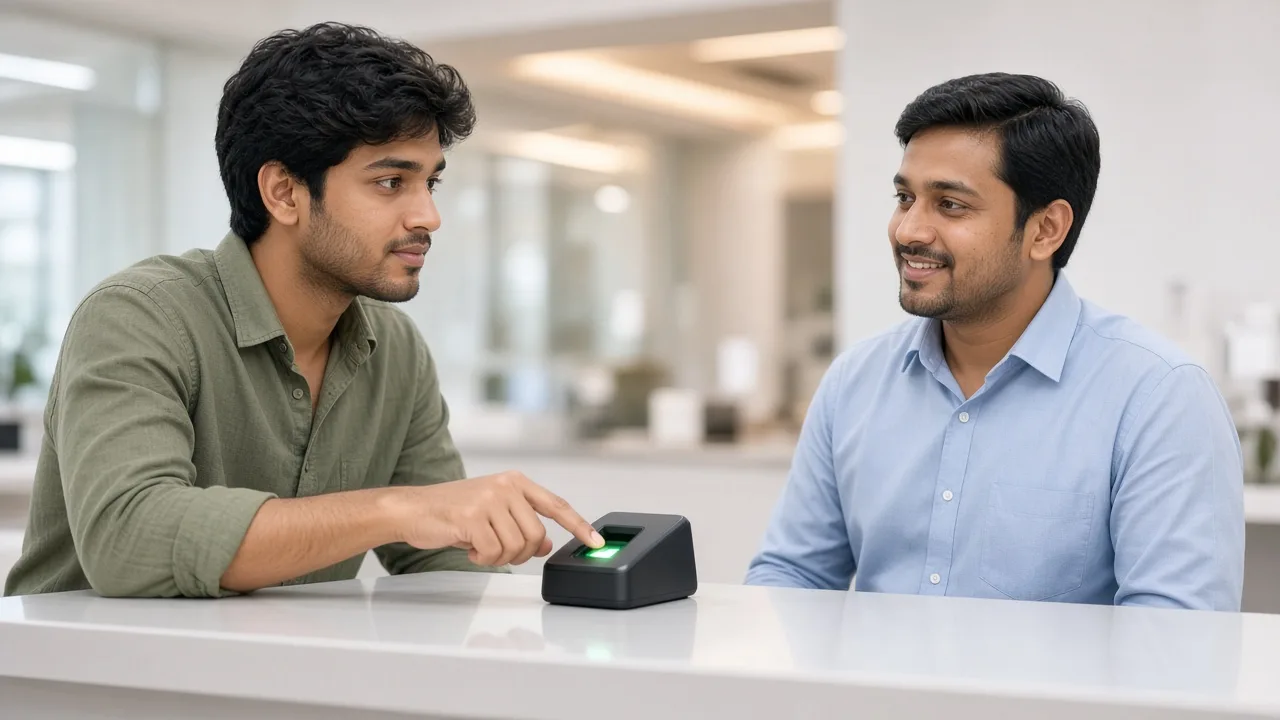
VFS Global runs the ABCCs for Home Affairs. Book an appointment and pay the service fee, then follow the VFS guide to what happens at the centre: arrive 15 minutes early, and bring your Biometrics Requirement Letter and the original passport linked to your application, which is the only accepted identification. Check that the details on the letter match your passport exactly before you go. You must attend in person; representatives cannot attend for you, and children under 18 must come with a parent or guardian. Children under 5 attend but do not give fingerprints.
Staff take a digital photo of your face, which must be visible from the bottom of the chin to above the eyebrows, including both cheeks and ears, and scan all 10 fingerprints with an ink-free scanner. You may be asked to remove tinted or reflective glasses and adjust a religious head covering, in which case collection can be done in private by someone of the same gender. If you have mehndi or another temporary decoration on your hands, Home Affairs advises contacting VFS first. If you have temporary injuries to your face or fingers, wait until they heal or upload a written request for more time to ImmiAccount.
Mobile phones are allowed but must be silent and put away; photography and recording are not permitted, and only one cabin-size bag per applicant can be taken in. Optional VFS value-added services such as Premium Lounge and Prime Time must be chosen when booking and do not speed up the visa.
Where Are the Australian Biometric Collection Centres in India?
VFS Global lists 16 Australian Biometric Collection Centres in India. Most are open Monday to Friday, 09:00 to 17:00. Panaji and Puducherry operate weekly on published days.
| Region | Centres | Days |
|---|---|---|
| North | New Delhi, Chandigarh, Jalandhar, Jaipur, Lucknow | Monday to Friday |
| West | Mumbai, Pune, Ahmedabad | Monday to Friday |
| West (weekly) | Panaji | Wednesday, weekly as published |
| South | Bengaluru, Chennai, Hyderabad, Kochi, Thiruvananthapuram | Monday to Friday |
| South (weekly) | Puducherry | Friday, weekly as published |
| East | Kolkata | Monday to Friday |
As an example of a centre address, VFS lists the Mumbai ABCC at Urmi Axis Building, behind Famous Studio, opposite E Moses Road, Mahalaxmi (West), Mumbai 400011. Find the address and closure dates for your centre on the VFS Global Australia India site before booking. VFS states that all its Australian Biometric Collection Centres have wheelchair access ramps and that staff can assist customers with special needs.
Do You Need a Medical Exam or Police Certificate?
You must meet the Australian health and character requirements for every Visitor visa. Home Affairs may ask you to have health examinations. You can complete them before applying or wait until you are told; follow the Home Affairs health requirement instructions, which explain which examinations you need and how to arrange them with an approved clinic. For character, Home Affairs may ask for a police certificate, and you should provide any military service records if they apply to you.
You are liable for all your healthcare costs in Australia. Home Affairs strongly recommends adequate health insurance for visitors, and it may grant some visas with condition 8501, which requires you to maintain adequate health insurance during your stay. Parents asking for a long-validity visa need adequate health insurance arrangements as part of the criteria.
How Long Does an Australia Visa Take From India?
Home Affairs does not publish a fixed processing time for each applicant. Its visa processing times guide lets you select the Visitor visa (subclass 600), the stream and your application date to see how long recently decided applications took. It is a guide only and does not guarantee a decision within that time.
- Apply well before travel, because you must be outside Australia when the visa is decided.
- Complete biometrics and health examinations promptly when asked; the High Commission says biometric collection is not expected to slow processing if done quickly.
- Attach complete documents at lodgement, since Home Affairs may decide without asking for more.
- Work and Holiday (462) applications are being normalised to an average of around three months, according to Home Affairs.
Do not book non-flexible flights or make travel commitments until you have the grant letter. A reservation with a real PNR lets you show your planned dates in the meantime; our guide on how embassies evaluate flight itineraries explains what decision-makers look for in travel plans.
What Happens After Your Australia Visa Decision?
If the visa is granted
You receive a grant letter with your visa grant number, the date your visa starts, your conditions, stay period and whether it allows single or multiple entry. There is no visa label in your passport; Home Affairs links the visa to it digitally. Check the details in VEVO, Visa Entitlement Verification Online, and keep a copy of the decision with you in Australia. Travel on the same passport you used to apply. At the border you complete an Incoming Passenger Card, and you may be able to use SmartGate with an ePassport.
Your obligations while in Australia
- You cannot work on a Visitor visa.
- Leave by the end of your stay period; staying longer breaches condition 8531.
- If your visa has condition 8503, No Further Stay, you cannot apply for most other visas in Australia.
- Study or training is limited to 3 months.
If the visa is refused
Home Affairs tells you in writing why it refused the visa and whether you have a right to review. Read the reasons carefully. Common gaps are thin financial evidence, weak proof of reasons to return home, unclear trip purpose, or documents that conflict with the form. A new application with better evidence is often more practical than waiting, but only if your situation or evidence has genuinely changed.
What Are Common Mistakes in Australia Visa Applications From India?
- Applying for the Sponsored Family stream when the Tourist stream would fit better and needs no sponsor.
- Uploading blurry, black-and-white or partial scans, or splitting a multi-page document into many files.
- Getting a new passport after lodging, so the visa is linked to an old passport.
- Leaving out English translations or translator details.
- Showing bank statements that do not match declared income, or large unexplained deposits.
- Ignoring a biometrics request or giving fingerprints with mehndi or injuries without checking first.
- Booking paid, non-flexible flights before the grant letter.
- Paying someone who is not a registered migration agent, legal practitioner or exempt person for immigration advice.
Also watch for scams. The High Commission warns applicants about visa scams and says personal email addresses of officials are not channels for visa enquiries; use the contact options on its website or the Home Affairs Global Service Centre.
What Do Real Australia Visa Applications From India Look Like?
Example 1: couple from Pune, three-week holiday
Rohit, 34, and Sneha, 32, plan 21 days in Sydney, Melbourne and the Gold Coast. They create one ImmiAccount, lodge two Tourist stream applications as a group and pay AUD 250 each. Each file has passport pages, Aadhaar, employer leave letters, 3 months of bank statements and payslips, ITRs, a day plan, hotel reservations and a flight reservation with a real PNR matching their dates. Home Affairs asks for biometrics, and they book the Pune ABCC the same week.
Example 2: parents from Kochi visiting their daughter
Joseph, 63, and Mary, 60, want to spend 4 months with their daughter, an Australian permanent resident in Perth. They apply in the Tourist stream rather than Sponsored Family, ask for a 6-month stay and explain why. They attach pension records, property papers, their daughter's invitation letter, her proof of permanent residence and proof of relationship, and arrange health insurance for the trip.
Example 3: sales manager from Delhi, trade fair in Melbourne
Karan, 38, is attending a trade fair for his employer. He applies in the Business Visitor stream for AUD 250 with an employer letter confirming his role, the purpose and who pays, the fair registration, and a short itinerary. He will not sell to the public or work for an Australian business, which the stream does not allow.
Ready to lodge in ImmiAccount? Get a flight or hotel reservation with a real PNR for $15 per person, matched to the dates in your application, and it can be issued even while you are at the visa centre.
Book your visa reservationFrequently Asked Questions
How do I apply for an Australia visa from India?
Most Indian travellers apply for the Visitor visa (subclass 600). Create an ImmiAccount, choose the Tourist, Business Visitor or Sponsored Family stream, fill in the form, upload colour scans of your documents and pay the visa application charge. If Home Affairs asks, give biometrics at a VFS-run centre or through the Australian Immi App. There is no interview by default.
How much is the Australia visitor visa fee for Indians?
The Tourist stream applied for outside Australia costs from AUD 250 per applicant, and the Business Visitor and Sponsored Family streams cost AUD 250. If biometrics are requested, VFS charges INR 1,425 per applicant, taxes included. Health checks and police certificates are extra if needed. Use the Home Affairs Visa Pricing Estimator for your exact total.
Do Indians need biometrics for an Australian visa?
From 26 October 2026, applicants in India may be asked for fingerprints and a facial image. It applies only to new applications lodged from that date. Home Affairs tells you if you need them and whether to attend one of 16 Australian Biometric Collection Centres in India or use the Australian Immi App. Bring your request letter and original passport.
How long does an Australia tourist visa take from India?
Home Affairs gives no fixed time. Its visa processing times guide shows how long recently decided Visitor visa applications took for your stream and application date, as a guide only. Attaching complete documents, and completing biometrics or health checks quickly when asked, helps avoid delays. You must stay outside Australia until the decision.
Can I stay in Australia for 12 months on a visitor visa?
Possibly. Home Affairs generally grants 3 months and may grant up to 12 months in certain circumstances, after considering how long and why you want to stay. Parents of Australian citizens or permanent residents may get a visa valid for more than 12 months, but cannot stay more than 12 months in any 18-month period.
Do I need a flight ticket for an Australia visa from India?
No paid ticket is required, and Home Affairs says not to arrange travel until the visa is granted. Showing planned dates helps your genuine visitor evidence. A BookForVisa reservation carries a real PNR, costs $15 per person, stays valid 48-72 hours and allows free date changes on the booking day only, so order it close to lodging.
Will I get a visa stamp in my passport for Australia?
No. Home Affairs links the Visitor visa to your passport digitally, and you do not get a label. Your grant letter shows the visa grant number, start date, conditions and stay period, and you can check details in VEVO. Travel on the same passport you used to apply, and keep a copy of the decision with you.
Friendly reminder: BookForVisa prepares flight and hotel reservations to support visa applications and onward-travel proof. Requirements vary by destination, consulate, visa category and applicant situation. A reservation supports your file; it is not a paid ticket for travel and does not guarantee visa approval or entry.