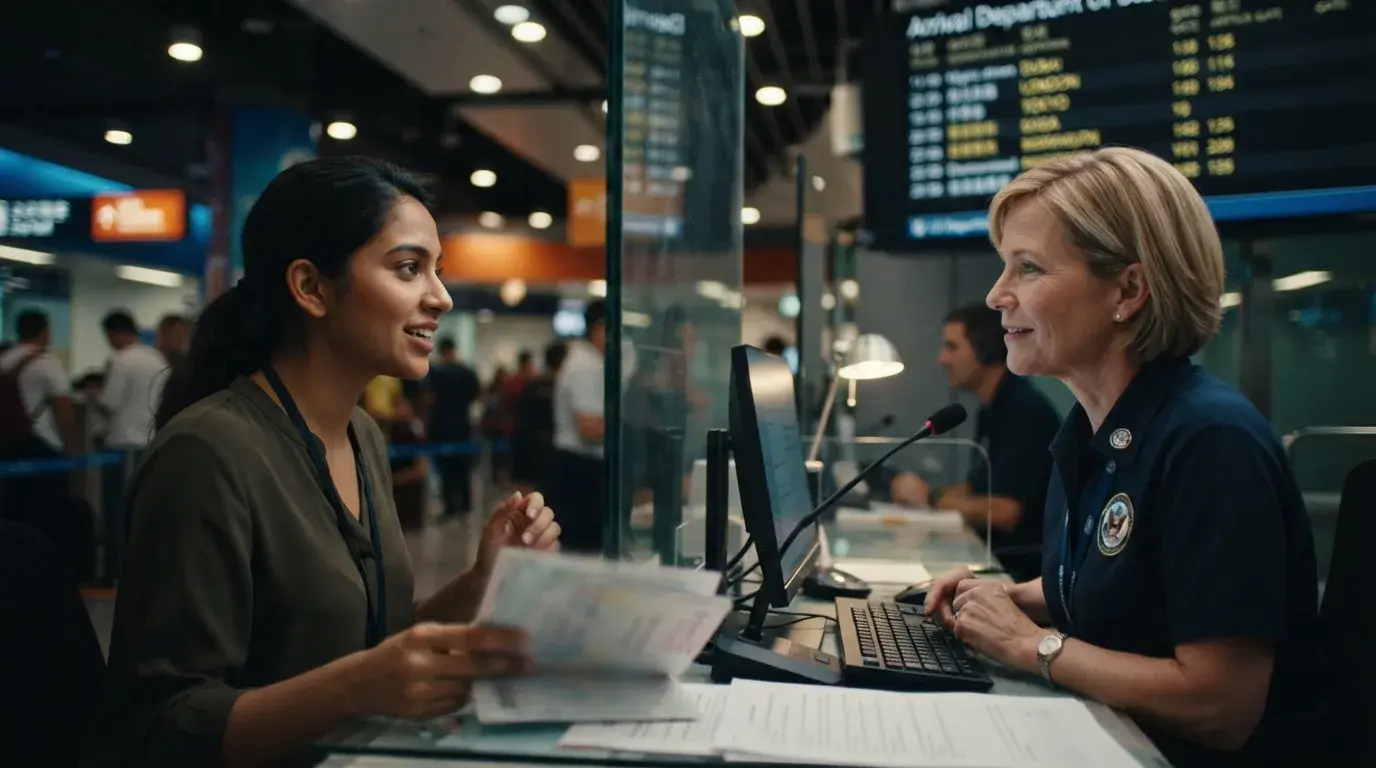
Do Embassies Check Flight Reservations for Visa?

Yes, embassies can check or verify a flight reservation for a visa application. Checks may involve the booking reference, passenger name, route, dates and consistency with the rest of your visa file. There is no single published procedure or verification rate covering every embassy, so do not assume every reservation is checked—or that yours will be ignored. Use a genuine reservation, describe its ticketing status accurately and follow the official checklist for your destination and visa category.
Many applicants worry about “embassy verification” because a flight document can reveal inconsistencies in an otherwise well-prepared application. You can have strong bank statements, a real hotel plan and a clean travel purpose, then create doubt with one weak itinerary: wrong surname order, impossible arrival date, expired booking reference, route that contradicts your cover letter, or a PDF that looks polished but cannot be connected to any real reservation trail.
This guide explains what really matters when a visa officer, intake staff member or outsourced application center looks at your flight reservation. It is written for applicants who want a practical answer, not scare tactics. The goal is simple: submit travel proof that is clean enough to support your application and honest enough not to create a second problem.
Some travelers still use the phrase “dummy ticket” for this document. This guide uses flight reservation for visa, flight itinerary for visa or visa travel-proof reservation. A genuine temporary reservation is different from a fabricated document. It shows intended travel plans; it is not an issued ticket or a visa-approval guarantee.
For a practical document check, use the reservation verification walkthrough and illustrative sample. For broader application planning, return to the flight reservation guide. Review current flight reservation options and terms only after checking your official requirements.
In This Guide
- What embassy verification actually means
- What officers can compare in minutes
- Do embassies check every flight reservation?
- PNR, ticket number and booking reference differences
- Why fake PDFs create serious visa risk
- The safe reservation workflow before submission
- How BookForVisa supports cleaner visa files
- Flight reservation verification FAQs
What Embassy Verification Actually Means
Verification does not always mean an officer phones an airline and asks whether your seat exists. In many cases, verification is simpler and faster. The reviewer looks for signs that the reservation is tied to a real travel plan and does not contradict the application. That can include checking the booking reference, reading the route, matching dates, comparing the applicant name and deciding whether the itinerary supports the purpose of travel.
A strong flight reservation should make the reviewer’s job easy. If your form says you enter France on 12 September and leave on 22 September, the flight reservation should not show arrival on 10 September and exit from another country on 27 September unless your cover letter clearly explains why. If your hotel begins one day after arrival, you need a reason such as overnight transit, staying with a host, or a separate booking.
Visa officers are not rewarding applicants for spending money on a final airfare before approval. They are looking for a credible travel plan. The UK visitor guidance, for example, tells applicants they must show they can leave at the end of the visit and pay for the return or onward journey, while also warning that documents do not guarantee a successful result and that applicants should be careful when making bookings before travel. France-Visas also explains that travelers may be asked to show a return ticket or means to acquire one at the envisaged return date on arrival. The pattern is clear: the document matters, but the story around the document matters too.
Official context: UKVI’s visitor supporting-document guidance focuses on genuine visitor intent, ability to pay for the return or onward journey and consistency of evidence. France-Visas lists return-ticket proof or the means to acquire one among arrival documents for France. Schengen Visa Code Article 14 refers to supporting documents that help assess purpose, accommodation, means and intention to leave. These rules do not make every paid ticket mandatory before approval; they make clear travel evidence important.
Useful official references: GOV.UK visitor supporting documents, France-Visas arrival documents, and Schengen Visa Code Article 14.
What Officers Can Compare in Minutes
The biggest mistake is treating a flight reservation as a standalone paper. It is not. It sits inside a document chain. A reviewer can compare the dates, route and purpose against everything else you submitted. When the chain is consistent, the flight reservation quietly supports the file. When the chain is messy, the reservation becomes the part that exposes the problem.

| Check point | What the reviewer wants to see | Common red flag |
|---|---|---|
| Passenger name | Name on the reservation matches the passport and visa form closely enough to identify the same traveler. | Nickname, missing family name, reversed order that creates confusion, or spelling that does not match the passport. |
| Travel dates | Entry and exit dates support the declared trip length and match hotels, insurance and leave approval. | Flight returns after insurance ends, hotel starts after arrival, or leave approval covers fewer days than the itinerary. |
| Route | The route is plausible for the origin, destination, visa type and main country of stay. | Unnecessary detours, a return from a country never mentioned, or a transit that requires separate permission. |
| Booking reference | The reference looks like a normal airline or reservation-system reference and supports the itinerary presented. | A random internal code that cannot be explained or a PDF with no usable reference at all. |
| Purpose alignment | The arrival and departure timing fits the event, meeting, study start, family visit or tourism plan. | Arriving after a conference, leaving before a stated appointment, or overstaying the invitation window. |
This is why a review-ready reservation is often better than a rushed final ticket. If your dates are still flexible, buying a non-refundable fare can trap you into a bad itinerary. A clean reservation gives you a way to present intended travel without turning a visa delay into an expensive airline change problem.
Do Embassies Check Every Flight Reservation?
No public rule says every embassy manually checks every flight reservation in every file. The practical reality is more selective. A clean file may only receive a consistency review. A file with contradictions may receive deeper checks. A high-risk route, unusual travel pattern, prior refusal, weak financial story or suspicious PDF can attract extra attention.
That does not mean you should gamble. It means the safest approach is to assume your reservation could be checked and build it accordingly. If nobody verifies it manually, the document still helps because it is consistent. If someone does verify it, the document should not collapse under basic scrutiny.
When verification is more likely
- Your route, dates or trip length look unusual for the visa type.
- Your accommodation and flight dates do not match.
- Your application was previously refused and the officer is checking credibility more closely.
- Your flight document looks edited, incomplete or unsupported by a booking reference.
- Your itinerary suggests transit through a country with separate entry or transit requirements.
- Your stated purpose has a fixed date, but the flight timing does not support it.
When a simple review may be enough
- Your route is direct or has one normal connection.
- Your dates match your form, hotel, insurance and leave letter.
- Your name and passport details are consistent across documents.
- Your cover letter explains any non-standard itinerary choice.
- Your reservation does not pretend to be a paid final ticket when it is not.
A flight reservation does not need to be dramatic. It needs to be boring in the right way: clear name, clear route, clear dates, clear reference, no contradiction.
PNR, Ticket Number and Booking Reference Differences
Applicants often mix up PNR, ticket number and itinerary reference. That confusion can lead to poor decisions, especially when a provider sells a beautiful PDF with a code that is not useful outside their own system.
A PNR is a booking record reference used to identify a reservation. A ticket number normally indicates ticketing/payment status and is different from a basic reservation reference. A booking reference may refer to an airline locator, travel-agency record or internal reference depending on how the booking was created.
For visa documentation, the important question is not “does the PDF have a code?” The important question is: does the code support the story you are submitting? If the document says you are flying on specific dates, the reference should not point to something different, expired, unrelated or impossible to retrieve through the normal channel available to you.
Do not edit a reservation PDF to make it look stronger. Changing dates, names, airline details or references manually can turn a weak document into a false document. If dates change, create or update the reservation properly and keep every supporting document aligned.
Why Fake PDFs Create Serious Visa Risk
A fake travel-proof PDF is not the same thing as a temporary flight reservation. A temporary reservation is a document based on a real booking workflow. A fake PDF is a design file pretending to be a booking. The difference matters because embassies do not need advanced forensic tools to notice basic problems. Wrong airline formatting, impossible flight numbers, missing route logic, invalid dates and fake references can all create suspicion.
Fake PDFs fail in predictable ways
- The flight number does not match the route or airline schedule pattern.
- The PNR format looks random or cannot be explained.
- The passenger name is formatted differently from the passport.
- The itinerary uses a route that does not make sense for the trip.
- The PDF claims payment or ticketing status that the applicant cannot support.
- The dates contradict hotel bookings, insurance or invitation letters.
The real danger is not just rejection. The bigger danger is credibility damage. Once an officer doubts one document, they may read the rest of the file more cautiously. A weak flight reservation can make a strong application look careless; a fake one can make the applicant look dishonest.
The Safe Reservation Workflow Before Submission
The safest workflow is not complicated. It is a disciplined sequence that prevents contradictions before they enter the file. If you treat travel proof as the last-minute PDF you download at midnight, mistakes multiply. If you treat it as one part of the calendar logic, the file becomes cleaner.
Step 1: Lock the visa story first
Before creating the reservation, decide what your application is actually saying. What country are you entering first? Where is your main stay? How long is the trip? Who is paying? Where will you sleep each night? When do you return to work, study or family obligations? A flight reservation should follow that story, not invent a new one.
Step 2: Match the strongest dates
Use the same travel window across the visa form, cover letter, accommodation, invitation, insurance and flight reservation. If the dates cannot match exactly because of overnight travel or time zones, explain it in plain language. Officers can understand a legitimate overnight connection. What they do not like is unexplained conflict.
Step 3: Choose a route you can defend
A cheaper itinerary is not always a better visa itinerary. A strange route can create more doubt than it saves money. If you are applying for a short Schengen tourist visa, a simple return or open-jaw route tied to your main destination is usually easier to explain than a complicated multi-country chain. If you are applying for the UK, Canada or Japan, keep the route aligned with the visit purpose and stay duration.
Step 4: Check the reservation details before upload
- Passenger name matches passport.
- Outbound and return dates match the visa form.
- Accommodation covers the same stay or is explained.
- Insurance covers the travel period where required.
- Booking reference appears clearly.
- Route is realistic for the destination and visa type.
- No PDF text has been manually edited after issue.
Step 5: Refresh only when the appointment timing requires it
If the appointment moves or processing takes longer than expected, do not patch the old PDF by hand. Refresh the reservation through the proper process and update the documents that depend on the same dates. Your goal is not to keep one old file alive forever; it is to keep the application story consistent at the moment it is reviewed.
How BookForVisa Supports Cleaner Visa Files
BookForVisa is built around the practical problem applicants face: they need a flight reservation for visa submission, but they should not be forced into buying an expensive final ticket before the visa outcome is clear. The smarter approach is to prepare a clean reservation PDF that supports the intended route, dates and passenger details, then buy the final ticket after the visa situation is more certain.
The advantage is not magic approval. No provider can promise that. The advantage is reducing avoidable document risk. A cleaner reservation helps prevent mistakes that can distract from the real strengths of the application: purpose of travel, funds, ties, accommodation and return intention.
What a better reservation service should help you avoid
- Buying a non-refundable final ticket too early.
- Submitting a PDF that looks edited or disconnected from a real itinerary.
- Using travel dates that conflict with your hotel, insurance or leave letter.
- Choosing a route that makes the trip look unrealistic.
- Panicking when an appointment date changes and the original reservation becomes outdated.
What BookForVisa should never pretend
A flight reservation is not a visa approval guarantee. It is not a substitute for financial proof, accommodation evidence, employment documents or a truthful purpose of travel. It should not be described as a secret trick that forces an embassy to accept the file. The value is cleaner documentation, lower cost risk and a more consistent travel story.
Flight Reservation Verification FAQs
Do embassies verify flight reservations for visa applications?
They can. Some files receive only a consistency review, while others may be checked more closely through the booking reference, passenger name, route, dates or supporting documents. The safest approach is to submit a reservation that could withstand a basic verification check.
Will the embassy call the airline to confirm my reservation?
Not every embassy calls airlines for every application. Verification may be done by reviewing the document, comparing dates with the rest of the file, checking a booking reference or requesting more information. You should still assume the reservation may be checked.
Is a flight reservation enough instead of a paid ticket?
For many visa applications, applicants use a flight reservation or itinerary before buying the final ticket. Requirements vary by country and visa type, so always follow the official checklist for your application location.
What happens if my booking reference cannot be found?
If the reference cannot be found, first check spelling, surname format, airline channel and booking validity. If the reservation is expired or incorrect, do not edit the PDF. Refresh or replace the reservation and keep the dates consistent across your visa file.
Is a temporary flight reservation legal for visa use?
A genuine temporary reservation can be used as travel-proof evidence when the checklist allows reservations or itinerary proof. A forged or manually edited PDF is different and can create serious credibility risk.
Should the flight reservation match my hotel booking?
Yes. The arrival and departure dates should normally align with accommodation, insurance and the travel period on your application form. If there is a legitimate gap, explain it clearly in the cover letter.
Can I change my travel dates after creating the reservation?
Yes, if your appointment or travel plan changes, it is safer to update the reservation properly than to submit a mismatched old document. Also update any hotel, insurance or cover-letter dates affected by the change.
What is the safest way to prepare flight proof for a visa file?
Start with the official checklist, choose realistic dates, keep the route simple, use the same passenger details as the passport, avoid fake PDFs and make sure the reservation supports the rest of the application story.
Need a Reservation PDF Before Your Appointment?
Prepare your flight reservation first, then buy the final ticket after your visa timing is clearer. Keep your dates, route and booking reference clean from the start.
Book Your Flight ReservationImportant disclaimer: BookForVisa provides travel reservation documents for visa-application support. We are not an embassy, consulate, government agency, airline or immigration authority, and we cannot guarantee visa approval, airline acceptance, border entry or a specific verification outcome. Always follow the latest official checklist for your destination, visa type and application center.
Related posts
Germany Business Invitation Dates: Match Host, Employer and Flights
21 Oct, 26
Verpflichtungserklärung and Visa Dates: Sponsor vs Flight Evidence
21 Oct, 26
VIDEX Business Visa Travel Dates: A Field-by-Field Guide
21 Oct, 26
Germany Opportunity Card: When to Plan and Book Your Flight
21 Oct, 26
Germany Business Visa Flight Evidence and Meeting Documents
21 Oct, 26
Flight Booking for a Short Language Course Visa
21 Oct, 26
Flight Booking After a Visa Case Changes Consulates
21 Oct, 26
Flight Ticket for Visa: Postdoc Relocation Guide
21 Oct, 26
Family and Group Visa Applications
21 Oct, 26