Can a Visa Be Rejected If the Flight Booking Is From an Unknown Website?
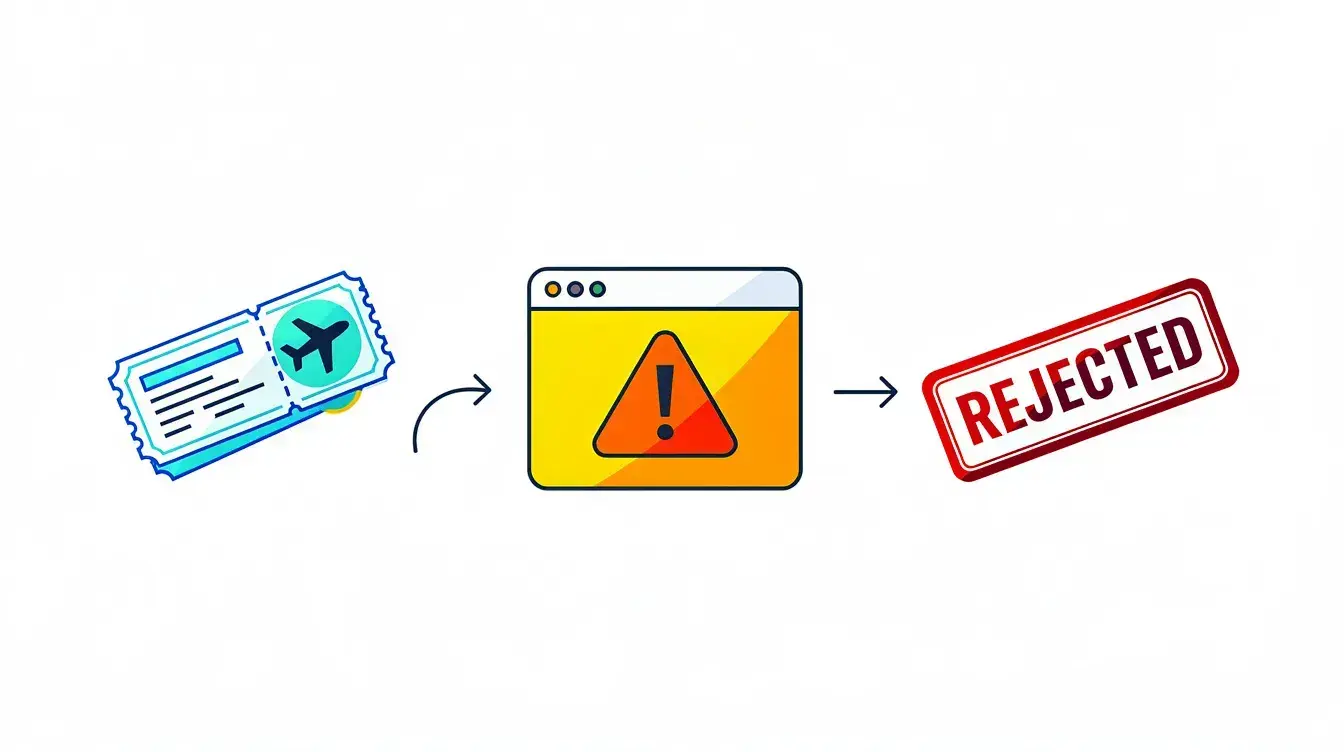
Can Visa Be Rejected If Booking Is From Unknown Website?
A flight reservation can look perfectly acceptable until one detail raises doubt: the website that issued it. When the source feels obscure, poorly branded, or impossible to verify, your booking stops supporting your visa file and starts creating questions you did not plan to answer.
That does not mean every lesser-known booking site is a problem. It means you need to judge whether the reservation looks credible, traceable, and consistent with the rest of your application. We need to separate harmless unfamiliarity from real risk before you submit anything. The right move may be to keep the booking, verify it, replace it, or explain it. What matters is not whether the site is famous, but whether your itinerary looks real, clean, and defensible under review. If your current itinerary feels hard to defend, switch to a cleaner flight reservation for visa before submission.
The website name is only one signal; what actually carries the file is whether the document works as a complete flight reservation for visa. Before you judge your booking by its source, it helps to see how a compliant reservation is built from the ground up — issuer identity, routing, dates, and proof an officer can trust at a glance. Our flight reservation for visa 2026 complete guide walks through exactly what a strong booking should contain, from a verifiable PNR flight reservation to clean formatting and clear onward travel proof, so you can measure any unfamiliar source against a concrete standard rather than brand recognition. Reading it first gives you a baseline for the questions this article raises: does the reservation read like real travel inventory, do the dates fit the rest of your file, and would it survive a skeptical second look? Once you know what a dependable booking looks like end to end, telling "unknown but fine" apart from "unknown and concerning" becomes far easier. Skim the guide, then return here and apply that same lens to your own reservation with much more confidence about what genuinely keeps a file clean.
Key Takeaways #1
- The website's fame is rarely the deciding factor — officers judge whether the reservation reads like credible, organized travel planning inside the whole file.
- An unfamiliar source becomes a problem only when paired with weak issuer identity, an odd route, a template-like PDF, or dates that clash with the rest of your application.
- "Unknown but fine" and "unknown and concerning" are different categories; the real test is whether the booking reads as normal travel planning with no explanation added.
- Before you upload, test the booking the way a skeptical reviewer would — see the pre-submission audit further down.
Table of Contents
- The Unknown Website Is Usually Not The Problem — The Story Your Flight Booking Tells Is
- What Actually Turns An Unfamiliar Booking Website Into A Visa Risk
- How Visa Reviewers Decide Whether A Flight Booking Looks Credible Without Knowing The Website
- The Risk Changes With The Embassy, The Route, And The Applicant Profile
- How To Audit A Flight Reservation From An Unfamiliar Website Before You Submit It
- What To Do If You Already Bought The Booking And Now You Do Not Trust The Website
- What A Safer Flight Reservation Strategy Looks Like When You Want Zero Drama In The File
- Frequently Asked Questions About Booking From An Unknown Website
- Send A Booking That Supports Your Visa File
The Unknown Website Is Usually Not The Problem — The Story Your Flight Booking Tells Is

A visa officer does not start with your booking website’s reputation score in mind. They start with one simpler question: Does this flight reservation make your travel plan look believable, organized, and easy to trust?
A Visa Officer Rarely Thinks In Terms Of “Popular Site” Vs “Unpopular Site”
Most applicants worry about the website name first. That is understandable, but it is usually the wrong starting point. A lesser-known website does not automatically weaken your file. A well-known website does not automatically protect it either.
What matters is how the reservation reads inside the application.
When an officer reviews your file, the flight booking is not judged in isolation. It is read as part of a travel story. Your route, dates, departure city, return timing, passenger details, and booking format all work together. If those parts feel coherent, the website itself may never become a serious issue.
That is why two applicants can submit bookings from small or unfamiliar platforms and get different reactions. One reservation looks clean and credible. The other looks improvised. The difference is rarely fame. It is structure and trust.
A reviewer is more likely to think in terms of questions like these:
-
Does this itinerary fit the stated purpose of travel?
-
Do the dates match the rest of the file?
-
Does the reservation look professionally issued?
-
Is there enough detail to treat it as real travel planning?
-
Does anything on the page feel irregular or staged?
That last point matters more than many applicants expect. Visa review is often practical, fast, and pattern-based. Officers see large volumes of documents. They may not know every booking site. They do know when a document feels normal and when it forces extra scrutiny.
So the real concern is not whether your source is famous. It is whether your flight reservation behaves like a serious travel document when placed next to the rest of your paperwork.
When An Unfamiliar Booking Source Makes Your Travel Plan Look Manufactured
A weak reservation can change the tone of the whole application. Instead of supporting your travel plan, it can make the plan look assembled just for the visa file.
That shift is subtle, but it matters.
A manufactured-looking booking usually gives off one of two impressions. Either it looks too thin to support a real trip, or it looks overly polished in a way that feels disconnected from normal booking output. Both can create doubt.
Let’s say your application says you are attending a short business meeting in one city. But the flight reservation from an unknown source shows extra stopovers, awkward timing, or a return pattern that does not match the meeting schedule. Now the issue is not the site name. The issue is that your itinerary feels built for paperwork, not travel.
The same happens when the booking looks detached from real-world planning. Examples include:
-
A route that adds unnecessary layovers without cost logic
-
Dates that squeeze the trip too tightly around the appointment
-
A departure or return that clashes with your leave approval
-
Passenger details presented in a strange or incomplete way
-
A PDF layout that looks like a template rather than booking output
Once that happens, the unfamiliar website becomes part of a larger credibility problem. It starts to look less like a booking source and more like a document generator.
That is where applicants misread the risk. They often ask, “Will the embassy reject because this website is unknown?” The more accurate question is, “Will this reservation make the officer doubt that our travel plan is genuine and thought through?”
That is a much more useful lens. It helps you judge the booking the way a reviewer would, instead of relying on brand recognition alone.
Why Source Credibility Matters More For Flight Reservations Than Applicants Realize
Flight reservations carry more weight than many applicants assume because they anchor the timeline of the trip. Once those dates appear in your file, other documents are expected to align around them.
Your flight booking often sets the rhythm for:
-
Entry and exit dates
-
Trip duration
-
Leave period from work
-
Hotel or stay dates
-
Insurance coverage window
-
Meeting, event, or invitation timing
-
Return logic tied to work, family, or routine
That makes the source of the reservation more important than it first appears. If the website is unfamiliar but the booking looks solid, that is usually manageable. But if the source is unfamiliar and the reservation looks unstable, it can pull several parts of the file into doubt at once.
Flights also signal intent in a very visible way. A believable round-trip pattern often helps the file feel grounded. A strange itinerary can do the opposite. If your application says one thing and the route suggests another, the booking stops being a supporting document and starts behaving like a weak point.
This matters even more in cases where the application already depends heavily on document consistency. A reservation that looks clean can quietly strengthen confidence. A reservation that looks odd can invite questions that the rest of the file now has to overcome.
That is why source credibility is not only about the website’s public visibility. It is about whether the reservation it produces can carry the role flights usually play in a visa application. If the itinerary is the spine of your trip logic, the document has to hold up.
The Difference Between “Unknown But Fine” And “Unknown And Concerning”
Not every unfamiliar website deserves suspicion. Some smaller booking sources issue perfectly usable flight reservations. They may not be widely recognized by applicants, but the documents they produce still look consistent, traceable, and sensible.
That is the “unknown but fine” category.
These bookings usually share a few traits. The airline details look normal. The route makes sense. The dates line up. The reservation format is readable and stable. Nothing on the page pushes the reviewer to stop and question what they are seeing.
The “unknown and concerning” category feels different immediately. The discomfort often comes from signals that are hard to ignore:
-
The issuer is hard to identify
-
The confirmation looks generic or visually off
-
The booking reference seems disconnected from the normal reservation structure
-
The route looks engineered rather than practical
-
The timing conflicts with the rest of the application
This is why applicants should resist a simple popularity test. A booking is not safe just because a lot of people have heard of the platform. It is not unsafe just because fewer people have it.
A better test is this: if this reservation were placed in front of a reviewer with no added explanation, would it read as normal travel planning?
That question is powerful because it forces you to look at the booking as evidence, not as a purchase. You are not only buying access to a reservation. You are placing a document into a file that must make sense quickly and cleanly.
Once you use that standard, the difference between harmless unfamiliarity and real concern becomes much easier to spot.
Why This Issue Gets Mishandled In Generic Visa Advice
Generic visa content usually gets this issue wrong in one of two ways. It either scares applicants too much or reassures them too casually.
The first type says unknown websites are dangerous by default. That is too broad. It ignores the fact that many smaller reservation sources issue usable, credible documents.
The second type says embassies do not care where you booked. That is also too broad. Officers may not care about brand familiarity in a consumer sense, but they do care whether the booking source leaves behind a document they can comfortably trust.
That missing nuance is why applicants often make poor decisions. They focus on the wrong variables. They ask whether the website is famous, cheap, or easy to use. They should be asking whether the reservation strengthens or weakens the travel narrative already in the file.
What Actually Turns An Unfamiliar Booking Website Into A Visa Risk

A lesser-known booking website becomes a problem only when the reservation it produces starts raising practical doubts. The risk comes from the signals around the booking, not from obscurity alone.
No Clear Issuer Identity, No Real Confidence
A visa file works better when every document has a visible source behind it. If your flight reservation comes from a website that barely identifies itself, the problem starts before anyone reads the route.
A clean issuer identity answers basic questions fast. Who issued the reservation? How can they be contacted? Does the website show a real business presence? Does the confirmation email match the same identity? Those details matter because they tell the reviewer this booking came from an actual service, not a disposable page.
Trouble starts when that identity is thin or fragmented.
You should be cautious if the booking source shows signs like these:
-
No company name on the site or PDF
-
No visible support email or phone number
-
A contact page that feels generic or incomplete
-
Confirmation emails sent from an unrelated domain
-
Terms or payment pages that do not clearly identify the seller
A reviewer may never visit the website during processing. Even so, weak issuer identity still hurts because the reservation itself reflects that weakness. If the PDF does not make it clear who issued it, the document feels detached from a real booking environment.
That lack of anchoring changes how the reservation reads inside the file. A clean itinerary from a modest platform can still look professional. A vague itinerary from a vague issuer usually cannot.
This is where many applicants lose ground without realizing it. They focus on airline names, dates, and route details, but ignore the fact that the document has no strong source behind it. In a visa review, a booking that cannot stand up as a document is already under pressure before anyone looks at whether the trip dates make sense.
A PDF That Looks Edited, Auto-Generated, Or Detached From Airline Formatting
A flight reservation does not need to copy an airline’s exact design to look credible. It does need to feel like normal booking output.
That difference is important.
Reviewers handle many documents that come from different booking systems, travel agencies, and reservation services. They do not expect one universal format. What they do notice is when a PDF feels visually unstable or manually assembled.
A few design problems can shift the tone quickly:
-
Inconsistent fonts across the same page
-
Misaligned passenger or airport details
-
Strange spacing between route segments
-
Blurry logos or stretched airline branding
-
Date formats that switch styles mid-document
-
Sections that look copied from separate templates
None of those issues proves fraud by itself. But together, they can make the reservation feel less like a booking record and more like a graphic file.
That matters because visa review often runs on pattern recognition. A document that looks normal helps the officer keep moving. A document that looks awkward or stitched together invites a second look.
You should also pay attention to how flight details are presented. A credible reservation usually shows information in a stable order. Passenger name, carrier, route, date, departure time, arrival time, and booking reference should all sit where a reader expects them. If those details appear in a confusing sequence or with odd labels, the booking starts looking less dependable.
The problem grows when the layout creates avoidable uncertainty. For example, if the departure city is shown one way on the first page and another way on the second, the reviewer now has to stop and interpret the document instead of trusting it.
A good reservation does not need to impress. It needs to make sense at a glance.
That is why visual quality is not a cosmetic issue. It affects whether the itinerary feels like working travel inventory or like something built only to satisfy a checklist.
A Reservation That Cannot Be Anchored To Any Verifiable Booking Trail
A flight reservation becomes much riskier when it appears to float on its own, without any sign that it belongs to a real booking trail.
This does not mean every officer will try to verify every booking externally. Many do not need to. But a reservation still benefits from showing that it comes from a booking environment with traceable logic.
A document usually feels stronger when it includes recognizable structure, such as:
-
A booking reference presented consistently
-
Airline and route details that line up cleanly
-
Issuance timing that makes sense
-
Passenger details are shown in a normal booking format
-
Confirmation language that reads like a reservation record, not a sales ad
Weak reservations often fail here in small but damaging ways. The booking reference may look random, appear in one place only, or seem disconnected from the rest of the document. The wording may sound promotional instead of operational. The file may not read like a reservation at all. It may read like a brochure that happens to contain flight details.
You do not need a document that invites investigation. You need one that does not resist trust.
That is the key difference. A reviewer should be able to look at the reservation and think, “This belongs to an actual booking process,” even if they never test it further.
If that feeling is missing, the unfamiliar website becomes much harder to defend. Now the issue is not just that the platform is lesser known. The issue is that the reservation offers no strong signs of belonging to a real booking trail.
For visa purposes, that weakens the file because the itinerary is supposed to support your travel timeline. If the booking cannot carry that role with confidence, it stops helping and starts exposing the application to unnecessary doubt.
Timing Mismatches That Make The Website Look Like The Least Of Your Problems
Sometimes, the booking website is not the main weakness at all. The real problem is that the itinerary dates do not align with the rest of the application.
When that happens, the source of the reservation becomes easier to question.
A flight booking can look suspicious simply because the timing feels engineered. That usually happens when the itinerary seems built around the visa appointment instead of the trip itself. The reservation may show departure or return dates that barely fit the declared plan, leaving the file looking overly arranged.
Timing mismatches often show up in patterns like these:
-
Return date conflicts with your approved leave period
-
Arrival date does not fit the event or meeting schedule
-
Trip length clashes with hotel dates or invitation dates
-
Transit time is too tight to look realistic
-
Overnight connections make no sense for the stated purpose of travel
These issues do more than create confusion. They affect trust.
If the route timing already feels unnatural, an unknown booking website becomes harder to ignore. A reviewer may start reading the whole reservation through a more skeptical lens. Even a small formatting issue now looks bigger because the travel logic is already unstable.
That is why date alignment does so much hidden work in a visa file. A booking from an unfamiliar source can still survive if the trip timing feels natural, orderly, and believable. Once the timing breaks, the reservation loses that protection.
You should look at your booking the way an officer would. Not as a purchase. As a sequence.
Does the trip start when it should? Does it end when it should? Do the connections look reasonable? Does the booking sit naturally beside the rest of the documents?
If the answer is no, the website name becomes only one part of a much larger credibility problem.
Payment And Commercial Clues That Quietly Hurt Confidence
Some reservations look passable at first, then start weakening under closer reading because the commercial signals around them feel off.
These clues do not always appear in the itinerary itself. They often show up in the way the reservation is issued, paid for, or described.
For example, you should be careful when a booking source uses vague language such as “travel draft,” “temporary record,” or “format only” without explaining what the reservation actually represents. That kind of wording can make the document feel unstable before anyone even evaluates the route.
Other quiet warning signs include:
-
Currency presentation that changes without explanation
-
Receipt wording that does not match the reservation language
-
Payment confirmation from a different business name
-
Support messages that avoid direct answers about the booking
-
Terms that focus heavily on document delivery but barely mention reservation handling
These details matter because they shape confidence. A visa reviewer may not see every payment record, but if the booking source leaves a trail of mixed commercial signals, the document often reflects that disorder.
A credible reservation usually comes from a booking flow that feels commercially coherent. The site identity, payment language, confirmation message, and PDF all point in the same direction. When those pieces do not match, the source starts feeling less reliable.
This is especially important when the booking already comes from a platform the reviewer is unlikely to recognize. In that situation, every small confidence signal helps. Clean communication helps. Stable terminology helps. Matching business identity helps.
An unfamiliar source does not need mass recognition. It does need internal coherence.
How Visa Reviewers Decide Whether A Flight Booking Looks Credible Without Knowing The Website

A reviewer does not need to recognize your booking website to form a judgment about your flight reservation. They only need enough signals on the page and across the rest of your file to decide whether the itinerary belongs in a credible travel plan.
They Read The Booking Against The Full Travel Narrative
Your flight reservation is rarely read as a standalone paper. It is read as part of a chain.
The officer looks at what your trip claims to be, then checks whether the itinerary behaves like that trip. A short conference visit should look different from a family visit. A tourism trip across two cities should look different from a one-week business stay. The flight booking has to fit the version of the trip your file is already telling.
That means your route is judged against practical questions such as:
-
Does the arrival city match the declared purpose?
-
Does the timing support the invitation, meeting, or stay plan?
-
Does the return date make sense for the trip length?
-
Does the departure point match where you are actually applying from or residing?
-
Does the itinerary support the level of planning shown elsewhere in the file?
This is why a reservation from an unfamiliar site can still work. If it fits the rest of the application cleanly, the website itself may never become central.
A weak fit works the other way. Suppose your documents suggest a simple visit to one destination, but the flight reservation includes extra stops, unusual airport changes, or a return date that stretches the trip without a clear reason. The officer is not only reading the booking. They are reading what that booking says about your intentions.
That reading happens quickly. The officer is not trying to admire the route. They are testing whether the itinerary behaves like a natural travel plan for the purpose you declared.
When the booking fits the narrative, it supports trust without demanding attention. When it does not fit, it pulls attention toward itself.
That is the real test. Not whether the website is known, but whether the reservation belongs in the story your file is already telling.
They Look For Internal Consistency Before External Verification
Many booking doubts arise before any deeper checking would even be necessary.
An officer often notices the problem by looking at the document itself. They do not need to verify the reservation externally if the page already contains friction. Internal consistency is the first screen.
That consistency starts with the obvious details:
-
Passenger name order
-
Route sequence
-
Dates and times
-
Airport codes
-
Airline names
-
Reservation reference placement
Then it extends to how those details behave together.
A booking becomes harder to trust when one part of the page quietly fights another. Departure date on one line, different travel sequence on another. Airline shown by brand name in one place and vague shorthand in another. Arrival time does not match the stated segment. Transit logic that feels impossible when the times are read in sequence.
These are the moments that matter because they do not require investigation. They are visible on the face of the document.
You should think of internal consistency as the book’s first defense. If the document cannot stay coherent on its own page, it places a burden on the reviewer. Once that happens, trust drops fast.
This is also why applicants sometimes misjudge their own booking. They focus on whether the airline exists and whether the route is technically possible. May the reviewer be focused on something more basic: does the page read like one complete reservation, or like fragments assembled from different booking outputs?
A credible itinerary gives one a clear version of the trip. A weak one makes the officer stop, compare lines, and interpret.
That pause matters. In a visa review, every avoidable pause is a small cost to credibility.
They Notice Whether The Document Feels Like Travel Inventory Or Visa Theater
A flight reservation can contain all the right facts and still feel wrong.
That is because reviewers not only read information. They also read document behavior. Some reservations feel like they came from a real booking environment. Others feel like they were shaped primarily to satisfy a visa checklist.
That distinction is not about cynicism. It is about document texture.
Travel inventory usually feels operational. It reads like a record of a route held in a booking system. The language is functional. The layout serves the itinerary. The details are stable. The page is built around travel logic.
Visa Theater feels different. It often looks too eager to prove itself. The document may over-display certain details while under-explaining others. It may look polished in a generic way, but thin where actual booking records are usually specific. The itinerary can feel like a prop instead of travel planning.
A reviewer starts noticing this through small clues:
-
Does the document prioritize route details or promotional language?
-
Does the layout serve readability or visual persuasion?
-
Does the confirmation feel like an issued record or like a downloadable sample?
-
Does the wording match booking language or marketing language?
-
Does the file look like something created to travel with, or something created to submit?
This is where many applicants get trapped by appearance. A glossy PDF can still feel less credible than a plain one if the plain one behaves like a reservation and the glossy one behaves like a presentation.
You do not need a booking that looks impressive. You need one that looks at home in a visa file because it came from a real reservation process.
That is a different standard.
It is also why officers may trust a modest-looking itinerary from a lesser-known source if it reads like real travel inventory. At the same time, they may distrust a sleek-looking booking if it feels designed around performance rather than transport.
The goal is not to “look official” in a vague sense. The goal is to look operational, grounded, and normal.
Why Clean Metadata And Professional Issuance Still Matter In A Human Review Process
A visa review is done by people, not only by rules. That makes document presentation more important than applicants sometimes assume.
A professionally issued flight reservation reduces interpretation work. It tells the officer where to look, what the trip is, when it happens, and how the segments fit together. That clarity is not cosmetic. It shapes whether the reservation can do its job smoothly.
Metadata matters here in a practical way.
A clean reservation usually presents the trip with stable booking details, such as:
-
Consistent passenger naming
-
Clear segment order
-
Logical timestamping
-
Stable carrier information
-
Straightforward route presentation
-
Predictable confirmation language
When those details are clean, the booking becomes easier to absorb. The officer does not need to rescue meaning from the page. That makes the document feel more dependable.
Professional issuance matters for the same reason. A reservation should look like it was produced by a system or service that knows how travel documents are supposed to function. That does not mean it must resemble one airline template. It means the document should feel controlled, intentional, and readable.
This is especially important in a human review setting because officers often work through many files under time pressure. They are not looking for reasons to admire your reservation. They are looking for reasons not to doubt it.
A clear document helps them keep moving. A sloppy document invites hesitation. That hesitation is rarely helpful for the applicant.
So when we say metadata and issuance matter, we are not talking about beauty. We are talking about usability. A booking that is easy to read and easy to place within the file has a real advantage over one that feels messy, unstable, or incomplete.
Unknown Website, Known Airline, Coherent Route — When The File Still Holds Up
An unfamiliar website does not automatically weaken the application if the rest of the booking carries confidence.
That is often the most important reassurance for applicants. Officers do not need to know the platform if the itinerary itself makes sense, the airline details look normal, and the route fits the declared trip.
This is where the file can still hold up well.
A strong reservation in this situation usually has three qualities working together:
-
Known travel logic: The route, timing, and trip structure feel normal for the purpose of travel.
-
Recognizable transport details: Airline, airport, segment flow, and passenger details look like genuine booking output.
-
Document calmness: Nothing on the page asks to be defended.
That last quality matters more than it sounds. A good reservation often feels quiet. It does not force explanation. It does not create side questions. It simply fits.
For example, an applicant may use a smaller reservation source that the officer has never heard of. But if the itinerary shows a plausible round-trip on a known carrier, the dates align with the rest of the application, and the document reads cleanly, the website’s obscurity may not carry much weight at all.
This is the point many generic articles miss. Recognition is not the same as credibility. A website can be unfamiliar and still produce a reservation that works perfectly well in context.
What saves the file is not brand familiarity. It is coherence.
The Risk Changes With The Embassy, The Route, And The Applicant Profile
The same flight reservation can land very differently depending on who is reviewing it and what the rest of your file looks like. A booking from an unknown website is never judged in a vacuum.
Some Visa Workflows Are More Document-Sensitive Than Others
Not every visa process puts the same weight on a flight reservation. In some cases, the officer mainly wants a coherent travel timeline on paper. In others, the reservation is one small part of a broader credibility check that includes your interview answers, travel history, financial profile, and stated purpose of visit.
That difference matters because an unfamiliar booking source becomes more visible when the workflow leans heavily on documents.
A document-sensitive process usually has three features:
-
The file is assessed primarily from paperwork, not live clarification
-
Travel dates need to align neatly with supporting records
-
Minor document friction gets noticed because the officer has limited chances to resolve doubt later
In that kind of setting, a flight reservation from a lesser-known site has to do more than exist. It has to sit cleanly inside the case. If the document creates even a small pause, that pause has more weight because the file is doing most of the talking.
Other visa workflows give the officer more room to view the booking as provisional. In those cases, an unfamiliar source may matter less if the route makes sense and the rest of the application is strong. The booking still matters, but it is less likely to carry the whole burden of credibility.
This is why applicants sometimes compare experiences and get confused. One person says a modest reservation source caused no issue. Another says a similar booking led to questions or refusal. The difference may not be the booking alone. It may be the type of review environment.
You should ask a more precise question before submitting any flight reservation from a small or obscure website: Is this the kind of visa file where the paperwork has to be unusually clean because there may be no later chance to fix the impression?
If the answer is yes, the source and presentation of the reservation matter more. Not because the embassy keeps a list of “approved websites,” but because document friction becomes more expensive in a paperwork-first process.
When A Thin Applicant Profile Makes The Booking Source Matter More
A strong flight reservation can help a solid case look even more organized. But it cannot rescue a weak case on its own. In a thinner profile, the source of the booking gets more attention because there are fewer other signals absorbing doubt.
A thin profile does not always mean a bad case. It usually means the application has less margin.
That can happen when:
-
The trip's purpose is brief or loosely documented
-
Financial capacity looks just adequate, not abundant
-
Employment or business ties are real but lightly evidenced
-
Travel history is limited
-
The travel plan is ambitious compared with the applicant’s previous pattern.
In that setting, an unknown booking website becomes more important because the flight reservation is no longer just one supporting document. It becomes part of how the officer measures seriousness and planning quality.
Think of it this way. A reservation from a smaller site may pass quietly in a file that already feels stable, predictable, and well-supported. The same reservation may feel less comfortable in a file where the officer is already deciding whether the applicant’s intentions and planning are solid enough.
That does not mean you need a famous booking source whenever your profile is thin. It means you need a reservation that gives the officer nothing extra to worry about. Clean route logic matters more. Clear dates matter more. Professional presentation matters more. Source obscurity becomes riskier only because the file has less room to carry it.
Applicants often miss this because they judge the booking by itself. Officers do not. They judge whether the booking adds confidence or asks for trust that the file has not yet earned.
That is why a lesser-known website can look harmless in one application and unhelpful in another. The document has the same content, but the case around it changes what that content means.
Multi-Country Or Aggressive Routing Can Magnify Suspicion Around The Issuer
Route complexity changes how a reservation is read.
A direct round trip to one destination is easy to understand. A more elaborate itinerary needs a stronger reason. Once your route becomes more layered, the booking source starts carrying extra pressure because the officer now has to trust not only the document, but the trip design behind it.
Complexity can show up in several ways:
-
Multiple countries in a short time frame
-
Extra transit cities that do not reduce the obvious cost or time
-
Airport changes within the same city
-
Long layovers that do not fit the stated purpose
-
Open-jaw returns that feel unnecessary for the case
None of these is inherently wrong. Many legitimate trips look this way. The problem appears when the route is hard to justify, and the reservation comes from a website the officer does not know.
That combination can trigger a different kind of doubt. The officer may stop asking, “Is this booking acceptable?” and start asking, “Was this itinerary built to create a document rather than reflect a real trip?”
This is especially true when the application itself describes a simple purpose. A short tourist visit rarely needs an overbuilt flight pattern. A brief family trip usually does not require complicated sequencing. A small business visit with a narrow schedule should not look like a route puzzle unless the case clearly explains why.
The booking source matters more here because a complex itinerary needs credibility support. A known airline alone is not enough. The whole structure has to feel intentional and reasonable.
When applicants use unfamiliar booking platforms for multi-segment routes, they should be stricter with themselves than they would be for a simple round trip. Every segment should earn its place. Every connection should make sense. Every date should support the travel purpose.
If the itinerary is aggressive, the issuer needs to feel steady. If the issuer is obscure, the itinerary needs to feel calm. You do not want both variables working against you at once.
First-Time Travelers And Repeat Travelers Are Not Judged The Same Way
Travel history changes how much weight a flight reservation may carry.
A repeat traveler usually benefits from existing evidence that they have planned trips before, traveled as declared before, and returned as expected before. That does not remove scrutiny, but it can make a lesser-known booking source easier to tolerate if the rest of the file is orderly.
A first-time traveler has less of that background support.
In that case, the officer has fewer external signals to lean on. The application depends more on the internal credibility of the current file. That makes the flight reservation more sensitive, especially if it comes from a website that is not immediately recognizable.
For a first-time traveler, the booking often has to do more quiet work:
-
Show a straightforward route
-
Reinforce a believable trip length
-
Match the declared purpose tightly
-
Avoid unnecessary route creativity
-
Look calm and professionally issued
A repeat traveler may survive a slightly unusual booking source because the officer can view it against a broader pattern of compliant travel. A first-time traveler usually benefits from removing as many avoidable question marks as possible.
This is not about fairness. It is about how risk is read.
Where there is prior travel history, the officer may see the flight reservation as one of the current planning documents among many trust signals. Where there is no history, the reservation becomes more central to the impression of whether the trip is genuine and well-prepared.
That is why first-time applicants should be especially careful about assuming a booking is “probably fine” just because the route exists and the airline is real. For them, document tone matters more. Simplicity matters more. Booking-source confidence matters more.
A smaller website can still be workable, but the reservation has to look especially stable because the file has fewer past patterns to steady it.
Key Takeaways #2
- Reviewers read the booking against the full travel narrative and look for internal consistency on the page before any external verification.
- The risk scales with context: a thin applicant profile, a first-time traveler, aggressive multi-country routing, or a document-heavy workflow all make an obscure source matter more.
- A document that reads like real travel inventory beats a glossy one that reads like visa theater — coherence outperforms polish every time.
- For a clean, verifiable reservation that reads as settled, compare options on the BookForVisa homepage.
Underneath the question of which website you used sits a more useful one: does the document behave like a real flight reservation for visa, regardless of where it came from? Officers rarely recognize every booking platform, so they judge the reservation on structure — a genuine PNR, clear flight numbers, sensible routing, and dates that line up with the rest of your file. Our deep dive on the flight reservation for visa explains exactly what embassies look for in that kind of proof, and why a clean, verifiable booking from a modest source often outperforms a slick one that reads like a template built only for submission. It also clarifies how much detail a reviewer actually needs to trust the document quickly, so you stop worrying about brand familiarity and start focusing on coherence. If you have ever wondered whether your reservation reads as real travel inventory or as visa theater, that resource draws the line clearly. Read it before you finalize your file, and you will submit a booking that stands on its own rather than one that quietly invites a second look.
How To Audit A Flight Reservation From An Unfamiliar Website Before You Submit It
Once you stop asking whether the website is “known” and start asking whether the reservation is strong enough to carry your visa file, your review becomes much sharper. The goal here is not to inspect the booking like a lawyer. It is to test whether it can survive a practical, skeptical read before it reaches the embassy or visa center.
Start With The Issuer of Flight & Hotel Bookings
Most applicants open the PDF and go straight to the dates, route, and airline. That feels natural, but it is not the best first move.
Start with the source.
Before you examine the flight itself, check who issued the reservation and whether that identity feels stable. You want a clear answer to one basic question: if someone looked at this booking and asked where it came from, would the answer be obvious and credible?
Look for signs that the issuer is real, reachable, and commercially coherent:
-
Company or service name shown clearly
-
Matching website and email domain
-
Usable contact details
-
Consistent branding across the booking page, email, and PDF
-
Terms or support language that actually refer to reservation handling
This first step matters because a clean itinerary issued by a vague source still creates unnecessary pressure. A smaller booking service can work perfectly well, but only if its identity is visible enough to support trust.
You should also pay attention to the tone of the confirmation. It should sound like a reservation was issued, not like a digital file was delivered. That difference matters. One feels connected to travel handling. The other feels closer to document fulfillment.
If the issuer already looks unstable at this stage, do not try to rescue the booking by staring harder at the route. A weak source makes the rest of the audit stricter from the start.
Test The Reservation Like A Skeptical Visa Reviewer Would
After the issuer passes a basic confidence check, move to the reservation itself.
This is where many applicants stay too generous. They read the itinerary as someone who already knows what they meant to book. A reviewer does not have that advantage. They read only what is on the page.
So test the reservation cold.
Open it and ask whether the document makes immediate sense without any outside explanation. The fastest way to do this is to scan for friction points that a reviewer would notice in seconds.
Check the structure of the booking carefully:
-
Is the passenger's name presented normally and consistently?
-
Are the departure and arrival cities shown clearly?
-
Do the airport codes match the cities listed?
-
Are the flight segments in the correct order?
-
Do the airline names and numbers sit where a reader expects them?
-
Is the booking reference displayed clearly and consistently?
Then move beyond the obvious. A document can contain all the expected fields and still feel off because the parts do not sit together naturally.
Watch for details that create silent doubt:
-
A route is shown one way on page one and another way later
-
Times that make the connection look unrealistic
-
Layout shifts that make the document feel pieced together
-
Odd labels that do not sound like normal booking language
-
Segment spacing or formatting that makes one leg look inserted later
You are not trying to prove the reservation false. You are trying to see whether it feels easy to trust.
A strong booking usually has a calm reading experience. The eye moves from passenger to route to timing to reference without resistance. A weak one forces the reader to pause, re-check lines, and mentally repair what the document did not present clearly.
That is the standard you want to use. Not perfection, but ease of trust.
Match Every Date Against The Rest Of The Visa File
A flight reservation can look clean on its own and still cause trouble once it meets the rest of your documents. That is why date-matching is one of the most important parts of the audit.
Treat the itinerary as the backbone of the timeline.
Now place every other time-sensitive document beside it. Not generally. Line by line.
Your check should include anything that fixes the trip in time, such as:
-
Leave approval dates
-
Hotel stay dates, if already booked
-
Invitation letter period
-
Conference or meeting schedule
-
Travel insurance validity
-
Tour or event registration dates
-
Planned arrival and return window mentioned in forms or cover letters
The goal is not loose alignment. It is a clean alignment.
A small mismatch can change the feel of the whole file. If your reservation shows arrival on the 8th but your invitation effectively begins on the 10th, the officer may wonder what happens in between. If your return date falls after your approved leave ends, the problem is not the flight website anymore. It is your planning discipline.
Pay close attention to the kind of mismatch that looks harmless to you because you know the backstory. Reviewers do not see the backstory unless you give it to them clearly.
That means you should question things like:
-
Extra days before or after the stated purpose
-
Return timing that cuts the trip too tightly
-
Overnight layovers that quietly extend the travel period
-
Insurance dates that start after departure
-
Visa form trip dates that do not match the itinerary
This part of the audit often reveals the real problem. Sometimes the website is not the issue at all. The issue is that the reservation and the application are moving on slightly different calendars.
When those calendars clash, the booking source becomes easier to distrust because the document no longer supports the file cleanly.
Decide Whether The Booking Is Merely Unfamiliar Or Actually Defensible
By this stage, you should stop thinking in emotional terms like “looks okay” or “feels a bit weird.” You need a practical judgment.
Is this booking merely unfamiliar, or is it defensible?
Those are not the same thing.
A merely unfamiliar reservation comes from a website you do not recognize, but the document itself behaves well. The issuer is visible. The route is sensible. The dates line up. The booking reads like travel output. You may not know the platform, but you can still defend the reservation if asked.
A defensible reservation usually has these qualities:
-
Clear source identity
-
Readable and stable booking format
-
Logical route for the trip purpose
-
Dates that align with the full file
-
No obvious internal contradictions
-
Enough detail to feel anchored to a reservation process
An indefensible reservation may still look passable at first glance, but it starts collapsing under simple questions. Who issued it? Why does the route look overbuilt? Why do the dates not align? Why does the layout feel improvised? Why does the confirmation language sound vague?
That is the threshold that matters.
Ask yourself a tougher question: If a reviewer quietly doubted this document, would the booking give them a reason to stop doubting?
If the honest answer is no, the reservation is not ready.
You do not need to reject every modest or lesser-known source. You do need to reject the idea that “not obviously terrible” is good enough for visa use. A file under review benefits from documents that hold their own without explanation.
That is what defensible means here. Not famous. Not luxurious. Not overproduced. Just coherent enough that the booking can do its job without creating a side problem.
The One-Page Pre-Submission Checklist That Prevents Avoidable Trouble
Before you submit the reservation, run one final screen. Keep it simple. If you need to over-argue the booking to yourself, that is already useful information.
Use this one-page test:
-
Issuer clarity: Can you identify who issued the booking in seconds?
-
Contact stability: Do email, website, and booking identity match?
-
Passenger accuracy: Is the traveler's name correct and consistent everywhere?
-
Route logic: Does the itinerary fit the exact purpose and length of the trip?
-
Date alignment: Do flight dates match leave, invitation, insurance, and forms?
-
Segment order: Do all flight legs appear in a natural and readable sequence?
-
Airport accuracy: Do city names and airport codes match correctly?
-
Reference visibility: Is the booking reference shown clearly and consistently?
-
Document calmness: Does the PDF read cleanly without visual confusion?
-
Commercial coherence: Does the confirmation language sound like reservation handling, not vague file delivery?
-
Defensibility: Could you keep this booking in the file without feeling the need to apologize for it?
If one or two minor presentation issues appear, but the booking still feels stable, you may still be fine.
If several of these checks fail at once, do not treat that as overthinking. Treat it as a warning that the reservation may create avoidable doubt at the point of review.
What To Do If You Already Bought The Booking And Now You Do Not Trust The Website
This is the point where many applicants start second-guessing everything. The goal is not to overreact. The goal is to decide whether the booking can still support your visa file, or whether it now needs to be verified, replaced, or quietly removed from the process.
Do Not Panic — First Separate “Embarrassing” From “Risky”
Not every booking that makes you uncomfortable is actually dangerous for your application. Some reservations only feel awkward because the website looks plain, unfamiliar, or less polished than you expected. Others create real document risk.
That distinction matters because applicants often waste time on the wrong problem.
An embarrassing booking usually triggers cosmetic doubt. The website may look dated. The email design may feel basic. The PDF may not look elegant. But the reservation still shows a stable issuer, sensible route, correct details, and a coherent booking record.
A risky booking behaves differently. It creates uncertainty that touches the visa file itself.
You should treat the booking as risky if the concern involves things like:
-
Unclear issuer identity
-
Weak or inconsistent booking details
-
Dates that do not match the rest of the file
-
Route logic that feels engineered
-
Confirmation language that sounds vague or evasive
-
A document format that feels unstable under close reading
This first split helps because it changes your next move.
If the booking is merely embarrassing, you may not need to throw it away. You may only need to check it more carefully and keep better records.
If the booking is risky, the question is no longer whether it looks nice enough. The question is whether keeping it in the file would ask the reviewer to tolerate uncertainty you could have removed yourself.
That is the right standard.
You do not need to love the website. You need to know whether the reservation produced is strong enough to stay in a serious visa application without becoming the detail that pulls attention in the wrong direction.
Replace It When The Document Creates More Questions Than It Answers
A flight reservation should make your trip easier to understand. Once it starts making the file harder to trust, replacement becomes the cleaner option.
This is not about chasing perfection. It is about reducing avoidable friction before submission.
You should strongly consider replacing the booking when the document leaves obvious open questions, such as:
-
Who issued this reservation?
-
Why does this route look more complex than the trip requires?
-
Why do the dates not align with the rest of the file?
-
Why does the PDF feel pieced together?
-
Why does the confirmation not read like normal reservation output?
The threshold is practical. If you can already imagine the officer pausing at the document, that matters. If you find yourself wanting to “hope they do not notice,” that matters too.
Replacement is usually the better call when several weaknesses appear together. A small website can still work. A slightly plain-looking PDF can still work. A route with one extra connection can still work. But when weak source identity, awkward formatting, and date mismatch all appear in the same booking, the reservation stops being worth defending.
You should also replace the booking if the travel logic has moved since you first bought it. This happens often. Your appointment date shifts. Your leave approval changes. Your conference dates have moved. Your return plan is tightening. Now the original reservation may no longer fit the file cleanly, even if the website itself is not the main issue.
In that situation, keeping the booking only because you already paid for it is usually a mistake. A cheaper decision earlier in the process should not force a weaker decision at the submission stage.
Think in terms of document cost, not just booking cost.
A reservation that creates preventable doubt can become expensive in the only place that matters: your file’s credibility. If a cleaner replacement removes that pressure, the better document usually wins.
Verify It When The Booking Seems Real But The Website Looks Small
Some bookings do not need to be replaced. They need to be strengthened.
That usually applies when the website looks small or unfamiliar, but the reservation itself still appears real, structured, and usable. In those cases, your task is to make sure the booking has enough support behind it if you need to stand by it confidently.
Start by preserving the full booking trail.
Do not rely only on the PDF. Keep the surrounding evidence that shows the reservation came from an actual service and was issued through a normal process.
Useful records can include:
-
Original confirmation email
-
Payment receipt or transaction proof, where relevant
-
Support emails or chat confirmations
-
Reservation update messages
-
Any booking page screenshot that shows the trip details clearly
The point is not to bury the file in extra paperwork. The point is to protect yourself from uncertainty. If the website is less well-known, you want your own records to be stronger than your memory.
You should also read the reservation again after a short break. A booking often looks better or worse when you stop reading it as the person who purchased it and start reading it as the person who must defend it.
Ask practical questions:
-
Would you be comfortable keeping this reservation in the file if someone challenged the source?
-
Can you explain, in one calm sentence, where the booking came from and why you used it?
-
Does the document still look coherent after you compare it against your final application dates?
If the answer stays yes, the booking may still be usable even if the website itself is not widely recognized.
Verification is especially useful when the reservation feels structurally sound but emotionally unsettled. In other words, you do not distrust the document because it fails the audit. You distrust it because the platform name is unfamiliar. Those are different situations, and they deserve different responses.
Should You Add An Explanation Letter Or Stay Quiet?
Applicants often think an explanation letter will rescue a weak booking. Sometimes it helps. Often, it only places a spotlight on a document that should have been quietly replaced.
The better question is not whether you can explain the booking. It is whether the file needs that explanation to remain coherent.
If the reservation is clean, consistent, and defensible, silence is usually better. A normal booking does not need an extra note just because the website is not famous. Adding commentary where none is needed can make the source look more unusual than it actually is.
An explanation becomes more reasonable when there is a real, visible ambiguity in the file that a short note can settle cleanly. That could include a route change caused by scheduling, a revised travel window, or a small procedural detail that would otherwise look unexplained.
But even then, the letter should not become a defense speech for the website.
Good explanation letters are narrow. They clarify one practical point. They do not ask the officer to engage in document rehabilitation.
Avoid using a letter to do things like:
-
Persuade the officer that the website is trustworthy
-
Apologize for using the booking source
-
Add a long backstory about how you found the service
-
Explain multiple weaknesses in one document
If the booking needs that much support, the problem is usually the booking, not the absence of a letter.
A strong visa file works best when the reservation stands on its own. A short note can sometimes smooth a rough edge. It should not be carrying the weight of a document that no longer feels submission-ready.
Applying Through a VFS Center After Booking From A Site You Barely Remember
Imagine an applicant filing through a VFS center after booking a flight reservation several weeks earlier. The itinerary still shows the right destination and rough travel window, but the applicant no longer remembers much about the website, cannot quickly find the original support email, and notices the PDF looks more generic than expected.
That is not automatically a rejection problem. But it is a control problem.
At that point, the applicant should stop thinking, “Maybe it is fine because the route still matches.” A better question is, “Can this booking still be defended calmly if the source becomes relevant?”
If the answer is uncertain, the applicant has two workable paths.
The first is verification. Recover the original email trail, confirm the issuer identity, compare every date against the final visa file, and make sure the reservation still reads cleanly.
The second is replacement. If the booking feels too thin, too forgettable, or too awkward to stand behind with confidence, changing it before submission is usually the smarter move.
What matters in this example is not the VFS center itself. It is the common mistake of assuming that an older booking is safe simply because it has been sitting in your folder for weeks. Time does not make a weak reservation stronger. It only makes applicants more likely to submit it without looking closely.
What A Safer Flight Reservation Strategy Looks Like When You Want Zero Drama In The File
A safer booking strategy starts well before submission day. If your goal is a clean file for a tourist visa or a Schengen visa, the reservation should support the case without creating noise around your tickets, dates, or travel logic.
Choose A Reservation Source That Can Survive Human Scrutiny
The safest move is to choose a booking source that still looks credible when visa officers assess the file line by line. That matters because a document is not judged only by what it says. It is judged by how well it holds up next to the application form, your passport, your bank statement, and any supporting records that speak to financial stability and genuine intent.
A strong source should make the reservation easy to trust in a real review setting. You want a document that can sit beside flight tickets, hotel bookings, a hotel reservation, or broader accommodation plans without becoming the weakest item in the file. If your trip involves a Schengen country, the booking should also sit comfortably beside any valid hotel reservation or stay details already shown elsewhere in the application.
That is why the source matters less as a brand and more as a document producer. A safer provider usually gives you:
-
Clear issuer identity
-
Stable booking format
-
Readable route details
-
Consistent confirmation language
-
Support that feels connected to real reservation handling
This approach reduces the chance that an embassy officer or consular officer starts asking follow-up questions that pull attention away from the real merits of your case. It also lowers the odds that your booking becomes one of the common reasons a file feels weaker than it should.
If the reservation source already makes you uneasy, do not ignore that signal. A booking that looks shaky can raise concerns about visa rejection even when the rest of the file is otherwise workable. That does not mean lesser-known sources always fail. It means the document has to be strong enough to survive human scrutiny without asking for extra trust.
Why “Looks Professional” Is Not Vanity — It Reduces Review Friction
A professional-looking reservation helps avoid visa refusal by shortening the gap between what you meant and what the reviewer sees. That matters whether your file is being handled at a visa centre, a consulate, or during a visa interview, where the officer has already formed an impression from your papers.
Presentation is not about style for its own sake. It is about reducing friction and reducing the chances of visa denial.
A clean reservation helps a reviewer find the essentials quickly:
-
Passenger details
-
Route sequence
-
Specific dates
-
Booking reference
-
Airline information
-
Return timing
When those details appear in a calm, readable way, the document supports visa approval more naturally. It gives the officer less reason to pause, compare lines, or wonder whether the booking was hastily assembled.
This matters because one weak-looking page can do damage far beyond that single page. A booking that feels improvised may raise doubts about the rest of the file, especially when the officer is already weighing financial credibility, travel purpose, and returning home. That is why even one fake booking can cast a long shadow. It may not lead automatically to a denied case, but it can make the file feel less safe than other applicants whose documents read cleanly from start to finish.
You do not need a flashy reservation. You need one that does not resemble fake documents, false documentation, or any other paperwork that feels disconnected from the real booking process. The difference is often visible in seconds.
That is also why travellers should stop treating document quality as a cosmetic issue. If the booking is easy to read, place in the timeline, and trust, it helps the officer move forward without friction.
Your Best Booking Is The One That Still Makes Sense After Dates Change
A good reservation strategy also accounts for movement. Visa timelines shift. Appointments move. Employers revise leave periods. Event dates change. Your final file should still look coherent after those changes, not locked into an earlier version of the trip.
That is where many applicants make avoidable mistakes. They book too early, then submit it later without checking whether it still matches the rest of the case. If the trip window changed, your booking should change with it.
You should be able to double-check the reservation against:
-
Updated meeting or event timing
-
Revised leave approval
-
New hotel bookings or accommodation dates
-
Insurance validity
-
Final return plan
-
Any explanation already given in the application form
This flexibility matters because a file that appears internally synchronized and doesn't include false documents has a much better chance of resulting in a successful visa approval. A file that looks partly updated and partly forgotten often does not.
It also matters for your longer-term record. If a document mismatch contributes to a refusal, that can complicate future applications or future visa attempts because the file may now raise preventable credibility concerns. The smarter path is to correct the booking before submission instead of hoping the officer overlooks the gap.
That does not mean you should reapply immediately every time a date changes. It means you should keep the reservation aligned with the actual case you are presenting. A booking that no longer matches your trip window is not helping you simply because you already paid money for it.
A stable booking strategy gives you room to adapt without creating a messy trail of conflicting tickets. If the document can be updated cleanly, you protect the file from unnecessary questions.
When A Known Airline Route Matters More Than A Known Website Name
Applicants often focus too much on website familiarity and not enough on route credibility. In practice, a believable itinerary on a known carrier often matters more than whether the platform itself is widely recognized.
What helps most is a route that feels real for your case.
That usually means:
-
Departure from a logical city
-
Arrival that matches the stated purpose
-
Trip length that fits the plan
-
Connections that make practical sense
-
A clear pattern of leaving and returning home
This matters across many countries because officers are not reading your reservation as a consumer purchase. They are reading it as evidence of planning. A calm route helps show genuine intent. An overbuilt one can create doubt, even if the website name sounds familiar.
This is especially relevant if your case already has sensitive points such as a previous overstay, a thin paper trail, or limited financial evidence. In those cases, the reservation should not add new tension. It should support the idea that your trip is temporary, organized, and tied back to your home country.
You should also avoid treating the reservation like a performance piece. The goal is not to produce the most elaborate dummy booking or the most dramatic route. The goal is to produce a booking that fits the trip, the timeline, and the rest of the evidence.
That is why route realism beats platform familiarity. A simpler, believable itinerary often does more for the file than a big-name website attached to awkward travel logic.
Sometimes the safest choice is to stop gambling on a booking source that feels too thin and switch to a cleaner reservation built for visa use. If you want a practical option at that stage, BookForVisa.com can help with an affordable, verifiable reservation that includes a real PNR.
Frequently Asked Questions About Booking From An Unknown Website
Can a visa be rejected if the flight booking is from an unknown website?
Not automatically. An unfamiliar source only becomes a problem when the reservation itself looks weak — an unclear issuer, an odd route, a template-like PDF, or dates that clash with your file. A clean, coherent booking from a lesser-known site usually holds up fine.
Do visa officers check which website issued my flight reservation?
Rarely by brand. Officers usually judge the document on the page, not the platform's fame. They look for a visible issuer, a sensible route, and dates that fit the rest of your application before they ever consider where you booked.
What makes a flight reservation for visa look credible?
A clear issuer identity, a genuine PNR, a route that fits your stated purpose, dates that align with your file, and a stable, readable format. When the document reads like real travel inventory, the website behind it matters far less.
Is a lesser-known booking site safe for a visa application?
It can be. Many smaller sources issue perfectly usable reservations. The safety comes from the document — a visible issuer, a coherent route, aligned dates, and clean presentation — not from how many people recognize the platform.
What are the red flags in a flight booking from an unfamiliar site?
No clear issuer identity, a template-like or edited-looking PDF, a booking reference that seems disconnected, promotional rather than operational wording, and timing that conflicts with your leave, hotel, or event dates.
Does the flight reservation need to match my other visa documents?
Yes, closely. The booking anchors your timeline, so leave approval, hotel dates, insurance validity, and invitation or event dates should all line up with it. A mismatch makes the reservation — and its source — much easier to doubt.
Is a screenshot or template-style PDF a problem for a visa booking?
Often, yes. A cropped screenshot or a PDF that looks assembled from templates reads as casual or manufactured. Submit a complete, stable itinerary with a visible PNR so the reservation reads like genuine booking output, not a document built only to submit.
Should I add an explanation letter for an unfamiliar booking source?
Usually not. A clean reservation should stand on its own; a note just spotlights it. Only add a short, narrow letter to settle a real, visible ambiguity — never to argue that the website is trustworthy or to apologize for the source.
Should I replace a booking I no longer trust before submitting?
Replace it when the document creates more questions than it answers, or when your travel dates have shifted since you booked. Keeping a weak reservation only because you already paid for it trades a small saving for a credibility risk in the one place that matters.
Does the risk depend on my applicant profile or the embassy?
Yes. A thin profile, a first-time traveler, aggressive multi-country routing, or a document-heavy visa workflow all make an obscure source matter more, because there are fewer other signals absorbing doubt. A strong, well-supported file tolerates it more easily.
Does a known airline matter more than a known booking website?
Usually, yes. A believable itinerary on a recognized carrier does more for the file than a famous platform attached to awkward travel logic. Route realism beats platform familiarity.
How do I check a flight reservation from an unknown site before submitting?
Start with the issuer, then read the reservation cold as a skeptical officer would, match every date against the rest of your file, and decide whether the booking is merely unfamiliar or genuinely defensible. If several checks fail at once, strengthen or replace it.
Key Takeaways #3
- If you already own a booking you distrust, first separate "embarrassing" (cosmetic) from "risky" (it touches the file) — they call for different responses.
- Replace when the document creates more questions than it answers; verify and preserve the full booking trail when the source is small but the reservation is genuine.
- Keep any explanation letter narrow, or skip it — a clean reservation should stand on its own rather than carry a defense speech for the website.
- If Europe is on your route, confirm your booking against the documented Schengen visa flight reservation requirements before filing.
Send A Booking That Supports Your Visa File
A flight reservation from an unknown website does not automatically put your visa application at risk. What matters is whether the booking looks credible, readable, and consistent with the rest of your file. If the source is clear, the route makes sense, and the dates line up, your reservation is doing its job.
If the booking feels vague, messy, or hard to defend, fix it before you submit. The smartest next step is simple: keep only the reservation you would feel comfortable placing in front of a visa officer without needing to explain it away.
If your trip runs through Europe, give the booking one final check against the standard Schengen consulates actually apply, because those files are read tightly. The entry point, routing, dates, and onward travel proof all have to reconcile cleanly, and a reservation from an unfamiliar source stands out faster when the trip window is short and precise. Our breakdown of the Schengen visa flight reservation requirements lays out what those offices expect from a booking, including how fresh the itinerary should be and how a low-profile source can still present a coherent, verifiable flight reservation for visa. If your document came from a site you barely remember, this is the moment to confirm it still meets that standard — recover the confirmation trail, match every date, and make sure the reservation reads like real travel inventory — rather than discovering a gap after a query or refusal. Reading the requirements alongside your own itinerary turns guesswork into a simple checklist. Whether you are filing for tourism, a family visit, or business, aligning your booking to these documented expectations removes doubt and steadies the whole file. Review both together before you submit.
More Resources
Why Travelers Trust BookForVisa.com
BookForVisa.com has been helping travelers since 2019 with specialized dummy ticket reservations for visa applications. We've supported over 50,000+ visa applicants worldwide, providing verifiable PNRs and instant PDF deliveries. Our 24/7 customer support ensures quick resolutions, while secure online payments and unlimited changes demonstrate our commitment to reliability. As a registered business with a dedicated team, BookForVisa.com focuses exclusively on flight reservations for visa, offering niche expertise you can count on.
About the Author
Visa Expert Team — With over 10 years of combined experience in travel documentation and visa assistance, our editorial team specializes in creating verifiable flight and hotel itineraries for visa applications. We have supported travelers across 50+ countries by aligning documentation with embassy and immigration standards.
Editorial Standards & Experience
Our content is based on real-world visa application cases, airline reservation systems (GDS), and ongoing monitoring of embassy and consular documentation requirements. Articles are reviewed and updated regularly to reflect current practices.
Trusted & Official References
- U.S. Department of State — Visa Information
- International Air Transport Association (IATA)
Important Disclaimer
While our flight and hotel reservations are created to meet common embassy requirements, acceptance is not guaranteed and may vary by country, nationality, or consulate. Applicants should always verify documentation rules with the relevant embassy or official government website prior to submission.
Related posts

How to Assemble a Visa Travel-Proof PDF Pack
14 Oct, 26
Child Visa Itinerary After a Custody Schedule Change
14 Oct, 26
Visa Travel-Proof Audit: Eight Mistakes to Check
14 Oct, 26
Flight Booking for Visa While a U.S. Reentry Permit Is Pending
14 Oct, 26
Expired Flight Hold Before Visa Appointment: Refresh or Keep?
14 Oct, 26
Travel and Visa Reservations During a UK Citizenship Application
14 Oct, 26
Flight Reservation Shows Cancelled Before a Visa Appointment
14 Oct, 26
Family Flight Reservation for Visa: Mixed Surnames
14 Oct, 26
Flexible Visa Cover Letter: Wording for Date Changes
14 Oct, 26