Budget Airlines for Visa Reservation: Risky or Fine? What to Check

Is It Risky to Use Budget Airlines for Visa Reservation?
A cheap fare can save money, but it can also make your visa file look less settled if the route feels messy, hard to verify, or strangely timed. That is where applicants get stuck. The issue is rarely the airline alone. It is whether your reservation supports the story your application is trying to tell.
When you use a budget carrier, you need to judge more than price. We need to look at airport choice, stopovers, separate tickets, return logic, and how the booking fits your hotel dates, leave window, and trip purpose. A clean, low-cost itinerary can work perfectly well. A cheap but awkward one can invite questions you never needed. That is the decision we need to make before you upload anything. If your low-cost route looks messy, use a cleaner flight itinerary for visa reservation that better fits your visa file.
A budget fare is only one variable; what really decides your file is whether the booking works as a complete flight reservation for visa. Before you fixate on price, it helps to see how a compliant booking is built from the ground up — routing, dates, airports, and proof that an officer can confirm at a glance. Our flight reservation for visa 2026 complete guide walks through exactly what a strong booking should contain, from a verifiable PNR flight reservation to sensible routing and clean onward travel proof, so you can judge your low-cost itinerary against a clear standard rather than guesswork. Reading it first gives you a baseline for the questions that follow in this article: does the route match the trip, do the dates fit your stay, and does the document read as settled? Once you know what a well-structured booking looks like end to end, spotting the weak points in a cheap-but-awkward route becomes far easier. Skim the guide, then come back here and apply that same lens to your budget carrier options with much more confidence about what actually keeps a file clean.
Key Takeaways #1
- The airline's price is rarely the risk — officers react to whether the route, dates, and airports make the trip look settled and easy to follow at a glance.
- A clean, low-cost direct booking often reads stronger than a complicated full-service itinerary. Structure beats brand every time in document review.
- Trouble starts when the route is optimized for the cheapest fare instead of the actual trip — odd airports, self-transfers, or separate outbound and return tickets.
- Before you upload, review the booking the way an embassy will — see the pre-submission audit further down.
Table of Contents
- When A Budget Airline Reservation Looks Perfectly Fine On A Visa File — And When It Starts Raising Questions
- The Real Visa Risk Is Usually In The Budget or Dummy Ticket Booking Structure, Not In The Airline Brand
- How Budget Airline Reservations Can Quietly Clash With The Rest Of Your Visa File
- Verification, Traceability, And Reservation Quality Matter More With Budget Airlines Than People Realize
- Some Budget Airline Itineraries Create Red Flags Even When The Booking Itself Is Genuine
- When Using A Budget Airline Reservation Is Actually A Smart Choice For Your Vacation File
- A Practical Pre-Submission Audit For Anyone Planning To Use A Budget Flight Reservation Or Dummy Flight Ticket
- Frequently Asked Questions About Budget Airlines And Visa Reservations
- Choosing A Budget Airline Reservation That Supports Your Visa File
When A Budget Airline Reservation Looks Perfectly Fine On A Visa File — And When It Starts Raising Questions
A budget airline reservation does not automatically weaken your visa application. What matters is whether the booking looks clear, believable, and consistent with the trip you say you are taking.
Why “Budget Airline” Is Not The Real Risk Category
Visa officers do not usually reject a file because the airline is low-cost. They react to what the reservation suggests about your planning. A budget carrier can look completely normal if the route is direct, the dates make sense, and the booking fits the rest of your documents.
That matters because many applicants focus on the wrong fear. They worry that a cheaper airline looks less respectable. In reality, a modest fare can support a very ordinary trip. A short holiday between nearby countries, a family visit on a common regional route, or a simple city break can all sit comfortably on a budget airline reservation.
The risk starts when applicants confuse airline reputation with document strength. A recognizable full-service carrier will not rescue a weak itinerary. If the trip still looks awkward, mismatched, or hard to understand, the visa officer will notice that before they care about branding.
We should treat the reservation as a piece of evidence, not as a travel preference. If your booking helps an officer see where you are going, when you are going, and why the route makes sense, the “budget airline” label loses most of its importance. Your goal is not to impress the airline. Your goal is to make the trip look real, stable, and easy to follow.
The Difference Between A Simple Low-Cost Booking And A Chaotic Low-Cost Travel Plan
There is a big difference between a cheap flight and a messy travel plan. A direct return on a budget carrier can look far cleaner than a complicated booking on a major airline. Price alone does not create risk. Structure does.
A simple, low-cost booking usually has a few strengths. The route is easy to read. The departure and return dates line up with your planned stay. The arrival airport makes sense for the city or region named in your application. Nothing in the reservation forces the officer to stop and ask extra questions.
A chaotic low-cost plan looks different. It may involve separate outbound and return tickets, very long layovers, different arrival and departure cities, or odd airport combinations chosen only because they were cheaper. None of these details is automatically fatal. The problem is that together they can make the trip look improvised.
That matters even more in visa files because officers read quickly. They are not trying to admire your booking skills. They are checking whether the itinerary supports the broader story told by your form, hotel dates, leave letter, and travel purpose. If your flight choice turns a simple visit into something that takes three explanations, the reservation stops helping you.
A clean budget booking says, “This person planned a practical trip.” A chaotic one says, “This itinerary may change, and the purpose may not be as settled as it looks.”
What Visa Officers Usually Read Between The Lines
A reservation does more than show dates. It also signals how realistic your travel plan is. Officers often read beyond the surface. They look at whether your route feels sensible for your purpose, whether your time on the ground is usable, and whether the booking matches the kind of traveler you appear to be on paper.
For example, a three-day business visit supported by a cheap but direct flight can look perfectly reasonable. It is efficient. It gets you where you need to go. It supports the timing of meetings or events. Nothing about it feels strained.
Now compare that with a similarly short trip booked on a route with two long connections and a late-night arrival far from the declared destination. That can start to feel less convincing. The officer may wonder why you chose a plan that eats into the visit and creates extra movement when the stated purpose sounds precise and time-sensitive.
This does not mean officers are suspicious of frugality. It means they measure plausibility. They ask, even if silently, whether the flight choice fits the story. A good reservation answers that question without effort.
That is why presentation matters so much. You are not only proving that travel is possible. You are showing that your plans are settled enough to deserve confidence.
Why A Cheap Fare Can Still Look Credible For A Short, Narrowly Defined Trip
Budget airlines often make perfect sense when the trip itself is narrow and practical. If you are traveling for a short holiday, a brief family visit, or a focused city stay, a lower-cost carrier may actually strengthen the logic of your trip. It shows that the booking matches the scale of the trip.
Short trips usually benefit from straightforward choices. You are not trying to build a luxury narrative. You are trying to show a realistic plan. A direct or near-direct flight on a budget carrier can support that well, especially when the destination is commonly served by low-cost networks and the visit length is modest.
The key is proportionality. If your application describes a simple five-day stay, your flight reservation should look like it was chosen for that kind of travel. A reasonable departure time, a sensible arrival airport, and a normal return window all help. The officer can see the logic quickly.
Cheap fares become less risky when they do not distort the trip. If the cost savings come without extra confusion, the reservation still reads as practical and credible. In some cases, it may even look more believable than an expensive itinerary that seems unnecessary for the purpose.
That is the distinction many applicants miss. A cheap fare is not a red flag when it still supports a clear and workable visit.
When The Reservation Starts Looking Too Optimized For Price Rather Than Purpose
Problems begin when your route is designed around the lowest possible fare instead of the actual trip. This is where a budget airline booking can start to work against you. The officer may not know what the fare was, but they can see the choices the fare pushed you into.
A reservation can look overly price-driven when it includes strange transit paths, very distant airports, exhausting layovers, or return timing that barely fits the stated itinerary. These details suggest that the booking was built around cost alone, even if it makes the actual trip less practical.
That creates tension inside the visa file. Your application might say you are visiting one city for a short holiday, but your flight arrives late at night through a separate hub and leaves from a different region after an awkward gap. Even if every segment is technically valid, the officer may read the route as unstable or unfinished.
You want the booking to support the purpose first and cost second. A lower fare is fine. A lower fare that bends the travel plan out of shape is where scrutiny begins. If your reservation makes the trip look harder than it needs to be, it stops looking like smart budgeting and starts looking like weak planning.
That distinction becomes even more important once we move from the airline label to the structure of the booking itself.
The First Decision Lens The Reader Should Use Before Uploading The Reservation
Before you submit any budget airline reservation, pause and judge it the way an officer will. Do not ask whether the price was good. Ask whether the trip makes sense at a glance.
A useful first test is simple: could someone who knows nothing about your plans understand the route in under half a minute? If the answer is yes, you are usually in a stronger position. If the answer is no, the booking may need work even if it is genuine.
Then compare the reservation against the rest of your file. Do the flight dates match your hotel stay or visit window? Does the arrival airport fit the destination you named? Does the return timing support the length of stay you declared? If the booking pulls away from those documents, it can create doubt very quickly.
We should also ask whether the airline choice looks natural for the destination pair. Many routes are commonly flown on low-cost carriers, and that feels normal. Others can look unusually fragmented when booked too cheaply.
The Real Visa Risk Is Usually In The Budget or Dummy Ticket Booking Structure, Not In The Airline Brand
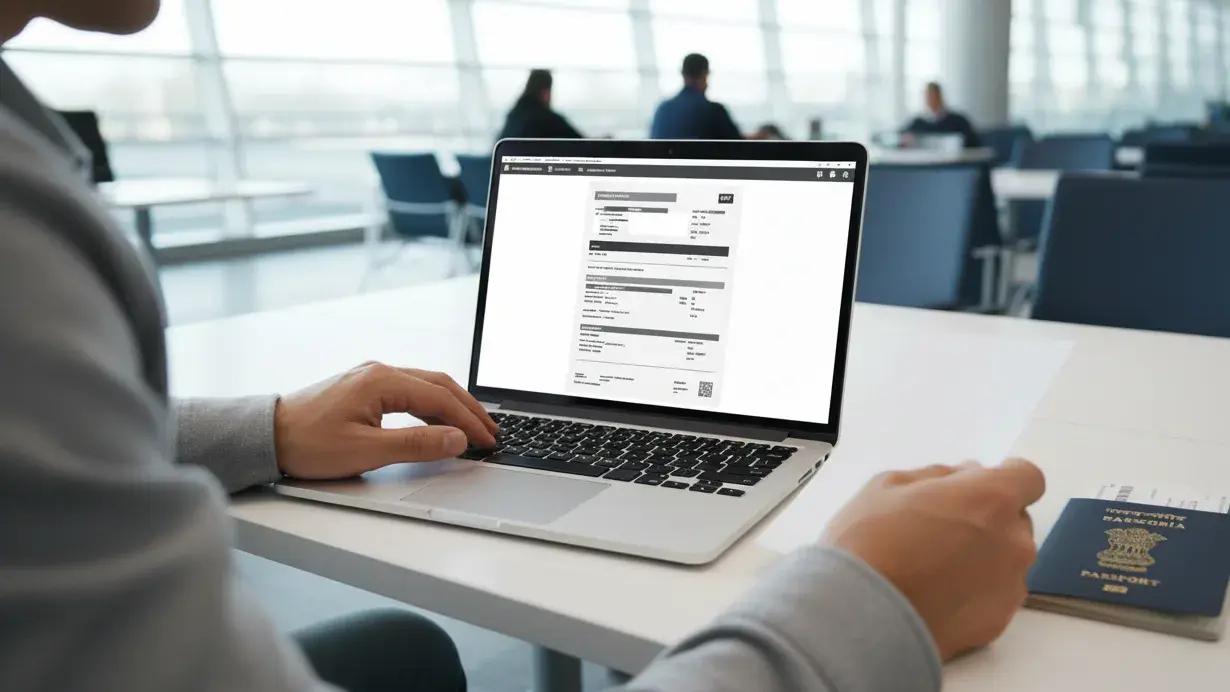
Once the airline name stops distracting you, the real issue becomes easier to see. Many visa problems tied to budget flights come from how the booking is built, not from the fact that the carrier is low-cost.
One PNR, One Route, One Story
A reservation becomes easier to trust when it tells one clear story from start to finish. That usually means one booking reference, one outbound path, one return path, and no loose pieces that force the officer to guess how the trip actually works.
A single PNR does more than look tidy. It signals that the travel plan is settled. The route appears intentional. The return looks tied to the same trip, not added later to complete the paperwork. Even when the fare is modest, the structure makes the booking feel more stable.
This matters in visa review because officers often scan for clarity before anything else. A single reservation helps them see the trip as a whole. They can match entry date, exit date, and routing without piecing together separate confirmations or trying to understand which leg depends on which.
That does not mean every application needs a premium carrier or a complex booking class. It means your flight reservation should read like one practical travel decision. When the route looks unified, the airline brand loses even more importance.
Separate Tickets Create A Different Kind Of Risk Than A Budget Airline Itself
Separate tickets often create problems that people wrongly blame on budget airlines. The issue is not that the flights are cheap. The issue is that the itinerary no longer behaves like one connected journey.
If your outbound and return are booked separately, the file can still work. But the reservation now asks the officer to accept more moving parts. One ticket may look confirmed while the other feels less anchored. Dates may still match, yet the overall travel plan can appear less locked in than a single round-trip booking.
The risk grows when the sectors depend on each other in ways the documents do not explain. A traveler might arrive on one carrier, continue on another booking, then return under a third reference. That may be normal from a travel-planning angle. On a visa file, it can look unfinished or easy to alter.
Separate tickets can also weaken the return logic. A formal return flight matters, but it matters more when it looks naturally connected to the trip. If the return sits on a completely separate booking with odd timing or a distant airport, it may not create the same confidence as a single structured reservation.
You want the officer to read continuity, not assembly.
Self-Transfer Reservations Can Make A Visa Itinerary Look Fragile
Self-transfer routes often look clever when you are hunting fares. They look much less clever when they land inside a visa file. A self-transfer introduces practical uncertainty that a standard connected itinerary does not.
The officer may not analyze aviation mechanics in detail, but they can still spot the signs of a fragile route. Different tickets. Tight connection windows. Airport changes. Long gaps imply baggage collection and re-check. These details make the trip feel less robust.
That matters because a visa reservation is not judged only on whether it exists. It is judged on whether it supports a believable, workable journey. A self-transfer can suggest that the itinerary depends on perfect timing and passenger-managed logistics. For a routine short-stay visa application, that can feel unnecessary.
The problem becomes sharper when the trip itself is simple. If you are claiming a short tourism visit or a fixed-date meeting, a self-transfer chain can make the plan look weaker than it needs to be. The officer may wonder why a supposedly straightforward visit relies on a route with more chances to break.
A budget airline is not the problem there. The self-transfer architecture is.
Airport Switching And Cross-City Departures Can Make The Plan Harder To Believe
Changing airports or returning from a different city is not automatically suspicious. Many real trips involve open-jaw routing, regional movement, or a multi-city schedule. The trouble starts when the flight pattern is more ambitious than the rest of your application.
If your form, hotel reservations, and cover letter point to one main base, but your flights tell a different story, the booking can create friction. Arriving at one airport and departing from another only works cleanly when the ground plan explains it. Without that support, the reservation can feel like a fare-driven patchwork instead of a settled route.
Cross-city departures can also raise questions about timing. If you land in one area, move across the country, and leave from somewhere else, your stay length and internal travel need to make that plausible. Otherwise, the route may look more like an experiment than a committed plan.
The same goes for airport switches inside one metropolitan region. A late arrival at one airport with a separate onward leg from another may be workable in real life. In a visa file, it can look like unnecessary complexity built only to lower the fare.
You do not need the most elegant routing on the market. You need a route that your documents can support without strain.
Budget Carriers Often Force Timing Choices That Need Stronger Justification
Low-cost airlines often win on price by shaping the travel day around airline efficiency, not passenger convenience. That can leave you with very early departures, late-night arrivals, or long idle periods between sectors. Those choices matter more in a visa application than many applicants realize.
A late arrival can push your first hotel night into confusion. A dawn departure can shorten the usable stay in a way that clashes with the trip's purpose. A return flight that leaves too close to a stated event or meeting can make the schedule feel unrealistic. These are not travel complaints. They are document-alignment issues.
Timing can also affect how serious your plan looks. A short family visit supported by workable timings feels settled. A similar trip with an arrival near midnight, an unexplained airport transfer, and a long wait before the return can feel less grounded.
Budget carriers often use secondary airports, narrow operating windows, or less forgiving schedules. None of that is inherently bad. But once those timing choices start to conflict with your hotel check-in, your leave dates, or the amount of time you claim to spend at the destination, you face a stronger burden of explanation.
A visa officer will not admire how much you saved if the booking now makes the trip harder to understand.
The Safer Alternative Is Often A Cleaner Reservation, Not Necessarily A More Expensive One
Many applicants respond to this problem the wrong way. They assume they need to replace a low-cost carrier with a premium airline. Usually, that is not the real fix. What you often need is a cleaner reservation.
A cleaner reservation has a few obvious qualities:
-
One logical outbound and return structure
-
Airports that match the trip plan
-
Timing that supports the stated purpose
-
Fewer separate dependencies
-
A route that can be understood quickly
That cleaner option may still be on a budget airline. It may even cost less than a major carrier once you stop forcing awkward self-transfers or disconnected sectors. The goal is not to buy status. The goal is to remove avoidable questions from the file.
When you choose between two reservations, ask which one makes the trip look more settled. Ask which one aligns better with the rest of the application. Ask which one would need fewer explanations if an officer paused on it for ten seconds.
How Budget Airline Reservations Can Quietly Clash With The Rest Of Your Visa File

A budget airline reservation can look fine on its own but still create problems when placed alongside the rest of your application. That is where small flight details start affecting how settled your whole travel plan appears.
When The Flight Dates Do Not Sit Comfortably With The Hotel Or Trip Schedule
A low-cost fare often comes with awkward timing. That can create tension with the dates already shown elsewhere in your file.
You may have a hotel booking from Monday to Friday, but your flight lands just before midnight on Monday and leaves early Friday morning. On paper, the stay still looks like five days. In practice, the trip becomes much shorter. A visa officer may notice that the real time on the ground does not fully match the trip length you seem to be claiming.
The same issue appears when a late arrival forces an unspoken extra night near the airport. If your accommodation starts the next day, the file now has a gap. It may be a small gap, but it still raises a practical question: where are you between landing and check-in?
Return timing creates the same kind of friction. If your hotel ends on one date but your flight departs much later, the officer may wonder how that gap is covered. If the return leaves too early, the itinerary may cut short the purpose you described, especially if the visit is tied to a business event, family function, or short tourism schedule.
These conflicts are easy to miss because the reservation itself looks valid. The problem is not validity. The problem is fit. Your flight dates should sit naturally beside your stay plan, not force the officer to guess where the missing hours or nights went.
Secondary Airports Can Disrupt The Logic Of Your Stated Destination
Budget carriers often use airports that are cheaper to operate from but less intuitive for a visa file. That matters when your application names one destination and your reservation points somewhere else.
If you say you are visiting Paris but your booking lands far outside the main airport system, the route may still be perfectly real. But the officer now has to connect the dots between the airport on the reservation and the place named in your application. If that connection is not obvious, your itinerary loses some of its clean, self-explanatory value.
This becomes more sensitive when the stay is short. A short city visit supported by a distant arrival airport can make the plan look less practical. The officer may quietly question why a brief trip starts with extra transfer time unless the rest of the file makes that choice sensible.
Secondary airports also affect return logic. A departure from a smaller or remote airport can be fine when your itinerary clearly moves through that region. It becomes harder to defend when the rest of your documents keep pointing back to one main city.
You do not need to avoid secondary airports completely. You need to make sure the flight still supports the place you claim to be visiting. If the airport choice changes the apparent destination, the reservation starts competing with your own application narrative.
A Budget Route Can Make The Declared Purpose Of Travel Feel Less Convincing
Flight choice and travel purpose need to look like they belong together. A low-cost route can weaken that fit when it makes the purpose feel less practical.
Take a business visit. If you say you are attending a short meeting or trade event, a route with two long connections and a late arrival can make the schedule look inefficient. The question becomes obvious: if this event matters enough to justify a visa, why does the travel plan waste so much time?
The same applies to family visits. If you are visiting relatives for a defined period, your flight pattern should support a stable arrival and a believable return. A booking that appears improvised can make the visit look less settled than the invitation or host documents suggest.
Tourism files face a similar issue. If the itinerary claims a compact city break but the flights consume large parts of the trip, the holiday starts to look badly planned. That does not prove anything negative. It simply makes the officer work harder to believe that this was the intended plan all along.
A budget airline reservation works best when it reflects the rhythm of the visit. Short visit, practical route. Longer flexible trip, more room for complexity. If the route shape undermines the reason for travel, the flight can quietly damage credibility even when the rest of the flight is decent.
Leave Approvals, Event Dates, And Appointment Windows Need To Match Flight Reality
Many applicants think only about the flight and the visa form. But timing also has to match the fixed dates already shown in supporting documents.
If your employer's letter approves leave from specific dates, your flight should fit that window neatly. A departure that starts too early or a return that pushes too late can make the travel plan look out of sync with your approved absence. That mismatch is small on paper but noticeable in review.
Event-based travel is even more sensitive. If you are attending a wedding, conference, course, interview, or family milestone, flight timing needs to support attendance in a realistic way. A budget itinerary that arrives after the core event starts or leaves before it logically ends can weaken the very reason you are applying.
Appointment-based trips also need clean timing. Think about consular interviews, academic reporting dates, or short work visits. If the reservation suggests that the trip barely fits those commitments, the officer may question whether the booking was built around the actual purpose or simply around whatever fare was available.
We should treat fixed dates as anchors. Your flight reservation needs to lock into those anchors, not drift around them. When the flight looks detached from leave approvals or event timing, the problem is not the airline price. The problem is that your documents stop reinforcing one another.
Why Weak Financial Presentation Plus A Complicated Low-Cost Route Can Be A Bad Combination
A budget airline does not make you look financially weak. In many cases, it can make a modest trip look realistic. The issue starts when the overall file already feels tight, and the flight adds more strain.
Imagine an application with limited bank balance flexibility, a short employment history, and a route that looks fragmented or unusually indirect. None of those details alone may decide the case. Together, they can create a pattern of instability. The officer may read the file as less settled than a cleaner, more coherent application.
This is where cumulative impression matters. A complex low-cost route asks the officer to be patient with timing gaps, airport choices, or separate sectors. If the rest of the file is strong, that patience may come easily. If the finances already look narrowly managed, the same route may feel like one more sign that the trip plan is not fully controlled.
That does not mean you should hide budget-conscious choices. It means the flight should not add unnecessary pressure to an already delicate file. If your finances are being reviewed closely, your reservation should do the opposite of create extra friction.
A practical budget flight can support a financially realistic visit. A complicated one can magnify every other weak point around it.
The Best Test Is Cross-Document Harmony, Not Ticket Price
The strongest way to judge a budget airline reservation is to stop looking at it in isolation. Put it beside your hotel dates, leave approval, invitation, internal travel plan, and stated purpose. Then ask whether all those pieces still sound like one trip.
A good reservation does not just prove you can fly. It supports the timing, place, and shape of the visit already described elsewhere. When the flight aligns with those details, the budget airline choice usually fades into the background.
A weaker reservation often reveals itself through contrast. The hotel says one thing. The leave letter suggests another. The event dates imply something else. The flight then becomes the document that exposes the mismatch rather than the document that completes the story.
Before you submit, it helps to run a quick harmony check:
-
Do the flight dates match the real usable stay?
-
Does the arrival airport support the destination named in the file?
-
Does the return airport make sense for the ground itinerary?
-
Do the flight times fit the event, visit, or leave window?
-
Does the reservation reduce questions or create them?
Verification, Traceability, And Reservation Quality Matter More With Budget Airlines Than People Realize
A budget airline reservation can match your trip perfectly and still look weak if the document itself feels thin, unstable, or hard to verify. That is why reservation quality matters just as much as route logic once your file reaches an embassy desk.
Why A Reservation Must Look Verifiable, Not Just Printable
A printable document is not automatically a strong visa document. Plenty of flight confirmations can be downloaded, forwarded, or saved as PDFs. That alone does not make them persuasive.
What matters is whether the reservation looks like a real booking record that can stand up to a second look. The document should appear anchored to a live reservation, not just to a temporary screen or a partial checkout step. If the officer sees something that looks incomplete, stripped down, or disconnected from a real booking reference, confidence drops quickly.
With budget airlines, this matters more because the fare itself does not carry your application. The reservation has to do more of the work. It needs to show that the itinerary exists in a structured form and is not just a rough idea saved for convenience.
A good test is simple. If someone printed your reservation and removed the airline logo, would the document still look like a serious booking record? If the answer is no, it may not be strong enough for visa use in its current form.
You want a document that looks stable, identifiable, and easy to trust without extra explanation.
Low-Cost Carriers Sometimes Create Simpler Passenger Documents, But Less Comfort For Visa Presentation
Budget carriers often keep their booking confirmations minimal. That makes sense for ordinary travel. A passenger may only need the basics to check the date, route, and booking number. But a visa file is a different environment.
Embassy review is document-heavy. Officers are comparing multiple records, often quickly, and they look for clarity. A very bare airline confirmation can feel less reassuring in that setting, even when the booking is genuine. If the layout is sparse, the passenger details are limited, or the reservation looks more like an email receipt than a structured itinerary, the document may not carry enough weight on its own.
This is where applicants sometimes misread the issue. They assume the low-cost airline itself is the problem. Usually, it is the presentation gap. A lean passenger-facing document may work fine at the airport, but it still feels less comfortable in a visa file where readability and traceability matter more.
That does not mean you need something fancy. It means your reservation should look complete enough for document review. The officer should not have to infer missing pieces or wonder whether the booking is still active. When the confirmation is too minimal, it can make a legitimate travel plan look less settled than it really is.
What Makes A Reservation Feel Solid On A Visa File
A strong reservation has a certain feel the moment you read it. It looks complete. It looks organized. It looks tied to a real trip.
Several elements usually create that effect:
-
Clear the passenger's name
-
Visible route and travel dates
-
Understandable departure and arrival points
-
A usable booking reference or PNR
-
Outbound and return logic that belongs to one trip
-
A format that does not look cropped, edited, or pieced together
The reservation should also behave well beside the rest of your paperwork. The dates should line up cleanly. The airport names should make sense for the destination you declared. The route should look like something a real traveler would choose for that exact visit.
We should also care about document confidence. That means the reservation should not leave basic questions open, such as whether the return exists, whether the dates are sufficiently final for review, or whether the booking is merely an incomplete shopping step.
A solid reservation does not need to look expensive. It needs to look dependable. For visa purposes, that dependability often matters more than airline type, cabin class, or how little you paid for the ticket.
Why “Screenshot Culture” Is A Weak Strategy For A Serious Application
A lot of applicants rely on screenshots because they are quick. That speed comes at a cost. A screenshot often captures only part of the booking and strips away the structure that makes a reservation feel formal.
A cropped image from an app, payment page, or booking summary can leave too much out. The officer may not see full passenger details, complete route information, or a proper reference. Even when the screenshot is accurate, it can still look casual. That is not what you want in a visa file.
Screenshots also create visual problems. They can cut off dates, hide return sectors, reduce readability, or make the document feel temporary. If the screen shows buttons, mobile interface elements, or partial pricing steps, the booking may look like it was never fully finalized.
You want the opposite effect. Your reservation should look intentional and ready for review. It should resemble a document submitted on purpose, not a quick image saved because it was convenient at the time.
That is why screenshots are usually the weakest form of flight proof for visa use. They do not always fail because they are false. They fail because they are not looking document-ready.
The Hidden Risk Of Using A Reservation That Can Change Or Collapse Too Easily
Some flight reservations look fine when you first download them, then become much weaker days later. That is a hidden problem with certain low-cost itineraries, especially when routes, schedules, or booking holds are less stable than they appear.
A reservation that expires quickly or changes too easily can create risk if the embassy reviews your file later than you expected. A route adjustment, time change, or sector cancellation can make the original document look outdated. Even if the change is routine, it can still make your file feel less controlled.
This matters because visa review does not happen on your timetable. A booking that looks stable today may not look the same when your documents are actually examined. If the reservation exists in a fragile state, you are relying on timing instead of relying on document strength.
We should be especially careful with bookings that sit in a grey zone between a firm reservation and a temporary booking state. If the itinerary can disappear, shift, or become hard to verify without much warning, it is carrying more document risk than it first appears to be.
A stable reservation supports patience in processing. A fragile one depends on luck.
Some applicants decide that their own budget airline confirmation is too thin or too messy for a visa file and prefer a cleaner reservation format instead. In that situation, a service like BookForVisa.com can be relevant because it offers instantly verifiable reservations, a PNR with PDF, unlimited date changes, transparent pricing of $15 or about ₹1,300, worldwide visa use, and credit card acceptance.
The Reader’s Standard Should Be “Can This Reservation Survive A Closer Look?”
That is the real benchmark. Not whether the document looks acceptable at first glance, but whether it still looks strong when someone pauses on it.
A reservation survives closer review when its details stay consistent and easy to follow. The route makes sense. The dates do not fight the rest of the file. The document looks like a real booking record rather than a loose travel note. Nothing important feels missing. Nothing looks improvised.
You can apply that test by asking a few direct questions:
-
Does the reservation show a complete travel picture?
-
Does it look tied to a real booking reference?
-
Would a visa officer understand it without extra explanation?
-
Does the document still look reliable if reviewed several days later?
-
Does it feel like evidence, not just a screenshot of intent?
If the answer to those questions is uncertain, the issue is not always the flight itself. It is often the quality of the visa document. Some low-cost bookings are excellent on that standard. Others look too thin, too temporary, or too informal to carry the file comfortably.
Key Takeaways #2
- Judge the booking by cross-document harmony, not ticket price: do the flight dates, arrival airport, and return match your hotel, leave letter, and stated purpose?
- Reservation quality matters as much as route. A bare screenshot or a fragile, quickly-expiring hold looks weak even when the booking is completely genuine.
- A verifiable, PNR-backed document survives a closer look; a thin or expiring one relies on luck about when the file is reviewed.
- For a clean, verifiable reservation that reads as settled, compare options on the BookForVisa homepage.
The lesson beneath all of this is that a low fare never rescues a weak document — the strength always lives in the structure of the flight reservation for visa itself. Whether you fly a budget carrier or a full-service airline, the booking has to read as one settled trip: a genuine PNR, clear flight numbers, sensible routing, and dates that sit naturally beside your hotel and leave window. Our deep dive on the flight reservation for visa explains exactly what embassies look for in that kind of proof, and why a clean, verifiable booking often outperforms an expensive itinerary stitched together from awkward, fare-driven sectors. It also clarifies how much detail an officer actually needs to confirm the trip quickly, so you stop over-optimizing for price and start optimizing for clarity. If you have ever wondered whether your cheap route is helping or quietly hurting your file, that resource draws the line clearly. Read it before you finalize your booking, and you will choose a reservation that supports the trip you are declaring rather than one that competes with your own application.
Some Budget Airline Itineraries Create Red Flags Even When The Booking Itself Is Genuine
A real booking can still create the wrong impression on a visa file. That happens when the route introduces travel patterns that look harder to explain than the trip itself.
Overly Indirect Routing Can Suggest The Trip Plan Is Not Fully Settled
A genuine budget airline reservation can raise concern when the route feels far more complicated than the visit requires. The issue is not that the booking exists. The issue is what the route suggests about your planning.
If you are applying for a short-stay tourist or visitor visa, officers expect the flight path to look reasonably direct for the time available. A route that bounces through several cities before reaching the destination can make the trip look provisional. It may seem like you were still piecing things together when the application was filed.
That impression becomes stronger when the journey adds a lot of time without adding obvious value. If a four-day trip involves two long transit stops in opposite directions, the route can look detached from the purpose. The officer may wonder whether the destination is really the central point of travel.
Indirect routing also changes how your time on the ground is perceived. A reservation that consumes too much of the visit can make the stay look thinner than the application suggests. That matters in embassies that examine whether the duration, purpose, and itinerary form a believable plan.
A low fare does not solve that problem. A real reservation is still a weak visa document if the route makes the trip look unsettled.
Multiple Countries In Transit Can Complicate A Simple Visa Narrative
Transit through more than one country is not automatically a problem. But it can complicate a visa application when the trip itself is supposed to look simple and contained.
A straightforward visit becomes harder to read when the flight introduces several extra jurisdictions. Each transit point adds another layer of travel logic. Even if those stops are airside and legal, they still make the itinerary feel less direct and more constructed.
That matters because a visa officer often reads the file in one pass. If the destination is one country but the reservation passes through several others, the travel story becomes less clean. The officer is no longer looking at one entry point, one stay, and one return. They are now seeing a wider movement pattern than the application may have prepared them for.
This can be especially awkward when the rest of the paperwork is basic and narrow. A short family visit, a conference stay, or a city-break itinerary usually works best when the travel path looks equally focused. Once the route starts passing through multiple countries, the flight can create more narrative weight than the actual visit.
The concern is not always legal. Often, it is interpretive. The booking makes a simple visa file look more complex than necessary.
Overnight Gaps, Long Layovers, And Unexplained Transit Breaks
Long transit breaks can create questions that your application never meant to answer. That is where a genuine budget itinerary starts feeling incomplete.
An overnight gap is a good example. If your booking leaves you in transit for many hours between flights, an officer may mentally ask what happens during that period. Are you staying at the airport? Do you need accommodation? Are you changing terminals or airports? None of those questions may be fatal, but they can make the itinerary feel less self-contained.
The same applies to very long layovers. A 10-hour stop on a long-haul trip may be tolerable in real travel. In a visa application, it can make the reservation look like a fare-driven compromise rather than a settled travel plan. For short visits, that contrast becomes sharper. Too much travel time can make the purpose look thin by comparison.
Unexplained transit breaks also affect how your timeline is read. If the booking creates large blocks of dead time, the officer may start to see the route as inefficient or unstable. That matters when your visit is tied to fixed dates, a host schedule, or a short leave window.
What makes these pauses risky is not the break itself. It is the silence around it. When the application does not naturally account for those gaps, the flight introduces practical questions that the rest of the file never set out to answer.
One-Way Looking Patterns Hidden Inside Round-Trip Reservations
A round-trip reservation can still look one-way in spirit. That happens when the return sector feels weak, detached, or visibly less grounded than the outbound flight.
Sometimes the outbound looks precise and purposeful, while the return looks like an add-on. The departure airport is different. The timing is unusually open-ended. The route back is far more indirect. Or the return travels from a place that the rest of the trip never clearly reaches. On paper, the applicant has a return. In substance, the return may not create much confidence.
Visa officers often read return logic as a signal of settled short-term intent. They are not only checking whether a flight home exists. They are also judging whether that flight belongs naturally to the trip being presented. If it feels artificial, the formal existence of a return may not do as much work as applicants expect.
This issue often appears in budget bookings because the cheapest return may come from somewhere else or at an awkward time. That can produce a technical round-trip while weakening the narrative of orderly exit.
A strong return usually shares certain qualities with the outbound:
-
It leaves from a place that the trip clearly reaches
-
It fits the declared stay length
-
It does not introduce a new, unexplained route pattern
-
It looks like part of the same travel decision
If the return seems like a paper solution rather than a travel plan, the round-trip stops behaving like a strong visa document.
Budget Flights To Secondary Cities Can Be Fine — But Only If The Ground Plan Supports Them
Secondary cities are not a red flag by themselves. Many real trips begin or end there. The issue is whether your ground plan makes that airport choice feel intentional.
If your application says you are staying with relatives in a regional town, a flight to a secondary city can look perfectly logical. If you are attending an event near that airport, the route may even strengthen the file. The officer can see why that arrival point was chosen.
Problems start when the secondary city appears without support from the rest of the documents. If your cover letter, hotel booking, and visit purpose all point to one major destination, a flight into a smaller city elsewhere may look disconnected. The officer may wonder whether the actual trip is broader, more flexible, or less settled than your paperwork shows.
This also affects exit points. A departure from a secondary city can work well in a genuine multi-stop itinerary. But if nothing else in the file shows movement to that area, the return can look improvised.
The route does not need to be mainstream. It needs to be legible. When a budget flight uses a smaller city, your file should make that city feel necessary, not accidental.
When The Cheapest Route Accidentally Looks Like Migration Anxiety Or Exit Uncertainty
This is one of the most sensitive problems a reservation can create, and it usually happens by accident. A traveler trying to save money can end up with a route that looks more anxious than planned.
That impression can form when the itinerary feels heavily optimized around getting in cheaply and getting out loosely. Maybe the entry route is long and irregular, while the return looks remote, weak, or disconnected from the stated stay. Maybe the flight pattern suggests the traveler valued securing movement more than building a clean visit plan.
Embassies do not need to accuse you of anything for this to matter. They only need to feel less convinced that the trip has clear short-term boundaries. If the reservation looks like it was assembled to keep options open rather than support a defined visit, that can quietly harm the file.
This is especially relevant for applicants whose broader documentation is already being read carefully. In that setting, the flight should reduce uncertainty. A booking that creates a feeling of open-ended movement can do the opposite.
We should be careful here. Budget travel is normal. Cost-conscious planning is normal. The problem arises only when the route shape starts sending a different message than the one your application is trying to send.
How To Spot A Red Flag Before Submission Without Overthinking Every Detail
You do not need to panic over every stop, every transfer, or every low fare. What you need is a practical filter that helps you catch the routes most likely to cause embassy hesitation.
A useful review starts with a few blunt questions:
-
Does this route make the trip look more complicated than it really is?
-
Does the return feel as credible as the outbound?
-
Would the officer need extra explanation to understand why these airports were chosen?
-
Does the routing fit the length and purpose of the stay?
-
Is the flight path introducing extra countries, long breaks, or odd movements that the rest of the file never mentions?
If one detail stands out but the rest of the file supports it clearly, you may be fine. If several details feel awkward at once, that is usually the point where the reservation stops helping. A visa file rarely collapses because of one cheap flight choice. It gets weaker when multiple small signals point in the same direction.
Another good test is this: if you would need a paragraph to defend the route, it is probably too complicated for a routine application. The strongest reservations usually explain themselves.
When Using A Budget Airline Reservation Is Actually A Smart Choice For Your Vacation File
Not every low-cost itinerary creates friction. In the right situation, a budget airline reservation can make your visa file look more realistic, more disciplined, and easier to believe.
Short Regional Trips Often Fit Low-Cost Carriers Naturally
A short regional trip is often the cleanest place to use a budget airline reservation. When you are flying a common point-to-point route for a brief stay, a low-cost carrier can look completely natural inside the file.
That is especially true when the destination sits inside a well-served regional network. If the route is direct or nearly direct, the airline choice usually matches the shape of the trip. A short visit does not need a premium-looking booking to feel serious. It needs a route that looks normal for that market.
We should also think about the travel scale. If you are taking a three-day or five-day trip, a modest flight choice can support the idea that you planned the visit with restraint. That often feels more grounded than an overbuilt itinerary that looks far more elaborate than the purpose requires.
Regional trips also benefit from predictability. Low-cost carriers often operate routine city pairs that people use every day for holidays, family visits, and short breaks. When your reservation sits inside that kind of pattern, it stops drawing attention to itself. That is a good thing in a visa review. The less the flight needs defending, the better it is doing its job.
Direct Flights Beat Prestige Every Time In A Document Review Setting
A direct flight on a budget airline often works better than an impressive-looking itinerary with extra stops. In a visa file, convenience usually communicates stability better than brand prestige does.
A direct route tells a simple story. You leave, you arrive, you stay, and you return. That kind of structure helps the officer see the trip as settled. There are fewer moving parts, fewer timing risks, and fewer points where the reservation can start competing with the rest of the documents.
Prestige does not solve those problems. A better-known airline with a clumsy connection chain can still weaken the file. If the routing makes the stay look shorter, the arrival less practical, or the return less clear, the airline name adds very little value.
This matters because visa review is not a loyalty exercise. The officer is not grading your airline choice as a consumer decision. They are assessing whether the reservation supports the trip you say you are taking.
A direct low-cost flight often wins that test because it reduces explanation. It does not ask the officer to understand why you routed through another country, changed airports, or accepted a long layover time for a short visit. It simply shows a workable plan.
When you compare options, directness often deserves more weight than reputation.
Budget Carriers Can Strengthen Cost Credibility For Honest, Modest Travel Plans
A budget airline can also help your family feel financially proportionate. That does not mean cheaper is always better. It means your flight choice should make sense for the type of trip you are taking.
If your visit is modest in length and scope, a budget carrier can support that tone well. It shows that you are not inflating the travel plan beyond what is needed. For a short tourism trip, a family visit, or a routine regional stay, a reasonably priced flight can make the itinerary look grounded in ordinary travel behavior.
That can be useful when the rest of the file also reflects moderation. A practical hotel choice, a realistic stay length, and a sensible route work well together. The flight then reinforces the idea that the trip was planned with purpose, not with excess.
What helps here is alignment, not cheapness alone. If the budget flight fits the destination, timing, and trip style, it can make the overall presentation more believable. You are showing a visit that looks lived-in and realistic, not staged to appear more formal than it really is.
We should avoid one mistake, though. A low-cost carrier helps with cost credibility only when the itinerary still looks smooth. If price savings distort the route, the benefit disappears. Financial realism works best when it travels together with document clarity.
Clean Return Logic Matters More Than Cabin Type, Loyalty Program, Or Airline Status
In a visa review, the return flight carries more weight than many people expect. It is not just the fact that you are coming back. It is how clearly that return belongs to the trip.
A clean return usually has a few obvious strengths:
-
It departs from the place your itinerary naturally reaches
-
It fits the stay length you declared
-
It does not introduce a surprise airport or extra travel puzzle
-
It looks tied to the same plan as the outbound
Those qualities matter more than whether the ticket sits in economy, whether the airline is premium, or whether the booking reflects any status or loyalty benefits. None of those details tells the officer as much as clean return logic does.
This is why a simple low-cost round-trip can outperform a more expensive reservation with a weaker exit pattern. If the return is straightforward, dated well, and consistent with the rest of the file, it quietly does important work. It reassures without needing attention.
We should think of the return as the anchor that closes the story. A strong outbound gets you there. A strong return makes the visit feel bound and credible. When that return is tidy, the airline category matters much less than people assume.
Low-Cost Flights Work Best When The Destination, Stay Length, And Route Tell The Same Story
The strongest budget airline reservations usually succeed because every major part of the trip agrees with the others. The destination choice, the stay length, and the flight path all point in the same direction.
If you are taking a short leisure trip to one city, the route should support that exact shape. If you are visiting family in one region, the airports and timing should reflect that. If the visit is narrow and practical, the reservation should look equally narrow and practical.
This is where a lot of budget flights actually perform very well. They fit concise travel. They serve obvious routes. They allow you to present a trip that looks focused instead of overdesigned.
When all three pieces line up, the flight feels calm on the page:
-
The destination is the natural place to arrive
-
The stay length matches what the route allows
-
The return closes the trip without creating a new question
That harmony matters because a visa officer often reads your file by pattern, not by isolated documents. If the route shape matches the visit shape, the reservation supports the broader application almost silently.
A low-cost flight becomes a smart choice when it helps the flight feel coherent without trying too hard to look impressive.
A Simple Nonstop Regional Reservation Can Look Stronger Than A Fancy Multi-Leg Alternative
Think about someone flying from Bangalore for a short regional visit with fixed hotel dates and a clear return window. One option is a nonstop budget airline reservation that lands near the stated destination and returns on schedule. The other is a more polished-looking multi-leg booking on a bigger airline that adds a long connection and cuts into the stay.
For visa purposes, the nonstop option can easily look stronger. It supports the trip without forcing extra explanation. The destination stays central. The timing stays usable. The return looks settled.
The multi-leg option may look more formal, but if it shortens the visit or complicates the route, it can weaken the file despite the stronger airline branding. The better booking is not the one that looks more premium in isolation. It is the one that fits the declared trip with less strain.
That is why simple often wins.
The Right Question Is Not “Is This Airline Cheap?” But “Does This Booking Make Sense?”
That is the question that cuts through most of the noise. Once you ask it honestly, the airline label loses a lot of power.
A sensible booking usually shows itself quickly. The route is direct enough for the trip. The timing protects the purpose of travel. The return looks natural. The reservation fits the destination and the stay length. Nothing about it feels decorative or forced.
You can use a short sense-check before you choose a budget carrier reservation for the flight:
-
Does this flight pattern suit the exact visit I am declaring?
-
Does it protect enough usable time on the ground?
-
Does the return look as strong as the outbound?
-
Would this route look normal to someone reviewing the file quickly?
-
Does this reservation help the rest of the documents agree with each other?
A Practical Pre-Submission Audit For Anyone Planning To Use A Budget Flight Reservation Or Dummy Flight Ticket
A budget airline reservation can work well in the visa process if you review it the way an embassy will. Whether you are applying for a visa with a dummy ticket, a temporary flight reservation, or a real ticket, the goal is the same: your booking should support your intended travel itinerary without creating extra questions.
Check Whether The Route Still Matches Your Stated Travel Purpose
Start with the reason for travel, not the fare. Your reservation should make sense for the trip you described, the planned travel dates, and the wider travel documentation in your file.
A short tourism trip should look like a short tourism trip on paper. A family visit should have a route that supports a stable arrival and return. A meeting, wedding, or event-based visit should not sit on a booking that wastes half the stay in transit. Even a dummy flight ticket, safe for visa review when used properly, becomes weak if the route does not fit the story you are telling.
This is also where many travellers get distracted by online claims about dummy flight tickets safe or dummy ticket safety. The more useful question is whether the reservation matches your actual purpose and your visa requirements. A legitimate dummy ticket can help meet visa requirements, but it still has to look sensible beside the rest of the file.
If you are submitting proof of onward travel for a Schengen visa, for South Korea, or for another short-stay application, check whether the route protects enough usable time on the ground. A round-trip ticket that arrives too late or leaves too early may exist on paper and still weaken the file.
Use a blunt check here:
-
Does the flight itinerary match the visit you declared?
-
Do the flight numbers and airports support the destination you named?
-
Does the return look like part of the same trip?
-
Would the route still make sense if no one explained it to you?
A reservation can be widely accepted and still be the wrong fit for your case. That is why route logic comes before everything else.
Compare Flight Times Against Hotel Dates, Internal Travel, And Work Documents
After the route makes sense, compare the timing against the rest of the application. This is where real flight tickets and dummy flight tickets fail for the same reason: they clash with the other documents.
Check your hotel dates first. A late arrival may create an uncovered first night. An early departure may reduce the stay more than your paperwork suggests. A return after checkout can leave an unexplained gap. These issues matter because embassies accept flight proof as part of a wider timeline, not as a standalone page.
Then compare the reservation with internal movement. If you land at a secondary airport, the onward travel should still look practical. If you rely on a train, bus, or short regional sector after arrival, the timing has to work without forcing the officer to solve the trip for you.
Work documents matter too. Leave letters, invitation dates, and event schedules should line up with the booking. The same goes for travel insurance. If your cover period, hotel nights, and flight dates point in different directions, the reservation stops helping the application and starts creating doubt.
We should also watch the return closely. A real flight ticket that conflicts with your leave window is not stronger than a clean temporary reservation that fits it. For most travelers, document harmony matters more than whether the booking is already fully paid.
Strip Out Anything That Makes The Reservation Look More Complicated Than The Trip Really Is
A visa file works better when it looks disciplined. If your reservation adds complexity that your actual trip does not need, simplify it before submission.
This is a common problem with flight bookings built around low fares. A route may be technically valid, but it may include extra stops, cross-city departures, or awkward layovers that make the trip look broader and less settled than it really is. The issue is not that the booking is wrong. The issue is that it makes a simple visit look like a moving target.
Remove anything that adds noise:
-
Extra sectors that do not support the purpose of travel
-
Indirect returns were chosen only because they were cheaper
-
Airport switches with no clear reason in the file
-
Long transit chains that eat into a short stay
-
Timing gaps that force new explanations
This matters whether you are holding a dummy air ticket, a confirmed ticket, or a fully paid ticket. A messy booking does not become stronger just because money has already been spent on it. A cost-effective solution is often the cleaner reservation, not the more expensive one.
Many travellers also confuse flexibility with strength. A flexible ticket can help if dates may move, but flexibility is useful only when the route still looks settled. A booking that feels loose, open, or overly optimized for price can still produce visa rejections if it does not support the trip clearly.
Verify That The Reservation Format Is Embassy-Friendly
A workable route still needs a document format that an embassy can read comfortably. That means your booking details should look complete, stable, and easy to follow.
The best version usually includes:
-
Passenger name
-
Full route
-
Travel dates
-
Flight numbers
-
Clear airports
-
A valid pnr
-
A readable PDF or itinerary view
The reservation should also look like it belongs in the airline's system, not like a cropped mobile image or a rough checkout screen. If the layout appears broken, partial, or unlike the airline's official booking format, the officer may question how reliable the document really is.
This is why free generators are a poor choice for serious applications. They often create fake tickets, fake documents, or other forms of fraudulent documentation that collapse under even basic review. That kind of material does not just weaken the file. It can damage trust immediately.
If you use dummy ticket services, stick to reputable providers whose reservations are commonly accepted and whose documents look like real travel records. A temporary reservation should still feel formal and traceable, not improvised. Most embassies are not looking for glamour. They are looking for a document that reads cleanly and appears consistent with normal airline output.
Decide Whether This Booking Should Be Submitted, Strengthened, Or Replaced
At this point, stop thinking in all-or-nothing terms. Not every booking is either perfect or unusable. Most fall into one of three lanes.
Submit it as is when the route is clear, the return is strong, the document format is clean, and the reservation fits the rest of the file. This can apply to a temporary reservation, a real flight ticket, or one of the more solid dummy flight tickets safe for embassy use.
Strengthen it when the travel plan is good, but the presentation is weak. Maybe the booking exists, but the PDF is poor. Maybe the flight itinerary works, but the return needs to be shown more clearly. Maybe the structure is fine, yet the validity period of the reservation is too short for comfortable submission timing.
Replace it when the route itself is the problem. That includes overly indirect travel, weak return logic, or dates that no longer match your hotel plan, work schedule, or onward travel. A non-refundable ticket or a non-refundable booking can make this decision feel painful, especially if a cancellation fee applies. But the right document for the file still matters more than saving a weak reservation.
Some applicants assume a fully refundable or fully paid booking is always safer. That is not necessarily true. A fully refundable reservation that clashes with the trip can still weaken your chances of visa approval. What matters is whether the booking helps the file look settled and safe for visa review.
What To Do If The Budget Airline Reservation Is Operationally Fine But Visually Weak
Some bookings are strong from a travel angle and weak from a document angle. That is a fixable problem if you separate the route from the presentation.
First, ask whether the booking itself makes sense. If the dates, airports, and return logic are sound, the next step is to improve how the document appears in the file. That may mean replacing screenshots with a proper PDF, making sure the valid PNR is visible, or using a cleaner itinerary version that shows all sectors clearly.
This is also where advice from visa consultants or travel agents should be reviewed carefully. They may focus on what is enough to submit, but you still need to judge whether the document looks strong under closer review. A small fee paid to reputable providers for a cleaner reservation can sometimes be the better move if your current file looks visually thin.
Many applicants think they must switch from a temporary reservation to refundable tickets or a fully paid booking to appear more serious. That is not always necessary. A well-presented temporary reservation can be completely safe in practice when it matches the trip and reads like formal travel documentation.
By contrast, a real ticket that looks incomplete on paper can still cause unnecessary friction. The goal is not simply to own flight tickets. The goal is to present a booking that feels stable, legible, and appropriate for the case.
Frequently Asked Questions About Budget Airlines And Visa Reservations
Is it risky to use a budget airline for a visa reservation?
Not inherently. A budget airline reservation is fine when the route is direct, the dates fit your stay, and the booking matches the rest of your file. The risk comes from a messy or fare-driven structure, not from the low-cost brand itself.
Do visa officers reject cheap or low-cost flight bookings?
Officers rarely react to price. They react to what the reservation suggests about your planning. A clean, low-cost route reads as a practical trip; a complicated one can make the plan look improvised regardless of how much you paid.
What makes a budget flight reservation for visa look weak?
Odd airport choices, self-transfers, separate outbound and return tickets, very long layovers, or timing that clashes with your hotel and leave dates. Each detail is survivable alone, but together they can make a simple visit look unsettled.
Are separate outbound and return tickets a problem for a visa?
They can be. Two separate bookings introduce more moving parts and can make the return look less anchored to the trip. A single round-trip flight reservation for visa reads as one continuous journey and is usually easier for an officer to trust.
Do self-transfer or multi-stop routes hurt a visa application?
Sometimes. Self-transfers and long multi-stop chains add uncertainty and make the itinerary look fragile, especially for a short, simple visit. If a paragraph would be needed to explain the route, it is usually too complicated for a routine application.
Can I use a secondary airport for a visa flight reservation?
Yes, if your ground plan supports it. A flight into a smaller airport is fine when your accommodation or purpose is near that region. It only weakens the file when the rest of your documents point to a different main destination.
Is a screenshot of a budget flight booking enough for a visa?
It is one of the weakest formats. Screenshots often crop out passenger details, return sectors, or the booking reference and look casual. Submit a complete, readable PDF or itinerary with a visible PNR so the reservation reads as document-ready.
Does the return flight matter more than the airline for a visa?
Usually, yes. Officers read clean return logic as a signal of settled short-term intent. A return that leaves from a place your trip clearly reaches and fits your declared stay matters far more than cabin class or airline prestige.
When is a budget airline reservation actually a smart choice?
For short, regional, or direct trips it often looks more realistic than an overbuilt itinerary. When the destination, stay length, and route all tell the same story, a low-cost booking supports the file quietly and needs no defending.
Should the flight dates match my hotel and leave dates?
Yes. Your booking should sit naturally beside your hotel stay, leave approval, and event or appointment dates. A late arrival, early departure, or return that overruns those anchors creates gaps an officer will notice.
Is a refundable or fully paid ticket safer than a temporary reservation?
Not automatically. A fully paid or refundable booking that clashes with your trip still weakens the file, while a clean, verifiable temporary reservation that fits the trip can be perfectly safe. Document harmony matters more than whether the ticket is paid.
How do I check a budget flight reservation before submitting?
Read it as an officer would: does the route match your stated purpose, do the times fit your hotel and leave dates, is the return as strong as the outbound, and is the format complete with a valid PNR. If several details feel awkward at once, strengthen or replace the booking.
Key Takeaways #3
- Before submitting, sort the booking into one of three lanes: submit as-is if route and format are clean, strengthen if the plan is good but presentation is weak, or replace if the route itself is the problem.
- Strip out anything that makes a simple trip look complicated — extra sectors, cross-city departures, or long transit chains chosen only to save money.
- A refundable or fully paid booking is not automatically safer; a reservation that clashes with the trip weakens the file regardless of price.
- If Europe is on your route, confirm your booking against the documented Schengen visa flight reservation requirements before filing.
Choosing A Budget Airline Reservation That Supports Your Visa File
A budget airline reservation is not risky just because it is cheap. What matters is whether the route, timing, return logic, and document format make your visa file look clear, settled, and easy for an embassy to review. When the booking fits your trip purpose and the rest of your paperwork, the airline category matters far less than many applicants assume.
Before you submit, read the reservation the way a visa officer will. We should feel confident that it matches your planned stay, supports your exit plan, and does not create questions your application never needed to answer.
If Europe is on your route, give your booking one final check against the standard Schengen consulates actually apply. Schengen files are read tightly: the entry point, the routing, the dates, and the onward travel proof all have to reconcile cleanly, and a budget itinerary that looks fragmented can stand out faster here than almost anywhere else. Our breakdown of the Schengen visa flight reservation requirements lays out what those offices expect from a booking, including how fresh the itinerary should be and how a low-cost route should still present a coherent, verifiable flight reservation for visa. If your cheap fare pushed you toward a secondary airport, a self-transfer, or a separate return, this is the moment to confirm the plan still meets that standard rather than discovering a gap after a query or refusal. Reading the requirements alongside your own itinerary turns a stressful guessing game into a simple checklist. Whether you are filing for tourism, a family visit, or business, aligning your budget booking to these documented expectations removes doubt and steadies the whole file. Review both together before you submit.
More Resources
Why Travelers Trust BookForVisa.com
BookForVisa.com has been helping travelers since 2019 with specialized dummy ticket reservations for visa applications. We've supported over 50,000+ visa applicants worldwide, providing verifiable PNRs and instant PDF deliveries. Our 24/7 customer support ensures quick resolutions, while secure online payments and unlimited changes demonstrate our commitment to reliability. As a registered business with a dedicated team, BookForVisa.com focuses exclusively on flight reservations for visa, offering niche expertise you can count on.
About the Author
Visa Expert Team — With over 10 years of combined experience in travel documentation and visa assistance, our editorial team specializes in creating verifiable flight and hotel itineraries for visa applications. We have supported travelers across 50+ countries by aligning documentation with embassy and immigration standards.
Editorial Standards & Experience
Our content is based on real-world visa application cases, airline reservation systems (GDS), and ongoing monitoring of embassy and consular documentation requirements. Articles are reviewed and updated regularly to reflect current practices.
Trusted & Official References
- U.S. Department of State — Visa Information
- International Air Transport Association (IATA)
Important Disclaimer
While our flight and hotel reservations are created to meet common embassy requirements, acceptance is not guaranteed and may vary by country, nationality, or consulate. Applicants should always verify documentation rules with the relevant embassy or official government website prior to submission.
Related posts

How to Assemble a Visa Travel-Proof PDF Pack
14 Oct, 26
Child Visa Itinerary After a Custody Schedule Change
14 Oct, 26
Visa Travel-Proof Audit: Eight Mistakes to Check
14 Oct, 26
Flight Booking for Visa While a U.S. Reentry Permit Is Pending
14 Oct, 26
Expired Flight Hold Before Visa Appointment: Refresh or Keep?
14 Oct, 26
Travel and Visa Reservations During a UK Citizenship Application
14 Oct, 26
Flight Reservation Shows Cancelled Before a Visa Appointment
14 Oct, 26
Family Flight Reservation for Visa: Mixed Surnames
14 Oct, 26
Flexible Visa Cover Letter: Wording for Date Changes
14 Oct, 26